Analysis of Major Polls Shows Trump’s War on Iran Is Historically Unpopular
“Not merely negative-number-so-what unpopular, but worst-ever-support-for-war-when-it-started unpopular.”
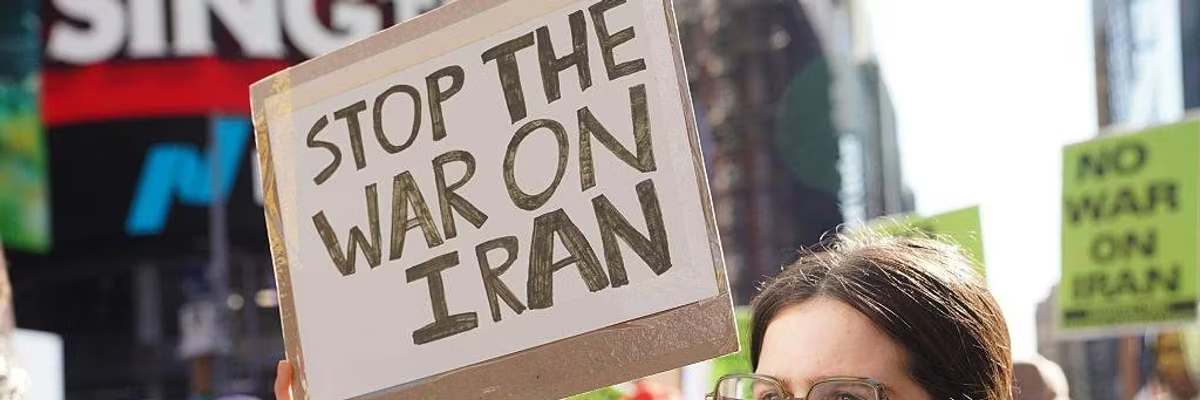
People attend a protest against US-Israeli attacks on Iran in New York on February 28, 2026.
(Photo by Zhang Fengguo/Xinhua via Getty Images)
Brad Reed
Mar 06, 2026
COMMON DREAMS
President Donald Trump’s unprovoked and unconstitutional war against Iran is historically unpopular among US voters.
In an analysis published Friday, polling expert G. Elliott Morris calculated an average of eight high-quality polls conducted over the last week about the war and found just 38% of Americans approve of the military strikes against Iran, while 49% are opposed.
Morris noted that there is simply no precedent for a US war being this unpopular from the very outset.
“The big takeaway from these numbers is that the new war in Iran is very unpopular,” he wrote. “Not merely negative-number-so-what unpopular, but worst-ever-support-for-war-when-it-started unpopular. With just 38% of Americans in favor, support for bombing Iran is lower than retrospective support for the war in Iraq was in 2014.”
Morris then offered some comparisons to past US military conflicts to show that the lack of support for Trump’s Iran war is simply in uncharted territory.
“No president in modern polling history has launched a major military operation with the public already against him,” he wrote. “After the September 11 attacks, a November 2001 Gallup poll found 90% of Americans approved of military action in Afghanistan, with just 5% opposed. The Gulf War in 1991 hit 79-80% approval. Gallup measured 76% support for the invasion of Iraq in March 2003 (Pew had it at 71%).”
Even comparatively unpopular operations, such as Trump’s strikes against Syria in 2017 or former President Barack Obama’s 2011 military operation in Libya, still had net-positive approvals at the times they occurred.
Morris added that Trump should be concerned about this because historically “wars only get less popular” over time as “casualties mount and costs become clear.”
CBS News polling director Anthony Salvanto on Tuesday also highlighted this phenomenon when analyzing a poll on the Iran war commissioned by his network that showed US voters’ support for the conflict dropped precipitously the longer they believed it would last.
“If you think it’s going to be a long conflict, months, even years... the numbers tilt toward disapproval overall,” he said.
Trump so far has not offered any kind of timeline for his war against Iran, and Politico reported on Wednesday that the US military is preparing for the conflict to last until at least September.
Trump on Friday insisted he would not end the conflict with Iran until its government offered its “unconditional surrender.”
“Not merely negative-number-so-what unpopular, but worst-ever-support-for-war-when-it-started unpopular.”
People attend a protest against US-Israeli attacks on Iran in New York on February 28, 2026.
(Photo by Zhang Fengguo/Xinhua via Getty Images)
Brad Reed
Mar 06, 2026
COMMON DREAMS
President Donald Trump’s unprovoked and unconstitutional war against Iran is historically unpopular among US voters.
In an analysis published Friday, polling expert G. Elliott Morris calculated an average of eight high-quality polls conducted over the last week about the war and found just 38% of Americans approve of the military strikes against Iran, while 49% are opposed.
Morris noted that there is simply no precedent for a US war being this unpopular from the very outset.
“The big takeaway from these numbers is that the new war in Iran is very unpopular,” he wrote. “Not merely negative-number-so-what unpopular, but worst-ever-support-for-war-when-it-started unpopular. With just 38% of Americans in favor, support for bombing Iran is lower than retrospective support for the war in Iraq was in 2014.”
Morris then offered some comparisons to past US military conflicts to show that the lack of support for Trump’s Iran war is simply in uncharted territory.
“No president in modern polling history has launched a major military operation with the public already against him,” he wrote. “After the September 11 attacks, a November 2001 Gallup poll found 90% of Americans approved of military action in Afghanistan, with just 5% opposed. The Gulf War in 1991 hit 79-80% approval. Gallup measured 76% support for the invasion of Iraq in March 2003 (Pew had it at 71%).”
Even comparatively unpopular operations, such as Trump’s strikes against Syria in 2017 or former President Barack Obama’s 2011 military operation in Libya, still had net-positive approvals at the times they occurred.
Morris added that Trump should be concerned about this because historically “wars only get less popular” over time as “casualties mount and costs become clear.”
CBS News polling director Anthony Salvanto on Tuesday also highlighted this phenomenon when analyzing a poll on the Iran war commissioned by his network that showed US voters’ support for the conflict dropped precipitously the longer they believed it would last.
“If you think it’s going to be a long conflict, months, even years... the numbers tilt toward disapproval overall,” he said.
Trump so far has not offered any kind of timeline for his war against Iran, and Politico reported on Wednesday that the US military is preparing for the conflict to last until at least September.
Trump on Friday insisted he would not end the conflict with Iran until its government offered its “unconditional surrender.”
March 7, 2026
Middle East Monitor

People gather at Place de la Republique (Republic Square) to protest against the war in the Middle East and express solidarity with Lebanon, Gaza and Iran in Paris, France on March 6, 2026. [Mohamad Salaheldin Abdelg Alsayed – Anadolu Agency]
Recent public opinion surveys across Europe showed on Friday that large segments of the public in several countries oppose the US and Israel’s strikes on Iran, Anadolu reports.
According to polls conducted in Spain, Italy, Germany and the UK, majorities in these countries reject military intervention and support cautious or neutral positions by their governments.
In Spain, a rapid poll conducted by Madrid-based research firm 40dB for the newspaper El Pais and Cadena SER radio found that around 68% of respondents reject the US and Israel’s attacks on Iran.
The survey also showed that 57% support Spain’s decision not to provide military support to the US and Israel, while 53% believe the US should not be allowed to use military bases in Spain for operations related to the conflict.
Around 42% of respondents said they approve of Prime Minister Pedro Sanchez’s handling of the crisis, while nearly 80% said they are closely following developments and that their most common feeling about the conflict is concern.
Italy
A similar trend appeared in Italy, according to a poll conducted by Rome-based research company YouTrend for Sky TG24 television.
The survey showed that 56% of respondents oppose the US and Israel’s military intervention against Iran.
Support for the attacks is higher among center-right voters, with 57% backing the intervention, while 79% of broader center-left voters oppose it.
Some 48% of respondents believe the Italian government should remain neutral and act as a mediator between the parties, while 29% say the government should condemn the attacks and immediately call for a ceasefire.
Germany
In Germany, a new public opinion survey published by public broadcaster ARD also indicates low public trust toward the US and Israel.
According to the survey, 58% of respondents believe the war waged by the US and Israel against Iran is not justified.
About 75% said they are concerned that the conflict could spread to other countries, while trust in the US fell to 15%, the lowest level in the past 20 years.
The survey also showed that only 17% of respondents consider Israel a reliable partner, while 85% believe global politics is increasingly dominated by a system where “might makes right.”
UK
In the UK, polls conducted by London-based research and data analysis company YouGov indicate limited public support for US strikes on Iran.
A survey conducted on March 2, after the US and Israel launched attacks on Iran, found that 49% of Britons oppose the strikes, while 28% support them.
A significant portion of respondents also oppose the use of Royal Air Force bases in the UK for US strikes against Iran.
A study conducted at the end of February showed that 58% were against such use, and even when the condition that operations be “limited only to missile targets” was added in the March 2 survey, opposition still measured 50%.
The research also revealed that 45% of Britons believe the government should neither praise nor condemn US strikes on Iran.
Meanwhile, 47% of respondents said Prime Minister Keir Starmer has handled the US-Iran tension poorly, while 34% said he managed the situation well.
Escalating regional tensions followed the Feb. 28 launch of joint US-Israeli airstrikes on Iran, killing more than 1,000 people, including Supreme Leader Ali Khamenei, over 150 schoolgirls, and senior military officials.
The conflict has triggered widespread regional instability and retaliatory attacks from Tehran against US-linked sites across the region.
People gather at Place de la Republique (Republic Square) to protest against the war in the Middle East and express solidarity with Lebanon, Gaza and Iran in Paris, France on March 6, 2026. [Mohamad Salaheldin Abdelg Alsayed – Anadolu Agency]
Recent public opinion surveys across Europe showed on Friday that large segments of the public in several countries oppose the US and Israel’s strikes on Iran, Anadolu reports.
According to polls conducted in Spain, Italy, Germany and the UK, majorities in these countries reject military intervention and support cautious or neutral positions by their governments.
In Spain, a rapid poll conducted by Madrid-based research firm 40dB for the newspaper El Pais and Cadena SER radio found that around 68% of respondents reject the US and Israel’s attacks on Iran.
The survey also showed that 57% support Spain’s decision not to provide military support to the US and Israel, while 53% believe the US should not be allowed to use military bases in Spain for operations related to the conflict.
Around 42% of respondents said they approve of Prime Minister Pedro Sanchez’s handling of the crisis, while nearly 80% said they are closely following developments and that their most common feeling about the conflict is concern.
Italy
A similar trend appeared in Italy, according to a poll conducted by Rome-based research company YouTrend for Sky TG24 television.
The survey showed that 56% of respondents oppose the US and Israel’s military intervention against Iran.
Support for the attacks is higher among center-right voters, with 57% backing the intervention, while 79% of broader center-left voters oppose it.
Some 48% of respondents believe the Italian government should remain neutral and act as a mediator between the parties, while 29% say the government should condemn the attacks and immediately call for a ceasefire.
Germany
In Germany, a new public opinion survey published by public broadcaster ARD also indicates low public trust toward the US and Israel.
According to the survey, 58% of respondents believe the war waged by the US and Israel against Iran is not justified.
About 75% said they are concerned that the conflict could spread to other countries, while trust in the US fell to 15%, the lowest level in the past 20 years.
The survey also showed that only 17% of respondents consider Israel a reliable partner, while 85% believe global politics is increasingly dominated by a system where “might makes right.”
UK
In the UK, polls conducted by London-based research and data analysis company YouGov indicate limited public support for US strikes on Iran.
A survey conducted on March 2, after the US and Israel launched attacks on Iran, found that 49% of Britons oppose the strikes, while 28% support them.
A significant portion of respondents also oppose the use of Royal Air Force bases in the UK for US strikes against Iran.
A study conducted at the end of February showed that 58% were against such use, and even when the condition that operations be “limited only to missile targets” was added in the March 2 survey, opposition still measured 50%.
The research also revealed that 45% of Britons believe the government should neither praise nor condemn US strikes on Iran.
Meanwhile, 47% of respondents said Prime Minister Keir Starmer has handled the US-Iran tension poorly, while 34% said he managed the situation well.
Escalating regional tensions followed the Feb. 28 launch of joint US-Israeli airstrikes on Iran, killing more than 1,000 people, including Supreme Leader Ali Khamenei, over 150 schoolgirls, and senior military officials.
The conflict has triggered widespread regional instability and retaliatory attacks from Tehran against US-linked sites across the region.

No comments:
Post a Comment