Tuesday, July 13, 2021

New Recycling & Energy Storage Plan Claps Back At Wind Turbine Critics

A new wind turbine blade recycling strategy deploys gravity-based energy storage technology for maximum circular economy impact.


ByTina Casey
Published 21 hours ago ‌


Oh, those pesky wind turbines, running around the countryside cluttering up the landfills with their big old unrecyclable blades. That’s the picture drawn by critics, but not for long. A new scheme is afoot that takes the old blades from a wind turbine and recycles them into new energy storage systems for wind and solar power.

What To Do With Those Pesky Old Wind Turbine Blades

Actually, the wind turbine recycling issue is a bit of a red herring. After all, the fossil energy industry has squeezed who knows how many trillions of tons of raw resources out of the ground, to be used once and never to be replaced, reclaimed, recycled, or reused again, let alone upcycled, unless you count their contribution to global carbon load as a kind of recycling, which is a bit of a stretch.

Nevertheless, the global wind industry is coming of age in an era when public policy and consumer demand are beginning to steer the global economy into a more sustainable, circular form. That pushes wind turbine blade recycling into priority status.
Wind Turbine Blades & The Circular Economy

The typical wind turbine blade lasts about 20 years, which means that a flood of spent blades is about to hit the global market.

Wouldn’t you know it, the US Department of Energy is right on top of the circular economy thing. Last month the agency’s Wind Energy Technologies office ran down some of the wind turbine blade recycling solutions bubbling up through the R&D pipeline and noted that the most effective strategy would be to design recycling and reuse into materials, components, and systems from the very beginning.

“A circular economy for energy materials also means that technology should be engineered from the start to require fewer materials, resources, and energy while lasting longer and having components that can easily be broken down for use in subsequent applications,” the Energy Department explained, citing a new lightening-resistant and erosion-resistant blade coatings developed by the firms Arctura and Resodyn Corp.

In partnership with the firm Arkema, Inc., the National Renewable Energy Laboratory has also been hammering away at a new resin-based turbine blade material that can be reduced to a liquid and reformed into new blades and other items, while reducing labor and energy inputs.

Better Ways To Recycle Old Blades

That’s all well and good for future generations of wind turbine blades, but what about those in operation now?

Yes, what about them? Fiberglass can be recovered from spent blades, but the range of application is limited because recycled fiberglass tends to lose quality.

The Energy Department has an answer for that, too. They are especially excited about a research partnership between the University of Tennessee and the firm Carbon Rivers, which involves a heat-based method for reclaiming fiberglass from wind turbines and recycling it into a high-value material for various industries including aerospace.


Extending the useful lifespan of old wind turbine blades is also part of the Energy Department’s strategy, including the use of drones and other advanced systems for monitoring, maintenance, and repair.
Hey, What About Recycling Wind Turbine Blades For Energy Storage?

Into this picture steps the Swiss energy storage firm Energy Vault, which has crossed the CleanTechnica radar previously on account of its gravity-based energy storage system.

The Energy Vault concept is similar to pumped hydro energy storage. Instead of storing electricity in a lithium-ion battery or other chemical systems, you deploy excess wind or solar power to raise something heavy upwards. When demand for electricity rises, gravity does all the heavy lifting. You allow your heavy thing — water, or in Energy Vault’s case, 35-ton blocks — to fall back to its starting point, and it generates electricity on the way down.

Pumped hydro is not a new technology, and here in the US it still dominates the energy storage field. Its advantages over battery-type systems include holding massive amounts of energy for long periods of time.

The problem is location, location, location. The Energy Department has been working on new pumped hydro technology that could enable the nation to grow the domestic industry, but for now there are few prospects for constructing new pumped hydro reservoirs in the US.

Energy Vault’s block-type gravity system could help resolve the location issue, since it does not require massive new infrastructure and copious amounts of water. All it really needs is 35-ton blocks, and those could be made from just about anything, including wind turbine blades.

Let The Wind Power – Energy Storage Mashup Begin


And, that’s where the company Enel Green Power comes in. The company, which comes under the Enel Group umbrella, has been aiming to hitch its renewable energy activities to new forms of energy storage, and it is very excited about the potential for Energy Vault to provide a home for spent wind turbine blades.

“The benefits of this solution are the same as those of a pumped storage hydro plant, but at a much lower cost, with greater possibility of being replicated in any geographical context and greater efficiency: the Energy Vault technology can even exceed an efficiency level of 80%,” EGP enthuses.

“Moreover, there are clear benefits compared to batteries: a plant of this type is not exposed to storage medium degradation (no need for augmentation over time), risk of fire, has a long lifespan of 30-35 years and its eventual dismantling will not pose particular difficulties, as the blocks are composed of inert materials and are created directly on site,” EGP adds.

Energy Vault already has a 5-megawatt demonstration facility under its belt, and it recently introduced its new “EVx” configuration that requires 40% less height than its former design. Last week the company signed an agreement with EGP to study the feasibility of a system that weighs in at “a few dozen megawatt-hours,” using material from spent wind turbine blades to form the blocks.

EGP anticipates that the study will greenlight the construction plan for a new Energy Vault project, deploying the new EVx design, in the coming year.
So, What About The Birds?

Yes, what about them? Years before the recycling issue popped up, wind power critics (looking at you, fossil energy lobby) were accusing wind turbines of causing birds to die, conveniently overlooking the fact that wind turbines are a relatively small part of a huge problem.

Practically everything that people make causes birds to die, and the worst offenders by far are buildings, overhead power lines, agricultural chemicals, and various devices used legally for hunting, among other things. For that matter, domestic cats — oh, but why beat a dead horse?

The point is that everything is killing birds. The counterfactual focus on wind turbines began about a dozen years ago and it was picked up and promoted by former President Trump, who promoted the wind turbine canard to help propel himself into office the first time.

It didn’t work the second time, which is good news for the birds, because Trump’s first and only administration spent considerable time and energy on tearing the guts out of a treaty aimed at preventing migratory bird deaths related to fossil energy activities among various other circumstances.

Oh well, water under the bridge. Migratory birds are all but certain to get a share of President Joe Biden’s love for all things sustainable, and new strategies have already emerged for reducing wind power’s relatively small share of bird impacts.


Back in 2003, for example, researchers at the National Renewable Energy Laboratory suggested that simply applying different colors and patterns to wind turbine blades could make a difference. That formed the basis for a long term study that recently demonstrated a significant reduction in risk of collision, especially for raptors.

The US Fish And Wildlife Service’s Avian Radar Project indicates that adjustments to wind turbine locations, hours of operation, and lighting can also reduce risks. Automatic shutdown systems triggered by cameras and other remote devices can help, and researchers are beginning to study how today’s generation of larger, more powerful turbines is also contributing to risk reduction.

Follow me on Twitter @TinaMCasey.

Photo: Energy Vault gravity storage system via Enel Green Power.


China’s First Floating Wind Turbine Heads Offshore

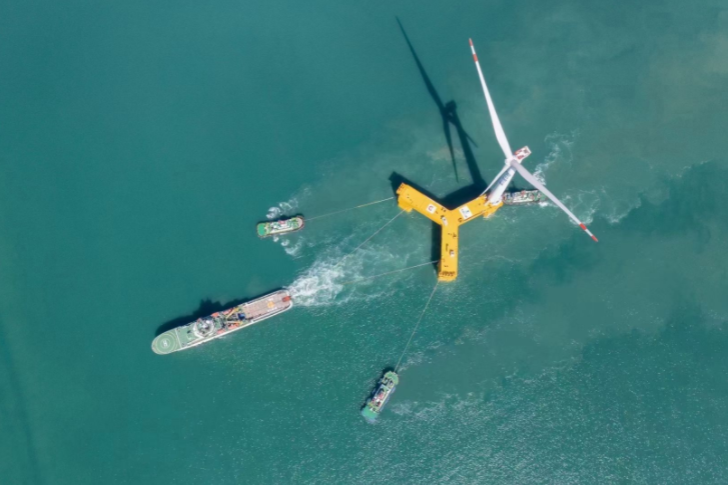
China’s first floating offshore wind turbine has set sail towards its installation site off the coast of Yangjiang City in Guangdong Province.

 
Source: MingYang Smart Energy

The floating wind turbine will be installed for demonstration purposes at the 400 MW Yangxi Shapa III offshore wind farm developed by China Three Gorges (CTG).

The unit comprises a MySE5.5MW typhoon-resistant turbine developed by MingYang Smart Energy and a semi-submersible floating foundation built by Wison Offshore & Marine.

RELATED ARTICLE

The wind turbine will now be installed, commissioned, and tested over the next six months, MingYang Smart Energy said.

The MySE5.5MW floating turbine is designed to meet the harsh environment like typhoons and extreme waves in the South China Sea.

This floating wind turbine will also be the first in the world to be connected to a fixed-bottom turbine.

MingYang used its existing offshore expertise to shape the integrated, fully coupled time-domain simulation and modeling of the turbine-floater-mooring system.

On top of that, MingYang developed an advanced floater movement control strategy, enabling the floating turbine to adapt to the complex environment of winds, waves, and currents in the South China Sea, the company said.

The Next Surprise in China’s Wind Sector Could Be More Mergers

By Krystal Chia
July 12, 2021

Envision’s top executive expects to see sector consolidation

Turbine and battery maker is open to public listing in future

China’s wind industry is headed for a bout of consolidation after a record-setting rush of installations, according to the country’s second-largest turbine manufacturer.

There’s rising pressure on the country’s crowded field of equipment producers, despite strong demand, Envision Group Chief Executive Officer Lei Zhang said in an interview. “The competition level is increasing,” he said. “The market will start to consolidate.”


Lei Zhang
Source: Envision Group

The push to add more renewables and a deadline to secure key government incentives drove a surge in wind installations in 2020, when China added almost as much new capacity as the rest of the world combined.


China has the most fragmented wind market in the world, with at least 21 companies supplying onshore wind turbines, according to BloombergNEF. The five largest suppliers, including Envision and Xinjiang Goldwind Science & Technology Co., accounted for about two-thirds of installations last year.

“The market will become more rational,” Zhang said by phone Thursday. “All the customers are looking for good quality, and at the same time, low-cost turbines.”

Xiangtan Electric Manufacturing Company Ltd. last year sold its wind unit after its market share declined, the first time one of China’s top 10 turbine manufacturers had changed hands.

China is forecast to add about 29 gigawatts of onshore capacity this year, more than any other nation, though still a 46% fall on 2020. Demand for both onshore and offshore projects will accelerate again from 2022 as the nation seeks to meet a 2060 target for net zero emissions, according to the Global Wind Energy Council.

There are also future export opportunities for China’s manufacturers as the global wind sector grows, Zhang said. Nations including Chile, Mozambique and Vietnam, where Envision already has strong market share, are emerging as potential growth markets, the council said in a March report.

Crowded Field

China has the most fragmented onshore wind market in the world

Source: BloombergNEF

Data shows market share for China's top 6 wind turbine manufacturers


China’s producers have become more competitive with global peers after they were forced to innovate to meet last year’s capacity rush, with some manufacturers able to cut the time it takes to make a giant turbine blade to 24 hours from 72 hours previously, said BNEF analyst Leo Wang.

Envision accelerated its own production processes and has identified other areas to help make savings, according to Zhang. Using sensor technology to identify tiny cracks on offshore turbine blades -- which are frequently struck by lightning -- helps prevent long outages. The company has cut maintenance staff at offshore wind farms from as many as 10 people to two, he said.

READ MORE:
China’s Envision to Build Renault $2.4 Billion Battery Plant
Envision Eyes Building Offshore Wind Turbine Factory in U.K.
Nissan, Envision to Create $1.4 Billion U.K. EV-Making Hub

Privately-held Envision, founded in 2007, is “open to the public market,” according to Zhang, though the firm doesn’t have any specific time-frame in mind for a potential listing.

The Shanghai-based company has made a raft of recent announcements on projects and investments, including an offshore wind turbine factory in the U.K. Envision will also spend as much as 2 billion euros ($2.4 billion) on an electric vehicle battery plant in northern France to supply Renault SA, while a unit will set up another facility in Sunderland, in northeast England.

— With assistance by Dan Murtaugh
AUSTRALIA
Plans unveiled for 50GW wind- and solar-to-green hydrogen


13 July 2021 by Craig Richard

Hong Kong and Australian developers plan world’s largest green hydrogen facility near coast of Western Australia
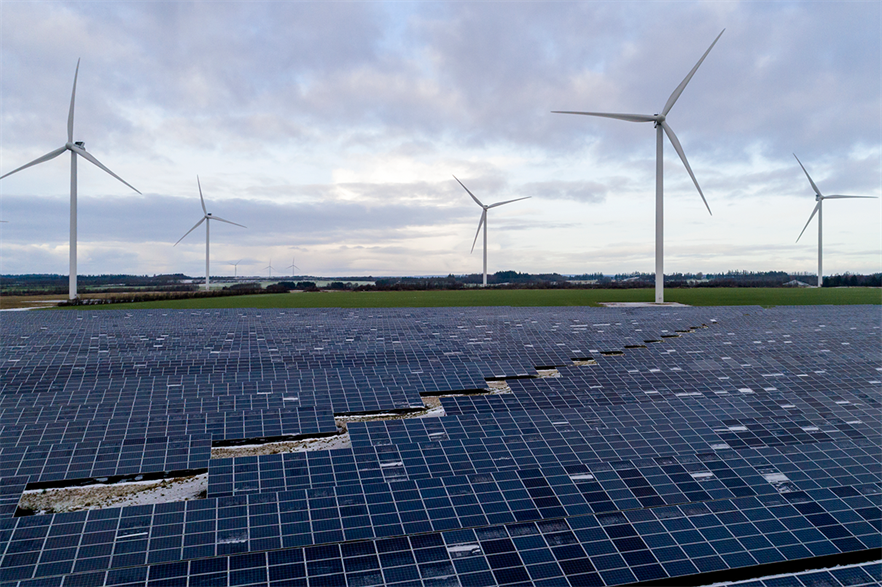
Wind and solar hybrid work well in regions where resources complement each other (pic: Vestas)

An international consortium has unveiled plans to use 50GW of wind and solar PV capacity in Western Australia to produce green hydrogen and green ammonia.

The Western Green Energy Hub would be built across 15,000km2 in the south-east of the state – a region with an optimal diurnal profile for renewable energy, with consistently high levels of wind and solar over a 24-hour period, its developers claim.

It would consist of 30GW of wind and 20GW of solar PV capacity feeding up to 28GW of electrolysers, a spokeswoman told Windpower Monthly.

If built, it would become the world’s largest green hydrogen facility – larger than the 45GW wind- and solar-to-green hydrogen planned by German developer Svevind in Kazakhstan.

InterContinental Energy, CWP Global and Mirning Green Energy claim that the A$70 billion (US$52 billion) Australian project could produce up to 3.5 million tonnes of green hydrogen or 20 million tonnes of green ammonia each year.

They would provide these green fuels domestically within Australia, while the project’s location near the coast would enable international export as well.

This green hydrogen and green ammonia will meet massive future demand from multiple sectors, the developers added. Such sectors include co-firing in power generation – the burning of more than one material at once for power – shipping, heavy industry such as steel, chemicals and mining, as well as aviation.

The developers plan to finance the project themselves and are in talks with potential offtakers in various sectors.

They plan to make a final investment decision after 2028, and believe the first phase – of an unspecified capacity – could be operational by 2030.

Hong Kong-based developer InterContinental Energy and Australian counterpart CWP Renewables will work with first nations land owners on the project, they explained.

Co-developer Mirning Green Energy Limited is a wholly owned subsidiary of the aboriginal peoples group Mirning Traditional Lands Aboriginal Corporation. It will have a “meaningful” equity stake in the project and a permanent seat on the consortium’s board, InterContinental and CWP explained.
Big plans

InterContinental Energy and CWP Global’s subsidiary CWP Renewables are also working together on a separate 26GW clean energy hub in Western Australia.

However, the Australian environment department recently rejected plans for the second 11GW phase of this complex over potential impacts on wetlands and migratory bird species. The developers are now working to better understand the department’s concerns and amend the project accordingly.

Plan to build world’s biggest renewable energy hub in Western Australia


A site in WA the size of greater Sydney has been chosen for the $100bn project to convert wind and solar power into green fuels


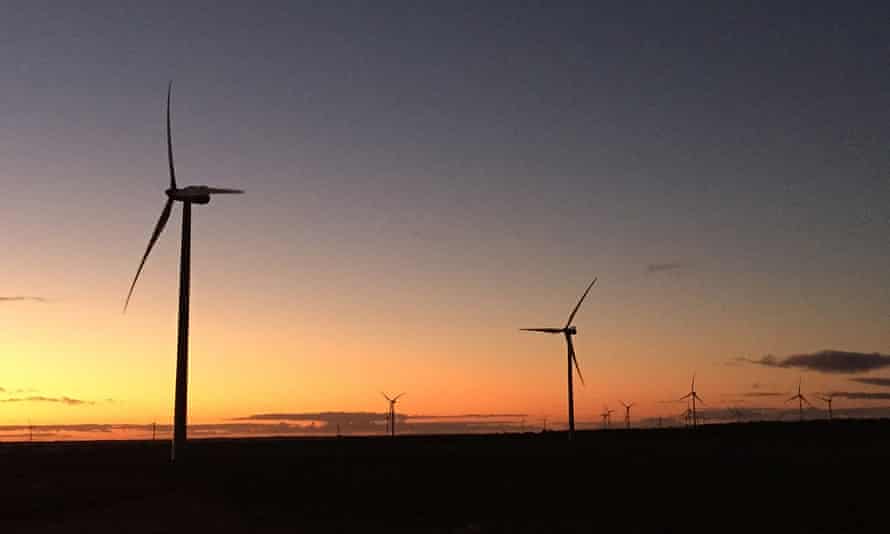
Wind turbines on a property near Merredin, Western Australia. An international consortium has selected a site in Australia’s south-west to build the Western Green Energy Hub. Photograph: Calla Wahlquist/The Guardian

Graham Readfearn
@readfearn
Tue 13 Jul 2021 03.59 BST

An international consortium wants to build what would be the world’s biggest renewable energy hub in Australia’s south-west to convert wind and solar power into green fuels like hydrogen.

The group of energy companies announced the proposal over a 15,000 sq km area that could have a 50 gigawatt capacity and cost $100bn.

An area bigger than the size of greater Sydney has been identified in the south-east of Western Australia with “consistently high levels of wind and solar energy”.


Australia’s export credit agency gave 80 times more to fossil fuel projects than renewables


Guardian Australia understands the Western Green Energy Hub (WGEH) could cost about $100bn.

The project’s 50GW capacity compares to the 54GW of generation capacity of all the coal, gas and renewables plants currently in the national energy market, which includes all states except WA and the Northern Territory. Australia’s biggest coal plant is just 2.9GW.

InterContinental Energy, CWP Global and Mirning Green Energy Limited announced plans for the mega project on Tuesday, saying it wants to build the scheme in three phases to produce up to 3.5m tonnes of green hydrogen or 20m tonnes of green ammonia each year.

Guardian Australia understands the consortium is looking to produce the first fuels from the project by 2030, and will look to construct an offshore facility to transfer fuels onto ships.

The consortium – which includes an Indigenous-owned energy company – said it wanted to tap into a global market for green hydrogen it expects will be worth US$50tn by 2050. About 30GW of the hub would focus on wind, with the rest coming from solar power.

Hydrogen and ammonia produced at the hub would be destined for use in power stations, shipping, heavy industry and aviation.


Environment minister rules huge renewable energy hub in WA ‘clearly unacceptable’


The hub would be larger than a 45GW renewables project announced by German company Svevind Energy and planned for Kazakhstan, reported to be the world’s biggest renewables project proposed so far.

Last month, Australia’s environment minister Sussan Ley rejected a plan for a 26GW hub in the north of WA for “clearly unacceptable” impacts on threatened migratory species and internationally recognised wetlands.

In a statement, Trevor Naley, chairman of the Mirning Traditional Lands Aboriginal Corporation and a board member on the consortium, said: “As First Nations land owners, the Mirning people are excited to hold such an integral and defining stake in this historical partnership with WGEH. This partnership, through robust governance and a seat at the table for Mirning people, will provide opportunities never before available to Indigenous corporations.”

Brendan Hammond, chairman of WGEH said the proposal was “historic on two fronts” for its scale and its partnership with traditional owners.

“It is an honour and a privilege to be involved in this groundbreaking project,” he said.

WA’s hydrogen minister Alannah MacTiernan told the West Australian the proposal was “truly massive” and said the state was positioned to be a major contributor to global decarbonisation.

The newspaper said the consortium had secured a licence from WA’s McGowan government to complete site surveys and research to pursue a business case for the project.


$1.5 million in funding could go to three Wyoming hydrogen project finalists

Jul 12, 2021

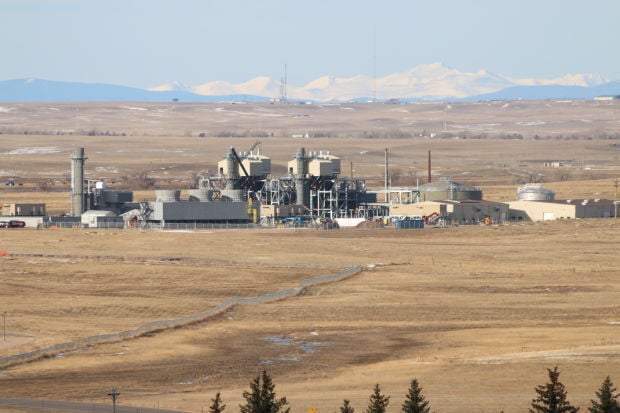
The Cheyenne Prairie Generating Station is owned by Black Hills Corp. Three proposed hydrogen projects have been selected as finalists for Wyoming Energy Authority grant funding.Contributed

Three proposed hydrogen pilot projects have been chosen as finalists for grant funding by the Wyoming Energy Authority, pending approval from the state Energy Resources Council.

Ten companies applied for program funding earlier this year, requesting just over $7 million in grants for projects topping a total of $31 million. Combined, the cost of the three selected projects amounts to just over $2 million.

If all three proposals are funded, approximately $1.5 million in project costs will be covered by the program. The companies will be responsible for financing the rest.

Tulsa, OK-based Williams Companies is set to receive the bulk of the grant money — nearly $1 million — for a $1.2 million hydrogen feasibility study in partnership with the University of Wyoming. The study could inform development of a $1 billion hydrogen and synthetic natural gas hub in Wyoming later this decade.

“We’re all-in on Wyoming right now — all-in on the southwestern part of the state,” said William De Los Santos, renewables business development lead at Williams, during the Energy Authority hearing.

When evaluating project siting, the company’s mantra is, “the right partners, the right projects and the right place,” and Wyoming’s existing assets, conveniently located infrastructure, reliable customers and government support of the energy industry make it an ideal place for hydrogen development, De Los Santos said.

More than $450,000 in program funding is earmarked for regional energy company Black Hills Energy, which proposed an $815,000 hydrogen combustion demonstration project at its Cheyenne Prairie Generating Station.

During the first of two project phases, Black Hills Energy will conduct feasibility studies and an engineering assessment of equipment modifications for hydrogen combustion. In phase two, which it hopes to reach by 2023, the company plans to begin combustion testing using blended hydrogen and natural gas.

Jason Hartman, director of power delivery at Black Hills Energy, described the project as an important first step in proving the feasibility of hydrogen development in Wyoming. “We see this as an excellent opportunity to be part of the state’s energy future,” he said.

The remaining $20,000 will go to Jonah Energy, a Denver, CO-based oil and gas developer operating in Wyoming’s Jonah Field. In partnership with the National Renewable Energy Laboratory, the company will invest a total of $50,000 into a plan for using leftover renewable power to create hydrogen, then convert it into renewable natural gas — a process called biomethanation.

“Many of our customers that buy natural gas from southwestern Wyoming are setting renewable gas goals,” said Howard Dieter, vice president of environment, health and safety at Jonah Energy. The company hopes its plan will give it a stronger foothold in the renewable natural gas sector.

If the plan is found to be feasible, the company could begin work on a 10 megawatt power-to-gas pilot project in 2022.


Paid To Poop: How Feces Is Creating “Clean” Energy

A university in South Korea has designed an eco-friendly toilet that turns waste into energy and cryptocurrency, which university students can use to buy food and coffee on campus.  

The BeeVi toilet was created by urban and environmental engineering professor Cho Jae-weon, who teaches at the Ulsan National Institute of Science and Technology (UNIST).

“If we think out of the box, feces has precious value to make energy and manure. I have put this value into ecological circulation,” Cho said, as carried by Reuters.  

The innovative toilet has a vacuum pump that sends the waste to a tank underground. The toilet thus reduces water usage and has been called a “super water-saving vacuum toilet.”

In the tank in a lab, microorganisms turn the waste into methane. The gas then powers a hot-water boiler, a gas stove, and a solid oxide fuel cell, providing energy for the building.

The average human waste per day can be converted into 50 liters of methane gas, which could generate enough power to drive a car for nearly a mile, or to generate 0.5 kilowatts (kWh) of electricity, the South Korean professor says.

The eco-friendly toilet can be used by university students to help mine a cryptocurrency Cho has invented, Ggool. The crypto can be used as a payment for food, fruit, coffee, or books at the campus, according to the university.

Every student using the toilet earns 10 Ggool, Korean for honey, a day.

“I had only ever thought that faeces are dirty, but now it is a treasure of great value to me,” postgraduate student Heo Hui-jin told Reuters. “I even talk about faeces during mealtimes to think about buying any book I want.”

Cryptocurrency mining has recently attracted a lot of attention because of the large amount of energy it sucks. Elon Musk, who had said earlier this year that people could buy Teslas with Bitcoin, backtracked on this promise a few weeks later, saying that crypto mining is still largely powered by fossil fuel-derived energy. Most recently, Musk said last month that Tesla may start accepting cryptocurrency again if crypto mining becomes green.

By Charles Kennedy for Oilprice.com


At South Korea‘s Ulsan National Institute of Science and Technology, students can now defecate to earn cryptocurrency and help power a building.

UNIST urban and environmental engineering professor Cho Jae-weon designed an eco-friendly toilet that harnesses human feces to produce biogas and manure. Dubbed the BeeVi Toilet (a portmanteau of the words bee and vision), the innovative toilet utilizes a vacuum pump rather than water and is connected to an underground tank where microorganisms break down waste.

The microorganisms create methane that can be used as a sustainable source of energy in a variety of ways. An average person defecates 500g a day which roughly converts into 50 liters of methane gas or 0.5kWh of electricity which is enough to drive a car 1.2km (0.75 miles).

“If we think out of the box, feces has precious value to make energy and manure. I have put this value into ecological circulation,” said Cho Jae-weon.

Additionally, students that use the BeeVi Toilet can early 10 Ggool (honey in Korean) a day, a cryptocurrency dispensed by the eco-friendly toilet that can be used on campus to purchase products.


Escort services and strip clubs don't increase sex crimes

OXFORD UNIVERSITY PRESS USA

Research News

A new paper in The Economic Journal, published by by Oxford University Press, indicates that the presence of adult entertainment establishments may decrease sex crimes, significantly.

The role of entertainment establishments (strip clubs, escort services, adult bookstores, and adult movie theaters) in communities is controversial. Citizens often view them as centers of vice. While some have suggested that these clubs and services may improve behavior if people use them instead of committing sex crimes, such establishments may reinforce the view of women as objects, leading to more violence against them.

This paper exploits a unique data set of high frequency precinct level crime information from New York City, due to its controversial stop-and-frisk policing policy. The researchers here constructed a new data set to combine the exact location of not-self-reported sex crimes with the day of opening and exact location of adult entertainment establishments in New York City. The crime data includes hourly information on crimes observed by the police, including sex crimes. The data set covered the period from January 1, 2004 to June 29, 2012.

The number of adult entertainment establishments increased signi?cantly during this period, from 76 in 2004 to approximately 280 in 2012. The researchers show that opening these establishments decreases the number of sex crimes committed nearby. They ?nd that the presence of an adult entertainment establishment in a given precinct leads to a 13% reduction in sex crime in the precinct one week after the opening.

The researchers also find that opening adult establishments does not affect other types of crimes, which suggests that the results on sex crimes are not driven by an increased police presence on the streets. This also rules out the hypothesis that these businesses may attract other types of criminals, such as drug dealers. The researchers find no negative effects on bordering precincts, indicating that sex crimes are not moving to other nearby areas.

"Sex crimes, including sexual violence, are a major public health concern," said the paper's authors, Maria Micaela Sviatschi and Riccardo Ciacci. "Apart from the large psychological and physical burden, these crimes also lead to public health issues including unintended pregnancies, induced abortions, and sexually transmitted infections. However, little is known about how to prevent sex crimes, including sexual abuse and rape. This paper studies how the presence of adult entertainment establishments affects the incidence of sex crimes. Surprisingly, we find that within the time studied, adult entertainment establishments decrease sex crime and have no effect on other types of crimes."

###

The paper "The Effect of Adult Entertainment Establishments on Sex Crime: Evidence from New York City" is available (at midnight on July 13th ) at: https://doi.org/10.1093/ej/ueab042.


More complex than we thought: The body's reaction to contact allergens

UNIVERSITY OF COPENHAGEN - THE FACULTY OF HEALTH AND MEDICAL SCIENCES

Research News

Hair dye, perfume, jewellery. Beautifying to most, but for some they are equivalent to rashes, irritation and reduced quality of life. Together with hay fever and food allergies, allergic contact dermatitis due to exposure to e.g. nickel and perfume ingredients represents the majority of allergic reactions seen among Danes.

Traditionally, researchers have distinguished between immediate and delayed allergic reactions, depending on which parts of the immune system that is responsible for the reaction. E.g., hay fever and food allergies are 'immediate' forms that cause immediate symptoms, whereas it can take days before the skin reacts to things like nickel and perfume. But now a new study conducted by the LEO Foundation Skin Immunology Research Center at the University of Copenhagen changes this understanding.

'Some patients develop allergic contact dermatitis at a much earlier stage than described by text books. The aim of the study was therefore to try to determine why some react to contact allergens much faster than prescribed. It turns out that when a part of the skin is exposed to the allergen for the first time, the cells within that specific skin area will develop local memory towards the contact allergen. And then when the same area is re-exposed to the allergen at a later point in time, the patient will develop a clear reaction within only 12 hours', explains PhD Student and first author of the study Anders Boutrup Funch.

It is the T cells in the body that are responsible for delayed allergic reactions - also known as type 4 allergic reactions. But in the new study conducted on mice the researchers have shown that the T cells are capable of building a sophisticated memory that enables them to respond much faster than previously assumed. This gives us a more complex picture of contact allergy.

'We point to a need for clarification of this disease. Type 4 reactions should be subcategorised, giving us both the classic delayed reaction - that is, where the patient reacts 24-72 hours after exposure - and an immediate reaction, where the patient develops symptoms much faster. Based on these results, we may have to change the text books on contact allergy. At any case, we will need to add a chapter', says the main author of the study, Professor Charlotte Menné Bonefeld.

The study also reveals that activation of the memory T cells following exposure to an allergen leads to massive recruitment of the most abundant type of white blood cells in the body - the so-called neutrophils - to the affected part of the skin. Normally, neutrophil recruitment is used to fight infections, as these cells are capable of effectively eliminating microorganisms. At the same time, they cause intense infection and local tissue damage, which is what the patients experience as a rash. Neutrophil recruitment is not seen in connection with delayed reactions to contact allergens. 

The next step in the research is to test the study results on humans. Once a person has developed contact allergy, they are likely to suffer from it for the rest of their lives. Therefore, the researchers behind the study hope the new knowledge may improve contact allergy patients' chances of getting treatment in the future.

'First and foremost, we need to tell the world that we have new knowledge which should change our understanding of the disease', Anders Boutrup Funch concludes.

###


Resilience, not collapse: What the Easter Island myth gets wrong

BINGHAMTON UNIVERSITY

Research News

BINGHAMTON, N.Y. -- New research from Binghamton University, State University of New York suggests that the demographic collapse at the core of the Easter Island myth didn't really happen.

You probably know this story, or a version of it: On Easter Island, the people cut down every tree, perhaps to make fields for agriculture or to erect giant statues to honor their clans. This foolish decision led to a catastrophic collapse, with only a few thousand remaining to witness the first European boats landing on their remote shores in 1722.

But did the demographic collapse at the core of the Easter Island myth really happen? The answer, according to new research by Binghamton University anthropologists Robert DiNapoli and Carl Lipo, is no.

Their research, "Approximate Bayesian Computation of radiocarbon and paleoenvironmental record shows population resilience on Rapa Nui (Easter Island)," was recently published in the journal Nature Communications. Co-authors include Enrico Crema of the University of Cambridge, Timothy Rieth of the International Archaeological Research Institute and Terry Hunt of the University of Arizona.

Easter Island, or Rapa Nui in the native language, has long been a focus of scholarship into questions related to environmental collapse. But to resolve those questions, researchers first need to reconstruct the island's population levels to ascertain whether such a collapse occurred and, if so, the scale.

"For Rapa Nui, a big part of scholarly and popular discussion about the island has centered around this idea that there was a demographic collapse, and that it's correlated in time with climate changes and environmental changes," explained DiNapoli, a postdoctoral research associate in environmental studies and anthropology.

Sometime after it was settled between the 12th to 13th centuries AD, the once-forested island was denuded of trees; most often, scholars point to human-prompted clearing for agriculture and the introduction of invasive species such as rats. These environmental changes, the argument goes, reduced the island's carrying capacity and led to a demographic decline.

Additionally, around the year 1500, there was a climactic shift in the Southern Oscillation index; that shift led to a dryer climate on Rapa Nui.

"One argument is that changes in the environment had a negative impact. People see that there was a drought and said, 'Well, the drought caused these changes,'" said Lipo, a professor of anthropology and environmental studies and associate dean of Harpur College. "There are changes. Their population changes and their environment changes; over time, the palm trees were lost and at the end, the climate got drier. But do those changes really explain what we're seeing in the population data through the radiocarbon dating?"

Reconstructing population changes

Archaeologists have different ways to reconstruct population sizes using proxy measures, such as looking at the different ages of individuals at burial sites or counting ancient house sites. That latter measure can be problematic because it makes assumptions as to the number of people who live in each house, and whether the houses were occupied at the same time, DiNapoli said.

The most common technique, however, uses radiocarbon dating to track the extent of human activity during a moment in time, and extrapolating population changes from that data. But radiocarbon dates can be uncertain, DiNapoli acknowledged.

For the first time, DiNapoli and Lipo have presented a method that is able to both resolve these uncertainties and show how changes in population sizes relate to environmental variables over time.

Standard statistical methods don't work when it comes to linking the radiocarbon data to environmental and climate changes, and the population shifts connected with them. To do so would involve estimating a "likelihood function," which is currently difficult to compute. Approximate Bayesian Computation, however, is a form of statistical modeling that doesn't require a likelihood function, and thus gives researchers a workaround, DiNapoli explained.

Using this technique, the researchers determined that the island experienced steady population growth from its initial settlement until European contact in 1722. After that date, two models show a possible population plateau, while another two models show possible decline.

In short, there is no evidence that the islanders used the now-vanished palm trees for food, a key point of many collapse myths. Current research shows that deforestation was prolonged and didn't result in catastrophic erosion; the trees were ultimately replaced by gardens mulched with stone that increased agricultural productivity. During times of drought, the people may have relied on freshwater coastal seeps.

Construction of the moai statues, considered by some to be a contributing factor of collapse, actually continued even after European arrival.

In short, the island never had more than a few thousand people prior to European contact, and their numbers were increasing rather than dwindling, their research shows.

"Those resilience strategies were very successful, despite the fact that the climate got drier," Lipo said. "They are a really good case for resiliency and sustainability."

Burying the myth

Why, then, does the popular narrative of Easter Island's collapse persist? It likely has less to do with the ancient Rapa Nui people than ourselves, Lipo explained.

The concept that changes in the environment affect human populations began to take off in the 1960s, Lipo said. Over time, that focus became more intense, as researchers began to consider changes in the environment as a primary driver of cultural shifts and transformations.

But this correlation may derive more from modern concerns with industrialization-driven pollution and climate change, rather than archaeological evidence. Environmental changes, Lipo points out, occur on different time scales and in different magnitudes. How human communities respond to these changes varies.

Take a classic example of the overexploitation of resources: the collapse of the cod fisheries in the American Northeast. While the economies of individual communities may have collapsed, larger harvesting efforts simply switched to the other side of the world.

On an isolated island, however, sustainability is a matter of the community's very survival and resources tend to be managed conservatively. A misstep in resource management could lead to tangible, catastrophic consequences, such as starvation.

"The consequences of your actions are immediately obvious to you, and everyone else around you," Lipo said.

Lipo acknowledged that proponents of the Easter Island collapse story tend to see him as a climate-change denier; that's emphatically not the case. But he cautioned that the ways ancient peoples dealt with climate and environmental changes aren't necessarily reflective of current global crises and their impact in the modern world. In fact, they may have a good deal to teach us about resilience and sustainability.

"There's a natural tendency to think that people in the past aren't as smart as we are and that they somehow made all these mistakes, but it's really the opposite," Lipo said. "They produced offspring, and the success that created the present. Even though their technologies might be more simple than ours, there is so much to be learned about the context in which they were able to survive."

###


USC study shows dire impacts downstream of Nile River dam

The research forecasts water supply and economic risks as tensions mount over Grand Ethiopian Renaissance Dam

UNIVERSITY OF SOUTHERN CALIFORNIA

Research News

IMAGE

IMAGE: PHOTO CAPTION: NASA'S TERRA SPACECRAFT SHOWS FILLING OF THE GRAND ETHIOPIAN RENAISSANCE DAM ALONG THE BLUE NILE RIVER IS WELL UNDER WAY NEAR THE ETHIOPIA-SUDAN BORDER. view more 

CREDIT: (PHOTO/NASA-JPL)

Rapid filling of a giant dam at the headwaters of the Nile River -- the world's biggest waterway that supports millions of people -- could reduce water supplies to downstream Egypt by more than one-third, new USC research shows.

A water deficit of that magnitude, if unmitigated, could potentially destabilize a politically volatile part of the world by reducing arable land in Egypt by up to 72%. The study projects that economic losses to agriculture would reach $51 billion. The gross domestic product loss would push unemployment to 24%, displacing lots of people and disrupting economies.

"Our study forecasts dire water supply impacts downstream, causing what would be the largest water stress dispute in modern human history," said Essam Heggy, a research scientist at the USC Viterbi School of Engineering and lead author of the study. "Averaging losses from all of the announced filling scenarios, these water shortages could nearly double Egypt's present water supply deficit and will have dire consequences for Egypt's economy, employment, migration and food supply."

The study was published July 1 in Environmental Research Letters.

Despite the risks, the study offers policy solutions for sustainability that could potentially minimize the downstream impacts and reduce tensions in the Nile River region. For example, the impacts could be partially offset by adjusting operations at the Aswan Dam downstream in southern Egypt, pumping more groundwater, cultivating different kinds of crops and improving irrigation systems.

So far, despite international negotiations, there's been little progress in the decade-long dispute.

The crux of the controversy is Ethiopia's $5 billion Grand Ethiopian Renaissance Dam nearing completion at the Nile headwaters. Now in the second phase of filling, it will be the largest hydropower project in Africa and would create a reservoir containing 74 billion cubic meters of water -- more than twice the operational capacity of Lake Mead on the Colorado River.

It's so vast that it will take years to fill, and depending on how long it takes, the water diversions could have devastating impacts downstream. Egypt and Sudan have water rights to the Nile, while Ethiopia was not allocated a quantifiable share. But as water and energy demand grows in the Nile River basin, Ethiopia is asserting its needs for hydropower and irrigated agriculture to promote development.

Some 280 million people in 11 countries in the basin depend on the waterway -- a primary source of irrigation for more than 5,000 years. Egypt relies on the Nile for more than 90% of its water. The region's population could increase by 25% in 30 years, increasing demand at a time when Egypt would expect less water from the Nile. Water rights along the Nile have been in dispute since 1959; today, the conflict threatens to escalate into a war.

The USC study examined various dam filling scenarios and water shortage impacts for Egypt. Based on the short-term filling strategies of 3 to 5 years, presently favored by Ethiopia, the water deficit downstream in Egypt could almost double; 83% of the additional water loss would be due to dam restraining flow and evaporation and 17% lost due to seepage into rocks and sand.

The study helps fill a gap in the dispute by reducing ambiguities about how dam filling scenarios would impact the water budget deficit in Egypt, as well as offering a feasibility index to the different potential solutions. As global warming and aridification accelerates, it underscores the need for more water research in arid lands, which is the core mission of the Arid Climates and Water Research Center at the USC Viterbi School of Engineering.

"There is a real need for sound science to resolve the ambiguity surrounding this controversy," Heggy said. "Our analysis doesn't point fingers, yet it shows a dire water situation that will result downstream, which is forecasted as the largest water stress dispute in human history. It can be avoided if proper support is made to the water, energy and environment research in the Nile basin."

The study comes amidst a 10-year dispute between Egypt and Ethiopia over water supply on the Nile River. The parties seek an international solution, yet talks led by the U.S. State Department -- and joined by the European Union and the United Nations -- have resulted in little agreement after four years.

Meanwhile, tensions run high as negotiators try to avert armed conflict. Egypt has vowed not to allow the dam to impede its water supply, and it held joint military maneuvers with Sudan in May. Sudan has since petitioned the United Nations Security Council to hold an emergency session as soon as possible.

The dispute is emblematic of wider disputes over water scarcity as climate change affects developing countries experiencing rapid growth. Disputes along the Mekong, Zambezi and Euphrates-Tigris rivers, among others, show the potential for political instability and conflict.

Heggy said it's possible a win-win solution may yet be found for the Nile River, based on policy options the study identifies. Progress has been impeded, though, due to a lack of credible information about downstream water supply and economic impacts. Getting an agreement will likely require better data and forecasts on impacts to human society as well as ecological effects along the Nile River.

###

In addition to Heggy, co-authors of the study are Abotalib Z. Abotalib at USC and Zane Sharkawy at Cornell University.

The research was funded by the James H. Zumberge Research and Innovation Fund allocation to the Arid Climates and Water Research Center at the Viterbi School of Engineering.