Tuesday, July 13, 2021


Muon g-2 Experiment Results – Profound Implications for the History of the Universe
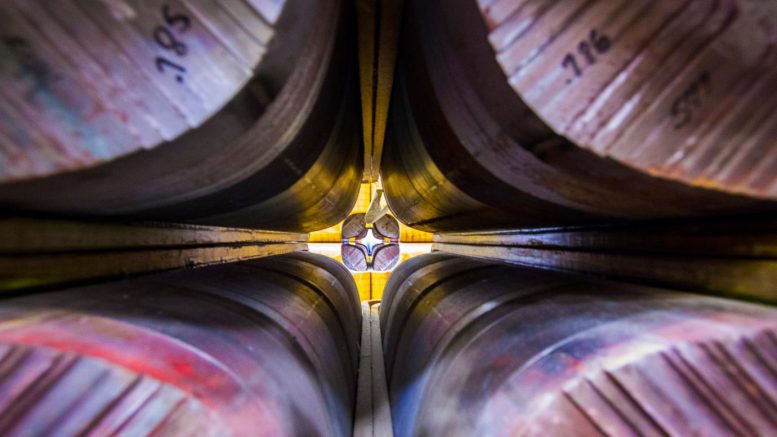

Peering down a row of magnets leading to the particle storage ring at Fermilab’s Muon g-2 experiment. The results have theoretical physicists around the world frantically working through ideas for explanations. Credit: Photo by Cindy Arnold/Fermilab

Experiment opens up field for new physics, say Fermilab, UChicago scientists.

The news that muons have a little extra wiggle in their step sent word buzzing around the world this spring.

The Muon g-2 experiment hosted at Fermi National Accelerator Laboratory announced on April 7 that they had measured a particle called a muon behaving slightly differently than predicted in their giant accelerator. It was the first unexpected news in particle physics in years.

Everyone’s excited, but few more so than the scientists whose job it is to spitball theories about how the universe is put together. For these theorists, the announcement has them dusting off old theories and speculating on new ones.

“To a lot of us, it looks like and smells like new physics,” said Prof. Dan Hooper. “It may be that one day we look back at this and this result is seen as a herald.”

Gordan Krnjaic, a fellow theoretical physicist, agreed: “It’s a great time to be a speculator.”

The two scientists are affiliated with the University of Chicago and Fermilab; neither worked directly on the Muon g-2 experiment, but both were elated by the results. To them, these findings could be a clue that points the way to unraveling the last mysteries of particle physics—and with it, our understanding of the universe as a whole.
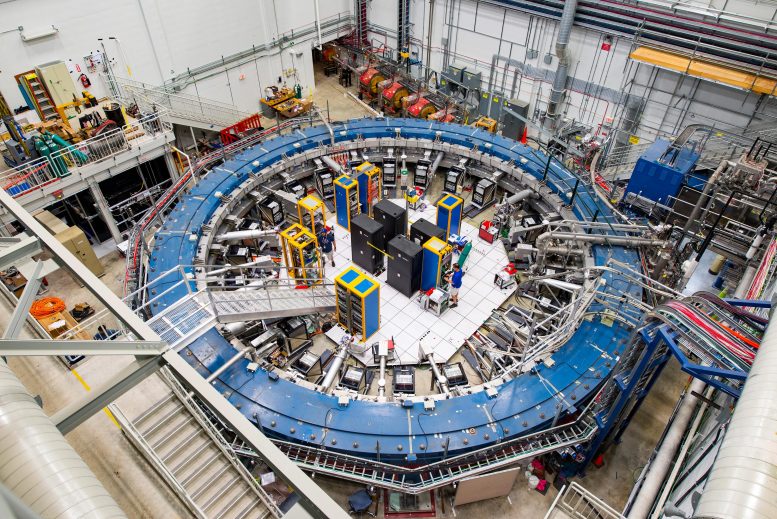

The Muon g-2 ring sits in its detector hall amidst electronics racks, the muon beamline, and other equipment. This impressive experiment operates at negative 450 degrees Fahrenheit and studies the precession, or “wobble,” of particles called muons as they travel through the magnetic field. Credit: Reidar Hahn/Fermilab

Setting the Standard

The problem was that everything was going as expected.

Based on century-old experiments and theories going back to the days of Albert Einstein’s early research, scientists have sketched out a theory of how the universe—from its smallest particles to its largest forces—is put together. This explanation, called the Standard Model, does a pretty good job of connecting the dots. But there are a few holes—things we’ve seen in the universe that aren’t accounted for in the model, like dark matter.

No problem, scientists thought. They built bigger experiments, like the Large Hadron Collider in Europe, to investigate the most fundamental properties of particles, sure that this would yield clues. But even as they looked more deeply, nothing they found seemed out of step with the Standard Model. Without new avenues to investigate, scientists had no idea where and how to look for explanations for the discrepancies like dark matter.

Then, finally, the Muon g-2 experiment results came in from Fermilab (which is affiliated with the University of Chicago). The experiment reported a tiny difference between how muons should behave according to the Standard Model, and what they were actually doing inside the giant accelerator.


What is a muon, and how does the Muon g-2 experiment work? Fermilab scientists explain the significance of the result.

Murmurs broke out around the world, and the minds of Hooper, Krnjaic and their colleagues in theoretical physics began to race. Almost any explanation for a new wrinkle in particle physics would have profound implications for the history of the universe.

That’s because the tiniest particles affect the largest forces in the universe. The minute differences in the masses of each particle affect the way that the universe expanded and evolved after the Big Bang. In turn, that affects everything from how galaxies are held together down to the nature of matter itself. That’s why scientists want to precisely measure how the butterfly flapped its wings.

The likely suspects

So far, there are three main possible explanations for the Muon g-2 results—if it is indeed new physics and not an error.

One is a theory known as “supersymmetry,” which was very fashionable in the early 2000s, Hooper said. Supersymmetry suggests that that each subatomic particle has a partner particle. It’s attractive to physicists because it’s an overarching theory that explains several discrepancies, including dark matter; but the Large Hadron Collider hasn’t seen any evidence for these extra particles. Yet.

Another possibility is that some undiscovered, relatively heavy form of matter interacts strongly with muons.

Finally, there could also exist some other kinds of exotic light particles, as yet undiscovered, that interact weakly with muons and cause the wobble. Krnjaic and Hooper wrote a paper laying out what such a light particle, which they called “Z prime,” could mean for the universe.

“These particles would have to have existed since the Big Bang, and that would mean other implications—for example, they could have an impact on how fast the universe was expanding in its first few moments,” Krnjaic said.

That could dovetail with another mystery that scientists are pondering, called the Hubble constant. That number is supposed to indicate how fast the universe is expanding, but it varies slightly according to which way you measure it—a discrepancy which could indicate a missing piece in our knowledge.

Almost any explanation for a new wrinkle in particle physics would have profound implications for the history of the universe.

There are other, further-out possibilities, such as that the muons are being bumped by particles winking in and out of existence from other dimensions. (“One thing particle physicists are rarely accused of is a lack of creativity,” said Hooper.)

But the scientists said it’s important not to dismiss theories out of hand, no matter how wild they may sound.

“We don’t want to overlook something just because it sounded weird,” said Hooper. “We’re constantly trying to shake the trees to get every idea we can out there. We want to hunt this down everywhere it could be hiding.”

Sigma steps

The first step, however, is to confirm that the Muon g-2 result holds true. Scientists have a system to tell whether the results of an experiment are real and not just a blip in the data. The result announced in April reached 4.2 sigma; the benchmark that means it’s almost certainly true is 5 sigma.

“If it’s really new physics, we’ll be much closer to knowing in a year or two,” said Hooper. The Muon g-2 experiment has much more data to sift through. Meanwhile, the results of some very complicated theoretical calculations—so complex that even the most powerful supercomputers in the world need to chew on them for months to years—should be coming down the pike.

Those results, if they get to a 5 sigma confidence level, will point scientists where to go next. For example, Krnjaic helped propose a Fermilab program called M3 that could narrow the possibilities by firing a beam of muons at a metal target—measuring the energy before and after the muons hit. Those results could indicate the presence of a new particle.

Meanwhile, at the French-Swiss border, the Large Hadron Collider is scheduled to upgrade to a higher luminosity that will produce more collisions. New evidence for particles or other phenomena could pop up in their data.

All this excitement over a wobble might seem like an overreaction. But tiny discrepancies can, and have, led to massive shakeups. Back in the 1850s, astronomers making measurements of Mercury’s orbit noticed it was off a little from what Newton’s theory of gravity would predict. “That anomaly, along with other evidence, eventually led us to the theory of general relativity,” said Hooper.

“No one knew what it was about, but it got people thinking and experimenting. My hope is that one day we’ll look back at this muon result the same way.”

References:

“Measurement of the Positive Muon Anomalous Magnetic Moment to 0.46 ppm” by B. Abi et al. (Muon g-2 Collaboration), 7 April 2021, Physical Review Letters.
DOI: 10.1103/PhysRevLett.126.141801

“Magnetic-field measurement and analysis for the Muon – 2 Experiment at Fermilab” by T. Albahri et al. (The Muon g-2 Collaboration), 7 April 2021, Physical Review A.
DOI: 10.1103/PhysRevA.103.042208

Nuclear-Powered Crypto Plant Planned for PA Next Year. What Could Go Wrong?

By Nathaniel Mott

Good, clean crypto energy.
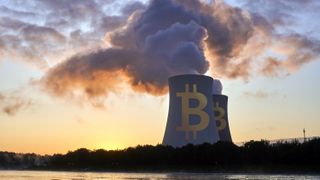
(Image credit: Shutterstock)

Cryptocurrency mining is going nuclear in the home of America's first capital. Data Center Dynamics today reported that Talen Energy plans to establish a nuclear-powered mining operation and data center that will have up to 300MW of on-site power when it's finished, sometime after 2Q 2022.

The mining operation and data center will be built next to the company's Susquehanna Steam Electric Station in Pennsylvania, according to the report, and Talen Energy could eventually triple its capacity to 1GW of on-site power.

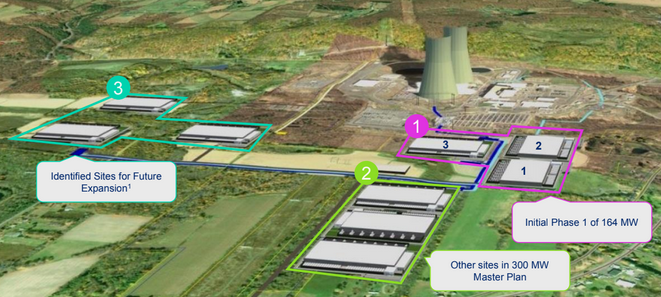
The facility's power capacity would grow in stages. It's expected to have 164MW of capacity "supported by dual 1+GW nuclear units and two independent substations" when the first phase of development is complete, Data Center Dynamics reported.

This isn't the first time nuclear-powered crypto mining has been proposed. Ukraine’s Ministry of Energy considered mining with nuclear power in February, and in June, the mayor of Miami pushed for the city's nuclear energy to go toward mining.

Talen Energy to build 300MW nuclear-powered cryptomining facility and data center in US

Energy company planning to bring Susquehanna Hyperscale Campus online in Q2 2022

US power company Talen Energy is planning to develop a nuclear-powered cryptomining facility and data center adjacent to a nuclear power plant in Pennsylvania, that could grow to 300MW.

Talen Energy formed Cumulus Data in 2020 to ‘invest in opportunities created by the convergence of digital infrastructure and power’. A spokesperson for Talen said Cumulus is a subsidiary of Talen Energy and has two separate businesses; Cumulus Data, focused on hyperscale; and Cumulus Coin, focused on digital currency mining.

The company is looking to develop the Susquehanna Hyperscale Campus (SHC) in Berwick, on undeveloped land next to Talen Energy’s Nuclear-powered Susquehanna Steam Electric Station (SSES) in Salem Township, Luzerne County.

Talen says the first phase of development will have 164MW of capacity, but when complete will have 300MW of on-site power supported by dual 1+GW nuclear units and two independent substations, with further potential to expand to 1GW capacity in the future if needed. The project is due to come online in Q2 2022.

Talen Energy.png
Talen Energy's proposed development at the Susquehanna Steam Electric Station, PA– Talen Energy

“As the demand for energy increases among data center and cryptocurrency processing clients, so does the call for decarbonizing these energy sources. Talen Energy is constructing a hyperscale data center campus adjacent to its Susquehanna nuclear generation facility,” a company presentation said. “It will provide low-cost, reliable, carbon-free power to the data center clients on campus. This allows clients to benefit from carbon-free, 24/7 power being supplied directly to the campus, without the intermittency that renewable energy can experience, or requiring fossil fuels.

Talen tells DCD the company has already obtained the necessary permits at the township and state level to prepare the site for its first building and work has begun. Further permits are being applied for to begin construction of the first building. Talen says it has an anchor customer on the campus for the coin side of the business and is in discussions for data center customers.

Commissioned in 1983 for PPL, the 2,494MW Susquehanna Steam Electric Station is one of the largest nuclear power plants in the US. Its current owner, Talen Energy, was founded in 2015 after the competitive power generation business of PPL Corporation was spun off and combined with competitive generation businesses owned by private equity firm Riverstone Holdings.

Based in Allentown, Pennsylvania, Talen operates more than 15,320MW of power generation across mostly coal and gas plants in Maryland, Massachusetts, New Jersey, Texas, Pennsylvania, Virginia, and Montana.

In April, Talen also announced plans to develop 1.4 Gigawatts of solar and wind energy projects over the next five years and eliminate the use of coal at its plants. Talen's Montour generation facility in Pennsylvania and its Brandon Shores and H.A. Wagner coal generation facilities will cease coal-fired operations by the end of 2025, while its Brunner Island generation facility in Pennsylvania will cease using coal in 2028. The three sites total 5GW and around a third of the company’s energy generation footprint.

The company recently announced it was partnering with Key Capture Energy for a battery storage project at its H.A. Wagner coal plant in Baltimore, Maryland as part of plans to develop 1GW of battery storage projects across its plants. Talen told DCD it believes there is potential for more data center campuses at other plans, but it focused on Susquehanna for now.

Elsewhere in Pennsylvania, Stronghold Digital Mining, which owns the 80MW Scrubgrass Power Plant in Venango County, recently raised $105 million to help it mine cryptocurrencies at the plant. In New York, the Albany Engineering Corp. this month said it could make more money mining crypto at its hydroeletric plant in Mechanicville than generating energy for the grid.


Nor is this the first attempt to make crypto mining more environmentally friendly. El Salvador is looking to establish a volcano-powered mining operation, for example, and a hydroelectric plant in New York has started to mine Bitcoin to up its profits.


All of these efforts demonstrate the possibilities available to mining operations looking to mitigate the environmental impact of their businesses. Of course, that's assuming nothing goes wrong at said nuclear facility. We've got plans for nuclear, volcano, hydroelectric power and, hey, you can even join in the renewable energy mining craze with a solar-powered Raspberry Pi project.
Japanese oil producer eyes Canadian oilsands divestment

Japex seeking a buyer for its 75 per cent stake in the Hangingstone oilsands facility


Reuters
Shariq Khan and Rod Nickel
Publishing date:Jul 08, 2021 • 
Japex unit Japan Canada Oil Sands Ltd. (JACOS) is majority owner of Hangingstone, with Chinese state-owned oil giant CNOOC holding the remaining 25 per cent. PHOTO BY COURTESY JAPAN CANADA OIL SANDS LTD.

Japanese state-backed oil producer Japan Petroleum Exploration Co (Japex) is considering a sale among other options for its Hangingston oilsands project in Canada, a company spokesperson said on Friday.

Japex is seeking a buyer for its 75 per cent stake in the Hangingstone oilsands facility in Canada, two sources with direct knowledge of the matter previously told Reuters.

Several global oil majors have rushed to sell Canadian oilsands assets over the past four years over concerns ranging from high production costs and emissions to scarcity of capital.

Japex unit Japan Canada Oil Sands Ltd. (JACOS) is majority owner of Hangingstone, with Chinese state-owned oil giant CNOOC holding the remaining 25 per cent.

One source said JACOS could fetch more than $200 million (US$160 million) from the sale, which could attract notable bids as it has abundant oil reserves that would benefit from fresh funding.

“We are considering various measures including the sale of our stake and cutting production costs to improve profitability of the project, but nothing has been decided,” Yuki Goto, a spokesperson at Japex, told Reuters by phone, adding the move is part of its portfolio review.

JACOS, which did not respond to Reuters requests for comment, is working with an advisor on the sale, the sources said, requesting anonymity while discussing confidential talks.

They cautioned that a final decision on the sale has not yet been reached, and JACOS could still retain it.

The company also owns interests in undeveloped leases in Canada.

Hangingstone, a steam-assisted oil production site that began output in 2017, averaged 23,000 barrels per day (bpd) in the first four months of this year, according to the Alberta Energy Regulator.

Overall deal activity involving North American energy companies has accelerated as crude oil prices have surged after crashing last year during the pandemic.

Calgary-based ARC Resources, which in March bought rival Seven Generations Energy in a $2.7-billion deal, has sold its Alberta’s Pembina Cardium assets to privately held Ricochet Oil Corp. for around $100 million, four sources familiar with that transaction told Reuters.

Separately, Schlumberger NV has begun a formal process to sell its Canadian joint venture with Torxen Energy, multiple sources familiar with the matter told Reuters. Chief Executive Olivier Le Peuch stated the goal in April to exit most oil producing assets globally.

The joint venture had spent over US$1 billion to buy oil and natural gas assets in the Palliser block in Alberta from Cenovus Energy in October 2017.

A Schlumberger spokesperson said the company is continuously looking at its portfolio.

© Thomson Reuters 2021
PAID FOR BY YOU & ME

What's the cost of cutting oilsands' carbon emissions? A cool $75 billion

The oilsands industry emits almost 70 million metric tons a year of carbon dioxide, about 10 per cent of Canada's emissions

Author of the article:
Robert Tuttle
Publishing date: Jul 08, 2021 •
The setting sun reflects off a tailings pond behind Syncrude's oilsands 
upgrading facility north of Fort McMurray. 
PHOTO BY RYAN JACKSON/EDMONTON JOURNAL FILES


It will cost about $75 billion to zero out greenhouse gases from oilsands operations by 2050, with a good deal of the costs borne by taxpayers and many loose ends yet to be tied up, according to two of the industry’s top CEOs.

To achieve the goal announced last month, about half of the emission cuts would need to come from capturing carbon at oilsands sites and sequestering it deep underground, which may require as much as two-thirds government capital like in Norway, Mark Little, chief executive office of Suncor Energy Inc., said in an interview. It’s still unclear how and when most of the projects will be implemented, or which agreements will be needed, but it’s clear the industry doesn’t want to do it alone.

“We haven’t been able to find any jurisdiction in the world where carbon capture has been implemented, where the national government or the state governments are not very significant partners in that investment,” Alexander Pourbaix, CEO of Cenovus Energy Inc., said in the same interview “I don’t think any of us would ever be in a position to go at this on our own. It’s just too significant an undertaking.”

The initiative follows mounting pressure from large, climate-minded investors, many of which have ditched their oil sands holdings. Sitting atop the world’s third-largest crude reserves, the Canadian industry uses carbon-intensive extraction methods that have made it a target of environmentalists. Also at stake are jobs and tax revenues from an industry that represents about 10 per cent of the Canadian economy.

“We have one Achilles heel: It’s greenhouse gas emissions,” Little said. “We can bury our heads in the sand and become a victim, or we can actually deal with it.”

The oilsands industry emits almost 70 million metric tons a year of carbon dioxide, about 10 per cent of Canada’s emissions, “so we are a big emitter for sure,” Little said.

The plan to cut those emissions — which also has the support of Canadian Natural Resources Ltd., Exxon Mobil Corp.’s Imperial Oil and MEG Energy Corp. — will include measures like switching the fuels used at oil sands operations and using solvents to haul crude more efficiently. Later on, the industry might employ small nuclear reactors to make steam, Pourbaix said.

One of the group’s first big project is to build a carbon dioxide-carrying trunk line along a corridor that links oil sands facilities in the Fort McMurray area and Cold Lake regions of Northern Alberta to a nearby carbon sequestration hub. The trunk line will likely cost $1 billion to $2 billion, and could be in operations by the middle of the decade. But the biggest costs are associated with capturing the CO2, ranging from about $50 a ton for industries that emit high concentrations to “several hundred dollars a ton” for direct capture from the air, Little said.

The plan doesn’t include so-called Scope 3 emissions, the ones generated by cars, aircraft, homes and factories when the fossil fuels produced in the oilsands are burned by the end consumers.

Bloomberg.com


Brazil Plans To Be 5th-Largest Crude Exporter By 2030

Brazil’s expected oil output surge this decade will make it the world’s fifth-largest crude exporter in 2030, Brazilian Mines and Energy Minister Bento Albuquerque said in an interview with The Rio Times on Thursday.

“In 2030, when we reach a production of 5.3 million barrels of oil per day, Brazil will become the fifth largest exporter in the world,” Albuquerque said, adding that Brazil’s crude and liquids production is set to jump from 3.3 million barrels per day (bpd) now.

Currently, Brazil is out of the top ten of the world’s largest crude oil exporters, a ranking where Saudi Arabia is firmly in the lead.

Brazil’s prolific pre-salt offshore oilfields have been ramping up production in recent years and are the main driver of rising oil production. Moreover, Brazil is one of the countries not part of the OPEC+ alliance that are expected to continue to contribute to non-OPEC supply this year and in the coming years, according to estimates from OPEC itself.

The main drivers for 2021 supply growth are anticipated to be Canada, Brazil, China, and Norway, OPEC said in its latest Monthly Oil Market Report (MOMR) in June.

Brazil’s crude oil production in April 2021 rose by 128,000 bpd from March to average 2.97 million bpd. Based on preliminary production data, and fewer outages due to lower maintenance and other unplanned outages, May crude production indicates further month over month growth of more than 50,000 bpd, OPEC has estimated.

In 2020, Brazilian crude oil production rose by 5.7 percent to average 2.9 million bpd, according to data from industry regulator ANP published last month. The pre-salt basin with 2 million bpd output led the rise in supply. Thanks to the higher crude oil production, Brazil’s exports hit a record level of 1.4 million bpd in 2020, up by 16.9 percent year over year, ANP said.

By Tsvetana Paraskova for Oilprice.com


Batteries as an infrastructure asset class: A new paradigm

Battery storage is flexible, remarkable — and investable — but you need to know what you’re doing and know where the market opportunities and limits lie. Renewable and clean energy financier Laurent Segalen from Megawatt-X explains some of the things he’s seen as batteries have become an infrastructure asset in their own right. 

This is an extract of an article which appeared in Vol.27 of PV Tech Power, Solar Media's quarterly technical journal for the downstream solar industry. Every edition includes 'Storage & Smart Power,' a dedicated section contributed by the team at Energy-Storage.news. 

As we witness the relentless growth of renewables, operators and investors are wondering how to mitigate the increased intermittency of power generation. We are seeing more and more instances of negative prices, and also an increased volatility in daily power prices, especially in the zones with high renewable penetration and thin grids.

These zones include Australia, the US West Coast, and the EU periphery (Spain, Scandinavia, UK). Going forward, the burden of dealing with intermittency will fall back, either directly or indirectly, in the hands of investors. This is not great news for infrastructure investors who allocated equity and debt into the renewable industry for its fixed income revenue profile. Once long term capital-intensive solutions (such as interconnectors and pumped hydro) have been exhausted, it is clearly the time for batteries to become a key infrastructure component of the balancing mechanisms.

How then can batteries become a proper infrastructure play?

From an investment point of view, going long on flexibility when the market is shorting it, is the perfect move. The technological trends are also heading in the right direction, as the cost for stationary storage is falling precipitously, in the wake of the billions of USD investments in EV batteries. Within a few years, leading experts such as Benchmark Minerals and BNEF expect another 50% fall in the costs of battery cells.

The question of bankability: From tech to revenue model

From a financial point of view, li-ion batteries are now a fully bankable technology. World-class providers like Fluence and Tesla are delivering new products with up to 20,000 cycles and above 90% round-trip efficiencies. And lithium ferro phosphate (LFP), with its lower cost and reduced fire risk, seems now the chemistry of choice for stationary storage.

Now that the technology aspect has been sorted, how can the revenue model of stationary storage become bankable? Contrary to wind and solar, batteries don’t typically benefit from long-term secured revenues, such as power purchase agreements (PPAs).

Instead, investors in storage need to deal with several types of revenues (arbitrage, grid services, reserve) which are difficult to model. Even more important, capturing those new revenues relies on implementing ever-improving software that maximise the monetisation of the numerous market opportunities but can be often seen as “black boxes” by investors.

The software race is on. Against Tesla’s Autobidder, you see Fluence acquiring AMS to provide an integrated hardware + software solution. Those new software are incomparably more suited to optimise battery assets than human traders. For instance in Australia, the new market design has created five-minute bidding windows: the best human trader will post 15-20 trades a day, whereas the software will be able to bid 288 times (12 bids per hour x 24h).

A tale of two countries: Germany and the UK

Germany has the most liquid and competitive power market in the EU. It is also at the centre of the European Grid. 800 distribution system operators (DSOs) are daily managing the flexibility of the system. The arbitrage cases are widely publicised but overall not sufficient to sustain a “buy low-sell high” business case. The balancing market is dominated by coal plants which remain cheaper than batteries. And for network services, a German DSO will directly invest in batteries. So there are limited short-term opportunities for infrastructure investors.

The UK presents a radically different picture, with less access to the ultra-liquid Central European Grid, much less pumped hydro capacity than in Germany and fewer interconnectors. Hence, there are many more opportunities for batteries and the strong UK investment community has started to invest in them. 

Namely, the UK harbours two pioneering funds, Gresham House Energy Storage Fund and Gore Street Energy Storage Fund which are 100% dedicated to batteries. Infracapital, with the support of M&G is also very ambitious in
its plans for storage and e-mobility solutions provider Zenobe. We also have leading traders, such as Hartree, Goldman Sachs and soon Mercuria and Trafigura that are joining the fray. And of course the “master disruptor” Tesla is also present; Tesla obtained this year a UK electricity trading license and signed an agreement with Octopus to connect all its Powerwall into a gigantic virtual power plant (VPP), while Shell’s sonnen is doing the same.

So how do you build a revenue stack for battery storage in the UK? First, it is better to partner with a digital platform that can provide you access to the various arbitrage, balancing and flexibility markets: routes to market providers like Flexitricy, Habitat Energy, Kiwi Power and others are delivering such very innovative services.

Second, a growing list of asset optimisers with solid balance sheets like Shell’s Limejump are offering PPAs with long term price floors to battery asset owners in return for a share of the upside; this is catalysing the interest of debt lenders.

Cover image: Energy storage is like a digital Swiss Army Knife for the grid. Credit: Flickr/James Case

This is an extract of an article which appeared in Vol.27 of PV Tech Power, Solar Media's quarterly technical journal for the downstream solar industry. Every edition includes 'Storage & Smart Power,' a dedicated section contributed by the team at Energy-Storage.news. To learn more and to subscribe, visit the homepage here


Convalt Energy to open 700-MW solar 

panel assembly facility in New York

 in 2022


There have been some announcements of crystalline silicon solar panel manufacturing outfits coming to the United States in the last couple years, but so far, nothing new has opened since Q CELLS (Georgia), LG (Alabama) and JinkoSolar (Florida) unveiled their panel assembly facilities in 2019. In fact, this year saw the closure of one of the longest-running solar panel manufacturing facilities in the United States when SunPower ceased production at the former SolarWorld plant in Oregon after over a decade of on-site manufacturing and 40+ years of technical know-how.

Archive photo of SolarWorld’s Oregon facility

But those veteran SolarWorld manufacturing lines live to fight another day now that ACO Investment Group (working through its subsidiary Convalt Energy) has bought the equipment and is moving it all to a new facility in upstate New York. The plan is to have 700 MW of American assembled solar panels coming out of the new-build factory starting in July 2022.

Solar Power World spoke to Hari Achuthan, managing director and CEO of Convalt Energy, to learn more about the company’s plans for U.S. solar manufacturing.

Who is Convalt Energy?

Convalt Energy initially began in 2011 as a solar developer, working on projects in Southeast Asia and Africa, but Achuthan said the focus is now on developing projects and starting panel manufacturing in the United States.

“We cut our teeth in development, and we’re now developing projects in the U.S.,” he said. “This opportunity came up [to buy SunPower equipment], and we’ve always had a vision of wanting to be a manufacturer in the U.S. to support American jobs and support the supply chain coming back to the U.S. This opportunity came up and our shareholders agreed we should do this.”

The Convalt website shows that a few members of the company’s technical team have experience with module manufacturing, but mostly Convalt will use its experience in buying modules for projects in multiple countries to be competitive in module manufacturing.

“During the last nine years, we have been developing projects and had to understand the supply chain, had to understand the pricing of panels,” Achuthan said. “We had exposure to pricing from a variety of sources, including SunPower and First Solar and panels from Chinese manufacturers. We started to dissect and understand how the pricing worked.”

Why New York?

Archive photo of SolarWorld’s 5-busbar stringer from 2016

The schedule of events is to break ground on the new facility in New York by October 2021, with module production beginning in July 2022. Convalt Energy expects an annual module capacity of 700 MW out of the gate.

Convalt chose Watertown, New York, near Lake Ontario, as its manufacturing base because the area has an eager manufacturing employment pool. Watertown has a long history of industrial success, once a major hub for pulp and paper mills, and access to clean energy from hydropower.

The Watertown facility is a go, and any manufacturing tax credits (like the one recently introduced to the Senate), incentives and grants would bolster the company’s startup and growth plans.

“We’re moving forward with this. [Any future federal credits] will give more comfort to the lenders as we need to expand and get additional working lines to move from 700 MW to 2 GW or getting cell lines or wafer lines,” Achuthan said.

What’s going to be made in the new factory?

Archive photo of SolarWorld’s Oregon facility

Convalt Energy acquired SunPower’s production lines in April 2021. The equipment, which was most recently producing SunPower’s shingled P-Series modules, has likely not been used since March 2021 when SunPower ceased operations at the plant. Since the equipment hasn’t been mothballed long, Achuthan expects startup to be quick with no major technology upgrades needed.

“I would say 95% will stay the same. There’s going to be some updates, but that’s minor,” he said.

Achuthan said Convalt is using its own technology to manufacture 72-cell panels for rooftop and utility-scale projects. He expects that Convalt will move to “the next generation technology pretty fast, within the next two years.”

Convalt does plan to use some of its produced modules for its own developed projects, but third-party sales will likely increase as demand accelerates. Things will iron out as plans set into place. Right now, Achuthan and Convalt are focused on shipping the equipment lines to New York and setting up U.S. manufacturing jobs.

“Our commitment is on supporting American jobs and getting the supply chain back here to the U.S. so we have control,” Achuthan said.

Solar energy in southern Alberta: ‘The best place in Canada to do this kind of work’

By Jessica Robb Global News
Posted July 8, 2021 5:31 pm


WATCH ABOVE: Southern Alberta is known for the wind power, but in the last few years people are starting to look at a different green energy.

Southern Alberta is known for its wind power, but in the last couple of years, there’s been a different kind of green energy drawing attention.

“It’s well known that Alberta has phenomenal fossil fuel resources, but what’s not as well known — and is becoming more well known now — is we also have phenomenal renewable energy resources,” said Dan Balaba, CEO of Greengate Power.


“The solar resource in southern Alberta is as good as the solar resource in Florida for the purpose of producing electricity from the sun.”


When asked to describe Greengate Power, Balaban said they take an idea for a renewable energy project and put in the work that’s required to turn that idea into an operating project.


READ MORE: Renewable energy: Inside Alberta’s wind and solar boom

Amazon recently signed a power purchase agreement with Greengate Energy for their new solar farm, the Travers Solar Project.

“It’s going to consist of more than 1.3 million solar panels spread out over more than 3,000 acres of land,” said Balaban. “To just to give you an idea, a project of that size is capable of producing enough power for 150,000 homes.”

The $700-million Travers Solar Project is under construction in Vulcan County. Construction is expected to produce 500 jobs and be completed towards the end of 2022.


4:08 Largest solar energy project in Canada coming to Vulcan,  Sep 18, 2019


It’s set to be the largest solar farm in Canada, and one of the largest in the world. But, it’s not the first time sunny southern Alberta has brought out the solar panels.

Towns in the region have already, or are planning, to commit to net-zero. They’re using what comes naturally to the area.

READ MORE: ‘It’s the future’: Town of Taber looking at net-zero carbon emissions

“Southern Alberta should be leading the way on developing solar, on developing wind, on developing battery, on developing a green economy,” said James Byrne, a professor from the University of Lethbridge’s Department of Geology and Environment.

“We are the best place in Canada to do this kind of work.”


According to the Business Renewable Centre of Canada, 2021 is already breaking records for Corporate Renewable Energy Deals. All of the deals so far are based in Alberta.

“There’s a real benefit to the communities here,” said Rebecca Nadel, director of the Business Renewables Centre of Canada.

“The tax revenue and so forth that comes from these large projects.

“Alberta’s really taking advantage, having that deregulated market, having these projects all happening in Alberta is, I think, a real benefit I economically and financially to our area.”

READ MORE: Enbridge opens 10.5-megawatt solar facility near Burdett, Alberta

Nadel said the deregulated market allows for direct offtake agreements between buyers and sellers when it comes to renewable energy.

For example, Amazon bought 375-megawatts from the 465-megawatt Travers Solar Project.

“It gives the developer the guarantee that they’ve got a buyer who’s going to be buying that electricity for quite a number of years,” said Nadel.

“And then it gives Amazon the ability to say that they’re purchasing essentially green electricity. So they can talk about meeting their global targets and their Canadian targets of powering their operations with renewable electricity.”

READ MORE: Village of Carmangay the latest in southern Alberta to harness solar power

For Byrne, using solar power is a no-brainer investment.

“Solar lasts,” he said. “Once it’s in place it lasts for 25, 30 years.

“You’ve got that energy and very little degradation from year to year.

“It’s very cost-effective. Your energy costs are fixed for 25 years. It just costs you to build the solar initially, but then it’s a wonderful, wonderful source of clean, green energy.”


Balaban is excited for the Travers Solar Project and what it means for green energy, especially in Alberta.

“This is an example of a win-win,” he said.

“Clearly it’s a win for the environment, but it’s also a win for the economy.

“It creates jobs, it creates municipal tax revenues and an ongoing income source for landowners. But I think it’s also a great look for Alberta as we’re moving into a world where the global energy system is transitioning.

“I think for Alberta to host the largest solar project in the country, one of the largest in the world, is great for our future.”

2:55 Alberta energy industry undergoing green transition
Alberta energy industry undergoing green transition – Apr 23, 2021
© 2021 Global News, a division of Corus Entertainment Inc.


How ‘unusable’ capped landfill can gain a second life as a solar farm

Michelle Lewis
- Jul. 12th 2021 


Landfill, aka garbage dumps or tips, can, under the right conditions, be converted into solar farms once they’re capped. (Capping means putting a cover or barrier between the contaminated material and the surface.) There has been a nearly 80% increase in landfill solar projects built in the US over the past five years. But there are some factors that first need to be considered.

Putting solar farms on landfill is a great way to generate clean energy on what were previously considered unusable sites, but there are some special factors to consider. The US Environmental Protection Agency (EPA) points out that “it is important to think about PV projects on landfills in terms of an integrated system, not as separate landfill and PV systems.”

Considered factors


Major factors that impact feasibility of solar on landfill sites for both net-metered and utility-scale solar farms include, but are not limited to:
Age of landfill – As the age of landfill cap increases, the rate of settlement is likely to diminish or become negligible.
Useable acreage – Can be estimated using aerial maps, drawings, or actual measurements from a site visit.
Slope – Flat or gently south-facing slopes are best
Cap characteristics – This includes cap depth and components
Landfill maintenance requirements
Liability
Site control – for example, fencing and site restriction for safety purposes
Solar resource – Does the landfill site get ample sun?
Solar access/shading – A site should receive a minimum of six hours of sunlight (9 a.m. to 3 p.m.) on the winter solstice
Distance to transmission/distribution lines

There’s also venting and methane recapture infrastructure to think about, as landfill releases methane, carbon dioxide, and non-methane organic compounds.

Solar racks


There are solar companies that are creating products that can be adapted to landfills’ unique needs. For example, landfills that host solar generally don’t allow penetration in the site’s land surface, so mounting and foundation technology must be adaptable and lighter.

Youngstown, Ohio-based Solar FlexRack makes photovoltaic mounting and solar trackers. Its Series B Cast-In-Place mounting technology features customizable blocks, lighter ballasts, and greater flexibility that can successfully hold solar panels on the surface of landfill.

Solar FlexRack installed its Series B mounting technology on a 4.7-megawatt community solar project in Spanish Fork, Utah (pictured above), which will go live this summer. It’s the largest landfill solar project in Utah, at 27 acres. It will generate enough clean energy to power nearly 3,000 homes.

The big picture


When it comes to making solar work on landfill, Gretchen Dolson, renewable energy lead for HDR, an architectural, engineering and consulting firm based in Omaha, Nebraska [via Waste 360], says:

Always begin with the end in mind and know it’s never too early to plan and think of alternate uses, regardless of the type of waste facility. Solar is often viable. But it depends on how the landfill was designed to function and how it was closed.

Read more: Where do solar panels go when they die?

Photo: Solar FlexRack


Solar power to become cheaper than nuclear in 2030: Japan gov't estimate

KYODO NEWS KYODO NEWS - 24 hours ago - 22:06 | AllJapan


Photo taken from a Kyodo News helicopter shows a photovoltaic power station in Akaiwa, Okayama Prefecture, western Japan, on June 1, 2021. (Kyodo) ==Kyodo

Solar power will overtake nuclear power as the cheapest source of energy for Japan in 2030 due to the latter's ballooning safety measure costs following the 2011 Fukushima nuclear disaster, a government estimate showed for the first time Monday.

The Ministry of Economy, Trade and Industry at an expert panel meeting estimated the cost of generating nuclear power will rise about 10 percent from its previous estimate in 2015, while the cost of solar power will drop as it becomes more widespread due to decarbonization efforts.

METI has traditionally emphasized the low cost of power generation as an advantage of nuclear power, but the government is aiming to make renewable energy the country's main energy source as part of its plan to achieve carbon neutrality by 2050, a goal that will be reflected in the basic energy plan to be revised this summer.

The estimated cost of generating nuclear power, which stood at least at 10.3 yen per kilowatt in 2015, has now risen by over 1 yen to at least 11.5 yen due to the implementation of measures required under the country's new nuclear safety rules.

Conversely, the cost of solar energy for commercial use is expected to fall from the 12.7-15.6 yen range as estimated in 2015 to the 8-11.5 yen range, while solar energy for residential use is expected to fall from the 12.5-16.4 yen range to the 9.5-14.5 yen range as the price of panels and related equipment fall amid increased adoption.

The minimum estimates for both onshore wind power and LNG-fired power generation are also lower than that of nuclear power. Onshore wind power is expected to cost at least 9.5 yen, down from the previous estimate of 13.6 yen, while that from gas-fired power plants, whose carbon emissions are about half that of coal-fired power plants, is expected to fall from 13.4 yen to 10.5 yen.

Meanwhile, coal-fired power is estimated to rise from 12.9 yen to the 13.5-22.5 yen range as the cost of measures to curb carbon dioxide emissions increases.

The estimates are based on the assumption that power generation facilities will be built and operated on vacant plots of land, and do not include the cost of acquiring the land itself.

Figures are subject to change depending on how much renewable energy has been introduced in the future, fuel prices, and facility utilization rates, according to METI.

Jul 12, 2021 | KYODO NEWS