Tuesday, July 13, 2021

“Every manufacturing worker should be walking out at all the plants”

Workers call for joint action to fight Volvo Trucks strikebreaking and UAW surrender


Jerry White
a day ago
Sign up for breaking news updates from the WSWS by email or text at wsws.org/volvonews.

Striking workers at the Volvo Trucks New River Valley (NRV) plant in Dublin, Virginia are mobilizing against the company’s announcement that it will unilaterally impose a six-year labor agreement that workers just rejected by 60 percent on Friday.

In a statement released Sunday, the company said it had reached an “impasse” in negotiations and would impose its “last, best and final offer” on Monday and restart production with anyone who would cross the picket lines.

Far from challenging the company’s declaration of war on the Volvo workers, the United Auto Workers announced that it would hold a revote on the rejected contract on Wednesday, with UAW Local 2069 falsely claiming it is under some legal obligation to do so.

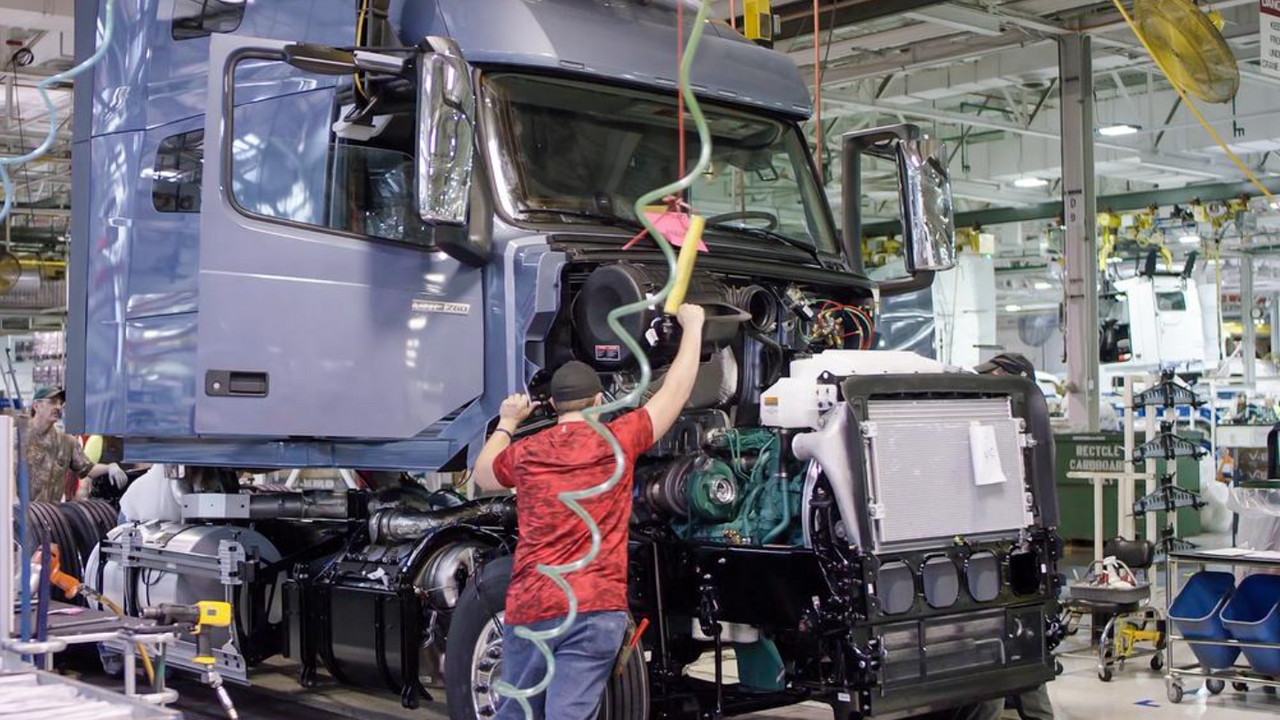
Volvo Trucks workers on strike in Dublin, Virginia, June 26, 2020 (photo: UAW Local 2069 facebook)

Another post from the local’s election committee chair made it clear that the UAW intends to shut down the strike regardless of the outcome of the vote and send workers back to work under the rejected contract. The UAW, she said, would file a toothless “unfair labor” charge with the National Labor Relations Board, which “could take months or years to resolve.”

Workers have voted down three UAW-backed contracts, which contained below-inflation-rate wage increases and cuts in healthcare coverage for current and retired workers. The agreement also includes a six-year “progression” for new hires to make top pay, which would translate into years more given the regularity of layoffs in the industry.

“The union is going along with this rubbish,” one striking Volvo worker told the WSWS. “This is not democratic. They’re forcing us to take this like we’re a bunch of slaves. This is not going to go over.

“A lot of people are calling for the bargaining committee to step down. They’re selling us out. Volvo has made record profits and shoved it in our faces. Our strike has showed that this is a national and worldwide issue. We’ve gone this far, but we need support from Mack-Volvo and other workers. If there was a walkout before Wednesday’s vote, that would give us great strength to resist.”

“Workers are upset and rightfully so,” another striking worker said. “We’ve been blindsided by the company and the union. A committeeman asked what would happen if we voted ‘no’ [on Wednesday] and stayed on strike, would we get strike benefits from UAW? He was told the International was washing its hands of the strike and would not support us.

“The Mack workers can see what’s going on with us. It is a great time to get unified. If Volvo and the UAW can do this to us, then it’s going to happen to them next. Every manufacturing worker should be walking out at all the plants.”

Opposition at NRV is being led by the Volvo Workers Rank-and-File Committee, which is calling on workers to decisively reject the contract on Wednesday and fight for a broader struggle.

A Mack-Volvo worker from Macungie, Pennsylvania, where workers are being forced by the UAW to handle scab parts from NRV, said: “What workers are doing down in Virginia is the right thing to do, and there isn't any reason that everyone in the UAW should not be striking in solidarity with them. The UAW is abandoning them. If they weren’t company-owned, the UAW would be screaming for other UAW plants to strike.

“What these corporations have to be shown is that the workers are the ones generating the wealth, not the corporations or the unions. It's off our backs that they make money, not the other way around. This country needs a general strike to show everyone that the working class are the ones keeping the country alive. We’re fighting a multinational corporation, and we have to unite with Volvo workers in Belgium and around the world.”

An auto parts worker said: “Volvo workers need to stick to their guns. If Volvo gets away with this, it will set the trend for everyone else. We should all go out to show the UAW and companies. At the company I work for in Indianapolis, our executives are making $16 million+ with bonuses for sitting at home while we go into the plants. The big wigs don’t have mandatory overtime. For the past 30 years I’ve seen the union transform into our worst enemy.”

Build the Volvo Workers Rank-and-File Committee
The rank-and-file committee is independent of the pro-corporate UAW, so that workers can organize their own struggle.


A temp worker at a General Motors plant in Flint, Michigan said: “I'm so proud of the Virginia workers, my fellow Union brothers and sisters, for having the nerve and the solidarity to vote down not one, not two, but now the third agreement. They know what they deserve and are fighting for it. I was raised to be believe that the unions were fighting for their members, but that’s not the case, so the members have to fight for themselves. Solidarity.”

Other sections of workers are also calling for support for the Volvo workers and the expansion of the national and international network of rank-and-file committees as the real voice and leadership of the growing struggle of workers.

A teacher and a member of the Tennessee Educators Rank-and-File Committee said: “Our committee is 100 percent behind the Volvo workers. We’re facing a situation where the colleges are providing free teaching certificates in order to undermine the professional standards and the wages and benefits of experienced teachers. There is no response from the unions; they are just going along with this.

“It’s not a matter of if the government and school districts will try to do to teachers what Volvo is doing to its workers, it’s when will they do it. We as workers have to come together to stop them.”

A member of the Baltimore Amazon BWI2 Rank-and-File Committee added, “We support the Volvo workers. Most of the capitalist powers that be know they are going to have to deal with a revolt by the working class. They try to keep workers divided by bringing in younger lower-paid workers to get rid of people who were here for years. They want to replenish their workforce with fresh workers who don’t know what’s going on so they can exploit them.

“They are not trying to make our lives easier but to make money. I urge the Volvo workers to stand tall. If we don’t have a voice, we have nothing and the capitalists will continue to control our destiny. We all need to join forces to fight.”

The World Socialist Web Site calls on all Volvo workers, autoworkers and other sections of the working class, in the US and internationally, to organize rank-and-file committees to support the striking Volvo workers. Contact the WSWS for assistance in building a committee at your factory or workplace.
Volvo leadership and union respond to impasse as Pulaski County plant reopens
Jul 12, 2021

Striking UAW members express themselves at vehicles departing the Volvo Trucks North America entrances on June 18.MATT GENTRY, The Roanoke Times

Volvo Trucks North America said Sunday that the company and the unionized workers at its Dublin plant have reached a stalemate during contract negotiations, and it will resume operations Monday.

About 2,900 of the plant’s more than 3,000 employees are members of United Auto Workers Local 2069. They’ve been on strike since June 7.

Volvo representatives and union bargainers met Sunday morning, and the company made its final contract offer, which is the same as the one Volvo workers rejected in a vote on Friday, the company said.

On Friday, about 60 percent of United Auto Workers Local 2069 members voting on a third tentative agreement rejected its terms, the union announced. According to Volvo, that agreement included wage increases and froze health insurance costs for six years.

The unionized workers will vote Wednesday evening on the proposal.

Because the company is saying negotiations have reached an impasse, it is unilaterally implementing the terms and conditions of the most recent contract offer.

While the company is opening up the plant on Monday to entice workers to take advantage of the provisions in the final offer, the union is urging workers to remain on strike until the vote happens. Volvo spokesman John Mies said the plant can reopen and operate without full staffing.

“We need to safeguard our future, and start building trucks for the many customers and dealers whose businesses and livelihoods depend on our products,” NRV Vice President and General Manager Franky Marchand said in a statement. “Our last offer delivered significant wage gains and first-class benefits for our employees, and 40% of UAW voters supported it. We look forward to welcoming employees back to the plant, and to getting back to building the industry’s best heavy-duty trucks.”

"Any employees who return to work on July 12 or thereafter will immediately receive the wage increases and benefits outlined in the July 1 agreement," the release stated.

The company has argued that the plant shutdown is hurting its customers, and the legal move to declare an impasse and implement its "final offer" is necessary to preserve its business and a planned $400 million plant upgrade.

UAW is evaluating its legal options, spokesman Brian Rothenberg wrote in an email. And the strike will continue for now. A membership vote on the final offer is set for Wednesday, Rothenberg wrote.

If the membership ratifies the final offer on Wednesday, workers will receive a "ratification bonus" stipulated in the contract, Local President Matt Blondino wrote in a letter to members dated Sunday and posted on the union Facebook page.

By declaring and impasse and reopening the plant, "basically, they are trying to break our union," Blondino said in a video message to members.

After holding the vote Wednesday, Blondino said the local has the option of filing a complaint against the company with the National Labor Relations Board.

Workers walked out June 7, shutting down the plant, which produces heavy duty trucks for the North American market. Volvo suspended their pay and benefits. The union provides $275 a week and some health insurance coverage for those on the picket lines.

Volvo outlined some of the elements in the contract proposal, which includes eliminating the two-tier wage structure and moving any employee hired on or before June 2015 to the top wage. Top pay varies by job classification, but the company said that assemblers, the largest group at the plant, would make about $57,000 a year without overtime.

The company would also increase the new hire starting pay by more than 14%, from about $34,900 a year to about $40,000 a year for assemblers. The company’s offer would increase wages between 47% and 74% for about half of the employees with a certain classification over the six-year life of the contract.

The final offer would also freeze health care premiums over the life of the contract.

The Dublin plant is the largest manufacturer of Volvo tractor-trailer trucks in the world. It is one of the largest private-sector employers in the region.


Who is Volvo Group Chairman Carl-Henric Svanberg?


Jan Miller
WSWS
11 hours ago

Last Friday, Volvo Truck workers in Dublin, Virginia courageously voted down the third concessions contract brought to them by the United Auto Workers (UAW). Now the UAW is trying to impose the contract, which would raise health care costs and represent a wage cut when inflation is factored in, despite workers having just voted it down. A repeat vote is schedule for the factory’s nearly 3,000 workers on Wednesday.

A statement from the Volvo Workers Rank-and-File Committee published Monday calls for workers to oppose the UAW’s attempt to smother the strike and lay down for Volvo.

Volvo has declared the negotiations at an “impasse” and is moving to enforce the third tentative agreement. The company is attempting to reopen the plant and divide the workforce to break the largest strike in the US at present.

In the heat of this struggle workers should learn about Carl-Henric Svanberg, the chairman of the board of Volvo Group. Workers face a massive, ruthless and profitable enemy at Volvo. Its chairman is no less an enemy of the working class—having his hand in the coverup of the BP oil spill, mass layoffs and consolidations at multiple companies, and helping turn Securitas, the top global security firm, used often to spy on and harass striking workers, into the powerful company it is today.

Carl-Henric Svanberg [Source: Volvo Group]
Early Days: Asea, Securitas

Carl-Henric Svanberg, born in 1952 in the north of Sweden, graduated from the Linköping Institute of Technology in 1977 with an engineering degree. Svanberg soon went to work for the engineering firm Asea (now consolidated into ABB one of the largest robotics and power companies in the world). Svanberg cut his teeth managing a multi-million-dollar project to build powerplants in Colombia for Asea.

In 1986 Svanberg was hired by Securitas—now the single largest global security firm—to head its corporate and home alarm wing. Securitas, which bought Pinkerton in 1999, the notorious US detective and strikebreaking company, runs the largest global operation of rent-a-cops and private investigators.

Both companies are used as strikebreakers and worker-surveillance companies to this day. In 2018, 1,400 Frontier Communications workers in West Virginia and Virginia were harassed and surveilled by the security companies to help break the strikes. In November 2019, Amazon hired the company to insert spies into its Wroclaw, Poland warehouse as part of a global operation of surveillance against workers.

While Svanberg left Securitas in 1994, spinning off its profitable lock division Assa Abloy, Svanberg is credited by Advameg’s Reference for Business for turning it into the company it is today. Svanberg, they write, helped Securitas “hone the formula for success that propelled [it] to great heights—a series of acquisitions in Scandinavia, Europe, and the United States.”

The “gentle conqueror”: Assa Abloy and Ericsson

In 1994 Svanberg became the head of Assa Abloy. Both during his time in Securitas and at Assa Abloy, Svanberg pursued aggressive mergers and acquisitions to build up companies and then “consolidate” them, with the loss of thousands of jobs.

According to a 2009 profile from the Times, Svanberg became known as the “Gentle Conqueror” in financial circles as, under his leadership, Assa Abloy bought up 100 firms, including giant competitors such as Yale, Medeco and Vachette. Today, Assa Abloy is the largest lock company in the world.


Svanberg’s secret? Establishing a “disciplined method” in the companies he takes over, according to the Reference for Business. “Discipline” in business is, of course, a euphemism for cost-cutting, layoffs, consolidations, and a stringent work environment.

A Barron’s magazine interview with a leading Swiss banker, for example, describes Svanberg as a “productivity pioneer” for tying workers’ pay to output in the 1980s. That is, Svanberg pioneered piece-work in Europe: forcing workers to speed up on the production line by disincentivizing any pause or rest.


In a 2020 interview with Alumni—a business management company—Svanberg explains (9:50) that when trying to work with the board of a company to restructure, “There is a strength when you want to go through change … people can take a lot of hard stuff and change, and even layoffs, if they do understand why they are doing it and can see the rationale.” By “people understanding,” of course, Svanberg does not mean the workers laid off—but the wealthy executives and board members trying to make profits.

When Svanberg left Assa Abloy and joined Ericsson as its president and CEO in 2003, he soon went to work implementing this ruthless restructuring at the telecommunications giant.

A 2004 New York Times article cites Svanberg as overseeing, just in his first few months, a 14,000-person job cut. This was on top of tens of thousands of jobs that had just been cut prior to his joining. In 2005, Ericsson bought Marconi, a British competitor, again consolidating the companies, cutting several thousand more jobs in the late 2000s.
Covering up an environmental disaster: BP

Svanberg became the chairman of BP—the giant energy and petrochemical company—in January 2010. Four months later, on April 20, 2010, the company would be responsible for the explosion of its Deepwater Horizon rig, which killed 11 workers, injured another 17, and created the largest oil spill in history.


The explosion released an estimated 5 million barrels of oil into the Gulf of Mexico—about 220 million gallons. The spill caused long-lasting damage to animals, reefs and marine life in the area. The equivalent of an estimated 2 million barrels of oil remains trapped in the Gulf.

During his time at BP, Svanberg was responsible for the systematic corporate cover-up of this disaster—colluding with the Obama administration to limit BP’s financial and legal responsibility. Svanberg directly negotiated with Obama at the White House to limit its liabilities.

At the time, the World Socialist Web Site extensively covered the environmental disaster, the effect on workers lives in the Gulf, BP’s criminal negligence, and the extensive efforts of the Obama administration to shield BP from criminal wrongdoing or financial liability. Among other things, BP systematically downplayed the extent of the spill, was responsible for criminal negligence in the safety of the rig’s operation that caused the spill, never had any of its executives sent to jail, and got away with a wrist-slap of a penalty, financially speaking, which stock markets celebrated as a boon—sending BP’s stock up more than 5 percent the day it was announced (see: “One year since the BP oil spill: Covering up a catastrophe”).

Svanberg famously derided the residents of the Gulf as “small people” at a White House press conference, stating, “We care about the small people. I hear comments sometimes that large oil companies, or greedy companies, don't care. But that is not the case in BP, we care about the small people.” One wonders what words he would use for striking workers in Virginia!

Volvo and today’s struggle


While Svanberg worked as chair of BP, retiring only a few years ago, in 2017, he also was chosen to head the board of Volvo in 2011, just a year after joining BP. Already, Volvo had grown to become the second-largest truck manufacturer in the world—purchasing Mack and several other competitors—and had shed its car manufacturing side, Volvo Cars into a separate entity.
Corporate headquarters in Gothenburg, Sweden [Source: Volvo Group]

During the first few years of Svanberg’s chairmanship, Olof Persson headed Volvo as CEO. During these years Volvo underperformed relative to its rivals. Persson, with the board’s blessing, undertook new measures for cost-saving and consolidations to restore profitability for the owners. In late 2013 the company announced it would be laying off 2,000 workers, then again, another 2,400 workers in February 2014.


Build the Volvo Workers Rank-and-File Committee
The rank-and-file committee is independent of the pro-corporate UAW, so that workers can organize their own struggle.


In 2015, Svanberg helped to oust Persson as CEO, replacing him with Martin Lundstedt, head of rival Scania.

The pivot to Lundstedt, who remains the CEO today, was based on a new corporate mantra of “flexibility.” Svanberg, when he announced Lundstedt’s appointment, stated, “We are now entering into a new phase. You can’t reach world leadership through just cost savings.”

A Reuters financial brief stated that the owners of Volvo would be “looking to Lundstedt” for help in adapting to “rapid swings in the highly cyclical demand for commercial vehicles.” Specifically, Lundstedt had overseen at Scania the fine-tuning of their modular form of truck production that was the “envy” of the global truck industry.

As in the US, where Volvo relies on the UAW to do its dirty work, Svanberg has worked to cultivate close relations with the Swedish trade unions, including IF Metal and Unionen, which have three seats on Volvo’s corporate board of directors. Svanberg also sits on the Ministry of Foreign Trade’s task force with Susanna Gideonsson, president of the Swedish Trade Union Confederation (LO).

Over the last few years, through cost-cutting measures, Volvo Group has substantially improved its financial condition. It has given billions of dollars to its shareholders just in the last few weeks based on a sale of one of its subsidiaries. Svanberg told the financial world that the company’s “improved profitability, resilience in downturns and strong financial positions” all justified giving out the billions of dollars to its owning capitalists.

If that is the case, that the company has billions to hand out, why are workers at Volvo being squeezed in the latest concessionary contract?

The answer is simple: the money is there but they do not want to give it.

Svanberg and Lundstedt are darlings of the global financial elite because they have consistently, over the last few decades, delivered “discipline,” “resilience,” “profitability” and other catchwords that amount to one thing: paying as little money as possible for the companies inputs, above all labor.

But while Volvo workers are subject to austerity, whether in the US or in Sweden, Svanberg is doing just fine. In fact, in 2017 Svanberg and his wife bought what was, at the time, the most expensive house ever purchased in Sweden—a $14 million townhouse mansion in the upper-class Östermalm district of Stockholm.

Svanberg, like most other leading corporate executives around the world, has made a career out of aggressive cost savings and increased flexibility. From Securitas to BP to Ericsson, Svanberg has operated as the agent of the capitalist system and an enemy to working people. His trajectory is nothing unique, but rather an expression of broader global processes of austerity, discipline and immiseration confronting workers all around the world.


Clinic boosts transgender young people's mental health

MURDOCH CHILDRENS RESEARCH INSTITUTE

Research News

IMAGE

IMAGE: A CLINIC TO HELP TRANSGENDER YOUNG PEOPLE AND THEIR FAMILIES RECEIVE QUICKER SUPPORT HAS BOOSTED MENTAL HEALTH, FAMILY FUNCTIONING AND QUALITY OF LIFE. view more 

CREDIT: SHANE

A clinic to help transgender young people and their families receive quicker support has boosted mental health, family functioning and quality of life, according to a new study.

The research, led by the Murdoch Children's Research Institute (MCRI) and published in Pediatrics, found the clinic in Melbourne led to lower levels of depression and anxiety due to transgender young people being able to access help 10 months sooner.

The study involved 142 patients who completed questionnaires before and after attending the First Assessment Single Session Triage (FASST) clinic at The Royal Children's Hospital Gender Service (RCHGS).

MCRI Associate Professor Ken Pang said waitlists continued to grow at many gender services worldwide, resulting in wait times of up to two years.

"Many transgender children and adolescents experience gender dysphoria," he said. "They are also at high risk of depression, anxiety, self-harm and suicide, which is likely to be driven not only by gender dysphoria, but also increased exposure to bullying, discrimination, harassment, violence and social isolation.

"Across the globe, increased awareness and understanding of gender diversity have contributed to a marked increase in the number of transgender children and adolescents seeking specialist care. This has placed substantial pressure on clinical resources and wait times for assessment have substantially increased."

To manage this demand, the FASST clinic was established in 2016 to provide information and support to young people, aged 8 to 17 years, and their families. Led by a clinical nurse consultant, FASST has reduced initial wait times by 10 months and triages patients onto a secondary waitlist for additional multidisciplinary care with mental health clinicians and pediatricians.

Associate Professor Pang said the study found the clinic led to improvements in depression, anxiety, quality of life and family functioning.

"Participants found attending the clinic provided validation, not only for themselves, but also their families, classmates and wider communities," he said. "This validation had flow on effects, improving their sense of self, boosting their confidence, and increasing parental understanding, acceptance and support."

Associate Professor Pang said having a child identify as transgender was a momentous change and often highly stressful for families.

"We found that family functioning prior to attending the clinic was at an unhealthy level for many of our participants' families," he said. "But after attending the clinic, this significantly improved."

Mac Zamani, 17, would have been waiting more than a year for support if the FASST clinic didn't exist.

"I didn't know what to expect but I went in with an open mind and found it really rewarding," he said. "The nurse talked me through socially transitioning, mental health concerns, medications, and what other names and pronouns were possible options.

"It was refreshing to have such an easy conversation as you feel these things are still taboo to talk about. "The clinic made me more confident and validated my feelings that this wasn't a phase, which made me a lot less stressed."

Mac said while the relationship with his parents was always one of acceptance the clinic made their bond even stronger.

"My parents appreciated the support too from the nurse as it put them at ease that they were doing and saying all the right things," he said. "They had a lot of questions and the nurse reassured them, which allowed them to block out all the negativity and removed any doubts."

After attending the FASST clinic, Mac was referred to a psychologist, pediatrician and speech therapist at the RCHGS, where he is still a patient today.

"I'd be in a very different place without this support over the past four years," he said. "I consider myself to be one of the lucky ones. I have friends who had very different experiences, parents who weren't supportive and had to wait years to see a psychologist."

Associate Professor Pang also recently received a National Health and Medical Research Council (NHMRC) grant for the Trans20 study aiming to improve the clinical care of young people who receive specialist gender support by identifying the trajectories, outcomes and predictors of their health and well-being.

It comes as a new study, published in The Lancet Child & Adolescent Health by the same research team, found most existing tools which measure gender identity, gender expression or gender dysphoria in transgender children and adolescents have substantial limitations.

Study co-senior author, MCRI's Dr Michelle Tollit, said the majority of existing tools were created before 2000 and reflected outdated beliefs and terminology. Few assess gender identity or dysphoria and hardly any consider the substantial conceptual and cultural shifts regarding non-binary or fluid aspects of gender identity, she said.

Dr Tollit said new tools were needed which were not only specifically designed for transgender children and adolescents and capture modern concepts of gender identity, including non-binary and genderfluid identities, but also use gender affirming language and were psychometrically sound.

Researchers from The Royal Children's Hospital, Western Sydney University, the University of Melbourne, and The Gender Identity Development Service in London contributed to one or both of the studies.

###

Publication: Sarah Dahlgren Allen, Michelle A. Tollit, Rosalind McDougall, Donna Eade, Monsurul Hoq and Ken C. Pang. 'A Waitlist Intervention for Transgender Young People and Psychosocial Outcomes,' Pediatrics. DOI: 10.1542/peds.2020-042762

Publication: Thea M Bloom, Thomas P Nguyen, Francesca Lami, Carmen Pace, Zeffie Poulakis, Michelle Telfer, Amelia Taylor, Kenneth Pang and Michelle A Tollit. 'Measurement tools for gender identity, gender expression, and gender dysphoria in transgender and gender-diverse children and adolescents: a systematic review,' The Lancet Child & Adolescent Health. DOI: 10.1016/ S2352-4642(21)00098-5

*The content of this communication is the sole responsibility of MCRI and does not reflect the views of the NHMRC.

Available for interview: Dr Ken Pang, MCRI Team Leader, Brain and Mind

Funding: The Trans20 study is supported by The Royal Children's Hospital Foundation and the National Health and Medical Research Council (APP 2006529) and Michelle Tollit, Ken Pang and Carmen Pace are supported by the Hugh Williamson Foundation.


Stopping illegal trade of Aussie lizards

UNIVERSITY OF ADELAIDE

Research News

IMAGE

IMAGE: A SHINGLEBACK LIZARD SEIZED AT PERTH AIRPORT BY WESTERN AUSTRALIA'S DEPARTMENT OF BIODIVERSITY, CONSERVATION AND ATTRACTIONS. view more 

CREDIT: PHOTO SUPPLIED BY DEPARTMENT OF BIODIVERSITY, CONSERVATION AND ATTRACTIONS, WESTERN AUSTRALIA.

Australian reptiles face serious conservation threats from illegal poaching fueled by international demand and the exotic pet trade.

In a new study in Animal Conservation, researchers from the University of Adelaide and the Monitor Conservation Research Society (Monitor) investigated the extent of illegal trade in a well-known Australian lizard: the shingleback, also known as the bobtail or sleepy lizard.

Using government records, media reports, and online advertisements, the researchers found clear evidence that many shinglebacks have been illegally poached from the wild and are smuggled overseas to be traded as pets.

Author and PhD Candidate Adam Toomes from the University of Adelaide says: "While shinglebacks are a protected species in Australia, and can only be exported legally under a federal permit, there is little to no regulation of international trade once the animals have been smuggled out of the country.

"Not only are our findings concerning from a conservation and animal welfare perspective, but they also highlight a major loophole in our legislation which is being exploited."

While under Australian law it is illegal to export native live species, the import to many countries is not, along with trade once the animals have entered the country. It is left to each importing country to address the issue on an individual basis, such as changing their legislation to regulate both the trade and import of species native to other countries.

In the study, the researchers found all four subspecies of shingleback lizard are in trade across Asia, Europe and North America. This includes the threatened Tiliqua rugosa konowi subspecies, only found in the wild on Rottnest Island, Western Australia.

The lifestyle and characteristics of the shingleback makes them particularly vulnerable to poaching.

"They don't tend to travel far from where they live and their defences, which include a slow retreat when approached and opening their mouth and sticking their tongue out, are not all that daunting. So they can be easily captured even by unskilled people," Mr Toomes said.

Examining seizure data from 2015 to 2018 from the Australian Government's Department of Agriculture, Water and Environment, and additional seizure data from 2009 to 2020, the study shows more than 260 shinglebacks were destined for illegal exportation to countries including Hong Kong, China, Japan, Thailand, Malaysia, Singapore and Sweden.

A further 236 shinglebacks were seized in Western Australia but it was uncertain as to whether they were destined for international or domestic trade.

To protect Australian shinglebacks and curtail global trade, the researchers recommend they be listed in Appendix III of the Convention on International Trade in Endangered Species of Wild Fauna and Flora (CITES), which provides other countries with the legal means to confiscate illegally exported species.

CITES Appendix III lists species that are protected in their native country for which the country has requested assistance from others to regulate trade. New species can be added to the lists by notifying the CITES secretariat.

Co-author, Phill Cassey, with the University of Adelaide's School of Biological Sciences says: "Surprisingly, this piece of legislation is seldom used in comparison to other Appendices in CITES, and yet it could contribute to substantially reducing international trade of threatened reptiles, providing other countries with a legal basis to seize illegally imported species.

"While stronger international regulations and improved legislation are urgently needed to curb the illegal wildlife trade globally, until such legislation exists, CITES Appendix III is a legal tool that can help us protect at-risk native species, like the shingleback, right away."

###

 ANOTHER AMAZING FIND IN THE MUSEUM STORAGE ROOM

DNA reveals the evolutionary history of museum specimens

An international team, led by UNIGE and MHN, has optimized a method for analyzing the genomes of specimens from natural history collections making possible to identify their placement along the evolutionary timeline.

UNIVERSITÉ DE GENÈVE

Research News

IMAGE

IMAGE: APLOTHORAX BURCHELLI, THE GIANT CARABID OF ST-HELENA, NOW EXTINCT AND OF WHICH THREE SPECIMENS ARE KEPT IN THE MUSEUM OF GENEVA. view more 

CREDIT: © PHILIPPE WAGNEUR / MUSÉUM GENÈVE

Museum specimens held in natural history collections around the world represent a wealth of underutilized genetic information due to the poor state of preservation of the DNA, which often makes it difficult to sequence. An international team, led by researchers from the University of Geneva (UNIGE) and the Museum of Natural History of the City of Geneva (MHN), has optimized a method developed for analyzing ancient DNA to identify the relationships between species on a deep evolutionary scale. This work is published in the journal Genome Biology and Evolution.

By combining and comparing the sequences of a large number of genes or complete genomes, it is possible to establish the links between related species and to trace the main steps in the evolution of organisms from a common ancestor. These phylogenomic studies are based on the amplification and sequencing of DNA fragments, followed by bioinformatics analyses to compare the sequences. They therefore typically require carefully sampled DNA in good preservation condition.

Deciphering degraded DNA

For this reason, most of the specimens preserved in natural history museums have not yet revealed all their secrets, since in most cases the DNA is often highly degraded and difficult to sequence. An international team led by Emmanuel Toussaint, researcher at the MHN, and Nadir Alvarez, researcher at the Department of Genetics and Evolution of the Faculty of Science of the UNIGE and chief curator at the MHN, has perfected a method already used for well-preserved samples in order to apply it to DNA that is highly fragmented due to partial degradation. The HyRAD-X technique consists of fishing out pieces of the genome to be analyzed with DNA probes from closely related species, and then sequencing them to detect the differences between the genomes. However, these DNA probes are only effective hooks for closely related genomes and this technique had so far only allowed to follow the evolution of a single species over time.

In this work, the scientists used HyRAD-X RNA probes instead of DNA probes to find fragments of interest in the genome. RNAs, copies of DNA molecules in charge of transferring the information encoded by the genome, have a very strong affinity for DNA and RNA-DNA pairings occur more easily than DNA-DNA pairings. RNA probes are therefore more efficient hooks, especially when the genomes to be analyzed demonstrate large divergence levels. "Thanks to this new method, we were able to trace the evolutionary history, not within a single species over a million years, but within several species and over tens of millions of years!" explains Emmanuel Toussaint, first author of the study.

The genealogy of the carabid beetle better known

The researchers were notably interested in the specimens of an emblematic carabid from the island of Saint Helena in the middle of the Atlantic Ocean, collected in the 1960s and preserved at the MHN in Geneva. The analysis of the DNA of these beetles revealed that this species, now extinct and until now classified in the genus Aplothorax, actually belongs to the genus Calosoma. It also allowed to locate its biogeographic origin probably in Africa and to generate the chronology of the evolution of the subfamily Carabinae whose origin goes back to the Lower Cretaceous. "Our study opens many perspectives to establish the evolutionary history of millions of specimens in museum collections around the world", concludes Nadir Alvarez.

###


An archaeological study reveals new aspects related to plant processing in a Neolithic settlement in Turkey

Researchers have discovered at the site of Çatalhöyük (Anatolia, Turkey) a wide variety of hitherto unknown wild resources.

UNIVERSITAT POMPEU FABRA - BARCELONA

Research News

IMAGE

IMAGE: A) SET OF STONE TOOLS, STORAGE AREA OF BUILDING 52; B) USE-WEAR TRACE OBSERVED ON THE SURFACE OF STONE IMPLEMENTS; C) WHEAT INFLORESCENCE PHYTOLITH; D) WHEAT STARCH GRAIN. view more 

CREDIT: UPF

A study conducted by researchers from the UPF Culture and Socio-Ecological Dynamics research group (CaSEs) and the University of Leicester (UK) has provided a highly dynamic image surrounding the use and importance of hitherto unknown wild plant resources at the Neolithic site of Çatalhöyük (Anatolia, Turkey). The researchers carried out their work combining the analysis of microbotanical remains and use-wear traces in various stone implements recovered from the site, which in the past hosted one of mankind's first agricultural societies.

The researchers carried out their work combining the analysis of microbotanical remains and use-wear traces in various stone implements recovered from the site

Çatalhöyük is a world heritage archaeological site located in Anatolia (Turkey), which was inhabited during the Neolithic, between 7,100 and 6,000 BC. This site has received worldwide attention due to its size and because it is one of the first urban centres with a high density of agglomerated dwellings, to which entry was gained through the roof and which contained elaborate wall paintings inside. The settlement was studied continuously for nearly three decades and provided a wealth of archaeobotanical remains (charred remains of plants) and a wide range of stone artefacts and tools used to process plant resources.

An innovative approach that analyses residue trapped on the surface of grinding implements

Despite the extensive research conducted in the area, much of what is known about agricultural practices and the use of plant resources, both at Çatalhöyük and in many other archaeological settlements, is based on the study of charred remains. However, these remains occur causally, either when cooking food or due to accidental fire, which gives a limited image of the use of plant resources in the past.

"We recovered residues trapped in the pits and crevices of these stone artefacts that date back to the time of being used, and then carried out studies of microbotanical remains and thus reveal what types of plants had been processed with these artefacts in the past"

The study, led by Carlos G. Santiago-Marrero, a predoctoral researcher with the Culture and Socio-Ecological Dynamics (CaSEs) research group of the UPF Department of Humanities, together with Carla Lancelotti and Marco Madella, ICREA-UPF research professors and members of CaSEs, and Christina Tsoraki, of the School of Archaeology and Ancient History at the University of Leicester (UK), used an innovative approach based on the analysis of microscopic remains taken from grinding implements from three domestic contexts, attributed to the Middle (6,700-6,500 BC) and Late (6,500 -6,300 BC) periods of occupation.

"We recovered residues trapped in the pits and crevices of these stone artefacts that date back to the time of being used, and then carried out studies of microbotanical remains and thus reveal what types of plants had been processed with these artefacts in the past", the researchers explain.

Among the microscopic remains studied by the researchers are phytoliths, from the deposition of opal silica in plant cells and cell walls, that provide clues about the presence of anatomical parts, such as the stems and husks of plants, including wheat and barley. Another residue studied are starches, glucose compounds, created by plants to store energy, which are found in large quantities in many edible parts of plants, such as seeds and tubers.

Thanks to combining these two lines, the researchers have shown that although the community of Çatalhöyük was based on an agricultural economy by definition, growing cereals and vegetables (wheat, oats, peas), there continued to be much exploitation of wild resources outside the spectrum of domestic resources, which had not yet been found at this site.

Use of wild plant resources to diversify the diet, through complex processing

"Microbotanical evidence has contributed to our knowledge about the plants used in the past and helped identify the presence of wild plants and various aspects related to possible strategies to exploit these resources, both to diversify the diet and to replace any calorie deficit that may have arisen in times of scarcity", the researchers assert. These wild plant resources were as important as domestic ones, and were most likely used regularly to supplement the core diet.

These wild plant resources were as important as domestic ones, and were most likely used regularly to supplement the core diet.

"Among our findings we have shown that the community used a wide range of tuberous plants, many of them belonging to potentially toxic taxonomic families, which require complex processing or use. This shows the great phytocultural knowledge possessed by this community", the authors underscore. And they add: "Many of these tuberous plants had highly restrictive seasonal life cycles, which has helped us to infer the possible means of organizing and exploiting the plant environment at different times of the year".

Moreover, another important aspect revealed by the study is the processing of wild millet seeds, which had never been found among the charred remains of plants on the site.

Use-wear traces on the surfaces of processing implements denoting various uses

The analysis of use-wear traces on the surfaces of plant processing implements, produced by use in various activities, has allowed the researchers to infer different tasks for which the tools were used.

Thanks to these analyses, they have discovered very diverse life histories of these implements and the close relationship with various aspects related to the processing of plant resources and other domestic activities. "By combining microbotanical evidence with use traces, we have discovered processes such as grain husking, the milling of legumes, tubers and cereals, and even the use of these implements in other activities not related to plant processing".

###

Reference article: Santiago-Marrero, C., Tsoraki, C., Lancelotti, C., and Madella, M. (June 2021). "A microbotanical and microwear perspective to plant processing activities and foodways at Neolithic Çatalhöyük". PLOS ONE

https://doi.org/10.1371/journal.pone.0252312

Disclaimer: AAAS and EurekAlert! are not responsi


Restless nights: Shelter housed dogs need days to adapt to new surroundings

Nocturnal activity of dogs as an indicator of adaptability

UTRECHT UNIVERSITY

Research News

IMAGE

IMAGE: DOG RESTING IN AN ANIMAL SHELTER view more 

CREDIT: JANNEKE VAN DER LAAN

Every year, thousands of dogs end up in a shelter in the Netherlands. Experts expect an increase in this number in the upcoming period, when people go back to the office after working from home during the corona crisis. Despite the good care of staff and volunteers, the shelter can be a turbulent experience for dogs. Researchers at Utrecht University investigated if dogs can adapt to their new environment based on their nocturnal activity.

Janneke van der Laan and fellow researchers from Utrecht University's Faculty of Veterinary Medicine compared the nocturnal activity of 29 shelter dogs and 29 pet dogs in their own homes - similar in breed, age and sex - with the help of night cameras and a small activity tracker on their collar.

They found that shelter dogs rest much less at night than pet dogs, especially during the first two nights in the shelter. This restlessness did decrease over time, but even after twelve days in the shelter, the dogs still rested less at night than the pet dogs.

"We also saw this restlessness in hormone measurements in the urine of shelter dogs" says Janneke van der Laan. Shelter dogs had higher values of the stress hormone cortisol in their urine than pet dogs, especially during the first two days but also after twelve days. It was also striking that smaller shelter dogs, for instance Shi Tzu's and Chihuahua's, were more restless during the first two nights than larger shelter dogs, and they also had higher cortisol values.

The researchers found big differences between individual dogs: some were already quite calm during the first night in the shelter, while others barely slept for a few nights. "It seems that dogs need at least two days, but often longer to get used to their new environment, in this case the shelter," Van der Laan explains. "Humans usually also sleep less good during the first night in a new environment, for example at the beginning of a vacation."

"With our follow-up research we will zoom in even further on the welfare of dogs in shelters. But our current findings already show that it is important to pay close attention to dogs that are unable to rest properly after several nights. The shelter staff may already be able to help these dogs by for example moving them to a less busy spot in the shelter."

###

Scientific publication

"Restless nights? Nocturnal activity as a useful indicator of adaptability of shelter housed dogs" https://doi.org/10.1016/j.applanim.2021.105377


Global study reveals effectiveness of protected area

Certain countries perform significantly better than their neighbors in the effectiveness of their protected areas, finds new study.

OKINAWA INSTITUTE OF SCIENCE AND TECHNOLOGY (OIST) GRADUATE UNIVERSITY

Research News

IMAGE

IMAGE: DEFORESTATION IS THE REMOVAL OF TREES FROM PREVIOUSLY FORESTED AREAS IN ORDER TO USE THE LAND OR RESOURCES FOR OTHER PURPOSES, INCLUDING LUMBER, MINING AND AGRICULTURE. ONE OF THE KEY... view more 

CREDIT: PIXABAY

  • Researchers have conducted a global study on the effectiveness of recently established protected areas in preventing forest loss

  • The study explores protected area performance by countries, with South Africa, Cambodia, Latvia, Guatemala, Uruguay, Brazil and New Zealand leading the way in the effectiveness of their protected areas

  • The research team estimated that overall, protected areas established between 2000-2012 prevented 86,062 square kilometers of forest loss

  • If all countries had protected areas that were as effective as their top-performing neighbor, then an additional 33,020 square kilometers of forests would have been saved

  • Machine learning found that agricultural activity, economic growth and governance were associated with effectiveness

Scientists have published a global study on the effectiveness of protected areas in preventing deforestation.

The study, published recently in Environmental Research Letters, explored the success of country-level protected areas at reducing forest loss, and used machine learning to uncover some of the factors that contribute to differences in effectiveness.

"Protected areas are a key conservation tool that are essential for stemming the tide of biodiversity and habitat loss across the Earth," said first author, Dr. Payal Shah, a research scientist at the Okinawa Institute of Science and Technology (OIST), who specializes in applying economic theory to conservation.

She added: "Scientists are calling for 30% of land and ocean to be protected by 2030. But as more and more land is placed under protection, it's increasingly important to measure how well each protected area is working, so policy makers can make more informed decisions about future conservation efforts."

CAPTION

A global study, conducted by OIST researcher, Dr. Payal Shah, estimated protected area effectiveness by country, ranging from least effective (red) to most effective (dark green).

CREDIT

OIST

For the study, the research team used satellite data of forest cover between the years 2000-2012, focusing on protected areas that had been established during this timeframe. Countries that had not placed a large enough area of land into protection were removed from the analysis.

For the 81 countries that remained in the analysis, 3.2 million square kilometers of land had been placed into protection. The research team then estimated how effective these protected areas were by comparing changes in forest cover between protected and statistically matched unprotected areas. The areas of land were matched using a wide range of factors that are important predictors of deforestation, including their distance to cities, their elevation from sea level and the slope of the land.

"The aim was to try and understand how much deforestation would have occurred in an alternative scenario - if an area had not been placed under protection," explained Dr. Shah.

The researchers found that overall, around 34,000 square kilometers of forest was lost within newly established protected areas between 2000 and 2012 - an area larger than the size of Belgium. However, they estimated that if these protected areas had not been put into place, an additional 86,062 square kilometers of forest would have also been lost. This would have meant that an area of land totaling around 120,000 square kilometers - the size of North Korea - would have been deforested.

"This means that protected areas on the whole reduced deforestation by 72%, which is great news," said Dr. Shah. "But when you start breaking down the data by country, the results are more mixed."

The scientists saw that protected areas in some countries performed significantly better than other countries within their region. Leading the way were South Africa, Cambodia, Latvia, Guatemala, Uruguay, Brazil and New Zealand, for the regions of Africa, Asia, Europe, North America, South American and Oceania, respectively.

The research team estimated that if all the other countries' protected areas had been as successful as the best performing country in their region, then an additional 33,020 square kilometers of forests would have been saved, which would have reduced deforestation within the newly established protected areas to roughly 1000 square kilometers only.

"The countries in each region are battling against similar key drivers of deforestation, such as timber logging or wildfires, so theoretically, every country has the potential to do equally well," said Dr. Shah. "But we are seeing these huge disparities in the effectiveness of their protected areas. So of course, we then want to understand the underlying factors."

One main factor found was based on the strictness of the protected areas. Strictness categories are based on the degree of human activity or use of natural resources allowed on the land. In most countries, more strictly protected areas were more effective than less strictly protected areas.

Next, the researchers fed data on the demographics, agriculture, economy and politics of each country into a machine learning algorithm, which then identified which factors were most strongly linked to the effectiveness of the country's protected area network.

Countries with high levels of economic growth were associated with higher levels of effectiveness for protected areas.

Meanwhile, countries with higher levels of agricultural activity tended to have less effective protected areas, particularly in countries that had a lower quality of governance and growing rural populations.

"This was expected as agriculture and deforestation often go hand in hand," explained Dr. Shah. "Land is a limited resource so in countries with high agricultural activity, there may be a large deforestation pressures within protected areas in countries that lack proper governance."

However, the researchers emphasized that more in-depth research needs to be done on a country-by-country basis to confirm the reasons underlying these associations.

"As a global analysis, this study allows us to pinpoint which countries are doing well, and which are doing less well," said Dr. Shah. "We can then carry out more targeted research in these countries to help support more effective conservation strategies."

###


Mathematical model predicts the movement of microplastics in the ocean

A new model tracking the vertical movement of algae-covered microplastic particles offers hope in the fight against plastic waste in our ocean

NEWCASTLE UNIVERSITY

Research News

A new model tracking the vertical movement of algae-covered microplastic particles offers hope in the fight against plastic waste in our oceans.

Research led by Newcastle University's Dr Hannah Kreczak is the first to identify the processes that underpin the trajectories of microplastics below the ocean surface. Publishing their findings in the journal Limnology and Oceanography the authors analysed how biofouling - the accumulation of algae on the surface of microplastics, impacts the vertical movement of buoyant particles.

The researchers found that particle properties are the biggest factor in determining the period and characteristics of the repetitive vertical movement below the surface, while the algal population dynamics determine the maximum depth reached. Their findings also show that the smallest particles are extremely sensitive to algal cell attachment and growth, suggesting they are always submerged at depths surrounding the base of the euphotic zone, the layer closer to the surface that receives enough light to support photosynthesis, or could become trapped in large algal colonies.

In general, the results suggest that a higher concentration of biofouled microplastic is expected to be found subsurface, close to the euphotic zone depth rather than at the ocean's surface.

Microplastics (fragments with a diameter smaller than 5mm) make up 90% of the plastic debris found at the ocean surface and the amount of plastic entering our ocean is significantly larger than the estimates of floating plastic on the surface of the ocean. However, it is not exactly known what happens to these particles once they enter the ocean, and 99% of microplastics within our ocean are considered missing.

This new model has the potential to understand the distribution of fouled plastics in the ocean and therefore the ecological impact, particularly in areas of high concentration.

Dr Hannah Kreczak, EPSRC Doctoral Prize Fellow at Newcastle University's School of Mathematics, Statistics and Physics, said: "Mathematical modelling has been extremely beneficial in identifying hot-spots for marine plastic pollution on the ocean surface. I hope this research can be a constructive step in understanding the impact plastic pollution has below the surface and aid in the effort towards a more sustainable ocean."

Co-Author Dr Andrew Baggaley, Lecturer in Applied Mathematics at the School of Mathematics, Statistics and Physics, added: "This is an exciting first step in our project to develop a comprehensive modelling framework to understand the transport of microplastic particles and their distribution in the oceans."

Future research by the team will focus on the fluid motion in the ocean mixed layer, to allow for even more complete assessment of microplastic vertical distributions in the ocean.

###