Tuesday, July 13, 2021


How a stolen shovel led to a shaman’s curse

Inuit children dancing. From a drawing by George Lyon. (Illustration from William Edward Parry – Journal of a Second Voyage for the Discovery of a North-West Passage.)

By Kenn Harper

William Parry and George Lyon didn’t discover the Northwest Passage, only a narrow and impractical, ice-choked strait leading west which Parry named Fury and Hecla Strait after the expedition’s two ships. Parry himself described his venture as “unsuccessful, but, I trust & believe, not discreditable.”

That assessment depends entirely on whether one listens to Inuit or Qallunaat accounts. Both explorers went to great lengths to establish friendly relations with the local Inuit.

Indeed, their instructions from the admiralty were, should they meet any “Esquimaux,” to endeavour “to cultivate a friendship with them, by making them presents of such articles as you may be supplied with, and which may be useful or agreeable to them.”

Parry and Lyon were well-stocked with trade goods – tobacco, food, beads, cloth – and were generous with the Inuit; the Inuit in turn were helpful to the expedition, drawing maps, providing and repairing clothing, and welcoming the Qallunaat into their homes.

Presciently, the explorers provided only one man with a gun and enough ammunition for only one season – they did not want to present more lest the Inuit become dependent on rifles, but then have no source of more ammunition. Both men established a rapport with the Inuit and were apparently genuinely interested in them, their customs and their language. Both produced books that were remarkable for their level of ethnographic detail. Lyon in particular was a talented illustrator – his drawings formed the basis for the illustrations in both men’s volumes – and apparently immersed himself in Inuit life, going so far as to have a woman make a two-inch tattoo on his skin.

Sadly, after an uneventful winter, the expedition ended on a sour note. An Inuit man named Oo-oo-took was accused of stealing a shovel from Parry’s ship. Parry retaliated by banishing Inuit from visiting the Fury. Sometime later Oo-oo-took, who had been an infrequent visitor in the past, managed to be on board visiting the assistant surgeon, Mr. Skeoch, in his cabin.


Learning from Skeoch that the theft of the shovel had been discovered, he feared that the man had “dived into his thoughts.” Oo-oo-took went ashore and returned shortly with the shovel. Despite the return of the pilfered item, Parry decided to administer naval discipline and make an example of the man. He conducted what was in effect a “show trial” and had the unfortunate man flogged.

Parry brought several Inuit on board as witnesses, then, “I ordered him to be stripped and seized up in their presence, and to receive a dozen lashes on the back with a cat-o’-nine tails. The instant this was over, his countrymen called out very earnestly, ‘Timun, timunna,’ (That’s right, that’s right) and seemed much relieved from the fright they had before been in while the fate of the thief seemed doubtful; but in three minutes after not one of them was to be found near the ships.… This example proved just what we desired; in less than eight-and-forty hours, men, women, and children came to the ships with the same confidence as before, always [verbally] abusing Oo-oo-took, pronouncing themselves and us uncommonly good people, but evidently more cautious than before of really incurring our displeasure.”

But Parry likely misunderstood the reaction of the Inuit onlookers. The utterance he quotes was probably really, “Taima, taima,” which, in the context, likely meant, “Enough, enough.”

Their pleasantness when they returned 48 hours later was a form of caution in the presence of a “friend” who had begun to act irrationally.
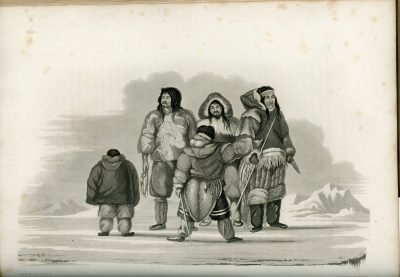
A group of Inuit encountered by Parry and Lyon in 1822 south of Igloolik. (Illustration from William Edward Parry – Journal of a Second Voyage for the Discovery of a North-West Passage.)

The experience of the flogging, passed down to succeeding generations of Iglulingmiut, blighted Inuit memory of the expedition. Inuit told Charles Francis Hall in 1864 that Oo-oo-took, in fact, had been a “superior” angakkuq [shaman].

In the account the Inuit preserved, Parry had Oo-oo-took taken to a place between decks where his hands were firmly tied to the mast.

“Then two guns were loaded and fired at him. The balls did not hit him, but one passed close to his head and lodged in the mast. The other ball went close to his loins, but did not injure him. The guns were so near his body that the powder felt hot.… Then Parry caused him to be whipped with something that was made of ropes with knots in them.”

This is a perfect description of a cat-o’-nine-tails. The Inuit witnesses wanted to help Oo-oo-took but he said, “Let the Kob-lu-nas [Qallunaat] try to kill me; they cannot, for I am an an-nat-ko [angakkuq].”

His hands were untied and the Qallunaat tried to cut off his head and hands with swords, but they were unsuccessful: “Every time a blow was struck, the extreme end of the knife came close to Oo-oo-took’s throat; occasionally the blade came just above the crown of his head, and when the attempt was made to cut off his hands the long knife came down very near his wrists; but after all, he was uninjured because he was a very god an-nat-ko.”

Some of the blows hit him, making deep gashes in his throat, head and wrists, but each time the knife was removed the wounds miraculously healed. After that, he was thrown into the hold for two days and two nights. When he called upon his spirits to split the ship in two, great cracking noises were heard; Inuit believed that is why he was finally released.

A map drawn in 1822 by the Inuk, Ewerat, and Parry. The shaded parts of the coastline were drawn by Ewerat, the rest and the notes by Parry. “Ewerat” may be Parry’s attempt to write the name “Ujaraq.” (Illustration from William Edward Parry – Journal of a Second Voyage for the Discovery of a North-West Passage.)

But Oo-oo-took was not yet finished with Parry. He had a revenge to exact on him and all his fellow dog-children. He was, after all, a powerful shaman.

Elder Herve Paniaq recorded his knowledge of the events of so long ago, the story of the shaman’s curse, for the Igloolik Oral History Project, and said, “When they were done with him, he blew them away and told them never to return again.”

Another Iglulingmiutaq, Pauli Kunnuk, noted that “the Inuk made it not possible for ships ever to return on account of the ice.… It is said that through shamanism it was no longer possible for ships to make it here.”

It is perhaps significant that, after the pronouncement of this curse and the banishment from the island of the dog-children, dogs were named after Parry and Lyon, and later after Hall.

There are other versions of the story that don’t mention the theft of a shovel. In a version recorded in 1991, elder Rosie Iqallijuq said, “I heard at the time when Paarii wintered, there was a shaman who was jealous over his wife when she started to go around with some white people. When the ships departed it is said that with the help of his helping spirit he blew the ship away so that no other ship can ever make it back to Iglulik.”

Indeed, there may have been some truth to this version. In December of 1864, through his interpreter Tookoolito, Charles Francis Hall was interviewing an elderly Inuit woman, Erktua, about Parry’s experiences.

In his journal he recorded that Erktua had been the lover of Parry and then Lyon, noting “Especially Private!” in the margin: “Erktua furthermore says that when Parry found out she had slept with Lyon, and Lyon learned that she had done the same with Parry, they became jealous; and for this Erktua ever after refused to sleep with either again.”

But this did not slow down the red-blooded Lyon. Erktua claimed that when the expedition departed, two Inuit sisters were pregnant with his children.

Indeed, it is possible that the shovel had not been stolen but had been given to someone as a gift, perhaps in return for sexual favours. Royal Navy ships were rife with such gift-giving wherever in the world sailors went ashore.

For some, the shaman’s curse was not just to prevent ships from arriving at Igloolik, but to prevent any white men from arriving there by any means. When Alfred Tremblay reached the island overland from Pond Inlet by dogsled in 1913, the Inuit viewed the curse as having been lifted.

The visit of Hall to the island in May of 1868 doesn’t seem to have counted, perhaps because he was there so briefly, whereas Tremblay remained for a number of days, enough apparently to break the long-standing spell. While there he exhibited his own bizarre behaviour; Rosie Iqallijuq recalled that “he had a pistol so with it he shot the island of Iglulik as he walked around the shoreline. After he had shot the island he said that Iglulik was dead and that a ship will now be able to get to the island.”

Nonetheless it would still be a number of years before any ship reached Igloolik.

It’s sometimes been written that the shaman cursed the island of Igloolik. But that’s not the case. The curse was on the white men – the dog-children – to prevent them from reaching the island again, because of their irrational behaviour and their humiliation of a powerful shaman.

Those vindictive actions, apparently over the matter of a shovel that may have been stolen and then returned, were unnecessary and destroyed the rapport that had built between the people of two quite different backgrounds, who nonetheless had considered themselves kin.

Taissumani is an occasional column that recalls events of historical interest. Kenn Harper is a historian and writer who lived in the Arctic for over 50 years. He is the author of “Minik: the New York Eskimo” and “Thou Shalt Do No Murder,” among other books. Feedback? Send your comments and questions to kennharper@hotmail.com.

Shamanism, fortune telling meet art
Posted : 2021-04-17 08:51
Updated : 2021-04-19 17:19

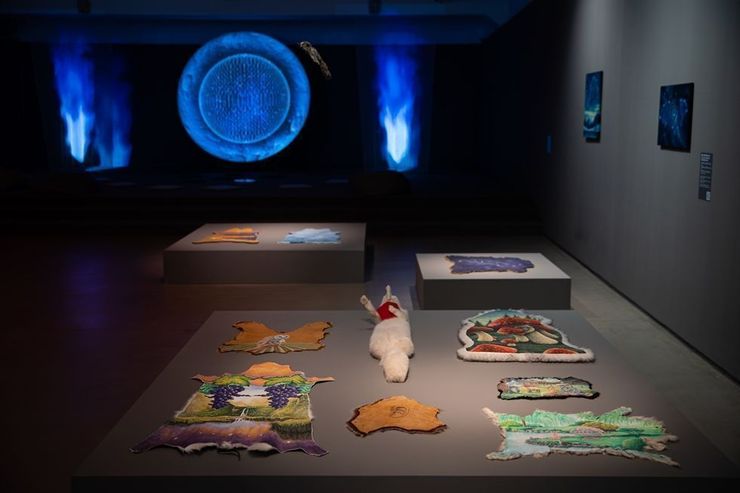
Artist Jang Jong-wan's "Animal Skin Painting" series, front, and VideoRose's
 "Moon Garden" (2021) / Courtesy of Ilmin Museum of Art

By Park Han-sol


An official poster for the exhibition "Fortune Telling" held at Ilmin Museum of Art, Seoul / Courtesy of Ilmin Museum of Art

The mystic worldview materialized by fortune telling, astrology and shamanism has existed throughout human history, fueled by both anxiety and a desire to know about the future.

The new exhibition "Fortune Telling" at Ilmin Museum of Art, Seoul, reinterprets such practices, viewed as superstitious in the age of science, as potent artistic tools.

The first exhibition space themed "Fate" represents the idea of fatalism and mythology from the East and West, filled with cosmological symbols as well as the theory of yin-yang and the five elements; fire, earth, metal, water and wood. But its real charm lies in the audio guide containing the interpretations of each work that come from the Korean shaman's own perspective.


Woo Jeong-su's "Calm the Storm" (2017) / Courtesy of Ilmin Museum of Art


Roh Jin-ah's "From Dust You Came, and To Dust You Shall Return" (2019) / Courtesy of Ilmin Museum of Art

Haehwa-am, a shaman, delivers each work dealing with cosmological destiny through the lens of religion and especially, Korean shamanism. In Woo Jeong-su's "Calm the Storm," which was inspired from the biblical scene "Jesus Calms the Storm," the expressionless faces of the crowd on the boat in the face of raging waves and tumultuous storm seem at first, counterintuitive. But Haehwa-am explains their expressions are not so different from those who come to have their fortune read.

"The dry expression we see in these human characters in the middle of atrocities is in fact, similar to the ones who just heard an unexpectedly horrifying news at the fortune telling table. They look lost without making any efforts to mask it."

Looking at Jang Jong-wan's "Animal Skin Painting" series, which ironically depicts the scenes of religious utopia painted on the animal hide, she saw the role of "gut," a ritual performed by Korean shamans, involving offerings to gods and spirits. The ritual exists to appease gods and comfort humans who wish to see the peaceful world after their death, she said.

The motif of multimedia artist duo VideoRose's "Moon Garden" comes from esbat, a coven-like ritual observance centering on moon worship. The shaman explained that although esbat comes from the civilization at the other side of the world, many commonalities with Korea's shamanistic rituals can be found.

"It's because people of different thoughts and backgrounds still share a sense of faith and sacred unconsciousness within them. And Korean shamans, like priestess of the esbat, are also highly influenced by the moon as we are compelled to perform different rituals depending on the phase of the moon."


Song Ji-hyung's "Saju-Fortune Telling" (2021) / Courtesy of Ilmin Museum of Art


After a chance to contemplate the nature of fate, the audience can head to the second exhibition space, where they can explore their inner self and learn to either accept or fight against destiny through a number of interactive counseling programs.

They can have their fortune read based on the Chinese Four Pillars of Destiny inside the red tent, resembling the one commonly seen in the street of Korea, in "Saju ― Fortune Telling." They can also participate in storytelling workshops called "Room of La Loba ― Revival" based on Mother-peace Tarot reading, which is known for its feminist, inclusive characteristics that largely depart from traditional tarot imagery.

In "Ancient Pharmacy 2021," inspired by the pharmacies of the old days with alchemistic qualities, an interesting mix of fortune tellers, psychiatrists and artists study the dreams and luck of visitors to concoct a specialized potion. In "Instinct Beauty Shop," patrons can take part in unique counseling sessions to discover their hidden instincts and meet personalized characters that embody that very instinct.

The exhibition will run until July 11.

Healers, shamans and black magic: the complicated picture of mental health treatment in Indonesia


BY DEVIKA

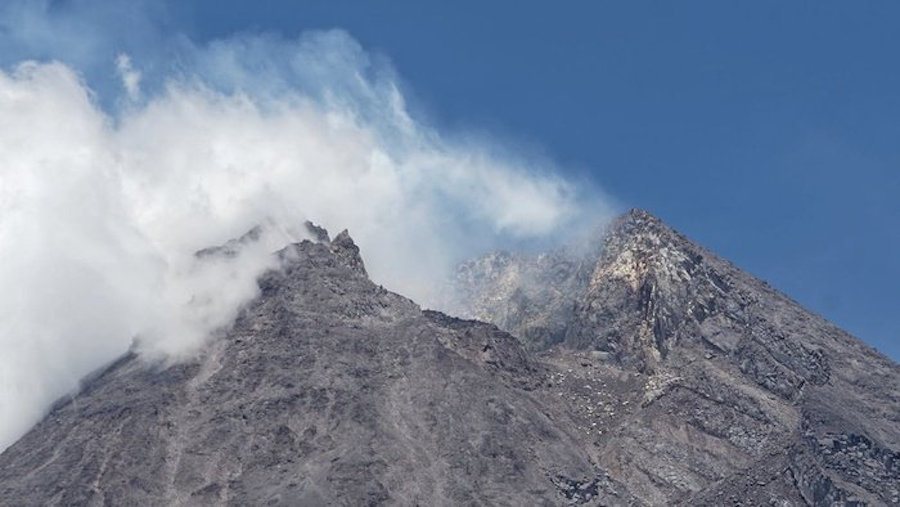
Mount Merapi, Yogyakarta. Research conducted in Yogyakarta, Jakarta, Denpasar and Palu indicates that cultural beliefs, practices and stigma are major obstacles to seeking professional treatment for mental health issues. Photo by Andreas Fitri Atmoko for Antara.


My family is religious. They do not have much knowledge of mental health problems. They asked me to pray more often, and even try fasting. When I first told them about my problem, they had difficulty accepting it. They asked me not to go to a psychologist.”

– Person living with anxiety disorder, Jakarta

They held me down and burned my eyes with incense. Then they started yelling, ‘Get out! Why are you bothering him?’ They thought I was possessed by a demon. I am not. To this day, I still hate alternative therapy. They made me drink a concoction made of water, lime and a piece of tile…  I threw up when I drank it. The rituals and concoctions cost me and my family millions of rupiah. Each exorcism ritual cost Rp 3 million [$290]. Imagine how much actual medicine I could have bought with that amount of money.”

– Person living with schizophrenia, Denpasar

Official statistics on mental health disorders in Indonesia are alarming, even accounting for massive underreporting of the problem. According to the results of the 2018 Basic Health Survey (Riskesdas), an estimated 19 million Indonesians over the age of 15 experience social-emotional mental issues, while almost 12 million experience depression. Seven in every 1,000 households have a member with schizophrenia. Yet in general, mental health does not attract the same level of concern as physical health in Indonesia, and strategic policy to address the issue is lacking.

To understand the full picture, mental health must be considered in its social and cultural context. In Indonesia, this context is a complicated picture indeed. Religious and spiritual beliefs, as well as cultural expectations, greatly affect the experience of mental health patients and the types of treatment they receive.

Research conducted this year by the HIV/AIDS Research Centre (PPH) at Atma Jaya University found that in the eyes of the general public, depression, schizophrenia and bipolar disorder are not seen as psychological disorders, but rather spiritual or paranormal problems.

The research was conducted in four cities – Jakarta, Yogyakarta, Denpasar and Palu – and involved 60 informants at various levels of leadership and service engagement, as well as patients and caregivers of people with mental disorders. The results of this small sample indicated that cultural beliefs, practices and stigma were the main obstacles to accessing mental health services for the majority of respondents.

There is significant social stigma attached to mental illness in Indonesia. For example, there is a common belief that it affects those who are not close to God, or are not praying often enough, and so are being punished for their sins.

Other viewpoints focus on the supposed influence of supernatural entities, such as beliefs that mentally ill people are possessed by demons that cause them to change their behaviour, hear voices, or experience hallucinations. Another folk explanation is black magic – perhaps the patient has been hexed by someone who bears a grudge against them, and the side effects of the hex include mental disturbance. These myths were common findings in our research.

These misconceptions are not only unscientific, but also result in people with mental health problems being mistreated, shunned by their communities, and unable to receive timely and effective medical treatment for their conditions.

Our research found that in some cases, people with mental health concerns were first referred by friends and family to “healers” and shamans, who claimed to be able to treat their illnesses. Treatments promoted by these healers include practices such as drinking traditional herbal remedies, bathing in water mixed with flowers, or being treated with incense or massage.

Others reported that they were subjected to treatments that involved inflicting physical pain, through ritual beatings or burnings. Some reported being sent to spiritual healers, who recommended reading religious texts, fasting, giving alms, or continuously praying throughout the day to ease symptoms.

Of course, most of these practices do nothing to address the root cause of patients’ mental health problems. Some of the patients interviewed reported spending vast amounts of time and money trying the approaches of various alternative healing practitioners, with no improvement in their condition. It some cases, it took them years to finally decide to seek help from healthcare services, when their condition had already become severe.

So why do people tend to seek out alternative approaches rather than immediately consulting a health professional?

Our research confirmed that for those who believed mental health issues to be a result of demonic or spiritual disturbance, western medicine approaches such as visiting a psychologist or psychiatrist were not considered to be suitable solutions.

In such cases, alternative approaches were often regarded as better ways to restore physical, spiritual and mental health. This is likely because they involved the patient’s family and community members in the treatment. Alternative healing practitioners also tend to be figures who are respected within their communities, avoiding the need to involve outsiders in treatment.

The influence of family is another major reason people chose alternative approaches. Family members, who should provide support and care for sufferers, are instead often informed by stigma in their responses – providing unnecessary advice, making hurtful comments, refusing to address the problem, or referring patients to alternative healing practitioners.

These kinds of responses are indicative of a low level of community understanding of mental health, and can be harmful for people with mental health issues.

Identifying and understanding all the perspectives on mental health – including cultural views and social stigma – is important to get a full picture and find solutions for Indonesia’s mental health problems.

Cultural constructs play a vital role in the identification and treatment of mental health problems, and must be considered in the creation of strategic mental health policy – people cannot be expected to come willingly to mental health providers if their cultural viewpoints are not adequately understood.

Providing space for discussion among alternative healers, healthcare professionals and other stakeholders is the first step towards developing culturally sensitive mental health services.

However, misconceptions must also be addressed when they delay or inhibit treatment of serious conditions. Promotion of reliable information on mental health must target people with mental illness and their families. Access to this type of information can be a deciding factor on whether families seek treatment from alternative approaches or mental health professionals.

Mainstreaming a better understanding of mental health issues and promoting mental health services must become a priority to support the health and wellbeing of millions of Indonesians.


The statue of Emily Murphy in Edmonton was covered in red paint and had the word “racist” painted over the plaque.

The paint was visible Monday evening at the statue of the namesake for Emily Murphy Park in Edmonton’s river valley.

The park is located near Emily Murphy Park Road and Groat Road.

Emily Murphy was the first woman magistrate in the British Empire and one of the Famous Five.

According to The Canadian Encyclopedia, her views on immigration and eugenics are often criticized as being racist and elitist.

HER MOST INFAMOUS BOOK WAS THE BLACK CANDLE
ABOUT THE WHITE SLAVE TRADE, RUN BY ORIENTALS WHO IMPORTED OPIUM AND MARIJUANA. AS A RESULT SHE INTRODUCED THE NARCOTICS ACT IN CANADA.


Related Stories
Red paint found smeared on Catholic church in Edmonton on Canada Day

Statue outside Polish Catholic Church in Edmonton vandalized with red paint

Winston Churchill statue in downtown Edmonton vandalized


'When is the strike vote?': Facing wage rollbacks, Alberta nurses consider job action


Virginia Wright
CTV News Calgary Reporter/Producer
Wednesday, July 7, 2021

CALGARY -- Alberta nurses could see their wages rolled back in an effort to help the province's finances.

"As we move beyond the peaks of the pandemic and into a more manageable period, we need to continue the important work of getting the province’s finances back on track," said Finance Minister Travis Toews in a statement.

On Tuesday evening , the United Nurses of Alberta (UNA) said its employers – Alberta Health Services (AHS) along with Covenant Health, Lamont Health Care Centre and Bethany Group in Camrose – are pushing for a three per cent wage reduction.

Combined with other rollbacks – the elimination of the semi-annual lump sum payments, reduced shift and weekend premiums – nurses could face a total compensation reduction of approximately five per cent, says the union.

“The responses we've had from members feels like being kicked in the gut. (They are asking) When is the strike vote?” said UNA president Heather Smith.

“Many members are saying today, ‘Let's get on with it. Let's speed up the process. And let's get to our ability to legally exercise our right to strike.’ There's certainly some who would suggest that legal or not, we should do it now. But we have our own internal steps in terms of how a strike is authorised by our members.”

According to the province, Alberta nurses make 5.6 per cent more here than in comparable provinces, costing the government about $141 million per year.

"The need to bring wages in line with other large provinces does not diminish our deep respect for the exceptional work and dedication of public sector workers," said Toews.

“It is simply reflective of our fiscal reality, and one that many sectors in the province have experienced. We are hopeful that AHS and UNA will bargain in good faith."

The numbers cited by Toews are not supported by data from the Canadian Job Bank, which says nurses make an average of $44.90 an hour in Alberta, putting them in the middle of the pack nationwide.

Mount Royal University political scientist Lori Williams says the government is targeting the wrong group of workers at the wrong time if it expects public support for it’s position.

“There's more support for health-care workers in the health-care system than there is for the government. So they’ve got to tread very carefully here,” said Williams.

“I think most Albertans are hoping for a credible balance to be struck, but to ask for more sacrifices – and from people that have sacrificed so much already – is going to be a much harder sell than it would have been had the government behaved differently up until this point.”

The Alberta Federation of Labour says the government seems to be pushing its way toward a fall season of work stoppages amd labour unrest, and president Gil McGowan says he thinks that’s what the Kenney government wants.

“We think that they're courting a confrontation with nurses and other public sector workers. A confrontation, which will probably boil over sometime late in the fall.

“It could be a strike, or actually could be an unprecedented public sector lockout. That's never happened in this province, but it fits exactly with the way this government does business.”


McGowan adds if the government wants a fight, it will get one.

“If they think that we're going to sit idly by, while they pick the pockets of nurses, and teachers, and other public sector workers who've been working so hard for Albertans, on the front lines during this pandemic, if they think we're gonna sit idly by and let them get away with that, they've got another thing coming.”

The UNA says a strike could still be averted, noting there are several steps in negotiations left to work through before it is in a legal position for its members to walk off the job.

Negotiations between the UNA and the employers’ group resume on Thursday.


The United Nurses of Alberta says the province is attempting to rollback nurse wages by three per cent. (file)


Braid: Nurses' growing anger leads to talk of strike after UCP proposes pay cut

Author of the article:Don Braid • Calgary Herald
Publishing date:Jul 12, 2021 • 
Health-care workers stage a wildcat strike at University of Alberta Hospital on Oct. 26, 2020, to protest job cuts announced by the Alberta government. 
PHOTO BY DAVID BLOOM/POSTMEDIA

It takes a special government to praise nurses for their work during the greatest health crisis in a century, and then offer them a three-per-cent pay cut.


This makes the UCP look heartless. By comparison, their treatment of doctors seems almost humanitarian.


The United Nurses of Alberta, with more than 30,000 members, is a much more powerful body than the doctor’s group, the Alberta Medical Association.


And many nurses are talking about a strike.


“I’m not raising that word — it’s the members who are raising it,” says UNA president Heather Smith.

“The mood is definitely very tense. And last week does not in any way help to de-escalate an exhausted workforce who already feel under-appreciated and disrespected.”

Last Tuesday, government negotiators formally proposed a three-per-cent pay cut over one year. The union says that with other government demands, this amounts to a real-world cut of more than five per cent.

The government has always signalled that after the pandemic, it would turn to the province’s serious fiscal problems, which include a $16-billion deficit and nearly $100 billion in debt.

Premier Jason Kenney often admiringly cites Premier Ralph Klein’s cuts in the 1990s, which were more severe.


But Klein made nearly everybody in public life take pay cuts of up to five per cent — nurses, teachers, public servants, professors, the whole crowd. Retired public employees resent the shrinkage in their pensions to this day.

But with everybody fighting mad at once, the Klein government couldn’t be accused of picking on one group.

Now the UCP is doing the reverse, by taking on the most fatigued and demoralized group in Alberta, and one of the most admired.

Members of the United Nurses of Alberta march outside the Foothills Hospital in Calgary on Feb. 13, 2020, to show support for front-line workers. PHOTO BY JIM WELLS/POSTMEDIA

The UCP surely knows its demands create the likelihood of a strike or other labour action. They calculate that the battle for public opinion can be won with attacks on “union bosses” and appeals to the larger fiscal picture.


The biggest nurses strike in Alberta came in 1988. It was a 19-day horror, technically illegal, that cost the union $426,000 in contempt of court and other fines. More than 75 nurses faced criminal charges.


But the nurses got a favourable settlement and established themselves as a force.

“The similarities between 1988 and now are actually quite frightening,” Smith says.


“Back then we also had staff shortages across the province, and the employers came to the table and asked for rollbacks. It’s the same kind of mentality that you see today.”

But the big difference now is that public service strikes are legal

A nurse helps people lined up for COVID-19 testing at the Richmond Road Diagnostic and Treatment Centre in Calgary on June 3, 2020. 
PHOTO BY GAVIN YOUNG /Postmedia, file

The Supreme Court ruled in 2015 that complete bans are unconstitutional. The Alberta courts followed shortly afterward, basically confirming the high court ruling.

New Alberta law on conditions for strikes sets hurdles for both sides. For one thing, union and employer have to agree on which workers are essential, and ensure that those people stay on the job.

But once the conditions are met, a strike can begin with no threat of contempt charges and fines for the union and the workers. Consequently, any strike could last much longer than illegal ones.

Even today, it takes a lot of provocation to push Alberta nurses toward a strike.

Since the 1988 conflict, Smith says, “nurses have worked their whole careers and never had to face this dilemma, in terms of standing up for our workplace and ourselves.

“These people have never had to consider a strike vote. Now we have members from across the province saying, ‘Where’s the vote?'”

There’s positioning going on at this point, obviously. The government may demand three per cent to soften up the nurses for zero. Union officials have to reflect the members’ views while still trying for a negotiated settlement.

But many Alberta nurses are profoundly exhausted, bitter, disillusioned — and now, insulted.

One way or another, they will be heard.

Don Braid’s column appears regularly in the Herald.

Twitter: @DonBraid

Facebook: Don Braid Politics
'We've never seen anything like this': Alberta heath-care workers worry about cuts to services


Andrea Dion CTV News Edmonton
Published Monday, July 12, 2021 


Alberta hospitals face staff shortages, bed closures


NOW PLAYING
There are bed closures across the province due to staff shortages.
 Ryan Harding explains.


NOW PLAYING
The provincial government is facing questions about recent hospital bed closures across Alberta.


EDMONTON -- Concern over staff shortages and cuts to primary health care in Alberta continues to mount following service reductions at multiple rural and large urban hospitals across the province.

“We knew coming out of Stage 3 and coming into the easing of restrictions, we’re still going to have pressures with staffing throughout the province this summer,” Tyler Shandro, Alberta's health minister, said to media on Monday.

Last week, 12 beds were closed down at Lacombe’s only hospital adding to a recent trend of downsizing across health care facilities.

One of Edmonton’s largest hospitals, the Royal Alexandra, lost six beds in their emergency room department this month.

“We’ve never seen anything like this, where there are consistently six beds closed 24/7 for an entire summer,” Shazma Mithani, an emergency doctor at the Royal Alexander and the Stollery Children’s Hospital, said.

“The emergency room still remains open,” Shandro added. “People who need emergency care can and should continue to go to the Royal Alex. The folks there are still able to continue to get the critical care they need.”

'WE’RE WORKING AT BASICALLY HALF CAPACITY'


In a media presser on Tuesday, David Shepherd, the health critic for the NDP, said there needs to be an action plan in place to stop further closures and reopen the beds.

“Alberta’s frontline heroes are burned out,” he said.

“If the minister expected it you would think he would have done something about it. Instead he's left it to those on the frontline to deal with his inaction.”

Mithani told CTV News Edmonton this decision directly affects their ability to care for patients in the emergency department in the most effective and timely way possible, inevitably leading to longer wait times.

“As you start to lose staff the amount of work that is left behind for the people who are still working in the emergency department increases,” she said.

“I think I would be lying if I’d say there aren’t cases in which the quality of care suffers because there aren’t enough people to offer it,” Parker Vandermeer, a rural Alberta doctor, added.

“We’re working at basically half capacity.”

'PEOPLE WANT TO WORK WHERE THEY’RE VALUED'

Mithani described burnout in health care as a moral injury. She told to CTV News this last year has been one of the most trying years of her career.

“To see people who are so sick every single day it affects you,” she explained. “It affects you profoundly at a mental level, at a physical level, and at an emotional level.”

“We’re used to trying to help people get better and this last year unfortunately has been the opposite of that,” she continued.


“It’s hard to even find solace and joy in the simple things in your home life because you’ve been carrying the weight of what’s happening on shift at work into the rest of your life as well. It’s a devastating place to be in.”

Both Mithani and Vandermeer said in the last year but specifically in recent months a number of nurses and physicians have left to pursue areas of medicine that are slower paced or they’ve left the province altogether.

“I don’t know if I would expect any different from my friends and colleagues, why would they stay around and take that sort of treatment if there are other options available,” Mithani said.

“People want to work where they're valued and respected and Alberta is not the current spot for that,” Vandermeer added.

'WE'RE GOING TO FOCUS ON THOSE ISSUES'


During a press conference in Calgary, Premier Jason Kenney told reporters they’ve increased the provincial budget by $900 million for physician recruitment and retention.

“We have more doctors working in Alberta now than we ever had in our history,” he said.

“We're going to focus on those issues,” Shandro said. “The budget has not been cut, its not going to be cut.”

With files from CTV News Edmonton’s Ryan Harding


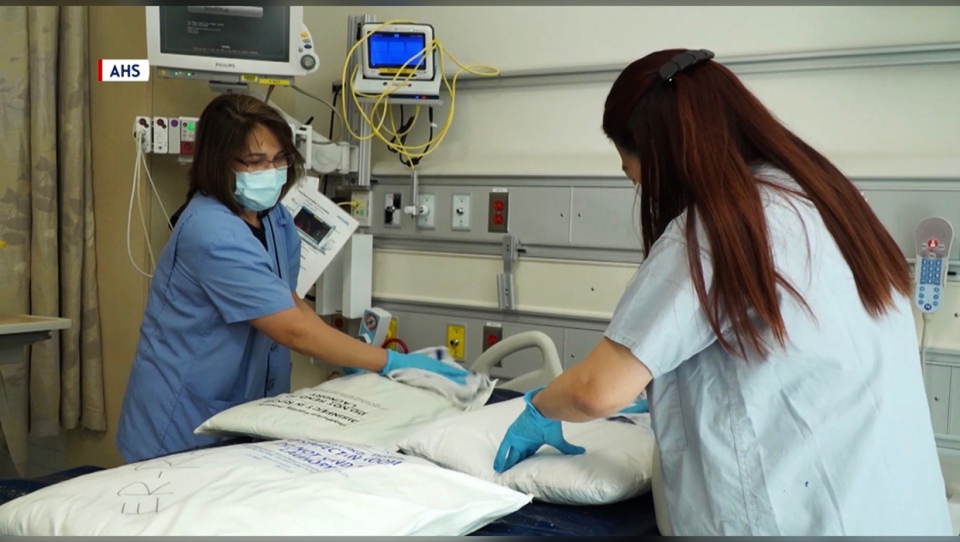
AHS have temporarily closed the Royal Alexandra Hospital due to the managing of a patient with a potential contagious illness.
Nickel hits four-month high; strike in Sudbury continues

USW Local 6500 walked off the job June 1

Author of the article:Reuters
Publishing date: Jul 09, 2021 • 

 
United Steelworkers Local 6500 members picket at Vale's Frood-Stobie Complex in Sudbury, Ont. on Monday June 14, 2021. John Lappa/Sudbury Star/Postmedia Network

LONDON — Nickel prices hit their highest in four months on Friday on firmer seasonal demand and renewed buying by investors bullish on the metal’s prospects in a green economy.

Copper and other industrial metals gained a shot in the arm after top commodities consumer China said it will cut the amount of cash that banks must hold as reserves to boost economic recovery.

Benchmark nickel on the London Metal Exchange (LME) had gained 2.2 per cent to $18,740 a tonne by 1615 GMT (or US$8.4890 a pound), its strongest since March 3.

Financial markets have been jumpy this week on worries that a rise in cases of the Delta coronavirus variant would crimp global growth.

“If you’re worried about growth, then maybe nickel is a good insurance policy,” said independent consultant Robin Bhar.

“We’re going to need nickel for batteries in electric vehicles and energy storage regardless of the business conditions because we have to go green.”

Nickel is the key metal mined in Sudbury by Vale and Glencore, two of the city’s biggest employers. The price surge comes as 2,400 members of Steelworkers Local 6500 are on strike.

Vale’s production and maintenance workers walked off the job June 1, after rejecting a contract offer members say contains unnecessary concessions. They rejected a second offer two weeks later for the same reason.

Vale has said it needs changes to its collective agreement with Local 6500 to justify investments in its Sudbury operations.

No new contract talks have been announced. Operations in Sudbury – one of the world’s major nickel producers – remain idle as the labour dispute continues.

In the meantime, nickel prices remain high. While nickel demand for electric vehicle batteries is forecast to climb in coming years, stainless steel still accounts for the bulk of nickel consumption.

Stainless steel prices have surged by 25 per cent since late April.

On the Shanghai Futures Exchange, stainless steel futures for August delivery jumped 1.6 per cent on Friday to 17,360 yuan a tonne, the highest level since the contract’s launch in 2019.

Citi this month lifted its three-month price forecast for LME nickel to $20,500 a tonne, it said in a note, citing indicators showing emerging market tightness.

– LME nickel inventories are at their lowest since last year at 228,612 tonnes, data showed on Friday.

– China will cut the amount of cash that banks must hold as reserves, releasing about 1 trillion yuan ($154.2 billion) in long-term liquidity to underpin its post-pandemic economic recovery.

– China’s factory gate prices rose at a slightly slower pace in June, in line with expectations, while consumer inflation also eased.

– LME copper gained 2.1 per cent to $9,514 a tonne.

— with files from The Sudbury Star
UNDERWHELMING NUMBERS
Striking workers cross picket lines to help restart production at Volvo Trucks factory

Updated Jul 12, 2021

In a Jan. 6, 2011, file photo, workers install parts on a truck on the Volvo truck assembly line at the Volvo plant in Dublin, Va. A tentative labor deal between Volvo Trucks North America and a union representing nearly 3,000 workers who have gone on strike twice in 2021 at the Virginia truck plant was rejected by the striking workers, late Friday, July 9, 2021. (AP Photo/Steve Helber, File)AP

By The Associated Press

DUBLIN, Va. (AP) — Volvo Trucks North America says some striking workers crossed picket lines Monday at a southwestern Virginia factory as the company plans to restart production.

Spokesman John Mies wouldn’t say how many United Auto Workers members went inside the factory in Dublin, Virginia, near Roanoke. But he says in an email that it will take a few days to get assembly lines back up and running at the plant, which employs 2,900 UAW workers.

Union members at the heavy truck assembly plant have voted down three tentative contract agreements reached with local union negotiators, with the most recent rejection coming on Friday. They initially went on strike in April.

UAW spokesman Brian Rothenberg said Monday that about 10 workers crossed the lines Monday morning, in addition to a “handful” of union workers who had gone to work earlier. He said he didn’t have exact numbers.

Both Volvo Trucks and Rothenberg say workers will vote again on the third agreement again on Wednesday. “Our final offer is on the table; it is the third tentative agreement,” Mies said in an email Monday.

Rothenberg said the union is researching legal options and may have an announcement later Monday. He did not know if the company had enough workers to produce any trucks. He said in any strike, a small number of workers always cross picket lines.

On Friday, Volvo trucks said in a statement that it will implement terms and conditions of the third agreement, reached with local union leaders on July 1. Returning employees “will immediately receive the wage increases and benefits outlined in the July 1 agreement, except for the ratification bonuses that would be paid on contract ratification,” the company said.

The previous contract, reached in 2016, was to have expired in mid-March. Negotiations began in February. Workers went on strike from April 17 to 30 and returned to work as they were voting on the first agreement. But members rejected that offer in May.

The company announced another six-year tentative agreement later that month, but it was rejected June 6.

Mies said Monday the company is focused on employee training and equipment testing as it moves to restart assembly lines at the plant that makes semi tractors.

Volvo says the 1.6 million-square-foot (nearly 150,000-square-meter) Dublin plant is the largest manufacturer of Volvo trucks in the world. It is one of the largest private sector employers in the region, with approximately 3,300 employees, some 2,900 represented by the UAW.

“The ongoing strike — which we continue to believe is unnecessary — is hurting our customers, and has already set back our project to expand and upgrade the facility,” plant Vice President and General Manager Franky Marchand said in a statement last week. “No one is gaining from the current situation, and we will consider all options related to the bargaining process.”

The Volvo Group is the only heavy-duty truck manufacturing group that assembles all of its trucks and engines for the North American market in the U.S., according to Volvo. It said the plant is undergoing a $400 million investment for technology upgrades, site expansion and preparation for future products, including the Volvo VNR Electric truck.

It added the plant has added 1,100 jobs since the current union agreement was implemented in 2016 and is on track to have a net increase of approximately 600 positions in 2021.


End game: Volvo reopens plant and encourages strikers to come back

UAW urges strikers to hold out through second ratification vote Wednesday

Volvo Trucks North America resumed production at its Virginia assembly plant on Monday, encouraging UAW strikers to come back to work under terms of its “last, best, final” offer. 

UAW Local 2069 voted down a third tentative agreement on Friday by closer margins than two previous proposed deals rejected by 9:1 margins. The union scheduled a second ratification vote for Wednesday. If members vote in favor of the deal, they would get a $2,000 pretax signing bonus. If voted down again, Volvo will impose the terms of the latest agreement.

“Our last offer delivered significant wage gains and first-class benefits for our employees, and 40% of UAW voters supported it,” Franky Marchand, vice president and general manager of New River Valley Operations, said in a statement Sunday. 

The union technically took three votes. It rejected hourly and general contract terms 60% to 40% and voted 67% against the pay package.

“We need to safeguard our future and start building trucks for the many customers and dealers whose businesses and livelihoods depend on our products,” Marchand said.

Difficult position

The implementation of the most recent tentative agreement put 2,900 Local 2069 members in a difficult position: Cross their own picket lines after six weeks of striking or hold out for an inevitable legal challenge to the company

“We are asking all members to not cross the picket line,” Local 2069 President Matt Blondino said in a letter posted on the local’s Facebook page. “We are still on strike until further notice.”


“Basically they are trying to break our union by asking you to return to work tomorrow.” 

Matt Blondino, UAW Local 2069 president

In a video posted on Facebook on Sunday, Blondino said: “Basically they are trying to break our union by asking you to return to work tomorrow.” 

Negotiations toward a new agreement, lengthened to six years from the previous five-year pact, began in February. Workers struck for 12 days after a 30-day contract extension expired April 17. They returned to work before rejecting the first tentative agreement. A second offer in June also failed, leading to the current strike, which began June 7.

On July 1, the third tentative agreement was reached. Provisions included raising the wage of hourly production workers to $30.92 in 2026 and eliminating a two-tier wage structure that had been in place since 2008. New workers started at a lower wage and needed eight years to reach parity.

No more negotiations

Blondino said in the video that no further negotiations would be held because Volvo said it had made its last, best offer.

“But If they give us a definite date of return back to work, that is the date a labor charge can be filed,” he said. “We cannot do that without this voting process.”

Worker sentiment in Facebook posts overwhelmingly criticized the company for using the signing bonus to sway workers who have been getting $275 a week in strike benefits.

“Sign-on bonus is like a carrot dangling in front of a steer led to slaughter, $2,000 … really chicken feed after taxes, maybe $1,100,” read one post.


UAW Local 2069 member and Volvo Worker speaks out, families join strike

By Janay Reece
Published: Jul. 12, 2021 at 5:14 PM MDT|Updated: 15 hours ago

DUBLIN, Va. (WDBJ) - The United Auto Workers remains on strike at Volvo Trucks. Workers voted down a third proposed contract agreement with the company.

According to the union, this is Volvo’s “last, best and final offer”.

But the workers say they will not give up.

Union member Travis Wells says members feel that their voices have not been heard by both the company and the UAW.

“We’ve been given, absolutely no reason to to concede. So, we’re, all we’re asking for is a fair wage, a path to the top for everybody, insurance stays the same as it is now 90/10 - and if we don’t get that we’re gonna vote no, until the cows come home,” said Wells.

Wells says many of the workers are ready to get back to work and are passionate about making Volvo trucks - but they want to make sure they’re all compensated equally for their work.

Families of UAW members also joined the picket line Monday, including an 8-year-old who said this is her fifth time picketing with her dad and simply wants to help.

“To help people and to feel good,” said Khloe Gunter.

“I just wanted to hold the sign,” said 7-year-old Colton Johnson.

A Volvo Trucks spokesperson says Sunday’s meeting resulted in an impasse regarding a new contract for the New River Valley plant, so Monday, July 12, the company will implement the terms and conditions of the tentative agreement endorsed by UAW leaders July 1, 2021.

Volvo says for now, they plan to operate one shift at the NRV plant.

You can read more about the strike here. Stay with WDBJ7 to hear more of Wells’ story.

Copyright 2021 WDBJ. All rights reserved.