Wednesday, July 14, 2021

REPUBLICAN STYLE DIRTY TRICKS COME TO CANADA

Head of group representing churches in COVID-19 challenge takes leave after having Manitoba judge followed

Justice Centre for Constitutional Freedoms president paid for surveillance of Chief Justice Glenn Joyal


John Carpay said Tuesday he is stepping aside as president of the Alberta-based Justice Centre for Constitutional Freedoms, saying the decision to hire a private investigator to surveil a Manitoba judge was all his own. (CBC)

The president of a group representing multiple churches across the country fighting COVID-19 public health orders in court is taking indefinite leave after admitting he hired private investigators to follow both a judge presiding over the case in Manitoba and some senior government officials.

The board of the Alberta-based Justice Centre for Constitutional Freedoms (JCCF) said Tuesday morning that the group's founder and president, Calgary-based lawyer John Carpay, was taking an indefinite leave, effective immediately.

"Surveilling public officials is not what we do. We condemn what was done without reservation," the board said in a release, apologizing to Chief Justice Glenn Joyal of the Manitoba Court of Queen's Bench "for the alarm, disturbance, and violation of privacy.

"All such activity has ceased and will not reoccur in future."

Joyal said on Monday morning he'd been tailed by a private investigator in an attempt to catch him breaking COVID-19 rules in order to embarrass him while he presides over a court challenge related to the province's lockdown measures. 

Joyal revealed the information during a hearing for the case, which was brought forward by seven rural Manitoba churches represented by the JCCF.

Manitoba Court of Queen's Bench Chief Justice Glenn Joyal said he was deeply disturbed to learn a private investigator had been hired to follow him. (The Canadian Press)

Carpay later said it was his organization that had retained the private investigator to follow Joyal as part of its efforts to hold government officials accountable, although he said it was not an attempt to influence the decision in the case. 

He also said the organization had hired private investigators to follow a number of other public officials in order to catch them breaking public health regulations.

Carpay apologized Monday for the error in judgment.

Jay Cameron, another lawyer representing the JCCF in the court challenge, became aware of the surveillance a few weeks ago and also apologized to Joyal on Monday.

During the virtual hearing, Joyal said he realized he was being followed by a vehicle on Thursday when leaving the Manitoba Courts building in downtown Winnipeg and driving around the city. 

He said the private investigator even followed him to his private residence and had a young boy ring his doorbell while he wasn't home in an attempt to confirm where he lives. The private investigator also followed him to his cottage, Joyal said. 

Joyal said it would not influence his decision in the case, but said it would be "unthinkable" to not share it with the court because of its potential implications in the administration of justice. 

He said the surveillance of his home and intrusion of his privacy raise serious concerns about the privacy and safety of judges generally. This type of activity could also be seen as obstruction of justice, either direct or indirect, he said. 

"I am deeply concerned that this type of private investigative surveillance conduct could or would be used in any case involving any presiding judge in a high-profile adjudication," he said. 

At the beginning of the hearing, Joyal said he did not know who hired the private investigation agency and that it refused to reveal that information. He also said Winnipeg police were investigating. 

The JCCF board also said Tuesday that an interim president would be appointed, and that there would be a review of operations and decision-making at the organization.

'This is just not done'

Ottawa human rights lawyer Richard Warman has filed a complaint with the law societies of Manitoba and Alberta about the incident.

"It's probably the most egregious case of professional misconduct that I've heard of in quite some time," he said.

"Any lawyer found to have been involved in this should face the most severe sanctions possible, up to and including disbarment. This is just not done."

Toronto-based charity lawyer Mark Blumberg says Carpay's actions could have negative consequences for the JCCF's status as a registered charity.

"A very basic concept is that a Canadian registered charity in Canada operating here is not allowed to break the law," he said.

"You get a lot of benefits to be a charity and with that comes certain obligations. It's sort of like a deal between society and government that you will be able to be a charity but you will also have to comply with a number of different requirements."

Blumberg says it's vital for the charity sector to have public trust, and incidents like this can undermine that.

He added that the fact Carpay acted on his own suggests the organization needs to take a close look at its oversight procedures. 

With files from Sarah Petz and The Canadian Press


Human rights lawyer files complaints after P.I. hired to tail Manitoba chief justice


Jeff KeelePolitical Reporter

Published Tuesday, July 13, 2021 


WINNIPEG -- Complaints have been filed and probes are underway after a private investigator was hired to tail a Manitoba judge.

On Monday, Court of Queen’s Bench Chief Justice Glenn Joyal revealed he’d been followed from the law courts to his home by a private investigator trying to catch him breaking public health orders.

The firm doing the surveillance was hired by the Alberta-based Justice Centre for Constitutional Freedoms – the group representing seven Manitoba churches who are challenging the province’s public health orders.

Joyal is presiding over the case.

Ottawa-based human rights lawyer Richard Warman has filed complaints with the Manitoba and Alberta law societies, calling on them to investigate three lawyers involved in the case.

“It brings into question the personal safety of a member of the judiciary,” Warman told CTV News.

He said if the allegations are proven, the lawyers should be disbarred.

“I can’t imagine council engaging in this kind of professional misconduct, where you think it’s appropriate in any universe to hire a private investigator to follow a judge home,” said Warman. "It's unconscionable."

The Law Society of Manitoba wouldn't comment on the complaints, but did say it is looking into the matter.

“The Law Society would be very concerned if a lawyer were found to have attempted to improperly influence the cause of justice by hiring a private investigator to follow the Judge who is presiding over the matter.”

On Monday, Justice Centre for Constitutional Freedoms President John Carpay told Joyal he alone hired the investigator and apologized.

On Tuesday the centre announced Carpay is taking an indefinite leave from his position.

“Surveilling public officials is not what we do. We condemn what was done without reservation. We apologize to Chief Justice Joyal for the alarm, disturbance, and violation of privacy. All such activity has ceased and will not reoccur in future.”

In light of the surveillance, Manitoba Justice Minister Cameron Friesen suggests security may be beefed up to protect key government officials.

“We want everyone to feel safe in the performance of their duties – elected officials, chief judges, chief justices,” said Friesen.

The Winnipeg Police Service said Monday it is also investigating the situation.


Brookfield faces new hurdle to hostile Inter Pipeline bid

Canadian regulators imposed tougher conditions on Brookfield Infrastructure Partners LP’s hostile takeover bid for Inter Pipeline Ltd., making it harder for the Toronto-based company to derail a rival deal.

Brookfield must get investors to tender at least 55 per cent of Inter Pipeline’s shares for its bid to succeed, the Alberta Securities Commission ruled on Monday. That’s higher than the previous hurdle of 50 per cent plus one. Shares that Brookfield already owns can’t be counted in the number.

Brookfield must also disclose new details about its use of derivatives called total return swaps. Brookfield used the swaps to acquire a nearly 20 per cent economic interest in Calgary-based Inter Pipeline, without having to disclose its stake in the company before it launched a hostile bid in February.

The decision by the Alberta regulator raises a new obstacle for Brookfield to beat a US$6.9 billion, all-share offer by Pembina Pipeline Corp. that was unveiled June 1. Pembina and Brookfield have been tussling for weeks over Inter Pipeline, a midstream energy company that owns pipelines in western Canada’s oil region, liquid storage terminals in Europe and a large petrochemical complex in Alberta that’s under construction.

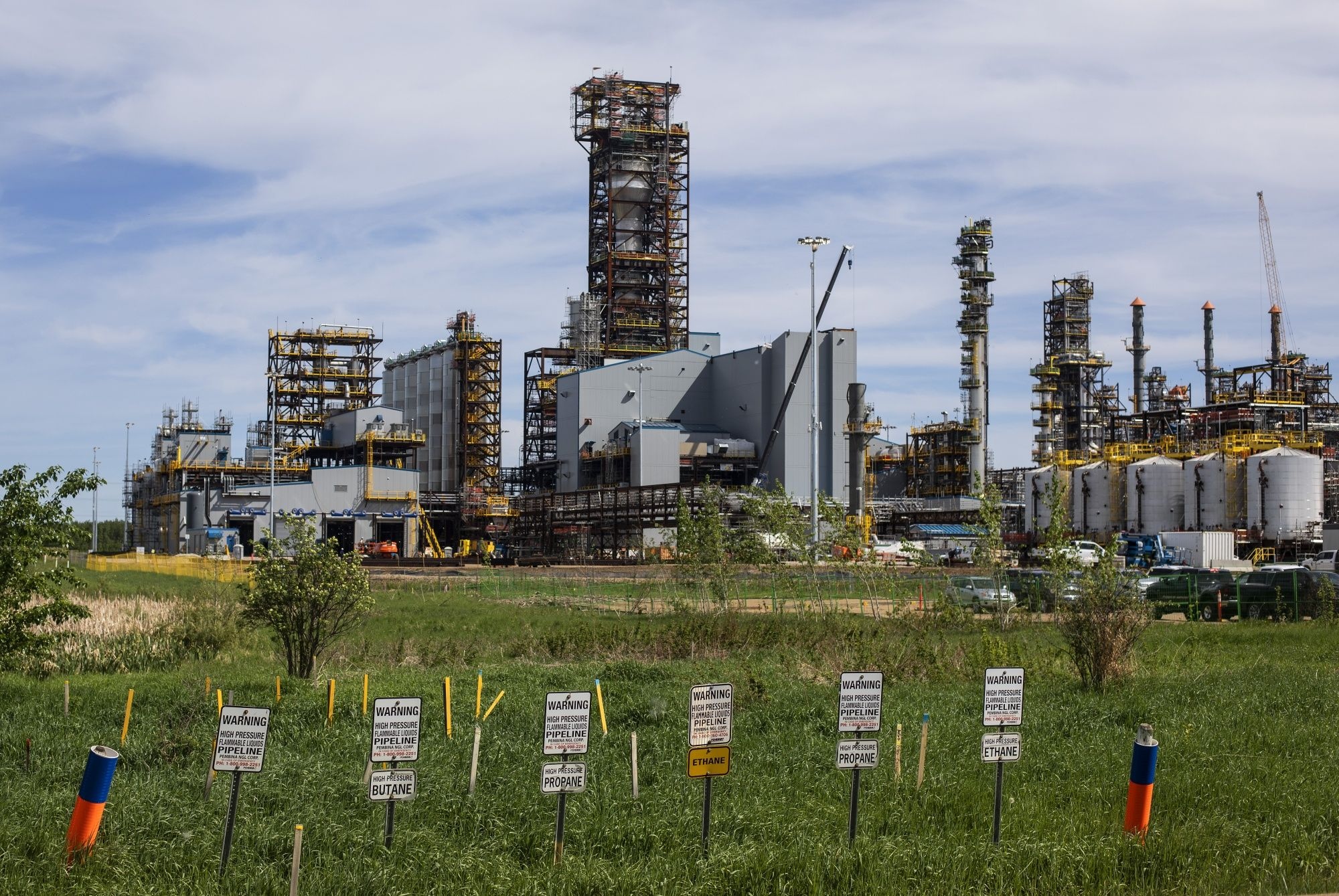
Pembina NGL pipeline warning signs outside the Inter Pipeline Heartland Petrochemical
Complex under construction in Strathcona County, Alberta, Canada

Pembina NGL pipeline warning signs outside the Inter Pipeline Heartland Petrochemical Complex under construction in Strathcona County, Alberta, Canada, on Wednesday, June 2, 2021. Brookfield Infrastructure Partners LP raised its hostile offer for Inter Pipeline Ltd. to CUS$8.4 billion (US$6.9 billion) as it sought to break up the company's takeover by Pembina Pipeline Corp. announced a day earlier.

The ruling throws into question the practice of using derivatives to build an economic position in companies without needing to disclose. Prior to making its first offer, Brookfield acquired about 9.8 per cent of Inter Pipeline’s shares -- just below the 10 per cent level that would have required disclosure under Canadian rules. The use of swaps allowed Brookfield to raise the size of its economic stake to almost 20 per cent. In Monday’s oral ruling, the Alberta regulator called the tactic “abusive.”

Read more: Brookfield Revises Hostile Offer in Inter Pipeline Battle

Inter Pipeline’s board rejected Brookfield’s advances before securing a friendly offer from Pembina for CUS$19.45 a share. Brookfield raised its offer within days and on June 18 revised it to give Inter Pipeline shareholders the option of CUS$19.50 in cash or about CUS$20 in stock.

Brookfield is seeking to win over shareholders before Pembina’s offer goes to a vote on July 29.

Inter Pipeline Chair Margaret McKenzie said in a statement: “With the ASC’s favorable decision, our shareholders can proceed to vote for the Pembina arrangement without the risk that Brookfield will be permitted to further increase its aggregate share and swap position to frustrate the ability of shareholders to choose.”

Brookfield didn’t immediately respond to an email seeking comment. Its own challenge to some of Inter Pipeline’s defensive tactics, including a shareholder rights plan, was rejected by securities commission.

The battle for the Canadian midstream company follows years of failed attempts to build major projects like TC Energy Corp.’s Keystone XL and Enbridge Inc.’s Energy East, potentially making existing pipelines more valuable.

New Brunswick

'The future is extreme heat': Group worries province isn't prepared for what's coming

Seniors federation seeks answers on plans to protect residents from increasing heat waves

Alphonse Dionne, the president of the seniors' federation, worries rural seniors will be most at risk. (Rose St-Pierre/Radio Canada)

The New Brunswick Senior Citizens Federation is calling for governments to be better prepared for heat waves that are becoming more common with climate change. 

Alphonse Dionne, the president of the federation, said he's particularly worried about how things will play out for elderly people living in rural and remote areas of the province. 

"The future is extreme heat," he said. "In the cities, people can go to the mall to cool off, but in the rural areas, it's different."

Dionne said the federation has yet to hear from the province or municipal governments this summer about steps being taken to protect seniors from intense heat waves.

During the recent "heat dome" in British Columbia, when temperatures soared above 40 C, 719 people died in one week, triple the number that would typically die during a week in that province. The majority were seniors found alone, said Lisa Lapointe, the chief coroner of British Columbia. 

"I think a lot of people are still not taking this as seriously as they should," Dionne said. "The planet is changing and it's changing fast."

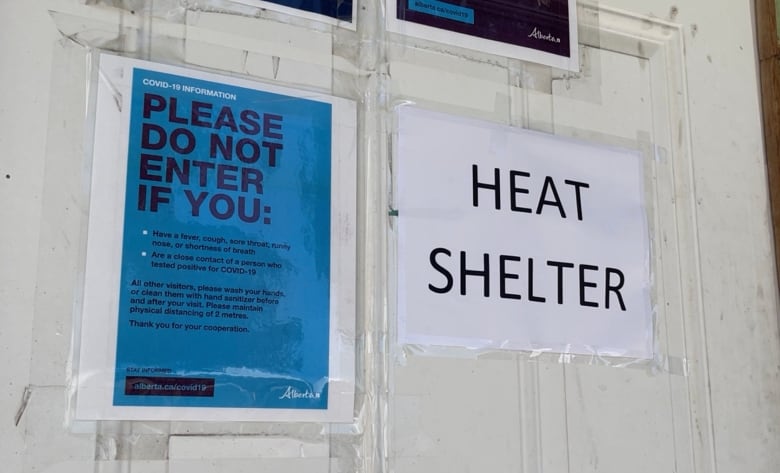
A sign on a door at a Calgary mosque where a shelter was set up during a recent heat wave in that city. New Brunswick Senior Citizens' Federation wants better planning for intense heat waves. (Dan McGarvey/CBC )

Nearly 22 per cent of New Brunswick's population is over 65, according to 2020 estimates from Statistics Canada. The province projects that number will grow to 31 per cent by 2038. 

Forty-seven per cent of seniors live in rural parts of the province, where governments have fewer resources to dedicate to emergency planning, said Ian Mauro, executive director with the Prairie Climate Centre based at the University of Winnipeg.

The centre has been mapping out environmental changes in rural and urban parts of the country that are expected over the coming decades. 

New Brunswick vulnerable

"There's a very significant and differentiated impact on rural and remote communities that needs to be taken into account," Mauro said.

"With the heat wave that went across Western Canada, the coroner's report out of British Columbia clearly indicated that a hugely disproportionate number of the fatalities in the heat wave ... was actually seniors — isolated seniors living in overheated homes," he said.

"New Brunswick is a more vulnerable area."

Researcher Ian Mauro of the Prairie Climate Centre says heat waves have a significant effect on rural and remote communities. (Holly Caruk/CBC)

Paramedics in B.C. also struggled to keep up with the demand, with response times to lower priority calls taking between four and 16 hours.

In rural and remote communities of New Brunswick, ambulances often still fail to respond to 90 per cent of calls within their target of 22 minutes.

In 2020, an auditor general's report found ambulances failed to reach that target in 19 of 67 communities

"We need to catch up. We need to have health and climate change considered simultaneously," Mauro said. "How do you ensure that people in those rural and remote areas are taken care of?"

A recent report released by the Canadian Institute for Climate Choices estimates that heat-related deaths and hospitalizations are expected to rise by mid-century.

What constitutes a heat wave

In Fredericton, the number of heat waves, defined as three or more consecutive days over 30 C, is predicted to triple.

Between 1976 and 2005, the region typically averaged one per year. It is believed that between 2021 and 2050, the area could average three heat waves per year, and up to five per year after 2050 if emissions are not controlled, according to the climate centre's modeling

The number of days exceeding 25 and 30 C are also expected to increase.

"That's a significant change and could in fact be a very costly change in terms of the impact on the environment, the impact on species, the impact on human health," Mauro said.

"We really do need to be thinking strategically about how this will impact all New Brunswickers, but specifically vulnerable people, like seniors." 

Deaths can be avoided if the province and federal governments provide the resources needed to set up services like cooling sites, Mauro said.

Governments should also be planting more trees to create shaded areas, and opening more splash pads and public pools, he said. 

1:45
New Brunswick has three heat alert levels - and precautions you should follow during a heat wave. 1:45

Public Health currently operates a heat alert system with three levels. At the second-highest level, residents are encouraged to check in on their neighbours. 

At the third and highest level, the province recommends the cancellation of sporting and outdoor events. It also said people living alone without air conditioning are at extreme risk. 

The province could not be reached to discuss what measures come into effect in the instance of extreme heat to protect vulnerable populations, or what emergency planning there has been for more intense heat waves in the future.

Some cities, like Moncton, already have a system of cooling centres that can be opened if temperatures get dangerous. 

Fire Chief Conrad Landry, who is also the city's director of emergency measures, said the heat hasn't become extreme enough for them to open yet. 

"We have many cooling centres that we can open up and that's not just to cool down, (people) could stay there," Landry said. 

Moncton doing more planning

The city currently has two public misting tents that open whenever the province issues a heat alert. It has also started emergency planning for more intense heat waves in the future. 

"We do have a plan on how to provide water to all our citizens for up to six months actually," Landry said.

"It's the same in case there's something that goes wrong with our water treatment plan."

The cities of Fredericton and Saint John were not able to provide anyone to speak about heat emergency planning in those communities.

ABOUT THE AUTHOR

Miriam Lafontaine is a reporter with CBC New Brunswick based in Fredericton. She's originally from Montreal, and can be reached at miriam.lafontaine@cbc.ca.


Oil sands come with a $60 billion bill for cutting carbon

And the government will likely be involved

It will cost about C$75 billion ($60 billion) to zero out greenhouse gases from oil sands operations by 2050, with a good deal of the costs borne by taxpayers and many loose ends yet to be tied up, according to two of the Canadian industry’s top CEOs.

To achieve the goal announced last month, about half of the emission cuts would need to come from capturing carbon at oil sands sites and sequestering it deep underground, which may require as much as two-thirds government capital like in Norway, Mark Little, chief executive office of Suncor Energy Inc., said in an interview. It’s still unclear how and when most of the projects will be implemented, or which agreements will be needed, but it’s clear the industry doesn’t want to do it alone

“We haven’t been able to find any jurisdiction in the world where carbon capture has been implemented, where the national government or the state governments are not very significant partners in that investment,” Alexander Pourbaix, CEO of Cenovus Energy Inc., said in the same interview “I don’t think any of us would ever be in a position to go at this on our own. It’s just too significant an undertaking.”

The initiative follows mounting pressure from large, climate-minded investors, many of which have ditched their oil sands holdings. Sitting atop the world’s third-largest crude reserves, the Canadian industry uses carbon-intensive extraction methods that have made it a target of environmentalists. Also at stake are jobs and tax revenues from an industry that represents about 10% of the Canadian economy.

“We have one Achilles heel: It’s greenhouse gas emissions,” Little said. “We can bury our heads in the sand and become a victim, or we can actually deal with it.”

The oil sands industry emits almost 70 million metric tons a year of carbon dioxide, about 10% of Canada’s emissions, “so we are a big emitter for sure,” Little said.

The plan to cut those emissions-- which also has the support of Canadian Natural Resources Ltd., Exxon Mobil Corp.’s Imperial Oil and MEG Energy Corp. -- will include measures like switching the fuels used at oil sands operations. Cenovus and the other companies are also developing ways to use solvents like propane to help separate the oil from the sand more efficiently and pump more crude with lower steam requirements. Later on, the industry might employ small nuclear reactors to make steam, Pourbaix said.

One of the group’s first big project is to build a carbon dioxide-carrying trunk line along a corridor that links oil sands facilities in the Fort McMurray area and Cold Lake regions of Northern Alberta to a nearby carbon sequestration hub. The trunk line will likely cost C$1 billion to C$2 billion, and could be in operation by the middle of the decade. But the biggest costs are associated with capturing the CO2, ranging from about C$50 a ton for industries that emit high concentrations to “several hundred dollars a ton” for direct capture from the air, Little said.

The plan doesn’t include so-called Scope 3 emissions, the ones generated by cars, aircraft, homes and factories when the fossil fuels produced in the oil sands are burned by the end consumers.

Activists block entrance to southeastern B.C. rainforest to protest old growth logging

Members of Old Growth Revylution set up blockades to Argonaut Valley rainforest last week

Winston Szeto · CBC News · Posted: Jul 12, 2021 7:17 PM PT | Last Updated: July 12
Old Growth Revylution protesters from Revelstoke, B.C., pose for a photo with Secwepemc Nation members at the entrance of Big Mouth Forest Service Road off Highway 23, about 120 kilometres north of the city. (Submitted by Old Growth Revylution)


An environmental group in southeastern B.C. is blocking the only access road to a local rainforest in protest of old-growth logging practices in the area.

Members of the Old Growth Revylution have set up barricades at the entrance of Big Mouth Forest Service Road, off Highway 23, about 120 kilometres north of Revelstoke.

Kukpi7 Wayne Christian, chief of the Splatsin First Nation and tribal chief of the Shuswap Nation Tribal Council, supported the protest by conducting a ceremony at the blockade on Sunday.

School teacher Sarah Newton, who has been on the site since last Tuesday, said she and fellow protesters will be occupying the gateway to the 600-square-kilometre rainforest in the Argonaut Valley until the province stops all timber operations on old-growth trees that are important for conserving the endangered southern mountain caribou.

"They [the caribou] need that old-growth forest and access to deep snow. That's what they've evolved to survive in," Newton said Monday to Chris Walker, the host of CBC's Daybreak South.

"They've been very successful until the last 100 years where there's been logging in this valley."

The red tag marks the location of the Old Growth Revylution blockade, 120 kilometres north of Revelstoke. (Google Maps)

According to the B.C. government, there is no active logging of old-growth forest in the area.

A recent study funded by the B.C. and federal governments shows that caribou have lost twice as much habitat as they've gained over the past 12 years. Research shows that logging and climate change are some of the main factors driving the habitat loss.

New research shows continued habitat loss will drive caribou to extinction in B.C.

B.C. has also committed to implementing 14 recommendations made last September in a report conducted by two foresters. The report was commissioned by the province to review how old-growth forest should be protected.

The report urged B.C. to act within six months to defer harvesting in old-growth forest ecosystems at the highest risk of permanent biodiversity loss.

Recent study shows caribou have lost twice as much habitat as they've gained over the past 12 years because of logging and climate change. (Parks Canada)

The province deferred logging in 11 of the 14 cutblocks of the Argonaut Valley rainforest last November. No logging will be done in those areas until the province comes up with a new caribou management plan.

In an emailed statement to CBC News, the B.C. forests ministry said its final decision on the future of forest management in that area will depend on the caribou management plan and the outcome of consultation with First Nations.

What you need to know about old growth trees in B.C. — and the threats facing them

Old Growth Revylution group wants old growth tree logging to be deferred in the remaining three cutblocks as well, although the province says there's no active logging in these blocks.

"For two or more decades, everybody, especially the government, knows they shouldn't be logging all [old-growth trees] because of the biodiversity," Newton said.

Sarah Newton, first from the left, says she and fellow protesters want all old-growth tree logging to stop in the area. (Submitted by Old Growth Revylution)

Newton said she hopes all old-growth logging in the rainforest will be stopped before she goes back to Revelstoke for the new school year.

"I cannot go back to my classroom not having done this, because it's what I tell my students that they have to stand up for what is just and what's right," she said.

B.C. urged to protect at-risk old growth forests while it works to transform policy
Workers rally at Edmonton hotel over B.C. layoffs, boycotting group of hotels

Author of the article:Lisa Johnson
Publishing date:Jul 13, 2021 • 

A rally outside the Varscona Hotel on Whyte Avenue in Edmonton on Tuesday July 13, 2021 in support of the unionized staff at Hilton Vancouver Metrotown Hotel in BC who have been locked out of their jobs for over 12 weeks. Both hotels are owned by DSDL Canada Investments. PHOTO BY LARRY WONG

Alberta unions are calling on the owner of three Edmonton hotels to commit to rehiring staff laid off in British Columbia during the COVID-19 pandemic.

Supporters held a rally at the Varscona Hotel in Edmonton Tuesday morning, escalating the protests of almost 100 workers locked out in April from the Hilton Metrotown in B.C., where a boycott was first launched.

National hospitality workers’ union Unite Here Canada along with Alberta labour groups, including the Alberta Federation of Labour, Edmonton District Labour Council, Alberta Transit Union and several local unions, say they strongly support expanding the boycott of hotels owned by DSDL Canada Investments Ltd to include the Varscona, Mettera, and Matrix hotels in Edmonton beginning Aug. 8.

The unions said they want a guarantee workers can return to their jobs when business picks back up.

In a Tuesday news release, Unite Here accused the hotel owner of taking advantage of the pandemic to fire its workers and roll back decades of economic gains, disproportionately impacting women and immigrants.

Cecilia Rutter, an out-of-work Hilton Metrotown employee, said it was “shocking and outrageous” what DSDL has done to workers.

“I’m struggling to pay my bills and have only worked a few shifts since the pandemic hit. To be locked out this long, since April 16th this year, is an all-time low. That’s why we’re expanding the boycott to Alberta and fighting back for all DSDL workers who are being mistreated,” Rutter said in the release.

The protest and boycott threat come as Alberta’s hotel industry says it continues to struggle to recover from the impacts of COVID-19, and as the Edmonton Fringe Theatre prepares for this year’s festival beginning Aug. 12.

Last week, Alberta’s hotel associations said the industry will likely need more government support as federal wage and rent subsidies come to an end later this year.

The Varscona, Mettera, and Matrix hotels did not respond to requests for comment from Postmedia as of press time.

Tuesday, July 13, 2021


'Time is of the essence': Canada races to save Afghan allies as Taliban regains control

Without U.S. forces gone the Taliban could soon control the entire country. That puts people who worked with NATO forces, including Canada, at extreme risk

Author of the article: Ryan Tumilty
Publishing date :Jul 13, 2021 • 

Then-Brigadier General David Fraser is escorted into a village during a visit to the Shah Wali Kot region of Afghanistan in 2006. PHOTO BY CPL. ROBIN MUGRIDGE/TASK FORCE AFGHANISTAN/DND/FILE

OTTAWA – The Canadian government is racing to get former interpreters and embassy staff out of Afghanistan, as more of the country falls to Taliban forces, putting their lives in danger.

Retired Major-General David Fraser, who led Canadian and American troops as part of the NATO mission in 2006, said the government needed to move quickly to get the former interpreters out of the country.

“Every day, we are witnessing in the media the Taliban taking over districts, the killing of Afghan security forces, summarily executed. So time is of the essence,” he said.

He said if the Taliban overran the country, as they seem poised to do, the interpreters who worked with Canada would be on borrowed time.

“I just received a letter from an interpreter — a half hour ago — whose family are receiving death threats and are being intimidated,” he said. “The Taliban history to people of authority, to educated women, to anybody that was not signed up to their cause, has been rather severe.”

After nearly two decades, American forces have largely left Afghanistan, as part of a pull-out ordered by U.S. President Joe Biden, and are expected to have completely left the country by the end of the summer.

The Afghan National Army is fighting against the Taliban forces, but without American backing they have lost vast swaths of territory and the Taliban could soon control the entire country. That puts people who worked with NATO forces, including Canada, at extreme risk of reprisals.

MORE ON THIS TOPIC

Taliban say they control 85 per cent of Afghanistan as U.S. withdraws troops


Canada looking to resettle Afghan interpreters and embassy staff amid U.S. withdrawal


Alexander Cohen, a spokesperson for Immigration Minister Marco Mendicino, said they were working to aid people who helped Canada during the conflict.

“The Government of Canada recognizes the significant contributions of the brave Afghans who worked for us during Canada’s combat mission in Afghanistan,” he said in an email.

The previous Conservative government had two special programs for Afghan interpreters who worked with Canadian forces as well as their families and about 800 people have previously come to Canada under those programs.

Cohen said they were reaching out to people who didn’t come during any of the previous programs to help them come to Canada now.

“We are currently working to assist individuals previously or currently employed by the Government of Canada, who wish to come here and did not avail themselves of either of the previous temporary policies.”

An immigration official, speaking on background, said they were fully aware of the ticking clock as the Taliban advanced throughout the country.

“We know the time is limited here,” they said.

The government is focusing both on local embassy staff and former interpreters. In some cases, the interpreters pose larger challenges because they last worked for Canadian forces more than a decade ago

.

An Afghan National Army soldier stands guard at the gate of Bagram U.S. air base, on the day the last of American troops vacated it, Parwan province, Afghanistan July 2, 2021. PHOTO BY MOHAMMAD ISMAIL /Reuters

Fraser said the Liberals should reinstate the special programs set up by the Conservatives for previous groups of interpreters. He said the interpreters put their lives on the line to work with Canada and the country had a responsibility to protect them.

“We could not have done anything over there had it not been for them, interpreting and explaining the culture to us.”

More than 40,000 Canadian soldiers fought in Afghanistan before the end of combat operations in 2011 and 158 died. After a brief training mission, Canada pulled out completely in 2014, but the Americans and other NATO countries have remained in the country until now.

The U.S. is keeping a small force behind to defend its embassy, but last week completed a major withdrawal of Bagram Air Force Base, a major part of the U.S. war. The American officials left in the dead of night due to security concerns and the base was looted before Afghan army officials could retake control.

Conservative MP Jasraj Singh Hallan said the Liberals needed to make a clear commitment to get staff and interpreters to Canada.

“This government is so wishy washy. There’s nothing that’s concrete about any of their plans,” he said.

He said there were already indications that Afghans who worked with coalition forces would face torture and death. He said if Canada wanted locals to trust us in Afghanistan or any future conflict it had to help them now.

“We should be setting that standard and showing the world that Canada’s takes these things very seriously.”

• Email: rtumilty@postmedia.com | Twitter: ryantumilty
Governments have done "very little" to address climate change says head of zero-carbon development at global cities network


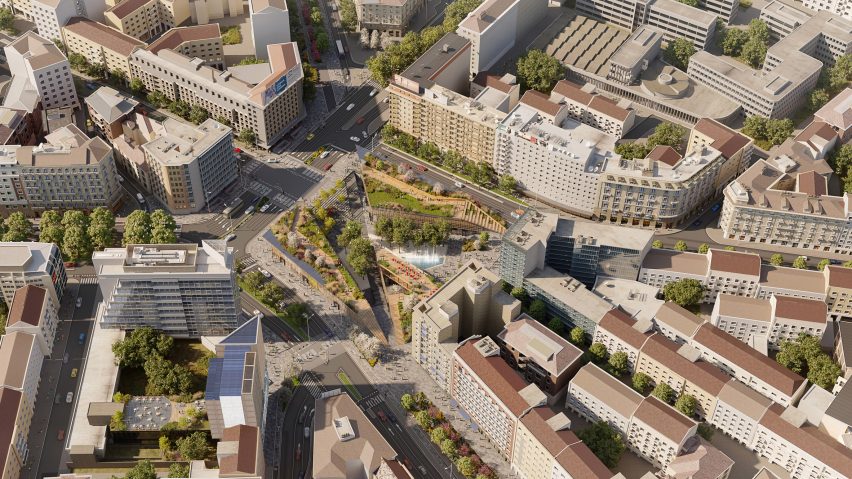
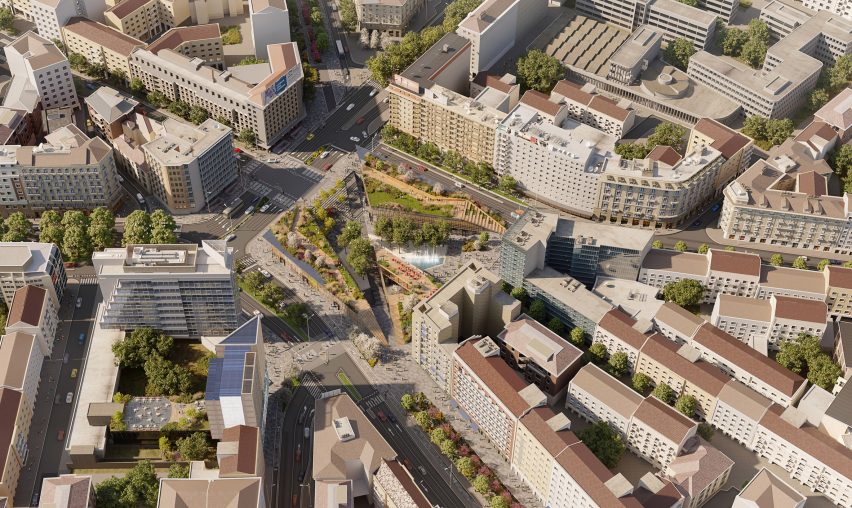
Piazzale Loreto in Milan will turn a traffic hub into a green square

Marcus Fairs | 14 hours ago 

City leaders are doing more to eliminate global carbon emissions than national governments, according to Hélène Chartier of international network C40 Cities.

Chartier, whose organisation is coordinating the climate strategies of almost 100 cities around the world, said that politicians have made "very, very little" progress on climate since the 2015 Paris Agreement.

"Cities have been really leaders, especially when the nations were stuck with Trump," said Chartier, who is head of zero-carbon development at C40 Cities.

Former US president Trump was a climate sceptic who pulled his nation out of the landmark Paris Agreement, which committed signatories to limit global warming to 1.5 degrees Celsius above pre-industrial temperatures.

C40 Cities is a network of megacities addressing climate change

"It was very inspiring to see the US mayors really accelerate their climate action while Trump was withdrawing the US from the Paris Agreement," added Chartier, who previously worked in the office of visionary Paris mayor Anne Hidalgo.

"Without nations, it's going to be not possible [to reach net-zero] but at least mayors can pave the way." The USA has since rejoined the Paris Agreement under new president Joe Biden.

"Sometimes urban areas are more progressive so they feel that they have more operational capacity," she added. "They have more support from their residents to accelerate the transition and help nations to go in the right direction."

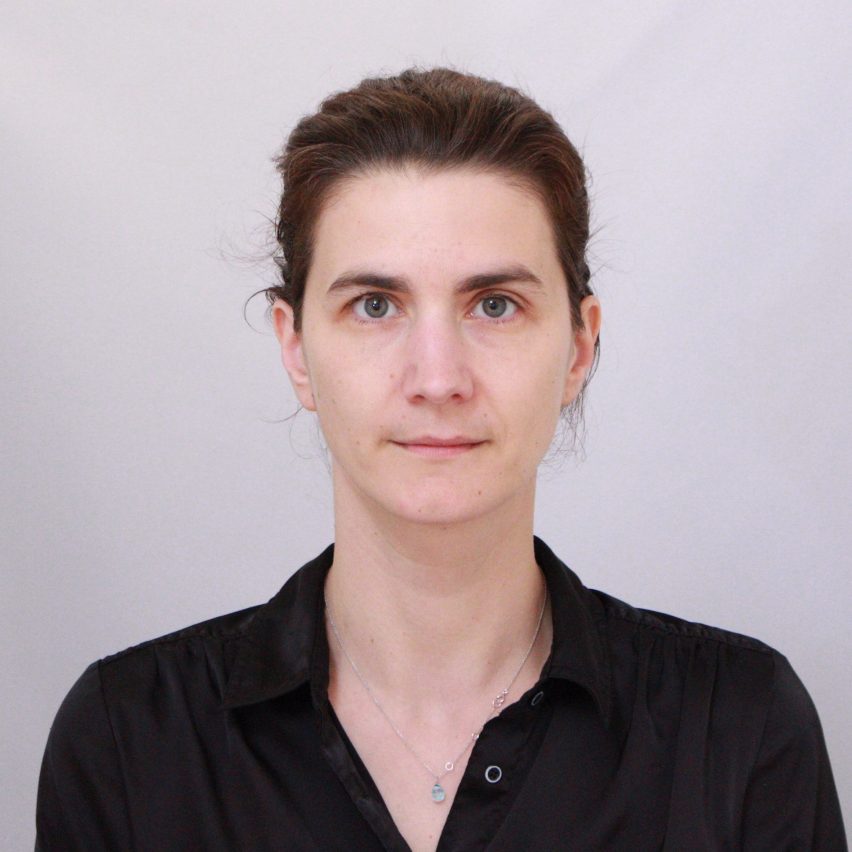
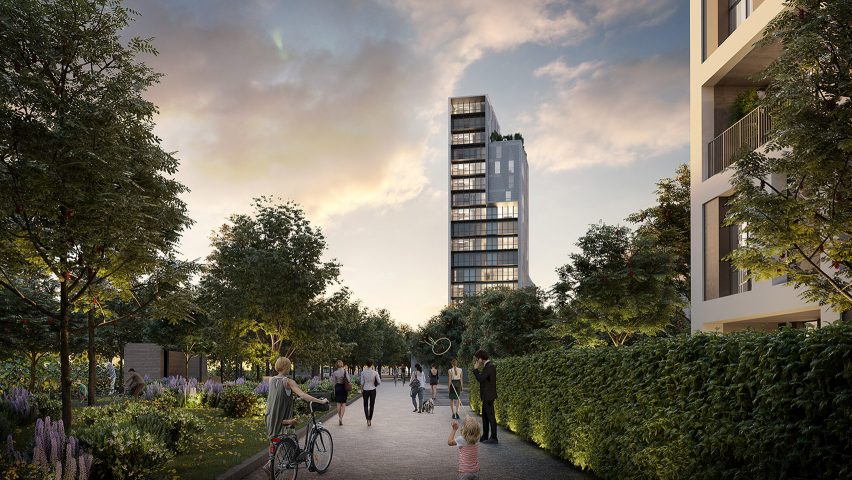
Top image: the Piazzale Loreto development is a Reinventing Cities winner. Above: Hélène Chartier

C40 Cities is "a network of the world's megacities committed to addressing climate change". It now has 97 member cities, which together represent over 700 million people and make up one-quarter of the global economy.

Members, which include London, Shanghai, São Paulo and Lagos, pledge to meet the objectives of the Paris Agreement, which involve halving emissions by 2030 and eliminating them altogether by 2050.

National governments who signed the Paris Agreement will meet in November at the COP26 climate conference in Glasgow to assess progress. But cities are outpacing nations in the race to decarbonise, Chartier said. "All our cities align their strategy to reach net-zero by 2050," she said. "That's their objective."


Related story
Virtual pavilion seeks projects that showcase zero-carbon architecture at COP26 climate conference


Among activities coordinated by C40 Cities is the Reinventing Cities competition, which seeks urban developments that strive for net-zero emissions. This means they emit no greenhouse gases into the atmosphere either as embodied carbon during their construction or as operational carbon during their use.

The first tranche of the 49 winning projects from the inaugural competition are about to go on site in cities including Milan, Oslo, Paris and Reykjavik.

Achieving zero emissions in operation at these projects is relatively straightforward since the bulk of energy needs can be provided by renewable sources, Chartier said. However, eliminating embodied emissions generated by materials supply chains and the construction process is "impossible," according to Chartier.

The only way to negate these emissions is via offsetting. "Reaching net-zero on embodied, you cannot do it without offsets," Chartier said. "It's totally impossible. So the question is really to push them to reduce embodied carbon to the maximum and then to offset the last part."

"Each team is really free to develop their own offsetting strategy but the most important thing is to reach net-zero operational emissions, minimise embodied emissions and offset the rest with a good offsetting system."

Opinions on offsetting schemes vary


There is disagreement over what constitutes a "good" offsetting scheme that is compatible with the concept of a net-zero building, for which there is no internationally agreed standard.

The United Nations' Race to Zero campaign defines net-zero as meaning no carbon is added to the atmosphere either directly or indirectly over the entire lifecycle, which includes materials used in a project and emissions caused by customers using a product, service or building.

Where emissions cannot be eliminated, they can be offset. But Race to Zero also states that offsetting schemes must directly capture carbon from the atmosphere, for example via biomass or direct air capture technology. Schemes that reduce or defer emissions, for example by encouraging people to switch to renewable energy or by capturing industrial carbon emissions, do not count.


Related story
Urban developments that "strive for zero carbon" to start on site in Milan, Paris, Reykjavik and Oslo


Winning projects in the Reinventing Cities competition take a variety of approaches to offsetting, although Chartier said that entrants were encouraged to "go for local offsets and not just buy them."

Not all of the approaches are compatible with Race to Zero standards. The Porte de Montreuil project, designed by Atelier Georges, Tatiana Bilbao Estudio, Serie Architects and Bond Society, will be powered by an on-site geothermal power plant and photovoltaics. The L'Innesto project in Milan by Barreca & LA Varra will feature a district heat network.

The next challenge for cities, according to Chartier, is to address emissions generated by people who live in carbon-neutral developments.

"There is one path of emissions that we have to include in the strategy a little bit more," she said. "That is consumption-based emissions." This third category of emissions, after embodied carbon and operational carbon, covers emissions caused by things such as food, transport and consumption of goods

.
The L'Innesto project by Barreca & LA Varra in Milan will have a heat system powered by renewable sources

While good progress has been made on understanding and tackling embodied and operational carbon, consumption-based emissions have been overlooked, Chartier feels.

Architects have a big role to play in reducing them, she said. "I think architects have a very important role because they don't just build a building," she explained. "They build a place where people will live."

"If you have segregation of waste, if you have composting, if you have a zero-waste restaurant, if you have parking for bikes you will accelerate your transition to net-zero.

"But if you don't provide access to these types of amenities and services, it's going to be very complicated for people. Consumption-based emissions are really something that we need to integrate into our systems and in the way we count emissions."

Despite heel-dragging by politicians, Chartier feels that there is enough momentum among city leaders, businesses and the public to force change. "The good thing is that now everybody – the businesses and the citizens – is ready to make the change," she said. "We just need to help them to make this possible."


Carbon revolution

This article is part of Dezeen's carbon revolution series, which explores how this miracle material could be removed from the atmosphere and put to use on earth. Read all the content at: www.dezeen.com/carbon.

The sky photograph used in the carbon revolution graphic is by Taylor van Riper via Unsplash.
Read more:
Carbon revolution
Architecture
Cities
Climate change
C40 Cities

More unmarked graves discovered in British Columbia at a former indigenous residential school known as 'Canada's Alcatraz'

More than 160 undocumented and unmarked graves were discovered on Penelakut Island, B.C.

Kuper Island Residential School was open for nearly 100 years on the remote island, and was referred to as Alcatraz because its location made escape nearly impossible.


By Paula Newton, CNN
Tue July 13, 2021

(CNN)The Penelakut Tribe in British Columbia announced Monday that it had found more than 160 "undocumented and unmarked' graves in the province's Southern Gulf Islands, once home to the Kuper Island Residential School.

The latest grim discovery follows other similar findings in British Columbia as well as in the province of Saskatchewan.

Hundreds of unmarked graves have been discovered in recent weeks and dozens of investigations, many using ground-penetrating radar, continue on the grounds of former residential schools across the country.

"It is impossible to get over acts of genocide and human rights violations. Healing is an ongoing process, and sometimes it goes well, and sometimes we lose more people because the burden is too great. We are at another point in time where we must face the trauma because of these acts of genocide. Each time we do, it is possible to heal a little more," the Penelakut Tribe said in a statement posted by the neighboring Cowichan Tribes on its Facebook page.


Their children vanished at an indigenous boarding school. This tribe is bringing them home after 140 years

The Penelakut Tribe confirmed the contents of the statement to CNN, but has not yet responded to a request for comment.

In a 1997 documentary posted on YouTube and produced with funding from the federal government, survivors of the Kuper Industrial School describe it as "Canada's Alcatraz."
Survivors from the island school say some children died after taking to the water in whatever they could find to try to escape the abuse they suffered at the school.

The statement, on behalf of Penelakut Tribe Chief Joan Brown and council members, did not say whether ground-penetrating radar was used to uncover the unmarked graves or whether they contained the remains of children or adults.

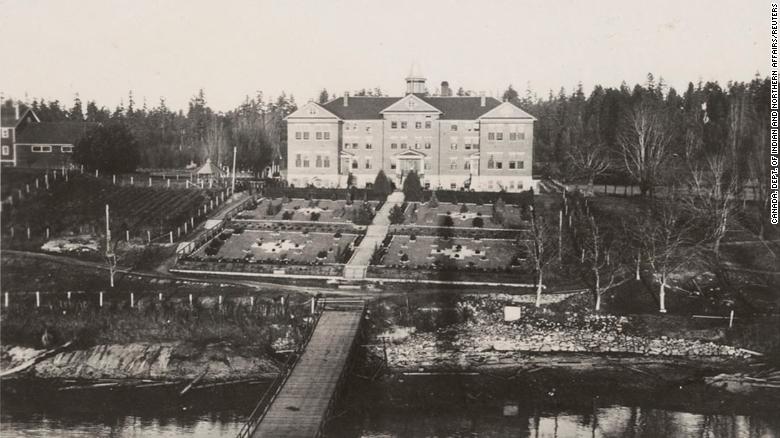
The Kuper Island Residential School in British Columbia is pictured
in this June 19, 1941, archive photo.

"We understand that many of our brothers and sisters from our neighboring communities attended the Kuper Island Industrial School. We also recognize with a tremendous amount of grief and loss, that too many did not return home," the tribe said in the statement.

The Penelakut Tribe announced to neighboring tribes and communities that it would be holding "healing sessions" and a march for the children "lost" in the coming weeks. The school operated from the late 19th century until it was closed in 1975.

The Canadian government has said that it would fund more investigations into unmarked graves in indigenous communities across the country, but it has also faced criticism for not doing so sooner, as outlined by the Truth and Reconciliation Commission in its 2015 report.

"My heart breaks for the Penelakut Tribe and for all indigenous communities across Canada. I recognize these findings only deepen the pain that families, survivors and all indigenous peoples and communities are already feeling and that they reaffirm a truth that they have long known. To members of the Penelakut Tribe, we are here for you," said Prime Minister Justin Trudeau during a virtual news conference in Ottawa on Tuesday.

The shocking abuse as detailed by victims has been well documented for decades but this latest discovery deepens a national reckoning on unmarked graves and why the deaths were undocumented for so long.

The Tk'emlúps te Secwépemc First Nation in B.C., which recently disclosed that it had found at least 215 unmarked graves on the grounds of the former Kamloops Indian Residential School, said it would announce more details about its findings Thursday.
The Truth and Reconciliation Commission reported that more than 4,000 indigenous children in residential schools died either from neglect or abuse.