It’s possible that I shall make an ass of myself. But in that case one can always get out of it with a little dialectic. I have, of course, so worded my proposition as to be right either way (K.Marx, Letter to F.Engels on the Indian Mutiny)
Wednesday, July 14, 2021
ArcelorMittal to build first big zero-carbon steel plant
ArcelorMittal SA has signed a memorandum of understanding with the Spanish government for a 1 billion euro ($1.2 billion) investment to build the world’s first large-scale zero-carbon steel plant. The company would build a unit that processes iron ore using green hydrogen at its plant in Gijon, a spokesperson for the firm said in a statement today. That metal would then supply a mill in Sestao that would use renewable electricity to produce 1.6 million tonnes of carbon-free steel a year. It would be the biggest green steel plant coming online by 2025 globally, and represents a significant step for an industry facing a titanic decarbonizing task.
Steelmaking relies on burning billions of tons of coal, emitting more carbon dioxide each year than cars, buses and motorbikes combined. Upgrading to zero-carbon production will require massive investment, something the usually low margin business may struggle to afford. “This is a project that will require the support of many different partners to succeed,” said Aditya Mittal, chief executive officer of ArcelorMittal. “Our plan hinges on the supply of affordable, mass-scale hydrogen, access to sustainable finance and a supportive legal framework that allows us to be competitive globally.”
It’s not certain how much cash Spain will contribute. In the statement, ArcelorMittal said it expects support provided to be “at least half of the additional cost to enable its operations to remain competitive.” The company did not specify if it needed the aid as a grant or loan.
Spanish Industry Minister Maria Reyes Maroto said the government was exploring regulatory instruments to support industry in decarbonizing, including “compensation programs for electricity-intensive industries” and “instruments to promote industrial investments.”
It’s also contingent on competitively priced green hydrogen being available in Spain by 2025. The country has made the renewable produced gas a key part of its plans to invest funds borrowed as part of the European Union’s coronavirus recovery package.
The EU will unveil a series of measures this week to enable it to meet its ambitious 2030 climate plan, which will see the bloc bid to lower emissions by 55% from their 1990 levels.
ArcelorMittal also plans to add an electric arc furnace at its Gijon plant, replacing one of the blast furnaces there.
(By Eddie Spence)
Taseko sells Harmony gold project in British Columbia Northern Miner Staff | July 12, 2021 Haida Gwaii – Graham Island. Credit: Wikimedia Commons
Taseko Mines (TSX: TKO; NYSE: TGV; LSE: TKO) has sold its Harmony gold exploration project on Graham Island, Haida Gwaii, British Columbia, to JDA Gold, a newly incorporated company controlled by JDS Energy and Mining. Taseko will retain a 15% carried interest in JDS Gold and a 2% net smelter return royalty.
Taseko purchased the Harmony project in 2001 and advanced engineering work for it until 2008. The project has a historical resource (not NI 43-101 compliant) of 22 million tonnes at 1.77 grams gold per tonne and 42 million tonnes at 1.41 grams gold using a 0.60 gram gold per tonne cut-off grade. In total there are an estimated 3 million oz. of gold in the historic resource.
With Taseko focusing its energy on construction and permitting the Florence copper project in Arizona, the company said it is not in a position to advance Harmony for several years.
“JDS Energy and Mining has a proven track record of developing mineral projects, and this transaction structure allows Taseko to participate in their success and create value from this asset in the near-term,” said president and CEO Stuart McDonald in a news release.
“With our engineering, permitting and mine construction expertise, we believe we can advance this project and create significant value for all stakeholders,” added JDS CEO Jeff Stibbard.
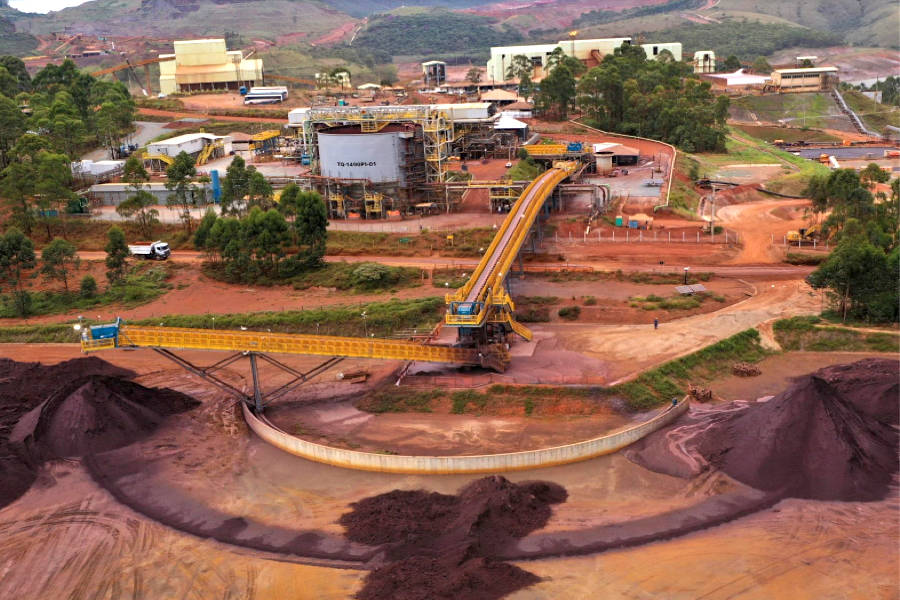
Vale has decommissioned Fernandinho dam Reuters | July 13, 2021 | Tailings’ filtration plant at Vargem Grande complex, delivered in March 2021. (Image courtesy of Vale’s Q1 2021 Financial Report.)
Vale SA on Tuesday that it had finished decomissioning the Fernandinho dam, located in the Abóboras mine in the Vargem Grande complex, although it added that the work still needed to be approved by regulators.
Vale said the work is part of a program to decomission dams that used similar structures to the one in Brumadinho, a dam that burst in 2019 and killed over 200.
Bigger than Voisey’s: Canada Nickel files PEA for Crawford mine in Ontario
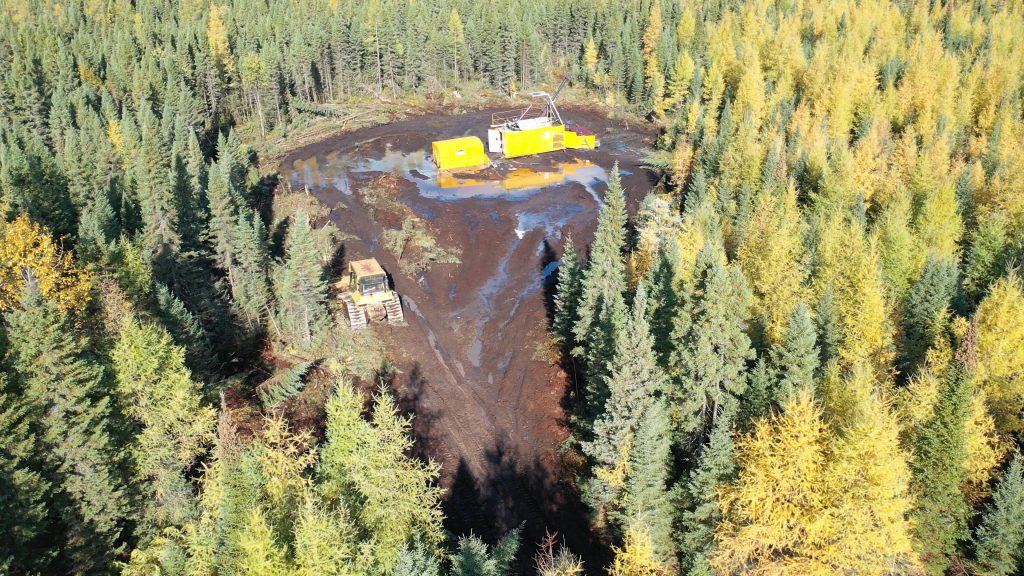
Cecilia Jamasmie | July 12, 2021 Crawford nickel-cobalt project in Ontario. Image from Canada Nickel Company.
Canada Nickel Company (TSX-V: CNC) announced on Monday it had filed a preliminary economic assessment (PEA) for the Crawford nickel sulphide project in Ontario, almost a year after exploration drilling began at the asset.
The PEA envisions a conventional open pit mine and mill that will produce both nickel and magnetite concentrates over a mine life of 25 years. The operation is set to generate 2.05 tonnes of carbon dioxide per tonne of nickel-equivalent production in the period — 93% lower than the industry average of 29 tonnes of CO2.
The study includes a downstream processing concept, which sees a third party building a stainless steel plant, likely in Timmins, which would be fed by Crawford’s high-grade product.
Over the 25-year mine life Crawford is expected to produce 842,000 tonnes of nickel, 21 million tonnes of iron and 1.5 million tonnes of chrome valued at C$24 billion ($19bn) using long-term price assumptions. Annual average nickel production of 75 million pounds (34,000 tonnes) with peak period annual average of 93 million pounds (42,000 tonnes), with significant iron and chrome by-products of 860,000 tonnes per annum and 59,000 tonnes per annum, respectively.
THE NICKEL MINE IS SET TO GENERATE 93% FEWER EMISSIONS THAN THE INDUSTRY AVERAGE OF 29 TONNES DURING ITS 25-YEAR MINE LIFE “We’re talking district-scale potential that would make this the largest base metal mine in Canada once it’s ramped up,” chairman and chief executive Mark Selby said in a May interview. “We’d be the largest single nickel sulphide mine in the world outside Russia. We’ll be bigger than [Vale’s] Voisey’s Bay. This is a pretty significant project.”
Canada Nickel already has a deal with Glencore (LON: GLEN) to potentially use the miner and commodities trader’s Kidd concentrator and metallurgical site in Timmins.
Crawford will be powered by zero-carbon electricity and use trolley trucks and electric rope shovels as part of the company’s efforts to minimize its carbon footprint through reduced diesel consumption.
Being a zero-emissions nickel producer would potentially put the company on Tesla’s radar. The co-founder and CEO of the electric vehicles maker, Elon Musk, offered last year a “giant contract for a long period of time” to any firm able to extract the battery metal in an efficient, environmentally sustainable manner.
Analysts and industry actors alike expect the market for battery-grade nickel to be in a tight balance in the next two to three years as demand from lithium-ion battery producers picks up.
NONE NUCLEAR POWER OPERATED
News
Iran plans to build 13 power plants in next three years
Iran plans to sign a memorandum of understanding this week for the construction of 13 power plants across the country, according to deputy minister for energy, Saeed Zarandi.
The country has suffered a number of blackouts in recent weeks, which the government has blamed on high demand and a severe drought. President Rouhani promised that the government would seek to resolve the problems within the next two or three weeks.
Zarandi said yesterday that the ministry, on behalf of Iranian industries, had been in talks with Tavanir, the country’s electricity utility, over the programme. He added that the plants would be financed by 12 investors from different sectors and would be constructed within three years.
Altogether, they will add 10.5GW to Iran’s installed capacity, an increase of around 13%.
The plants will be located in Isfahan, Hormozgan, Markazi, Yazd, Kerman, Fars, Semnan and Khuzestan provinces.
The aim of the plants is to provide electricity to high-demand industries such as mining, thereby reducing the load on the national grid.
The minister did not say what kind of power plants would be built, or what the estimated cost would be.
At present, 69% of Iran’s electricity is generated by natural gas, 25% by oil and 6% by hydropower. Solar and wind are negligible at present, although the government is aiming to generate 7.5GW from those sectors by 2030.
Image: The Shazand oil-fired power plant in Arak, western Iran (Mohsan Dabiri-e Vaziri/CC BY-SA 2.5)
Nearly half of oil and gas emissions could be cut without spending a penny
BY IRINA IVANOVA JULY 9, 2021 / MONEYWATCH
As the world's economy rebounds from the COVID-19 pandemic, demand for oil and gas is set to increase — and so is the emission of methane, a potent greenhouse gas with 80 times the heat-trapping power of carbon dioxide. The fossil fuel industry is one of the biggest sources of human-generated methane emissions, emitting 70 metric tons of the polluting gas last year — roughly equivalent to all the carbon dioxide produced by the European Union.
Now for the good news: About 40% of methane emissions from oil and gas production can be eliminated without costing a cent, the U.S. Energy Information Agency said in a recent report. Cutting down that number "is among the most cost-effective and impactful actions that governments can take to achieve global climate goals," according to the agency.
Plug the leaks
Natural gas is produced by drilling or hydraulic fracturing (better known as fracking), and is also extracted as a byproduct of drilling for oil. Because the gas is invisible and odorless, detecting leaks can be challenging. And leaks can occur at any point in the process, from extraction out of the ground to the moment where the gas is burned in a power plant.
Among the most cost-effective steps natural gas producers can take is replacing old equipment, the EIA notes. Many pumps, valves and compressors on a gas-drilling pad emit methane in the course of their operations, and tend to emit more as they age — especially if they aren't maintained. The EIA recommends replacing many components early and replacing gas-powered parts with electrified versions, which leak less gas in their operations.
Detecting leaks early and often, through technology such as infrared cameras or satellite imaging, can also help plug up leaks. The EIA also recommends eliminating the practice of venting, or releasing natural gas straight into the atmosphere, in order to empty a pipe for maintenance or when extraction companies are getting rid of unwanted natural gas to collect oil.
"Natural gas is essentially just methane, and in many cases if you can avoid that methane leak, you can sell that gas for profit," Christophe McGlade, the head of IEA's Energy Supply Unit, told CBS MoneyWatch. "Big part of global warming"
These recovery steps all result in gas producers having more product to sell, so they tend to be more valuable for the industry when the cost of gas is high. In the U.S., gas prices have been low for years, thanks to the fracking boom, and is one reason why U.S. oil and gas producers have been loath to crack down on methane leaks.
"You have, I wouldn't say an oversupply of gas, but you're very flush with gas. So the financial numbers for reducing [leaks] with no external pressure are actually quite low," said Dan Zimmerle, a senior research associate at the Energy Institute of Colorado State University.
Recent research has shown that oil and gas extraction emits much more methane gas than previously believed. Satellite imaging last year revealed that the Permian Basin in West Texas was leaking enough methane every year to power 7 million households. Some 3.7% of the gas extracted from the area was lost as emissions, a study from the Environmental Defense Fund found.
That figure matters because the leakage rate of methane is directly tied to its role as an ostensibly low-emissions fuel. If just 1% of captured gas escapes, "there's no doubt that it's better than coal; there's no doubt that it's better than just about any fossil fuel source there is," said Zimmerle.
At a leakage rate of 2% or 2.5%, however, burning natural gas has the same climate impact as burning coal. Research by other scientists, including Robert Howarth, a professor of ecology and environmental biology at Cornell University, shows that the oil and gas industry's leakage rate may be even higher — approaching 4%.
Concentrations of methane in the Earth's atmosphere have increased steadily since about 2010, after staying flat for the first decade of this century.
"My research suggests that most of that is coming from the oil and gas industry, and it's responsible for a big part of global warming," Howarth said.
Congress recently moved to crack down on greenhouse gas emissions from extraction sites, opening the door for the Environmental Protection Agency to craft tighter rules for the industry.
To date, human-caused greenhouse gas emissions have warmed the planet by about 1.1 degrees Celsius, research shows. About a quarter of that warming is attributed to methane, Howarth said.
Methane stays in the atmosphere for a shorter period of time than carbon dioxide, dissipating after several decades, while CO2 stays in the atmosphere for centuries. But methane can trap 80 times the heat of carbon dioxide during its lifespan, making it much more damaging to the climate short-term.
"We should be doing anything we can to trim the rate of warming," Howarth said. "We can do a lot of damage in the next few years. You actually run the risk of irreversible, catastrophic warming."
SAVE MY ASS SAYS KENNEY Varcoe: Kenney 'urges' oil producers to turn profits into more spending and jobs
Energy prices have taken off this summer, but after the intense cost-cutting of last year it’s going to take time for companies to shift gears
Author of the article: Chris Varcoe • Calgary Herald Publishing date: Jul 13, 2021 •
A worker walks past a Caterpillar 797 heavy hauler at a Syncrude machine shop north of Fort McMurray on Aug. 15, 2017.
PHOTO BY VINCENT MCDERMOTT/FORT MCMURRAY TODAY/POSTMEDIA
How does the Alberta government get the oilpatch to spend more money?
As the Canadian oil and gas sector accelerates into the second half of the year with revenues taking off, one of the biggest conundrums facing the UCP government is how to coax the industry to open up its collective pocketbook and create more jobs.
Premier Jason Kenney and Energy Minister Sonya Savage will be sitting down with oil and gas company leaders later this week to talk about it. The premier anticipates spending levels will soon rise.
“We do expect them to (spend more). Look, I understand they’ve had to repair damaged balance sheets from last year’s price collapse and the last five tough years,” Kenney said in an interview.
“But we believe many of the strongest companies have paid down debt, bought back shares, improved dividends and are now massively undervalued in the equity markets.
“But they now have cash on hand, many of them very large reserves of cash on hand, and we urge them to translate a lot of that cash into new capital investment.”
The meetings take place later this week at McDougall Centre and include CEOs from both oilsands and conventional petroleum producers.
After a disastrous 2020, the sector is on the mend as Western Canadian Select heavy oil prices and Alberta natural gas prices have taken off this summer. On Monday, benchmark West Texas Intermediate crude closed at US$74.10 a barrel. Analysis from ARC Energy Research Institute projects Canadian oil and gas industry revenues will rise by more than 85 per cent this year.
While cash flow levels are forecast to hit a record $74.6 billion, the industry is only expected to reinvest about 40 per cent of the money, by far the lowest level seen in the past decade. Companies are still under pressure from investors to remain financially disciplined and keep costs down.
Producers are paying down debt and returning cash to shareholders through dividends and share buybacks, although some modest spending increases are planned.
The Canadian Association of Petroleum Producers projects total capital expenditures (also known as cap-ex) will increase by 13 per cent to $27 billion this year from 2020 levels. However, it’s well off the $35 billion spent in 2019 before the pandemic struck.
“By and large, the companies haven’t announced any really substantive increases to cap-ex and they might not do so until their 2022 budgets,” said CAPP vice-president Ben Brunnen.
Higher capital spending by producers drives employment in the sector, including throughout the oilfield services industry, which is beginning to see more demand from customers and is starting to hire
.
Trucks loaded with oilsands drive through the Suncor Energy Inc. mine near Fort McMurray in 2015. PHOTO BY BEN NELMS/BLOOMBERG
“Urging companies to invest, it’s helpful to encourage investment, but we need more than that,” added Brunnen.
“We need to look at the conditions for creating a good investment climate … but also the right commitment on addressing ESG.”
At the premier’s annual Stampede breakfast on Monday, Savage said the government has done what it can on the regulatory and fiscal front to improve the industry’s competitiveness by lowering taxes, cutting red tape and reforming the Alberta Energy Regulator.
She expects that as companies review their fall budgets, “we are going to see a big uptick in capital spending, which then leads to jobs.”
Yet, after the intense cost-cutting of last year as oil prices cratered, it’s going to take time for companies to shift gears.
“We are having numerous roundtables with the industry this week to talk about what the state of spending is, where they’re going, because our hope and our expectations is this is Alberta’s resource. The oil belongs to Albertans. We need the jobs here,” Savage said.
“We are going to see a lot of cash flow. And I think we just have to have that conversation: What are you going to do with it?” The province continues to face political pressure on the employment front. Last week’s jobs report was largely flat, showing a loss of full-time jobs and a gain in part-time work in June.
The unemployment rate jumped to 9.3 per cent from 8.7 per cent as more people started to look for work. The province is still down almost 48,000 jobs since the pandemic began.
A report last week from CIBC Capital Markets forecast Alberta’s economy will expand by 7.9 per cent this year and 5.9 per cent in 2022, tops in the country, after suffering the largest contraction in Canada last year. It also projects the jobless rate will average 8.5 per cent this year, almost a full point about the national average. NDP MLA Shannon Phillips said the UCP’s decision to cut corporate income taxes in Alberta has failed.
“What Albertans are looking for in their economic recovery is jobs above all else,” Phillips said. “That corporate tax cut has simply gone to share buybacks and other initiatives and has not remained here in Alberta to create jobs.”
Kenney told reporters Monday he was a bit surprised to see the lacklustre employment report as the provincial economy started to reopen in June, but predicted “huge job growth” later in the year.
UCP Leader Jason Kenney during a campaign stop in Turner Valley on April 2, 2019.
PHOTO BY AL CHAREST/POSTMEDIA
In the energy sector, there is a “reticence to deploy growth capital,” although strong commodity prices could strengthen calls for increased exploration and development spending in the second half of the year as second-quarter results roll in, said a recent note by Stifel FirstEnergy.
Petroleum producers note there are still many uncertainties ahead, including volatile commodity markets, concerns about future energy demand, the need for ESG-related investments and ongoing pipeline challenges.
“I just don’t see the Western Canadian basin growing when you have all the constraints there,” said Tamarack Valley Energy CEO Brian Schmidt.
“We are meeting with the premier … so I’m really interested to see where he is coming from. I think we need to talk about the systematic problems we have in Canada.”
The transformation of Saudi Arabia’s flagship asset, Aramco, from perpetual cash-generation machine into a debt-laden giant is set to pick up pace in the coming weeks with a series of schemes aimed at raising much-needed funding for the now-beleaguered oil and gas company.
It has not been forgotten by many senior Saudis that the reason for this terrible transformation of the former jewel in the crown of Saudi Arabia’s business sector - and the cornerstone of any power that the Kingdom might have had on the world stage – into a crippled corporate money pit is that Crown Prince Mohammed bin Salman (MbS) did not want to lose face in the initial public offering (IPO) for Aramco upon which he had staked his personal political reputation.
Having opened up the books of Aramco to the scrutiny of the international investment community in the run-up to the December 2019 IPO, so toxic a proposition was Aramco considered to be by then that a range of increasingly desperate measures were taken to sell even a small proportion of the originally intended stake. The most desperate of these was the pledge to guarantee a dividend payment to shareholders in Aramco of US$18.75 billion every single quarter of every single year – a total of US$75 billion every single year. In other words, each and every year, Aramco has to pay out around three times the entire amount that it received for the entire IPO. Just like the individual who cannot afford the interest repayments on their maxed-out credit card anymore so decides to take on a second credit card debt to pay the interest on the debt of the first – a deadly debt trap from which there is no exit – Saudi Arabia now has no alternative but to continue to sell off assets (the equivalent of selling the family silver, and this can only be done once), sell more bonds (taking on more debt and the interest on this form of Saudi debt is going up with every such sale), and cancel projects (which are crucial to the long-term success of Aramco).
The entire list of money-raising schemes reads like a business school text book of how a company can destroy itself in less than five years. In this case, the start date was 11 December 2019 when the IPO of Aramco was forced through by MbS, despite all sound business logic dictating that it should be put on ice indefinitely due to the lack of broad-based interest from any serious international institutional investors, especially in the West. Since then there have been multiple bond offerings from Saudi Arabia aimed at plugging the ongoing deficit created by the gargantuan US$75 billion per year guaranteed dividend payment to Aramco shareholders.
The problem with this strategy is that the global investment market has a limit to how much Saudi debt it wants to hold at any one time or, to put it another way, in the matrix of their global asset portfolios, international institutional investors have a certain percentage of the total allocated to holding Saudi debt, at which level the risk/reward balance is considered acceptable. After that point, the appetite of international institutional investors drops off a proverbial cliff and the only way to entice them into buying into further debt offerings is to pay them more compensation to take it, in the form of the coupon rate on the bonds. Exactly the same risk/reward analysis, albeit across a broader spectrum of a country’s and corporate’s financial assets, is undertaken by revolving credit facilities offered by banks or similar rating debt-raising mechanism, such as syndicated loans. Just like the aforementioned credit card victim that has reached bottom, there comes a point when the options to refinance the ever-growing debt and its ballooning interest payments just run out.
A sign that this is precisely what is already happening to Saudi Arabia was that the most recent bond sale – in June – was confined to a shariah-compliant bond (sukuk) offering and not a conventional international bond offering as had been the two previous bond offerings by the company (a debut US$12 billion sale in 2019 and an US$8 billion offering in November last year). The market for bonds governed by shariah principles – forbidding investing in activities that can be deemed speculative, involve uncertainty, entail the payment of interest, are fundamentally unjust to participants, or are involved in prohibited businesses (such as gambling, alcohol, and the sale of certain foodstuffs) – is a captive one, often characterised by a lack of suitable supply compared to a steady weight of demand.
The ‘suitability factor’ narrowed the sukuk availability list down further after 2008 when a wide-ranging audit by the global shariah finance watchdog - the Accounting Auditing Organisation for Islamic Financial Institutions (AAOIFI), in Bahrain – revealed that the repurchase undertakings found in around 85 percent of apparently shariah-compliant bond- and equity- fund structures that were based on ‘mudaraba’ and ‘musharaka’ actually violated the Islamic duty to share risk. Given this market structure, even the ‘junk-rated’ Oman was able to draw in more than US$11.5 billion in orders for its US$1.75 billion sukuk offering in June. Saudi Aramco’s US$6 billion tri-maturity sukuk offering did only marginally better, attracting just over US$60 billion in total bids for the paper.
Also fitting were the very recent comments from Aramco’s senior vice president for corporate development, Abdulaziz Al Gudaimi, that are flag a range of further large asset sales in the coming months. According to these comments, these asset sales will happen “irrespective of any market conditions” and will be aimed at producing “double-digit billions of dollars” in funds. The divestment of more of Aramco’s assets will do nothing to improve its business positioning in the coming years, especially in light of the cancellations and suspensions to existing projects that it has been forced to make due to the desire to push through the 2019 IPO, whatever – quite literally – the cost. The once much-vaunted flagship US$20 billion crude-to-chemicals plant at Yanbu on Saudi’s Red Sea coast, for one, has been subject to indefinite rolling suspensions, according to various reports. The similarly high-profile purchase of a 25 percent multi-billion-dollar stake in Sempra Energy’s liquefied natural gas (LNG) terminal in Texas remains uncertain, although Sempra has said that it continues to work with Aramco and others “to move our project at Port Arthur LNG forward.” In the same vein, Aramco has suspended its key US$10 billion deal to expand into mainland China’s refining and petrochemicals sector, via a complex in the Northeastern province of Liaoning that would have seen Saudi supply up to 70 percent of the crude oil for the planned 300,000 barrels per day refinery.
In the first full year of the cripplingly large Aramco dividend coming due, it had to be financed in large part through budget cuts over and above the US$15 billion in Aramco’s annual capital spending alluded to by Aramco’s chief executive officer, Amin Nasser, just after the first half profits figures were unveiled.
This took the total capital spending down from around US$40 billion to around US$25 billion. Further reports stated that even this US$25 billion figure was reduced by another US$5 billion, taking the total capital spending in the year from US$25 billion to US$20 billion. However, every second of every day of every month of every year - whatever Aramco does, whatever it sells, whatever it cancels, whatever it cuts back, however many people it sacks – the meter keeps on running, adding US$205 million every day to its IPO debt in the form of obligated dividend payments.
Just in the last year or so alone, Aramco’s debt levels have soared, with its debt to equity gearing increasing by 28 percent from minus 5 percent in early 2020 to plus 23 percent in March this year, way above the company’s own debt/equity ratio cap of 15 percent. Even with oil prices currently around the healthiest levels they have been since Aramco was ordered by the state to overproduce to crash oil prices in yet another failed Saudi-instigated oil price war in 2020, the once formidable state oil firm is struggling every time to meet the crushing dividend payment schedule, despite continuing to make good profits. Indeed, just over a month ago, Aramco declared a 30 percent jump in first-quarter 2021 profit, thanks to the recovery in oil prices, but the company’s free cash flow still fell significantly short of the US$18.75 billion dividend obligation for that period.
By Simon Watkins for Oilprice.com
Yellen Urges Development Banks To Stop Fossil Fuel Funding
U.S. Treasury Secretary Janet Yellen is prepared to gather together the heads of development banks to persuade them to stop fossil fuel project funding, according to Bloomberg.
The Treasury Secretary intends to “articulate our expectations that the MDBs align their portfolios with the Paris Agreement and net-zero goals as urgently as possible,” according to a written speech she is set to deliver at a climate conference in Italy.
The speech, soon to be delivered, follows just days behind a similar message that the financial community received at the G20, where financial leaders for the first time every acknowledged that carbon pricing was at least a potential tool in addressing climate change.
While Bloomberg notes that while development banks have never been responsible for the big bucks behind most fossil fuel projects, those funds are largely seen as a stepping stone for the projects to secure hefty commercial funding.
Since the pandemic began, development banks have thrown just $3 billion into oil and nat gas, with $0 going towards coal projects for the first time ever.
Meanwhile, development banks have funded $12 billion in clean energy projects.
But it is precisely these natural gas projects that will allow many countries to quickly and efficiently transition away from coal.
Prior to her appointment as Treasury Secretary, Yellen was criticized for her fossil fuel stock holdings. The Secretary vowed to divest her holdings in all fossil fuel companies as well as any companies that support fossil fuels.
Nevertheless, even before her time as Treasury Secretary and the chairman of the Financial Stability Oversight Council (FSOC), Yellen has been a staunch supporter of the environment and highly critical of the role fossil fuels have played in greenhouse gas emissions.
The FSOC is tasked with identifying risks to the financial stability of the United States, among other things. In May, Yellen said that the FSOC will work to improve climate-related financial disclosures and other sources of data to better measure potential exposures to climate-related financial risks, adding that it is her primary tool in assessing climate change risks and coming up with policies that will promote the transition to a low-carbon economy.
By Julianne Geiger for Oilprice.com
IN THE LAND OF CLIMATE CHANGE DENIAL
'The crops just stopped growing': Southern Alberta farmers say this could be worst season in 20 years
A field north of Fort Macleod, Alta. with crops turning white due to heat stress.
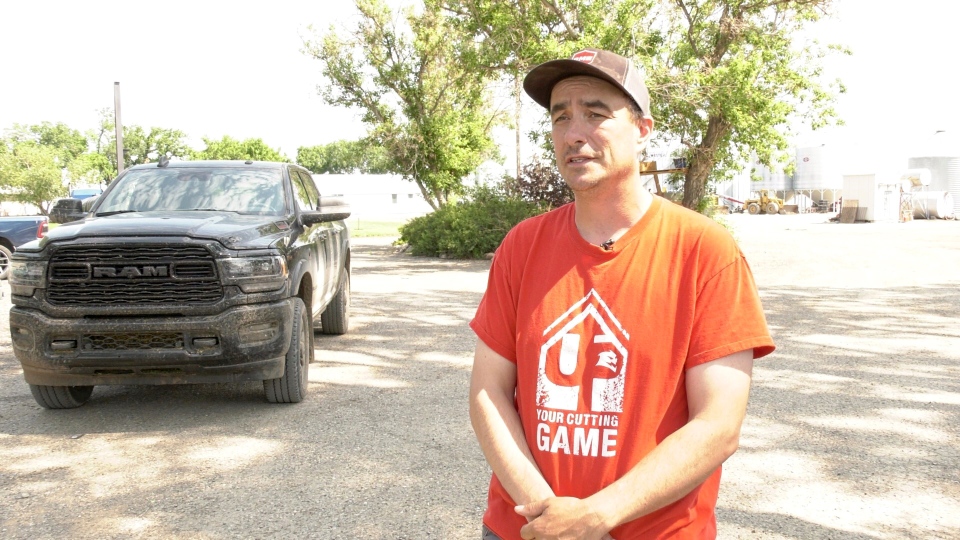
CALGARY -- Raymond, Alta. farmer John McKee says his dryland crops look pretty good from the road but up close, you get a much different picture.
“We have some canola that didn’t even bolt. It just stopped.” said McKee. “The leaves turned upside down, shielding themselves from the sun.”
McKee says the crops need rain but even if they get moisture now, it will be too late to increase yields much.
“The damage has been done,” he said.
According to the Agriculture Financial Services Corporation, prolonged periods of heat with little moisture are taking a toll on crops in several areas of the province.
If these severe growing conditions continue, some producers may put their crops to alternate uses rather than waiting for them to mature.
“I think this will be the worst crop in Western Canada in the last 20 years,” said Stephen Vandervalk, Alberta vice-president for the Western Canadian Wheat Growers.
Vandervalk has both dryland and irrigation crops on his farm about nine kilometres north of Fort Macleod.
“My farm personally, on my north half, will be the worst crop we’ve had in the history of our farm," he said.
Vandervalk says he wasn’t farming during the drought years in the early 1980s, but he would have to go back to 2001 to find a crop that is as bad as the one he has now.
He says he's been talking to other producers in Alberta, Manitoba and Saskatchewan and most of them are in a similar situation.
“I know prices are up, but prices won’t offset going from 50 bushel canola down to five bushel canola,” said Vandervalk.
Lethbridge reached record highs of over 37 C on June 28, 29 and July 1.
“That was the nail in the coffin,” said Vandervalk, adding canola crops were just starting to bloom around that time, and have been hit especially hard by the extreme heat.
“When it gets that hot, and especially with a few days of wind and those high temperatures, it can’t pollinate, so it just aborts,” added Vandervalk.
He said there were several days when the plant failed to produce any seed pods.
“So even the irrigation yields are going to be hit and it basically decimated the dryland," he said.
The heat stress has left some crops thin and stunted. Fields are prematurely advancing and drying down.
Vandervalk’s barley field is starting to turn white as it shows signs of heat stress, and in most areas there’s another month to go before harvest begins.
“We have another week of 30 to 35 degree heat coming," he said. "It’s really hard to fill when it’s that hot. It’s going to be bad."
While canola has been hit particularly hard, the hot-dry conditions are also putting stress on other crops, including peas, barley, and hay.
McKee said it’s a major turnaround from last year, when many dryland farmers experienced a bumper crop, after three dry years in a row.
“Last year was a home run year,” he said. “Now this year is worse than the other three put together.”
McKee said he would normally get 30 to 50 bushels an acre on his dryland canola fields, but is anticipating five to 10 bushels this year.
“With the 39 degree heat, the crops just stopped growing.”
He said they’ve already lost the yields, now he’s just hoping to salvage the few seeds the plants are producing.