Thursday, July 15, 2021


The South African government has sought to deploy around 25,000 troops to curb unrest, amid fears of food and fuel shortages.

South Africa riots: Jacob Zuma's arrest and the connection with Indian community

Jacob Zuma had faced many legal challenges before, during and after his presidency, including allegations of rape, embezzlement of public fund, corruption and fraud among many others.

By hindustantimes.com | Written by Susmita Pakrasi, Hindustan Times, New Delhi
PUBLISHED ON JUL 15, 2021 


South Africa is under unrest and chaos since the arrest of former president Jacob Zuma earlier on July 7. As many as 72 people have died and more than 1,200 people have been arrested, according to news agency AFP. The Indian community living in South Africa is living in apprehensions of dangers to their homes and businesses as cases of riots, arson and violence are being reported.


The South African government has sought to deploy around 25,000 troops to quell the unrest, amid fears of fuel and food shortages. The government has said that 208 incidents of looting and vandalism were recorded on Wednesday, reports AFP.

Let's take a look at the violence in South Africa and its connection with the Indian community

Zuma had faced many legal challenges before, during and after his presidency, including allegations of rape, embezzlement of public fund, corruption and fraud among many others. Of all the corruption issues charged against him, the most significant one is the involvement of the Gupta family.

The Gupta family, with their roots in Uttar Pradesh, moved to South Africa in 1993. Among the prominent members of the family are three brothers --Ajay, Atul, and Rajesh Gupta –and Atul's nephew, Varun. Atul founded Sahara Computers. The Gupta brothers own coal mines, computer manufacturing business, newspapers and a media outlet.

The Interpol issued a red corner notice against the three brothers over a 2016 graft report.

Guptagate corruption

A chartered plane was used to transport guests for the wedding of one of the relatives of the Gupta family. The plane had landed at the Waterkloof Air Base near Pretoria in 2013. What was odd about the incident was that the airbase is allowed for use only by visiting heads of states and diplomatic delegates. The incident stirred an immediate outcry and the South African media dubbed it as 'Guptagate’.

India raises concerns with South Africa

India on Wednesday reached out to South African President Cyril Ramaphosa’s government, which assured it that the attacks were not racially motivated. Foreign minister S Jaishankar spoke to his South African counterpart Naledi Pandor on the phone.

Zulu King asks to stop riots

Zulu King Misuzulu KaZwelithini has called for an immediate end to the violence and looting between Zulus and Indians,” news agency PTI reported.

“Our Indian brothers are our neighbours and we have the second biggest population of Indians in KwaZulu-Natal outside of India and through that, we have had certain people who have come to us to say thank you to the Zulu nation and to the Zulu royal family that you are living with our Indian brothers in peace," he said.
Paralyzed man’s brain waves turned into sentences on computer in medical first

Study marks important step toward restoring more natural communication for people who can’t talk


Neurosurgeon Dr Edward Chang’s reflection is seen on a computer monitor displaying brain scans in a 2017 photo provided by the University of California. Photograph: Barbara Ries/AP


Associated Press
Thu 15 Jul 2021

In a medical first, researchers harnessed the brainwaves of a paralyzed man unable to speak and turned what he intended to say into sentences on a computer screen.

It will take years of additional research but the study, reported Wednesday, marks an important step toward one day restoring more natural communication for people who can’t talk because of injury or illness.

“Most of us take for granted how easily we communicate through speech,” said Dr Edward Chang, a neurosurgeon at the University of California, San Francisco, who led the work. “It’s exciting to think we’re at the very beginning of a new chapter, a new field” to ease the devastation of patients who have lost that ability.

Today, people who can’t speak or write because of paralysis have very limited ways of communicating. For example, the man in the experiment, who was not identified to protect his privacy, uses a pointer attached to a baseball cap that lets him move his head to touch words or letters on a screen. Other devices can pick up patients’ eye movements. But it’s a frustratingly slow and limited substitution for speech.

In recent years, experiments with mind-controlled prosthetics have allowed paralyzed people to shake hands or take a drink using a robotic arm – they imagine moving and those brain signals are relayed through a computer to the artificial limb.

Chang’s team built on that work to develop a “speech neuroprosthetic” – a device that decodes the brainwaves that normally control the vocal tract, the tiny muscle movements of the lips, jaw, tongue and larynx that form each consonant and vowel.

The man who volunteered to test the device was in his late 30s. Fifteen years ago he suffered a brain-stem stroke that caused widespread paralysis and robbed him of speech. The researchers implanted electrodes on the surface of the man’s brain, over the area that controls speech.

A computer analyzed the patterns when he attempted to say common words such as “water” or “good”, eventually learning to differentiate between 50 words that could generate more than 1,000 sentences.

Prompted with such questions as “How are you today?” or “Are you thirsty” the device allowed the man to answer “I am very good” or “No I am not thirsty” – not voicing the words but translating them into text, the team reported in the New England Journal of Medicine.

It takes about three to four seconds for the word to appear on the screen after the man tries to say it, said lead author David Moses, an engineer in Chang’s lab. That’s not nearly as fast as speaking, but quicker than tapping out a response.

In an accompanying editorial, Harvard neurologists Leigh Hochberg and Sydney Cash called the work a “pioneering demonstration.

They suggested improvements but said if the technology pans out it could help people with injuries, strokes or illnesses like Lou Gehrig’s disease whose “brains prepare messages for delivery but those messages are trapped”.

Chang’s lab has spent years mapping the brain activity that leads to speech. First, researchers temporarily placed electrodes in the brains of volunteers undergoing surgery for epilepsy, so they could match brain activity to spoken words.

Only then was it time to try the experiment with someone unable to speak. How did they know the device interpreted the volunteer’s words correctly? They started by having him try to say specific sentences such as “Please bring my glasses” rather than answering open-ended questions until the machine translated accurately most of the time.

Next steps include improving the device’s speed, accuracy and vocabulary size, and maybe one day allowing users to communicate with a computer-generated voice rather than text on a screen.
Twitter Reacts To Dogecoin Co-Founder’s Astonishing Anti-Crypto Rant
| Published 2 hours ago By Amara Khatri


After a deafening silence, Dogecoin co-creator Jackson Palmer has boomed against cryptocurrencies, labeling them as a right-wing and a hyper-capitalist technology.

Palmer was presumably asked if he would ever return to cryptocurrency, and the outburst is seen as a response to those questions.
The Twitter Storm

In a series of tweets where Palmer minced no words in sharing what he thought about cryptocurrency, he described it as a hyper-capitalist and inherently right-wing technology, describing it as a means for crypto proponents to amplify their wealth through a combination of means such as diminished regulatory oversight, tax avoidance, and artificial scarcity.

He further stated that the cryptocurrency industry has become like the existing centralized financial system that it set out to replace and criticized the claims of “decentralization” in an industry controlled by cartels and influential figures.
Enabler Of Financial Exploitation

In his outburst, he described the cryptocurrency industry as an enabler of financial exploitation, describing it to be purpose-built for making profiteering more efficient for those right at the top while removing key safety nets for the average investor, leaving them vulnerable.

According to Palmer, Cryptocurrency has taken the worst bits of the capitalist system and has used software to limit interventions such as taxation, regulations and audits, that act as a safety net for average investors.
Crypto Twitter Reacts

Understandably, there were sharp reactions to Palmer’s comments, with several prominent members of the cryptocurrency community sharing their reactions. User CryptoParadyme defended the technology, stating that Code and Coders don’t have politics. According to him, Bitcoin is apolitical and only tracks entries in a trustless manner.

Author of Dear Reader and The Anarchist Handbook, Michael Malice called Palmer’s rant against cryptocurrency an “odd endorsement of cryptocurrency.” Robert Leshner, CEO of Compound Finance, joked that Palmer’s description of the true nature of cryptocurrency actually made it sound pretty bad-ass.

Axia Labs founder, James Waugh, described Palmer’s outburst as ill-informed and said that what he was describing fit the description of the current economic system and not the cryptocurrency industry. However, the co-creator of Dogecoin found some support with The Thinkin Project Founder, Jim Stewartson, who extended his support to him, describing cryptocurrency as an enormous “pump-and-dump” scheme orchestrated by billionaires.
Not The First Outburst

This isn’t the first time that Dogecoin’s co-creator has spoken out against the crypto industry. Back in 2018, when Dogecoin had cracked $2 Billion, Palmer said in an op-ed in Vice that inexperienced buyers were lapping up lower-priced coins hoping that they would become the next Bitcoin. However, according to him, all this was doing was creating market hysteria.

He stated that the “get rich quick” mentality was distracting people from the real reason for cryptocurrency, which was to be used as an alternative that does away with the need to trust in financial institutions in the aftermath of the 2008 financial crisis.

Disclaimer: This article is provided for informational purposes only. It is not offered or intended to be used as legal, tax, investment, financial, or other advice.
Facebook Is Going After the Youngest FTC Chair Lina Khan, One of Big Tech’s Biggest Critic
By Rafia Shaikh
Jul 15, 2021


Facebook has filed a petition to get the newly-appointed Chair of the Federal Trade Commission, Lina Khan, recused from the ongoing antitrust case against the social networking company. This is the second tech company going after Khan as Amazon has also asked for Khan's recusal from antitrust probes because of her past criticism of the company's power.

The 32-year old is the youngest Chair of the agency and has remained outspoken about the unchecked power that the biggest tech companies currently hold. Before chairing the agency, she had become a prominent figure calling for more aggressive policing of companies like Amazon, Google, Facebook, Apple, and others.
"She brings to the job what I would call the boldest vision for the agency in its history," William Kovacic, a former chairman of the agency, had said.

"So in that respect, she is a potentially transformative figure."

It is no surprise that both Facebook and Amazon are going after her in an attempt to avoid government scrutiny and would likely be joined by other major companies, as well.
Facebook's petition against FTC's Lina Khan

"Due process entitles any targeted individual or company to fair consideration of its factual and legal defenses by unbiased Commissioners who, before joining the Commission, have not already made up their minds about the target's legal culpability," Facebook argued in its petition. "When a new Commissioner has already drawn factual and legal conclusions and deemed the target a lawbreaker, due process requires that individual recuse herself from related matters when acting in the capacity of an FTC Commissioner."


Facebook has referred to Khan's work for the Open Markets Institute, an anti-monopoly advocacy organization, her academic work, and even her tweets that supported FTC going after the Big Tech.

Before Facebook, Amazon had filed a 25-page petition arguing that Khan could not be impartial in antitrust matters because of her criticism of the company. As noted by ArsTechnica, Commissioners are expected to be partisan and have often been vocal about their opinions before their ascent to the chair, like Ajit Pai over net neutrality.

Facebook Tumbles as FTC Mulls an Injunction – Is the Company’s Dissolution on the Cards?

When Khan was appointed as chair last month, it was known that she was one of the biggest critics of Big Tech and was one of the reasons she was chosen to lead the agency in a time when it's become crucial to find some clarity over Silicon Valley’s power and control.

With both Amazon and Facebook going after Khan, it is clear that Big Tech is scared of the current administration potentially regulating the industry, something that users, advocacy groups, and lawmakers have been arguing for years now but more intensely since the Cambridge Analytica data disaster.

Major tech companies have long lobbied against bills that could regulate them, break them, or even ban some of their practices. It isn't surprising that Silicon Valley will now try to discredit Khan in another attempt to hold on to that unchecked power it has accumulated over the years. Even if these petitions are unsuccessful, they will still manage to cast doubt on any ongoing and future cases against them and potentially even divide the public's opinion over partisan lines.
EU launches legal action over LGBTQ+ rights in Hungary and Poland


Ruling is part of ongoing fight for rule of law and freedom from discrimination in heart Europe


LGBTQ+ activists walk past a rainbow-coloured heart in front of Hungary’s parliament building in Budapest. Photograph: László Balogh/AP

Jennifer Rankin in Brussels
Thu 15 Jul 202

The EU executive has launched legal action against Hungary and Poland to defend LGBTQ+ rights in the latest battle over values with the two nationalist governments in central Europe.

The announcement that Hungary and Poland’s governments could end up in the EU’s highest court is part of an ongoing existential fight for the rule of law and freedom from discrimination in the heart of Europe.

The case against Hungary was triggered by a recently adopted law banishing LGBTQ+ people from books and TV for under-18s, a measure denounced as “shameful” by the European Commission’s president, Ursula von der Leyen. In Poland, the commission considers local authorities have failed to help with its inquiries into resolutions in favour of “LGBT ideology free zones”, passed in more than 100 Polish towns and villages

The commission was under pressure to act after the European parliament denounced the Hungarian law outlawing LGBTQ+ people from being shown in educational content or entertainment that might be seen by under-18s.

The commission said this broke several EU laws, including its audiovisual media services directive, which sets EU rules for TV and streaming services, as well as the freedom to provide services and the free movement of goods, two cornerstones of union law.

The case also takes aim at Hungary’s consumer protection authority, which required a publisher to put a disclaimer on an anthology of fairytales, Wonderland Is For Everyone, because the book was deemed to show “behaviour deviating from traditional gender roles”.

“This law uses the protection of children, to which we are all committed, as an excuse to severely discriminate against people because of their sexual orientation. This law is disgraceful,” von der Leyen told MEPs last week.

Protesters in front of the Georgian embassy in Warsaw, Poland. Photograph: Piotr Molęcki/East News/Rex/Shutterstock

Polish authorities, the commission said, had failed to cooperate with its inquiries into so-called LGBT-ideology free zones, which officials suspect break EU law on non-discrimination.

The two countries have two months to respond to the commission, the first stage in the EU sanctions procedure that can end in the European court of justice (ECJ) and a punishment of daily fines.

The announcements on Thursday came soon after the ECJ ruled that Poland’s system of disciplining judges was incompatible with EU law.

That ruling intensifies the conflict between EU authorities and the Polish government, one day after Poland’s top court rejected an ECJ demand to suspend a newly created body to discipline supreme court judges, a decision described as legal “Polexit” by the EU.

Soon after taking office in 2015, Poland’s ruling Law and Justice party embarked on a rapid overhaul of its legal system that has been widely criticised by independent observers for weakening judicial independence and increasing government control. Those changes include setting up a disciplinary chamber for Poland’s supreme court consisting of new judges.

The ECJ said on Thursday the disciplinary chamber “does not provide all the guarantees of impartiality and independence” and was not protected from “direct or indirect influence” of the government or lawmakers.

Under the disciplinary system, Polish judges can be sanctioned for their judgments in the lower courts, an arrangement that “could be used in order to exert political control” over decisions or “exert pressure on judges with a view to influencing their decisions”, an ECJ statement said.

Polish judges can also be disciplined if they refer cases to the Luxembourg court for a preliminary ruling, a move that strikes at the heart of the EU’s legal order.


EU parliament condemns Hungary’s anti-LGBT law


The ECJ has called for “measures necessary to rectify the situation”. The Luxembourg-based court had already issued a temporary injunction suspending the disciplinary tribunal pending Thursday’s judgment, the decision that prompted Poland’s supreme court to declare it did not have to follow EU law.

The judgment is a win for the commission, which has taken the Polish government to court multiple times over violations of the rule of law. But it may be a bittersweet victory as Polish judges contest the supremacy of EU law, a cornerstone of how the union functions.

The Polish prime minister, Mateusz Morawiecki, said on Thursday it was “an obvious conclusion for any Polish citizen that the constitution is the highest legal act”. Both he and the country’s justice minister, Zbigniew Ziobro, said they considered the EU stance to be politically motivated.

A commission spokesperson said: “The commission is deeply concerned by the decision of the Polish constitutional tribunal yesterday … This decision actually reaffirms our concerns about the state of the rule of law in Poland.”
Electricity demand growing faster than roll-out of renewable energies, says IEA
Electricity demand is expected to grow by 5% this year, much more than the 1% drop it experienced last year as the global economy tumbled into recession thanks to restrictions to stem the coronavirus pandemic (Photo: Mint)


Updated: 15 Jul 2021, 05:19 PM ISTAFP

Demand for electricity is growing faster than the roll-out of renewable energies, leading to a surge in the use of heavily polluting coal and undermining efforts to reach carbon neutrality, the IEA said

Electricity demand is growing faster than the roll-out of renewable energies, leading to a surge in the use of heavily polluting coal and undermining efforts to reach carbon neutrality, the IEA warned on Thursday.

Electricity demand is expected to grow by 5% this year, much more than the 1% drop it experienced last year as the global economy tumbled into recession thanks to restrictions to stem the coronavirus pandemic.

"Renewable electricity generation continues to grow strongly -- but cannot keep up with increasing demand," the International Energy Agency said in a semi-annual report on the electricity market.

Renewable power production expanded by 7% in 2020 and the IEA expects it will grow by 8% this year and by more than 6% next year.


"Despite these rapid increases, renewables are expected to be able to serve only around half of the projected growth in global demand in 2021 and 2022," it said.

That will leave fossil fuel power stations to cover around 45% of extra demand this year.

Coal-fired power stations whose emissions are particularly harmful to the environment and contribute to global warming, are expected to exceed pre-pandemic levels this year. The IEA believes they could hit a record high in 2022.

That will drive a rise in emissions of CO2, a gas that contributes to global warming, which could hit a record level in 2022.

While nations are increasingly committed to reaching net-zero emissions by mid-century in order to limit climate change, the IEA calculates that in order to reach that goal emissions from the power sector need to be falling now.

Use of coal needs to fall by more than 6% a year.

"Stronger policy actions are needed to reach climate goals," the IEA report said as nations are set to hold a major climate summit later this year.

While renewable power is growing at an impressive rate, "it still isn't where it needs to be to put us on a path to reaching net-zero emissions by mid-century," said Keisuke Sadamori, who heads up energy markets and security at the IEA.

"To shift to a sustainable trajectory, we need to massively step up investment in clean energy technologies -- especially renewables and energy efficiency," he was quoted as saying in a statement.

This story has been published from a wire agency feed without modifications to the text. Only the headline has been changed.

UK 

Henry Dimbleby's National Food Strategy calls for world-first tax on sugar and salt

Henry Dimbleby's National Food Strategy calls for world-first tax on sugar and salt

Henry Dimbleby's National Food Strategy has recommended that the government introduces a world-first sugar and salt reformation tax in a bid to improve the nation's health.

The report, published today, has suggested a £3/kg levy on sugar and a £6/kg tax on salt sold for use in processed food or in restaurants and catering businesses. Some of the proceeds from the tax would be used to increase the number of free school meals and help low-income families access fruit and vegetables.

It also called for an overhaul of food education, including the return of the food A-level, which was axed in 2016, and sensory food education in nursery and reception classes, which has been shown to increase children's willingness to try fruit and vegetables.

It said the Department for Education should conduct a qualification review to ensure that existing and new qualifications, such as T-levels in science and catering, provide an adequate focus on food and nutrition and a progression route for students after GCSEs – particularly in light of the post-Brexit skills shortage in hospitality.

Dimbleby, a co-founder of Leon, was commissioned to write the report by the government in 2019. It is the first major review of the UK food system for 75 years. It also suggested that all food companies with more than 250 employees, including those in hospitality and contract catering, publish an annual report on their sales of healthy and unhealthy foods. This could be broken down into food and drink high in fat, sugar, salt (HFSS), sales of protein by type, and fruit and vegetables.

The report, which can be read here, also recommended the government accelerate the roll-out of a new procurement scheme being trialled in south-west England in which local food suppliers can sell their produce via an online procurement page "to encourage caterers to try a broader range of suppliers".

Dimbleby said Covid-19 had been a "painful reality check", with the country's high obesity rate a major factor in the high death rate.

"We must now seize the moment to build a better food system for our children and grandchildren," he said.

The government now has six months to respond to the report.

UKHospitality chief executive Kate Nicholls said the National Food Strategy represented "an opportunity to identify and tackle the challenges facing hospitality, as well as wider society and the world", welcoming the report's emphasis on food skills being taught in schools.

However, she added that initiatives to improve healthy eating should be "taken at a pace that recognises the dire state of the sector as it looks to recover from the Covid crisis", with "appropriate consultation, so that we can best achieve lasting improvements collaboratively and without damaging recovery".

Tom Kerridge, chef-owner of venues including the two-Michelin-starred Hand & Flowers, one-Michelin-starred Coach, and the Butcher's Tap, all in Marlow, Buckinghamshire, said: "The Dimbleby report has worked through an incredibly complex landscape and resulted in a set of comprehensive, eminently workable recommendations that are practical and will have a direct impact on our lives.

"I take great heart in several recommendations that particularly resonate and relish the opportunity to see a new generation of children given the opportunity to learn to cook. A fundamental skill no child should be without. I applaud the findings and recommendations of the report."

Bill Granger, the restaurateur behind Granger & Co, added: "We all hate the idea of anyone telling us what to eat, and it never ever works. But simple measures like a sugar and salt tax that reflects the true cost of these foods will help us as food producers to look at our recipes and adjust them with more sustainable and healthier alternatives."

Chef Jamie Oliver added: "This is no time for half-hearted measures. If both government and businesses are willing to take bold action and prioritise the public's health, then we have an incredible opportunity to create a much fairer and more sustainable food system for all families."


Sugar and salt tax: the strategy to break ‘junk food cycle’


Proposed new levy triggers concerns about how food price increases will impact families

THE WEEK STAFF
15 JUL 2021
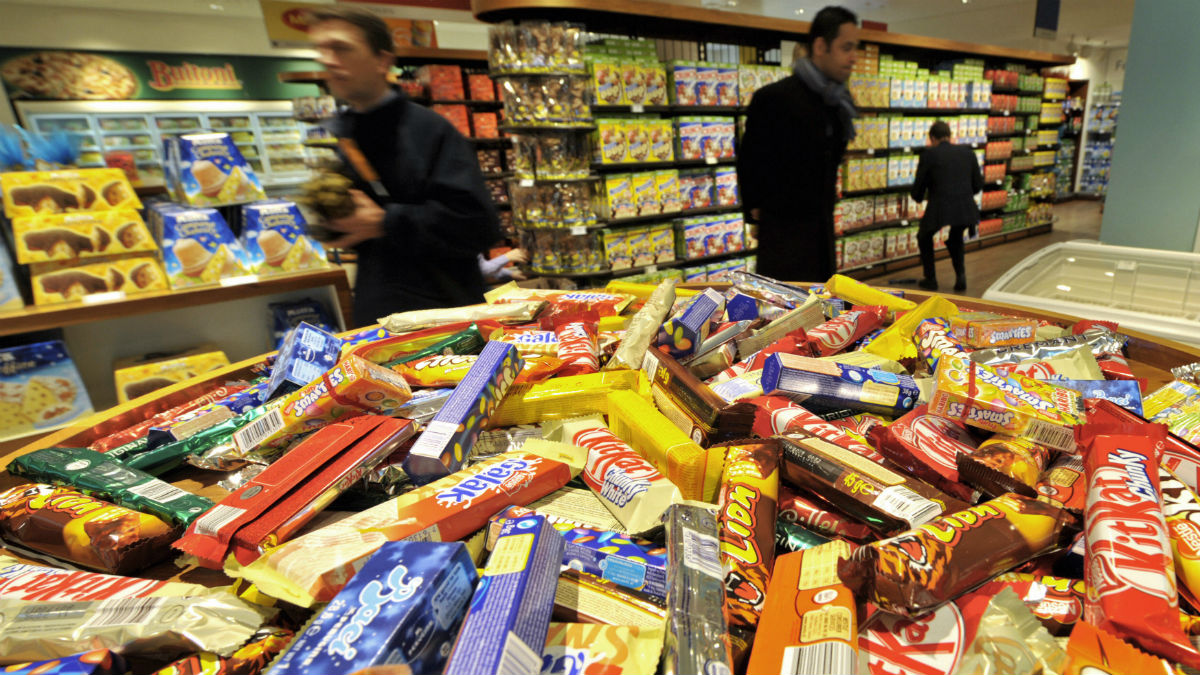


An independent review of food consumption and production has proposed the world’s first taxes on sugar and salt.

Does Britain need a snack tax?
Is your diet killing you?

Led by businessman Henry Dimbleby, the government-commissioned National Food Strategy aims to break the “junk food cycle”. The newly published proposals also plans for a 30% cut in meat consumption, and for vegetables to be prescribed by the NHS.

In the second of two reports, Dimbleby - a co-founder of the Leon restaurant chain - said the food system is a “logistical miracle, full of amazing, inventive people” but the food we eat “is doing terrible damage to our planet and to our health”.

He also warned that the way food is consumed is putting “intolerable strain” on the NHS. In England alone, poor diet contributes to 64,000 deaths a year and costs the economy £74bn.

But while money raised by the levy could be spent on addressing the inequalities around food, there are also concerns that the “snack tax” could increase UK families’ shopping bills by a total of up to £3.4bn a year, LBC reports.
What the review says

The National Food Strategy project is the first independent review of England’s food system in 75 years, The Big Issue reports. It’s hoped that the food strategy will “transform the way England produces, sources and consumes food in a bid to cut down on poverty and improve health across the country, as well as maintaining UK food standards after Brexit”.

A levy of £3 a kilo on sugar and £6 a kilo on salt sold wholesale for use in processed food, restaurants and catering is the review’s “most eye-catching recommendation”, The Guardian says. The proposed levy could put 1p on a bag of crisps and 7p on a Mars bar, but would “hit the poorest consumers hardest”, the paper adds.

Key recommendations also include trialling a scheme to let GPs prescribe fruit and vegetables to patients who are “food insecure” or suffering from the effects of poor diet.

The government has promised to respond with proposals for future laws within six months, the BBC reports.
And the reaction

Celebrity chef Jamie Oliver has backed the campaign, arguing that “this is no time for half-hearted measures”. He added: “If both government and businesses are willing to take bold action and prioritise the public’s health, then we have an incredible opportunity to create a much fairer and more sustainable food system for all families.”

Dimbleby says that the taxes raised could extend free school meal provision and support better diets among the poorest. However, industry officials have warned that new taxes could increase the price of food, the BBC reports.

Ian Wright, chief executive of the Food and Drink Federation, said: “Obesity and food is very much about poverty. We need measures to tackle poverty and to help people make the choices that they need to make. Telling them what to do is rarely a good idea. Consumers, by and large, resent being told what to do.

“One of the big problems about a tax in this way is the suggestion that it will be hypothecated to good acts like school meals, like prescribing vegetables. The Treasury never, ever allows that to happen.”

Andrew Burton, owner of the Mannion & Co cafe in York, is also unconvinced the idea will work. He told Sky News: “We’ve looked at everything we do, we have reduced salt, we have reduced sugar, but there’s only so far you can go before someone says, ‘that’s bland, can we have the salt, can we have the sugar’, and they just put it on themselves.”
Could the government reject the plan?

As part of a “once-in-a-lifetime opportunity” to break Britain’s addiction to junk food, ministers are being urged to levy a £3bn sugar and salt tax. But is there any chance of the government accepting its central recommendation? “It does not sound like it,” The Guardian says.

During an interview this morning, Communities Secretary Robert Jenrick was challenged by LBC’s Nick Ferrari, who asked: “How is it levelling up to put an additional £180 on a family’s shopping bill, adding 87p to a packet of Frosties?”

Jenrick replied that it “isn’t the government’s policy” and it was an “independent report”. LBC host Ferrari then asked if this meant the report had been “rejected” by ministers, with Jenrick answering that they had “only received it this morning”.

According to Politico London Playbook’s Alex Wickham, a government insider said they were not considering implementing “Dimbers’ jam tax”.

Meanwhile. Dimbleby told the FT that “this is not a wish list of ideas that we hope might help” and that “these are concrete proposals for immediate action, which we have explored in depth and are confident will work”.

Unfortunately for him though, “there was a chorus of angry voices in government and across the Tory Party last night insisting that his top line recommendations would be rejected and were considered completely unworkable by ministers”, says Wickham.
Link between obesity and Covid

Research published in April 2020 found that obesity may play a significant factor in the severity of coronavirus symptoms.

Scientists from Edinburgh and Liverpool universities and Imperial College London analysed data from 15,100 coronavirus patients across the UK to draw up a profile of how the virus “exploits” age, sex and underlying health conditions. The research findings suggested that one of the most important risk factors is being overweight.

Dimbleby says that Covid has been a “painful reality check” and “our high obesity rate has been a major factor in the UK’s tragically high death rate”. He has urged ministers to “seize the moment to build a better food system for our children and grandchildren”.


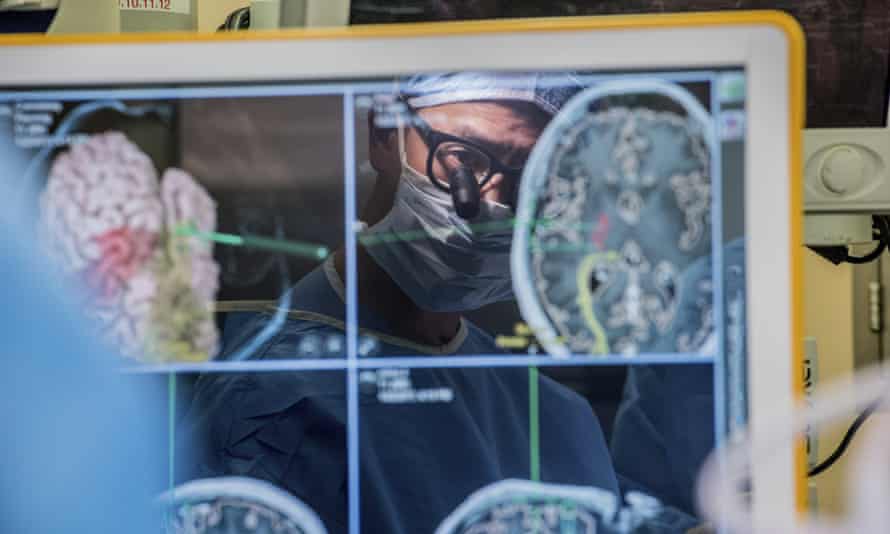
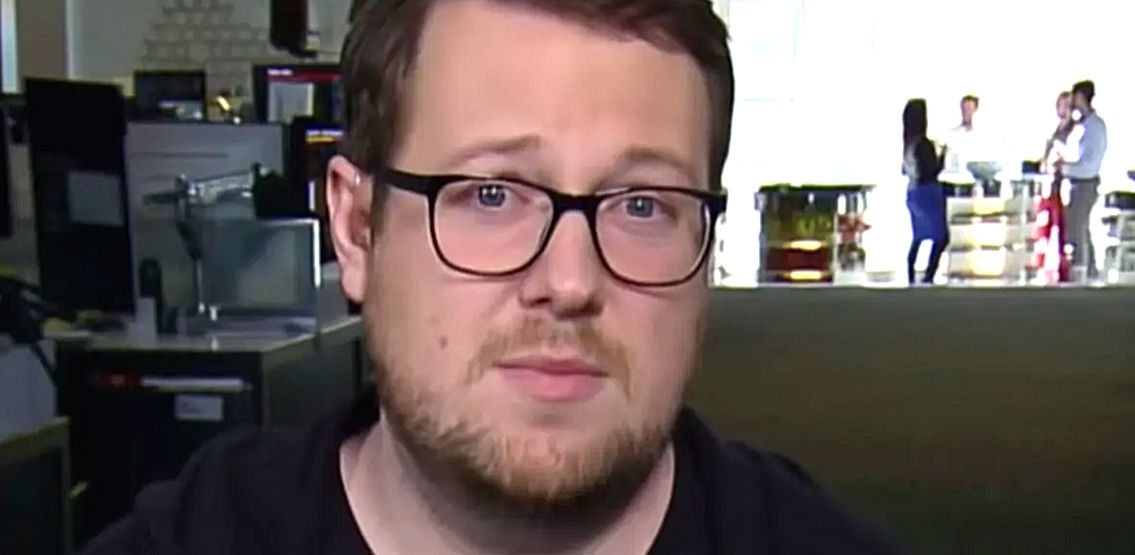
The actual reason why Republicans and their media are discouraging people from getting vaccinated

Thom Hartmann, Independent Media Institute
July 15, 2021

Ron Johnson (Screen Grab)

Dr. Jonathan Reiner, a CNN Medical Analyst, said last week, "A surprising amount of death will occur soon..." But why, when the deadly Delta variant is sweeping the world, are Republicans and their media warning people not to get vaccinated?

Report AdvertisementThere's always a reason. People don't do things — particularly things involving a lot of effort and a need for consistency — without a reason. It just doesn't happen. No matter how bizarre, twisted or dysfunctional the reason may be, there's always a reason.

Dr. Anthony Fauci told Jake Tapper on CNN last Sunday, "I don't have a really good reason why this [unwillingness to get vaccinated] is happening."
Chris Matthews talks to Raw Story: Who would you bet on in 2024, Trump or Kamala?

But even if he can't think of a reason why Republicans would trash talk vaccination and people would believe them, it's definitely there.

Which is why it's important to ask a couple of simple questions that all point to the actual reason why Republicans and their media are discouraging people from getting vaccinated:

1. Why did Trump get vaccinated in secret after Joe Biden won the election and his January 6th coup attempt failed?

2. Why are Fox "News" personalities discouraging people from getting vaccinated while refusing to say if they and the people they work with have been protected by vaccination?

3. Why was one of the biggest applause lines at CPAC: "They were hoping — the government was hoping — that they could sort of sucker 90% of the population into getting vaccinated and it isn't happening!"

4. Why are Republican legislators in states around the country pushing laws that would "ban" private businesses from asking to see proof of vaccination status (they call it "banning vaccine passports")?

5. Why, when President Biden suggested sending volunteers door-to-door into low-vaccination communities to let people know how and where they could get vaccinated, did rightwing media go nuts about "government thugs" coming to your door to "force" vaccines on you?

6. Why are about half of all the Republicans in Congress refusing to say if they've gotten a vaccine or not? For that matter, why do the CPAC speakers who are trashing vaccines refuse to say if they're vaccinated or not?

7. Why would a Newsmax host trash-talk vaccines saying, "I feel like a vaccination in a weird way is just generally kind of going against nature"?

8. Why did Republican Governor Kristi Noem of South Dakota downplay the dangers of Covid last week by bragging that she never shut her state down (and Ron DeSantis did) when SD has 230 Covid deaths per 100,000 people while similar low-population states like Vermont and Oregon are at 41 and 66 deaths per 100,000 respectively?
Report Advertisement

I hope I'm proven wrong on this, but the only possible explanation I can see for all this activity that seems so well-coordinated and largely consistent is that they all think there's something in it for them. And what might that be?

Political power. And, of course, the eventual wealth that often comes with political power, particularly corrupt power. Retired Republicans make a lot of money.

Put simply, I believe these Republicans are trying to promote outbreaks of Covid in America to soften or damage Joe Biden's red-hot economy on the assumption that if the economy tanks then people will vote out Democrats and vote in Republicans in 2022 and 2024.

As Pat Buchanan wrote today: "Are the Democrats headed for their Little Bighorn, with President Joe Biden as Col. Custer? The wish, you suggest, is father to the thought."

They're not just willing to let tens or hundreds of thousands of Americans die just to win the next two elections, they're actively encouraging that outcome.

Death is their electoral strategy.


Is there any other possible explanation?

They're not stupid (although they're banking on their audience being, at least, poorly informed) and most have college degrees (and Lauren Boebert finally got her GED). Even if a few of them fell down the Facebook or YouTube rabbit hole into anti-vaxxer territories, they still have no shortage of actual medical experts and staffers who know how to use Google available to them.

It's remotely possible they just hate and want to damage the US, and a few who are pushing vaccine "hesitancy" like Ron Johnson and John Kennedy recently celebrated the 4th of July in Moscow, but it's unlikely that they'd take the chance of coordinating with a foreign power to kill Americans (even if much of the foreign troll activity on social media is also trashing vaccines to American social media users).

A bizarre faux masculinity could be behind it, the way Trump tried to promote the idea that only wimps wear masks, but, seriously, do you really think these folks are taking fashion/appearance tips from an obese geriatric guy with a huge comb-over who wears absurd amounts of makeup, contacts, men's diapers and false teeth? And what's "masculine" about slowly dying by drowning in your own snot? Or becoming unable to get an erection, as happens to a significant number of men who get Covid?

It's certainly not fear of, or concern about, the vaccine itself; whether they'll admit it or not, virtually all of these Republicans and media stars telling people to be afraid of getting a shot have been secretly vaccinated themselves, just like Trump and his family were in January. As CNN Medical Analyst, Dr. Jonathan Reiner, said, "Over 100 members of Congress, all of them GOP members, refuse to tell their constituents whether they have been vaccinated. They've all been vaccinated, every single one of those characters have been vaccinated."

This also has nothing to do with "conservative" ideology. Vaccination has been a part of the American landscape since George Washington ordered his troops inoculated against smallpox during the Revolutionary war, and Republican President Dwight Eisenhower (and his VP, Richard Nixon) had schoolchildren across the nation get the polio vaccine in the 1950s (I was one of them who lined up in school to get it and remember it well).

As California governor, Ronald Reagan oversaw a public school system that required vaccination for admission and conservatives like Bill Kristol and George W. Bush are proudly vaccinated against Covid. Mitch McConnell, who had polio as a child, said, "As a victim of polio myself, I'm a big fan of vaccinations, and if I were a parent who had a child … being subject to getting any particular disease, I would come down on the side of vaccinations." This is not about fearing or not understanding vaccines.

They're certainly not being paid by "big Pharma" to trash vaccines, and you can bet your last dollar that the billionaires who pay for big Republican events are not only themselves vaccinated but have made sure the entire staff of their multiple mansions, from the cooks to the pool boys to the masseuses and the live-in chefs are all vaccinated.

So, what's left?


Politics, and the power and money that derive from it.

The reason why Donald Trump spent much of 2020 desperately encouraging people to keep shopping and working was because he knew that when an economy collapses in the 18 months before an election, the party in power always loses.

In his desperation to get the economy back in shape, Trump even issued an executive order forcing mostly Black and Hispanic meat-packing and slaughterhouse employees back to work under threat of imprisonment.

But, sure enough, the economy tanked anyway and Democrats now control the White House, Senate and House of Representatives.

Thus, it appears that today's entire GOP strategy of encouraging "vaccine hesitancy" is to try to replicate that dynamic, to tank the economy, only this time in a way that works in favor of Republicans.

Encouraging Americans to die so they can win elections. That's how low today's GOP has sunk.

Thom Hartmann is a talk-show host and the author of The Hidden History of American Oligarchy and more than 30 other books in print. He is a writing fellow at the Independent Media Institute and his writings are archived at hartmannreport.com.This article was produced by Economy for All, a project of the Independent Media Institute.
Could tarantulas hold the secret to relieving chronic pain? Researchers think so

2021/7/15 
©The Sacramento Bee
Researchers are looking into whether venom from the tarantula spider could help relieve chronic pain. - Iuliia Safronova/TNS

SACRAMENTO, Calif. – Using $1.5 million in funding from the National Institutes of Health, researchers at University of California, Davis, are looking into whether venom from the widely feared tarantula spider could help relieve chronic pain.

"Spiders and scorpions have millions of years of evolution optimizing peptide, protein and small-molecule poisons in their venom, which we can take advantage of," said Bruce Hammock, a distinguished professor of entomology who is working on the new pain reliever. "The same venoms that can cause pain and neurological dysfunction can also help nerves work better and reduce pain."

Hammock has decades of experience in developing a novel approach to relieving chronic pain. His Davis-based EicOsis earned a Fast Track designation from the U.S. Food and Drug Administration for development of an oral drug candidate, EC5026, which prevents the breakdown of compounds in the body that keep people from feeling pain out of proportion to their injury.

In total, 20 researchers are studying the potential of venom from one particular spider, the Peruvian green velvet tarantula, to keep pain signals from transmitting between nerves and muscles. This spider's venom has a particular peptide associated with a specific channel that transmits pain, the Nav1.7 channel.

The researchers' challenge will be getting the protein in the tarantula venom to block the Nav1.7 channels in only the sensory nerves without affecting the Nav1.7 channels in the body's muscles or brain. It's about modifying the toxin, they said, to prevent unwanted side effects.

The hope is to find a pain treatment as potent as opioids, but without the addictive properties of those drugs.

"For strong pain, drugs like ibuprofen or aspirin are just not strong enough," said Heike Wulff, a professor of pharmacology. "Opioids are strong enough, but they have the problem of tolerance development and addiction."

Wulff and Vladimir Yarov-Yarovoy, a professor of physiology and membrane biology, are leading the team trying to develop the new treatment.

The researchers described their preliminary work as promising, but noted that a lot more work remains. They have been using the Rosetta computer program developed by the University of Washington to create numerous iterations of the tarantula peptide, allowing their team to synthesize and test them in the lab.

"Using the Rosetta software, we can take a natural peptide and then redesign it and make it into a therapeutic," said Yarov-Yarovoy, an expert in computational structural modeling of peptide toxins. "Our lead peptides already show efficacy at the level of morphine, but without the side effects of opioids."

Hammock said "no one scientist could have any hope of tackling a project that is this hard," praising Yarov-Yarovoy for assembling and interdisciplinary team that can feed off one another and tackle complex puzzles.

Any potential therapeutic candidates will need to be tested in animals to ensure it's safe and effective for testing in humans, the researchers said, so it will be at least five years before any medication is ready.

Pain medications have a broad potential market. The Davis researchers note that roughly 50 million people adults in the United States are affected by chronic pain. Some 11 million people experience high-impact chronic pain that lasts three months or longer and restricts a significant activities such as ability to work outside the home or to do chores around the house.

 Race to find beached baby orca's mother in New Zealand

Agence France-Presse

July 14, 2021


Race to find beached baby orca's mother in New Zealand

New Zealand rescuers are searching for the mother of a stranded baby killer whale Marty MELVILLE AFP

Wildlife rescuers in New Zealand were scrambling to keep a stranded baby orca alive Wednesday, as volunteers scoured waters off Wellington to find the calf's mother.

The killer whale, a male aged four to six months, washed ashore on rocks just north of the capital on Sunday and was refloated by wildlife officers after distressed members of its family pod swam off, the Department of Conservation said.

Named Toa -- Maori for 'warrior' -- the 2.5 metre (eight foot) orca is unweaned and unable to survive alone in the ocean.

"He's still young, that's one of the big challenges we have," marine species manager Ian Angus told AFP.

"We have to think about how we ensure we get him back to his mother because he needs help, certainly with the feeding.

"How do we locate his mother? That's the second big challenge, which we're now struggling with."

Angus said an air and sea search was under way off Wellington for Toa's pod and the public were encouraged to report any orca sightings.

Toa is being kept in a makeshift pen set up between two jetties at the seaside suburb of Plimmerton.

It is being fed via a tube every four hours and monitored around the clock by wetsuit-clad volunteers to ensure it does not beach itself again.

Angus was cautiously optimistic about the young whale's future but said there were no facilities in New Zealand that could care for the animal long-term, making it imperative its mother be found as soon as possible.

"He's been through quite a stressful experience but his health at the moment looks good," Angus said.

"Orca are fairly robust animals and we're managing to hydrate him and slowly get some feed into him, so there are good signs."

Despite being known as killer whales, orcas are actually the largest species of dolphin, with males growing up to nine metres.

Recognizable by their distinctive black and white markings, they are listed as critically endangered in New Zealand, where their population is estimated at 150-200.

Pods of orcas are relatively common in Wellington Harbor, where they have been observed hunting stingrays.

© 2021 AFP