Thursday, July 15, 2021


High-ranking hyena mothers pass their social networks to their cubs

Using 27 years of detailed data on hyena social interactions, a team led by Penn biologists nailed down a pattern of social network inheritance and its implications for social structure, rank, and survival

UNIVERSITY OF PENNSYLVANIA

Research News

IMAGE

IMAGE: USING 27 YEARS OF DETAILED DATA ON HYENA SOCIAL INTERACTIONS, A TEAM LED BY PENN BIOLOGISTS NAILED DOWN A PATTERN OF SOCIAL NETWORK INHERITANCE AND ITS IMPLICATIONS FOR SOCIAL STRUCTURE,... view more 

CREDIT: KATE SHAW YOSHIDA

Hyenas are a highly social species, living in groups that can number more than 100. But within their clans, there is order: A specific matrilineal hierarchy governs societies in this species where females are dominant to males.

While researchers have intensively studied the social structure of hyenas and other animals, it's only recently that scientists have begun to investigate how this structure arises. A new study led by Penn biologists, which relies upon 27 years of detailed observations of hyena social behavior collected by researchers at Michigan State University, pulls back the curtain on how social order comes to be.

Their findings show that hyenas inherit their mother's social networks, so their social connections resemble their mother's. However, offspring of higher-ranking individuals more faithfully replicate their mother's interactions, winding up with social networks that more closely resemble their mother's than do offspring of females that rank lower on the clan's social ladder. The team reported their findings in the journal Science.

"We knew that the social structure of hyenas is based in part on one's rank in the agonistic hierarchy, which we know is inherited from mothers" says Erol Akçay, a study coauthor and associate professor in Penn's School of Arts & Sciences. "But what we found, that affiliative, or friendly interactions, are also inherited, hadn't been shown."

"This is a very simple process of social inheritance that we show works very, very well," says Amiyaal Ilany, a senior lecturer at Israel's Bar-Ilan University. "Individuals that were born to higher rank are more accurate in their inheritance, and they have good reason to do so. It fits well with what is already known about inheritance of rank. There are very strict rules about what place you sit in the hierarchy if you are a hyena."

The work builds on a theoretical model of social network inheritance Akçay and Ilany developed in 2016. According to that simple framework, animals establish their networks by "social inheritance," or copying their mother's behaviors. The model fit well with snapshots of real-world social networks from not only hyenas but also three other social species: bottle-nosed dolphins, rock hyrax, and sleepy lizards.

In the new work, the team aimed to refine their model to better understand the intricacies of social inheritance in hyenas. They were fortunate to have a robust dataset collected by Akçay and Ilany's coauthor, zoologist Kay Holekamp of Michigan State University, consisting of 27 years of detailed accounting of a clan's social interactions.

"We realized we could use that dataset to directly test our model, to see if social ties are inherited or not," Akçay says.

Field biologists from Holekamp's research group had meticulously tracked how hyenas in a clan interacted, including who spent time with whom as well as the social rank of each member. To do so, researchers spent months getting to know each member of the clan by sight.

"They are there year-round, every day, identifying individuals by their specific spot patterns and other characteristics," Ilany says.

These observations allowed Akçay, Ilany, and Holekamp to map out hyenas' social networks based on which individuals spent time close together.

"This use of proximity to track social networks isn't possible with humans, as two strangers might randomly get into an elevator together," Ilany says. "But with hyenas, if one individual gets within a few meters of another, that suggests that they have a social connection."

With this picture of each individual's social affiliations in hand, the researchers compared the social networks of mothers to their offspring. "We developed a new metric to measure social inheritance, to track how faithfully an offspring's network reproduces its mother's network," Akçay says.

Hyena cubs stick close to their mothers for the first couple years of life, so the networks of mothers and their offsprings were quite similar to start. However, the researchers noticed that even as the young stopped spending so much time in close proximity to their mothers they still sustained quite similar networks, particularly for female offspring, who generally remain members of the clan for life. "We have data in some cases showing that the network similarity between mothers and offspring, especially female offspring, was still very high after six or so years," says Ilany. "You may not be seeing your mother as often, or she even may have died, but you still have similar friends."

This pattern was especially strong for the higher-ranking mothers, for whom social inheritance was the strongest in the group.

"That is kind of intuitive because things like that happen in human society as well," Akçay says. "It happens so much we take it for granted. We inherit social connections, and there's a lot of social science research that shows that this has a huge influence on people's life trajectory."

Offspring of lower-ranking mothers were less likely to reproduce their mother's social networks, perhaps trying to compensate for their more lowly origins by associating with a greater variety of individuals.

There is no genetic inheritance of rank or close associates in this species, so in Holekamp's opinion one of the most remarkable things about the phenomenon documented here is that the youngsters' relationships with their mothers' close associates are all learned very early in life. One explanation for why inheritance of social networks works better for high- than for low-ranking hyenas may be that low-ranking females tend to go off on their own more often to avoid competition with higher-ranking hyenas, so their cubs have fewer learning opportunities than cubs of high-ranking females.

Mother-offspring pairs with more similar social networks also lived longer, the team found. This effect on survivorship may owe to the fact that offspring who spend more time with their mothers and thus replicate their social networks benefit from the increased care.

Social rank also had an effect on survivorship and reproductive success.

"Rank is super important," says Akçay. "If you're born to a lower-ranked mother, you are less likely to survive and to reproduce."

The researchers note that social network inheritance likely contributes to a group's stability and also has implications for how behaviors are learned and spread through groups.

The study also underscores how factors other than genetics hold sway in key evolutionary outcomes, including reproductive success and overall survival. "A lot of things that are considered by default to be genetically determined may depend on environmental and social processes," says Ilany.

###

Erol Akçay is an associate professor of biology in the School of Arts & Sciences at the University of Pennsylvania.

Amiyaal Ilany is a senior lecturer at the Mina and Everard Goodman Faculty of Life Sciences at Bar-Ilan University and completed a postdoctoral fellowship working with Akçay at Penn.

Kay Holekamp is a professor of zoology at Michigan State University.

The research was supported by the Israel Science Foundation (grants 244/19 and 245/19), U.S. Army Research Office (Grant W911NF-17-1-0017), Israel-U.S. Binational Science Foundation (grants 2015088 and 2019156), and National Science Foundation (grants 185

Inherited social networks shape spotted hyena society and survival

AMERICAN ASSOCIATION FOR THE ADVANCEMENT OF SCIENCE

Research News

In spotted hyena societies, inherited social networks - passed from mothers to offspring - are essential to hyena life and survival, according to a new study. While the structure of animal social networks plays an important role in all social processes as well as health, survival and reproductive success, the general mechanisms that determine social structure in the wild remain unknown. One proposed model, termed social inheritance, suggests that an offspring's social affiliations tend to resemble those of their parents, particularly those of the mother. Previous research has indicated that these inherited social networks may influence social structure across generations in multiple species. Here, Amiyaal Ilany and colleagues evaluate the role of social inheritance in spotted hyena society, which is female-dominated and highly structured. Combining social network analysis and a transgenerational dataset comprised of 73,767 social observations among a population of wild hyenas collected over 27 years, Ilany et al. found that that the social relationships of juvenile hyenas are similar to those of their mothers and that the degree of similarity increases with the mother's social rank. What's more, the results show that the strength of the maternal relationship affects social inheritance and is also positively correlated with the long-term survival for both mother and offspring. According to the authors, the findings suggest that selection for social inheritance might play an essential role in shaping hyena social behavior and the fitness of individual hyenas. "Future work should seek to examine how widely specific social relationships are inherited in a range of population structures and what implications this has for the rate of evolution of the many processes that depend on social network structure," write Josh Firth and Ben Sheldon in a related Perspective.

###

Disclaimer: AAAS and EurekAlert! are not responsible for the accuracy of news releases posted to EurekAlert! by contributing institutions or for the use of any information through the EurekAlert system.3934 and 1755089).


CAPTION

A massive study of data collected over 27 years, published today in the journal Science, sheds new light on social networks, rank and survival of spotted hyenas.

Dr. Amiyaal Ilany, a biologist at Bar-Ilan University in Israel, integrates behavioral ecology, network science, and social science, to study broad aspects of social behavior in the wild. As a postdoctoral researcher at the University of Pennsylvania, he developed, together with Dr. Erol Akçay, a theoretical model suggesting that social inheritance - in which offspring inherit their social bonds from their parents, either passively or by copying them - could explain the social networks of multiple species. To test their model Ilany and Akçay forged a partnership with Dr. Kay Holekamp, of Michigan State University. Holekamp had spent the previous 27 years observing wild spotted hyenas in Kenya. Poring over Holekamp's data, which included nearly 74,000 social interactions among the spotted creatures, they were able to show, for the first time on such a large scale, that their model correctly hypothesized that a process of social inheritance determines how offspring relationships are formed and maintained. Their study also elucidates the major role that social rank plays in structuring the spotted hyena clan, and how this affects survival.

CREDIT

Lily Johnson-Ulrich


Among spotted hyenas, social ties are inherited

Massive study of data collected over 27 years sheds light on social networks, rank, and survival of this African species

BAR-ILAN UNIVERSITY

Research News

IMAGE

IMAGE: A MASSIVE STUDY OF DATA COLLECTED OVER 27 YEARS, PUBLISHED TODAY IN THE JOURNAL SCIENCE, SHEDS NEW LIGHT ON SOCIAL NETWORKS, RANK AND SURVIVAL OF SPOTTED HYENAS. DR. AMIYAAL ILANY, A... view more 

CREDIT: KATE SHAW YOSHIDA

Social networks among animals are critical to various aspects of their lives, including reproductive success and survival, and could even teach us more about human relationships.

Dr. Amiyaal Ilany, a biologist at the Mina and Everard Goodman Faculty of Life Sciences at Bar-Ilan University in Israel, integrates behavioral ecology, network science, and social science, to study broad aspects of social behavior in the wild. As a postdoctoral researcher at the University of Pennsylvania, he developed, together with Dr. Erol Akçay, a theoretical model suggesting that social inheritance - in which offspring inherit their social bonds from their parents, either passively or by copying them - could explain the social networks of multiple species.

In a study published today in the journal Science, the researchers show, for the first time on such a large scale, that their model correctly hypothesized that a process of social inheritance determines how offspring relationships are formed and maintained. Their study also elucidates the major role that social rank plays in structuring the spotted hyena clan, and how this affects survival.

To test their model Ilany and Akçay forged a partnership with Dr. Kay Holekamp, of Michigan State University. Holekamp had spent the previous 27 years observing wild spotted hyenas in Kenya. The researchers pored over Holekamp's data, which included nearly 74,000 social interactions among the spotted creatures.

"Social affiliations are, indeed, inherited within clusters of hyenas. The plethora of data on spotted hyenas that was collected by Kay Holecamp provided us with a golden opportunity to test the model we developed several years ago," says Dr. Ilany, the lead author of the study. "We found overwhelming evidence that social connections of offspring are similar to those of the mother. A mother who has social affiliations with another hyena can connect her offspring to that hyena and the two, in turn, will form a social bond. Even after the mother-offspring bond itself weakens dramatically, the offspring still remain connected to their mother's friends."

Spotted hyenas live in clans, the size of which depends on the abundance of prey and may vary from only a few individuals to more than a hundred. Life in the clan can be difficult for lower-ranked individuals. They may be excluded and may not get access to food.

"Rank is super important," says Dr. Akçay, who co-authored the study. "Spotted hyena live in a matriarchal society. Those born to a lower-ranked mother are less likely to survive and to reproduce." Descendants of high-class individuals face fewer constraints than descendants of lower-class individuals in choosing their social partners. The researchers found that offspring born to high-ranked mothers copied their mother's bonds more accurately than those born to low-ranked mothers.

Social inheritance plays an important role in survival, and the researchers discovered an association between the two in both mothers and female offspring. There was a positive relationship between offspring survival and social associations that were similar to their mothers, but only in offspring of high-ranked mothers. Mothers of offspring who were more similar to them in social association were more likely to survive to the following year, possibly reflecting a change in maternal relationships as they get older.

The results of this study suggest that social inheritance plays an important role in building the social networks of hyenas and further supports Ilany's and Akçay's hypothesis that in species with stable social groups, the inheritance of social connections from parents is the cornerstone of social structure. In several species successful social integration is associated with higher survival and reproductive success. The results add to this by showing that social inheritance is also associated with both offspring and mother survival.

The researchers note that social network inheritance likely contributes to a group's stability, and also has implications for how behaviors are learned and spread through groups. The study also underscores how factors other than genetics hold sway in key evolutionary outcomes, including reproductive success and overall survival. "A lot of things that are considered by default to be genetically determined may depend on environmental and social processes," concludes Ilany.


CAPTION

A massive study of data collected over 27 years, published today in the journal Science, sheds new light on social networks, rank and survival of spotted hyenas.

Dr. Amiyaal Ilany, a biologist at Bar-Ilan University in Israel, integrates behavioral ecology, network science, and social science, to study broad aspects of social behavior in the wild. As a postdoctoral researcher at the University of Pennsylvania, he developed, together with Dr. Erol Akçay, a theoretical model suggesting that social inheritance - in which offspring inherit their social bonds from their parents, either passively or by copying them - could explain the social networks of multiple species. To test their model Ilany and Akçay forged a partnership with Dr. Kay Holekamp, of Michigan State University. Holekamp had spent the previous 27 years observing wild spotted hyenas in Kenya.

Poring over Holekamp's data, which included nearly 74,000 social interactions among the spotted creatures, they were able to show, for the first time on such a large scale, that their model correctly hypothesized that a process of social inheritance determines how offspring relationships are formed and maintained. Their study also elucidates the major role that social rank plays in structuring the spotted hyena clan, and how this affects survival.

CREDIT

Lily Johnson-Ulrich


Pandemic of antibiotic resistance is killing children in Bangladesh

MASSACHUSETTS GENERAL HOSPITAL

Research News

BOSTON - Resistance to antibiotics is common and often deadly among children with pneumonia in Bangladesh, according to a new study coauthored by researchers from Massachusetts General Hospital (MGH) with colleagues at the International Centre for Diarrhoeal Disease Research, Bangladesh (abbreviated as icddr,b). This study, which appears in the journal Open Forum Infectious Diseases, offers an early warning that a pandemic of potentially deadly antibiotic resistance is under way and could spread around the globe.

The study was led by Mohammod Jobayer Chisti, MD, PhD, a senior scientist in icddr,b's Nutrition and Clinical Services Division. Chisti was inspired to conduct the research when he observed that the hospital affiliated with icddr,b was admitting more and more young children with pneumonia who were highly resistant to treatment with standard antibiotics. "At our hospital, dozens of kids died of pneumonia between 2014 and 2017, despite receiving the World Health Organization's recommended antibiotics and enhanced respiratory support," says Chisti.

Pneumonia is an infection of the lungs that causes fluid and pus to fill air sacs, producing cough, fever, trouble breathing, and other symptoms. Without effective treatment, the infection can be fatal; pneumonia is the most common cause of death in young children, according to the World Health Organization. In small children, pneumonia can be caused by viruses, but certain types of bacteria are common sources of infection, too. In the United States and other high-income countries, Staphylococcus ("staph"), Streptococcus ("strep"), and Haemophilus influenzae are the most common bacterial causes of pneumonia, which usually respond well to antibiotic therapy. Vaccines for the latter two have saved countless lives worldwide.

However, when Chisti and his colleagues examined health records of more than 4,000 children under age five with pneumonia admitted to their hospital between 2014 and 2017, they found that a very different pattern of bacterial infections was occurring. The usual staph and strep infections that commonly cause pneumonia in the United States and elsewhere were relatively rare. Among the children who had a positive culture, gram-negative bacteria were responsible for 77 percent of the infections, including Pseudomonas, E. coli, Salmonella and Klebsiella.

"That's totally different than what I'm used to in my practice in Boston," says Jason Harris, MD, MPH, co-first author of the study and chief of the division of Pediatric Global Health at the Massachusetts General Hospital for Children. Unfortunately, he adds, "the gram-negative bacteria we saw in these kids are notorious for being antibiotic resistant." To wit: Some 40 percent of the gram-negative bacterial infections in this study resisted treatment with first- and second-line antibiotics that are routinely used to treat pneumonia. More alarming, children who had antibiotic-resistant bacterial infections were 17 times more likely than others without bacterial infections to die.

Harris believes that these results are clear evidence that longstanding concerns that antibiotic resistance will become a deadly menace are no longer theoretical--the problem has taken root. "These kids are already dying early because of antibiotic-resistant bacteria, from what would be a routine infection in other parts of the world," says Harris. "And this was at one hospital in Bangladesh. Extrapolate these findings across a country of 163 million people, and then to a larger region where antibiotic resistance is emerging, and the overall numbers are probably huge."

There is an urgent need to address factors that are promoting antibiotic resistance in Bangladesh, says Tahmeed Ahmed, PhD, executive director of icddr,b and senior author of the study. For starters, antibiotics can be purchased without a prescription in the country and many people use them to self-treat conditions such as dysentery, cold, cough and fever. Misuse of antibiotics promotes the spread of bacteria that resist the medications. "We may be able to reduce this emerging bacterial resistance by improving antibiotic stewardship, particularly in the outpatient setting," says Ahmed. Lab testing for diagnosis of bacterial infections is also inadequate in the country. "What's more, lack of access to clean water and adequate sanitation helps spread bacteria that are resistant to antibiotics," adds Ahmed. Improvements in health care infrastructure and policy changes to rein in the misuse of antibiotics are essential, he argues, though Ahmed notes that Bangladesh's health care system also needs better access to more advanced antibiotic therapies for resistant infections.

If these and other steps aren't taken now, it's only a matter of time before the problem of widespread deadly antibiotic resistance spreads around the world, notes Harris. "We know that acquisition of antibiotic resistance is very common in travelers, and that when highly resistant bacteria crop up in one part of the world, they ultimately crop up everywhere," he says, comparing the problem to another current global health care crisis. "If COVID-19 was a tsunami, then emerging antibiotic resistance is like a rising flood water. And it's kids in Bangladesh who are already going under."

###

Harris is also an associate professor of pediatrics at Harvard Medical School.

This research was funded by unrestricted support to icddr,b from the governments of Bangladesh, Canada, Sweden and the United Kingdom. Harris receives funding from the National Institutes of Health.

About the Massachusetts General Hospital

Massachusetts General Hospital, founded in 1811, is the original and largest teaching hospital of Harvard Medical School. The Mass General Research Institute conducts the largest hospital-based research program in the nation, with annual research operations of more than $1 billion and comprises more than 9,500 researchers working across more than 30 institutes, centers and departments. In August 2020, Mass General was named #6 in the U.S. News & World Report list of "America's Best Hospitals."

About icddr,b

icddr,b, formerly known as International Centre for Diarrhoeal Disease Research, Bangladesh is an international public health research institution based in Bangladesh. Established in 1960, icddr,b has been at the forefront of discovering low cost solutions to key public health challenges facing people in poverty and provides robust evidence of their effectiveness at a large scale. Instrumental in the development of oral rehydration therapy, icddr,b's research in this area has been credited with saving more than 70 million lives worldwide. From an early focus on cholera and diarrhoeal disease, the scope has expanded to encompass most of the global public health challenges. Find out more at http://www.icddrb.org or follow @icddr_b


Roadless forests see more blazes and greater severity, but fire resilience is the result

OREGON STATE UNIVERSITY

Research News

CORVALLIS, Ore. - Roadless national forests in the American West burn more often and at a slightly higher severity than national forests with roads, but the end result for the roadless forests is greater fire resilience, Oregon State University researchers say.

The findings, published today in Environmental Research Letters, provide a key piece of the puzzle for a region trying to develop better approaches to living with fire in the wake of a 2020 fire season that brought historically disastrous blazes.

Limiting smoke exposure and reducing risk to water supplies, habitat and human infrastructure from huge, uncontrolled fires are important goals of policymakers, said James Johnston, a researcher in the OSU College of Forestry and the study's leader.

Mechanical fuel treatments - piling brush, thinning dense stands of trees, etc. - are a common tool for meeting those goals, but more than half of all fires, including most of the largest ones, burn mainly in roadless areas, where mechanical treatments are usually prohibited.

"The extent of fire where management options are limited makes clear the need to adapt to, rather than overcome, fire," he said.

Differences in fire extent and fire escape - a fire getting beyond the area you think it should stay contained in - are strongly associated with roadless vs. non-roadless management, Johnston said. But the real drivers of fire severity - i.e. tree mortality - are differences in environment and not land use designations.

Trees growing in sites at higher elevations with greater moisture availability and lower temperatures - which describes most of the roadless sites - are generally less fire tolerant than species found in drier, lower-elevation landscapes.

Created in 1905, the U.S. Forest Service oversees nearly 190 million acres of national forests, most of it in the West. The area managed by the USFS makes up one-fifth of all forestland in the United States and 1.5% globally.

Historically, federal legislation typically required the agency to emphasize timber cutting, but the Wilderness Act of 1964 called for the creation of areas where natural conditions would be preserved.

"The act also required the Forest Service to inventory all of its roadless areas not designated as wilderness, pending future action by Congress," Johnston said. "Any of those roadless areas not released for development in the 1970s and '80s ended up becoming an unofficial extension of the wilderness system, and then in 2001, the Roadless Area Conservation Rule generally prohibited building roads and harvesting timber in those areas."

That created two distinct management regimes: an active one featuring road-filled landscapes and a history of recreational development and timber harvesting, and another with no roads, no development and little or no harvesting history. The breakdown is roughly 50-50.

"Human influences are largely absent in roadless areas, the management of which is largely a matter of decisions about how to deal with natural disturbances like wildfire," Johnston said.

Before 1910, frequent low-severity surface fires played a key role in maintaining forests. In the decades since, the comparative lack of fire that resulted from federal policy - in concert with grazing, logging and land-use changes - have caused major structural shifts in older forests as shade-tolerant and fire-intolerant species have moved in.

The policy of fire suppression traces its roots to the Great Fire of 1910, which killed 87 people, destroyed several towns and burned an area roughly the size of Connecticut. The blaze consumed 3 million acres of forest in Idaho, Montana, Washington and British Columbia.

"Wildfire is an important disturbance process that shapes the structure, composition and function of forests, and a better understanding of how passive versus active management relates to fire patterns is critical for managers trying to meet new objectives to restore forests to their natural fire regime," Johnston said. "Over the last three decades, roughly one-third of the roadless landscape experienced fire, while less than one-fifth of the 'roaded' lands did."

That's despite the fact that roadless areas had far fewer ignition events and are generally in regions that are cooler and moister.

"Most of the largest fires that have burned on national forestland in recent years began in roadless areas," said study co-author Jack Kilbride, a Ph.D. student in OSU's College of Earth, Ocean and Atmospheric Sciences. "But evidence suggests that the greater extent of fire in roadless areas has potential to make those landscapes more resilient in the face of climate change. This study really shows the usefulness of satellite data for being able to characterize how fire patterns differ as a function of management."

The legacy of fire suppression includes increased forest density, shifts in species composition and loss of resiliency to fire, drought and insects, the researchers say. But a number of recent studies have shown that forests in wilderness and other roadless areas that have experienced multiple fires are less likely to experience stand-replacing fire and are getting back to the structure and composition they featured prior to white settlement.

"Mechanical thinning, prescribed fire and wildland fire will continue to be used as tools on the 'roaded' landscape," Johnston said. "And without major policy changes, wildland fire will continue to be the primary weapon available in roadless areas. Working together, forest managers and scientists can determine which management objectives are seeing progress, and how much."

###


Fire operations-prescribed burning combo reduces wildfire severity up to 72%

PENN STATE

Research News

IMAGE

IMAGE: REPEAT PHOTOGRAPHS OF THE SAME LOCATION WITHIN LASSEN VOLCANIC NATIONAL PARK SHOWING INCREASES IN TREE DENSITY IN A JEFFREY PINE-WHITE FIR STAND THAT BURNED AT HIGH SEVERITY DURING THE READING... view more 

CREDIT: A.E. WEISLANDER, U.S. FOREST SERVICE / ALAN H. TAYLOR, PENN STATE

Firefighters battling wildfires in the western United States use a variety of suppression tactics to get the flames under control. Prescribed burns, or controlled fires intentionally set to clear shrubs and forest litter before a wildfire ever ignites, can make fire suppression operations almost three times as effective in limiting wildfire severity, according to a new study by researchers from Penn State, the U.S. National Park Service and the U.S. Forest Service.

"A lot happens once a fire starts burning," said Lucas Harris, a postdoctoral scholar in geography at Penn State. "Crews on the ground remove vegetation and construct fire lines, and planes and helicopters drop flame retardant to stop the spread of the fire. In this study, we measured the effectiveness of suppression operations and previous prescribed fires on fire severity, which is something that really hasn't been done before."

The researchers measured tree mortality in Lassen Volcanic National Park, California, one year after the 2012 Reading Fire burned more than 28,000 acres in the park and nearby communities. They combined this data with data on fuels, vegetation and previous prescribed fires, and they worked with fire managers to reconstruct the suppression operations that took place during the fire.

The researchers classified the fire suppression operations as being of low, moderate or high intensity and ran computer simulations to determine tree mortality rates in the forest with and without operations. They ran similar computer models to measure the impact of prescribed burns. They report their findings in the International Journal of Wildland Fire.

The scientists found that in areas with moderate to high operations intensity, suppression operations reduced tree mortality by 22%. Also, prescribed fires reduced tree mortality by 32%. The combination of prescribed fires and suppression operations, however, reduced tree mortality by 72%.

"We know that prescribed fires reduce the potential for the next fire in areas where they're used, and firefighters know them (these areas) as places where fire activity will be reduced and can use those areas as anchors to try to catch wildfires before they spread," said Alan Taylor, professor of geography and ecology and associate in the Earth and Environmental Systems Institute at Penn State. "Prior to this study, no one looked at the combined effectiveness of fire suppression operations and prescribed fires and quantified how important this interaction is in terms of fire severity. Those operations wouldn't have been as successful without the prescribed burns."

The study results show that prescribed fires have a strong moderating effect and help to provide good anchor points for operations during a wildfire, Harris added.

Harris and Taylor attributed the success of the study to Taylor's long-standing working relationships with local and federal partners in the area, especially with fire managers from the U.S. National Park Service and the U.S. Forest Service. They hope to continue working with these partners to conduct similar studies in other areas of California and the American West.

"This research demonstrates that the strategy of using prescribed fire to reduce potential fire activity and to facilitate fire suppression strategies works," said Taylor. "Fire managers have known that prescribed fire works, but they haven't been able to say how well it works. Here we're saying that it works really well."

###

Also contributing to the study were Stacy Drury, U.S. Forest Service, and Calvin Farris, U.S. National Park Service Fire Management. The U.S. National Park Service funded this research.


Have you ever wondered how many species have inhabited the earth?

SYRACUSE UNIVERSITY

Research News

IMAGE

IMAGE: EARTH AND ENVIRONMENTAL SCIENCES PROFESSORS LINDA IVANY (LEFT) AND BRUCE WILKINSON. view more 

CREDIT: SYRACUSE UNIVERSITY

Professors in Syracuse University's College of Arts and Sciences explored whether or not the scientific community will ever be able to settle on a 'total number' of species of living vertebrates, which could help with species preservation. By knowing what's out there, researchers argue that they can prioritize places and groups on which to concentrate conservation efforts.

Research professor Bruce Wilkinson and professor Linda Ivany, both from the Department of Earth and Environmental Sciences, recently co-authored a paper in the Biological Journal of the Linnean Society where they determined that forecasting the total number of species may never be possible.

When asking the question, 'how many species?,' it is important to note that only a fraction of existing species have been named. In order to make a prediction on a total number, researchers project the curve of new species descriptions each year into the future until eventually reaching a point when all species should have been found.

Wilkinson, a geologist, noticed parallels between the discovery curves of new species and the total reservoir size of nonrenewable resources like oil or mineral ores. Similar to the species curve, by extending the oil reservoir curve researchers thought they should be able to estimate the total global reservoir and how long it will take to get to it all. The theory of resource exploitation suggests that the number of discoveries over time follows a bell-shaped curve: The curve rises as production rate increases due to new discoveries and then decreases as production declines, despite all the effort continuing to go into finding the resource. The time of maximum discovery is known as Hubbert's peak, after M. King Hubbert who predicted it. Following that time, the resource is being evermore depleted until it is used up.

"The problem with using that curve to predict how much is left is that you have to assume that the effort invested and the approach used to discover new oil, or species, is consistent and known," says Wilkinson. "We used to think we'd gone over the peak for oil and gas around 1972, but then 15 or so years ago someone figured out how to do horizontal drilling and all of the sudden there was a new bump in the amount being discovered."

Wilkinson and Ivany say that the discovery curve for new species of vertebrate animals shows a similar bump. Like the increase in the oil curve caused by horizontal drilling in the early 2000s, there was a surge in new species discovery beginning around 1950, when new funding was being dedicated to science after the World War II, more scientists were going into biology, and new molecular techniques were leading to an increase in the ability to distinguish species from one another.

In both cases, unforeseen changes in the effort and method of discovering new oil or species altered the way the discovery curves were playing out.

If researchers had estimated the total number of species based on data prior to 1950, their estimates would be much different from any estimate made today, and both would likely be wrong because those new advents cannot be predicted.

In some ways, this is a reflection of the scientific method, in which hypotheses stand until new facts are discovered, which lead to changes in the hypothesis.

"As much as we'd like to know 'the number,' the total species richness of the planet will remain an elusive target," says Ivany.

###

Read their full paper, Estimating vertebrate biodiversity using the tempo of taxonomy - a view from Hubbert's peak, in the Biological Journal of the Linnean Society.


The delicate balance of protecting river deltas and society

UNIVERSITY OF TEXAS AT AUSTIN

Research News

IMAGE

IMAGE: PAPER AUTHOR AND POSTDOCTORAL RESEARCH FELLOW ANDREW MOODIE ON THE MISSISSIPPI RIVER DELTA. view more 

CREDIT: THE UNIVERSITY OF TEXAS AT AUSTIN

Hundreds of millions of people live on river deltas around the world, making them central to rich diversity in culture and thriving economies. As deltas face environmental degradation and ongoing climate change, governments have sought ever more drastic measures to prevent flooding and protect society and its infrastructure. But, these policies can harm the natural environment and lead to loss of precious land. Striking a balance between limiting deltaic land loss and maximizing cultural and economic benefit to society is a top priority in sustainability policy.

Researchers at The University of Texas at Austin and Texas Tech University created a novel analysis tool that seeks to protect the millions of people living on urban river deltas, while preserving the environmental and commercial viability of these landscapes. Their study, published recently in Proceedings of the National Academy of Sciences, applies a cost-benefit model to the concept of delta management, for the first time, by examining how to balance the natural function of river deltas with societal desire for landscape stability.

"By restricting river channels on deltas, we have limited the delivery of sediment to the coast where it is needed to sustain land in the face of rising sea level," said Andrew Moodie, lead author of the paper and a National Science Foundation Postdoctoral Research Fellow working in associate professor Paola Passalacqua's lab in the Department of Civil, Architectural and Environmental Engineering in the Cockrell School of Engineering. "The irony here is that by preventing the river from flooding naturally, we have exacerbated land loss, and in the long run, made society more susceptible to catastrophic floods."

In their paper, the researchers note that levees and other flood prevention measures are often placed near the coast because it costs less and minimizes the impact on major population centers. But these downstream locations restrict the natural function of delta land building, which requires sediment to reach the coast.

Moodie's study leverages recent scientific advancements from two highly populated deltas, the Yellow River in China and the Mississippi River, to investigate nature-based solutions that mimic how rivers naturally behave to stop land loss. They analyzed the best location for channel diversions, which are engineered structures that create new pathways for rivers to flow through. Finding the right placement required balancing the benefits of diversions in terms of land building, with the cost of the structure. The balance of costs and benefits will vary with every delta, so there is no one catchall answer. However, the framework can be applied to a variety of systems worldwide.

The analysis found that to maximize the efficacy of diversions, structures need to be placed farther upstream than existing designs and structures, which are often away from population centers and near the coast. The tradeoff with building diversions upstream is that it usually costs more and is more likely to displace people.

"A lot of studies have said that society, in particular major cities like New Orleans, is doomed, and that engineering efforts leveraging nature-based solutions can't coexist with large population centers," Moodie said. "What we've shown with our optimizable framework is that having cities nearby actually makes it even easier to justify doing these large projects, because they protect communities."

Moodie started this work as part of his Ph.D. studies while at Rice University. His dissertation explored the impacts of river channel avulsions on deltas -- a process by which a channel abruptly abandons its course in favor of a new pathway to the sea.

"Avulsions are quite similar to diversions that humans are trying to implement on river deltas, for the sake of nourishing the landscape," Moodie said.

Focusing on the Yellow River delta of China, Moodie recognized an unaddressed problem: a lack of research integrating geomorphology and hydrology with economics, when considering how to manage deltas with diversions.

"We as humans want stability; we want stable landscapes we can count on year after year to provide ecosystem services such as fisheries, growing beds for oysters and more," Moodie said. "All these things are impacted by natural avulsions, and if we effectively harness this behavior, we can sway the scale to better the chances of sustaining deltas and the people and cultures that exist there."

###


Virtual schooling exposes digital challenges for Black families, MU study finds

UNIVERSITY OF MISSOURI-COLUMBIA

Research News

IMAGE

IMAGE: ADAOBI ANAKWE IS A POST-DOCTORAL FELLOW AT THE UNIVERSITY OF MISSOURI SCHOOL OF HEALTH PROFESSIONS. view more 

CREDIT: MU SCHOOL OF HEALTH PROFESSIONS

COLUMBIA, Mo. -- A new study from the University of Missouri found the unanticipated transitions to virtual schooling due to COVID-19 exposed the lack of digital resources among Black families in the United States, including access to Wi-Fi and technological savviness. As two-thirds of the country's Black children are born into single-parent households, the findings help explain the extensive stress virtual schooling caused for many Black families trying to keep their children learning and engaged online while at home during the pandemic.

"What we found was parents and caregivers often felt disempowered in the rapidly changing environment, as they did not necessarily feel equipped with the tools or technological savviness to effectively engage in their children's education the way they felt they needed to," said Adaobi Anakwe, an MU post-doctoral fellow and the study's lead author. "Schools were sending students home with devices for online learning without first ensuring families had reliable, consistent internet access to utilize those devices, and this was a big contributor to parental stress and burnout."

Anakwe and Wilson Majee, an associate professor in the MU School of Health Professions, interviewed parents and primary caregivers of Black families in Missouri with school-aged children to better understand their experiences suddenly shifting to virtual schooling due to COVID-19.

Anakwe explained the sudden shift to virtual schooling highlighted the digital divide that already existed for many Black families, as a lack of access to reliable internet can have long-term negative impacts on learning and health outcomes.

"The COVID-19 vaccine rollout showcased how important technological resources can be for making an appointment online," Anakwe said. "And the sudden shift from in-person health care visits to telehealth highlights the role technology can play in facilitating access to health care as well as education."

Anakwe added that even before the pandemic, Black families were already disproportionately faced with single-parent households, disparities in income and unequal access to transportation, housing, healthy foods and recreational facilities.

"We already have a cafeteria menu of social determinants of health that impact Black and minority populations," Anakwe said. "We need to be proactive to prevent the digital divide from becoming another issue that gets added on to an already very long list of challenges Black families deal with."

The COVID-19 pandemic also caused an increase in technology use among students, causing some Black parents to worry about the potential impact on their children's mental health.

"Before the pandemic, parents were tasked with minimizing screen time for their kids and ensuring they spent enough time outside engaged in physical activity," Anakwe said. "Then all of a sudden, parents were forced to encourage their children to use technology to stay engaged in their school work while at home. As COVID-19 lockdowns are starting to end, it will be interesting to see how the messaging around screen time evolves."

Majee said MU Extension and the University of Missouri System Broadband Initiative have helped increase access to broadband internet for rural Missourians, but more collaborative partnerships among community leaders, schools, local governments and families are needed to assist underprivileged Black families.

"Technology is becoming increasingly necessary for success in our lives, so this research can help us better understand the technological challenges facing Black families," Majee said. "Our overall goal is to improve the health of Black families by helping our community members who are most disadvantaged - it's a labor of love."

###

"Sink or swim: Virtual life challenges among African American families during COVID-19 lockdown" was recently published in the International Journal of Environmental Research and Public Health. This project was done in collaboration with Saint Louis University, where Anakwe completed her doctoral studies.

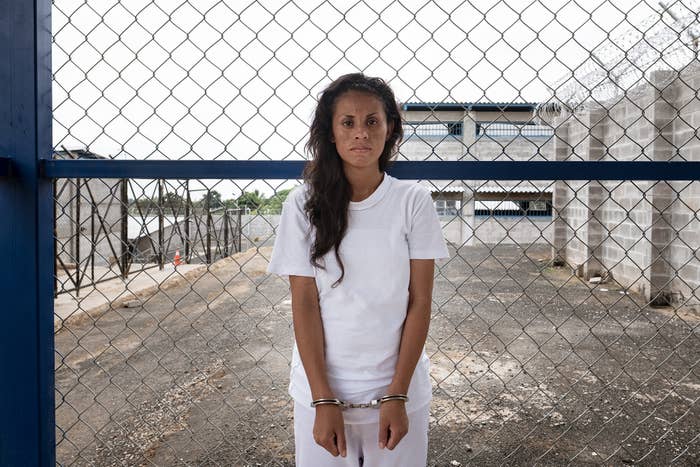
She Was Sent To Prison For Losing Her Baby. Now She Wants To Clear Her Name.

In 2012, Sara was sentenced to 30 years in prison under El Salvador’s strict anti-abortion laws. Last month, she was freed thanks to a growing movement to defend the women facing decades in prison on similar charges. Now she hopes to clear other women’s names.

Karla ZabludovskyBuzzFeed News Reporter
Reporting From
Mexico City
Posted on July 13, 2021,

Erica Canepa for BuzzFeed News
Sara inside the Izalco Prison in San Salvador, El Salvador, on Sep. 14, 2019.

MEXICO CITY — On June 7, nearly nine years after police had detained her, Sara was getting ready to leave prison. After lunch, she slipped out of her white uniform and into civilian clothes, eager to get to the other side of the walls and hug her family.

The close friends she had made in prison walked her as far as they could inside the facility, crying. They begged her to speak out for them and the particular plight they all shared: Following miscarriages or stillbirths, the women had been convicted of homicide and sentenced to 30 years in prison in El Salvador under the country’s strict anti-abortion laws.

“It hurts to have left them behind,” Sara, 29, told BuzzFeed News during a Zoom interview from San Salvador, the country's capital.

Sara, who asked that her last name be withheld to protect her family’s privacy, is the latest in a slow trickle of women convicted on similar charges who are having their sentences commuted — 11 since 2017, according to the Agrupación Ciudadana por la Despenalización del Aborto, a pro–abortion rights advocacy group. The country has filed aggravated homicide charges against at least 129 women for alleged abortions since 2000. At least a dozen remain in prison.

But even as they hail each new release as a victory, women’s rights groups warn that the state’s insistence on treating each case as unique rather than grouping them together means that many people remain behind bars for crimes that others are being freed for, resulting in a patchwork and somewhat arbitrary rollback of severe sentences.

El Salvador has one of the harshest anti-abortion laws in the world, with no exceptions made even when the pregnant person’s life is in danger. Virtually all of those who have been jailed for abortion-related crimes have been poor, and many have lacked access to prenatal care. Some have said they were handcuffed to their hospital beds and then taken straight to prison.

Some countries in Latin America have loosened abortion restrictions over the last decade. Uruguay legalized it in 2012. In Mexico, the state of Oaxaca became the second area in the country to permit it in 2019. And in December, Argentina’s senate approved it for the first 14 weeks of pregnancy.

But others, including El Salvador, have skirted the trend. And as legislation loosening abortion restrictions has spread across the region, so has the backlash. Evangelical politicians have gained influence, powerful segments of civil society have successfully fought back against sex education in public schools, and the Catholic Church has quietly forced young rape victims to carry their pregnancies to term even after they’ve sought legal abortions.

“It’s painful to see the state punishing girls so unjustly” in El Salvador, said Paula Ávila-Guillén, executive director of the Women’s Equality Center, a New York–based organization that monitors reproductive rights in Latin America. Those facing charges are often young people who have little access to healthcare and education, she added: “Girls who were marginalized and abandoned by the state to begin with.”


Jose Cabezas / Reuter

A woman holds a placard that reads, "Justice for Sara" as Sara, who was sentenced to 30 years in prison for a suspected abortion, attends a hearing in Cojutepeque, El Salvador, on May 31, 2

In prisons in El Salvador, a staunchly Catholic country, people believed to have undergone abortions have been shunned and beaten by other incarcerated people, according to women who have been released from prison.

In September 2019, BuzzFeed News visited Sara and two women convicted of killing their newborn babies, who were serving time at the Centro de Detención Menor para Mujeres in Izalco, a women’s prison near the country’s Pacific coast. During a 90-minute interview in a gated-off area near the main courtyard, Sara sat on a white plastic chair as Kenia Hernández, then 24, braided her hair. With a handful of guards hovering nearby, Sara whispered her story: In 2012, nearing her due date, she slipped as she was washing dishes and passed out. Sara woke up in a hospital bed, her baby was dead, and a police officer was getting ready to detain her. A court sentenced her to 30 years in prison for aggravated homicide.

The women said they rarely had access to sanitary pads and soap, and the previous months had been particularly tough: President Nayib Bukele had declared a state of emergency in the country’s prisons in order to curb gang activity, tightening confinement measures — including banning all visitors. Sara had bags under her deep-set eyes, and her voice was heavy with yearslong exhaustion.

Bukele has said women should not be jailed for suffering “spontaneous abortions,” but two years into his presidency, he has not pardoned any.

One of them, Hernandez, was 17 when she got pregnant. One day in 2014, her father, a strict man who she frequently feared would beat her, became irate at Hernandez for not cleaning the house sufficiently and started chasing her, she said. Hernandez tripped and fell and went into labor shortly after. Her father fled, and her baby died. She, too, was sentenced to 30 years.

Attorneys for Hernandez presented a petition to have her sentence commuted in 2018. It was approved in 2020, but she will not finish her shortened sentence until June 2023.

Each case is analyzed individually by the Justice Ministry, a criminological team that includes psychologists, and the Supreme Court.

Last year, the Working Group on Arbitrary Detentions, a United Nations human rights panel, published a report on the case of Sara and two other women imprisoned in El Salvador under similar circumstances, Berta Margarita Arana, 28, and Evelyn Beatriz Hernández, 23. It concluded that the three women had been arbitrarily detained and urged El Salvador to free them immediately and provide financial compensation.


Jose Cabezas / Reuters
Sara is embraced by her mother as she is released from jail in Zacatecoluca, El Salvador, on June 7, 2021.

Sara's lawyers petitioned for the state to commute her sentence, which was approved in February 2020. Shortly after, they requested that she be released early on parole.

On her final day in prison, Sara awoke to take her regular 4 a.m. shower, had breakfast, went to work mowing grass, sat through lunch, and attended a crocheting workshop. She hadn't known she was getting out that day until the afternoon, when the guards told her to get ready to go home.

Her attorneys say they are going to request a revision of Sara’s sentencing in order to have her declared not guilty — until then, she worries that her criminal record will make it hard for her to find a job.
In the four weeks since her release, Sara has been spending time at home with her family. So much has changed, she said. Her stuffed animals and school books are no longer there. Her brother died just as she was sent to prison. Now able to rebuild her life, she wants to go back to school to become a nurse.

Looking a decade younger than during her interview at Izalco two years earlier, with her hair in a tight bun and her eyes sparkling under blue eyeshadow, Sara described her hopes for the future: to clear her name and help free her friends still behind bars.

The women she left behind “are in bad shape, sad and desperate,” said Sara. Many of them have children they are eager to get back to, she added, “to take care, to raise.”
Want to see more from Inequality?
No Yes

MORE ON THIS
This Woman Had A Stillbirth And Is On Trial For It — AgainKarla Zabludovsky · Aug. 14, 2019
When The Horror Of Losing Your Baby Turns Into Years Behind BarsKarla Zabludovsky · Oct. 24, 2019


Karla Zabludovsky is the Mexico bureau chief and Latin America correspondent for BuzzFeed News and is based in Mexico City


'Get out of the water!' Monster shark movies massacre shark conservation

UNIVERSITY OF SOUTH AUSTRALIA

Research News

IMAGE

IMAGE: 96% OF SHARK MOVIES OVERTLY PORTRAY SHARKS AS A THREAT TO HUMANS. view more 

CREDIT: UNSPLASH

Undeniably the shark movie to end all shark movies, the 1975 blockbuster, Jaws, not only smashed box office expectations, but forever changed the way we felt about going into the water - and how we think about sharks.

Now, more than 40 years (and 100+ shark movies) on, people's fear of sharks persists, with researchers at the University of South Australia concerned about the negative impact that shark movies are having on conservation efforts of this often-endangered animal.

In a world-first study, conservation psychology researchers, UniSA's Dr Briana Le Busque and Associate Professor Carla Litchfield have evaluated how sharks are portrayed in movies, finding that 96 per cent of shark films are overtly portraying sharks as a threat to humans.

Dr Le Busque says sensationalised depictions of sharks in popular media can unfairly influence how people perceive sharks and harm conservation efforts.

"Most of what people know about sharks is obtained through movies, or the news, where sharks are typically presented as something to be deeply feared," Dr Le Busque says.

"Since Jaws, we've seen a proliferation of monster shark movies - Open Water, The Meg, 47 Metres Down, Sharknado - all of which overtly present sharks as terrifying creatures with an insatiable appetite for human flesh. This is just not true.

"Sharks are at much greater risk of harm from humans, than humans from sharks, with global shark populations in rapid decline, and many species at risk of extinction.

"Exacerbating a fear of sharks that's disproportionate to their actual threat, damages conservation efforts, often influencing people to support potentially harmful mitigation strategies.

"There's no doubt that the legacy of Jaws persists, but we must be mindful of how films portray sharks to capture movie-goers. This is an important step to debunk shark myths and build shark conservation."

###

Notes to editors:

* Shark Week is 12-18 July 2021

* Shark Awareness Day is 14 July 2021


Monster, book review: Technology rules our lives - but what to do about it?

Mary Branscombe 


© Provided by ZDNet
 Monster: A Tough Love Letter On Taming the Machines that Rule our Jobs, Lives, and Future • By Paul Roehrig & Ben Pring • Wiley • 176 pages • ISBN 9781119785910 • $25 / £18.99

Have we inadvertently created a technological 'monster' that is, in some nebulous sense, making everything worse -- and if so, what can we do about that?

If you have any technology-related worries -- from your kids being glued to their phone, to the influence of the Chinese government and the role of technology in the 2016 and 2020 US elections -- the authors of Monster: A Tough Love Letter On Taming the Machines that Rule our Jobs, Lives, and Future are worried about it too. And if you weren't already concerned, they'll tell you why you should be.

As IT consultants and futurists who fear that, in the past, they have avoided difficult questions in their enthusiasm for technology, Paul Roehrig and Ben Pring are trying to distil the entire modern world into a somewhat simplistic formula: that the economic incentives for some kinds of technology are out of balance, and that's dragging everything down.

"Once cool disruptive 'tech rock stars' are being exposed as nothing more than the latest robber barons", they say. The security of cars, pacemakers and elections are all poor (although driverless technology is apparently "working very well"), while democracy, privacy and being polite to other people are all going out of fashion.

Decrying the loss of civility, blaming social media echo chambers rather than societal inequities, and talking about income inequality as if it's produced only by technology rather than socioeconomic systems, suggests that technology is somehow created outside of society rather than all-too-intimately enmeshed with it. Some interesting questions about the role of technology in society are obscured by the authors' enthusiasm for new technology like quantum computing, and the dystopian fantasies they entertain about the impact of the technology we already have.

© ZDNet

Treating Amazon, Apple, Facebook, Google and Microsoft as if they all have the identical business model of "snorkel[ing] code from every move we make" simply because they have stock market valuations that outweigh most other companies ignores the different impacts they have, and the different issues that will need to be addressed in dealing with them.

The authors rightly point out that widely used technologies are developed in relatively few countries, which may be driving a global power shift. But there's no discussion of what it means if tech giants gain some of the powers of nation states, or how bytes might have a different impact from bullets in terms of how their influence is applied.

There's no mention of Russia or ransomware in the book at all (except for noting that Ukraine attracts an unusual level of cyberattacks), and no analysis of where the line of separation might fall between the Chinese government, whose approach Roehrig and Pring dub 'surveillance communism', and Chinese technology companies.

The usual misunderstanding of the original Luddites -- who were protesting not the machinery itself but the business models of the mill owners who refused to share the fruits of improved productivity with workers, and targeted their destruction appropriately -- actually undermines the point the authors try to make about the drivers of modern Luddism: inequality and exclusion caused by the irresponsible deployment of technology.
Cyber war & social tech addiction

Suggesting we're already engaged in a cyber war, given the current level of attacks, ransomware and nation-state hacking, would be more plausible if the authors didn't maintain that Advanced Persistent Threats (APTs) are "technologically very advanced" when they often target very basic security mistakes and long-patched vulnerabilities. Talking about how poorly security is implemented across government, industry and society isn't nearly as exciting as talking about Stuxnet and hackers in basements, but it would paint a truer picture of the issues.

Despite admitting there's "no solid causal link between tech and our aching heads yet", the authors spend a chapter calling smartphones and social media "digital fentanyl", suggesting that social technology is an addiction that's destroying a generation of children and claiming tech is changing how our minds work. Evolutionary psychology combines with nostalgia for the days when commuters were staring at newspapers rather than phones, resulting in the usual suggestions about limiting your screen time. After the last 18 months, asserting that community, faith and friendship can't be found online is as unhelpful as the latest 'technology rock stars' announcing that there's an app for mindfulness. It might also be more useful to explain how Elon Musk's Neuralink isn't actually that revolutionary compared to existing medical devices than to announce that it's the equivalent of Theranos.

SEE: Network security policy (TechRepublic Premium)

In the middle of all this, there's a fictional account of a naïve and inflammatory startup that will confirm the prejudices of everyone who dislikes Facebook without ringing true to anyone with actual startup experience.

Similarly, the book ends with a poorly conceived 'debate' between the two authors about whether we shouldn't just turn this whole disturbing internet social media thing off that would get roundly ratioed if they were to perform it on social media. It may be intended to satirise the kind of inconsequential arguments often found online, because it's formatted as if it was a sequence of texts or private messages (without noting the irony), but a more comprehensive chapter would be welcome. The potted history of guns in Japan is mildly interesting, but it ends the book on a strangely flat note that makes you long for the substance of an expert explaining their field in a Twitter thread.
Manifesto, or wish-list?

What you would hope would be the meat of the book -- a manifesto for 'taming the machines -- is more of a wish-list. You'll probably skim past the actual suggestions for how to tackle the very real problems Roehrig and Pring are rightly concerned about in the introduction, unless you're used to the way executive reports put the actionable items right at the beginning. The suggestions range from sensible (legislation for data portability and audits of algorithms) to knee jerk (overriding anonymity on social media, doing away with Section 230 and creating a 'driver's licence' for getting on social media at the age of 18).

The discussion of the complex and difficult task of regulating technology is probably the most realistic part of the book. However, it's disappointing that the authors' obvious concern and desire to provoke a reaction leads them to focus more on listing the harms that technology has already created, rather than digging further into the "many types of law, policy and regulation: net neutrality, privacy, patent and IP law, taxation, data protection, industry regulation, AI ethics, labor laws, health data laws, job licensure [and] sharing economy regulation".

It might be harder to enliven these critical but "mind-numbingly dull" issues than to point out that Facebook makes a lot of money and that it's hard to stop your family accessing TikTok. But doing so would make for a more meaningful discussion about 'Taming the Machines'.

RECENT AND RELATED CONTENT

France fines Google €500m for repeat failure to negotiate in good faith with publishers

China reportedly warns local tech companies of increased cybersecurity oversight

Tech giants warn changes to Hong Kong privacy laws may see them exit the market

US Federal Court dismisses FTC call for Facebook to divest Instagram and WhatsApp

New 'safety by design' toolkit to help the global tech industry care a little bit more

Read more book reviews
Crypto Dictionary, book review: A useful A-Z of cryptography definitions
People Count, book review: Technology, data, privacy and contact-tracing apps
Atlas of AI, book review: Mapping out the total cost of artificial intelligence
Silicon Values, book review: A history of online censorship in the Big Tech era
The Hype Machine, book review: Inside the 'social media industrial complex'