Monday, June 20, 2022

'Potato' outrage over anti-discrimination agency pick

Ferda Ataman brings a wealth of personal and professional experience to the role of heading Germany's anti-discrimination office. But her nomination has triggered controversy.
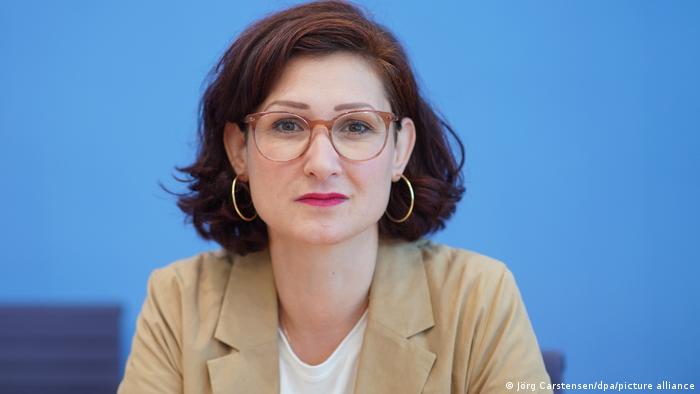
Ferda Ataman has been nominated as candidate to head the government's

 Anti-Discrimination Agency

Germany's Anti-Discrimination Agency (ADS) is set to get its first official leader in four years this week after the ruling coalition nominated journalist and author Ferda Ataman to the post. However, Ataman's nomination has ignited an intense debate about whether she should be disqualified from the post due — among other things — to a text she wrote two years ago defending the use of a pejorative term for white Germans.

Born in the southwest German city of Stuttgart to parents with roots in the Greek, Turkish, and Sephardic Jewish communities, Ataman, 42, studied political science and began her career as a political speech writer before turning to journalism. She led the ADS press office for several years and was also instrumental in the founding of Mediendienst Integration, a platform for sharing information about immigration and asylum in Germany, and writes for several German media outlets on racism and migration policy.

In January 2020 she penned a column for Der Spiegel magazine discussing the fact that while the German language abounds with terms for people whose parents or grandparents immigrated to Germany — "people with a migration background" being the preferred, almost politically correct term in Germany today — there seems to be no universally agreed-upon name for those with only German ancestry.

Ataman defends the use of 'potato'

She argued that the term "Kartoffel" (potato) — which is sometimes used by immigrant communities to describe white Germans — is not discriminatory. It "is an internationally beloved vegetable," she wrote, saying the term is "harmless" and "cute" and can not be compared to labels for non-hegemonic groups that have been soaked in decades or centuries of hatred and oppression.

Ataman described the perceived imbalance in a society where many people born in the country are still labeled "Turkish German," and said that white Germans often bristle at being called such due to a wish to be "colorblind."
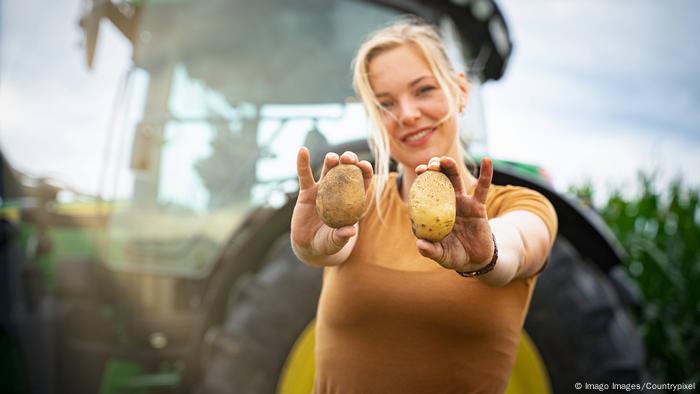
Potatos have been a staple food in Germany since it was first imported

 in the 17th century

Accused of supporting ˈcancel cultureˈ

Her column unleashed a torrent of debate on social media, a debate that has cropped up again now due to her nomination to lead the ADS. A flurry of op-eds criticizing the choice appeared on German media over the weekend, with German-Israeli writer Ahmad Mansour calling her nomination an "appointment for cancel culture and the division of society," on the Focus news website.

In the newspaper, Massud Reza, an expert in education policy for the self-described liberal Ibn Rushd-Goethe Mosque in Berlin, accused Ataman of telling anecdotes instead of focusing on more meaningful examples of everyday racism and of "always conflating immigrants with Muslims," particularly those from Turkey or the Arab world.

Ataman's nomination also prompted outrage from conservative lawmakers from the Christian Social Union (CSU), the conservative Bavarian sister party of former Chancellor Angela Merkel's Christian Democrats (CDU).

"Ms Ataman has so far mainly attracted attention with clumsy provocations and hard-left ideology," said CSU lawmaker Andrea Lindholz, accusing the journalist of "insulting the majority society or playing social groups off against each other."
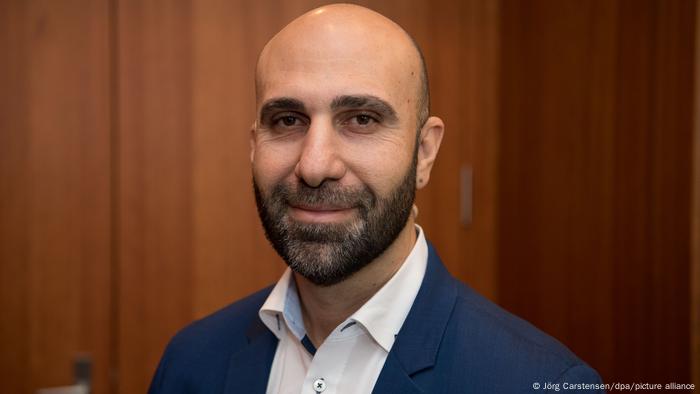
Ahmad Mansour refered to Ataman's nomination as an 'appointment for

 cancel culture and the division of society'

Although Ataman's nomination comes from the governing coalition of center-left Social Democrats (SPD), the Green Party, and the business-friendly Free Democrats (FDP), not everyone in the ruling parties has supported the choice. FDP politicians have been particularly strong in their rebukes, with party member Linda Teuteberg saying that the designated ADS leader had "crossed lines" and accusing her of "deleting and cleaning her social media accounts" to evade criticism.

Since her nomination, Ferda Ataman has deleted many of her Tweets. One of them referred to a perceived bias in the German health system: "Somehow I have a suspicion which social groups will get preferential treatment in hospitals when there is a shortage of incubators," she had written during the first wave of the COVID pandemic in March 2020. Following an onslaught of criticism, she added the remark "I promise to refrain from voicing my concerns over racism in connection with the COVID crisis." But this is among the dozens of tweets Ataman wiped from her account.

A ˈstrong voiceˈ for those experiencing discrimination

Ataman's defenders, including SPD lawmaker Sawsan Chebli, have praised her for the wealth of experience she brings to the job and her courage in speaking uncomfortable truths to Germany's white majority. Chebli wrote on Twitter that the campaign against Ataman was part of a "systemic" intolerance towards Muslims or those who "read as Muslim."

Lisa Paus, the Green politician and federal Family Affairs Minister who nominated her, said Ataman "stands for strong engagement and an inclusive, democratic society" and that she would "provide a strong voice for anyone experiencing discrimination in Germany."

Big issue, small office

Should her nomination be successful when it comes to a vote later this week, Ataman will be the first officially appointed leader of the Anti-Discrimination Agency in four years, when the previous head retired. A sign, according to some analysts, of the office's toothlessness and perceived unimportance in the eyes of the federal government.

Created in 2006 as an independent office within the Federal Ministry for Family Affairs, the ADS offers counseling to those who have experienced or witnessed discrimination, conducts research, and submits reports to the Bundestag. It does not act on behalf of those discriminated against in any legal sense, as similar offices in other western countries such as the US or UK do. Indeed, there is no federal anti-discrimination law to enforce.

Although nationwide surveys show that 65% of Germans take racism very seriously, and have experienced or seen it at least once in their lives, Germany's constitution, the Basic Law, speaks in Article 3 of the right to "equal treatment," but not to live free from discrimination.

Despite a much smaller budget and less personnel than its counterpart in the UK, for example, Germany's ADS provides an essential service and has completed crucial projects such as last year's Afrocensus, the first-ever census carried out exclusively to collect data on and address the needs of the Afro-German community.

Edited by: Rina Goldenberg

NOTHING TO BE PROUD OF
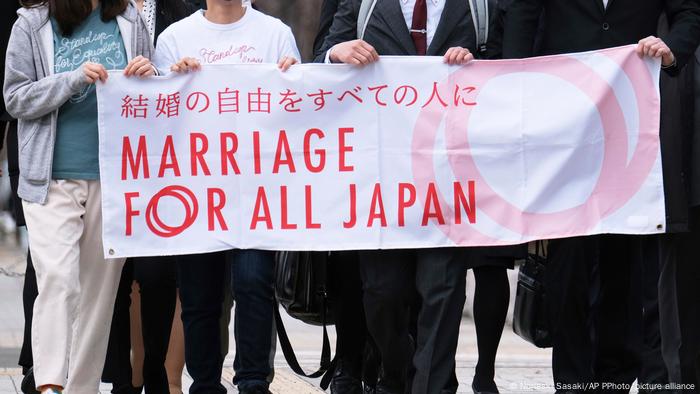
Japan: Same-sex marriage ban declared constitutional by Osaka court

An Osaka court has denied claims to recognize same-sex marriages. Japan is the only G7 country that does not recognize same-sex unions, but recognizing same-sex partnerships puts it among Asia's more liberal states.


Courts in Japan have issued conflicting opinions on the matter

A Japanese court declared on Monday that a ban on same-sex marriage does not violate the country's constitution.

The Osaka District Court made the declaration as it rejected a case brought by three same-sex couples who had argued their right to free union and equality has been violated.

The court denied their claim for compensation and defined marriage as a union between opposite genders — upholding a stipulation in Japan's constitution.

However, the court did state there could be benefits in some sort of framework that recognizes same-sex marriage.

"From the perspective of individual dignity, it can be said that it is necessary to realize the benefits of same-sex couples being publicly recognized through official recognition," the Osaka court said in its union.

Partnerships, not unions


The ruling came as a disappointment for activists who have made ground toward wider recognition of same-sex unions in Japan. Pressure from civil society won out in 2021, when a court in the city of Sapporo ruled that restrictions placed on same sex marriages was unconstitutional.

This mirrors mixed rulings on same-sex unions by courts throughout Japan.

Prefectural courts in Tokyo agreed this year to start recognize same-sex partnerships in November.


A Sapporo court ruled restrictions placed on same sex marriages unconstitutional


But many same-sex couples are not satisfied with a legal status that defines them as "partners" alone.

"Nothing can replace [marriage]. I feel nothing but resentment. It's like they're saying, 'We don't treat you equally but that's OK, right?'," a plaintiff in Monday's case case told AFP news agency.

Partnerships carry a different legal status than a recognized marriage in Japan. Partnership certificates do give same-sex couples hospital visitation rights or the right to rent property together, but do not provide for shared custody of children or the inheritance of property.

Region's stance on same-sex marriage


Opinion polls by the local government in Tokyo found that 70% were in favor of same-sex marriages. But the Osaka court claimed that the topic is not widely discussed in Japan.

"Public debate on what kind of system is appropriate for this has not been thoroughly carried out," said the Osaka court.

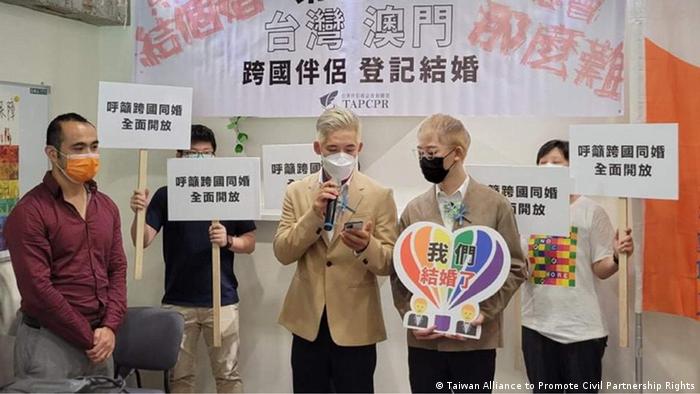
The ongoing debate in Japan mirrors rulings by other courts throughout the region. While Taiwan in 2019 legalized same sex marriages, becoming the first Asian country to do so, South Korea only recognizes the couples as common law spouses.

China does not recognize same-sex marriages or civil unions, but does grant dependent residency status to couples legally married in other countries.


Taiwan legalized same-sex marriage in 2019


The economics of inclusivity


Some analysts have indicated that Japan's stance on same sex marriage may have residual effects on the country's economy.

"International firms are reviewing their Asian strategy and LGBTQ inclusivity is becoming a topic .... International businesses don't want to invest in a location that isn't LGBTQ-friendly." said Masa Yanagisawa, head of prime services at Goldman Sachs, to the Reuters news agency prior to the Osaka verdict.

Japan will on June 26th meet with the leaders of other G7 countries, all of which have legalized same-sex marriage.

asw/aw (AFP, Reuters)

JUNE IS PRIDE MONTH


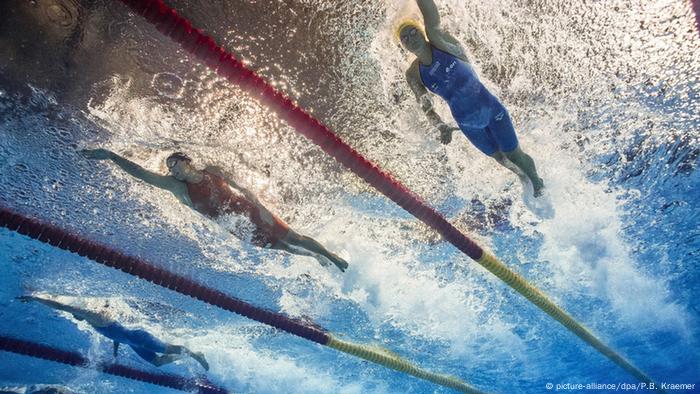
 FINA restricts participation of transgender athletes in women's competitions

Swimming's world governing body will only allow transgender athletes who transitioned before age 12 to compete in elite women's competitions. Some support a desire for inclusion, others say it would make races unfair.

FINA members voted 71.5% in favor of the new policy, which will apply 

to all its events from Monday

World swimming's governing body FINA adopted new rules for transgender athletes at the organization's extraordinary general congress on Sunday, only permitting swimmers who transitioned before age 12 to compete in women's competitions.

"We have to protect the rights of our athletes to compete, but we also have to protect competitive fairness at our events, especially the women's category at FINA competitions," said FINA President Husain Al-Musallam.

The new eligibility policy states that male-to-female transgender athletes are eligible to compete only if "they can establish to FINA's comfortable satisfaction that they have not experienced any part of male puberty beyond Tanner Stage 2 (of puberty) or before age 12, whichever is later."

The new policy also opens up eligibility to those who have "complete androgen insensitivity and therefore could not experience male puberty." Swimmers who have had "male puberty suppressed beginning at Tanner Stage 2 or before age 12, whichever is later, and they have since continuously maintained their testosterone levels in serum (or plasma) below 2.5 nmol/L." are also allowed to compete in women's races.

Female-to-male transgender athletes (transgender men) are eligible to compete in men's swimming competitions, as their physical makeup at birth puts them at a disadvantage, if anything.

FINA members voted 71.5% in favor of the new policy. It will apply to all its events from Monday. The vote came after members heard presentations from three specialist groups — an athlete group, a science and medicine group and a legal and human rights group.

The medical group found that men who transitioned to woman retained physical advantages. 

"Some of the advantages males acquire in puberty are structural and are not lost with hormone suppression," said Dr. Sandra Hunter of Marquette University in Milwaukee.  "These include larger lungs and hearts, longer bones, bigger feet and hands."

A new category for transgender athletes

FINA also intends to create an "open category" to allow transgender athletes to compete in a separate class at elite level. The body said it was setting up a "a new working group that will spend the next six months looking at the most effective ways to set up this new category."

"FINA will always welcome every athlete. The creation of an open category will mean that everybody has the opportunity to compete at an elite level. This has not been done before, so FINA will need to lead the way. I want all athletes to feel included in being able to develop ideas during this process," said Al-Musallam.

The new rules drew mixed reactions. British swimmer Sharron Davies said that she was proud of FINA "for doing the science, asking the athletes/coaches and standing up for fair sport for females."

"Swimming will always welcome everyone no matter how you identify but fairness is the cornerstone of sport," she wrote on Twitter.

On the other hand, advocacy group Athlete Ally called the new eligibility criteria "discriminatory, harmful, unscientific."

"If we truly want to protect women's sports, we must include all women," the group wrote on Twitter.

Advocates for transgender inclusion argue that not enough studies have yet been done on the impact of transition on physical performance, and that elite athletes are often physical outliers in any case.

dh/msh (AP, AFP, Reuters)


TRANSMEN
The first out transgender person to make a US national team was Chris Mosier, who in 2016 qualified for Team USA in duathlon. Mosier is considered the catalyst for the change in the IOC policy on transgender athletes in 2015, when he challenged the policy after initially being banned from the world championship race.
May 16, 20196 answers
The answer is no. There is not a single trans male athlete that is dominating (e.g., setting records, consistently placing 1st, etc.) in men's sports.

Apr 4, 2019 — Chris Mosier is the first transgender athlete to make a US national men's team, the first to be sponsored by Nike and also the first to be in an ...


Can Finland and Sweden help decarbonize EU economies?

Demand for key metals is booming. Geopolitical realities and pandemic-related supply chain issues are increasing the pressure on EU countries to proceed with mining activities of their own to decarbonize their economies.

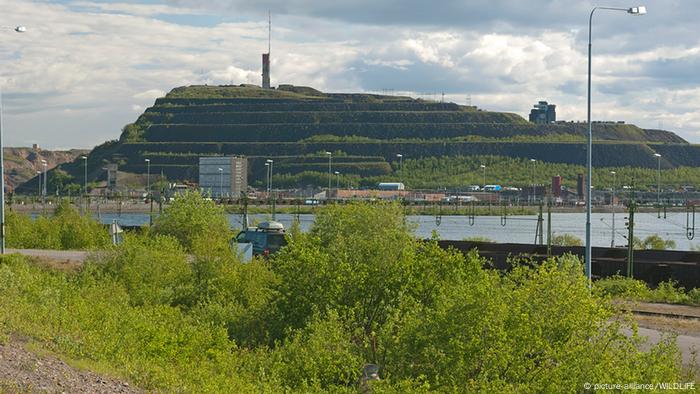
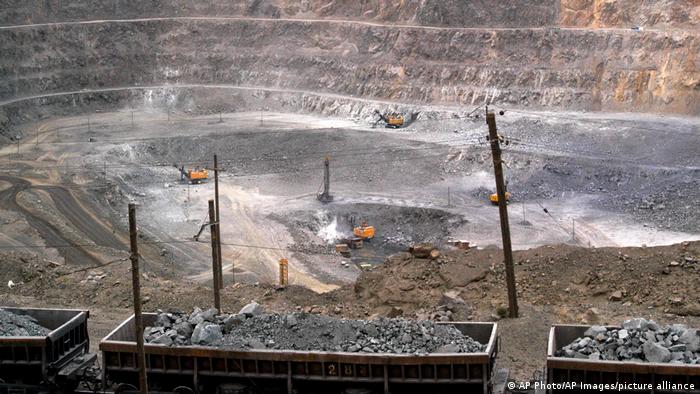
Iron ore mining has a long tradition in both Sweden (pictured) and Finland

The European Union wants to decrease its dependency on Russian fossil fuels while accelerating its decarbonization effort. Metals and critical raw materials will play a pivotal role. Minerals, especially lithium, are most needed for clean-energy technologies. Relevant mining activities are concentrated in Asia, Oceania and South America.

Finland and Sweden, the two European countries currently applying for NATO membership, have a long mining tradition and could help solve the EU's deficit, but question marks remain.

"We are the most important mining countries in the EU. Sweden alone produces over 90% of all the iron ore produced in the EU, Maria Suner, CEO of the Swedish Association of Mines, Mineral and Metal Producers (Svemin), told DW. However, that's just a little over a quarter of what the bloc needs, meaning that the EU still has to import 70% of its iron ore, she added.

Finland and Sweden also share the mineral-rich Fennoscandian bedrock. According to Suner, the solid rock beneath the Scandinavian and Kola peninsulas has the potential to provide everything that's on the EU list of critical raw materials.

The European Commission compiled a list of critical raw materials (CRMs) in 2011. Economic value and supply risk are the two criteria used to determine the importance of the materials. The list is getting longer.

The EU's dependency on Chinese rare earth materials is huge, but there's 

little the bloc can do about it near-term

Russia and supply security

Russia's invasion of Ukraine is the major reason for Finland and Sweden to apply for NATO membership, and arguably, to step up mining in the medium term.

Svemin's CEO says the focus on mining increased due to the COVID pandemic and ensuing supply chain disruptions, but more so after Russia invaded Ukraine. It has added to the increase in demand, pushing raw materials prices to a new high.

China is the top producer of graphite and rare earth materials. According to data from the International Energy Agency, it also refines 87% of the rare earths, 65% of cobalt, 58% of lithium, and 35% of nickel. Russia is the second-most-important country in the world for nickel extraction and the third-most-important for cobalt extraction.

"If there's more support for mining activities in Europe, I don't see that as a result of Russian hostilities. It's more a question of whether Europe has woken up to the fact that it lacks metals," Pekka Suomela, executive director of the Finnish Mining Association (FinnMin), told DW.

Current hindrances

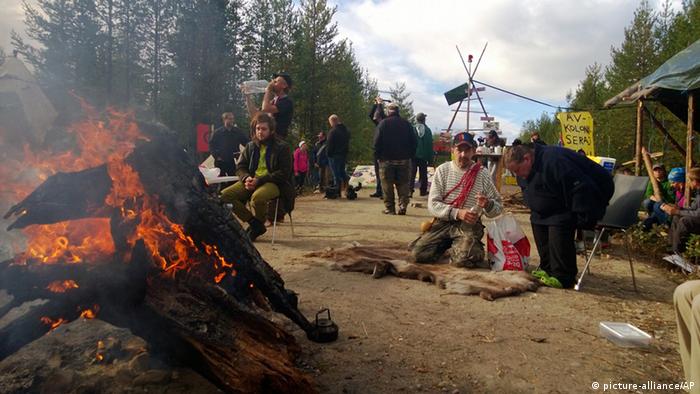
Land competition is always an issue in Nordic regions with a focus on forestry. Increased mining is opposed by many environmentalists citing the need to protect biodiversity.

In March, when the Swedish government allowed the exploitation of the Scandinavian country's largest unexploited iron ore deposit, Swedish climate protection activist Greta Thunberg and the Fridays for Future movement said Sweden was "waging a war on nature."

Finland, Norway, and Sweden are the least densely populated countries in Europe, which might theoretically be a plus for mining activities. Nonetheless, many scarcely populated areas are protected.

"Almost half of the Swedish territory is reindeer herding area for the Sami people, the only Indigenous people in Europe," said Suner. "But the area needed for mining is very limited and we know how to minimize the impact."


Long timeframes

In the EU, it can take up to 25 years from the exploration phase to the start of commercial mining. Svemin has proposed 27 reforms, including shortening the permission procedures. Worries about the medium-term environmental impact often clash with long-term decarbonization efforts.

While EU member states are responsible for mining legislation, Brussels deals with aspects related to health, water and land usage.

The current geopolitical situation might increase social acceptance, but caution is needed. According to Suomela, the European Union must be careful not to put too much pressure on any single country to avoid local resistance that could easily shift public opinion.

Another possible future obstacle has to do with energy prices. They remain fairly moderate in northern Sweden and Finland, well below the levels reached in central Europe. But an increase in mining activities requires coherent investments in energy assets.

"The mineral and mining sector is planning for a tenfold increase in electricity use by 2050," Suner commented. "Additionally, we have other projects for battery production and fossil-free steelmaking. Such projects are not covered by the electricity production we have in Sweden today."

New mining projects are often opposed by locals and envorinmental activists in Sweden and Finland

Neighboring countries

Estonia, another country bordering Russia, is active in the cleantech supply chain, hosting the only commercial rare earth processing facility in Europe. The facility is owned by Toronto-based rare earth materials technology company Neo Performance Materials. The company launched an initiative in 2020 to expand the supply of rare earth feedstock to their Sillamae processing facility near the Gulf of Finland.

Constantine Karayannopoulos, Neo's president and CEO, told DW that the war in Ukraine caused refining companies to look more closely at their global supply chains. "Neo is no exception," he explained, recalling that its supplier in Kola, the Russian peninsula, had been a reliable supplier for over 40 years.

"Geopolitical considerations are always a factor, but our primary driver remains customer demand," said Karayannopoulos.

Right now, it looks like demand will increase. According to the European Association of Metals (Eurometaux), lithium usage in clean technologies could increase by a staggering 2,109% by 2050. Demand for dysprosium, tellurium and scandium is expected to more than double over the next 30 years.

Edited by: Hardy Graupner

Plugging methane leaks is a powerful climate fix, so why aren't we doing it?

The oil and gas industry is choking the atmosphere with a heat-trapping gas stronger than CO2 — despite cheap, fast and easy fixes.

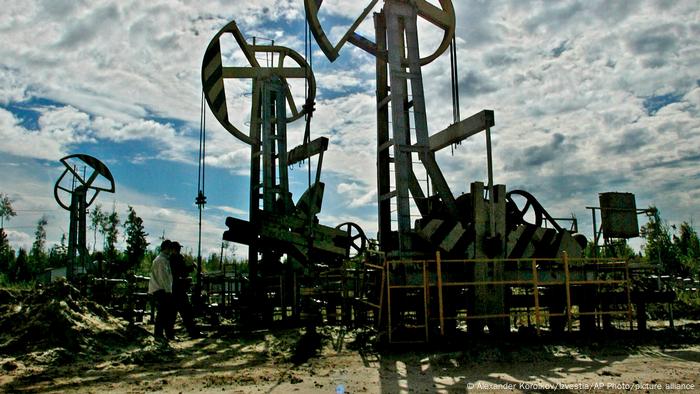
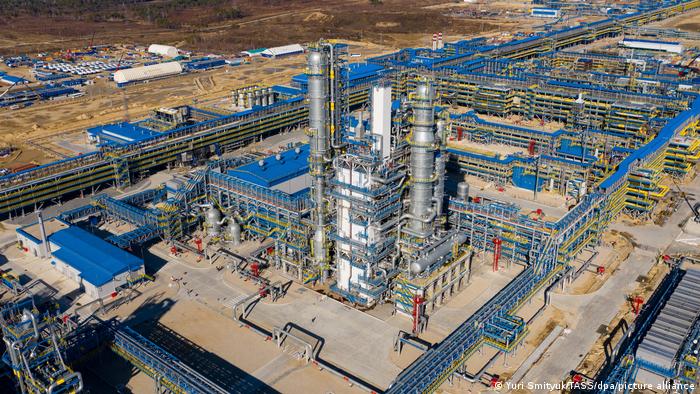
Oil and gas facilities are pumping out a gas more harmful than CO2 in the short-term.

There was little to mark the pipe as a threat to the planet: A skinny gray chimney the same color as the clouds, looming lankily above a gas storage facility at an industrial site in northern Italy. It did not appear to be in use.

Then James Turitto took out his camera. 

Seen through the lens of the $100,000 (€95,567) infrared device calibrated to pick up planet-heating gases, the pipe was belching a stream of methane into the sky. Turitto, who hunts fugitive emissions for the environmental nonprofit Clean Air Task Force (CATF), has seen hundreds of similar leaks at oil and gas sites across Europe that otherwise go unnoticed. The pipe had already been leaking methane when Turitto visited eight months earlier.

Experts say invisible clouds of methane billowing out of fossil fuel facilities like this one are some of the easiest emissions to avoid. Fixing them is no replacement for cutting carbon dioxide pollution, but it represents one of the cheapest tools humanity has to keep global warming in check over the coming decades.

"We're talking about plumbing, literally," said Turitto.

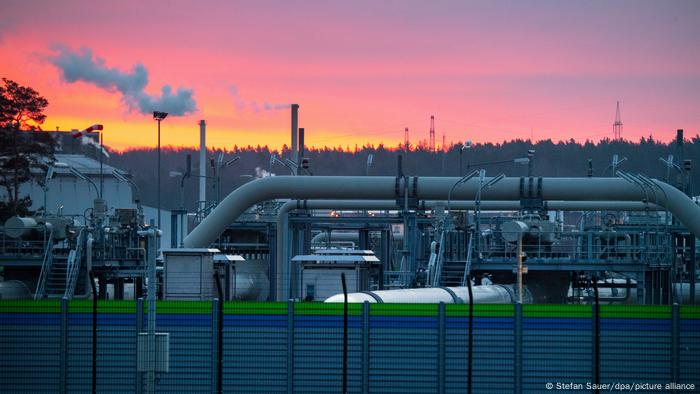
Russian gas imported into Europe is particularly polluting because of the methane it leaks

Why does methane matter for the climate?

Methane is a gas responsible for about a quarter of global warming since the Industrial Revolution. While it doesn't last as long in the atmosphere as CO2, it is 80 times more powerful over a 20-year period.

In 2015 world leaders pledged to keep global warming well below 2 degrees Celsius (3.6 Fahrenheit) — and ideally 1.5 C — by the end of the century in a belated bid to stop weather extremes like storms and heat waves spiraling further out of control.

But that lower temperature threshold looks likely to be crossed within the next couple of decades, according to scenarios assessed by the UN's Intergovernmental Panel on Climate Change in August. Even if governments were to bring temperatures back down later in the century, some ecosystems would not survive, the scientists found in a follow-up report in February.

Experts say cutting methane could play an outsize role in preventing humanity from overshooting its temperature targets because the gas is so powerful in the short term. A report by the United Nations Environment Program (UNEP) last year found that nearly halving methane emissions this decade will avoid almost 0.3 C of global warming by the 2040s. "Fast and ambitious methane mitigation is one of the best strategies available today," said UNEP Executive Director Inger Andersen. 

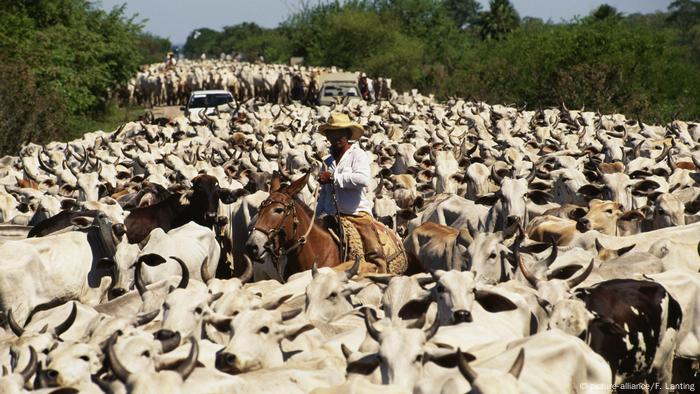
Rising demand for products like beef, milk and cheese is driving methane 

emissions from farming higher

Where does methane come from?

Global methane pollution soared to record levels in 2021, according to data published in April by the National Oceanic and Atmospheric Administration of the US government. "If this trend continues it will put serious challenges to our capability to meet climate goals — even if we have very fast, rapid CO2 reduction," said Yuzhong Zhang, an atmospheric scientist at Westlake University in China.

Some of the rise in methane is due to natural releases. But humans have also created three powerful sources of the gas.

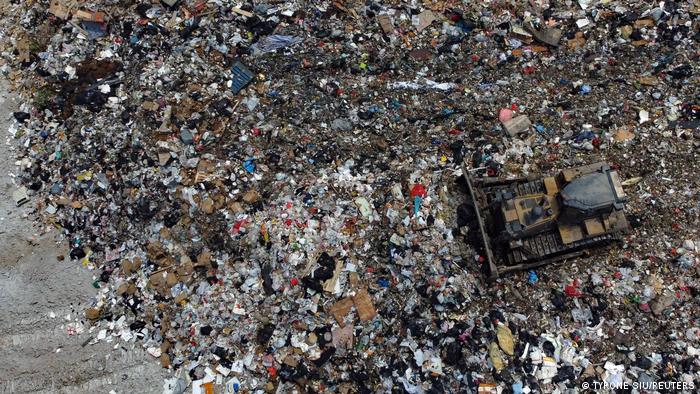
About 40% of humanity's methane emissions come from farms, where animals like cattle and sheep belch out huge quantities of the gas as they digest food. Another 20% comes from landfills, where methane is made as bacteria break down organic matter without oxygen. Just over one-third comes from fossil fuel facilities.

Methane is the main component in fossil gas — also known as natural gas — and it pours out when fuels are extracted, processed, moved and stored. Because methane emissions from coal are hard to find and fix, scientists have focused their efforts on oil and gas.

"It's complete low hanging fruit, frankly," said Dagmar Droogsma, from the Environmental Defense Fund, a group that has documented methane emissions across the US. The solutions are so cheap that "even from a commercial point of view it's a no-brainer." 

Methane leaks out of landfills when organic waste breaks down

How does methane leak from oil and gas facilities?

There are three ways methane is released into the atmosphere from oil and gas facilities. There are simple leaks, which could happen because of a loose screw or a rusty piece of equipment. Then there are practices like venting, where methane is intentionally let out into the atmosphere. This is often done to reduce pressure in a pipe — for instance, during maintenance work — but is rarely needed.

The third source is flaring, when companies burn the methane coming out of the vent. Flaring fossil gas turns methane into CO2, which is less harmful in the short-term despite its longer-lasting effect on the planet. But it is often done so poorly that raw methane still escapes into the atmosphere. 

In 2021, the CATF documented methane emissions at 180 of the 250 oil and gas sites it visited across Europe.

During a visit to two gas storage facilities in northern Italy in February, DW accompanied Turitto as he found methane leaking from three sites in a single morning. The leaks came from pieces of equipment that ranged in size from tiny valves to tall vents.

"Some of the sources can certainly be fixed pretty easily," said Turitto. "We were just looking at a valve that looked like it really could just be tightened. [For] other stuff, fixing and repairing them might be a little more complex."

The operator Snam, a privately owned gas company that used to be a subsidiary of Italian energy giant ENI, did not respond to a request for comment.

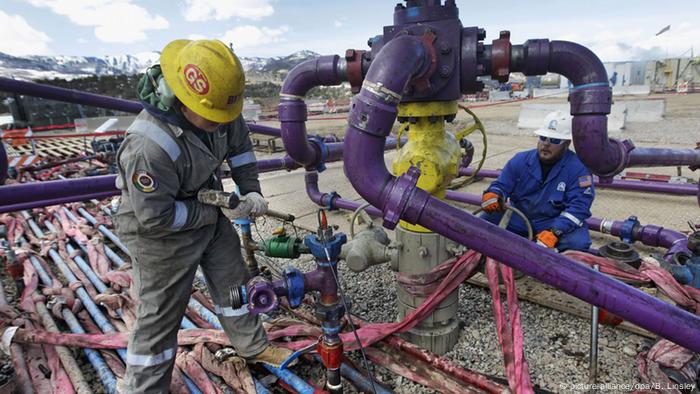
In the US, unregulated methane emissions have added to the environmental damage

 from practices like fracking shale gas

How can we find leaks?

The International Energy Agency (IEA) estimates the world's methane emissions from the power sector — coal, oil, gas and biomass — are about 70% higher than countries report in their official data. As well as methane hunters armed with special cameras, scientists with satellites are spotting methane clouds that are well above what companies and governments say they're releasing.

A study published in the journal Science in February analyzed satellite images of hundreds of methane releases between 2019 and 2020. The scientists found about 10% of the industry's methane emissions come from gigantic releases that happen rarely — and are difficult to detect through occasional site visits with infrared cameras — but release enormous quantities of gas into the atmosphere.

"In the field we can see all these leaky defective little materials... but you don't see the key players," said Thomas Lauvaux, a climate scientist at the French National Center for Scientific Research and lead author of the study. A giant burst of methane intentionally released "is worth a thousand tiny leaks." 

To cut methane emissions from fossil fuel facilities, companies must fix leaks

 and ban intentional releases

How can we cut methane emissions?

Fossil fuel companies could slash methane emissions by 75% using technologies that already exist, according to the IEA. That includes regular inspections to find and fix leaks, as well as a ban on practices like routine flaring and venting. Companies could instead capture gas using compressor devices, and flare only the gas that needs to be burned during emergency repair work.

With gas prices inflated by Russia's invasion of Ukraine, experts expect most of the cuts to come at zero cost to the companies, who could instead take gas they currently waste and sell it on for use in industry. "When you're venting gas, you're losing a lot of gas," said Turitto. "That's a lot of money."

Some governments are taking steps to regulate the industry. At the COP26 climate summit in November 2021, more than 100 countries pledged to cut emissions by 30% from 2020 levels by 2030. The European Union plans to introduce new requirements for measuring and reporting methane emissions, as well as spotting and plugging leaks. It has also proposed a ban on venting and flaring.  

But the plans have come under criticism for not considering imported fuels. Groups like the CATF are calling for an import standard to ensure oil and gas extracted abroad comes from facilities and pipelines that are plugging their methane leaks.

Philippine Nobel laureate Maria Ressa: Journalism is 'at an existential moment'


Speaking at the Global Media Forum in Bonn, Nobel laureate Maria Ressa noted that lies, laced with anger and hate, spread faster than facts. "Rebuilding trust with truth is vital to combat the rise of fascism," she said.


Watch video 03:04 'There's a reason why we were targeted': A portrait of Rappler CEO Maria Ressa


"If you don't have facts you don't have truth; if you don't have truth, you don't have trust," Nobel laureate Maria Ressa said on Monday, delivering the keynote address at this year's DW Global Media Forum in Bonn.

Media experts from around the world are taking part at the two-day event to discuss the future of journalism in a time of wars, crises and catastrophes.

During her speech, Ressa pointed out how big tech is contributing to the problem of fake news and disinformation, noting that lies — laced with anger and hate — travel faster than facts.

The spread of lies, as well as personalized mass persuasion, hyper-socialization and the tyranny of trends are eroding a sense of shared reality and promoting surveillance capitalism, she argued.

"Don't become a surveillance capitalism loser news organization. We must use tech to control our own destiny," she underlined, adding: "If you don't have rule of law in the virtual world, you won't have rule of law in the natural world."

"If you don't have integrity of facts, how can you have integrity of elections?" she questioned, stressing how the situation poses a threat to democracy.

The renowned journalist called for legislation to regulate tech firms as well as increased financial support for media, urging democratic governments to allocate more than the 0.3% of their overseas development assistance they currently spend on promoting journalism.
Threats to free speech and media

Ressa's comments come at a time when journalists and human rights activists in the Philippines are increasingly concerned about developments in the country, where Ferdinand Marcos Jr., the son and namesake of the former Philippine dictator, will become president on June 30 after his recent electoral triump

Watch video 06:24 Ressa: 'Without truth, you can't have trust'

Marcos Jr.'s running mate — Sara Duterte, the daughter of the outgoing President Rodrigo Duterte — was sworn in as vice president on Sunday.

Both of them have so far failed to acknowledge the human rights atrocities that took place under their fathers.

In line with the family's decades-long effort to repair its legacy, Marcos Jr. has in fact called for a revision of textbooks that cover his father's rule, saying they are teaching children lies.

Critics say both the Marcos and Duterte families have excelled at exploiting and manipulating social media to create an alternative information ecosystem with wide reach.

Rappler, the news organization founded by Ressa in 2012, has been at the forefront of the campaign against fake news and disinformation in the country, pooling together resources among a variety of actors — including reporters, lawyers and activists — to fact-check and expose disinformation.
A well-decorated journalist

The site, one of the most popular in the Southeast Asian country, has emerged as a key platform to combat misinformation and document human rights abuses, particularly over the past six years during the rule of outgoing President Rodrigo Duterte, including relating to his deadly war on drugs.

Rappler's journalists reported on the excesses of the anti-drug campaign, which left thousands of mostly minor suspects shot dead by police or vigilantes.

The drug killings are currently being investigated by the International Criminal Court as a possible crime against humanity.

The outlet's work has led to increased calls to hold Duterte accountable for reported human rights violations.


PHILIPPINES' WAR ON DRUGS — REMEMBERING THE DEAD
Daunting challenge
Mimi Garcia holds the pictures of her son Richard and daughter-in-law Robilyn who were killed by masked vigilantes on motorbikes at their shanty home in Camarin, Caloocan city, on October 7, 2016. She faces the daunting responsibility of taking care of her two grandchildren while being jobless at the same time.
12345678

In addition to Rappler, Ressa also co-founded the Real Facebook Oversight Board, a group of global experts aimed at holding Facebook accountable. It's not linked to the social media giant's own oversight board.

'We're losing the war globally'


At the GMF, Ressa said Facebook "replaced journalists with influencers" and that social media rolled back democracy in a number of countries, also calling for tougher government regulation.

Speaking to DW later in the day, Ressa said: "The algorithms of social media, which by now is the largest distribution platform for news globally, literally pulled us apart, polarized us and radicalized us."

"The consequences are that you have news being distributed that is emotionally manipulative, and the thinking slow part — which is journalism, fact-based, evidence-based reasoning — that's not only gotten weaker, it's allowed the rise of illiberal democracies around the world."

She also stressed that "we're losing the war globally" when it comes to the fight for fact-based journalism.

By relying on social media for content distribution, Ressa said, news organizations "walked into a surveillance capitalism model that is essentially manipulating people online for profit."

That's why, "I think they must separate," she said.

"Our biggest problem right now is how do we reclaim our communities. How do we build better tech so that distribution somehow comes back to us and all of that begins with holding technology accountable for the harms it has caused."
Attempts to shut down Rappler

In October 2021, Ressa — along with the Russian journalist Dmitry Muratov — received the Nobel Peace Prize for their efforts to protect freedom of expression.

In response to Rappler's critical reporting, however, the Philippine government has taken several steps to shut down the site by charging Ressa and the publication with multiple counts of tax evasion as well as cybercrimes.

The outlet's journalists and Ressa, in particular, have been targets of hate campaigns and have faced a deluge of insults and threats online.

In 2020, she was convicted of online libel under the Philippines's anti-cybercrime law, which critics say is used as a means to quash dissent.

Talking on Monday about the attacks and persecution she's suffered, Ressa said that she will not give up, and will continue to fight for her convictions. "I will fight because I have to believe in the rule of law," she said.

Edited by: Shamil Shams

'Journalists should not become activists,' Global Media Forum urges

Should journalists embrace or shun activism? At this year's DW Global Media Forum, media experts warn not to blur the lines between value-driven journalism and activism.

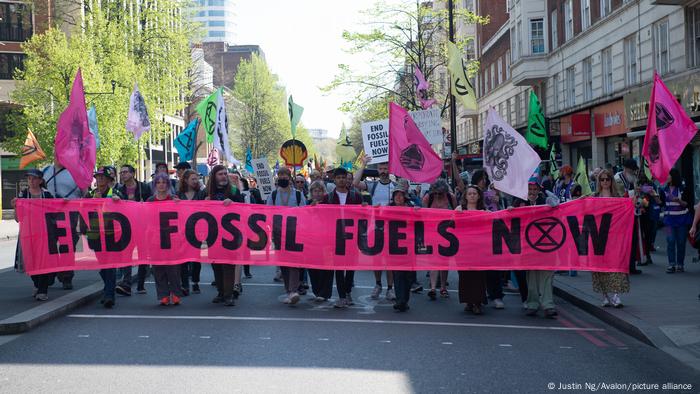
Should journalists side with activists, or keep a professional distance?

Are the lines between journalism and activism becoming increasingly blurred? And if so, should journalists strive to keep a professional distance from advocates? These were some of the main questions at Monday's panel session at the 2022 Global Media Forum.

At the forum, media experts from around the world are taking part in the two-day event to discuss the future of journalism in a time of wars, crises and catastrophes.

If we've entered an era of "anti-nuance," as DW news anchor and panel host Philip Gayle asserted, does this mean subtle details, ambivalences and paradoxes are increasingly lost on audiences? Do audiences instead prefer clear-cut, black-and-white reporting, where the good and bad sides to any story are easily distinguishable, like night and day?

Where does this leave journalists? Should they take sides and tell audiences what to do and think? Should they, in other words, become activists?

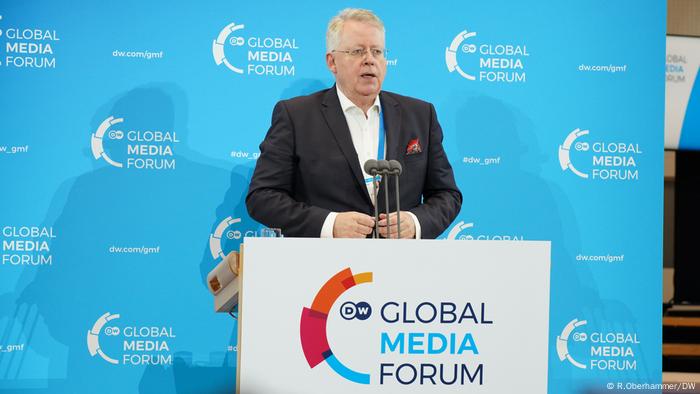
They certainly should not, DW Director General Peter Limbourg, one of Monday's panelists, said. Not even, he added, when covering pressing challenges like global warming. Journalists should never abandon their critical mindset and side with activists. Otherwise, he warned, they risk straying from "the path of journalism."

DW's Director General Peter Limbourg at the 2022 Global Media Forum

"Journalism is complicated," Limbourg said. "We have to show the full picture; and that means it is complicated." Oversimplifying should best be left to politicians or populists, according to Limbourg. And to activists championing a cause, one might want to add, as their agenda is to agitate rather than inform.

Indeed, this sentiment was echoed by all panelists, with Patricia Toledo de Campos Mello, an investigative reporter at Brazilian Folha de Sao Paulo daily, similarly warning journalists should avoid cherry-picking sources to corroborate their own narrative.

Value-driven journalism vs. activism

Where, though, does this leave media outlets that explicitly promote a set of values? DW, for instance, professes to champion human rights and democracy in its reporting. Does such value-driven journalism risk morphing into activism?

While Peter Limbourg admitted DW was in fact "advocating" these and other values, he nevertheless cautioned that too much journalistic activism could cause further polarization in the world.

Besides, plainly stating which values a media outlet stands for, or objects to, should be welcomed as a transparent and pragmatic move. After all, the notion of journalistic objectivity — while noble — does not stand up to scrutiny: our gender, socio-economic background, upbringing, society and other factors strongly influence how we view and report on the world. We are all, in other words, value-driven, whether we want to recognize this or not.

Asking whether journalism is edging towards activism may therefore be a misleading question. The two are separate realms that ought to be kept separate — as all panelists agreed. At the same time, we should acknowledge that journalists cannot adopt a "view from nowhere" — all journalists are guided by values, selecting certain stories over others, deeming some more relevant and news-worthy than others.

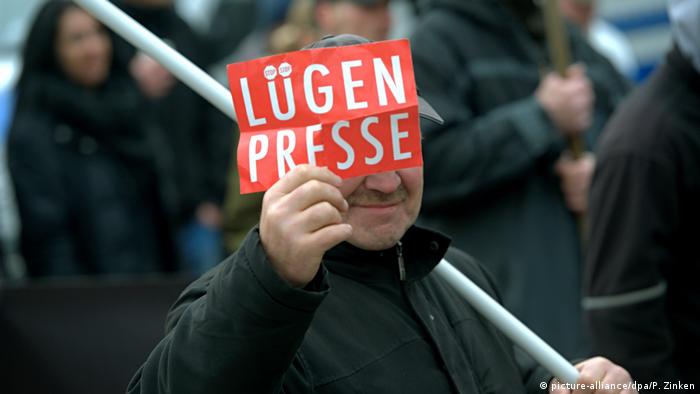
Distrust of the media has been on the rise in Germany — is one-sided reporting to blame?

Journalistic integrity

And yet, even when journalists direct our attention to one topic rather than the other, they should do their utmost to maintain their professional journalistic integrity.

Kiundu Waweru, a journalist with the Internews Earth Journalism Network, said reporters who specialize on and heavily cover certain topics may be perceived as partisan. He admitted "it's a really thin line between being a journalist and an activist." To stay clear of this pitfall and maintain one's journalistic integrity, he said, reporters should avoid only interviewing and citing sources that confirm their own perspective.

A healthy skepticism, openness towards and interest in the messy ambivalence of life therefore seem characteristic of quality journalism. 

Even though panel host Philip Gayle contends we may have entered an "anti-nuance" era,professional journalists will continue reporting onthe world in all its perplexing and puzzling ambiguity. That, after all, is what sets them apart from activists. 

Edited by: Andreas Illmer