CU
Copper price within sight of all-time high as Chinese smelters hit record activity
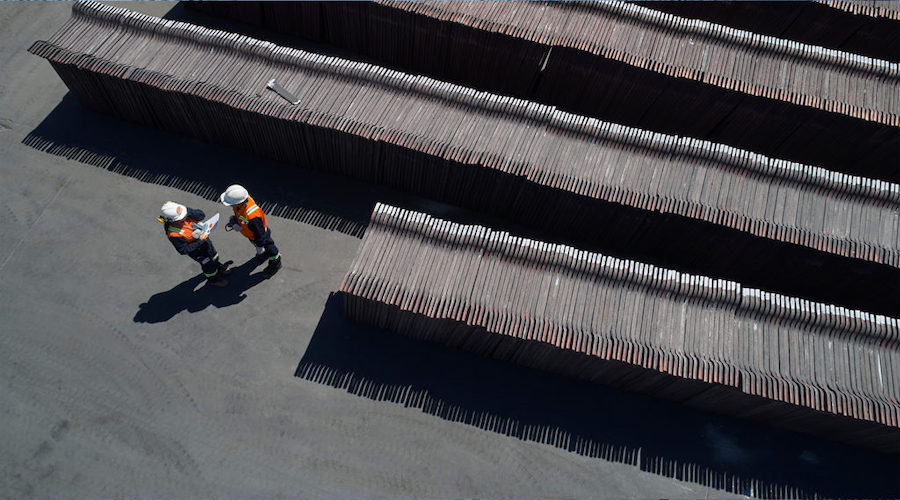
Copper ended the week up more than 5% reaching a 10-week high at the close on Friday. At $6.11 per pound ($13,480 a tonne) in New York, May futures are back to within shouting distance of the all-time high closing price struck at the end of January, the day before the start of the Iran war.

The positive trend was underscored by new satellite data showing March smelter activity continuing to improve after hitting the lowest on record since tracking began nearly a decade ago in January this year.
Earth-i’s latest SAVANT Global Copper Smelting Index shows that 11.7% of global smelting capacity was inactive in March, down from 14.3% registered in January. Earth-i’s satellites cover some 95% of global capacity.
The increased activity was concentrated in China where the country-level inactive capacity sub-index fell by 1.1% to just 3.9%.
London-based Earth-i points out that together with the continuing build out of smelting capacity on the mainland, this resulted in an all-time high active capacity reading of 10.73 million tonnes, more than 775,000 tonnes higher than a year ago and 1.49 million tonnes above the 3-year average.
“This speaks to the improvement in downstream activity in recent weeks, as demand recovers following a ‘buyer’s strike’ in response to record high copper prices in January that has also seen imports from international market slump.”
Outside China, with the exception of Africa where the central copper belt showed strong operating performance, activity fell.
In Iran two smelters with combined capacity of 400,000 tonnes per annum (tpa) are offline (outside their historical routine maintenance schedules) and the ongoing outage at the 300,000-tpa Mount Isa smelter in Queensland, Australia, helped keep the Asia & Oceania regional inactivity sub index elevated at 18.7%, well above its 3-year average of only 5.7%.
According to Earth-i, inactivity did tick up modestly in Europe by 2.1%, but the region is still showing the lowest average percentage of idled capacity at 6.2%. Meanwhile smelting continues to be weakest in the western hemisphere, with the inactive capacity sub-index for North America rising by 10.3% in March to 32.3%, moving above that of South America at 27.4%.
Acid test
Chinese smelters’ willingness to buy concentrate increased further as sulfuric acid prices surged with FOB China at $210 per tonne in April, up 74% since January due to disruptions from the Iran war, according to a S&P Global Energy report.
This allows the country’s operators to secure short-term margins while putting additional pressure on TC/RCs (charges paid by miners to refiners). Spot TCRCs have plunged into deeply negative territory, with recent spot market tenders closing near –$78.50 per tonne and –7.85¢ per lb according to Platts, a unit of S&P Global Energy. That’s a swing from a positive $50 per tonne in January 2024.
The downward pressure on TC/RCs will remain, says S&P Global as the copper concentrate export permit for Indonesia’s Batu Hijau mine is set to expire at the end of April. In addition, the Democratic Republic of Congo’s Kamoa-Kakula 500,000-tpa capacity smelter began anode production at the end of 2025 which will consume domestically produced copper concentrate, further curbing exports.
The benchmark annual contract market has followed this collapse. Antofagasta’s 2026 benchmark agreement with a Chinese smelter settled at zero dollars, the lowest annual TC/RC terms ever recorded.
Codelco targets higher 2027 output to reclaim top copper spot
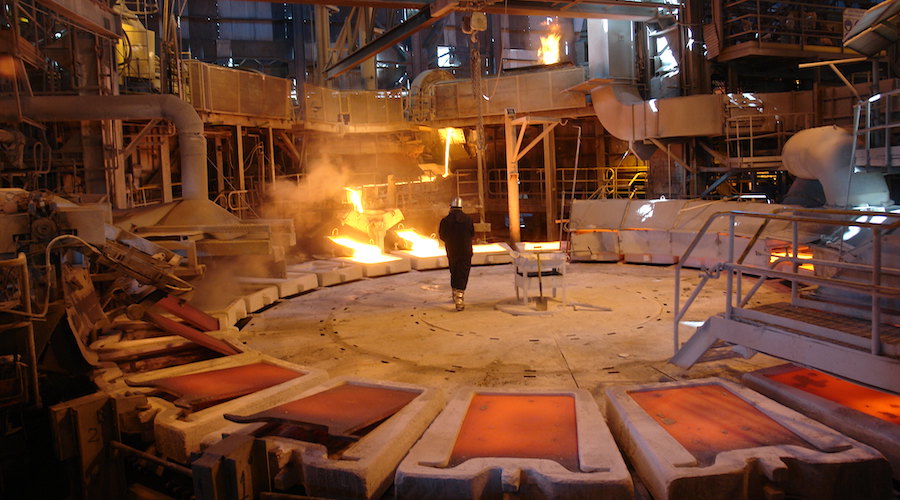
Codelco is targeting a slight increase in copper output in 2027 as Chile’s state-owned miner looks to reclaim the mantle of world’s biggest supplier of the industrial metal.
Total production next year is budgeted at 1.5 million metric tons, according to people briefed on the projections. The amount includes Codelco’s share of output from mines it doesn’t operate but holds minority ownership in. Production from its own mines is targeted to rise to 1.37 million tons from 1.34 million tons this year, said the people, who asked not to be identified because 2027 guidance hasn’t yet been published.
The company is striving to reverse a prolonged decline in output while getting its aging mines and delayed expansion projects back on track. Chairman Maximo Pacheco is eying a return to pre-pandemic levels of 1.7 million tons by the end of the decade when the global market is expected to tighten.
Codelco has overhauled management and decentralized project leadership to counter falling ore grades, cost overruns and a heavy debt load. Bloomberg Intelligence says Codelco is on track to displace BHP Group as the top global producer. BHP operates Escondida in northern Chile, the world’s biggest single copper mine.
“If Codelco manages to squeeze out a few more tons and Escondida’s grade does decline according to the mine plan, Codelco could take top spot again,” BI analyst Grant Sporre said.
(By James Attwood)
Codelco, Anglo pursue twin environmental approvals for shared Chile copper pit
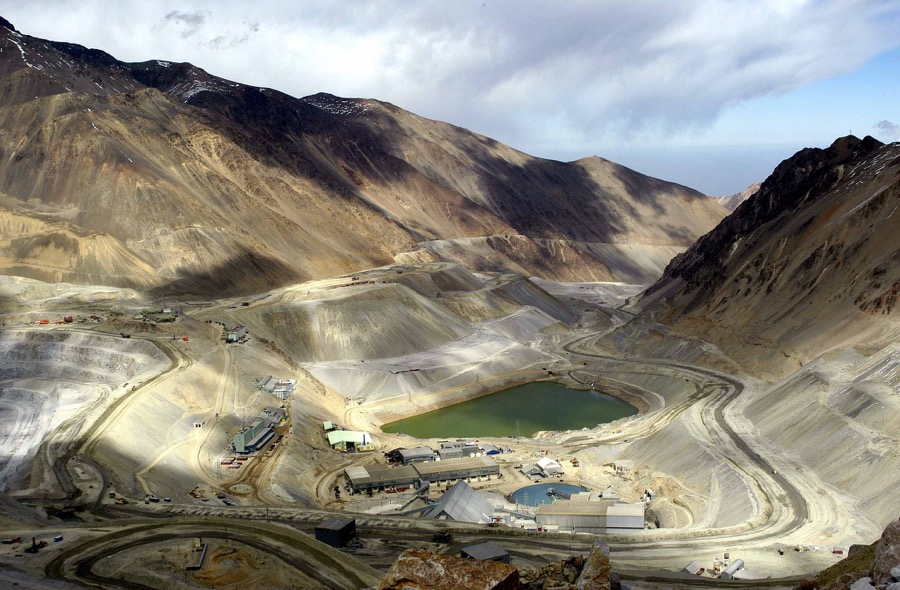
Chilean copper producer Codelco and global miner Anglo American plan to submit separate environmental studies to regulators for their planned shared copper mine in Chile, documents seen by Reuters show, using what they called an “unprecedented” twin-track to streamline the approval process.
The previously unreported documents on the Andina-Los Bronces project, presented to environmental authorities in January, show the companies plan in December to file two largely identical applications for a pit where they would jointly extract copper in the world’s top producer of the red metal.
The model could serve as a blueprint for other major miners seeking to share infrastructure and operations to raise output amid an expected global supply crunch, while setting up Codelco and Anglo American to move faster and cut down on risks.
Codelco and Anglo finalized the deal in September, planning to add about 120,000 metric tons of copper per year from 2030 to 2051, generating at least $5 billion in pre-tax value.
Codelco chairman Maximo Pacheco, as well as a source at Anglo American, confirmed to Reuters that the firms plan to file the two applications at the end of the year.
‘Mirror’ applications
In areas where operations will overlap, the companies proposed applying identical environmental measures to each miner.
A single filing was not legally viable, they argued, because Chile’s constitution requires Codelco to retain ownership of its mining concessions, one presentation showed.
The companies also considered filing three applications: one from each miner to extend the useful life of their respective mines, and a third from a joint entity that would run the shared operation.
They ruled that out because it would require the firms to give up their existing open-pit environmental permits to make way for the combined mine.
The dual structure would also allow the mines to potentially return to independent operations in the future.
Work on the ground
The documents detailed plans to create a single pit over the existing pits.
Anglo American’s Los Bronces and Codelco’s Andina pits are adjacent, and the companies’ plan showed the rock barrier between them would also be mined, creating a single operating pit while keeping the project largely within the mines’ existing footprint.
Ore extracted from the shared pit would be sent interchangeably to Los Bronces’ and Andina’s processing plants, while waste rock would be deposited in each company’s own waste dumps, one document showed.
Changes to waste dumps, tailings facilities, pipelines and support infrastructure would still be needed for the two mines to operate as an integrated system.
Shared infrastructure would avoid duplicate facilities, cut freshwater use and reduce pressure on the surrounding area, the companies said.
Risks to sharing a mine
The companies also flagged significant risks, such as the need for close coordination with regulators, which could strain Chile’s already slow-moving environmental review system.
They highlighted the project’s “high public visibility” and the risk that environmentalists and affected communities could argue the two reviews obscure the scale of the impacts.
Los Bronces has faced years of scrutiny by residents, regulators and courts over alleged impacts on air quality, water use and glaciers in the high Andes where the mine operates.
While Codelco and Anglo argue the dual-track approach would reduce the risk of underestimating impacts, they acknowledged it could lead to duplicate or unnecessary environmental management measures.
The firms plan to begin outreach to local communities and other stakeholders in the second half of the year, one document showed.
(By Kylie Madry and Fabian Cambero; Editing by Daina Beth Solomon and Mark Potter)
KGHM seeks copper mines closer to home to reduce logistics costs
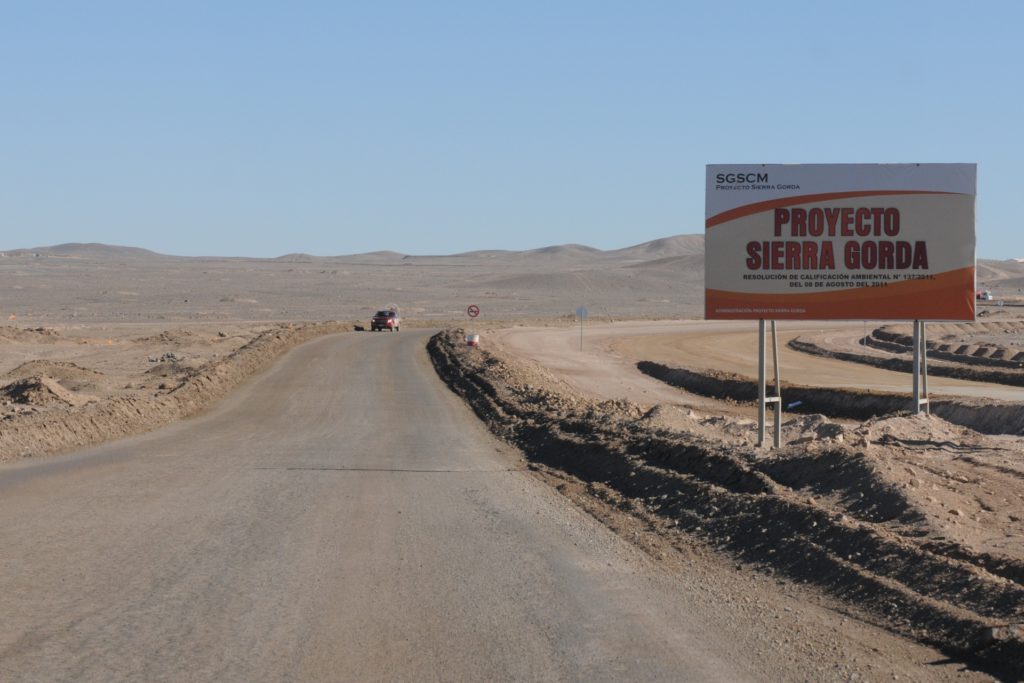
Copper producer KGHM is looking to invest in mines in Europe and Morocco to secure ore supplies closer to its smelting base in Poland and lower logistics costs, the company’s CEO said on Wednesday.
KGHM, which operates the Robinson mine in the US and holds 55% in Sierra Gorda in Chile on top of its Polish assets, last month signed a memorandum with Morocco’s National Office of Hydrocarbons and Mines and Moroccan mining firm Managem Group on cooperation in raw materials.
“We are looking for opportunities to have some resource closer to our smelting sites in Poland,” KGHM CEO Remigiusz Paszkiewicz told Reuters in an interview at the company’s Chile branch office in Santiago.
“Morocco is a good one. There is also at least one in Europe itself, an opportunity for us. We are now checking the chemistry of the deposit, let’s say,” he added, declining to identify which European company KGHM was looking at.
KGHM has dispatched geologists to Morocco and is waiting for an initial report from them, Paszkiewicz said, adding that the results could come in the next two weeks.
The Moroccan mine would serve as a source of supply to the global market as well as KGHM, he explained, as the company wants to remain active in concentrates trading. Just over half KGHM’s 710,000 metric tons of copper production in 2025 came from its own concentrates.
State-backed KGHM intends to maintain investment in Polish mining, even as it also looks at opportunities further afield in Chile and Argentina, Paszkiewicz said.
“But we see that the world is still changing,” he added, raising the possibility of switching KGHM’s Legnica copper smelter to a recycling plant.
“Probably it is … written down in the draft of our strategy that step by step we will be moving in the direction that Legnica is recycling and Glogow is our main smelting factory,” Paszkiewicz said.
KGHM will unveil its new strategy at the end of the quarter.
The company is also looking to extend its “production chain” in the United States, Paszkiewicz said, stressing that this did not necessarily mean building a copper smelter there.
(By Tom Daly; Editing by Lincoln Feast)
Codelco in talks with India’s HCL for Chile copper joint venture
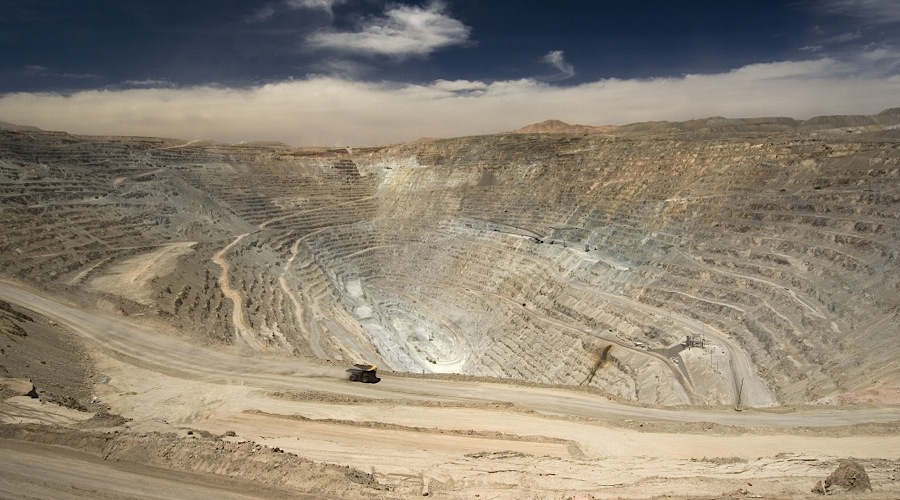
Codelco is negotiating a copper venture with India’s Hindustan Copper Ltd. as the Chilean state-owned miner turns to foreign partnerships to develop unexploited deposits, according to people familiar with the matter.
The deal under discussion is for a joint venture in which Codelco would put up one of its undeveloped deposits in Chile, with HCL taking on capital commitments, said the people, who asked not to be identified discussing ongoing confidential talks. Investments would exceed $1 billion, they said.
Codelco “maintains multiple conversations and negotiations” on potential partnerships to develop a portfolio of exploration projects, the Santiago-based company responded when asked about talks with HCL. HCL didn’t respond to a request for comment.
Codelco, one of the most indebted global miners, is teaming up with foreign firms — including BHP Group and Rio Tinto Group — in a bid to drill deposits without adding to its already heavy investment burden as new projects get trickier and pricier to develop. At the same time, Chile’s new government under President Jose Antonio Kast is cutting red-tape and easing regulation in a bid to unlock investments in mining.
Codelco is turning more to India as a buyer of its copper. Indian companies, meanwhile, are looking to Chile, which boasts the world’s biggest copper reserves, to secure supply, integrate upstream and stay competitive in a tightening global market.
The prospective Codelco-HCL deal comes a year after both state-owned companies signed a memorandum of understanding during former Chilean President Gabriel Boric’s visit to India. The MoU focuses on exchanging information to facilitate exploration, mining, and mineral processing, along with employee training and capacity building.
(By Carolina Gonzalez and James Attwood)
Ivanhoe holds ‘captive audience’ on Congo sulphuric acid market, CEO says
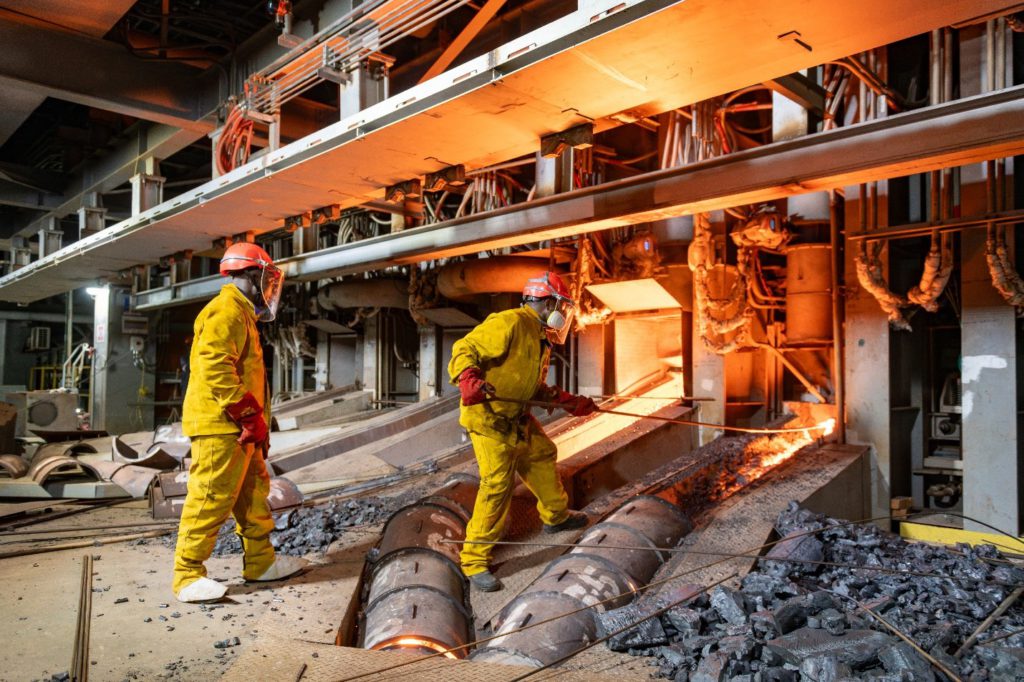
Ivanhoe Mines has a “captive audience” for its sulphuric acid in the Democratic Republic of Congo, its CEO said on Wednesday, as prices for the chemical soar on limited supplies due to the Iran conflict.
Vancouver-based Ivanhoe this year started selling sulphuric acid as a byproduct of copper smelting at its Kamoa-Kakula project to other mine operators on the DRC copper belt, which need acid to dissolve copper from ore in a process known as leaching.
Supplies from the key Middle East region have struggled to reach world markets, raising fears of a global sulphuric acid squeeze. The DRC alone has an acid market of about 2 million metric tons per year, Ivanhoe CEO Marna Cloete told Reuters on the sidelines of a copper industry gathering in Santiago.
“We just produced just over 100,000 tons in the first quarter, but that’s going to the likes of Glencore, to ERG (Eurasian Resources Group) … so it’s local distribution,” she said, adding that annual acid output would reach 600,000 to 700,000 tons once its smelter was running at full capacity.
“The local market is more than sufficient for us to sell to,” she added, noting that restrictions on exporting sulphur from neighbouring Zambia had stopped DRC companies from making their own acid. “We’ve got a captive audience in terms of our distribution,” Cloete said.
Ivanhoe said in a statement on Monday the Kamoa-Kakula smelter had ramped up to 60% of capacity, with a further increase constrained by a lack of concentrate feed.
The company’s price for high-strength sulphuric acid was around $500 per ton in the first quarter, with spot prices generally increasing over the three months, Ivanhoe said.
(By Tom Daly; Editing by Rod Nickel)

No comments:
Post a Comment