Monday, October 03, 2022

Justice Jackson, on her first day in the US Supreme Court, pushes back on a lawyer trying to gut the Clean Waters Act.


Mon, October 3, 2022 

Justice Ketanji Brown Jackson, on her first day as a Supreme Court Justice, pushed back on a lawyer trying to gut the Clean Waters Act. In Sackett v. Environmental Protection Agency, the extent of the EPA’s regulations will be affected, especially in regards to wetlands. If the court rules in favor of the Sackett’s, the couple that brought the case to the Supreme Court when they were ordered by the EPA to not build on their purchased wetlands in Idaho, then the EPA could be limited in the kinds of wetlands and streams that the Clean Waters Act protects from pollution.

JACKSON: “Isn't the issue what Congress would have intended with respect to adjacency and there was a regulation that defined adjacency to include neighboring. And as far as I know, Congress used the term adjacency and didn't adjust it to try to make clear the touching requirement that you say was intended by the term.

LAWYER: “Yes, Justice Jackson, every single time that argument has been advanced by the government it has been rejected by this court. In Rapanos, the plurality opinion rejected out hand the idea that 404 G represents a ratification of the courts broad understanding of adjacency. Justice Kennedy's opinion doesn't even give it consideration. Swank, for its part, said 404 G is “unenlightened” as to the meaning of waters of the isles.”

JACKSON: “Let me, let me, let me try to bring some enlightenment to it by asking it this way. You see the question is which wetlands are covered, which I agree with. But I guess my question is why would Congress draw the coverage line between a budding wetlands and neighboring wetlands when the objective of the statute is to ensure the chemical, physical, and biological Integrity of nation's waters. So are you saying that neighboring wetlands can't impact the quality of navigable waters?”

LAWYER: “Justice Jackson, not at all.”


Jackson is active questioner as she hears first argument as Supreme Court justice


John Kruzel
Mon, October 3, 2022 

Ketanji Brown Jackson, the Supreme Court’s newest justice and the first Black woman to hold the position, proved one of the most active questioners on the bench Monday during her first argument at the High Court as the justices kicked off a new term.

Bedecked in the customary black robe, Jackson occupied a seat at the far end of the bench, in keeping with the court’s traditional seating arrangement based on seniority, with Chief Justice John Roberts at the center.

Jackson, a former judge on two lower federal courts in Washington, is expected to round out the court’s three-member liberal wing on a bench now dominated by six Republican-appointed justices pursuing an aggressive conservative legal agenda.

The court opened its term with a major environmental dispute over the federal government’s reach in protecting the nation’s waterways under the Clean Water Act.

Jackson took her turn among the justices in posing questions to the lawyers who argued the dispute between the Environmental Protection Agency and Idaho landowners. The landowners have urged the court to narrow the government’s authority over wetlands to encompass only those with a visible surface connection to U.S. waters.

“You say the question is which wetlands are covered, which I agree with,” she told a lawyer for the property owners. “But I guess my question is, why would Congress draw the coverage line between abutting wetlands and neighboring wetlands when the objective of the statute is to ensure the chemical, physical and biological integrity of the nation’s waters?”

The tenor of Jackson’s questions hewed closely to the purpose of the Clean Water Act, which turns 50 this month, and the underlying facts of the dispute.

As the court’s only former public defender, Jackson is expected to bring a unique perspective to her new role, though she will not fundamentally alter the court’s conservative tilt.

She fills the seat vacated by Justice Stephen Breyer, for whom she once clerked, following his retirement this summer and a grueling Senate confirmation process earlier this year.

Jackson, responding to a question during her Senate confirmation hearing in March, said her judicial methodology cannot be easily defined — a sharp departure from the Supreme Court confirmation of Justice Amy Coney Barrett, who labeled herself an “originalist” who would approach the task “in the mold of Justice Scalia.”

Shying away from “a particular label” to define her style, Jackson said she adheres to a methodology that begins with assuming a position of neutrality, proceeds with various interpretive tools toward a transparent ruling “without fear or favor,” and studiously abides by judicial constraints.


Man who went viral saving cat from hurricane floodwaters now raising funds for displaced pets

NAPLES, Fla. – As Hurricane Ian plowed through Florida's Gulf Coast, Michael Ross waded into rising floodwaters to save a furry friend in distress, prompting a viral video and thousands of dollars in donations.

As the storm arrived, Ross, 29, was with his family in Bonita Springs, he said. That’s when he saw the endangered kitten.

"We expected it to be flooded out, so we evacuated there to Bonita Beach where my parents live, right on the beach," Ross said. "We were there when storm surge was up about 6 feet."

Ross said he and his family looked out the window and saw the cat clinging on for its life.

"I was able to go out there and get it, and it's a good thing I did," Ross said. "After that video was taken, the water came up like another 6 feet. And that air conditioner he was sitting on was underwater."

Ross said the winds and water washed the house away.

More: Camera goes underwater, then viral as Hurricane Ian floods Fort Myers Beach: 'RIP Cam 9'

More: With grit and determination, wiener dogs race for glory and treats at Florida festival

Michael Ross, 29, of Naples, Florida, was in Bonita Springs at his parents' place when Hurricane Ian plowed through, leading him to save a cat from drowning at a nearby flooding home.

"The cat would have surely died," Ross said.

The Ross family hasn't been able to find the owner.

"If we can't find one, I'm gonna keep it."

Unlike no other hurricane

Ross said he's lived through many hurricanes.

"This one was by far the most terrifying," Ross said. "Everyone considers the storm surge in terms of how high it's gonna get. But no one really considers the force of the water moving."

Ross was staying at his parents' house, which got severely damaged.

"It's a wreck," Ross said. "My parents' house is unlivable for probably the next several months."

Ross said he and his family expected the hurricane to be "bad, but not quite as devastating."

"It's like something you see on TV, and you never think it'll happen to you until it does," Ross said.

More: Sanibel Causeway severely damaged by Hurricane Ian, cutting off access to barrier island

"It's a warzone," Ross said. "It's the worst I've ever seen."

Funding animal rescues

Ross said they didn't seek attention with the video.

"This thing has gotten real popular and we're trying to take advantage of that by raising money," Ross said.

Cruz Scavo and Ross started a GoFundMe page to support displaced pets and people in need.

A path of destruction: Photos show Hurricane Ian's damage in Cuba, Florida, Carolinas

As of noon Monday, the couple raised over $20,000.

"I feel for the people that are in a worse situation," Ross said.

Ross said other houses where his parents live, in the Bonita Beach area, are gone.

"It's just important that everybody helps each other out, I think, right now."

You can reach Tomas Rodriguez on Twitter @TomasFRoBeltran.

This article originally appeared on Naples Daily News: Man who saved cat on AC unit during Hurricane Ian helps other pets

U.S. Supreme Court spurns coal executive's challenge to mine-explosion conviction


 A memorial to honor the 29 West Virginian Coal Miners that lost their lives in the Upper Big Branch mining disaster on April 5th, 2010 is seen along Route 3 near Whitesville


Mon, October 3, 2022 at 9:09 AM·2 min read
By Nate Raymond

WASHINGTON (Reuters) - The U.S. Supreme Court on Monday turned away former Massey Energy Co CEO Donald Blankenship's bid to overturn his conviction on a charge of criminal conspiracy stemming from a 2010 West Virginia mine explosion that killed 29 coal miners.

The justices declined to hear an appeal by Blankenship, who served a one-year sentence after being found guilty in 2015 of a single misdemeanor charge, of a lower court's rejection of his arguments that the conviction should be tossed due to prosecutorial misconduct. Blankenship, 72, had faulted federal prosecutors for failing to turn over to his lawyers before the trial evidence he considered favorable to his defense.

Once dubbed West Virginia's "king of coal" for his working-class background and tough approach to business, Blankenship helped build Massey into Appalachia's largest coal producer, with more than 7,000 employees and more than 40 mines.

A jury found him guilty of a misdemeanor charge of conspiring to violate federal mine safety standards while opting not to convict him on other charges. Blankenship, who also was fined $250,000, was released from prison in 2017. He mounted an unsuccessful campaign as a Republican for the U.S. Senate in 2018.

A fire caused by a methane or natural gas leak likely set off the April 2010 blast at Massey's now-closed Upper Big Branch mine, located about 40 miles (65 km) south of the West Virginia city of Charleston, according to federal investigators. The death toll was the highest in a U.S. mine accident since 91 workers died in a 1972 Idaho silver mine fire.


Massey was acquired in 2011 by Alpha Natural Resources Inc for about $7 billion.

Blankenship in 2018 sought to overturn his conviction after completing his prison term and while preparing for his Senate campaign, noting that prosecutors belatedly turned over evidence that he should have received before the trial.

Those records included citing memos summarizing interviews with high-ranking Massey employees and internal U.S. Mine Safety and Health Administration documents that prosecutors had not turned over to his lawyers before trial as required.

The U.S. Justice Department's Office of Professional Responsibility conducted an investigation and concluded that prosecutors committed professional misconduct, exhibited "poor judgment" and were "deficient" in performing their duties.

A federal magistrate judge in 2019 recommended that Blankenship's conviction be overturned, saying the federal prosecutors had violated his constitutional rights to a fair trial by withholding the evidence.

A U.S. trial judge rejected that recommendation and upheld the conviction, as did the Richmond, Virginia-based 4th U.S. Circuit Court of Appeals in 2021, finding that the withheld evidence would not have affected the verdict.

(Reporting by Nate Raymond in Boston; Editing by Will Dunham)
As the Fertilizer Crisis Bites, Farmers Take Drastic Steps


Megan Durisin and Elina Ganatra
Sun, October 2, 2022

(Bloomberg) --

Ditching oilseed crops for peas, preparing to cut herds and splashing out on tractor gadgets. That’s what European farmers are doing to try to cope with a worsening fertilizer crisis.

The lengths they’re going to in order to apply less of the nutrients vital for growing staples like wheat and rapeseed highlights the continued threat the crunch poses to food output. Many of Europe’s fertilizer plants have closed as Russia’s war in Ukraine squeezes supplies of gas that nitrogen fertilizer is derived from.

Some farmers secured fertilizer for this year’s harvest before prices soared, but now face much bigger bills as they start planting for next year’s crop. Plus, high energy costs are making it more expensive to run tractors and dry grain, risking more food inflation.

“It’s impossible to plan,” said Adam Nowak, a farmer south of Warsaw in Poland.

Here’s how farmers are trying to cope:

Different Crops

The European Union’s grain output shrank 9% this year as a drought ravaged corn fields. While it’s too early to know how plantings for next year’s harvest will fare, farmers will likely shift some land to crops that need less fertilizer, Strategie Grains analyst Vincent Braak said.

One example is Poland’s Nowak, who’s shunning rapeseed that typically covers a third of his farm and opting for less-intensive legumes, like peas. Farmers in the UK and Finland also said they’re sowing more legumes.

Less Bread, More Fodder

European wheat and barley is mainly sown in autumn and needs most fertilizer in spring to meet requirements for use in bread and beer. If farmers don’t have enough nutrients or grain prices are too low to justify the cost, they may raise the crops at a lower quality for animal feed.

“Do we just put fertilizer on the best crops and leave the rest with less?” said Max Schulman, a farmer in Finland. “It will be much harder to predict which way the European crop will go.”

Fewer Cows

The crisis is also a headache for livestock farmers, as many apply fertilizer on forage or pastures for animals. Because meat prices have underperformed grains, grazing land may see a steeper drop in usage, said James Webster, a senior analyst at UK-based adviser Andersons Centre.

Welsh dairy farmer Aled Jones has bought three-quarters of his needs for 2023 pastures -- at triple last year’s price -- and hopes to book the rest later. Cows produce less milk without the proper diet, and he’s worried he may have to sell some of his 500-strong milking herd if feed yields fall too far.

Tech Solution?

British farmer Richard Bramley cut nitrogen fertilizer use in the past two seasons, and hopes new equipment will help reduce usage further. He spent about 23,000 pounds ($24,950) -- subsidized by the government -- for a tractor-mounted sensor that detects plant health and only applies nutrients where it’s needed most.

Bramley booked supply in May to ensure enough for next year, but is still waiting for some to arrive.

“It’s very expensive, but if I’m going to grow a crop, I need to make sure I can grow it right,” he said.

Delivery Worries

Spending a lot more on fertilizer is one problem, another is if it even arrives on time. Finland’s Schulman booked supplies for spring, but is unsure when it will come with tight availability across Europe.

Next year’s EU fertilizer usage hinges on farmers stocking up now, and purchases are 30% to 50% below last year, Fabien Santini, deputy head of the bloc’s DG Agriculture unit, said earlier this month.

“They still have time,” he said. “Of course, the closer you get to the moment you apply the fertilizers, the more risky it is to wait to buy.”
PHOTO ESSAY
Record inflation squeezes Turkish tobacco workers, owners


EMRAH GUREL and SUZAN FRASER
Mon, October 3, 2022 

CELIKHAN, Turkey (AP) — Mehmet Emin Calkan begins work harvesting a tobacco field in rural Turkey before dawn, then has another shift skewering and stringing the tobacco to dry under the sun.

The 19-year-old, who hopes to study electronic engineering, has undertaken the strenuous work to help support his family and pay for books he needs to prepare for the university entrance exam. His family cannot afford to send him to schools that prep students for the test.

“Sometimes I work until 9 p.m.,” Calkan said.

While he labors, his boss, tobacco grower Ismail Demir, says rising costs from fuel to fertilizers have seriously affected his livelihood.


“The vehicle I use to go to and from the field burns 300 Turkish lira ($16) of diesel. Last year, we were commuting for 50 Turkish lira ($3),” he said. “In short, when we add up the costs, we don’t have much left to live on.”

Both landowner and worker in the tobacco-growing district of Celikhan squeezed between mountains in southeast Turkey are among millions grappling with the country's economic turmoil, including record inflation and a weakening currency.

Yearly inflation came in at a 24-year high of 83.45% on Monday, according to official government figures — the highest among the Group of 20 major economies. Independent experts, however, say the rate is much higher, with the Inflation Research Group putting it at 186.27%.

The sharpest increases in annual prices were in the transportation sector, at 117.66%, followed by food and non-alcoholic drink prices at 93%, according to the statistical institute’s data.

While countries worldwide have been grappling with an increase in food and fuel prices stoked by the COVID-19 pandemic and the war in Ukraine, economists say Turkey’s woes are mostly self-inflicted.

President Recep Tayyip Erdogan has espoused an unorthodox belief that higher borrowing costs lead to higher prices — a theory that runs contrary to established economic thinking.

Pressured by Erdogan, the Turkish central bank has been moving in the opposite direction of world economies that have been rapidly raising interest rates to cool soaring inflation. Last month, the bank cut its key rate by 1 percentage point, to 12%.

The Turkish lira weakened to record lows against the dollar following the move and has lost more than 50% of its value since the central bank began cutting rates last year.

Erdogan, who faces elections in June, says his government is prioritizing economic growth and exports in a bid to achieve a current account surplus — Turkey’s transactions with the rest of the world — insisting that his economic model has helped save 10 million jobs.

He has signaled more rate cuts in the coming months, insisting that the reduced borrowing costs will help tame inflation in the new year.

“You have a president right now whose biggest fight, whose biggest enemy is (high) interest rates,” Erdogan said in a speech last week. “We’ve reduced the interest rate down to 12%. Is it enough? It isn’t enough. It has to go down further.”

Erdogan added, “I hope that after the new year, this inflation will come down due to the low interest rate. I believe that this inflation will come down with low interest. That’s what I’m pushing for.”

The government has introduced several relief measures to help cushion the blow from rising inflation, including increasing the minimum wage in December and in July, announcing a 25% cap on rent increases and reducing taxes on utility bills. It also has announced a major housing project for low-income families.

Still, many people are struggling to meet basic needs.

In Celikhan, Ibrahim Suna another tobacco grower, worries that he will not be able to support his family with this year’s harvest.

“Tobacco is our only means of living, and we have no other income,” the father of five said. “This year, I expect to harvest 400 kilograms of tobacco. What I’ll earn is about 100,000 Turkish lira ($5,400), but half of it will go to expenses.”

___

Fraser reported from Ankara, Turkey.


Zekariya Cektir, 75, collects tobacco leaves in a field near Kurudere village, Adiyaman province, southeast Turkey, Wednesday, Sept. 28, 2022. Official data released Monday Oct. 3, 2022 shows consumer prices rise 83.45% from a year earlier, further hitting households already facing high energy, food and housing costs. Experts say the real rate of inflation is much higher than official statistics, at an eye-watering 186%. 
(AP Photo/Emrah Gurel)


UCP leadership race power rankings: Danielle Smith was a scab

Last week justice minister Tyler Shandro held a press conference where he announced that Alberta won’t be “participating” in the federal government’s gun buyback program, that it would be challenging the law in court and that it would be asking the RCMP to not enforce the law.

When politicians start seriously talking about ignoring the laws they don’t like we’re not that far from things getting bad.

Something that makes the situation even worse is the degree to which the UCP are whipping people up with false stories. The federal buy-back program isn’t a mass round-up of all the guns in the country. It’s a buyback program for very specific assault-style guns, that could only be shot on ranges under strict storage and transportation rules in the first place—before they were prohibited over two years ago. 

Shandro had to watch his words to avoid sounding too much like he was cribbing from Danielle Smith’s Alberta Sovereignty Act. But it didn’t matter.  After the announcement Smith was quick to suggest Shandro's approach is “closely aligned” with how the ASA would work and that she would have a vote on it. 

I’ve said it before and I’ll say it again, Smith will just be carrying on Kenney’s political project just with more carelessness and recklessness. Smith has a proven track record of sending the organizations she’s running into the sewer.

It seems everyone has forgotten about her time on the Calgary Board of Education which was so dysfunctional that the Tory education minister at the time fired her and every other trustee. We all know what happened with the Wildrose Party and now she’s back for a third crack at politics where surely things will go better this time. 

From a young age Smith has been tapped as a political leader but while she might be an effective propagandist and mouthpiece with certain audiences she struggles when at the helm of a political machine. 

The new UCP leader will be decided shortly, Oct. 6, and it’s probably going to be her, so let’s hope she keeps that failure streak going. 

The competition between the UCP candidates has been so stagnant that this week I’m instead ranking the top 7 deep cut Danielle Smith gaffes, scandals, and wacky incidents. And if you want an excellent deep dive that goes into Smith’s history I recommend the latest episode of the Alberta Advantage.
7. The CBE disaster

While the overwhelming dysfunction of the CBC that led to the firing of all the trustees was a group effort Danielle Smith was instrumental in making it a reality. Dave Cournoyer has written the authoritative wrap-up of that affair.

6. Tobacco isn’t that bad actually 

Smith has been back and forth between politics, the media and conservative think tanks her entire adult life. Given the Fraser Institute milieu in which she was raised it is unsurprising that in 2003 she wrote a column for the Calgary Herald (where she ended up after the CBE affair) titled “Anti-smoking lobby does more harm than good.” 

In the column she extolled the health benefits of a daily dart. “The evidence shows moderate cigarette consumption can reduce traditional risks of disease by 75 per cent or more,” Smith wrote. “Shouldn’t smokers be told?” Press Progress has the details. 

5. Alberta should invade B.C.

Being on the radio for hours on end does mean you end up running your mouth in bizarre directions. One time Smith said maybe Alberta should look into annexing Prince Rupert, B.C. 

4. Pseudoscience enthusiast 

Back in 2020 Smith deleted a pile of tweets she posted that made some incredibly incorrect claims about the effectiveness of Donald Trump’s favourite COVID cure, hydroxychloroquine. 

3. Cryptobug 

After reading that Smith argued for cigarettes and horse medicine, maybe you won’t be surprised to hear she’s into funny money. Smith is a big advocate of cryptocurrency, has invested—and lost money—in it, and trucks in some pretty wild conspiracy theories about central banks when she talks about it

2. The bus wrap 

The 2012 Wildrose Party campaign bus. 

1. Scab

Danielle Smith scabbed for Conrad Black during the extremely contentious 1998-99 strike at the Calgary Herald. If you’re in the labour movement and you’re talking to other people in the other labour movement about Danielle Smith the first thing and the last thing out of your mouth should be that she happily crossed a picket line and helped break a strike. 

“Scabby the Rat” outside the Philadelphia Museum of Art on Monday, Sept. 26, as workers picketed. Photo by Jack Tomczuk via the Scabby the Rat Facebook page. 

Duncan Kinney
http://www.progressalberta.ca/

PS: If you want to share an online version of this story it's available here. 

-=-=-
UPDATES
Canada imposes fresh sanctions on Iran citing death of Mahsa Amini


People protest in solidarity with Iranian women, in Toronto

Mon, October 3, 2022
By Kanishka Singh

(Reuters) -Canada imposed fresh sanctions on Iran on Monday for alleged human rights violations, including the death of Mahsa Amini, a 22-year-old from Iranian Kurdistan who died while in custody of Iran's "morality police," the Canadian government said.

"These sanctions are in response to gross human rights violations that have been committed in Iran, including its systematic persecution of women and in particular, the egregious actions committed by Iran's so-called 'Morality Police,' which led to the death of Mahsa Amini while under their custody," the Canadian government said in a statement.

These new measures built on Canada's existing sanctions against Iran and listed 25 individuals and nine entities, including officials in Iran's Islamic Revolutionary Guard Corps (IRGC) and its ministry of intelligence and security, the Canadian government said.

Iran's minister of intelligence, Esmail Khatib, the country's state-run Press TV and its 'Morality Police,' which enforce the Islamic Republic's strict dress code, were also sanctioned by Canada.

"The continued and systemic persecution of Iranian women must stop," Canadian Foreign Minister Melanie Joly said. "Canada applauds the courage and actions of Iranians and will stand by them as they fight for their rights and dignity."

Amini was arrested on Sept. 13 in Tehran for "unsuitable attire" by the morality police. She died three days later in hospital after falling into a coma.

Amini's family says she was beaten to death in custody. Iran's police authorities deny those allegations and say Amini died of a heart attack.

Her death sparked huge protests in Iran and by Iranians in other parts of the world. The unrest has spiraled into the biggest show of opposition to Iran's authorities in years.

Prior to Monday's measures, Canada had imposed sanctions on a total of 41 Iranian individuals and 161 Iranian entities, the Canadian government said.

In 2012, Canada designated Iran as a "supporter of terrorism."

(Reporting by Kanishka Singh in Washington; Editing by Sandra Maler)

"Shooting heard" as Iran's anti-protest crackdown hits top university

CBSNews
Mon, October 3, 2022 

Paris — Iranian students have clashed with security forces at a top Tehran university amid the wave of unrest sparked by the death of Mahsa Amini, state media and rights groups said Monday. Kurdish Iranian Amini, 22, was pronounced dead on September 16, days after she was detained for allegedly breaching rules forcing women to wear hijab headscarves and modest clothes, sparking Iran's biggest wave of protests in almost three years.

Iran's supreme leader, Ayatollah Ali Khamenei, finally broke his silence on the chaos in his country Monday, telling a group of police cadets that the U.S. and Israel were behind the "rioting" in Iran. Khamenei called Amini's death "a sad incident" that "left us heartbroken," but condemned the protests as a "planned" foreign plot to destabilize the country.

A photo released by the office of Iran's Supreme Leader Ayatollah Ali Khamenei, the supreme leader, center, reviews a group of armed forces cadets during their graduation ceremony at the police academy in Tehran, Iran, October 3, 2022. / Credit: Handout/Office of the Iranian Supreme Leader/AP

"This rioting was planned," he told cadets gathered in Tehran. "I say clearly that these riots and insecurities were designed by America and the Zionist regime, and their employees... Such actions are not normal, are unnatural."

Outside rights groups say more than 80 people have been killed since Iran's security forces started cracking down on the protests, with some members of the forces among the dead.

Concern grew over violence at Sharif University of Technology overnight where, local media reported, riot police confronted hundreds of students, using tear gas and paintballs and carrying weapons that shoot non-lethal steel pellets.


An image from cell phone video obtained by the Reuters news agency purportedly shows Iranian security forces and protesters on a street in front of Tehran's Sharif University of Technology during clashes amid nationwide protests, October 3, 2022. / Credit: REUTERS/UGC

"Woman, life, liberty," students shouted, as well as "students prefer death to humiliation", the Iranian Mehr news agency reported, adding that the country's science minister later came to speak to the students in an effort to calm the situation.

The Oslo-based group Iran Human Rights posted video apparently showing Iranian police on motorcycles pursuing running students in an underground car park and, in a separate clip, taking away detainees whose heads were covered in black cloth bags.

In other video, which could not be independently verified, shooting and screaming can be heard as large numbers of people run down a street at night.

"Security forces have attacked Sharif University in Tehran tonight. Shooting can be heard," IHR said in a Twitter message Sunday. In another video clip, a crowd of people can be heard chanting: "Don't be afraid! Don't be afraid! We are all together!" IHR said the video was taken at Shariati metro station in the capital Tehran on Sunday. The New York-based group Center for Human Rights in Iran said it was "extremely concerned by videos coming out of Sharif University and Tehran today showing violent repression of protests + detainees being hauled away with their heads completely covered in fabric." Mehr news agency said that "Sharif University of Technology announced that due to recent events and the need to protect students ... all classes will be held virtually from Monday." Since the unrest started on September 16, dozens of protesters have been killed and more than a thousand arrested. Members of the security forces have been among those killed.

As CBS News correspondent Roxana Saberi reported over the weekend, the anti-government protests have entered their third week despite severe internet restrictions and a heavy-handed crackdown by Iran's security forces aimed at quashing the upheaval.

What are the protests all about?

And while Iranian women have taken part in other nationwide protests, Saberi said this time, the spark for the unrest was a woman's death — and it was a female journalist — Niloufar Hamedi of the Shargh daily, who broke the story.

Hamedi was arrested and placed in solitary confinement in Tehran's notorious Evin Prison for her work. She is one of at least 19 journalists, including seven women, who have been detained across the country since the protests began, according to Reporters Without Borders. The Center for Human Rights in Iran puts the figure at 25 or higher.

"This is the first time that women in a large number, standing shoulder to shoulder with men, are burning their headscarves," Masih Alinejad, an Iranian journalist and activist who fled Iran in 2009 and is now based in New York, noted told CBS News.

The headscarf or hijab "is the main pillar of the Islamic Republic," said Alinejad, who runs an online campaign called "My Stealthy Freedom" that shares images of women and girls in Iran flouting the hijab rules.

She said Iranian women "strongly believe that by burning headscarves, they're actually shaking the regime."

In the decades before the 1979 Islamic Revolution, Saberi said women were commonly seen on the streets of Iran dressed in both the hijab and in the latest Western fashions. But soon after the revolution, the new Islamic regime ruled that women and girls from a young age had to cover their hair and bodies in public. Hardliners proclaimed the hijab would protect women's honor, but for many protesters, it has remained a powerful symbol of oppression.

The women who've been demonstrating want to have the choice of whether or not to wear the hijab, according to Azadeh Pourzand, co-founder of the US-based Siamak Pourzand Foundation, promoting the freedom of expression in Iran.

"It's about essentially women feeling humiliated and women feeling forced to do something that they may or may not want to do," said Pourzand, who is also a PhD researcher at the University of London focusing on women's activism in Iran.


People stage a demonstration to protest the death of a 22-year-old woman under custody of the morality police, in Tehran, Iran, September 21, 2022. 
/ Credit: Stringer/Anadolu Agency/Getty

While Iranian women have pushed for legal reforms for years, very little has been achieved, she said. Women are present in society, particularly in higher education, but family and employment laws remain deeply discriminatory toward women, as do norms and practices, she said.

Pourzand said the ongoing protests have united Iranians across different ages, ethnicities and cities. Demonstrators are calling not only for women's rights, but also protesting against political repression more broadly, and mismanagement and corruption that have left Iran isolated globally, and its economy flailing.


Student protesters in Tehran, Iran ‘trapped on campus and shot at’ during clashes

Furvah Shah
Mon, October 3, 2022 

A police motorcycle burns during a protest over the death of Mahsa Amini (via REUTERS)

Students at a university in TehranIran were reportedly targeted by police with gunshots and trapped on campus, according to social media.

A number of students at the prestigious Sharif University of Technology are said to have clashed with police on Sunday, during ongoing anti-government protests following the death of 22-year-old Mahsa Amini.

Ms Amini – also known by her Kurdish-heritage name, Jina Amini – died on September 16 after being detained by so-called ‘morality police’ for allegedly breaking the country’s strict dress code during a visit to the capital city.

Officials say Ms Amini suffered from sudden heart failure, but her family and protesters allege she was beaten by police while in custody causing her to fall into a coma and later die.

Since her death, protests have erupted in Iran and around the world.

On Sunday, social and state media reports say protesting students at Sharif University clashed with police.

On Twitter, users posted several videos showing the university surrounded by riot police and students taking cover on campus from what sounds to be tear gas and gun shots.

Another video, posted by activist Twitter account @1500tasvir, showed security forces chasing students trapped in the university’s underground parking. The account, which has over 172,000 followers, said dozens of students had been arrested.

Demonstrations were held in several cities on Sunday such as Tehran, Yazd, Kermanshah, Sanandaj, Shiraz and Mashhad as protests in the country continue into their 17th consecutive day.

At least 133 people have been killed during the protests in Iran, according to Norway-based group Iran Human Rights, including more than 40 people it said died in clashes last week in Zahedan, capital of the south-eastern Sistan-Baluchistan province.

Iranian authorities have not given a death toll, but state media report at least 41 people have died, including members of security force’s who they say were attacked by “rioters and thugs backed by foreign foes”.


Germany, others in EU plan Iran sanctions over protests clampdown -source


Demonstration in solidarity with Iranian anti-government protesters in Madrid

Mon, October 3, 2022 

BERLIN (Reuters) -Germany, France, Denmark, Spain, Italy and the Czech Republic have submitted 16 proposals for new European Union sanctions against Iran for its violent crackdown on protests over women's rights, a German foreign ministry source said on Monday.

The proposed measures would target people and institutions primarily responsible for the clampdown on nationwide protests that were ignited by the death in policy custody of a young woman, the source added.

Those proposing the sanctions are aiming for the EU foreign ministers to decide on them at their meeting on Oct. 17, with no resistance expected from the members of the bloc, Spiegel magazine, which reported the news first, said.

"We are now working flat out to implement these proposals," the source said.

Foreign Minister Annalena Baerbock said on Monday that Iran's suppression of protests was "an expression of sheer fear of education and the power of freedom" and promised sanctions.

"It is also difficult to bear that our foreign policy options are limited. But we can amplify their voice, create publicity, bring charges and sanction. And that we are doing," Baerbock tweeted.

The anti-government protests, which began at 22-year-old Mahsa Amini's funeral on Sept. 17 in the Kurdish town of Saqez, have spiralled into the biggest show of opposition to Iran's authorities in years, with many calling for the end of more than four decades of Islamic clerical rule.

Iran Human Rights, a Norway-based group, has said more than 100 people have been killed. Iranian authorities have not given a death toll, while saying many members of the security forces have been killed by "rioters and thugs backed by foreign foes".

Last week state television said 41 people had died, including members of the security forces.

(Reporting by Riham Alkousaa and Alexander Ratz; editing by Philippa Fletcher and Mark Heinrich)


Iran protests: Supreme leader blames unrest on US and Israel

David Gritten - BBC News
Mon, October 3, 2022 

Women have been at the forefront of the protests sparked by the death of Mahsa Amini

Iran's supreme leader has blamed the US and Israel for the anti-government protests sweeping the country, in his first public comments on the unrest.

Ayatollah Ali Khamenei said "riots" had been "engineered" by Iran's arch-enemies and their allies, and alleged that Qurans had been burned.

He also called on security forces to be ready to deal with further unrest.

The protests - the biggest challenge to his rule for a decade - were sparked by the death in custody of a woman.

Mahsa Amini, 22, fell into a coma hours after being detained by morality police on 13 September in Tehran for allegedly breaking the strict law requiring women to cover their hair with a hijab, or headscarf. She died three days later.

Her family has alleged that officers beat her head with a baton and banged her head against one of their vehicles. The police have said there is no evidence of any mistreatment and that she suffered "sudden heart failure".

Women have led the protests that began after Ms Amini's funeral, waving their headscarves in the air or setting them on fire to chants of "Woman, life, freedom" and "Death to the dictator" - a reference to Ayatollah Khamenei.


Addressing a graduation ceremony of police and armed forces cadets on Monday, the supreme leader said Ms Amini's death "broke our hearts".

"But what is not normal is that some people, without proof or an investigation, have made the streets dangerous, burned the Quran, removed hijabs from veiled women and set fire to mosques and cars," he added, without mentioning any specific incidents.

The ayatollah, who has the final say on all state matters, asserted that foreign powers had planned "rioting" because they could not tolerate Iran "attaining strength in all spheres".

"I say clearly that these riots and the insecurity were engineered by America and the occupying, false Zionist regime [Israel], as well as their paid agents, with the help of some traitorous Iranians abroad."

He also gave his full backing to the security forces, saying that they had faced "injustice" during the unrest.

Iran Human Rights, a Norway-based group, said on Sunday that at least 133 people had been killed by security forces so far. They include 41 protesters whom ethnic Baluch activists said had died in clashes in Zahedan on Friday.

State media have reported that more than 40 people have been killed, including security personnel.


Ayatollah Ali Khamenei (2nd right) gave his full backing to the security forces, saying they had faced "injustice"

Ayatollah Khamenei's comments came a day after security forces violently cracked down on a protest by students at Iran's most prestigious science and engineering university, reportedly arresting dozens.

The BBC's Kasra Naji says the gunfire heard around the campus of Sharif University of Technology in Tehran on Sunday night spread fear among many Iranians that authorities had decided to make an example of the students.

Security forces tried to the enter the campus, but the students drove them back and closed all the entrance gates.

But, our correspondent adds, a siege developed and the students who tried to leave through an adjacent car park were picked up one by one and beaten, blindfolded and taken away.


In one video posted on social media, a large number of people are seen running inside a car park while being pursued by men on motorbikes.

The siege was lifted later in the night following the intervention of professors and a government minister.

On Monday, students at the university announced that they would not go back to classes until all of their fellow students had been released from detention. The university meanwhile said it had moved classes online, citing "the need to protect students".

Protests were also reported at other universities in Tehran and elsewhere in the country, including Mashhad, Isfahan, Shiraz, Tabriz and Kermanshah.

In Karaj and Shiraz, schoolgirls were filmed waving their headscarves in the air and chanting "death to the dictator".

Iran's supreme leader breaks silence on protests, blames US


In this picture released by the official website of the office of the Iranian supreme leader, Supreme Leader Ayatollah Ali Khamenei, center, reviews a group of armed forces cadets during their graduation ceremony accompanied by commanders of the armed forces, at the police academy in Tehran, Iran, Monday, Oct. 3, 2022. Khamenei responded publicly on Monday to the biggest protests in Iran in years, breaking weeks of silence to condemn what he called “rioting” and accuse the U.S. and Israel of planning the protests.
 (Office of the Iranian Supreme Leader via AP)


The Associated Press
Mon, October 3, 2022 

DUBAI, United Arab Emirates (AP) — Iran’s supreme leader Ayatollah Ali Khamenei responded publicly on Monday to the biggest protests in Iran in years, breaking weeks of silence to condemn what he called “rioting” and accuse the United States and Israel of planning the protests.

The unrest, ignited by the death of a young woman in the custody of Iran's morality police, is flaring up across the country for a third week despite government efforts to crack down.

On Monday, Iran shuttered its top technology university following an hours-long standoff between students and the police that turned the prestigious institution into the latest flashpoint of protests and ended with hundreds of young people arrested.

Speaking to a cadre of police students in Tehran, Khamenei said he was “deeply heartbroken” by the death of 22-year-old Mahsa Amini in police custody, calling it a “tragic incident.” However, he lambasted the protests as a foreign plot to destabilize Iran, echoing authorities' previous comments.

“This rioting was planned,” he said. “These riots and insecurities were designed by America and the Zionist regime, and their employees.”

Meanwhile, Sharif University of Technology in Tehran announced that only doctoral students would be allowed on campus until further notice following hours of turmoil Sunday, when witnesses said antigovernment protesters clashed with pro-establishment students.

The witnesses, who spoke on condition of anonymity for fear of reprisals, said the police kept hundreds of students holed up on campus and fired rounds of tear gas to disperse the demonstrations. The student association said plainclothes officers surrounded the school from all sides as protests roiled the campus after nightfall and detained at least 300 students.

Plainclothes officers beat a professor and several university employees, the association added.

The state-run IRNA news agency sought to downplay the violent standoff, reporting a “protest gathering” took place without causing casualties. But it also said police released 30 students from detention, acknowledging many had been caught in the dragnet by mistake as they tried to go home.

The crackdown sparked backlash on Monday at home and abroad.

“Suppose we beat and arrest, is this the solution?” asked a column in the Jomhouri Eslami daily, a hard-line Iranian newspaper. “Is this productive?”

German Foreign Minister Annalena Baerbock condemned the “the regime's brute force” at Sharif University as "an expression of sheer fear at the power of education and freedom.”

“The courage of Iranians is incredible,” she said.

Iran's latest protest movement, which has produced some of the nation’s most widespread unrest in years, emerged as a response to Amini's death after her arrest for allegedly violating the country’s strict Islamic dress code. It has since grown into an open challenge to the Iranian leadership, with women burning their state-mandated headscarves and chants of “Death to the dictator," echoing from streets and balconies after dark.

The demonstrations have tapped a deep well of grievances in Iran, including the country’s social restrictions, political repression and ailing economy strangled by American sanctions. The unrest has continued in Tehran and far-flung provinces even as authorities have disrupted internet access and blocked social media apps.

Protests also have spread across the Middle East and to Europe and North America. Thousands poured into the streets of Los Angeles to show solidarity. Police scuffled with protesters outside Iranian embassies in London and Athens. Crowds chanted “Woman! Life! Freedom!" in Paris.

In his remarks on Monday, Khamenei condemned scenes of protesters ripping off their hijabs and setting fire to mosques, banks and police cars as “actions that are not normal, that are unnatural.” He warned that “those who foment unrest to sabotage the Islamic Republic deserve harsh prosecution and punishment.”

Security forces have responded with tear gas, metal pellets and in some cases live fire, according to rights groups and widely shared footage, although the scope of the crackdown remains unclear.

Iran’s state TV has reported the death toll from violent clashes between protesters and security officers could be as high as 41. Rights groups have given higher death counts, with London-based Amnesty International saying it has identified 52 victims.

An untold number of people have been apprehended, with local officials reporting at least 1,500 arrests. Security forces have picked up artists who have voiced support for the protests and dozens of journalists. Most recently Sunday, authorities arrested Alborz Nezami, a reporter at an economic newspaper in Tehran.

Iran's intelligence ministry said nine foreigners have been detained over the protests. A 30-year-old Italian traveler named Alessia Piperno called her parents on Sunday to say she had been arrested, her father Alberto Piperno told Italian news agency ANSA.

“We are very worried," he said. “The situation isn’t going well.”

Most of the protesters appear to be under 25, according to witnesses — Iranians who have grown up knowing little but global isolation and severe Western sanctions linked to Iran's nuclear program. Talks to revive the landmark 2015 nuclear deal have stalled for months, fueling discontent as Iran's currency declines in value and prices soar.

A Tehran-based university teacher, Shahindokht Kharazmi, said the new generation has come up with unpredictable ways to defy authorities.

“The (young protesters) have learned the strategy from video games and play to win,” Kharazmi told the pro-reform Etemad newspaper. “There is no such thing as defeat for them.”

As the new academic year began this week, students at universities in major cities across Iran gathered in protest, according to videos widely shared on social media, clapping, chanting slogans against the government and waving their headscarves.

The eruption of student anger has worried the Islamic Republic since at least 1999, when security forces and supporters of hard-line clerics attacked students protesting media restrictions. That wave of student protests under former reformist President Mohammad Khatami touched off the worst street battles since the 1979 Islamic Revolution.

“Don’t call it a protest, it’s a revolution now,” shouted students at Shahid Beheshti University in Tehran, as women set their hijabs alight.

“Students are awake, they hate the leadership!” chanted crowds at the University of Mazandaran in the country's north.

Riot police have been out in force, patrolling streets near universities on motorbikes.


Iran's Khamenei backs police over Mahsa Amini protests, may signal tougher crackdown


Iran's Supreme Leader Ayatollah Ali Khamenei reviews armed forces during a graduation ceremony for armed Forces Officers' Universities at the police academy in Tehran

Mon, October 3, 2022 
By Parisa Hafezi

DUBAI (Reuters) -Iran's supreme leader on Monday gave his full backing to security forces confronting protests ignited by the death of Mahsa Amini in custody, comments that could herald a harsher crackdown to quell unrest more than two weeks since she died.

In his first remarks addressing the 22-year-old woman's death after her arrest by morality police over "inappropriate attire", Ayatollah Ali Khamenei said her death "deeply broke my heart" and called it a "bitter incident" provoked by Iran's enemies.

"The duty of our security forces, including police, is to ensure the safety of the Iranian nation...The ones who attack the police are leaving Iranian citizens defenceless against thugs, robbers and extortionists," Khamenei told a group of armed forces cadets in Tehran.

Security forces, including police and the volunteer Basij militia, have been leading a crackdown on the protests, with thousands arrested and hundreds injured, according to rights groups, which put the death toll at over 130.

Iranian authorities have reported many members of the security forces killed during the unrest, which has spiralled into the biggest show of opposition to Iran's authorities in years, with many calling for the end of more than four decades of Islamic clerical rule.

Khamenei said security forces had faced "injustice" during the protests. "In recent incidents, it is above all security forces including the police and Basij, as well as the people of Iran, who were wronged," he said.

"Some people have caused insecurity in the streets," Khamenei said, sharply condemning what he described as planned "riots", and accusing the United States and Israel - the Islamic Republic's arch-adversaries - of orchestrating the disturbances.

'SCHEMES'

"I openly state that the recent riots were schemes designed by America, the fake Zionist regime (Israel) and their mercenaries inside and outside Iran," said Khamenei, Iran's utmost authority.

Within hours after Amini's funeral in the Kurdish town of Saqez on Sept. 17, thousands of Iranians poured into the streets across the country, with people burning pictures of Khamenei and chanting "Death to the dictator", according to videos on social media.

Still, there is little chance of a collapse of the Islamic Republic in the near term, since its leaders are determined not to show the kind of weakness they believe sealed the fate of the U.S.-backed Shah in 1979, officials and analysts told Reuters.

However, the unrest calls into the question the priority that has defined Khamenei's rule - the survival at any cost of the four-decade-old Islamic Republic and its religious elite.

"Those who ignited unrest to sabotage the Islamic Republic deserve harsh prosecution and punishment," said Khamenei.

The protests have not abated despite a growing death toll and an increasingly violent crackdown by security forces using tear gas, clubs and - in some cases, according to videos on social media and rights groups - live ammunition.

Protests continued across Iran on Monday, with university students staging strikes after security forces clashed with students at Tehran's prominent Sharif University on Sunday.

Dozens of students were arrested and many have been injured according to social media posts and videos. Iran's state news agency said most of arrested students were released on Monday. Reuters could not verify the videos and posts.

Authorities said only doctoral students at Sharif University would be allowed on campus until further notice, state media reported.

(Reporting by Parisa Hafezi; Writing by Tom Perry and Parisa Hafezi; Editing by Toby Chopra and Mark Heinrich)

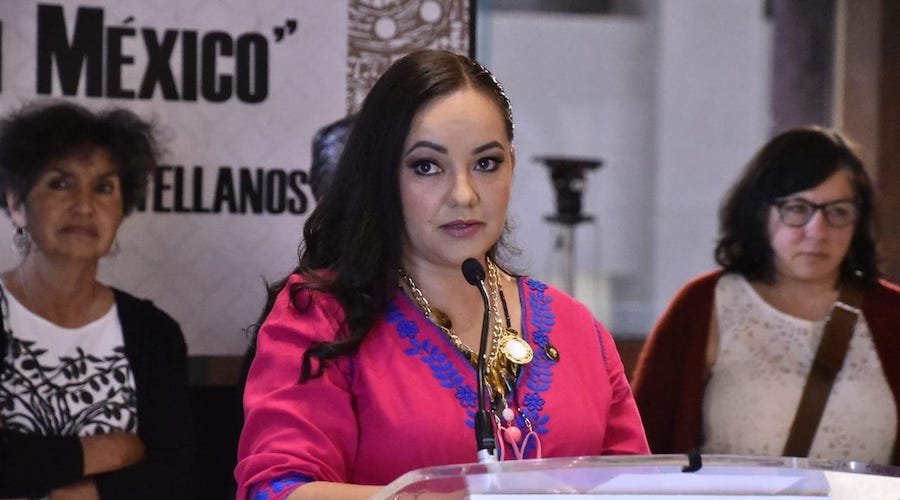
Mexican legislator calls for public release of mining companies financial, environmental records

During a press conference, Bustamante Castellanos deemed such confidentiality as out of date because it is a legacy of the negotiations that were taking place in 1992 when Mexico was pushing to join the North American Free Trade Agreement. 

The MP for the ruling party Morena also said that moving towards transparency when it comes to access to information means that mining companies will also have to disclose their strategies to guarantee communities’ right to a healthy environment.

“This [1992] legislation allowed [miners] to cause irreparable damage to the ecosystems and territories where extractive activities are carried out. It has also had impacts on the health and wellbeing of entire populations,” she said.

As an example, the legislator mentioned the environmental and economic consequences residents of the Sonora River valley are still enduring following an accident that led to the spill of 11 million gallons of toxic waste from Grupo Mexico’s Buenavista copper mine back in 2014.

The draft amendment to Article 7 also states that mining companies’ information must be available and updated through Mexico’s Digital Systems of Geological Information and Cartography.

“The absence of timely, truthful, complete, and intercultural knowledge about the projects and their socio-environmental impacts has meant that Indigenous, Afro-descendant, and farming communities do not have the tools to adequately participate in the prior consultation processes,” Bustamante Castellanos said.

In her view, it is important to know all the details of mining companies’ operations because from 2012 to 2018 when Enrique Peña Nieto was in power, 11% of Mexico’s territory was ‘given away’ through mining concessions.