When Wealthy Adventurers Take Huge Risks, who Should Foot the Bill for Rescue Attempts?
THEIR INSURANCE

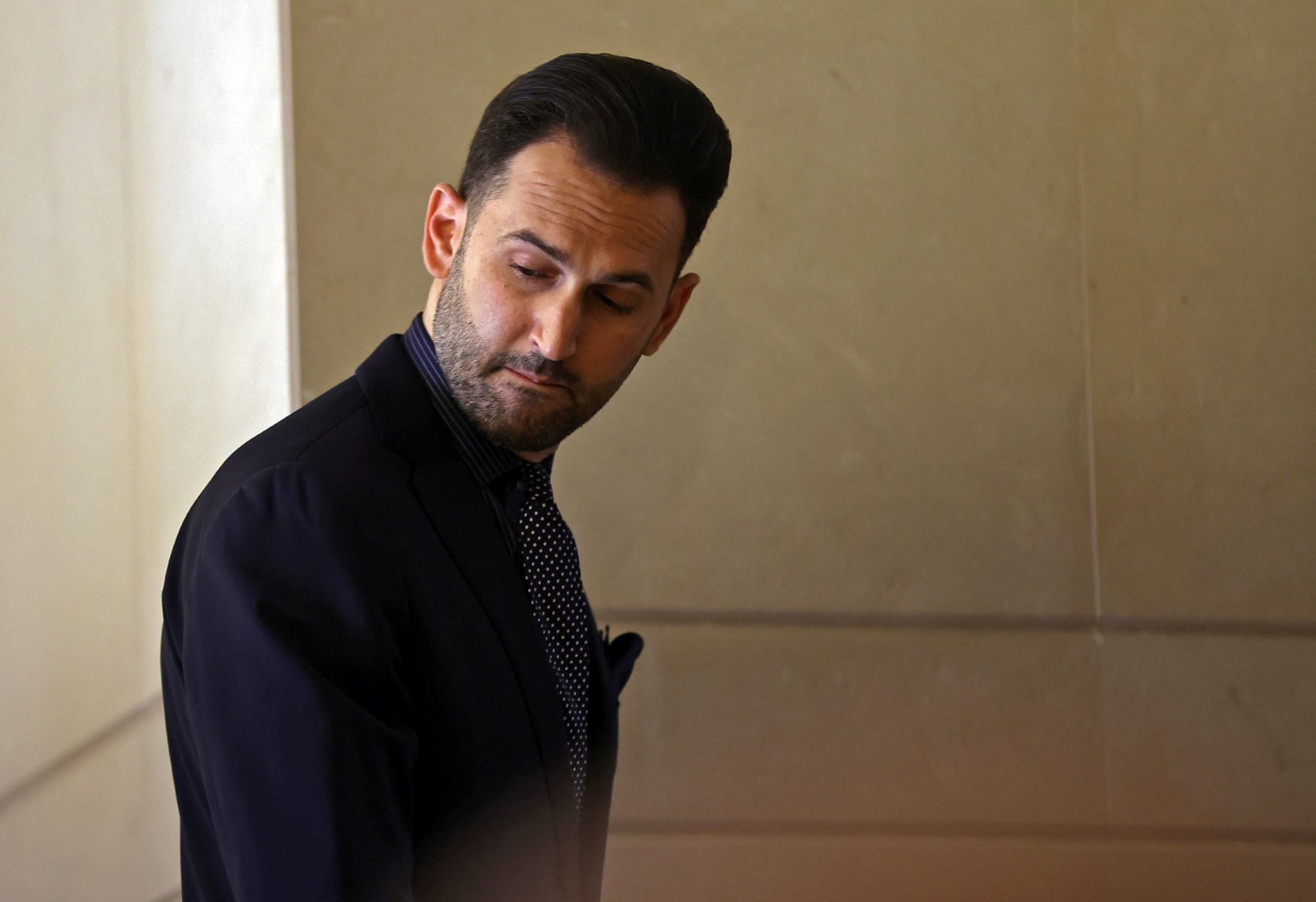
U.S. Coast Guard Rear Adm. John Mauger, commander of the First Coast Guard District, right, listens as Paul Hankins, U.S. Navy civilian contractor, supervisor of salvage, left, talks to the media, Thursday, June 22, 2023, at Coast Guard Base Boston, in Boston. The U.S. Coast Guard says the missing submersible imploded near the wreckage of the Titanic, killing all five people on board. Coast Guard officials said during the news conference that they've notified the families of the crew of the Titan, which has been missing for several days.
(AP Photo/Steven Senne)
25 Jun 2023
Associated Press | By ADAM GELLER and WYATTE GRANTHAM-PHILIPS
When millionaire Steve Fossett’s plane went missing over the Nevada range in 2007, the swashbuckling adventurer had already been the subject of two prior emergency rescue operations thousands of miles apart.
And that prompted a prickly question: After a sweeping search for the wealthy risktaker ended, who should foot the bill?
In recent days, the massive hunt for a submersible vehicle lost during a north Atlantic descent to explore the wreckage of the Titanic has refocused attention on that conundrum. And with rescuers and the public fixated first on saving and then on mourning those aboard, it has again made for uneasy conversation.
Complicated Search for Five in Missing Submersible
The desperate search for five people aboard a missing submersible that lost contact with its mother ship on Sunday as it descended to the wreck of the Titanic is complicated by daunting challenges at the location. (June 22) AP
“Five people have just lost their lives and to start talking about insurance, all the rescue efforts and the cost can seem pretty heartless — but the thing is, at the end of the day, there are costs,” said Arun Upneja, dean of Boston University’s School of Hospitality Administration and a researcher on tourism.
“There are many people who are going to say, ‘Why should the society spend money on the rescue effort if (these people) are wealthy enough to be able to ... engage in these risky activities?’”
That question is gaining attention as very wealthy travelers in search of singular adventures spend big to scale peaks, sail across oceans and blast off for space.
The U.S. Coast Guard declined Friday to provide a cost estimate for its efforts to locate the Titan, the submersible investigators say imploded not far from the world’s most famous shipwreck. The five people lost included a billionaire British businessman and a father and son from one of Pakistan’s most prominent families. The operator charged passengers $250,000 each to participate in the voyage.
“We cannot attribute a monetary value to Search and Rescue cases, as the Coast Guard does not associate cost with saving a life,” the agency said.
While the Coast Guard's cost for the mission is likely to run into the millions of dollars, it is generally prohibited by federal law from collecting reimbursement related to any search or rescue service, said Stephen Koerting, a U.S. attorney in Maine who specializes in maritime law.
But that does not resolve the larger issue of whether wealthy travelers or companies should bear responsibility to the public and governments for exposing themselves to such risk.
“This is one of the most difficult questions to attempt to find an answer for,” said Pete Sepp, president of the National Taxpayers Union, noting scrutiny of government-funded rescues dating back to British billionaire Richard Branson’s hot air balloon exploits in the 1990s.
“This should never be solely about government spending, or perhaps not even primarily about government spending, but you can’t help thinking about how the limited resources of rescuers can be utilized,” Sepp said.
The demand for those resources was spotlighted in 1998 when Fossett’s attempt to circle the globe in a hot air balloon ended with a plunge into the ocean 500 miles off Australia. The Royal Australian Air Force dispatched a Hercules C-130 transport aircraft to find him. A French military plane dropped a 15-man life raft to Fossett before he was picked up by a passing yacht.
Critics suggested Fossett should pay the bill. He rejected the idea.
Late that same year the US Coast Guard spent more than $130,000 to rescue Fossett and Branson after their hot air balloon dropped into the ocean off Hawaii. Branson said he would pay if the Coast Guard requested it, but the agency didn’t ask.
Nine years later, after Fossett’s plane vanished over Nevada during what should have been a short flight, the state National Guard launched a months-long search that turned up the wreckage of several other decades-old crashes without finding the millionaire.
The state said the mission had cost taxpayers $685,998, with $200,000 covered by a private contribution. But when the administration of Gov. Jim Gibbons announced that it would seek reimbursement for the rest, Fossett's widow balked, noting she had spent $1 million on her own private search.
“We believe the search conducted by the state of Nevada is an expense of government in performance of government action,” a lawyer wrote on behalf of the Fossett estate.
Risky adventurism is hardly unique to wealthy people.
The pandemic drove a surge in visits to places like national parks, adding to the popularity of climbing, hiking and other outdoor activities. Meanwhile, the spread of cellphones and service has left many feeling that if things go wrong, help is a call away.
Some places have laws commonly referred to as “stupid motorist laws,” in which drivers are forced to foot the emergency response bill when they ignore barricades on submerged roads. Arizona has such a law, and Volusia County in Florida, home to Daytona, enacted similar legislation this week. The idea of a similar “stupid hiker law” is a regularly debated item in Arizona as well, with so many unprepared people needing to be rescued in stifling triple-digit heat.
Most officials and volunteers who run search efforts are opposed to charging for help, said Butch Farabee, a former ranger who participated in hundreds of rescue operations at the Grand Canyon and other national parks and has written several books on the subject.
Searchers are concerned that if they did charge to rescue people "they won’t call for help as soon as they should and by the time they do it’s too late,” Farabee said.
The tradeoff is that some might take that vital aid for granted. Farabee recounts a call in the 1980s from a lawyer who underestimated the effort needed to hike out of the Grand Canyon. The man asked for a helicopter rescue, mentioning that he had an important meeting the following day. The ranger rejected that request.
But that is not an option when the lives of adventurers, some of them quite wealthy, are at extreme risk.
At Mount Everest, it can cost tens of thousands of dollars in permit and expedition fees to climb. A handful of people die or go missing while hiking the mountain every year — prompting emergency response from local officials.
While the government of Nepal requires that climbers have rescue insurance, the scope of rescue efforts can vary widely, with Upneja estimating that some could cost “multiple dozens of thousands of dollars.”
Nepal's Ministry of Foreign Affairs did not respond to a message seeking comment.
On the high seas, wealthy yachtsmen seeking speed and distance records have also repeatedly required rescue when their voyages run astray.
When the yacht of Tony Bullimore, a British millionaire on a round-the-world journey, capsized 1,400 miles off the Australia Coast in 1997 it seemed he might be done for. Clinging to the inside of the hull, he ran out of fresh water and was almost out of air.
When a rescue ship arrived, he swam desperately toward the surface.
’I was starting to look back over my life and was thinking, ‘Well, I’ve had a good life, I’ve done most of the things I had wanted to," Bullimore said afterward. "If I was picking words to describe it, it would be a miracle, an absolute miracle.′
Australian officials, whose forces rescued a French yachtsman the same week, were more measured in their assessment.
“We have an international legal obligation,” Ian McLachlan, the defense minister said. “We have a moral obligation obviously to go and rescue people, whether in bushfires, cyclones or at sea.”
Less was said, however, about the Australian government’s request to restrict the routes of yacht races — in hopes of keeping sailors to areas where they might require less rescuing.
___
Associated Press writer David Sharp in Portland, Maine contributed to this story.
Titanic sub firm: A maverick, rule-breaking founder and a tragic end
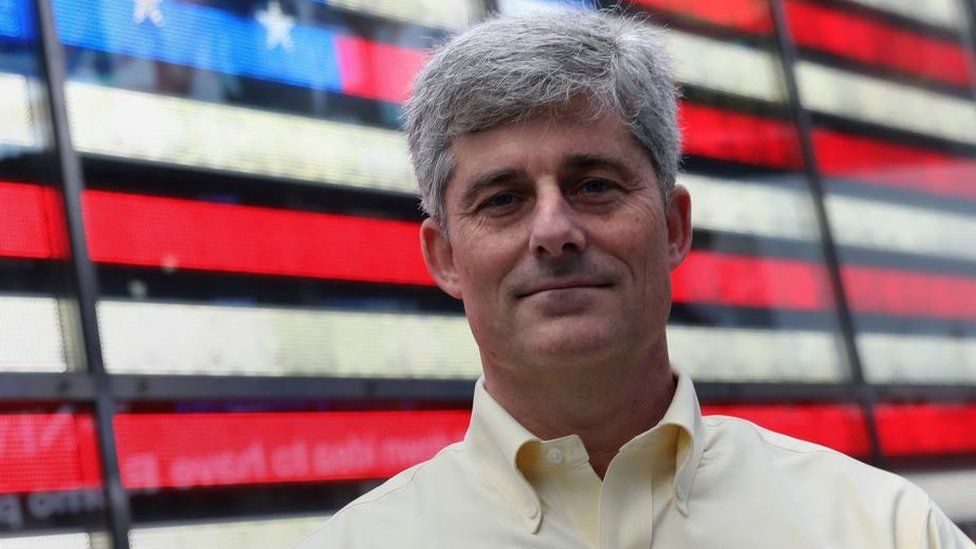
Stockton Rush III was born in California in 1962 into a family that made its fortune from oil and shipping.
Watch: OceanGate boss Stockton Rush on his passion for the seas - and for taking risks
But Mr McCallum was not the only person linked to the company to speak out about safety.
Just a few months earlier, former OceanGate employee David Lochridge raised concerns in an inspection report which identified "numerous issues that posed serious safety concerns", including how the hull had been tested.
Also in 2018, the Marine Technology Society sent a letter to OceanGate accusing it of making misleading claims about its design exceeding established industry safety standards, and warned that OceanGate's "experimental" approach could result in "negative outcomes (from minor to catastrophic)".
In a blog post in 2019, Mr Rush insisted that the majority of marine accidents were down to operator error. He said OceanGate took safety requirements very seriously, but that keeping an outside body informed on every modification before it was tested in a real-word setting was "anathema to rapid innovation".
The former employee told the BBC that while he had worked at OceanGate, he had felt confident in Mr Rush's commitment to safety.
"Rush was very level-headed, he knew what needed to be done," he said. "He went on every sub dive, he was the pilot for every single one, and that's because he trusted the safety of the sub."
Mr Newman told the BBC the sub might not have been certified, but it was tested extensively. Mr Rush "introduced new ideas and new pieces that are not conventional, and some people don't like that", he said.
"The idea that this is something that's unique and Stockton did something wrong is disingenuous," he said.
Mr Rush himself told CBS reporter Mr Pogue last year that "if you just want to be safe, don't get out of bed".
"Don't get in your car. Don't do anything. At some point, you're going to take some risk, and it really is a risk-reward question. I think I can do this just as safely by breaking the rules," he said.
The question is why despite other successful dives, the sub's final trip ended in tragedy, Mr Newman said.
"Clearly, the pressure hull gave way, right? And the question is, why would that give way?"
Guillermo Söhnlein, a co-founder of OceanGate and Rush's former business partner, said he would not have taken a different approach himself.
"The human submersible community globally is very small, and we all know each other, and I think generally we all respect each other's opinions.
"The bottom line is that everyone's got different opinions on how subs should be designed," said Mr Söhnlein.
After his son also raised fears about the sub, Jay Bloom declined Mr Rush's invitation.
"I am sure he really believed what he was saying," Mr Bloom said. "But he was very wrong.
Additional reporting by Michelle Fleury and Nathalie Jimenez
Stockton Rush III was born in California in 1962 into a family that made its fortune from oil and shipping.
By Holly Honderich, Callam May & Jemma Crew
BBC News, Washington DC & London
Stockton Rush wanted to be known as an innovator. It didn't seem to matter how he did it.
Bright, driven, born into wealth, his dream was to be the first person to reach Mars.
When he realised that was unlikely to happen in his lifetime, he turned his attentions to the sea.
"I wanted to be Captain Kirk and in our lifetime, the final frontier is the ocean," he told a journalist in 2017.
The ocean promised adventure, adrenaline and mystery. He also believed it promised profits - if he could make a success of the submersible he helped design, which he directed his company OceanGate to build.
He had a maverick spirit that seemed to draw people in, earning him the admiration of his employees, passengers and investors.
"His passion was amazing and I bought into it," said Aaron Newman, who travelled on Mr Rush's Titan sub and eventually became an OceanGate investor.
But Mr Rush's soaring ambition also drew scrutiny from industry experts who warned he was cutting corners, putting innovation ahead of safety and risking potentially catastrophic results.
It wasn't something he was willing to accept.
Last week, he and four other people on board the Titan lost their lives when it imploded.
"You're remembered for the rules you break," Mr Rush once said, quoting US general Douglas MacArthur.
"I've broken some rules," he said about the Titan. "I think I've broken them with logic and good engineering behind me."
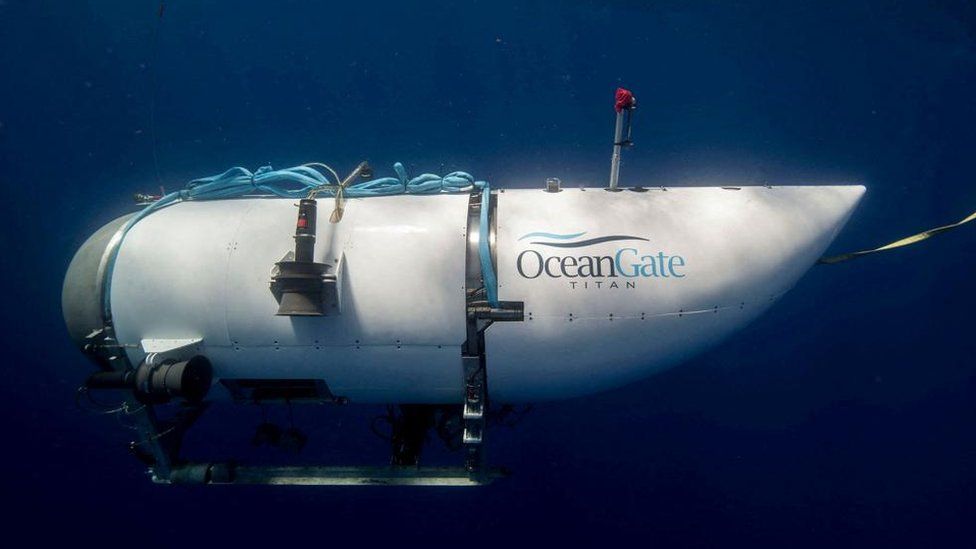
The Titan submersible suffered a "catastrophic implosion"
Stockton Rush III was born in California in 1962 into a family that made its fortune from oil and shipping.
He was sent to a prestigious boarding school, the Phillips Exeter Academy in New Hampshire, and went on to earn a bachelor's degree in aerospace engineering from Princeton University in 1984.
At 19, he became the youngest pilot in the world to qualify for jet transport rating, the highest pilot rating obtainable. He worked on F-15s and anti-satellite missile programmes, with the hope of eventually joining the US space programme and being an astronaut.
But eventually that ambition lost its appeal, as a trip to the Red Planet seemed increasingly out of reach.
"If someone would tell me what the commercial or military reason to go to Mars is, I would believe it's going to happen," Mr Rush told Fast Company magazine. "It's just a dream."
So he shifted his gaze downward and in 2009 founded OceanGate, a private company that offered customers - Mr Rush preferred the term "adventurers" - a chance to experience deep sea travel, including to the wreck of the Titanic.
The company, based in Everett in Washington state, was small and tight-knit. Rush would chair all-staff meetings at its headquarters, while his wife Wendy - another member of Princeton's class of 1984 - was his director of communications.
A junior employee who worked at OceanGate from 2017 to 2018, and asked not to be identified, said the company headquarters felt homey and lived-in, with wiring and equipment seemingly everywhere. "It was very free-flowing."
At the helm was Mr Rush.
"He was just really passionate about what he was doing and very good at instilling that passion into everybody else that worked there," the employee told the BBC.
At one staff meeting, Mr Rush brought virtual reality goggles for everyone to take a digital underwater tour. Mr Rush told them that this is what they were aiming for - to allow more people to have this view. "This is the world I want," he told them.
Mr Rush was "not a leader from the back, telling people what to do - he led from the front", said Mr Newman, the investor.
Mr Newman went on the Titan with Mr Rush to see the wreck of the Titanic in the summer of 2021.
The first time they met, Mr Rush "spent hours" talking with him about the potential of exploring the bottom of the ocean.
Mr Rush "followed his own path", Mr Newman said.
Mr Newman's recollection of OceanGate was of a team that looked out for each other.
And Mr Rush's wife, Wendy, was "up at the top, looking over his shoulder, making sure that he was doing everything perfectly and not cutting corners or skipping things", he said.
Mr Newman was so taken by Mr Rush that he decided to invest in OceanGate. "You know, I didn't know if I'd ever see any return or not. That was not the point," he said.
"The point was to be part of something that's experimental and is breaking new ground, and pushing forward our technology, and how the world works, and going places and doing amazing things, that's what this is about."
Mr Newman described himself as a minor investor. As a private company, OceanGate is not obliged to publish all financial records. US financial records from January 2020 show that Mr Rush and his fellow directors sold a stake in the company worth $18m, thought to have been used to fund the development of Titan.
To recoup the costs, OceanGate's sub, "well-lit and comfortable," the company said, came with a price tag of $250,000 (£195,600) for a underwater trip.

More coverage
In losing Titan, St John's mulls a familiar tragedy
How will investigators find out what happened?
British father, son and explorer among victims
James Cameron accuses OceanGate of cutting corners
Mr Rush's clients were uber-rich thrill seekers, willing to part with that sum for a once-in-a-lifetime adventure.
Las Vegas businessman Jay Bloom had been messaging Mr Rush about joining a dive, before finally turning down a seat for himself and his son on the fatal excursion.
He said the chance to see the wreck up close would have been a "bucket-list" experience. It was about being able to say "you did something very few people have the opportunity to do", he said.
Despite the large sums of money involved, OceanGate equipment sometimes had a home-made feel.
The former junior employee told the BBC he was surprised to find that Titan's electrical design included off-the-shelf development boards, as opposed to using a custom, in-house design like other engineering companies.
David Pogue, a CBS News journalist who joined Mr Rush on a trip to the Titanic wreck in 2021, said the chief executive drove the Titan with a game controller and used "rusty lead pipes from the construction industry as ballast".
Yet Mr Rush assured Mr Pogue that only thing that really mattered was the vessel's hull, built from an unusual and largely untested material for a deep sea vessel: carbon fibre, with titanium end plates.
Mr Rush knew carbon fibre was used successfully in yachts and aviation, and believed it would allow for his submersible to made more cheaply than industry-standard steels ones.
"There's a rule you don't do that," said Mr Rush in 2021. "Well, I did."
The tube shape of the Titan was also unusual. The hull of a deep-diving sub is usually spherical, which means it receives an equal amount of pressure at every point, but the Titan had a cylinder-shaped cabin. OceanGate gave it sensors to analyse the effects of changing pressure as it descended.
The glass viewport, from which passengers could see out, was only certified down to 1,300m, far short of the depths of the ocean floor where the Titantic wreck lay.
Rob McCallum, an explorer who acted as a consultant for OceanGate, became concerned when Mr Rush decided against getting official certification for the submersible.
Subs can be certified or "classed" by marine organisations, like the American Bureau of Shipping or Lloyd's Register, meaning the vehicle must meet certain standards on things like stability, strength, safety and performance. But this process is not mandatory.
In emails to Mr Rush in March 2018, seen by BBC News, Mr McCallum said: "You are wanting to use a prototype un-classed technology in a very hostile place. As much as I appreciate entrepreneurship and innovation, you are potentially putting an entire industry at risk.
"4,000m down in the mid-Atlantic is not the kind of place you can cut corners."
Mr Rush, apparently indignant, responded that he was "tired of industry players who try to use a safety argument to stop innovation".
Safety was "about culture, not paperwork", he said. He talked of needing "sensible design, extensive testing, and informed consent of the participants", but said a piece of paper did not guarantee the safety of a sub.
While he admitted deviating from some guidelines, such as "overly conservative" viewport limits, he argued the Titan's safety systems were "way beyond" anything else in use.
He wrote: "I know that our engineering focused, innovative approach (as opposed to an existing standards compliance-focused design process) flies in the face of the submersible orthodoxy, but that is the nature of innovation."
The tense exchange ended after OceanGate's lawyers threatened legal action, Mr McCallum said.
BBC News, Washington DC & London
Stockton Rush wanted to be known as an innovator. It didn't seem to matter how he did it.
Bright, driven, born into wealth, his dream was to be the first person to reach Mars.
When he realised that was unlikely to happen in his lifetime, he turned his attentions to the sea.
"I wanted to be Captain Kirk and in our lifetime, the final frontier is the ocean," he told a journalist in 2017.
The ocean promised adventure, adrenaline and mystery. He also believed it promised profits - if he could make a success of the submersible he helped design, which he directed his company OceanGate to build.
He had a maverick spirit that seemed to draw people in, earning him the admiration of his employees, passengers and investors.
"His passion was amazing and I bought into it," said Aaron Newman, who travelled on Mr Rush's Titan sub and eventually became an OceanGate investor.
But Mr Rush's soaring ambition also drew scrutiny from industry experts who warned he was cutting corners, putting innovation ahead of safety and risking potentially catastrophic results.
It wasn't something he was willing to accept.
Last week, he and four other people on board the Titan lost their lives when it imploded.
"You're remembered for the rules you break," Mr Rush once said, quoting US general Douglas MacArthur.
"I've broken some rules," he said about the Titan. "I think I've broken them with logic and good engineering behind me."
The Titan submersible suffered a "catastrophic implosion"
Stockton Rush III was born in California in 1962 into a family that made its fortune from oil and shipping.
He was sent to a prestigious boarding school, the Phillips Exeter Academy in New Hampshire, and went on to earn a bachelor's degree in aerospace engineering from Princeton University in 1984.
At 19, he became the youngest pilot in the world to qualify for jet transport rating, the highest pilot rating obtainable. He worked on F-15s and anti-satellite missile programmes, with the hope of eventually joining the US space programme and being an astronaut.
But eventually that ambition lost its appeal, as a trip to the Red Planet seemed increasingly out of reach.
"If someone would tell me what the commercial or military reason to go to Mars is, I would believe it's going to happen," Mr Rush told Fast Company magazine. "It's just a dream."
So he shifted his gaze downward and in 2009 founded OceanGate, a private company that offered customers - Mr Rush preferred the term "adventurers" - a chance to experience deep sea travel, including to the wreck of the Titanic.
The company, based in Everett in Washington state, was small and tight-knit. Rush would chair all-staff meetings at its headquarters, while his wife Wendy - another member of Princeton's class of 1984 - was his director of communications.
A junior employee who worked at OceanGate from 2017 to 2018, and asked not to be identified, said the company headquarters felt homey and lived-in, with wiring and equipment seemingly everywhere. "It was very free-flowing."
At the helm was Mr Rush.
"He was just really passionate about what he was doing and very good at instilling that passion into everybody else that worked there," the employee told the BBC.
At one staff meeting, Mr Rush brought virtual reality goggles for everyone to take a digital underwater tour. Mr Rush told them that this is what they were aiming for - to allow more people to have this view. "This is the world I want," he told them.
Mr Rush was "not a leader from the back, telling people what to do - he led from the front", said Mr Newman, the investor.
Mr Newman went on the Titan with Mr Rush to see the wreck of the Titanic in the summer of 2021.
The first time they met, Mr Rush "spent hours" talking with him about the potential of exploring the bottom of the ocean.
Mr Rush "followed his own path", Mr Newman said.
Mr Newman's recollection of OceanGate was of a team that looked out for each other.
And Mr Rush's wife, Wendy, was "up at the top, looking over his shoulder, making sure that he was doing everything perfectly and not cutting corners or skipping things", he said.
Mr Newman was so taken by Mr Rush that he decided to invest in OceanGate. "You know, I didn't know if I'd ever see any return or not. That was not the point," he said.
"The point was to be part of something that's experimental and is breaking new ground, and pushing forward our technology, and how the world works, and going places and doing amazing things, that's what this is about."
Mr Newman described himself as a minor investor. As a private company, OceanGate is not obliged to publish all financial records. US financial records from January 2020 show that Mr Rush and his fellow directors sold a stake in the company worth $18m, thought to have been used to fund the development of Titan.
To recoup the costs, OceanGate's sub, "well-lit and comfortable," the company said, came with a price tag of $250,000 (£195,600) for a underwater trip.
More coverage
In losing Titan, St John's mulls a familiar tragedy
How will investigators find out what happened?
British father, son and explorer among victims
James Cameron accuses OceanGate of cutting corners
Mr Rush's clients were uber-rich thrill seekers, willing to part with that sum for a once-in-a-lifetime adventure.
Las Vegas businessman Jay Bloom had been messaging Mr Rush about joining a dive, before finally turning down a seat for himself and his son on the fatal excursion.
He said the chance to see the wreck up close would have been a "bucket-list" experience. It was about being able to say "you did something very few people have the opportunity to do", he said.
Despite the large sums of money involved, OceanGate equipment sometimes had a home-made feel.
The former junior employee told the BBC he was surprised to find that Titan's electrical design included off-the-shelf development boards, as opposed to using a custom, in-house design like other engineering companies.
David Pogue, a CBS News journalist who joined Mr Rush on a trip to the Titanic wreck in 2021, said the chief executive drove the Titan with a game controller and used "rusty lead pipes from the construction industry as ballast".
Yet Mr Rush assured Mr Pogue that only thing that really mattered was the vessel's hull, built from an unusual and largely untested material for a deep sea vessel: carbon fibre, with titanium end plates.
Mr Rush knew carbon fibre was used successfully in yachts and aviation, and believed it would allow for his submersible to made more cheaply than industry-standard steels ones.
"There's a rule you don't do that," said Mr Rush in 2021. "Well, I did."
The tube shape of the Titan was also unusual. The hull of a deep-diving sub is usually spherical, which means it receives an equal amount of pressure at every point, but the Titan had a cylinder-shaped cabin. OceanGate gave it sensors to analyse the effects of changing pressure as it descended.
The glass viewport, from which passengers could see out, was only certified down to 1,300m, far short of the depths of the ocean floor where the Titantic wreck lay.
Rob McCallum, an explorer who acted as a consultant for OceanGate, became concerned when Mr Rush decided against getting official certification for the submersible.
Subs can be certified or "classed" by marine organisations, like the American Bureau of Shipping or Lloyd's Register, meaning the vehicle must meet certain standards on things like stability, strength, safety and performance. But this process is not mandatory.
In emails to Mr Rush in March 2018, seen by BBC News, Mr McCallum said: "You are wanting to use a prototype un-classed technology in a very hostile place. As much as I appreciate entrepreneurship and innovation, you are potentially putting an entire industry at risk.
"4,000m down in the mid-Atlantic is not the kind of place you can cut corners."
Mr Rush, apparently indignant, responded that he was "tired of industry players who try to use a safety argument to stop innovation".
Safety was "about culture, not paperwork", he said. He talked of needing "sensible design, extensive testing, and informed consent of the participants", but said a piece of paper did not guarantee the safety of a sub.
While he admitted deviating from some guidelines, such as "overly conservative" viewport limits, he argued the Titan's safety systems were "way beyond" anything else in use.
He wrote: "I know that our engineering focused, innovative approach (as opposed to an existing standards compliance-focused design process) flies in the face of the submersible orthodoxy, but that is the nature of innovation."
The tense exchange ended after OceanGate's lawyers threatened legal action, Mr McCallum said.
Watch: OceanGate boss Stockton Rush on his passion for the seas - and for taking risks
But Mr McCallum was not the only person linked to the company to speak out about safety.
Just a few months earlier, former OceanGate employee David Lochridge raised concerns in an inspection report which identified "numerous issues that posed serious safety concerns", including how the hull had been tested.
Also in 2018, the Marine Technology Society sent a letter to OceanGate accusing it of making misleading claims about its design exceeding established industry safety standards, and warned that OceanGate's "experimental" approach could result in "negative outcomes (from minor to catastrophic)".
In a blog post in 2019, Mr Rush insisted that the majority of marine accidents were down to operator error. He said OceanGate took safety requirements very seriously, but that keeping an outside body informed on every modification before it was tested in a real-word setting was "anathema to rapid innovation".
The former employee told the BBC that while he had worked at OceanGate, he had felt confident in Mr Rush's commitment to safety.
"Rush was very level-headed, he knew what needed to be done," he said. "He went on every sub dive, he was the pilot for every single one, and that's because he trusted the safety of the sub."
Mr Newman told the BBC the sub might not have been certified, but it was tested extensively. Mr Rush "introduced new ideas and new pieces that are not conventional, and some people don't like that", he said.
"The idea that this is something that's unique and Stockton did something wrong is disingenuous," he said.
Mr Rush himself told CBS reporter Mr Pogue last year that "if you just want to be safe, don't get out of bed".
"Don't get in your car. Don't do anything. At some point, you're going to take some risk, and it really is a risk-reward question. I think I can do this just as safely by breaking the rules," he said.
The question is why despite other successful dives, the sub's final trip ended in tragedy, Mr Newman said.
"Clearly, the pressure hull gave way, right? And the question is, why would that give way?"
Guillermo Söhnlein, a co-founder of OceanGate and Rush's former business partner, said he would not have taken a different approach himself.
"The human submersible community globally is very small, and we all know each other, and I think generally we all respect each other's opinions.
"The bottom line is that everyone's got different opinions on how subs should be designed," said Mr Söhnlein.
After his son also raised fears about the sub, Jay Bloom declined Mr Rush's invitation.
"I am sure he really believed what he was saying," Mr Bloom said. "But he was very wrong.
Additional reporting by Michelle Fleury and Nathalie Jimenez