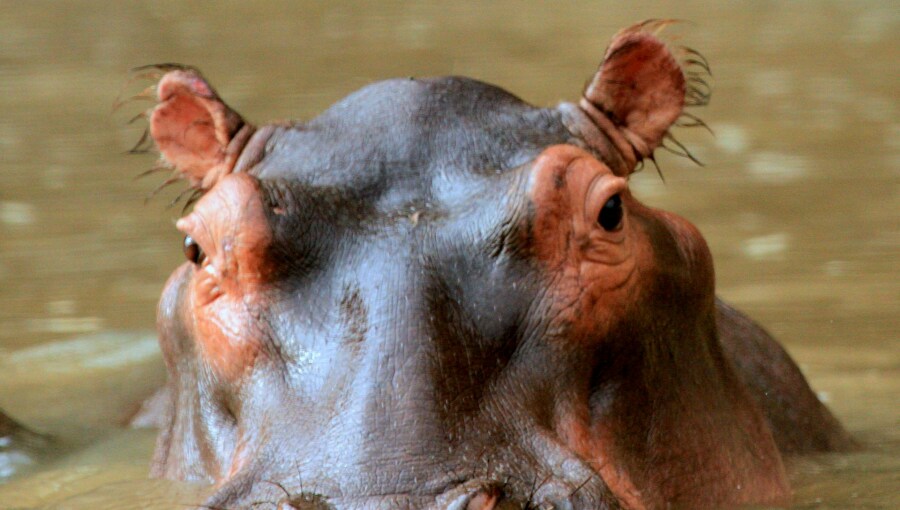
Colombia will begin euthanising dozens of invasive hippopotamuses in the second half of 2026 as authorities move to contain a rapidly expanding population descended from animals illegally imported by drug trafficker Pablo Escobar four decades ago, Environment Minister Irene Vélez has announced.
The country is home to around 200 hippos, concentrated in the river valleys surrounding the Magdalena, Colombia's main inland waterway. Authorities warn the population could reach 1,000 by 2035 without intervention, a trajectory that scientists say would accelerate damage to native biodiversity and compound water contamination across river systems vital to agriculture and rural livelihoods.
"We must act to reduce the hippopotamus population. These actions are essential to protect our ecosystems and our native species," Vélez said, adding that approximately 80 animals could be euthanised in the initial phase of the programme.
The cull, budgeted at COP7.2bn (around $2mn), marks the most decisive state action yet on a problem that has confounded successive Colombian governments for more than a decade. It includes complementary measures such as confinement and relocation, and comes after a September 2024 ruling by the Administrative Court of Cundinamarca ordered the environment ministry to draw up regulations aimed at eradicating the species within three months — a deadline authorities failed to meet.
The origins of the problem trace back to Escobar himself, who in the 1980s smuggled four hippos into his private zoo at his Hacienda Nápoles estate in the Magdalena Medio. After the drug lord was killed by security forces in 1993 and his ranch was ransacked, the animals escaped into the surrounding forest and began reproducing unchecked. With no natural predators in the Colombian savannah, the population expanded exponentially.
Efforts to bring the animals under control have repeatedly faltered. A government attempt to cull a single hippo in 2009 triggered a public backlash, and hunting was formally banned in 2012.
Hipppos were officially declared an invasive alien species in 2022 due to their negative impacts on ecosystems. Sterilisation and translocation programmes have moved slowly: discussions with eight potential recipient countries — including India, Mexico and South Africa — have yet to yield binding agreements, partly because genetic inbreeding within the Colombian population has reduced interest from foreign zoos and wildlife institutions.
The expansion poses escalating risks to species including river turtles and manatees, while the animals' volume of excrement is altering the chemical composition of local watercourses. "They can really pollute water resources. They're an invasive species. They don't really belong there," Joshua Hammer, a journalist who investigated the case for Smithsonian Magazine, noted in 2024. "It's rapidly changing the biome and possibly threatening these other animals."
Although hippos kill hundreds of people annually in Africa, Colombia has so far recorded no fatalities, though confrontations with fishermen have been reported along the Magdalena.
The announcement has reignited a long-running dispute between conservation scientists and animal rights advocates. The former broadly support culling as a necessary, if unpalatable, population management tool; the latter argue the crisis reflects decades of policy failure and raises unresolved questions about the ethics of lethal control.
Colombia remains the only country outside Africa with a free-roaming wild hippo population, an unlikely legacy of Escobar's private menagerie that has evolved from a local curiosity into a national ecological and fiscal liability.

No comments:
Post a Comment