Friday, August 18, 2023

Chess ban for transgender women is sexist, FIDE told
THERE SHOULD BE NO GENDER SPECIFIC COMPETITION

Henry Samuel
Thu, 17 August 2023 

The world governing body of chess said that transgender players present an 'evolving issue for chess' - Westend61

The world’s top chess federation faces allegations of sexism after ruling that transgender women cannot compete in its official events for females until an assessment of gender change is made by its officials.

The decision by the FIDE, based in Lausanne, Switzerland, and published on Monday has prompted criticism.

Angela Eagle, the Labour MP, won the British women’s under-18s chess championship in 1976 said: “There is no physical advantage in chess unless you believe men are inherently more able to play than women.

“I spent my chess career being told women’s brains were smaller than men’s and we shouldn’t even be playing – this ban is ridiculous and offensive to women.”


The complaints came two weeks after a group of 14 of France’s top female chess players published a petition calling for sexism and sexual harassment to be stamped out in a sport whose organisers, they said, were predominantly male.

FIDE said it and its member federations have received and increasing number of recognition requests from players who identify as transgender, and that the participation of transgender women would be assessed on a case-by-case basis that could take up to two years.

Trans men would have titles abolished

“Change of gender is a change that has a significant impact on a player’s status and future eligibility to tournaments, therefore it can only be made if there is a relevant proof of the change provided,” the federation said.

“In the event that the gender was changed from a male to a female the player has no right to participate in official FIDE events for women until further FIDE’s decision is made,” it said.

Holders of women’s titles who change their genders to male would see those titles “abolished,” said the federation, although it also held out the possibility of a reinstatement “if the person changes the gender back to a woman”.

“If a player has changed the gender from a man into a woman, all the previous titles remain eligible,” said the federation.

It acknowledged that such questions regarding transgender players were an “evolving issue for chess” and that “further policy may need to be evolved in the future in line with research evidence”.

The federation issued no further comment on Thursday.

‘These are dark days’


Yosha Iglesias, a professional player who is trans, criticised the new policy.

“Can someone tell me what qualifies as an official FIDE event?,” asked Iglesias. “Will I be allowed to play the French Championship in three days? The European Club Cup in September?”

Some social media users responded to the question with dismay with one writing: “These are dark days.”

In their petition, the 14 female players from France complained about the level of “sexism and sexual violence” in chess.

Speaking to Ouest-France, Mathilde Choisy, 35, a female FIDE Master, said: “The problem is that as female players we cannot fight alone against something systemic. We need more awareness from (chess) leaders, who are in the vast majority men.”

Many sports have been grappling over which rules should apply to transgender athletes in recent years.

Last month, the cycling federation ruled that transgender women athletes who transitioned after male puberty will no longer be able to compete in women’s races.
Progress toward parity for women on movie screens has stalled, report finds

The Canadian Press
Thu, August 17, 2023 


NEW YORK (AP) — A new study on inclusion in film shows just how much of a rarity “Barbie” is. For every woman as a speaking character in the most popular films of 2022, there were more than two men, according to report by University of Southern California’s Annenberg Inclusion Initiative.

The USC report, published Thursday, found that 34.6% of speaking parts were female in the top 100 box-office hits of last year. The Annenberg Inclusion Initiative has been annually tracking that and many other metrics since 2007.

And in its first such study in three years, USC researchers found that in many areas, progress toward parity on screen has stalled since the pandemic — and in some respects hasn't changed all that much since 14 years ago. In 2019, 34% of speaking characters were female. In 2008, it was 32.8%.

"It is clear that the entertainment industry has little desire or motivation to improve casting processes in a way that creates meaningful change for girls and women,” said Stacy L. Smith, founder and director of the Inclusion Initiative, in a statement. “The lack of progress is particularly disappointing following decades of activism and advocacy.”

In analyzing the top films in ticket sales, the report doesn't include the large amount of films produced for streaming platforms and smaller releases. But it does offer a snapshot of how Hollywood is evolving — or not.

And it comes on the heels of the enormous success of Greta Gerwig's “Barbie,” which has made $1.2 billion worldwide since opening last month and domestically has become the highest grossing movie ever from a female filmmaker. Last year, one in 10 of the biggest box-office films were directed by women, down from record rates in 2019, 2020 and 2021.

Some findings in the study point to progress in inclusivity on screen. There are more female leading or co-leading roles in the top grossing movies than ever. Some 44% of such lead roles were girls or women in 2022, a historical high and more than double the rate of 2007 (20%).

Speaking characters from underrepresented ethnic groups have also made sizable gains. In 2022, Black, Hispanic, Asian and other non-white minorities accounted for 38.3% of speaking characters, nearly matching the U.S. population percentage of 41%. Most notably, Asian characters have gone from 3.4% of characters in 2007 to 15.9% last year, a movie year that culminated with the best picture win for “Everything Everywhere All at Once.”

But other metrics show that the film industry regressed in some areas of diversity during the pandemic. In 2022, the top grossing movies featured 31% of leads from underrepresented ethnic groups, down from 37% in 2021. Out of those 100 2022 movies, 46 didn't include a Latino speaking character.

“These trends suggest that any improvement for people from underrepresented racial/ethnic groups is limited,” said Smith. “While it is encouraging to see changes for leading characters and for the Asian community, our data on invisibility suggests that there is still much more to be done to ensure that the diversity that exists in reality is portrayed on screen.”

Of the top 100 films in 2022, just 2.1% of speaking characters were LGBTQ+ — roughly the same number as a decade ago. Of the 100 films, 72 didn't feature a single LGBTQ+ character. Only one was nonbinary.

The number of characters with disabilities has also flatlined. In 2022, 1.9% of speaking characters were depicted with a disability. In 2015, the percentage was 2.4%.

With actors and screenwriters striking over fair pay, AI and other issues, Smith said Thursday's report should add to the demands of workers on screen and off in Hollywood.

“When people from these communities are rendered invisible both on screen and behind the camera, the need to ensure that every opportunity merits a living wage is essential. This cannot happen if people are not working at all," said Smith. “Hollywood has a long road ahead to address the exclusion still happening in the industry alongside the concerns actors and writers are bringing to the forefront.”

Jake Coyle, The Associated Press
Third group of hospital doctors in England warn of industrial action over pay

Alan Jones, PA Industrial Correspondent
Thu, 17 August, 2023


The threat of industrial action by a third group of hospital doctors in England has been raised in the ongoing pay dispute in the NHS.

The BMA said its members working as specialist doctors will consider planning for an indicative ballot for industrial action unless the Government makes an offer to “urgently improve” their pay and working conditions.

Dr Ujjwala Mohite, who chairs the specialist, associate specialist and specialty (SAS) UK committee, said in a letter to health secretary Steve Barclay that while preliminary talks have been encouraging, the Government is still to make an offer reversing years of pay erosion for SAS doctors.

The committee said if an offer is not made before September 20, they will have no choice but to move forward with an indicative ballot for industrial action.

SAS doctors are senior and highly experienced healthcare professionals who decided not to go down the traditional consultant or GP pathway, with most working in hospitals, alongside junior doctors and consultants as well as in the community.

The BMA said the Government had continually failed to recognise and reward SAS doctors, who have seen their real-terms pay fall by more than a quarter over the last 15 years, leading many to leave the NHS.

Dr Mohite said: “Not many people will have heard of SAS doctors, but they play an incredibly important role in the NHS, making up the trinity of hospital doctors alongside consultants and junior doctors.

“Like our colleagues, we have seen our value steadily erode over the past 15 years, leaving many wondering whether they should stay working in the health service.

“With every doctor that reduces their hours or leaves altogether, the less safe it becomes for those who are left, risking exhaustion, burnout and yet more doctors deciding to move out, out of the NHS.

“Our patients deserve the highest quality of care, but we are seriously struggling to deliver that when so many SAS doctors feel undervalued.

“The Government has the power to prevent another group of doctors from taking industrial action, and we implore the Secretary of State to make sure that we don’t have to.”

Junior doctors in England staged a four-day strike which ended on Tuesday, while consultants are on strike for 48 hours next week.

Strike dates announced at Scottish schools for September 13 and 14


Sarah Ward, PA
Thu, 17 August 2023 


School and early years staff in 10 council areas will walk out on September 13 and 14 in a dispute over pay, a union has announced.

Essential staff in schools and early years will strike for two days next month, as the GMB union claimed low-paid Scots education workers were being offered a rise £700 less than their southern peers.

About a third of council areas will be impacted – with 10 local authorities being warned of industrial action from catering staff, janitors, cleaners and support workers.


The action comes after GMB Scotland’s members rejected the 5.5% offer from council umbrella body, the Convention of Scottish Local Authorities (Cosla), in April, branding it unacceptable amid surging inflation and the cost-of-living crisis.

The union, which represents more than 21,000 workers across 32 councils, claimed Cosla refused to revise the offer or ask the Scottish Government for support.

Staff will walk out on September 13 and 14 in Aberdeen, Clackmannanshire, Comhairle Nan Eilean Siar, Dundee, East Dunbartonshire, Falkirk, Glasgow, Orkney, Renfrewshire and South Ayrshire.

More strikes could occur across schools and early years in September with the members of another union already voting for industrial action while another is currently balloting members.

GMB Scotland said the Cosla offer would mean a rise for the lowest-paid workers in Scotland’s councils that is £700 less this year than that offered to colleagues in England and Wales.

Keir Greenaway, GMB Scotland senior organiser for public services, said a meeting on August 25 would be the final opportunity for Cosla to avert disruptive strikes.

Mr Greenaway said: “The latest figures show that, despite rising wages, pay is still being outstripped by inflation.

“The pay offer to council workers does not come close to matching the surging cost of living and one that is worth less with every month that passes.

“Scotland stands on the shoulders of our local authority workers and the value of their work must be reflected in their salaries.

“Cosla has refused to seriously engage with our members during what has been a protracted, frustrating process. If they had, parents and pupils would not now be facing disruption.

“Cosla and Scottish ministers need to engage now or risk turning a crisis into a calamity.”

A Cosla spokesperson said: “The reality of the situation is that as employers, council leaders have made a strong offer to the workforce.

“A strong offer which clearly illustrates the value councils place on their workforce, and it compares well to other sectors.

“It recognises the cost-of-living pressures on our workforce and critically, it seeks to protect jobs and services.

“While the offer value in year is 5.5%, the average uplift on salaries going into the next financial year is 7%.

“Those on the Scottish local government living wage would get 9.12% and those at higher grades, where councils are experiencing severe recruitment challenges, would see 6.05%.

“It is an offer which recognises both the vital role of the people who deliver our essential services across councils every day and the value that we, as employers, place on them.

“Crucially, it also raises the Scottish local government living wage by 99p to £11.84 per hour and sets out a commitment to work with our trade unions to develop a road map to £15 per hour in a way that protects our workforce and services we deliver.”

A Scottish Government spokesperson said: “Local government pay negotiations are a matter for local authorities as employers and unions.

“The Scottish Government and Cosla have committed to respect this negotiating arrangement as part of the Verity House Agreement.

“Despite UK Government cuts, the Scottish Government has provided a further £155 million to support a meaningful pay rise for local government workers, which has been taken into account in the pay offer already made by Cosla.

“The Scottish Government urges all the parties involved to work together constructively and reach an agreement which is fair for the workforce and affordable for employers.”
Americans will run out of pandemic savings next month, Fed warns

Szu Ping Chan
Thu, 17 August 2023

A shopper carries a Zara retail bag along the Magnificent Mile shopping district in Chicago, Illinois, US,

Americans will burn through all their pandemic savings by the end of September, according to estimates by the Federal Reserve.

Research by economists at the Federal Reserve Bank of San Francisco found Covid-related savings in the US had fallen to less than $190bn (£149bn) in June.

This was down from $2.1 trillion at its peak in August 2021, which was fuelled by a $800bn giveaway that handed American households Covid support cheques worth thousands of dollars.

Tim Drayson, head of economics at Legal and General Investment Management, said the “unsustainable drawdown of savings” had put the world’s biggest economy “at a potential turning point”.

He said: “Once you have run out of excess savings, your savings rate needs to bounce back potentially quite quickly, so that would be the period when consumption will be weaker than income growth.

“That could be occurring at a time when payroll growth is slowing, income growth is slowing, you’ve got headwinds from student loan repayments restarting, and a lot of fiscal support going into reverse.”

He added that a long series of interest rate rises by the Federal Reserve was also starting to bite.

It came as separate research by Société Générale showed UK pandemic savings were currently estimated at £316.5bn “and rising”.

This is equivalent to around 12.5pc of the entire UK economy, which is the highest as a share of GDP among major advanced economies.

Klaus Baader, an economist at Société Générale, said a recent rise in precautionary savings” could reflect a “fear of unemployment or renewed surges in electricity bills”.

However, he added: “If it is the latter, and assuming that a further energy price shock will be avoided, it points to a particularly large rebound potentially in UK household spending.”

The Fed research showed household disposable income was lower and personal consumption was higher than previously anticipated.

It said: “Should the recent pace of drawdowns persist – for example, at average rates from the past three, six, or 12 months – aggregate excess savings would likely be depleted in the third quarter of 2023.”
Sun bears appear so human-like they are mistaken for people in suits – experts explain

Chris Newman, Research Associate, University of Oxford, 
Dingzhen Liu, Professor of Zoo Animal Behaviour, Beijing Normal University, 
Christina Buesching, Professor of Zoology, University of British Columbia
Thu, 17 August 2023 
THE CONVERSATION

imrankadir/Shutterstock

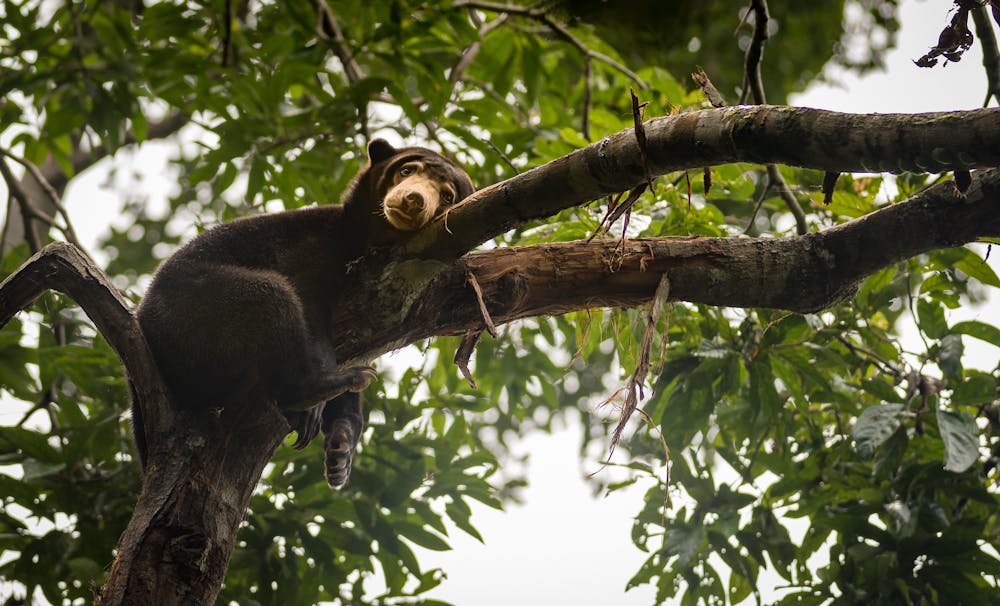
When Angela, a Malayan sun bear, stood up and waved to visitors to her enclosure at the Huangzhou Zoo in China on July 27, she became a social media sensation. Her build, posture and seemingly friendly gesture seemed so human that people speculated that she was actually a costumed performer. The talk gathered so much momentum, the zoo had to deny the claims. But that just goes to show how little people know about these fascinating animals.

Angela is an authentic bear, well known for her antics at the zoo.

Grizzlies and polar bears are huge, standing 2.5 metres tall and weighing 400-700kg. But not all bear species are so big. Angela’s dainty 1.3m, 50kg stature is typical for a sun bear. Sun bears often stand upright and mothers will even walk around cradling their babies in their arms. The Paradise Wildlife Park in Hertfordshire, UK, recently posted a video of one of its sun bears, Kyra, standing upright.

Bears generally carry some extra fat and tropical sun bears don’t have the thick fur of their cold climate cousins. So poor Angela’s skin folds are there for all to see as she suffers some “pants sag”.


What about the waving?

Only animals that evolved climbing ability, like bears, raccoons, primates and some of the cat family, can turn their palms upwards and move their forearms side-to-side. This allows them to grab hold of trees. Animals that evolved to run long distances, like deer, wolves and horses, can’t do this.

Think about your pet dog giving its paw. The motion is quite different to a wave. Sun bears are the strongest climbers in the bear family, and so, in some sense, Angela is waving because she can.


Sun bear resting in the crook of a tree.

As for her motivation, if she was frightened, she’d probably run away from the crowds and hide in her indoor space. Although sun bears do stand up and display their creamy orange chest patches when they feel threatened, she sees humans every day. We think that most probably she simply wants to stand up and clearly occupy her territory when faced with visitors, a bit like we might stand on our front step when strangers call on us.


Standing up also allows sun bears to smell over longer distances. Although solitary in the wild, sun bears are good communicators when housed in groups and are the only animals other than humans and gorillas that can mimic each other’s facial expressions for social appeasement. It is possible Angela was mimicking the visitors waving at her.

Nevertheless, we probably shouldn’t credit Angela with human-like motivations for waving. Sun bears use their paws a lot for finding food in the wild, such as fruits, ants, beetles, termites and even honey. Standing on their back legs frees up their front legs to rip, poke and prod until they’ve got their dinner. They also have a 30cm long tongue that helps them lick up their food. Most likely then, Angela was just making a gesture of displaced curiosity, like a cat pawing at an image on a TV screen, while defending her enclosure.

Sun bear sitting on rock with long pink tongue hanging out


A teaching moment

Since Angela appeared on the Chinese blogging site Weibo, visitor numbers are up by 30% at the Huangzhou zoo and millions have taken an interest internationally. While this story is cute, there’s a serious side. Sun bears, properly known as Helarctos malayanus, are listed as “vulnerable” on the International Union for the Conservation of Nature’s (IUCN) red list of threatened species. This means sun bears urgently need protection.

Six out of the world’s eight bear species are threatened with extinction. South China is part of the natural range of sun bears but very few are left in the wild in China. The majority of the remaining wild sun bear population lives in Malaysia, Thailand, Laos, Cambodia, India, Bangladesh and Myanmar.

Sun bears can live over 20 years but are slow to mature. Mothers invest a lot of care into raising their one or two cubs and don’t get pregnant again until their cubs become independent, at around three years old. It’s why males of most bear species often try to kill a female’s cub, to cause her to become receptive to mating. She won’t engage if she has cubs.


Like all Asian bear species, sun bears are poached for bile from their gall bladders, which is used in traditional medicine. They are also killed for their paws, which are eaten as an expensive delicacy. International trade in these bear parts is banned under the Convention on International Trade in Endangered Species (Cites) but enforcement is inadequate.

China is working to improve wildlife protection with stricter laws and by designating more national parks.

Zoos worldwide are also playing an important role in educating the public about conservation. For many years, China has focused its efforts on protecting the giant panda. Panda conservation is driven by the iconic status of pandas both in China and abroad. But thanks to Angela, another bear species is now sharing the attention.

This article is republished from The Conversation under a Creative Commons license. Read the original article.
Revealed: WHO aspartame safety panel linked to alleged Coca-Cola front group

Tom Perkins
THE GUARDIAN
Thu, 17 August 2023 

Photograph: Shannon Stapleton/Reuters

In May, the World Health Organization issued an alarming report that declared widely used non-sugar sweeteners like aspartame are likely ineffective for weight loss, and long term consumption may increase the risk of diabetes, cardiovascular diseases and mortality in adults.

A few months later, WHO declared aspartame, a key ingredient in Diet Coke, to be a “possible carcinogen”, then quickly issued a third report that seemed to contradict its previous findings – people could continue consuming the product at levels determined to be safe decades ago, before new science cited by WHO raised health concerns.

That contradiction stems from beverage industry corruption of the review process by consultants tied to an alleged Coca-Cola front group, the public health advocacy group US Right-To-Know said in a recent report.

It uncovered eight WHO panelists involved with assessing safe levels of aspartame consumption who are beverage industry consultants who currently or previously worked with the alleged Coke front group, International Life Sciences Institute (Ilsi).

Their involvement in developing intake guidelines represents “an obvious conflict of interest”, said Gary Ruskin, US Right-To-Know’s executive director. “Because of this conflict of interest, [the daily intake] conclusions about aspartame are not credible, and the public should not rely on them,” he added.

Aspartame was first approved for use in the US in the early 1980s over the objection of some researchers who warned of potential health risks. In recent years, as evidence of health threats has mounted, industry has ramped up a PR campaign to downplay the issues.

In the World Health Organization’s 14 July aspartame hazard and risk assessments, its cancer research arm, the International Agency for Research on Cancer (Iarc) classified aspartame as “possibly carcinogenic”. That same day, WHO’s Joint Expert Committee on Food Additives (Jecfa), which makes consumption recommendations, reaffirmed the acceptable daily intake of 40 mg/kg of body weight.

Ilsi describes itself as a nonprofit that conducts “science for the public good”, but it was founded in 1978 by a Coca-Cola executive who simultaneously worked for the company through 2021, US Right-To-Know found. Other Coca-Cola executives have worked with the group, and US Right-To-Know detailed tax returns that show millions in donations from Coca-Cola and other beverage industry players. Coke ended its official membership with the group in 2021.

Over the years, Ilsi representatives have sought to shape food policy worldwide, and Ruskin, who has written multiple peer-reviewed papers on the group, characterized the aspartame controversy as a “masterpiece in how Ilsi worms its way into these regulatory processes”.

US Right To Know identified six out of 13 Jefca panel members with ties to the industry group. After it released its report, the WHO acknowledged two more of its members with industry ties.

In a statement to the Guardian, a WHO spokesperson defended the industry consultants’ inclusion in the review process.

“For the meeting on aspartame, Jefca selected the experts likely to make the best contributions to the debate,” said spokesperson Fadéla Chaib. She said WHO’s guidelines only require disclosure of conflicts of interest within the last four years.

“To our knowledge, the experts you listed by name have not participated in any Ilsi activities for at least 10 years,” she said.

But that partially contradicts a statement made by WHO just weeks before to the news outlet Le Parisien in which it acknowledged two people currently working with Ilsi were involved in the process. The Guardian had also asked about those two people identified in the Parisien story but were not listed “by name” in its email.

The WHO told Le Parisien: “We regret that this interest was not declared by these two experts either in the written statement or orally at the opening of the meeting.”

WHO’s inclusion of Ilsi-tied consultants in its review process is especially alarming because WHO has in place “much higher standards” to ensure there are no conflicts of interest in its processes, Ruskin said. He noted WHO only relies on publicly available, peer-reviewed science, while excluding corporate interest studies.

Ruskin said the move also marks a change in direction for WHO, which in 2015 distanced itself from Ilsi when its executive board found the group to be a “private entity” and voted to discontinue its official relationship.

Ruskin said the damage has been done. In the “avalanche” of media coverage of WHO’s designation of aspartame as a possible carcinogen, many outlets noted WHO’s split decision, or reported that WHO found the product to be safe. Those reports did not note Ilsi’s fingerprints on the safety assessment, Ruskin said.

“So much of the tone of it has been ‘There was a split decision at WHO and we shouldn’t be concerned, so go ahead and drink all you want,’” he said. “That has so poorly served the public.”
New Explosive Roger Stone Video Dooms Donald Trump’s Main Legal Defense

Ella Sherman
Thu, August 17, 2023 


New explosive footage of Roger Stone strategizing to overturn the 2020 presidential election—before the vote was even called for Joe Biden—dooms Donald Trump’s main legal defense.

The video, aired on MSNBC Wednesday night and shot by filmmaker Christoffer Guldbrandsen, depicts the right-wing lobbyist dictating a fake elector plot in key battleground states. The video was taken on November 5, 2020, two days before the election, thus disproving Trump’s main defense that he and his allies genuinely believed they had won the race.

“Any legislative body may decide on the basis of overwhelming evidence of fraud to send electors to the electoral college who accurately reflect the president’s legitimate victory in their state which was illegally denied him through fraud,” Stone said, as an associate transcribed his words. “We must be prepared to lobby our Republican legislatures … by personal contact and by demonstrating the overwhelming will of the people in their state—in each state—that this may need to happen.”

Trump was indicted for the fourth time and charged with 13 counts in Georgia on Monday.

Stone is not named as a co-defendant in the indictment. He could, however, potentially be one of the 30 unnamed, co-conspirators.

The clip was part of Guldbrandsen’s documentary, A Storm Foretold, released in March of this year. Guldbrandsen told The Daily Beast that Stone was “upset” when the documentary aired.

In another clip from the documentary taken on November 1, 2020, Stone said Trump needed to claim victory early on election night.

“I really do suspect it’ll still be up in the air. When that happens, the key thing to do is to claim victory. Possession is nine-tenths of the law,” he said.

Brazilian hacker claims Bolsonaro asked

him to hack into the voting system ahead

of 2022 vote

RIO DE JANEIRO (AP) — A Brazilian hacker claimed at a congressional hearing Thursday that then-President Jair Bolsonaro wanted him to hack into the country’s electronic voting system to expose its alleged weaknesses ahead of the 2022 presidential election.

Walter Delgatti Neto did not provide any evidence for his claim to the parliamentary commission of inquiry. But his detailed testimony raises new allegations against the former far-right leader, who is being investigated for his role in the Jan. 8 riots in the capital city of Brasilia.

Delgatti told lawmakers he met in person with Bolsonaro on Aug. 10, 2022, for between 90 minutes and two hours at the presidential residence. He said he told the leader he could not hack into the electronic voting system because it wasn't connected to the internet.

Bolsonaro’s lawyers said in a statement they will take judicial action against Delgatti, who they accused of “bringing false information and allegations, without any evidence.”

The lawyers acknowledged the hacker met with the former president and said the far-right leader ordered his defense minister to open investigations on the country's electoral system based on claims he had heard from the hacker.

Creomar de Souza, founder of political risk consultancy Dharma Politics, said Delgatti's testimony “is yet another brick in a wall of problems around Bolsonaro and some of his allies.” De Souza said the former president is in deeper legal trouble because his base in congress wanted the congressional inquiry to become a platform for his defense — and it has instead put him deeper in hot water.

Bolsonaro's political nemesis, leftist Luiz Inácio Lula da Silva, won the Oct. 30, 2022, presidential election with just 50.9% of the votes.

Delgatti said Bolsonaro wanted the attempted hack to show voters that Brazil's voting system was not reliable.

He said that after he explained why he could not hack into the electoral system, the Bolsonaro campaign asked him to tamper with a borrowed voting machine to make it appear, less than a month before the election's first round, that the machine had been successfully hacked and results could be compromised. The fraudulent hack was to be shared with news media, Delgatti said, but it was canceled.

When the conversation got too technical, Delgatti said, Bolsonaro referred him to the Ministry of Defense, which the president had asked to prepare a report listing potential weaknesses in the voting system for the body that supervises elections.

Delgatti said he met with Ministry of Defense technical experts to discuss the electronic voting system on five occasions. The first time, he said, was right after meeting with Bolsonaro, when he was driven from the presidential residence to the Ministry of Defense, entering through the back entrance.

Bolsonaro long stoked belief among his hardcore supporters that the nation’s electronic voting system was prone to fraud, though he never presented any evidence.

In June, a panel of judges concluded Bolsonaro abused his power by casting unfounded doubts on the electronic voting system and barred him from running for office again until 2030.

Delgatti, who rose to fame in 2019 for leaking messages from several prosecutors involved in an anti-corruption probe that put dozens of top politicians and businessmen behind bars, told the commission that he spoke to Bolsonaro one more time, over the phone.

During the call, he said, Bolsonaro told him the phone of Supreme Court justice Alexandre de Moraes had been tapped and asked him to claim ownership of the tapping in case authorities investigated the case.

De Moraes, who at one point also led the top electoral court that supervised the election, was a recurring target of Bolsonaro and his supporters. They argued that de Moraes and the rest of the court were biased against Bolsonaro and favored his main opponent, Lula.

Delgatti said Bolsonaro promised him a presidential pardon in case he ended up being investigated for his actions.

During Thursday’s hearing, Bolsonaro’s allies in the commission questioned Delegatti’s credibility.

In 2015, Delegatti was jailed for lying about being a federal police investigator. Two years later, he was investigated for allegedly forging documents, which he denies. Several people have also accused him of embezzlement — allegations that resurfaced during Thursday’s hearing.

In Brazil, witnesses caught lying before a parliamentary commission of inquiry can be imprisoned, said Luis Claudio Araujo, a law professor at Ibmec University in Rio de Janeiro.

Members of parliamentary commissions have the power to investigate, but also pass on information to prosecutors and federal police, Araujo said.

The congressional hearing adds to the numerous legal headaches facing Bolsonaro for activities during his term in office.

Federal police earlier this month alleged Bolsonaro received cash from the nearly $70,000 sale of two luxury watches he received as gifts from Saudi Arabia while in office. Officers raided the homes and offices of several people purportedly involved in the case, including a four-star army general. Bolsonaro has denied any wrongdoing involving the gifts.

___

Associated Press writer Mauricio Savarese in Sao Paulo contributed to this report.

Some people say they're angry that UPS workers could make $170,000 including benefits. Members of Congress make more than that for working a lot less.

Taylor Berman
Thu, August 17, 2023

Newly elected member of Congress pose for the 118th Congress member-elect class photo on the House steps on Tuesday, November 15, 2022.
Bill Clark/CQ-Roll Call, Inc via Getty Images


  • UPS workers could get $170,000 in combined pay and benefits in 5 years' time thanks to their new union deal.

  • Some tech workers seem mad about this.

  • But members of Congress make $174,000 annually, and are only required to work about 155 days a year.

Earlier this summer, the Teamsters union secured a tentative contract agreement with UPS that could result in employees for the shipping company making up to $170,000 in annual pay and benefits in five years. Such healthy annual compensation predictably generated headlines, as well as apparent backlash from workers in industries that generally are thought of as more lucrative.

As Insider reported last week, tech workers, or people claiming to be them, took to anonymous message boards like Blind to complain about the deal. One person called the deal "disappointing," said it "sucks," and argued that the engineers who created the trucks used by UPS drivers "are more important because the impact to society is higher, including providing a tool for work." Not exactly solidarity!

But perhaps these tech workers should be saving their resentment for the well-compensated government employees who, relative to UPS workers or anyone else with a normal job, barely work: members of Congress, who as of December 2022, make a minimum of $174,000 a year in salary not including very generous benefits.

According to Ballotpedia, House members spent an average of 149 days in session each year between 2001 and 2021, with senators clocking in a bit more at 164 days a year on average in the same span. (Of course some of those days are longer than others with some votes going late into the night or into the early morning.)

For comparison's sake, there are about 260 work days each year for Americans who aren't in Congress.

Outside of their legislative duties, members of Congress can and often do work more each year, doing things like meeting with constituents in their home districts. But as ABC News notes they're not required to, and they're paid for their time away from the Capitol regardless of how they spend it.

The lesson here? Tech workers looking for easier jobs that pay well should simply run for office instead of complaining anonymously on message boards.


Writers Guild Wants the Government to Keep Disney, Amazon, and Netflix from Getting Any Bigger

Brian Welk
Thu, August 17, 2023 


Just as the Writers Guild and the AMPTP are currently at the negotiating table trying to hash out a deal that could end a strike that’s lasted for over 100 days, the Writers Guild of America West has released a blistering new report that calls on lawmakers and antitrust agencies to regulate what it says are anti-competitive practices by Disney, Amazon, and Netflix, specifically.

Pundits and analysts have speculated for some time that, in the near future, only a handful of the many streaming services available today will survive, and consolidation could mean there are just a few media giants left standing. The WGAW’s new report from Thursday, titled “The New Gatekeepers,” believes Disney, Amazon, and Netflix will be those players. And it wants policymakers to act now in keeping them from getting any bigger.

Specifically, it says that to “protect the future of media,” lawmakers must “block further consolidation,” “proactively investigate anti-competitive practices and outcomes,” and “increase regulation and oversight in streaming.”

“Writers being forced to strike in this climate should come as a surprise to no one,” WGAW’s Research & Public Policy Director Laura Blum-Smith said in a statement. “We’re transitioning from a period of rapid investment and competition that brought about new and diverse content to a monopolistic model that will concentrate control over entertainment programming in the hands of just a few large and powerful corporations. For writers, that means fewer buyers for their work, employers who exert more leverage in individual deal negotiations, and depressed pay and working conditions.”

The report kicks off alleging the monopoly that CBS, NBC, and ABC had over TV viewers up through 1970 and how federal antitrust groups had to break up that dominance over the airwaves. But it now says Disney, Amazon, and Netflix are positioning themselves as the next gatekeepers that will soon control all media, and that Wall Street is cheering them on to further merge and squeeze out competition.

“Each is now taking anti-competitive vertical integration to an extreme, turning its streaming service into a walled garden for self-produced content — a model built for and dependent on restricting the availability of independent content from competing producers, underpaying creators, and, above all, making future consolidation the name of the industry game,” the report reads. “Each has demonstrated that it will abuse a position of dominance to disadvantage competing producers and streaming services, reduce output, creativity, and choice in content, and push down wages for creative workers. Unless antitrust agencies and lawmakers prevent future merger activity by dominant firms and step in to preserve and protect the competitive environment for other streaming services, the future of content is in peril.”

Members of the Writers Guild of America picket at The Walt Disney Studios on July 13, 2023 in Los Angeles, California. (Photo by Gilbert Flores for Variety/Variety via Getty Images)Variety via Getty Images

For its analysis of Disney, WGAW looks back at the studio’s $19 billion acquisition of ABC in 1995 as the starting point for its “anti-competitive behavior,” accusing the company of reducing output after gobbling up other studios (such as shuttering the animation house Blue Sky Studios after the Fox acquisition), and further leading the charge of companies pulling back their copyrighted content in order to bolster their own streamers. The report argues that writers and independent producers don’t have a choice to walk away from poor terms as a result of Disney’s vertical integration, especially if they want to work on any of Disney’s tentpole IP properties. It also cites recent price hikes for Disney+ and an analyst report that projects Disney will have 42 percent of all streaming subscribers by 2025.

For those reasons, the WGAW suspects Disney could seek to acquire another competing studio or other major IP. Though for what it’s worth, Disney CEO Bob Iger recently said that ABC and some of its other linear TV businesses are “non-core,” leading to speculation that networks like that or even ESPN could be spun off or sold and that Disney would get smaller, not bigger. Iger was even asked on the most recent earnings call whether Disney itself could be wholly acquired by a tech giant like Apple.

In the case of Amazon, the WGAW didn’t give Jeff Bezos’ company a pass just because it’s new to the media game. It says the company’s “exploitative practices” over pricing, acquisitions, and “abusing” its position between competitors and customers are part of the company’s playbook, including for media.

The guild certainly didn’t like Amazon’s $8.5 billion acquisition of MGM and says Amazon has never produced a show or movie for a service other than itself. But the control it has over its Fire TV interfaces and its ability to extract fees makes it a literal gatekeeper over which services can show their content. The guild cites a media report circa when HBO Max first launched about how new subscribers to the streamer slowed because, for months, it wasn’t available on Amazon devices.

NEW YORK, NEW YORK – MAY 10: Members of the Writers Guild of America (WGA) East hold signs as they walk in the picket line outside of HBO and Amazon’s offices on May 10, 2023 in New York City. (Photo by Spencer Platt/Getty Images)Getty Images

Finally, Netflix, it says has gone from upstart innovator to “powerful incumbent focused on raising prices, vertically integrating, and exerting its dominance over workers.” It says that though it once had a habit of rescuing canceled shows from other networks, that habit has slowed, and seemingly popular shows canceled on Netflix almost never have the same luxury to go elsewhere. It cites the WGAW’s own challenge against Netflix that demanded the streamer pay out $42 million in underpaid residuals, as well as refer to the ongoing fight over data transparency. And it doesn’t approve of Wall Street’s urging to further raise prices and cut costs.

“No longer committed to competitive innovation, the company will slash programming and underpay workers, abusing its dominant position to offer consumers less content—and less innovative content—for more money,” the report says.

The report concludes by saying that there is no regulatory oversight for streaming the way there is for broadcast TV networks, meaning that while Disney couldn’t buy the Fox network in its acquisition, there’s nothing stopping the company from buying out Comcast’s share of Hulu and merging it with Disney+, as Disney seems poised to do. And it also says that Sony, Paramount, and Warner Bros. Discovery are likely not going to remain major competitors for long.

“Paramount is disadvantaged by a comparative lack of scale, Sony by a lack of vertical integration, and Warner Bros. Discovery appears to be already withdrawing from its investment in HBO Max,” the report claims.

Among the guild’s recommendations are that antitrust groups block further acquisitions by Disney, Amazon, and Netflix, including any mergers, that it should investigate competitive practices by the companies, and sweeping new rules need to be put in place around streaming to “level the playing field.”

Authors and Booksellers Urge Justice Dept. to Investigate Amazon

Alexandra Alter
Thu, August 17, 2023 

An Amazon Fulfillment center on Staten Island in New York, May 15, 2019. 
(Hiroko Masuike/The New York Times)


With mounting signs that the Federal Trade Commission is preparing to file a lawsuit against Amazon for violating antitrust laws, a group of booksellers, authors and antitrust activists are urging the government to investigate the company’s domination of the book market.

On Wednesday, the Open Markets Institute, an antitrust think tank, along with the Authors Guild and the American Booksellers Association, sent a letter to the Justice Department and the Federal Trade Commission, calling on the government to curb Amazon’s “monopoly in its role as a seller of books to the public.”

The groups are pressing the Justice Department to investigate not only Amazon’s size as a bookseller, but also its sway over the book market — especially its ability to promote certain titles on its site and bury others, said Barry Lynn, the executive director of the Open Markets Institute, a research and advocacy group focused on strengthening anti-monopoly policies.

Sign up for The Morning newsletter from the New York Times


“What we have is a situation in which the power of a single dominant corporation is warping, in the aggregate, the type of books that we’re reading,” Lynn said in an interview. “This kind of power concentrated in a democracy is not acceptable.”

The letter, addressed to Lina Khan, the chair of the Federal Trade Commission, and Jonathan Kanter, who leads the Justice Department’s Antitrust Division, comes as the FTC appears to be closing in on its decision to bring an antitrust case against Amazon. Amazon representatives are expected to meet this week with members of the commission to discuss the possible suit, a sign that legal action may be imminent.

Amazon did not immediately respond to a request for comment.

It is still unclear whether the government’s case will scrutinize Amazon’s role as a bookseller as part of its investigation of the company. While Amazon got its start nearly 30 years ago as a scrappy online bookstore, it has since mushroomed into a retail giant that has gained a foothold in other industries, with its expansion into cloud computing and its purchase of the grocery chain Whole Foods and the movie studio Metro-Goldwyn-Mayer.

Even as books have become a smaller slice of the company, Amazon has become an overwhelming force in the book market. It accounts for at least 40% of physical books sold in the U.S., and more than 80% of e-books sold, according to an analysis released by WordsRated, a research data and analytics group. With its purchase of Audible in 2008, Amazon has also become one of the largest audiobook producers and retailers.

The effects of the site’s rise have been profound, Open Markets Institute and the other groups argued, contributing to a steep decline in the number of physical bookstores across the United States, and leaving publishers and authors beholden to the site.

Amazon also has influenced which books readers are exposed to and buy, and has made it more challenging for lesser-known authors to gain exposure on the site, while blockbuster authors and celebrities whose books are likely to sell well are prominently featured.

Some antitrust experts are skeptical that Amazon’s role as a bookseller merits government scrutiny. Erik Gordon, a professor of business at the University of Michigan who studies antitrust, said that while the company’s dominance in the book world might be an element of an overall antitrust suit, the FTC will likely focus elsewhere.

“There’s not a great case against Amazon with respect to their book-selling practices,” he said. “Many publishers and authors are making more money than they would have without Amazon.”

Amazon has already been a target of the Biden administration’s stringent regulatory efforts, as it has sought to rein in tech giants like Amazon, Google and Meta.

In June, the FTC brought a separate case against Amazon that argued the company had manipulated users into signing up for its Prime membership program and made it hard for them to get out of it.

The Justice Department has also shown an interest in preventing the consolidation in the book market. Last year, a judge sided with the Biden administration in an antitrust case and blocked Penguin Random House from acquiring its smaller rival Simon & Schuster.

After the deal collapsed, some in the industry saw Amazon as the next logical antitrust target.

Allison Hill, chief executive of the American Booksellers Association, said that she was hopeful that the government was taking a serious look at Amazon’s role in the book world.

“Amazon has been unchecked for so long that our fight for a level playing field has become moot,” she said. “Amazon owns the playing field.”

c.2023 The New York Times Company