Friday, August 18, 2023


Opinion: World Wrestling Entertainment has long profited from racial stereotypes—it's time for change
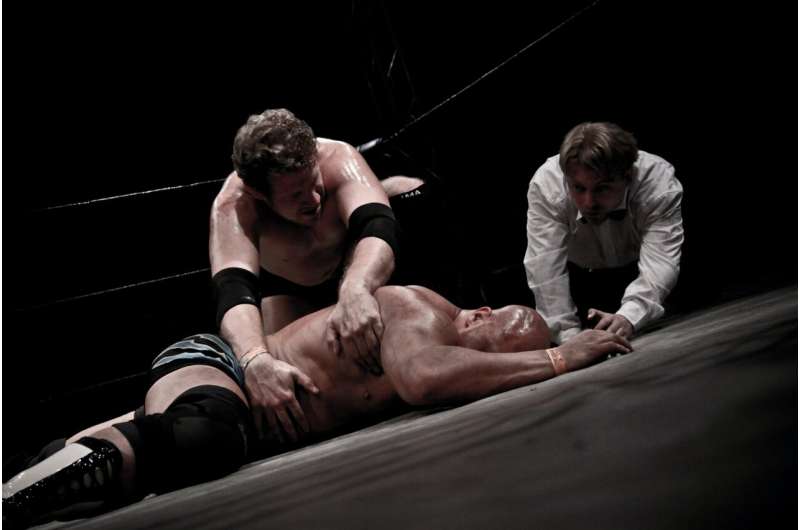
wrestling
Credit: Unsplash/CC0 Public Domain

In April, former World Wrestling Entertainment (WWE) writer Britney Abrahams sued the company for alleged discrimination following her objections at racist and discriminatory storylines. The lawsuit also contains some damning examples, citing "offensively racist and stereotypical jargon used in WWE scripts."

\In June, the defendants in the lawsuit—executive chairman Vince McMahon, chief brand officer Stephanie McMahon and other WWE executives—requested an extension to the deadline to respond.

These claims come a year after an investigation revealed a USD$3 million (£2.3 million) hush money settlement payment was made by Vince McMahon to a woman he allegedly had an affair with, resulting in his voluntary resignation as executive chairman and CEO. Within six months, he had reappointed himself as executive chairman, resulting in further board resignations in objection.

The above instances imply that the company's board is seemingly in turmoil behind the scenes, yet to many, the claims of racist pitches should not come as a shock. Stereotypes have always been, and still are, a main component of WWE.

Many of these  merely regurgitate age-old offensive characterizations, which are repackaged by the sports entertainment company and distributed to a prolific audience. Its YouTube channel has 55.5 million subscribers and has amassed almost 40 billion views.

WWE is shown in the UK on BT Sport as well as having its own global streaming platform, the WWE Network, which is currently available in 180 countries in 25 languages. These images have a global reach but receive little criticism.

Apollo Crews

One of the examples cited by Abrahams is the character development of the American wrestler Apollo Crews. In early 2021, Crews debuted a new iteration of his character, claiming he was a descendant of Nigerian royalty.

Alongside this claim, Crews now sported a stereotypical Nigerian accent, as well as entering the ring with a tribal spear. These aspects—alongside a more defiant and violent persona—evoke the stereotype of the "black buck", or "brute." This figure is seen throughout art, literature and film as a slave to his animalistic tendencies and a threat to the white man.

Crews' development reinforces the derogatory aspects of the stereotype seen throughout the 19th century, instead foregrounding the "otherness" of non-white cultures. The idea of othering—situating another culture in opposite to your own—is a main component of the WWE. Many of the Asian athletes also suffer similar stereotypical aspects.

Asuka

Asuka—a highly successful Japanese female wrestler—uses an illegal move called the "Asian mist". This is where the wrestler sprays colored liquid into the face of their opponent, causing various supposed effects from visual impairment to paralysis.

Asuka uses "Asian mist."

This move, currently only utilized by Asuka in a show of causing partial sight loss, relies on the perceived mysticism of Asia. No explanation is given to how these liquids are created, or how their various effects are achieved. Bright colors are utilized (red, green, blue) to demonstrate their exotic quality. When it was first utilized in the 1980s the wrestler made a show of rubbing their throat, as if extracting the fluid from a secret, magical gland.

Not only this, but Asuka has also drawn criticism from WWE veteran Jim Cornette for the way in which she communicated with another Japanese wrestler, IYO SKY, in their native tongue. Both women are shown shouting at each other, in an almost incoherent manner, screaming and sticking their tongues out, in a maniacal manner.

This stereotype can be seen as a manifestation of the ideas put forth by the post-colonialist author, Edward Said, most obviously in his seminal work Orientalism, in which he highlighted the way the west has misrepresented the east to situate themselves as superior and as a means to justify colonialism. The aspects of mysticism and poor communication skills demonstrate the backwardness and the perceived uncivilized behaviors that are key aspects of an Orientalist stereotype.

The WWE foregrounds the exotic, magical and mystical aspects of Asia, in opposition to the perceived norm of the west. During the pandemic, Asuka drew attention to the rise of anti-Asian racism in the US, but she is also arguably complicit in the continued perpetuation of stereotypical imagery through her WWE persona.

Sheamus

White characters also suffer from the stereotypical tendencies of the WWE. Take Sheamus, an Irish wrestler who made his debut 17 years ago. Celtic imagery has been a key component of his iconography throughout his career.

In an interview in 2006, he stated he wanted to move away from Irish stereotypes of "Guinness, leprechauns and Blarney Stones," instead attempting to portray a Fianna—fierce warriors that are a main component of Irish mythology. However this distaste for stereotype seems to have waned.

In 2020, Sheamus took part in a "bar fight" where he fought his opponent in a pub-like setting, smashing bottles over each other's heads. Links can be drawn to the US anti-immigration campaigns in the 19th century where stereotypes of Irish people were established, positing them as violent alcoholics. This is reflected in many images of the period, as well as the "no Irish need apply" campaigns.

Stereotypes of other cultures have pervaded in western media, but representation has improved in many industries, most noticeably within Hollywood. However it does not look like WWE will be changing the way it represents other cultures any time soon.

These few examples merely scratch the surface of the problem. This year the WWE also announced a merger with the Ultimate Fighting Championship creating a "live sports and entertainment powerhouse." This raises multiple questions, but one area of interest is whether these stereotypes will continue, spreading naïve representations of cultures around the globe.

Provided by The Conversation 

This article is republished from The Conversation under a Creative Commons license. Read the original article.The Conversation


Preexisting stereotypes found to influence entertainment selection


More than half of life on Earth is found in soil—here's why that's important

More than half of life on Earth is found in soil—here's why that's important
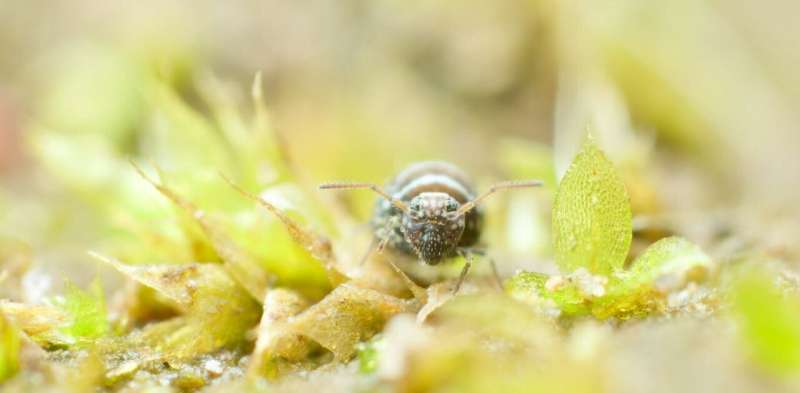
Springtails (Fasciosminthurus quinquefasciatus) are found in any damp soil. 
Credit: Andy Murray/chaosofdelight.orgCC BY-NC-ND

recent study has found that soil is home to 59% of all life on Earth, from an insect feeding on the soil surface to a tiny microbe nestled in a soil pore. This discovery crowns soil as the most biodiverse habitat on the planet.

The paper estimates that around 2 million species of arthropod (think insects and spiders) inhabit the soil—some 30% of all known arthropod species. There are far fewer species of soil specialists such as enchytraeidae (resembling mini earthworms) and oligochaeta (worms), with only 770 and 6,000 species respectively. That might not seem like a lot, but it still represents around 98% and 63% of these animal groups.

The variety of mammals living in soil is, by comparison, quite limited. Only 3.8% of  are associated with this habitat. On the other hand, 85% of plants have their roots buried in the soil and around 43% of nematode (tiny worms) species call soil their home, or reside within the plants and animals that inhabit it.

However, the number of animal and plant species that live in soil are dwarfed by . The researchers estimate that a mind-blowing 430 million species (or more than 50%) of bacteria and 5.6 million species (or 90%) of fungi have made soil their home.

But perhaps more important than the raw numbers are the functions that this biodiversity performs. The life within the soil not only helps to produce the food we eat, it also plays a crucial role in holding the soil together and even gives us potential sources for  and medicines.

Helping plants grow

Small animals, including earthworms and springtails, break down  and other forms of organic matter, such as dead insects, and incorporate them into the soil. This process releases the nutrients that most plants rely on to grow. But it's not the only way that soil organisms help plants gain more nutrition.

Mycorrhizal fungi (a species of fungi that grow in association with ), for instance, embed themselves in the roots of plants where they extract energy-rich compounds. In return, the fungi help plants expand their reach in the soil, allowing them to access a greater amount of nutrients.

Other species that are vital for food production include nitrogen-fixing bacteria. They are commonly associated with legumes such as beans and clover. These bacteria convert nitrogen gas from the atmosphere into compounds that the plants can use—an undertaking that can otherwise only be done synthetically, using vast amounts of energy.

How soil organisms break down plant remains and create soil pores.


Holding soil together

As organisms penetrate the soil, whether by burrowing, creating nests or as a means of anchoring themselves, they engineer pathways through the soil and contribute to its structure. Notable examples include termites rearranging the soil to create channels for air and water to filter through, as well as roots and root hairs enmeshing soil.

The incorporation of decomposed plant material into the soil serves a similarly crucial purpose. It helps to hold the soil together and creates pores that protect the soil from erosion and increase its capacity to store water.

Some of this organic material is also locked away with soil minerals, leading to the storage of carbon. In fact, soils hold three times as much carbon as vegetation and twice as much as the atmosphere.

Biodiversity increases resilience

In many cases, these functions involve a variety of species. Having multiple species perform the same function offers a safety net if conditions change, such as during a drought or a flood.

Some species are more resilient to these events than others. When conditions change, unaffected organisms within the soil can step in to fulfill the same functions as those that might have suffered—a process ecologists call "functional redundancy." This improves the ability of an ecosystem, such as soil, to withstand and recover from environmental shocks.

Soil biodiversity is also a key reservoir for new drugs. Soil bacteria have produced most of our antibiotics, including streptomycin, chloramphenicol and tetracycline. Unfortunately, the rise of antibiotic resistance has rendered many early antibiotics ineffective. However, searching through different soils is yielding promising new antibiotics with the potential to kill "superbugs" that are resistant to existing drugs.

Soil biodiversity plays an important role in producing the food we eat, sustaining soil health and helping to deliver a range of other services, from sourcing medicines to reducing the impact of floods and droughts. The importance of protecting our soils for future generations becomes ever clearer.

Provided by The Conversation 

This article is republished from The Conversation under a Creative Commons license. Read the original article.The Conversation


Two-thirds of the world's biodiversity lives in the soil


Why moths might be more efficient pollinators than bees and butterflies

Why moths might be more efficient pollinators than bees and butterflies
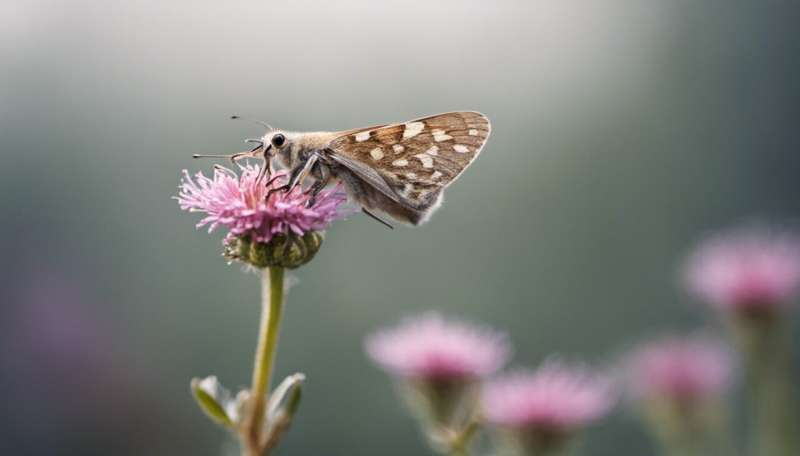
Yellow underwing moths were one of the species in the study.
 Credit: Eileen Kumpf/Shutterstock

If you've ever felt underestimated and ignored, spare a thought for your local moths. Honeybees, bumblebees and butterflies are almost synonymous with pollination. People love them for their intimate relationship with flowers—we can't grow a lot of our food or enjoy the sight of fragile springtime blossom without them. But our recent research showed moths may actually be more efficient pollinators.

Almost all  on pollinators happens during the day, which means we know little about what happens at night. So we designed a study to compare the contribution of nocturnal and day-active pollinators. We focused on bramble, which is widespread across Europe.

People often look at bramble as a prickly pest that needs to be removed from our green spaces. But it is a crucial source of nectar and pollen for bees, butterflies and moths, flowering from early spring through until the autumn.

During peak summer in the UK, when we carried out our experiment, the night is only around one-third of the entire day cycle. During this time, moths are almost the only insects that visit flowers. Even though 83% of all flower visits in our study happened during the day, pollination rates were higher at . This suggests moths are more efficient pollinators than species that are active during the day.

We used trail cameras to record visitors to bramble flowers over three days and placed special bags over the flowers so we could compare their pollination rates. One group of flowers was covered for the whole three days. The second group was covered only during the day time and a last set was covered only at night. It wasn't possible to identify the species of every moth that visited the flowers, but among them were silver Y and large yellow underwing moths, which are both in the family Noctuidae.

While it remains unclear precisely why moths had higher pollination rates, it may be that they spend more time visiting each flower than honeybees, hoverflies and other daytime pollinators. In any case, it's certain that the importance of moths as nocturnal pollinators is undervalued. Despite the fact there are only 60 species of butterfly and over 2,500 species of moth in the UK, a far higher proportion of research and environmental policies focus on butterflies.

Our study showed that the pollination of valuable crop plants and threatened species of wildflowers may rely upon on moths. Many of the UK's macro-moths (which tend to be larger) are declining, with over 40% of species declining in abundance.

Under pressure

Why moths might be more efficient pollinators than bees and butterflies
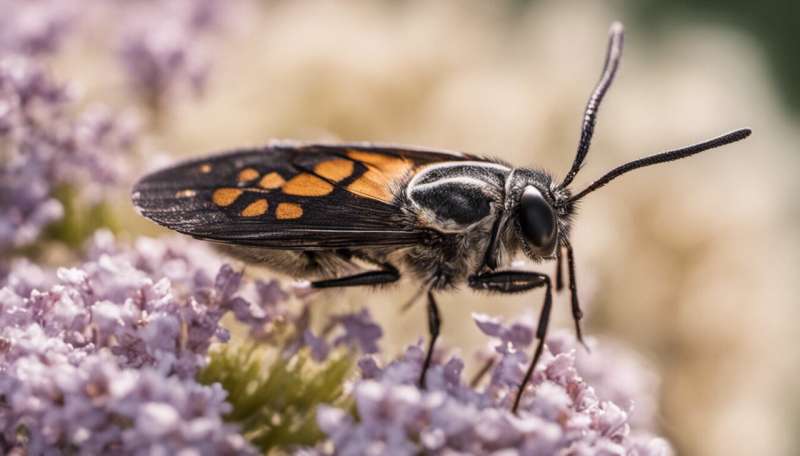
A silver Y moth visiting a flower. Credit: Davide Bonora/Shutterstock

Moths face the same challenges as daytime pollinators, such as pesticides,  and . But nocturnal moths are also threatened by artificial light at night. Recent research has highlighted how street lighting is disrupting the feeding behavior of caterpillars and reducing moth numbers. Previous work has also shown the light disrupts adult moths from feeding, breeding and laying eggs.

Moths are not only important pollinators—they are key links in the  and shape the structure and composition of habitats. Their caterpillars feed on grasses and other plants. When caterpillars are dispersed throughout a habitat, some areas are grazed and others are not, which creates a varied structure. This variety bodes well for biodiversity, by creating a greater range of habitats for different species to live in. Not to mention the importance of moths as a vital food source for bats, birds and other .

New approaches to research are being developed and tested, which will help address gaps in our understanding about the role of moths as important pollinators.

For example, automated identification and tracking of insects through  can allow us to remotely monitor pollinator activity, saving time in collecting and processing data. Understanding more about moths will give us the knowledge we urgently need to protect them.

What you can do

You can help these pollinating insects by allowing some patches of bramble and other flowering, scrubby plants to grow in your garden, allotments and hedgerows. You can also encourage your council to do the same across the network of road verges and parks in the UK.

The harmful effects of artificial light can be managed by dimming or limiting the operating time of  during the night, as pioneered by Devon and some other district councils. At home, you can switch off or reduce the use of outdoor lights at night and close your curtains and blinds to prevent light from spilling outside. Tackling light spill from shop fronts and glass office blocks could also help moths stay focused on pollination.

In light of the huge declines in populations of pollinating insects across the globe, it's more important than ever to protect our pollinators. These small and simple changes will provide more homes for wildlife. Spreading the word could have a crucial impact on  conservation—some of the most underappreciated and important animals on our planet.

Provided by The Conversation 

This article is republished from The Conversation under a Creative Commons license. Read the original article.The Conversation


Creating a disaster preparedness plan for your pets

animal shelter
Credit: Pixabay/CC0 Public Domain

Recently, Texas Gov. Greg Abbott announced a wildfire disaster declaration for about 75% of the state's counties and the National Oceanic and Atmospheric Administration also released an updated hurricane season outlook that includes a 70% chance of 14-21 named storms before the season ends in November.

With these potential weather threats in mind, now is a good time to consider what you might do with your pets if there was an emergency.

Having a plan in place is crucial for the furry members of your family. The most important way for  to prepare for a disaster evacuation is to plan ahead and pack a go-kit, an easy-to-grab, waterproof bag or container with basic survival items and supplies.

Planning ahead

The first step in planning ahead is to know where you are going in the event of a possible evacuation by compiling a list of hotels, boarding facilities, and shelters that allow pets.

"This helps you know where you can go, depending on the types of animals you have and how many, and can give you a leg up on calling them quickly when you know you will be evacuating and need a reservation," said Dr. Deb Zoran, a professor at the Texas A&M School of Veterinary Medicine and Biomedical Sciences.

"Before you need them, be sure you have information on the hotel, shelter or boarding facilities you may use when a disaster is headed your way, check that they have a good reputation for their animal care, and make sure the facilities are completely out of harm's way."

While gathering information, owners can also confirm if the facilities require specific vaccinations.

"The only vaccine that is required by law in most places is rabies, yet even that vaccine is not always required for entry into an emergency animal shelter," Zoran said. "A majority of animals brought to a shelter after being rescued from a flood, fire or tornado come without their owners—or their owners come with them but without documentation. Emergency shelters have to operate on this premise."

To ensure there is no doubt about a pet's vaccination status, owners should keep records of vaccinations that evacuation shelters may require evidence of, including:

  • Rabies
  • DA2PP, a single vaccination for distemper, adenovirus type 2, parvovirus, and parainfluenza
  • kennel cough for dogs
  • FVRCP, or feline viral rhinotracheitis, calicivirus and panleukopenia

"Most shelters allow non-vaccinated animals into the shelter but separate the animals with vaccination papers from those without," Zoran continued. "Ultimately, you need to consult with your vet about appropriate vaccines for your dog or cat."

Assembling a go-kit

Owners should ask their veterinarian annually for copies of vaccine records and medication details to print and include with their go-kit.

"If your pet needs medications—heartworm, flea prevention, or specific medication for  such as thyroid or heart medicine, antibiotics, etc.—you need a copy of the medical records showing that your pet requires this medication should you not have enough or the medication is lost and has to be refilled," Zoran explained. "Pet medications cannot be given to you without documentation or a new vet exam, so having records available is important."

A go-kit should also include first aid supplies; cleaning supplies, including pet waste bags and sanitizing wipes; and feline supplies, if applicable, such as a litter box, scooper and litter.

Zoran suggests owners pack additional items that can help keep pets safe and comfortable while traveling and throughout their stay in an unfamiliar place.

"Disasters are a stressful time for pets, so bringing things that smell familiar, special treats, normal food, and toys is very important," Zoran said. "Cats, in particular, not only need the kennel that they travel in, but if they are going to be away from home for days or weeks, they will need a kennel at least 2 feet by 3 feet or larger to live in; they need room to sleep, a box to hide in and a place for the litter tray."

Normal foods that pets are accustomed to contribute to keeping pets healthy during difficult situations.

"Familiar foods and  will help prevent gastrointestinal upset, as sudden food changes in the shelter environment can lead to loss of appetite, vomiting or diarrhea, adding to the stress of the moment," Zoran said. "Cats will be less willing to eat in a stressful or busy environment if they don't have their own food and if they don't have a quiet place or time to eat."

Disaster evacuations can create stressful environments for people and pets alike, but adding identification tools and transportation supplies into a go-kit can help prevent pets' needs from being overlooked in the chaos.

"Both dogs and cats need to have microchips, collars or harnesses for identity protection and escape prevention," Zoran explained. "Cats should not be removed from kennels without a harness on, as fear-inducing experiences can cause them to run and hide. Dogs, even the most highly trained ones, will also flee, so careful use of collars and leashes is essential, both for their protection and for preventing interactions with other animals at the emergency ."

More information: Pet owners should familiarize themselves with additional preparation tips by Texas A&M University's Veterinary Emergency Team to establish a plan, ahead of an emergency situation.


Provided by Texas A&M University Know the requirements for your pet's rabies vaccination


Q&A: Urban doom loop—what it is and how cities can stop it

Q&A: Urban doom loop: What it is and how cities can stop it
Credit: Tufts University

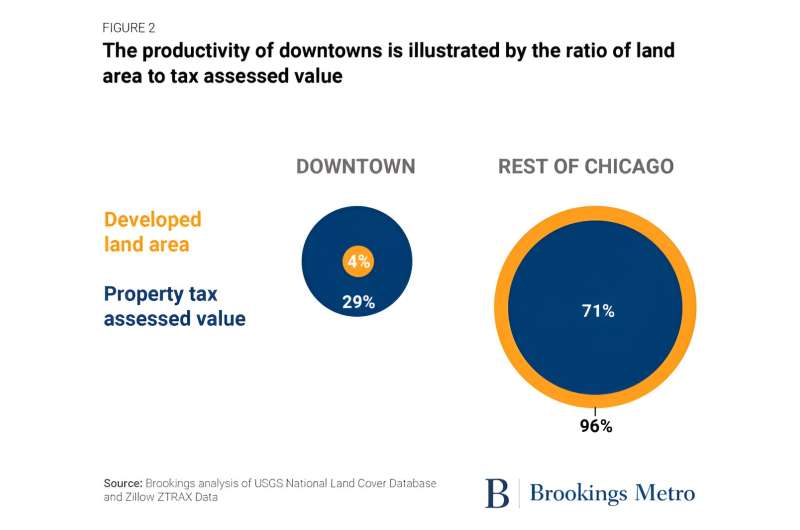
Recent images of downtown San Francisco—emptied of office workers now dialing in remote and filled with wandering homeless people—has struck fear for the future of urban areas. A Columbia University professor coined the term "urban doom loop" for the downward spiral some cites seem to be on, as workers don't return, retail businesses shutter for lack of customers, residents flee to the suburbs, and city tax revenues decline, leading to fewer services, and then fewer residents.

Stories like those about failing urban centers are "filling some urban observers with existential dread," according to a recent Brookings Institution report.

"While the notion of the urban doom loop makes good headlines, I don't see it as something beyond our control," says Jon Witten, a senior distinguished lecturer in the Department of Urban and Environmental Planning and Policy (UEP) who has taught at Tufts for 36 years. "We're not a leaf in the wind here. Cities, towns, and regions control the narrative; they just need to do so."

Tufts Now spoke with Witten, a land use planner and lawyer, to learn more about the state of American cities, including Boston, and what they need to do thrive.

Tufts Now: In the 2000 to 2020 period, a number of cities across the country grew and became magnets for people moving into urban areas. What made those cities grow like that?

Jon Witten: There were a number of reasons, but a big one was the demand for high-end housing from young professionals moving into cities, because that's where the jobs were. But post-COVID-19, cities began to falter—much like we saw in the 1960s and 1970s—and people, at least for now, are clearly leaving cities, citing the availability of remote work and a general sense that congregating hundreds of people in a downtown office skyscraper may no longer be a workable model.

The question now is, where are these folks going and how do cities survive without them? That's where this kind of pejorative statement of urban doom loop comes in.

Are people moving to the suburbs? And if so, what are the consequences of that for cities?

In many parts of the country there has been a shift back to the exurbs and the suburbs, coupled with federal and state disinvestment in  like we saw in the late 1960s and 1970s. That retrenchment evoked the infamous 1975 New York Daily News headline "Ford to City: Drop Dead."

While I don't see ongoing events being that dramatic—many cities appear to be recovering post-COVID—the definition of the urban doom loop presumes that as more residents leave the city and less development occurs, the revenue stream—the property tax—diminishes, often rapidly. The doom is the loss of revenue, and the loop is the vicious cycle that becomes difficult to stop.

From a  and municipal governance lens, it becomes a self-fulfilling prophecy. New residents—taxpayers—resist moving to the city as governmental services are diminished or disappear—the  aren't sufficiently funded, public playgrounds and  aren't maintained, and so on—and yet the very revenue needed to make the city attractive again is simply not available.

What other challenging issues do cities face?

Every city and town has been negatively affected by COVID, but in some cases, COVID sadly highlighted just how bad things were prior to 2020. Public transportation provides a telling example. Before COVID, for example, getting from the suburbs to the urban downtown was a challenge in most cities in the country. We've historically ignored this simple question: If I'm living in the suburbs, how do I get to the city for work?

Putting aside many urban planning stereotypes that cities are good and suburbs are sterile and bad, if commuters trying to get to work in the city can't reasonably do so, at some point they will stop trying. That is the real urban doom loop.

That isn't caused by public health crises, but rather by the lack of political courage and investment to tether the city to where people want to—or have to—live.

Boston has been on a loop of doom for decades, not because of COVID or some external force beyond the state's control, but rather because the state refuses to think regionally and recognize that for Boston to thrive, the suburbs and remaining rural portions of the state must do so, too.

Is that true of many American cities?

It is. Los Angeles, of course, is the king. New York comes a close second, but every major U.S. city has suffered from the disinvestment, or lack of initial investment, in public transportation, such that getting from the suburbs to downtown, and vice versa, is only slightly better than intolerable.

In Washington, D.C., the metro system extends farther and farther out as the suburbs expand into Maryland and Virginia—is that better?

No, that's just as bad and shortsighted. Where's the plan, what's the goal, and where's the courage to say that not every square foot of a region needs to be paved over and accessible to developers?

The D.C. approach has set a dangerous precedent for urban transportation in the U.S. Fueling land development and unfettered speculation by laying out more and more rail lines without first having a plan to ensure that impacted cities, towns, and regions are prepared for what will follow is irresponsible.

Are there urban centers where the cities have emptied out and the suburbs now are the economic centers?

Yes, and that's not uncommon, especially with mid-size cities such as Cleveland and other "rust belt" cities, where the center city has really struggled since the 1960s and 1970s. But in many of these cities, and Cleveland is a good example, the impacts to the center city were often mitigated by investment—public transportation and otherwise—to create what was labeled as an "edge city."

These areas, often within the historic city limits or close to it, provide a tethering of suburbs and the urban core. Edge cities aren't without problems; the land they're developed on was the suburban fringe or rural countryside, and are now the site of office parks and retail shopping malls.

So I'm not championing this idea at all, only recognizing that the decline of urban centers, whether historic or due to a post-COVID doom loop, has historically led to alternative patterns of employment, housing, and related development and revenue-raising approaches.

I've read that one solution to empty office towers is to turn commercial real estate in downtown areas into housing. Would that help?

Converting office to residential space is certainly a good idea in isolated instances, but once again the doom loop concern is triggered. If we're losing office space, then we're losing employment. Building more housing will satisfy developers, speculators, and bankers, and those who argue that all we need to do to fix our housing problem is build more housing.

But housing for who? Retirees? Maybe, but I don't think so. It's a marketing ploy—because where are people going to work? Not in downtown anymore.

Can urban planners help with job creation in cities?

As a planner and one who's had the honor of teaching at UEP for the past three plus decades, I'd be the first to say that urban planners can offer a lot of good advice and technical expertise, but at the end of the day, land-use decisions are political decisions. If state and local political leaders have the courage to think forward—plan—the answer is yes.

If, on the other hand, political leaders respond to the issue du jour—today "badly needed affordable housing," tomorrow "badly needed jobs," and thereafter "badly needed something else"—I think the answer is no.

Urban planning must be comprehensive, inclusive, and holistic. To avoid a doom loop, state and local leaders need to accept the reality that urban planning and urban governance is complicated and requires comprehensive thinking. Trying to address Boston's or New York's housing shortage or transportation woes isn't an isolated task solved by simply building more housing or more roads or expanding rail lines.

What do you think Boston can do to try to avoid the doom loop?

I suspect Boston will survive the ebbs and flows of post-COVID impacts given the city's history—we've had bigger troubles before this one—and the large presence of nonprofit and governmental agencies that provide a reasonably secure employment base not tied to a particular industry or service.

I think the question isn't so much about Boston's future as it is the region's. If train service is nonexistent or dysfunctional, if the state remains beholden to the real estate industry, and if the agenda is not being set by comprehensive statewide, regional, and urban plans, then I think we are in big trouble.

Cities and towns aren't like leaves in the wind, helpless against the forces of nature. We are totally capable of creating and making good use of comprehensive plans. But that requires political courage that we haven't seen in Massachusetts. This remains one of the few urbanized states that has rejected comprehensive land-use planning and substituted in its place an endless whiplash of crises, many real, but also many exaggerated by those who profit from them.

What do you see as the future of downtowns? Is it potentially optimistic?

I'll stop teaching the minute I think there's no reason for optimism. We put ourselves in this predicament and we can get ourselves out of it. Urban planning dates back literally thousands of years.

Some plans have obviously failed, badly, but many others are inspirational and models for how society can function collectively and equitably. It's a never-completed task, of course, but the effort is worth it, and not only because the alternative is so much worse.

The alternative is that cities and towns do nothing and simply let the free market—the development and real estate industry—dictate the future of our old and new urban centers. Such an outcome may be supported by some economists espousing laissez-faire principles, but when it comes to rational decisions regarding limited land and natural resources, I think it hopelessly naïve and shortsighted.

More information: Report: www.brookings.edu/articles/bre … s-shared-prosperity/


Provided by Tufts University Longer commutes affect the cost of living in large cities more than zoning restrictions


Nauseous territory: Outfoxing predators using baits that make them ill

red fox
Credit: Pixabay/CC0 Public Domain

Introduced foxes, dogs, cats, rats, and other predators kill millions of native animals every year, but what if they were conditioned to associate this prey with food that made them ill

A team of international researchers have shown the potential to do just that, burying baits containing capsules of levamisole, a chemical that induces nausea and vomiting when consumed by predators.

In a world first experiment conducted in south-eastern Australia, where introduced  are responsible for countless wildlife deaths, the Australian National University (ANU) and University of South Australia scientists laid baits of fried deboned chicken, with some containing encapsulated levamisole to hide the taste and smell of the chemical that makes animals nauseous or sick.

Over three sequential periods, untreated baits were laid, followed by levamisole-containing baits and untreated baits again. During the final period baits taken fell by 30%, indicating that foxes had consumed the levamisole-containing baits, fallen ill, and were reluctant to go back for seconds, despite the later absence of levamisole.

Researchers say this evidence shows it is possible to condition  to avoid  based on their unique odor, and ultimately this strategy may be applicable to protecting vulnerable wildlife living in that habitat.

The non-lethal tactic for keeping predators at bay could be potentially more effective than shooting, trapping and poison baiting in certain contexts, according to ANU Ph.D. student Tim Andrewartha.

"Based on our findings, this potential is something we hope to explore in the future," Andrewartha says.

UniSA researcher Associate Professor Anton Blencowe says invasive predators are responsible for almost 60% of all bird, mammal, and reptile extinctions globally, so it's critical to find ways to mitigate their impacts on .

"Existing lethal control methods—shooting, trapping, and poisoning can be counterproductive in some situations, with  capable of adapting their behavior and becoming harder to control," he says.

The tactic employed in this experiment, known as conditioned taste aversion (CTA), shows promise as a tool to reduce the predation of vulnerable wildlife, the researchers outline in a paper published in Conservation Science and Practice, titled "Landscapes of nausea: Successful conditioned taste aversion in a wild red fox population."

A range of encapsulated nausea-inducing agents can be injected into food sources, such as eggs or animal carcasses, so the predator associates the symptoms with the food odor and not the chemical.

Microencapsulation, where the agent particles are minimized, can also be used to hide textures and prevent the capsule from being accidentally broken open during consumption.

Scientists say more research is needed to determine the best chemical and dosage used, whether live prey rather than a carcass are more effective at conditioning aversion in the red fox, and the time between consumption and onset of symptoms.

The study was led by the Australian National University in collaboration with the University of South Australia, the University of Tokyo, and James Hutton Institute, UK.

More information: Tim Andrewartha et al, Landscapes of nausea: Successful conditioned taste aversion in a wild red fox population, Conservation Science and Practice (2023). DOI: 10.1111/csp2.12984


Provided by University of South Australia Endangered birds can be protected from predators with chemical camouflage

Invasive firestarter: How non-native grasses turned Hawaii into a tinderbox

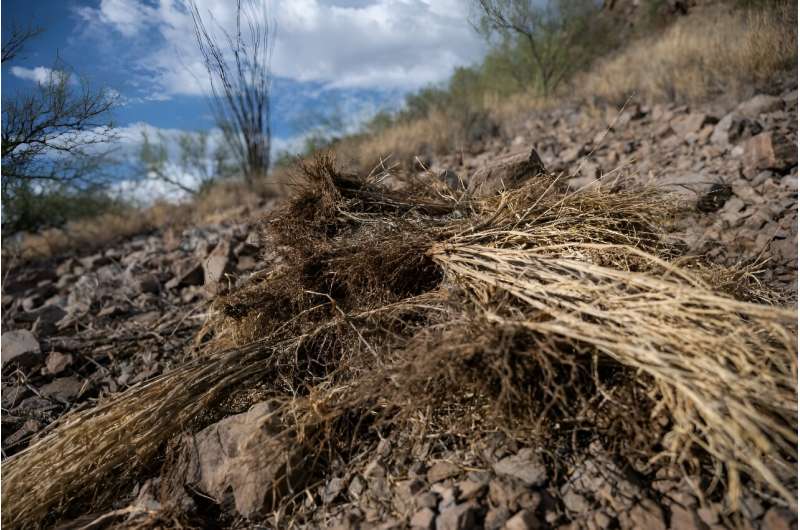
Dried buffelgrass, an invasive species that leads to faster growing wildfires, is seen on the side of a hill near a trail in Tuc
Dried buffelgrass, an invasive species that leads to faster growing wildfires, is seen on the 
side of a hill near a trail in Tucson, Arizona.

After a catastrophic wildfire that killed more than 100 people in Hawaii, eyes have turned toward an unexpected culprit: invasive grass species that have spread massively over the archipelago for decades, serving as the perfect fuel.

Drought-resistant, capable of invading difficult terrain, and gradually muscling out , they are also a growing threat in the western United States, where devastating fires are increasing.

"Invasive grasses are very ignitable. They change the landscape," Carla D'Antonio, a professor of ecology at the University of California, Santa Barbara told AFP.

"They make conditions that are more conducive to more fire, and all of a sudden, we just have a lot more fire."

Rather than decomposing when they die, they stay "standing there for a long time, dry as a bone," said D'Antonio, who has been studying these species for more than 30 years. They're also hardy, surviving fires better than  and gradually replacing them.

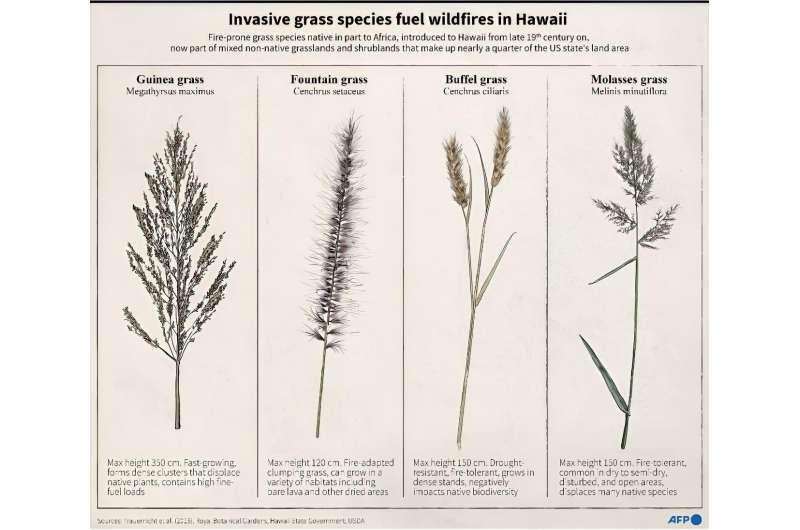
Most of these grasses—buffelgrass, Guinea grass, molasses grass—came from Africa, and were introduced as pasture for cattle, without knowing the danger they would come to represent decades later.

In Hawaii, the demise of sugar cane plantations in the 1990s as a result of globalization had disastrous consequences: huge tracts of land were abandoned, allowing the invasive species an opening.

Invasive grass species fuel wildfires in Hawaii
Graphic showing a selection of invasive and flammable grass species in Hawaii that can
 act as fuels for wildfires.

"Yes, many parts of Hawaii are trending towards dryer conditions, but the fire problem is mostly attributable to the vast extents of non-native grasslands left unmanaged by large landowners as we've entered a 'post-plantation era,'" said Clay Trauernicht, a fire ecologist at the University of Hawaii at Manoa.

Trauernicht said the annual area burned in Hawaii has increased by 300 percent in recent decades.

A 2021 fire prevention report by Maui County described fires as a growing threat due to increasing temperatures and prolonged periods of drought as a result of climate change, and the growing menace of intrusive grasses.

Hawaii, despite its tropical reputation, is getting drier: a 2016 study found 90 percent of the state received less rain compared to a century earlier.

The Maui County report recommended "an aggressive plan to replace these hazardous fuel sources with native plants to reduce combustible fuel while increasing water retention."

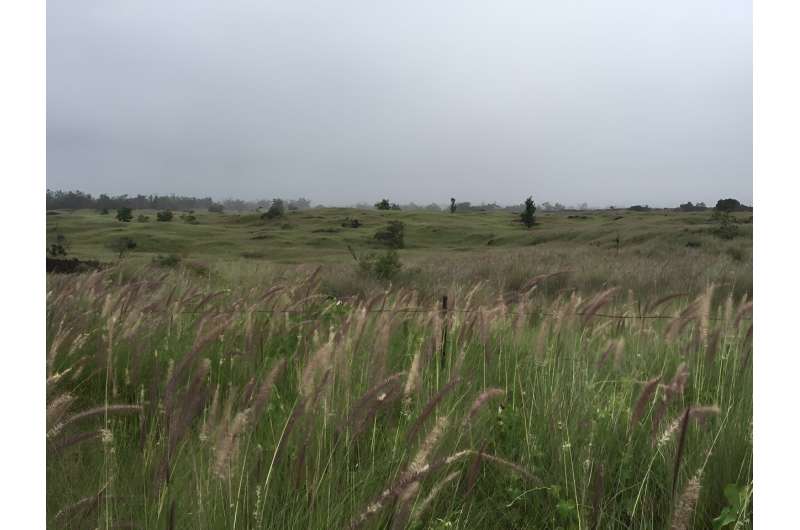
This undated handout photo provided by Carla D'Antonio shows invasive molasses grass (Melinis minutiflora) filling in spaces bet
This undated handout photo provided by Carla D'Antonio shows invasive molasses grass 
(Melinis minutiflora) filling in spaces between remnant native shrubs and trees in burned 
areas of Hawaii Volcanoes National Park.

'Nothing natural about it'

The problem isn't confined to Hawaii. Over in the mainland United States, "the deserts of the West and the conifer forests, and then the shrub lands in the  are here to stay, they're now part of the ecosystem," said D'Antonio.

She herself spends some Saturday evenings weeding roadsides with neighbors in a mountainous area near Santa Barbara, California. Their goal: to prevent a fire from starting from a cigarette butt or an overheating vehicle.

Most of the major fires of the Mojave and Great Basin have been fueled by invasive grasses, she says, while also citing the Camp Fire of 2018, which destroyed the small California town of Paradise, killing more than 80 people. It was started by a power line igniting dry grass.

"(I'm) not making the mistake of calling it a natural disaster because there's almost nothing natural about it," emphasizes the scientist.

One of the invaders, buffelgrass, also threatens the emblematic cactus of the Saguaro National Park in Arizona, by smothering young saguaros and fueling fires in the region. Organizations regularly organize clearing operations. The same species is spreading in Mexico and in Australia.

This undated handout photo provided by Carla D'Antonio shows fountain grass (cenchrus setaceum) covering large areas of the kona
This undated handout photo provided by Carla D'Antonio shows fountain grass (cenchrus
 setaceum) covering large areas of the kona side of Hawai'i island.

According to a 2019 study, six invasive  species caused fire frequency to increase by up to 150 percent in US ecosystems.

For D'Antonio of UC Santa Barbara, tragedies like that of Hawaii are linked to many factors: the alteration of the landscape by humans, the invasion of alien , droughts made worse by climate change, but also a lack of preparation.

In the American West, widespread logging of conifer forests in the 19th century and a long history of excessive fire suppression in the 20th century contributed to accumulation of tinder on the forest floor.

"The potential for disaster is huge," said D'Antonio, leaving society with daunting questions to address. "How do we plan for the extreme? Not for the average fire, but the extreme ?"

© 2023 AFP


Rising non-native cover in the Santa Monica Mountains threatens native biodiversity and increases fire risk