Tuesday, October 03, 2023

12 infants die in a day at Indian hospital, opposition alleges negligence

Reuters Published October 3, 2023 
Relatives of patients admitted at the Shankarrao Chavan Government Medical College and Hospital are seen inside the hospital, in Nanded, India, October 3, 2023. — Reuters

Twelve infants died in one day at a hospital in the Indian state of Maharashtra, sparking a political storm on Tuesday with opposition politicians accusing the regional government and hospital authorities of negligence.

The infants died on Sunday and were among 24 deaths recorded that day at the Shankarrao Chavan Government Hospital in the Nanded district, some 600km (373 miles) from India’s financial capital Mumbai, hospital officials and local media said.

“My brother’s one-day old infant died on Sunday at the hospital, and he was the fifth baby to die. We saw four more babies die in front of us,” said Yogesh Solanki, whose family brought the baby to the hospital.

Solanki said the neonatal unit of the hospital, where the infants were being treated, was very crowded on Sunday, with four to five babies in one incubator, which was otherwise designed to hold just one.

The dean of Shankarrao Chavan hospital, Shyamrao Wakode, did not respond to a Reuters request for comment on this allegation or opposition accusations of negligence, saying in a brief phone call that he had no time because a government minister was visiting the premises.

Earlier on Tuesday, Wakode told ANI news agency, in which Reuters has a minority stake, that the 12 adult patients died of various ailments including diabetes, liver failure and kidney failure.


“There was no shortage of medicines or doctors. Proper care was provided to the patients, but their bodies did not respond to the treatment, which caused deaths,” Wakode was quoted by ANI as saying.

The Maharashtra government said on Tuesday it had launched an inquiry into the deaths of the infants and other patients on Sunday.

“Twenty-four is a big number. Why did so many deaths occur in one day? We will investigate if it was because of lack of medicines, or a shortage of staff or some other reason,” state minister Girish Mahajan told reporters.


Opposition politicians accused the Maharashtra government, run by Prime Minister Narendra Modi’s party and an ally, of gross negligence over the deaths of the infants.

“The BJP government spends thousands of scores of rupees on its publicity but there is no money for medicines for children?” Rahul Gandhi, leader of the main opposition Congress party, said in a post on social media platform X.


In Shankarrao Chavan hospital on Tuesday, patients crowded the corridors and pigs roamed the premises outside, underlining the disarray at most government-run hospitals in the world’s most populous country.

India’s public healthcare system is woefully ill-equipped, plagued by a dearth of staff and equipment. The doctor-to-patient ratio is 0.7 per 1,000, according to the World Health Organisation, which recommends a level of 1 per 1,000.

Sunday’s deaths were the second such episode in Maharashtra in as many months. In August, 18 people admitted to a state-run hospital in the Thane region died over a 24-hour period, local media reported. The state government ordered an investigation into the incident at the time.

Inside Balochistan’s sectarian shift — the rise of IS from Lashkar-i-Jhangvi

Though no group has claimed responsibility, security officials and experts believe that the Islamic State's local affiliates are behind the latest attack in Mastung.

Zia Ur Rehman
DAWN
Published October 3, 2023

Tragedy struck at the heart of Balochistan’s Mastung district on September 29 when a suicide bomber targeted a gathering preparing for the 12th Rabiul Awwal procession. The blast echoed through the main market, killing 55 people and leaving over 120 injured.

Muhammad Ashgar, a member of the procession’s organising committee, says despite threats from militant groups, conveyed to them by district administration and police, they didn’t believe such an attack would actually be carried out.

“No one expected them to attack the 12th Rabiul Awwal procession; we perceived it as an attempt to intimidate us,” Asghar told Dawn.com.

“In Balochistan, militant groups have historically targeted the Shia community and their Muharram processions. However, they hadn’t targeted the 12th Rabiul Awwal procession,” he explained. “This attack indicates a shift, with the Barelvi community now being targeted along similar lines.”

Though no specific group has claimed responsibility, security officials and experts believe that the militant Islamic State’s (IS) local affiliates are behind the attack.

This belief stems from the fact that Mastung district has recently witnessed a spate of terror incidents linked to the militant IS’s two local affiliates — the Islamic State in Khorasan Province (ISKP) and the Islamic State in Pakistan Province (ISPP).

Officials have also noted a change in tactics by the IS-linked groups in Mastung. “Instead of initiating attacks after long intervals, the gap between their attacks is diminishing,” an intelligence official based in Quetta, told Dawn.com.

On September 14, IS claimed responsibility for a bomb attack targeting a convoy of the Jamiat-e-Ulema Islam-Fazl (JUI-F), an Islamist political party, in the Joto area of Mastung district. The attack injured 11 people, including the party’s former senator, Hafiz Hamdullah.

The group also claimed responsibility for the killing of a Levies official and injuring another in Bus Adda locality on September 7, days after an attack targeting a policeman near Wali Khan police station on August 26. In another incident on August 12, the terror outfit claimed to have killed a policeman in the Kanak area, signalling a concerning escalation in their violent activities.

IS in Pakistan


In early 2015, the IS’s central leadership established a chapter for Afghanistan and Pakistan, known as the Islamic State - Khorasan Province (ISKP). Unlike Afghanistan, however, ISKP’s network in Pakistan primarily comprises two categories of militants.

The first group consists of former Tehreek-i-Taliban Pakistan (TTP) militants, some of whom are Salafi or hold anti-Shia sectarian tendencies. These mainly hail from various parts of Khyber Pakhtunkhwa, including Bajaur, Orakzai, Kohat, and South Waziristan. The second group comprises militants from the banned militant outfit Lashkar-i-Jhangvi (LeJ), an anti-Shia militant group, predominantly from Balochistan’s Mastung, Quetta, Nushki and Khuzdar regions, as well as parts of northern Sindh.

In a strategic move to focus ISKP solely on Afghanistan and draw in Pakistani militant outfits, especially those linked with the TTP, LeJ, and other Pakistani Jihadi groups focusing on India-administered Kashmir, the IS leadership formally introduced the Islamic State Province of Pakistan (ISPP) in May 2019. This marked a distinct administrative separation of Pakistan from ISKP. In 2021, however, almost the entire KP province, previously under the ISPP’s jurisdiction, was integrated into ISKP’s organisational network following directives from IS Central.

LeJ — from Punjab to Balochistan

During the 1990s, as the Punjab police intensified their crackdown on sectarian groups, numerous LeJ militants sought refuge in hideouts provided by local religious leaders and seminaries affiliated with the Sipah-e-Sahaba Pakistan (SSP) in Balochistan’s various regions, primarily in areas such as Mastung, Quetta, and Nushki.

Interviews with religious leaders and journalists in Mastung suggest that LeJ militants from Punjab established the terror group’s organisational structure in Balochistan’s Baloch-populated districts such as Mastung, Quetta, Nushki, and Kalat. Using the terror outfit’s anti-Shia and anti-Iran rhetoric, they motivated local militants to target the Hazara Shia community in Quetta and during their travels to Iran for pilgrimage, particularly on the main highway in Mastung.

Tariq Parvez, who led the crackdown against sectarian outfits in Punjab in the 1990s as the head of the Crime Intelligence Department (CID), acknowledged that numerous LeJ militants fleeing the crackdown found refuge in Balochistan, Karachi, and other parts of the country.

“Quetta and neighbouring districts served as ideal locations for LeJ and other jihadist groups, offering hiding spots in madrassas run by ideological partners and facilitating movement to Afghanistan,” Parvez, who also served as the head of the National Counter-Terrorism Authority (NACTA), told Dawn.com.

He noted that after the weakening of sectarian terrorism in Punjab, Balochistan began witnessing sectarian violence in 2002, manifested through attacks on the Hazara community in and around Quetta.

“The LeJ’s first major attack on Hazaras in Quetta was in July 2003 when three gunmen entered an Imambargah during Friday prayers, killing 53 people and injuring 57 others,” he recalled.

Until mid-2015, LeJ Balochistan operated as a freelance organisation collaborating with several national and transnational militant groups, including the TTP, al-Qaeda, the then newly-formed IS, and the two Iranian Sunni militant groups — Jundullah, and Jaishul Adl — according to law enforcement officials and experts in Quetta. Usman Saifullah Kurd served as the LeJ’s operational chief in Balochistan since at least 2002.


From LeJ to IS

Mufti Hidayatullah, a religious leader associated with the SSP, was a founding member of the LeJ in Mastung. His madrassa in Mastung’s Kali Kandawa area served as a hideout for LeJ militants after attacking the Hazara Shia community in Mastung and Quetta.

After Quetta, Mastung saw a rise in attacks on members of the Hazara community. In September 2011, gunmen stopped a bus at Lakpas near Mastung, ordered passengers to disembark, and proceeded to shoot them, killing 26 and wounding six after confirming their identity as Shias. In the following years, buses of the Hazara Shia community en route to Iran to visit holy sites were targeted through suicide attacks, claiming hundreds of lives.

In 2016, intelligence agencies demolished Hidayatullah’s madrassa due to its involvement in providing hideouts to LeJ attackers and also killed two militants in a raid on his house. Hidayatullah had been at large since then.

However, after the killing of Kurd in a shootout with law enforcement agencies on Quetta’s Sariab Road in February 2015, LeJ began weakening and suffered a split. In this precarious situation, Hidayatullah and his like-minded group joined ISKP a few months after Kurd’s death.

Encouraged by the recruitment of trained LeJ militants, IS carried out high-profile attacks in Balochistan. The group targeted the Police Training College in Quetta, killing 61 police cadets. In another brazen attack, a suicide bomber targeted the shrine of Sufi saint Shah Noorani in Khuzdar district, leaving 52 dead and 102 wounded. IS also claimed responsibility for the 2018 suicide attack on an election rally, which killed 140 people, including pro-government politician Nawabzada Siraj Raisani, and injured dozens more.

The IS in Balochistan also permitted several anti-Shia outfits in neighbouring regions, such as Hafeez Brohi to align themselves with it.

When law enforcement agencies killed Hidayatullah, with a bounty of Rs5 million on his head, in a shootout in Kalat district in 2018, it was learnt that he was serving as IS Balochistan chief. The IS Central in its weekly al-Naba publications, published a biography of Hidayatullah.

“In Balochistan, these are the same LeJ members now using IS platforms,” said Shahzada Zulfiqar, a Quetta-based journalist analysing the security situation. He said that the IS was also responsible for abducting and killing two Chinese nationals in Quetta in 2017.

Despite claims by security forces and law enforcement agencies of eliminating several key leaders and members of the group, Mastung and neighbouring districts continue to witness uncontrollable attacks, according to Zulfiqar.

In 2021, a faction of LeJ Balochistan, which named itself the Saifullah Kurd faction, under its new leader Khushi Muhammad, merged with the TTP.

Targets of IS’s local affiliates

While the IS’s local affiliates target Shia communities, they also attack those belonging to the Barelvi school of thought, besides leaders and supporters of the JUI-F, Jamaat-i-Islami, government and law enforcement officials, and practitioners of mystical traditions such as the Zikri community.

“Targeting the 12th Rabiul Awwal procession indicates that IS’s local affiliates in the region adhere to the IS central’s tendency to instigate sectarian strife by actively targeting minority Muslim sects, such as Shias, Barelvis, and Zikris,” said Muhammad Amir Rana, an Islamabad-based security analyst.

Rana highlighted ISKP’s leadership, particularly its chief Shahab al-Muhajir, criticising the Barelvi community in its publications, describing them as ‘infidels’ allied with the Pakistani state.

In 2021, the ISKP in a detailed statement, linked the Taliban with Barelvis (Sufis) and Saifis, the followers of Pir Saifur Rehman, a Pakistani spiritual leader. The group, in its publication, also criticised Taliban supremo Mullah Haibatullah Akhundzada for being a Saifi — a Sufi order that has a sizeable following in Afghanistan as well as parts of KP and Punjab in Pakistan.

“Along with Shias, Barelvis are also key targets for IS in Pakistan. The group has attacked Sufi shrines in Balochistan and Sindh, killed Barelvi leaders in Peshawar, and practitioners of mystical traditions in Mastung in the recent past,” said Muhammad Israr Madani, an Islamabad-based researcher specialing in Islamic movements.

He also noted that the LeJ was behind the 2006 Karachi Nishtar Park suicide bombing, which killed over 50 people, including top Barelvi leadership from Sunni Tehreek and Jamaat-e-Ahle Sunnat.

“Through such attacks on Barelvis and other minority Muslim sects, IS aims to maximise sectarian friction and recruit new members from the country’s existing sectarian groups,” he added. “By attacking non-Muslim minorities, such as Christians and Sikhs, IS seeks international attention.”

Impact of Afghan Taliban’s crackdown on IS

The surge in IS attacks in Pakistan, notably in Balochistan, is directly connected to the Afghan Taliban’s crackdown on IS in neighbouring Afghanistan, experts said.

The Taliban’s sustained operations over the past two years have granted them substantial control in the region. “IS has entered a period of hibernation in Afghanistan and focused on the recruitment of new members,” said Rana. “But it has redirected its attention towards Pakistan, capitalising on the country’s current political and security instability,” remarked Rana.

“This shift indicates a potential rise in attacks in Pakistan in the foreseeable future,” he warned.

Header illustration: Shutterstock

The writer is a journalist and researcher, who writes for The New York Times and Nikkei Asia, among other publications. He also assesses democratic and conflict development in Pakistan for various policy institutes. He tweets @zalmayzia


A disturbing number of TikTok videos about autism include claims that are “patently false,” study finds

2023/09/13


Content related to autism on TikTok appears to have a significant and widespread audience but the majority of the information provided in these videos is not aligned with the current scientific understanding of autism, according to new research published in the Journal of Autism and Developmental Disorders.

Autism spectrum disorder (ASD) refers to a group of complex neurodevelopmental disorders that affect an individual’s social interaction, communication skills, behavior, and interests. ASD encompasses a wide range of symptoms and levels of impairment, which is why it is referred to as a “spectrum disorder.” Understanding and disseminating accurate information about autism is crucial to help individuals with autism, their families, and society at large.

There is growing concern about the unfiltered nature of the content hosted by internet platforms, including social media. The study specifically focuses on TikTok because it is a highly popular platform with a large user base and because users frequently create and share videos containing healthcare-related information, including autism.

“Although social media platforms have made information about autism more accessible to the general public, concerns have been raised about the unfiltered nature of the content they host,” said study author Giacomo Vivanti, an associate professor at Drexel University, the leader of the Early Detection and Intervention research program at the A.J. Drexel Autism Institute, and author of “Clinical Guide to Early Interventions for Children with Autism.”

“Many practitioners have the perception that information on autism on social media can have a very broad reach – however, it can only contribute to disseminating misinformation. We were interested in TikTok in particular because of its popularity – it surpassed 2 billion mobile downloads worldwide by 2020 and was ranked the most popular website as of 2021.”

The researchers conducted a comprehensive study to assess the reach and accuracy of informational content about autism on TikTok, a popular social media platform. In the first step, they took precautions to avoid algorithmic bias by creating a new TikTok account. They then conducted a search using the “#Autism” hashtag on July 29th, 2022, and found a substantial number of videos related to autism. To ensure the quality of their dataset, they applied initial exclusion criteria, which removed non-English videos, those unrelated to autism, and duplicate content, resulting in 365 eligible videos.

With the eligible videos in hand, the researchers proceeded to identify and select videos that were specifically designed to provide information on autism, which they termed “informational videos.” These videos were distinguished from “personal experience” videos that shared individual stories and did not attempt to provide general information about autism. This selection process yielded a total of 133 informational videos for further analysis.

The critical next step involved fact-checking and coding of these 133 videos. Two independent coders meticulously reviewed the content and classified each video as accurate, inaccurate, or containing overgeneralization based on its alignment with established scientific knowledge regarding autism. The researchers adopted a conservative approach in their coding, marking statements as “inaccurate” only when they unequivocally contradicted current scientific understanding.

The researchers found that the “#Autism” hashtag had generated a staggering number of views by the time of data collection. A significant majority of the informational videos (73%) contained either inaccurate information or overgeneralized claims about autism. These inaccurate or overgeneralized videos received similar levels of ‘likes’ and views as the accurate ones (144,584,203 views and 16,724,125 likes for inaccurate or overgeneralized videos vs. 54,111,743 views and 8,468,277 likes for accurate videos).

“TikTok videos associated with the ‘#Autism’ hashtag accrued 11.5 billion views collectively, an extremely broad reach,” Vivanti told PsyPost. “We fact-checked the 133 top videos providing informational content on autism, which totaled 198.7 million views and 25.2 million likes, and showed that the majority of videos provided information that was patently false, or overgeneralized, i.e., experiences related to a single person were used to advance claims about how autism should be diagnosed or conceptualized in general.”

“So, similar to other social media channels it looks like TikTok can bias understanding about autism in two ways (1) by providing blatant misinformation (for example, claiming that a certain product “cure autism”), or (2) by overgeneralizing individual experiences to the entire autism spectrum and not representing the entire spectrum of manifestations within the autistic population.”

Furthermore, the researchers observed a notable distinction between creators. Videos produced by health care practitioners were more likely to be accurate compared to those by autistic creators and ‘other’ creators. This discrepancy suggests the need for increased awareness within the autistic community, professionals, and practitioners about the unfiltered nature of information related to autism on TikTok and other social media platforms.

“There are also many videos on TikTok that anecdotally document the lives of autistic people and their families, without the claim of disseminating knowledge on autism as a condition in general,” Vivanti said. “These point to the unprecedented opportunity offered by TikTok to create a content space where autistic individuals and family members can share their personal experiences with many people, which can advance knowledge on lived experiences (which is separate from scientific knowledge, but important too) and help reducing stigma.”

The study, “The Reach and Accuracy of Information on Autism on TikTok“, was authored by Diego Aragon-Guevara, Grace Castle, Elisabeth Sheridan, and Giacomo Vivanti.

© PsyPost
New study delves into the mating psychology of involuntarily celibate men

2023/09/1


There has been extensive media coverage on the mating psychology of incels in recent years. However, most of the commentary has been speculative given the lack of empirical research on the topic. The first formal investigation of this subject has revealed that contrary to mainstream narratives, incel-identifying men report lower minimum standards for mate preferences compared to non-incel men, among other interesting findings. This research was published in The Journal of Sex Research.

“The incel topic in general interested me because finding and retaining a mate represent persistent adaptive problems for humans. Modern humans descend from an unbroken evolutionary chain of ancestors who successfully solved these problems. Achieving mating goals is so important to humans that it impacts physical and mental health, financial success, and even functions as a social signal of status,” said William Costello (@CostelloWilliam), a PhD student of Individual Differences and Evolutionary Psychology in Dr. David Buss’ lab at the University of Texas at Austin.

“Indicative of how preoccupied humans are with attracting mates is the fact that billion-dollar industries are built around it in the form of dating apps, we write poetry and go to war over it. It seems somewhat paradoxical, therefore, that there is a growing community of men who strongly identify with their perceived inability to solve these adaptive problems – involuntary celibates (incels).”

“We have a deep evolutionary history of involuntarily celibate men. Indeed, genetic evidence reveals that in every generation, most women reproduce whereas only a subset of men reproduce (Betzig, 2012). Modern incels, however, appear unique in galvanizing a shared victimhood identity around their sexless and mateless circumstance.”

“Despite the incel community being focused almost entirely on their perceived difficulties in mating, and the significant media speculation about the potential sexual and mating psychology of incels, incel mating psychology has yet to be formally investigated in the scientific literature. In fact, there is a relative dearth of primary data collected from self-identified incels in general, likely due to incels being a hard-to-reach group who are suspicious of the motives of academic researchers.”

I asked Costello what can be learned by studying this specific population. The researcher said, “The mental health impact of feeling like you cannot access sexual or romantic relationships. We know that there is lots of research showing that relationships improve mental health.”

A total of 409 individuals were included in this research. Participants were recruited through Facebook and Twitter using social media snowball sampling. Costello also advertised the study on the “Incel” podcast. As well, the study was shared with users on the Incel.is forum.

This study focused on single, biological males. Those who identified as heterosexual, biologically female, and non-incel were kept for additional analyses. A total of 151 incel and 149 non-incel single men were included in this research.

Participants completed a “reasons for being single” checklist where they ticked off items they believed contributed to their singlehood. Of these, 9 items were external reasons (e.g., online dating), while 28 were internal reasons (e.g., fearing rejection). Participants also completed the Mate Value Scale which includes four items assessing their opinions of their own general attractiveness as a mate.

In addition, they completed a questionnaire assessing their minimum standards for mates, for which they indicated a minimum score between 1 to 10 a person would have to meet across 15 traits (e.g., humor, intelligence) to be considered as a long-term mate. Participants also responded to these items from the perspective of a woman. The researchers derived a composite score across the 15 traits. Lastly, participants indicated whether they identify as an incel and completed a demographic questionnaire (e.g., education, employment status).

Costello broke down the results of their research.

“Our findings highlight extremely poor mental health, some cognitive distortions, a victimhood mindset known, the disproportionate prevalence of autism spectrum disorder, poor mating intelligence, and dating anxiety among incels.”

“Many people are understandably worried about incel violence. However, my supervisor (Dr. David Buss) and I actually just published a theoretical overview of the scale of incel violence. The evidence suggests they are far more dangerous towards themselves than others. Given that sexless young men are typically very violent and disruptive in society, it’s actually a puzzle why there is not actually MORE incel violence.”

“Our new work also confirms and dispels some stereotypes about incels,” the researcher told PsyPost.

“Unsurprisingly, incels have a low sense of their own mate value. But interestingly, evidence shows that men are most inclined toward misogyny when they doubt their appeal to female partners and that unwanted celibacy (independent of incel identity) predicts misogyny. The misogyny pervading much of the incelosphere likely reflects a low sense of mate value. This means that helping incels improve their own mate value and mating prospects would have the added benefit of reducing harmful instances of misogyny.”

“A stereotype that our work dispels is that incels do not simply have too high standards as many commenters suggest. A common narrative is that incels simply have too high standards. Evolutionarily it would not be a good strategy for low mate value men to concentrate their finite mating effort on competing with high mate value men for high mate value females. Our data show that incels had lower minimum standards for mate preferences across every trait and overall. Incels do not appear to have overly high mate standards compared to non-incel single men.”

“However, incels make fundamental mistakes in their perception of female mate preferences. Incels UNDERESTIMATE the importance of qualities like intelligence, kindness & humor, and OVERESTIMATE physical attractiveness & financial resources. ~Global prevalence of autism spectrum disorder is .62% Yet it’s 18-30% for incels! People with autism have poorer theory of mind i.e., ability to infer the desires of others. Incels’ failures of cross sex mind reading may reflect high levels of autism.”

He noted a caveat, “There may be some social desirability regarding the reported preferences of women in our study. Specifically, around the importance of financial resources. Robust evidence shows that women do indeed place a premium on financial resources in a mate. However, kindness, intelligence, and humor are also extremely important to women.”

He added, “The vast majority of incels reasons for being single were internal (self-blame).”

What are incels’ top reasons for being single? Costello listed, 1) Not good at flirting, 2) Not good looking enough, 3) Socially awkward, and 4) Too shy.

As for questions that still need to be addressed, the researcher said, “I think the important next steps are for scholars to design and test some mental health interventions to help this at-risk group. I am also interested in working with someone to dig deeper into the high rates of ASD (Autism Spectrum Disorder) among incels (~18-30%). We should investigate why there is such an overrepresentation of men with ASD in this community. What is it about incel identity that appeals to men with ASD?”

“It might also be interesting to investigate whether incels are accurate or inaccurate in their assessment of their own mate value. There are reports that incels are seeking invasive cosmetic surgeries to improve their physical attractiveness. It’s important to ascertain if this is based on a cognitive distortion or body dysmorphia.”

This year, Costello was selected as the American Psychological Association Division 51 Society for the Psychological Study of Men & Masculinities student of the year.

The study, “The Mating Psychology of Incels (Involuntary Celibates): Misfortunes, Misperceptions, and Misrepresentations”, was authored by William Costello, Vania Rolon, Andrew G. Thomas, and David P. Schmitt.

© PsyPost

INCEL MALE FANTASY'S ARE  GOR  S&M

Gor is the fictional setting for a series of sword and planet novels written by philosophy professor John Lange, writing as John Norman.

Jan 13, 2020 — The famous fantasy/scifi series by John Norman, complete up to volume 32.
May 4, 2021 — Topics: Chronicles of Counter-Earth, Counter-Earth Saga, Fantasy, GorGorean Chronicles, Gorean Cycle, Gorean Saga, John Norman, Planetary ...
Is the US banking crisis over?

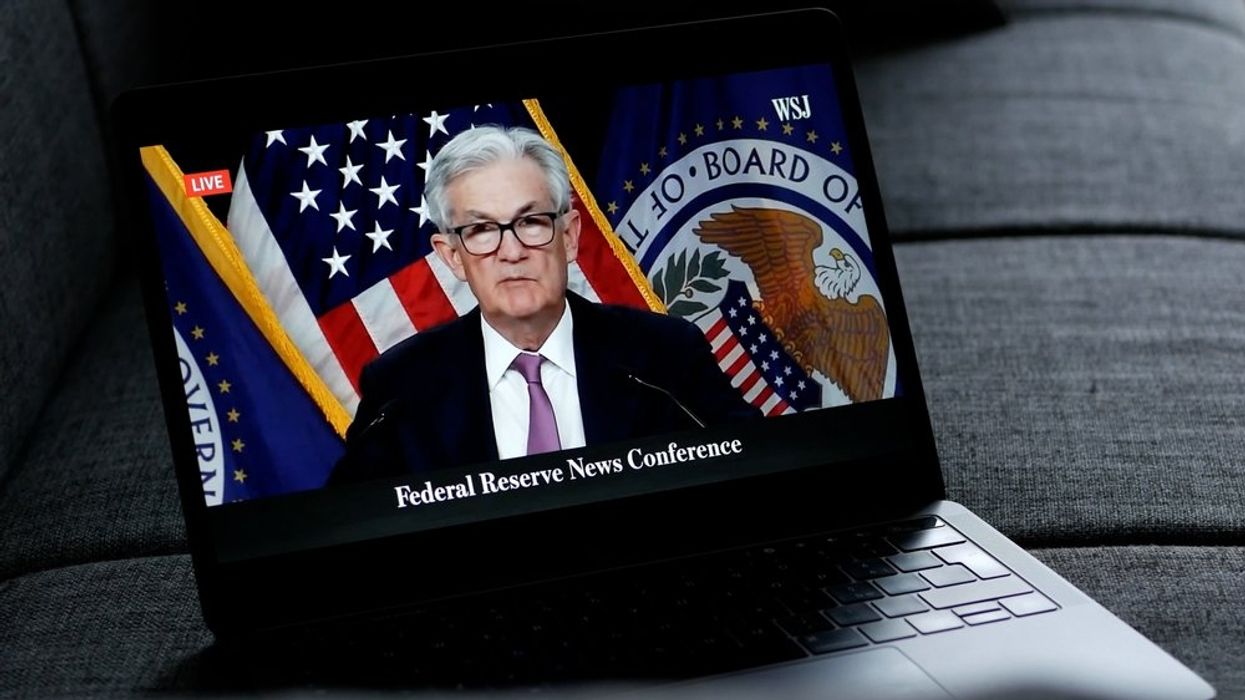
Fed Chair Jerome Powell, Image via Domenico Fornas/Shutterstock.

'Resilient' U.S. economy growth offers 'relief for the market' even though 'coast is far from clear': experts

The Conversation
September 13, 2023

The US banking crisis triggered worries about the global banking system earlier in the year. Three mid-sized US banks, Silicon Valley Bank, Silvergate and Signature, fell in quick succession, driving down bank share-prices across the world.

America’s central bank, the Federal Reserve, made significant amounts of cash available to the failed banks and created a lending facility for other struggling institutions. This calmed investors and prevented immediate contagion, with only one more US regional bank, First Republic, collapsing a few weeks later.

Yet it’s far from clear whether the crisis is really over. As traders return from their summer holidays to a period commonly associated with upheaval in the markets, how are things likely to play out?

Tight margins and dwindling deposits


Central banks have continued to increase interest rates to counter sustained inflation in recent months. In July, the Fed raised its key interest rate to as much as 5.5%, the highest in 20 years. The rate was near zero as recently as February 2022.

Though the increases have slowed this year, such a sudden change can be very harmful for banks – particularly as part of the sort of U-shaped movement in rates that we have seen since the global financial crisis of 2007-09.

US benchmark interest rate, 2007-23


St Louis Federal Reserve

Raising rates reduces the value of banks’ assets, increases what they have to pay to borrow, limits their profitability and generally increases their vulnerability to adverse events. Especially in the first half of 2023, banks have had to cope with low loan growth and high deposit costs, meaning the amount they have to pay out in relation to customers’ deposits.

This increased cost is partly because lots of customers have been withdrawing their money and putting it into places where they can make more interest, such as money market funds. It forced banks to borrow more from the Fed to ensure they have enough money, and at rates much higher than they used to be.


This was one of the reasons for the banking collapses in the spring, destabilising them at a time when the value of the debt on their balance sheets had also fallen sharply. This saw more customers at other banks withdrawing deposits for fear that their money wasn’t safe either. In sum, US banks saw deposits declining between June 2022 and June 2023 by almost 4%. Together with higher interest rates, this is generally bad news for the banking sector.

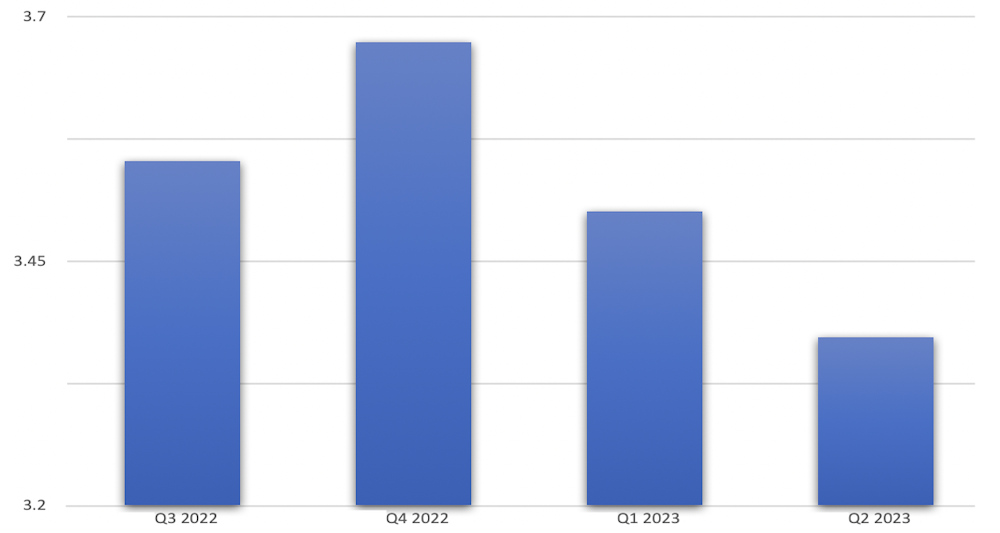
You can see the effect on banks’ profitability by looking at overall net interest margins (NIMs). These are a measure of what banks receive in interest income minus what they pay out to depositors and other funders.

US banks’ net interest margins (%)


Based on 641 banks.
S&P Capital IQ


Credit rating downgrades

The ratings agencies have added further pressure. In early August, Fitch downgraded its rating of US government debt to AA+ from AAA. It cited a likely deterioration in the public finances over the next three years and the endless politicking around the debt ceiling, which is the maximum level that the government can borrow.


Sovereign downgrades often reflect problems in the wider economy. This can destabilise banks by making them seem less creditworthy, leading their credit ratings to be downgraded too. That can make it harder for them to borrow money from the markets or potentially even from the Fed. This can then have knock-on effects in reducing banks’ lending capacity, capital buffers for coping with bad debts, overall profitability and share prices.

US banks’ share prices 2023


Bank of America = blue; Citigroup = orange; Goldman Sachs = pale blue; JP Morgan = yellow; Morgan Stanley = indigo; Regional banks = purple.

Trading View

Sure enough, a week after the Fitch announcement, Moody’s downgraded the credit ratings of ten US mid-sized banks, citing growing financial risks and strains that could erode their profitability. It also warned that larger banks including Bank of New York Mellon and State Street were at risk of a future downgrade.

The other major ratings agency, S&P Global Ratings, has since followed suit, while Fitch is threatening to do likewise. Our research suggests bank downgrades are associated with making them riskier and more unstable, particularly when accompanied by a sovereign downgrade.

Having said all that, there are positives for US banks. Both interest rates and bank deposits are at least projected to stabilise in the coming months, which should help the sector. Despite the overall decline in banks’ profitability, bigger banks are reporting improved margins from charging higher interest on loans. Some of these banks also expect a boost from things like increased deal-making later in the year. Signs like those could help to bring more stability across the board.

In Europe, banks have seen reduced deposits and net interest margins in recent years, which helps to explain why Credit Suisse needed to be rescued by fellow Swiss bank UBS in March. Yet European deposits and profit margins have been recovering in the most recent couple of quarters. At the same time, the European Banking Authority’s recent stress tests concluded that large EU banks are robust.

UK banks appear to be in a slightly worse condition than EU banks. They remain resilient on their balance sheets, but their deposits have not recovered to quite the same extent as in Europe. They have also been adjusting down their profit forecasts in anticipation of further rate hikes by the Bank of England.

Regulatory intervention


To strengthen the US sector, the regulators are planning to further increase the minimum levels of capital that must be held by large US banks (with assets worth more than US$100 billion (£79 billion)).

These plans to increase banks’ capacity to absorb losses are encouraging, though will take more than four years to fully implement. The Basel II international banking rules were introduced to a similar end in 2004, but were not implemented in time to prevent the global financial crisis.

For the moment, the US banking system remains vulnerable both to shocks within the financial system and more general calamities. It will still be a few months before we can say with confidence that the worst is over.

George Kladakis, Lecturer in Financial Services, Edinburgh Napier University and Alexandros Skouralis, Research Assistant, Bayes Business School, City, University of London

This article is republished from The Conversation under a Creative Commons license. Read the original article.
INTERVIEW

"An acute threat to white privilege": Tim Wise on why MAGA is "losing their s**t right now"

The right-wing also has a backup plan


By CHAUNCEY DEVEGA
Senior Writer
SALON
PUBLISHED SEPTEMBER 14, 2023
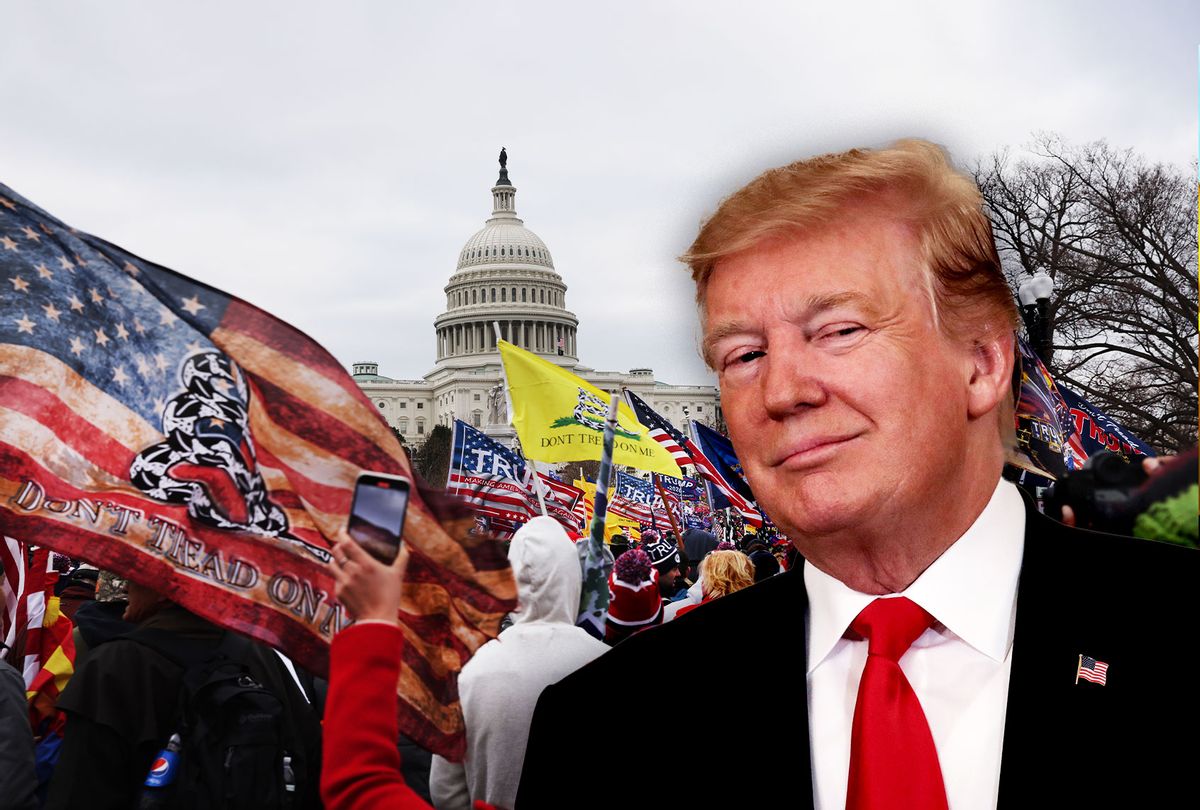
Thousands of Donald Trump supporters gather outside the U.S. Capitol building following a "Stop the Steal" rally on January 06, 2021 in Washington, DC.
 (Photo illustration by Salon/Getty Images)


August 28 was the 60th anniversary of the1963 March on Washington for Jobs and Freedom, where Dr. Martin Luther King gave his "I Have a Dream" speech about the struggle to create a real multiracial democracy and humane society in the United States. On that same Saturday this year, a 21-year-old white supremacist murdered 3 black people at a Dollar General Store in Jacksonville, Florida. The killer's AR-15 rifle was marked with swastikas. He also wrote a manifesto where he detailed his desire(s) to kill black people and start a "race war." In his manifesto, the white supremacist killer reportedly praised Supreme Court justice Clarence Thomas, who is black, for being "The rare principled conservative, interprets laws based the Constitution instead of doing f—y activist shit like the last half-century's worth of Supreme Court justices."

That horrible coincidence of dates is a reminder of how very far America is from being a real multiracial democracy as the country continues to struggle against ascendant neofascism and the Age of Trump.

Ultimately, the Confederacy and the Southern slavocracy, and Jim and Jane Crow were never truly banished from America. Instead, they laid dormant and are now being reborn in the form of today's Republican Party and the larger white right. Public opinion polls and other research shows that tens of millions of white Americans are willing to trade democracy for authoritarianism if it means that white people like them did not have to share power with non-whites. The world they and Trump and the Republican fascists and "conservative" movement are trying to (re)create would be a new American Apartheid.

In an attempt to make better sense of these resurgent politics of white backlash and white supremacy, DeSantis's war on "Woke" and "the Critical Race Theory Mind Virus" and the real history of Black America, and how the color line intersects America's ongoing democracy crisis more broadly, I recently spoke with Tim Wise. He is one of the nation's leading anti-racism activists and the author of numerous books, including "Dear White America: Letter to a New Minority" and "Under the Affluence: Shaming the Poor, Praising the Rich and Sacrificing the Future of America."

This interview has been edited for length and clarity.

Trumpism continues. There was a white supremacist mass murder in Jacksonville a few weeks ago – on the same day as the 60th anniversary of the March on Washington. King's dream is still very much unfulfilled and extremely imperiled. How is your hope tank doing? How full or empty is it?

I am obviously horrified and concerned that we're going to see more white racist terror attacks and hate crimes. When they figure out they can't win legitimately at the ballot box, they're going to turn to the bullet.

They certainly have a lot of guns, and they have a lot of rage. I don't mean that in a prophetic way; it is pretty obvious.

There are some reasons to be hopeful, even in these dark times.

Ron DeSantis in Florida has overplayed his hand dramatically with the war on "wokeness". That's not catapulting him to the forefront of the Republican primaries.

They thought that attacking wokeness and critical race theory and LGBTQ folks was going to allow them to just, you know, just run the board. Those attacks do work, let's never underestimate the power of bigotry and hatred.

We know it works politically on the right, but it's also creating and generating a certain degree of pushback.

The "Critical Race Theory" bogeyman and "Woke" monster didn't go into that Dollar General store and murder three black people.

It never does. No one commits a mass shooting and then writes a manifesto where they footnote Derrick Bell or Kim Crenshaw, bell hooks, Audrey Lorde or other CRT scholars and thinkers and mainstream liberal antiracists more generally.

It is one thing to have a disagreement about an issue a policy issue, such as immigration or affirmative action or policing.

But if that disagreement is made into a question of existential threat, such as "you're taking our country from us!" which the likes of Tucker Carlson and other right-wing personalities do over and over again, or that "those people", black and brown people, the Other, want to hurt "people like you" then you are creating and us vs. them dichotomy. That encourages violence.

Although most people won't respond to that right-wing narrative in the same way as those racial terrorists have done, some of the public on the right will. There are real connections between hateful rhetoric and political violence.

Thankfully the white right is not as smart as they need to be to get all the things done that they want. The question is, can we stop them before they get smart and really figure out how to play the game?

"The reality is there's something horribly dysfunctional and pathological in white culture right now."

Because I think at this point, they still are just so overzealous about their reactionary beliefs that they end up alienating the large numbers of supporters they need to create a broad coalition. I don't want to keep gambling on that.

Nonetheless, I clearly recognize the threat that is represented by the right-wing and their willingness to burn it all down for the sake of getting and keeping power.

Help me work through this given your decades of experience. There are any number of things I could have written about the recent white supremacist killing of three black people in Florida. I chose not to. Ultimately, what is there left to say about white racial terrorism? How have you navigated the pressure and expectation to always have something to say about "race issues"?

I definitely don't try to say something every time there is that type of hate crime or racial terrorism. What could I say that would really be different from what we know and has already been said so many times already?

What I've learned over the years is that I don't have to always be the first voice. I most certainly don't have to be the loudest voice on these "race stories." We all need to be able to take a little breath here and here and there.

But here is something for folks like you and me to consider. What is so utterly obvious to us doesn't make it any less horrific. This is America after all. We know the history and present of this country and the color line. We are experts on it. But to other people this may be shocking and amazing somehow. Given the efforts by Republicans and Trumpists to whitewash the country's history it is important for people like us to explain those connections of the past to the present and not take it for granted that people know that history and the facts.

How do we make sense of what is obvious to you and me and others who have studied the real history (and present) of this country and translate that for others who are willing to listen and learn?

The media's problem – and this is true of the average white American – is that they don't spend much time seriously thinking about race and politics and larger issues of justice and equality like you and I and other experts do. That isn't meant as a criticism of those people, being ignorant of these things may actually be a bit healthier for them emotionally and physically. We know the cost of doing what we do has been for us.

In terms of fascism and racial authoritarianism like we are seeing with Trumpism and today's Republican Party and conservatives, many Americans really believe that "it can't happen here." That America is so exceptional and unique. They really believe it. That is true on the left and right and center, across the spectrum. Biden believes in American Exceptionalism. Obama certainly believes in it.

If you really believe that America is so exceptional and that fascism can't happen here then you look at Trump or DeSantis and then it is much easier to say, "Oh, they just don't even know what they're doing, they're just so stupid". Or "Look how ridiculous they are!"

Too many people are so desperate to find the good in people and have convinced themselves that America can't produce evil leaders – or followers of an evil movement – that they just deny what they are seeing with fascism right here at home.

Now, of course, if you're black in this country or indigenous you most certainly know about the evil things that America and Americans have done.

"The right-wing also has a backup plan, which is if we can't stop the country from becoming more diverse, then we're going to at least make sure that we control the story they learn."

Baldwin observed that black people have never had the luxury of living with the myths that white people depended upon.

White Americans really believe we could never do those evil things, in spite of the fact that white people as a group have done such evil things before in this country. Why is it so hard for white people to see the truth about America? Well, it's so hard because we want to maintain that image of a shining city on a hill. If that is not true and revealed to be a lie, then we white folks would have to rethink our entire worldview.

There's really nothing about our history that says we're inherently better than countries such as Germany or South Africa with all of the objectively evil things they did. A triumphalist and American Exceptionalism view of history blinds too many people to those uncomfortable realities.

None of what DeSantis and the other Republicans are trying to do with whitewashing American history is new. The Lost Cause ideology was a similar effort to lie about history to make white people look like they were innocent or even more absurdly victims in the civil war and the struggle to end slavery.

But the right-wing also has a backup plan, which is if we can't stop the country from becoming more diverse, then we're going to at least make sure that we control the story they learn. We're going to control the nation's narrative and literally whitewash it. Then we are going to go farther and try to indoctrinate black and brown people in these white supremacist narratives as well. We are seeing that with prominent black and brown Trump MAGA types.

To state the obvious because it needs to be stated, if black or brown folks were committing hate crimes and mass murders and other racially and politically motivated violence as seen in Jacksonville, Buffalo, El Paso, Allen, TX, etc. — and never mind the Jan. 6 attack on the Capitol by Trump's followers — there would be a "national conversation" about what is "wrong" with "the black family" and in the "black community" and "black culture". There would also be demands that "Black leadership" and/or "Muslim leaders" denounce such crimes and speak out against it and otherwise be held accountable. When a white person commits such acts of terrorism and violence, no such parallel conversation takes place.

It's critical for us to ask that question in exactly the same way and spirit that the right-wing has always asked it about black folks.

It's always about what's wrong with the black family, what's wrong with the black community? What's wrong with black culture?

The reality is there's something horribly dysfunctional and pathological in white culture right now. And I don't even know what "white culture" means, necessarily. It's very hard to define.

The white family and white communities are losing their sh*t right now and have been throughout the Age of Trump and in the years before. That is tied to white privilege.

Privilege has always been a double-edged sword where even if you live in a society where people like you have always been privileged and you are on top of the hierarchy then any level of even perceived threat or challenge in your life causes a type of self-destruction reaction.

Want a daily wrap-up of all the news and commentary Salon has to offer? Subscribe to our morning newsletter, Crash Course.

If you're used to getting your butt kicked, and you're used to being on the bottom of the pile, and having to scrape for everything, and for any recognition, even your own humanity, then you learn how to do that as a matter of survival. Because if you don't learn how to struggle, if you don't learn how to deal with setbacks, you don't survive. But if you haven't had to do that the least little discomfort becomes amplified and multiplied to the nth degree.

It is no coincidence then that the reason that we are seeing such disproportionate rates of opioid abuse, suicide, heavy drinking and the so-called deaths of despair among "working class" and "poor whites", but especially white men, is from a perceived threat to their privilege and social status. There are other changes to American society with technology and the extreme economic precarity and insecurity caused by late-stage capitalism and globalization that are impacting Americans across the board, but white people as a group are experiencing this as an acute threat to white privilege and white entitlement.

Instead of interrogating how the expectations of whiteness and white privilege and the cultural tropes and narratives of whiteness and its lies have hurt them, many white people are lashing out at the wrong people.

We need to ask these questions in a compassionate way. What is wrong with White America? What is wrong with the white family? Why are they increasingly dysfunctional? Why are they as a group increasingly unable to deal with the world as it is?
Advertisement:

It's a very humanistic thing to say, how do how do we save these people from themselves so they can stop hurting other people too? If we can't figure out how to help white families, and white people and white communities, a lot of black and brown folk are going to die first.

What should "white leadership" be doing in response to Trumpism and the MAGA movement, neofascism, racial authoritarianism, and the rise in hate crimes and other antisocial behavior committed by white people against nonwhites and other targeted groups in the Age of Trump?

I think it's important for them to not only condemn white supremacy, as Biden has done, obviously.

It is also critically important to point out that if black people, Muslims, Latinos, or any other "minority group" was engaging in this behavior that there would questions asked about family, culture, leadership, etc

There is an obvious element of hypocrisy at work here: white pathology is usually not considered racialized pathology. Many people can't even conceptualize it in those terms because to be "white" is by definition to be "normal" in America.

When white folks commit violence, it's seen as an American problem.

When white folks have a disproportionate opioid crisis, it's an American problem.

When the jobs start to leave the heartland and the rust belt in these white communities, it's an American problem.

Whereas when those things happen in black and brown spaces, it's a very specific racialized problem. And we need politicians who are willing to call that out and to say, "Listen, the reality is that there are some very specific dysfunctions and pathologies that are taking place in the white middle class and above. These problems are not exclusive to Appalachia.

These are not problems and challenges that are just impacting poor white people and the "white working class" who live in trailer parks.

Also, it is not poor white people who are going out and buying assault rifles and building an arsenal who then commit mass shootings at schools or Walmart of Dollar General or wherever. We need to be asking why it is a certain cohort of white people who are engaging in these types of destructive behaviors.

Read more

about the GOP's war against multiracial democracy
MORE FROM CHAUNCEY DEVEGA
PragerU's Confederate classroom propaganda: Co-opting history to prop up modern insurrectionists

Abraham Lincoln is portrayed making arguments that sound like modern Proud Boys begging a judge for forgiveness


By AMANDA MARCOTTE
Senior Writer 
 SALON
PUBLISHED SEPTEMBER 13, 2023 6:00AM
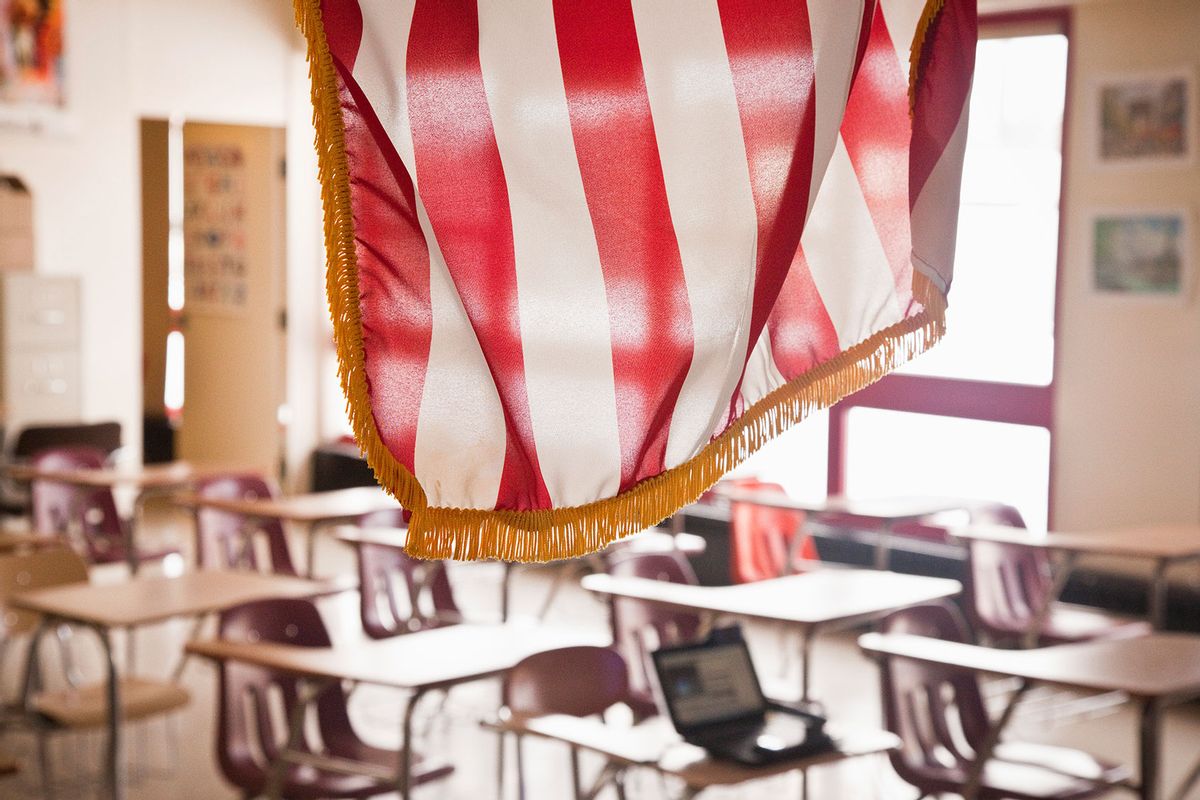
American Flag Hanging in Classroom (Getty Images/Glasshouse Images)


It's ironic that the team at PragerU hates communism so much since they produce dishonest agitprop that rivals anything the Soviet Union's most shameless propagandists produced. The "curriculum" — a word that really overrates what's now being used as educational materials in public schools in Florida and Oklahoma — is so overloaded with right-wing lies that debunking them all is nearly impossible. So many hats off to the team at Media Matters for combing through the extensive video library of the non-accredited right-wing disinformation mill run by Rush Limbaugh wannabe Dennis Prager. The cartoon videos aimed at children, which are also being considered for classrooms in Texas and New Hampshire, promote a wide-ranging amount of B.S. meant to poison children against reality: Videos that lie about climate change, glamorize genocide, fear-monger about urban life, and deny human rights abuses around the globe. There's even a video in which an American bigot compares being criticized online to the plight of Soviet dissidents thrown in a gulag.

It's all terrible, but I want to pull on one thread that especially illustrates why it is that conservatives are so obsessed with rewriting the past. It's not just that their snowflake-delicate egos can't stand the idea that their white ancestors may have done bad things. It's because lies about history are so useful for justifying ongoing lies about our present day. In this case, there's an important connection between the "Lost Cause" mythology embedded in PragerU videos and the attempts to whitewash Donald Trump's attempted coup that led to the insurrection of January 6.

The "Lost Cause" refers to a now multi-century effort of Confederate apologists to erase and distort the history of American slavery and the Civil War. The lies that fuel it have changed over time and place, but the basic false narratives have stayed the same: Slavery wasn't so bad. The Civil War was no big deal. And Southern racism was exaggerated.

PragerU creators are smart enough to know that they can't get away with some of the dumber lies pushed by Confederate apologists — such as claiming that the North started the war — but the basic false premise of the Lost Cause is all over their videos. They portray the Civil War, which killed 1 out of every 40 Americans, like a minor political disagreement between good buddies.

The videos also embrace the "slavery was no biggie" attitude of Confederate apologists. They even show Frederick Douglass, a famous abolitionist, making excuses for slavery by claiming it was "a compromise to achieve something great." In reality, Douglass gave a speech in 1852 in which he declared, "your shouts of liberty and equality" are a "hollow mockery" and "a thin veil to cover up crimes which would disgrace a nation of savages."

There's a direct line, built on white supremacy, between the Confederates then and Trump's insurrectionist army now.

There are many more appalling examples. Indeed, you get the impression they would teach "Gone with the Wind" as if it were a history textbook, except PragerU isn't super keen on asking kids to read. An especially insidious video portrays President Abraham Lincoln taking a forgive-and-forget approach to the South.


No doubt PragerU would claim it was just a coincidence, but this video came out in February 2023. Trump had announced he was running for president again, even though he really should be ineligible under post-Civil War anti-insurrection constitutional law. The Oath Keepers had been convicted and the Proud Boys were beginning trial on charges of seditious conspiracy for their role in the Capitol riot. The country's debate over how to deal with our current crop of racist insurrectionists had really started heating up. At this precise moment in time, PragerU put out a video misleadingly portraying Lincoln as an anti-accountability figure. The fake "Lincoln" in this video, frankly, sounded quite a bit like the Proud Boys begging for forgiveness at their sentencing hearings.

The favorite slogan of the Lost Cause is, unsurprisingly, a sinister one: "The South will rise again." Trump, with his usual narcissism, has remade the slogan in his own image, declaring, "I am your retribution."

Conservatives are usually the first to say that you shouldn't commit the crime if you can't do the time. But apparently, they make a big exception for efforts to topple American democracy for the cause of white supremacy. It's no coincidence that a number of insurrectionists waved Confederate flags on January 6.

As political scientist Anthony DiMaggio explained at Salon, "white supremacist politics were a significant factor in the Jan. 6 insurrection," just as preserving white supremacy was the reason for the Civil War. There's a direct line, built on white supremacy, between the Confederates then and Trump's insurrectionist army now.

Another important tie between the Confederates and the current MAGA movement is the fear and loathing of Black voters. Trump's entire Big Lie tapped into racist assumptions about who is and isn't a "legitimate" citizen. He repeatedly labeled voters in cities with large Black populations as "frauds," unsubtly tapping into white resentment over having to share power with Black people. Notably, John Wilkes Booth decided to assassinate Lincoln after hearing the wartime president give a speech affirming support for Black suffrage. PragerU put this unsubtle "let's just forget this ever happened" message into the mouth of a man literally murdered by the same forces they're making excuses for.

We're not just debating history when we talk about whether to portray the Confederates as well-meaning people who made a minor mistake versus the reality, which is that they were white supremacists who killed hundreds of thousands of people in a treacherous war to defend a violently racist institution. We're also debating our current reality and how we should understand the current movement of white nationalists who are eager to commit domestic terrorism on behalf of Trump.

The favorite slogan of the Lost Cause is, unsurprisingly, a sinister one: "The South will rise again." Trump, with his usual narcissism, has remade the slogan in his own image, declaring, "I am your retribution" at campaign rallies. t's one of the many reasons why Confederate propaganda of the sort PragerU creates is so dangerous. The argument they ascribe, unfairly, to Lincoln is that absolution will heal divisions. In reality, white supremacists are openly plotting their next assault on multi-racial democracy. They want to be forgiven, even as they vow to keep committing the same crimes. What kind of lesson is that to teach children?

Read more
about Republicans' war on history


By AMANDA MARCOTTE
Amanda Marcotte is a senior politics writer at Salon and the author of "Troll Nation: How The Right Became Trump-Worshipping Monsters Set On Rat-F*cking Liberals, America, and Truth Itself." Follow her on Twitter @AmandaMarcotte and sign up for her biweekly politics newsletter, Standing Room Only.