Thursday, February 08, 2024

UK
Young people increasingly unlikely to vote in general election, survey finds
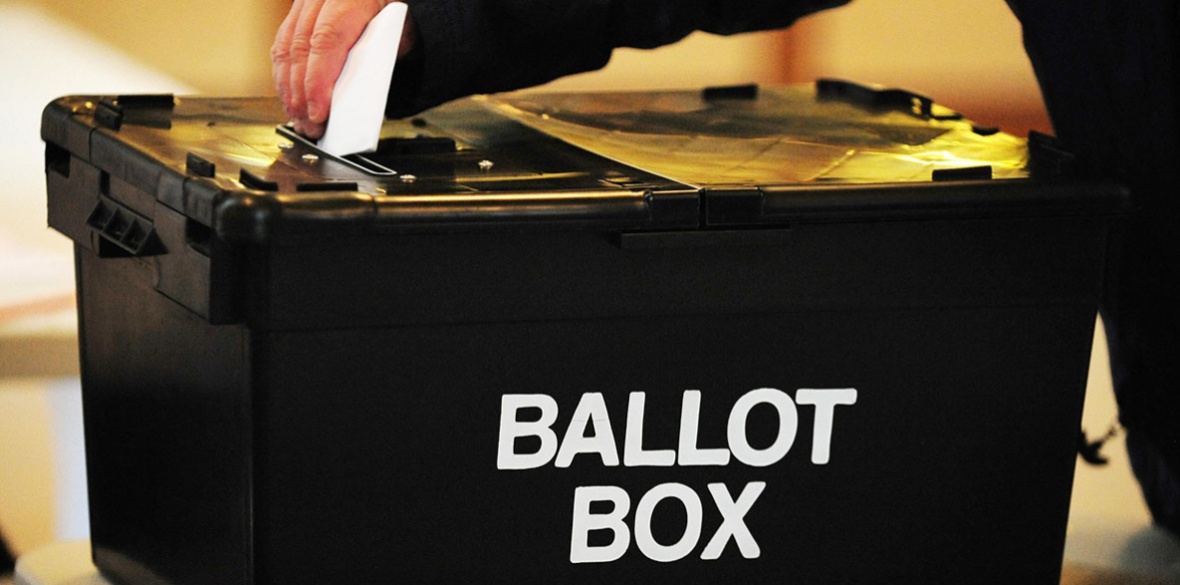

A voter placing a ballot paper in the ballot box at the polling station at Market Hall in Swadlincote, Derbyshire, May 6, 2010

YOUNG people are increasingly unlikely to vote in the general election expected this year, a new survey has found.

A belief that their vote would make no difference and a feeling that the parties did not represent them may keep nearly half of the so-called “Gen Z” — voters aged 18 to 27 — at home on polling day.

About 43 per cent of the nearly 2,300 young people surveyed by research company Prograd said that they either would not vote or were unsure whether to do so.

The findings are scarcely shocking in the blancmange age of Labour leader Sir Keir Starmer and Tory Prime Minister Rishi Sunak.

On the issues found to most concern the young, such as public service funding, tackling climate change and cutting taxes for low-paid workers, it looks like there is little to choose between the major parties.

But the survey is particularly bad news for Labour since its electoral performance has been buoyed by a commanding lead among younger people, particularly under Jeremy Corbyn’s leadership. If their turnout is low, Labour can only suffer.

Commenting on the survey, a Momentum spokesman said: “Keir Starmer is taking our core vote for granted, whether its young voters concerned about housing costs and student debt, or Muslim communities furious at Labour’s betrayals.

“We need to give people something to vote for, by committing to abolish tuition fees, renationalise key industries to cut bills and carbon, and stand up for human rights internationally.”
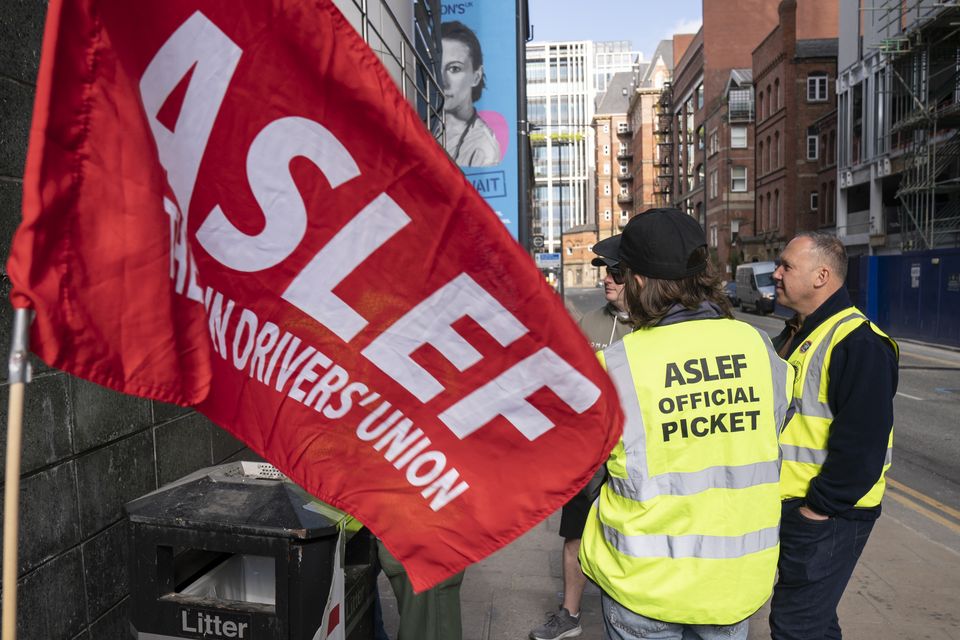
UK Rail services return to normal after latest train drivers strikes


With the end of the latest round of strikes, railway services have returned to normal
(Danny Lawson/PA)

By Alan Jones, 
PA Industrial Correspondent
Yesterday

Rail services returned to normal on Wednesday after a wave of strikes and other forms of industrial action by train drivers in their long-running dispute over pay and conditions.

Services have been crippled by a series of walkouts and a nine-day ban on overtime, which ended late on Tuesday.

No more strikes have been announced, although there is no news on whether fresh talks will now be held to try to break the deadlock.

A spokesperson for Rail Delivery Group said: “There will be no winners if industrial action continues and causes further disruption for customers.

“We believe rail can have a bright future, but right now taxpayers are contributing an extra £54 million a week to keep services running post covid.

“We want the Aslef leadership to work with us to resolve this dispute and deliver a fair deal, which both rewards our people and makes the changes needed to make services more reliable.”


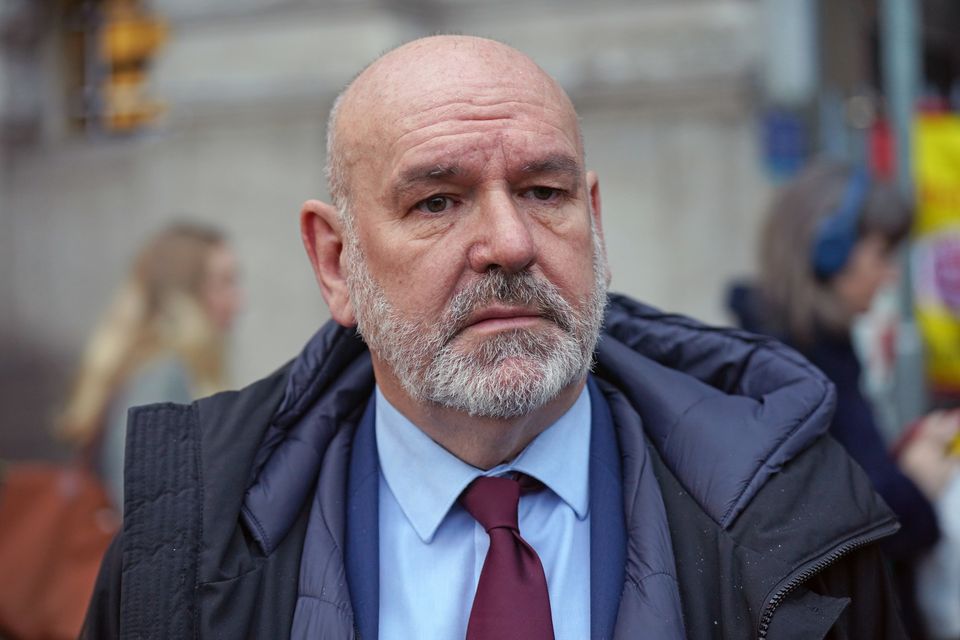
Aslef general secretary Mick Whelan (Lucy North/PA)

Aslef general secretary said it had been over a year since the union had any contact from the Department for Transport, adding: “It’s clear they do not want to resolve this dispute.

“Many of our members have not had a single penny increase to their pay for half a decade, during which time inflation has soared and, with it, the cost of living.

“Train drivers didn’t even ask for an increase during the Covid-19 pandemic when we worked throughout lockdown as key workers, risking our lives to move goods around the country and to enable NHS and other workers to get to work.”

None of the train companies affected by the latest strikes used new regulations aimed at ensuring a minimum level of service during strikes.

Mr Whelan added: “This new law, as we told officials during the consultation period, won’t ease industrial strife. It will just make it worse.

“The government and train operating companies should come to the table with a realistic offer so we can end this dispute and work together to ensure the future of our railways.’”
UK
Sainsbury’s boss refuses to rule out job cuts under plan to slash costs by £1bn


By Holly Williams, 
PA Business Editor
Yesterday 

The boss of Sainsbury’s has refused to rule out job losses under plans to slash costs by £1 billion as the chain revealed it will cut general merchandise and clothing space and expand its food offering.

The UK’s second biggest supermarket unveiled a strategy update that will see it boost food space across all its near-600 supermarkets, while focusing expansion efforts on 180 of its “highest potential” sites, which will see about 10% more space dedicated to food.

But it will also cut its general merchandise and clothing offering across many shops, with between 20% to 30% less store space for non-food ranges in the 180 shops.

The retailer suggested jobs may be in the firing line, as it said it would cut costs by £1 billion over the next three years, while investing in technology and artificial intelligence (AI).

High-returning investments in technology and automation will drive big steps forward in efficiency - automating, optimising and prioritising high-volume tasks and driving better forecastingSimon Roberts, CEO

Chief executive Simon Roberts refused to rule out job losses as the group plans to use AI to increase automation.

He said the group would look to “protect jobs as much as possible” by being flexible and to “re-skill” and “re-deploy where we can”.

But he insisted “we have to become more efficient”, with automation set to play a big part in delivering savings, increasing productivity and cutting food waste.

“High-returning investments in technology and automation will drive big steps forward in efficiency – automating, optimising and prioritising high-volume tasks and driving better forecasting,” it said.

Sainsbury’s said it had no plans to shut stores under the overhaul, but will press ahead with previously-announced plans to close more standalone Argos shops and bring them within supermarkets as click-and-collect points.

Sainsbury’s has already shut a raft of sites to bring many within supermarkets since it bought the retailer in 2016, saying late last year that it would reduce the estate to 180 by March.

“We have further to go in terms of Argos store estate changes and we will also further refine the store operating model, with clustered stores replacing a one-size-fits-all approach,” the group said.

Mr Roberts added the group will “keep looking at our (Argos) store estate”, but said it needed to retain a number of standalone stores, particularly where there is not a Sainsbury’s supermarket or convenience store nearby.

The strategy revamp, named Next Level Sainsbury’s, will see it look to attract more shoppers into its stores by increasing its fresh food ranges, expanding rapid electric vehicle (EV) charging points and ramping up Nectar loyalty card offers.

Sainsbury’s said it only has a full food range across 15% of stores currently.

Expanded ranges will be tailored to each store, but will include the rollout of more ready-to-go meals, such as its Kitchen Deli offering, as well as charcuterie and cheeseboard products.

In its strategy update, the group said it will also “tighten the focus” of its non-food ranges, cutting duplication of products that are also sold in Argos stores within supermarkets.

And Sainsbury’s will open another 75 convenience stores, to add to its existing 821-strong estate, while it will spend £70 million rolling out rapid EV charging points to more than 100 stores by the end of its 2024-25 financial year, up from 27 currently.

Mr Roberts said: “We’re determined to be first choice for food, ensuring more customers in more of our stores can enjoy more brilliant Sainsbury’s food.

“That means more space for our food offer, while still delivering the general merchandise products customers want from us.”

It will also focus on expanding its Nectar loyalty offering, with goals for it to deliver another £100 million of profit by March 2027.

The chain said it will increase returns to shareholders alongside the plans, with the launch of a £200 million share buyback programme over the next financial year.

The update comes just after the group announced, last month, it would wind down its banking operation to focus on the retail business.

Shares in the supermarket fell more than 4%.

William Woods, a retail analyst at Bernstein, said the strategy update was “more evolution than revolution”.

He added the “commitments are a bit fluffy, such as delivering profit leverage from sales growth”.
UK Greenpeace activists scale Unilever HQ in plastic pollution protest


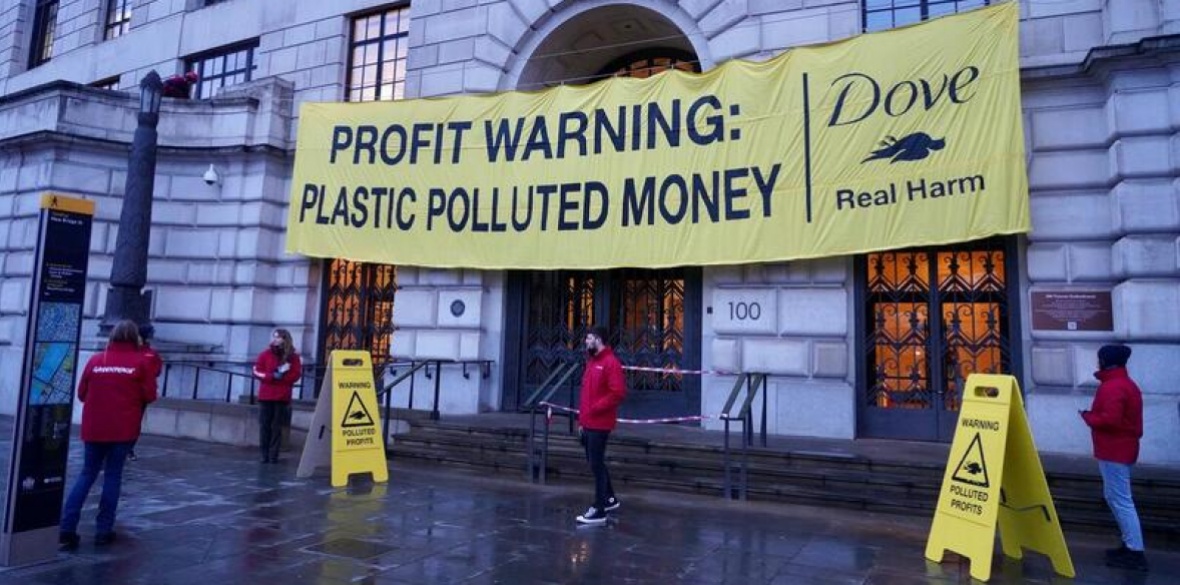
Greenpeace UK scale the company’s HQ by Blackfriars Bridge in London and unveil a huge banner reading PROFIT WARNING - Plastic Polluted Money 
Photo: © Kristian Buus / Greenpeace

ELIZABETH SHORT
WEDNESDAY, FEBRUARY 7, 2024

GREENPEACE activists scaled Unilever’s London headquarters on the eve of its profit announcement today.

The activists unfurled a banner reading “Profit Warning — Plastic Polluted Money” in protest against the company’s destructive use of environmentally harmful packaging.

The protesters then set up a pollution warning zone around the entrance to the headquarters, warning passers-by about the company’s overwhelming plastic pollution problem.

A previous Greenpeace investigation revealed the consumer goods giant as the biggest seller of some of the worst polluting packaging, multilayered plastic sachets. According to the report, Unilever sells 1,700 sachets every second.

The sachets are typically used to package products such as soap, shampoo and laundry detergent, and are virtually impossible to recycle.

Greenpeace say they exacerbate devastating floods when they enter the environment as they jam local waste systems and waterways.

The activists levelled charges of hypocrisy against Unilever, pointing out that its brands like Dove claim to be “passionately committed to being one of the brands making the biggest impact against plastic waste.”

Greenpeace is demanding that Unilever halt sachet sales and phase out single-use plastic within 10 years.

The activists are also calling on the company to use its influence to advocate for these targets at the United Nations Global Plastics Treaty negotiations, where it is a co-chair of the Business Coalition.

Greenpeace UK head of plastics Nina Schrank said: “Unilever’s profits are drenched in plastic pollution.

“Brands like Dove might give them a clean public face and a healthy bank balance but the truth is the billions in profit Unilever will announce tomorrow is matched only by the billions of pieces of plastic they flood into the world.

“From devastating floods to toxic fire fumes, it’s communities far from their London HQ in places like the Philippines and Indonesia who are paying the price of plastic pollution.

“That’s why we’re here issuing Unilever with their own profit warning — profiting from plastic pollution is a dead end, they have to change.

“They must stop selling plastic sachets now, commit to phasing out single-use plastic within a decade and advocate for this same level of ambition at UN Global Plastics Treaty negotiations.”
UK
Workers and students protest and walk out against Israel’s slaughter of Palestinians

Wednesday was far bigger than the two previous days of workplace action for Palestine

SOCIALIST WORKER

Wednesday 07 February 2024

Students march through south London on the day of action for Palestine
 (Picture: Guy Smallman)

Workers and students staged protests for Palestine on Wednesday at hospitals, schools, universities, council offices and other workplaces.

The day of action, called by the Stop The War Coalition (STWC), began with postal workers protesting outside Whitechapel office in east London.

In Oxford, too, postal workers showed brilliant support for the day of action. They took dozens of selfies of themselves holding signs demanding a ceasefire and showing support for Palestine.

Keith Hamilton, an area union rep for the CWU, was central to the action. He told Socialist Worker that he’d spoken to dozens of people about Palestine in the run-up to the day of action.

“I explained my take on the situation to them and they responded,” he said. “I said what was happening in Palestine was a slaughter. Thousands of children are being killed by a doctrine of collective punishment.

“And I invited people to do their own research, rather than just take their news from the BBC.”

Keith printed up placards for the day and, outside work time, he took lots of pictures of his colleagues holding them. “I was taken back by the size of the response,” he said. “It all goes to show that if you talk politics in the workplace, you can make a difference.”

Dana, UCU rep at Oxford Brookes University, organised a rally outside her workplace. She told Socialist Worker, “Around 20 people attended the demonstration at Brookes. We thought we had to come out and protest for Palestine.

“At the organising assembly I met other people at Brookes who wanted to do something. We set up a WhatsApp group and the Brookes rally developed from that. I was out on the last set of strikes at Brookes and now I’m out for Palestine.”

Rebecca, an NHS doctor in Oxford who visits Gaza regularly, told Socialist Worker, “As people watch Gazans being killed, people need to raise their voices.

“I’ve been part of Gaza Medic Voices which has been holding vigils for killed healthcare workers across Britain. I can’t describe how positive the solidarity has been for Palestine. They’ve commented to us how much of a difference solidarity makes. So unions have a huge role to play.”

Health workers protested outside around 15 hospitals, organised by Health Workers For Palestine and other groups

Around 60 health workers and medical students protested at St George’s hospital in south London. Organiser Max said the mood was “energetic”. “It was a great turnout, especially as there was some difficulty giving out leaflets in advance,” he said.

“We focused on the health workers in Gaza that have been killed–and the need for international solidarity. Everyone wanted Britain to stop arming Israel.”

The protest at Poole hospital, in Dorset, was a success with over 50 people joining in. “We got a lot of health workers there, mostly doctors from the hospital but also some from local GP surgeries,” organiser Carrie told Socialist Worker.


Full coverage of the struggle in Palestine


“This is the first protest I’ve ever organised and the first one at the hospital, so it was a big step. Management tried to shut it down. They even called me to ask me to call it off, but I refused.”

People at the protest were so happy at the chance to speak out that they’ve decided to make the Palestine protests monthly. “The mood around the hospital was very supportive. Staff were grateful that we were doing something in solidarity,” says Carrie.

But the mood of intimidation did put some people off attending. “I’ve had calls from people saying they really wanted to come, but didn’t want their managers to know,” she added.

“There are many people here that have family in Gaza, or have other connections to Palestine, that we are now discussing a local public meeting too.”


Hospital workers at the Homerton in Hackney, east London

Over 30 health workers protested outside St Thomas’ Hospital in central London. They stood with banners and flags to demand a ceasefire in Gaza, and action from their NHS trust.

Noor, a doctor in A&E, told Socialist Worker, “As healthcare workers we have to be the voices for those Israel has murdered, especially healthcare workers.

“Healthcare is no longer functioning in Gaza and Israel is targeting health workers on purpose.”

Noor added, “We’re limited on our own but at a trust level we can make a difference, but it’s up to us to push and mobilise to make that happen.”

Doctor Nasrine added, “We have to make our workplace somewhere that can support Gaza. We will hold our trust to account because it’s supported previous conflicts, but not this one.

“We’re going to continue to pressure our trust to come up with solid plans that can support the rebuilding of healthcare that’s been torn to the ground in Gaza.”

Up to 30 civil service workers in Nottingham held a lunchtime rally in support of Palestine. A speaker for the PCS union attacked the government, saying that the Tories had money to help arm Israel but no money for improving pay.

“The question of social justice is bound up with the question of economic justice,” she said.

In Edinburgh, around 30 PCS civil service union members at the Scottish Government Group joined with members from Leith jobcentre for a rally outside the Victoria Quay building.

They were there to say that PCS stands with Gaza. Some of them went on to the main Edinburgh rally outside the Scottish Parliament.

Camilo Arredondo from the Scottish Government branch and Steve West from the DWP branch addressed that rally.

Around 30 PCS union members working in and around Whitehall staged a lunchtime protest outside Parliament.

In Portsmouth, some 14 workers based in the civic offices joined the lunchtime Stand with Gaza meeting. They agreed to hold monthly “Workers for Palestine” lunchtime drop-ins so we can support each other and build the campaign.

In Hackney, east London, town hall workers staged a lunchtime rally for Palestine. The Unison union branch secretary spoke, as did the Hackney NEU education union branch secretary.

Students were central to the day of action. Over 300 students joined a march from the UAL in Camberwell to Goldsmiths. They chanted, “From New Cross to Gaza—globalise the intifada,” and, “London students, it’s out time, shut it down for Palestine.”

Samira, a Goldsmiths student, said, “We rallied at Goldsmiths and then marched to Deptford Town Hall to deliver hundreds of letters with our demands to management.”

They want Goldsmiths management to protect students’ right to protest, walk out and demonstrate. And they demand the university immediately “divest from surveillance company Nice Ltd” and “commit to a BDS investment policy” and “revoke the IHRA definition of antisemitism immediately” which conflates anti-Zionism with antisemitism.

At Bristol university around 200 people joined a march and then about 30 occupied the Senate House. Campus security stopped others from taking part.

Around 130 students joined a 30-minute walkout for Palestine at Greenshaw Sixth Form in Sutton, south London.

Tommy, one of those involved, told Socialist Worker, “We gathered in a field near the school and chanted ‘Free, Free Palestine” and “From the river to the sea, Palestine will be free”.

Tommy said that he had decided to hold the protest after seeing “Israel killing young people like us in Gaza”. “It’s a policy of genocide where Israeli leaders speak openly of making Gaza ‘unliveable’,” he said.

“It was quite easy to get people involved because they can see the reality every day.”

Tommy built for the day by circulating messages and using a megaphone in the sixth form area on Wednesday morning. He said teachers in the NEU union had been supportive—and, because so many students took part, he didn’t fear disciplinary action.

The agitation for Palestine has brought together students who didn’t know each other before. “We really bonded over this,” said Tommy.

Students plan to go to the next national demonstration in London on 17 February.

“Lots of people want to take action for Palestine, but it takes someone to organise it,” said Tommy. “And then when you do, you can find lots of people who agree with you and want to be part of it too.”

Around 50 people marched down the streets of Oxford chanting for a free Palestine. The march went from Weston Library to Barclays Bank, with students taking over the streets.

An Oxford student said, “I think we need to pressure colleges to call for a cease-fire. Most people are overwhelmingly pro-Palestine but some are fearful about coming out. But we need to mobilise, especially with direct action.”

The bombing of Syria, Iraq and Yemen “is part of a wider escalation of imperialist war”.

Oxford student Joumana said, “We need more direct action. Oxford university has obvious steps it could take. It needs to review all of its financing of Israeli companies. And it hasn’t supported Palestinian students at all. Even in the smallest of steps, it’s falling short.”

“The response to Ukraine was 180 degrees in a different direction. The university is showing that it doesn’t care about Palestinian lives.”

A student from the Palestine Society said, “Actions that demand to be seen and maintain visibility is crucial. When our protests block the streets, it forces people to look.

“But we need to push beyond a ceasefire for Palestinian liberation. Ceasefire is only the first step. The bombing is part of the maintenance of Western imperialism in the Middle East.”

Several areas had Palestine organising assemblies in the run-up to the day of action, including Bristol, Oxford, Liverpool and north London.

Domenica said, “The organising assembly in Oxford helped keep the momentum going. It connected students from an array of colleges and stressed the need for all of Oxford to come out together.”


“It brought together a collection of people. The assembly helped collectively organise and definitely helped in getting more people to the protests.”

Another student said, “The assembly helped to build this protest, especially with getting younger students, and construct the whole day of action in Oxford. We need as many people as possible on board with the cause.

“The organising assembly helped to give people a voice in the conversation. Cross city solidarity is growing.”

Around 200 students and campus trade unionists joined a rally at Glasgow university. They then marched to the central rally at City Chambers.

Olive told Socialist Worker, “We took the road on the march and then blocked the road at Queen Street in the city centre.

“The turnout today was bigger than other recent mobilisations—there’s a real mood for action over Palestine.” The march was organised by the Socialist Worker Student Society and other activists.

Protesters occupied also occupied Glasgow Queen Street Station in the city.

Students in central London raged against their universities’ complicity in genocide—and how management has tried to stop students and staff from speaking about Palestine. A dozen students gathered outside Soas university and tied ribbons with the names of those murdered by the Israeli state written on them around campus.

Lina, a student at Soas, told Socialist Worker, “University bosses preach about decolonisation, but it doesn’t mean anything.

“The police arrested a Soas student last week under terrorism charges for supporting Palestine. Our university said nothing. Instead, when we’ve had protests in the past where they’ve threatened to call the police on us.”

Lina added, “I’m part of the Palestine society at Soas, so we’ve been building the action through that and with other groups.”

Students at Soas tied ribbons with the names of Palestinians who the Israeli state murdered around the campus. They then marched to UCL university.

Group UCL action for Palestine went to the university’s learning centre and renamed it the Refaat Alareer Learning Centre. The Palestinian academic and poet who was murdered by the Israeli state last December was a student at UCL in 2007.

After hearing speeches, students marched to the university principal’s office chanting, “Resistance is justified when a people are occupied.”

Students handed a list of demands for the university, including for it to divest from companies that fuel Israeli apartheid.

Grace, a fine art student at UCL, told Socialist Worker, “It’s disgusting that our university won’t say anything about this genocide. It’s frustrating because they would speak out about Ukraine.

“I think people at the moment are still scared. The security at UCL is always very harsh when we protest. But I think if we keep talking, keep growing our networks, people will feel a lot less scared to stand up.”

Around 400 people joined a student demonstration in Leeds joined by university workers, an RMT union delegation, and a convoy of taxis plus other local workers who had got a leaflet and came to join it.

In Edinburgh student groups and staff mobilised for a walkout on campus.

Stop the War Activists joined students from the Justice for Palestine Society, anti-Zionist Jewish students, climate groups, Socialist Worker Student Society members and many others who gathered in Bristo Square. Around 25 UCU union staff members were present, with the branch banner.

Liam reports, “Healthcare workers joined as well, as we marched from the university to the Scottish Parliament, with around 150 people at the peak. PCS members joined the rally at Parliament later on.

“It was a powerful show of solidarity.”

Alongside workplace and student action, Palestine activists held protests in local areas. Jan from north London, says the protest in Islington was “great”. “We began outside Islington Town Hall and marched to Labour MP Emily Thornberry’s constituency office,” she said.

“There were some amazing watermelon placards and children wrote moving poems, which were posted through the office letterbox. There was some ferocious chanting too. We hope Thornberry heard our fury.”

Wednesday was far bigger than the two previous days of action, with more workers taking some sort of action at their workplaces. Grassroots union members organised in the face of fear and intimidation over speaking out over Palestine in workplaces—and inaction of the majority of the union leaders.

It’s good that the UCU universities and colleges union, the NEU education union and PCS civil service workers’ union backed the day of action.

But the majority of union leaders—including the biggest three, Unison, Unite and GMB—didn’t say anything.

Imagine how much bigger the day would have been if the union leaders had called on their members to organise action.

Wednesday was a springboard for more action, which can build workers’ confidence to take bigger and more militant action. It’s up to workers and students to build on Wednesday in their workplaces to make future mobilisations stronger, and push their union leaders into action.

Investigators identify main cause of casualties in Turkey-Syria earthquakes

More than 50,000 people were killed in the disaster last February.


THE EARTHQUAKE ENGINEERING FIELD INVESTIGATION TEAM LOOKED INTO THE 2023 TURKEY-SYRIA EARTHQUAKES. (EEFIT/ PA)

SAM RUSSELL
1 DAY AGO

The main cause of casualties in earthquakes that claimed more than 50,000 lives was building stock comprised primarily of reinforced concrete structures, according to a report.

The Earthquake Engineering Field Investigation Team’s (EEFIT) investigation into the disaster that hit parts of Turkey and Syria on February 6 2023 said that “profit drive pushes all players within the construction industry to take shortcuts”.

The report’s authors added: “The auditing and quality control mechanisms embedded in the legal and bureaucratic processes should be strengthened to ensure code compliance.

“The legalisation of non-compliant buildings through amnesties cannot continue.”


Deficiencies were found even in the newest building stock, according to the report, which calls for a review of building stock and infrastructure to assess risk levels for future earthquakes.

They said that building stock was “primarily composed of reinforced concrete structures, which are therefore the main cause of the casualties”.

Within one week of the quakes, EEFIT, a joint venture between industry and universities, gathered a team of 30 global experts to assess the damage.

They studied the science, engineering and data related to the earthquakes including geotechnics, the structural and infrastructure impact, and the relief response and recovery.

Cambridge University’s Professor Emily So, who co-led the investigation, said: “The 2023 Turkey and Syria earthquakes were truly tragic, hitting an already fragile population, including migrants.

“Our field work and remote analysis revealed many issues, including the issue of non-compliant buildings with little seismic resilience.

“Building code compliance needs to be strengthened.”

The investigators said the earthquakes caused the “loss of more than 50,000 lives, some 100,000 injuries and significant damage to buildings and infrastructure, estimated to be in the range of 84.1 billion US dollars (£66.9 billion) for Turkey alone”.

Their 354-page report is published by the Institution of Structural Engineers.
UK
What does the public want the Government to do for the NHS?


Yesterday

Confidence from Conservative voters in their own party's handling of the NHS has dropped from 70% to 27%


Confidence in government policies for the NHS has hit major lows as Rishi Sunak admits to failed pledges and overall satisfaction in care is poor. But support for the founding principles of the NHS remains high and the public want solutions.

Recent polling suggests Britons are not optimistic about the future of the NHS, with a recent YouGov survey showing the majority (56%) believe the public health body will only get worse over the next few years. Only 14% think things will get better for the NHS and 24% think it will stay the same.

But what are the main issues the public wants the government to address regarding the NHS?

Funding


A publication from The Health Foundation on public perception of the NHS found there was strong support for an increase in funding, with the public surveyed by the group in general of the belief that the UK government spends less than other countries on healthcare.

The public were divided on how to fund an increase in spending, as support shifted towards increasing taxes and away from cutting spending on other services. However the majority of those surveyed by the Kings Trust over a similar period believed the NHS should ‘live within its budget’ when it came to additional funds.

Despite challenges, support for what the NHS stands for remains high, with the core principle of having a health system that remains free at the point of delivery for all supported by 87% of the public.

How to spend the money

The majority of the public do not believe NHS staff are treated well, and support improvements to staff working conditions and pay.

Support remains high for striking NHS workers, from nurses to doctors. One year on from the nurses strike a report found nearly seven in ten people continue to support nurses striking over pay. Whilst over 70% support nurses striking over staff shortages.

This suggests that the public would like the government to invest in the NHS workforce and ways of increasing retention of staff while offering a proper pay rise.

Results from the Kings Fund last year found the top priorities for the NHS should be, making it easier to get a GP appointment and increasing the number of staff. With these two remaining the same priorities from the public as previous years.

The report also found a sharp increase in those who want to see A&E waiting times as a top priority with those surveyed also favouring a free, accessible tax-funded service.

The health and social care charity said politicians should look at understanding the factors which saw satisfaction in the NHS grow steadily every year from 38% in 2001 to a high of 70% in 2010 – correlating with sustained investment in health services, a reward and retain workforce and targeted improvements in waiting lists.

Change of Government

There has been a striking decrease in Conservative voters’ confidence in their own party’s handling of the NHS in recent years. Current YouGov polling shows confidence has dropped from 70% in 2019 to 27% now. Whilst Tory voters confidence in Labour grew from 11% to 21% during this period.

The view of the general population is that Labour is the best party to manage the NHS, by 40% compared to 10% who believe the Conservatives are best placed. Meaning the public believe a general election could well be one remedy for the NHS.

(Image credit: Sheila / Creative Commons)


Hannah Davenport is news reporter at Left Foot Forward, focusing on trade unions and environmental issues


NHS and ambulance workers demand pay rise and free staff parking in pay deal for 2024/25

WEDNESDAY, FEBRUARY 7, 2024

A general view of one of the visitor car parks at St Peter's Hospital near Chertsey, Surrey

GMB has demanded free staff parking and a flat £1.50 pay rise — equivalent to 13 per cent for the lowest paid — as part of the 2024/25 pay deal for its ambulance and NHS worker members.

Research by the union found NHS trusts trousered £46 million from staff parking in 2022-23.


It is also refusing to engage with the NHS Pay Review Body until it is reformed — questioning the body’s independence from the government — making its claim directly to the Department of Health and Social Care (DHSC).

The claim is the first after more than 13,000 GMB ambulance workers took part in multiple strike days and won an above- inflation pay rise last year.

GMB national secretary Rachel Harrison said: “GMB will not engage with the NHS Pay Review Body process until it has been significantly reformed — with NHS and ambulance workers confident it’s truly independent.”

The DHSC was contacted for comment.
UK
Tata Steel: No way blast furnaces can stay, says chief exec

By Adrian Browne
BBC Wales political reporter
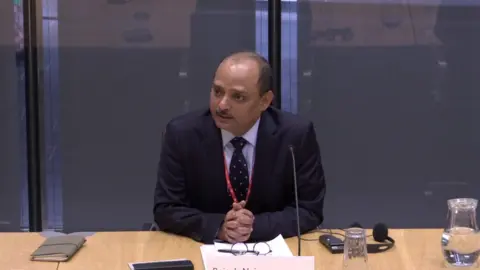
Tata was accused of not listening by the chair of committee Rajesh Nair appeared before

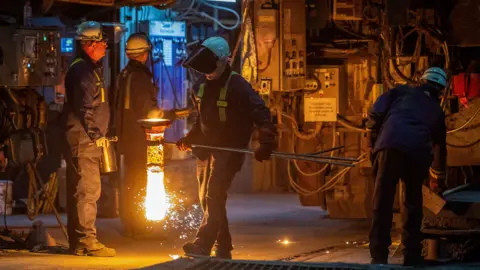
The boss of Tata Steel UK has robustly defended plans to close both its blast furnaces in Port Talbot, putting nearly 2,000 jobs there at risk of redundancy.

Tata intends installing an electric furnace, which would use recycled steel and need fewer workers to run.

Unions and politicians have called for at least one blast furnace to be kept open to maintain virgin steel making.

But Rajesh Nair said for technical and financial reasons "there is no way the blast furnaces can be kept going".

He appeared before the Senedd's economy committee whose chair, Conservative MS Paul Davies, described the session as "deeply disheartening and devastating for Wales' steel industry".

Tata Steel: Port Talbot staff fear year of uncertainty

Tata's Steel 2,800 job cuts are 'devastating'

Mr Nair told Senedd members the blast furnaces, to close this year under the plans, and other facilities at the plant were "towards the end of life" and their "reliability is compromised".

He said it there was a need to proceed with the electric arc plans "at pace" as the business was set to be in the red by £500m this financial year "if nothing else were to go wrong".

The new electric furnace would be built within a facility used in the steel-making process, a steel shop, he said, meaning the blast furnaces would have to close during the transition to a greener form of production.

"If you don't have a steel shop that is operating, there is no way the blast furnaces can be kept going," said Mr Nair.

Senedd Cymru Rajesh Nair said Tata's plans were considered "very, very carefully"

The closure of the blast furnaces would also affect workers in Llanwern in Newport, Shotton in Flintshire, Trostre in Carmarthenshire and Swansea University, as well as several sites in England.

Committee chair Mr Davies later accused Tata of being "unequivocal" and "not listening" despite "huge opposition, and the terrible effects the closure of the blast furnaces will have on the workforce, their families and communities across south Wales".

"This week the whole Senedd unanimously agreed that there is a viable future for the blast furnace - this has been completely ignored," he said.

"Today we are calling on Tata to reconsider their position and to keep the blast furnace open."

Not a 'done deal'

On Tuesday night, Conservatives joined Senedd members from the other three party members in calling for the company to keep a blast furnace open while the new electric one is built to allow a "longer transition" and protect jobs.

The UK government has said it will contribute £500m towards the £1.25bn cost of the electric furnace.

Conservative Welsh Secretary David TC Davies previously said that UK ministers had been forced to "choose between three thousand people losing their jobs and seventeen-and-a-half thousand people losing their jobs".

Before Mr Nair have evidence at the committee on Wednesday, Wales' Economy Minister Vaughan Gething said conversations continued between Tata, the Welsh and UK governments and leading Labour figures at Westminster.

Mr Gething, one of two candidates to be Welsh Labour leader and first minister, added: "I think it is important to recognise that I don't think this is a done deal, and I don't think this is something where there is absolutely zero chance of a different future."

UK
Liz Truss’ ‘Popular Conservatism’ group has links to climate science denial groups

Basit Mahmood 
Left Foot Forward
Yesterday

PopCon group has links with climate science denial groups and those with links to the fossil fuel industry.


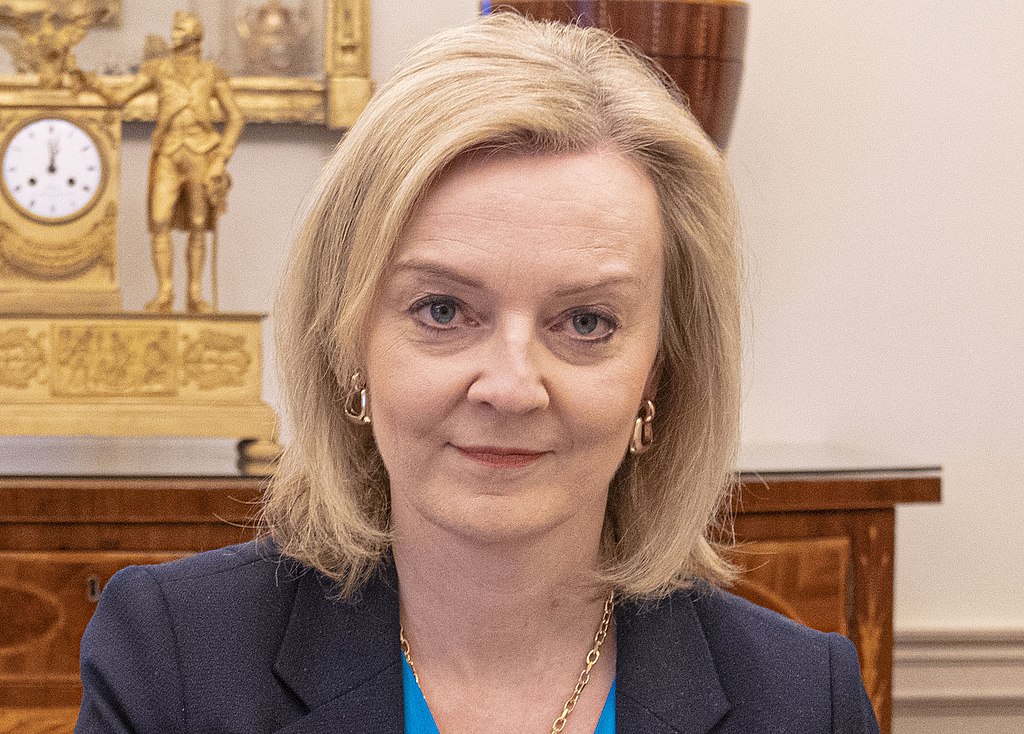
Yesterday saw disgraced former Prime Minister Liz Truss launch her new Popular Conservatism group, also known as PopCon, in a bid to push the Tory party further to the right.

Truss, whose premiership ended in disaster, has launched the group which describes itself as a “new movement aiming to restore democratic accountability to Britain and deliver popular conservative policies.” Its supporters include right wing Tory MPs such as Jacob Rees-Mogg and Lee Anderson.

Yesterday’s event saw the likes of Truss rail against the left, telling the conference that the left had “repurposed” themselves as environmentalists, LGBT+ rights advocates and anti-racism campaigners to avoid detection.

What she wasn’t very keen for people to find out however is that her PopCon group has links with climate science denial groups and those with links to the fossil fuel industry.

That might help explain why the group hosted politicians attacking net zero policies, while leaflets handed out at the event called for an end to ‘net zero zealotry’.

In attendance at the PopCon event was Lord Frost, who is a director of the climate science denial Global Warming Policy Foundation, as well as Conservative MP Lee Anderson and Reform party president Nigel Farage.

DeSmog reports: “PopCon director Mark Littlewood is the outgoing managing director of the Institute of Economic Affairs (IEA), an influential free market think tank that has talked up its access to government.

“The IEA received funding from oil company BP every year from 1967 to 2018, according to an Unearthed investigation confirmed by the IEA. Both IEA and BP have declined to say if this funding continues, when asked by DeSmog.”

Littlewood took aim at Net Zero targets at the conference, telling the audience “the Climate Change Committee, pronouncing on our progress to the eye-wateringly [sic] expensive and almost certainly unachievable aim of being carbon net zero”.

Lee Anderson told the audience: “If we became net zero tomorrow, this country… it wouldn’t make a blind bit of difference to the earth’s atmosphere.”

We shouldn’t forget that Truss has close links with the IEA, which provided a number of ideas behind her disastrous mini-budget. In 2022, Truss’s campaign for Tory leader was run by Ruth Porter, a former communications director at the IEA.

The Guardian has previously reported on how the IEA has ‘published at least four books, as well as multiple articles and papers, over two decades suggesting manmade climate change may be uncertain or exaggerated.’

Also in attendance at the PopCon event was Nigel Farage, honorary president of right-wing party Reform UK, which campaigns to “scrap net zero”.


Basit Mahmood is editor of Left Foot Forward

Liz Truss’s dangerous agenda


This image is a work of a United States Department of State employee, taken or made as part of that person’s official duties. As a work of the U.S. federal government, the image is in the public domain per 17 U.S.C. § 101 and § 105 and the Department Copyright Information.

Truss is promoting an agenda that explicitly permits the powerful with a grudge to abuse anyone they wish with impunity.

I should be grateful to GB News. They appear to be the only news organisation that was willing to carry verbatim extracts from Liz Truss’s speech to the so-called Popular Conservatives yesterday.

They report her as saying:

I believe the fundamental issue is that for years and years and years- and I think it goes back two decades – Conservatives have not taken on the left-wing extremists.

These people have repurposed themselves. They don’t admit they’re socialists or communists anymore, they say they’re ‘environmentalists’. They say that they’re in favour of helping people across all communities. They are in favour of supporting LGBT people or groups of ethnic minorities.

They also noted her saying:

They no longer admit that they are collectivists – but that is what their ideology is about. It’s all about taking power away from people and families and handing power to the state or unaccountable bodies.

And the problem is, the Conservatives have tried to appease these people. They’ve tried to triangulate.

[A]nd we’ve had pandering to the anti-capitalists as well, in terms of regulating business, regulating landlords, regulating small enterprises.

Our shortest-serving ever Prime Minister has spoken. It is fair to say that the words she had to offer delivered an ugly and offensive message. Most will think them deranged. I think they are dangerous.

Truss is really saying three things.

First, she wants a white, male-privileged society that is focused on the supposed Christian values of the family, which is defined to exclude any LGBT people, and with the values and principles of any minority group being treated as aberrant and offensive and so to be subject to permitted prejudice.

Second, she wants to define all forms of collective concern, including for the environment and for society itself, as a threat to the right of the individual to exploit the planet and others.

Third, she wishes to end business regulation so it can exploit the consumer, the planet, places, tenants, and others without showing any apparent awareness that markets cannot function in the absence of regulation.

This is, then, an agenda that explicitly permits the powerful with a grudge to abuse anyone they wish with impunity. And anything that gets in the way, like democratic government and the rule of law, must be vilified or abolished.

This is beyond being called far-right ideology. This is fascism. It should be described as such because no other word in the political lexicon fits it.

NORTHERN IRELAND

Minister ‘determined’ to see negotiations on public sector pay begin soon


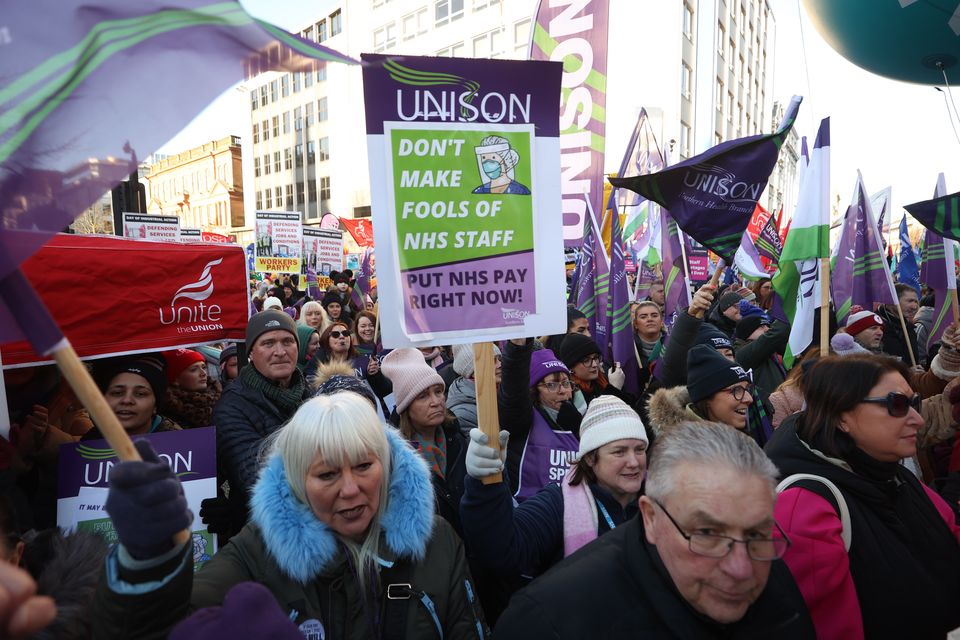
Public sector workers take part in a rally at Belfast City Hall (PA)
By Rebecca Black, PA

Stormont’s Finance Minister has said she is “determined” to see talks on public sector pay commence as soon as possible.

Caoimhe Archibald met civil service trade unions during her first week in post.

Earlier this week, she met the Irish Congress of Trade Unions.

It comes after public sector workers – including health staff, education workers and civil servants – staged one of the largest strikes in recent history in Northern Ireland over a delayed pay award.


Stormont Finance Minister Caoimhe Archibald said she wants to resolve pay disputes (PA)

The UK Government offered a financial package on the resumption of the Stormont administration which it said could fund the public sector pay awards.

However, Ms Archibald said the sum falls short of what is required.

She met the unions, Nipsa, FDA, Unite and GMB – which represent 24,000 civil servants – on Wednesday morning.

Speaking afterwards, the minister pledged to work with the rest of the Executive to ensure all public sector workers receive a pay award.

“As minister with responsibility for the civil service, I met this morning with trade unions who represent our 24,000 workers. I reinforced my determination to see pay negotiations commence as soon as possible,” she said.

“The amount included for pay in the December financial package only provides funding for one year and falls short of what is required. Given the cost-of-living crisis and household budgets being stretched it is vital public sector workers do not have to continue to wait for their pay award.”

Ms Archibald added: “I will continue to press Treasury for clarity on the specifics of the package offered and a longer-term solution to public sector funding that is not at the expense of the stabilisation of public services and finances.”


Meanwhile, Infrastructure Minister John O’Dowd has said he will meet transport workers’ unions on Thursday.

The unions earlier this week said they will postpone a planned strike on February 15 to give Stormont leaders “space to make an improved pay offer”.