Saturday, February 10, 2024

1,900-year-old bone — filled with hallucinogenic seeds — is ‘rare’ find. What’s it for?

SHAMAN'S MAGICK RATTLE

Moira Ritter
Thu, February 8, 2024 

About 1,900 years ago, someone in what is now the Netherlands hollowed out a sheep or goat femur, filled it with poisonous, hallucinogenic black seeds and sealed it with tar. Eventually, the bone ended up in a pit as an offering.

Now, archaeologists exploring the Houten-Castellum site — a “unique” ancient settlement that was inhabited between about the sixth century B.C. and the second century A.D. — have unearthed the bone, according to a study published Feb. 8 in the journal Antiquity.

The animal bone is a “rare” find and an important discovery: It’s the “first conclusive evidence for the intentional use” of black henbane, a poisonous plant belonging to the nightshade family, in the Roman world.


Archaeologists said the bone was used as a container for the seeds.
Uncover more archaeological finds

Black henbane plants are “extremely poisonous” but “can also be used as a medicinal or psychoactive drug,” archaeologists said.
The species is indigenous to Europe and Asia, and while it is not commonly found today, it once thrived among ancient settlement areas “on dunghills and in nutrient-rich locations in vegetable gardens.”

Evidence of black henbane in ancient settlements dates back as early as 7,500 years ago, when experts believe people were already using the plant for its “psychoactive properties.”


Historical accounts from ancient writers indicate that despite its known hallucinogenic and poisonous effects, black henbane also had medicinal properties, the researchers said in a Feb. 8 news release from the Freie Universität Berlin.

The plant could remedy ailments such as “fever, cough and pain,” experts said.

Archaeologists have long struggled to study the use of the plant, Maaike Groot, who led the team of archaeologists, said in the release.

“Since black henbane can grow naturally in and around settlements, its seeds can end up in archaeological sites simply by chance,” she said. “This makes it difficult to prove if it was used intentionally by humans – whether medicinally or recreationally.”

At the Houten-Castellum site, archaeologists found traces of black henbane, but only two of them appeared to be intentional, according to researchers.

Aside from the seed-filled bone, experts also unearthed a full black henbane plant that was buried as an offering along with four cooking pots and some kind of basket or trap, they said. However, experts noted it is not impossible that the plant was not intentionally placed in the offering, and instead ended up there by chance, as Groot explained.

The hollowed bone, however, likely served as a container for black henbane, indicating that humans intentionally stored and used the seeds, researchers argued.

“The fact that, in our case, the seeds were found inside a hollowed-out sheep or goat bone sealed with a black birch-bark tar plug indicates that the henbane was stored there intentionally,” Groot said.

Archaeologists said when they found the bone, it held about 1,000 seeds, but in the process of unearthing the artifact, only about 382 of the seeds were preserved. If filled to its maximum capacity, the bone could probably hold around 4,000 seeds, experts said.

The discovery marks the fifth example of intentional ancient black henbane use in north-western Europe, according to the university. Only one of the other examples, which dates to the medieval period and was found in Denmark, was found in a container like the Houten-Castellum discovery.

Houten is about 30 miles southeast of Amsterdam.
Ancient Human Artifact Was Made With Extraterrestrial Material, Scientists Say

Sharon Adarlo
Sat, February 10, 2024 


Space Iron

Talk about out-of-this-world bling!

Spanish researchers have discovered that two iron artifacts from a hoard of precious treasure that dates back to the Late Bronze Age — before man started the widespread smelting of iron — contain iron from meteorites estimated to be around 1 million years old.

The researchers' findings, as detailed in a paper published in the journal Trabajos de Prehistoria last year, detail the chemical composition of what looks to be a portion of an iron bracelet or ring and half of a hollow iron sphere covered with fine gold filigree.

Scientists plucked the two artifacts from an around 3,000-year-old cache called the Villena Treasure, which Spanish historian and archaeologist José María Soler García uncovered just outside Villena, Spain back in 1963.

The two iron pieces have always generated intrigue among researchers and consternation on their chronology because craftspeople made them at a time "before the production of terrestrial iron started," the researchers state in the paper.

To finally put these questions to rest, researchers subjected the pieces to analysis via a spectrometer, first in Spain and then in Germany. Results strongly suggested the iron came from space.

Surprisingly, the composition of the two artifacts is so similar, "both objects could [have] come from the same meteorite," as senior author and researcher at Spain's Institute of History Ignacio Montero Ruiz told Live Science.
Meteor Metallurgy

Using iron meteorite in the ancient world and prehistoric era isn't unprecedented.

For example, researchers found an iron arrowhead in Switzerland and determined it was made 3,000 years ago from an iron meteorite.

And scientists believe King Tut's dagger, discovered by archeologists inside Tutankhamun's tomb in the early 1920s, may have also been crafted from an iron meteorite.

Regardless, the latest findings could shed new light on metallurgy practices during the Bronze Age.

"The iron technology is completely different to the copper-based metallurgy and to the noble metals (gold and silver)," Montero Ruiz told Live Science. "So, people who started to work with meteoritic iron and later with terrestrial iron must [have had to] innovate and develop new technology."

The scientists are now trying to pinpoint the origins of the extraterrestrial material found in the two artifacts — an archeological puzzle for the ages.
Family lived in small house 1,100 years ago in the UK. It’s just been unearthed

Moira Ritter
Thu, February 8, 2024 

More than 1,100 years ago, a family gathered around the glowing embers of the hearth in the center of their 800-square-foot home in England. Outside, there may have been livestock snoozing in barns and sheds.

Now, archaeologists exploring the village of Chelmondiston have unearthed the ruins of the middle Anglo-Saxon home, which was once part of a “larger” settlement, according to a Jan. 29 news release from Cotswold Archaeology.

The main structure — known as “a hall building” — measured about 40 feet long by 20 feet wide, archaeologists said. It had an “eastern extension or annex” with an area of about 60 square meters.

The ancient family home had a central room, storage and a sleeping area, according to experts. Photo from Cotswold Archaeology

Experts said the family home was constructed with “earth-fast posts” that would have been connected to “planked walls” with “a raised floor, and a roof of thatch or oak shingles.” The structure included a “large open room and central hearth” as well as a storage area and sleeping area.

Postholes identified to the east and south of the home were left by fence lines and maybe smaller structures, including barns or sheds, researchers said.

To the east of the building, archaeologists found a row of four wells and cess pits, officials said. The cess pits were built in earlier, filled-in ditches, which likely functioned as a drainage system.

The cess pits were built into pre-existing ditches, which likely served as drainage, officials said. Photo from Cotswold Archaeology

Inside the wells and cess pits, experts discovered a trove of “beautiful” pottery.

A “large cache of Ipswich Ware” was found within the wells and cess pits, according to experts. Photo from Cotswold Archaeology

Known as “Ipswich Ware,” archaeologists said the pottery pieces were made from “hard-wearing material in the nearby town.” The pieces date to between 700 A.D. and 850 A.D.
Mysterious Iron Age pits

Experts also identified older evidence at the site dating to the Iron Age — between the fifth century B.C. and the eighth century B.C.

Among the discoveries, archaeologists found small pits scattered across the site. The purpose of the pits “is a subject much debated,” officials said.

Some “small, four-post structures” were also discovered, researchers said. These likely served as “storage or granary buildings.”
A ‘large’ medieval kiln — and lots of pottery

Between the late ninth century A.D. and the 11th century A.D., the village “shifted eastward or consolidated,” so it wasn’t until the 12th century A.D. that roadside activity returned to the site, archaeologists said.

While exploring remains from this time period, experts discovered “a large and well-preserved” pottery kiln dating to the 14th century. The kiln was surrounded by an abundance of pottery, mostly “’wasters’ – the pots that didn’t fire properly or collapsed or burst while firing,” according to officials.


Archaeologists found a collection of medieval pottery near the kiln. Photo from Cotswold Archaeology

Nearly 300 pounds of pottery were recovered from the area, researchers said. Among that trove were “five complete, or nearly complete, vessels.”


Five intact, or nearly intact, medieval vessels were unearthed from the site, archaeologists said. Photo from Cotswold Archaeology

Archaeologists said the find marks “the first evidence for pottery production in Chelmondiston.”

“At first glance the pottery does not look to fit with any known, named contemporary types and may well end up with its own moniker – Chelmondiston Ware,” according to experts.

Chelmondiston is about 90 miles northeast of London.
Scientists Baffled After Finding 4 Gigantic Mountains Lurking Under the Ocean


Victor Tangermann
Thu, February 8, 2024 


Underwater Mountain

A team of scientists on board an exploration vessel off the coast of South America have made a startling discovery: four previously unknown massive underwater mountains, ranging from 5,200 to 8,800 feet tall. The discovery highlights just how little we know about the oceans covering much of our planet. According to recent estimates, more than 80 percent of the ocean has never been mapped, let alone explored.

"The tallest is over one-and-a-half miles in height, and we didn’t really know it was there," Schmidt Ocean Institute's Jyotika Virmani — whose team has been studying "seamounts" from on board the vessel Falkor — told New Scientist.
Gravity Anomalies

Using sonar equipment, Virmani and team investigated gravity anomalies while sailing down from Costa Rica to Chile. These anomalies are usually the result of a hard-to-discern mass — in this case, entire mountains sticking out of the ocean floor.


"I was thinking one, maybe two, but to find four is incredible," Virmani told New Scientist. "It does show how much we don’t know of what’s out there."

Thanks to their sloped sides, seamounts are usually teeming with life. Last year, an international team of scientists, including Virmani, discovered a deep-sea octopus nursery near a low-temperature hydrothermal vent by a previously unknown seamount off the coast of Costa Rica.

Virmani and his team have discovered 29 seamounts so far, a tiny fraction of the mountains we have yet to discover.

According to the National Oceanic and Atmospheric Administration's Ocean Exploration organization, there are likely more than 100,000 of them that are at least 3,300 feet high.

A different study last year examined global satellite observations, concluding that there were nearly 20,000 seamounts still to be found despite more than 24,600 that have already been mapped.

"The fact that we don’t have maps of our seafloor is crazy," University of Plymouth marine biologist Kerry Howell, who was not involved in the research, told New Scientist.

Especially thanks to their incredible biodiversity, it's more important than ever to study these hiding giants. Fortunately, scientists have been using high-tech mapping techniques to get a better view — research that could greatly support ongoing conversation efforts.


Colossal underwater canyon discovered near seamount deep in the Mediterranean Sea

Sascha Pare
Thu, February 8, 2024 

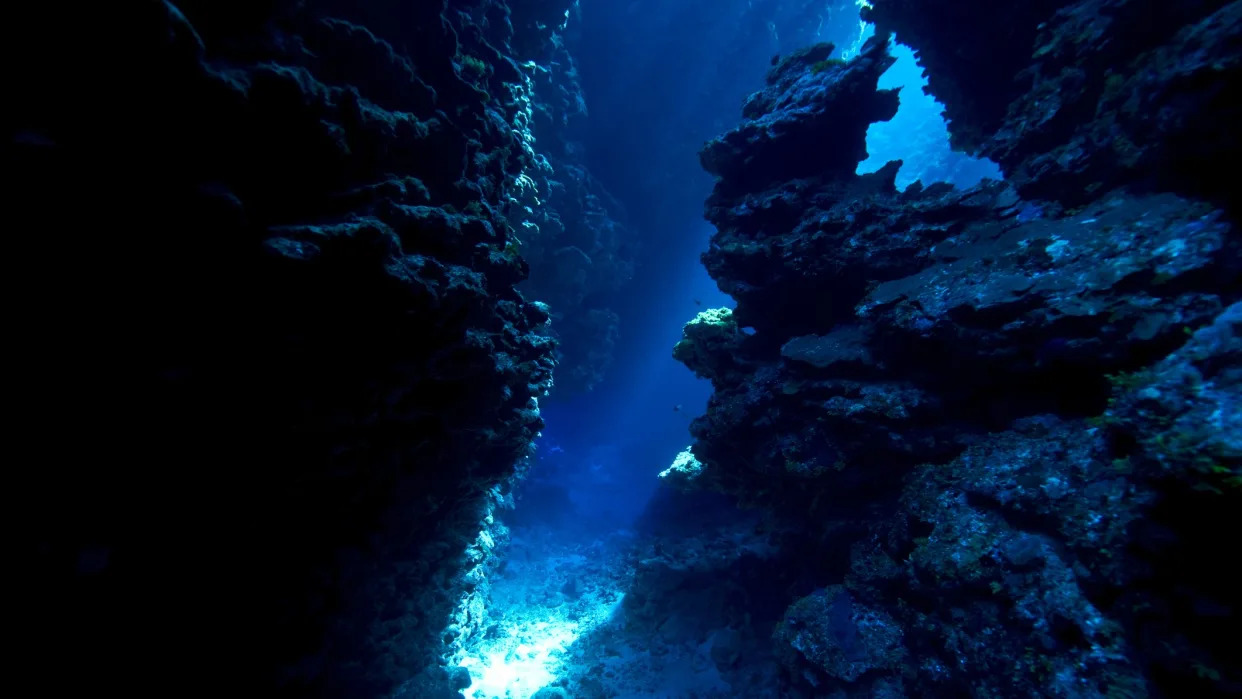
An underwater cave leading to a canyon.


Scientists have discovered a giant underwater canyon in the eastern Mediterranean Sea that likely formed just before the sea transformed to a mile-high salt field.

The canyon formed around 6 million years ago, at the onset of the Messinian salinity crisis (MSC), when the Gibraltar gateway between the Atlantic Ocean and Mediterranean Sea narrowed and eventually pinched shut due to shifts in tectonic plates. The Mediterranean Sea became isolated from the world's oceans and dried up for roughly 700,000 years, leaving behind a vast expanse of salt up to 2 miles (3 kilometers) thick in some places.

As sea levels dropped, increasingly salty currents eroded the seabed and incised gullies several hundred feet deep along the steepest edges of the Mediterranean Sea. In a study published in the January issue of the journal Global and Planetary Change, researchers now describe a giant U-shaped canyon located 75 miles (120 km) south of Cyprus, in the depths of the Mediterranean's Levant Basin.

The 1,640-foot-deep (500 meters) and 33,000-foot-wide (10 km) canyon, which the researchers named after the nearby Eratosthenes seamount, likely formed underwater shortly before salt piled onto the seabed. Unlike the more coastal gullies, the canyon had no older "pre-salt" roots, according to the study.

Related: 6 million-year-old 'fossil groundwater pool' discovered deep beneath Sicilian mountains

"To explain the submarine formation of the Eratosthenes Canyon, we suggest incision by dense gravity currents scratching and carving the deep-water seafloor," the researchers wrote in the study.

A map of the study area off the coast of Israel.

Weighed down with salt and sediment, these currents rushed along faster than the surrounding water and gradually scooped out enough of the seabed to form the colossal canyon. Precisely when this occurred remains unclear, but it likely coincided with the beginning of the MSC — between 5.6 million and 6 million years ago, according to the study. The incision process may have lasted anywhere from tens of thousands to half a million years.

The discovery sheds light on a decades-long debate over whether Messinian gullies and canyons that now lie underwater formed above or below the sea surface. "This new evidence strengthens the arguments that at least part of the erosion across continental margins occurred [below water]," the researchers wrote.

RELATED STORIES

Supervolcano 'megabeds' discovered at bottom of sea point to catastrophic events in Europe every 10,000 to 15,000 years

Underwater Santorini volcano eruption 520,000 years ago was 15 times bigger than record-breaking Tonga eruption

Never-before-seen volcanic magma chamber discovered deep under Mediterranean, near Santorini

The newly discovered canyon sits within a wider network of canyons and channels in an area known as the Levant Basin, which extends from the coast of Syria in the north to Gaza in the south, and northwest toward Cyprus.

To the northwest of the canyon, beyond the Eratosthenes seamount, sits the much deeper and older Herodotus basin, which receives currents loaded with sediment from the southeast. These currents may have crossed the area that now boasts the Eratosthenes Canyon long before it was incised, according to the study.

"The absence of older roots under the Eratosthenes Canyon does not rule out the possibility that a shallow pre-MSC channel system predated the Eratosthenes Canyon," the researchers wrote.
 
For Native American activists, the Kansas City Chiefs have it all wrong

NOREEN NASIR
Updated Sat, February 10, 202

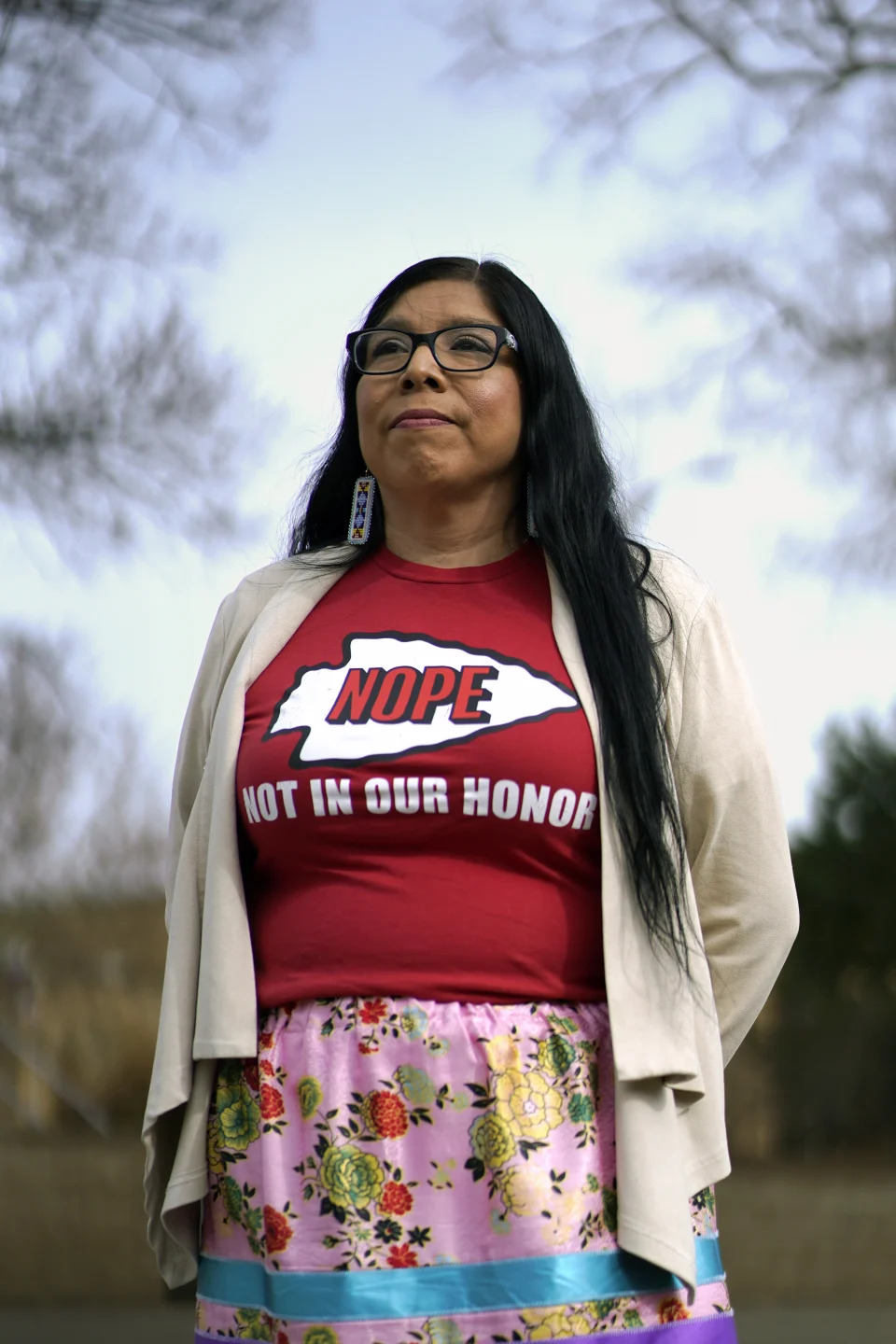
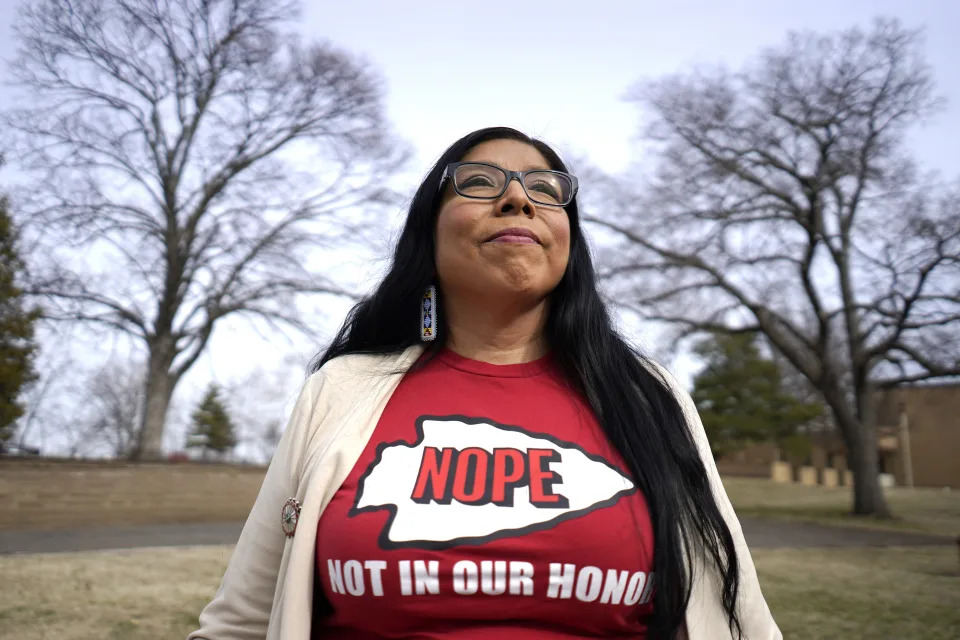
Rhonda LeValdo poses Tuesday, Feb. 6, 2024, in Lawrence, Kan. The Kansas City Chiefs, her hometown team and the focus of her protest, are playing in the Super Bowl this weekend. Levaldo is renewing her call for the team to change its name and ditch its logo and gametime rituals that she and other activists say are offensive. (AP Photo/Ed Zurga)


Rhonda LeValdo is exhausted, but she’s refusing to slow down. For the fourth time in five years, her hometown team and the focus of her decadeslong activism against the use of Native American imagery and references in sports is in the Super Bowl.

As the Kansas City Chiefs prepare for Sunday's big game, so does LeValdo. She and dozens of other Indigenous activists are in Las Vegas to protest and demand the team change its name and ditch its logo and rituals they say are offensive.

“I’ve spent so much of my personal time and money on this issue. I really hoped that our kids wouldn't have to deal with this,” said LeValdo, who founded and leads a group called Not In Our Honor. “But here we go again.”


Her concern for children is founded. Research has shown the use of Native American imagery and stereotypes in sports have negative psychological effects on Native youth and encourage non-Native children to discriminate against them.

“There’s no other group in this country subjected to this kind of cultural degradation,” said Phil Gover, who founded a school dedicated to Native youth in Oklahoma City.

“It’s demeaning. It tells Native kids that the rest of society, the only thing they ever care to know about you and your culture are these mocking minstrel shows,” he said, adding that what non-Native children learn are stereotypes.

LeValdo, who is Acoma Pueblo, has been in the Kansas City area for more than two decades.

She arrived from New Mexico as a college student. In 2005, when Kansas City was playing Washington's football team, she and other Indigenous students organized around their anger at the offensive names and iconography used by both teams.

Some sports franchises made changes in the wake of the 2020 police killing of George Floyd in Minneapolis. The Washington team dropped its name, which is considered a racial slur, after calls dating back to the 1960s by Native advocates such as Suzan Harjo. In 2021, the Cleveland baseball team changed its name from the Indians to the Guardians.

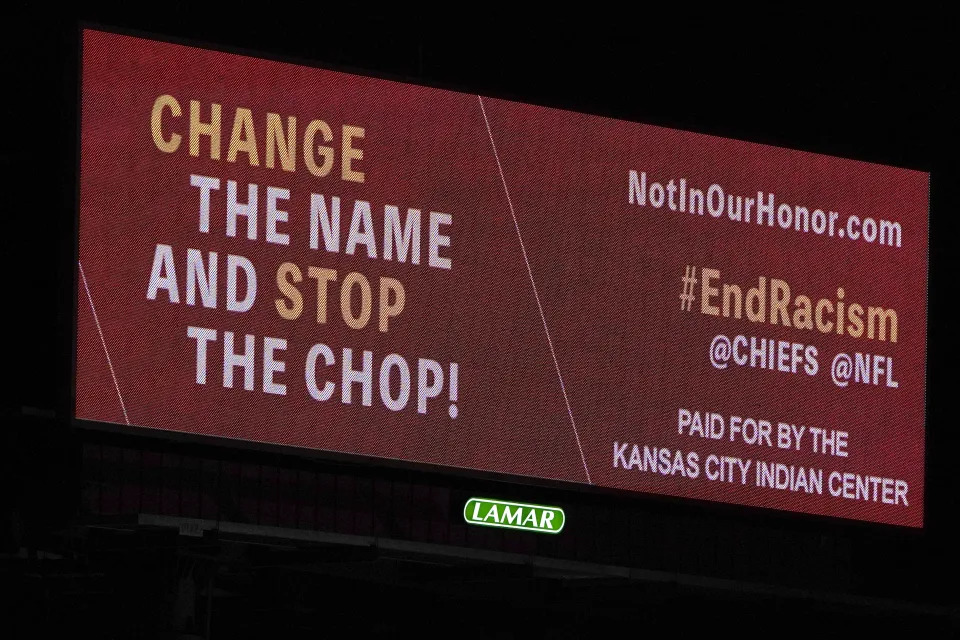
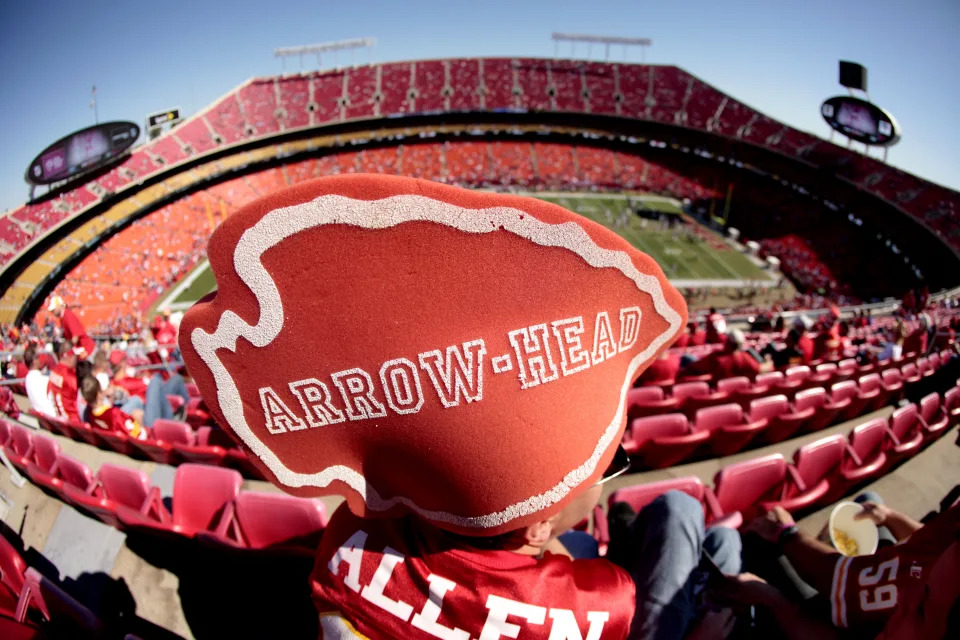
Ahead of the 2020 season, the Chiefs barred fans from wearing headdresses or face paint referencing or appropriating Native American culture in Arrowhead Stadium, though some still have.

“End Racism” was written in the end zone. Players put decals on their helmets with similar slogans or names of Black people killed by police.

“We were like, ‘Wow, you guys put this on the helmets and on the field, but look at your name and what you guys are doing,’” LeValdo said.

The next year, the Chiefs retired their mascot, a horse named Warpaint that a cheerleader would ride onto the field every time the team scored a touchdown. In the 1960s, a man wearing a headdress rode the horse.

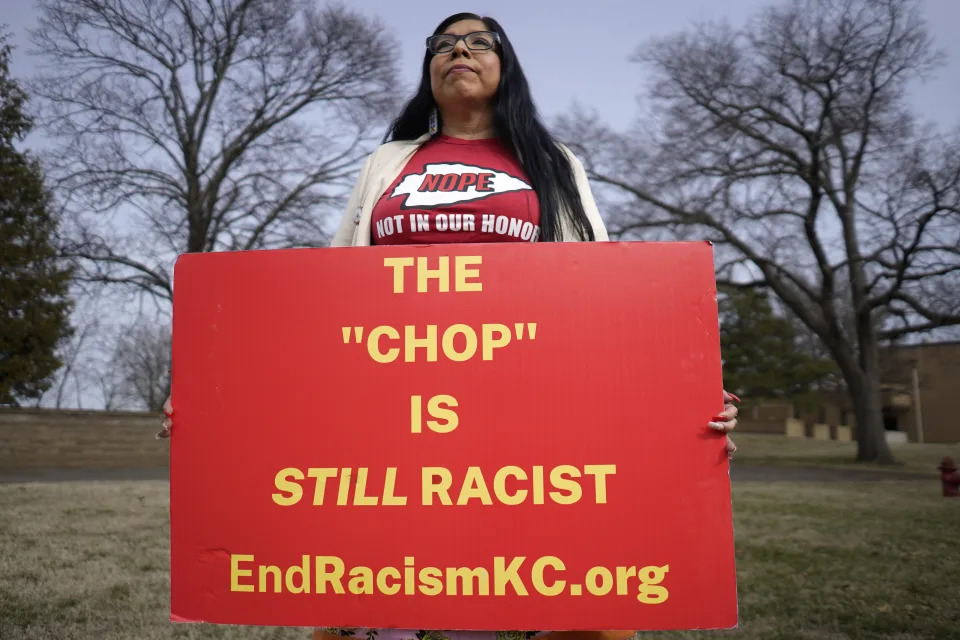
The team's name and arrowhead logo remain, as does the “tomahawk chop,” in which fans chant and swing a forearm up and down in a ritual that is not unique to the Chiefs.

The added attention on the team this season thanks to singer Taylor Swift’s relationship with tight end Travis Kelce isn’t lost on Indigenous activists. LeValdo said her fellow activists made a sign for this weekend reading, “Taylor Swift doesn’t do the chop. Be like Taylor.”

“We were watching. We were looking to see if she was going to do it. But she never did,” LeValdo said.

The Chiefs say the team was named after Kansas City Mayor H. Roe Bartle, who was nicknamed “The Chief” and helped lure the franchise from Dallas in 1963.

They also say they have worked in recent years to eliminate offensive imagery.

“We’ve done more over the last seven years, I think, than any other team to raise awareness and educate ourselves,” Chiefs President Mark Donovan said ahead of last year’s Super Bowl.

The team has made a point to highlight two Indigenous players: long snapper James Winchester, a citizen of the Choctaw Nation of Oklahoma, and center Creed Humphrey, who is from the Citizen Potawatomi Nation of Oklahoma.

In 2014, the Chiefs launched the American Indian Community Working Group, which has Native Americans serving as advisers, to educate the team on issues facing the Indigenous population. As a result, Native American representatives have been featured at games, sometimes offering ceremonial blessings.

“The members of that working group weren’t people that were involved in any of the organizations that actually serve Natives in Kansas City,” said Gaylene Crouser, executive director of the Kansas City Indian Center, which provides health, welfare and cultural services to the Indigenous community. Crouser is among those who plan to protest in Las Vegas this weekend.

Democratic U.S. Rep. Emanuel Cleaver sees the label “Chief” as a term of endearment. He has been a Chiefs fan since he moved to Kansas City more than half a century ago, though he said it “wouldn’t bother me that much” if the name were changed.

“A chief was somebody with enormous influence,” said Cleaver, who is Black, making a reference to tribal chiefs in Africa. “As long as the name is not an insult or an invective, then I’m OK with it.”

The story presented by the Chiefs features the message that the team is honoring Native culture. But Crouser calls that a “PR stunt."

“There's no honor in you painting your face and putting on a costume and cosplaying our culture,” Crouser said. She added, “The sheer entitlement of people outside our community telling us they’re honoring us is so incredibly frustrating.”

LeValdo is very conscious of who gets to own a narrative. As a University of Kansas journalism student in the early 2000s, she says a professor told her she would be too biased as a Native woman to report on stories about Native people. When she entered the world of video journalism, she was told she “didn’t have the look” to be on camera.

During Chiefs home games, she and other Indigenous activists stand outside Arrowhead with signs saying, “Stop the Chop” and “This Does Not Honor Us.” The sounds of a large drum and thousands of fans imitating a “war chant” as they swing their arms thunder from the stadium.

For LeValdo, the pain fueling her anger and activism is rooted in the oppression, killing and displacement of her ancestors and the lingering effects those injustices have on her community.

“We weren’t even allowed to be Native American. We weren’t allowed to practice our culture. We weren’t allowed to wear our clothes,” she said. “But it’s OK for Kansas City fans to bang a drum, to wear a headdress and then to act like they’re honoring us? That doesn’t make sense."

188


__

Associated Press reporter Graham Brewer in Oklahoma City contributed to this report. Noreen Nasir is a New York-based member of the AP’s Race and Ethnicity team. Follow her on social media: twitter.com/noreensnasir.
View comments (188)


Prime minister insists Canadians 'won't be fooled' by Putin's propaganda
CBC
Fri, February 9, 2024 at 12:18 PM MST·2 min read
54


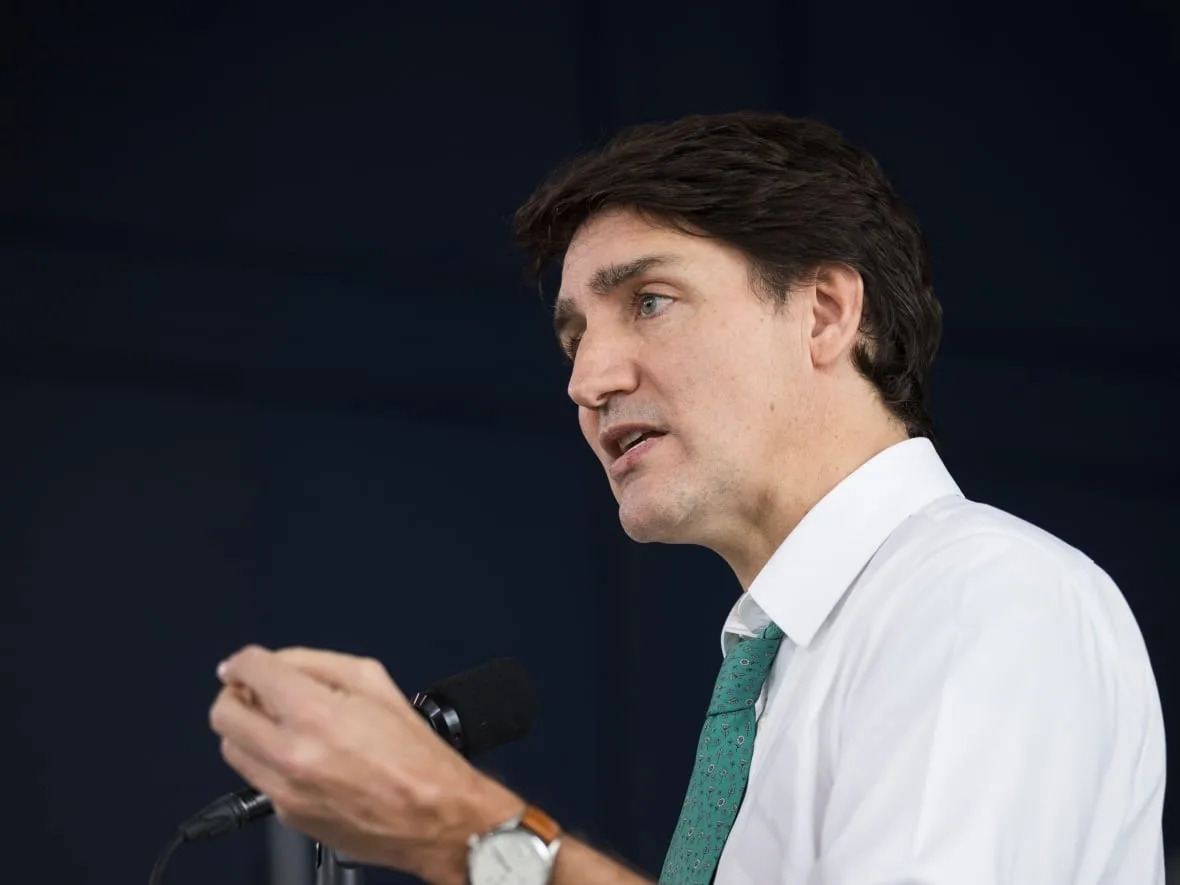
Prime Minister Justin Trudeau was asked during a press conference on Friday about Russian President Vladimir Putin using the Hunka affair to mock Ukrainian President Volodymyr Zelenskyy and Canadian officials. (The Canadian Press/Nick Iwanyshyn - image credit)


Prime Minister Justin Trudeau says Canadians shouldn't fall for Vladimir Putin's propaganda after the Russian president appeared in an interview with U.S. media personality Tucker Carlson.

Putin used the interview to mock Ukrainian President Volodymyr Zelenskyy and Canadian officials for applauding Yaroslav Hunka during Zelenskyy's visit to Parliament in September.

Hunka was introduced in the House as a Ukrainian-Canadian veteran who fought against the Soviet Union in the Second World War. It was later revealed that Hunka was part of a division of Ukrainian volunteers under Nazi command.

Trudeau was asked during a press conference Friday about Putin using the diplomatic embarrassment to mock Canada and its ally.

"[Putin] will, of course, use whatever propaganda he can engage in, but I can tell you Canadians will not be fooled," the prime minister said.

Putin has claimed repeatedly he is waging war on Ukraine to "de-Nazify" the country and has used the Hunka affair in an attempt to justify his actions in the past.

During his interview with Carlson, which was posted on the social media platform X, Putin pointed to the Hunka incident to support his claims.

"The president of Ukraine stood up with the entire Parliament of Canada and applauded this man. How can this be imagined?" Putin said through a translator.

Western allies, including Canada, have pushed back against those claims, calling Russia's full-scale invasion a blatant violation of Ukraine's sovereignty.

Trudeau said Putin's comments on the Hunka incident were an attempt to "distract" from his real motivations for launching the full-scale invasion of Ukraine.

"Putin chose to invade a neighbouring sovereign country, violating the rights, the sovereignty, the territorial integrity of Ukraine and violating the rules-based order that underpins the safety, the security of all of us living in free democracies around the world," he said.


Tucker Carlson's claim that no Western journalists have tried to interview Putin is false

Madison Czopek
Sat, February 10, 2024

Russian President Vladimir Putin, left, and U.S. conservative political commentator Tucker Carlson.

Tucker Carlson

Statement: Since Russia invaded Ukraine, “not a single Western journalist has bothered to interview Putin.”

When former Fox News anchor and current web show host Tucker Carlson announced he would be interviewing Russian President Vladimir Putin, he leveled an accusation of journalistic carelessness.

"Since the day the war began in Ukraine, American media outlets have spoken to scores of people from Ukraine and they’ve done scores of interviews with Ukrainian President Zelenskyy," Carlson said, noting that he’d requested an interview with Zelenskyy, too. "At the same time, our politicians and media outlets have been doing this — promoting a foreign leader like he’s a new consumer brand — not a single Western journalist has bothered to interview the president of the other country involved in this conflict, Vladimir Putin."

Carlson’s claim that journalists have not made any effort to interview Putin prompted some journalists who have covered the war since Russia’s Feb. 24, 2022, Ukrainian invasion, to describe the situation very differently.

"Interesting to hear @TuckerCarlson claim that ‘no western journalist has bothered to interview’ Putin since the invasion of Ukraine," BBC News’ Russia editor Steve Rosenberg wrote Feb. 6 on X, formerly Twitter. "We’ve lodged several requests with the Kremlin in the last 18 months. Always a ‘no’ for us."

Kremlin spokesperson Dmitry Peskov disputed Carlson’s claim, too. "Mr. Carlson is wrong," Peskov said in a Feb. 7 press briefing. "We receive many requests for interviews with the president."

Peskov said the Kremlin regularly declines interview requests from large Western news outlets, but it granted Carlson’s request because "his position is different" from the major "Anglo-Saxon media," The Washington Post reported.

This is not the first time Peskov has described the many requests the Kremlin receives from journalists seeking to talk to Putin. In September 2023, he said on his daily call with journalists, "We receive dozens of requests every day from international media, including American media, asking Putin for an interview." Those requests were declined, Peskov said, according to The Washington Post, because "hardly anyone is able to soberly perceive Putin’s analysis" of the war because of what he called rampant anti-Russia sentiment.
Journalists have repeatedly contacted Putin for stories

Journalists who have repeatedly, unsuccessfully asked to interview Putin challenged Carlson’s statement.

"Does Tucker really think we journalists haven’t been trying to interview President Putin every day since his full scale invasion of Ukraine?" CNN chief international anchor Christiane Amanpour wrote Feb. 6 on X. "It’s absurd — we’ll continue to ask for an interview, just as we have for years now."PolitiFact has also tried to get comments from Putin and the Kremlin, most notably in 2022, when we named "Putin’s lies to wage war and conceal horror in Ukraine" our Lie of the Year. We did not hear back.

Journalists from The Atlantic, Financial Times and some Russian journalists also pushed back on Carlson’s claim.

Anne Applebaum, a staff writer at The Atlantic who studies disinformation and propaganda, said in an X post, "Many journalists have interviewed Putin, who also makes frequent, widely covered speeches."Wall Street Journal reporter Evan Gershkovich, who is an American, has been detained in Russia for nearly a year after being arrested during a reporting trip, accused of spying — charges The Wall Street Journal said it "vehemently denies" and that the Committee to Protect Journalists has condemned. Gershkovich is not the only journalist detained in Russia.

John Watson, an American University journalism professor who studies journalism ethics, told PolitiFact "it’s Journalism 101" to reach out to the leaders of both nations when reporting on something like the Russia-Ukraine war.

"Every news story has at least two sides; professional responsibility requires outreach to both," he said. If someone declines to speak with a reporter, that journalist has failed to provide the full story, "but as a matter of ethics, the effort to get the full story is what counts."

Jane Kirtley, professor of media ethics and law at the University of Minnesota’s Hubbard School of Journalism and Mass Communication, said it’s extremely common for political figures to decline interviews or refuse to provide statements, particularly "in authoritarian or autocratic countries, where concepts of freedom of the press are very different or nonexistent."

In many cases, it would be "unethical to allow a news source to kill or unreasonably delay a news report by refusing to comment," Watson said.

Kirtley also said Western journalists have tried to interview Putin, both before the 2022 invasion and since.

"Very few have succeeded," Kirtley said, "and when they did, I think it was mostly when Putin thought it was to his advantage."
PolitiFact's ruling

Carlson claimed that "not a single Western journalist has bothered to interview Putin" since Russia invaded Ukraine.

This was disputed by the Kremlin’s spokesperson and numerous Western journalists. Journalists across the world have "bothered" to seek interviews with Putin. The Kremlin declines.

We rate Carlson’s claim that no one made efforts to interview Putin Pants on Fire!
Our sources

Email interview with John Watson, a journalism professor at American University, Feb. 8, 2024


Email interview with Jane Kirtley, professor of media ethics and law at the University of Minnesota's Hubbard School of Journalism and Mass Communication, Feb. 8, 2024


Tucker Carlson post on X, Feb. 6, 2024


Anne Applebaum’s post on X, Feb. 6, 2024


Christiane Amanpour’s post on X, Feb. 6, 2024


Steve Rosenberg’s post on X, Feb. 6, 2024


Max Seddon’s post on X, Feb. 6, 2024


Newsweek, Putin Spokesman Disputes Tucker Carlson's Interviews Claim, Feb. 7, 2024


The Washington Post, Putin interview with Tucker Carlson shows Kremlin outreach to Trump’s GOP, Feb. 7, 2024


Die Weltwoche, "They’re all afraid," Sept. 21, 2023


The Washington Post, Tucker Carlson finds a new booster: Russian TV, Sept. 25, 2023


Deadline, BBC Russia Editor Shares Theory As To Why Putin Lets Him Remain In Moscow, July 16, 2023


The Atlantic, The American Face of Authoritarian Propaganda, Sept. 21, 2023


CNN, Tucker Carlson is in Russia to interview Putin. He’s already doing the bidding of the Kremlin, Feb. 7, 2024


Voice of America, Journalists Criticize Tucker Carlson Over Putin Interview, Feb. 7, 2024


The Wall Street Journal, White House Condemns Russia’s Detention of Wall Street Journal Reporter, March 30, 2023


Committee to Protect Journalists, CPJ condemns Russia’s detention extension for US journalist Evan Gershkovich, Jan. 26, 2024

This article originally appeared on Austin American-Statesman: Carlson is wrong; many Western journalists tried to interview Putin


Tucker Carlson Releases 2-Hour Interview With Vladimir Putin


Nick Visser
Thu, February 8, 2024 

Tucker Carlson aired his interview with Russian President Vladimir Putin on Thursday.

The interview ― Putin’s first formal sit-down with a Western media figure since he began a full-scale invasion of Ukraine ― stretched more than two hours. Putin spent the first 30 minutes explaining the history of Russia and Ukraine at the end of World War II before calling American efforts to further fund Ukrainian defense a “cheap provocation” by the United States.

Putin said he remained open to negotiations with Ukraine to end the conflict but claimed the U.S. was using the country as a proxy and stymying efforts to find a resolution.

“We’re willing to negotiate,” the Russian president said. “It is the Western side, and Ukraine is obviously a satellite state of the U.S. It is evident.”

Putin also suggested, without evidence, that the CIA was responsible for the destruction of the Nord Stream natural gas pipelines in 2022. The pipelines linked Russia to Western Europe, and their sabotage launched a confounding investigation into who was responsible for the explosions.

Investigators have so far been unable to identify a responsible party.

“You personally may have an alibi, but the CIA has no such alibi,” Putin told Carlson in the interview after being asked who blew up the pipelines. “I won’t get into details, but people always say in such cases look for someone who is interested.”


Carlson announced the interview earlier this week amid days of speculation that he had traveled to Moscow. The former Fox News host claimed that “not a single Western journalist” had bothered to speak with Putin but that he was doing so because “Americans have a right to know all they can about a war they’re implicated in.”

The interview immediately sparked condemnation from Democratic lawmakers and other media outlets who cast it as a means for Putin to reach a growing far-right faction in the Republican Party. Former Rep. Adam Kinzinger (R-Ill.) called Carlson a “traitor” while others said the decision to interview Putin was “unbelievable.”

The Kremlin has dramatically cracked down on the Western media’s ability to cover Russia from inside the country, saying news outlets have “stupefied” their readers with propaganda. Despite Carlson’s claims, many major outlets have attempted to speak with the Russian president, but the Kremlin has rebuffed those attempts for years.


Russia has also imprisoned Evan Gershkovich, a correspondent for The Wall Street Journal, for more than 10 months while he awaits trial on charges of espionage. Both the Journal and the U.S. government have flatly rejected the espionage allegations.

Carlson asked about Gershkovich’s detention and if the Kremlin would be willing to release him to his media team to be brought back to the U.S. “as a sign of your decency.”

“We have done so many gestures of goodwill out of decency that I think we have run out of them,” Putin replied, although he appeared open to an unspecified reciprocal swap with the U.S. “We have never seen anyone reciprocate to us in a similar manner. However, in theory, we can say that we do not rule out that we can do that if our partners take reciprocal steps.”

Carlson continued to press for more information before Putin described Gershkovich’s behavior as espionage and said the reporter was “caught red-handed.” He went on to claim, without evidence, that the reporter was “not just a journalist” but someone who had obtained “confidential information.”

“I do not rule out that the person you refer to, Mr. Gershkovich, may return to his motherland,” Putin said. “We are ready to talk. … But we have to come to an agreement.”

The Journal has vehemently rejected any suggestion that Gershkovich was working in any capacity beyond that of a reporter, declaring his imprisonment part of the fierce crackdown on the media since the Ukraine invasion began.

“The concept of a free press ― the underpinning of a free society ― has been singularly challenged,” Emma Tucker, the Journal’s editor in chief, told readers in December. She described the act as an extension of how Putin’s “clampdown on independent media extended to the foreign press.”

Carlson has long been sympathetic to Putin and harshly critical of U.S. funding for Ukraine. Dmitri Peskov, a spokesman for the Kremlin, said Carlson “contrasts the position of the traditional Anglo-Saxon media” in a statement this week, adding that Russia had “no desire to communicate” with most Western media. Peskov described such outlets as failing to be impartial in their coverage.

Lawmakers in Washington have struggled to pass a new round of funding for the besieged nation this week, which could be included in a massive $95 billion national security bill that also includes support for Israel.

Republicans, however, have increasingly lined up against further aid to Kyiv.


California fast-food workers form new union, first of its kind for industry
Lauren Kaori Gurley
Fri, February 9, 2024 at 8:27 AM MST·3 min read
81


Marching through one of the terminals, some 200 low-wage workers take part in a protest named "Day of Disturbance" to demand higher wages on November 29, 2016 at San Diego International Airport in San Diego, California. Workers from fast-food chains, airports and other service industries rallied in US cities Tuesday as part of a nationwide day of disruption to demand union rights and a minimum wage of $15 an hour.
BILL WECHTER/AFP via Getty Images

Hundreds of fast-food workers in California will join a new union Friday, a first of its kind for the industry.

The California Fast Food Workers Union will be affiliated with the powerful Service Employees International Union, which is also the force that was behind the Fight for $15 campaign, aimed at raising minimum wage.


Union leaders say they want to build on years of national organizing that has led to improved pay and working conditions in the low-wage industry.

“We really hope this can be a model for workers not just in the state of California and not just in fast food, but throughout the country to have a voice to advocate for wages and standards,” said Joseph Bryant, executive vice president of Service Employees International Union.

Unlike a traditional union, the fast-food worker’s union is launching as a so-called minority union representing a small share of the industry’s workers with the goal of expanding its ranks, though the union could face challenges in growing its ranks. Workers who join the union will pay $20 in monthly membership dues in exchange for union resources and support.

The workers are employed at McDonald’s, Pizza Hut, Jack in the Box, Carl’s Jr. and Subway, among others, according to SEIU. Calls to those companies were not returned early Friday.

The new fast-food workers’ union outlined priorities that include raising the minimum wage by 3.5 percent over the next three years, protecting workers from being fired without a valid reason and establishing rules to guarantee workers are scheduled enough hours to make enough money to sustain themselves. The union will also advocate for workers who experience retaliation for organizing, which labor leaders say is common in the industry.

“We’re forming this union for the generations of fast-food workers that come after us so that they don’t have to deal with the many injustices that happen to us on the job,” Angelica Hernandez, a McDonald’s worker in Monterey Park, Calif., said in Spanish.

After 19 years on the job, Hernandez makes $18.19 an hour as a crew trainer, which she says is not enough to survive in the Los Angeles area without going hungry sometimes.

The new union will face challenges, as unions remain exceedingly rare in the fast-food industry. SEIU’s approach to organizing is unusual in that it aims to organize workers broadly across the sector without the federal certification that comes with winning a union election.

Last September, a new California law created a state fast-food council, to allow labor and business to negotiate over minimum pay and workplace regulations for the first time at chains like McDonald’s, Burger King and Taco Bell, among others. As part of that legislation, SEIU and fast-food companies reached a deal to raise the state’s minimum wage for some 500,000 fast-food workers to $20 an hour by April.

Jeff Hanscom, vice president of state and local government relations for the International Franchise Association, a powerful trade group that opposed the bill, said that the minimum wage increase “will add about $250,000 to the operating cost of each restaurant. Food prices will have to go up, customers will feel it, and restaurant owners will look for other ways to manage the additional cost while also keeping their small businesses afloat."
In possible test of federal labor law, Georgia could make it harder for some workers to join unions

JEFF AMY
Updated Thu, February 8, 2024 

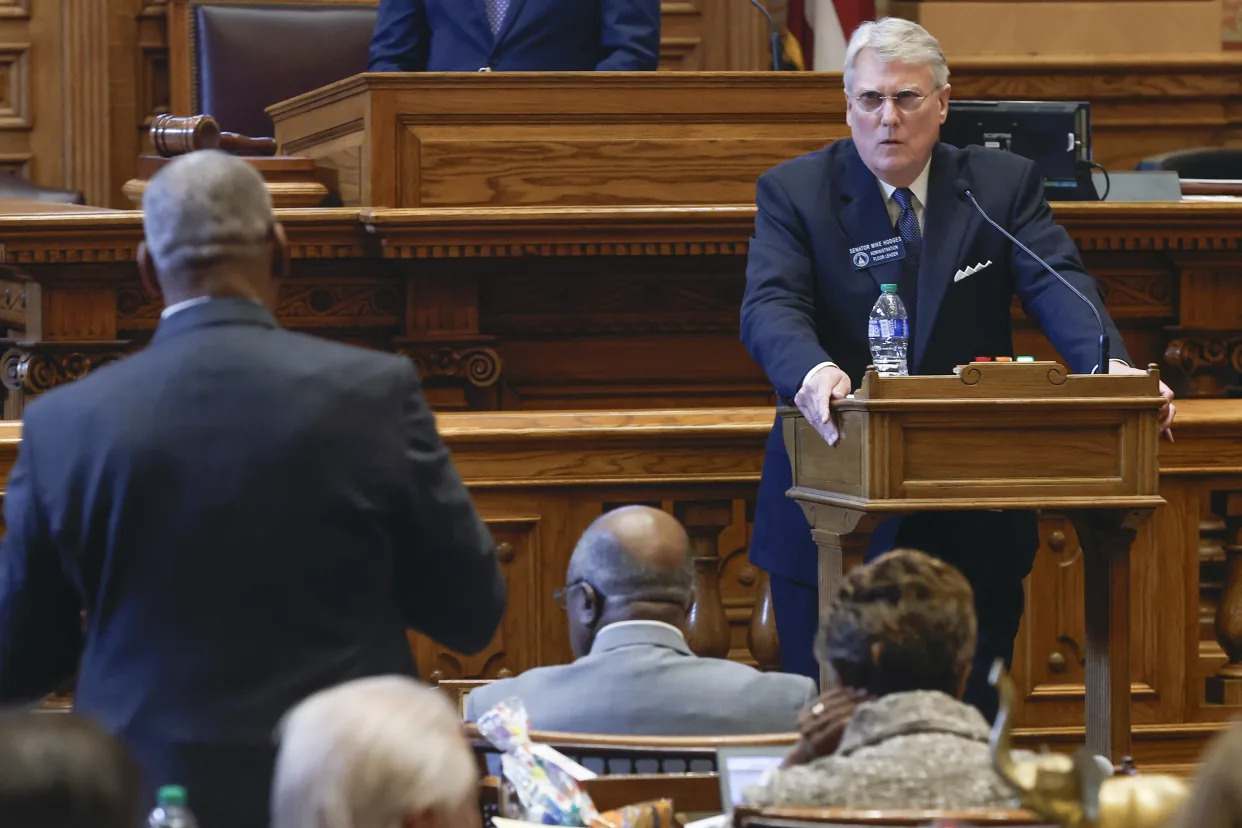
Sen. Mike Hodges, R-Brunswick, speaks in favor of Senate Bill 362 at The Georgia State Capitol on Thursday, Feb. 8, 2024. The bill would prevent economic incentives of business that voluntarily recommended unions or share contact information of workers with unions. (Natrice Miller/Atlanta Journal-Constitution via AP)

ATLANTA (AP) — As Georgia shovels out billions in economic incentives to electric vehicle manufacturers and other companies, the state's ruling Republicans are moving to make it harder for workers at those firms to join labor unions, in what could be a violation of current federal law.

The state Senate voted 31-23 on Thursday for a bill backed by Gov. Brian Kemp that would bar companies that accept state incentives from recognizing unions without a formal secret-ballot election. That would block unions from winning recognition from a company voluntarily after signing up a majority of workers, in what is usually known as a card check. Senate Bill 362 moves to the House for more debate.

Union leaders and Democrats argue the bill violates 1935's National Labor Relations Act, which governs union organizing, by blocking part of federal law allowing companies to voluntarily recognize unions that show support from a majority of employees.


“At the end of the day, voluntary recognition is a protected right, period,” said Hannah Perkins, political director for the Georgia AFL-CIO union federation, which claims 500,000 members in the state. Only 4.4% of Georgia workers are union members, the eighth-lowest rate among states.

The National Labor Relations Board, the federal agency overseeing union affairs, did not immediately respond Thursday to an email seeking comment.

Georgia's bill is modeled after a law passed in Tennessee last year, but there could be similar legislation offered in many other states. The conservative American Legislative Exchange Council is promoting the idea. The national push could also be a response to a decision by the Democratic-controlled NLRB last year that made it easier for unions to organize by card check.

Governors in other Southern states traditionally hostile to organized labor have been speaking out against unions in recent weeks, after the United Auto Workers vowed a fresh push to organize nonunion auto factories after multiple failed attempts.

Alabama Republican Gov. Kay Ivey said her state's economic success is “under attack.” Henry McMaster, South Carolina's Republican governor, told lawmakers in the nation's least unionized state last month that organized labor is such a threat that he would fight unions “ all the way to the gates of hell.”

Georgia Gov. Brian Kemp proclaimed his support for the bill in a January speech to the Georgia Chamber of Commerce, echoing the chamber’s own agenda. He said the move would protect workers’ “right to opportunity” from President Joe Biden’s pro-union agenda and outside forces “who want nothing more than to see the free market brought to a screeching halt.”

Alabama and South Carolina are among five states that in 2010 or 2012 passed state constitutional amendments guaranteeing access to secret union ballots. Indiana, like Tennessee has passed a state law. The National Labor Relations Board challenged the Arizona amendment in court, but a federal judge in 2012 declined to overturn it, saying it was too soon to judge whether the state amendment conflicted with federal law.

Kemp and fellow Georgia Republicans argue that they are protecting workers from being bullied into joining unions by giving them the protection of a secret ballot.

“Why is it such a bad policy to say, if you’re in the state of Georgia, you have a right to be protected, you have a right to choose whether or not to unionize, and you’re not going to get bullied, and you’re not going to get blackmailed?” asked state Sen. Bo Hatchett, a Cornelia Republican who Kemp appointed as one his floor leaders in the Senate.

Democrats, though, say the bill is really about making it harder for unions to organize and for companies to accept them. Most employers who oppose unions require employees voting on organizing to attend mandatory anti-union meetings before a vote, which can cause employees to vote against unions.

“All too often employers are engaging in these scorched-earth campaigns against workers," said state Sen. Nikki Merritt, a Lawrenceville Democrat who said a union contract protected her in a former job. Like most Senate Democrats Thursday, Merritt wore a red bandanna as a symbol of union solidarity.

State. Sen Mike Hodges, a Brunswick Republican who is sponsoring the bill, denied that it would violate federal law.

“It does not prohibit a company’s employees from unionizing or require an employer to oppose unionization in any action," said Hodges, another Kemp floor leader.

Hodges said he has a number of relatives who had been union members and understands "the addition to a lifestyle that union wages make.”

“If I thought this bill in any way, shape or form was injurious to unions or to union members, I would not carry it," Hodges said.

But Democrats said they think the bill is an attempt to attack federal labor law.

“They think that they found a loophole, so they want this to be a test case," said Sen. Jason Esteves, an Atlanta Democrat. "They want this to go to court because they’re hoping the Supreme Court will allow them to chip away.”


Georgia Senate passes bill that threatens incentives for companies whose workers seek to unionize

Maya Homan, Savannah Morning News
Fri, February 9, 2024 

A bill that would diminish protections for unions in Georgia passed in the state Senate on Thursday with a 31-23 vote, following hours of debate.

Senate Bill 362, which was authored by state Sen. Mike Hodges (R- Brunswick), would bar companies from receiving certain tax incentives from the state unless their decision to unionize was conducted via secret ballot.

Proponents of the bill say that it would protect workers’ right to privacy from employers and colleagues. However, opponents say that the measure would violate the federal 1935 National Labor Relations Act, which enables companies to recognize unions that receive support from a majority of workers.

Many legislators arrived on the Senate floor wearing red bandanas in recognition of rednecks — a term that once referred to members of the United Mine Workers of America, an interracial labor union that formed in the early 1900s.


Derek Mallow

“We stand in solidarity with our union brothers and sisters, and so we’re donning our red bandannas as rednecks today,” said state Sen. Derek Mallow (D-Savannah). “We ask that you support the working men and women of this state by voting no [on SB 362].”

According to Hodges, current labor organizing laws can “be used by organizers to coerce, intimidate or harass employees publicly to elect to be recognized by a union, even if certain employees may not wish to be recognized in the first place.”

He emphasized that the bill does not prevent workers from organizing. However, Senate Democrats countered that intimidation often comes from employers, not union leadership, and cited the dangers to eroding union protections.

More: Georgia House passes amended 2024 budget, echoing Kemp's budget priorities

Atlanta state Sen. Nan Orrock took the well to decry what she called “a determined battle to crush labor,” that stretched back at least 40 years.

“The interesting fact is the states that have a higher level of unionization have a healthier population,” Orrock said. “They have better performance in schools. They have higher numbers of people going to college. They have an overall vibrant and healthy economy that Georgia doesn’t measure up to.”

However, Senate Republicans insisted that existing labor laws are outdated, and do not adequately protect workers.

“A lot of the stories about unionization that we’re hearing today are stories of yesterday,” state Sen. Jason Anavitarte (R-Dallas). “This system has not been revised since the Great Depression. ... Democrats want to hold workers to the standards of the bosses because they believe that those federal laws were so great back then that they’re protecting workers now.”

The bill now goes to the House for further debate.

This article originally appeared on Savannah Morning News: Anti-union labor bill passes in Georgia Senate


‘My father died in the Columbia space shuttle – it felt like Nasa betrayed him’

Charlotte Lytton
Fri, February 9, 2024 

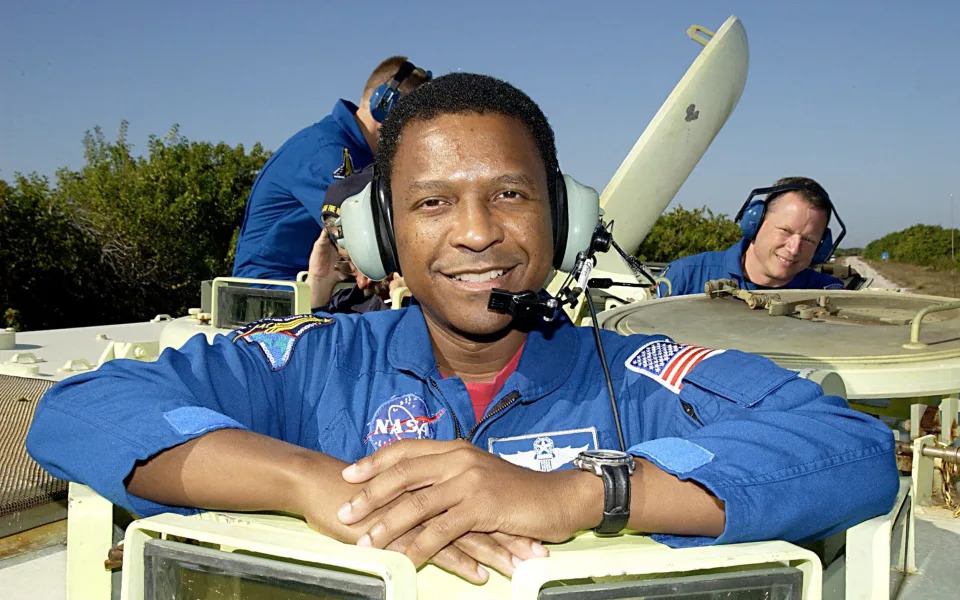
Kaycee Anderson, right, was nine when her father died in the crash

The first sign was the countdown clock. On Feb 1 2003, nine-year-old Kaycee Anderson was in the crowded bleachers by Florida’s Kennedy Space Centre, watching the seconds tick down towards zero – then start climbing back up again. The perfectly blue sky seemed to highlight the absence of the Columbia space shuttle, due to return to Earth that Saturday morning with her father, Mike, and the six other astronauts on board. Instead of a sonic boom and the orbiter approaching, all of a sudden, “people were on the phone talking in urgent tones, and then they were getting in vans”, Kaycee, now 30, remembers. “That’s when I knew, this isn’t normal.”

Along with her mother, sister and the rest of the astronauts’ families, they were bundled into a van, driven to the Space Centre, and told that the worst had happened. Minutes from when they should have landed to a hero’s welcome, the shuttle had broken up at 190,000ft, sending burning metal and human remains plummeting to the ground in east Texas. The shuttle’s disintegration as it breached the planet’s barrier had been broadcast on live television as the families stood staring at the sky, among the last to know their loved ones’ fate.

Twenty-one years on from flight STS-107, it remains among the worst space disasters in history, charted in painful detail in Columbia: The Space Shuttle That Fell to Earth, a three-part BBC documentary series beginning Monday (Feb 12). By the time of its 28th and final mission, Columbia – dubbed “the world’s greatest electric flying machine” – had spent more time in space than any other shuttle. All the more galling, then, that the incident could have been avoided completely.


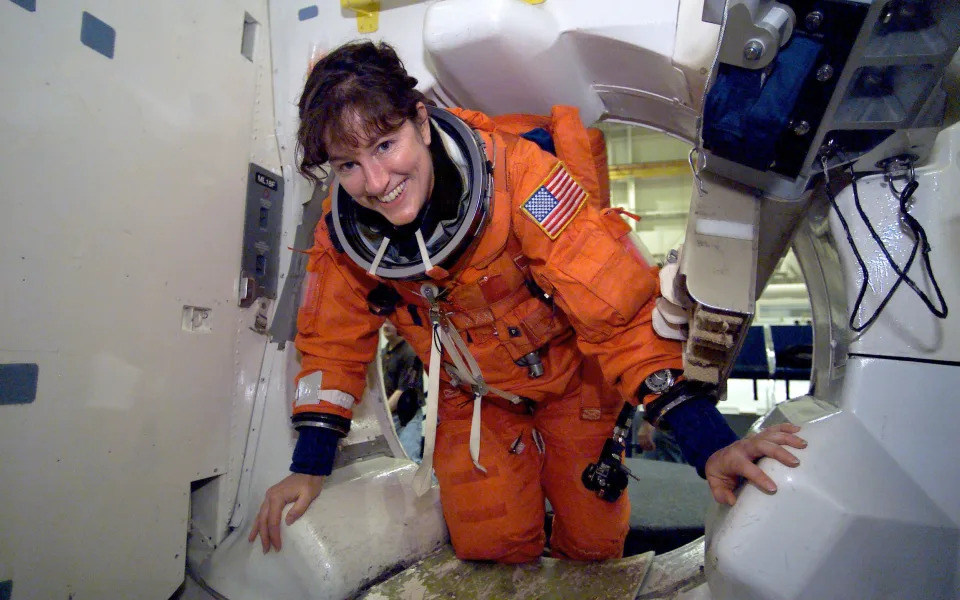
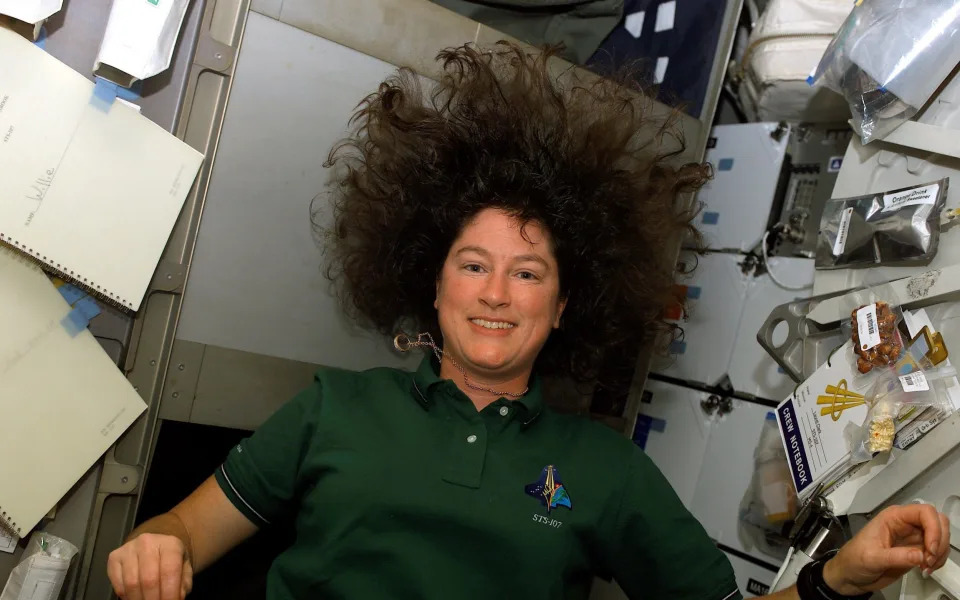
The STS-107 crewmembers. Blue shirts from the left: David M Brown, William C McCool and Michael Anderson. Red shirts from the left: Kalpana Chawla, Rick D Husband, Laurel B Clark and Ilan Ramon - NASA/Getty Images


From the moment the families learnt what had happened, “it was just chaos,” says Kaycee. She was confused, she recalls, that her father – who had spent eight days in space on Endeavour mission STS-89 in 1998 – had not returned like the last time; on the flight back to Houston, she spent the journey staring out at the clouds, “thinking, ‘Is Dad up here? Am I close to him?’”

Neighbours were crowded at their front door when the three Andersons got home, where they all “just hugged and cried for a long time”. It would mark the beginning of a national grief juggernaut: there were memorial services, a meeting with President Bush; “It was just this whirlwind of things. And so we were sad, but there was so much happening that you don’t really get to sit in it.” Once those commitments drifted away “is when it became more real. And for me, it became very scary.”

Nasa had been providing security detail outside their home, and their post was being screened (a number of “strange calls”, in some cases from prisons, had got through) – but once that ceased, “I was terrified, I couldn’t sleep, I didn’t know what was going on. I was constantly looking over my shoulder.”


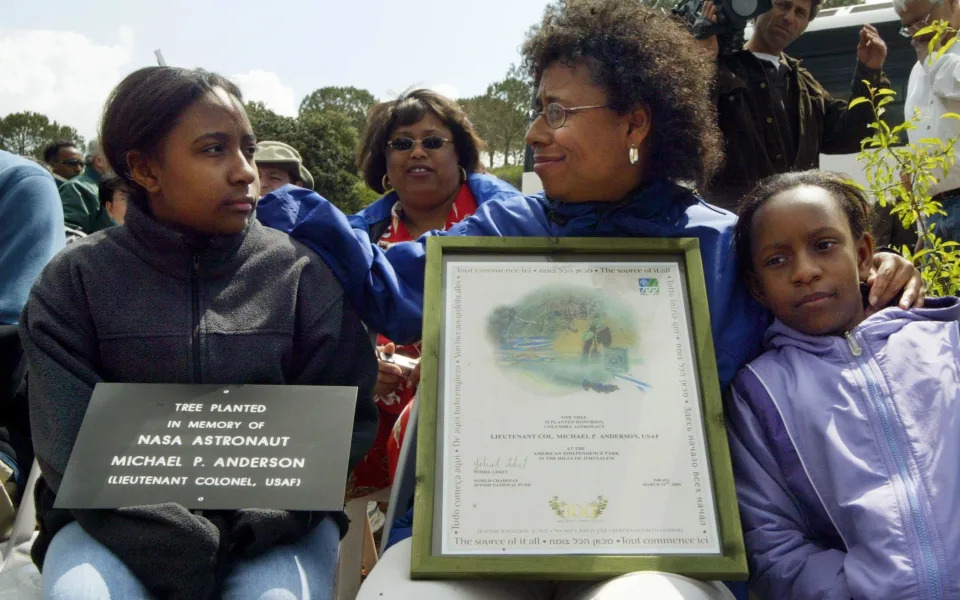
The widow of US astronaut Michael Anderson, Mrs Anderson, and her two daughters Sindy (left) and Kaycee (right) planting a tree in memory of Michael Anderson on 19 March 2004 - AFP/Gali Tibbon

To have their parents taken so brutally, and on the world stage, left the children of crew 107 fundamentally altered. Jonathan Clark, a Nasa crew surgeon whose wife, Laurel, was on board, had spent the lead-up to launch concerned about their seven-year-old, Iain. Their boy had “begged her not to go” – his fears intensifying after the family had narrowly survived an aircraft crash the previous Christmas; Iain’s mother was his “whole world”. Now still, Jonathan, 70, who met Laurel during navy training, “can’t even imagine the quandary she would have faced”. Had she pulled out, the mission she and the rest of the crew had spent years training for would have been aborted. “She was determined and committed to get the job done.”

Iain cried throughout the launch, on Jan 16; a grim foreshadowing of what was to come a little over a fortnight later. In his office at Nasa that Saturday morning, where Jonathan saw the footage of 107’s final moments, he was hit by a “primal grief; it was like deep animal wailing cries”. He tried numbing his thoughts by playing cards with Iain on the flight home, and quickly concocted a plan: once back, he would load his son into the car with their Australian shepherd, Addie, and all their camping gear, and empty his account at the nearest cash machine: “We’re just going to drive away and disappear.” But when they landed, they were separated by friends, and that “broke my plan apart”, he reflects. “I still to this day wonder, what if I could have done that?” Instead, that night, in enduring navy tradition, he got “really s- -t-faced drunk” with colleagues. “When we lost our mates, we would just drink and remember.”


Laurel Clark's seven-year-old son, Iain, had 'begged her not to go' during the lead up to the launch

He becomes emotional as we talk, more so as he quotes Mark Twain’s decree that “‘the two most important days of your life are when you’re born, and when you find out why’. And that was the day I found out why.” There were times after losing his wife of 12 years that “I thought I was going to die of dehydration from crying”. He feared grief might push Iain so far as depression and suicide, so developed a solitary goal: “just keep him alive”. The two of them (along with Addie) would bundle up in bed, that countdown clock “embedded in my mind. I would have replays of that for months and months afterwards, trying to analyse: is there something I could have done differently? Is there something that I’d missed?”

For Jonathan, that thought is more acute than most. He had not been the primary crew surgeon for mission 107, but was covering a few “dog shifts” (from midnight to mornings). On one, reviewing the log notes to get up to speed, he learnt that a block of foam from the shuttle’s exterior had fallen off on launch, appearing to strike its left wing. By day two of the mission – and just days before the 17th anniversary of the Challenger disaster, where seven crew had been killed 73 seconds after take-off in 1986 – Nasa officials deduced that the loss of spacecraft and all those inside was a worst-case scenario.


Laurel Clark blew kisses to her son Iain over video link as she orbited Earth

Jonathan “wondered if I should tell Laurel about this” – but on discussing it with his colleague was told: “You’re wearing the crew surgeon hat, not the family member hat.” And so, reasoning that it was not his call, he mentioned nothing when they were connected via video link, Laurel blowing kisses to Iain as she orbited Earth. “In some ways,” he says, what followed is “probably my blame too”.

Whether the seven crew could have been saved hangs heavy over many of those at Nasa at the time. The documentary unpicks the battle between those concerned that the foam strike would yield deadly consequences, and Nasa management, where bureaucracy was so hardwired that staff did not ask vital questions for fear of disrupting the status quo.

Repeated requests to use satellites to take closer images of the damage were denied by the top brass; foam had detached in prior missions without catastrophic consequences, and thus was deemed not worth remedying. The crew would learn that something had happened only on the eighth day of their mission – several days past the point where potential damage could have been fixed – when Linda Ham, the acting manager of shuttle launch integration, sent them a brief email on a matter she described as “not even worth mentioning.” Eight days after that, when mission control watched their tracking radar stall over Texas, the damage having originated in the left wing, commanders could only reach their hands to their mouths, tears falling from their eyes as they stared at the screen in horror.


Flight STS-107 remains among the worst space disasters in history - Courtesy of Scott Andrews

Following 107’s failure to return, Ron Dittemore, the shuttle programme manager, publicly dismissed that the foam strike was to blame with a certainty former employees describe in the documentary as “nonsensical”. What had become an unofficial Nasa mantra – “it’s only foam” – would six months later be recorded as the reason that the crew never saw their families again.

“It almost felt like a betrayal,” Kaycee says: that her father “had worked with [Nasa], had loved them, and this is how they treated him”. It kept her up at night, wondering how staffers “were afraid of these hypothetical questions, or having their careers ruined. Well, lives were ruined – who cares about your career? And so that’s when it became anger. And that’s when anger eventually became disgust.”

She couldn’t look at anything with Nasa’s insignia on it, she recalls; when the end of the shuttle programme was announced in 2011, she thought: “Good, burn it all to the ground.” In time, those feelings subsided, replaced instead by sadness for those who had made the final calls. The documentary was “heartbreaking”, she says; watching Nasa staff recounting how “they could have done something… I don’t have to live with that kind of regret.”

Michael Anderson did not return like he did in 1998 on Endeavour mission STS-89 - NASA/Getty Images

Jonathan too says he lays no blame at anyone’s door; that “everybody who was a part of that decision process has suffered immeasurably”. (Arron Fellows, the creative director of Mindhouse Productions, which made the series, says Nasa co-operated with filming throughout: “I think the reason they have given their blessing to this project is because they understand mistakes were made.”) In space mishaps, as they are known, “the goal is to find cause, not fault,” Jonathan adds; to “do better next time”.

He has never remarried, and still lives for Laurel; both her memory, and the seven-year-old granddaughter who now bears her name. Little Laurel is the same age as Iain was when he lost his mother, and the similarities between her and her namesake are “eerie”, Jonathan says; she is “effervescently friendly”, obsessed with the water, animals and adventure. “It’s like seeing Laurel again.”

Columbia: The Space Shuttle That Fell to Earth begins on Monday Feb 12 on BBC Two at 9pm
The world’s top carmaker got mocked for rejecting EV hype—not anymore. ‘I want to congratulate Toyota’
FOR STATING THE OBVIOUS
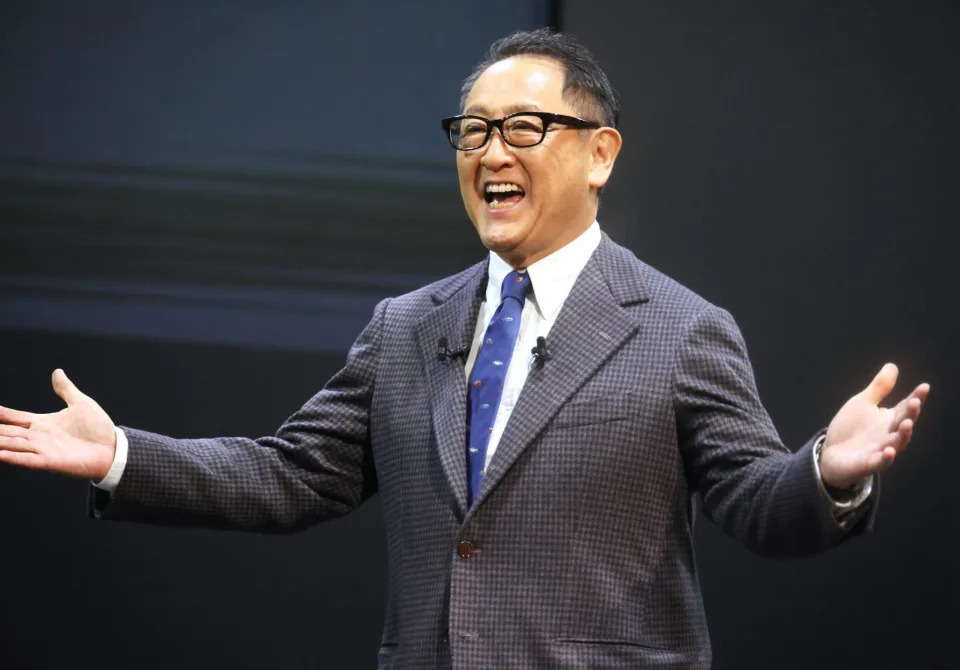
Toyota's chairman  estimated that EVs will share the roads with hybrid, traditional, and hydrogen-powered cars.

Steve Mollman
Thu, February 8, 2024 

YOSHIKAZU TSUNO/Gamma-Rapho via Getty Images

Toyota was skeptical of electric vehicles back when that wasn’t fashionable. In October 2022, for instance, then-CEO Akio Toyoda said that EVs “are just going to take longer than the media would like us to believe.” As other big carmakers made bold proclamations about when they go all electric, Toyota refused to play along, vowing instead to keep offering a wide array of powertrains and letting consumers decide for themselves.

“That’s our strategy and we’re sticking to it,” he insisted, vowing to focus on hybrids, which this carmaker pioneered with the release of the Prius in Japan in 1997, and three years later in the U.S. Since then, the Japanese giant has steadily increased its hybrid offerings.

Toyota’s stance was not a good look at the time—and it didn’t go over well.

“Toyota is not correctly responding to calls from the market to take a lead in electric vehicles,” Satoru Aoyama, senior director at Fitch Ratings, told the Financial Times, warning the carmaker could “lose investor confidence.”

Environmentalists were none too pleased, either. “The fact is: a hybrid today is not green technology,” blogged Katherine Garcia, director of the Sierra Club’s Clean Transportation For All campaign. “The Prius hybrid runs on a pollution-emitting combustion engine found in any gas-powered car…Rather than invest in EVs, though, Toyota is putting corporate profits and the status quo over tackling the climate crisis.”

The pressure grew so intense that, partly in response, Toyoda—the grandson of the company’s founder—left his CEO role to become chairman.

“Because of my strong passion for cars, I am an old-fashioned person in regards to digitalization, electric vehicles, and connected cars. I cannot go beyond being a car guy, and that is my limitation,” he said. “The new team can do what I can’t do.”
'A strength of Toyota'

But it turns out he was onto something. This week, the carmaker raised its operating profit guidance by nearly 9% for the fiscal year ending March 31, crediting higher sales of hybrid vehicles across all its major markets.

That contrasted with EV leader Tesla, which despite repeated price cuts to boost demand warned that this year’s sales growth might be “notably lower” than last year’s. Meanwhile there are increasing signs from carmakers and markets around the world that sales growth for electric vehicles is slowing.

With hybrids alone, Toyota sold roughly 3.4 million vehicles globally last year, up from 2.6 million in 2022. Tesla, by contrast, sold 1.8 million vehicles, all of them electric. In total, Toyota sold 11.2 million vehicles, allowing it to retain its crown as the top-selling carmaker for the fourth consecutive year
.

EV sales in the U.S. grew an impressive 51% last year, according to Edmunds, but hybrid sales did even better, jumping 63%.

“We think the market is now rethinking the potential of hybrid products, which are a strength of Toyota,” Goldman Sachs analysts wrote in a recent research note.

“I want to congratulate Toyota, which was attacked for saying it was never going to go all-electric and it was going to continue to make the cars people wanted to buy,” said Diana Furchtgott-Roth, director of the Center for Energy, Climate, and Environment at the Heritage Foundation, on Fox Business.

For drivers, hybrids have the feel-good factor of burning less fossil fuel than normal cars—friendlier on the environment and the pocketbook—without the range anxiety, charging issues, and resale value of EVs. (Hybrids maximize efficiency by alternating from gas to battery power.) It also helps that in the U.S. hybrids are priced closer to regular vehicles than are EVs.

Of course, Toyota could end up on the wrong side of history if consumers shift to EVs faster than it expects. While Toyota does offer some EV models—and has more in the works—they still account for just a sliver of its overall sales.

In 2022, Tesla CEO Elon Musk dismissed hybrids as a phase, saying that it’s “time to move on” from them. The last laugh might belong to him and, perhaps, Chinese rivals like Warren Buffett–backed BYD, which recently passed Tesla in global EV sales.

"If consumer adoption of BEVs shifts again and speeds up, Toyota may not be fully ready,” Stephanie Brinley, an associate director at S&P Global Mobility, told Reuters.

But none of that stopped Toyota's chairman from doubling down on his once-unpopular stance last month, as he estimated that EVs will peak at 30% and share the roads with hybrid, traditional, and hydrogen-powered cars.

This story was originally featured on Fortune.com