Monday, November 18, 2024


Tree islands restore nature in oil palm plantations


Research team led by Göttingen University investigate native species recovery in Sumatra


University of Göttingen

Industrial oil palm plantation in Jambi, Sumatra 

image: 

Industrial oil palm plantation in Jambi, Sumatra

view more 

Credit: Gustavo Paterno


Southeast Asia’s tropical forests are renowned for their biodiversity, but at the same time face significant threats from the expansion of oil palm plantations. With global demand for palm oil rising, the urgency for effective restoration strategies in these landscapes has become critical. A long-running experiment led by Göttingen University, Germany, and including the IPB University, Bogor and Jambi University in Indonesia, has investigated how ecological restoration promotes biodiversity recovery in oil palm plantations in Sumatra. Their findings reveal that establishing islands of trees within large oil palm monocultures can promote the recovery of native tree diversity through natural regeneration. The results were published in Science.


The international research team established 52 tree islands of varying sizes and diversity of planted trees in a conventional industrial oil palm plantation in Sumatra, Indonesia. This innovative experimental setup provided valuable insights into how initial restoration decisions influence biodiversity in oil palm-dominated landscapes. For instance, standard plantation management usually includes suppression of the undergrowth by using large amounts of herbicides and fertilizers. However, a diverse range of native species successfully colonized the tree islands, including trees that are endemic to Sundaland, meaning that they are only found in this region. Within just six years, many of these trees have already begun fruiting, with some exceeding 15 meters in height. Interestingly, alien species – meaning those not native to the study region – represented only ten percent of the natural regeneration in the restored areas.


The study highlights that tree islands accelerate the natural regeneration of native species, through the establishment of species from seeds that have arrived for example by wind or bird. This process enhances functional and evolutionary diversity, both crucial for building resilient ecosystems capable of withstanding climate change. Dr Gustavo Paterno, postdoctoral researcher at Göttingen University and lead author of the study, says: “An important finding to inform plantation management is that larger islands of trees, particularly those over 400 m², are essential for endemic and forest tree species that struggle to find suitable habitats within conventional oil palm plantations.” He adds: “Increasing the area of restoration leads to a surprisingly high increase in diversity.”


The research showed that starting with a higher diversity of planted native trees on each island can lead to a greater variety of ecological plant strategies colonizing the tree islands. “The more tree species you begin with, the more functionally diverse the restored ecosystem will become over time,” explains Professor Holger Kreft, Head of Göttingen University’s Biodiversity, Macroecology and Biogeography research group. “Our study demonstrates the potential of tree islands to transform biodiversity-poor agricultural lands into ecosystems teeming with biodiversity and native plants.” The team found, however, that despite these promising results, biodiversity levels in restored areas were still much lower than those in undisturbed forests, highlighting the urgent need to protect remaining forest patches with their irreplaceable conservation value.


This research was made possible thanks to the German Research Foundation (DFG) through the Collaborative Research Centre "Ecological and Socio-economic Functions of Tropical Lowland Rainforest Transformation Systems (EFForTS)".


Original publication: Gustavo Brant Paterno et al. Diverse and larger tree islands promote native tree diversity in oil palm landscapes. Science, 2024. DOI: 10.1126/science.ado1629   


Southeast Asia’s tropical forests are renowned for their biodiversity, but at the same time face significant threats from the expansion of oil palm plantations. With global demand for palm oil rising, the urgency for effective restoration strategies in these landscapes has become critical. A long-running experiment led by Göttingen University, Germany, and including the IPB University, Bogor and Jambi University in Indonesia, has investigated how ecological restoration promotes biodiversity recovery in oil palm plantations in Sumatra. Their findings reveal that establishing islands of trees within large oil palm monocultures can promote the recovery of native tree diversity through natural regeneration. The results were published in Science.


The international research team established 52 tree islands of varying sizes and diversity of planted trees in a conventional industrial oil palm plantation in Sumatra, Indonesia. This innovative experimental setup provided valuable insights into how initial restoration decisions influence biodiversity in oil palm-dominated landscapes. For instance, standard plantation management usually includes suppression of the undergrowth by using large amounts of herbicides and fertilizers. However, a diverse range of native species successfully colonized the tree islands, including trees that are endemic to Sundaland, meaning that they are only found in this region. Within just six years, many of these trees have already begun fruiting, with some exceeding 15 meters in height. Interestingly, alien species – meaning those not native to the study region – represented only ten percent of the natural regeneration in the restored areas.


The study highlights that tree islands accelerate the natural regeneration of native species, through the establishment of species from seeds that have arrived for example by wind or bird. This process enhances functional and evolutionary diversity, both crucial for building resilient ecosystems capable of withstanding climate change. Dr Gustavo Paterno, postdoctoral researcher at Göttingen University and lead author of the study, says: “An important finding to inform plantation management is that larger islands of trees, particularly those over 400 m², are essential for endemic and forest tree species that struggle to find suitable habitats within conventional oil palm plantations.” He adds: “Increasing the area of restoration leads to a surprisingly high increase in diversity.”


The research showed that starting with a higher diversity of planted native trees on each island can lead to a greater variety of ecological plant strategies colonizing the tree islands. “The more tree species you begin with, the more functionally diverse the restored ecosystem will become over time,” explains Professor Holger Kreft, Head of Göttingen University’s Biodiversity, Macroecology and Biogeography research group. “Our study demonstrates the potential of tree islands to transform biodiversity-poor agricultural lands into ecosystems teeming with biodiversity and native plants.” The team found, however, that despite these promising results, biodiversity levels in restored areas were still much lower than those in undisturbed forests, highlighting the urgent need to protect remaining forest patches with their irreplaceable conservation value.


This research was made possible thanks to the German Research Foundation (DFG) through the Collaborative Research Centre "Ecological and Socio-economic Functions of Tropical Lowland Rainforest Transformation Systems (EFForTS)".


Original publication: Gustavo Brant Paterno et al. Diverse and larger tree islands promote native tree diversity in oil palm landscapes. Science, 2024. DOI: 10.1126/science.ado1629   


Islands of trees in an oil palm plantation

SLASH AND BURN

Caption

Area being prepared for a second-generation oil palm plantation in Jambi

Credit

Gustavo Paterno


How much income goes on rent for minimum wage earners in Europe?

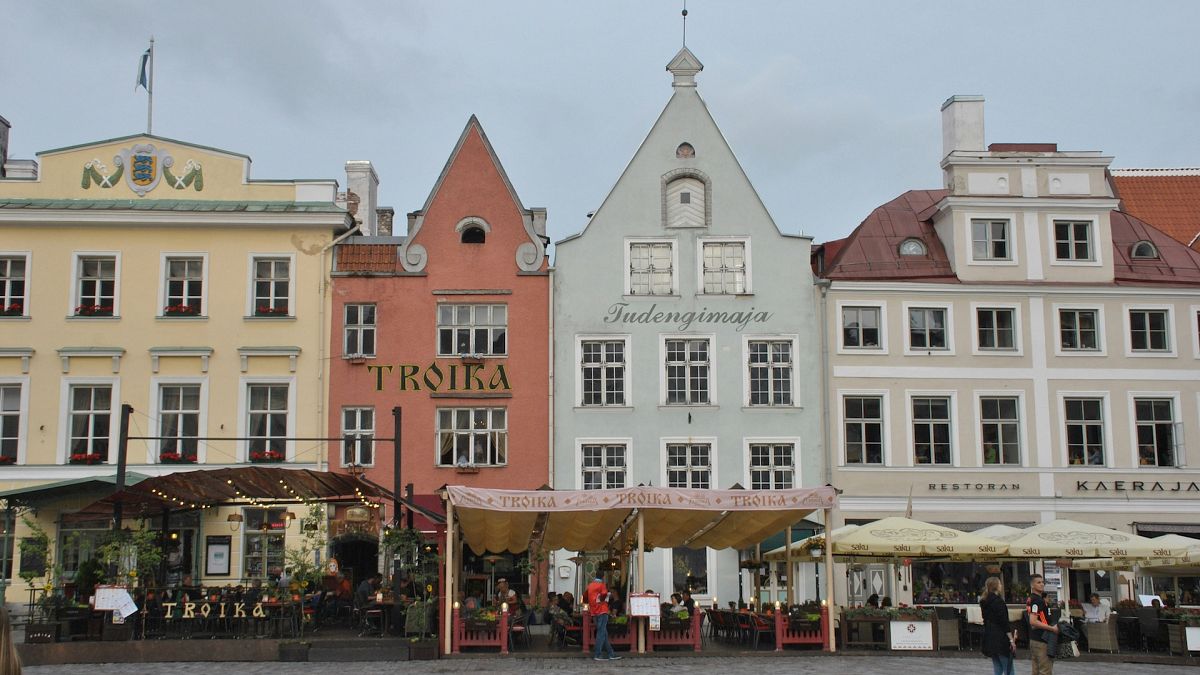
Tallinn, capital of Estonia
Copyright Pic by Stanislav Rabunski/Unsplash
By Servet Yanatma
Published on 

The share of minimum wage income spent on rent varies across Europe, from 35% in France to 56% in the Netherlands. Euronews Business examines minimum wages and average rent costs in EU countries.

"Housing, water, electricity, and gas" constituted the largest portion of household expenditures in the EU. In 2022, nearly a quarter of all household spending (24.1%) was allocated to these essential needs, clearly showing the substantial weight they carry in European household budgets. 

This proportion varies significantly across European countries and, more importantly, according to income levels within each country. Minimum wage earners, in particular, are heavily impacted, as they allocate a larger share of their income to "housing, water, electricity, and gas". 

The European Trade Union Confederation (ETUC) reports that, in 14 EU member states, rent for a property with a maximum of two bedrooms takes up at least 35% of the income of workers on the statutory minimum wage. In 2024, on average, these workers spend 45% of their earnings on housing alone, illustrating the heavy financial burden that housing costs place on low-wage earners across these countries.

"Millions of working people in most member states see a huge part of their wages leave their bank accounts as soon as it’s come in simply to keep a roof above their heads," ETUC General Secretary Esther Lynch said.

How much does it cost to rent a property with up to two bedrooms in various European countries? What is the monthly salary of minimum-wage earners across Europe? And which countries see the highest proportion of income spent on rent by those earning the minimum wage?

Minimum wage varies widely, from €477 to €2,571

Among the 14 countries included in the research, statutory minimum wages ranged from €477 in Bulgaria to €2,571 in Luxembourg. Only six of these countries have a minimum wage above €1,000, with three exceeding €2,000: Luxembourg, Ireland, and the Netherlands.

Denmark, Italy, Austria, Finland, and Sweden do not have a national statutory minimum wage.

Average rent across 14 countries is €600

The rent for a property with a maximum of two bedrooms ranged from €215 in Bulgaria to €1,340 in Luxembourg, while the average of 14 countries is €599. 

In seven countries, the average rent was below €400, including Bulgaria (€215), Romania (€277), Croatia (€311), Greece (€344), Slovakia (€371), Estonia (€387), and Portugal (€391). On the higher end, average rent exceeded €1,000 in Luxembourg, Ireland, and the Netherlands, while it was €618 in France and €578 in Spain.

Rent calculations are based on Eurostat's 2022 data, adjusted for inflation.

Portion of minimum wage spent on rent

The portion of minimum wage income spent on rent offers valuable insights into the financial burden rent places on low-wage earners. Among the 14 countries, this proportion ranged from 35% in France to 56% in the Netherlands. On average, minimum-wage earners across these countries spend 45% or 46% of their income on rent, depending on the calculation method used.

In addition to the Netherlands, where the proportion reaches 56%, rent consumes over 50% of minimum wage income in both Ireland (55%) and Luxembourg (52%). 

France has the lowest proportion at 35%, meaning rent accounts for roughly a third of minimum-wage workers' income. Croatia (37%) and Greece (38%) follow closely behind France in having lower rent-to-income ratios for minimum wage earners. 

In Bulgaria, where both minimum wages and rent are the lowest, workers still spend a significant 45% of their income on rent. In Spain, this proportion is similarly high at 44%.

The cost of rent is based on national averages; however, the situation can be even more challenging in cities and capital areas, where most jobs are concentrated. 

"Despite paying high rents with low wages, their accommodation is often totally inadequate, exposing them and their families to health conditions," said Esther Lynch.

"Others are forced to sleep on the couch in their friends' apartments, continue living with their parents when possible, and even sleep in their cars," she added.

How much do European countries spend on housing and bills?

We can also examine additional data from Eurostat that goes beyond minimum wage and rent alone. This dataset reflects the percentage of total household expenditure allocated to housing, water, electricity, gas, and other fuels, which varies significantly across Europe.

In 2022, Slovakia topped the list, with over 30% of household expenditure allocated to housing, water, electricity, gas, and other fuels. Finland and Denmark followed closely, with households spending 29.6% and 29.1%, respectively, on housing and utilities.

In contrast, Malta (13.9%) and Croatia (14.9%) allocate a much smaller share of their expenses to housing and utilities. 

The chart highlights that Northern and Central European countries face substantial financial pressures related to these costs.

This expenditure includes:

  • Actual rentals for housing

  • Imputed rentals for housing

  • Maintenance and repair of the dwelling

  • Water supply and miscellaneous services relating to the dwelling

  • Electricity, gas and other fuels

In 2019, this proportion was 25.7% in the UK, a former EU member.

THE ROMA PEOPLE
Euroview: Trump’s re-election will test Europe’s democratic integrity and its treatment of minorities


Copyright AP Photo/Euronews

By Mensur Haliti, vice president for democracy and network development, Roma Foundation for Europe
Published on 18/11/2024 -

The opinions expressed in this article are those of the author and do not represent in any way the editorial position of Euronews.

The moment calls for bold action — securing a future where Roma and other marginalised groups actively contribute to a resilient, democratic Europe, Mensur Haliti writes.


Donald Trump’s re-election doesn’t just shake American politics; it's also intensifying threats to Europe’s democratic foundations. Nowhere is this pressure felt more acutely than by the Roma, Europe’s largest and most disenfranchised minority, whose already fragile protections hang by a thread.

With the United States stepping back from its historic role as a global defender of democracy under Trump, Europe faces a defining choice: defend inclusivity or yield to the rising tide of far-right extremism and authoritarianism threatening to unravel its core values.

For decades, the transatlantic alliance has bolstered democratic norms across Central and Eastern Europe (CEE) and the Balkans—regions where over 12 million Roma rely on EU frameworks like the Rule of Law Mechanism and the Anti-Racism Action Plan for protection against systemic exclusion.

Yet, with democracy in decline in America and BRICS-aligned powers such as Russia and China asserting greater influence over Europe and pushing “stability” over civil liberties narrative, the cracks in these Western alliances have become more evident.

In this shifting global landscape, Roma politics have become both a gauge and a battleground for Europe’s democratic resilience. Trump’s re-election, signalling renewed American isolationism, leaves Europe more vulnerable to authoritarian currents.

Without US’ support for democratic norms, Roma protections risk unravelling under ethno-nationalist leaders who use disinformation, clientelism, and scapegoating to consolidate power.

This is not just a moral crisis — it is a strategic threat to Europe’s democratic architecture. How Europe responds will shape not only the future of Roma political inclusion but also the strength of its democratic institutions.

Fragile foundations of European democracy

The US-European alliance has long been a cornerstone of post-war European democracy, especially in vulnerable regions like CEE and the Balkans.

After World War II, Washington pushed beyond economic recovery, advocating for governance rooted in democratic principles. This alliance laid the foundation for inclusivity, crucially supporting minority and Roma rights through Cold War-era reforms.

Trump’s 'America First' approach emboldens nationalist leaders in Europe. In such a climate, institutions like the Helsinki Commission, which once spotlighted anti-Roma violence, and USAID, known for resilience programmes, lose their influence.

Supporters of President-elect Donald Trump participate in a victory parade in West Palm Beach, FL, November 2024AP Photo/Alex Brandon

Trump’s “America First” approach emboldens nationalist leaders in Europe. In such a climate, institutions like the Helsinki Commission, which once spotlighted anti-Roma violence, and USAID, known for resilience programmes, lose their influence.

As US engagement wanes, Roma risk falling into patronage systems that stifle political autonomy and democratic engagement.


Across Europe, populist leaders weaponise anti-Roma sentiment to secure power. Viktor Orbán in Hungary uses exclusionary rhetoric, casting Roma as threats to society. In Western Europe, migration from CEE countries fuels hostility, deepening political divides.

Related

'Opre Roma': Tired of being let down, Roma are now standing up for themselves

While EU frameworks like the Rule of Law Mechanism and the Anti-Racism Action Plan exist, they struggle against nationalist pushback, revealing the urgent need for consistent enforcement.


What are the pathways to building a European shield?

To address these challenges, the EU must act decisively. First, it must prioritise measures that strengthen its democratic framework and protect its most vulnerable communities.

Second, it should empower institutions like the European Court of Justice and the Fundamental Rights Agency to issue binding recommendations on minority protections. Further, by linking these to financial incentives, the EU can enforce rule-of-law mechanisms more effectively, ensuring member states uphold democratic principles and bolstering trust in EU governance.

The EU’s approach to Roma inclusion will reveal its ability to defend democratic values in the face of extremism and authoritarianism. With Trump’s re-election shifting US priorities, Europe must step up to fortify its foundations.

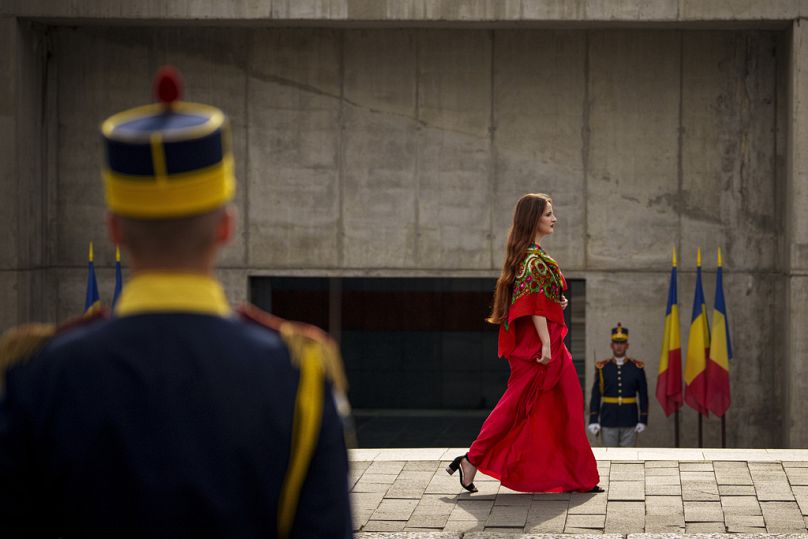
Soprano Isabela Stanescu walks by honour guard to perform the Romani anthem Djelem, Djelem during a commemoration of the Roma Holocaust Memorial Day in Bucharest, August 2023
AP Photo/Andreea Alexandru

Third, investing in Roma-led civil society is essential. Programmes such as the Citizens, Equality, Rights, and Values (CERV) initiative and the European Social Fund+ offer opportunities to empower Roma communities, helping them build resilience and independence from clientelist networks.

These investments can foster grassroots engagement, counter nationalist rhetoric, and amplify Roma voices in local and EU-level decision-making processes.

Fourth, tackling the growing threat of digital disinformation is equally vital. The European Democracy Action Plan must expand to include Roma-specific digital literacy initiatives, equipping communities with tools to navigate and resist manipulative online campaigns.

By partnering with resources like the European Digital Media Observatory (EDMO), the EU can protect Roma from harmful narratives and promote more informed, active civic participation.

A defining test for Europe

In addition, strengthening transatlantic and global alliances is crucial. Establishing an EU-US Taskforce on Roma Inclusion, supported by NATO and allied democracies like Canada and Australia, would signal a united commitment to defending minority rights and countering authoritarian influence. This collaboration can amplify Roma inclusion efforts and reinforce Europe’s stance as a global champion of democracy.

Finally, institutionalising Roma representation within EU governance would embed their voices where they matter most.

Creating pathways for Roma leaders to serve in the European Parliament and other key bodies would not only highlight the EU’s dedication to diversity but also ensure that policymaking reflects the experiences and needs of one of Europe’s most marginalised communities.

The EU’s approach to Roma inclusion will reveal its ability to defend democratic values in the face of extremism and authoritarianism. With Trump’s re-election shifting US priorities, Europe must step up to fortify its foundations.

By protecting Roma rights, the EU can establish itself as a global democratic leader. The moment calls for bold action — securing a future where Roma and other marginalised groups actively contribute to a resilient, democratic Europe.


 SPACE/COSMOS


Europe's rival to Musk's SpaceX raises millions in new funding

The NYX - a reusable spacecraft similar to SpaceX's Dragon
Copyright Taken from website of The Exploration Company
By Tina Teng
Published on 

The Exploration Company, the European rival of SpaceX, has achieved another milestone in funding to develop its space cargo capsule, Nyx. Government-backed funds from both Germany and France are among the major investors.

Founded in 2021, The Exploration Company (TEC) announced on Monday that it has raised $160m (€151.7m) in Series B funding, bringing its total funding to nearly $208m (€197m). The Germany-based spacecraft manufacturer is often considered the European rival to Elon Musk's SpaceX Dragon, a reusable capsule designed to transport cargo and humans to space.

The Series B funding round was led by venture capital firms Balderton Capital and Plural. French government-backed French Tech Souveraineté and German government-backed DeepTech & Climate Fonds were also major contributors. In February, TEC raised €40m (€38m) during its Series A funding round, co-led by EQT Ventures.

Plans to develop passenger and cargo transporter Nyx

The funds will primarily be used to further develop TEC's flagship product, Nyx, a reusable spacecraft similar to SpaceX's Dragon. Nyx is designed to transport passengers and cargo to and from the International Space Station (ISS) in low Earth orbit. The second version of Nyx is expected to be launched in 2025, with the first full mission scheduled for 2028.

Hélène Huby, co-founder and CEO of TEC, commented: "Over the past 12 months, we have hit major operational and financial milestones and signed significant service contracts with both space agencies and commercial clients. This new funding is the next step in scaling up our ambitions."

First privately funded reusable capsule

TEC is the first privately funded reusable space capsule capable of flying to space stations, she emphasised, unlike SpaceX's Dragon, which was largely funded by NASA.

In May, TEC secured a significant contract with the European Space Agency (ESA) for the Low Earth Orbit (LEO) Cargo Return Service. This agreement included an initial €25m (€24m) in funding, marking a critical achievement in the company's commercial progress and setting the stage for potential future collaborations with NASA.

The ESA launched a tender in December 2023 for space cargo transport services, aiming to bolster Europe's independence and competitiveness in post-ISS operations.

Expanding Market Opportunities

Huby expressed confidence in the growing market for space cargo services, which she estimates to be expanding at an annual growth rate of more than 10%. Currently, only two companies - SpaceX and Northrop Grumman - provide cargo services to and from the ISS, both of which are based in the United States. However, potential competition is emerging from China, India, and Russia.

The Exploration Company has already secured approximately $770m (€730m) in contract backlogs from private space station developers. In May, TEC signed an agreement with Starlab Space, a LEO commercial space station, for three pre-booked cargo transport missions. In September 2023, the company also reached a pre-booking agreement with Axiom Space, an American privately funded space infrastructure developer.

A Distinctive Approach

Huby highlighted Nyx's unique advantage in its ability to launch from space stations in different countries, unlike SpaceX's Dragon, which is specifically designed to launch on SpaceX rockets.

Speaking in an interview, she stated: "The world needs more competition, and TEC is building an alternative. We are very aware that we are late, that we are much smaller, etcetera, but we need to start."

With this ambitious funding round and a growing roster of contracts, TEC aims to become a key player in the global space transport market.


Chang’e-6 lunar samples reveal 2.83-billion-year-old basalt with depleted mantle source


Chinese Academy of Sciences Headquarters
Landing site of the Chang’e-6 mission on the Moon’s far side 

image: 

Fig. 1 Landing site of the Chang’e-6 mission on the Moon’s far side

view more 

Credit: Image by GIGCAS


The Moon has a global dichotomy, with its near and far sides having different geomorphology, topography, chemical composition, crustal thickness, and evidence of volcanism.
To better understand this dichotomy, Professor XU Yigang’s team from the Guangzhou Institute of Geochemistry of the Chinese Academy of Sciences investigated lunar soil samples from the far side South Pole-Aitken (SPA) Basin of the Moon returned by the Chang’e-6 mission.
Their work was published in Science on Nov. 15.
“The samples returned by Chang’e-6 provide a best opportunity to investigate the lunar global dichotomy,” said Professor XU.
Volcanic eruptions flooded parts of the surface with lava, producing rocks known as mare basalts, which are more common on the near side, where they cover ~30% of the surface compared to 2% of the far side. It is obvious that to investigate the lunar global dichotomy, samples from both the near and far sides are needed.
The Chang’e-6 lunar soils contain two types of mare basalts: low-Ti and very low-Ti (VLT). The predominant low-Ti basalt represents the local basalt unit around the landing site, whereas the VLT basalt possibly came from the unit to the east of the landing site (Figure 1B).
The high-precision Pb-Pb dating of Zr-bearing minerals and Rb-Sr dating of plagioclase and late-stage mesostasis of the low-Ti basalt yield consistent isochron ages of 2.83 Ga (Figure 2), indicating that “young magmatism also exits on the lunar far side,” according to the study.
Compared to the near side samples returned by the Apollo and Chang’e-5 missions, the Chang’e-6 low-Ti basalt has a low μ value and 87Sr/86Sr and a very high εNd value (Figure 3), suggesting a very depleted mantle source.
Crustal thickness has been suggested as a key factor in accounting for asymmetry in the abundance of volcanism between the lunar near side and far side. However, this model has been questioned since the SPA basin on the far side, which has an anomalously thin crust, appears deep and significantly underfilled by volcanism.
Based on the investigation of Chang’e-6 low-Ti basalt, XU’s team suggested that the composition of the mantle source is another important factor controlling the generation of lunar volcanic activity.
“Although the SPA basin has a thin crust, the depleted and refractory mantle source beneath the SPA basin hinders partial melting to a large degree,” said XU.
This work also provides an additional calibration point at 2.83 Ga for the lunar crater chronology and implies a constant impact flux after 2.83 Ga. This newly calibrated chronology model improves the age estimation tool based on crater statistics for both the Moon and other terrestrial bodies, and also has additional implications for the evolution of lunar impactors, potentially related with early planet migration in the early Solar System.
This work was financially supported by the Chinese Academy of Sciences and the lunar research program of GIGCAS.

Figure 2 The two types of basalts in Chang’e-6 soils and isochrons of the Chang’e-6 low-Ti basalt.

Figure 3 Initial Pb and Sr-Nd isotopes of lunar basalts.

Figure 4 Incorporating the Chang’e-6 landing site into a lunar crater chronology model.

Credit

Image by GIGCAS

MISOGYNIST
Swiss esports event cancelled after host team founder's anti-abortion comment


Copyright AP Photo
By Euronews with AP
Published on 18/11/2024 

An event billed as Switzerland's biggest esports competition has been cancelled after the host team's founder posted an anti-abortion comment on social media, triggering outrage that led three rival squads to pull out.

The “Take the Throne” event, involving a video game that features cars that score goals with a ball like in soccer, was to take place on 23 November at the Batiment des Forces Motrices venue in Geneva.

The uproar erupted after BDS team founder Patrice Bailo de Spoelberch - the initials of his surname form the name - posted the following on social media: “A woman who dares to use abortion should lose the right to ever have children.”


The post has since been taken down from X, but several critics of the comment relayed a screenshot of it.


The next day, three teams among the eight invited to participate - Gentle Mates, Karmine Corp. and Team Vitality - issued a joint statement saying they were pulling out.

They condemned the “disrespectful and controversial” comment and said they "can in no way accept associating our clubs and our values with such speech.”

BDS posted a message the same day saying “the statements made by our founder are his own and do not reflect the vision and values of our players, employees, partners, fans or staff members."

The team said it was “compelled” to cancel the event and that “internal measures will be taken promptly."

Bailo de Spoelberch posted an apology, calling his initial statement “extremely clumsy” and saying it “does not reflect my true thoughts.”

“Every woman must have control over her body and is free to terminate a pregnancy," he wrote. “Again, sorry to all the women and people I offended.”
EU battery-electric vehicle market outlook 'likely to worsen' in 2025


Copyright Canva
By Indrabati Lahiri
Published on 14/11/2024 - 

A lower battery-electric vehicle market share in 2025 is likely to make it much more difficult for the EU to meet its carbon emission targets as increasing the BEV market share and sales is one of the key ways car makers were planning to meet those goals.

The outlook for the battery-electric vehicle (BEV) in the EU is continuing to worsen, according to new data from S&P Global. It estimates that the share of the battery-electric vehicle in 2025 is likely to be 21%. This is a significant downward revision from S&P Global's forecast in the first half of 2024, which was 27%.

This revision is mainly because of changing market conditions, as demand for electric vehicles suffers globally.

A lower battery-electric vehicle market share in 2025 is also likely to make it much more difficult for the EU's 2025 carbon emission targets to be met. This is because increasing the BEV market share and sales is one of the key ways in which vehicle manufacturers have been planning to meet these targets.

Other ways include higher-emissions manufacturers partnering with lower-emissions ones, as well as changing sales strategies to put the spotlight on more efficient vehicle models. Mild-hybrid technology, which involves using a small battery-powered electric motor to help a traditional diesel or petrol engine, could also contribute in meeting these targets.

Martin Kupka, the Czech transport minister, said in a statement on the ACEA website: "Without a targeted automotive industrial action plan, we risk falling behind the US and China.

"The reality check shows that the EU needs to have a more flexible system in place for auto manufacturers to reach the ambitious CO2 reduction targets. We should ensure the industry uses profits to invest into new solutions instead of paying penalties."

Stellantis recalls Jeep and Dodge SUVs to fix computer problem that can disable brake safety devices

Sigrid de Vries, the director general of ACEA, also said in the press release: "The looming crisis necessitates urgent action. All indicators point to a stagnating EU electric vehicle market, at a time when acceleration is needed. Apart from the disproportionate compliance costs for EU manufacturers in 2025, the success of the entire road transport decarbonisation policy is at risk.

"We appreciate that several European Commissioners have emphasised regulatory predictability and stability in their confirmation hearings, but stability can't be a goal in itself. Manufacturers have invested heavily and will continue doing so. Europe must stay on course of the green transformation by adopting a strategy that works."
Higher EU tariffs on Chinese electric vehicles (EVs) likely to further dampen BEV market

The EU has recently imposed higher import tariffs on Chinese electric vehicle makers such as Geely, BYD and SAIC. This decision came amid increased allegations of the Chinese government heavily subsidising these companies, thus allowing them to sell their models at significantly reduced prices in the EU.

This in turn, has considerably undercut other European automakers such as Volkswagen, Audi, Mercedes-Benz and BMW.

The EU has now imposed a tariff of 18.8% on Geely, 17% on BYD and 35.3% on SAIC.

However, with the implementation of these tariffs, these electric vehicles are likely to become quite a bit more expensive, thus discouraging sales, especially as buyers still struggle with the cost of living crisis across Europe.

This in turn, is likely to make it even more difficult to achieve carbon emission goals, both in 2025 and further ahead in 2030.

Defeating its purpose? Fossil fuel lobbyists accompany European governments to COP29

Copyright AP Photo

Gregoire Lory
Published on 18/11/2024 -


According to a coalition of NGOs, the European Union's national delegations brought more than a hundred fossil fuel representatives with them to Baku for the UN climate conference.

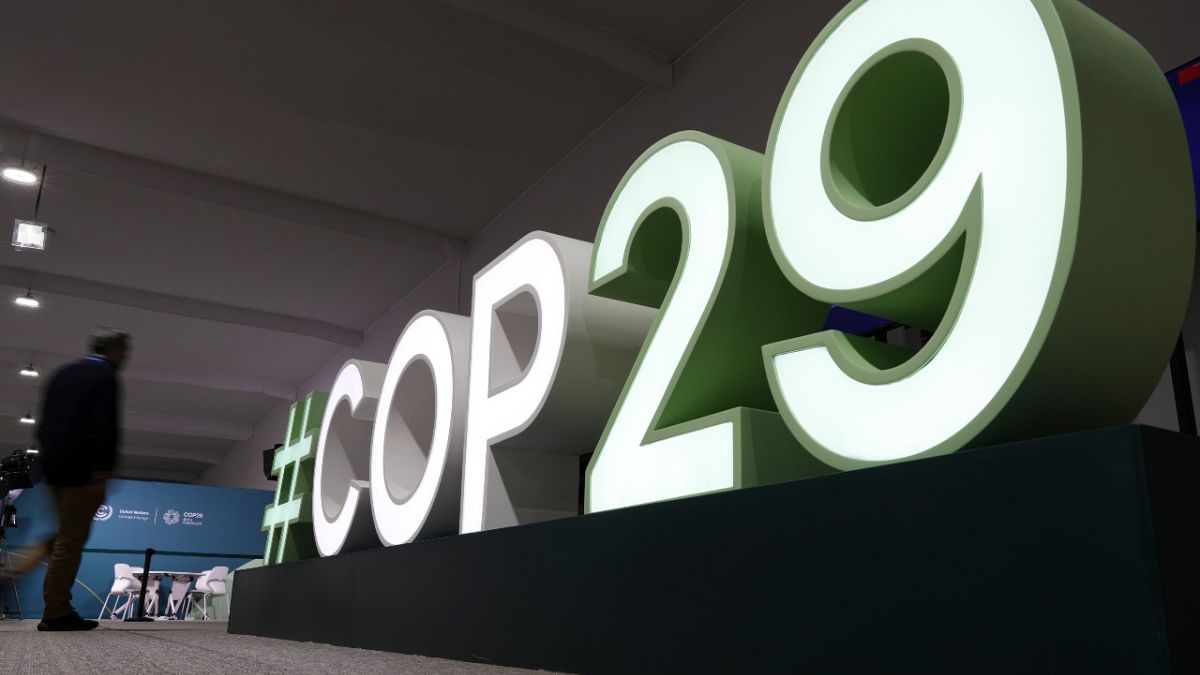
Representatives of the fossil fuel sector have a strong presence at COP29.

According to a report by the Kick Big Polluters Out coalition, a body of 450 NGOs, up to 1,773 lobbyists travelled to Baku for the United Nations climate conference.

What's even more head-scratching is that 113 of them were accompanying various European national government delegations.

"Greece led the way with 24, while Italy had 22," explained Marcella Via of Corporate Europe Observatory, a member of the coalition, followed by Sweden (17) and Belgium (13).

She adds that "Greece and Italy are the countries that buy the most gas from Azerbaijan. It is therefore not surprising that they have so many fossil fuel lobbyists." Euronews contacted both countries but has yet to receive any comment.

Rome and Athens are counting on the southern European gas corridor linking Azerbaijan to Europe via Turkey. This pipeline could be extended to carry gas from the Middle East, Central Asia and the eastern Mediterranean. If completed, it should be able to transport at least 10 billion cubic metres of gas a year.

Civil society is also denouncing the conclusion of trade agreements at COP29. The report mentions an agreement as early as the second day of the conference between Italgas and SOCAR (State Oil Company of Azerbaijan Republic), Azerbaijan's national oil and gas company.

On the other hand, however, the report also points out that the European Commission did not include any lobbyists from the sector in its delegation, unlike last year in Dubai.

At his hearing in early November, the European Commissioner for Climate Action Wopke Hoestra "received increasing pressure from civil society not to bring in any fossil fuel lobbyists," Marcella Via points out.

Also at his hearing before the MEPs, Hoestra said that "he would support the policy on the fight against conflict of interest at United Nations climate negotiations. And we really, really hope that he will keep his word," she continued.

A large delegation

The 1,773 lobbyists that have travelled to Azerbaijan's capital represent companies such as Chevron, ExxonMobil, BP, Shell, Eni and TotalEnergies.

Though there were fewer than last year's 2,500 total at COP28, the NGOs point out that the lower overall number of participants in Baku compared to Dubai in 2023 means that the proportion of lobbyists has remained high.

The NGO coalition points out that lobbyists outnumber the number of attendees from the national delegations present in Baku, with the only exceptions being host country Azerbaijan, Brazil - who will be the host next year - and Turkey.

Fossil fuel lobbyists received more passes to COP29 than all the delegates from the 10 most climate-vulnerable nations combined.