It’s possible that I shall make an ass of myself. But in that case one can always get out of it with a little dialectic. I have, of course, so worded my proposition as to be right either way (K.Marx, Letter to F.Engels on the Indian Mutiny)
Thursday, February 13, 2025
Federal Court Lets Foreign Ships Move US Rock to US Offshore Wind Farms
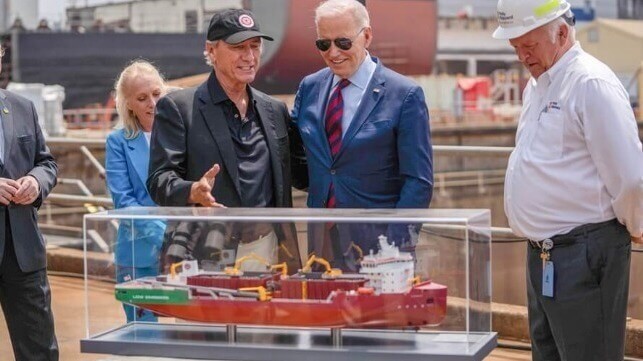
A model of GLDD's groundbreaking new rock-dumping vessel at Philly Shipyard, 2023 (Philly Shipyard / GLDD)
Great Lakes Dredge & Dock has lost its appeal to reverse a Customs and Border Protection ruling that allows foreign rock-dumping vessels to compete more easily for U.S. offshore wind farm contracts. The U.S. 5th Circuit ruled that GLDD's suit was speculative, finding that the harm to GLDD's business interests had not yet occurred.
CBP ruled in January 2021 that foreign-flagged vessels could not be used to dump U.S. rock onto the U.S. continental shelf: the rock originated at a U.S. point, and would be deposited at a U.S. point on the OCS. Two months later, after a request from the American Petroleum Institute, CBP reversed itself and ruled that foreign-flagged vessels could dump the first layer of scour protection rock on "pristine" seabed at a new U.S. windfarm, as the seabed is not a Jones Act-regulated U.S. point before the moment when a vessel installs rock on it. The second and subsequent layers must be placed by a Jones Act vessel, CBP ruled.
U.S. coastwise shipping interests rely upon legal protection to exclude foreign operators, which have lower capital, labor and compliance costs and can usually underbid Jones Act-qualified shipping on a commercial basis. For national security reasons, U.S. coastwise shipping is protected from global price pressure by federal law. Customs and Border Protection is tasked with defining the limits of those protections through letter rulings, advisory interpretations of the Jones Act that lay out what does and does not constitute protected coastwise trade between U.S. points.
GLDD has invested about $200 million in a new Jones Act rock placement vessel to serve offshore wind installations, the only one of its kind in the United States, and will be the first company ever to install U.S. rock at a U.S. OCS wind farm. Its outsize investment in U.S.-built tonnage is predicated on a long-term pipeline of scour protection contracts for U.S. wind farm projects. As the sole bidder with a legally qualified ship on order, GLDD secured three rock contracts by the end of 2023, and it expected more: at the time, the industry appeared to be picking up pace. In a federal lawsuit, GLDD argued that by partially opening the market to low-cost foreign bidders, CBP's ruling reduced its ability to compete successfully for future work.
The American Petroleum Institute intervened in the case as an appellee, and it argued that GLDD did not have standing to sue because it had not yet lost a bid to a foreign rock placement vessel operator, and had therefore not yet suffered any harm. The district court agreed and dismissed GLDD's suit as lacking standing, without considering the merits of the case. GLDD objected, since it had already spent millions on a new ship, and appealed the decision.
On appeal, the 5th Circuit confirmed the dismissal of GLDD's case. The circuit court ruled that GLDD had not shown that it would face future competition from foreign flag vessels when bidding for future Jones Act rock-placement work. The judges noted that the same work could be performed without considering the Jones Act, simply by shipping the rock from a foreign port, and decided that there was too little information to assess the prospects of foreign participation in a brand new trade: no firm has yet actually moved U.S. rock to a U.S. outer continental shelf wind farm.
"In sum, Great Lakes has not shown injury-in-fact merely because the [CBP] letter may foster future competition. We agree with CBP that this theory of competitor standing 'sweeps far too broadly,'" the judges ruled.
First UK Tests for CO2 Injection in Depleted Seabed Wells Underway
The first tests in the UK for injecting CO2 into depleted wells under the North Sea got underway this week. The UK government is a strong supporter of the carbon capture and storage approach and has been moving forward with licensing for potential projects.
Carbon Catalyst, a UK company that was founded in 2020, reported working with its partners the first test commenced on February 10 at the Project Poseidon site. The operator for the project, Perenco UK, a large independent energy producer, is a partner in the project and undertook the injection tests. Wintershall Dea, a large German gas and oil producer, is also a partner having acquired a 10 percent working interest from Carbon Catalyst in late 2023.
The UK Government awarded Carbon Catalyst three Carbon Dioxide Appraisal and Storage Licenses in August 2023, as the company began to build its portfolio. It has one site, Poseidon which encompasses the Lehman gas fields which is located in the southern North Sea sector on the UK Continental Shelf. It includes depleted gas reservoirs and saline aquifers in which the captured CO2 would be injected. Lehman is connected via pipeline to the PUK Bacton Terminal in the East Anglia region of England. The pipelines will make it possible to receive the CO2 at the terminal from various sources and send it offshore for injection.
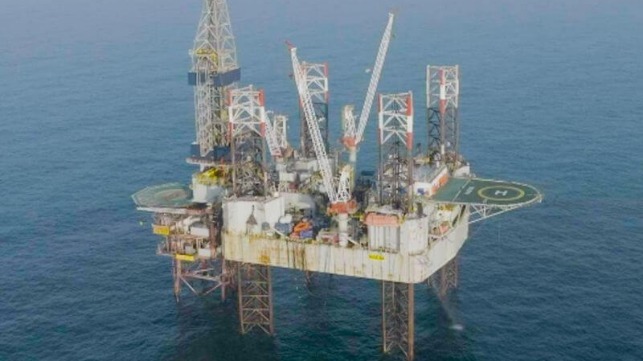
Last August, the companies reported Petrodec’s Erda rig was positioned at the site and specially for the injection of CO2. They undertook the successful recompletion of the H27 well to be used for the tests.
It is anticipated that Poseidon will target an initial annual injection capacity of 1.5 million tonnes of CO2, scaling up to an ultimate annual injection rate of 40 million tonnes. With a potential 1 billion tonnes storage capacity, Poseidon is set to become one of the largest Carbon Capture & Storage projects in Northwest Europe. Carbon Catalyst highlights that it is ideally positioned to serve Greater London and the Southeast of England.
Following the injection test, the Poseidon Joint Venture will progress towards a Final Investment Decision (FID) which it anticipates in 2027. Tentatively, the first commercial CO2 injection for permanent storage could begin in 2029. Based on its size, it is projected the project could run for 40 years.
Carbon Catalyst plans to build out a portfolio of projects across the North Sea. In addition to the Poseidon licenses, the company has rights to a site, Orion, located further to the north near the Humber region of England, one of its historic industrial zones. Orion would have a capacity of 126 mt and is targeted for 2031.
Denmark completed the world’s first injection test in 2023 at the INEOS-led pilot Project Greensand also located in the North Sea. Norway’s project Northern Lights has also completed testing and building of its terminals. The Norwegian project recently received its first two CO2 transport vessels and is undertaking commissioning before it starts commercial CCS operations.
Panama Strengthens the Quality of Its Merchant Fleet
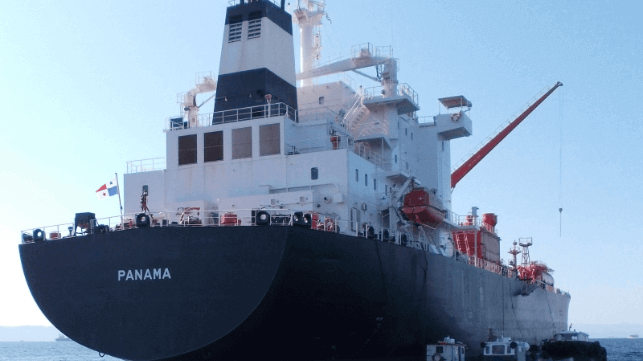
According to the latest evaluations, Panama has achieved a 96.5% compliance rate with international maritime safety and environmental protection standards. This milestone reinforces the quality and credibility of the Panama Ship Registry, ensuring a modern, well-maintained fleet that adheres to global regulations. The Panamanian fleet undergoes regular evaluations based on criteria established by key international frameworks, including various Memoranda of Understanding (MoUs) such as Paris, Tokyo, the Mediterranean, the Indian Ocean, the Black Sea, the U.S. Coast Guard, the Caribbean, Riyadh, Abuja, and the Viña del Mar Agreement.
In its ongoing efforts to enhance fleet quality, the Panama Maritime Authority (PMA), through the General Directorate of Merchant Marine (DGMM), has intensified its oversight, removing vessels from the registry that fail to meet stringent safety and compliance standards.
This fleet optimization strategy has further demonstrated Panama’s commitment to excellence and sustainability. The latest World Fleet Monitor report from Clarksons Research reflects this, ranking Panama favorably as the flag state for 15% of the world’s merchant fleet tonnage.
"We maintain a zero-tolerance policy against any misuse of the Panama Ship Registry. We are not a shelter for sanction evasion. Our priority is to attract modern, newly built vessels that fully comply with international regulations," stated Ramón Franco, Director General of the DGMM.
According to DGMM data, Panama's Ship Registry recorded a net growth of 468 vessels in 2024. As reported by IHS Markit, the registry closed the year with a total of 8,773 ships and 248.8 million Gross Register Tonnage (GRT).
As part of Panama’s strategy to attract modern and sustainable vessels, 2024 saw the registration of 408 newly built ships, contributing over 9.4 million GRT. This growth highlights the exclusive advantages offered by the Panamanian flag, a key factor in maintaining its position as the world’s leading ship registry, as emphasized by Director Franco.
The products and services herein described in this press release are not endorsed by The Maritime Executive.
2022 Anchor-Drag Incident May Have Severed Another Baltic Subsea Cable
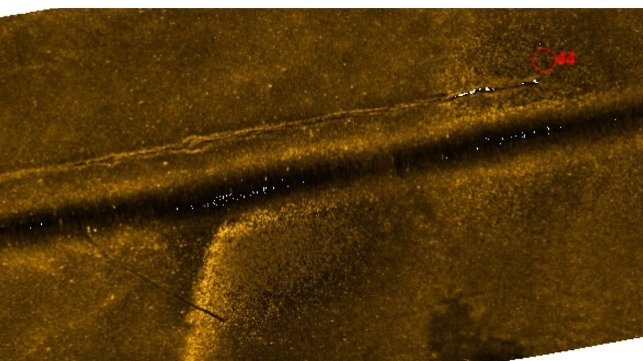
File image: Sonar imaging from the Gulf of Finland after the Christmas Day 2025 cable break, showing the characteristic single trackline of an anchor-drag (File image courtesy Finnish Border Guard)
After a series of four subsea cable damage incidents involving suspected anchor-dragging in little more than a year, NATO members in the Baltic suspect that Russian "hybrid" sabotage operations could be to blame. But investigators can add at least one more recent incident to the list: in January 2022, a Turkish ship may have dragged anchor under way and severed a subsea power cable in the Kattegat, between Sweden and Denmark. On January 20, 2022, the Konti-Skan 2 cable - a decades-old HVDC link between the Swedish and Danish grids - went out of service when it "suffered a fault due to external impact." Swedish utility Svenska Kraftnät found evidence of an anchor-drag track on the bottom, and it appeared to line up with the AIS trackline of the product tanker Selin D. The vessel slowed down for nine minutes in the same region and same timeframe as the cable break, according to Kraftnät.
The utility filed suit against the owners of the Selin D, alleging that the master of the vessel "caused the damage through gross negligence and with the knowledge that such damage would likely occur." The owner's lawyers assert that the Selin D did not cause the damage, or - if proven otherwise in court - did not cause any alleged damage intentionally.
Kraftnät's lawsuit seeks nearly $6 million in compensation. The case was filed in late 2023, but was little-known to the public until this week, when Dagens Nyheter covered the story.
Selin D is a 2003-built product tanker with a checkered inspection history. It has since been resold to an Italian operator, and has been renamed Ievoli Star. As for the Konti-Skan 2 cable, it will soon be replaced with a new modern HVDC link. The existing Konti-Skan 1 and 2 are expected to age out of service by the 2030s, and the new cable will have nearly 50 percent more power transmission capacity.
Subsea cables do get severed in accidental anchor-drag and trawling incidents every year, but the rapid-fire cluster of cases in the Baltic is unusual. One vessel, the Russia-linked "shadow fleet" tanker Eagle S, has been detained by Finnish police on suspicion of severing multiple cables on Christmas Day; nine members of the tanker's crew are under a travel ban and could face criminal charges.
Annual Resupply Mission for U.S. Antarctic McMurdo Station Underway
WILL THIS BE THE LAST?!
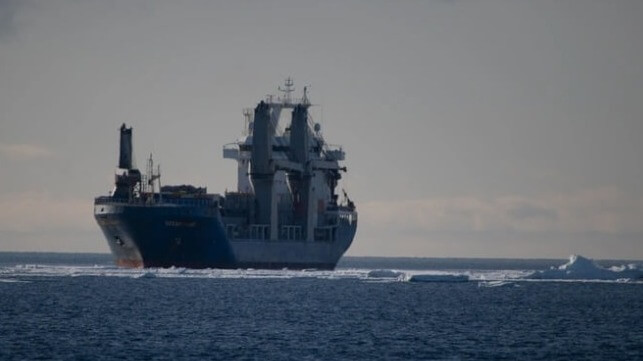
Ocean Giant arriving in Antarctica for the annual resupply mission (U.S. Coast Guard photo by Petty Officer 2nd?Class Briana Carter)
The Military Sealift Command is reporting the first of two vessels has completed its deliveries to McMurdo Station, on the southern tip of Ross Island in Antarctica. The U.S. has maintained a base on the site since 1956 and each year MSC-charters cargo ships and a tanker to make the challenging voyage to resupply the base for the coming year.
The first of the two vessels on the annual trip is the Ocean Giant, a 17,590 dwt general cargo ship built in 2012 and operated by Florida-based Seabulk. She arrived at the base on January 26 and today, February 11, Military Sealift Command Pacific reports the offloading of supplies was completed.
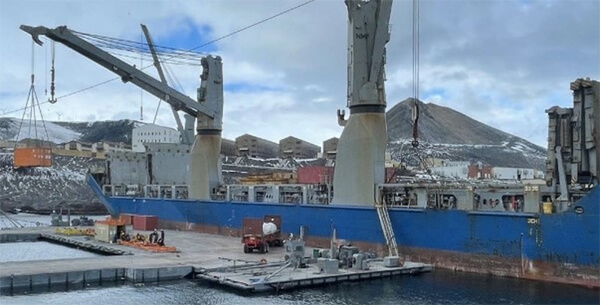
When Ocean Giant arrived this year she was also transporting new 24-foot pieces for a causeway vital to moving the supplies to the station. It is replacing the ice-pier at McMurdo which was made up of rebar and frozen seawater but was unusable this year due to severe damage.
Ocean Giant offloaded 380 pieces of cargo (Photo by Marie Morrow, Military Sealift Command Pacific)
Once the causeway was assembled and moved into place, Ocean Giant was able to moor and begin the cargo operations. The ship’s crew and members of Navy Cargo Handling Battalion ONE began the offload of 380 pieces of cargo, consisting of containers filled with mechanical parts, vehicles, construction materials, office supplies and electronics equipment, and mobile office units; supplies needed to sustain the next year of operations at McMurdo Station.
Ocean Giant will also load 360 containers of retrograde cargo for transportation off the continent. This includes trash and recyclable materials for disposal and equipment no longer required for the station.
She was scheduled to depart on February 9 and the first stop on her return journey to the United States will be at Lyttelton, New Zealand. Following the Ocean Giaint, is the Ocean Gladiator which was due to reach Lyttelton on February 8. Built in 2010, she is a 17,700 dwt general cargo ship also under an annual charter to MSC. She will also be offloading cargo and when she departs she will also be retrieving the causeway.
Marie Morrow, MSC’s representative in Antarctica commented “Operating in the remote and challenging environment of Antarctica is unique to the ODF mission. Everyone involved has an important role to play and it is truly a joint mission. The ship operation takes teamwork and coordination from the ship’s crew, all elements of the Joint Task Force (United States Coast Guard, Army, Navy, Air National Guard), civilian contractors, and New Zealand Defense Force integrated into cargo operations.”
Operation Deep Freeze as the mission is known is a joint service, on-going Defense Support to Civilian Authorities activity in support of the National Science Foundation (NSF), lead agency for the United States Antarctic Program. Mission support consists of active duty, Guard and Reserve personnel from the U.S. Air Force, Navy, Army, and Coast Guard as well as Department of Defense civilians and attached non-DOD civilians.
PROVOCATION
China Reacts Angrily After First U.S. Transit of Taiwan Strait Under Trump
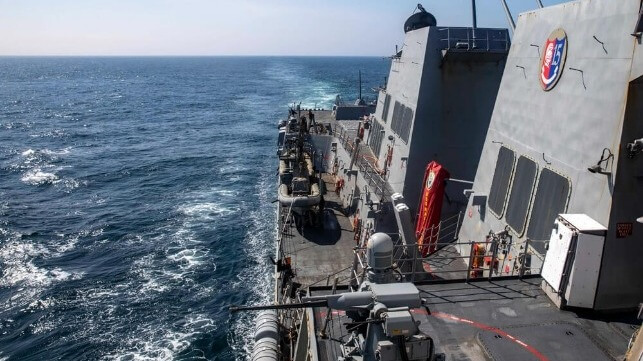
Guided-missile destroyer Ralph Johnson made a simialr transit of the Taiwan Strait in August 2024 (USN photo)
Less than a month into the new Trump administration the U.S. conducted what it calls a “freedom of navigation” exercise sending two U.S. Navy vessels through the politically sensitive Taiwan Strait. Chinese spokespersons reacted angrily in what they perceived as a show of force and a possible signal of the new Trump administration's stance toward China.
China continues to aggressively press its reunification claims for the island saying it would only wait so long. Chinese nationalists have controlled the island since 1949 and the declaration of the People’s Republic of China. They reject the demands of the communists saying the island is independent, and its fate is controlled by the people.
The U.S. frequently sends vessels or aircraft through the strait. Media reports suggest the U.S. conducted transits eight times in 2024, with the last vessel going through the strait in October and a plane overflying the strait in November.
“The transit occurred through a corridor in the Taiwan Strait that is beyond any coastal state’s territorial seas,” said Navy Commander Matthew Comer, a spokesperson at the U.S. military’s Indo-Pacific Command reporting this week’s transit.
The U.S. Navy did not provide extensive details. It simply said a guided-missile destroyer, USS Ralph Johnson, and a Pathfinder-class survey ship, USNS Bowditch, made the transit between February 10 and 12. Ralph Johnson, assigned to the 7th Fleet and Indo-Pacific Command, had made a similar transit in August 2024.
“Two U.S. naval vessels sailed through the Taiwan Strait from north to south starting on the 10th. During this period, ROC Armed Forces maintained full control over the surrounding sea and airspace, with the situation remaining normal,” reported the Ministry of National Defense, ROC (Taiwan). It regularly monitors the activity and reports that 30 PLA aircraft, 7 PLAN vessels, and 1 official ship were detected around Taiwan.
“The U.S. action sends the wrong signals and increases security risks,” said a spokesperson for the PLA. It noted that its forces are on constant high alert while saying its navy and air force were deployed to “monitor the whole process of the U.S. vessels’ passage and effectively managed the situation.”
It is the second regional activity by the U.S. this month. The U.S. Navy highlighted a planned exercise involving the Royal Australian Navy and the UK Royal Navy sailing with a U.S. ship in the South China Sea. It took place between February 6 and 7 involving the guided-missile destroyer USS Benfold, RAN Hobart-class guided-missile destroyer HMAS Hobart, and RN River-class offshore patrol vessels HMS Spey.
“Regular military engagements between the defense forces in the Indo-Pacific will help maintain regional security and stability,” said Commodore Jonathan Ley, Joint Force Maritime Component Commander for Australia’s Headquarters Joint Operations Command.
According to the statement issued on the exercise, the three ships practiced their ability to exchange data using their tactical datalink systems, while the maneuvering exercise trained the crews’ ability to sail alongside each other in various conditions, improving the self-defense and communication capabilities of the three countries.
China regularly monitors these exercises. It issued a statement this week highlighting its own exercise saying it participated in a multi-country event organized by Pakistan.
Russian Emergency Ministry Rescues Over 100 Fisherman Stranded on Ice Flow
Fishermen were convinced to leave and boarded the helicopter and a hovercraft (Russian Emergencies Ministry)
Russian officials are reporting an unusual rescue mission to save fishermen from an ice flow that had broken away in eastern Russia on the Sea of Okhotsk. The rescue was completed successfully but not without some drama as some of the fishermen said they were not leaving under any circumstances without their catch.
First reports indicated as many as 300 people might have been stranded on the drifting on the snow covered ice flow. A 10-meter (more than 30 feet) long crack developed in the ice after the fishermen and extreme sports enthusiasts had set out from a small village on the Kamchatka Peninsula. The ice flow was reported to be drifting endangering the fishermen.
The Emergency Ministry reports 31 specialists and 17 units were dispatched and they used a Mi-8 helicopter and a Khivus helicopter. The authorities had to convince the extreme sports enthusiasts of the danger and to abandon their positions.
In the final count, 109 people were removed from the ice flow. The helicopter evacuated 44 people back to land while 65 were taken aboard the hovercraft.
Winter fishing is a popular sport in the Sakhalin region along the Pacific coast. The region is known for its harsh winters. In the past, the rescue services have also had to go to the aid of vessels that become trapped in the winter ice flows.
Photos: Four Fishermen Rescued After Deadly Capsizing Off South Korea
Five crewmembers from a South Korean fishing vessel are dead after a sudden capsizing in the East China Sea, according to the Korea Coast Guard, and five more remain missing.
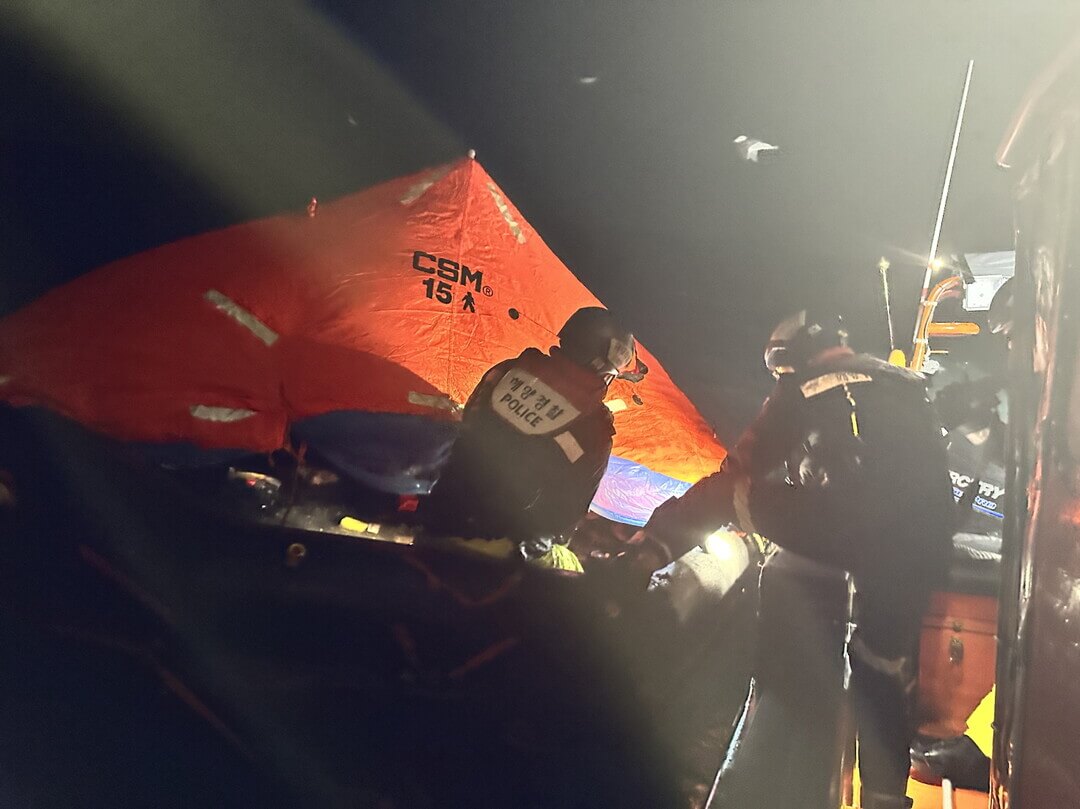
In the early hours of Sunday morning, the fishing vessel 22 Seokyung was under way east of Habaekdo Island in foul weather. At about 0140 hours, the vessel capsized suddenly, forcing crewmembers to leap into the water. The vessel had no time to make a distress call.
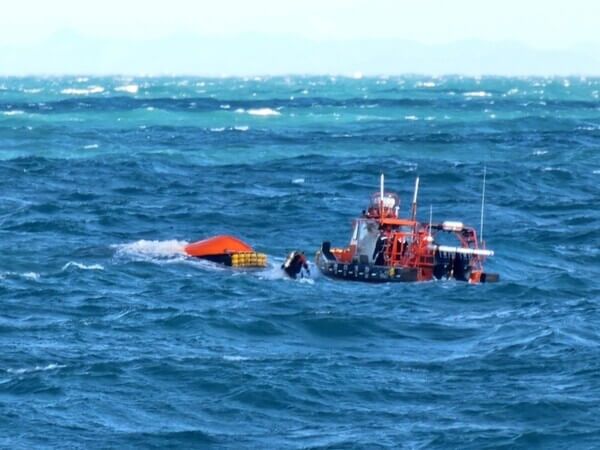
Good Samaritan fishing vessels and first responders from the Korea Coast Guard have retrieved the body of the captain and four other deceased crewmembers from the sea; one small Korea Coast Guard rescue boat capsized during the search and rescue effort, but the personnel aboard escaped unharmed.
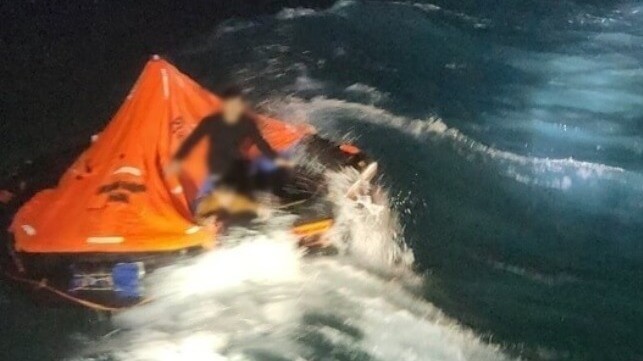
Four survivors were found in a liferaft and were delivered to shore for treatment for hypothermia and minor injuries.
Images courtesy Korea Coast Guard
Video courtesy Korea Coast Guard
An additional five crewmembers remain missing, and the survivors suggested that some of them were likely trapped belowdecks during the capsizing. In case any others may have survived, the Korea Coast Guard has mounted a large-scale search with more than 30 vessels (including good Samaritans). Continued foul weather has made the operation challenging, but the team is attempting to cover an area measuring about 35 nautical miles by 50 nautical miles around Habaekdo.
Despite rough surface conditions, a sonar survey of the wreck site has already been completed, and it shows that the vessel came to rest upright on the bottom. The superstructure appears nearly intact in 80 meters of water. An ROV survey is planned to evaluate the wreck, but has been postponed until better weather arrives.
Croatia Terminates Shipowner's Entire Board After Fatal Ferry Accident
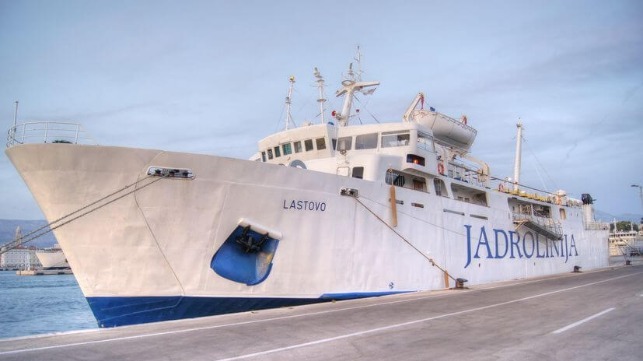
Lastovo (File image courtesy Ivan T / CC BY-SA 3.0)
After a tragic accident that killed three seafarers aboard the aging ferry Lastovo last year, the government of Croatia is taking an unheard-of accountability action: the Croatian maritime ministry absolved the crew of any fault and moved to expel the ferry operator's CEO, along with the entire board of directors.
On the afternoon of August 11, the 1969-built ferry Lastovo called at the terminal at Mali Losinj, an island off Croatia's northern coastline. At about 1500 hours, the bow ramp suddenly collapsed on four crewmembers, killing two at the scene. One more later died at the hospital, and the sole survivor was seriously injured.
The island declared a two-day period of mourning for the lost men, and Croatia's ministry of maritime affairs launched an investigation.
On February 3, just six months after the casualty, the ministry released its findings. It determined that the vessel's master and the operating company had disregarded the ship's Safety Management System, which had procedures for how the crew should operate the ramp. The company had not systematically trained the crew to manage a known fault condition in the ramp's hydraulic system: when the hydraulic power shut off, the ramp could fall down.
"The crew on the ship did not know how the ramp functions. Some knew that the ramp could drop when the hydraulics are shut off, but the majority did not. The shipping company is responsible to inform them," said senior investigator Capt. Sinisa Orlic.
The ministry recommended legal action against the CEO of the state-owned ferry operator, Jadrolinija, and against the captain.
"[The victims] died due to the lack of a system of managing safety in the Jadrolinija Company. Please allow me at this moment to take the opportunity, in the name of the Croatian state, to express a public apology and deep regret to the families of the deceased seamen. Your most loved ones did their job professionally, responsibly and with dedication, but due to neglect and irresponsibility on the part of others, they unfortunately died," said Maritime Minister Oleg Butkovic in an accompanying statement.
Within a day of the report's publication, the Croatian government announced that the entire board of Jadrolinija would be dismissed. After a meeting with senior government officials, CEO David Sopta agreed to step down voluntarily, avoiding possible criminal or administrative charges.
"Although I personally do not feel guilty for the tragedy, which was caused, according to the published report, by a number of different factors, I have felt moral responsibility from day one," said Sopta in a statement.
A spokesman for the Croatian government confirmed to Index.hr that senior ministers "will make a decision to dismiss the entire management board of the company at Jadrolinija."
ECOCIDE
Tanker in Russian Oil Trade Involved in Bunkering Spill off Turkey
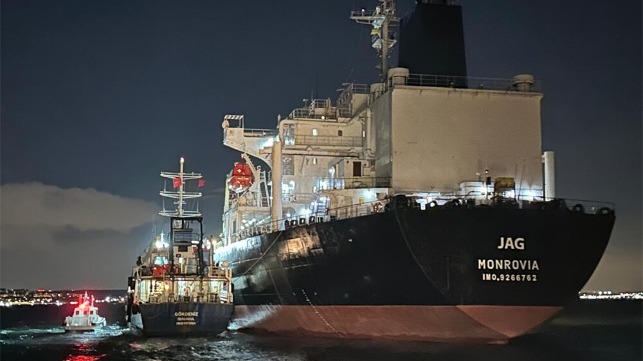
Bunkering spill occured in the anchorage near Istanbul (KEGM)
An Indian-managed crude oil tanker that has been transporting Russian oil was involved in a bunkering accident today near Istanbul. Turkey’s Directorate General of Coastal Safety (KEGM) reports its teams are cleaning the surface waters.
The tanker named Jag, was in the Ahirkapi Anchorage near Istanbul when the incident occurred. KEGM did not report how much oil was spilled but reported that it dispatched vessels in response. Two Turkish rescue boats, KEGM-3 and KEGM-4 were at the scene of the spill along with a tugboat and an environmental barge.
AIS signals show the Jag had been holding off Turkey. It was bunkering with the vessel Gokdeniz alongside according to the pictures released online.
Built in 2005, Jag has passed through multiple owners and managers operating with this identity and registered in Liberia since 2023. Its current manager is listed in the databases as Rhine Marine Services based in India. The vessel is 70,400 dwt.
The tanker is reported to have made several calls in Russia. Last October, it took a cargo from Primorsk in Russia to Brazil’s Paranagua port.
The tanker has a spotty history with its last listed inspection as 2023. At the time, it was in Aqaba, Jordan, and listed with 12 deficiencies which resulted in a two-day detention. The emergency generator was reported as not operating while the fire doors, the main, and auxiliary engines were listed as “not as required.” It was also cited for a lack of cleanliness in the engine room and oily mixtures. The ships three prior inspections were all in Russia and each also found a few deficiencies.
No additional details were released by KEGM on today’s incident. The vessel’s AIS signal shows it remains at the anchorage off Istanbul.
CMA CGM Boxship Hit Beacon Due to Lack of Crew Understanding and Procedures
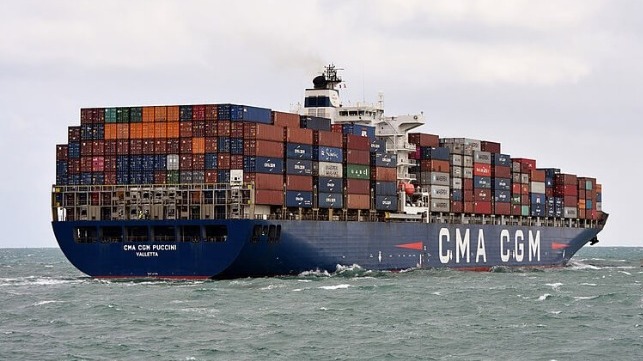
CMA CGM Puccini hit the beacon because its steering gear was incorrectly set and the crew lacked information (Bahnfrend - CC BY-SA 4.0)
Lack of proficiency in the steering gear operation and change of control modes due to ambiguous procedures caused a containership to strike a navigation beacon while departing the Port of Melbourne in May 2023. The Australian Transport Safety Bureau (ATSB) released its report saying it found an incomplete understanding of how the steering gear operated among the ship’s engineers and ambiguous language in the company’s fleetwide procedures.
The boxship CMA CGM Puccini (6,300 TEU) was transiting the Yarra River in Melbourne, Australia on May 25, 2023, when it hit a navigational beacon. The initial investigation showed erratic behavior by the ship leading the ATSB to investigate why the steering gear was not performing correctly. The 2004-built ship, registered in Malta went off its intended track towards the edge of the navigable channel causing it to strike the beacon. The pilot aboard and the crew reported the rudder was responding erratically to helm orders.
Investigators pieced together the cause of the erratic steering, determining that it was due to a hydraulic bypass valve being left open by the crew after an AMSA port state control inspection the day before the incident. This resulted in the steering system hydraulics being incorrectly configured for normal operation.
It was established that with the hydraulic bypass valve being left open, the steering operated sufficiently well with minimal load on the rudder to pass pre-departure visual inspection. However, when the hydrodynamic loads on the rudder increased, with increasing ship’s speed and rudder movements, the open bypass valve allowed leakage of hydraulic oil and system pressure around the pump leading to erratic response of the rudder.
CMA CGM Puccini severely damaged the beacon while departing Melbourne, Australia (ATSB)
ATSB determined that several officers on board were not as proficient with steering gear operation and change of control modes as was required by regulations. The situation was complicated by the fact that the steering terminology used on board and within the CMA CGM fleet was not clearly and explicitly defined. For the giant shipping liner, the official fleet terminology was “steering gear failure” and did not recognize common industry terms such as “emergency” and “local steering.”
“The ship’s responsible officers had an incomplete understanding of how the steering gear operated, and therefore incorrectly configured the steering system hydraulics,” said Angus Mitchell Chief Commissioner. The report notes they were unaware of the dangers and further AMSA told the investigators manipulation of the steering hydraulics was not required for the demonstration during the inspection.
The ATSB final report on the incident shows that in the early hours of May 25, CMA CGM Puccini sailed from Swanson Dock in Melbourne after route safety checks under the conduct of a pilot and initially with two tugs in attendance. During the turn to leave Swanson Dock, the master and chief mate noticed that the rudder response appeared sluggish, as if only one steering pump was running (both pumps were operating). Neither raised their observations with each other, or the pilot, and there were no alarms to indicate a pump had stopped or other abnormal conditions.
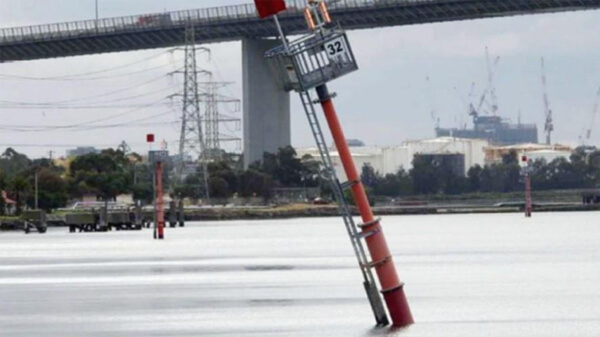
By 0436, the ship was moving along the channel in Yarra River after both tugs had been dismissed and a few minutes later passed under the Westgate bridge at a speed of 6.6 knots when the helmsman reported that the rudder was not responding to the wheel. With its speed increasing, the ship moved further off course and tracked toward the western edge of the dredged navigable Yarra River channel striking navigation beacon 32. At the time, the ship’s speed was 7.7 knots.
The two tugs were nearby and returned, and helped control the ship’s erratic movement. The ship was then moved to Webb Dock for inspection. The ship sustained minor paint damage but the beacon was significantly damaged.
“Any loss of steering can imperil the safety of the ship, and life at sea,” said Mitchell. “Unclear or ambiguous operating instructions and terminology should be corrected as soon as they are identified.”
CMA CGM has taken measures to address the ambiguity by revising the steering guidance across its fleet. The liner’s fleetwide “steering gear failure” procedure has been amended and titled to become the “emergency steering procedure.”
Ports Victoria has also updated the harbor master’s directions for Melbourne to enhance towage requirements while transiting the Yarra River. This now includes advice for the crews of ships that experience a main engine or steering failure while transiting port waters.
The NTSB report on a 2023 bridge strike says the captain of a tow vessel and barge company managers’ ineffective voyage planning and failure to conduct required checks caused a towed crane to strike the Mackinac Bridge in Michigan. They failed to confirm the air draft and bridge clearance, and the result was $665,000 in damages to the crane as well as $145,000 in damage to the underside of the bridge.
The towing vessel Nickelena (103 feet) was regularly employed to move barges transporting construction equipment to sites around the Great Lakes. In May 2023, they were hired to tow a barge transporting a 160-foot-long boom crane and 5-foot “rooster” sheave on a deck barge from Escanaba to a construction project at Sault Ste. Marine, Michigan. It was a standard assignment, including the fact they would have to transit under the Mackinac Bridge, a roadway suspension bridge that connects the Upper and Lower peninsulas of Michigan.
The crane was secured on the barge on May 6, and the tow commenced. After leaving the port, the captain ordered the tow line increased to 500 feet, and they proceeded. He left the bridge to rest but planned to return before 0200 when they were due to pass under the roadway bridge. The National Oceanic and Atmospheric Administration determined there was no traffic and minimal wind effect at 0200, and the NTSB reports the tow was moving at 8 knots within the marked channel.
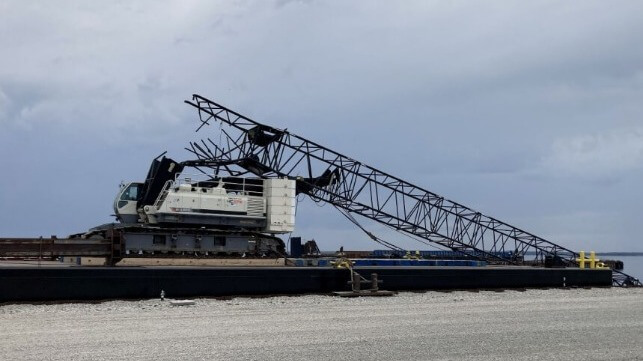
The first contact with the bridge was with the stiffening truss below the roadway, at the top of the truss’s bottom chord (about 155 feet above the water). The report indicates given the configuration of the crane, the wires securing the crane boom would have hit first, and then when they parted, the boom would have contacted the top of the chord. As the barge continued forward, the boom would have been pushed backward, and its angle and height above the water would have increased, leading to damage higher up on the bridge. At some point, the boom contacted the upper diagonal truss, about 183 feet above the water, before folding back and collapsing on the barge.
The engineer aboard the tow vessel was on deck while there was a crewmember at the helm. They did not report hearing the contact, but said when they looked aft, they noticed they could not see the crane’s boom.
The investigation showed that the captain and the managers of the barge company did not attempt to verify bridge clearance and instead accepted the word of the managers supervising the loading of the crane, who told the captain, “Everything’s secured, ready to go.”
The NTSB determined the managers made a visual evaluation that the angle of the crane boom was between 50 and 60 degrees, and the boom was 140 feet. The Load Moment Indicator on the crane was not working, so they relied on their judgment. They decided against lowering the boom to decrease the angle because they thought it would reduce the stability of the barge.
Towing vessel operators are required to have a towing safety management system (TSMS), and voyage planning would have been part of the process. The company operating the vessel, Basic Towing, told investigators they had a TSMS, but the NTSB says no documentation was found that a navigation assessment was conducted and no attempt by the captain to verify the tow was safe for the intended route.
The water under the bridge was higher than average, with clearance at about 153 feet instead of the normal 160 feet. However, it did not matter because the analysis showed the boom was at approximately 62 degrees, which equated to a height of 162.3 feet. The report says the boom needed to be at about 55 degrees to pass under the bridge at the center of the channel. The visual evaluation also underestimated the length of the boom by 20 feet. The NTSB reports the boom was 10 feet too high for clearance.
The erroneous estimates provided by the managers set off the chain of events. However, the captain, who was responsible for ensuring the safety of the transit, did not confirm the boom height, nor was there an attempt to verify the bridge’s vertical clearance.