Saturday, March 08, 2025

Opinion

60 years after 'Bloody Sunday,' faith leaders are still key to the fight against racism

(RNS) — Today’s clergy need to answer the Rev. Martin Luther King’s call six decades ago to step up, organize and take action.
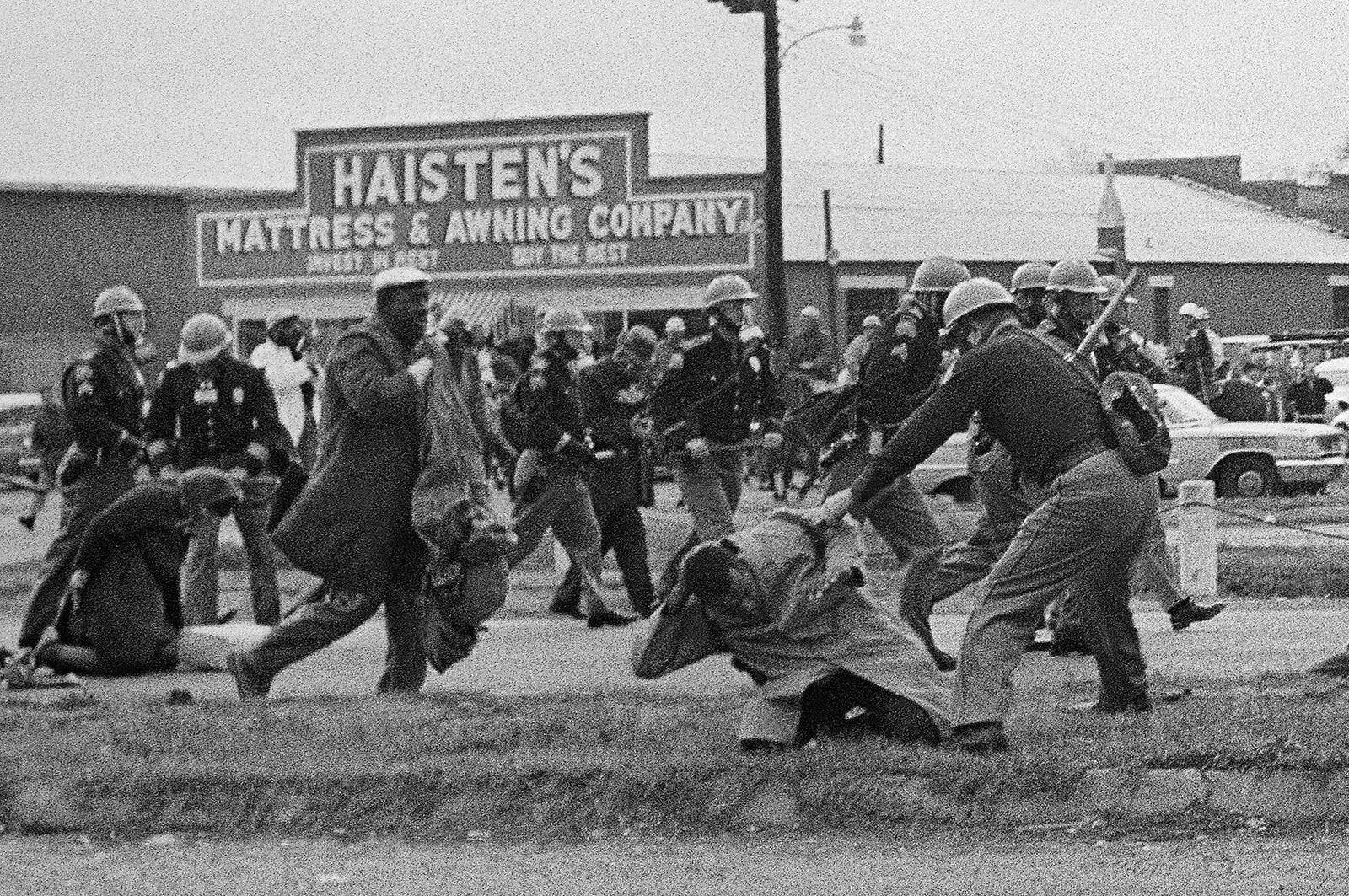

State troopers swing billy clubs to break up a civil rights voting march in Selma, Ala., March 7, 1965, on what became known as Bloody Sunday. (AP Photo, File)

Timothy Adkins-Jones and Serene Jones
March 4, 2025


(RNS) — On March 7, 1965, hundreds of peaceful and determined protesters marched across the Edmund Pettus Bridge to condemn racist voting restrictions and years of unjust treatment. Dozens of faith leaders — including the beloved Baptist minister and civil rights leader John R. Lewis — were part of the committed, courageous and well-organized movement across the bridge.


When the demonstrators reached the apex of the bridge, they looked down to see police officers — some on their feet and some on horseback — poised to attack them with billy clubs, whips and tear gas. When they announced their intent to march, the police pounced on them.

Dozens of activists were hospitalized. This event, which came to be called “Bloody Sunday,” was a pivotal moment for the Civil Rights Movement. The horror of the event inspired people from all over the country to make their way to Selma to join in the fight. Through their careful organizing and courageous protests, and months of work, the revolutionary Voting Rights Act was passed.

Faith leaders were a linchpin of this movement. They heeded the Rev. Martin Luther King Jr.’s call to participate in more marches. They organized troves of people to fight for equality and justice. They spoke powerfully from their pulpits about the connections between faith and the Civil Rights Movement.

Without the profound work of faith leaders during this time, it’s very possible the Voting Rights Act would have stayed only a dream.

While there has been progress over the past six decades, racism and white supremacy are still prevalent in our society. Today, we’re seeing a particularly dramatic and terrifying resurgence of the kind of hate that caused the extreme violence of Bloody Sunday. The Trump administration has unleashed a cascade of policies that will roll back protections for communities of color and fuel unimaginably racist reverberations.

As history has shown, faith leaders will be instrumental to stop this onslaught. King’s words are as relevant today as they were years ago: We must move in the “fierce urgency of now!” We need to step up, organize and take action — and fast.

Make no mistake: While the Trump administration’s actions may not be as visually horrifying as Bloody Sunday, they will have devastating, long-lasting impacts on communities of color.

President Donald Trump has assembled a Cabinet made up of people who have supported white nationalist theories, peddled vaccine conspiracies in Black communities, claimed racism in the military is fake, undermined public education about racism, demonized immigrants and condemned diversity, equity and inclusion policies.

In his first few weeks in office, his administration has also terminated DEI programs in the federal government, attempted to declare all race-conscious student programming and financial aid illegal and rescinded executive orders that were designed to provide equal opportunities in the workplace.


It’s an all-out, multilevel attack on centuries of collective struggles for freedom. There’s no telling the discrimination, bigotry and hatred this will enable.

Faith leaders are among the best-positioned to galvanize and sustain a social movement to fight these reversals. People gain inspiration from all sorts of places, but faith leaders are unique. They have the capacity, if they use it, to speak to people’s deepest, most integral values and offer profound guidance on how people can live their lives in ethical accordance with their faith. They can cultivate powerful bonds between their members, building strong, vibrant communities that can push hard for change.

It’s crucial to equip faith leaders with the tools and skills to use their pulpit to advance justice, and at Union Theological Seminary, we are taking steps to offer our students a course in “Preaching and Protest,” which will provide guidance on how faith leaders can advance the fight for justice. Students will examine how different leaders cultivated and fueled social movements. To commemorate Bloody Sunday, students will also travel to Selma for the annual Jubilee Celebration, where they will experience sermons and speeches firsthand.

For their final assignment, students will craft a sermon or speech that speaks to an issue relevant to our current reality. And they must incorporate a direct reference to a method, issue, person or circumstance related to the movement for voting rights in Selma.

As we reflect on the events of Bloody Sunday and the efforts that followed, we’re reminded of King’s speech “Our God Is Marching On!” after the completion of the Selma to Montgomery march weeks after the attacks on the Pettus Bridge.

He proclaimed: “Let us march on ballot boxes until we send to our city councils, state legislatures, and the United States Congress, men who will not fear to do justly, love mercy, and walk humbly with thy God. Let us march on ballot boxes until brotherhood becomes more than a meaningless word in an opening prayer, but the order of the day on every legislative agenda. Let us march on ballot boxes until all over Alabama God’s children will be able to walk the earth in decency and honor.”

Let’s heed those words, and get to work.

(The Rev. Timothy Adkins-Jones is an assistant professor of homiletics at Union Theological Seminary. The Rev. Serene Jones is president and the Johnston Family Professor for Religion & Democracy at Union. The views expressed in this commentary do not necessarily reflect those of RNS.)
African theologians look to Nicene Creed's anniversary year to reshape spiritual future

(RNS) — One theologian said Africa’s celebrations of the Christian framework would exhibit the continent’s rich theological heritage and highlight new ways of thinking about faith unbound by colonial legacies.


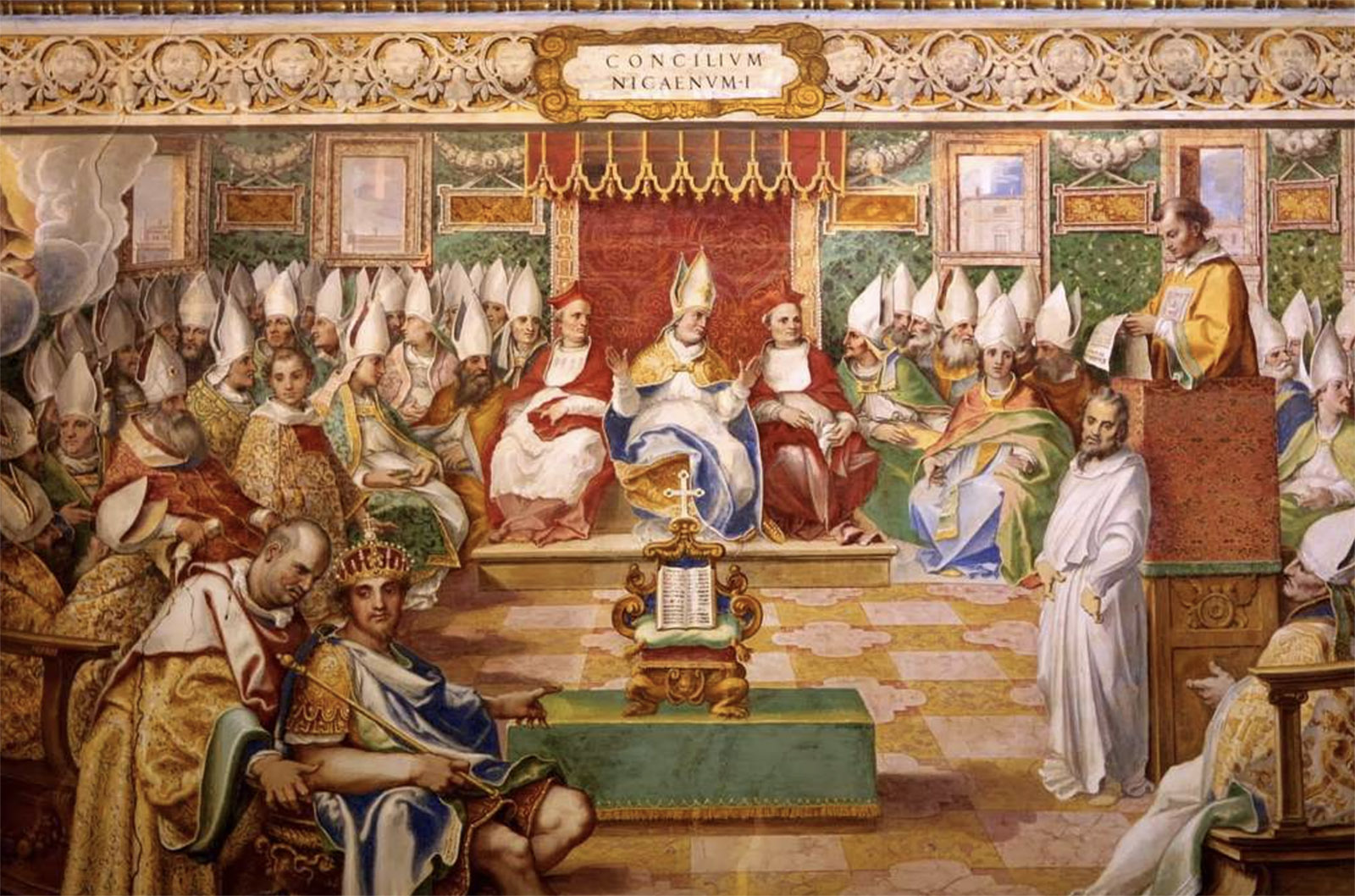
First Council of Nicaea (now Iznik, Turkey), A.D. 325, fresco, c. 1600.
 (Image courtesy of Creative Commons)

Fredrick Nzwili
March 7, 2025

NAIROBI, Kenya (RNS) — As Christian denominations in Africa join the preparation for the 1,700th anniversary of the First Council of Nicaea, clerics, theologians and laypeople are embracing the moment as a chance to reshape the continent’s spiritual and social future.

The gathering of bishops in Nicaea (now Iznik, in Turkey) in 325 was called by Roman Emperor Constantine to settle factionalism in the early church caused by Arianism, a theology that said Jesus was not divine, that originated in Africa.

“Why it was held is because an African cleric like myself raised issues that needed to be addressed concerning the doctrine of the Holy Trinity,” said the Rev. Stephen Njure, a Catholic Church historian at Moi University in western Kenya. “That is Arius. Arius came up with a heresy that necessitated the council.”

The anniversary, said Njure, “has everything to do with us, since one of​ us prompted its being, because of our need for clarity of faith,” adding that ideas like Arianism, which the council declared a heresy, help the church by forcing it to formulate doctrine and purify its teachings.

In the late spring of 325 at Nicaea, 318 bishops deliberated on controversies on the nature of Christ, both human and divine, and agreed on a standard statement of faith still known today as the Nicene Creed and said across much of the globe each Sunday. The creed defines God as one entity manifested in three persons: Father, Son and the Holy Spirit.

The bishops meeting at Nicaea also established a date for Easter and laid the ground for early canon law.

Protestant, Catholic and Orthodox churches around the globe are celebrating the anniversary, with conferences looking afresh at the council and the lessons it can teach on Christian unity amid divisions and a troubled globe. In November, the World Council of Churches will hold a conference in November titled “Towards Nicaea 2025: Exploring the Council’s Ecumenical Significance Today,” and a global meeting of evangelical Christians is planned for October in Istanbul.

Last year, before he fell ill, Pope Francis told Eastern Orthodox priests visiting the Vatican that he hoped to travel to Turkey to celebrate the creed with the Ecumenical Patriarch Bartholomew I, and in January, Francis expressed his willingness to work on once again finding a common date for Easter. (The two branches of Christianity, separated by the Great Schism of 1054, follow different calendars, with the Eastern Orthodox keeping to the Julian calendar and marking Easter a week after the West.)

In Egypt, the Coptic Orthodox Church will host the Sixth World Conference on NICAEA organized by the World Council of Churches. “(This) is more than a gathering of church leaders; it’s a chance for Africa to reshape its spiritual and social future,” said the Rev. Jackie Makena, a Methodist theologian and adjunct lecturer at St. Paul’s University in Limuru, near Nairobi, who stressed that for Africa, Nicaea was about reclaiming its narrative.

“Amid centuries of colonial influence, the conference offers a platform for African voices to lead conversations on decolonizing theology, leadership and social justice, climate justice and racial justice issues,” Makena said.

According to the theologian, across the continent, preparations for the conference in Egypt are in full swing.

“Delegations, including different world communions and theological institutions, are hosting public lectures, paper presentations, and engaging in community discussions,” she said.

Makena said that the meeting would show Africa’s rich theological heritage and come out with new ways of thinking about faith unbound by colonial legacies. “Institutions and leaders are uniting to ensure that Africa’s perspective is not only heard but also forms a cornerstone of the broader ecumenical dialogue,” she said.

The Rev. John Ngige Njoroge, an Orthodox priest who heads theology and interfaith relations at the Africa Conference of Churches, said Nicaea was the first ecumenical council that demonstrated how Christians could unite to find solutions to challenges, including theological disagreements.

“This is very significant for Africa, where today the propagation of misleading theologies is a threat to Christian unity and human dignity,” said Njoroge.

Makena, the Methodist theologian, hopes the anniversary celebration results in a revitalized, inclusive church that bridges divides, whether they be theological, racial or generational. “As Africa plays a pivotal role in this conversation, the hope is that its renewed perspective will inspire unity in diversity,” she said.
Opinion

Making sense of the 'madwomen' in the Talmud

(RNS) — In her debut book, ‘The Madwoman in the Rabbi’s Attic,’ Gila Fine, a lecturer of rabbinic literature at the Pardes Institute of Jewish Studies in Jerusalem, shows how the women in the Talmud may be more misunderstood than crazy.


“The Madwoman in the Rabbi’s Attic” and author Gila Fine. (Courtesy images)


Beth Kissileff
March 6, 2025

(RNS) — Everyone fears a shrew, but we rarely try to understand them. Modern theater makers are consistently troubled about how to present Shakespeare’s “Taming of the Shrew” to today’s audiences, and readers of “Great Expectations” are likely to find Mrs. Joe Gargery as opaquely unsympathetic a character as they did in Dickens’ day.

In Gila Fine’s debut book, “The Madwoman in the Rabbi’s Attic,” the lecturer of rabbinic literature at the Pardes Institute of Jewish Studies in Jerusalem bravely tells the stories of the women of the Talmud, the compiled wisdom, law and legend of ancient Jewish rabbis that is the companion to the Torah. Fine relates these women to characters in Western literature, using them as steppingstones through time to help us see them in three dimensions and broaden our understanding of the Talmudic text.

The most famous of the women is Yalta, the most mentioned female character in the Talmud, according to Fine. In Yalta’s most famous appearance, she breaks 400 jugs of wine in response to a rabbi who slights women.

When the rabbi who insulted her tries to make it up to her, she shuns his offering as “gossip” that “comes from peddlers and lice from rags.”

Fine doesn’t deny that Yalta is a shrew, which she defines as a “mad-woman,” who is “both angry and crazy, raging and deranged.” But Fine wants us to see Yalta as one who is able to “carve out a space for herself.” The author helps us see Yalta better by connecting her to Socrates’ wife Xanthippe, Geoffrey Chaucer’s Wife of Bath, Shakespeare’s Katherine (the eponymous heroine in “The Taming of the Shrew”) and Charlotte Bronte’s Bertha Mason, from “Jane Eyre.” (Fine also addresses Jean Rhys’ revision of Bertha Mason in Rhys’ novel “Wide Sargasso Sea.”)

“Madwoman in the Rabbi’s Attic” is the first work to emerge from a 2-year-old project supported by Sefaria, the digital library of Jewish texts, aimed at giving women a greater voice in the study of the Torah and the Talmud. Called Word-by-Word, the series has given 20 women stipends, coaching and retreats to help them complete their work. The project further expands our idea of who is qualified to write on Torah by inviting high school and elementary school teachers and those working at other institutions to participate.

Fine’s approach arises from her own history as a scholar. In 2022, she told The Jerusalem Post that as a young woman raised in the Modern Orthodox tradition she had been discouraged from reading the Talmud, and later was daunted by it until, as an English major, “Shakespeare, Wilde and Bronte were my way into the literary masterpieces of Talmudic stories.”

Fine’s other evident influence for her book is the groundbreaking volume of feminist theory “The Madwoman in the Attic: The Woman Writer and the Nineteenth-Century Literary Imagination,” published in 1979 by Sandra Gilbert and Susan Gubar. The book changed the way Victorian literature was taught, by putting on display the stereotypes and archetypes of women in that age that tended to render them either as angelic helpmeets or demonic madwomen — uncontrollable and rebellious. (The madwoman in question was Rochester’s first wife in “Jane Eyre.”)

Fine, who often examines the Talmud though the lens of psychoanalysis and pop culture, amplifies the theme by writing about indomitable prima donnas — popular tales of women unsatisfied with what they have, no matter how bounteous — such as Marie Antoinette, Miss Piggy and Norma Desmond, matching them against Talmudic stories of women reduced by their own haughtiness. As Fine explains, “the prima donna narrative generally takes the form of a riches-to-rags morality tale, culminating in the heroine’s fall from grace.”

Two of her prime examples are the daughter and daughter-in-law of a wealthy resident of first-century Jerusalem, Nakdimon ben Gurion, who must petition the court for their living expenses after their patriarch’s death. Another is the story of Marta, a wealthy widow who is traditionally judged harshly for going out to search for food in the city of Jerusalem when it is under siege and people are starving.

“Not every story can be revisioned and not every character can be redeemed,” Fine admits, but she demonstrates that even Marta’s insensitivity, amid the cycle of hatred, zealotry and destruction of Jerusalem after the second temple is destroyed, can be redeemed. Marta’s decision to go out to the marketplace to find something to sustain her even though food is scarce demonstrates the importance of not remaining passive (even though it leads to Marta’s death).

Indeed, Fine points out that Marta’s example influenced Rabbi Yohanan, the teacher known for salvaging rabbinic Judaism by creating an academy at Yavneh that continued the Jewish tradition though the temple no longer stood. “Like Marta, we can take matters into our own hands, go out into the world, and try, each in our own way, to save a little,” Fine writes.

Fine similarly salvages Yalta, showing us how her character may not be quite so flawed as our assumptions compel us to see. Fine explains that the vessels Yalta smashes represent the male assumption that women are mere vessels — her destruction of them is a demonstration of the significance of the vessel — and the woman — in its own right.

(Beth Kissileff is co-editor of “Bound in the Bond of Life: Pittsburgh Writers Reflect on the Tree of Life Tragedy.” The views expressed in this commentary do not necessarily reflect those of RNS.)
As White House considers abandoning foreign aid, faith groups say they can’t do it alone

WASHINGTON (RNS) — A discussion centered on whether the federal government should be dispensing foreign aid, which government officials referred to as ‘philanthropy.’

PHILANTHROPY; 
RICH PEOPLE DONATING FOR THE TAX CREDIT


Demonstrators protest cuts to American foreign aid spending, including the U.S. Agency for International Development and the PEPFAR program to combat HIV/AIDS, at the Cannon House Office Building on Capitol Hill, Feb. 26, 2025, in Washington. (AP Photo/Mark Schiefelbein)


Jack Jenkins
March 7, 2025

WASHINGTON (RNS) — Responding to reports that President Donald Trump’s administration has touted “zeroing out” foreign aid, faith-based groups that receive government funding to offer assistance abroad and their religious allies are sounding the alarm that they cannot replace the agency’s crucial relief efforts on their own.

At a meeting that took place Feb. 28, Peter Marocco, the deputy administrator of the U.S. Agency for International Development, and a group of mostly evangelical Christian humanitarian aid groups discussed the administration’s dismantling of USAID and its 90-day freeze on foreign aid funding. But people familiar with the meeting who spoke to Religion News Service on the condition of anonymity said the conversation centered on whether the federal government should be dispensing foreign aid, which government officials referred to as “philanthropy.”

News of the meeting was first reported by Fox News and The Washington Post.

The federal officials who led the meeting, one of RNS’ sources said, suggested foreign aid may no longer be “in the interests of the U.S. government.”

The evangelical Christians at the meeting included representatives of Samaritan’s Purse, World Relief and Compassion International. A few nonevangelical groups, such as Islamic Relief USA, Catholic Medical Mission Board and Corus International, were also present. Catholic Relief Services, which was the top recipient of USAID funding from 2013-2022, according to Forbes, was not invited, an absence that one person familiar with the meeting described as “conspicuous.”

“Everyone in the room was fairly timid and afraid,” said one attendee of the meeting.

Representatives for the State Department did not immediately respond to a request for comment about the gathering.


South Sudanese women line up for food rations at a World Food Programme distribution point organized by Catholic Relief Services in Jonglei state, South Sudan, Nov. 13, 2024. (AP Photo/Florence Miettaux)

Many of the organizations at the meeting declined to speak to RNS on the record, citing the government’s request that the discussion be kept behind closed doors and broader concern about running afoul of the Trump administration.

Galen Carey, vice president of government relations at the National Association of Evangelicals, attended but declined to offer details, saying he wanted to respect the government’s request to keep it off the record. But he noted that he conveyed to the government there are “a lot of lives being saved” through foreign aid, and singled out the work of the U.S. President’s Emergency Plan for AIDS Relief, known as PEPFAR, which is credited with helping prevent millions of HIV infections and saving millions of lives.

Despite their reluctance to speak to the press, some of the religious groups are prepping to publicly voice their frustrations Tuesday (March 11), when Carey and leaders from other religious groups such as World Relief, Bread for the World, Compassion International and ADRA, the global humanitarian arm of the Seventh-day Adventist Church, plan on convening a “Prayer Vigil for Foreign Aid” on Capitol Hill.

The next day, religious demonstrators organized by Sojourners and other groups will host a separate event on the Hill focused on foreign aid as part of a weekly faith-based demonstration.

Carey, who spent a decade overseas managing foreign aid programs, also cast doubt on the idea that religious groups could carry out the same level of assistance without the government’s help. He said the U.S. has a “convening authority” that allows for the creation of things such as direct partnerships between governments as well as security agreements, which would be difficult or even impossible for private religious groups to forge on their own.


Galen Carey. (Courtesy photo)

Operating entirely without government involvement, Carey said, “would be much less effective,” adding that U.S. interests would also “be less well served in that scenario.”

“I really think we need to understand — and I tried to express this in the meeting — that there’s such an important role for both to play, and we’re much stronger when we move together,” he said.

Carey was echoed by the Rev. Adam Russell Taylor, president of the Christian advocacy organization Sojourners who previously worked in foreign aid for organizations such as World Vision and the World Bank. Taylor said the suggestion that the government should abandon foreign aid and leave religious groups to fill the void is “deeply misguided and shortsighted, and I would say even immoral.”

“I just think that the numbers don’t add up at all,” he said, referring to the billions of dollars in funding currently under suspension. “It also is just a real betrayal of U.S. values — including Christian values — that are tied into this understanding, this reality that we live in an interdependent world.”

Like Carey, Taylor argued the foreign aid that faith groups and other organizations offer through government grants is often effective precisely because it relies on a partnership.

Some of the aid programs, he said, require “working in some of the most dangerous, hardest to work places in the world, some of which are the same places where you have high degree of corruption and you have governments that if the money was going purely to them, it would not reach the people that need it most, and it would not have the impact that we want.”

“Because of this partnership and actually delivering a lot of those aid programs through faith-based NGOs, it has actually prevented a lot of fraud and the misuse of those funds,” Taylor said.


The Rev. Adam Russell Taylor. (Photo courtesy of Sojourners)

One of the faith leaders present for the meeting expressed hope to RNS that Secretary of State Marco Rubio could “save” aspects of USAID, but argued “it’s not feasible at all for religious groups to replicate the work of USAID — you’re looking at durable decades long partnerships rooted in Constitutional protections and American values get utterly cancelled.

“Faith groups will, of course, carry forward our work of mercy and aid, but these decisions are deadly serious and will have lasting, shockwaves of damaging effect,” the faith leader said.

“It’s quite stunning that elements of the Trump Administration are going scorched earth not only on the foreign aid budget by proudly claiming success on the zero-based approach, but also the secondary impacts on churches and faith-based groups that once supported much of his agenda.”

Carey said he believes it’s possible the partnerships he works with may survive, saying he is “confident” there are people within the administration and in Congress who will advocate for their cause. “I do feel hopeful that, at some point, the collective wisdom of our many years of experience will be brought to bear on the issues.”

One source familiar with the meeting said some present were encouraged that the government was listening to the faith groups, and that the tone of the gathering wasn’t combative.

Taylor pointed to reporting that some Republicans, such as Sen. Lindsey Graham of South Carolina, have privately communicated misgivings with the Trump administration’s approach to foreign aid. Even so, Taylor argued, the current moment is a “test of courage.”

“Elon Musk called what USAID does evil,” Taylor said, referencing a tweet from the billionaire. “It reminded me of the Isaiah text: ‘Woe to you that call evil good, and good evil.’ That’s exactly where we are right now.”


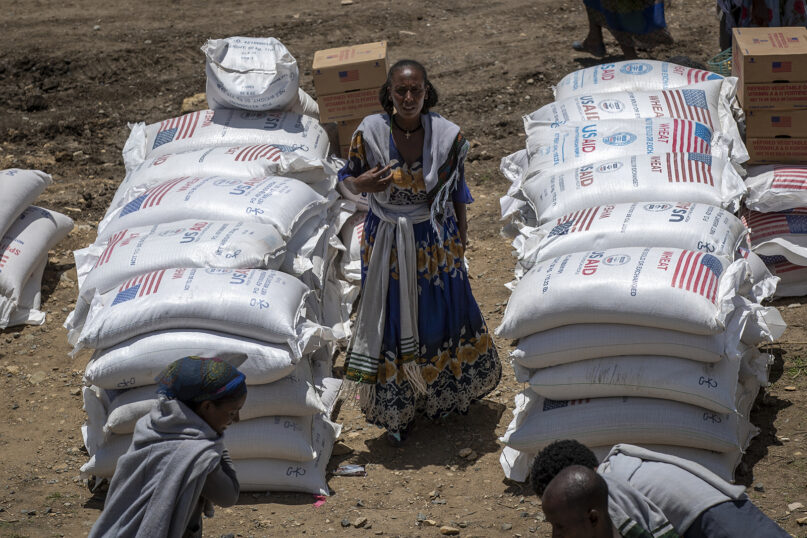
An Ethiopian woman stands by U.S. Agency for International Development sacks of wheat to be distributed by the Relief Society of Tigray in the town of Agula, in the Tigray region of northern Ethiopia, May 8, 2021. (AP Photo/Ben Curtis, file)
Opinion

The real Gen Z religion story is about women

(RNS) — On most indicators, Gen Z men’s religious behavior has largely stayed the same in the past decade. Instead, it is Gen Z women who have moved religiously.


(Photo by Priscilla Du Preez/Unsplash/Creative Commons)

Melissa Deckman
March 7, 2025


(RNS) — As Gen Z women and men drift apart on multiple dimensions in American life, they are also increasingly making different political and religious choices.

Exit polls show that compared with the 2020 presidential election, the youth vote was more divided along gender lines in 2024. Recent polling on President Donald Trump’s second term also reveals dramatic declines among young women in support for the president, compared with a more muted drop in support among young men.

An important gender-based story is also emerging about Gen Z’s relationship with religion — but not necessarily the one currently dominating many headlines.

Numerous recent stories suggest a religious revival is afoot among the nation’s youngest men, driven by the siren call of a more masculine, traditionalist Christianity, echoing a larger conversation about Gen Z men’s growing embrace of traditional gender roles in the age of Trump. Even the long-secular and male-saturated world of Silicon Valley, some argue, is embracing Christianity, though others maintain the real religion embodied by tech bros is the worship of artificial intelligence.

Yet, trend data from my organization, PRRI, does not paint a portrait of American young men suddenly becoming more pious in recent years. On most indicators, Gen Z men’s religious behavior has largely stayed the same in the past decade or so.

Instead, it is American Gen Z women who have moved religiously.

Take religious affiliation, for example. The PRRI Census of American Religion shows that in 2013, 35% of young men (ages 18 to 29) said they were religiously unaffiliated. Last year, that percentage remained the same. Yet, young women (ages 18 to 29) have increasingly shed any sort of religious label over that time. In 2013, 29% of young women had no religious affiliation; by 2024, it was 40%.

Beyond young women’s growing adoption of the unaffiliated moniker, levels of church attendance and prayer among young women have dropped more than 10 percentage points since 2016. Their religious behaviors now echo young men’s, who, again, saw little changes on those measures.


“Religious Behaviors Among Young Americans, by Gender” (Graphic courtesy of PRRI)

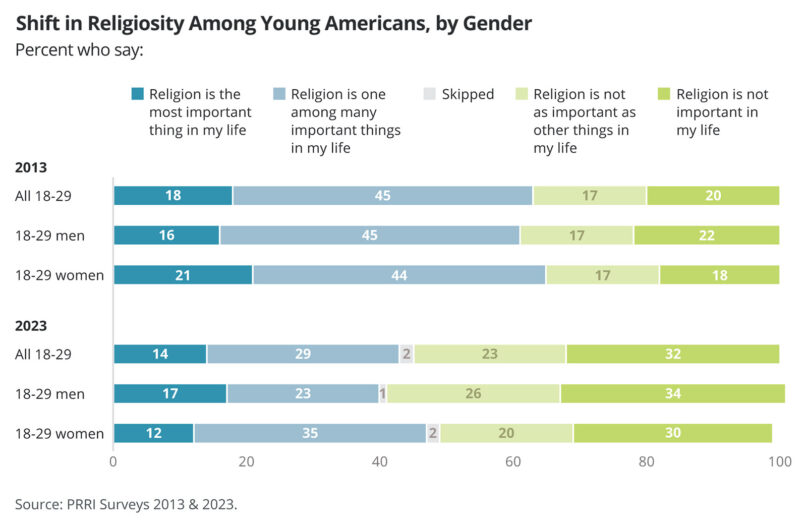
While relatively few young Americans say religion is the most important thing in their life, the rates at which young men say so have barely budged in the past decade — from 16% in 2013, to 17% in 2023, the last time PRRI asked that question. However, the percentage of young women who say religion is the most important thing in their life has decreased by more than 40% — from 21% in 2013, to just 12% a decade later.


“Shift in Religiosity Among Young Americans, by Gender” (Graphic courtesy of PRRI)

In fact, the picture of religion today among Americans under 30 shows young women and men have become largely similar — which itself is a big change. Historically, women have been more religious than men.

In the Christian tradition, women have long provided the organizational infrastructure that builds community within the walls of the church, whether through staffing altar guilds, providing meals for potluck dinners and shut-ins, teaching Sunday school, maintaining prayer lists or organizing charitable work in their towns and cities.

Theories differ as to why women have historically been more religious than men, but some posit that since women are less risk-averse by nature, religion may provide them with solace in planning for the afterlife. Religion may give greater reassurance to women, who have been more economically and physically vulnerable. And since the doors to professional and public life historically have been less open to women, they often found social validation in their religious lives compared with men. Houses of worship provided women with a socially sanctioned outlet to engage in life outside the home for much of American history.

While American women have made great gains professionally, there has likely been a time-lag effect when it comes to religiosity so that older American women especially remain more religious than their male counterparts, even today. However, Gen Z appears to be the generation for which the residue of gendered religiosity has ceased to matter as much.


(Photo by Joel Muniz/Unsplash/Creative Commons)

It’s not hard to see why. We’ve raised a generation of young women to expect equality in all aspects of life, whether encouraging them to enter male-dominated fields such as STEM, to participate in organized sports or to engage in civic and political life. Many older Gen Z women came of age during the first Trump presidency and the #MeToo movement, which helped young women develop a strong sense of gender consciousness. Indeed, my research finds Gen Z women are far more likely to identify as feminists than women from any other generation.

While views toward the role of women as leaders in religious traditions vary widely — most mainline Protestant, Black Protestant and Jewish denominations have long ordained women — the reinforcement of extreme patriarchal views in many fundamentalist traditions, which countenance that God’s order demands women stay home, raise children and remain subservient to their husbands, holds little appeal for many young women today. If a common perception among many young women today is American religion is doubling down on traditional gender roles, it is little wonder young women have left in droves.

And the persistence of conservative churches in the United States in denying marriage equality and viewing the mere existence of transgender individuals as sinful is likely contributing to young women’s retreat from religion. Young women are almost twice as likely as their male counterparts to identify as LGBTQ. Last year, PRRI found 60% of young Americans who disaffiliated from religion did so over their faith tradition’s negative teachings about LGBTQ people — a much higher rate than other Americans who left their religion.

Some research also suggests Gen Z men who have remained actively part of many Christian churches may be drawn to certain faith traditions that reinforce traditional gender roles, such as the Southern Baptist Convention.

RELATED: Survey: US religious groups support LGBTQ+ rights, divide on medical care for trans minors

Churchgoing Gen Z men are also likely susceptible to the growing influence of reactionary voices online, such as “TheoBros,” whose embrace of a militant masculinity — one that believes women should not only remain subservient to men but even lose the right to vote — may hold appeal for young men who believe they have become increasingly emasculated in the larger culture, as political leaders like Vice President JD Vance are quick to claim.

While the young men remaining active in many Christian churches might find the appeal of traditional gender norms a good reason to stay, the reality is there is little evidence Gen Z men are experiencing a religious revival, as our data at PRRI demonstrates.

But the more revealing story when it comes to gender, Gen Z and religion is the precipitous drop in religiosity among young women today. It shows just one more way Gen Z women continue to defy historical norms.

(Melissa Deckman is CEO of PRRI. The views expressed in this commentary do not necessarily reflect those of RNS.)
This Lent, US Lutherans are learning a new Palestinian practice: Sumud

(RNS) — An Arab word meaning 'steadfastness,' the Sumud devotional offers churches a six-week study to raise awareness of Israel’s military rule over Palestinians.


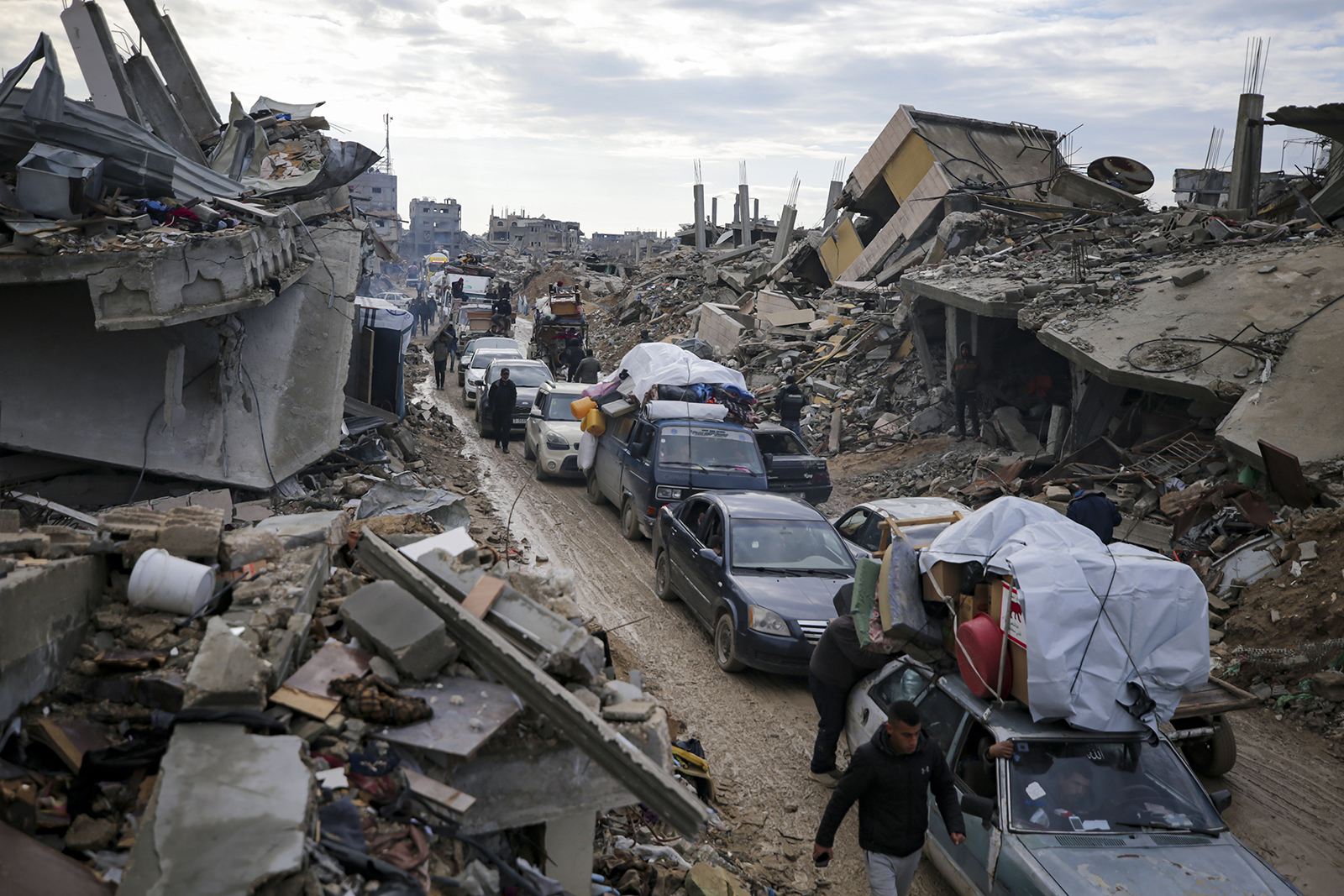
Displaced Palestinians make their way from central Gaza to their homes in the northern Gaza Strip, Monday, Feb. 10, 2025. (AP Photo/Jehad Alshrafi)

Yinaat Shimran
March 6, 2025

(RNS) — Lent is a time of reflection for many Christians, and each year a host of devotionals are published to bring insight and inspiration to the 40 days of contemplation leading to Easter.

For the Evangelical Lutheran Church in America, a liberal denomination of close to 3 million members, the Lenten offerings this year include one focusing on the plight of Palestinians. The devotional, called “Sumud,” an Arabic word meaning “steadfastness,” offers churches and individuals a six-week study with videos and reflections to raise awareness of and advocacy against Israel’s occupation of Palestinian lands and its military rule over Palestinians.

More than many other U.S. denominations, the ELCA has spoken boldly on the issue of Palestinian inequality and dispossession in the occupied West Bank and the Gaza Strip. That’s in part because the denomination partners with the Evangelical Lutheran Church in Jordan and the Holy Land and its six churches. The 2,000 members of those churches and their leaders have been especially vocal in opposing Israel’s war in Gaza — none more so than the Rev. Munther Isaac, pastor of Christmas Evangelical Lutheran Church in Bethlehem, who has emerged as one of the leading champions for the Palestinian fight for justice and liberation in Gaza and for the 3 million Palestinians living in the West Bank.

Good Shepherd Lutheran Church in Fayetteville, Arkansas, is one U.S. congregation heeding the call.

“It just seemed like if we were gonna focus on something that was faith-based, that was really listening to grassroots voices with intentionality during this penitential season, we would just sit with this,” said the Rev. Clint Schnekloth, the pastor.

Over the course of Lent, members of Good Shepherd Lutheran will gather for a parish meeting before services each Sunday to watch a video and read a reflection about seeking justice for Palestinians.

Schnekloth explained that ELCA Lutherans are in a unique position when it comes to Israel and Palestine. “We see the impact on our brothers and sisters who are Lutheran there, and that can sometimes convince people who might otherwise be pro-Israel that there’s another way of thinking about this based out of that experience.”

The Palestinian fight for freedom is beginning to resonate more broadly. On Sunday (March 2), “No Other Land” won the Oscar for best documentary feature. The documentary, jointly produced by Israelis and Palestinians, focuses on the Israeli military’s forced displacement of Palestinians in Masafer Yatta, a group of hamlets in the occupied West Bank.

Residents of the West Bank refugee camp of Nur Shams, near Tulkarem, evacuate their homes ahead of a bulldozer as the Israeli military continues an operation in the area on Feb. 11, 2025. (AP Photo/Majdi Mohammed, File)

The Palestinian plight has become front and center because of Israel’s 16-month war in Gaza following Hamas’ 2023 attack on Israel. The assault has killed more than 48,000 Palestinians and leveled the oceanfront strip. But Israel has also been waging numerous raids across the occupied West Bank, accompanied by house demolitions, detentions without charge and near-daily attacks on Palestinians that have killed nearly 900 people since the start of the war on Gaza in October 2023.

A Gallup poll conducted Feb. 3-16 found that less than half of Americans express support for Israel, the lowest percentage in 25 years of Gallup’s annual tracking of this measure. According to the poll, 46% of Americans expressed support for Israel and 33% of U.S. adults now said they sympathize with the Palestinians, up 6 percentage points from last year.

The ELCA has long advocated for its sister churches in the Middle East through a program also called Sumud.

RELATED: In Bethlehem, a Christian pastor says a year of protest for Palestinians shows few gains

Maddi Froiland, Sumud’s program director, said the ELCA initiative is intended to help U.S. Lutherans better understand what their faith counterparts are experiencing, not the least of which is extinction.

“I think we’ve had reports of 146 Christians who have left since Oct. 7 of two years ago,” she said. “This is something that is a dire circumstance in the Lutheran experience and the wider Palestinian Christian experience.”

The Evangelical Lutheran Church in America’s Middle East Ready Bench gathers in Chicago in February, 2025, to discuss Sumud and how the church can mobilize for justice in the Holy Land. (Photo courtesy of ELCA)


The ELCA offers other Lenten devotionals, including one called “Dismantle: An Anti-White Supremacy Lenten Devotional.” Like many offered by other Christian communities during Lent, the devotionals speak to a theme of resistance against oppression and advocacy for the marginalized.

The Sumud Lenten devotional’s first video focuses on Mary, the mother of Jesus, who remains an inspiration for Palestinian Christian women today as a sister in sumud, or perseverance. Others focus on the need for Christians to speak the truth and challenge society to fight injustice.

Bishop Meghan Johnston Aelabouni of the Rocky Mountain Synod of the ELCA said she was encouraging the use of the Sumud Lenten devotional.

Aelabouni, who until last year served as co-pastor for the English-speaking congregation of Lutheran Church of the Redeemer in Jerusalem, is particularly close to the issue. She said the Lenten resource can provide an opportunity for those who have not traveled to the region to better understand Palestinians’ lived reality and potentially take steps toward advocacy of justice and peace.

“As faith-based communities, part of our work is engaging in civic life as citizens, and it is also in raising the deeper questions of humanity, of what does justice look like? Why do we believe it’s important? And yes, why do we believe it is biblical?” she said. “I think we need an increase in awareness that there can be another way, that there can be a different way.”
How South Africa’s Coal Exports to Israel Undermines Its Palestine Solidarity – Patrick Bond Pt. 2/2


March 6, 2025
Source: Analyis News


In part two, political economist Patrick Bond outlines the activities of Glencore and other South African energy corporations which continue to ship coal to Israel’s electricity grid. Despite the historic efforts of South Africa to bring a genocide case against Israel at the International Court of Justice, as well as its involvement in the Hague Group to demand enforcement of international rulings on Israel’s unlawful occupation, Bond discusses South African policies and crony capitalist transactions which ultimately undermine these Palestine solidarity initiatives. With corporations such as India’s Adani Group heavily invested in Israel’s economy, Bond exposes the contradictions in BRICS’ stance towards Israel.

Part one is available here.
Extractivism and Resistance: Gendered Perspectives on the Global Resource Economy

March 7, 2025


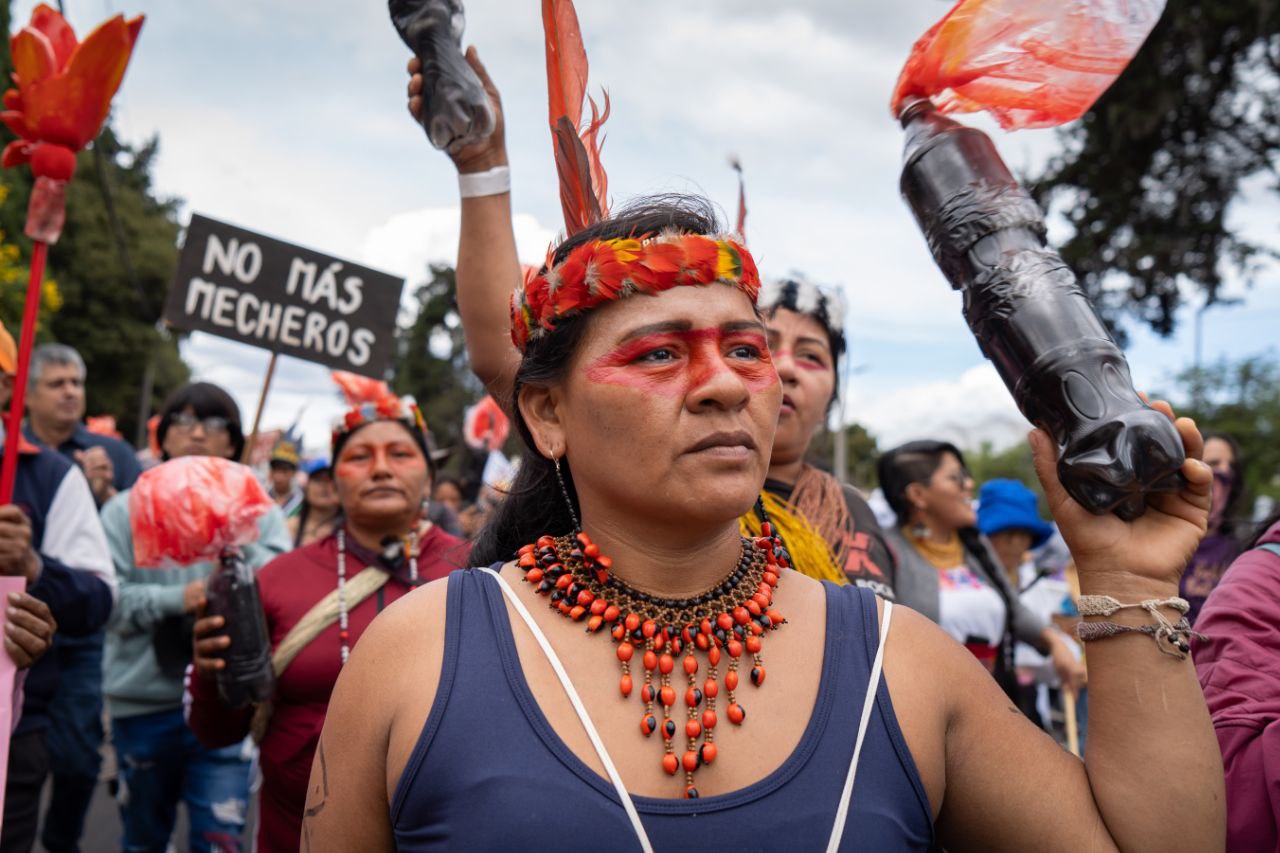
Anti-extractivist coalition actions in Quito, Ecuador in March 2024
 | Image Credit: @memed.act

Extractive economies are deeply gendered, disproportionately harming women and Indigenous communities (mining, land dispossession, violence, health effects) while benefiting multinational corporations and financial markets (Altamirano-Jiménez, 2021). Women are often the first to experience land loss, pollution, and social upheaval, yet they are often sidelined in decision-making. The relationship between people and the planet is undeniably complex. Historically, it has been marred by narratives of domination and exploitation. As the realities of the climate crisis come into sharper focus in the realm of global governance, it is essential for academics and practitioners to challenge dominant constructions and seek alternative frameworks (Gasseau, 2023). Frameworks that respect the interconnectedness of all life and take power imbalances, reciprocity, ethics, and justice seriously (Harcourt, 2023). Ecologies, cosmologies, and economies often relegated to the background are crucial foundations for activist movements and critical scholarship across various geographies and identities.

Ecologies, cosmologies, and economies often relegated to the background are crucial foundations for activist movements and critical scholarship across various geographies and identities. Making sense of the climate crisis from positions of marginalization – and of care – requires emphasizing and addressing power distribution, narratives of the land, place-based identity, and experiences of climate change consequences. Indigenous cosmologies, feminist political ecology, and examples of women’s activism provide the space to do so (Circefice, 2019). The role of women as environmental defenders and advocates. This is clear, for example, in the work of the Women’s Earth and Climate Action Network.

This article briefly discusses the nexus of gender and extractivism and the global extractivist financial model. It then turns to practices of resistance and hope where examples of alternative frameworks and strategies of Indigenous women organizers are explored.


Globally, women’s basic rights continue to be denied in varying forms and intensities… and we cannot discuss gender inequality without addressing its inextricable relationship to racism and the additional disproportionate impacts of extractive industries and socio-ecological harms to Indigenous, Black, and Brown women (Lake, 2024, 5).

Mining, deforestation, and oil extraction cause deforestation, water pollution, and biodiversity loss as well as socio-cultural consequences. For example, oil spills in the Amazon have impacted the health of Indigenous women and their livelihoods (Amnesty, 2020). There is also evidence of links between extractivist industries and gender-based violence. This is clear in the existence of mining boomtowns and sexual violence committed by corporate security forces (Morin, 2020). The displacement of communities to make way for extractive projects puts women at greater risk of gender-based violence and social marginalization. Land grabbing and resource extraction force women out of traditional agricultural or subsistence roles (Bowman, 2020). The dispossession of land through extractive projects thus threatens their identity, social structures, and traditional knowledge systems. For many women, their connection to the land is not only economic but also spiritual and cultural.

Multinational corporations, banks, and financial institutions perpetuate extractivist economies. At the core of the global extractivist model is global financial capital – this sustains resource extraction and exacerbates the inequality between the Global North and Global South. Many large corporations have a history of exploiting weak environmental and labor laws in the Global South.

Global supply chains, stock markets, and financial institutions (such as international banks and investment firms) play a central role in promoting and financing extractive projects (Salim, 2022). These institutions often prioritize profit maximization over social and environmental impacts, with little regard for the rights of local communities, particularly women and Indigenous groups. Often trade agreements and investment treaties protect corporate interests over Indigenous and environmental rights. For example, investor-state dispute settlement (ISDS) cases where corporations sue governments over environmental protections.

Extractivism is also upheld by neoliberal policies facilitated by global financial institutions, such as the World Bank or the IMF, which promote market-driven economic reforms that prioritize resource extraction over sustainable development or social equity. These policies tend to reinforce the economic dependence of resource-rich countries on the export of raw materials, ensuring that women and Indigenous peoples are not included in the decision-making processes. When sustainable development is said to be a priority we may see the greenwashing of financial initiatives – “sustainable” finance that often reinforces existing extractivist paradigms (ClientEarth, 2020).

Despite the formidable challenges posed by extractivist economies, women and Indigenous groups have been at the forefront of resistance movements against resource exploitation. Indigenous women have played a pivotal role in safeguarding their lands, water, and communities from the destructive impacts of mining, deforestation, hydroelectric projects, and oil extraction. These resistance efforts manifest in grassroots mobilization, direct action, and legal challenges designed to mitigate or halt extractive projects that threaten their ways of life. For example, the women of the Lenca community in Honduras have been central to the resistance against the Agua Zarca hydroelectric dam, which would have devastated their water sources (Friends of the Earth International.) Similarly, Indigenous women in Ecuador have been key in opposing oil extraction in the Yasuni National Park, a region considered to be one of the most biodiverse in the world (Barzallo, 2024).

Beyond local struggles, global anti-extractivism networks are forming, connecting Indigenous and feminist movements across borders. These coalitions recognize the interconnectedness of extractivism, gender oppression, and environmental destruction. The Women’s Earth and Climate Action Network (WECAN), founded by Osprey Orielle Lake, is one such organization that amplifies women’s voices in environmental decision-making and fosters transnational solidarity. Through educational programs, policy advocacy, and direct action campaigns, WECAN empowers women to challenge extractivist policies and propose alternative frameworks for climate justice.

Resistance to extractivism is not only about stopping harmful projects; it is also about envisioning and implementing alternative economic models that reject resource exploitation in favor of sustainability and collective well-being such as Buen Vivir (Living Well), a concept originating from Andean Indigenous traditions. Buen Vivir envisions a life in balance with nature, where economic growth is not the end but is considered alongside to the well-being of communities and ecosystems. This model prioritizes social justice, environmental sustainability, and the recognition of Indigenous sovereignty over lands and resources. It challenges neoliberal economic paradigms that prioritize profit over people and the planet (Acosta, 2018).

Indigenous and feminist perspectives provide powerful critiques of dominant economic narratives and propose alternatives that center care, community, and ecological balance. Feminist political economy perspectives challenge dominant narratives of development and economic growth, advocating for a shift toward sustainability and justice. Policy frameworks should integrate gendered perspectives into environmental governance, recognizing the leadership of women in climate action and resource management. Initiatives like the Women’s Earth and Climate Action Network (WECAN) exemplify how organizations can push for these shifts through climate justice advocacy, educational programs, direct action, and global networking. Feminist and Indigenous movements, like this, offer alternative models that center on care, reciprocity, well-being, environmental sustainability, and gender justice (United Nations, 2020). A care ethics framework can reshape environmental activism by prioritizing relationships and responsibilities to one another and the Earth (Prugl, 2020). This perspective aligns with Indigenous worldviews that emphasize interconnectedness and collective responsibility.

Alongside Buen Vivir, feminist and Indigenous movements advocate for commons-based economies that resist the privatization of land, water, and forests. Commons-based economies emphasize collective stewardship of natural resources rather than their commodification for corporate profit. Similarly, care economies recognize the unpaid and undervalued labor of women in sustaining both social and ecological systems. By centering care work, environmental stewardship, and social reproduction, care economies offer a transformative vision for rethinking economic value beyond extractivism.

Resistance to the global extractivist model is also deeply rooted in storytelling and cultural narratives that shape our relationship with nature. In her book The Story is in Our Bones: How Worldviews and Climate Justice Can Remake a World in Crisis, Osprey Orielle Lake explores how Indigenous knowledge and feminist perspectives offer alternative ways of engaging with the Earth (Lake, 2024). She argues that shifting worldviews is fundamental to addressing environmental challenges, as dominant economic paradigms are often underpinned by exploitative narratives about nature and development. She emphasizes interconnectedness, cultural narratives, and climate justice. True to her feminist and Indigenous roots, the book is a testament to the fact local stories and cultural identities are vital for understanding environmental issues and mobilizing action. Indigenous resistance movements often draw upon ancestral knowledge and cultural traditions to articulate their opposition to extractivism. These narratives not only highlight the injustices of resource exploitation but also offer visions of a different world—one where economic systems are rooted in respect for the Earth and community solidarity.

The struggle against extractivism is inseparable from broader fights for gender justice, Indigenous sovereignty, and ecological sustainability. The global resource economy is extractive, exploitative, and gendered—but resistance movements provide lessons and hope for alternative futures. Governments, international organizations, and activists must work together to implement legally binding agreements that hold corporations accountable and protect Indigenous land rights. Different identities influence environmental activism, so we need context-specific approaches.

Women and Indigenous communities have long been at the forefront of these movements, resisting corporate exploitation while advancing alternative economic and governance models that challenge dominant paradigms of development. Organizations like WECAN, along with frameworks such as Buen Vivir and care economics, provide valuable insights into how we can move beyond extractivism toward a better existence for people and the planet. Recognizing and supporting these alternatives is essential for transforming the way societies interact with the environment and ensuring that economic development does not come at the cost of human rights and ecological integrity.

References

Acosta, Alberto, and Mateo Martínez Abarca. “BUEN VIVIR: AN ALTERNATIVE PERSPECTIVE FROM THE PEOPLES OF THE GLOBAL SOUTH TO THE CRISIS OF CAPITALIST MODERNITY.” In The Climate Crisis: South African and Global Democratic Eco-Socialist Alternatives, edited by Vishwas Satgar, 131–47. Wits University Press, 2018. https://doi.org/10.18772/22018020541.11.

Altamirano-Jiménez, I. 2021. Indigenous women refusing the violence of resource extraction in Oaxaca. AlterNative: An International Journal of Indigenous Peoples, 17(2), 215-223. https://doi.org/10.1177/11771801211015316

Amnesty International. 2020. “We Awajún Women Are Warriors.” Amnesty International, June 2020. https://www.amnesty.org/en/latest/news/2020/06/we-awajun-women-are-warriors/.

Barzallo, Gabriela. 2024. “Meet the All-Female Patrol Guarding Ecuador’s Amazon Rainforest.” BBC.

Bowman, Lauren. 2020. “Palm Oil Production Impacts Livelihood and Gender Roles in East Kalimantan, Indonesia.” Mongabay.

Friends of the Earth International. n.d. “Honduras.” Friends of the Earth International. https://www.foei.org/struggle/honduras/.

Gasseau, Gemma. 2025. “Bridging the International Political Economy of Water: Social Reproduction, Governance and Non-State Actors.” Review of International Political Economy, January, 1–16. doi:10.1080/09692290.2025.2454918.

Harcourt, Wendy, Ana Agostino, Rebecca Elmhirst, Marlene Gómez, and Panagiota Kotsila, eds. 2023. Contours of Feminist Political Ecology. Gender, Development and Social Change. Palgrave Macmillan.

KAIROS Canada. n.d. “Gendered Impacts of Resource Extraction: Overview.” KAIROS Canada. https://www.kairoscanada.org/what-we-do/gender-justice/gendered-impacts-of-resource-extraction-overview.

Lake, O. O., & Nation, C. C.-H. P. 2024. The Story is in Our Bones: How Worldviews and Climate Justice Can Remake a World in Crisis. New Society Publishers. https://www.amazon.com/gp/product/0865719942/ref=ewc_pr_img_2?smid=ATVPDKIKX0DER&psc=1

Marjanac, Sophie. n.d. “What Is Greenwashing? An Interview with Sophie Marjanac.” ClientEarth. https://www.clientearth.org/latest/news/what-is-greenwashing-an-interview-with-sophie-marjanac/.

Morin, Brandi. 2020. “Pipelines, Man Camps and Murdered Indigenous Women in Canada.” Al Jazeera.

Prügl, Elisabeth. 2020. “Untenable Dichotomies: De-Gendering Political Economy.” Review of International Political Economy 28 (2): 295–306. doi:10.1080/09692290.2020.1830834.

Salim, Lauren. 2022. “Human Rights Abuses by Canadian-Owned Mining Operations Abroad.” Human Rights Research.

UN Women. 2018. Promoting Women’s Economic Empowerment: Recognizing and Investing in the Care Economy. Issue paper. UN Women Headquarters Office


ZNetwork is funded solely through the generosity of its readers.Donate

Brianna Nicole Hernandez is a Gordon Morgan Fellow and instructor in the Department of Politics at the University of Arkansas.
Ukraine, Diplomacy and War
March 6, 2025
Source: Craig Murray


Britain's Prime Minister Keir Starmer (R) and Ukraine's President Volodymyr Zelensky (L) pose for a photo during a bilateral meeting at 10 Downing Street in London, Britain, 01 March 2025. EPA/CHRIS J. RATCLIFFE / POOL Dostawca: PAP/EPA.


When politicians in power are extremely unpopular, they generally turn to militarism and jingoism for a quick boost. Starmer is now the darling of the UK media for his sabre-rattling over Ukraine and is busily churning out tweets of military imagery.

In doing so he is attempting to pose as in defiance of Trump, and capitalise on Trump’s unpopularity in the UK, even though just two days earlier he was fawning on Trump in the White House and inviting him on an “unprecedented” second State visit.

As ever, there is a great deal of smoke and mirrors here. The European leaders are going to come up with an alternative “peace plan” to present to Trump. This will not be along the lines of the G7 Declaration which was strongly anti-Russian. The European leaders acknowledge that the Biden-era G7 Apulia position is now gone.

Instead the new European plan will essentially give Trump pretty well everything he wants, but give the Europeans a ladder to climb down. Starmer is seeking to be hailed as the great bridger of the Atlantic, who explained Trump to Europe and vice versa.

If Trump were an ordinary politician he would then agree to adopt the “European” plan brought to him by Starmer, with a couple of tiny amendments, and then take the joint position into talks with Putin. But Trump being Trump, he might just tell Starmer to stay out of it.

Both the European and American peace plans will involve Putin keeping control over the large majority of the land his troops hold – because otherwise Putin will not agree, and there will be no point. The European plan will have elements designed to blur the sovereignty issue of the Ukrainian land Russia will retain. This will not run once real negotiations with Russia are underway.

As always, money talks and big business is really pulling the strings. Zelensky did not in the event sign the minerals deal with Trump and is now desperate to do so to try to get American cash flowing his way again.

It is worth noting that Starmer’s delusional “Hundred Year Alliance” agreement with Zelensky contained the UK’s attempt to grab the same minerals Zelensky is now asking again to be allowed to hand over to Trump.

You find this in the UK/Ukraine 100 Year Partnership at “Pillar 5, Para 3, article iv”


(iv) supporting development of a Ukrainian critical minerals strategy and necessary regulatory structures required to support the maximisation of benefits from Ukraine’s natural resources, through the possible establishment of a Joint Working Group;

While we are on the subject, most people sensibly ignored the detail of this crazy “100 year” agreement on the entirely sensible grounds that none of it is ever going to happen. But it does contain some remarkable declarations of malevolent intent, of which my favourite is the desire to open a joint online propaganda unit to interfere in the legacy and social media of third countries.

Which we find outlined in fluent Orwellian at “Pillar 7, Para 4”.


Implement joint media initiatives, contributing to coordinated efforts to promote shared values and vision, addressing the information manipulation and malign interference in third party countries. We commit to partnering on joint initiatives such as communication campaigns to mitigate against those threats. We commit to facilitate strengthening of relationships with civil society organisations to support research and the development of counter-FIMI approaches, recognising the importance of independent media and civil society organisations in building societal resilience.

Which is of course precisely what they are always accusing Russia of doing. Indeed alleged Russian social media interference is why they interfered to have the anti-war winner of the first round of the Romanian elections disqualified.

What this plan amounts to is another Integrity Initiative, this time as a UK/Ukrainian co-production.

One thing I learnt in over 20 years as a diplomat is that the public are generally fed lies about diplomatic discussions. Most diplomatic talks generally end up with an agreed communique that is designed to make everyone look good and may only have a slight link to actual events.

This is especially true with regard to human rights, where in my substantial experience claims that human rights abuses were being dealt with by “quiet diplomacy” were almost always a lie.

A British minister cannot meet a Saudi or Chinese minister without being asked if they raised human rights. The answer given is always “yes” and it is almost always untrue, or it was raised so briefly, quietly and apologetically that it is virtually untrue.

So there is a sense in which the Trump/Vance encounter in the Oval Office with Zelensky was refreshing, in that what you saw is what you got. It was only in being in public that it was more bruising than many diplomatic encounters. I suspect it has shortened the war, especially if Trump sticks to the decision to end aid.

Shortening the war would be a good thing. If you think a principle is so important that you believe it is fine for millions of people to die for it – none of whom are yourself – I suggest you reconsider your principles. I am not so exercised about who is the mayor of Russian-speaking Lugansk that I am prepared to have a nuclear war over the issue.

What I find particularly alarming is the continuing comparison of Putin to Hitler, and the allegation that if Putin is not “stopped” in Ukraine, then he will conquer the whole of Europe.

This is a quite extraordinary example of false analogy. Putin has never shown any indication of following a universal ideology he wishes to impose by conquest, or of territorial ambition beyond a small number of Russian-speaking ex-Soviet districts contiguous to Russia.

In addition to which, Russia is gradually winning a war of attrition against a much smaller neighbour, which is to be expected. Ukraine has survived this long with massive Western aid. But the idea that the Russian army is capable of conquering the whole of Europe, when it cannot subdue Kiev, is plainly utter nonsense. Even aside from the fact there is absolutely no desire in Moscow to do so.

Trump has pointed at NATO and revealed the Emperor’s New Clothes. NATO was formed to counter a Soviet alliance that did possess a universal ideology it wished to spread, and did have the military strength to threaten (though it should be stated not even the Soviet Union ever had any intention of invading Britain or formulated plans to do so). That threat has now passed.

The attempt to use the farcical Salisbury incident as evidence of a Russian threat to the UK population is, frankly, pathetic.

It is hard sometimes to follow the workings of the propaganda machine. At what stage did the crazy narrative that Russia blew up its own Nord Stream pipeline get abandoned?

Russia destroying the pipeline was unanimously and loudly proclaimed by the entire legacy media and the entire political class of the Western world. Those of us who pointed out this was not true were denounced and ridiculed. Yet now the narrative has quietly been dropped, and the truth is occasionally acknowledged by the media. Though with no admission of the previous lies.

How does this cycle operate? Is it centrally determined, or is it organic? Were the media really stupid enough to believe Russia destroyed Nord Stream, or were they knowingly lying? How have the German people been persuaded to accept the massive damage the increase in energy costs did to industrial employment? These are fascinating fields of study.

European politicians who have made a career of Russophobe rhetoric are suddenly naked in the breeze. They are charging around banging the drum of war, threatening to mobilise armies they do not possess and convinced that preserving their own place in the socio-economic hierarchy is well worth the threat of nuclear oblivion.

Laughter is the best response to their pretension.


What Are the Possibilities for Peace in Ukraine

March 6, 2025
Source: Originally published by Z. Feel free to share widely.


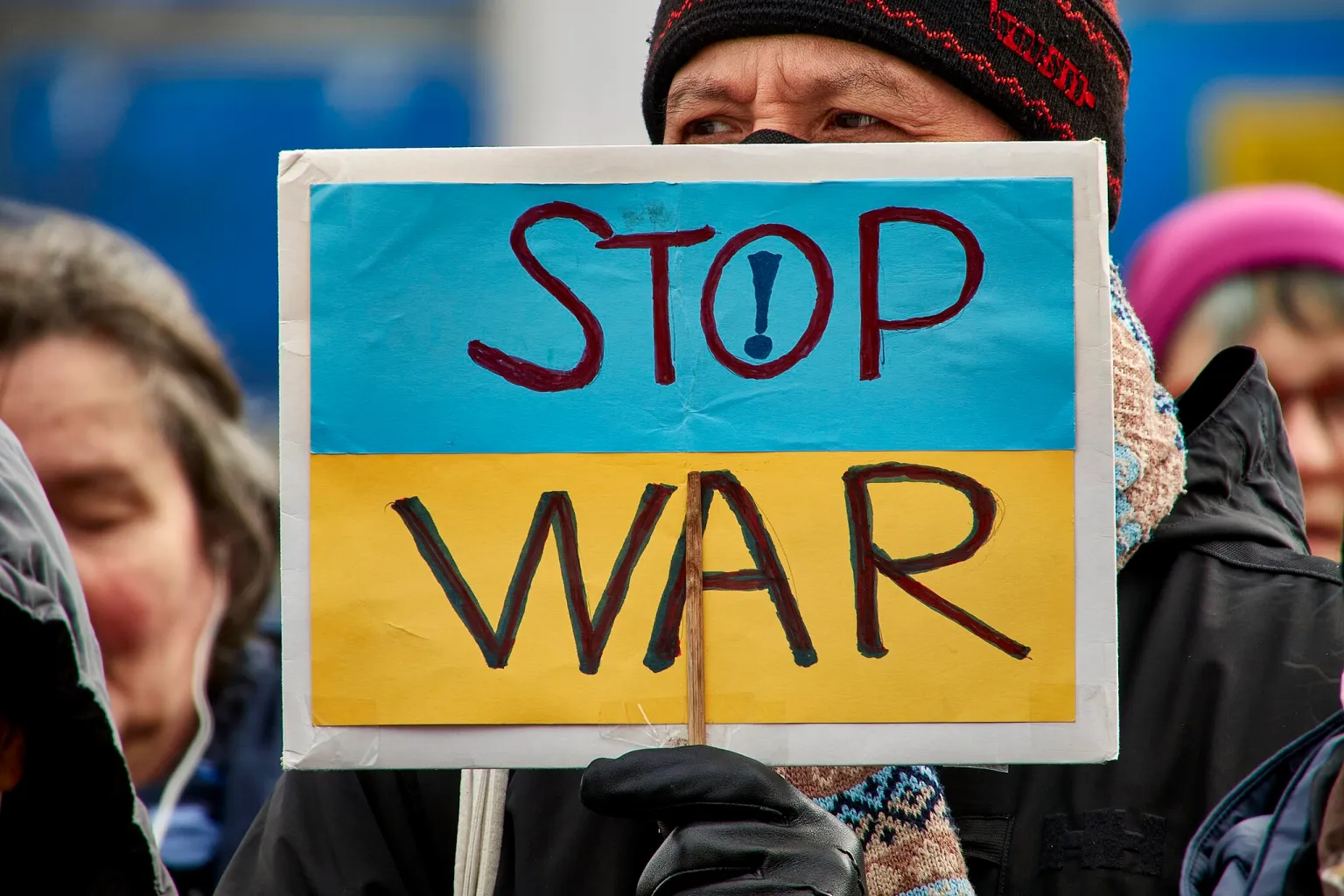
Stop Fueling War Demonstration at the Finnish Parliament House. rajatonvimma /// VJ Group Random Doctors, CC BY 2.0 https://creativecommons.org/licenses/by/2.0, via Wikimedia Commons


The whole thing is a fiasco. The theatrical drama in the White House’s Oval Office triggered a series of predictable responses around the world. Outrage at US President Donald Trump for his rudeness and ridicule for Ukrainian President Volodymyr Zelenskyy were some of the reactions. Then, the failure of French President Emmanuel Macron to create a European agreement with the United Kingdom’s Keir Starmer and Zelenskyy revealed the absolute dead ends that confront this exhausted war in Ukraine. The question that these discussions provoke is simple: is there an exit for this war?

Permanent War

If the war aims of Zelenskyy and his European partners are to weaken Russia or to overthrow the government of Vladimir Putin, then this war might either go on forever or accelerate into a dangerous nuclear scenario. Opinion polls in Russia show that Putin’s approval rating is now at 87%. Even with a mountain of salt, this is far higher than the approval rating in France for Macron. With Russia’s economy resilient during this war, it is unlikely that it will be further weakened with the continuation of hostilities. What the evidence shows, however, is that Europe’s economy is suffering from war inflation that has not been reduced. If this war is to continue, Macron said, then European states would have to increase their military spending to 3% or 3.5% of their GDP. This would further damage the living situation of most Europeans. Would young, working-class Europeans be willing to go and man the dangerous frontline in Ukraine on behalf of a war aim (weakening Russia) that is impossible? It is unlikely. (There is a separate cruelty of middle-class Ukrainians fleeing the country for Western Europe and then working-class Western Europeans being asked to come and defend that country for them).

A permanent war will lead to unnecessary loss of life in Ukraine and to a permanent economic crisis in Europe. It is also unlikely because the United States will not financially and militarily back such a war indefinitely, resulting in the collapse of any long-term European commitment to Ukraine.

The Korean Solution

If neither Ukraine nor Russia are willing to move to a ceasefire and then a negotiated settlement (which would include security guarantees for all sides), then there is the possibility that the current frontline that stretches from northern to eastern Ukraine will become a permanent Demilitarized Zone (DMZ). Ukraine would thereby be divided indefinitely with an immense waste of social wealth to maintain a perpetual frontline. This is the most likely scenario, although it might not be palatable for Europeans to have a Korea within their continent.

The South Korean military maintains 600,000 troops along the 38th Parallel, alongside almost 30,000 US troops. Much the same is the situation in the north. Billions of dollars are spent annually on surveillance and logistics for over 900 square miles of territory that is not available for economic use. Europe would have to underwrite this Korean solution for Ukraine for eternity (just as the United States provides guarantees and funds to South Korea, and China does the same for North Korea).

A Security Consortium

The Helsinki Process that emerged to bring the US and USSR into negotiations in 1975 and that formed the Organization for Security and Cooperation in Europe (OSCE) has played almost no role for peace in the war on Ukraine.

The only interlocutors that have been given permission to speak about the war in Ukraine on behalf of Zelenskyy have been the United States, the Western European leaders, the leaders of the European Union (EU), and the North Atlantic Treaty Organization (NATO). Leaders from Europe’s east – apart from those who are integrated into the NATO-EU – have been either silent or told that their opinions do not matter. But it is these eastern European countries that share with Ukraine the fact of having a border with Russia, and it is these countries that most need to form a security consortium that includes Russia and provides mutual guarantees. Those countries that directly share a border with Russia’s west are – from north to south – Norway, Finland, Estonia, Latvia, Belarus, Ukraine, Georgia, and Azerbaijan (Lithuania and Poland share a border with the Kaliningrad Oblast, which is a Russian exclave on the Baltic Sea). Three of them (Finland, Estonia, and Latvia) are members of NATO and of the EU, while one of them (Norway) is a NATO member but not in the EU.

Would it be possible for these eight countries to call a conference with Russia on the broader issues of security rather than the narrow issue of Ukraine? That three countries that border Russia are already NATO members (one of them, Norway, was a founding member in 1949) suggests that the problems in Ukraine are separate from NATO membership itself. Rather, they stem from anxiety about a border line created in a hurry when the Soviet Union collapsed in 1991 (this impacts Estonia, Latvia, Belarus, Ukraine, Georgia, and Azerbaijan, but not Norway and Finland, which were not part of the Soviet Union).

In the early 1980s, former Swedish Prime Minister Olof Palme chaired the Independent Commission on Disarmament and Security Issues, whose 1982 report Common Security: A Programme for Disarmament made the case that ‘The task of diplomacy is to limit, split, and subdivide conflicts, not to generalize and aggregate them’. In other words, all conflicts cannot be settled at the same time. A ceasefire is good in itself; the issues to resolve need to be separated, and those that are easier dealt with first to build confidence. To bundle all issues into one problem makes a dispute intractable.

The countries that border each other, including those that border Russia to its south and east, must live next to each other. They cannot lift themselves out of their geography and go elsewhere. Ukraine cannot be relocated to France. It must remain beside Russia. In that case, these countries need to find a way to build trust.

To begin with, the assertion that one cannot trust a neighbour is the worst way to build confidence between the peoples of neighbouring countries. Neither the EU nor NATO (without full US military backing) can subordinate Russia and force it to bow before Ukraine. A British cabinet minister said last year that his country would last only six months in a full-scale war with Russia. Meanwhile, a Kiel Institute for the World Economy report suggests that Germany is spending its money buying weapons but does not have a standing army capable of self-defence, let alone winning an offensive war against Russia. Europe, without the United States, is a shadow.

It would behove all parties if a country that borders Russia calls for such a security consortium to be built and if it is able to get guarantees from NATO not to expand further eastward and from Russia to draw back its military from the border regions. There are long relations among these countries, with families on both sides of the border. Any lessened tension in general is good for humanity, and if such a manoeuvre will lead to peace in Ukraine, that would be far better than a permanent scar on this part of the European continent.

This article was produced by Globetrotter and No Cold War.

ZNetwork is funded solely through the generosity of its readers.  Donate


Vijay Prashad
Vijay Prashad is an Indian historian, editor, and journalist. He is a writing fellow and chief correspondent at Globetrotter. He is an editor of LeftWord Books and the director of Tricontinental: Institute for Social Research. He is a senior non-resident fellow at Chongyang Institute for Financial Studies, Renmin University of China. He has written more than 20 books, including The Darker Nations and The Poorer Nations. His latest books are Struggle Makes Us Human: Learning from Movements for Socialism and (with Noam Chomsky) The Withdrawal: Iraq, Libya, Afghanistan, and the Fragility of U.S. Power. 


Tings Chak is the art director and a researcher at Tricontinental: Institute for Social Research and lead author of the study “Serve the People: The Eradication of Extreme Poverty in China.” She is also a member of Dongsheng, an international collective of researchers interested in Chinese politics and society.
A Chance To Break Free: Africa In The Post-U.S. Era

March 6, 2025
Source: Venro


African Union Headquarters in Addis Abeba Solen Feyissa / Unsplash

What is unfolding before our eyes with the right-wing shift in the U.S. and Europe is not merely an aid cut, but a fundamental reconfiguration of the global economic order. These shifts are undeniable signs of the waning dominance of Western hegemony, ushering in a new world order – one that could work in Africa’s favour, but only if the continent defines its own terms of engagement.

The abrupt withdrawal of the U.S. from development and climate commitments is a wake-up call, with Europe following suit. The UK and Belgium have announced budget cuts, reflecting a longstanding decline in official development finance and shortened aid project cycles that fail to align with national development strategies.

For years, many across the continent have criticised the aid sector’s inefficiencies, wastefulness, and exploitative nature, yet few anticipated its disruption would come from within the U.S. itself. As Washington pushes to ‘make America great again’, it paradoxically undermines its own global influence, retreating into isolationism, though its stance on Gaza and South Africa suggests otherwise.

The U.S. unmasked: Power, aid, and imperialism

The U.S. has long positioned itself as a global leader, but its actions in aid, multilateral agreements, and international finance have often reflected imperialism rather than solidarity.USAID and political influence: Elon Musk recently stated that ‘’USAID was influencing elections [in other countries] in a way that was dubious.’’ For years, Africans have decried how the U.S. consolidates its hegemony under the guise of aid, using USAID as a tool to undermine nationally popular governments by funding parallel service delivery systems and civic organisations.
Aid and structural dependency: The U.S., together with other Western nations, has played a key role in perpetuating Africa’s structural dependency, reinforcing the notion that Africa cannot function independently (Nkrumah, 1965; Rodney, 1972; Amin, 1985).
Undermining global agreements: The U.S. consistently obstructs or waters down global treaties. It has refused to sign or ratify the Kyoto Protocol, the UN Convention on Biological Diversity, the Convention on the Rights of the Child, and the Convention on the Elimination of All Forms of Discrimination Against Women.
Blocking multilateral progress: The U.S. has paralysed the WTO’s dispute settlement system since 2019 by unilaterally blocking the appointment of new judges to the Appellate Body. Despite near-universal consensus to proceed, Washington refuses to relent, stalling much-needed trade reforms.

The world won’t wait for the U.S. on climate action – neither should Africa

The U.S. withdrawal from the Paris Agreement for the second time is a direct attack on global efforts to reduce emissions. In 2024, global temperatures surpassed 1.5°C above pre-industrial levels, the hottest year on record, while the U.S. abandons its commitments.

The abrupt cuts to U.S. climate finance mean halting a USAID plan to support 500 million people through climate adaptation initiatives and also risk undermining efforts to mobilise 50 billion US-Dollar by 2030. It also ends support for clean energy facilities in Southern Africa, valued at 84.5 million US-Dollar by 2028.

Despite all this, it is possible to imagine opportunities in a world without the U.S. at the negotiating table. In fact, this moment presents opportunities in Africa’s favour to redefine its global role:Less obstructed negotiations: The Global North – sans the U.S. – and the Global South can push for more stable, rule-based financing systems for climate, health and development.
Broadening climate finance contributors: Negotiations must now compel high-emitting emerging economies, like China and India, to shift from voluntary to obligatory contributions.
Accelerating regional integration: Africa must unite to fast-track theimplementation of AfCFTA, the largest free trade area in the world, and move beyond its dependency on raw material exports.
Strengthening regional financing mechanisms: With the realisation that Africa is „on its own,“ this must translate into action, such as an African regional fund, modelled after the African Union Peace Fund, with agreed levies for climate and pandemic response.
Seizing economic agency: Ironically, Africa is now being forced to break free from its ‘baby elephant syndrome’, a perfect opportunity to define its own terms of engagement globally and bilaterally, ensuring it is a price maker, not a price taker, particularly in carbon markets and critical minerals.
Deepening South-South cooperation: With the new order, we must learn from the ‘past’ U.S. model and foster cooperation that does not replicate power imbalances.

Making it costly for the U.S. to abandon global solidarity

The world does not need to accept U.S. isolationism without consequences. The U.S. still has the highest per capita emissions yet refuses to take responsibility.

If the world recognises the U.S. as a “dying empire” (to quote Richard Wolff), it must reconfigure its engagement by reconsidering U.S. investment agreements; imposing tariff hikes on U.S. goods and services and even shifting diplomatic ties away from Washington. The ball is now in the world’s court.

Conclusion: Seizing the opportunity for a post-U.S. world

The current geopolitical reconfiguration, including the U.S. retreat into isolationism and European aid cuts, must be seen as an opportunity to push for higher ambitions in global solidarity – in climate, taxation, health, and multilateral cooperation.

For Africa, this is a chance to break free from neo-colonialism and assert its own economic and political agency.


Martha Bekele is an African researcher in climate and development financing and practices.