On revolutionary strategy: From the early Comintern to Daniel Bensaïd
Simultaneously published on Communis and LINKS.
Introductory note by Paul Le Blanc
What follows is a chapter from a forthcoming volume by John Riddell entitled Lenin’s Comintern Revisited, to be published later this year by Brill as part of the Historical Materialism Book Series. (A year after its publication in hardback, the book will be available in a paperback edition from Haymarket Books.)
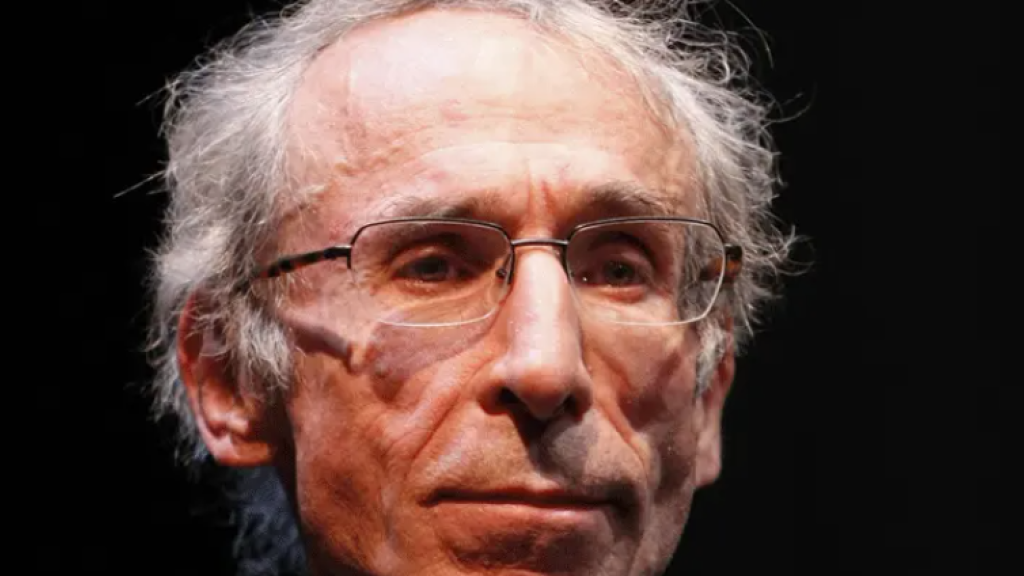
In this chapter, Riddell offers two intellectual gifts. First, a lucid presentation of the strategic orientation developed by Vladimir Lenin and his comrades from around the world. Second, a serious-minded engagement with the thinking of one of the finest Marxist minds of the early 21st century, the late Daniel Bensaïd, on precisely such questions.
Lenin’s Comintern Revisited stands as an invaluable historical account of the early Communist International. Riddell has worked for over four decades to help produce a remarkable set of eleven documentary volumes, presenting more material than ever assembled, on the remarkable saga of the Communist International, under the rubric of the Comintern Publishing Project (initially called “The Communist International in Lenin’s Time”). These volumes cover:
preliminary efforts from 1907 to 1919 to bring this Third International into being;
the first four world congresses of the Communist International overseen by Lenin and the Bolsheviks, in which hundreds of vibrant activists and revolutionaries from all over the world were participants;
related meetings, conferences, and discussions from the early 1920s.
Lenin’s Comintern Revisited is grounded in this multi-volume project, also reflecting a familiarity with helpful secondary sources. More than this, it provides both a summary and a guide for activists and scholars who want to engage with and learn from the immense gathering of primary sources contained in the volumes of the Comintern Publishing Project.
The eleven titles of the Comintern Publishing Project provide thousands of carefully edited and well-annotated pages, translated from multiple sources. To achieve this, John worked with a team of comrades, particularly in recent years with Mike Taber, who has recently produced two important documentary volumes on the Socialist International of 1889-1914 and is working to bring the Comintern Publishing Project to a conclusion, editing volumes on Comintern activity among women, trade unions, and youth. Altogether, these newly available sources provide the basis for a more profound and far richer understanding of the Communist International, of Lenin and his comrades, and of the early phases of the world Communist movement than offered by standard (and often dismissive) interpretations of earlier years.
Lenin’s Comintern Revisited can be seen as an introduction to the Comintern Publishing Project as a whole, and it stands as a comprehensive interpretation of the Comintern's early history that compares favorably with all previous efforts. This volume should be required reading for those who want to understand the history of the Communist movement and for those who want to change the world for the better.
On revolutionary strategy: From the early Comintern to Daniel Bensaïd
I. Pattern of a strategic system
The word “strategy” rarely appears in the documents of the early Comintern. In its place, in the German original, we usually find the word “die Taktik,” which encompassed both policy and actions during the entire period leading up to the anticipated revolution. Usage of the terms “tactics” and “strategy” in the 1920s is exemplified by Leon Trotsky in a programmatic text written in 1928:
By the conception of tactics is understood the system of measures that serves a single current task or a single branch of the class struggle. Revolutionary strategy on the contrary embraces a combined system of actions which by their association, consistency, and growth must lead the proletariat to the conquest of power.
Referring to the limitations of strategic thought in the First and Second International, Trotsky continued:
Only the Third International reestablished the rights of the revolutionary strategy of communism and completely subordinated the tactical methods to it.1
The four Comintern congresses held in Lenin’s lifetime (1919–22) adopted the elements of such a “combined system of actions,” which was laid out in these congresses’ resolutions. The major topics of the early Comintern’s strategic discussions are listed below, in categories, along with mention of the Comintern congresses that dealt with them.2
A Strategic System of Actions
1. Workers’ power
The struggle for workers’ power (1st Congress)
Socializing the economy under workers’ rule (3rd, 4th)
2. Revolutionary party
Role and structure of the Communist Party (2nd, 3rd, 4th)
Comintern statutes and conditions for admission (2nd)
3. Hegemony within the working class
Trade unions and factory committees (2nd, 4th)
Participation in bourgeois parliaments (2nd)
Cooperatives (3rd)
Farmers and other exploited independent producers (2nd, 4th)
Oppressed layers: Women (3rd), Youth (3rd, 4th)
4. Alliance with oppressed peoples
National, colonial questions (2nd, Baku Congress, Far East Congress, 4th)
Black liberation (4th)
5. United front, transitional demands, and the workers’ government (3rd, 4th)
These points are developed below, together with references to fuller discussions elsewhere in this volume.
1a. The goal of workers’ power
When the Comintern was formed in 1919, its strategy for power was straightforward: the workers’ councils that then existed in many countries of Europe should overthrow capitalist rule and establish revolutionary governments on the pattern of the Russian soviets’ assumption of power in October 1917.
The continent-wide post-war revolutionary upsurge of 1918–19 soon ebbed. During the century that followed, there was no repetition of the Russian Revolution’s distinctive pattern. Nonetheless, since that time the prospect of workers’ power has been posed on many occasions, both in Europe and beyond. Elements of the Russian experience of 1917 have found expression in varying time sequences and under varying conditions, with different degrees of inadequacy and different omissions. None of these revolutionary upsurges established workers’ democracy on the model of the first period of Soviet rule, and the Russian process itself also soon diverged from this model.
The record thus suggests that the early Comintern’s call for Soviet power, while retaining its relevance, needs to be interpreted flexibly, in the expectation that future attempts to achieve workers’ power may follow new and unexpected paths.
1b. Socializing the economy under workers’ rule
The world Communist movement adopted the example of Soviet Russia as its economic model for workers’ rule. Revolutionary victory was expected to lead — as in Russia — to sweeping nationalization of the economy and a transition to centralized planning of the economy under the leadership of a mass revolutionary workers’ party. During the Comintern’s first two years (1919–20), a time of desperate struggle in Soviet Russia to mobilize a devastated economy for defense against imperialist invaders and their Russian allies, the International devoted little attention to economic policy in Russia.
The Soviet government’s introduction of the New Economic Policy (NEP) in 1921, by contrast, sparked debate at the Third World Congress, echoed by major reports the following year at the Fourth Congress (see Chapter 19). At the 1922 world congress, Comintern leaders said the NEP model would have to be applied, at least for an initial period, in other countries that experienced socialist revolutions.
Lenin and some other Bolsheviks termed the Soviet system at that time “state capitalism” and considered it compatible with workers’ rule and a step toward socialism.3 They did not hide the NEP’s dangers. Indeed, Clara Zetkin noted in 1922 that under the New Economic Policy, economic relations in Russia reflected “the written and unwritten laws of [the] world economy,” while profit-seeking nationalised enterprises come into “temporary conflict” with groups of workers. The strategic goal of socialising the economy was thus progressively revised and reinterpreted in the light of changing experiences in Soviet Russia.4
2. The revolutionary party
The early Comintern set the goal of building mass revolutionary parties aligned with its strategic outlook and organizational tradition (see Chapter 12). One hundred years later, in the twenty-first century, the mass revolutionary working-class movement that found expression in the Comintern is absent almost everywhere. In a few countries, ruling parties claim continuity with the Comintern tradition, at least to some degree. Elsewhere, many much smaller groups make a similar claim while actually functioning in quite a different manner and on a different scale than Comintern parties of Lenin’s time. The relevant features of Comintern parties await rediscovery and application to a vastly changed political and social environment.
3. Social hegemony
The Bolshevik Party before 1917 pursued a vision of achieving social hegemony in Russian society by winning the confidence of the working class, the peasantry, and the oppressed nations of the tsarist empire. In the first flush of the post-1917 revolutionary upsurge, however, some Comintern members thought that revolutionaries could triumph more simply and directly, through minority initiatives or through the workers acting alone. The Comintern rejected that course. It began to chart a different path in 1920 by urging revolutionary socialists to take their message into trade unions and to participate in parliamentary elections (see Chapter 5). A year later, the International called on its parties to turn to the masses and win majority support in the working class.
From its inception, the Comintern projected a workers’ alliance with exploited and oppressed layers. In this regard, there have been significant shifts since the Comintern’s time. With regard to youth, the Comintern was then primarily addressing young factory workers, still in their teens, subjected to super-exploitation and distinctive forms of mistreatment.
Socialists give less attention to farmers and peasants now than in the past. Nonetheless, farmers today maintain a global organization, La Via Campesina, whose record of resistance to neoliberalism compares favorably with that of mass workers’ organizations. Moreover, as victims of exploitation who lack full-time employment, exploited farmers form part of a large and expanding social category. The Comintern sought to protect such self-employed producers against capitalist exploitation and, where workers gained governmental authority, lend these producers practical assistance.5
The Communist Youth International (CYI), a revolutionary offshoot of the pre-1914 Second International, organized radicalized young people on every continent (see Chapter 15). The Comintern also built a global women’s movement that was in the front ranks of struggles of its time to advance women’s liberation (see Chapter 14). The Communist Women’s Movement provided a programmatic foundation for Marxism’s subsequent engagement with the rise of feminism and movements against women’s oppression.6
These auxiliary organizations gave expression to the Comintern’s central purpose: uniting all the exploited and oppressed worldwide in a common movement based on a working-class program.
4. Alliance with oppressed peoples
The early Comintern stressed the importance of allying the socialist cause with the rising revolutionary struggle in the colonial and semi-colonial world. The International called for support of national-revolutionary movements in these countries, including when led by non-working-class forces (see Chapter 6). Its program for national liberation was applied not only to colonies like India and the Dutch East Indies (Indonesia) but also to semi-colonies like China or Iran, whose titular independence masked colonial oppression. Later this analysis was extended to dependent states in the Western Hemisphere.
5a. United front
The call for a “united front” originated in the Comintern in 1921 as a vehicle for reuniting in struggle working-class forces that had been thrust into mutually hostile camps by the impact of the World War and by divergent responses to the Russian Revolution (see Chapters 10 and 11). The united front proposed by the Comintern was prefigured in the workers’, peasants’, and soldiers’ councils of the 1917 Russian Revolution. The councils, known globally by the Russian word “soviets,” encompassed representatives of different currents in the workers’ movement around a common purpose of consolidating the overturn of tsarism.
When the Russian Soviet Republic was established, Communists hoped that its example, and the growth of Communist organizations across Europe, would result in the rapid marginalization of social-democratic and reformist currents. This hope waned as the post-war revolutionary wave ebbed across the continent. Communists sought a way to address what had become a deep and intractable split within the working-class movement. German workers’ unification against the Kapp Putsch in 1920 demonstrated the power of such united action. Communist initiatives over the years that followed showed the power of an appeal for working people to unite for action around the basic and immediate goals they all held in common, even though reformist leaderships refused to join in.
The Comintern’s Fourth World Congress in December 1922 carried out one of the International’s most extensive discussions of the united front. Its conclusions were conveyed to the world movement above all in the congress resolution on tactics and in the report by Karl Radek that introduced it. Leon Trotsky provided the most rounded brief explanation of this policy in “On the United Front,” a short text written in 1922.7
The Comintern, however, did not limit the application of the united front to movements for immediate demands achievable under capitalism. A broad united-front program would also include demands arising from today’s conditions that could not be fully and securely achieved under capitalism. Such goals were called “transitional demands,” and their nature varied with circumstances. The early Comintern cited, as examples of transitional demands, “workers’ control of production” and “arming the working class.” More recently, in periods of inflation, workers have often demanded, and in part achieved, indexing wages to the cost of living. Another contemporary example of a transitional demand is “climate justice,” that is, the call for effective action to rein in global warming and the corporate economies that fuel it, while protecting the victims of climate degradation.
5b. Workers’ government
Formulation of a united-front program poses the question of how it is to be carried out. The Comintern argued that a workers’ program can be applied by a transitional government that rests on the mass movement of working people and acts to meet their needs. Such a regime was termed, depending on circumstances, a “workers’ government” or “workers’ and farmers’ (or peasants’) government.” It could be created through a seizure of power by workers’ councils, as in Russia, but winning a parliamentary majority could also play a role in its establishment. In any case, it would be a transitional government, striking blows at capitalist power and seeking to open the road to a socialist transformation (see Chapter 20).
The Comintern thus tied together the united front, transitional demands, and the prospect of a workers’ government in a single arc reaching from today’s movements to a struggle for power. The question of government stands as a crucial link in the Comintern’s strategic plan as a whole, which constitutes, in Trotsky’s words, the combined system of actions leading to workers’ power.8
II. Daniel Bensaïd on the shape of strategy
Daniel Bensaïd’s La Politique comme art stratégique (Politics as a strategic art),9 published a year after the French socialist theorist’s premature death in 2010, raises important questions about the shape of a working-class project to achieve political power.10
The heart of this densely written 139-page book is a lengthy essay, “Strategy and Politics from Marx to the Third International,” which attempts a summary of socialist strategy from 1848 to our own time. Bensaïd paints a bleak picture of the present political landscape, which he terms “totalitarianism with a human face based on despotism of the market.” In this collection of essays from the final decade of his life, he sought to relate historical principles of socialist struggle to this new reality.
Interestingly, Bensaïd has little to say about the strategic outlook of Karl Marx and Friedrich Engels, who traversed periods of revolutionary downturn with some similarities to our own. In their work “the strategic question is little developed,” Bensaïd writes. Indeed, “Engels went so far, on one occasion, as to refer to revolution as ‘a purely natural phenomenon governed by physical laws’.” (p. 53)
Elsewhere in this book, however, Bensaïd notes that Marx advised the working class to take the leadership of other exploited toilers, an eminently strategic concept. In 1852, Marx called for revolutionary forces of the petty bourgeoisie and peasantry to “ally with the revolutionary proletariat.” Two decades later, discussing the Paris Commune, Marx said that such a bloc represented “all the social classes that do not live from the labour of others.” (p. 93)
Bensaïd called this type of alliance a “hegemonic bloc,” alluding to a concept formulated by Antonio Gramsci, whose concept of social hegemony stands as a central pillar of Bensaïd’s discussion of Marxist strategy.
Surely the Communist Manifesto is fundamentally a strategic document. In broad strokes, it maps out a path to socialism, declaring, “The immediate aim of the Communists is … formation of the proletariat into a class, overthrow of the bourgeois supremacy, conquest of political power by the proletariat,” with the goal of “the abolition of bourgeois property.”11 Marx and Engels also identified many features of the struggle leading toward this goal:
The international character of workers’ struggle.
The need, as a first step, to “win the battle for democracy.”
The articulation between reform and revolution.
The role of trade unions in the movement for socialism.
The importance of efforts by oppressed nations such as Ireland to achieve emancipation.
The initial forms assumed by working-class rule (the Paris Commune).
Bensaïd’s omission of such concepts is related to ambiguities in Marxist understanding of strategy, an elusive term whose meaning has changed over the last century.
Defining ‘strategy’
Bensaïd does not define strategy in Art stratégique. Antoine Artous, however, who introduces the articles in the book, fills this gap by quoting one of Bensaïd’s earlier texts: “For us, strategy is the basis on which we gather, organize, and educate our members; it is a project to overturn bourgeois political power.” (Art stratégique, p. 11)
Trotsky, Artous notes, said that discussion of strategy emerged only after 1914, during what Trotsky termed the “epoch we call that of the actuality of proletarian revolution.” (p. 12) The word’s use in socialist politics in that era thus reflected a conviction that the time of decisive physical confrontation in the struggle for workers’ power was at hand.
In the first years after the Russian Revolution, the meaning of “tactics” and “strategy” in Marxist usage sometimes seems inverted from today’s idiom. Tactics were seen as broad in scope, strategy as something more specific.
The proceedings of the 1922 Communist International conference that issued the call for the united front were entitled Die Taktik der Kommunistischen Internationale gegen die Offensive des Kapitals (The Tactic of the Communist International against the Capitalist Offensive) — and here the word “tactic” embraces the entirety of Comintern policies.
Bensaïd’s denial that nineteenth-century Marxism embraced strategic thought seems to flow from the older conception of strategy that tied it directly to a struggle for power analogous to a military engagement. Over the years, the meaning of “strategy” has broadened in both French and English to embrace what the Larousse French dictionary calls “the art of coordinating actions and maneuvering ably to achieve a goal.” Marxist usage of the term, while still anchored in the struggle for workers’ power, has broadened as well. Already in 1928, Trotsky offered this definition:
Revolutionary strategy … embraces a combined system of actions which by their association, consistency, and growth must lead the proletariat to the conquest of power.12
When Communists formulated the united front concept in 1921–2, they called it a “tactic.” Still, they advocated it for the entire world working class, in a wide variety of contexts preparatory to a struggle for power. United front policy must surely be classified as an element in socialist strategy, and Bensaïd himself does so in Art stratégique. In the same spirit, it seems logical to include the basic elements of socialist politics formulated by Marx and Engels in the arsenal of socialist strategic concepts.
Lenin as strategist
How can the working class break free of capitalist rule? Bensaïd says Marx relied on “a sociological wager: with development of industry, the proletariat will become more massive, and its growth and concentration will lead it to progress in organization and consciousness.” (p. 38) This outlook dominated Marxist thought into the first years of the twentieth century, when Karl Kautsky — then Marxism’s most authoritative theorist — advocated what Bensaïd terms an “‘attrition strategy’ based on universal suffrage,” that is, a strategic reliance on electoral gains. (p. 59)
According to Bensaïd, the first major challenge to this outlook was formulated in 1905 by Rosa Luxemburg. She advanced the concept of general strike “not as an ultimate act of defense but as an irruption that makes it possible to think of revolutionary strategy.” He also refers to the Dutch socialist Anton Pannekoek’s stress on the need not to take over the capitalist state apparatus but to do away with it — a point made earlier by Marx and Engels in connection with the Paris Commune (p. 61).
Lenin’s great contribution, according to Bensaïd, was to “systematize the concept of a revolutionary crisis,” which “makes it possible to break the vicious circle of submission and to conceive of the seizure of power by a class subjected to every form of domination (including ideological) by breaking the routine of social reproduction.” Bensaïd summarizes Lenin’s view regarding the preconditions for such a crisis: “When those on the top can no longer govern as before; those at the bottom can no longer endure this rule; and those in the middle hesitate and shift toward the camp of revolution.” (p. 67)
According to Bensaïd, the revolutionary crisis is associated in Lenin’s analysis with two other strategic elements: the appearance of new and more democratic structures to meet the masses’ daily needs and of “a duality of power between two counterposed legitimacies.” An additional factor in such a crisis is “a conscious project and a force capable of initiative and decision — the party … a strategic agency.” (p. 67)
Curiously, Bensaïd does not mention in this context the historic debate on strategy for the Russian Revolution, in which Trotsky elaborated Marx’s earlier concept of permanent revolution. This concept later became a strategic pillar of Trotskyist movements. In this discussion, Lenin projected that even within capitalism, in the context of a democratic revolution, workers and peasants could achieve a “democratic dictatorship.” The concept of democratic dictatorship has fewer proponents today; Bensaïd does not mention it. Still, the term seems relevant to revolution in situations where the preconditions for socialist revolution may not yet be present.
United front as strategy
In 1919 the Comintern was founded with the goal of generalizing the strategic lessons of the Russian Revolution, and this task dominated the debates on strategy in its early years. Such a task lent urgency to the Comintern’s insistence on building mass parties in advance of the outbreak of the revolutionary crisis that then seemed imminent.
Art stratégique says little on this aspect of Comintern policy, focusing instead on issues related to the united front. “The great controversies of the interwar period hinged on systematizing the strategic notions of transitional demands, the united front, and hegemony,” Bensaïd writes. The concept of transitional demands was developed “to overcome the traditional gap between a minimum and a maximum program and the formal counterposition of reform and revolution.” (p. 72)
To give life to these demands, Bensaïd notes, the early Comintern advocated a united front for working-class struggle and sought to express it on a governmental level. The Comintern’s “algebraic formula of a ‘workers’ government’ proved to be a lasting source of extremely varied and often sharply counterposed interpretations,” he says (p. 72)
Bensaïd does not mention the decision of the Comintern’s Fourth Congress on the conditions in which revolutionary Marxists might take part in such a workers’ government (see Chapter 20). Fortunately, Bensaïd has given us his own opinion on this question in “The Return of Strategy,” an article written in 2007 that is not found in Art stratégique but is available online under that title in International Socialism no. 113, January 2007.13
Bensaïd cites three criteria that “can be variously combined for assessing participation in a governmental coalition with a transition perspective.” These are:
“A situation of crisis or at least of a significant upsurge in social mobilization.”
“The government in question is committed to initiating a dynamic of rupture with the established order. For example … radical agrarian reform, ‘despotic incursions’ into the domain of private property, the abolition of tax privileges.…”
“The balance of forces allows revolutionaries to ensure that even if they cannot guarantee that the non-revolutionaries in the government will keep to their commitments, they have to pay a high price for failure to do so.”
The approach advocated by Bensaïd is somewhat more permissive than that of the Fourth Comintern Congress, but still the conditions Bensaïd poses reflect its spirit.
During the Comintern’s strategic discussion of the early 1920s, the contrasting views of Trotsky, August Thalheimer, Karl Radek, and Zetkin agreed on one central point, Bensaïd notes. They all opposed any notion of inevitable collapse “such as that advanced at the end of the 1920s by emerging Stalinist orthodoxy.” Each of these figures “aimed to link the revolutionary event to the conditions that prepared its way, to link reforms to revolution, and to link the movement to its goal.” (p. 78) (Page references in the balance of this chapter relate to Bensaïd, Art stratégique.)
“No sooner was the strategic debate on transitional demands, united front, and workers’ government engaged, then it was cut short,” Bensaïd writes, referring to the impact of the failed German revolution of 1923 and of subsequent factional struggles in the Russian Communist Party related to the rise of Stalinism. “It was continued, however, through the isolated reflections of Gramsci and the contributions of the Left Opposition.” (p. 71)
Two strategic hypotheses
A large part of Bensaïd’s analysis of socialist strategy concerns two broad strategic hypotheses that, in his view, emerged during the experience of twentieth-century revolutions. The first of these is the “insurrectional general strike” of the type seen in the Paris Commune and the Russian October 1917 revolution; the second hypothesis concerns a “prolonged people’s war” on the model of the Chinese and Vietnamese revolutions.
Noting that these two variants are found in various combinations, Bensaïd provides an insightful survey of revolutionary projects in Latin America from the Cuban to the Nicaraguan experiences (pp. 76–84).
The concept of an insurrectional general strike, he says, guided most revolutionary movements in industrialized countries during the 1960s and ’70s, the years of radical upsurge. Such a strike would permit workers’ power to be established through a transitional process of dual power, in which “legitimacy would be transferred to forms of direct or participative democracy.” (p. 84) Bensaïd is referring here to soviet-type structures similar to those that emerged in Russia in 1905 and 1917. The weakness of such formations, he says, resides in their possible “corporatist logic, [as] a pyramidal summation of particularist interests — of a locality, factory, or office.” The mediation of a multiparty system is needed “to develop particular viewpoints into global proposals.” (p. 85)
Bensaïd advises dropping the term “dictatorship” as a description for workers’ rule: the word has become a “fetish” that only generates confusion, he says. However, he defends the underlying concept as developed by Marx and Lenin of the need for “a new legal framework, expressing new social relations, which cannot be born from the continuity of the old law.” (p. 89) There will necessarily be a “break in continuity, including with regard to law, between two forms of rule and two legitimacies.” (p. 91) The triumph of the new legal framework can be achieved only by the application of force by the working-class majority.
The legacy of a historic defeat
Yet Bensaïd casts doubt on whether the revolutionary strategy he espoused in the 1960s and 1970s is still valid. In an essay in Art Stratégique written in 2007, he asks:
What are we coming from? From a historic defeat. We do best to admit it and gauge its scope. The neoliberal offensive of the last quarter century is both the cause of this defeat, its consequence, and its culmination. Something was accomplished at the turn of the century, between the fall of the Berlin Wall and September 11. But what was it? The end of the “short twentieth century” and its cycle of wars and revolutions? Or the end of modernity? The end of a cycle, a period of time, or an epoch?” (p. 117)
Elsewhere, Bensaïd goes further:
Perhaps this is the end of the long epoch of political modernity that began with the English revolution of the seventeenth century. Under the impact of globalization, the classic categories of nation, people, sovereignty, citizenship, and international law have been called into question, without being replaced (p. 28).
And again,
The words signifying emancipation were not left unscathed by the torments of the last century. … If not dead, they are gravely wounded. Socialism, revolution, even anarchy, are in no better shape than communism (p. 134).
Moreover, in the 1980s, “the concept of emancipation disappeared,” leaving radical activists in a “utopian moment” in which an only vaguely conceived goal seemed best described by the French term autre — (“other”), as in un autre monde est possible — another world is possible (p. 128). One senses Bensaïd’s anguished uncertainty and his impatience with the imposition of outworn formulas on a reality that has changed so vastly.
Strategy reasserted
Marxists of Lenin’s time defined the period following the Russian Revolution of 1917 as a time of world revolution, where a struggle for power was on the agenda in many of the world’s most powerful states. Bensaïd’s Fourth International continued to uphold this concept, in modified form, through the 1960s and 1970s. But his later writings reflect his view that this is no longer the case today.
Does what Bensaïd terms the “historic defeat of the 1980s” render obsolete the transitional revolutionary strategy developed by classic Marxism, of which he was an eloquent exponent? The essays in the Art Stratégique collection do not provide a conclusive answer. However, in “The Return of Strategy,” written in 2007, Bensaïd upholds the continued relevance of Marxist strategic concepts. The notion of the “actuality of revolution,” he notes, can refer either to the immediate situation or to the epoch. He continues:
No one will claim that revolution [in present-day Europe] has an actuality in the immediate sense. On the other hand, it would be a risky and not a minor matter to eliminate it from the horizon of our epoch.
This eloquent understatement is buttressed by Bensaïd’s analysis of time in Art stratégique – specifically, of how clock time differs from political time:
Strategic time is full of peaks and troughs, sudden accelerations and wearisome slowdowns, leaps forward and backward, collapses and setbacks. The needles on its dial do not always turn in the same direction. This time is discontinuous, punctuated by crises and opportunities waiting to be seized (p. 116).
The implication is clear: the triumph of neoliberalism can be quickly disrupted by unforeseen consequences of capitalist policy and unexpected turns of events. Moreover, socialist strategy applies to periods of retreat and preparation, as well as during a struggle for power.
Bensaïd is right to suggest that it has become harder for Marxist activists to link up directly with the strategic concepts of communism in Lenin’s era. That is all the more reason to examine the strategy developed by Marx, Engels, and the Russian Bolsheviks in the era before 1914, along with strategic experiences of the last half-century.
Toward a vindication of Marxist strategy
Bensaïd is right to insist that the conditions for socialist revolution outlined by Lenin are not present in the imperialist states today. Moreover, there is much in today’s situation that is historically new and that must be absorbed and digested — not simply rejected in the name of outworn formulas.
We should note, however, that the fraying of neoliberal hegemony has led to a reassertion of categories that Bensaïd identified with “modernity.” Neoliberalism heightened the developed countries’ domination of the Global South, resulting in renewed movements for national sovereignty. Social upheavals in Venezuela, Bolivia, and elsewhere in Latin America, novel in many ways, also confirmed the relevance of Marxist categories of state, government, class, and party. Structures of neoliberal globalization have weakened, including in present-day Europe.
Events of Bensaïd’s creative final years thus tended toward vindicating the transitional socialist strategy that he so forcefully advocated.
- 1
Trotsky, The Third International after Lenin, (New York: Pathfinder Press, 1996) pp. 92–93.
- 2
Many early Comintern resolutions are translated in Adler (ed.) 1980. A broad collection of these resolutions can also be found in the Communist International section of the Marxists Internet Archive. Resolutions for each congress can also be found in the volumes of Comintern proceedings edited by John Riddell and Mike Taber. A collection of Comintern decisions made by its Executive Committee in intervals between its world congresses is available in Taber 2018, The Communist Movement at a Crossroads: Plenums of the Communist International’s Executive Committee, 1922–1923.
- 3
See, for example, Lenin’s “Political Report of the Central Committee of the R.C.P.(B)” delivered in 1922 to the Russian Bolsheviks’ Eleventh Congress, in Collected Works, vol. 33, pp. 263–309.
- 4
Riddell (ed.), Toward the United Front: Proceedings of the Fourth Congress of the Communist International Fourth Congress, 1922, (Leiden: Brill, 2012) pp. 301–2 (Lenin), 330–31 (Zetkin).
- 5
See Riddell 2005 (“Farmers Seek Defenses Against the Giants of Agribusiness”).
- 6
See Taber and Dyakonova (eds.), The Communist Women’s Movement 1920–1922: Proceedings, Resolutions, and Reports (Leiden: Brill, 2022).
- 7
See Trotsky, “On the United Front,” in The First Five Years of the Communist International), vol. 2, pp. 91–109, and at https://www.marxists.org/archive/trotsky/1922/02/uf.htm. See also the report and resolution on Comintern tactics in Toward the United Front, pp. 373–402 and 1149–65.
- 8
See the Fourth Congress resolution on the workers’ government, in Toward the United Front, pp. 1159–62.
- 9
Bensaïd, La Politique comme art stratégique (Paris: Éditions Syllepse, 2011). Several books written or co-authored by Bensaïd are available in English, including Strategies of Resistance and Who Are the Trotskyists?
- 10
For a sensitive and perceptive appraisal of Daniel Bensaïd’s work, see Budgen 2010 (‘The Red Hussar: Daniel Bensaïd, 1946–2010’, in International Socialism, 127).
- 11
Marx and Engels, The Communist Manifesto, section 2.
- 12
Trotsky, The Third International after Lenin, “Strategy and Tactics in the Imperialist Epoch,” part 1, section 2, p. 92.
- 13
Bensaïd (2007), “The Return of Strategy,” in International Socialism, 113.