Friday, March 28, 2025

 OUTLAW DEEP-SEA MINIJG

Deep-sea mining scars remain after 40 years, but life returning
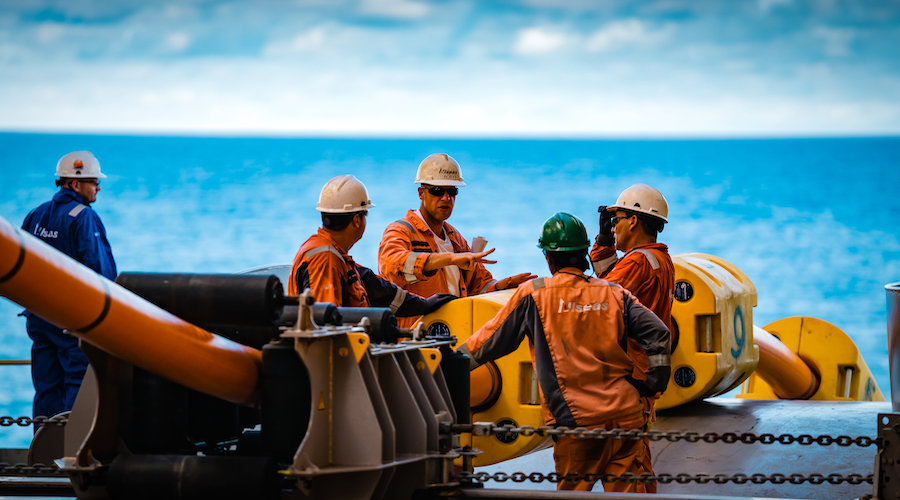

TMC has carried out exploratory mining expeditions to the Clarion-Clipperton Zone (CCZ). (Image: TMC.)

A new study led by the UK’s National Oceanography Centre (NOC) has revealed that the effects of a deep-sea mining experiment in the Pacific Ocean more than four decades ago are still apparent, though early signs of biological recovery have emerged.

A 2023 expedition to the mineral-rich Clarion Clipperton Zone (CCZ) by a team of scientists led by Britain’s National Oceanography Centre found that the seafloor, a complex ecosystem hosting hundreds of species, still bears scars of a 1979 test mining operation.

The collection of small polymetallic nodules, potato-shaped rocks rich in minerals and metals, from an eight-metre strip of the seabed caused long-term sediment changes and reduced the populations of many of the larger organisms living there, the study, published in Nature, shows.

The team of researchers also found encouraging signs of recovery, with smaller and more mobile creatures returning to the area.

Lead author and expedition leader, Professor Daniel Jones of the National Oceanography Centre said that to tackle the question of recovery from deep-sea mining, it is necessary to first look at available evidence and use old mining tests to help understand long-term impacts. 

“Forty-four years later, the mining tracks themselves look very similar to when they were first made, with a strip of seabed cleared of nodules and two large furrows in the seafloor where the machine passed,” Jones said.

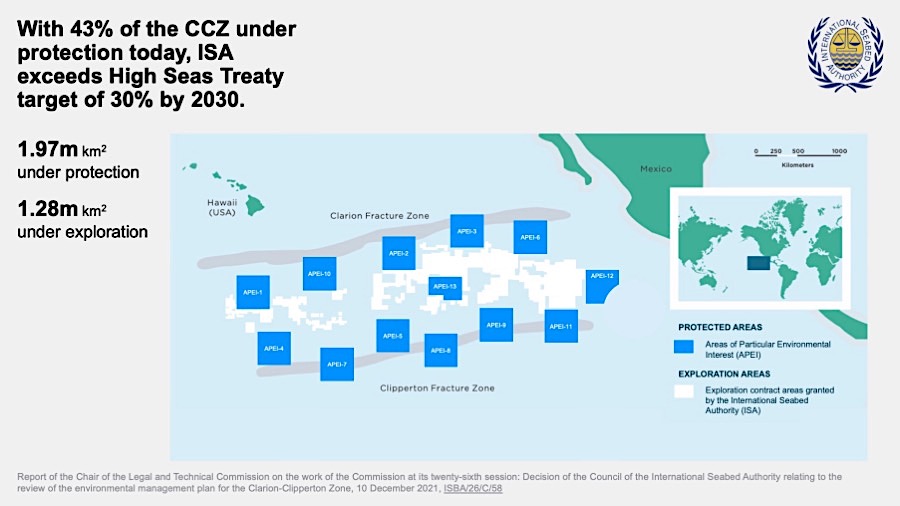
Among the first creatures to recolonize the disturbed areas were large, amoeba-like xenophyophores, commonly found throughout the CCZ — a vast area between Hawaii and Mexico. “However, large-sized animals that are fixed to the seafloor are still very rare in the tracks, showing little signs of recovery,” he said.
Courtesy of The Metals Company.

The study’s release coincides with a key meeting of the UN’s International Seabed Authority (ISA) in Kingston, Jamaica, where delegates from 36 countries are reviewing over hundreds of proposed amendments to a 256-page draft mining code that will rule commercial deep-sea mining. 

Environmental groups have called for a halt to such activities, a position supported by 32 governments and 63 major companies and financial institutions.

While few expect a final text to be completed by the time the latest round of talks ends on March 28, Canada’s The Metals Company (NASDAQ: TMC) plans to submit the first formal mining application in June.

TMC, which will hold fourth quarter and full year 2024 financial results calls after market close on Thursday, has long said that deep-sea mining has a smaller environmental footprint than terrestrial mining. 

Recovery not only possible, but likely

Chief executive officer Gerard Barron told MINING.COM that the new study supports this view. “For years, activists have pushed baseless claims that nodule-collecting robots will dig up the seafloor and devastate ecosystems. This new study proves otherwise — showing that even with outdated, far more disruptive technology, recovery is not only possible but likely within decades,” Barron said.

“Sessile megafauna such as sponges were scarce in track areas where nodules were removed, as expected, but were observed attached to nodules left behind by the 1979 collector. This suggests a potential mitigation strategy — leaving some nodules intact to support recolonization by reliant organisms,” he said.
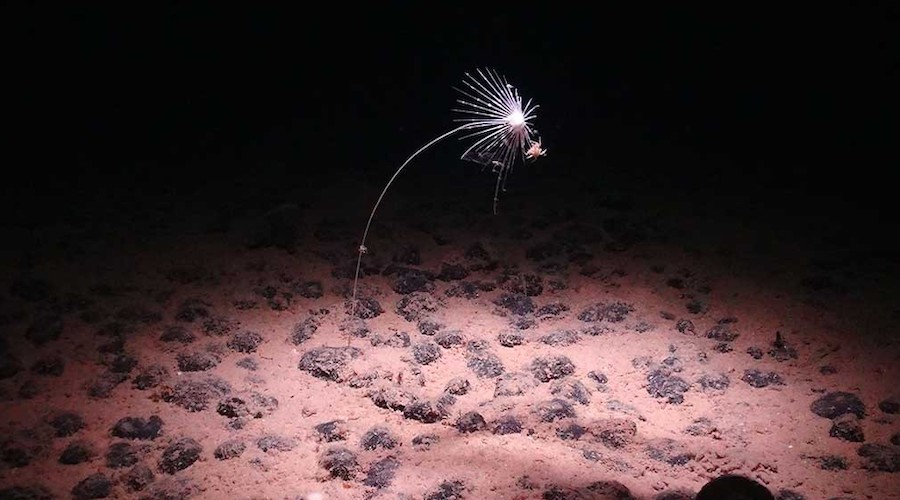
Deep-sea mining scars remains after 40 years, but life returning
It was historically thought that the deep sea was fairly lifeless, but recent studies are challenging this perception. Image: ©National Oceanography Centre and The Trustees of the Natural History Museum, with acknowledgement to the SMARTEX project.

TMC has pledged to leave at least 30% of its contract areas untouched to facilitate recovery. “Our own nodule collector will disturb just the top 3 cm of sediment, not the 80 cm as seen in the 1970s trials,” Barron noted.

Opponents warn that the long-term consequences of deep-sea mining remain uncertain, advocating for further research before large-scale extraction begins. Supporters argue that the industry is vital for meeting growing mineral demand.

According to the International Energy Agency, demand for copper and rare earth metals is expected to rise by 40%, while the need for nickel, cobalt, and lithium from clean energy technologies alone could increase by 60%, 70%, and 90%, respectively.

The Metals Company to apply for deep sea exploration license under US legislation
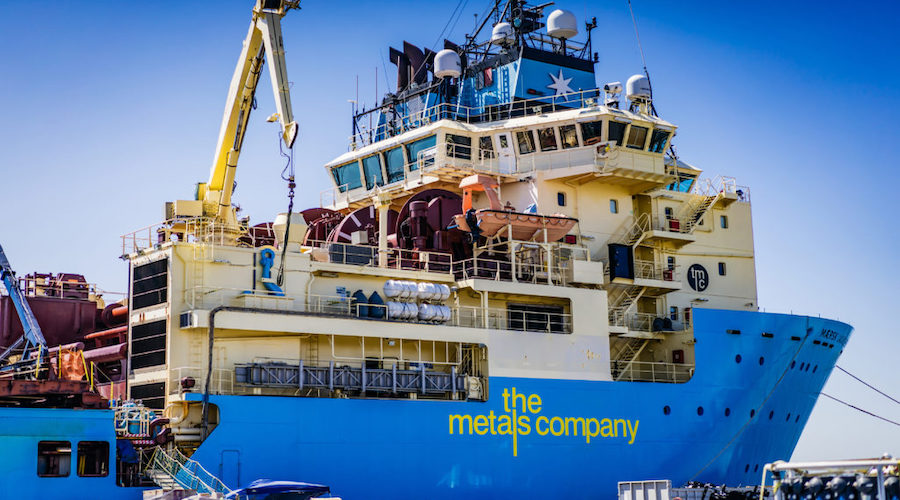
TMC hopes to begin seafloor mining by late 2025. Credit: The Metals Company

Canadian miner The Metals Company said on Thursday it had formally initiated a process under the US Department of Commerce to apply for exploration licenses and permits to extract minerals from the ocean floor.

The company plans to apply under the Deep Seabed Hard Mineral Resources Act of 1980 (DSHMRA) instead of the International Seabed Authority (ISA), stating the latter had not yet adopted regulations around deep seabed exploitation.

It also added that it has requested a pre-application consultation with National Oceanic and Atmospheric Administration (NOAA).

TMC’s bid to become the first company to gain approval to develop deep sea minerals has been controversial. Environmental groups are calling for all activities to be banned, warning that industrial operations on the ocean floor could cause irreversible biodiversity loss.

This move comes at a time when delegations from 36 countries are attending a council meeting of the UN’s ISA in Kingston, Jamaica this week to decide if mining companies should be allowed to extract metals such as copper or cobalt from the ocean floor.

Few expect a final text for the mining code to be completed by the end of the latest round of talks on March 28, with delegates also planning to discuss potential actions if a mining application is submitted before the regulations are completed.

“We believe we have sufficient knowledge to get started and prove we can manage environmental risks. What we need is a regulator with a robust regulatory regime, and who is willing to give our application a fair hearing,” said Gerard Barron, CEO of The Metals Company.

Advocacy group Greenpeace said the move was “desperate”, accusing the company of “encouraging a breach of customary international law”, by attempting to mine the international seabed under US legislation.

(By Seher Dareen and Ernest Scheyder; Editing by Vijay Kishore)


Dutch Project to Design Liquid Hydrogen Powered Bulk Carrier
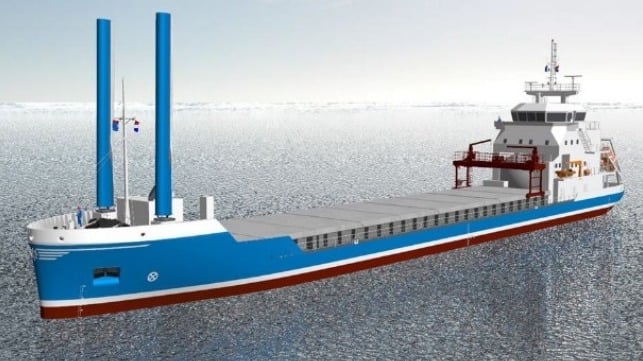
Concept for a liquid hydrogen powered bulker with added benefits from wind propulsion (H2ESTIA)

Published Mar 27, 2025 6:21 PM by The Maritime Executive

A new project launched by a consortium of Dutch companies and supported by the government is focusing on what they are calling the world’s first zero-emission general cargo ship powered by liquid hydrogen. According to the project organizers, this initiative is a key pillar of the Maritime Masterplan, setting a new standard for decarbonizing European maritime logistics.

The project which is being led by the Dutch Innovation Company (Nederlandse Innovatie Maatschappij or NIM) focuses on designing, constructing, and demonstrating a hydrogen-powered cargo vessel that will operate in the North Sea and beyond. Managed by Van Dam Shipping, the ship is designed to transport bulk goods, eliminating harmful emissions and redefining the future of sustainable shipping.

“By integrating hydrogen technology with digital innovation, we are proving that zero-emission shipping is not just a vision—it is an achievable reality,” says Sander Roosjen, CTO at NIM.

At the heart of the H2ESTIA Project is its integrated approach to hydrogen-powered propulsion. The vessel will be equipped with a newly designed cryogenic hydrogen storage and bunkering system, enabling safe handling and storage of liquid hydrogen at extremely low temperatures. A hydrogen fuel cell system together with batteries will provide primary propulsion, delivering clean power.

To further enhance energy efficiency, the ship will incorporate wind-assisted propulsion and waste heat recovery solutions, reducing hydrogen consumption. Digital twin technology will create a virtual model of the ship, allowing for real-time monitoring, operational optimization, and enhanced safety measures.

The project the organizers said is set to demonstrate technological readiness and economic viability, ensuring such vessels can be commercially deployed. It also addresses major challenges such as the certification of hydrogen systems, risk management, and crew training, paving the way for the safe integration of hydrogen technology into maritime operations.

The H2ESTIA Project is supported by a consortium of leading maritime and technology firms, TNO, MARIN, the University of Twente, Cryovat, EnginX, Encontech, classification society RINA, and the Dutch Ministry of Infrastructure and Water Management.

Thursday, March 27, 2025


Designs for CO2 Carrier and Floating Storage Using Elevated Pressure

LCO12 FLSU
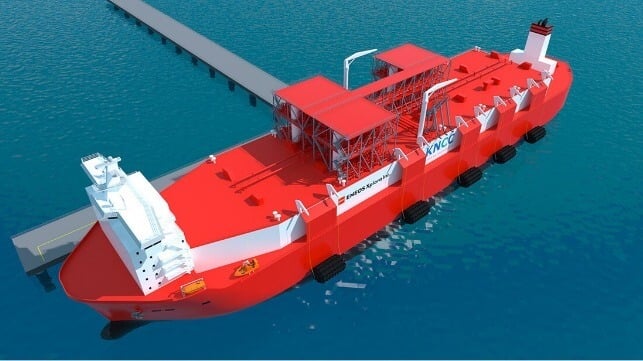
A key part of the plan is the floating storage unit that would coordinate with the Elevated Pressure vessels (NYK)

Published Mar 27, 2025 7:10 PM by The Maritime Executive


Knutsen NYK Carbon Carriers, a subsidiary of NYK and Knutsen Group reports it is moving forward in the development of its concepts for the transport and storage of carbon as part of the emerging CCUS (Carbon capture, utilization, and storage) sector. The company obtained Approval in Principle (AiP) from ClassNK for the design of liquified CO2 carriers as well as the floating liquified storage facility that would work in conjunction with the vessels.

While CCSU is expected to play a role in achieving carbon neutrality, the companies highlight that significant challenges remain to develop large-scale operations and lower the costs associated with the process. They highlight the issues that need to be addressed in developing the operations, including reducing overall costs and securing land for liquefaction and storage facilities. 

The joint venture company was launched by Knutsen and NYK in January 2022 focusing on the commercial development of a liquefied CO2 marine transportation and storage business. To address the challenges, they are focusing on using the elevated pressure (EP) method to store and transport liquefied carbon dioxide (LCO2) at ambient temperature. Coupled with the vessels is the terminal concept with the companies saying by utilizing an FLSU (Floating Liquefied Storage Unit), the cost of CO2 liquefaction and the land area required onshore in the CCUS value chain can be reduced, expanding the possibilities for realizing CCUS.

ClassNK has carried out a design review of the ship which would use LCO2-EP Cargo Tank technology developed by Knutsen to transport LCO2 in a stable state. Since there is no need to cool LCO2 to cryogenic temperatures, Knutsen says it is easy to handle and potentially reduces energy and costs during liquefaction. It reports the LCO2-EP Cargo Tank has been developed to transport LCO2 at ambient temperatures and elevated pressures (0 to 10 degC / 34 to 45 barG). The companies reporting in December 2024 that the construction studies had started for the vessel.

NYK and KNCC also worked with ENEOS Xplora in developing the FLSU concept that combines the LCO2-EP Cargo Tank technology with the Isenthalpic Expansion Cooling & Liquefaction Process. According to the companies, this process has been researched and developed in collaboration among the three companies while ClassNK issued an AiP following a review.

They call the FLSU a pioneering concept explaining that it liquefies and temporarily stores CO2 that has been collected and transported as gas in an onshore facility making it ready for further transport by LCO2 carrier. By utilizing the features of the EP method, which has the potential to reduce the energy required for liquefaction, and adopting the process, which is expected to be simpler and more compact than conventional cooling methods, it has become possible to install a liquefaction plant on a floating structure.

Development of the concepts comes as the first commercial CO2 transport and storage operations, Northern Lights a joint venture between Shell, Equinor, and TotalEnergies is set to start operations this summer. It has taken delivery of two dedicated LCO2 carriers and today, March 27, reported it has also decided to proceed with an expansion raising capacity from 1.5 million to a minimum of 5 million tonnes of CO2 per year.

Other projects are moving forward with both the UK and Denmark reporting a strong response to their offering potential storage sights. Royal Wandborg also reports it has reached a milestone in the construction of its EasyMax CO2 carrier as the hull sections are being assembled. It will be the first CO2 carrier built in Europe to serve the growing potential market.


The Maritime Hacking Village: Cyber Hacking for the Maritime Community

digits
iStock

Published Mar 27, 2025 4:50 PM by Gary C Kessler, Nina Kollars, and Duncan Woodbury


It is time to get serious about hacking  — and engaging the hacker community — as a pathway to a stronger maritime environment. All of us in the maritime industry appreciate our respective nation's reliance upon the maritime transportation system (MTS) for our very way of life. We all know the numbers: In the U.S., the MTS reportedly makes a $5.4 trillion contribution to the economy, representing about 25% of the U.S. gross domestic product and supporting 30 million jobs. Nearly 80% of global trade and nearly two-thirds of the world's total petroleum and other liquid energy supply is carried by ship. Overall, approximately 90% of any nation's imports/exports move by sea. Most global supply chains are existentially dependent upon maritime shipping.

Simultaneously, the maritime shipping industry is well aware that nations can and do use the seas as a means for statecraft. Nations rely upon the global economic supply chains, as a tool for influence, not to mention the more direct hard power projection capacity of naval forces. All these interactions have generated the normative quasi-legal landscape of the maritime domain upon which we conduct business.

From a cybersecurity perspective, the MTS is a target-rich environment, filled with an ever-increasing number of poorly understood — and, often, unanticipated — attack surfaces. The ongoing digital transformation driving autonomous, smart, and sustainable shipping, and further increasing the efficiency of the MTS, provides myriad cyber attack vectors. The connection of ships to the Internet via satellite communication, ship-to-shore communication required by fleet operation centers, satellite navigation and radio-based situational awareness systems (i.e., GPS and AIS), shipboard communications, and maritime cloud services are particular targets and points of entry to maritime systems on- and offshore.

Enter DEF CON and the Maritime Hacking Village (MHV)

The maiden voyage of the Maritime Hacking Village (https://maritimehackingvillage.com/) is this August at DEF CON 33, with a goal to deliver the first and only immersive maritime hacking experience for attendees to learn what it takes to exploit and defend real-world maritime systems. DEF CON (https://defcon.org/) is the world's premier professional hacker event. Hosted annually in Las Vegas, DEF CON draws audiences and participants that include computer security practitioners, educators, amateur and professional (mostly white hat) hackers, journalists, national and international policy makers, lawyers, federal employees and military personnel, students, researchers, and others with an interest in anything that can be "hacked" — from hardware, software, and communication systems to door locks, card readers, and security policy.

Our mission is simple. MHV is creating a space for stakeholders to come together and navigate the changing digital vulnerability tides. We provide a space that showcases the maritime sector's technological, geopolitical, and adversarial landscapes. Upon this landscape we will explore the systemic cybersecurity vulnerabilities in the systems which underpin global maritime defense and trade.

It is not enough simply to wait for vulnerabilities to emerge from attack. We need to find them and address them ourselves. Together, MHV hacks to facilitate the discovery and sharing of knowledge integral to the development of effective maritime cybersecurity policy, industry standards and regulations, vulnerability information sharing, cyber threat intelligence, and most importantly – a capable and trusted workforce and community-of-interest.

Despite the importance of the seas for commercial, recreational, and military use, no single stakeholder controls the implementation of policies and regulations. Stakeholders unanimously agree that from machines to systems to governance, the maritime domain is fundamentally insecure. Still, seemingly insurmountable access barriers are preventing the security community, and anyone else, from doing anything to help.

The purpose of Maritime Hacking Village is to eliminate these barriers – and to provide everyone with the access and resources necessary to engage in maritime vulnerability research and cybersecurity innovation. MHV is a safe, shared space where the security community (elite hackers, trusted providers, and young talent alike) can develop and demonstrate their competence in attacking and defending real maritime systems – and where maritime industry stakeholders can engage with this community on neutral ground to grow their arsenals of knowledge, tools, trusted and capable providers, and fresh talent. We at MHV believe that this work together will create rising tides of awareness, information sharing, and innovation that will lift all ships and allow us to gradually secure the maritime sector.

MHV's demo floor will host a variety of advanced commercial maritime systems available for the conference attendees to try their hand at hacking. MHV will also host various learning events, including a multi-vendor capture-the-flag (CTF) contest that involves hacking challenges related to maritime bridge testbeds, real maritime radio (AIS, SATCOM) hacking, port systems hacking, social engineering and transportation badge counterfeiting, maritime grand theft auto, "swarm AI"-enabled unmanned watercraft, and a premier Open Source Intelligence (OSINT) CTF contest . Speakers and panels will discuss a broad set of topics about maritime policy, cybersecurity regulation (e.g., the new US Coast Guard cyber rules), maritime cyber research, new product development, maritime autonomous systems, next-gen maritime architectures, weaponizing OSINT, and much more. MHV will also have a policy suite where key invited policy makers will have their own space to meet and delve deeper into regulation and policy coordination that draws together the technical, systemic and governance elements necessary to chart a new course for the maritime industry – one that will ultimately make all of our maritime systems more secure.

MHV planning has been ongoing for many months and we are still seeking sponsors, equipment and challenge providers, maritime operators, and speakers. We invite the maritime community to actively engage with us in the Maritime Hacking Village. We look forward to seeing you in Las Vegas.

Gary C. Kessler is President of Gary Kessler Associates, a principal consultant at Fathom5, and a member of the advisory board of Cydome. Nina Kollars is a professor at the U.S. Naval War College. Duncan Woodbury is President and CEO of Liberas. All are the co-founders and co-directors of the Maritime Hacking Village.

The opinions expressed herein are the author's and not necessarily those of The Maritime Executive.


Report: Panama Poised to Purge Sanctioned Tankers from Registry

oil tanker
Bloomberg reports Panama is moving to remove a further 128 sanctioned ships from its registry (file photo)

Published Mar 27, 2025 5:53 PM by The Maritime Executive


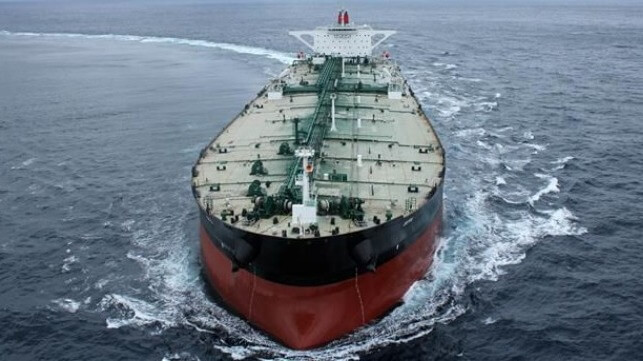
After an extended pressure campaign from the United States and activist groups such as UANI (United Against Nuclear Iran) the Panama Maritime Authority is poised to purge its registry of sanctioned tankers. Bloomberg is citing comments by the General Director of Merchant Maine for PMA, Ramon Franco made during a conference in Singapore.

According to Bloomberg, Panama is poised to remove 128 ships from its registry. They are ships sanctioned by the U.S. or its allies. The new Trump administration has been moving to expand the sanctions against tankers in the Iranian trade following a sweeping move in the last days of the Biden administration targeting the shadow tanker fleet moving Russian oil and gas.

Bloomberg highlights the move by Panama was made possible by changes to the administration process and regulations making it easier to expel violators from Panama’s ship registry. The report says at least 70 tankers have already been removed but the administrators pledged to become more aggressive in their actions against sanctioned vessels and other violators.

Separately, Bloomberg is also reporting the Trump “maximum pressure” campaign appears to be having an effect on tanker movements and deliveries. The news outlet calculates that 11 tankers are currently idle or slow steaming in the area around Malaysia and Singapore. Bloomberg reports the tankers have 17 million barrels of oil loaded. Further, it says more than 20 tankers are anchored idle near Iran’s Kharg Island terminal.

Bloomberg’s report asserts that more than two-thirds of the tankers that handled Iranian crude in 2024 had been sanctioned as of late February. Analysts at TankerTracker.com taking the wider view however said early in March that the U.S. has “only blacklisted 234 (or 45 percent) of the 522 tankers involved in the Iran sanctions oil trade” as of the beginning of this month.

UANI has long been critical of Panama with the NGO asserting that Panama has 18 percent (96 vessels) of the 510 the group has listed in its “Ghost Armada List” tracking vessels in the Iranian oil trade. The group notes its list has grown from just 70 vessels when it started the listing in November 2020. They currently list nine tankers registered in Panama as having been sanctioned.

Panamanian officials have highlighted their efforts in recent years to clear the registry after a change in administration. As the largest ship registry by number of vessels, Panama has had a large number but a small percentage of violators in the registry. 

Despite the ongoing pressure effort, UANI reports Iran continues to ship large amounts of oil. The group cites data saying Iran shipped 1.7 million barrels in February up from 1.3 million the month before. China according to the data is the largest customer receiving nearly all the oil Iran ships.


U.S. Files Suit Seeking $47M from Sale of Iranian Oil Hidden in Croatia

oil terminal with ranker
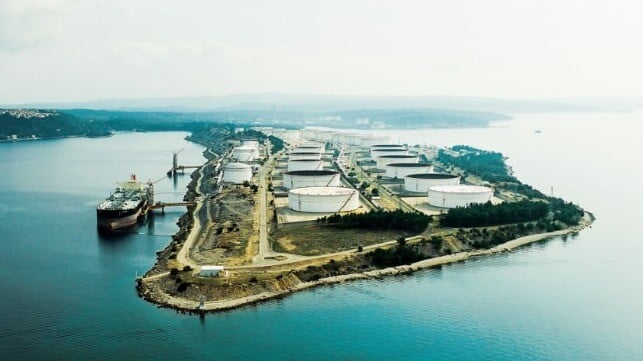
Oil terminal where the U.S. alleges the shipment was falsely identified as being Malaysian (Janaf file photo)

Published Mar 27, 2025 1:54 PM by The Maritime Executive


The United States is continuing its “maximum pressure” against the Iranian oil industry reporting it has filed a new civil forfeiture in U.S. District Court in Washington, D.C. to seize $47 million from the proceeds of oil sales. It is part of a long-running campaign by the U.S. targeting Triliance Petrochemical Co., a Hong Kong-based broker with branches in Iran, the United Arab Emirates, China, and Germany, that the U.S. says is a well-known Iranian front company supporting the Iranian regime’s petrochemical industry.

Triliance was first sanctioned by the United States in January 2020 on charges that it helps to finance Iran’s Islamic Revolutionary Guard Corps-Qods Force (IRGC-QF) and its terrorist proxies. The U.S. said it had traced transactions in 2019 shipping oil to the UAE and China and transferring millions of dollars to Iran from the sale of oil which Trilance worked to conceal the Iranian origin of these products.  

Today’s suit details an elaborate scheme between 2022 and 2024 to facilitate the shipment, storage, and sale of Iranian petroleum products. U.S. prosecutors contend Iran was working to increase the marketability of Iranian oil in Europe and create future demand from European buyers.

U.S. Attorney Edward Martin said the suit was to show Iran that avoiding sanctions “is not as easy as playing a shell game with tankers.” The filing alleges in January 2022 Iran loaded approximately one million barrels of oil to a tanker that would later be sanctioned by the U.S.

After leaving Iran, the U.S. traced the oil including through three ship-to-ship transfers before it was offloaded for storage in Croatia. The U.S. alleges companies working with Triliance falsified documents and manipulated tanker AIS signals to conceal the origins and claim the oil came from Malaysia. Further, it is alleged that the facilitators paid the storage fees in U.S. dollars through U.S. financial institutions that would have refused the transactions had they known they were associated with Iranian oil. The oil was ultimately sold with the U.S. reporting proceeds of $47 million which the U.S. is moving to seize.

It is not the first time the U.S. has targeted Trilance and the proceeds of sales. In November 2024, the U.S. District Court in Washington, D.C., ordered the forfeiture of nearly $12 million connected with Triliance. Government lawyers highlighted a series of transactions and money transfers in 2020 linked to Triliance. In 2022, the U.S. had also gone after oil producers that it said were working with Triliance.


New U.S. Strikes Reported in Houthi-Controlled Sanaa

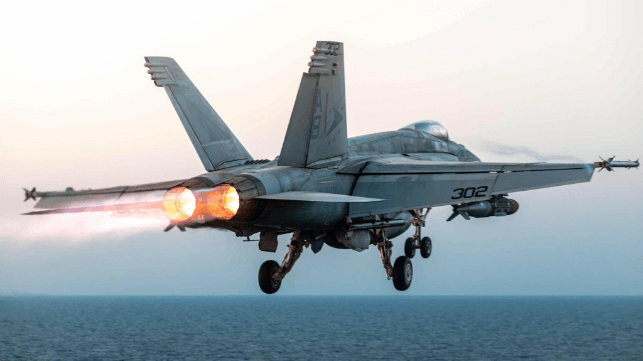
An F/A-18 fighter takes off from the deck of USS Harry S. Truman carrying a bomb loadout, March 26 (USN)
An F/A-18 fighter takes off from the deck of USS Harry S. Truman in the Red Sea March 26 (USN)

Published Mar 27, 2025 9:36 PM by The Maritime Executive


Airstrikes have been reported for another night in Sanaa, Yemen, as U.S. forces continue to hit the Houthi rebel militia. Earlier in the day, the group launched two more ballistic missiles at targets in Israel, demonstrating that it retains the capacity for long-range attacks. 

Local reports indicate that the latest American airstrikes hit the airport in Sanaa, as well as the Houthi military headquarters in the city center. 

The strikes are more sustained than the campaign carried out by the previous administration last year, and more intense as well, according to a review by the AP. Satellite imaging and radio traffic also reveal a buildup of bomber forces at Diego Garcia, the strategic base that the U.S. leases from Britain in the Indian Ocean. The rare deployment of seven B-2 stealth bombers at this remote airfield - a third of the entire inventory - has raised speculation about possible escalation against Houthi targets, or even against their sponsors in Iran. The B-2 has many capabilities, including one that could be particularly relevant: it is the only U.S. aircraft certified to carry the 30,000-pound Massive Ordnance Pentetrator (MOP, or GBU-57/B). This is the largest U.S. bunker-buster bomb, and would provide more capability for hitting hardened tunnels and command posts. 

If the Houthis are hit hard by U.S. strikes, it would not be the first time: a U.S.-supplied force tried to defeat them on the ground for the better part of a decade, but despite billions spent, the Houthis expanded their reach and dug in. 

"The Houthi leadership has been taken out in history in the past, and they are resilient," Vice Adm. Kevin Donegan (USN, ret'd) told AP. "They came back and they grew stronger. So this isn’t something that is a one-and-done."


Car Carriers' Outlook Dims With New U.S. Auto Tariffs

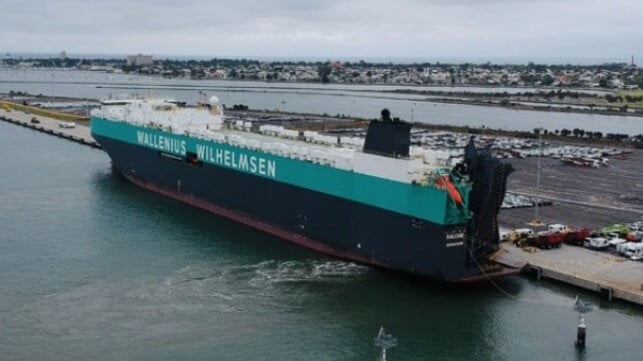
File image courtesy Wallenius Wilhelmsen

Published Mar 27, 2025 9:22 PM by The Maritime Executive


U.S. auto tariffs are taking a toll on the outlook for many foreign automakers, but are also having an effect on the companies that carry their goods to market - the pure car and truck carrier (PCTC) ro/ro operators. 

Share prices for the publicly-traded car carrier owners have taken a dive since the White House announced new 25 percent tariffs on Wednesday. Hoegh has fallen 10 percent since the start of the week; K Line is down by four percent; Wallenius Wilhelmsen is down nine percent; and Hyundai Glovis is down by nearly 10 percent. These firms have had solid financial success over the past few years thanks to booming exports out of China, but a contraction in the U.S. import market could weigh heavily on their prospects.

Trade data shows that automakers appear to have anticipated new tariffs and frontloaded their shipments in the first quarter of 2025. According to ship tracking firm Esgian, five extra ro-ro shipments departed Europe for the U.S. in February, and eight extra out of East Asia in January (compared to the same periods last year). 

The tariff threat would primarily affect seaborne trade lanes out of South Korea, Japan and Europe, the primary overseas sources of U.S. autos. China sells relatively few complete cars into the U.S. market, capturing a market share of less than two percent, and will be less affected by U.S. auto tariffs.

But foreign PCTC owners still have a tough road ahead in the Chinese market. The world's leading car exporter is building its own national car-carrier fleet to compete with longtime industry incumbents. According to Li Gang, Communist Party committee chair for China Citic Financial Leasing, the "national vehicles and national transport" strategy will reduce shipping costs and ensure capacity for Chinese automakers. 


Study: To Keep Seafarers in the Industry, Stop Shipboard Harassment

Coast Guard
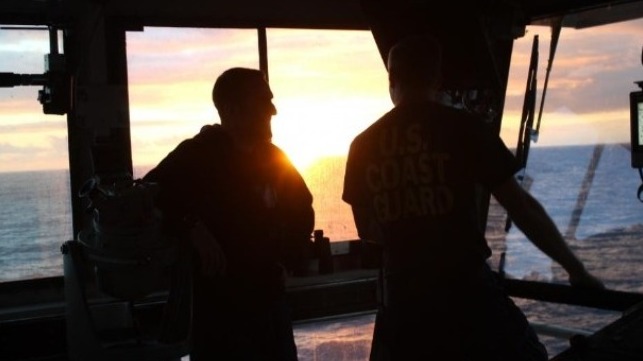
USCG file image

Published Mar 27, 2025 7:39 PM by The Maritime Executive


The shipping industry faces its worst shortage  of crewmembers in nearly two decades, and could be 90,000 people short by next year. The Global Maritime Forum's "All Aboard" consortium has conducted extensive research on methods to improve life at sea and boost retention, and it has just released a report on real-world changes that could make the difference. 

Seafaring can be a hard life, and there have always been aspects that shoreside workers would find challenging, like fatigue, months-long work schedules, and (on some vessels) abusive work environments. Shipping has always had a certain amount of hazing and harassment under way, out of sight of the home office; the All Aboard Alliance found that this cultural phenomenon is a modern-day retention issue. 25 percent of study participants had experienced harassment and bullying in their careers, rising to more than 50 percent among female seafarers. 

Working with 12 shipowners, the alliance came up with guidance to improve the crew experience, especially in abuse reduction. A positive work environment starts with setting clear policies and guidelines, then requires "zero-tolerance" enforcement for unacceptable behavior, the alliance advises.  

The coalition also recommends clear guidelines for training and performance evaluations; avoiding discriminatory hiring practices; providing female-appropriate PPE and facilities on board; setting up a family leave policy; improving shore leave, a common point of friction since the COVID era; building onboard community; and providing timely relief at the end of a seafarer's contract, without involuntary extensions. The alliance advises a target of offboarding at least 85 percent of the crew on schedule at contract end, allowing them predictable time off for their personal lives. 

"These guidelines serve as a roadmap for shipping companies striving to improve employee well-being, and will also help seafarers and other stakeholders identify companies that take sustainability and social responsibility seriously. They strike a strong balance between aspiration and realism, and we’re confident that they will improve outcomes for all workers in the maritime industry, ensuring that success is accessible to everyone — regardless of gender, race, sexuality, or background," said Mikael Skov, Chief Executive Officer at Hafnia and All Aboard Alliance Co-chair.

These inclusive, diversity-friendly HR policies may not be easy everywhere. Some overseas companies openly discriminate against female seafarers in hiring, or only hire personnel of certain nationalities, according to the study - and even for well-resourced Western companies, it can be hard to uphold "zero-tolerance" deterrence policies. Maersk, the number-two ocean carrier, has had to rehire at least one officer who was previously dismissed for sexual harassment, and has noted that sexual offenders can return to work in its U.S. market. It will not provide numbers on the extent of any onboard abuse in its fleet, according to Danish business paper Berlingske.  


Greenpeace Blocks LNG Gas Carriers off Belgium in Fossil Gas Protest

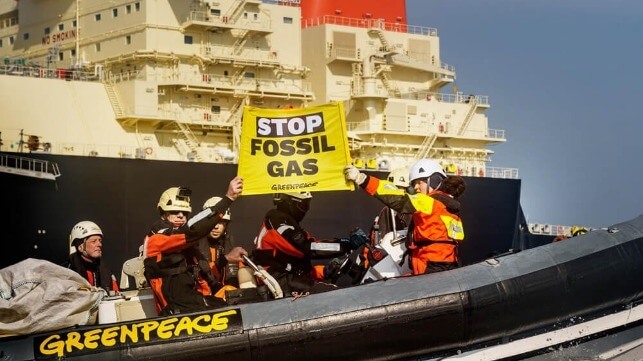
activists blocking gas tanker
Activists demonstrating to delay the arriving gas carriers (© Eric De Mildt / courtesy of Greenpeace)

Published Mar 27, 2025 4:49 PM by The Maritime Executive


Activists from the group Greenpeace staged two demonstrations today, March 27, temporarily blocking gas carriers arriving from the U.S. and Russia. It was done as part of a campaign by the well-known group against fossil fuels and the EU’s lack of progress on ending Russian and other gas imports.

The campaigners are urging Europe to become energy independent by transitioning to renewables. They said ending fossil gas imports is crucial for safety and security.

The group in its inflatable boats and supported by its mothership Arctic Sunrise first targeted the Marshall Islands-registered gas carrier Marvel Swallow. The 93,510 dwt vessel was recently placed in service by Japan’s Mitsui O.S.K. Lines. It was coming from Louisiana in the United States with a shipment of gas bound for Zeebrugge, Belgium.

The group circled and ran alongside the gas carrier displaying banners for the photo ops. Among the banners they were displaying were ones reading “Their gas, your cash.” The group reports it briefly interrupted the voyage of the gas carrier but it later docked in Belgium.

“Autocrats like Putin fund their wars with gas revenues, while political bullies like Trump use their dominance as gas suppliers to pressure European countries economically and politically. Meanwhile, families and communities struggle with soaring energy bills and extreme weather fueled by fossil gas,” said Joeri Thijs, spokesperson for Greenpeace Belgium speaking from aboard Arctic Sunrise. “This dependence leaves us all vulnerable. Energy sovereignty through renewables is no longer just an environmental necessity, it is a matter of security.”

Greenpeace cited data from IEEFA (Institute for Energy Economics and Financial Analysis saying despite promises from EU politicians gas imports from Russia grew 18 percent in 2024 with the EU spending €21.9 billion on gas. It reports 45 percent of Europe’s gas supply is coming from the U.S. making America Europe’s largest supplier.

Hours later the group returned to the waterways targeting the Cyprus-flagged Fedor Litke. The 96,839 dwt gas carrier was inbound for Sabetta, Russia. It is operated by Dynagas of Greece.

The second protest was to call attention to the new EU sanctions implemented on March 26 that aim to restrict Russian gas imports. Greenpeace highlights that one of the goals is to stop carriers such as the Fedor Litke coming from Siberia and transferring gas at either Zeebrugge or Montoir-de-Bretagne, France as part of a transshipment program to deliver gas across Europe. 

The group which is well known for these activities asserts the EU must stop the persistent delays in phasing out Russian fossil fuels imports. They note EU officials under pressure from Donald Trump are considering increasing US LNG imports.

With Europe’s LNG imports declining and gas demand down 20 percent since 2021, Greenpeace says the EU must accelerate its shift away from gas imports. Greenpeace is urging a full phase-out of fossil gas by 2035 and a commitment to clean, independent energy.