Tuesday, April 08, 2025


Canada

Trump’s Trade War and Canadian Workers


Sunday 6 April 2025, by Socialist Project


The 25% tariffs imposed on exports from Canada and Mexico by the US administration of Donald Trump effective March 4 (with an exception of 10% tariffs for Canadian oil and gas and potash) constitutes an aggressive attack on the livelihoods of Canadian working people and a threat to the survival of key industries in Canada. Trump postponed some of the auto and other tariffs in sectors covered by the US-Mexico-Canada (USMCA) trade treaty between the three countries (about 40% of Canadian exports to the US), with auto tariffs planned for April 2nd but has threatened to continue with others. Further tariffs on aluminum and steel (over the 25% level) were threatened to be as high as 50%, with Trump also threatening to “shut down” the Canadian auto industry.


Trump has gone back and forth raising tariff levels and expanding their scope, keeping Canadian workers off guard and sending Canadian governments running back and forth, trying to keep up.

The Canadian federal government responded by counter-tariffs of $30-billion on imports from the US on the same day and promptly implemented a border plan to further police the US-Canada border, notably to limit the almost non-existent trade in fentanyl from Canada (especially when compared to the smuggling of drugs and guns into Canada from the US), and the similarly small volume of ‘illegal’ cross-border immigration to the US. The Trump Administration is coldly leveraging the tariff to gain other concessions from the Canadian state – access to rare earths in Canada, militarization of the Arctic and coastal waters in a further barricading of Fortress North America, increased Canadian military spending, and re-opening of long-standing cross-border water diversion projects.
Brutal Attack on Tens of Thousands of Workers

The tariffs are an unexpected and brutal attack on the tens of thousands of workers in sectors such as auto, steel, aluminum, and natural resources in Canada. The tariffs particularly hit skilled workers in some of the most advanced sectors of the economy but will also quickly strike at sections of the working class who are most insecure and vulnerable to economic downturns. Several estimates suggest Trump’s ‘beggar-thy-neighbour’ tariff policies might affect millions of workers and their communities, as key manufacturing sectors are threatened with a loss of export markets in auto and steel in Ontario, aluminum workers in Quebec, and agriculture and resource exports in Western and Atlantic Canada.

The threat and impact of the tariff war from the US is immediate. It can easily escalate into punishing rounds of retaliation (with the political advantage overwhelmingly on the side of the dominant power), with workers on both sides of the border suffering the consequences of economic dislocations. The challenge is deeper and bigger for Canada and Canadian workers. It is rooted in the way Canadian capitalism and the state have evolved, with the strategic embrace (or ‘leap of faith’ as it once was termed) of deep integration with the US through the series of Free Trade Agreements (FTAs) starting in 1989 that promised ‘secure access’ to the US market and economic growth and prosperity freed from fears of American protectionism. The North American free trade agreements (FTAs, extended to include Mexico in 1994) delivered none of these.

The FTAs were coupled with the other neoliberal attacks on the rights of working people; privatization and deregulation of public provisions and institutions including education, healthcare, housing; changes to the state that facilitate profit and business competitiveness; and intensification of the working class’s dependence on their employers.

Canadian capitalists (unified but for a few dissidents) drove and sold free trade, in the face of a massive public outcry, from a broad coalition that was led by unions and social movement activists. Even though a majority of the voters voted in opposition to the idea of free trade with the US in the 1988 federal election, the structure of Canada’s first past the post voting system gave a majority to the Brian Mulroney-led Conservatives, who negotiated the first US-Canada FTA.

Free trade is integral to the policy regime that we have been living with for four decades: export dependency, austerity, cuts to key social programs, attacks on unions and workers, the rights of investors and capital to move wherever it wishes, environmental regulation via markets, and other measures liberalizing capitalist markets to deepen Canadian integration into the world market under the leadership of the US Empire. While other capitalist centres are also woven into the matrix of the US empire, Canada is a capitalist country that undertakes its own imperialist agendas, notably in the extractive sectors where Canadian capital builds on the history of exploitation of First Nations, and in the international activities of the Canadian banks. What is unique about the integration of the Canadian state and capital is the level of integration and dependence on the US. Canada is more deeply integrated into American capitalist markets, supply chains, economic policy, and regulatory frameworks, and is the US empire’s most faithful ally in military and foreign policy.
Workers’ rights require democratic sovereignty

The struggles of Canadian working people – in English Canada, Quebec, and First Nations – to challenge austerity and fight for a socially just and environmentally responsible society requires the power to make political and economic decisions, which is now limited by the integration and dependence of Canadian capital on the US empire. The vulnerability of Canadian workers to the whims of Trump demonstrates this quite clearly. But it is not a matter of ‘stages’ of development leading to the creation of an independent national capitalist class. We have to fight to ‘delink’ from the US, in the sense of building the international and political autonomy needed to take alternate development and democratic decisions, all the while building working-class identity, understanding, and power to organize and fight.

The different components of the Canadian capitalist class have no desire to break with this dependence and integration, and less interest to challenge neoliberalism. On the contrary, most of the business class in this country long for some form of the “status quo ante,” to break down the barriers to integration with the US that Trump has erected. This is little more than a doubling-down on the ‘leap of faith’ in securing access to US markets free of US protectionism and political and military demands on Canada. Other sections of the political and economic elite have proposed shifting to trade and export dependence on a wider group of countries, partly enabled for adopting deeper attacks on working-class incomes and social protections in the name of Canadian competitiveness.

Some progressive activists in Canada begin from a concern with nationalism, fearing that challenges to integration with the US empire will inevitably lead to or implies an alliance with and subservience to business interests. But working to build a movement to democratically challenge and remove key obstacles to making decisions about the Canadian economy and political system can hardly be called an alliance with capital. Indeed, any movement to directly challenge Canadian integration with the US is anathema to all sections of capital, whether in formal Canadian legal ownership or foreign controlled.

It is also problematic to see struggles to reform and (and ultimately transform) the state, to limit our integration and dependency, as somehow restricting our abilities to fight for key working-class demands that also require reforms of the state. Rather than being opposed, these are fights to be waged on both fronts. Demanding the rights of Canadian workers and popular movements to shape decisions about Canada’s political direction isn’t an endorsement of our dependence on business, it is an initial anti-capitalist demand for economic democracy and controls over capital in workplaces and communities, as is winning reforms for the expansion and de-commodification of social provisioning to lessen dependence on the market.
A different vision, new possibilities

We have a different vision for development, democracy, and the role of the working classes than both US and Canadian capitalists and political elites. To pursue such an agenda in Canada, the current relationship with the US is a barrier that goes beyond the authoritarian bullying of the Trump administration. To overcome that barrier will require the widest restructuring of trade, development, and environmental priorities, addressing the needs of the working class and incorporating the views and ambitions of Quebec and First Nations.

This will require developing democratic planning and coordination capacities, the structural changes that will make it possible, and social struggles with the Canadian economic and political elites over the values and goals we are fighting for. The struggle to transform society and the role of the working class is also to fight to develop our collective capacity to make collective decisions. We call for the following measures:Canada must respond in kind to all tariff extortion from Trump and break the ‘beggar-thy-neighbour’ trade war the US has started, acknowledging that such a war carries enormous costs for Canadian, American, and Mexican workers and their communities.Investment is essential to protect workers and communities threatened and affected by the tariff war as is support for workers resisting tariffs and threats to their livelihoods and sectors. Unemployment insurance and other income support programs need to be expanded immediately to protect vulnerable workers.Workers in threatened industries have critical skills, and communities can ill afford to lose them. Workplaces and plants are key resources and need to kept open, producing for environmentally responsible uses, shaped by workers and communities, and publicly owned.Disengagement from the US military efforts to expand into the Arctic is essential, as is withdrawal from any increased military spending commitments to NATO.Canada must move away from its dependence on exports, especially exports of natural resources, and move toward a more inward-oriented economy, compatible with the requirements of ecologically-responsible production. Natural resource development must address climate change reduction as well as respect and advance the rights and needs of the indigenous peoples of Canada.Efforts to rebuild the Canadian economy need be anchored in a strategy based on public ownership, and place priority on meeting human needs, social development, quality employment, and greenhouse gas reductions.Canada must advocate, fight and organize for a working-class-based economy that calls for worker and union rights, housing, education, healthcare, and the democratic power to shape a different democracy and economy than we have now.Canada must reject the unequal and neo-colonial relationships with Mexico and the other countries in Latin America and the Caribbean and develop mutually beneficial trade and economic relations with the global south, recognizing Canada’s responsibilities to aid them in addressing climate change and development.

As socialists, we look toward building an alternative to capitalist society that has the power to make political and economic decisions, in a democratic society, organized and run by working-class people. The current crisis provides an opening to raise these questions. Progressive Canadians; workers concerned about their jobs, the future of the economy, environment and their children and families, and others worried about their jobs; and communities in general need to engage in discussions about how to move forward at this dangerous time and recover our social ambitions for a peaceful, egalitarian, ecologically-responsible politics of potentials and possibilities.

Source The Bullet March 14 2025


Attached documentstrump-s-trade-war-and-canadian-workers_a8930.pdf (PDF - 918.8 KiB)
Extraction PDF [->article8930]


Socialist Project

https://socialistproject.ca/about/

International Viewpoint is published under the responsibility of the Bureau of the Fourth International. Signed articles do not necessarily reflect editorial policy. Articles can be reprinted with acknowledgement, and a live link if possible.

 

Mass struggles, organised labour and the left in 21st century Nigeria

Published 

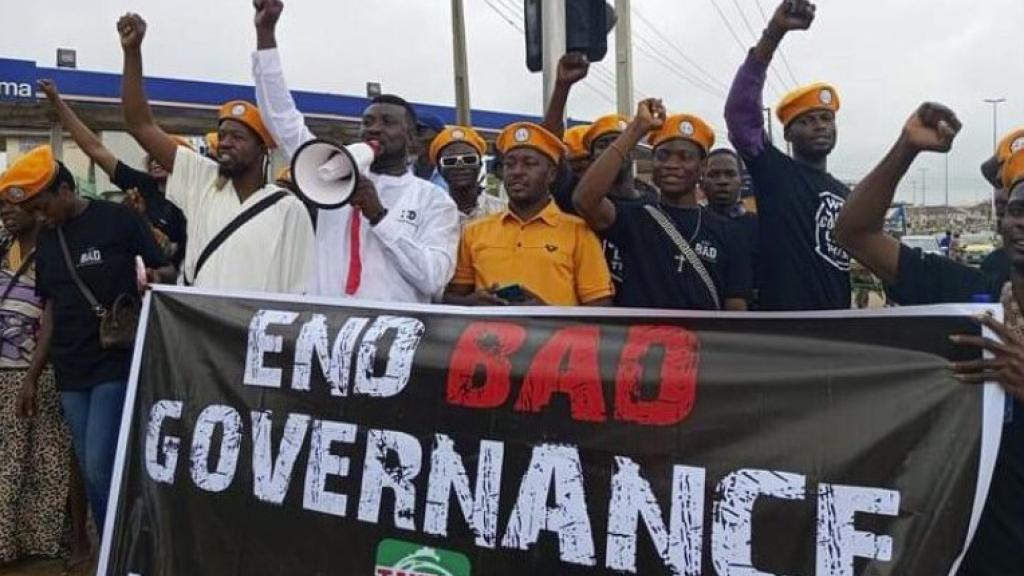
End Bad Governance Nigeria protest

First published at Socialist Workers League (Nigeria).

Working-class people and youths have waged struggles of great significance over the last twenty-five years. These have been mass resistance that transformed into counter-offensives of the exploited classes and oppressed people.

They all started spontaneously, as opposition to the government’s anti-poor people policies and their impact on us, or against the repressive machinery of the state, particularly the police. But, like all uprisings, revolts and revolutions, organisation was involved throughout the life of these moments of mass struggles, in one way or the other; igniting them, helping shape how they grew, ended and the impact they had on the future growth and popularisation of radical ideas and independent organisation within the working people and fundamental change seeking youths. There will be more outbursts of mass struggle in the period we are entering. The Nigerian state is keen on pushing through a series of neoliberal reforms that will make living, which is already terrible for the people, worse. This will trigger what would be even greater mass struggles than we have witnessed thus far.

As working-class activists and revolutionary youths, it is very important that we understand the underlying dynamics of these recent mass struggles.

This is for us to draw lessons from them so that we can be better prepared and more strategically oriented and thus able to deepen incoming mass storms of revolts towards revolution. The three milestones of mass struggle in 21st century Nigeria which we shall look at in the following sections have been the #OccupyNigeria January Uprising in 2012, #EndSARS Rebellion in 2020 and the waves of #EndBadGovernance/#EndHunger protests in 2024.

#OccupyNigeria: the January Uprising

In June 2000, President Olusegun Obasanjo’s government increased fuel pump price from N26 per litre to N40. This was part of the neoliberal agenda that the civilian regime, which took over power from the military in 1999, pursued with a passion. The Nigeria Labour Congress (NLC) declared a strike action. They called it off after winning a partial victory. This strike started what was to become a general pattern as the government increased the price of petroleum products virtually every year.

The pattern was that organised labour’s leadership would reach out to labour’s civil society allies — basically left groups and coalitions, particularly the United Action for Democracy (UAD) — to organise mass protests jointly with the strike. The trade unions reach a deal with the government without carrying its civil society partners along. The trade unions call off the strike at its peak after reaching the deal. Civil society activists feel short-changed, and the mass of working-class people are disappointed, often labelling the labour leadership sellouts.

The strikes and mass protests got bigger in 2003 and 2004. The federal government attacked NLC, saying it was acting like an alternative government. This underscored the power of the working class which organised labour brought to bear. When the 2004 general strike and mass protests were again cancelled by NLC and the Trade Union Congress (TUC), the leftwing civil society allies of labour insisted on a formal coalition with the trade unions to avoid such unilateral cancellation from happening again. That is how the Labour and Civil Society Coalition (LASCO) came into being. The following year, a Joint Action Forum of the left organisations was constituted as the civil society bloc of the coalition. LASCO then tentatively became a tripod comprising NLC, TUC and JAF.

The Obasanjo government raised the price of fuel once more in its twilight days. This was successfully resisted. The popular classes won a full reversal for the first and only time, from the incoming Umar Musa Yar’Adua government. But, as it turned out, the struggles of the 2000s were rehearsals for what was to come as a gale of waves of crises and revolts swept across the world in the wake of the global financial crisis of the late 2000s.

The revolutions in Egypt and Tunisia, Occupy Wall Street, the Squares movement, and the entire heady moment of rebellion seeping through every pore of the world inspired insurrection, in the combustible situation of a fuel pump price hike, too many, in Nigeria..

The streets erupted in immediate protest over President Goodluck Jonathan’s 2012 New Year’s Day 120% fuel price increase. People trooped out in their thousands across all parts of the country to demand an immediate reversal of the price hike.

Under pressure from below by rank-and-file workers which was expressed at the emergency National Executive Council meeting of the Nigeria Labour Congress (NLC), both the NLC and the Trade Union Congress (TUC) began an indefinite strike action on 9 January. It lasted eight days, deepening and generalising the mass protests.

The shutdown of economic activity inflicted billions of dollars in damage on the capitalist class. The union federations said they called off the strike “in order to save lives and in the interest of national survival”.

The civil society left under the platforms of JAF and UAD, and more moderate civil society formations like those from the Save Nigeria Group, called for the continuation of demonstrations after the strike was called off. They did not have a base to push this through.

For the reformist civil society groups, and members of the opposition parties that joined the mass protests, it became a launchpad for the formation of the All Progressives Congress (APC) two years later, and its victory in the 2015 general elections.

Some sections of the left also concluded that the key lesson they learnt from the January Uprising was to establish semblances of parties that the working masses would simply flock into. The short-lived Democratic Party for Socialist Reconstruction (DPSR) and Socialist Party of Nigeria (SPN) were two of such efforts, which never had any root in the working-class or radical youths.

#EndSARS: Rebellion against police brutality

National and international rights bodies have documented police brutality in Nigeria as being as vile as it gets. Resistance to it also has a long history. The Special Anti-Robbery Squad, being the most deadly of the Nigeria Police Force’s units, became a metaphor for police brutality. Online campaigns using #EndSARS began in 2016/2017, sparking intermittent protests. the unit’s slaying of young Nigerians in Lagos and some other cities from 2017 to 2019.

The Take It Back (TIB) movement and the African Action Congress (AAC), its aligned revolutionary party, intensified street resistance to police brutality. It also took the popular resistance of a critical mass to the next level when it launched a #RevolutionNow, on the platform of the Coalition for Revolution (CORE) which it was at the heart of, in August 2019.

In the fourteen months from then to the #EndSARS Rebellion in October 2020, it organised a series of local, national and global mass protests. The last of these before “EndSARS” was the 2020 #October1stProtest.

Whilst TIB/AAC was organising to deepen radical struggle with its youthful membership in the thousands, organised labour’s leadership, representing millions of workers in the formal sector, was more concerned with avoiding a popular confrontation with the state and the ruling class.

Across the length and breadth of Nigeria, young people stood up against police brutality for two weeks in October 2020. The Take It Back movement sparked the rebellion in the wake of news that SARS operatives had killed someone in Ughelli.

Omoyele Sowore, the National Convener of the movement, called for mass action. And he matched this call with action. #RevolutionNow activists, who were members of TIB, headed to the Police headquarters in Abuja. Other people then joined them.

TIB, the key player in the Alausa demonstrations, collaborated with other mobilisation efforts like the Lekki Tollgate protests before the police and soldiers drowned the rebellion in blood. TIB/CORE was the left force of significance on the ground throughout the life of the protest movement.

Days before the Rebellion began, the two trade union centres called off a general strike they were to organise to protest against the hardship that working people were facing at the last minute. The reason was because they wanted to avoid igniting popular confrontation with the ruling class and its state. But their action did not get to douse the flames, which engulfed the system with the EndSARS movement.

It is instructive to note that within the #EndSARS movement, there were moderate reformists who were keen on limiting its demands. These liberals attacked TIB and Coalition for Revolution (CORE) activists in the first week of the protests.

But by the second week, the demands of TIB/CORE such as #BuhariMustGo and #EndBadGovernment became the movement’s dominant slogan. Some of these, especially #EndBadGovernance, helped define the poetry of the next mass struggle milestone, four years later.

#EndBadGovernance: Waves of anti-hardship protests

President Tinubu made it clear from the beginning of his reign that he was to General Muhammadu Buhari what the Biblical Rehoboam was to King Solomon. Where Buhari used whips of capitalism on us, Tinubu used scorpions to elevate the hardship.

The steps he immediately took on taking over the reins of power in May 2023, such as removing fuel subsidies and floating the rate of the naira to the dollar, compounded an already terrible cost-of-living crisis for the poor.

The trade unions threatened strike action in June and October. On both occasions, despite great expectations from the popular classes, the would-have-been strikes were called off after largely empty promises were made by the government.

Things took a new turn from below as we entered 2024. The year opened with a slogan of anger born out of the hardship and hunger that held the vast majority of the population in a vice-like grip: no gree for anybody this year.

It struck fear into the heart of the state, even before the people moved in resistance. The spokesperson of the Nigeria Police Force, Muyiwa Adejobi said it was “a very dangerous slogan that can trigger crises”.

But it was not the slogan that triggered any crisis. It was the hardship which had also triggered the slogan in the first place. Led by women who were peasants and poor market traders, mass action started spontaneously in the Northern cities of Minna, Suleja and Kano in the first week of February.

Within a week, it had spread across the country, making this the first of the three waves of protests against hardship and bad governance last year. As it spread further Southwards, TIB/CORE activists provided leadership for a broad spectrum of community and local youth organisations where they took to the streets in their numbers, in states like Oyo, Osun, Ondo and Ogun in the Southwest.

NLC and TUC keyed into this wave of resistance, and declared a 2-day nationwide protest in the last days of February. After a successful first day of the protests, which a broad array of radical and reformist civil society organisations joined, the trade unions called off action on the streets for the second day. It appeared they had been threatened by the state.

Then, on 31 May, NLC and TUC issued a joint call for an indefinite strike action. Their demand was for workers to be paid a minimum wage that would be a living wage considering the continued hard biting suffering that workers were facing, with sharp rises in cost of living. This would entail an upward review of the national minimum wage from N30,000 to N494,000

The strike which kicked off on 3 June with great momentum was suspended the following day, following the federal government’s verbal commitment to go beyond the N60,000 it was offering as the new national minimum wage. Eventually, the trade unions settled for a mere N70,000; a take home pay that cannot take any Nigerian worker home with the current economic climate of the country.

The civil society left organised protests on 12 June to press home the fightback against hardship that the masses had started at the beginning of the year and which it seemed the NLC was not taking far enough. This protest was tagged #WeArHungry. To derail the mass action, Juwon Sanyaolu, the TIB National Coordinator, was arrested on its eve. But this was to no avail. It was the dress rehearsal for the second wave of this milestone moment: the 1-10 August #EndBadGovernance #DaysOfRage, which we reported in the last edition of Socialist Worker.

The state ruthlessly cracked down on the protest movement. At least ten activists were arrested and charged with treason. They were not even on the ground during the protests. Their crimes were for advocating on WhatsApp platforms or speaking at press conferences. Several people were also arrested during the protests in several states of the federation. These included members of the TIB SWL.

The most nauseating aspect of this heavy-handed repression showed itself when seventy-six persons were arraigned on charges of treasonable felony on 31 October for participating in the protests. Thirty-two of these were children! And for almost three months of illegal detention, they suffered from malnourishment.

Conclusion

The cycles of resistance and mass protest are getting tighter. It took eight years from #OccupyNigeria to #EndSARS but barely four years from then to #EndBadGovernance. This is not simply the case with Nigeria. Capitalism is an international system. We can see a correlation between the cycles of mass struggles in Nigeria and the global situation.

We are also seeing the left play a more active role in laying the basis for and coordinating protest movements as a component of the labour movement, especially with the national spread and critical mass of the TIB. However, there are still sections of the left that continue to itch for patent rights relationship with the trade union bureaucracy or to use them as crutches.

There is also no sense of historical accountability. For example, the so-called “The People’s Alternative Political Movement” (T-PAPM) which these sections of the left gathered around in 2021 was clearly doomed to fail from the beginning as we pointed out. It fizzled out in no time. Instead of waking up to smell the coffee, some from its ranks queued up behind the neoliberal Labour Party or became a rump of a laughably quixotic “campaign” and later “movement” for socialist transformation.

Drawing lessons from the struggles, the recent milestones of mass struggles, the central place of the working-class for generalising the revolutionary potentials of protest cannot be overemphasised. But there are a few things that serious revolutionaries and left organisations must take into consideration.

First is a clear understanding of the conjuncture. Our point of departure must be dispassionate analyses of the current situation, for us to change it and move closer to system change. This would entail putting in perspective the dynamics of all the classes and the broad array of other social forces on the side of the oppressor class, on our popular side and in-between at the global and national levels, in the fullness of their complexities and developments.

Any serious conjunctural analysis will lead to the centrality of the Take It Back movement for any revolutionary project of the left in today’s Nigeria. Never before in Nigeria’s history has there been a body with such an extent of a critical mass of radically minded women and men who have organised electorally and on the streets for so long, and yet still, with so much potential. 

Second, we need to stop reducing the working-class, and even the trade union movement to the union bureaucracy. We have seen rank-and-file workers power time and again, particularly amongst nurses. During the COVID-19 pandemic, nurses walked out of their workplaces in defiance of both management and the union bureaucracy to protest lack of personal protective equipment and other occupational safety and health measures. And even more recently, we saw the power brought to bear against draconian review of the nurses professional verification process by the Nurses and Midwives Council of Nigeria (NMCN), organised as the Naija Nurses Forum.

So, the left needs to be able to work with, and as well challenge, the bureaucracy where necessary. We must be comradely, but honest about what has to be done in engaging with the trade union bureaucracy. This is not the same thing as simply raining abuses as most comrades do.

Most importantly, we must carry out political work of radical education, mobilisation and organising of working-class people at the workplace and in the communities, as revolutionaries. This will help lay the basis for a synergy of mass strikes and mass protests that can together confront the ruling class with the popular power we need to defeat them and win a better world.


Codepink: Funded by the CCP?


On March 26, Congressman Jim Banks sent a letter to Attorney General Pamela Bondi requesting that CODEPINK be investigated for our alleged funding from the Chinese Communist Party. According to him, our activism against the genocide in Gaza is antisemitic and undermines US-Israel relations, and therefore must mean we are acting on China’s behalf.

To state it very clearly: CODEPINK is in no way funded by China, nor any other foreign government or agency. We are funded primarily by donations from concerned citizens that support peace over war. Anyone can check. We pass every audit, unlike the Pentagon.

China is merely the newest figure in a long line of state-crafted boogeymen. Before China, there was Russia, Iran, Venezuela… the list goes on. Point being: wherever we advocate for peace, the government throws accusations of foreign funding. Why? Because they seek to delegitimize our opinion and silence us, just like they are currently attempting to silence student activists by detaining and threatening them with deportation. But we will not be silenced.

As the coordinator of the “China Is Not Our Enemy” Campaign at CODEPINK, I would like to address some of the accusations Banks made in his letter to the attorney general.

“Code Pink has a demonstrated track record of operating in the interests of the CCP.”

Response: We do not care about the interests of the CCP. Our campaign was created in response to the US “Pivot to Asia” and subsequent preparation for a future war with China. China only became our “enemy” once its success began to challenge US global hegemony. We say “China is not our enemy” because the US government and media are saying that China is our enemy, leading us straight into war. We believe open diplomacy and dialogue is the only way forward, not military escalation.

“Code Pink routinely lobbies for conciliatory US policies on China and aggressively denies reports of CCP atrocities, including the CCP’s genocide against the Uyghur people in Xinjiang.”

Response: We advocate for diplomatic solutions to address any human rights abuses in China. The Uyghur people must not be used to justify war.

“In January 2025, Code Pink acknowledged that it had organized a 10-day
“community trip” to Xinjiang.”

Response: We organized a 10-day community trip to China in November 2024 through a travel agency. The attendees traveled to Shenzhen, Ruijin, Shanghai, and Beijing. You can check out the report back webinar with everyone who went.

“Codepink argued that US bases in Asia were like Japan’s World War II mass abuse of “comfort women” and that the Americans were the ‘invaders” in the Korean War.”

Reponse: In a previous article, I wrote about the US military prostitution system in South Korea, which was created from the remains of Japan’s comfort women system. South Korean women were systematically abused and mistreated by US service members. There’s heaps of evidence. Read the article.

“Code Pink operatives regularly disrupt congressional hearings on subjects which the CCP wants to suppress.”

Response: We regularly interrupt any and all hearings on subjects that push for war. We have no idea which ones the CCP cares about, if any.

“Code Pink also receives significant funding and likely receives direction from agents of the CCP.”

Response: We do not receive funding, nor any direction from agents of the CCP. Our staff makes all our decisions internally.

“Code Pink’s position on China has switched from skeptical to unquestioningly supportive.”

Response: Ever since CODEPINK was founded in 2002, we have been anti-war. The fact that we are against war with China is nothing new or surprising.

Congressman Banks also asked the attorney general to investigate and provide answers to the following questions. I will answer the questions for him instead.

  1. Has Code Pink or any of its employees ever registered with the DOJ as a foreign agent acting on behalf of the Chinese Communist Party or any agency, official, or agent of the government of the People’s Republic of China?

Response: No. The CODEPINK staff does not act on behalf of the PRC, nor any other foreign government or agency. CODEPINK  is composed of concerned citizens who act only in the interest of peace.

  1. Is it the view of the DOJ that CODEPINKis legally obligated to disclose its status as a foreign agent under FARA, considering the organization’s extensive efforts to lobby members of Congress and US Federal agencies for conciliatory US policies toward China?

Response: CODEPINK is not a foreign agent and is not legally obligated to register as one. Our educational efforts around China have focused solely on encouraging diplomacy and cooperation to work through differences and avoid physical confrontation. We believe war between the US and China would be devastating for the entire world, and therefore wish to avoid it at all costs.

  1. What actions is the DOJ taking to counter the CCP’s efforts to expand its influence in the United States through funding far-left entities that oppose US foreign policy interests and advocate the interests of foreign adversaries?

Response: While I cannot speak on behalf of other organizations, CODEPINK is a nonpartisan organization primarily concerned with avoiding and ending war. We do not believe any war is in the interests of US citizens. War is not, and should never be, the predominant foreign policy strategy. Many “foreign adversaries” are also against war, but war is no rare thing to oppose. We advocate for peace because we believe in peace, not because of the interests of foreign entities.

  1. What actions is the DOJ taking to address FARA violations committed by US-domiciled entities that lobby against the foreign policies interests of the US while simultaneously receiving funding from foreign adversaries?

Response: This is a great question that I would also like to know. What is the DOJ doing to address the billions of dollars Congress members are receiving from the Israeli lobby to act in its interests, despite the increasing likelihood of regional war? Is it not against US foreign policy interests to fund genocide? I believe the correct answer is nothing, which is disappointing. I wonder also what the DOJ is doing about the arbitrary detainment of lawful permanent residents of the United States for the mere act of speaking out against the genocide in Gaza—is the freedom of speech no longer one of our foundational constitutional rights?

I think we can agree—the letter from Congressman Jim Banks is not only full of inconsistencies and lies, but is also a reeking pile of garbage that belongs in the shredder. Unfortunately, as stupid as the accusations are, these attempts to silence organizations like us are serious, and are part of an ongoing project to silence activists speaking out against the genocide in Gaza. Today, it’s Palestine, and tomorrow it will be China. We must fight back against the crackdown on anti-war voices and demand that the government not be complicit in the disregarding of our constitutional freedoms.

So what can you do? Right now, we are asking our supporters to write to Senator Tom Cotton, who continues to perpetuate these accusations in live hearings, saying that CODEPINK activists are “lunatics” funded by China. Tell Tom Cotton to stop lying about CODEPINK & trying to intimidate anti-war activists! 


Megan Russell is CODEPINK's China is Not Our Enemy Campaign Coordinator. She graduated from the London School of Economics with a Master’s Degree in Conflict Studies. Prior to that, she attended NYU where she studied Conflict, Culture, and International Law. Megan spent one year studying in Shanghai, and over eight years studying Chinese Mandarin. Her research focuses on the intersection between US-China affairs, peacebuilding, and international development. Read other articles by Megan.


Conversation with Robert Jensen on his New Book, It’s Debatable

Host Faramarz Farbod interviews Robert Jensen, professor, journalist, activist, and author of many books, most recently It’s Debatable: Talking Authentically about Tricky Topics. They talk about how to think freely, speak responsibly, and live authentically in an uncertain world and end with a discussion of contemporary controversies like white supremacy, ecological sustainability, and trans ideology.

Originally aired on BCTV: 7/9/24 For a full listing of BCTV’s live broadcast schedule.

Faramarz Farbod, a native of Iran, teaches politics at Moravian College. He is the founder of Beyond Capitalism a working group of the Alliance for Sustainable Communities-Lehigh Valley PA and the editor of its publication Left Turn. He can be reached at farbodf@moravian.eduRead other articles by Faramarz.


I Love My Country but…


This writer recalls back in the mid 80s when I took myself a vacation to Club Med in Martinique. It was discount time, June, so I could afford the week of fun. When I arrived at the facility, man it was a lot hotter than Elmont, Long Island. They placed me in a cottage with a roommate, nice guy from the Philly area, a bit younger than my 35 years. The first night we both were bushed from the trip and the heat. I lay in my bed with the bug net surrounding me. I suddenly realized that the place had no AC, just windows with slots… enough to let ALL the mosquitoes in. Having an enlarged prostate meant at least two or three trips to the john. My initial piss trip allowed me to see who my enemies were- mosquitoes, at least three or four humongous ones, awaited me by the toilet.

The next morning, after breakfast, I was walking through the grounds when something stung me in my calf. I hobbled to the infirmary to be treated as the lump just grew seemingly like a red cherry. That afternoon I said, “Screw this,” and I checked out immediately. A Mercedes town car picked me up and off I went to the airport. Before that, I called my secretary and arranged to have a taxi pick me up at JFK upon my arrival. A few brief hours later I was hobbling out of the cab and up to my attic apartment. As I entered the hallway, I fell to my knees and literally kissed the carpeted floor. At that moment I vowed to never diss my country again.

Sadly, my love affair with America only lasted until, 16 years later, the Bush-Cheney Cabal orchestrated their phony war on Iraq. From that point on I realized that I will always be in conflict between my love for what this nation should stand for, and the leaders who I cannot stand. Not enough bug nets to keep their evil away from me.

Philip A Farruggio is regular columnist on itstheempirestupid website. He is the son and grandson of Brooklyn NYC longshoremen and a graduate of Brooklyn College, class of 1974. Since the 2000 election debacle Philip has written over 500 columns on the Military Industrial Empire and other facets of life in an upside down America. He is also host of the It’s the Empire… Stupid radio show, co produced by Chuck Gregory. Philip can be reached at paf1222@bellsouth.netRead other articles by Philip.


A “Small Price to Pay” — Coretta Scott King


I join you in your affirmation of life, and I hope that you have sustained the inward peace that follows a refusal to do that which one considers morally wrong, despite the consequences. Imprisonment of the body is certainly a small price to pay for freedom of the spirit.

— Coretta Scott King, September 1969 letter to me in support of my draft resistance activism

Today, April 4, is the 57th anniversary of the day Dr. Martin Luther King, Jr. was shot and killed in Memphis, Tennessee. King was there to support the labor strike of the sanitation workers of that town, a cause which had gathered national attention at the time. He came to Memphis to stand up publicly for their righteous cause despite warnings from many sources that there was serious personal risk if he did so.

King put doing what was morally right ahead of his personal safety. He put the greater good of humankind ahead of everything else. He was a living example who continues to inspire many decades later.

That example meant the world to me at the time as an 18 year old trying to figure out what I should be doing with my life. I had heard Dr. King speak in person twice, once in Lancaster, Pa. at the age of 14 when my father took me to hear him speak at Franklin and Marshall College, and the second time in October of 1967 at Grinnell College in Iowa a couple of months into my freshman year. After that speech, I went up front and was able to shake his hand.

I was still trying to figure it out six months later when King was assassinated. I was struggling with whether I should become an activist, do something about the Vietnam War in particular. Just a month before King was killed, I had been asked by a friend in my dorm if I wanted to go to Chicago to take part in an anti-war demonstration. I remember very clearly how I struggled with what I should do. In the end I decided not to go.

What happened in Memphis literally changed my life. I mark April 4, 1968 as the beginning of my life of progressive activism and organizing because, in response to King’s death, I stayed up late that night putting together a petition to Congress and posted it prominently on the wall in one of the most frequently visited buildings on campus.

The petition was very weak. It called upon Mike McCormack, the then-Speaker of the House and Mike Mansfield, the Senate Majority Leader, to take action to address the social and economic conditions King had devoted his life to changing. After a couple of days, with signatures of over half of the student body, I sent the petition off to DC.

Ever since, I have done the best I could to follow King’s example, speaking out and organizing and taking action. At the age of 75, I have no intention of ever stopping doing that.

A year and a half after King’s killing I received a personally typed letter from Coretta Scott King, King’s widow and fellow activist for peace and justice. Someone who knew me and who spent some time with her told her about my decision to resist the draft, including a public refusal of induction into the army in early September, 1969. Just like many today trying to end the Natanyahu regime’s genocidal war against Gaza and Palestine, I was willing to risk going to jail, and later did, because of how strongly I felt about the US war being waged on the peoples of Indochina.

Substantive change, change that is desperately needed, doesn’t happen without hard work, without sacrifice, suffering and struggle.

Frederick Douglass is famous for something much deeper that he said on August 4, 1857:

Those who profess to favor freedom, and yet deprecate agitation, are those who want crops without plowing up the ground. They want rain without thunder and lightning. They want the ocean without the awful roar of its waters. This struggle may be a moral one; or it may be a physical one; or it may be both moral and physical; but it must be a struggle. Power concedes nothing without a demand. It never did, and it never will. Find out just what people will submit to, and you have found out the exact amount of injustice and wrong which will be imposed upon them; and these will continue until they are resisted with either words or blows, or with both. The limits of tyrants are prescribed by the endurance of those whom they oppress.

King and Douglass were not saying that our lives need to be constant work, constant struggle against the racist, rich and regressive, predominantly white men with whom we must do battle. Both of them were part of an African-grounded culture in which singing and community-building were central. The civil rights movement of the 1950s and 1960s was a movement where singing was essential to the ability of that movement to ultimately win major victories, after years of struggle and sacrifice. And it wasn’t just singing in churches at rallies. People sang in jail. People sang when demonstrating right next to white racists. Singing gave them power.

2025 is a big year for us, and fortunately many of us are stepping up to the plate accordingly. Our grandchildren and great grandchildren and the seven generations to come need us to keep working hard and together to defeat Trump, Musk and MAGA, doing so in a way which lays the basis for the transformative, systemic change so desperately needed in this time of deepening inequality and climate emergency.

Long live the spirit of Coretta Scott and Martin Luther King!

Ted Glick works with Beyond Extreme Energy and is president of 350NJ-Rockland. Past writings and other information, including about Burglar for Peace and 21st Century Revolution, two books published by him in 2020 and 2021, can be found at https://tedglick.com. He can be followed on Twitter at twitter.com/jtglickRead other articles by Ted.