Tuesday, April 08, 2025

Trump’s Tariffs Seen from Contradictory Angles

 April 8, 2025
Facebook

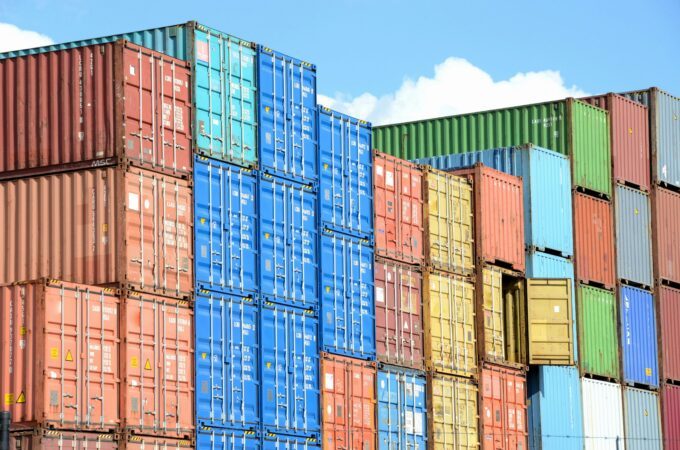
Image by Paul Teysen.

Donald Trump’s paleo-conservative, isolationist attack on global capitalist trade is already having formidable impacts. If tariff levels and targeted announced on ‘Liberation Day,’ April 2, are sustained, a full-blown economic catastrophe could result, perhaps reminiscent of 1930s-scale Make America Great Depression Again.

Transactional Trump

The worst danger: national elites in victim countries will be divided-and-conquered. Even South African President Cyril Ramaphosa – who 15 months ago had bravely challenged Washington’s ‘rule of law’ fakery by authorizing Pretoria’s challenge to Israel’s genocide at the International Court of Justice – apparently feels compelled to dream up utterly irrational deals for Trump, ideally sealed over a game of golf. Ramaphosa’s spokesperson told the NY Times last month that Ramaphosa may soon offer to U.S. Big Oil firms generous offshore leases for methane gas exploration and extraction, in spite of enormous climate damage, Shell Oil’s courtroom setbacks, and widespread shoreline protests.

He’s not alone; more than 50 world leaders have ‘reached out’ to Washington in an obsequious manner, leading Trump to brag, “They are coming to the table. They want to talk but there’s no talk unless they pay us a lot of money on a yearly basis.”

Even before the April 2 announcements, Trump imposed 25% universal tariffs on imports of steel and aluminum (effective March 12) and on cars (and auto parts) (March 26), radically lowering demand for what are traditionally the three main South African exports to the U.S. under the tariff-free Africa Growth and Opportunity Act (AGOA).

According to Business Leadership South Africa’s Busisiwe Mavuso:

“Trump has made it clear that he wants concessions from each country if he is going to reduce or drop the tariffs. He emphasized that the tariffs put the U.S. in a position of power in the series of bilateral negotiations that are to come. Given the transactional nature of US politics, we have to think hard on what is commercially available and viable for all parties. The U.S. has exempted many of our key metal exports, including platinum, gold, manganese, copper, zinc and nickel, because these are considered critical to the U.S. economy.”

Twisted economic logic

Setting aside the exemptions on raw materials, which makes the whole operation appear as a neo-colonial resource grab that simultaneously stifles poor countries’ manufacturing sectors, what would justify these highest tariffs on U.S. imports in 130 years? Trump’s chief economic advisor (and investment banker) Stephen Miran, who holds a Harvard doctorate in economics, explained the underlying theory in a November 2024 report, celebrating the potential for a:

“generational change in the international trade and financial systems. The root of the economic imbalances lies in persistent dollar overvaluation that prevents the balancing of international trade… Tariffs provide revenue, and if offset by currency adjustments, present minimal inflationary or otherwise adverse side effects, consistent with the experience in 2018-2019. While currency offset can inhibit adjustments to trade flows, it suggests that tariffs are ultimately financed by the tariffed nation, whose real purchasing power and wealth decline…”

This is wishful thinking, most experts believe. Currency adjustments are hard to predict but the dollar’s decline on April 2-3 (about 1%) is already being offset by its ‘safe haven’ status, providing a quick valuation bounce-back. The reason: international financial volatility always encourages global footloose capital’s short-term flight to dollar-denominated assets, no matter how irrational that may be in the medium term.

U.S. consumer inflation will soar, it’s fair to predict. Already, those whose pensions have been invested in the world’s (admittedly way-overvalued) stock markets have suffered major losses, e.g. in South Africa and the U.S., more 10% on April 3-4 alone. As nervous money floods out of vulnerable countries, the interest rates investors demand to fund 10-year bonds are soaring, in South Africa’s case by 2.2%, from 8.9% at the end of January to a painful 11.1% in early April (at a time of long-term average inflation of 5%).

And as a distributional matter, left economist Dean Baker of the Center for Economic Policy and Research points out,

“Import taxes are highly regressive, meaning that tariffs will cost ordinary working people a much higher share of their income than for high income people. This is because working people tend to spend most or all of their income, while high income people save a large portion of their income. Also, working people are more likely to spend their money on the goods subject to tariffs, whereas higher income people spend more money on services.”

Splintered oppositional narratives

Beyond Miran’s fantasies, five other narratives are generating anti-Trump ideologies that – without a coherent stitching together – risk splintering critics:

1. mainstream neoliberalism

The corporate and state elites who in most countries typically back neo-liberal trade deregulation are now in shock, as their own personal share portfolios crash. The Economist summed up, “Trump’s mindless tariffs will cause economic havoc.

In alliance with market-friendly ‘bastard Keynesians‘ like Paul Krugman, the neoliberals are expressing utter disgust at Trump because precepts of free trade are being violated in the most primitive manner. The powers and legitimacy of the Geneva-based World Trade Organization (WTO) to police tariffs and trade are being trampled by Trump – leaving the body’s defense to some of the world’s most aggrieved neoliberal forces, in Beijing.

Because Trump is launching “economic nuclear war on every country,” even Bill Ackman – a strong supporter of the president and a billionaire fund manager – conceded, “we will severely damage our reputation with the rest of the world that will take years and potentially decades to rehabilitate.” Quite right.

(This growing establishment hatred of Washington is extremely useful if progressives want to forge even brief alliances, e.g. to ‘Vote Trump off the G20 Island,’ a true Survivor approach which would be indisputably popular in the bloc’s capital cities, except for Buenos Aires and maybe Rome, and set the stage for the 2026 G20 not to be held in the U.S., but maybe jointly by Mexico and Canada instead, as should the 2026 soccer World Cup and 2028 Olympics.)

2. radical Keynesianism combined with dependency theory

Both these approaches are highly critical of international trade, but not for the reasons Trump is. The last century’s leading British economist, John Maynard Keynes, at one point – in his 1933 Yale Review article – firmly advocated tariffs and other forms of protectionism, so as to support domestic industries and thus achieve much more balanced internal development: “let goods be homespun whenever it is reasonably and conveniently possible, and, above all, let finance be primarily national” (using tightened exchange controls).

As for global economic regulation, Keynes’ last (unsuccessful) major project was to propose penalties for economies that ran trade surpluses: the ‘Bancor’ International Currency Union proposal at Bretton Woods in 1944. His objective was to use trade and currency controls to achieve self-correcting international economic stability, in the wake of a Great Depression and war caused in part by extreme commercial and financial volatility.

From the Global South, a different critique of international trade and an even stronger advocacy of tariffs together aim to promote poor countries’ ‘delinking’ from dangerous international circuits of capital, and to protect infant manufacturing industries. Africa’s main contributor to this dependencia school was Egyptian political economist Samir Amin. He understood the differential labor values and ‘unequal ecological exchange’ (resource looting) that are embodied in South-to-North trade as benefiting transnational corporations, and causing Africa’s underdevelopment.

Amin also criticized trade between impoverished countries and South Africa which – even after apartheid was defeated in 1994 – he viewed (until his death in 2018) as a malevolent capitalist power on the continent: “nothing has changed. South Africa’s sub-imperialist role has been reinforced, still dominated as it is by the Anglo-American mining monopolies.”

Indeed AngloGold Ashanti and many similar Johannesburg firms have benefited from the South African National Defence Force’s ersatz quarter-century-long military presence in the eastern Congo. (Last November, these troops were recognized by the UN not for heroism, but as the peace-keeping force’s worst offenders for sexual exploitation, abuse and paternity lawsuits.) Pretoria’s troops were recently forced out of the DRC by invading Rwandan forces (and also lost battles in Northern Mozambique and the Central African Republic since 2013), but the critique of sub-imperial interests remains intact.

3. climate consciousness

Opponents of ecocide – surely, all of us who aren’t climate denialists – regret the massive greenhouse gas emissions caused by excessive, often pointless international trade: 7%+ of all CO2 emanates from shipping and air transport, according to the International Transport Forum.

And while the International Maritime Organization has hosted a decade of talks about its members’ dirty bunker-fuel emissions – which for the sake of ‘polluter pays’ policy, should be costed at $1056/tonne (even the World Economic Forum admits) – these have been futile. The modest $150/tonne tax on shipping emissions demanded by increasingly-desperate Pacific and Caribbean small island states is this week being rejected by rich Western countries and also by an alliance centered on four BRICS members: Brazil, China, Indonesia and South Africa.

Moreover, genuine ‘Just Transition’ plans are widely recognized as necessary to wean workers and affected communities off CO2-intensive export production, e.g. the West’s (highly flawed yet necessary) Just Energy Transition Partnerships and Carbon Border Adjustment Mechanisms, but these and other climate obligations Trump has simply walked away from. The Pan African Climate Justice Alliance had already called on the world to impose trade sanctions on the U.S. as a result, a call that now has much more purchase.

Indeed, to that end, many would support a ‘degrowth‘ approach seeking to stabilize and indeed diminish much of the high-carbon industrial output exported by many economies into the U.S. Those include steel, aluminum and automobiles – now 25% tariff victims – due to the vast waste involved in rich-country consumption. And South Africa is one of the worst, with the ‘Energy Intensive Users Group‘ of 27 multinational corporate exporters guzzling more than 40% of the country’s scarce electricity but hiring only 4% of workers in the formal sector.

4. African nationalism

African patriots logically perceive Trump’s hatred of the continent (full of ‘S-hole countries‘) as, in part, behind attacks on its trade-surplus countries. Tiny Lesotho was hit by Trump with the highest new tariff on April 2 mainly because of its $240 million trade surplus with the U.S.: mostly Levi’s and Wrangler jeans and diamond exports, whereas imports from the U.S. are indirect, as they first are cleared by customs in South Africa. Trump also imposed 40%+ tariffs on Madagascar and Mauritius, because of their trade surpluses.

The context for the continent’s (and world’s) rising anti-Americanism is Trump and Pretoria-born Elon Musk’s halt to financial support for African healthcare (especially AIDS-related – which could lead to 6.3 million unnecessary deaths by 2029 – and maternal), climate (mitigating emissions, strengthening resilience and covering ‘loss & damage’ relief), renewable energy and vitally-needed emergency humanitarian food supplies. Some critics here suggest these cuts reflect Trump’s white supremacy, called out by Pretoria’s fired ambassador to Washington, amplified by the fiscal chainsaw wielded by Musk, against whom protest is rapidly rising.

All this means Trump is discarding Washington’s soft power, which notwithstanding the vast destruction in the meantime, could ultimately be very useful for anti-imperialists (in contrast to last November’s internecine squabbling over a controversial National Endowment for Democracy conference held in Johannesburg).

4. Marxist political economy

Readers of Das Kapital understand that capitalist crises and the ‘devaluation’ of ‘overaccumulated capital’ (e.g. deindustrialization once businesses addicted to exports to the U.S. shut down) reflect the mode of production’s intrinsic contradictions. In reaction, capitalism often degenerates into inter-imperial and imperial/sub-imperial rivalries, generalized trade wars (often based on tit-for-tat tariffs) and stock market turbulence. The conclusion drawn is that eco-socialist planning of the global economy in the public and environmental interest, is the only route out. (Disclosure: that’s my main bias but I’ll travel a long way with advocates of positions 2-4 as well.)

For those outside mainstream, neoliberal logic, can the latter four framings be fused together for not only a coherent analysis but also a clear political response? The danger of not having a strategy linking Keynesians, environmentalists, nationalists and anti-capitalists is four-fold:

1/ under a beggar-thy-neighbour ‘reciprocal tariff’ trade war, we all face a new version of a 1930 Smoot-Hawley Act and then a 1930s-style Great Depression (which by the way, was an extremely constructive period for South African capitalism, which grew 8% per year as a result of import-substitution industrialization);

2/ recognizing the durable power of U.S. economic imperialism, individual governments will go cap-in-hand to Trump to beg for a bit of relief, offering absurd concessions in the process such as Ramaphosa’s invitation to drill baby drill;

3/ surplus countries will redirect already-produced (or in-production) manufactured goods and commodities away from the now shuttered U.S. market, flooding all other potential buyers, thus further deindustrializing South Africa – whose main anti-dumping measures applied by the International Trade Administration Commission are against various ultra-cheap imports from China; and

4/ Naturally the mainstream logic of ‘searching for new markets’ – now that the U.S. is closing its trade doors – won’t get at the root cause of the problem. That cause is sometimes termed ‘uneven and combined development,’ in which over the past 40 years, the global trading system became exceptionally volatile and generative of ever worsening inequalities (especially unequal ecological exchange), i.e., depleting, polluting and emitting against the interests of poor economies and natural environments.

A long pattern of economic abuse

This extreme abuse of commercial power being exercised with a vengeance by Trump, no matter how self-destructive financial markets have judged his Liberation Day, is only the latest reflection of Western economic chaos. The world has suffered extreme uneven development after the recovery from early-1980s global recession, as ‘Washington Consensus’ liberalization kicked in everywhere due to debt crises and IMF/World Bank squeezing, and especially via global commerce following the capture by nearly all governments’ policies by the World Trade Organization after 1994.

The limits of trade globalization became clear in 2008 – the peak year of world trade/GDP until until 2022 – as did the limits of financialised economies in recent months, in the form of overvalued ‘Buffett Indicators‘ of stock market capitalization, unprecedented debt loads, currency volatility and recognition of the $’s malevolence after two Fed-led ‘Quantitative Easings’ and interest rate manipulations, etc.

The damage done to South Africa’s industrial economy was amongst the most severe, as we lost most labor-intensive industries – clothing, textiles, footwear, appliances, electronics, etc – which had driven the manufacturing/GDP ratio up to 24%, before the steady decline to less than 13% by the 2010s. So the challenge is reversing that imbalance – i.e. fighting against uneven and combined development – with progressive policies, not merely relying upon the program of dissatisfied export-oriented capitalists.

Here in South Africa, the de facto retraction of AGOA zero-tariff access for locally-made luxury cars, aluminum, steel, petrochems, vineyard products and plantation nuts and citrus reminds that the main losers are capital-intensive extractive industries, carbon-intensive smelters and super-exploitative plantations, all with mainly white ownership. From Washington, the imperialist Hudson Institute last month even recommended not cutting the tariff-free AGOA trade program, since “The communities that benefit most from the AGOA largely support South Africa’s pro-American political parties.”

In contrast to Trump’s paleo-con isolationism and to neoliberal trade promotion, the four historically-progressive ideologies of Keynesianism, environmental justice, African nationalism and eco-socialism represent countervailing views. Programmatically, to move in their direction can only be assessed once the dust settles a bit and the distinction between those national leaders who are either fighting or who are obsequious, becomes clear.

So far, South Africa’s leaders, under threat of losing their Government of National Unity related to a budget dispute caused by excessive neoliberalism, are decidedly in the latter category.

In contrast, the potential for China to guide the international fightback is not merely witnessed in its WTO complaint against Trump, quickly filed on April 4. The same day, Beijing’s central bank experimented with a much more rapid, blockchain-secured digital alternative to the dollar-denominated cross-border bank settlement and clearance system, with 10 regional and another six West Asian economies now reportedly able to avoid the Brussels-based SWIFT network, even if merely for cost and speed savings.

There have been far too many false alarms and hyped hopes about de-dollarization. If it began in earnest thanks to Trump’s misstep, we’d much more likely see the venal, volatile Bitcoin take over, as Blackrock CEO Larry Fink warns, than the renminbi.

All this suggests a far more durable approach is needed, to get out from under Trump’s thumb and then the dollar’s domination, and then escape the tyranny of capital. A series of non-reformist reforms were offered to Democracy Now! by Indian radical economist Jayati Ghosh, worth mulling over for countries like South Africa, and all others, as a last word:

“There’s a silver lining in this for developing countries, which is that for too long, for maybe three decades, we’ve been told that the only way we can develop is through export-led growth. And that’s really — it’s been unfortunate, because we have never seen giving our own workers a fair deal as a good option. We’ve always seen wages as a cost, not as a source of our own domestic demand and market. It’s now time to actually change, to shift gears, to think about different trading arrangements, more regional arrangements, looking at other developing countries as markets, looking at our own population as markets, and thinking about the things we can do to create sustainable production, that’s not ecologically damaging, that actually provides living wages and decent working conditions within our own countries.”

(The University of Johannesburg Centre for Social Change will convene a webinar on Trump tariffs in the G20-from-below series on Tuesday, April 15, 3pm SA time, 9am Washington time, herehttps://us02web.zoom.us/j/84736248638 )

Patrick Bond is professor of sociology at the University of Johannesburg in South Africa. He can be reached at: pbond@mail.ngo.za

Signs of the Times


President Trump imposes tariffs on indulgences from the Holy See

(RNS) — The 'pope penalty' will also include tariffs on rosaries and medals blessed at the Vatican.


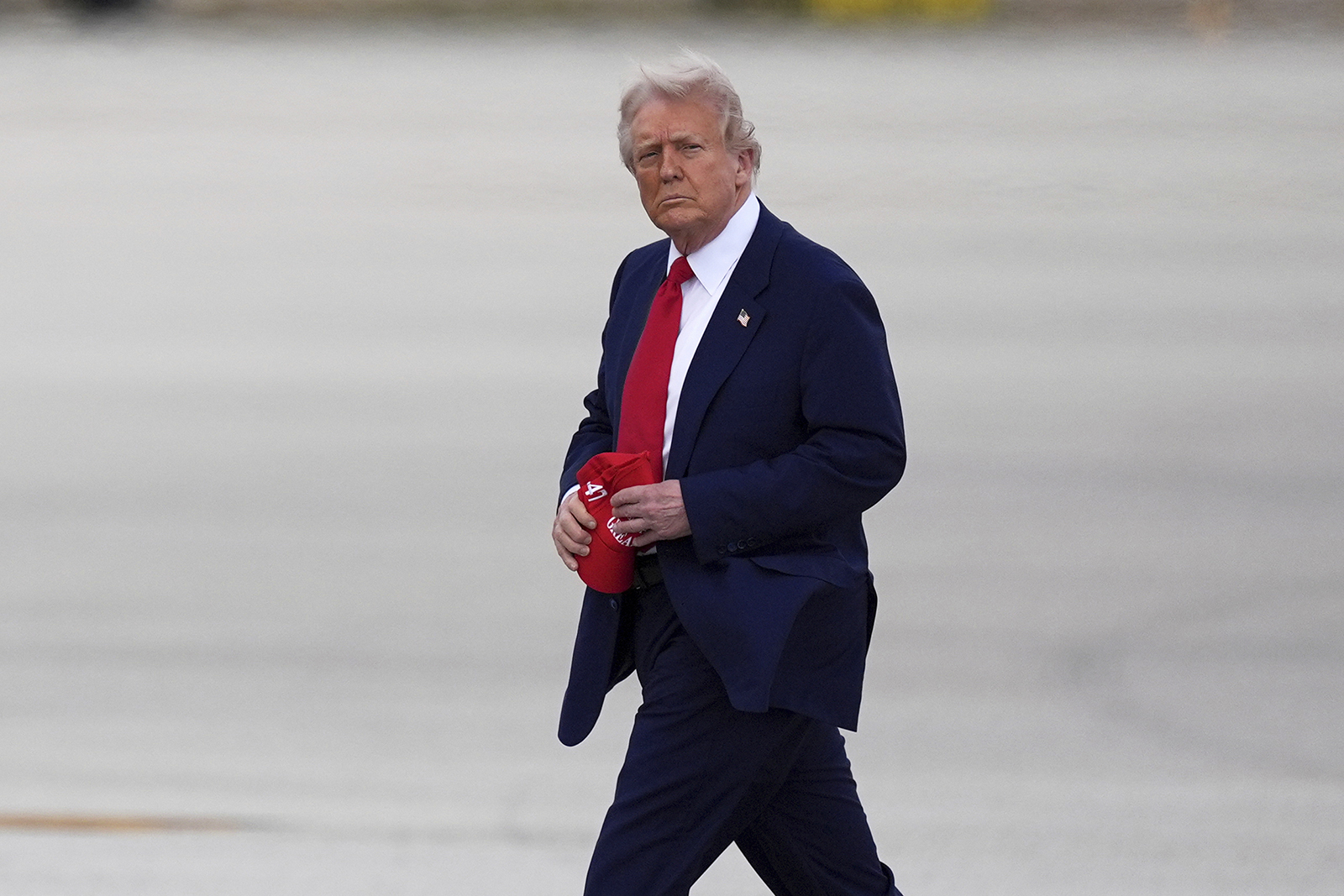
President Donald Trump arrives at Miami International Airport, Thursday, April 3, 2025, in Miami. (AP Photo/Rebecca Blackwell)


Thomas Reese
April 7, 2025


(RNS) — President Donald Trump, who has been in an ongoing fight with Pope Francis over migration, Gaza, Ukraine and global warming, has imposed tariffs on indulgences and other products imported from the Holy See.

“Why should we import indulgences from the Vatican when we have domestic producers like Paula White who offer products that are much better,” said a White House spokesperson.

Paula White, head of the new White House Faith Office and a proponent of the prosperity Gospel, last month promised seven supernatural blessings for the Easter season to her followers if they sent her $1,000 or more. (While the rest of this column is satire, this particular offer from White is real.)

White’s “seven blessings” was no doubt an effort to cut into the indulgence market that the Holy See has dominated for centuries.

“Our blessings are seven times better than indulgences, which only get you out of Purgatory,” explained Trump, in introducing the Vatican tariffs. “It’s a bigger bang for the buck.”

A long-time supporter of the president, White has often publicly prayed for Trump, including in the week before the election, when she stood alongside several other religious leaders as they prayed over Trump at a faith-focused campaign event. The president recalled the prayer as he announced his “pope penalty” tariffs in front of the White House with White at his side.


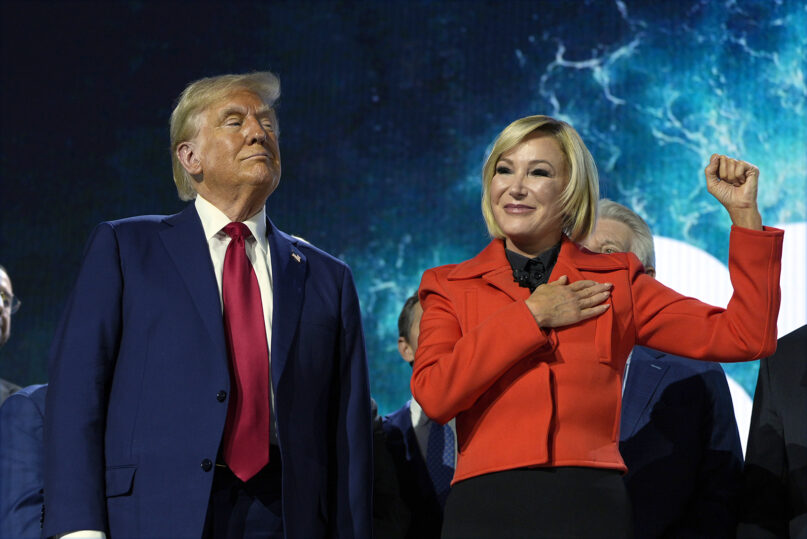
Republican presidential nominee former President Donald Trump stands with Pastor Paula White-Cain during the National Faith Summit at Worship With Wonders Church, Monday, Oct. 28, 2024, in Powder Springs, Ga.
(AP Photo/Julia Demaree Nikhinson)

“Their prayers clearly worked better than the pope’s,” bragged Trump, who is a strong supporter of the U.S. prayer industrial complex.
RELATED: Addicts are children of God. Helping them will fix the drug crisis, not tariffs on Mexico.

The president loves tariffs, which he believes will simultaneously raise revenue and force companies to do manufacturing in the United States. They are also an excellent tool for bullying nations into doing his will.


Trump, who has made an art out of punishing his enemies and rewarding his friends, saw the tariff on indulgences as a perfect way to punish Pope Francis for disagreeing with him and to reward White, a Trump loyalist.

Trump is also imposing a $100 tariff on rosaries and medals blessed by the pope when they are brought into the U.S. by American pilgrims. Noncitizens trying to smuggle rosaries into the U.S. will be sent to prison in El Salvador since the EPA has classified rosaries as a schedule-one substance because of their highly addictive nature.

“Rosaries should be made in the United States and blessed by my good friend Cardinal Dolan,” said Trump. New York Cardinal Timothy Dolan invited Trump to the Al Smith dinner in New York City less than a month before the November 2024 election.

Elon Musk, head of the Department for Government Efficiency, has also told the U.S. Immigration and Customs Enforcement to use imprisoned migrant children to manufacture rosaries as a means of making the detention centers self-supporting.

Pope Francis crossed with the president during Trump’s first term when the pope said we should build bridges not walls. The pope and Trump have also clashed over Gaza, Ukraine, refugees, global warming and the U.S. responsibility to help poor countries. The Vatican supports multilateralism, while Trump touts his “America Alone” agenda.

Trump, an unforgiving man, has used the new tariffs as a way to get even with the pope.

The Vatican press office had no comment on the tariffs, but when the Vatican attempted to impose reciprocal tariffs on American goods, Vatican employees threatened to strike because that would raise prices in the Vatican stores.

The Vatican Secretariat of State believes the tariffs are simply a negotiating tactic to get the pope to support the president’s foreign policy on Ukraine, the Middle East, Greenland and the Gulf of America.

The Vatican City State is also being pressured to up its defense spending to 5% of its GDP. “The Swiss Guard is a pitiful excuse for an army,” declared U.S. Secretary of Defense Pete Hegseth in a chat on Signal. He did not seem to know the Vatican was not a member of NATO.

The Army Corps of Engineers also wants access to the plans used in building the wall around the Vatican so it can duplicate the wall on the border with Canada. A spokesman for the Corps said, “Vatican expertise in wall building is unmatched anywhere in the world and we need it.”

But there also seems to be something else going on here, according to Vatican insiders.

Behind the scenes, Trump is demanding the pope designate Mar-a-Lago as a location for a holy door during the 2025 Jubilee Year. The holy doors are normally in Rome where pilgrims get an indulgence for going through them. Trump wants pilgrims to come to his shrine at Mar-a-Lago.


“It would be the most beautiful door ever,” said Trump. “Solid gold. It would be great!”

The president also wants to replace Casa Santa Marta, the Vatican building where the pope lives, with a 40-story Trump Tower.

“The pope would get a seven-star residence,” explained the American negotiator for the Trump Organization. “We would give him a cut of the gambling revenues, which would help Vatican finances. It is a win-win.”

When asked about the U.S. policy toward the Vatican, Secretary of State Marco Rubio, a Catholic, said, “I support the president’s policies, whatever they are at the moment.”

Vice President JD Vance, also a Catholic, said, “I bend the knee to no foreign potentate, only to Donald Trump. It’s basic ordo amoris.”
RELATED: Will Musk and Trump go to Hell for defunding the corporal works of mercy?

Meanwhile, the White House is having an internal debate over who to support for pope at the next conclave. Trump is leaning toward Cardinal Dolan, but traditional Catholics in the administration believe Dolan is too wishy-washy and are pushing for Cardinal Raymond Burke, who would reverse the policies put in place by Pope Francis.


After watching the movie “Conclave,” Musk promised to put his money behind whoever Trump endorses.
Trump Tariffs Threaten UK Economic Stability

By City A.M - Apr 05, 2025

Donald Trump's imposition of new tariffs has triggered fears of a global trade war, with the UK facing a 10% tariff on all goods and potential economic stagnation.

Economists and analysts are divided on the extent of the damage to the UK economy, with some predicting a recession and others suggesting growth in services may mitigate the impact.

The UK government is considering retaliatory tariffs and seeking a trade deal with the US to avoid further economic pain, while the Bank of England grapples with the potential inflationary effects of the tariffs.


The US president holds up a sandwich board in the Rose Garden. On it is a list of countries. Next to each country are two columns: one for “tariffs charged to the USA” and one for “USA Discounted Reciprocal Tariffs”. The leader of the free world is cooking up a storm.

“Our country has been looted, pillaged, raped, plundered,” the most powerful man in the planet tells billions of people in Asia, Africa and Europe. The USA wants to end trade deficits and it wants firms to exclusively employ American workers.

Finance ministers fear rampant inflation. The war which triggered the cost of living crisis has not even ended. Economies have only just started to recover from years of high price growth, let alone the Covid-19 pandemic. Retaliation tariffs are drawn up by world leaders putting on a brave face while scrambling to save their economies – and industries.

Forecasters around the world struggle to add up the numbers. “Uncertainty” becomes economists’ understated go-to word to express their sense of despair. Central banks stay silent as they mull over their next steps. Investors panic. Markets slide.

And the US president takes to a social media platform, which he owns, to say America is “healing”. No territory has been left unscathed, not even islands inhabited by no one. The plan unveiled on a sandwich board is “BEAUTIFUL”.


An all-out global trade war has begun and economists are having to wake up to their nightmares.

Donald Trump’s historic Rose Garden speech has now left governments, businesses and analysts scrambling for some clarity. What had been targeted 25 per cent tariffs on car imports as well as steel and aluminium has now turned into unforgiving tariffs on all goods.

While economic powerhouses across the European Union and China will suffer tariffs between 20 and 54 per cent respectively, the UK joins the likes of Australia and Turkey in facing a tax of ten per cent.

In Downing Street, a spokesperson was quick off the mark to set the tone of the UK’s response to tariffs: “We don’t want any tariffs at all, but a lower levy than others vindicates our approach. It matters because the difference between 10 per cent and 20 per cent is thousands of jobs.”

But the hard truth is Donald Trump has not spared Keir Starmer from economic pain, the special relationship between the US and the UK has not applied to trade and £294.1bn worth of business is now under threat.


Before the tariffs were announced, central forecasters made educated guesses on what the UK economy could look like in worst case scenarios.

The UK’s fiscal watchdog, the Office for Budget Responsibility (OBR), said in a world where the US inflicted flat-rate tariffs of 20 per cent and European nations retaliated, the UK’s output would take a one per cent hit.

This has not happened. Economists at the OBR may have breathed a sigh of relief.

But researchers at the National Institute for Economic and Social Research (NIESR) said the British economy would be stagnant in 2026 if ten per cent tariffs were imposed on the UK.

Even after Trump’s tariffs have – at least partially – been unveiled, economists’ outlook reports continue to be at some degree of conflict with one another.


The differences are laid bare in the City of London where leading analysts tried to make sense of Trump’s sandwich board less than 24 hours after it was displayed.

At Barclays, economists believe that the UK’s GDP could be knocked by as much as 1.5 per cent in the scenario where retaliatory tariffs are imposed, plunging the country into recession. Meanwhile, specialists at the likes of Pantheon Macroeconomics, who neither used the same models as Barclays nor considered the same scenarios, said UK growth would be lowered by just 0.2 per cent.

“Strengthening growth in services—immune from tariffs—shows that UK growth can hold up,” Pantheon’s Rob Wood said.

But US tariffs are already unsettling some sectors, namely manufacturers.

S&P Global’s purchasing managers’ index (PMI) readings for manufacturing have shown consistent declines as trade tensions have mounted up.


Forecasts are likely to change dramatically as retaliatory tariffs shape up.
The UK could retaliate

Business secretary Jonathan Reynolds has launched a “consultation” on a possible response – effectively a playbook move to delay a response and potentially to heighten pressure. No business is going to call for tariffs to be applied to goods they need to import to the UK.

The UK government is treading a careful line. Reynolds said on Thursday morning he wanted the tariffs removed but he also suggested that retaliatory tariffs are not off the cards.

There is a greater objective at stake here, a “prize”, as Chancellor Reeves put it: a trade deal that could shake off tariffs and put the UK in a league of its own.

British policymakers may have to shrug off their worries about chlorinated chicken if they want to get a deal over the line.


In the meantime, the government published a list of products that it could slap tariffs on. A 417-page list which covers clothes as particular as anoraks and food as luxurious as lobster and caviar.

Economists have warned, however, that retaliatory tariffs imposed in a bid to protect British jobs will have a painful impact on consumers, who will take the burden of the rise in prices from higher taxes.

“Tariffs here would hurt US exporters, but they’d also hurt a UK consumer currently contending with April’s price rises and not in the mood to wrestle with another bout of inflation,” AJ Bell’s financial analysis head Danni Hewson said.
Headache for the Bank of England

Until retaliatory tariffs are announced, forecasters are holding their breaths. Most City analysts’ eyes will be on how the Bank of England considers its own response amid recession risks and uncertainty over inflations.

Recent speeches by members of the Monetary Policy Committee (MPC), which sets interest rates, have indicated that they predict Trump’s tariffs will have a disinflationary effect on UK prices. Dovish rate-setter Swati Dhingra was the first to make that suggestion, while Megan Greene followed suit earlier this week.

The Bank of England will face a dilemma. On the one hand, tariffs are going to lift the prices of some goods and its core remit is to keep a lid on inflation, as close to 2 per cent as possible, which would point to rates staying higher for longer than previously expected.

Most economists expect the MPC to go ahead with an interest rate cut when it has to make a decision in May. Evelyn Partners director Jason Hollands nonetheless said the Bank will face a “dilemma”.

“It’s not unthinkable that we will actually see interest rates come down more rapidly than expected,” he said.

“Of course any serious hit to UK economic growth could be felt in the jobs market, not just in terms of job insecurity but also in that firms suffering uncertainty – as well as the tax rises already in effect – could restrict wage and salary growth.”

Those alarm bells around the jobs market have already been rung by leading industry bodies who are facing a hellish April: a higher national minimum wage, ballooning employers’ national insurance taxes and now a tsunami of tariffs.

“Anything which injects added cost, complexity and uncertainty into the global economic trading system is never good for growth, prosperity or rising living standards, and the imposition of tariffs is no exception to that,” Allan Vallance, chief executive of the Institute of Chartered Accountants in England and Wales, said.

The Tories, meanwhile, have called on Labour to abandon their onerous Employment Rights Bill, set to cost employers a cool £5bn.

City analysts may start looking ahead to a world where the tariffs are here to stay. The UK economy may have an opportunity to survive and rebuild, but the path to such a destination is steep and treacherous.

By City AM

A Beginning, Not an End: Hands Off What?

April 8, 2025
FacebookTwitter

Image by Marc Pell.

The numbers are coming in, and as always, the estimates vary widely. Let’s just say there were more than a million people across the United States in the streets protesting the excesses of the Trump administration since January 20, 2025. Also, like always, the demands of the organizers (who went by the name Hands Off) were often transcended by the intentions of those actually attending the rallies, marches and other manifestations of discontent. Just as predictable as the speculation about the number of people in the streets are the complaints by some on the left, complaining that the protest demands were not radical enough and were just an attempt by the Democratic party to divert the growing anger of the US population.

Meanwhile, another large march was held in the streets of Washington, DC. This protest was organized by Palestinian solidarity organizations, leftist groups against US imperialism, Muslim and Jewish organizations opposed to the Israel-US genocide and occupation in Palestine and others. It’s estimated that this protest involved at least a hundred thousand or more protesters. In addition, many of the local protests organized under the auspices of the Hands Off group highlighted the US-Israeli massacre in Gaza and the West Bank. This meant that the opposition to the occupation and the repression of anti-occupation protesters was humanized and brought to the attention of thousands of US residents who previously had only the anti-Palestinian US media providing its take on the slaughter. This is a positive development, especially as the crackdown on students and others supporting an end to the Israeli occupation takes a considerably more ominous and despotic turn.

At Vermont’s two largest protests—Montpelier (3000 or more) and Burlington(1000)—there was a substantial anti-genocide presence. Montpelier also had a large labor presence. However, the majority of people were liberals. Instead of disparaging the protesters, who are angry and looking for answers, we should focus our criticism on the leadership while encouraging the anti-capitalist and anti-imperialist dialogue being introduced to these new protesters. Unless the left starts getting its own act together, the Democrats will turn these into a US version of the color “revolutions,” putting the neoliberals who helped get us to this point back into power. Nothing will change. The ruling class shell game will continue only with the house having better odds than at any time in US history.

The previous remark regarding the kvetching from some on the left about the liberal nature of the organizers was not meant to disparage the content of those leftists’ critique. Indeed, it’s quite accurate at its core. This is not unusual or unique; it does need to be addressed. Historically speaking, many if not most of the protest movements since World War Two for greater rights and economic justice in the United States have been popularized by liberals. Those that arguably weren’t—the movement against the US war on Vietnam, for example—reached their peak when more liberal organizers took the reins from the leftist and radical pacifist organizers that birthed the movement. At the same time, the efforts of the liberals and the subsequent popularization of the essential demands of the civil rights movement opened space for revolutionary groups like the Black Panthers to exist and grow. Looking back, the results of this dynamic are at best, mixed. Radical organizations exist in the historical record, with some even getting the respect they deserve. However, their descendants in today’s political milieu are left out of the conversation and, when they do make enough noise to be heard, they are arrested, fired from their jobs, and attacked as agents of some foreign power. This is exactly what we are seeing happen to the radical movement calling for Palestinian freedom and against the US-Israeli genocide of Palestinians.

There is a historical moment taking place. The US ruling class has exposed its fascist core. Trumpism is the manifestation of long-time right-wing dreams. Sure, it’s a bit uncouth for the more cultured on the right, but that hasn’t prevented them from supporting the Trumpist executive orders designed to destroy what remains of the social welfare system in the United States. The wealthy understand that to achieve the complete power they desire, some may suffer. They intend to make sure it is not them who do. Furthermore, they believe the suffering they cause now will make them very rich later, when private endeavors run former government programs.

The role of the liberals organizing protests like those this past weekend is to save US capitalism. They may not see themselves in that role, but the objective truth says otherwise. The ruling elites represented by the Democrats believe that by keeping working people employed and benefiting from capitalism, they will continue to rule and make money. The programs the Trumpists and their right-wing allies want to cut will render such a scenario impossible. Neither sector of the ruling class can abide Palestinian freedom from occupation. Nor can either sector free itself from the war machine that

US capital relies on for its plans of permanence.

The role of the radical left regarding these types of protests is to show up with our signs and our energy; to join organizing committees and coalitions and push the demands leftward. A friend in Olympia, Washington wrote on social media that the organizers there included anti-occupation activists who made the demands around Palestine and the repression of anti-occupation activists part of the program. This is a great example of how these protests can be expanded beyond the Democrats’ agenda—an agenda that became obvious when NATO was one of the programs the organizers demanded Trump keep his hands off of.

Let me close with the final sentences of a recently-released pamphlet from Fomite Press: “What is needed is a popular rejection of the Trump White House and its fascism; not just one led by Democrats in the courts and the legislature. This struggle needs to be waged in the streets, the schools, the workplace and throughout the United States. It’s a struggle against fascism, not a battle between the political parties of the elites.”

Onward.

Ron Jacobs is the author of several books, including Daydream Sunset: Sixties Counterculture in the Seventies published by CounterPunch Books. His latest book, titled Nowhere Land: Journeys Through a Broken Nation, is now available. He lives in Vermont. He can be reached at: ronj1955@gmail.com


Millions protest Trump throughout United States as resistance grows


Monday 7 April 2025, by Dan La Botz


Millions of people in all 50 states, joined 1,600 demonstrations in large cities and small towns to protest against President Donald Trump and his henchman billionaire Elon Musk on April 5, with a number of small solidarity demonstrations in European cities. The “Hands Off” demonstrations, the largest anti-Trump protests yet, demanded that Trump keep his hands off democracy, human rights, reproductive rights, Social Security, Medicaid, public schools, immigrants, and LGBT people.


In New York City, where I joined the protest in the drizzle, some 50,000 people took part in a spirited march with many creative home-made signs and banners. I saw signs reading: “Hands off Our Planet,” “Disappearing People for Speech = Fascism,” and “Hands Off Our Bodies, Our Democracy, Our Freedom, Our Constitution.” And scattered through the demonstration a few signs in support of Ukraine, though fewer addressed the Palestinian genocide.

In the Republican dominated state of Ohio, Common Cause, a group that works for free and fair elections, helped to organize the protest. Mia Lewis of Common Cause Ohio said, “For many people, this will be the first protest they have attended. They are coming out not to tear anything down, but to stand up for the Constitution, for the rule of law, for our democracy. Enough is enough!”

In Colorado, a state controlled by the Democrats, 8,000 turned out at the State Capitol in Denver. “We were expecting a good turnout, but this is better than we thought it would be here,” Morgan Miransky, a volunteer organizer said, “We’re looking forward to having more people come out and join us, and we’re hoping to build this into a larger nationwide movement for resistance.”

The demonstrations were called by a variety of organizations, including the Democratic Party groups like Indivisible, workers’ groups such as the Federal Unionists Network, and environmental, religious, human rights, and civil rights groups. Yet in New York City, the largest unions such as the Service Employees International Union and the American Federation of State, County, and Municipal Employees, with many Black members, failed to turn out their ranks. An exception was the union of workers of the City University of New York. Most unions failed to mobilize their members nationally, though Federal workers, many recently fired, did join the protests.

The NYC protest was overwhelmingly white, with only a small number of Black, participants in a city where Blacks make up 20%, Latinos 28%, and Asians 15% of the population. Some Latinos may have stayed home because of fear of being detained and deported, as Trump is now engaged in a massive deportation campaign. Some Black influencers on social media told their followers to stay home, that the march was not their affair. The low level of participation of Black people was an issue almost everywhere.

In some cities, particularly Washington, D.C., but others as well, Democratic Party politicians spoke in an attempt to win back support from party members who have been deeply disappointed in the Democrats’ failure to fight back against Trump. Jamie Raskin, a leading Congressman from Maryland, told the crowd, “They believe democracy is doomed and they believe regime change is upon us if only they can seize our payments system. If they think they are going to overthrow the foundations of democracy, they don’t know who they are dealing with.” Across the country, especially in state capitals, Democrats tried to woo voters, but many disappointed in Senator Kamala Harris’ campaign or in Democratic support for Israel’s genocidal war will be hard to convince.

These protests were a significant step forward, but the big unions are still not really in the fight and there is no common leadership and no consensus on whether the Democrats or mass protests represent the future. The left has only a small presence and plays little role so far.


Attached documentsmillions-protest-trump-throughout-united-states-as_a8931.pdf (PDF - 905.3 KiB)
Extraction PDF [->article8931]


Dan La Botz
Dan La Botz was a founding member of Teamsters for a Democratic Union (TDU). He is the author of Rank-and-File Rebellion: Teamsters for a Democratic Union (1991). He is also a co-editor of New Politics and editor of Mexican Labor News and Analysis.


International Viewpoint is published under the responsibility of the Bureau of the Fourth International. Signed articles do not necessarily reflect editorial policy. Articles can be reprinted with acknowledgement, and a live link if possible.


A Potent Protest in San Francisco,  
5 April 2025


Facebook

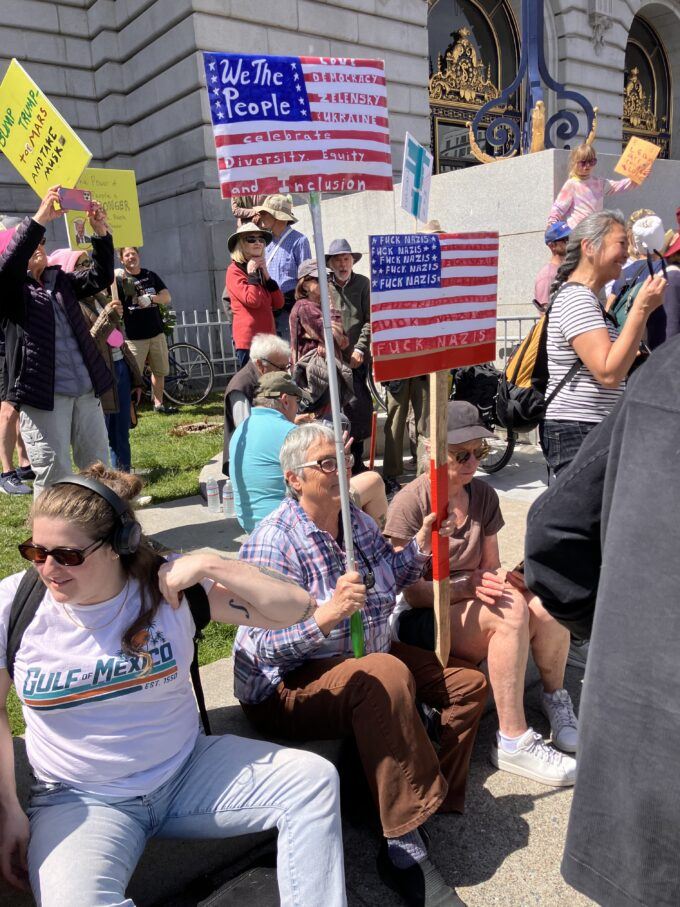
Photo: Jonah Raskin.

They did not come to the Civic Center in San Francisco on April 5, 2025 to speak truth to power. They know that power doesn’t listen to people, not the powerful but vulnerable demigods in the White House. They came to acknowledge one another, to build a community in the open air and to air their grievances. It was a defining feature of the crowd that numbered in the thousands that no two signs were identical just as no people were identical and no two people dressed identically. They were individuals, separate and autonomous and yet linked by their total rejection of Trump and Musk whose names were deliberately misspelled in the spirit of disdain and disgust.

I wandered from the edge of the crowd opposite the main branch of the public library to the heart of the crowd where it was so crowded I couldn’t move forward or to the side and had to go backward for room to breathe. I saw T-shirts that read “Gulf of Mexico,” signs that mention Greenland and Gaza, and just one that mentioned Ukraine.

I saw the word “FUCK” in capital letters dozens of times, signs that called for Democracy with a capital D, signs that called for money and jobs, signs with the capital letter X through the Tesla icon, and the world Oligarchy with an X across it. “Defund DODGE” I read and “we the people,” and a quotation from Benjamin Franklin, and passages from Isiah and Matthew and a T-shirt that shouted “Our Revolution California.” The signs were all hand-lettered and also drawn by hand. Not a single one was store bought. This was a DIY crowd who cared not a fig about Pelosi, AOC, Waltz, Sanders or Kamala Harris. It was a crowd that didn’t have a favorite politician, though one sign read “We’re angry and we’re voting.” The protesters were not waiting for the midterm elections to express their disapproval of the whole lousy political landscape.

I was there. I felt at one with the crowd, the most diverse crowd I’ve ever experienced with men and women wearing green hats, blue hats, red hats, black hats and white hats, big and little hats, angry people but happy people, too, happy to be protesting on a Sunday in the sun in San Francisco. My favorite two signs were held by the same woman who sat on a curb. Both featured American flags. One read “Fuck Nazis” six times. The other read “We the People love Democracy, Zelensky, Ukraine,” followed by “celebrate diversity, equity and inclusion” —three words that defined the crowd itself that care about inclusivity, diversity, fairness and justice.

Jonah Raskin is the author of Beat Blues, San Francisco, 1955.