Tuesday, April 22, 2025

BAN DEEP SEA MINING


UK says transfer of deep-sea mining permits could prompt security review

Impossible Metals wants to mine the Pacific for EV minerals


Deep-sea mining company Impossible Metals is calling on the US government to open up part of the Pacific Ocean for commercial mineral extraction.

The company says it has asked U.S. federal officials to launch an auction for access to seabed deposits off American Samoa.

That region is believed to hold vast quantities of polymetallic nodules — potato-sized rocks rich in nickel, cobalt, and other minerals vital for electric vehicles and electronics. Mining.com’s Devan Murugan spoke to CEO Oliver Gunasekara about the company’s vision and the environmental concerns surrounding deep-sea mining.


Russia’s VEB to invest $13.4B in copper mine in country’s far east

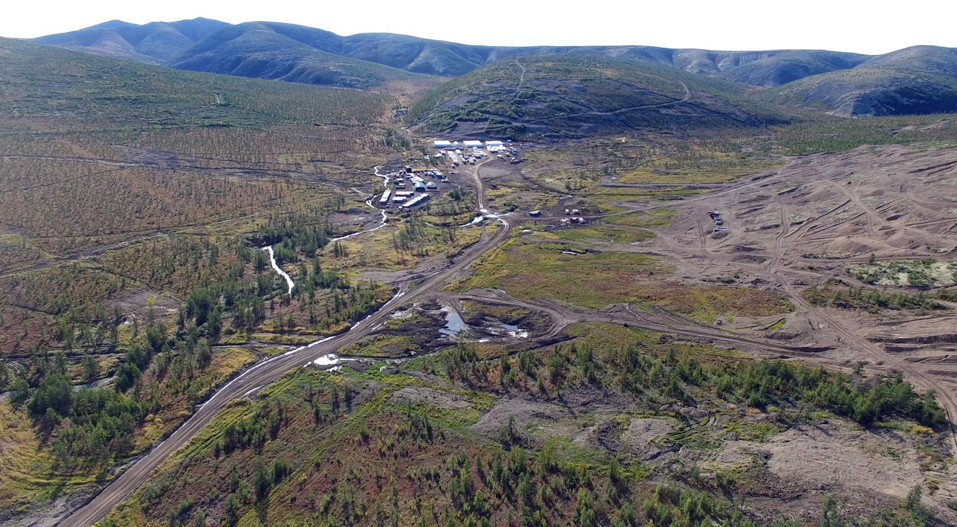
Baimskaya copper-gold project boasts 9.5mt of copper and 16moz of gold. Image: Kaz Minerals

Russian state development bank VEB will invest more than 1.1 trillion roubles ($13.40 billion) to develop a copper mine in Chukotka in the far east of the country, the government said on Saturday.

The development of the Baimskaya copper deposit, first discovered in 1972, is expected to create some 6,000 jobs and generate more than three trillion roubles in tax revenue, a government press release said.

Chukotka is a mountainous region and the easternmost federal subject of Russia. About half of it is located above the Arctic Circle.


Once operable, the deposit will boost Russia’s copper production by 25% and its gold production by 4%.

“We continue to build not just a mining and processing plant, but a powerful and technologically-advanced industrial complex that will strengthen Russia’s position in the global market and become a new point of growth in the Arctic,” said Georgy Fotin, general director of the Baimskaya Management Company LLC.

President Vladimir Putin has named the Arctic as one of Russia’s key areas of economic interest, and has ramped up commerce via the Northern Sea Route as Moscow shifts trade towards Asia and away from Europe due to Western sanctions.

Development of the Baimskaya deposit will see annual cargo traffic along the NSR increase by two million metric tons, the government said on Saturday.

($1 = 82.1000 roubles)

(By Lucy Papachristou; Editing by Kirsten Donovan)


Analysts see gold at $4,000 as faith in the US dollar tumbles


Stock image.

Gold is hitting records in more ways than one.

In nominal terms, the yellow metal set multiple new all-time highs this week, exceeding $3,300 an ounce for the first time ever on Wednesday. And on an inflation-adjusted basis, gold also notched a new record price, surpassing the longstanding record set in 1980.

There could be further gains in the coming months, if analyst expectations come to fruition. Goldman Sachs sees gold topping out at $3,700 by the end of this year and $4,000 an ounce by mid-2026.

Gold miners, I’m happy to report, also appear to be back in favor. The IBD 50, Investor’s Business Daily’s flagship screen of growth stocks, now includes about a dozen gold mining names. Companies that were just added to the list include DRDGold, Eldorado Gold, Gold Fields, Randgold Resources, Osisko Gold Royalties, Royal Gold, Triple Flag Precious Metals and Wheaton Precious Metals.

We’re proud to hold shares in 11 of these companies across one or more of our gold equity or resource funds, as of March 31. Below is a comprehensive list.

Worst start on record for the dollar index spurs gold buying

This gold rally is classic Fear Trade. It comes as investor sentiment has collapsed to its lowest level in three decades, according to April’s BofA Global Fund Manager Survey. Eighty-two percent of participants said they believe the global economy will shrink, marking the most pessimistic reading in the survey’s history.

The value of the US dollar, when measured against a basket of world currencies, has sunk to a three-year low as traders await more details on the fallout from President Donald Trump’s trade policies. The ICE US Dollar Index is down 8% so far in 2025, making this the worst start to a year in the index’s four-decade history, according to the Wall Street Journal. 

Granted, a weaker greenback has its advantages: It makes the price of goods being exported out of the US more affordable to foreign buyers, helping exporters.

My concern is the reason why the dollar is on the decline. Foreign central banks have been dumping US debt for a while, but the selling pressure of longer-dated bonds has increased in recent months. In the four months through February, overseas institutions sold a combined net of approximately $90 billion.

Retail investors still missing out on the gold rally

Despite the rally, retail investors are still sorely underexposed. Gold-backed ETF assets currently represent less than 2% of all ETF assets, down from approximately 8% in 2011. Investment in gold ETFs has significantly picked up since February, but holdings are still off by about 19% from their highs in October 2020.

The market share for gold mining ETFs is even lower, representing less than 0.5% of total equity ETFs.

That’s a shame because gold stocks have been among the best bets of the year so far. The NYSE Arca Gold Miners Index, or GDM, has advanced more than 53% through Thursday’s close, far outperforming the S&P 500, which has lost close to 10% over the same period.

Believe it or not, the second-best-performing S&P 500 stock so far this year is Newmont, the world’s largest gold mining company. Newmont is up a little over 50% through April 16, following CVS Health, up nearly 53%.

Analysts have rosy expectations for Newmont’s year ahead. Those polled by FactSet say they project profits to rise 13% to $3.92 per share this year, followed by an 8% rise to $4.23 per share next year.

South African gold stocks break records in 2025

This rally isn’t limited to US-based gold stocks. South African producers, as measured by the rand-priced FTSE/JSE Precious Metals and Mining Index, hit a new record high as the price of gold has exploded to the upside, crossing above R60,000 per ounce this month for the first time ever.

Many American depository receipts (ADRs) of South African producers have done exceptionally well so far in 2025, with Sibanye Stillwater up about 50%, AngloGold Ashanti and DRDGold both up 93% to 94%, and Harmony Gold up a remarkable 113%.

Gold stocks remain deeply undervalued relative to the market

Just as investors’ portfolios are underexposed to the yellow metal, gold mining stocks look incredibly undervalued compared to the market.

The chart below shows the ratio between the GDM and the S&P 500. You can see that, relative to the S&P, gold stocks have traded in a range-bound pattern going back about 10 years.

So how do mining stocks break out of this pattern? Either gold equities continue to trade up, or the S&P 500 continues to fall (or a combination of the two).

In any case, this could be a good buying opportunity. As always, I recommend a 10% weighting, with 5% in physical gold (bars, coins, jewelry) and the other 5% in high-quality gold stocks.

* Frank Holmes is the CEO of U.S. Global Investors


US investor Cameron offers $5 billion for Kazakh mining giant ERG


Image courtesy of Eurasian Resources.

US businessman James Cameron has offered to buy mining giant Eurasian Resources Group for $5 billion, a letter he sent to its board showed, as the company prepares to participate in a major expansion of Kazakhstan’s rare earths output.

ERG, a Luxembourg-based producer of copper, cobalt, aluminum and iron ore that is 40%-owned by the Kazakh government, said last year it had formed a task force to explore deposits of rare earth and rare metals in Kazakhstan.

Those minerals have gained particular attention in recent months as US President Donald Trump’s administration seeks alternatives to China to supply its domestic industry as a trade war between the countries escalates.

According to a source close to the company, talks between ERG and Cameron have been going on since the end of last year. Cameron shares a name with the Academy Award-winning film director, but the two are not related.

ERG, the Kazakh government, and Cameron, once a board chairman of former FTSE 250 mining firm Petropavlovsk, did not comment.

According to Cameron’s letter to the ERG board, a copy of which was obtained by Reuters, Goldman Sachs is in preliminary talks to advise on the deal.

“The financing will come from a combination of my own funds, as well as equity contributions from other investors in the United States, and possibly Australia and the Middle East,” the letter said.

Another source close to the transaction told Reuters the investor’s interest in ERG is partly linked to Kazakhstan’s potential in critical minerals exploration and mining. Kazakhstan aims to lift rare and rare earth metals output by 40% by 2028, with ERG seen taking a major role in the initiative.


This month, Kazakhstan’s government announced that its geologists had discovered a large rare earth deposit with estimated resources exceeding 20 million metric tons.

Kazakhstan’s Prime Minister Olzhas Bektenov said last year that data concerning the country’s deposits of rare and rare earth metals, a state secret since Soviet times, is being gradually declassified.

If confirmed, this discovery could position Kazakhstan among the top three holders of rare earth reserves globally, following China and Brazil.

ERG once produced one-fifth of the world’s gallium, a rare metal used in microchips and included on the US list of critical materials. However, it ceased production after China increased its output of the metal in 2012.

Beijing in December banned gallium exports to the US after a crackdown by Washington on China’s chip sector.

In 2013, ERG was taken private in a $4.5 billion buyout by its three founders, who each owned approximately 20% of the company, along with the government.

Last month, one of ERG’s founders and its board chairman, Kazakh-Israeli businessman Alexander Mashkevich, passed away, leaving only one of the original founders, Patokh Chodiev, among the current shareholders.

(By Gleb Bryanski and Mariya Gordeyeva; Editing by Guy Faulconbridge and Jan Harvey)


U.S. Eyes Kazakh Rare Earth Minerals

  • Kazakhstan plans to send a delegation to Washington for trade discussions with the United States, focusing on tariffs and other trade-related matters.

  • Despite US tariffs, Kazakhstan is adopting a non-confrontational approach, choosing engagement over retaliation and considering its membership in the Eurasian Economic Union.

  • The United States has expressed interest in Kazakhstan's rare earth mineral reserves, and the article also discusses the impact of sanctions on Russia and its trade relations with Kazakhstan.

Kazakhstan is adopting a non-confrontational stance as it finesses trade relations with the United States, seeking engagement rather than retaliation over the imposition of US tariffs.

Deputy Trade Minister Zhanel Kushukova told journalists on April 17 that the government intended to send a delegation to Washington to hold talks on a variety of trade issues, including tariffs. The Trump administration initially hit Kazakh goods with a 27-percent tariff rate, but subsequently scaled the rate back provisionally to 10 percent. In addition, the Trump administration has placed a 90-day pause on the imposition of tariffs.

“All countries are now interested in holding consultations with the USA about duties, and we are no exception,” the InBusiness.kz news agency quoted Kushkova as saying. “We are currently working on this issue within the government and are preparing for consultations.” She provided no timeframe for when the Kazakh delegation would depart for the United States.

As the tariff and other trade issues play out, Kazakh officials are embracing a do-no-harm approach in response to the constant zigs and zags of US policymaking. Kushkova emphasized that Kazakhstan had no intention of imposing reciprocal tariffs on US goods, citing the country’s membership in the Russia-led Eurasian Economic Union (EAEU) trade bloc as a factor in Astana’s policy of restraint. 

“A single customs tariff applies to five [EAEU member] states. That is, if any duties are to be changed on imported goods, then it can only be by a decision of the five,” Kushkova said. “But today, such an issue is not even considered.” Russia, the EAEU’s dominant member, has so far been exempted from US tariffs, even though it is subjected to extensive sanctions imposed by the US and European Union.

Kazakhstan in 2024 had the highest overall trade turnover with the United States of all Central Asian states, totaling $3.4 billion, of which more than two-thirds comprised US-bound Kazakh exports, mainly carbon resources and other commodities. Kazakh officials have noted that energy and other raw-material exports would be exempt from tariffs under the present US framework.

The planned Kazakh delegation would have plenty to discuss with US officials in Washington beyond tariffs. Since taking power, the Trump administration has repeatedly expressed interest to striking trade deals concerning Kazakhstan’s abundant reserves of rare earths. US interest in securing an increase in Kazakh mineral supplies is only intensifying in the wake of a Chinese ban on rare earth exports. 

The top US diplomat in Kazakhstan, Deborah Robinson, earlier in April reaffirmed US support “for private and public sector cooperation in the critical minerals sector.”

Meanwhile, data published by Kazakhstan’s State Statistics Agency provides fresh evidence that Russia is having an increasingly difficult time using the Central Asian nation as a back door for sanctions-busting trade.

Kazakh authorities insist that they are enforcing US and EU sanctions. Nevertheless, the country has long been suspected as an enabler of illicit transit in dual-use technology and goods that can help maintain Russia’s war effort in Ukraine. A variety of Kazakh-based entities have been added to the US sanctions list since the start of the Russia-Ukraine war in 2022.

Of late, however, Russian business representatives in Kazakhstan have complained about tightening financial regulations that hinder their ability to operate, according to reports distributed by state-controlled Russian media. 

The data published by QazStat supports the notion that Kazakhstan’s is becoming a less hospitable environment for sanctions-busting activity. The number of Russian companies operating in Kazakhstan has been gradually declining for a year now, following a long period of explosive growth, the official statistics show. 

In January 2022, the month before the outbreak of the Russia-Ukraine war, roughly 7,900 Russian entities operated in Kazakhstan. By the end of that year, the number nearly doubled to 15,700.

The number of actively operating Russian entities in Kazakhstan peaked during the first quarter of 2024, totaling 19,735. Since then, the numbers have declined by a few hundred each quarter, and stood at 18,366 as of April 1 of this year, a 7 percent drop over the four-quarter period.

By Eurasianet.org


Trump to fast-track permitting for 10 mining projects across US


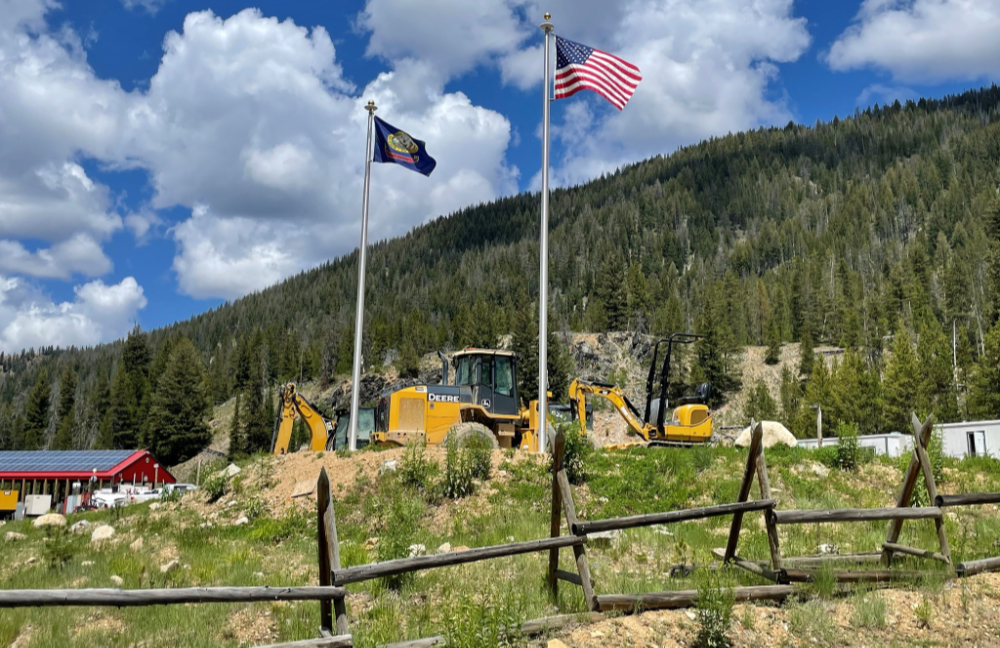
Credit: Perpetua Resources

The White House on Friday said it will fast-track permitting for 10 mining projects across the United States as part of President Donald Trump’s push to expand critical minerals production.

The projects – which would supply copper, antimony and other minerals – have been granted FAST-41 status, a federal initiative launched in 2015 to streamline approvals of critical infrastructure.

The White House said it will add more projects.

The initial 10 are listed on a US federal website where their permitting progress can be publicly tracked, part of what the Trump administration calls a push for greater transparency and faster permitting.

“This transparency leads to greater accountability, ensuring a more efficient process,” the White House said in a statement.


The move boosts a proposed Idaho antimony and gold mine from Perpetua Resources, a proposed Arizona copper mine from Rio Tinto, a proposed Montana copper and silver mine from Hecla Mining, expansion of Albemarle’s Nevada lithium mine, an Arkansas direct lithium extraction project from Standard Lithium, and an Alabama metallurgical coal project from Warrior Met Coal, among others. Metallurgical coal is used to make steel.

Perpetua said it was “honored by this selection … which validates the urgency and importance of our project for America’s economic and national security.”

Rio said it believes its Resolution copper project in Arizona “is vital to securing America’s energy future and infrastructure needs with a domestic supply of copper.”

Albemarle said it looks “forward to further engaging with the administration as it seeks to advance a US lithium supply chain.”

Standard Lithium and Warrior were not immediately available to comment.

South32’s Hermosa zinc-manganese project in Arizona was fast-tracked by former President Joe Biden, the first mine to receive the FAST-41 treatment.

Trump earlier this week ordered a probe into potential new tariffs on all US critical minerals imports, a major escalation in his dispute with global trade partners and an attempt to pressure industry leader China.

(By Ernest Scheyder; Editing by Lisa Shumaker and Chris Reese)


As Trump eyes coal revival, his job cuts hobble black lung protections for miners


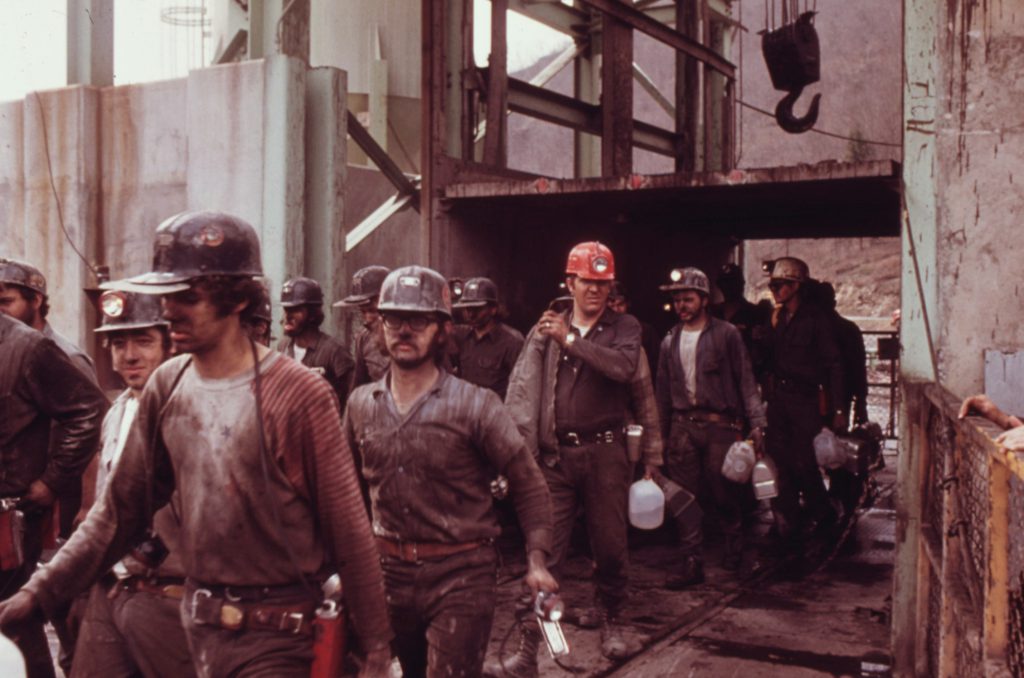
Coal miners leaving an American mine. Credit: Wikipedia, under public domain license

Josh Cochran worked deep in the coal mines of West Virginia since he was 22 years old, pulling a six-figure salary that allowed him to buy a home with his wife Stephanie and hunt and fish in his spare time.

That ended two years ago when, at the age of 43, he was diagnosed with advanced black lung disease. He’s now waiting for a lung transplant, breathes with the help of an oxygen tank, and needs help from his wife to do basic tasks around the house.

His saving grace, he says, is that he can still earn a living. A federal program run by the Mine Safety and Health Administration and the National Institute for Occupational Safety and Health called Part 90 meant he was relocated from underground when he got his diagnosis to a desk job dispatching coal trucks to the same company, retaining his pay.

“Part 90 – that’s only the thing you got,” he told Reuters while signing a stack of documents needed for the transplant, a simple task that left him winded. “You can come out from underground, make what you made, and then they can’t just get rid of you.”

That program, which relocates coal miners diagnosed with black lung to safer jobs at the same pay – along with a handful of others intended to protect the nation’s coal miners from the resurgence of black lung – is grinding to a halt due to mass layoffs and office closures imposed by President Donald Trump and billionaire Elon Musk’s Department of Government Efficiency, according to Reuters reporting.

Reuters interviews with more than a dozen people involved in medical programs serving the coal industry, and a review of internal documents from NIOSH, show that at least three such federal programs have stopped their work in recent weeks.

A decades-old program operated by NIOSH to detect lung disease in coal miners, for example, has been suspended. Related programs to provide x-rays and lung tests at mine sites have also shut down and it is now unclear who will enforce safety regulations like new limits on silica dust exposure after nearly half of the offices of MSHA were slated to have their leases terminated.

The details about the black lung programs halted by the government’s mass layoffs and funding cuts have not previously been reported.

“It’s going to be devastating to miners,” said Anita Wolfe, a 40-year NIOSH veteran who remains in touch with the agency. “Nobody is going to be monitoring the mines.”

The cuts come as Trump voices support for the domestic coal industry, a group that historically has supported the president.

At a White House ceremony flanked by coal workers in hard hats earlier this month, Trump signed executive orders meant to boost the industry, including by prolonging the life of aging coal-fired power plants.

“For too long, coal has been a dirty word that most are afraid to speak about,” said Jeff Crowe, who Trump identified as a West Virginia miner. Crowe is the superintendent of American Consolidated Natural Resources, successor to Murray Energy.

“We’re going to put the miners back to work,” Trump said during the ceremony. “They are great people, with great families, and come from areas of the country that we love and we really respect.”

Andrew Nixon, a spokesperson for the Department of Health and Human Services, which oversees NIOSH, said that streamlining government will better position HHS to carry out its Congressionally mandated work protecting Americans.

Representatives for MSHA and the White House did not respond to requests for comment.

Black lung has been on the rise over the last two decades, and has increasingly been reported by young workers in their 30s and 40s despite declining coal production.

NIOSH estimates that 20% of coal miners in Central Appalachia now suffer from some form of black lung disease, the highest rate that has been detected in 25 years, as workers in the aging mines blast through rock to reach diminishing coal seams. Around 43,000 people are employed by the coal industry, according to the Bureau of Labor Statistics.

More mining, more risk

Around 875 of NIOSH’s roughly 1,000-strong workforce across the country were terminated amid sweeping job cuts announced by HHS this month, according to three sources who worked for NIOSH.

That’s put the department’s flagship black lung program, the Coal Workers’ Health Surveillance Program, on hold, according to an internal NIOSH email dated April 4.

“We will continue to process everything we currently have for as long as we can. We have no further information about the future of CWHSP at this time,” the email says.

The CWHSP’s regular black lung screenings, which deploy mobile trailers to coal mines to test coal miners on site have ended too, because there’s no money to fuel the vehicles or epidemiologists to review the on-site x-rays or lung tests, according to sources familiar with the program.

For many miners, this program is the sole provider of medical checkups, according to NIOSH veteran Wolfe.

The loss of staff at NIOSH has also crippled black lung-afflicted miners’ ability to get relocated with pay as part of the Part 90 program.

Miners can only become eligible for the Part 90 benefit by submitting lung x-rays to NIOSH that show black lung. But all NIOSH epidemiologists in West Virginia required to review the x-rays were laid off, according to Scott Laney, who lost his job as an epidemiologist.

Laney told Reuters he and his fellow laid-off team have been working in an informal “war room” in his living room to try to draw attention to the issue among Washington lawmakers.

“I want to make sure that if there are more men who are going into the mines as a result of an executive order, or whatever the mechanism, they should be protected when they do their work,” he said.

Sam Petsonk, a West Virginia attorney who represents black lung patients, said relocating sick miners is crucial because the risks of continuing to work in dust-heavy areas while ill are so severe.

“It gets to the point that days and months matter for this program,” he said.

Silica threat

Last year, MSHA finalized a new regulation that would cut by half the permissible exposure limit to crystalline silica for miners and other workers – an attempt to combat the rising rates of black lung.

Enforcing that rule, which comes into force in August after being pushed back from April by the Trump administration, may prove difficult given the staff cuts and planned office closures at MSHA, said Chris Williamson, a former Assistant Secretary of Labor for Mine Safety and Health under the Biden administration.

He told Reuters that before he left MSHA in January, there were 20 mine inspector positions unfilled. A pipeline of 90 people that had already secured MSHA inspector job offers, meanwhile, had their offers rescinded after Trump took office, and around 120 other people took buyouts.

Mine inspectors are meant to uphold safety standards that reduce injuries, deaths and illnesses at the mines.

That loss of staff and resources raises the likelihood that black lung could become even more pervasive among Appalachian coal miners – particularly if mining activity increases, said Drew Harris, a black lung specialist in southern Virginia.

“As someone who sees hundreds of miners with this devastating disease it’s hard for me to swallow cutting back on the resources meant to prevent it,” he said.

Kevin Weikle, a 35-year-old miner in West Virginia who was diagnosed with advanced black lung disease during a screening in 2023, said the cuts make no sense at a time the administration wants to see coal output rise and will set back safety standards by decades.

“Don’t get me wrong, I mean, I’m Republican,” Weikle said. “But I think there are smarter ways to produce more coal and not gut safety.”

(By Valerie Volcovici; Editing by Richard Valdmanis and Anna Driver)


Op-Ed: Manila Could Cut a Deal With Trump on S. China Sea's Oil

A “win” for Trump: oil and gas in exchange for little more than what the US Navy is already doing

USS Dewey
USS Dewey (foreground) patrols the S. China Sea with a Philippine Navy vessel, 2023 (USN)

Published Apr 20, 2025 11:33 AM by The Lowy Interpreter


[By Vincent Kyle Parada]

Donald Trump is making good on his promise of “America First.” After admonishing US allies for failing to pay their “fair share” of defence costs and a now infamous meeting with Volodymyr Zelenskyy, the message was clear: America’s friendship was a privilege, not a right. If US partners wanted to enjoy the privilege of US security, then they must pay up. And right now, Washington is looking to collect.

For the Philippines, this transactional approach to foreign policy casts a shadow over its territorial dispute with China. Despite continued optimism from policy elites, the use of formerly cooperative arrangements as tools of coercion should give Manila pause. While the strategic value of the Philippines as a forward operating base means it continues to enjoy Washington’s good graces, the onus is on the Marcos Jr. administration to continuously reaffirm this value – or risk abandonment in a Trump-polar world.

The Ukrainians understood this when Washington demanded US$500 billion in mineral wealth as compensation for wartime aid. Though negotiations remain inconclusive, the latest drafts point to a potential joint investment deal that would see revenues from Ukrainian natural resources diverted to an investment fund managed by both parties. It would come with neither a security guarantee nor the assurance of additional aid. But Kyiv’s assumption appears to be that by providing the Americans with a clear, tangible stake in the survival of the Ukrainian state, it could ensure continued US support against Russia – especially since at least 50% of its rare earth deposits are in what is presently Russian-occupied territory.

Like Kyiv, Manila needs to provide the United States with “skin in the game” beyond military basing. Reed Bank – a disputed tablemount in the Spratly Islands rich in hydrocarbons – could be the solution. The feature lies well within the Philippines’ exclusive economic zone (EEZ), meaning Manila has sovereign rights to explore and exploit its resources under Article 56 of the UN Convention on the Law of the Sea. According to the US’ own estimates, there could be as much as 9.2 billion barrels of oil and 216 trillion cubic feet of natural gas in unexplored deposits across the South China Sea, with many concentrated along shallower areas such as Reed Bank.

The problem is the limited ability of the Philippines to harness these reserves. It tried roping China and Vietnam into a joint marine seismic undertaking in 2005 – a decision made as much to manage tensions as it was to benefit the economy, and which would later be declared unconstitutional on the grounds that foreign-owned entities could not partake in the exploration, development, and utilisation of natural resources. Manila tried again in 2012, this time without Vietnam, but failed due to Beijing’s refusal to recognise the sovereign rights of the Philippines over the area.

This would not be a problem for Washington. From Obama to Trump 2.0, the US has been the Philippines’ leading supporter in the South China Sea. With an ongoing trade war against Canada and Mexico – two of the US’ biggest sources of crude imports – the Philippines has a chance to step in and help diversify US hydrocarbon streams, generate profits, and keep energy prices stable in the long-term. Manila is already working to cut coal and diversify its energy mix through foreign investments. With the Malampaya gas field – the country’s largest energy producer – nearing depletion, the prospect of joint exploration in the oil-and-gas-rich Reed Bank with an ally rather than competitor might just be enough to overcome domestic apprehensions about the foreign development of resources.

We know that Manila has been trying to lift constitutional limits on foreign ownership – and that US firms have expressed interest in oil and gas projects in the country. At the very least, preferential trade agreements could be negotiated in exchange for technical assistance, or with US entities granted shares in Philippine-owned corporations, or a joint investment fund established that would entitle them to oil and gas revenues.

In the end, it boils down to politics. Legal hurdles aside, Reed Bank remains a contested feature. To exploit its hydrocarbon reserves, Washington and Manila will have to force Beijing out of the area or station a maritime force to safeguard drilling operations. That carries the risk of turning Reed Bank into another flashpoint in the South China Sea.

Here, joint US-Philippine patrols will be key. American ships must be visibly present in order to deter Chinese encroachment. But given Manila’s decision not to physically involve other countries in South China Sea operations, is the Marcos Jr. administration willing to challenge China over Reed Bank? Can it ensure the integrity of exploration activities, like the manner Indonesia and Malaysia have done so at Natuna and Sabah?

Drilling takes time, so even if Washington and Manila were to reach an agreement, the Trump administration is unlikely to see a tangible return on its investment for the foreseeable future. What matters in the end, however, is that it was Trump who shook hands and sealed the deal. It would be a “win” that he could present to the American people – oil and gas in exchange for little more than what the US Navy is already doing in the South China Sea. In return, the Philippines secures a lifeline to a new energy supply, profits from resource revenues, and reaffirms its alliance with the US through an economic blood compact.

Vincent Kyle Parada is a former defence analyst for the Philippine Navy and graduate student at the S. Rajaratnam School of International Studies in Singapore.

This article appears courtesy of The Lowy Interpreter and may be found in its original form here

The opinions expressed herein are the author's and not necessarily those of The Maritime Executive.


Ex-Chairman of Russian Carrier FESCO Launches New Service to West Africa

FESCO
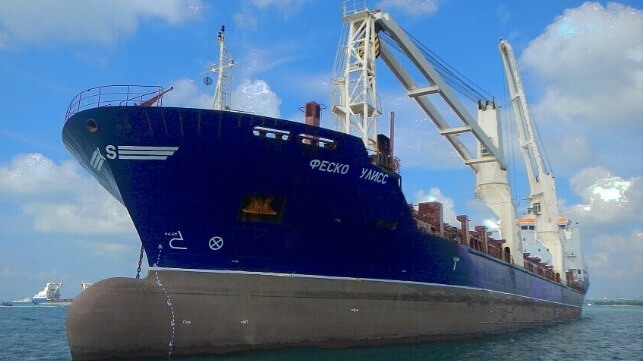
File image courtesy FESCO

Published Apr 20, 2025 4:35 PM by The Maritime Executive


Former FESCO co-owner and Board Chairman Andrei Severilov has opened a new venture targeting the West African freight market.

Last week, Russian company JSC A7 Holding - associated with Severilov - registered a new freight transportation entity. According to Interfax news, the newly-formed A7 African Cargo Lines LLC (A7 ACL) was launched on April 17, with a charter capital of $122,000. The company’s primary activity is listed as railway freight transportation.

Interfax reports that the new line is incorporated in the United States, and is owned by two U.S. business entities: A7 Holding LLC (registered in Delaware) and A7 Infrastructure LLC (registered in Missouri). These entities are registered to corporate agents, and their relationship to A7 ACL could not be immediately confirmed.

Severilov told Interfax that the company is keen on establishing a feeder shipping service between West Africa and Russia. “At the first stage, with the assistance of the Russian trade mission in Nigeria, we are implementing a project to establish a direct shipping line,” said Severilov.

By mid-June, the company wants to launch a new maritime route between Novorossiysk and Nigeria’s Lagos port. Two containerships will be chartered for the line’s inaugural route, each with a capacity of 700 TEU. There are future plans to expand maritime connections to Senegal’s Dakar port.

Severilov has extensive experience in the shipping sector, including a stint as the Board Chairman at top Russian container line FESCO. He also held a 23.8 percent stake in FESCO’s parent company, PJSC FESCO. However, Severilov had to leave the company after the Russian state nationalized FESCO in 2023, effectively transferring its ownership to the state nuclear power company Rosatom. The transfer followed the conviction of businessman Ziyavudin Magomedov on corruption charges; Magomedov was the founder of Summa Group, which held a large stake in FESCO.

Severilov announced he would re-enter the transport sector in September 2024. But even as Severilov’s freight company targets the Nigerian market, its entry comes while the Nigerian government is incentivizing local shipping companies to own their own vessels.

Last week, the Minister of Blue Economy Adegboyega Oyetola, directed the Nigerian Maritime Administration and Safety Agency (NIMASA) to begin the disbursement of the Cabotage Vessel Financing Fund (CVFF). The fund was established back in 2003 with a goal of supporting Nigerian shipping companies to access subsidized credit for the acquisition of vessels. This is the first time the fund will be operationalized. As of last year, NIMASA reported that CVFF had accumulated over $360 million, as part of contributions made by the Nigerian shipping sector.

Eligible Nigerian shipping companies could access up to $25 million each at competitive interest rates. NIMASA has already issued a notice inviting applications through a select group of primary lending banks.