Tuesday, April 22, 2025

BAN DEEP SEA MINING


UK says transfer of deep-sea mining permits could prompt security review

Impossible Metals wants to mine the Pacific for EV minerals


Deep-sea mining company Impossible Metals is calling on the US government to open up part of the Pacific Ocean for commercial mineral extraction.

The company says it has asked U.S. federal officials to launch an auction for access to seabed deposits off American Samoa.

That region is believed to hold vast quantities of polymetallic nodules — potato-sized rocks rich in nickel, cobalt, and other minerals vital for electric vehicles and electronics. Mining.com’s Devan Murugan spoke to CEO Oliver Gunasekara about the company’s vision and the environmental concerns surrounding deep-sea mining.


Russia’s VEB to invest $13.4B in copper mine in country’s far east

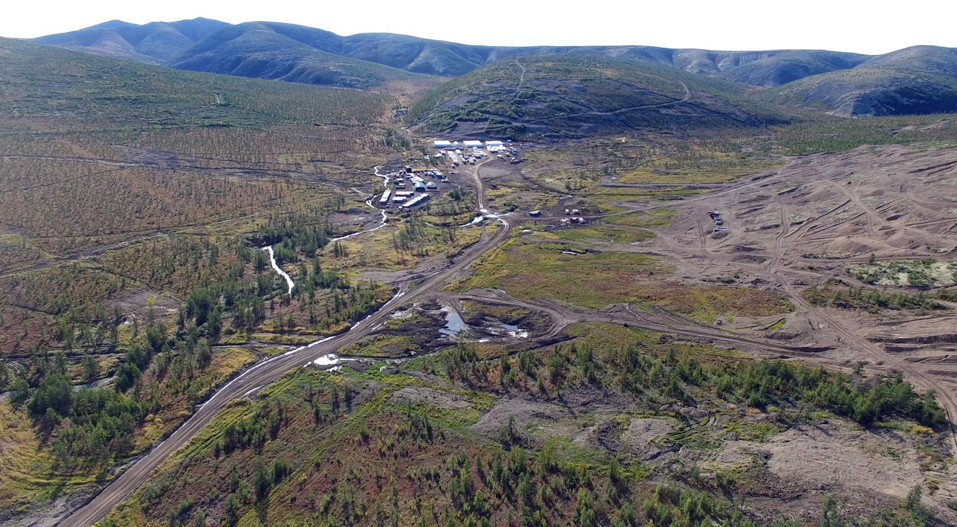
Baimskaya copper-gold project boasts 9.5mt of copper and 16moz of gold. Image: Kaz Minerals

Russian state development bank VEB will invest more than 1.1 trillion roubles ($13.40 billion) to develop a copper mine in Chukotka in the far east of the country, the government said on Saturday.

The development of the Baimskaya copper deposit, first discovered in 1972, is expected to create some 6,000 jobs and generate more than three trillion roubles in tax revenue, a government press release said.

Chukotka is a mountainous region and the easternmost federal subject of Russia. About half of it is located above the Arctic Circle.


Once operable, the deposit will boost Russia’s copper production by 25% and its gold production by 4%.

“We continue to build not just a mining and processing plant, but a powerful and technologically-advanced industrial complex that will strengthen Russia’s position in the global market and become a new point of growth in the Arctic,” said Georgy Fotin, general director of the Baimskaya Management Company LLC.

President Vladimir Putin has named the Arctic as one of Russia’s key areas of economic interest, and has ramped up commerce via the Northern Sea Route as Moscow shifts trade towards Asia and away from Europe due to Western sanctions.

Development of the Baimskaya deposit will see annual cargo traffic along the NSR increase by two million metric tons, the government said on Saturday.

($1 = 82.1000 roubles)

(By Lucy Papachristou; Editing by Kirsten Donovan)


Analysts see gold at $4,000 as faith in the US dollar tumbles


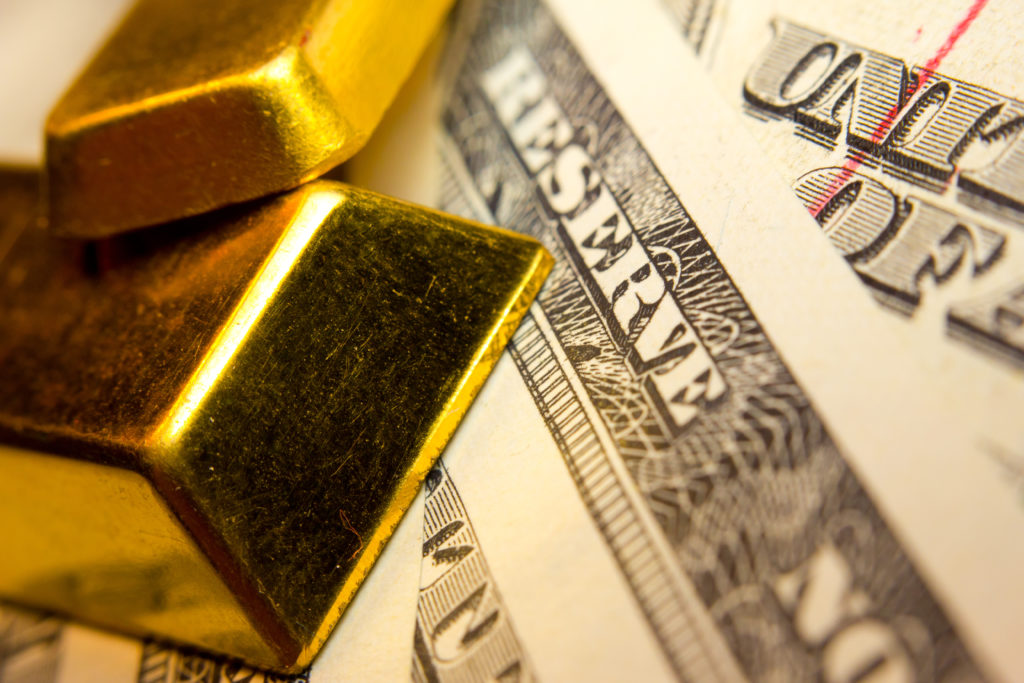
Stock image.

Gold is hitting records in more ways than one.

In nominal terms, the yellow metal set multiple new all-time highs this week, exceeding $3,300 an ounce for the first time ever on Wednesday. And on an inflation-adjusted basis, gold also notched a new record price, surpassing the longstanding record set in 1980.

There could be further gains in the coming months, if analyst expectations come to fruition. Goldman Sachs sees gold topping out at $3,700 by the end of this year and $4,000 an ounce by mid-2026.

Gold miners, I’m happy to report, also appear to be back in favor. The IBD 50, Investor’s Business Daily’s flagship screen of growth stocks, now includes about a dozen gold mining names. Companies that were just added to the list include DRDGold, Eldorado Gold, Gold Fields, Randgold Resources, Osisko Gold Royalties, Royal Gold, Triple Flag Precious Metals and Wheaton Precious Metals.

We’re proud to hold shares in 11 of these companies across one or more of our gold equity or resource funds, as of March 31. Below is a comprehensive list.

Worst start on record for the dollar index spurs gold buying

This gold rally is classic Fear Trade. It comes as investor sentiment has collapsed to its lowest level in three decades, according to April’s BofA Global Fund Manager Survey. Eighty-two percent of participants said they believe the global economy will shrink, marking the most pessimistic reading in the survey’s history.

The value of the US dollar, when measured against a basket of world currencies, has sunk to a three-year low as traders await more details on the fallout from President Donald Trump’s trade policies. The ICE US Dollar Index is down 8% so far in 2025, making this the worst start to a year in the index’s four-decade history, according to the Wall Street Journal. 

Granted, a weaker greenback has its advantages: It makes the price of goods being exported out of the US more affordable to foreign buyers, helping exporters.

My concern is the reason why the dollar is on the decline. Foreign central banks have been dumping US debt for a while, but the selling pressure of longer-dated bonds has increased in recent months. In the four months through February, overseas institutions sold a combined net of approximately $90 billion.

Retail investors still missing out on the gold rally

Despite the rally, retail investors are still sorely underexposed. Gold-backed ETF assets currently represent less than 2% of all ETF assets, down from approximately 8% in 2011. Investment in gold ETFs has significantly picked up since February, but holdings are still off by about 19% from their highs in October 2020.

The market share for gold mining ETFs is even lower, representing less than 0.5% of total equity ETFs.

That’s a shame because gold stocks have been among the best bets of the year so far. The NYSE Arca Gold Miners Index, or GDM, has advanced more than 53% through Thursday’s close, far outperforming the S&P 500, which has lost close to 10% over the same period.

Believe it or not, the second-best-performing S&P 500 stock so far this year is Newmont, the world’s largest gold mining company. Newmont is up a little over 50% through April 16, following CVS Health, up nearly 53%.

Analysts have rosy expectations for Newmont’s year ahead. Those polled by FactSet say they project profits to rise 13% to $3.92 per share this year, followed by an 8% rise to $4.23 per share next year.

South African gold stocks break records in 2025

This rally isn’t limited to US-based gold stocks. South African producers, as measured by the rand-priced FTSE/JSE Precious Metals and Mining Index, hit a new record high as the price of gold has exploded to the upside, crossing above R60,000 per ounce this month for the first time ever.

Many American depository receipts (ADRs) of South African producers have done exceptionally well so far in 2025, with Sibanye Stillwater up about 50%, AngloGold Ashanti and DRDGold both up 93% to 94%, and Harmony Gold up a remarkable 113%.

Gold stocks remain deeply undervalued relative to the market

Just as investors’ portfolios are underexposed to the yellow metal, gold mining stocks look incredibly undervalued compared to the market.

The chart below shows the ratio between the GDM and the S&P 500. You can see that, relative to the S&P, gold stocks have traded in a range-bound pattern going back about 10 years.

So how do mining stocks break out of this pattern? Either gold equities continue to trade up, or the S&P 500 continues to fall (or a combination of the two).

In any case, this could be a good buying opportunity. As always, I recommend a 10% weighting, with 5% in physical gold (bars, coins, jewelry) and the other 5% in high-quality gold stocks.

* Frank Holmes is the CEO of U.S. Global Investors


US investor Cameron offers $5 billion for Kazakh mining giant ERG


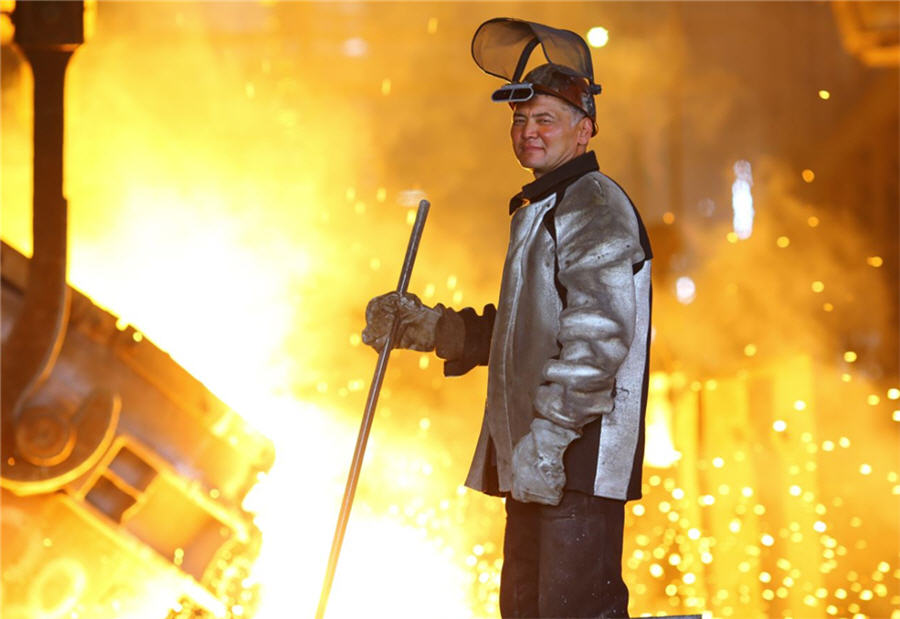
Image courtesy of Eurasian Resources.

US businessman James Cameron has offered to buy mining giant Eurasian Resources Group for $5 billion, a letter he sent to its board showed, as the company prepares to participate in a major expansion of Kazakhstan’s rare earths output.

ERG, a Luxembourg-based producer of copper, cobalt, aluminum and iron ore that is 40%-owned by the Kazakh government, said last year it had formed a task force to explore deposits of rare earth and rare metals in Kazakhstan.

Those minerals have gained particular attention in recent months as US President Donald Trump’s administration seeks alternatives to China to supply its domestic industry as a trade war between the countries escalates.

According to a source close to the company, talks between ERG and Cameron have been going on since the end of last year. Cameron shares a name with the Academy Award-winning film director, but the two are not related.

ERG, the Kazakh government, and Cameron, once a board chairman of former FTSE 250 mining firm Petropavlovsk, did not comment.

According to Cameron’s letter to the ERG board, a copy of which was obtained by Reuters, Goldman Sachs is in preliminary talks to advise on the deal.

“The financing will come from a combination of my own funds, as well as equity contributions from other investors in the United States, and possibly Australia and the Middle East,” the letter said.

Another source close to the transaction told Reuters the investor’s interest in ERG is partly linked to Kazakhstan’s potential in critical minerals exploration and mining. Kazakhstan aims to lift rare and rare earth metals output by 40% by 2028, with ERG seen taking a major role in the initiative.


This month, Kazakhstan’s government announced that its geologists had discovered a large rare earth deposit with estimated resources exceeding 20 million metric tons.

Kazakhstan’s Prime Minister Olzhas Bektenov said last year that data concerning the country’s deposits of rare and rare earth metals, a state secret since Soviet times, is being gradually declassified.

If confirmed, this discovery could position Kazakhstan among the top three holders of rare earth reserves globally, following China and Brazil.

ERG once produced one-fifth of the world’s gallium, a rare metal used in microchips and included on the US list of critical materials. However, it ceased production after China increased its output of the metal in 2012.

Beijing in December banned gallium exports to the US after a crackdown by Washington on China’s chip sector.

In 2013, ERG was taken private in a $4.5 billion buyout by its three founders, who each owned approximately 20% of the company, along with the government.

Last month, one of ERG’s founders and its board chairman, Kazakh-Israeli businessman Alexander Mashkevich, passed away, leaving only one of the original founders, Patokh Chodiev, among the current shareholders.

(By Gleb Bryanski and Mariya Gordeyeva; Editing by Guy Faulconbridge and Jan Harvey)


U.S. Eyes Kazakh Rare Earth Minerals

  • Kazakhstan plans to send a delegation to Washington for trade discussions with the United States, focusing on tariffs and other trade-related matters.

  • Despite US tariffs, Kazakhstan is adopting a non-confrontational approach, choosing engagement over retaliation and considering its membership in the Eurasian Economic Union.

  • The United States has expressed interest in Kazakhstan's rare earth mineral reserves, and the article also discusses the impact of sanctions on Russia and its trade relations with Kazakhstan.

Kazakhstan is adopting a non-confrontational stance as it finesses trade relations with the United States, seeking engagement rather than retaliation over the imposition of US tariffs.

Deputy Trade Minister Zhanel Kushukova told journalists on April 17 that the government intended to send a delegation to Washington to hold talks on a variety of trade issues, including tariffs. The Trump administration initially hit Kazakh goods with a 27-percent tariff rate, but subsequently scaled the rate back provisionally to 10 percent. In addition, the Trump administration has placed a 90-day pause on the imposition of tariffs.

“All countries are now interested in holding consultations with the USA about duties, and we are no exception,” the InBusiness.kz news agency quoted Kushkova as saying. “We are currently working on this issue within the government and are preparing for consultations.” She provided no timeframe for when the Kazakh delegation would depart for the United States.

As the tariff and other trade issues play out, Kazakh officials are embracing a do-no-harm approach in response to the constant zigs and zags of US policymaking. Kushkova emphasized that Kazakhstan had no intention of imposing reciprocal tariffs on US goods, citing the country’s membership in the Russia-led Eurasian Economic Union (EAEU) trade bloc as a factor in Astana’s policy of restraint. 

“A single customs tariff applies to five [EAEU member] states. That is, if any duties are to be changed on imported goods, then it can only be by a decision of the five,” Kushkova said. “But today, such an issue is not even considered.” Russia, the EAEU’s dominant member, has so far been exempted from US tariffs, even though it is subjected to extensive sanctions imposed by the US and European Union.

Kazakhstan in 2024 had the highest overall trade turnover with the United States of all Central Asian states, totaling $3.4 billion, of which more than two-thirds comprised US-bound Kazakh exports, mainly carbon resources and other commodities. Kazakh officials have noted that energy and other raw-material exports would be exempt from tariffs under the present US framework.

The planned Kazakh delegation would have plenty to discuss with US officials in Washington beyond tariffs. Since taking power, the Trump administration has repeatedly expressed interest to striking trade deals concerning Kazakhstan’s abundant reserves of rare earths. US interest in securing an increase in Kazakh mineral supplies is only intensifying in the wake of a Chinese ban on rare earth exports. 

The top US diplomat in Kazakhstan, Deborah Robinson, earlier in April reaffirmed US support “for private and public sector cooperation in the critical minerals sector.”

Meanwhile, data published by Kazakhstan’s State Statistics Agency provides fresh evidence that Russia is having an increasingly difficult time using the Central Asian nation as a back door for sanctions-busting trade.

Kazakh authorities insist that they are enforcing US and EU sanctions. Nevertheless, the country has long been suspected as an enabler of illicit transit in dual-use technology and goods that can help maintain Russia’s war effort in Ukraine. A variety of Kazakh-based entities have been added to the US sanctions list since the start of the Russia-Ukraine war in 2022.

Of late, however, Russian business representatives in Kazakhstan have complained about tightening financial regulations that hinder their ability to operate, according to reports distributed by state-controlled Russian media. 

The data published by QazStat supports the notion that Kazakhstan’s is becoming a less hospitable environment for sanctions-busting activity. The number of Russian companies operating in Kazakhstan has been gradually declining for a year now, following a long period of explosive growth, the official statistics show. 

In January 2022, the month before the outbreak of the Russia-Ukraine war, roughly 7,900 Russian entities operated in Kazakhstan. By the end of that year, the number nearly doubled to 15,700.

The number of actively operating Russian entities in Kazakhstan peaked during the first quarter of 2024, totaling 19,735. Since then, the numbers have declined by a few hundred each quarter, and stood at 18,366 as of April 1 of this year, a 7 percent drop over the four-quarter period.

By Eurasianet.org


Trump to fast-track permitting for 10 mining projects across US


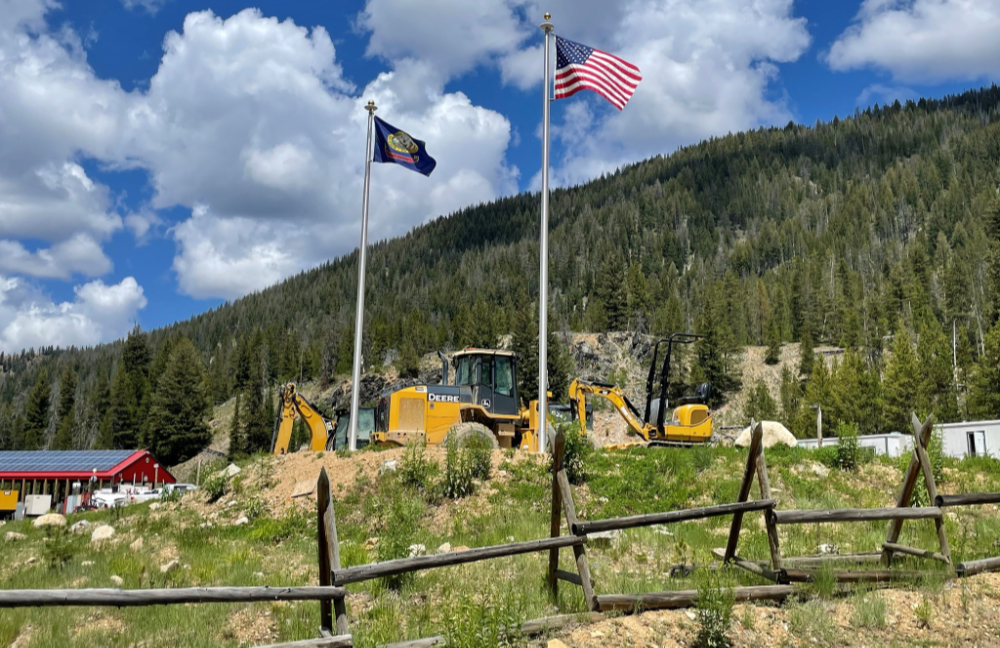
Credit: Perpetua Resources

The White House on Friday said it will fast-track permitting for 10 mining projects across the United States as part of President Donald Trump’s push to expand critical minerals production.

The projects – which would supply copper, antimony and other minerals – have been granted FAST-41 status, a federal initiative launched in 2015 to streamline approvals of critical infrastructure.

The White House said it will add more projects.

The initial 10 are listed on a US federal website where their permitting progress can be publicly tracked, part of what the Trump administration calls a push for greater transparency and faster permitting.

“This transparency leads to greater accountability, ensuring a more efficient process,” the White House said in a statement.


The move boosts a proposed Idaho antimony and gold mine from Perpetua Resources, a proposed Arizona copper mine from Rio Tinto, a proposed Montana copper and silver mine from Hecla Mining, expansion of Albemarle’s Nevada lithium mine, an Arkansas direct lithium extraction project from Standard Lithium, and an Alabama metallurgical coal project from Warrior Met Coal, among others. Metallurgical coal is used to make steel.

Perpetua said it was “honored by this selection … which validates the urgency and importance of our project for America’s economic and national security.”

Rio said it believes its Resolution copper project in Arizona “is vital to securing America’s energy future and infrastructure needs with a domestic supply of copper.”

Albemarle said it looks “forward to further engaging with the administration as it seeks to advance a US lithium supply chain.”

Standard Lithium and Warrior were not immediately available to comment.

South32’s Hermosa zinc-manganese project in Arizona was fast-tracked by former President Joe Biden, the first mine to receive the FAST-41 treatment.

Trump earlier this week ordered a probe into potential new tariffs on all US critical minerals imports, a major escalation in his dispute with global trade partners and an attempt to pressure industry leader China.

(By Ernest Scheyder; Editing by Lisa Shumaker and Chris Reese)