Wednesday, May 21, 2025


The Death Of Rural Russia Reflects Both Natural Shifts And Political Decisions – OpEd
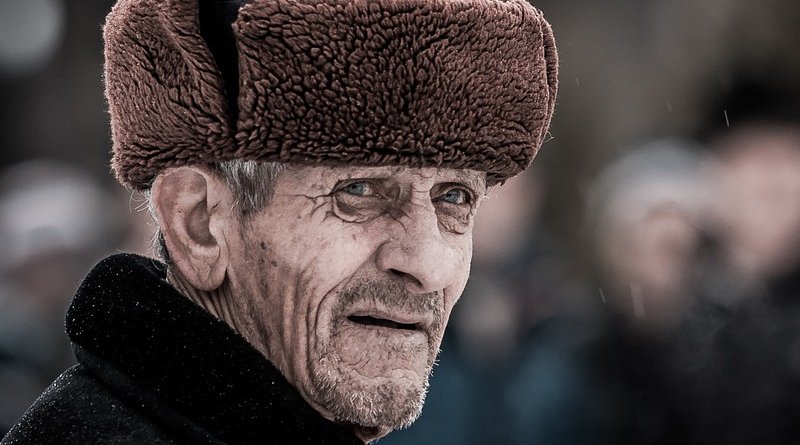
elderly russia man


By 

Over the last 30 years, more than 34,000 villages have disappeared from the map of Russia; and more are doing so at the rate of approximately one ever day. Since 2000, 28,000 schools of have closed, many in rural areas, leaving the country with only 40,000 a trend that has accelerated this process, according to government data. 


Of course, Dmitry Trifonov of the Versiya news portal says, this process began long ago in Soviet times and is not uniquely the produce of post-Soviet rule. But it has been exacerbated since then, especially as there is now more support for having villages disappear (versia.ru/po-kakim-prichinam-proisxodit-depopulyaciya-rossijskix-dereven-i-chto-zhdet-rossiyu-bez-sela).

In the 1960s and 1970s, Soviet officials identified “villages without prospects” and planned of their closure. But the policy was unpopular and in 1980, it was officially suspended. But Trifonov says, there are still many officials who are promoting that idea to improve efficiency and save money.

“Certain experts consider that behind the withering away of villages stand not only objective causes but definite interests,” he continues. Among the most prominent of these are agro-industrial concerns which want to do away with the villages so that they can farm regions without any restrictions the population may require.

That combing villages and moving people into larger district centers is more economically efficient, Trifonov says, is beyond question more efficient. But it ignores the feelings of the populations involved and even if looked at more generally the broader interests of the state as a whole.

Supporters of consolidation argue that a village is like an organism and say that “sometimes amputation of a gangrenous extremity will save the rest of the body.” But, and this is critical, the journalist continues, “behind each such ‘amputated’ settlement are people who live on the land of the ancestors” and are deeply attached to it.


To move them is to “destroy part of their identity. Besides, a massive resettlement into cities intensifies the burden on the infrastructure of the latter” and may end by costing more than any of the much-ballyhooed savings from taking that step. Moreover, doing it in some places will alienate Russians in other places where this process has not yet occurred.

Trifonov is clearly an opponent of untrammeled consolidation. And he suggests there are compelling reasons for viewing any such plans with skepticism. They may lead to a reduction of agricultural production and make Russia more dependent on imports, they may cost the country the unique culture villages provide, and they put the people involved at risk. 

If this process takes place gradually and with the full consultation of all involved, then it is probably inevitable and can be a positive thing. But if it is pushed through by officials in Moscow who don’t understand what is at stake in the regions, then there is a high probability of disaster, he suggests. 


Central Asian Migrants A Problem For Their Homelands Now And When They Return – Analysis

By 

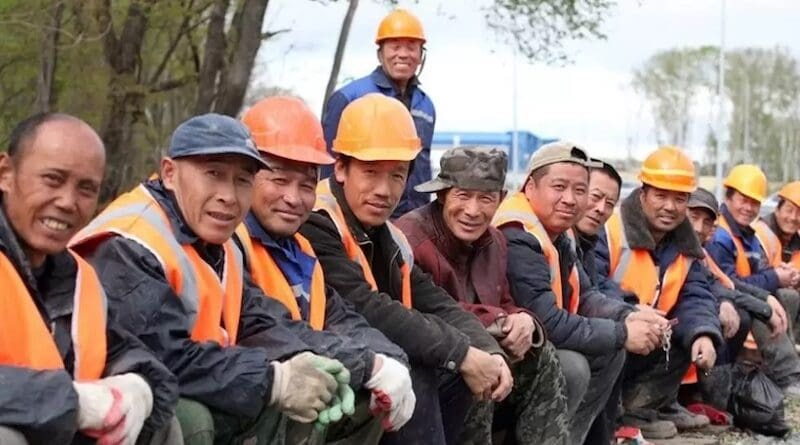
The problems Central Asian migrant workers pose for Russia have long caused many in Russia to want them to leave, but the challenges these same people represent for their own countries have not drawn the same attention.


Many assume that payments sent home by migrant workers and the positive effects of emigration on Central Asian overpopulation and unemployment make migrant work overwhelmingly positive for Central Asians and their governments (see EDM, May 15, 2024). Even though migrant labor has real mutual benefits for both Russia and Central Asian governments, outmigration also causes serious problems in Central Asia. The loss of large numbers of young men in Central Asia removes fathers and socializers of the younger generation (see EDM, May 9, 2024.

As a significant share of these young men return home, in large part due to rising xenophobia in Russia, they will be faced with a changed social landscape and lower incomes (Window on Eurasia, April 3, 2024; see EDM, May 15, 2024). What began as a pressure valve for overpopulation and unemployment in Central Asia may trigger social unrest as migrants return home.

Central Asia has remained almost the only region of the world where population growth continues to exceed replacement levels (Window on Eurasia, December 22, 2024, February 18). Countries in the region have viewed outmigration as a solution and have been more or less pleased that the Russian Federation has been willing to take so many of them in (see EDM, February 28, 2017).

Outmigration not only reduces unemployment and social pressures in Central Asia but also provides additional cash flow for the population and government through payments sent home by those working abroad (see EDM, February 28, 2017; RITM Evrazii, May 13). Because Central Asia reaps these benefits, relatively little attention has been given to the problems created by outmigration, and even less to how those problems will be exacerbated if and when Central Asians working in the Russian Federation return home.

Central Asian governments are paying more attention to the negative consequences of outmigration as workers return home in large numbers. Researchers in Central Asia are focusing their attention on how outmigration has “changed the social and economic structure of the region” through the removal of young men aged 18 to 35 who would otherwise help raise children (Bugin Info, May 14). These men left both because unemployment in their home countries was so high and because pay in the Russian Federation was much higher (Bugin Info, May 14). The exodus of young men from Central Asia has become so severe that locals speak of “cities without men” and the resulting societal changes (Bugin Info, May 16).


The scale of outmigration is massive. In 2023, the last year for which there is comparable data for all five countries in the region, there were approximately 10 million Central Asian laborers working abroad. In Tajikistan, this was a quarter of the working population; in Kyrgyzstan, about 20 percent; and in Uzbekistan, 10 percent. In 2022, migrant workers sent home $14 billion in transfer payments, which constituted 30 percent of Tajikistan’s gross domestic product, 25 percent of Kyrgyzstan’s, and 10 percent of Uzbekistan’s (Bugin Info, May 14).

For a time, the influx of money and the role of jobs abroad in driving down unemployment at home obscured the problems of massive outmigration. As more Central Asian migrants return home rather than moving abroad and transfer payments are dropping, however, the social problems caused by outmigration are becoming ever more obvious. 

In rural districts of Central Asia, “the share of men aged 18 to 35 has fallen 20 to 30 percent over the last 15 years,” and in some of parts of Tajikistan and Kyrgyzstan “up to 80 percent of the adult male population is absent for a large part of the year,” according to data compiled by the information portal Bugin Info (Bugin Info, May 16).

That means that in Tajikistan, an unprecedented 40 percent of the households are now headed by women. The situation in the other four countries is somewhat less extreme, but an increase in female-headed households is now characteristic of the region as a whole. Regional experts argue that “the lengthy absence of men is destroying family structures,” as evidenced by the collapse of traditional gender roles within families and dramatic increases in divorce (Bugin Info, May 16). When migrant workers return home, many find it hard to cope with the new dynamics, resulting in an increase in familial conflict and domestic violence (Bugin Info, May 16).

Fewer young men in rural regions reduces the “potential for social change,” as they typically drive protests and reform (Bugin Info, May 16). Outmigration of large swaths of young men thereby contributes to political stagnation and, upon their return, sets the stage for conflict between those who want patriarchal social structures to prevail and those who want women to continue in leadership roles adopted during the absence of their families’ patriarch. Without “systematic reforms in the economy, education, and social policies” of Central Asia, the loss of young men to migrant labor and separate problems created by their return will “threaten the stability of the region” (Bugin Info, May 16).

Addressing the challenges that cause outmigration would be difficult for any government, particularly so for the hard-pressed and resource-short governments of Central Asia. Migrant workers returning home will collapse payments sent to Central Asia from abroad and increase domestic unemployment rates, meaning that governments are unlikely to have the capital to make necessary reforms in a timely fashion. If that proves to be the case, then the problem of “cities without men,” which for many outsiders may appear to be a sociological curiosity, is likely to take center stage in the near future and become the source of challenges far greater than other developments which regularly attract more attention.  


Paul Goble

Paul Goble is a longtime specialist on ethnic and religious questions in Eurasia. Most recently, he was director of research and publications at the Azerbaijan Diplomatic Academy. Earlier, he served as vice dean for the social sciences and humanities at Audentes University in Tallinn and a senior research associate at the EuroCollege of the University of Tartu in Estonia. He has served in various capacities in the U.S. State Department, the Central Intelligence Agency and the International Broadcasting Bureau as well as at the Voice of America and Radio Free Europe/Radio Liberty and at the Carnegie Endowment for International Peace. Mr. Goble maintains the Window on Eurasia blog and can be contacted directly at paul.goble@gmail.com .


How President Trump’s Middle East Tour Signaled A Bold Reset In US Foreign Policy – Analysis


By 

By Jonathan Gornall


Standing ovations and scenes of jubilation are not normally witnessed at investment forums. But there was nothing normal about the speech President Donald Trump delivered at the US-Saudi Investment Forum in Riyadh last week.

Speaking at the beginning of a four-day tour of the region, Trump’s geopolitical surprises came thick and fast.

“After discussing the situation in Syria with the (Saudi) crown prince,” he said, “I will be ordering the cessation of sanctions against Syria in order to give them a chance at greatness.”

The last few words were almost drowned out by the wave of applause, which was followed by a standing ovation led by Crown Prince Mohammed bin Salman.

Although the announcement came as a big surprise to most, including seasoned analysts and even some in Trump’s inner circle, it was not entirely unexpected.


In December, for the first time in a decade, US officials had flown to Damascus, where they met with Ahmad Al-Sharaa, the commander of Hay’at Tahrir Al-Sham, which just two weeks earlier had led the dramatic overthrow of the Bashar Assad regime after 14 years of civil war.

As a result of that meeting, after which the US delegation said it had found Al-Sharaa to be wholly “pragmatic,” the US removed the longstanding $10 million bounty on his head. A month later, Al-Sharaa was appointed president of Syria.

The day after last week’s investment forum in Riyadh, Trump sat down for a face-to-face meeting with Al-Sharaa that produced what might well prove to be one of the most historic photographs in the region’s recent history: the Saudi crown prince, flanked by Trump and Al-Sharaa, standing in front of the flags of the US, Saudi Arabia, and Syria.

The photograph sent a clear message: For the US, and for a region all too often subject to the whims of its largesse and military approbation, all bets were off.

The day before, Trump had more surprises for his delighted audience at the King Abdulaziz International Conference Center.

“I have never believed in having permanent enemies,” the president said, and “I am willing to end past conflicts and forge new partnerships for a better and more stable world, even if our differences may be very profound, which obviously they are in the case of Iran.”

He praised local leadership for “transcending the ancient conflicts and tired divisions of the past” and criticized “Western interventionists … giving you lectures on how to live or how to govern your own affairs.”

In a message that will have echoed loudly in Kabul, Baghdad, and even Tehran, he added: “In the end, the so-called ‘nation-builders’ wrecked far more nations than they built — and the interventionists were intervening in complex societies that they did not even understand themselves.”

Responding to Trump’s announcements, Sir John Jenkins, a seasoned diplomat who served as British ambassador to Saudi Arabia, Iraq, and Syria, and as consul-general in Jerusalem, told Arab News: “I think this could be a real turning point.

“Post-Arab Spring demographics — lots of young people wanting a better life and better governance but not wanting to get there through ideology or revolution — and Mohammed bin Salman, Trump, and Syria have all come together at a singular time.”

Trump’s speech last week in Riyadh, he said, “was extraordinary, an intellectually coherent argument, and he means it.

“If you can form a cohesive bloc of Sunni states — the Kingdom of Saudi Arabia, the rest of the GCC, Jordan, Syria and Egypt — which all aim in different ways to increase prosperity and stability instead of the opposite, then you potentially have a bloc that can manage regional stability and contain Iran in a way we haven’t had for decades. And that gives the US the ability to pivot.”

But a lot could still go wrong. “Iran, which is already trying hard to undermine Syria, will continue to play games,” said Jenkins.

“And then there’s Israel itself: Does it want strong and stable Sunni neighbors or not? It should do, but I’m not sure Bezalel Smotrich (Israel’s far-right finance minister, who this month vowed that Gaza would be ‘entirely destroyed’) and Itamar Ben-Gvir (the minister of national security who is pressing for Israel to seize and occupy Gaza) think so. That’s a headache for Israel’s Prime Minister (Benjamin) Netanyahu.

“But if you hook all this up to a possible US-Iran deal, which will give Iran incentives not to have sanctions come crashing back down, then there’s something there.”

For Al-Sharaa, even six months ago, the dramatic turnaround in his personal circumstances would have seemed fantastic, and as such is symptomatic of the tectonic upheavals presaged by Trump’s visit to the region.

Almost exactly 12 years ago, on May 16, 2013, the then-leader of the Al-Qaeda-affiliated Nusra Front, judged responsible for “multiple suicide attacks throughout Syria” targeting the Assad regime, had been designated as a terrorist by the US Department of State.

Now, as the very public beneficiary of the praise and support of Trump and the Saudi crown prince, Al-Sharaa’s metamorphosis into the symbol of hope for the Syrian people is emblematic of America’s dramatic new approach to the region.

In Doha, the president chose the occasion of a visit to a US military base to make nice with Iran, a country whose negotiators have been quietly meeting in Oman with Steve Witkoff, Trump’s special envoy, to discuss a nuclear deal.

“I want them to succeed,” said Trump, who in 2018 unilaterally withdrew the US from the original deal, fashioned by President Barack Obama and European allies, and reimposed economic sanctions. Now, he said in Doha last week, “I want them to end up being a great country.”

Iran, he added, “cannot have a nuclear weapon.” But, in a snub to Israel, which has reportedly not only sought US permission to attack Iranian enrichment facilities, but has even asked America to take part, he added: “We are not going to make any nuclear dust in Iran. I think we’re getting close to maybe doing a deal without having to do this.”

In fact, Trump’s entire trip appeared to be designed as a snub to Israel, which did not feature on the itinerary.

A week ahead of the trip, Trump had announced a unilateral ceasefire deal with the Houthis in Yemen, who had sided with Hamas after Israel mounted its retaliatory war in Gaza in October 2023.

Under the deal, brokered by Oman and with no Israeli involvement, the US said it would halt its strikes in Yemen in exchange for the Houthis agreeing to stop targeting vessels in the Red Sea.

On May 12, the day before Trump arrived in Saudi Arabia, Hamas released Edan Alexander, the last surviving US citizen held hostage in Gaza, in a deal that came out of direct talks with no Israeli involvement.

In a post on Truth Social, Trump celebrated “a step taken in good faith towards the United States and the efforts of the mediators — Qatar and Egypt — to put an end to this very brutal war.”

Trump, said Ahron Bregman, a former Israeli soldier and a senior teaching fellow in King’s College London’s Institute of Middle Eastern Studies, “threw Netanyahu, in fact Israel, under the bus.

“He totally surprised Netanyahu with a series of Middle Eastern diplomatic initiatives, which, at least from an Israeli perspective, hurt — indeed, humiliate — Israel,” he told Arab News.

“In the past, if one wished to get access to the White House, a good way to do so was to turn to Israel, asking them to open doors in Washington. Not any longer. Netanyahu, hurt and humiliated by Trump, seems to have lost his magic touch.

“Trump despises losers, and he probably regards Netanyahu as a loser, given the Gaza mess and Netanyahu’s failure to achieve Israel’s declared aims.”

It is, Bregman said, Trump’s famously transactional approach to politics that is shifting the dial so dramatically in the Middle East.

“Trump looks at international relations and diplomacy through financial lenses, as business enterprises. For Trump, money talks and the money is not to be found in Israel, which sucks $3 billion dollars a year from the US, but in the Gulf states.

“Trump is serious about America First, and Israel doesn’t serve this aim; the Gulf states do. For now, at least, the center of gravity has moved to the Gulf states, and the Israeli status in the Middle East has weakened dramatically.”

For Ibrahim Al-Marashi, associate professor at California State University, San Marcos, the events of the past week stand in sharp contrast to those during Trump’s first presidency.

“During the first Trump administration, World War Three almost broke out, with aircraft carriers from my native San Diego deployed continuously to the Gulf to deter Iran, the (Houthi) strike on Saudi Aramco, and the assassination of Iranian Gen. Qassem Soleimani in Baghdad at the beginning of 2020,” he told Arab News.

“Five years later, the Trump administration seems to be repeating the Nixon-Kissinger realist doctrine: ‘America has no permanent friends or enemies, only interests.’ In that regard, his administration might forge relations with Iran as Nixon did with China.”

Kelly Petillo, program manager for the Middle East and North Africa at the European Council on Foreign Relations, likewise views last week’s events as the beginning of “a new phase of US-Gulf relations.”

Among the remarkable developments is “Israel’s relative sidelining and the fact that Israel does not have the privileged relationship with Trump it thought it had,” she told Arab News. “The US agenda now is wider than unconditional support to Israel, and alignment with GCC partners is also key.

“Saudi Arabia, Qatar, and the UAE have clearly become of key strategic importance to the US, with new deals on the horizon and the promise of expanding these relations. The announcements of more commercial ties have been accompanied with political declarations too, which overall represented positive developments for the region.”

Ultimately, said Caroline Rose, a director at the New Lines Institute, “Trump’s visit to the GCC highlighted two of his foreign policy priorities in the Middle East.

“Firstly, he sought to obtain a series of transactional, bilateral cooperation agreements in sectors such as defense, investment and trade,” she told Arab News.

“The second objective was to use the trip as a mechanism that could change conditions for ongoing diplomatic negotiations directly with Iran, between Hamas and Israel, and even Ukraine and Russia.”

It was, of course, no accident that Trump chose the Middle East as the destination for the first formal overseas trip of his second presidency.

“The Trump administration sought to court Gulf states closely to signal to other partners in the region, such as Israel, as well as the EU, that it can develop alternative partnerships to achieve what it wants in peace negotiations.”

Although a strategy to move forward with specific peace negotiations was “notably absent during his trip,” it was clear that “this trip was designed to lay the groundwork for potential momentum and to change some of the power dynamics with traditional US partners abroad, sowing the seeds of goodwill that could alter negotiations in the Trump administration’s favor.”


Arab News

Arab News is Saudi Arabia's first English-language newspaper. It was founded in 1975 by Hisham and Mohammed Ali Hafiz. Today, it is one of 29 publications produced by Saudi Research & Publishing Company (SRPC), a subsidiary of Saudi Research & Marketing Group (SRMG).

Betrayal In The Himalayas: Trump’s Sunni Bloc, India’s Isolation, And The Specter Of A New Geopolitics – OpEd


Baisaran Valley, near Pahalgam, Jammu and Kashmir, India.


By 


A Bloodied Silence Echoes from Pahalgam

The dust has barely settled on the blood-soaked soil of Pahalgam, yet a colder realization haunts India’s strategic mindscape: the betrayal is no longer an abstract suspicion but a geopolitical certainty. In the aftermath of the recent terror attacks, the United States—India’s ostensible strategic partner—appears not merely indifferent but complicit in reshaping South Asia’s balance in ways that dangerously expose New Delhi. The question no longer is if India was forsaken—but why—and what this recalibration spells for the future of the region and the world.


The whispers are now louder: that U.S. arms deals with Turkey, particularly the sale of AIM-120C-8 AMRAAMs—long-range air-to-air missiles—may be enabling Pakistan, albeit indirectly. Turkey, a NATO ally, is increasingly enmeshed in defense collaboration with Pakistan. Their joint fighter development initiatives, drone exports, and missile transfers underscore an unmistakable strategic alignment. Could these high-end U.S.-supplied weapons eventually land in Pakistani hangars? The possibility is no longer implausible. For India, such a shift could upend air superiority and embolden a neighbour already steeped in proxy warfare.

America’s Strategic Amnesia: A Double Game in South Asia?

This covert empowerment of Pakistan under a Trump-led foreign policy feels particularly galling. India has often been showcased by Trump as a natural ally in countering China’s rise—a democratic counterbalance, a regional stabilizer. Yet, America’s recent moves betray a dangerous incoherence, or worse, an emerging grand strategy that undermines India’s regional standing.

Is this merely Trump’s trademark trans-nationalism—where arms deals outweigh alliance fidelity—or is there something deeper and more sinister underway? The calculated marginalization of India—paired with the strategic cultivation of Turkey-Pakistan relations—reveals a deeper geopolitical architecture, driven less by democratic values than by sectarian pragmatism and energy-centric alliances.

The Deafening Silence of Allies: A Solitary India Stares Back

As India reeled from Pahalgam and launched Operation Sindoor in retaliation, the world’s silence was as loud as any condemnation. Russia—our historic defense partner—offered only vague appeals for restraint. Israel—whose intelligence and defense ties with India are otherwise celebrated—stood conspicuously mute. And what of the Quad? The much-heralded Indo-Pacific alliance of the U.S., Japan, Australia, and India crumbled under the weight of realpolitik, issuing no robust joint statement, no meaningful strategic support.

This diplomatic vacuum reveals a harsh truth: India may have been overestimating its moral leverage. The world has little patience for sentiment, no matter how righteous the cause. It is here that Modi’s so-called “Gandhigiri diplomacy”—an appeal to shared values and soft power—stands exposed. India’s self-styled ambition as a Vishwaguru—a moral beacon to the world—has met the unblinking indifference of a world increasingly governed by transactional geopolitics.


Trump’s Sunni Bloc: A Sectarian Realignment in the Making?

A more disturbing hypothesis looms: that Donald Trump, whether by design or through the gravitational pull of his allies, is orchestrating the emergence of a Sunni super-bloc to contain Shia Iran. The pieces fit alarmingly well. His first foreign trip was to Riyadh. He pursued historic arms deals with Saudi Arabia, normalized Israel-Gulf relations, and skirted Palestinian justice with no remorse. If this architecture includes Saudi Arabia, UAE, Qatar, Turkey, Pakistan, and Bangladesh—as some analysts now fear—India is not merely sidelined. It is ostracized.

This emerging coalition, veiled under the rhetoric of counterterrorism and modernization, conceals a deeper sectarian agenda—Sunni ascendancy over Shia Iran. And in this realignment, India—with its nuanced Iran ties, a large Muslim minority, and an insistence on non-alignment—does not fit.

Here, the irony is biting: while India seeks a plural world order rooted in strategic autonomy, it may find itself punished for its moderation. If Trump becomes, metaphorically, the “Mohammad Trump” of a new Sunni geopolitical order, India’s independent posture could be viewed as not neutrality—but obstruction.

The Iran Conundrum: Can India Walk the Tightrope?

India’s ties with Iran are deep and indispensable—ranging from energy security to the strategic Chabahar port project, a counter to China’s Gwadar foothold in Pakistan. Yet, should a Trump-led Sunni bloc emerge, pressure on India to abandon these ties will mount. Compliance risks strategic loss; defiance invites geopolitical isolation. Neither is desirable. But as global alignments harden, India will have little room for equivocation.

Trump’s foreign policy ethos—based on showmanship, sectarian favor, and transactional loyalty—does not easily tolerate nuanced diplomacy. India, the perennial balancer, could become collateral in a global alignment that sees moderation as weakness.

The Strategic Reckoning: India Must Wake Up

Pahalgam delivers a sobering verdict: in the shifting calculus of global power, India stands isolated.. In the ruthless theatre of power politics, there are no friends, only converging interests. The betrayal in the Himalayas must now serve as India’s strategic moment of awakening.

The future demands a radical rethinking of India’s diplomatic doctrine:

From Gandhigiri to Realpolitik: A Fourfold Imperative

First, India must prioritize defense indigenization. Dependence on foreign arms suppliers is a vulnerability. Autonomy in critical technologies—from drones to cyber warfare—must become a national obsession.

Second, alliances must be real, not rhetorical. Partnerships must be transactional too—but on India’s terms. This means pressing Russia for unequivocal solidarity, demanding clarity from Israel, and renegotiating terms with the Quad.

Third, India’s South Asia strategy requires rebooting. From Bangladesh to Nepal, New Delhi must outmanoeuvre Chinese influence not with arrogance, but with strategic empathy and robust economic engagement.

Fourth, India must carefully navigate the Sunni-Shia divide. While abstaining from sectarian alignments, it must secure its energy and strategic interests without appearing passive or pliant.

No More Illusions: Strategic Solitude as Strength

What emerges is a moment of solitude that need not be weakness. For India, this could be the beginning of a more muscular foreign policy—shorn of sentiment, grounded in national interest, and attuned to a multipolar, morally complex world.

The age of Gandhigiri is over. So too, perhaps, the illusion of an Atlanticist safety net. India must now embrace Nehruvian realism, not as nostalgia, but as necessity: a clear-eyed assessment of power, backed by preparation for any eventuality.

Pahalgam was not merely an attack on the soil. It was a strike at the soul of India’s diplomacy. The world turned away. India must now turn inward—and rise.

Debashis Chakrabarti

Debashis Chakrabarti is an international media scholar and social scientist, currently serving as the Editor-in-Chief of the International Journal of Politics and Media. With extensive experience spanning 35 years, he has held key academic positions, including Professor and Dean at Assam University, Silchar. Prior to academia, Chakrabarti excelled as a journalist with The Indian Express. He has conducted impactful research and teaching in renowned universities across the UK, Middle East, and Africa, demonstrating a commitment to advancing media scholarship and fostering global dialogue.