Wednesday, May 21, 2025


US-sanctioned ex-Ukrainian MP shot dead near Madrid

US-sanctioned ex-Ukrainian MP shot dead near Madrid
Andriy Portnov, a former senior aide to the country's former pro-Russian president Viktor Yanukovych who has been sanctioned by the US was shot in the chest and head outside a private school near Madrid where he was living in exile by a group of assailants. / bne IntelliNews
By bne IntelliNews May 21, 2025

Andriy Portnov, a former Ukrainian lawmaker sanctioned by the United States and a senior aide to ex-President Viktor Yanukovych, was shot dead outside Madrid, a Spanish police source told Agence France-Presse on May 15.

The killing occurred in the affluent suburb of Pozuelo de Alarcón, where “several people” opened fire on Portnov shooting him in the chest and back and head as he was preparing to climb into a vehicle, outside of an upmarket American private school in Pozuelo de Alarcón, Spain, after dropping off his children. The assailants reportedly fled the scene on foot toward a nearby wooded area. A manhunt is underway.

In a message to parents seen by the Financial Times, the American School of Madrid said: “It was a fatal shooting. We believe the victim is an ASM father, but formal identification by police is pending.” The school added that the area was secure and “all students are safe on campus”.

Portnov served as deputy head of the presidential administration under Yanukovych who fled Ukraine for Russia during the Euromaidan protests in 2014. A close political ally of Russian President Vladimir Putin, Yanukovych’s government was famously corrupt and looted the country’s reserves.

Portnov left Ukraine after Yanukovych’s ousting, living for a while in Russia and Austria before returning to Ukraine in 2019 following the election of President Volodymyr Zelenskiy. His return was seen by critics as emblematic of lingering pro-Russian influence in Ukraine’s political and judicial systems.

However, in 2021 the US Department of the Treasury imposed sanctions on Portnov, accusing him of leveraging his positions to “buy access and decisions in the Ukrainian judiciary and law enforcement sectors, and to undermine reform efforts.”

In its indictment of him OFAC said that, “Portnov took steps to control the Ukrainian judiciary, influence associated legislation, sought to place loyal officials in senior judiciary positions, and purchase court decisions”, the FT reports. 

He was also investigated for treason for aiding Russia’s invasion of Russia and also on several counts of corruption. 

The sanctions included asset freezes and visa restrictions under the Global Magnitsky Act targeting corruption and human rights abuses.

According to local media reports, Portnov left Ukraine again in 2022, evading the wartime restrictions prohibiting men of military age from departing the country. He allegedly used political connections to bypass the ban following Russia’s full-scale invasion in February of that year.

Spanish authorities have launched an investigation into the shooting but have not disclosed a possible motive. No arrests have been made at the time of reporting.

Born on 27 October 1973 in Luhansk, Portnov began his political career with the All-Ukrainian Union "Fatherland" party, where he served as a member of parliament from 2006 to 2010. During this period, he was involved in legal reforms and was elected to the High Council of Justice of Ukraine in 2009.

Portnov entered into the service of Yanukovych's administration in April 2010 as Deputy Head of the Presidential Administration and Head of the Main Directorate for Judicial Reform. He was instrumental in drafting the 2012 Criminal Procedure Code of Ukraine, which he claimed introduced a "competitive model of criminal proceedings of the European type." However, human rights activists objected to the new code saying it undermined justice and allowed for political control of Ukraine's legal system.

Portnov was also associated with the controversial "dictatorship laws" passed on 16 January 2014, which significantly limited constitutional rights and were directed against the Euromaidan protests. Although he denied direct involvement, these laws were passed without proper parliamentary procedures, according to reports at the time.

Following the Euromaidan revolution in February 2014, Portnov fled Ukraine, citing threats to his life. He lived in Russia and later in Vienna, Austria, where he practiced law. During this time, he faced multiple legal challenges, including investigations into his alleged involvement in the mass killings during the 2014 protests and accusations of corruption. In 2015, the European Court of Justice ruled in his favour, stating that the EU's sanctions against him were based solely on a letter from the Ukrainian Prosecutor General's Office without sufficient evidence.

Portnov returned to Ukraine in May 2019. He became active in media, launching the "PortNOW" programme on the 112 Ukraine TV channel. He also filed multiple legal complaints against former President Petro Poroshenko. In 2019, he was involved in a controversy with journalists from Radio Liberty's "Schemes" programme, where he published personal data of journalists, leading to criminal investigations for alleged threats and obstruction of journalistic activities.


Military tensions rising as France deploys naval ship in the Baltic Sea for first time to monitor Russian shadow tankers

Military tensions rising as France deploys naval ship in the Baltic Sea for first time to monitor Russian shadow tankers
France has sent a spy ship to the Baltic Sea for the first time to monitor Russia's shadow fleet tankers dodging oil sanctions / bne IntelliNews
By bne IntelliNews May 21, 2025


For the first time, the French Navy has deployed the 101-meter-long intelligence ship Dupuy de Lôme to the Baltic Sea to monitor Russia’s shadow fleet of oil tankers.

The mission’s goal is to intercept radio signals related to Russian activities — including monitoring “shadow” tankers that are circumventing the EU’s oil price cap sanctions.

Tensions have risen dramatically in the last week after the Estonian navy attempted to detain another shadow fleet tanker attempting to reach the Russian port of Primorsk. Russia sent an SU-35 fighter jet to escort the ship into port in the first time Russia’s military has faced off directly with the naval forces of a Nato member.

Also on the same day a sanctioned shadow fleet tanker was carrying out “suspicious manoeuvres” that might threaten an undersea power cable linking Poland with Sweden, Polish Prime Minister Donald Tusk said in a post on X on May 21.

"After the effective intervention of our military, the ship sailed to one of the Russian ports," he added. He said the Polish Navy's ORP Heweliusz was sailing to the scene.

The 600-megawatt undersea cable links the Swedish coast near Karlshamn with Ustka in northern Poland and allows for cross-border supplies of power when electricity is cheaper in the other system, Reuters reports.

The EU introduced a seventeenth sanctions package on May 20 that widens the number of shadow fleet tankers singled out for restrictions to a total of 350. However, as under international maritime law ships enjoy the “innocent right of passage” through another country’s waters without having to seek permission. If an EU country uses its navy to stop shadow fleet tankers for inspection, or any other reason, then that is deemed a “naval blockade” under international law, which is an act of war. US president John F Kennedy faced a similar dilemma when he was trying to prevent Soviet ships from delivering missiles to Cuba in 1962, hence setting up a naval “quarantine” around Cuba instead.

Russia has vowed to defend its shipping interests in the Baltic Sea using “all means” at its disposal after the Estonian attempt to stop a Russian-bound oil tanker prompted a brief one-minute Nato airspace violation by the Russian fighter jet and the subsequent detention of a Greek-owned vessel.

Kremlin spokesman Dmitry Peskov said the same day that Moscow was prepared to act “decisively” following what it called a “pirate attack” by Estonia.

“As the latest events related to the attempted pirate attack on one of the tankers showed, Russia demonstrated it is capable of responding quite harshly,” Peskov told reporters. He added that Russia was ready to use “all means” within international law and had a broad range of options available to protect its vessels.

Following the Estonian navy incident, in apparent retaliation, a few days later Russian authorities detained a Greek-owned oil tanker on May 18 that had departed from an Estonian port. The vessel has since been released, but the arrest of the ship is another click in the ratcheting tensions in the Baltic Sea.

The deployment of the French intelligence ship, which is part of the French navy, but pointedly not a battleship, will only increase tensions further.

French defence officials confirmed the deployment of the spy ship, which is equipped with radar and electronic tracking systems, is to better follow the tankers that are listed to obscure ownership, sail under flags of convenience, and often disable their transponders to evade detection.

France’s involvement marks a rare public move by a major Western military power in the enforcement of maritime sanctions in the Baltic. Paris has not disclosed the duration or scope of the surveillance mission, but officials said it is aimed at increasing intelligence-gathering capabilities and supporting EU monitoring efforts.

Western officials estimate that Russia is using over 600 tankers globally to bypass sanctions, many of which operate without proper safety protocols or insurance coverage.


Mexico's oil champion Pemex grows isolated amid mounting ecological damage

Mexico's oil champion Pemex grows isolated amid mounting ecological damage
Pemex oil infrastructure looms over Mexico's coastline as contamination spreads at an alarming rate, with the state-owned giant responsible for nearly 80% of the country's 1,146 oil spills since 2008. / Carlos Jairo


By Alek Buttermann May 21, 2025

Petróleos Mexicanos (Pemex), Mexico’s state-owned oil company, is facing growing criticism for its significant role in hydrocarbon-related environmental damage and its apparent lack of sufficient response. With mounting pressure from environmental advocates, regulatory bodies, and the insurance sector, Pemex finds itself increasingly isolated in a world shifting towards sustainable energy practices.

Between 2008 and 2024, Mexico documented 1,146 hydrocarbon contamination incidents impacting over 17mn cubic metres of soil. Of these, 79%—equivalent to 13.6mn cubic metres—were attributed to Pemex alone, according to official figures from the Secretariat of Environment and Natural Resources (Semarnat), as reported by El Economista. The same report points out that 259 cases, or 22.6% of the total, still lack an approved environmental remediation plan, suggesting major gaps in the company’s environmental governance.

The distribution of these contamination events spans multiple administrations. During Felipe Calderón’s presidency (2008–2012), 620 cases were reported—the highest to date. This figure dropped to 259 under Enrique Peña Nieto (2013–2018), but rose again to 267 under former president Andrés Manuel López Obrador (2019–2024), indicating a recent uptick in incidents, as documented by El Economista.

Particularly concerning is the situation in Mexico’s coastal states. Environmental organisations have warned of severe ecological and human health risks.

Juan Manuel Orozco of Conexiones Climáticas stated in an interview with La Jornada that over 270 moderate to severe oil spills linked to Pemex occurred between December 2018 and July 2024, with 70 in Tabasco and 62 in Veracruz alone. These spills have disrupted local ecosystems and undermined economies reliant on fishing and tourism.

Orozco also criticised Pemex’s response to a recent spill involving a pipeline between the Akal-C platform and the Dos Bocas terminal. Although the event was reported to the Agency for Safety, Energy and Environment on April 26, the delay in public disclosure and lack of transparent investigation demonstrate the company’s persistent operational opacity.

Environmental remediation efforts have also come under scrutiny. According to La Jornada, Pemex’s approach to cleaning up marine spills often involves sinking contaminated residues—including dangerous heavy metals—into seabeds, resulting in bioaccumulation in fish, shellfish, and other marine species. This not only affects biodiversity but also the health and income of coastal communities.

In parallel, Pemex’s environmental liabilities are beginning to dent its financial credibility. Swiss Re, a major reinsurance provider, recently announced it would no longer support oil companies contributing significantly to global CO₂ emissions.

During the “Adaptación Climática” forum, Francisco Díaz of Swiss Re said that projects lacking adequate environmental impact assessments, including new oil platforms and pipelines, would be excluded from coverage, as reported by El Financiero. Although Pemex was not named directly, the implications are clear given its carbon-intensive operations.

Swiss Re’s decision reflects a broader shift in the insurance industry, which is increasingly prioritising sustainability. As noted by consultant René Ríos, majors like Pemex will need to adapt their business models to integrate climate risk and environmental responsibility or face shrinking access to essential insurance services.

Years of environmental damage, growing public health risks, and shrinking financial backing have exposed serious flaws in Pemex's operations. Without urgent and concrete reforms, the already cash-strapped company is heading towards deeper ecological harm, further financial instability, and a damaged reputation it may not recover from.

Data centre power use expected to increase 20-fold in next five years

Data centre power use expected to increase 20-fold in next five years
The first data centres used the same amount of power as 20,000 homes. By 2030 they will use the same amount of power as Japan. / bne IntelliNews


By bne IntelliNews May 20, 2025

The first data centres consumed as much power as 20,000 homes, but the largest today use the equivalent amount of power as 100,000 homes and are on track to burn up 5mn household’s worth of power by 2030 – the same amount of power that Japan consumes, the International Energy Agency (IEA) said in a report on May14.

The rapid expansion of artificial intelligence is set to significantly increase global electricity demand. While AI has evolved into a multi-trillion-dollar industry since the public launch of ChatGPT in late 2022, the IEA stressed that, ”without energy – specifically electricity – there is no AI.”

The energy requirements stem from vast data centres used to train and deploy AI models. Electricity used by data centres alone already consumes as much as that of Germany or France and will be comparable to that of India by 2030, according to the International Monetary Fund (IMF).

These facilities are already highly energy-intensive, and their consumption is accelerating. They will leapfrog over the projected consumption by electric vehicles, using 1.5 times as much power than EVs by the decade’s end. Although data centres currently account for just 1.5% of global electricity demand, their share is expected to double to 3% by 2030.

The impact is projected to be especially pronounced in the United States, where data centres are expected to account for nearly half of the country’s total increase in electricity demand through the end of the decade. Power needed for US server farms is likely to more than triple, exceeding 600 TWh by 2030, according to a medium-demand scenario projection by McKinsey & Co.

“Driven by AI use in particular, the US economy is set to consume more electricity in 2030 for processing data than for manufacturing all energy-intensive goods – such as aluminium, steel, cement and chemicals – combined,” the report said. Under current energy policies, the AI-driven rise in electricity demand could add 1.7 gigatonnes in global greenhouse gas (GHG) emissions between 2025 and 2030, about as much as Italy’s energy-related emissions over a five-year period.

The IEA also noted that data centres are often clustered near cities, unlike other high-demand infrastructure such as heavy industry. This creates new pressures on urban grids. “Without greater and more proactive coordination between government, the tech industry, the energy sector and civil society, there’s a risk this could lead to local grid strains and bottlenecks,” the report finds.

The world’s data centres consumed as much as 500 TWh of electricity in 2023, according to the most recent full-year estimate by the Organization of the Petroleum Exporting Countries (OPEC). That total, which was more than double the annual levels from 2015-19, could triple to 1,500 TWh by 2030, OPEC projects.

“AI has the potential to raise the average pace of annual global economic growth according to scenarios in our recent analysis, included in the IMF’s April 2025 World Economic Outlook,” the IMF said in a recent blog. “AI, however, needs more and more electricity for the data centres that make it possible. The resulting strain on power grids has major implications for global electricity demand.”

Beyond power supply, the report highlighted growing risks around the supply chains for critical minerals used in data centre hardware. These include copper for electrical wiring and gallium for high-performance chips. The complexity and geographic spread of these supply chains pose long-term strategic challenges.

Cybersecurity is also a growing concern. While AI offers tools to improve digital defences, it is simultaneously increasing the frequency and sophistication of cyberattacks targeting energy infrastructure. “This is an issue that requires greater attention,” the IEA concluded.


Lula: Brazil’s Debt With Africa Can Be Paid With Agricultural Tech

Farming in Brazil. Photo Credit: Ministry of Communications

By 

President Luiz Inácio Lula da Silva said that Brazil owes Africa a debt that can be repaid with solidarity, technological exchange, and assistance for the development of local agriculture. In his view, Brazil’s experience in food production must be shared as an instrument against hunger and poverty worldwide.


“We owe 350 years in which this country exploited a large portion of the African people. I’m aware that Brazil can’t pay for this in money—it can’t be measured in money at any rate. Brazil can pay in solidarity, in technology transfer, so that you can produce some of what we produce,” the president said, addressing agriculture ministers from African Union nations.

The president took part in the opening of the 2nd Brazil–Africa Dialogue on Food Security, Fight Against Hunger, and Rural Development on Monday (May 19). The event runs until next Thursday (22) in Brasília and aims to strengthen Brazil’s relations with African countries and promote cooperation based on solidarity and sustainable development.

The assembly also seeks to identify investment opportunities in agriculture and discuss public policies against hunger and poverty. In his speech, President Lula spoke about the Global Alliance Against Hunger and Poverty, approved during Brazil’s presidency of the G20 last year.

“[The alliance] is an attempt to ensure we can not only produce the food and things that people need, but also raise awareness in the rest of the world,” he added, also mentioning his interest in the African continent and the cooperation he promoted during his terms in office.

The event brings together over 40 African delegations as well as representatives from international organizations, multilateral development banks, research institutions, family-farming organizations and cooperatives, and private-sector entities.


The program includes field visits outside Brasília, covering topics such as family farming, integration systems, soil health, the genetic pool of vegetables, bio-supplies, wastewater reuse, and marketing. In Petrolina, in Vale do São Francisco, visits focus on technologies for coping with drought, resistant livestock, irrigated agriculture, and tropicalized fruit growing.


ABr

Agência Brasil (ABr) is the national public news agency, run by the Brazilian government. It is a part of the public media corporation Empresa Brasil de Comunicação (EBC), created in 2007 to unite two government media enterprises Radiobrás and TVE (Televisão Educativa).


Indian Court Asserts Secularism To Hold Up Anti-Conversion Law

High Court building in Allahabad in the Indian state of Uttar Pradesh. Photo Credit: Vroomtrapit, Wikipedia Commons


By 

(UCA News) — A state court in northern India has urged the government to maintain equal distance from all religions, emphasizing the need for an anti-conversion law to preserve public order and freedom.


“The state neither identifies with nor favors any religion, but instead must maintain a principled equidistance from all religions and faith,” said Justice Vinod Diwakar of the Allahabad High Court, the top court in the northern Uttar Pradesh state.The court said this while responding to a petition seeking direction to dismiss a criminal case against a Protestant Christian minister, who was accused of attempting to convert some people in violation of the state’s strict anti-conversion law.

The court, in its May 7 order released to the media on May 17, stated that “Indian secularism is rooted in the principle of equal respect for all religions.”

However, the court did not quash the complaint against Pastor Durga Yadav and three others, including a woman, saying the “complaint is of a serious nature.”

The court’s observations were only to emphasize the need for the state’s anti-conversion law, said Pastor Joy Mathew, based in the state.

The court said that the “presumption that one religion is inherently superior to another clearly presupposes the moral and spiritual superiority of one religion over another. Such a notion is fundamentally antithetical to the idea of secularism,” it said.


The observations came amid allegations that the state government, run by the Hindu-leaning Bharatiya Janata Party, tacitly supports violence by Hindu groups against Christians.

‘False allegations’

Yadav and others were accused of “luring innocent people from the local and distant areas into religious conversion by offering money and medical treatment” in a complaint filed in June 2024 at Kerakat police station in Jaunpur district.

The complaint accused the pastor and others of offering “money and free medical treatment” to convert and of frightening the villagers with diseases and pandemics if they failed to accept “Jesus Christ and adopt Christianity.”

The court said the charges were serious as “the exercise of religious freedom does not disrupt the societal fabric or endanger individual and communal well-being.”

The Indian constitution guarantees freedom of religion, which includes the right “to freely profess, practice, and propagate religion.” However, such rights are “subject to public order, morality, and health, which provides a constitutional foundation for regulating religious conversions that are procured through coercion, misrepresentation, or undue influence,” the court said.

Despite the court asserting that the state has no religion, “in reality the state supports majority religion [Hindu] and it has become difficult for minorities such as Christians and Muslims to organize even a religious rally,” Pastor Mathew told UCA News on May 19.

‘Misuse should end

Christian leader A. C. Michael said the court has “miserably failed to check the false allegations levelled against the pastors.”

Michael, a former member of the Delhi State Minority Commission based in India’s national capital, stated that after trials, courts often dismiss alleged cases of religious conversion against Christians in BJP-ruled states.

Michael told UCA News on May 19 that such cases have become “another way to harass Christians” because, in addition to the mental trauma, Christians have to spend time and resources on these cases.   

Michael also suggested challenging the High Court order in the Supreme Court, the highest court in the country, as “the High Court failed to look into whether there is any truth in the allegations.”

He expressed hope that a firm ruling from the Supreme Court against the misuse of the anti-conversion law might help put an end to framing Christians in fake conversion cases. 

The state, where Christians make up only 0.18 percent of its 200 million population, recorded 50 incidents of persecution against Christians from January to April of this year — the highest number in any state in the country — according to the ecumenical group, United Christian Forum (UCF), which monitors the persecution of Christians.

During this period, 245 attacks against Christians were reported across the country.

Christians constitute 2.3 percent of India’s population of over 1.4 billion, while more than 80 percent are Hindus.


UCA News

The Union of Catholic Asian News (UCA News, UCAN) is the leading independent Catholic news source in Asia. A network of journalists and editors that spans East, South and Southeast Asia, UCA News has for four decades aimed to provide the most accurate and up-to-date news, feature, commentary and analysis, and multimedia content on social, political and religious developments that relate or are of interest to the Catholic Church in Asia.
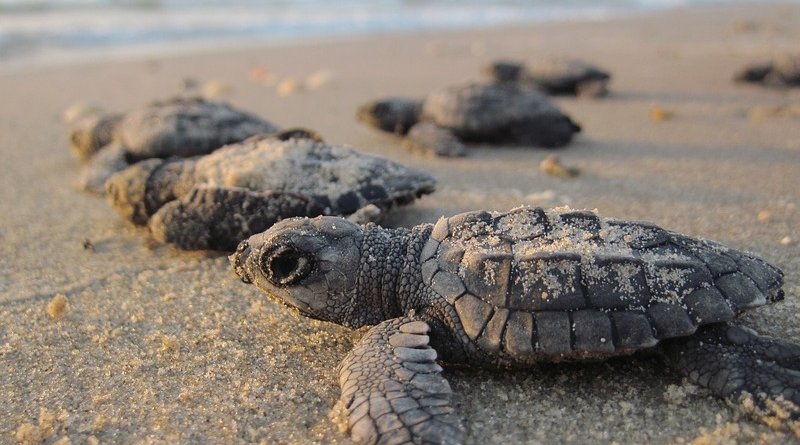
baby sea turtles


By 

A novel analysis suggests more than 3,500 animal species are threatened by climate change and also sheds light on huge gaps in fully understanding the risk to the animal kingdom.


The study was published in BioScience.

“We’re at the start of an existential crisis for the Earth’s wild animals,” said Oregon State University’s William Ripple, who led the study. “Up till now, the primary cause of biodiversity loss has been the twin threats of overexploitation and habitat alteration, but as climate change intensifies, we expect it to become a third major threat to the Earth’s animals.”

Ripple, distinguished professor of ecology in the OSU College of Forestry, and collaborators in the U.S. and Mexico used publicly available biodiversity datasets to examine animal data for 70,814 species from 35 existing classes. They categorized the species by class and climate change risks as assessed by the International Union for Conservation of Nature.

The researchers found that at least one-quarter of the species in six different classes are threatened by climate change; these classes include arachnids and chilopodans (centipedes) as well as anthozoans and hydrozoans (marine invertebrates related to jellyfish and corals). Smaller percentages of other classes’ species are also directly at risk from a warming climate.

“We are particularly concerned about invertebrate animals in the ocean, which absorbs most of the heat from climate change,” Ripple said. “Those animals are increasingly vulnerable because of their limited ability to move and promptly evade adverse conditions.”


Sudden impacts on animal communities can take the form of mass mortality from extreme events like heat waves, wildfires, droughts and floods.

“The cascading effects of more and more mass mortality events will likely affect carbon cycle feedbacks and nutrient cycling,” Ripple said. “Those effects also likely will have an impact on species interactions such as predation, competition, pollination and parasitism, which are vital for ecosystem function.”

The 90% reduction in mollusk populations along Israel’s coastline because of escalating water temperatures shows how susceptible invertebrates are, he said. Other examples include the deaths of billions of intertidal invertebrates during the 2021 Pacific Northwest heat dome, and the catastrophic die-off of corals across 29% of the Great Barrier Reef following a severe 2016 marine heat wave.

Mass mortalities have not been limited to invertebrates, Ripple notes. In 2015 and 2016, about 4 million common murres off the west coast of North America starved to death via an altered food web caused by an extreme marine heat wave.

The same heat wave caused a 71% decline in Pacific cod because of an increase in metabolic demand and a reduced prey base, and marine heat waves have likely played a role in the deaths of approximately 7,000 humpback whales in the North Pacific.

Further cause for concern, the authors note, is the comparatively small amount of information that’s been gathered regarding climate change risk to wildlife. Most wildlife classes (66 of 101) have not yet had any species assessed by the IUCN, and the 70,814 species that have been assessed represent 5.5% of all described wildlife species alive today.

“Our analysis is meant to be a preliminary effort toward assessing climate risk to wildlife species,” Ripple said. “Understanding the risk is crucial for making informed policy decisions. We need a global database on mass mortality events due to climate change for animal species in all ecosystems, and an acceleration in assessing currently ignored species.”

The IUCN Red List of Threatened Species, he notes, has a bias toward vertebrates, which make up less than 6% of the Earth’s named animal species.

“There is also a need for more frequent climate risk assessments of all species and better consideration of adaptive capacity,” Ripple said. “We need the integration of biodiversity and climate change policy planning on a global scale.”


Eurasia Review

Eurasia Review is an independent Journal that provides a venue for analysts and experts to disseminate content on a wide-range of subjects that are often overlooked or under-represented by Western dominated media.