Wednesday, May 21, 2025

THE GRIFT

US accepts Boeing 747 from Qatar for Trump to potentially use as Air Force One


By Gavin Blackburn with AP
Published on 21/05/2025 


The plane Qatar has offered Trump is estimated to be worth around $400 million (€352 million) which Trump called a "great gesture."


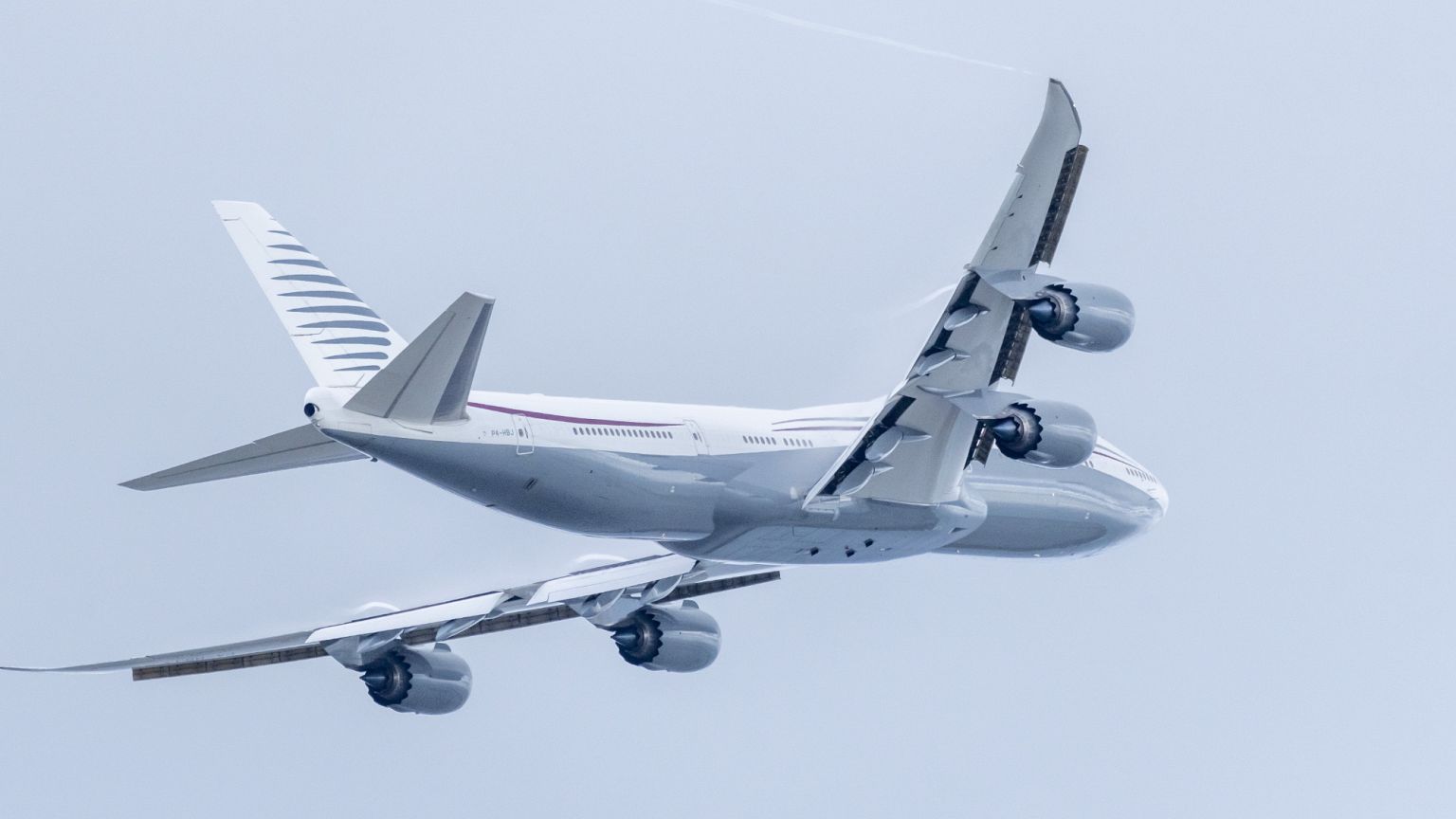
The United States Defence Secretary Pete Hegseth has accepted a Boeing 747 as a gift from Qatar for President Donald Trump to potentially use as Air Force One, the Pentagon has said.

Spokesperson Sean Parnell said the department will "work to ensure proper security measures" on the aircraft to make it safe for use by the president.

He said the plane was accepted "in accordance with all federal rules and regulations."

When asked by reporters about the move in the Oval Office, Trump said only, "They are giving the United States Air Force a jet."

He was forced to defend the offer when it first emerged a week ago and questions were raised over what would would be an immensely expensive gift donated from a foreign government to a serving official.
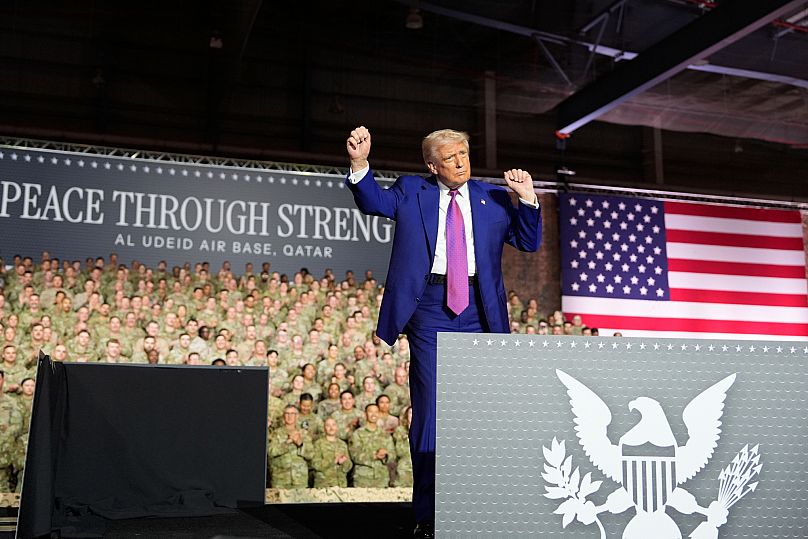
President Donald Trump gestures at the Al Udeid Air Base in Qatar, 15 May, 2025
AP Photo

Trump dismissed concerns and said the idea was a fiscally smart move in a post shared on his Truth Social platform.

"So the fact that the Defense Department is getting a gift, free of charge, of a 747 aircraft to replace the 40-year-old Air Force One, temporarily, in a very public and transparent transaction, so bothers the crooked Democrats that they insist we pay, top dollar, for the plane," he posted.

ABC News reported last week that the US president would use the aircraft as his plane until right before he leaves office in January 2029, when ownership would be transferred to the foundation overseeing his yet-to-be-built presidential library.

The broadcaster also reported a week ago that administration officials had prepared an analysis which demonstrates that accepting the plane was legal.

However, the US Constitution's Emoluments Clause bars anyone in government office from accepting any present, emolument, office or title from any "king, prince, or foreign state" without congressional consent.
Buying influence?

When news of the gift first broke, Senate Minority Leader Chuck Schumer poked fun at Trump's "America First" political slogan, stating "nothing says 'America First' like Air Force One, brought to you by Qatar."

"It's not just bribery, it's premium foreign influence with extra legroom," he added.

Other lawmakers also expressed dismay, noting that an aircraft being offered by a foreign government could present security risks if used by a US president.

The existing planes used as Air Force One are heavily modified with survivability capabilities for the president for a range of contingencies, including radiation shielding and antimissile technology.
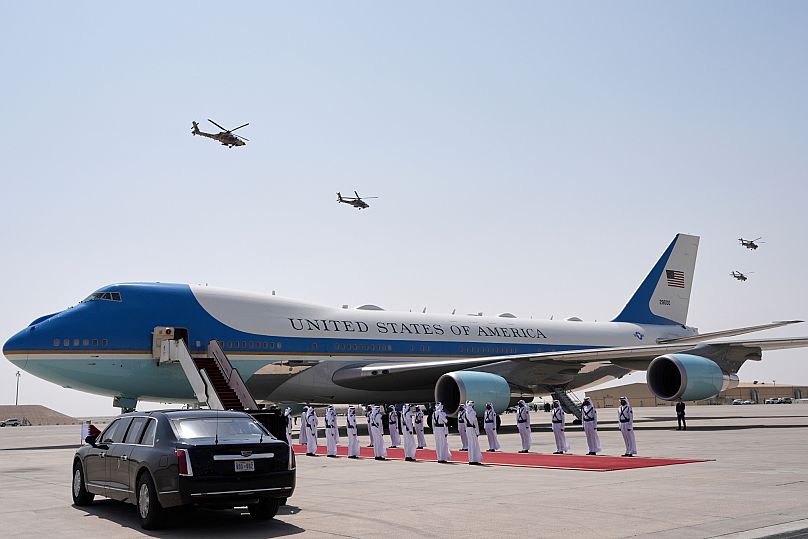
Qatar Air Force Apache gunships perform a flyover as Air Force One is ready to depart from Qatar, 15 May, 2025 AP Photo

They also include a variety of communications systems which allow the president to remain in contact with the military and issue orders from anywhere in the world.

Jordan Libowitz, communications director for the advocacy group Citizens for Responsibility and Ethics in Washington said such a gift was "unprecedented."

"The totality of gifts given to a president over their term doesn't get close to this level," Libowitz said.

The starting price for a new Boeing 747 is around $367 million (€323 million) before interior work with luxury VIP models selling for more than $600 million (€528 million).

The plane Qatar has offered Trump is estimated to be worth around $400 million (€352 million) which Trump called a "great gesture."
EU's  Kallas demands probe after IDF fires 'warning shots' near foreign diplomats in West Bank


Copyright AP Photo

By Gavin Blackburn with AP
Published on 21/05/2025 -

The Israeli military said in a statement that while the visit had been approved, the delegation “deviated from the approved route” and Israeli soldiers fired warning shots into the air to distance them from the area.

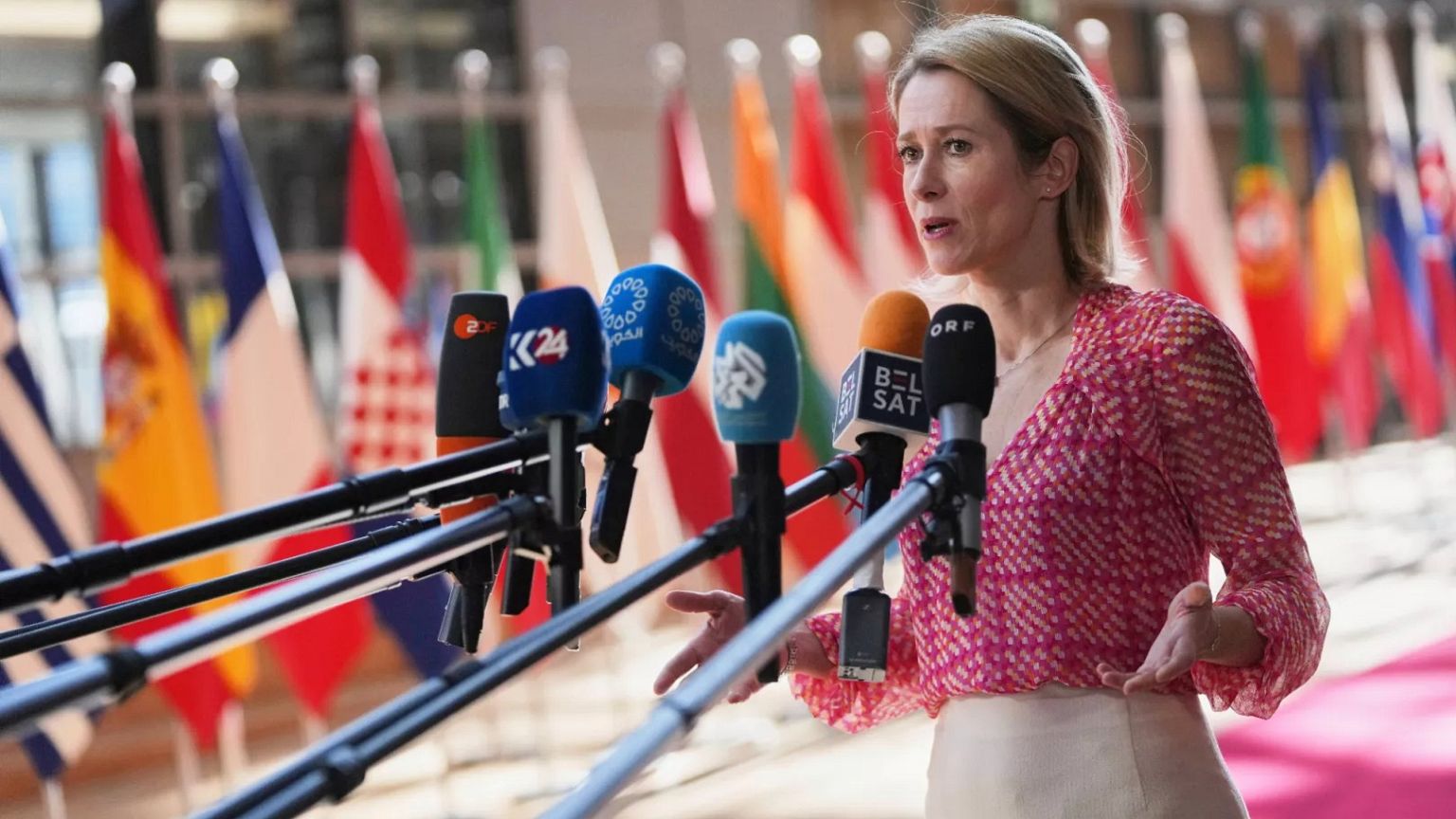
The EU foreign policy chief has called on Israel to investigate after IDF troops fired what the Israeli military said were "warning shots" near a delegation of foreign diplomats in the West Bank on Wednesday.

"I've heard about the incident in Jenin today where Israel Defence Forces shot warning shots but still shots at a group of diplomats approaching the refugee camp within a visit organised by the Palestinian Authority," Kaja Kallas said.

"Any threats on diplomats' lives are unacceptable. So as Israel is also a signatory to the Vienna Convention, I mean the obligation to guarantee the security of all foreign diplomats, I think this is important."

A group of regional, European and Western diplomats was standing near the entrance of the Jenin refugee camp on an official mission to observe the humanitarian situation when they heard gunshots just before 2 pm.

However, it was unclear where the shots came from, an unnamed aid worker said. No one was injured, she added.

The Israeli military said in a statement that while the visit had been approved, the delegation "deviated from the approved route" and Israeli soldiers fired warning shots to distance them from the area.

The military apologised for the incident and said they would contact all of the relevant countries involved in the visit.

"The IDF regrets the inconvenience caused," the IDF said, adding that a commander was already reviewing the incident.

Footage showed a number of diplomats giving media interviews as rapid shots rang out close to the group, forcing them to run for cover.

Jenin has been the site of Israel's widespread action against West Bank militants since earlier this year.

The fighting there has displaced tens of thousands of residents, one of the largest West Bank displacements in years.

The delegation included representatives from several countries including Italy, Portugal, Spain, France, the UK, Canada, Jordan and Egypt, domestic outlets reported.

Italian Foreign Minister Antonio Tajani said on X on Wednesday that he has asked his ministry to summon the Israeli ambassador to Rome for "official clarifications" regarding the incident.

Tajani's Portuguese counterpart Paulo Rangel "conveyed all solidarity to the Portuguese ambassador who was part of the delegation," the Portuguese foreign ministry also said on X, adding that it will "take appropriate diplomatic measures".

French Foreign Minister Jean-Noël Barrot labelled the incident "unacceptable" and said the Israeli ambassador to France would also be summoned "to explain" what occurred.

"Full support to our agents on the ground and their remarkable work under difficult conditions," Barrot added on X.

The incident occurred just one day after Kallas announced the EU would review the bloc's wide-ranging trade and cooperation pact with Israel over its intensified offensive on Hamas in Gaza.
Pope Leo XIV calls for aid to reach people in Gaza in first general audience at Vatican


Copyright AP Photo

By Gavin Blackburn with AP
Published on 21/05/2025 

International pressure is mounting on Israel following a nearly three-month blockade of humanitarian aid into Gaza and a widened offensive it has launched in the Strip.


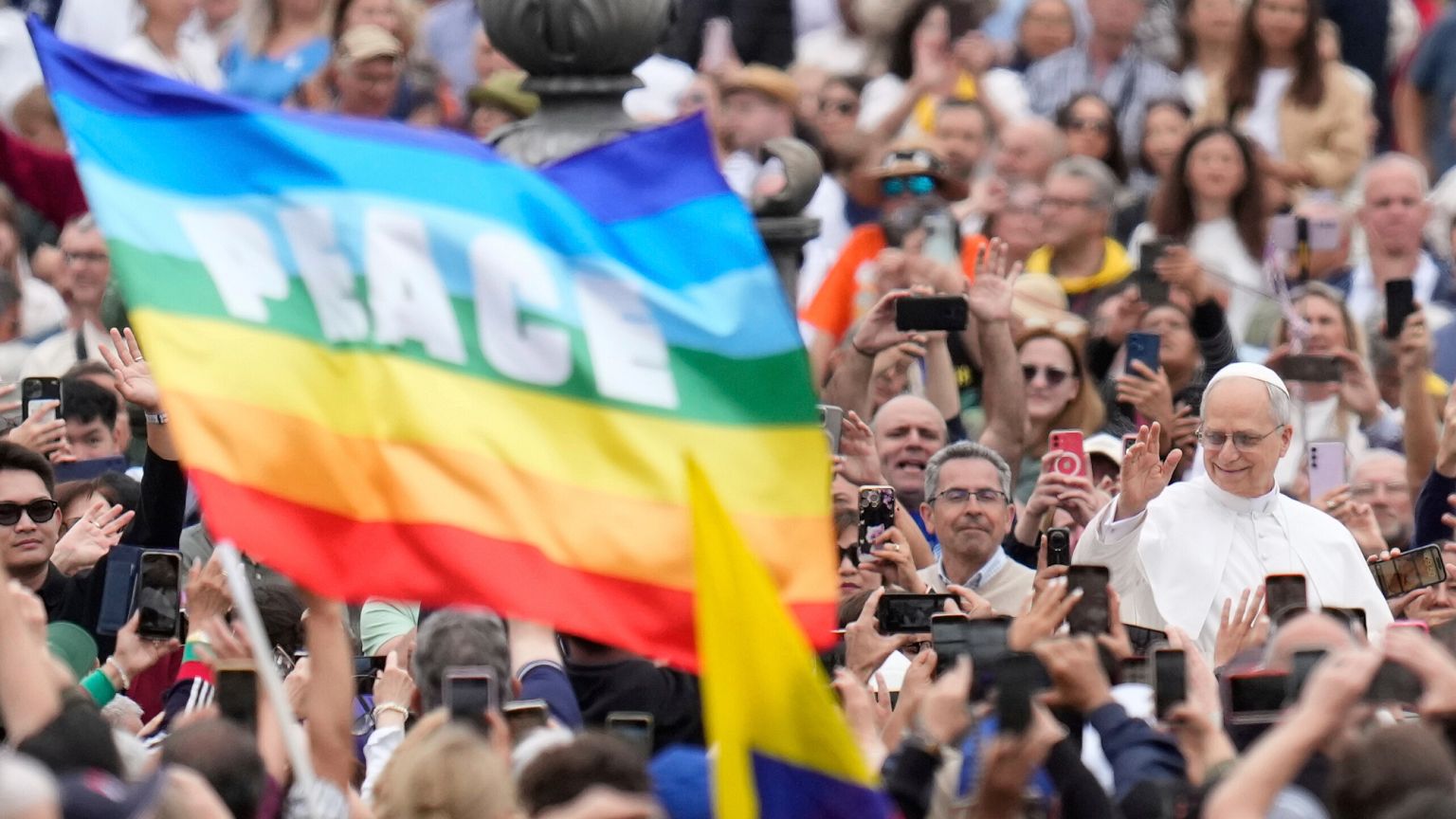
Pope Leo XIV has called for humanitarian aid to reach those in need in Gaza and for an end to the "heartbreaking" toll on its people, as he presided over his first general audience in St Peter's Square.

The Vatican said that around 40,000 people were on hand for the audience, which came just days after an estimated 200,000 people attended the inaugural Mass on Sunday for history's first US pope.

Pope Leo XIV, the former Cardinal Robert Prevost of Chicago, began the audience with a tour through the piazza in the popemobile and stopped to bless several babies.

In addressing specific greetings to different groups of pilgrims, he spoke in his native English, fluent Spanish and the traditional Italian of the papacy.

"I renew my heartfelt appeal to allow the entrance of dignified humanitarian aid to Gaza and to put an end to the hostilities whose heartbreaking price is being paid by children, the elderly and sick people," he said.

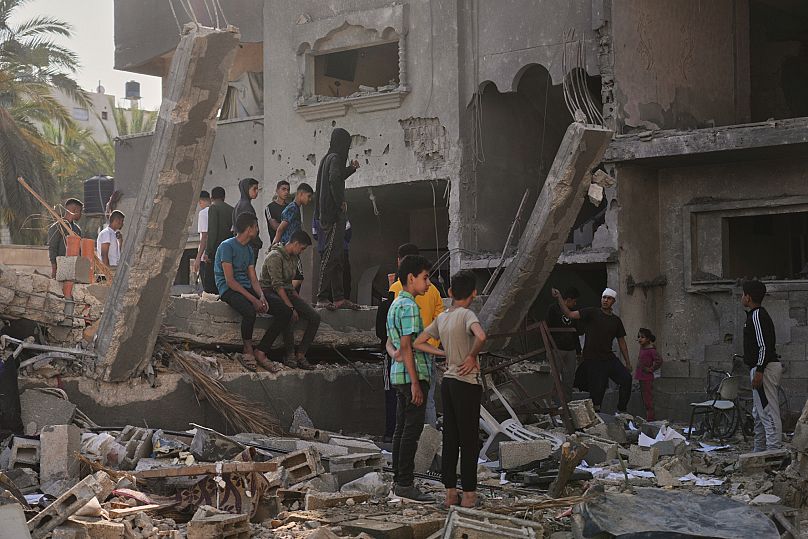
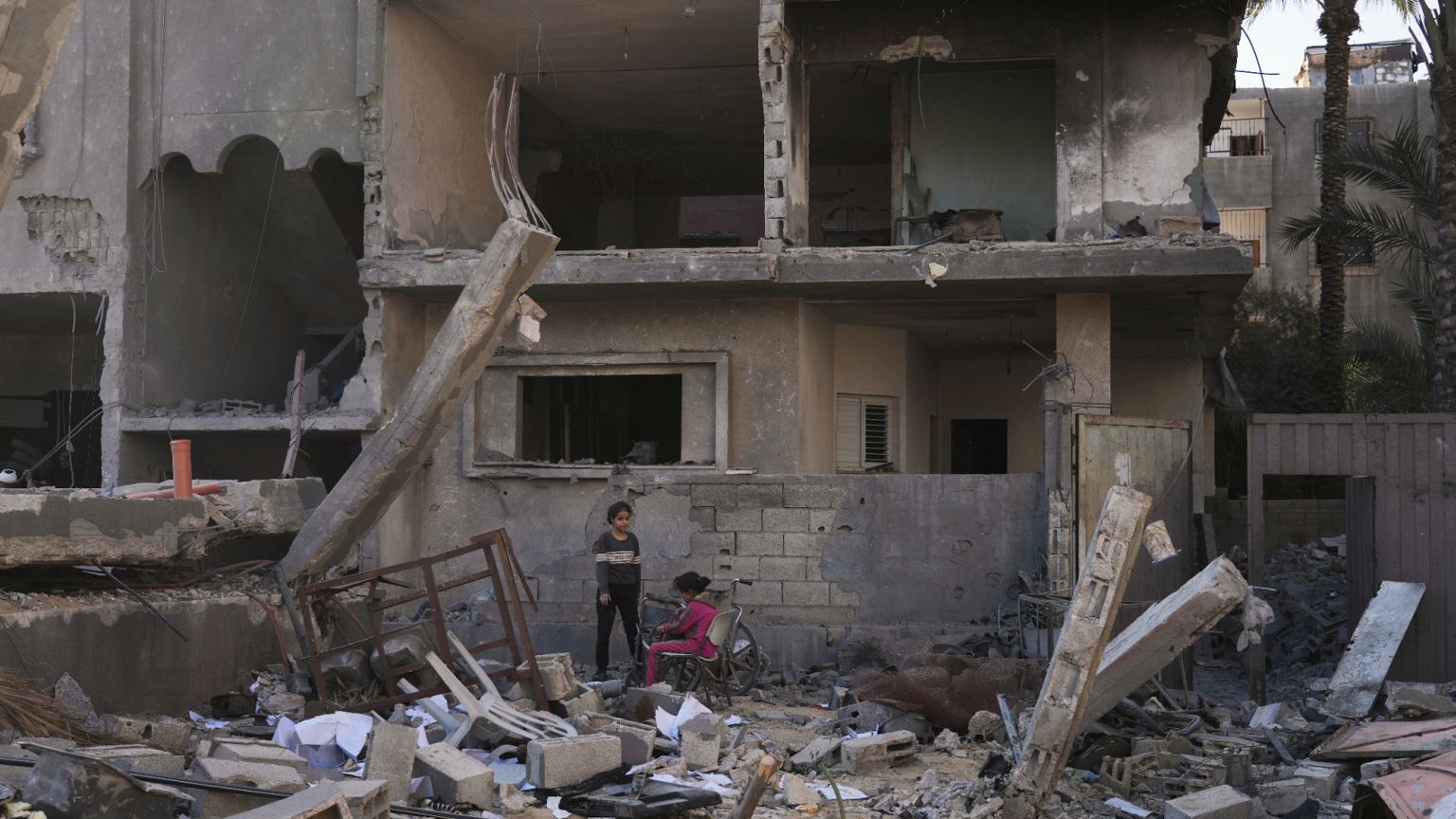
Palestinians inspect a house destroyed by an Israeli air strike in Deir al-Balah, 21 May, 2025AP Photo

The Wednesday general audiences are a weekly appointment that popes have kept for decades to allow ordinary faithful to have a face-to-face encounter with the pontiff.

It features the pope delivering a brief reflection on a theme or Scripture passage, with summaries provided by others in different languages and the pope directing specific messages to particular faith groups.

The encounter, which lasts more than an hour, usually ends with a brief topical appeal by the pope about a current issue or upcoming event.

Pope Leo XIV began it with his now-frequent mantra, "Peace be with you."
Ukraine peace talks at the Vatican?

On Tuesday, the pope reaffirmed the Vatican's willingness to host the next round of ceasefire talks between Russia and Ukraine during a phone call with Italian Premier Giorgia Meloni, the premier's office said.

Meloni made the call after speaking with US President Donald Trump and other European leaders, who asked her to verify the Holy See's offer.

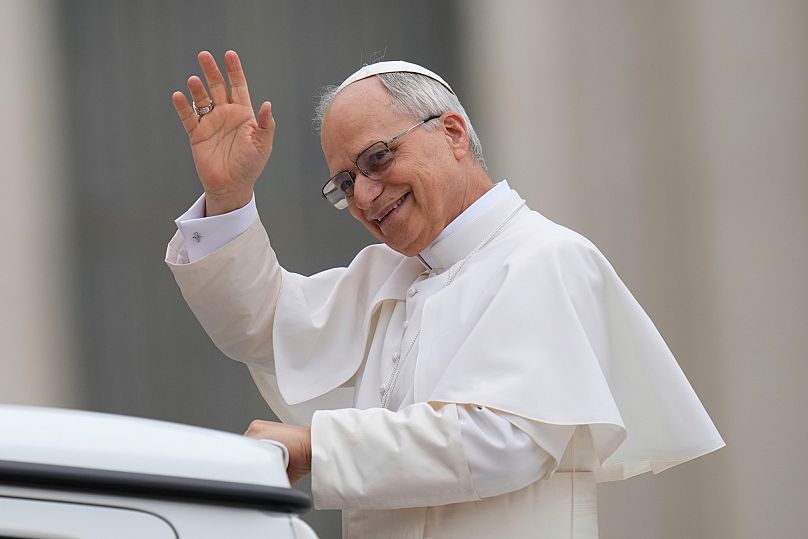
Pope Leo XIV waves as he arrives for his first weekly general audience in St Peter's Square at The Vatican, 21 May, 2025AP Photo

"Finding in the Holy Father the confirmation of the willingness to welcome the next talks between the parties, the premier expressed profound gratitude for Pope Leo XIV's willingness and his incessant commitment in favour of peace," Meloni's office said in a statement.

Trump had also referred to the Vatican's longstanding offer to host talks in reporting on his phone call on Monday with Russian President Vladimir Putin.

While low-level talks could take place in Italy, authorities would be hard-pressed to allow Putin to fly into Rome for any higher-level negotiations.

Putin is subject to an international arrest warrant from the International Criminal Court, of which Italy is a founding member and is therefore obliged to execute its warrants.


Netanyahu says Israel will control all of Gaza Strip at end of current military offensive

Copyright AP Photo

By Gavin Blackburn with AP
Published on 21/05/2025 -

Speaking about the current military offensive, codenamed Operation Gideon's Chariots, Netanyahu said "at the end of this campaign, all of the territories of the Gaza Strip will be under Israel's security control."


Prime Minister Benjamin Netanyahu has said Israel will control all of the Gaza Strip by the end of the current military offensive.

Netanyahu said Israelis forces have "pounded" Hamas positions across the enclave but are "prepared" for an opportunity for a temporary ceasefire.

Speaking about the current military offensive, codenamed Operation Gideon's Chariots, Netanyahu said "at the end of this campaign, all of the territories of the Gaza Strip will be under Israel's security control."

Our journalists are working on this story and will update it as soon as more information becomes available.

Why climate models are getting Arctic warming wrong – and how scientists are fixing them

Copyright W Noort/Unsplash

By Craig Saueurs
Published on 21/05/2025

Researchers have also warned that even limiting global warming to 1.5°C won’t save our polar ice sheets.

If you’re wondering why Arctic temperatures are rising so much faster than predicted, scientists at Kyushu University think they’ve found an answer: it’s in the clouds.

In a study published in Ocean-Land-Atmosphere Research, researchers from Kyushu University analysed 30 leading climate models and compared them to satellite observations of Arctic cloud patterns. They discovered a widespread modelling error.

Most simulations overestimate the amount of ice and underestimate the amount of liquid in wintertime Arctic clouds.

That may sound like a small detail, but it has big consequences for how accurately scientists can predict warming in one of the world’s most sensitive regions.

Clouds could be acting like a thermal blanket over the Arctic

The Arctic is warming three to four times faster than the global average. A major reason for this is how clouds interact with heat.

In summer, so-called mixed-phase clouds – which contain both ice crystals and supercooled liquid water – reflect sunlight, cooling the surface. But in the dark winter months, these same clouds trap heat and insulate the surface like a thermal blanket.

“The more liquid water these clouds contain, the better they are at trapping heat,” explains study co-author Momoka Nakanishi.

Related
Keeping 1.5C global warming target alive hangs on governments not tech, study warns
Global warming may melt some glaciers in Austria in 10-15 years

Most models, however, suggest that clouds have less ice in them than they do. That could explain why the rate of Arctic warming in recent decades has outpaced predictions. It could also warp future projections – but not in the way you might think.

The future may be less dire than it seems – but the present is worse

As the Arctic continues to warm, more ice in clouds converts to liquid, increasing their heat-trapping power. This creates a short-term condition known as “cloud emissivity feedback,” which accelerates warming. But, the researchers add, there’s a limit to it.

Once clouds are rich enough in liquid, they begin to absorb heat and re-emit it to Earth completely. Meaning, additional warming makes little difference, because the clouds are already re-emitting heat to the maximum extent possible.

Since many climate models don’t accurately represent how much liquid is already present, they could be predicting greater warming than is likely in the future.

In other words, they underestimate today’s warming and overestimate tomorrow’s.

Fixing this flaw, researchers argue, could improve not just Arctic projections but also extreme weather forecasts in other parts of the world, which are influenced by polar systems

The damage could already be done


The study adds context to another sobering piece of research, published earlier this month in Communications Earth & Environment.

That study found that even if global warming is limited to 1.5°C, we could still trigger irreversible melting in the massive polar ice sheets in Greenland and Antarctica, leading sea levels to rise several metres even under optimistic emissions scenarios.

Related
Pumped up pollen: How climate change could be making your seasonal allergies worse
New Greenpeace photos show rapid Arctic ice retreat in Svalbard

Both studies point to the same truth: our understanding of polar regions, from clouds to ice melt, is still catching up with reality.

If climate models continue to lag observed trends, the world could be blindsided by faster-than-expected changes in sea level, weather extremes and ecosystem collapse.

As cloud study co-author Takuro Michibata put it, “Fixing these models is essential not just for the Arctic, but for understanding its impact on weather and climate change across the globe.”
Urban wilding and climate resilience: How Breda became the EU’s first National Park City


Copyright Breda is officially the EU's first National Park City

By Craig Saueurs
Published on 21/05/2025 

The creative, cobblestoned Dutch city of Breda has officially become the first National Park City in the European Union.

Officially designated by the National Park City Foundation in May, Breda joins London, Adelaide and Chattanooga as the fourth member of a growing global movement to make urban areas greener, healthier and more connected to nature.

This new status recognises more than a decade of work to restore wetlands, green its streets and bring residents into the process.

It also signals a shift in how cities across Europe redefine their relationship with nature.

What is a National Park City?


The National Park City initiative was launched in the UK in 2019 to promote nature-connected, environmentally just urban living.

Cities don’t need to meet traditional national park criteria. Instead, they must show a city-wide commitment to sustainability, biodiversity and public access to green space.

Breda’s application caught the attention of assessors with its strong environmental leadership, citizen engagement and urban planning that places nature at its core.
RelatedChildren living close to Europe’s green spaces have healthier lungs, Spanish study finds
'Magnets for human connection': Why Japanese ‘micro-forests' are transforming our cities

“I absolutely loved exploring Breda and learning about all the things they are doing to make their city greener, healthier and wilder – from restoring a river through the middle of the city to innovative community food growing programmes, tiny forests set up by schools, wildlife-friendly gardens and public art,” says Daniel Raven-Ellison, founder of the National Park City Foundation.

“I am sure that people of all ages and backgrounds in Breda will be inspired by becoming a National Park City and want to explore how they can be part of its growth and story.”

Breda is now the fourth city to earn National Park City status, joining London, Adelaide and most recently Chattanooga. Nine other cities are currently working towards it, too.
What did Breda do to earn the title?

Breda has long prioritised nature-based solutions, from transforming quaysides into biodiverse urban gardens to replacing concrete tiles with grass, flower beds and trees.

Today, 60 per cent of Breda is made up of green space, from historic forests like the Mastbos – one of the oldest in the Netherlands – to nature reserves, parks and waterways. By 2030, local leaders aim to make it one of the most nature-rich cities in Europe.

But the status also reflects a buy-in from residents.

Related

Gothenburg fined for missing renewable energy goal. Here’s why it’s happy to take the hit

The city has become a leader in green design, using nature-based solutions to improve liveability and manage climate risks. And residents have been active participants in that process, often greening their own streets, installing rooftop gardens and developing green schoolyards, according to Breda Stad in een Park, a grassroots movement that helped to lead the city’s efforts to become a National Park City.

“This title is a recognition for the many residents, entrepreneurs and organisations who are committed to greening Breda and an inspiration to continue doing so,” says Joost Barendrecht, chairman of Breda Stad in een Park.

“It’s an incentive to make more [people] enthusiastic about getting started with greenery. It doesn’t always have to be big. A [simple] garden is a nice contribution.”

Why this matters for Europe’s cities

Across the EU, cities are increasingly stepping in the same direction as Breda.

From car-free zones inParis to flood-proofing efforts inCopenhagen, local leaders are responding to climate change and declining biodiversity with initiatives that aim to make urban settlements greener, more livable and future-ready.

For example, access to green space significantly reducesheat-related health risks – a benefit Breda now exemplifies and otherEuropean cities might seek to emulate.

“London and Breda are the first National Park Cities in Europe, but there’s no shortage of others that want and need to be greener, healthier, wilder, cooler and fairer,” says Raven-Ellison.

“National Park Cities are helping to show the way, forming strong relationships and exchanging optimism, ideas, knowledge and energy.”
CRIMINAL CAPITALI$M

EU Lobbying scandal related to Huawei: What we know so far


Copyright AP Photo

By Vincenzo Genovese
Published on 21/05/2025


Belgian Prosecutors are investigating a corruption case involving the European Parliament and the Chinese tech company

A major corruption investigation shook the European Parliament in March, focused on allegations that Chinese tech giant Huawei engaged in illicit lobbying practices to sway EU policy in its favour. The probe has led to several arrests and office raids in the Brussels’ seat of the Parliament, and provoked as a reaction a temporary ban on Huawei lobbyists.
What is the case about?

Belgian prosecutors are probing whether Huawei orchestrated a covert influence campaign within the European Parliament. Investigators are examining whether from 2021 Huawei representatives offered bribes to MEPs and their assistants.

The corruption “is said to have been practised regularly and very discreetly, under the guise of commercial lobbying ”, according to the Belgian prosecutor, and included remuneration, excessive gifts such as food and travel expenses or regular invitations to football matches.

These incentives were allegedly aimed at securing favourable political positions on topics of interest to the Chinese company.

What has the Belgian prosecutor decided so far?

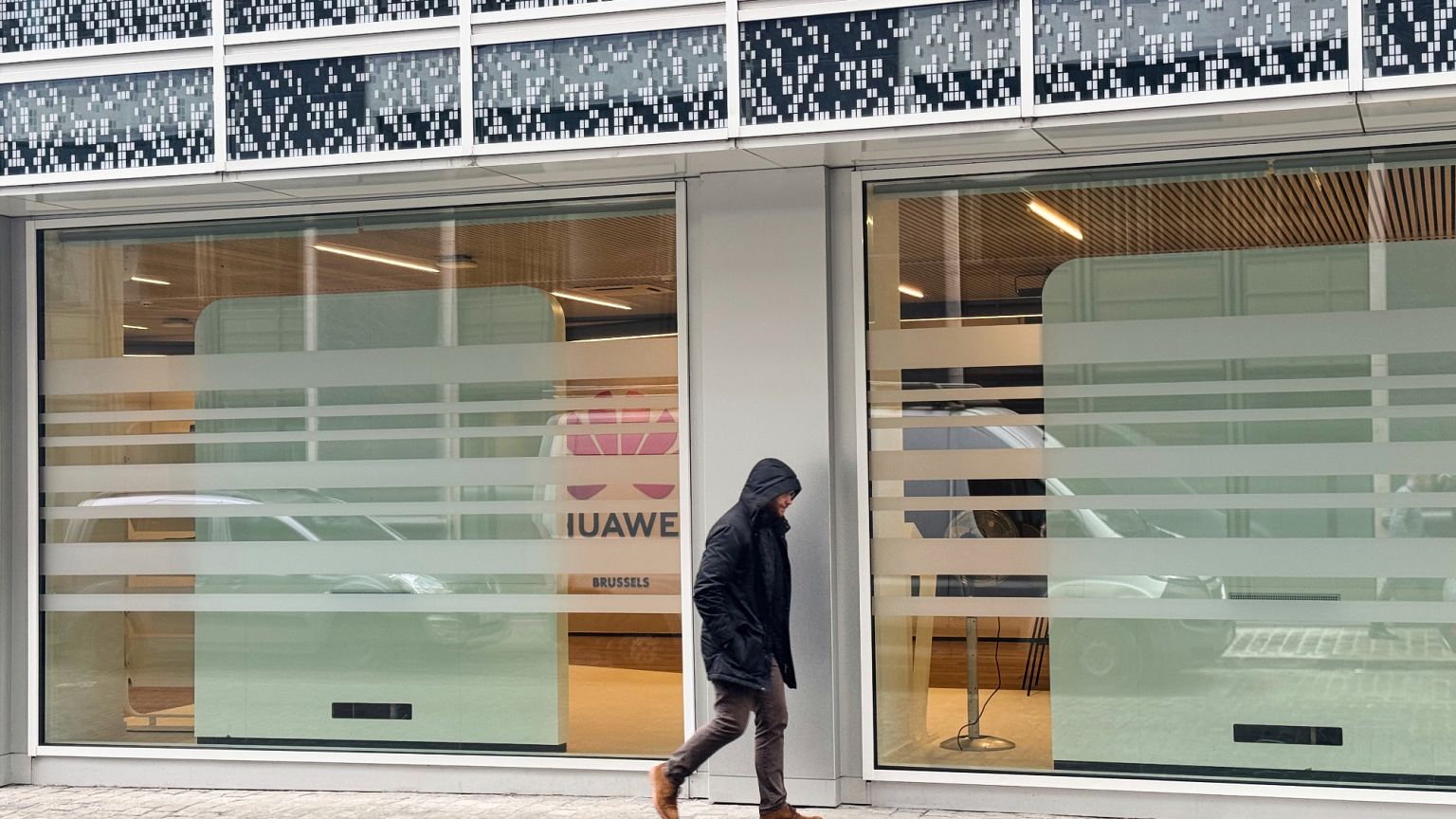
On 13 March Belgian authorities conducted 21 searches across Belgium and Portugal, including raids on Huawei's Brussels headquarters and the offices of some parliamentary assistants. These actions resulted in several arrests and the seizure of documents and electronic devices.

Subsequently, eight individuals were charged with offences including corruption, money laundering, and participation in a criminal organisation. Among these, three remain in custody, three are under electronic surveillance, and two were released under conditions, according to the latest information provided by the Belgian prosecutor.
Who is involved?

The prosecutor has not named any of the suspects, but several media outlets reported the name of Valerio Ottati, a Belgian-Italian lobbyist who is Huawei’s EU public affairs director and had been working as assistant to several MEPs in the Parliament. Ottati is considered a central figure in the alleged bribery scheme. He has not replied to Euronews' requests of comment.

Abraham Liu, chief representative to the EU Institutions for Huawei is also involved in the case, according to media reports.

The Belgian Prosecutor also asked to lift the immunity of five members of the European Parliament, in order to be able to investigate their involvement.

Three of them belong to the center-right European People’s Party: the Italians Salvatore De Meo, Giusi Princi and Fulvio Martusciello. The others are the Maltese Socialist MEP Daniel Attard and the Bulgarian Renew Europe’s MEP Nikola Minchev.

Offices of assistants to MEPs Marco Falcone (Italy/EPP) and Nikola Minchev (Bulgaria/Renew Europe) were sealed during the investigation, while in Italy the assistant Lucia Simeone was put under arrest and subsequently released.

What were the consequences in the Parliament?

Italian newspaper La Repubblica has cited a 2021 letter signed by eight MEPs advocating for the continued development of 5G technology in Europe without geopolitical hindrances as germane to the investigation.

The letter - promoted by Martusciello's office - did not explicitly mention Huawei, but prosecutors believe it was crafted to promote the company's interests. Investigators allege that payments were made to the letter's author and co-signatories, disguised as consultancy fees and campaign expenses, according to reports. Have the prosecutors given no information on this?

Five of the eight MEPs who signed the letter and who are still members of the Parliament, told Euronews that they received no payments from Huawei.
How the EU institutions reacted

The European Parliament immediately suspended Huawei lobbyists from access to its premises, as a precautionary measure. This means that the company’s representatives cannot enter Parliament’s premises in Brussels, Strasbourg, and Luxembourg.

The European Commission also suspended relations with Huawei. “The Commission shall not meet with any lobby groups and/or trade associations that represent Huawei’s interests and/or speak on its behalf," the executive said in a statement.

Huawei has stated that it takes the allegations seriously and is committed to cooperating with the investigation, emphasising that the company has a “zero-tolerance policy toward corruption or other wrongdoing” and is “committed to complying with all applicable laws and regulations at all times”.

European Parliament weighs immunity for 5 MEPs over Huawei probe


Copyright EbS

By Vincenzo Genovese
Published on 21/05/2025 -

Prosecutors want to investigate three members from the centre-right EPP, one from the Socialists and one from the centrist Renew group.

Belgian authorities have asked the European Parliament to waive the immunity of five of its members, Parliament’s president Roberta Metsola announced at the beginning of a plenary session in Brussels on Wednesday.

The request relates to the ongoing investigation into alleged corruption and illicit lobbying practices involving Chinese company Huawei and some EU lawmakers and assistants.

Three of the five MEPs involved belong to the center-right European People’s Party: the Italians Salvatore De Meo, Giusi Princi and Fulvio Martusciello. The others are the Maltese Socialist MEP Daniel Attard and the Bulgarian Renew Europe’s MEP Nikola Minchev.

In a previous statement to Euronews, Martusciello denied corruption, stating that he had only fleetingly met Huawei lobbyists, and that he and his staff never attended the firm's offices.

De Meo anticipated his inclusion in the list telling Italian news agency Ansa: “In my case, [the request] is linked to my participation in a convivial meeting, not organised by Huawei, which took place outside the European Parliament and which was also attended by representatives of the Huawei group."

He claimed he has never taken a position in favour of Huawei, either by signing letters, presenting amendments or any legislative activity attributable to the company's interests.

Attard said on his Facebook page that the request related to his presence at a football match between Belgian team Anderlecht and Hungarian team Ferencváros last September.

“I was not made aware that the invitation originated from any company, or that it involved a corporate box. I was simply informed by my assistant that a friend of his had tickets to the match [...] It has since emerged that the invitation came from a person who is currently under investigation by the Belgian authorities and who intended to speak to me about Huawei during the match,” wrote the Maltese MEP.

The topic was briefly raised during the game, reads the post, and a meeting was subsequently requested, which took place two weeks later in Strasbourg.

Attard stated he has not communicated with the company since, and took “no action” in relation to it or matters related to the company, and he wrote to President Metsola to formally ask for his immunity to be waived.

Attendance at an Anderlecht football match (Anderlecht-Ludogorets last October) was behind the request for Bulgarian MEP Minchev, he said in a statement to the Bulgarian press agency BTA.

“I will cooperate one hundred percent and I will ask the EP to lift the immunity as quickly as possible, because I have no connection to any illegal activity of these people, nor anything to worry about,” he said.

Each request for waiver will be now be assigned to a rapporteur on the European Parliament Committee on Legal Affairs (JURI), whose next meeting is foreseen for 4-5 June.

The JURI Committee will prepare a report approving or rejecting the request by the Belgian prosecutor, while each MEP concerned will be given an opportunity to be heard, and may present any documents or other written evidence.

The Parliament’s plenary will have the final say, deciding whether to lift or not the MEP’s immunity with a vote by simple majority.

None of the five MEPs replied to requests for comment from Euronews.
FREE THE WEED

Thailand vows tighter controls of cannabis as smuggling cases among tourists soar


Copyright AP Photo

By Gavin Blackburn with AP
Published on 21/05/2025 - 


Thailand became the first country in Asia to decriminalise cannabis in 2022, which has boosted the country's tourism industry and spawned thousands of shops.


Officials in Thailand have said they plan to tighten regulations on cannabis sales after cases of tourists attempting to smuggle the drug out of the country soared in recent months.

Thailand became the first country in Asia to decriminalise cannabis in 2022, which has boosted Thailand's tourism and farming and spawned thousands of shops.

But it's also facing a public backlash over allegations that under-regulation has made the drug available to children and caused addiction.

The ruling Pheu Thai Party has promised to criminalise cannabis again but has faced strong resistance from its partner in the coalition government which supported the decriminalisation.

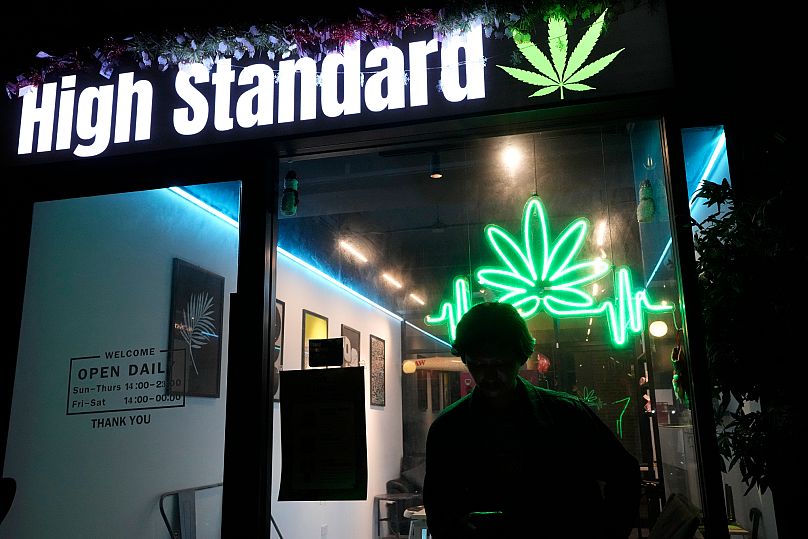
A staff member of a cannabis shop uses his mobile outside the shop in Bangkok, 15 May, 2024AP Photo

Thailand's Health Minister Somsak Thepsutin said at a press conference that officials are aiming to roll out new regulations in the coming weeks that will tighten control on the sale of cannabis, including requiring shops to sell cannabis only to customers who have a prescription.

He emphasised that it is against Thai law to bring cannabis out of the country without permission from the authorities.
Officials tighten controls

Airport officials said they have tightened inspections to detect smuggling attempts, adding that most people found with cannabis in their luggage are foreigners, especially Indian and British nationals.

Last week two young British women were arrested in Georgia and Sri Lanka for alleged attempts to smuggle cannabis after they flew there from Thailand, according to UK media.

The British government said a joint operation with Thailand in February resulted in over two tonnes of cannabis seized from air passengers.

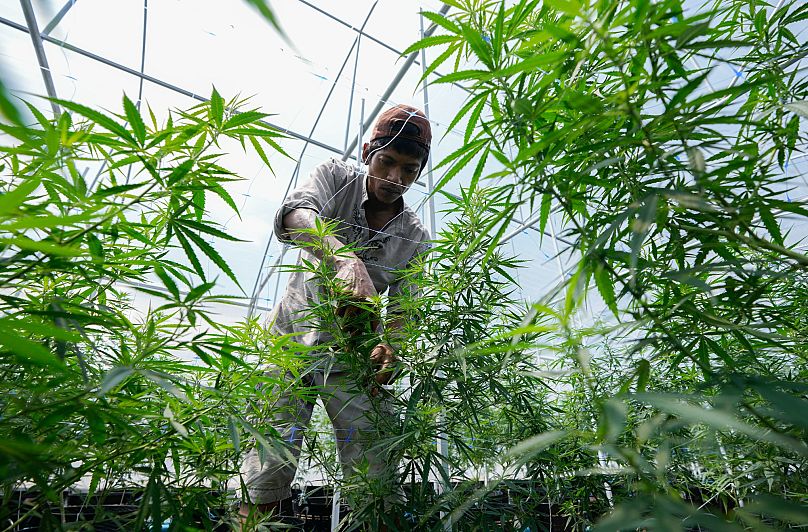
A worker tends to cannabis plants at a farm in Chonburi province, 5 June, 2022AP Photo

It said that since July last year, over 50 British nationals had been arrested in Thailand for attempting to smuggle cannabis out of the country.

It also said there was a dramatic increase in the amount of cannabis sent to the UK from Thailand by post since the decriminalisation in 2022.

In March immigration authorities and police said 22 suitcases filled with a total of 375 kilograms of cannabis were seized and 13 foreigners, most of them British, were arrested at the international airport on Samui Island.

Thai officials said the suspects were hired to travel to Thailand as tourists then travelled to Samui, a popular tourist destination, where they would wait at the arranged accommodation to receive the suitcases with cannabis.

They would then be instructed to travel from Samui to Singapore and from there back to the UK, where they would be paid £2,000 (€2,369) upon completing the job.


Slovak Supreme Court cancels acquittal of main suspect in murder of journalist Ján Kuciak

Slovak Supreme Court cancels acquittal of main suspect in murder of journalist Ján Kuciak
The murders of investigative journalist Ján Kuciak and his fiancée Martina Kušnírová sparked the largest demonstrations in the history of independent Slovakia.\\\\Feedly
By bne IntelliNews May 21, 2025

Slovakia’s Supreme Court (NS SR) has overruled the 2023 acquittal of convicted fraudster Marian Kočner, the main suspect in the 2018 murder of investigative journalist Ján Kuciak and his fiancée Martina Kušnírová.

Kuciak’s murder rocked the country and sparked the largest mass demonstrations in the history of independent Slovakia, leading to the fall of the previous cabinet of populist Prime Minister Robert Fico, whose Smer party-led rule was seen as fostering a kleptocratic environment and mafia links, which enabled the cold-blooded murder.

“At a Tuesday [May 21] closed-door session, the Supreme Court cancelled the sentence of the Special Criminal Court in the matter of the accused Marian Kočner et al. and returned the case for the reason of mistakes in the challenged ruling,” NS SR spokesperson Alexandra Važanová said in a statement shared with state broadcaster STVR, daily SME and other Slovak media.

In the press release, NS SR listed the uncertainties of the findings, not attending to all the needed evidence, and not dealing with all the circumstances significant for the ruling among the mistakes. However, the full ruling is not yet released. 

It is the second time in the case of Kuciak's murder that the NS SK cancelled the acquittal of Kočner, who had previously been acquitted in 2020, but NS SK ordered the case to be reopened in 2021. In the May 2023 acquittal, Kočner’s girlfriend, Alena Zsuzsova, was handed a guilty verdict carrying a 25-year prison sentence for her role in plotting the murder. 

Važanová also said that the case was handed over to a different senate of the Special Criminal Court “for the reasons of not obeying the mandatory instruction of the NS SK”. This will result in new judges attending to the case. 

"From this brief information [about the May 20 overruling] we can suppose that judges of the NS SR probably do not want to acquit Marian Kočner of plotting the murder and very likely do not want to acquit Alena Zsuzsova either," investigative journalist Monika Tódová wrote in her commentary for DennikN.

Tódová also wrote that the NS SR ruling is "good news for the public and mainly for the relatives of Ján Kuciak and Martina Kušnírová”, but also criticised the country's judiciary for the lengthy trial. 

As bne IntelliNews reported, the May 2023 acquittal was hugely disappointing to the victims’ families and the journalistic community in Slovakia. The parents of Kuciak and Kušnirova left the courtroom in tears following Kočner’s acquittal in 2023. “There’s no logic in it,” the journalist’s father, Jozef Kuciak, told reporters, AP reported. “I don’t get it at all.”

In the 2023 ruling, Zsuzsova was also found guilty of plotting to murder state prosecutors Maroš Žilinka and Peter Sufliarský.

Both Kočner and Zsuzsova are already serving long sentences for other offences, for which they were convicted after the collapse of the system of legal protection they had built up of bribed politicians, judges, prosecutors and policemen. Kočner is serving 19 years in the TV Markiza fraud case, where he forged a promissory note for €69mn. Zsuzsova is serving 21 years for ordering the murder of Hurbanov mayor László Basternák.

Argentina's Milei dissolves task force investigating $LIBRA crypto scandal

Argentina's Milei dissolves task force investigating $LIBRA crypto scandal
This abrupt termination of the investigation raises questions about transparency and accountability in Milei's administration, particularly given his personal connection to the $LIBRA scandal. / bne IntelliNews
By Mathew Cohen May 21, 2025

Argentine President Javier Milei has dissolved the special investigative unit he established to probe his own involvement in the controversial '$LIBRA' cryptocurrency promotion.

The decision, formalised through Decree 332/2025 published in the Official Gazette on May 20 and co-signed by Justice Minister Mariano Cúneo Libarona, claimed the unit had fulfilled its "assigned task" by forwarding gathered information to the Public Prosecutor's Office.

"The Government considers that the information gathered has been forwarded to the Public Prosecutor's Office and that the Unit has fulfilled the task assigned under Decree No. 114/25," the official document stated.

The Investigative Task Unit (UTI) was created on February 19, just five days after the contentious launch of the $LIBRA meme coin, which moved more than $4.5bn before its value collapsed, AFP reported. According to Perfil, investors may have lost at least $250mn in what many have considered a scam.

In an apparent market reaction to the news, the $LIBRA token surged over 80% following Milei's decision to disband the investigative task force, according to cryptocurrency news outlet Coinotag.

This abrupt termination of the investigation raises questions about transparency and accountability in the libertarian president's cabinet, particularly given his personal connection to the $LIBRA scandal. Soon after the cryptocurrency crashed, Milei faced impeachment calls, given his decision to openly promote the memecoin on social media.

With public protests underway against the Argentine government on numerous fronts, fuelled by unpopular cost-cutting measures, the dissolution of a probe into potential wrongdoing involving the president himself may further erode public trust in Milei's administration – something he will want to avoid in the build-up to the Argentine midterm elections.


Iran inks local $300mn private-sector deal for freight terminal at Tehran airport

Iran inks local $300mn private-sector deal for freight terminal at Tehran airport
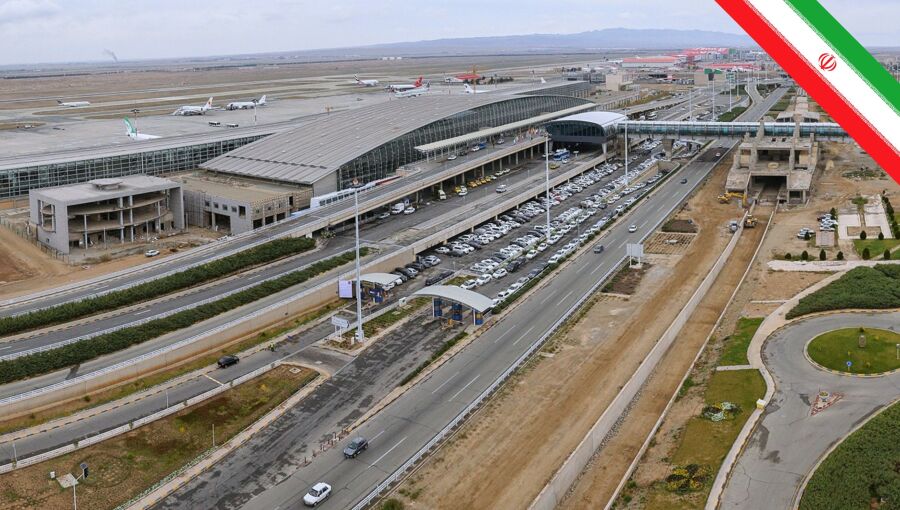
Tehran's Airport has failed to develop at initial plans while regional rivals including Abu Dhabi and Istanbul have far surpassed its development. / bne IntelliNews
By bnm Tehran bureau May 21, 2025

Iranian flag-carrier IranAir has signed a $300mn public-private partnership agreement with Imam Khomeini Airport City (IKAC) to build a multimodal cargo terminal and logistics centre in the airport's southern aviation free zone, the country's Ministry of Roads and Urban Development announced on May 21, IntelliNews has learned.

Imam Khomeini Airport, located 25 kilometres south of Tehran, is undergoing a $2.8bn expansion. The ambition is to one day make it a Middle East/Central Asia airport hub that can compete with Persian Gulf hubs. When ultimately completed, its new terminals aim to handle 20mn passengers per annum.

This deal, one of the most significant air freight infrastructure commitments to date at IKAC, falls under the current Persian calendar year's slogan, "Investment for Production", and aligns with goals of Iran's Seventh Development Plan. It also comes as the current administration aims to push ahead with delayed development projects for the main air terminal, due to US sanctions stymying development

According to the provided information, the logistics hub will be constructed in the core logistics zone of the airport's free trade area and is designed to be one of the most advanced in the country. It is expected to substantially increase Iran's freight capacity and boost transit through international air corridors.

The new Terminal will also relieve pressure on existing infrastructure at the airport, which has struggled with exports in recent years due to the volume of exports.

"This project is a turning point," said Akbar Hosseini, head of investment at IKAC, calling it "a major step" towards making IKAC a regional freight hub and linking central Iran to the global supply chain.

The private sector will finance the entire investment. Construction will proceed in four phases, with operations starting in 2028 at 50% capacity. The centre is expected to create around 850 direct jobs, alongside hundreds more indirectly, the airport said.

Announcement follows a $270mn agreement signed in April for the country's largest cargo terminal, also at IKAC, to ease long-standing bottlenecks and reinforce Tehran's role in regional trade logistics.

Earlier in 2017, the Iranian government also announced new free trade zone rules for jewellers looking to set up operations around the airport.  The centre is expected to increase exports of gold and jewellery products, create sustainable employment for thousands in the precious stone cutting and processing industry and develop commercial tourism.

Akbar Hosseini, Director General of the Investment and Resource Mobilisation Office of Imam Khomeini Airport City, announced in 2018 the signing of the investment contract for the project, which comes after two years of negotiations and technical-economic model evaluations.

The Airport expansion was planned more than two decades ago, but sanctions and financial restrictions effectively mothballed development. The pace of progress has increased in recent years with the second terminal, named Salam, which is designated for flights on the annual Hajj. 

Earlier, the original master plan for IKAC included the creation of a 1,500-hectare free trade zone and a 2,500-hectare special economic zone within a 13,700-hectare area surrounding the site.

The airport has faced several setbacks in recent years. French airport development firm Bouygues pulled out last summer, apparently due to financial and political issues. But Iran’s Deputy Minister of Roads and Urban Development Asghar Fakhrieh-Kashan dismissed that claim, Iran Labour News Agency reported. “Cancellation of the agreement was by no means related to banking restrictions,” he reportedly said at the time.

The minister said the Iranians cancelled the deal in spring because the French firm failed to keep up with the schedule.

Bouygues was meant to work with local company NACO, Iranians speaking with IntelliNews in 2018 said, NACO neglected to communicate with the Dutch. “NACO immediately held a tender [to replace the French company] and dozens of international companies participated. We will soon choose a qualified company,” Fakhrieh-Kashan said.