Sunday, June 29, 2025

Pro-LGBTQ+ yet anti-abortion: What's behind Malta's differing stances?

Malta remains a staunchly Catholic country.
Copyright Copyright 2017 The Associated Press. All rights reserved.


By Clea Skopeliti
Published on 

The tiny Mediterranean island is one of Europe's most progressive on LGBTQ+ rights, but at the same time, it has a near-total ban on abortion. What is the reason for this dissonance?

When Belle de Jong shared her experience of having an abortion on national TV in Malta in 2021, she became the first woman in the tiny Mediterranean island nation to do so publicly.

The reaction to her interview reflected how this aspect of healthcare remains deeply divisive on the staunchly Catholic island, which has the EU's most restrictive abortion law.

“I received literally hundreds of messages from (Maltese) women saying, thank you for speaking about it, either saying they had an abortion or implying it,” she told Euronews. 

But de Jong, a pro-choice activist and journalist, also received a wave of messages calling her a “baby killer”, which she said mostly came from older people.

“(I also received) comments like, ‘If you don’t want to get pregnant, don't spread your legs’, or ‘Why didn't you just use protection?’ Which, obviously, can fail,” she added.

De Jong, who is from the Netherlands but has lived in Malta since 2017, underwent a termination while visiting her home country after her contraceptive pill failed.

While she said it had been the “obvious choice” for her at the time, she stressed the barriers that remain for women in Malta due to its draconian abortion law.

“People are afraid to Google things because imagine if the government finds out, many don't know where to get the pills, for how long you can take the pills … And after a certain point you will need to travel (to have a surgical abortion), meaning you need the money for that, you need to know where to go,” she said.

“And on top of all that, you can’t tell anyone. So it’s extremely isolating and scary, because you're constantly afraid of being investigated,” de Jong added.

Malta's contrasting positions

While a shadow was cast over Pride celebrations this month in some parts of Europe, Malta continues to boast a reputation for advancing LGBTQ+ rights.

Last month, it once again came first in the International Lesbian, Gay, Bisexual, Trans and Intersex Association’s ranking of European countries — a position it has held for a decade.

In recent years, Malta has advanced LGBTQ+ rights at a breakneck pace: since 2013, it has introduced same-sex civil partnerships, equal marriage rights, adoption rights for same-sex couples, a ban on so-called conversion therapy practices, and self-ID for trans people.

But this stands in sharp contrast with its near-total abortion ban: the nation of a half a million is home to the EU’s most restrictive abortion law, criminalising terminations even in cases of rape and foetal anomalies.  

The gulf between the state of these rights appears entrenched in Malta, with experts telling Euronews there seems to be little political will to expand access to reproductive rights as the majority of the population is opposed to abortion. 


Pro-abortion activists stand outside the Maltese law courts in Valletta, Malta, Wednesday, June 15, 2022Kevin Schembri Orland/AP

For Robert Attard, Malta LGBTIQ Rights Movement’s community outreach coordinator, the context of the nation’s advance in queer rights is rooted in the movement’s activism over the years and the end of a long spell of conservative governments.

“The LGBTIQ rights movement has been lobbying for equal rights since 2001 … Once the government changed, the calls for equal rights were quite successful,” he told Euronews.

Underlining the way society’s perceptions can at times trail legislation, Attard said Malta has progressed alongside the raft of laws enshrining rights for LGBTQ+ people.

“I believe if there had been a referendum for equal marriage in 2014, it would not have passed. But surveys show over half of the island is now in favour of equal marriage and adoption.

“Being a small island really, really works in favour of us in this aspect. Let’s say, a homophobic, very Catholic (person), realises her neighbour’s nice son is gay … Since the rights started rolling in, people felt more comfortable in their own identity and there was this visibility.” However, he noted that trans people on the island still face a higher degree of discrimination, while LGBTQ+ asylum seekers also face challenges.

Attard’s organisation is part of the pro-abortion Voice for Choice coalition, and he sees the queer and reproductive rights as connected.

“We acknowledge the idea of bodily autonomy and that our rights intersect. Also, there are LBT people who are affected by this (abortion) law as well,” he said, noting that abortion remains “taboo” and far more controversial.

“Malta is very family oriented — acceptance for civil partnership and adoption is much bigger. Children as young as 11 are shown anti-abortion propaganda at schools,” Attard added.

The centrality of the family

In Attard’s view, moving the dial on abortion is a much tougher sell on the Catholic majority island — a perspective shared by all whom Euronews spoke to.

Prof Marceline Naudi, associate professor at the University of Malta's Department of Gender and Sexualities, also attributed the intransigence on reproductive healthcare to “the primacy of the family” in Maltese society.

“Malta is very family-centred (and) LGBTQ+ rights, although they can be seen to challenge the 'traditional family' form, so to speak, don’t really impinge. When the rights took a leap forward, it was not seen as threatening the family.

“However, abortion is very clearly seen as (doing so). The anti-choice movement says ‘unborn children’ are part of the family,” Naudi added.

The advancement of these rights was helped by a minister who drove the policies activists had been demanding for years, Naudi told Euronews: “Helena Dalli, who then became European Commissioner for Equality, was pivotal in this moving forward.”

“There was a stronger political will to push for that than has ever been in abortion,” Naudi added.

De Jong agreed with this, adding that she believed that expanding rights like equal marriage "were not as controversial but look very good for politicians ... you like you're going forward as a country".

The country’s blanket abortion ban was slightly eased in 2023, after the case of a US tourist who had to be airlifted to Spain to undergo a lifesaving abortion captured headlines internationally.
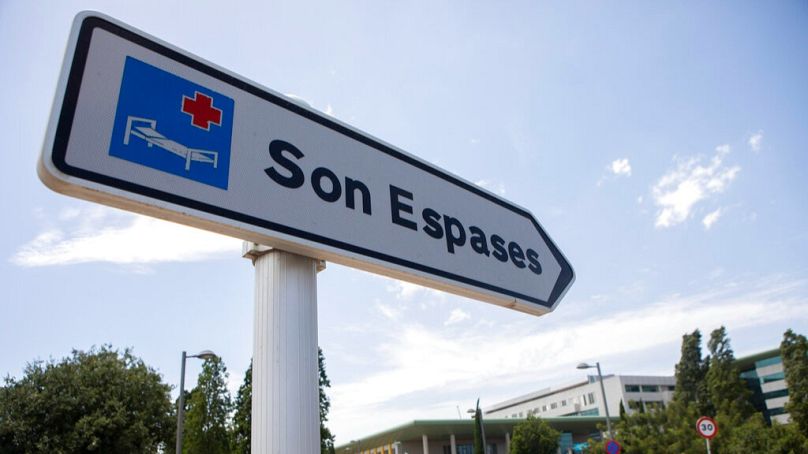

The Son Espases University Hospital where a US woman who suffered an incomplete miscarriage while in Malta is hospitalised in Palma Mallorca, Spain, June 24, 2022Francisco Ubilla/Copyright 2022 The AP. All rights reserved.

But while the legislation initially proposed would have relaxed the ban to allow for abortions in cases where there was a risk to the pregnant person’s health, it was subsequently amended to stipulate that they must be at risk of death to access an abortion — and even then, only after three specialists' consent.

Naudi considered this amendment to be “part of this right-wing backlash”, observed globally spanning the rights of women and minorities. 

Dr Miriam Sciberras, CEO of Life Network Foundation in Malta, a group that describes itself as promoting "pro-life values in Maltese society", rejected the idea that the country's restrictive abortion legislation and advancement of LGBTQ+ rights were at odds.

"Malta is both pro-LGBT and pro-life — these views are not contradictory. Both are rooted in the belief that every human life has value and deserves dignity. Both LGBT individuals and unborn children have historically faced, and sometimes still face dehumanization," she told Euronews in a statement.

"Being pro-life means extending that same care to the unborn, who are also vulnerable and voiceless. A consistent ethic of human dignity includes all of us, born and unborn, gay or straight. Abortion eliminates a human life, the life of a child, gay or straight, period."

In a month that sees many European countries host Pride celebrations — Malta holds its events in September — the European Union Agency for Fundamental Rights (FRA) warned of a “backsliding”.

“Across Europe, we observe worrying developments of democratic backsliding, attacks on civil society and challenges to fundamental rights, including the rights of LGBTIQ people," FRA spokesperson Nicole Romain told Euronews.

“It is essential that all EU countries stay the course and respect fundamental rights. Because how we treat the LGBTIQ community is a litmus test for the strength of our democratic societies”.

More women taking abortion pills

One thing is clear: abortion bans do not prevent women from ending unwanted or unviable pregnancies altogether.

Prof Isabel Stabile of the University of Malta, who is a gynaecologist, told Euronews that some 600 pregnancies were terminated in Malta last year using abortion pills — a number that has risen in recent years. 

Stabile is a member of the non-profit Doctors for Choice, which was founded in 2019 to provide information for those who want to end a pregnancy.

Healthcare professionals in Malta can give information about overseas abortion and refer patients to the Abortion Support Network without any fear of legal repercussions, their site states, noting that providing such information to patients is backed by the European Court of Human Rights and the European Court of Justice.

“We provide an information service through our website and have an abortion doula service,” she said. "Women can call us with questions about what's normal, shall I go to the hospital … We talk to somewhere between one and two women every day.”

The risk of prosecution remains a concern for women, she said. “For women, the legal risk is intense. If they go to the hospital, and for some reason, in some way, the fact that they had an abortion is revealed either through them or through a partner or whatever, then they are liable to a three-year prison term.

"It is a serious concern, we've had women prosecuted in the past,” she said, noting it is often the island’s “most marginalised” at risk, though there have been no imprisonments in over two decades. Doctors who carry out abortions outside of Malta's restrictive law are liable to a four-year prison term as well as the loss of their medical license.

Like others Euronews spoke to, Stabile said that in private, several representatives backed pro-choice positions — but were not willing to put their necks on the line politically.

The government tends to ignore Doctors for Choice, Stabile said. “The last thing it needs is women dying. It is far better to leave us alone, let us do our work, and not have a revolution on their hands. 

“The abortion numbers have shot up in recent years, because it’s safe, it’s available. Abortion care is health care. It is also, unfortunately, illegal.”

Euronews has reached out to Malta's government for comment.

An emerging public conversation

Three years after she went on TV to speak about her decision to end a pregnancy, de Jong led a campaign to garner Maltese support for a pro-choice European initiative. The My Voice, My Choice campaign aims to secure free access to abortion across the bloc.

She succeeded in collecting the required threshold of 4,230 signatures needed for Malta, noting that most preferred to do so online rather than in person due to stigma.

“The campaign was an eye-opener — it showed there was more support than we were aware of. Most of these people would never post about their pro-choice views on Facebook," de Jong said.

Still, she agreed with others that a public conversation is beginning to emerge on the island — and believed this has to grow before representatives will act.

“It's so important to change public opinion. Over the past six years or so, that discussion has, slowly but surely, started to come out,” she added.



 

Brazil's Lula takes Congress to Supreme Court over tax revolt

Brazil's Lula takes Congress to Supreme Court over tax revolt
The Congress's decision now forces the administration to consider alternative fiscal adjustments or further expenditure reductions.
By bnl Sao Paulo bureau June 29, 2025

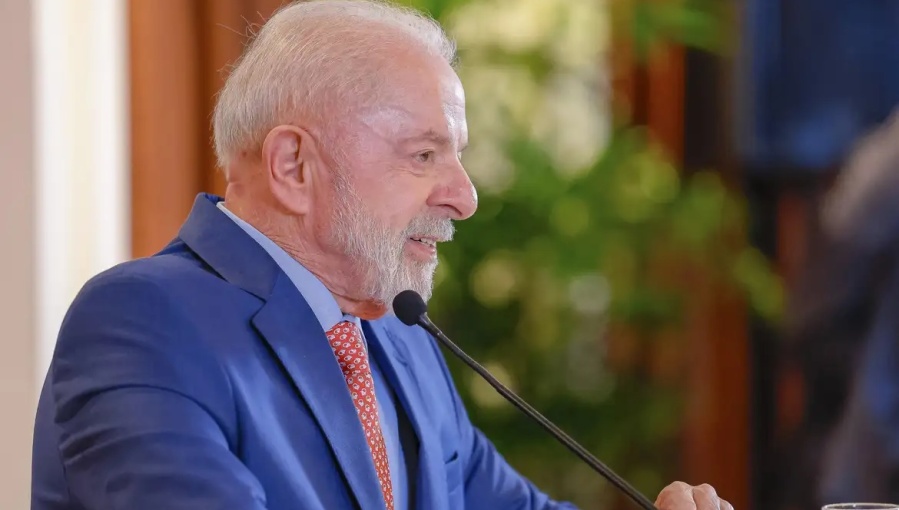
Brazil's President Luiz InĂ¡cio Lula da Silva has resolved to launch legal action at the Supreme Federal Court (STF) following Congress's decision to overturn his administration's increase to the Tax on Financial Operations (IOF), setting off a major constitutional battle between the Executive and Legislative branches.

The Attorney General's Office (AGU) confirmed on June 27 that technical analysis of legal measures had begun to preserve the validity of the IOF decree, at the president's request, O Globo reported.

The move comes after both houses of Congress voted on June 25 to repeal the tax rises on international transactions, dealing a significant blow to the government's fiscal strategy.

Lula reached the decision after lengthy discussions with Attorney General Jorge Messias after they travelled together from SĂ£o Paulo to BrasĂ­lia before meeting at the presidential palace, where they hammered out the legal approach.

Government sources indicate unanimous agreement within the administration that Congress's action violated constitutional separation of powers.

But the president's advisers reportedly expressed disappointment with Chamber of Deputies Speaker Hugo Motta, who brought the matter forward without notifying the government and helped override the presidential measure.

Ministers argue parliamentarians have signalled their intention to weaken the administration ahead of the 2026 electoral contest, Folha de S. Paulo reported.

"There is no legal basis for the PDL [draft legislative decree]," Minister Gleisi Hoffmann from the Secretariat of Institutional Relations wrote on X.

Finance Minister Fernando Haddad said that if legal advisers confirm the legislative decree breaches constitutional principles, he would support defending the Constitution through court action.

The minister has been internally advocating for the Supreme Court challenge in recent weeks.

The administration argues the Executive Branch holds constitutional authority to set IOF rates "in view of the objectives of monetary and fiscal policies."

Article 153 of the Constitution states that the Union bears responsibility for imposing taxes on credit, exchange, and insurance transactions, authorising the Executive to modify these rates.

Law 8,894 of 1994, which regulates the IOF, permits the government to "change the rates in view of the objectives of monetary and fiscal policies." Deputy Lindbergh Farias, the ruling party's leader in the Chamber, cited this legislation to argue the congressional action was unconstitutional.

However, legal experts remain sharply divided on the strategy's effectiveness and the constitutional merits of the case.

Tax specialist Luiz Bichara contends the IOF increase represented revenue collection rather than market regulation, constituting "an abuse of the prerogative” that the Constitution conferred on the Executive.

"This prerogative [of the president] has a very clear reason for being: the IOF is an extra-fiscal or regulatory tax, which serves as an instrument for regulating certain markets," said Bichara, as quoted by Folha de S. Paulo.

The expert argued that using the IOF purely for tax collection violated its regulatory purpose.

Conversely, lawyer Eduardo Natal believes Congress overstepped its authority by approving the suspension through legislative decree, because Congress “cannot revoke it [because] it is not its responsibility.”

The overturned measures would have generated BRL12bn ($2.18bn) in additional revenue for 2025, helping the government avoid deeper spending cuts whilst complying with fiscal framework requirements.

Originally projected to yield BRL20.5bn in 2025 and BRL40.1bn in 2026, the government later recalibrated the rates after backing down on taxation of national fund investments abroad.

The Congress's decision now forces the administration to consider alternative fiscal adjustments or further expenditure reductions.

None of the 12 legislative decree projects approved since Brazil's 1988 Constitution have previously faced Supreme Court challenge, though the court has ruled similar state-level measures unconstitutional.

In 2020, the STF unanimously struck down a legislative decree that suspended a Federal District governor's regulatory decree.

Meanwhile, the far-left PSOL party has already filed its own lawsuit challenging Congress's decision, anticipating the government's legal strategy, CNN Brasil reported.

Minister Gilmar Mendes said that legal precedents exist for such appeals to the Supreme Court.

The political dispute reflects broader tensions between the Executive and Legislative branches ahead of 2026 elections, with government ministers arguing that opposition parties are deliberately seeking to weaken Lula's administration through constitutional confrontation.

Canada Becomes LNG Exporter as First Gas Ships from BC Project

LNG carrier
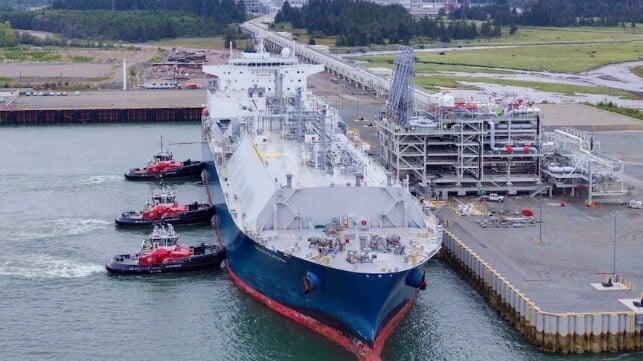
GasLog Glasgow took the first LNG cargo from Canada to Asia (Shell)

Published Jul 1, 2025 1:03 PM by The Maritime Executive


The first LNG gas carrier, GasLog Glasgow (112,764 dwt) departed the LNG terminal at Kitimat, Canada, on June 30, officially marking Canada’s entry into the export market. The LNG Canada project had been gearing up in recent weeks and began the first loading over the weekend, which opens a critical market for Asia to obtain LNG from Canada.

The project is led by Shell and includes partners PETRONAS, PetroChina, Mitsubishi Corporation, and Korea Gas. Each of the participants in the project will provide its own natural gas supply and individually offtake and market their respective share of liquified natural gas from LNG Canada. The project has two trains with an initial capacity of 14 million tonnes per annum (mtpa) and plans to double capacity in the future.

The first shipment is aboard the Greek-owned vessel, which is operating under charter to Shell. The vessel’s AIS signal currently shows it bound for Incheon, South Korea, where it is scheduled to arrive on July 20.

“With LNG Canada’s first shipment to Asia, Canada is exporting its energy to reliable partners, diversifying trade, and reducing global emissions ­— all in partnership with Indigenous peoples,” said Prime Minister of Canada Mark Carney. “By turning aspiration into action, Canada can become the world’s leading energy superpower with the strongest economy in the G7.”

Historically, Canada’s only LNG market was to the United States by pipeline. The concept of opening to the Asian markets began more than 15 years ago with various projects proposed to Canada’s federal government. Shell, however, highlights that the timing is right now as Asia moves away from coal. Shipping LNG from Canada’s West Coast provides shorter distances and will result in lower prices for the Asian buyers.

Largely driven by economic growth in Asia, Shell in its 2025 annual forecast for LNG predicted that global demand is set to rise by around 60 percent by 2040. Shell is targeting 4 to 5 percent per year growth in its LNG sales through at least 2030.

LNG Canada reports the investment to develop the facility, which is located northeast of Vancouver, topped C$40 billion (US$29 billion). Of that, it says it invested more than C$5.8 billion (US$4.25 billion) locally in Canada.


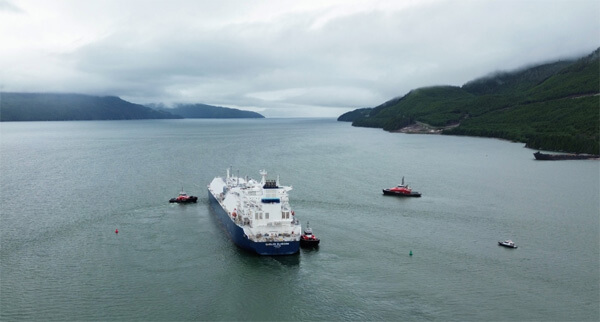
GasLog Glasgow starting the journey toward the Pacific Ocean (Canada LNG)


The deep water port at Kitimat is more than 180 miles from the coast of British Columbia, requiring the tankers to make a 15-hour journey. Arrangements were made with British Columbia Pilots, who said two pilots were aboard the GasLog Glasgow, and the location gave rise to a new tugboat operation. Canada is requiring escort tugs, and they are being operated by HaiSea Marine, which is a partnership with the local indigenous people and Seaspan. It boasts of the “world’s greenest tugboat fleet,” all purpose-built and powered by batteries or dual-fuel LNG vessels. 

Two additional LNG export projects are currently under construction on Canada’s West Coast, Cedar LNG and Woodfibre. They are scheduled to start operations in 2027 and 2028.  A third one, Ksi Lisims LNG is preparing for its final financial decision.

CAPPLETALI$M

Tech Giants Sprint Ahead While Apple Walks on AI

  • Apple's progress in artificial intelligence is described as cautious and incremental, lagging behind rivals such as Google, Microsoft, and Samsung who have aggressively integrated LLMs and generative AI.

  • Siri is highlighted as a central example of Apple's AI struggles, with former employees indicating a preference for incremental changes over a complete rebuild, leading to a slow evolution.

  • The article suggests that Apple's future success depends on its ability to embrace agility and adapt quickly to the rapidly changing AI landscape, rather than maintaining its traditional cautious refinement.

Apple’s position in the rapidly evolving artificial intelligence landscape is increasingly precarious.

While rivals such as Google, Microsoft and even Samsung have surged ahead by integrating large language models (LLMs) and generative AI into their products, Apple’s progress has been notably cautious and incremental.

Commentators and insiders alike question whether Apple is losing the race to harness one of the most critical technology revolutions of the decade.

“I’m massively bearish on it (Apple) long term”, Dan Niles, founder of Niles Investment Management, told the Master Investor podcast, hosted by Wilfred Frost. “They are so far behind on AI, it’s not even funny”.

Climbing a hill, while others sprint

At the centre of Apple’s AI struggle is Siri. Intended to become a conversational assistant powered by large language models (LLMs), its evolution has spluttered.

Former Apple employees describe attempts to integrate AI via “climbing the hill” – incremental changes atop legacy systems – rather than rebuilding from scratch.

As one former exec told the Financial Times: “It was obvious that you were not going to revamp Siri by doing what executives called ‘climbing the hill.’?It’s clear that they stumbled.”

Apple’s annual developer event in early June reflected this caution. Instead of unveiling bold AI advances, the focus shifted to software tweaks and interface updates.

Analysts such as Craig?Moffett warned Apple would “be much more cautious about overpromising and will refrain from showing features that aren’t yet ready for prime time.”

Even Tim?Cook admitted: “It’s just taking a bit longer than we thought… But we are making progress, and we’re extremely excited to get the more personal Siri features out there.”

But this measured tone fell flat against competitors like Google and Microsoft, who have embedded AI more aggressively into search, productivity apps, and hardware.

Performance under scrutiny

Apple’s AI travels at a stately pace in a fast-moving race.

As Niles pointed out, Apple dedicates less than three per cent of revenue to capex and only eight per cent to R&D – well behind peers such as Microsoft (around 12 per cent) and Meta (25 per cent).

Despite commanding a premium market valuation – a high?20s PE compared with broader S&P 500 multiples in the low?20s – Apple’s AI delays and competitive pressures offer little margin for error.

Apple also grapples with external challenges: a 20 per cent drop in its stock this year, regulatory scrutiny of its services division (with gross margins near 74 per cent), and rising tariff risks amid US–China trade tensions.

As Forrester analyst Thomas?Husson noted: “The trade war and uncertainty linked to tariff policy is of much more concern today for Apple’s business than the perception that Apple is lagging behind on AI innovation.”

The Darwinian edge

Niles frames the dilemma through the lens of Darwin.

“The number one thing, especially if you’re a technology investor, but just an investor in general, is what Charles Darwin said… it’s not the strongest of the species that survive, nor the most intelligent, but the one most adaptable to change”, he said.

Apple’s success may now depend on whether it can abandon its perfectionist pace and embrace agility.

As AI reshapes tech at breakneck speed, Apple faces a stark choice – to cling to its legacy model of cautious refinement, or sprint to catch up with rivals rewriting the rules of computing.

By City AM 


British Steel Secures Major Railway Deal

  • British Steel has secured a five-year contract worth £500 million to supply 70,000 to 80,000 metric tons of rail annually to Network Rail.

  • The company recently invested £10 million to open a new rail stocking facility at its Scunthorpe plant.

  • The UK Government announced a delay to the HS2 high-speed rail project due to missed deadlines and escalating costs, with an updated cost projection now at £106 billion.

British Steel has secured a 5-year agreement to supply rail to Network Rail, the infrastructure manager of the UK’s rail network. Under the tenets of the deal, the steelmaker will provide 70,000 to 80,000 metric tons per year.

In a June 17 statement, British Steel reported that the contract is worth £500 million (almost $673 million) and has an option to extend by three years.

British Steel Recently Constructed New Rail Facility

Rails supplied from British Steel’s Scunthorpe plant, in Lincolnshire, are to include HP335 grade material as well as coated rails for difficult environments, such as at level crossings, tunnels and coastal regions. The company stated that British Steel has supplied rails to the UK networks for over 20 years. Other rail products include sleepers as well as conductor rails for electric trains.

British Steel opened a rail stocking facility at Scunthorpe in November, which can hold up to 25,000 metric tons of finished rail in lengths up to 108 meters. Investments into that project totaled £10 million ($13.4 million).

UK Government Delays HS2

Meanwhile, the UK Government announced June 18 a delay on the country’s High Speed 2 (HS2) rail project, which was tentatively due to start operating by 2033, though did indicate when it would begin operating in revenue service.

Transport Secretary Heidi Alexander made the announcement in the House of Commons, the UK parliament’s lower chamber, citing missed deadlines and ballooning costs. Alexander also said that she would provide an update on costs and deadlines by year’s end.

The HS2 project originally had a cost projection of £56 billion ($75.5 billion). That was back in 2015. However, a government-commissioned review in 2019 warned that the project could reach £106 billion ($143 billion).

The original project also stipulated running the line up to Leeds and Manchester, though the previous government of Rishi Sunak cancelled them in 2021 and 2023, respectively. Alongside that move, they also truncated the line to run only as far as Birmingham.

By Christopher Rivituso


TotalEnergies Seeks Exit from Argentine Shale Oil Assets

France’s TotalEnergies is in advanced talks to sell its shale oil assets in Argentina, with at least two suitors having submitted bids, according to sources familiar with the matter. The move aligns with CEO Patrick PouyannĂ©’s earlier statement that the company would consider divesting its stakes at the right price.

While Total declined to comment, the reported bids target its interests in the La Escalonada and Rincon La Ceniza oil fields. These are located in the less-developed northern stretch of the Vaca Muerta formation, an area with significant untapped potential. Total holds 45% in each field, as does Shell, while local state-run firm GyP del Neuquén controls the remaining 10%.

Production from Argentina’s Vaca Muerta shale play continues to surge, with output reaching over 442,000 barrels per day in April—up 22% from a year earlier. However, domestic companies are increasingly leading that growth, while international players such as Total, ExxonMobil, and Malaysia’s Petronas are seeking exits.

The shift comes as President Javier Milei’s pro-market reforms, including relaxed capital controls, have raised valuations across the energy sector, creating a favorable window for asset sales. Global firms are taking the opportunity to divest and redirect capital to higher-priority projects elsewhere.

Notably, TotalEnergies is not exiting Argentina entirely. Its shale gas assets remain off the market, and the company is actively promoting Argentina as a future gas supplier to Brazil, signaling a continued regional strategy focused on natural gas over oil.


Extreme Heat Exposes Fragile U.S. Energy Grid

  • Extreme heat in the US highlights the urgent need for clean, reliable baseload power, with nuclear energy presented as the optimal solution due to its scalability and carbon-free nature.

  • UBS analysts have upgraded their near-term uranium price forecasts by approximately 10% to $72/lb for 2025, citing improved policy sentiment, bipartisan support, and tighter global supply.

  • The article reinforces a long-term bullish stance on nuclear energy, noting potential US nuclear capacity growth to 400 GW by 2050 and highlighting specific stock views like Paladin Energy and Boss Energy.

For the third consecutive day, extreme heat across the eastern half of the U.S. has triggered power grid alerts and emergency warnings, highlighting the fragility of current energy infrastructure. Extremely tight power grids reinforce a core part of our energy thesis: the urgent need for clean, reliable baseload power, and there is no better option than nuclear

The current environment strengthens our conviction as long-term 'atomic bulls', a stance we've maintained since our original call in December 2020 (read here). Nuclear energy remains the only scalable, carbon-free solution capable of delivering 24/7 generation for powering up America in the 2030s (more here).

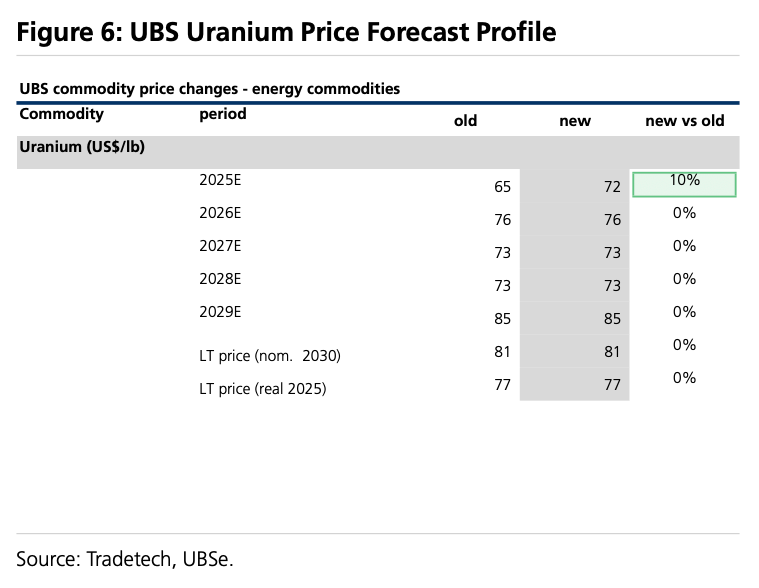
On Wednesday, a team of UBS analysts, led by Dim Ariyasinghe, upgraded their near-term uranium price forecast by ~10% (to $72/lb for 2025) due to improved policy sentiment, bipartisan support, and tighter supply from global disruptions.

The analysts recently hosted a call with the Atlantic Council, noting that U.S. nuclear capacity could grow from approximately 100 GW to 400 GW by 2050—surpassing the Biden administration's current targets. News earlier this week of New York's plan to develop a 1GW plant provided additional tailwinds for the industry.

"We upgrade our near-term U prices ~10% on an improved US policy backdrop, which has buoyed broader market sentiment," Ariyasinghe penned in a note to clients. 

UBS maintains a long-term price forecast of $77/lb (real 2025) and $81/lb nominal from 2030.

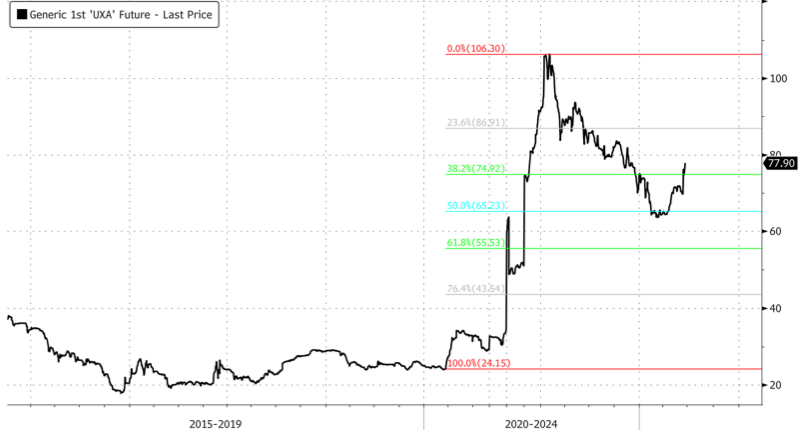
Uranium spot prices...

Ariyasinghe's stock views within the industry:

  • Paladin Energy (PDN): Maintains a BUY rating with price target lifted 3% to A$9.40/share. Restart at the Langer Heinrich mine is ahead of schedule; FY26 production revised slightly down to 4.5Mlb due to blending lower-grade ore, but this is offset by higher prices and improved costs.
  • Boss Energy (BOE): Downgraded to SELL despite production success at Honeymoon mine and a 6% price target increase to A$3.50/share. UBS views the stock as overvalued after an 81% YTD rally and cites risks in long-term growth clarity, wellfield geology, and expansion capex.

Separately, long-time readers will recognize familiar ZeroHedge favorites like Cameco (CCJ) and Oklo, both of which continue to log fresh record highs week after week. We've consistently laid out the investment framework over the years—and most recently provided additional, comprehensive guides (read here & here) on how to profit as an 'atomic bull' in this unfolding nuclear era. 

By Zerohedge.com 


Data Centers Surge, but U.S. Grid Chokes on Hardware Bottlenecks


Demand for critical electrical equipment supply is soaring as U.S. utilities plan billions of dollars of investments in transmission and distribution to meet rising power consumption after two decades of zero growth.

U.S. power utilities have announced billions of dollars in capital plans for the next few years and are getting a lot of requests from commercial users, most notably Big Tech, for new power capacity in many areas next to planned data centers.

Annual investment in transmission and distribution infrastructure by U.S. investor-owned utilities has nearly doubled over the past decade, Wood Mackenzie said in a new report.

But supply chain bottlenecks could delay project timelines and hurt company profitability, according to the energy consultancy.

Supply Chain Constraint

Soaring demand for electrical materials and equipment, such as transformers and switchgear, is pressuring the sector, which has already become notorious for the long lead times on project execution.

The challenges are likely to stay – and even escalate – as investments in manufacturing, clean energy, and data centers are boosting demand for key electrical equipment components. On the other hand, U.S. tariffs and most of all—the uncertainty about any part of said tariffs—is making procurement of electrical equipment more difficult, Wood Mackenzie says.

The tariffs imposed by the Trump Administration are by no means the biggest challenge for power equipment and component supply. But they add direct costs to materials imported into the United States, as well as indirect impacts on the supply of critical materials such as electrical steel and copper.

Rising investment in U.S. manufacturing facilities, the growth in clean energy capacity despite the Trump Administration’s cuts to tax credits, the surge in electricity demand due to AI data centers, ageing equipment, and the need for grid resilience amid extreme weather events, are all pushing demand for key transmission and distribution (T&D) equipment higher. This includes equipment for electrical distribution and backup power, including transformers, switchboards, panelboards, and voltage assembly products.

Investment in T&D by investor-owned utilities has surged in the past decade—from just over $50 billion in 2016 to more than $100 billion in 2025, according to estimates by Wood Mackenzie.

And as electricity demand rises, utility companies have lengthening lists of grid maintenance, hardening, and development projects, many of which require key electrical equipment, the energy consultancy says.

In just one example, WoodMac expects demand for three-phase, pad-mounted transformers in the United States to surge by 145% from now until 2034.

Supply is not enough to meet demand for electrical components, and an expected lag in capacity expansion is set to send electrical equipment prices even higher than they are now.

“These equipment prices are also at risk of being impacted by new US trading policies as the materials and component parts are frequently imported from China, Mexico and Canada,” Wood Mackenzie analysts say.

Power Demand Growth

The U.S. Energy Information Administration (EIA) raised this month its electricity demand projections for the near term. In the Short-Term Energy Outlook (STEO) for June, the EIA increased its forecast for retail electricity sales to better reflect projected demand growth, especially in the Electricity Reliability Council of Texas (ERCOT) and PJM independent system operators.

The upward revisions are most notable in the commercial sector, where data centers are an expanding source of demand. The EIA expects U.S. commercial electricity sector consumption to grow by 3% in 2025 and by 5% in 2026. In the previous STEO, the administration expected commercial electricity demand would grow by an annual average of 2% through 2026.

Onshoring of manufacturing activity and AI-related data centers are driving an increase in U.S. electricity consumption, Goldman Sachs said in a report earlier this year.

U.S. electrical power demand is expected to rise by 2.4% each year through 2030, with AI-related demand accounting for about two-thirds of the incremental power demand in the country, the investment bank said.

More than $700 billion of grid investment is expected in the country through 2030, as the U.S. infrastructure needs to be updated to accommodate the unprecedented growth of electricity demand, according to Goldman Sachs.

The world’s biggest economy will need all energy sources to ensure power demand is met. Natural gas is the biggest near-term winner of AI advancements, but renewables will also play a key role in powering the data centers of next-generation computing, analysts say.

“The US is reaching a power demand inflection point due to the rise of energy-intensive artificial intelligence (AI), the need for more AI-ready data center capacity, and the reshoring of manufacturing,” Goldman Sachs noted in its February report.

Procuring key electrical equipment will be crucial to the completion of many transmission and distribution projects by 2030.

“Looking ahead, challenges in sourcing electrical equipment are likely to escalate due to clean energy investments, manufacturing investments, data centre builds, aging equipment, equipment and material tariffs, weather events and the push to electrification,” Wood Mackenzie said.

By Tsvetana Paraskova for Oilprice.com