It’s possible that I shall make an ass of myself. But in that case one can always get out of it with a little dialectic. I have, of course, so worded my proposition as to be right either way (K.Marx, Letter to F.Engels on the Indian Mutiny)
Germany is showing increasing openness to nuclear energy, a significant departure from its historical opposition, leading to a divide within its government leadership.
The German Economy Minister, Katherina Reiche, is engaging with pro-nuclear EU members, while Environment Minister Carsten Schneider remains strongly opposed to nuclear power.
This shift in Germany, along with other European nations and the World Bank, reflects a broader global movement towards recognizing nuclear energy's role in energy security and climate goals.
Germany is increasingly indicating openness to nuclear energy, marking a complete pivot from their historic stance on the controversial energy source. Germany’s shift in attitude toward nuclear energy comes as part of a larger global movement back toward nuclear power as a viable part of a secure and low-carbon energy landscape.
Last month, German Economy Minister Katherina Reiche opted to join a meeting with pro-nuclear European Union members instead of attending a gathering of states dedicated to renewables, marking a major fracturing of the German government’s stance on the future of European energy. While Reiche is rubbing elbows with nuclear energy proponents, the nation’s Environment Minister Carsten Schneider remains staunchly opposed to changing Germany’s staunchly anti-nuclear stance.
"We have decided to phase out nuclear power. This has also been accepted by society," Schneider was recently quoted by Deutsche Welle (DW). "There are no further commitments [to the nuclear industry], nor will there be any," he went on to say. Germany took its last three nuclear power plants offline in 2023.
DW reports that the disaccord over nuclear power between Germany’s Energy and Economy Ministers has already been apparent for some time now. Back in May, Reiche said in Brussels (where the European Union is headquartered) that she was "open to all technologies” as a part of Germany’s energy policy, and agreed to make peace with French officials by dropping anti-nuclear rhetoric from European Union legislation. This marks a major departure from Germany’s traditional stance.
Germany’s deep-held opposition to nuclear power is the product of historical politicking rather than a reckoning with current energy realities, which have rapidly shifted in the long wake of Russia’s war in Ukraine. A 2024 report from The Conversation explains that Germany’s complete phase-out of nuclear energy production “can only be understood in the context of post-war socio-political developments in Germany, where anti-nuclearism predated the public climate discourse.” According to that report, vehement anti-nuclear discourse of the time can be credited to “a distrust of technocracy; ecological, environmental and safety fears; suspicions that nuclear energy could engender nuclear proliferation; and general opposition to concentrated power (especially after its extreme consolidation under the Nazi dictatorship).”
But now, it would appear that Germany can’t afford to maintain its anti-nuclear ideology. The German economy and energy sector was pummeled by energy sanctions on Russia, as the country was reliant on the Kremlin for a whopping 50% of its natural gas supplies when Russia first invaded Ukraine. While Germany has not made any significant moves to shift its own domestic nuclear energy policy, the fact that leadership is not unilaterally antagonistic toward the technology is a big deal in national and European politics.
The shift comes as part of a broader sea change in favor of nuclear energy in Europe. In just the past few months alone, the governments of Italy and Denmark initiated motions to overturn their respective 40-years ban on nuclear power production, and Spain signalled openness to extending the lives of its nuclear plants previously slated for phaseout.
This re-embrace of nuclear energy is not limited to Europe. Globally, nuclear energy is gaining ground as one of the strongest solutions for successfully balancing energy security needs with climate goals. Nuclear energy is a proven technology with zero carbon emissions, and can be built up practically anywhere, especially with emerging small modular reactor models.
Just last month, the World Bank overturned its own ban on funding nuclear energy projects, a move that will spread the reach of nuclear energy in the developing world and likely influence other development banks to follow suit. Lauren Hughes, deputy director of the Nuclear Energy Policy Initiative, recently told the Atlantic Council that taken together, these major policy decisions “indicate that nuclear is coming back into favor and being recognized for its ability to provide reliable baseload power.”
Emergency repairs for Chernobyl shelter 'might top EUR100 million'
Thursday, 3 July 2025
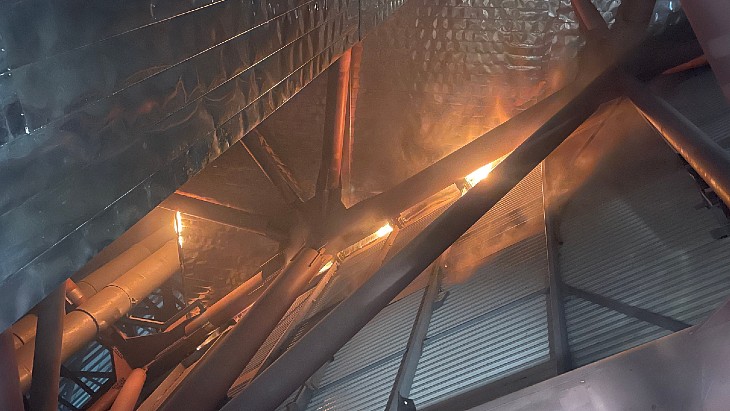
The giant New Safe Confinement shelter over the remains of Chernobyl's unit 4 was damaged by a drone in February with an initial EUR42.5 million (USD50 million) already pledged for repair work.
(Image: EBRD)
The European Union will contribute EUR25 million, the United Kingdom will contribute EUR6.7 million and France EUR10.6 million. The pledges came during a meeting of the International Chernobyl Cooperation Account held at the European Bank of Reconstruction and Development (EBRD).
The EBRD said the drone strike: "Has severely affected the New Safe Confinement's two primary functions: (i) containing radiological hazards and (ii) supporting long-term decommissioning. Key systems designed to ensure the NSC’s 100-year lifespan have been rendered non-operational, with a significant risk of further deterioration in the absence of swift emergency repairs. While it is difficult to provide an accurate estimate of the cost of repairs to the NSC at the moment, the scale of the damage and the complex radiological environment suggest that the total cost of the emergency works could exceed EUR100 million."
Chernobyl NPP said the contributions "are a crucial step toward ensuring the continuation of the New Safe Confinement restoration work".
A grant agreement was signed on Wednesday between the plant in Ukraine and the EBRD to fund a project which aims to assess the damage and develop a plan of emergency repairs to the outer cladding and membrane, which were damaged by the drone and subsequent fire.
The work also involves assessing the state of the concrete structures, end walls and foundations and a detailed plan of work to carry out the repairs.
Balthasar Lindauer, EBRD Nuclear Safety Department Director, said the pledged donations were a "manifestation of the international community’s unwavering support" for Chernobyl.
The shelter
Chernobyl unit 4 was destroyed in the April 1986 accident (you can read more about it in the World Nuclear Association's Chernobyl Accident information paper) with a shelter constructed in a matter of months to encase the damaged unit, which allowed the other units at the plant to continue operating. It still contains the molten core of the reactor and an estimated 200 tonnes of highly radioactive material.
However it was not designed for the very long-term, and so the New Safe Confinement - the largest moveable land-based structure ever built - was constructed to cover a much larger area including the original shelter. The New Safe Confinement has a span of 257 metres, a length of 162 metres, a height of 108 metres and a total weight of 36,000 tonnes and was designed for a lifetime of about 100 years. It was built nearby in two halves which were moved on specially constructed rail tracks to the current position, where it was completed in 2019.
It has two layers of internal and external cladding around the main steel structure - about 12 metres apart - with both breached in the drone incident. The NSC was designed to allow for the eventual dismantling of the ageing makeshift shelter from 1986 and the management of radioactive waste. It is also designed to withstand temperatures ranging from -43°C to +45°C, a class-three tornado, and an earthquake with a magnitude of 6 on the Richter scale.
According to World Nuclear Association, the hermetically-sealed New Safe Confinement allows "engineers to remotely dismantle the 1986 structure that has shielded the remains of the reactor from the weather since the weeks after the accident. It will enable the eventual removal of the fuel-containing materials in the bottom of the reactor building and accommodate their characterisation, compaction, and packing for disposal. This task represents the most important step in eliminating nuclear hazard at the site - and the real start of dismantling".
The New Safe Confinement was financed via the Chernobyl Shelter Fund which was run by the EBRD. It received EUR1.6 billion (USD1.7 billion) from 45 donor countries and the EBRD provided EUR480 million of its own resources.
US regulator accelerates review of Natrium permit
Thursday, 3 July 2025
The US Nuclear Regulatory Commission now expects to complete its review of TerraPower's construction licence application for the Natrium advanced reactor demonstration project by the end of 2025, ahead of the original August 2026 date.
A rendering of a Natrium plant (Image: TerraPower)
Natrium technology features a 345 MWe sodium-cooled fast reactor using high-assay low-enriched uranium fuel, with a molten salt-based energy storage system that can boost the system’s output to 500 MWe for more than five and a half hours when needed. TerraPower plans to build the Natrium demonstration plant near a retiring coal facility at Kemmerer in Wyoming.
TerraPower was the first developer to submit a construction permit application for a commercial advanced reactor to the NRC in March 2024.
In February this year, the NRC acknowledged it was ahead of schedule on safety review and said it expected to complete its review of TerraPower's application by June 2026, two months earlier than originally expected. In May, the regulator exempted the energy production and energy storage portion of the plant from its review, paving the way for construction on half the Natrium plant to begin this year.
The NRC has now said that it has "set a more aggressive schedule and aims to complete its review by the end of 2025".
It noted: "Frequent and productive engagements with TerraPower, along with other efficiency gains, mean the NRC could complete reviews by 31 December 2025, six months ahead of the current schedule. The accelerated timeline depends on a continued commitment from TerraPower to resolve the remaining issues in a timely manner."
TerraPower said that its regulatory strategy has been "built on providing thorough technical content and robust engagement opportunities to discuss the Natrium technology and design with regulators".
"This acknowledgement by the NRC that our application can be completed more quickly than originally anticipated is a testament to the incredible work by our Natrium team and the support for advanced reactors at the federal level," said TerraPower President and CEO Chris Levesque. "President Trump has been instrumental in both founding the Advanced Reactor Demonstration Program and supporting rapid deployment of advanced reactors. Streamlining reviews is a commonsense solution that will accelerate permitting schedules; and proves that we can bring safe, well-vetted American technologies to market faster and compete on the global stage."
A ground-breaking ceremony held in June last year marked the start of non-nuclear construction at the Kemmerer site. Nuclear construction will begin after the application is approved. TerraPower envisages commercial operation of the plant starting in 2031.
The NRC noted that if it issues the construction permit for the Kemmerer plant, TerraPower would need to submit a separate application for a licence to operate it.
Westinghouse, Radiant to perform first US microreactor tests
Wednesday, 2 July 2025
The US Department of Energy has made conditional selections for Westinghouse and Radiant Nuclear to perform the first tests in the National Reactor Innovation Center's Demonstration of Microreactor Experiments test bed at the Idaho National Laboratory.
A rendering of the Kaleidos microreactor arriving at the DOME facility (Image: Ryan Seper/Radiant)
The test bed - Demonstration of Microreactor Experiments (DOME) - will repurpose the Experimental-Breeder Reactor-II containment structure at Idaho National Laboratory (INL). This, the Department of Energy (DOE) says, will lessen the environmental footprint and save companies money in the testing process, as well as reducing overall project risk.
In October 2023, Radiant, Ultra Safe Nuclear Corporation and Westinghouse were awarded DOE funding totalling USD3.9 million for front-end engineering and experiment design of their respective microreactor designs in DOME.
DOE has now announced that Westinghouse and Radiant have been selected to perform the first microreactor tests in DOME.
Westinghouse will test the eVinci Nuclear Test Reactor to inform the development of its commercial transportable microreactor that uses advanced heat pipe technology to passively cool the reactor. The eVinci reactor is designed to produce 5 MWe on sites as small as two acres of land and could be used to power various applications from remote communities to mining operations or data centres. The eVinci test reactor is a scaled-down 3 MWt version.
Radiant will test the Kaleidos Development Unit to advance the company's commercial 1.2 MWe high-temperature gas reactor design as a potential replacement for diesel generators. The electric power generator, cooling system, reactor, and shielding are all packaged in a single shipping container, facilitating rapid deployment.
Both companies are currently working through the multi-phase DOE authorisation process to support the design, fabrication, construction, and testing of each fueled reactor experiment.
According to the DOE, the first fueled reactor experiment will start as early as spring 2026. It estimates each DOME reactor experiment will operate up to six months.
The testing campaigns are self-funded by the applicants with the sequencing of experiments based on several criteria, including technology readiness, fuel availability, and a regulatory approval plan. Both companies are expected to meet certain milestones throughout the process to maintain their allotted time in DOME and to ensure efficient use of the test bed.
"Microreactors will play a big role in expanding the use of nuclear power in the United States," said Mike Goff, the Acting Assistant Secretary for Nuclear Energy. "These DOME experiments will test new reactor designs that will be counted on in the future to reliably power our homes, military bases, and mission critical infrastructure."
DOE recently closed its first round of applications for scheduling experiments in DOME. It said the next call for applications is anticipated to be in the summer of 2026.
UK study says Midlands sites suitable for nuclear new build
Thursday, 3 July 2025
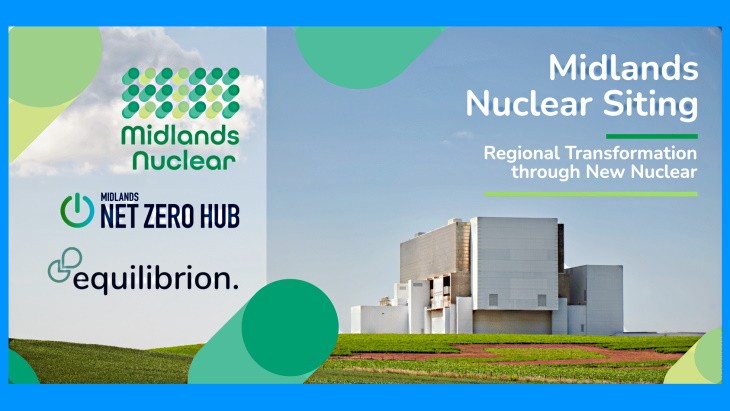
A siting study has identified 21 sites in the Midlands region of central England that could potentially support 20 GWe of new nuclear generating capacity in the nearer term. Two sites were selected as the region's most strategic nuclear deployment opportunities.
(Image: Midlands Nuclear)
The siting study was commissioned and funded by Midlands Net Zero Hub on behalf of Midlands Nuclear - a collaborative initiative established to ensure that the Midlands is well positioned to potentially benefit from future nuclear developments. The Midlands Net Zero Hub is in turn funded by the UK's Department for Energy Security and Net Zero. The study was delivered by nuclear strategic and technical consultancy and project development company Equilibrion, with input from Portinscale Consulting and Ennuvo.
The study aimed to assess where and how nuclear energy could supply low-carbon electricity, hydrogen, and sustainable fuels for industry, transport, and homes.
From the 84 sites reviewed, the study identified 21 shortlisted sites across the Midlands - 9 brownfield and 12 greenfield - with an estimated generating capacity exceeding 20 GWe, pending comprehensive impact assessment and appropriate regulatory review and approvals. Each site was assessed based on the nationally recognised Power Plant Siting Study, which considers criteria based on technical, environmental, and socioeconomic factors.
Following a detailed comparative appraisal, two sites were selected as the Midlands' most strategic nuclear deployment opportunities. These sites underwent detailed appraisal and offer significant advantages: brownfield status, proximity to existing and future industrial demand hubs, potential for transmission grid access, reliable cooling water sources, and potential for near-term readiness to support advanced nuclear development programmes. The study says their identification "reflects not only technical suitability, but also strategic location and alignment with regional economic development priorities". In addition to siting appraisal, the study examines the wider economic and supply chain benefits associated with new nuclear deployment.
According to Midlands Nuclear, the siting study demonstrates that sites in the Midlands could pass the siting criteria including on population density, proximity to military activities and access to essential cooling water.
It says nuclear applications could support the region by delivering consistent, reliable power for data centres, hydrogen for transport and industrial use, and heat for manufacturing and networks. Nuclear, it says, is an excellent match for these and other needs as it can produce energy on-demand and overcomes many of the challenges faced by the energy system as deployment of variable renewables increases.
The Midlands is already home to nuclear facilities, including the Rolls-Royce Submarines nuclear licensed operations at its site at Raynesway, Derby, and possesses a workforce already involved in delivering and supporting nuclear projects.
Midlands Nuclear brings together 25 partners with regional strengths in advanced manufacturing, engineering, and nuclear innovation, along with specialists in research and development, to support the introduction of both large-scale and small modular reactor technologies.
Lord Ravensdale, Chair of Midlands Nuclear said: "This study represents a pivotal step toward future expansion of clean, secure energy capacity in the Midlands through consideration of siting options for nuclear power in the region. Coming alongside a more flexible siting policy for new nuclear from the government, it is an exciting opportunity for the region to capitalise on the revival of nuclear energy across the UK."
The current National Policy Statement for Nuclear, EN-6, identifies eight sites in England and Wales that the government considers potentially suitable for building new nuclear power plants up to 2025. The proposed new EN-7 document updates the government's position and enables developers to identify and propose nuclear new build in locations additional to the eight, subject to ultimate approval by the Secretary of State.
"The Midlands Nuclear Siting Study enables regional authorities, Midlands Nuclear, and other stakeholders to proactively engage with UK Government, developers and investors, presenting credible, evidence-based nuclear investment opportunities at a critical time for national energy transition planning," the study says.
Korean accident-resistant fuel begins in-reactor testing
Wednesday, 2 July 2025
A demonstration accident-resistant nuclear fuel assembly has been loaded into the core of unit 6 of the Hanul nuclear power plant, marking the first time in Korea that such a fuel assembly has been loaded into a reactor, Korea Hydro and Nuclear Power announced.
(Image: KHNP)
A ceremony was held on 1 July to commemorate the loading of the accident-resistant nuclear fuel demonstration assembly, which comprises 236 fuel rods. It was attended by KHNP CEO Hwang Joo-ho and executives from related organisations.
Accident-tolerant fuel is a term used to describe new technologies that enhance the tolerance of light-water reactor fuel under severe accident conditions as well as offering improvements to reactor performance and economics. Such fuels may incorporate the use of new materials and designs for cladding and fuel pellets.
KHNP, together with Kepco Nuclear Fuel (KNF), began developing accident-resistant nuclear fuel in 2017 as part of the Ministry of Trade, Industry and Energy's core nuclear technology project, and successfully completed the technology development in 2022. After that, it began combustion testing of a demonstration fuel rod in unit 2 of the Saeul plant in May 2024, and since last month, it has loaded four demonstration assemblies into unit 6 of the Hanul plant and is currently conducting combustion tests.
The developed accident-resistant nuclear fuel - referred to as HIPER16 (for High Performance with Efficiency and Reliability) - consists of a chromium-coated cladding and enhanced-performance fuel pellets. KNF said the fuel "provides superior safety compared to existing nuclear fuel, thereby securing the safety margin of nuclear power plants".
KNF obtained a licence in February this year from the Nuclear Safety and Security Commission to commercially load a HIPER16 fuel assembly into Hanul units 5 and 6.
KHNP said it plans to conduct combustion tests until 2029 and complete commercialisation of the fuel by obtaining post-survey tests and permits.
"The accident-resistant nuclear fuel developed with our own domestic technology will become the foundation for improving the safety of nuclear power plants and exporting nuclear power plants," Hwang Joo-ho said. "We will continue to work on developing technologies that can improve the safety of nuclear power plants."
GLE submits full application for laser enrichment facility licence
Wednesday, 2 July 2025
Global Laser Enrichment has submitted its Safety Analysis Report for the planned Paducah Laser Enrichment Facility to the US Nuclear Regulatory Commission. This follows its submission in December 2024 of the Environmental Report, now completing GLE's full licence application for NRC review.
(Image: GLE)
GLE is seeking a licence for the Paducah Laser Enrichment Facility (PLEF) to re-enrich depleted uranium tails from legacy Department of Energy (DOE) gaseous diffusion plant operations to provide a new source of domestic uranium, conversion, and enrichment production.
In August last year, the NRC approved GLE's request to separate the submittal of the Environmental Report (ER) and the Safety Analysis Report request. GLE said the early submission of the ER was expected to "facilitate a more efficient and timely licensing review process".
GLE submitted the ER to the NRC in late December. The ER highlights the significant benefits of the project, including accelerating environmental cleanup efforts at the former Paducah gaseous diffusion plant through depleted uranium tails re-enrichment under a 2016 agreement between GLE and the Department of Energy, supporting carbon emissions reduction by providing a new domestic source of uranium, conversion, and enriched uranium to existing and new nuclear reactors, job creation for West Kentucky, and energy security.
GLE has now submitted the Safety Analysis Report, which provides a comprehensive evaluation of the facility's safety measures, operational protocols, and risk mitigation strategies, ensuring compliance with the NRC's stringent regulatory standards for nuclear safety and security.
"This achievement reflects the significant commitment, dedication, and ingenuity of our remarkably talented team, who worked to prepare and deliver a high-quality application in a very short timeframe, six months ahead of schedule," said GLE CEO Stephen Long. "GLE's unique capabilities position the PLEF as a potential single-site solution for US-based uranium, conversion, and enrichment production."
GLE Licensing and Regulatory Affairs Manager Timothy Knowles added: "We appreciate the extensive pre-application engagement with NRC staff, which helped inform our submission. We remain committed to working closely with the NRC to ensure a thorough, efficient, and expeditious review."
The PLEF licensing effort builds upon GLE's 2012 NRC-approved licence for a commercial-scale laser enrichment facility in Wilmington, North Carolina, which did not proceed due to poor market conditions at the time.
GLE said it anticipates an accelerated licensing timeline for the Paducah Laser Enrichment Facility given the NRC's prior approval and GLE's well-characterised site. In November 2024, GLE acquired 665 acres (2.7 square kilometres) adjacent to the former Paducah Gaseous Diffusion Plant for construction of the planned PLEF.
The company said it remains on track to begin re-enriching the DOE's Paducah inventory of depleted uranium tails no later than 2030.
GLE, a joint venture of Australian company Silex Systems (51%) and Cameco Corporation (49%), is the exclusive global licensee of the SILEX laser-based uranium enrichment technology, which would be deployed commercially at Paducah Laser Enrichment Facility. The project is underpinned by a long-term agreement signed in 2016 for the sale to GLE of some 200,000 tonnes from the US Department of Energy's inventory depleted uranium hexafluoride (DUF6) for re-enrichment to equivalent natural grade uranium hexafluoride. The DOE has a large inventory of the material - also known as tails - from the former operations of its first-generation gaseous diffusion enrichment plants.
"GLE's submittal of its Safety Analysis Report represents a major milestone in the commercialisation of the SILEX technology, which will culminate in the establishment of the planned PLEF," said Silex Systems CEO and Managing Director Michael Goldsworthy. "We commend the GLE team for their excellent efforts in the submission of the full licence application ahead of the original schedule, and look forward to an expeditious review by the NRC."
Following the Russian invasion of Ukraine and the on-and-off Russian nuclear threats,
scholars have been analyzing Europe’s defense capabilities against Moscow’s huge nuclear warhead fleet.
Key obstacles include the Non-Proliferation Treaty and differing perspectives among European countries on the use of nuclear weapons.
Experts suggest that a European nuclear force would be most effective if integrated within NATO, rather than developed independently.
Following the Russian invasion of Ukraine and the on-and-off Russian nuclear threats, scholars have been analyzing Europe’s defense capabilities against Moscow’s huge nuclear warhead fleet.
Mixed messages from U.S. President Donald Trump about NATO before the alliance’s summit last month have also prompted analyses of whether and how Europe could defend itself in case the United States doesn’t adhere to Article 5 of the NATO treaty that mandates collective NATO defense against any attack on a NATO member state.
Various experts in war studies and arms control say that Europe will have the technology to build a so-called ‘Eurodeterrent’, although the endeavor will be a challenge in terms of agreeing on a joint nuclear doctrine and different perspectives in the different countries about when nuclear weapons should be used.
Most Western European countries, the Baltic states, Scandinavia, and eastern European countries from the former Soviet bloc are now part of NATO. But in Europe, the UK and France are the only countries with their own nuclear warheads and fleets.
There are other nuclear weapons stationed across Europe – in Belgium, Germany, the Netherlands, Italy, and Turkey – but these are U.S. nuc
ar weapons stationed in military bases under NATO’s Nuclear Sharing Arrangements. To guarantee the security of its Allies, the United States has deployed a limited number of B-61 nuclear weapons to certain locations in Europe, which remain under US custody and control in full compliance with the Treaty on the Non-Proliferation of Nuclear Weapons (NPT).
A new Eurodeterrent “might produce a stockpile of nuclear warheads within three years—rivaling the speed of the U.S. Manhattan Project—and assemble an atomic cache perhaps one-tenth the size of the current American arsenal,” Alexander Bollfrass at the London-based International Institute for Strategic Studies told Forbes contributor Kevin Holden Platt.
Europe has the know-how, technology, and the capability of uranium enrichment, Bollfrass, who is Head of Strategy, Technology and Arms Control at the IISS, says.
From a technological standpoint, “Germany brings uranium enrichment and a heavy aerospace industry, while Sweden offers delivery systems, missile expertise and a legacy of nuclear research. Italy could significantly contribute to missile and space-launch know-how. The Netherlands, while lacking delivery platforms, adds critical enrichment capacity,” Bollfrass wrote in an analysis in May.
Yet, there are challenges. The UK and France, the only two nuclear powers in Europe, are signatories to the Treaty on the Non-Proliferation of Nuclear Weapons (NPT).
Article 1 of said Treaty states that “Each nuclear-weapon State Party to the Treaty undertakes not to transfer to any recipient whatsoever nuclear weapons or other nuclear explosive devices or control over such weapons or explosive devices directly, or indirectly; and not in any way to assist, encourage, or induce any non-nuclear-weapon State to manufacture or otherwise acquire nuclear weapons or other nuclear explosive devices, or control over such weapons or explosive devices.”
This means that as-is, the UK or France cannot lead a European nuclear deterrent force.
Moreover, while the UK’s nuclear arsenal is a contribution to NATO deterrence, France has always upheld that its nuclear weapons and capabilities are exclusively to protect vital French interests.
The best answer is for France and the UK to lead a European nuclear force within NATO, not outside it, according to the Wilfried Martens Centre for European Studies, the official think tank of the European People’s Party—a transnational center-right, pro-European political party and the largest political family in EU.
Some steps to make a European nuclear force within NATO happen could include France joining NATO’s Nuclear Planning Group (NPG) and nuclear missions; France and the UK expanding their nuclear and conventional deterrent capabilities; and using advanced technology like AI to missile defense and counter hypersonic threats, the think tank said.
“Europe needs to act now. The way forward is not a European nuclear deterrent apart from NATO, but one anchored within it. Only then will Europe stand as a true equal transatlantic partner and face any threat with unity and resolve, not division,” analysts at the Wilfried Martens Centre for European Studies wrote.
Top Russian economic officials have acknowledged a significant cooling of the economy, with some indicating a transition into recession after a period of robust war-fueled growth.
The Russian Central Bank's strategy of hiking interest rates to combat inflation has begun to slow the economy, leading to a potential "soft landing" or a more severe economic decline.
Despite economic challenges and concerns from within the Kremlin, President Putin appears determined to continue the war effort, with defense spending remaining at historically high levels.
At Russia’s annual marquee event for business investment, a Kremlin-funded bubbly celebration of promise and opportunity, the country’s top economic minister poured cold war on the party.
“According to the numbers, yes, we’ve got a cooling down now,” Maksim Reshetnikov said at the St. Petersburg International Economic Forum. “Based on current business sentiment, it seems to me we are on the brink of transitioning into recession.”
If that wasn’t enough of a damper, the head of the Russian Central Bank seconded the downbeat sentiment.
“We have been growing for two years at a fairly high rate due to the fact that free labor resources were used,” Elvira Nabiullina said during the same panel discussion on June 19. “But we need to understand that many of these resources have really been exhausted. We need to think about a new model for growth.”
And there was also this from German Gref, the head of the state-owned banking giant Sberbank, on the sidelines of the forum: “We are colliding with a large number of problems, which today we can call a perfect storm.”
For more than 40 months now, since the start of the all-out invasion of Ukraine, Russia’s economy has been on a war footing, growing at a robust -- at times torrid -- rate, and showing resilience -- unexpected to many Western experts -- in the face of punishing sanctions.
The Kremlin has retooled the economy to power its war, pouring money into defense industries to churn out guns, tanks, drones, and uniforms. It’s poured money into wages for defense industry workers and paid soldiers sky-high salaries and benefits to entice them to fight in Ukraine.
That’s transformed local economies in many of the country’s poorer, remote regions, and also bought support for the conflict.
But high wages have fueled inflation, and Nabiullina hiked the key interest rate to 21 percent in October to try and tamp it down. Despite public complaints from the country’s industrial lobby, she has held firm, committed to slowing inflation and downshifting the economy.
It’s working, and now Russia is facing the first significant economic slowdown since the start of the full-scale war.
“I think a lot of indicators point to growth stopping, or close to it,” said Iikka Korhonen, head of research at the Bank of Finland’s Institute for Emerging Economies. “Manufacturing is still growing, but most other things are not.”
“For two years [the] Russian economy was overheated and growing at a pace way above its normal growth rate,” said Alexander Kolyandr, an economics expert with the Center for European Policy Analysis in Washington. “So what’s happening now is the economy returns to where it should be. For the moment it stands as a correction, coming back to the long-term growth rate.”
“The main challenge for the government at this point is to make this a soft landing, rather than a complete collapse,” he said.
What Comes Next?
Russia’s gross domestic product grew by 1.4 percent in the first three months of the year, compared with the same period in 2024, according to government statistics. In the last six months of 2024, however, the economy was humming along --with average growth of around 4.4 percent.
Official estimates now forecast GDP growth at around 2 percent in 2025. The International Monetary Fund predicts even lower growth -- 1.5 percent.
The unemployment rate stands at a historic low of around 2.3 percent, underscoring how distorted the labor market has become as men are drawn away from civilian jobs to fight in Ukraine.
Faced with inflation running at over 10 percent in the first half of 2025, Nabiullina has warned repeatedly about an “overheated economy.” In early June, she engineered a small rate cut, to 20 percent, which experts called largely symbolic.
For some in the Kremlin, a soft landing would be a welcome correction to the two torrid previous years. The danger is if it becomes a hard landing.
“By keeping the key rate very high, despite the state continuously pumping money into the economy, they have been able to achieve economic slowdown,” said Maria Snegovaya, a senior fellow in the Russia program at the Washington-based Center for Strategic and International Studies.
“It’s unclear how sustainable the situation is for the Kremlin if the economy is actually declining. It’s not something that they want either,” she said during an online discussion on June 17. “In general, the Russian macroeconomic team seems to be quite concerned.”
What this means politically is harder to predict.
So far, President Vladimir Putin has given Nabiullina and other top economic officials his blessing for their handling of the economy.
A day after the panel discussion at the St. Petersburg forum, Putin weighed in himself, with a cautionary note in a speech at the business forum:
“Some specialists, experts, point to the risks of stagnation and even recession,” he said. “Of course, this should not be allowed under any circumstances.”
“Our most important task this year is to transition the economy to balanced growth,” Putin said.
With other parts of the economy crimped by sanctions, Kremlin coffers are even more heavily dependent on oil and gas revenues than they have been in the past. But oil prices have fallen since the beginning of the year, and the Finance Ministry haslowered its forecast for oil-linked revenues for 2025.
“Unless we see a decline in oil prices, [or] some significant increase in sanctions enforcement, and an overall decline in civilian production, then I think there will be a soft landing,” Kolyandr said.
Balanced -- or slower -- growth will ripple through the economy, putting a brake on wage growth. It will also crimp household budgets at a time when Russians have been accustomed to fatter wallets, which could fuel discontent.
A growing number of companies and factories are also falling behind in wage and salary payments to workers, according to the newspaper Nezavisimaya Gazeta. And a growing number of regions have started cutting recruitment bonuses for new volunteer soldiers -- a trend that reflects worsening economic conditions on a local level.
“Unfortunately, yes, this war will not stop for economic reasons, and Russia can continue to produce [weaponry] at the current level for quite a while,” Korhonen said. “The only economic factor that could really hamper Russia’s war effort is the price of oil.”
_31636.jpg)
_48329.jpg)
_44538.jpg)
_93120.jpg)


