Wednesday, July 16, 2025

 Opinion

Coulter's anti-Indigenous hate exposes our national denial
(RNS) — We have to confront who we've been to understand who we're becoming.
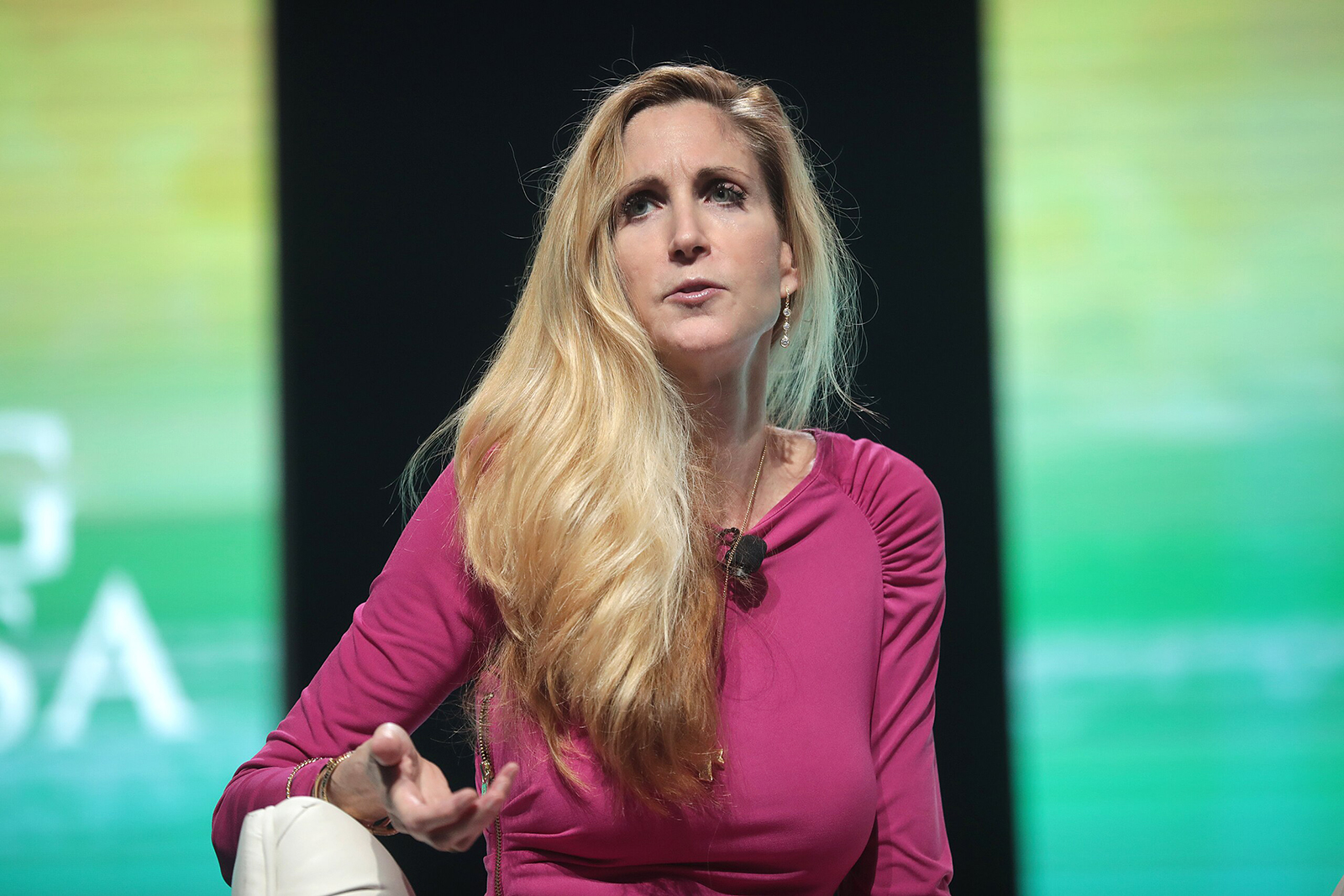
Ann Coulter sin 2019 at the Palm Beach County Convention Center in West Palm Beach, Florida. (Photo by Gage Skidmore/Wikimedia/Creative Commons)

(RNS) — In a 1971 Playboy interview with famed Western actor John Wayne, they broached the topic of Indians.

PLAYBOY: For years American Indians have played an important — if subordinate — role in your Westerns. Do you feel any empathy with them?

WAYNE: I don’t feel we did wrong in taking this great country away from them, if that’s what you’re asking. Our so-called stealing of this country from them was just a matter of survival. There were great numbers of people who needed new land, and the Indians were selfishly trying to keep it for themselves.

Fast forward to Sunday, July 6, when Ann Coulter stated on X: “We didn’t kill enough Indians” above a repost of Navajo activist and scholar Melanie Yazzie speaking at a Socialist2025 conference. Shortly after, Indigenous peoples (and many of their allies) flooded various social media outlets to reprimand Coulter and condemn X for the hate speech.

More than 50 years apart, these moments reveal how America still struggles with who we are, politically, socially and religiously. Indigenous peoples are left out of these conversations, until moments like this rise to the surface and the ongoing cycles of colonization, violence and trauma are brought to the forefront once again.

Our collective consciousness is ignoring important conversations around the treatment of Indigenous peoples — land grabs, settler colonialism, boarding schools, political and religious violence, human rights suppression, and the violence created in the Cowboys versus Indians narrative. That narrative lives so deeply embedded in us that it’s still a joke to be made at the dining room table, still a part of our story as a nation.

I am a citizen of the Potawatomi nation, and our word for America is Chemokmankik, which loosely translates to the “land of the long butchering knives.” This is not the same as the name we’ve given the land, Turtle Island, based on our creation story.

America as a nation, as an institution, was born in violence. In language and in action, America has repeatedly treated Indigenous peoples as less than worthy — of care, of acknowledgement, of running water, of religious rights, of returning our lands to us.

Both John Wayne and Ann Coulter believe the settlers who moved West deserved the lands they found there and that more of us should have been killed along the way.

But many Americans had hoped things were getting better. We saw real strides with DEI and spaces that brought in Indigenous voices. But the problem with America’s response — even within progressive movements — has been that much of it is performative. Many initiatives (like land acknowledgements) didn’t go far beyond the spoken words — it looks good for an organization, university, church or school to name the Indigenous peoples whose land they are on or to bring in a Native speaker, but the work goes beyond that.

If we cannot acknowledge that colonization is an ongoing, real threat to Indigenous cultures and lives, we won’t ever be able to face who we are as a nation.

And because we haven’t done the deep work of healing as a country from those founding wounds — nor acknowledged the ways they still fester as Indigenous people remain deeply marginalized — we’ve created the perfect space for Trump and his army of online extremist trolls to re-introduce a violent, expansionist vision.

In his inaugural address, Trump said, “The United States will once again consider itself a growing nation — one that increases our wealth, expands our territory, builds our cities, raises our expectations, and carries our flag into new and beautiful horizons. … And we will pursue our manifest destiny into the stars, launching American astronauts to plant the Stars and Stripes on the planet Mars.”

But Trump’s invocation of manifest destiny isn’t limited to space exploration. It’s a direct tie to the legacy of one of his own heroes, Andrew Jackson, who carried out mass removals of Indigenous peoples from their homelands, including my own ancestors who were forced from our homes in 1838 in the Trail of Death.

Trump wants to colonize the world around him, and he will begin with our communities, not just in action but in language, continuing the same rhetoric that has been used repeatedly to justify our existence as the “merciless Indian savages” that we have always been perceived to be — from the early days of our Founding Fathers until now.

So what does this mean moving forward?

To move forward as a nation, we must first reckon with our past. For our young nation that is turning 250 next year, we have to confront who we’ve been to understand who we’re becoming. It’s not enough to say that the problem is Trump.

John Wayne didn’t care about the experiences of Indigenous peoples in the 1970s and wanted to leave what happened between our “forefathers” in the past. Ignoring what’s happened in America’s past — or glorifying its violence — won’t get us any closer to healing as a nation.

The path forward requires more than performative gestures. It demands that we criticize our institutions — even as we rely on them. It asks us to protest boldly — and to hold onto the slivers of hope offered us by our ancestors, our communities and our stories.

Kaitlin B. Curtice. (Courtesy photo)

The stories we tell about each other matter. This is a time to trust and listen to Indigenous peoples globally. It is a time to change violent narratives, to rebuke the Cowboys versus Indians scripts and to begin working toward a world that will see and value us for the beauty, kinship and stories we have to offer.

(Kaitlin Curtice is a Potawatomi award-winning author, poet-storyteller and public speaker, who writes on the intersections of spirituality and identity and how that shifts throughout our lives. She is the author of eight books; her newest, “Everything Is a Story,” releases October 2025.)




 With Pete Hegseth in the pews, a Christian nationalist church plant launches in DC

WASHINGTON (RNS) — Christ Kirk DC is the latest example of pastor Doug Wilson's growing sphere of influence among a cadre of conservatives sometimes described as the 'New Right.'
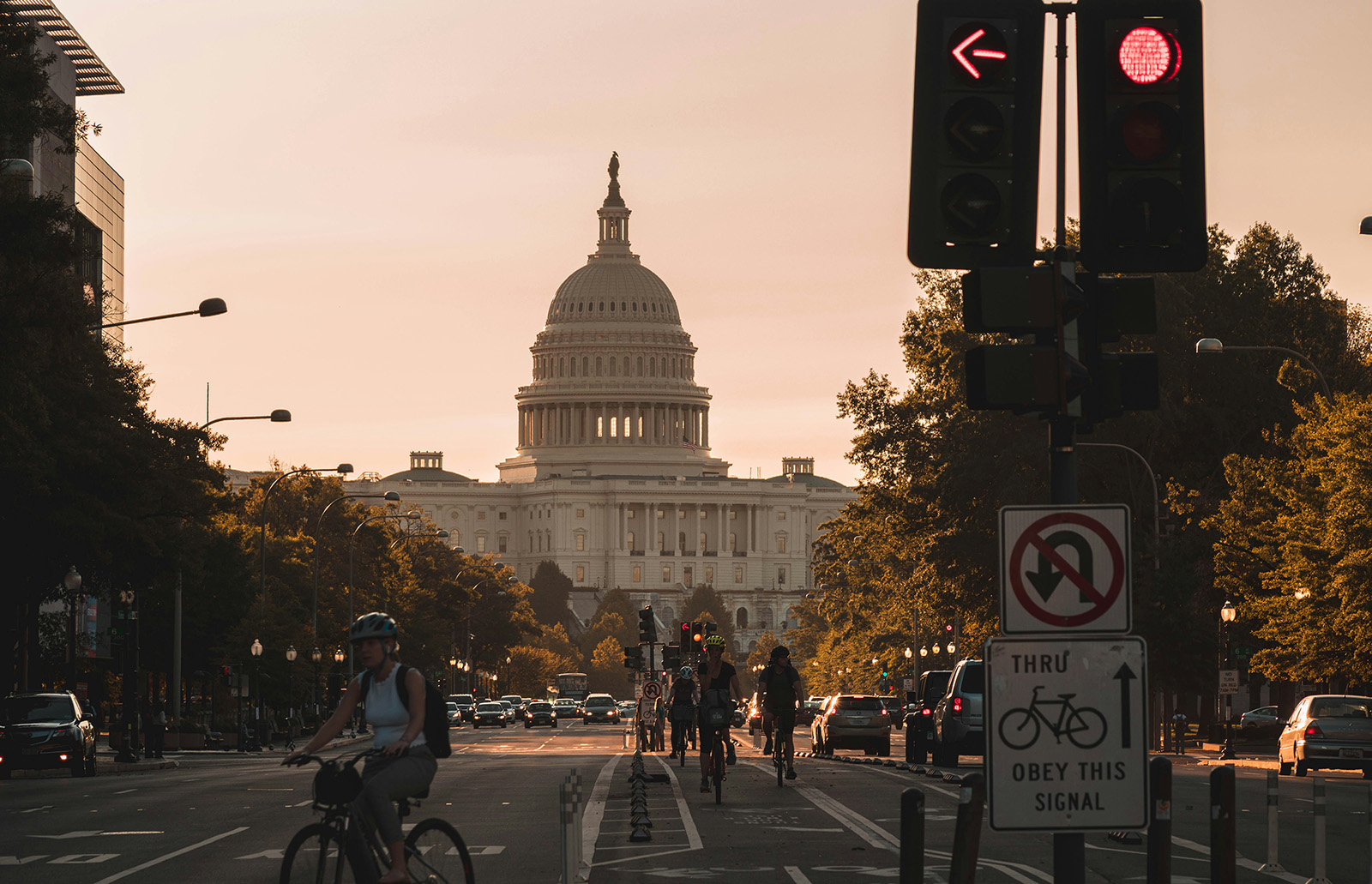
The U.S. Capitol at dusk in Washington, DC. (Photo by Andy Feliciotti/Unsplash/Creative Commons)

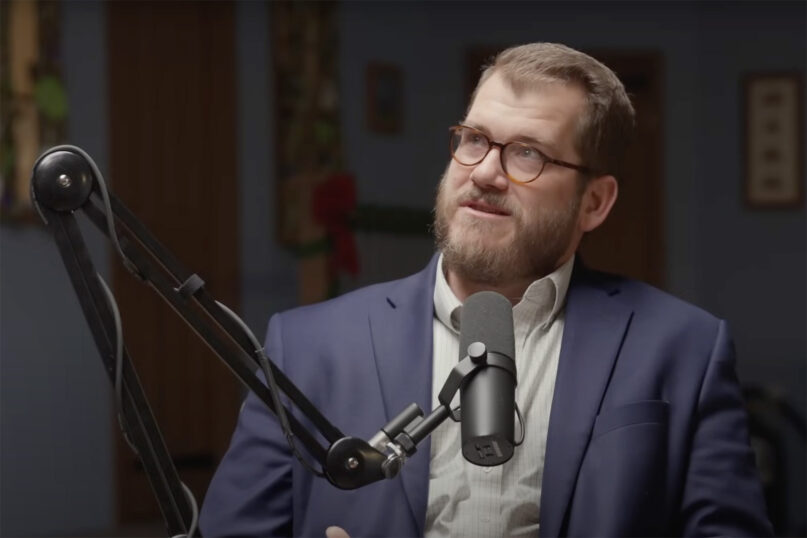
WASHINGTON (RNS) — Pastor Jared Longshore isn’t exactly a holy roller preacher. Bearded and bespectacled, his sermon before the D.C. plant of Christ Kirk church on Sunday (July 13) was delivered in the subdued, heady style typical of the often buttoned-up Reformed Christian tradition.

But as Longshore stood underneath an American flag suspended just above his head, its stars and stripes facing toward the floor, the pastor made clear that the new congregation — an outpost of an Idaho church run by a self-described Christian nationalist — wanted to make some noise.

“We understand that worship is warfare,” Longshore said, leaning over the lectern. He paused for a moment, then added: “We mean that.”


Many in the roughly 120-strong congregation nodded in agreement, a few fanning themselves with church bulletins as they sat packed together in the small, non-air-conditioned room just a few blocks from the U.S. Capitol. And the message appeared to resonate with the most notable attendee among the crowd of worshippers: U.S. Secretary of Defense Pete Hegseth. Children in the pews whispered excitedly when Hegseth entered, and the defense secretary was mobbed by supporters as he left the church.

While the service itself followed the traditional rhythms of Reformed Protestant liturgy — confessions of faith, Scripture readings and hymns sung in harmonies that emphasize fourths and fifths — Longshore’s sermon was full of political references. He lauded the Department of Government Efficiency and argued that liberty and equality are concepts that only make sense if they are attached to conservative Christianity.

“If you get rid of God, you lose all sense of what equality is,” Longshore said.

Pastor Jared Longshore. (Video screen grab)

The church plant is the latest example of pastor Doug Wilson’s growing sphere of influence among a cadre of conservatives sometimes described as the “New Right.” Having founded Christ Kirk (also known as Christ Church) in Moscow, Idaho, decades ago, Wilson has since helped establish a small denomination — the Communion of Reformed Evangelical Churches — while also creating a Christian school, college, seminary and printing press. Along the way, the stridently conservative pastor has sparked a number of controversies, from his blatant use of anti-LGBTQ+ slurs to his comments downplaying the atrocities of American slavery.

But Wilson’s political rise is more recent, tied mostly to his congregation’s headline-grabbing protests against pandemic restrictions and the pastor’s fervent, unapologetic embrace of Christian nationalism on his various YouTube channels. The result has been a flurry of prominent politically themed speaking engagements in the past two years, such as speaking alongside Russell Vought (who would go on to be the director of the Office of Management and Budget) at an event hosted in a U.S. Senate office building; addressing the crowd at a Turning Point USA conference; or speaking on a panel at the National Conservatism Conference.

Hegseth, who has praised Wilson’s books, said he moved to Tennessee specifically to enroll his children in a school associated with the Christian education movement popularized by Wilson. He also became a member of a local CREC church in the area. In May, Hegseth had his pastor, Brooks Potteiger, lead a prayer service at the Pentagon.


In an interview with Religion News Service, the Idaho-based Longshore — who is one of many pastors associated with Christ Kirk and the CREC slated to preach to the D.C. startup until it installs its own pastor — dismissed the idea that the church was part of an effort to influence D.C. politics in an explicit sense. He echoed Wilson, who has said the nation’s capital is now home to many members of the CREC denomination, and denied that Hegseth had any role in bringing the church to Washington.

But Wilson has also stated publicly that establishing the church is part of an effort to capitalize on “strategic opportunities with numerous evangelicals who will be present both in and around the Trump administration,” and Longshore acknowledged the effort is designed to be an indirect form of politicking.

“We do believe that culture is religion externalized, always, whatever the religion,” said Longshore, who serves as an associate pastor at Christ Kirk Moscow. “And politics is downstream from culture, and culture is downstream from worship.”

Christ Kirk DC met in a building, center, on Pennsylvania Avenue

 owned by Conservative Partnership Institute in Washington. 

(Image courtesy Google Maps)

Photographs were prohibited as a condition of being able to observe the service, but political symbols filled the worship space. Old newspaper articles praising Ronald Reagan dotted the walls, as did multiple American flags. Some ensigns were associated with the political right, such as the Revolutionary-era “Don’t Tread on Me” flag popularized among conservatives by the Tea Party movement. An “Appeal to Heaven” flag — another Revolutionary-era banner that has become associated with Christian nationalism and the Jan. 6, 2021, attack on the U.S. Capitol — was draped on the wall nearby.

Granted, the room wasn’t decorated by the church itself, but rather, the flags were likely an artifact of the church’s political ties. The building, situated along Pennsylvania Avenue just southeast of the Capitol, is one of several owned by a far-right think tank known as the Conservative Partnership Institute. CPI is deeply connected to the MAGA movement: led by former U.S. Senator and Heritage Foundation head Jim DeMint and President Donald Trump’s onetime chief of staff Mark Meadows, the group’s partner organizations include the Center for Renewing America, which was created by Vought, and America First Legal, an operation co-founded by current White House Deputy Chief of Staff Stephen Miller.


Christ Kirk’s own ties to the group appeared to extend to the pews: Spotted among the parishioners on Sunday was Nick Solheim, head of American Moment, an organization founded with the backing of then-Sen. JD Vance. The group is also listed among CPI’s partners.

Wilson’s various projects appear to be geared toward building a base of power distinct from others that have rallied behind Trump, such as Charismatic and Pentecostal evangelicals that surrounded the president during his first term. Wilson and his allies were openly critical of the president’s decision to install Pastor Paula White as head of his White House Faith Office, challenging her appointment in part because of their opposition to women’s ordination. And he has also shown a willingness to exert influence on other powerful, far-right religious institutions: Shortly after announcing Christ Kirk in DC, Wilson unveiled a similar effort at Hillsdale College, an influential religious school.

Christian nationalism is a mainstay of Wilson’s projects, a trend that continued on Sunday. Longshore stressed he believes “Christendom” has “marked this land from its founding.” He made a similar argument during his sermon, in which he also suggested that the U.S. has become a “fallen” or “lapsed” nation because it has drifted from its Christian roots.

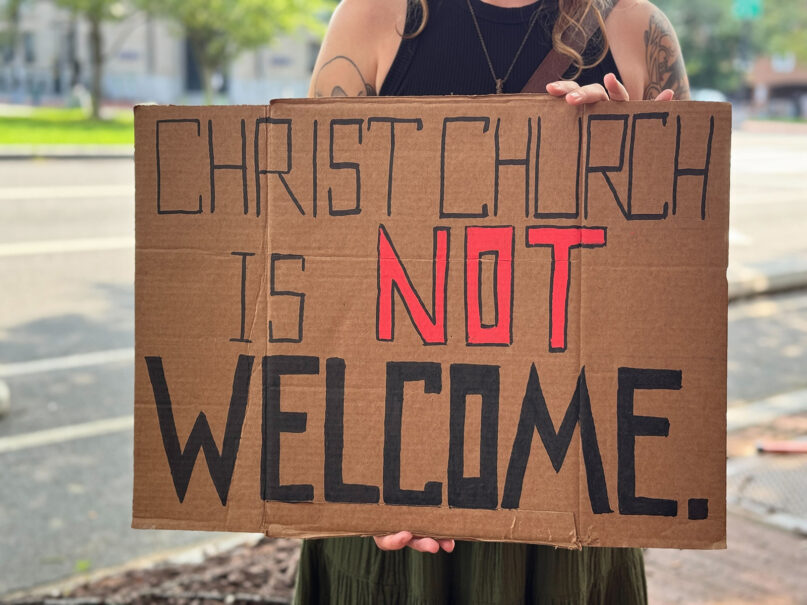
A protester holds a sign outside the first service of Christ Kirk DC, 

Sunday, July 13, 2025, in Washington, DC. (RNS photo/Jack Jenkins)

It’s a common argument among purveyors of Christian nationalism. But it’s also a heavily disputed idea and one unlikely to sit well with D.C.’s deeply liberal population. Outside the building on Sunday, a pair of protesters stood jeering worshippers as they entered, with one holding a sign that read “Christ Church Is not Welcome.”

One of the protesters, who identified themself only as Jay, told RNS that Christ Kirk espouses values that are “fundamentally un-American” and “un-Christian.”


“But most fundamentally, they’re contrary to my deeply held values, and what I know are the deeply held values of D.C.,” Jay said.

The frustration was shared by at least one person inside the church. Nathan Krauss, who lives just outside D.C. and works in the federal government, said he attended the service as part of an ongoing personal effort to learn more about Christian nationalism. A United Methodist, Krauss said the service was fascinating in part because he found much of it unoffensive.

But he argued there was a clear disconnect between Scripture read by worship leaders and their support for Christian nationalism.

“I just really want to know: is the creation of this church going to create more liberty for the oppressed or less liberty for the oppressed? Because from everything that I see that they’re about, it seems to be that there’s going to be less liberty for people, not more,” Krauss said.

Longshore, for his part, said the hope is for Christ Kirk DC to evolve from a “service” of Christ Kirk Moscow to a mission church and, eventually, a “particularized church” with its own established local leadership.

Asked about the protesters, Longshore quipped, “We love it,” noting that Christ Kirk is sometimes protested in Moscow as well. Washington, D.C., of course, is a very different animal than Idaho. But Longshore argued that as a church leader preparing for “spiritual warfare,” he relished the challenge.


“What feels like crazy to you is actually normal stuff,” he said, referring to the protesters. “It’s like normal stuff from the land of the free, in the home of the brave. It’s what we used to be as American society, and what we still are, in large part, outside of the secular bubble.”