Thursday, August 14, 2025

LaRonde: The deep mine that built Agnico Eagle


LaRonde mine. (Image courtesy of Agnico Eagle.)

In the shadow of Quebec’s Abitibi Greenstone Belt, just west of Val-d’Or, lies a mine that built an empire, LaRonde.

To the casual observer, it looks like any other shaft: headframes, processing plants, and tailings ponds. But in Canadian mining, LaRonde is more than infrastructure. It’s where persistence, risk, and geology combined to shape a company.

The humble beginnings: Dumagami days

Before it became LaRonde, the site was known as Dumagami, a modest underground operation that few believed could be a major producer. The mineralization was promising, but the complexity kept larger players away.

By the late 1980s, under General Manager Ebe Scherkus, Dumagami poured its first gold. Agnico Eagle, then a small company with limited resources, moved to secure full ownership. Among those pushing the decision was Sean Boyd, then a young CFO, who saw value others missed. Boldness, not caution, shaped Agnico. Dumagami was its trial by fire.

Trusting the rock and each other

The early years were, quite literally, rocky. Development at depth brought ventilation challenges, rising rock temperatures, and unpredictable ground conditions.

Boyd doesn’t recount those days with regret, but with respect for what they demanded of the team.

“Early on, LaRonde was a challenging asset,” Boyd would later recall. “But great people and a strong culture carried us through. We took calculated risks, trusted each other, and stayed focused on our strengths.”
— Sean Boyd, 2025 Hall of Fame Interview

That trust, both in the ore body and in the people extracting it, became Agnico’s trademark.
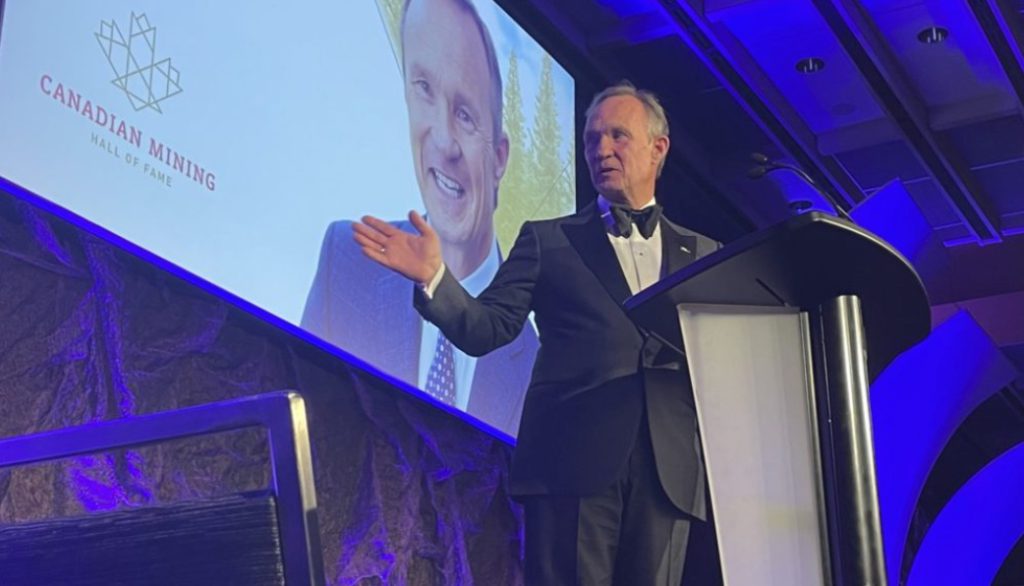
Sean Boyd
Sean Boyd on stage at the Canadian Mining Hall of Fame. (Credit: Colin McClelland.)

Going deep: The Penna shaft gamble

By the mid-1990s, with promising geology and a willingness to think big, Agnico committed to building the Penna Shaft.

At over three kilometers straight down, it would become the deepest single-lift shaft in the Western Hemisphere. Sinking it through Quebec’s hard Archean rock, with no guarantee of payoff, was an audacious move for a company of Agnico’s size at the time. 

But this was Boyd’s philosophy in practice: if you believe in the geology, you commit.

The gamble paid off.

By the early 2000s, LaRonde was delivering more than gold. Silver, zinc, and copper by-products helped drive down cash costs, making LaRonde one of the lowest-cost gold mines in Canada at the time.

Those by-product credits, often overlooked in other operations gave Agnico financial breathing room and the capital to think beyond Quebec.
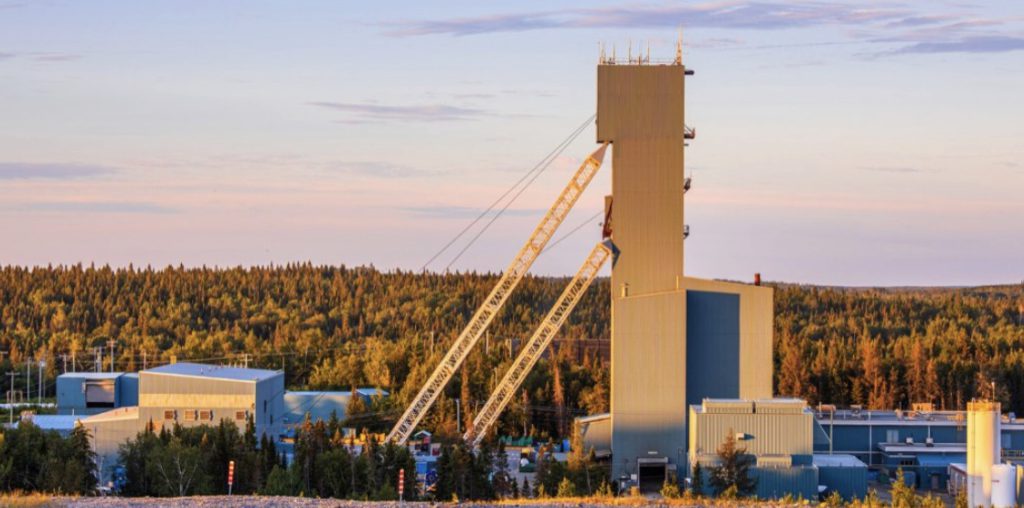
The LaRonde Complex’s Penna Shaft is the deepest single-lift shaft in the Western Hemisphere. (Image courtesy of Agnico Eagle | X Feed.)

The mid-depth struggle

Even LaRonde’s best years came with their share of headaches. As mining went deeper, rock stress increased and infrastructure upgrades became critical. In the early 2010s, ore flow bottlenecks slowed progress. Boyd addressed the setbacks directly, with characteristic candor:

“We did have some issues around one of our mining blocks … which caused us to just slow down the development of Level 215,” he told investors in 2012.

“But we are getting the grade… Our grade profile is likely going to go up roughly 3.5 g/t in ’14 … and in ’15, we expect to be a little over 4 g/t.”
— Sean Boyd, Q4 2012 earnings call

For Agnico, these weren’t failures, they were part of the process. The ore was still there. The grades were improving. The mission was to adjust, optimize, and keep moving.

From flagship to complex

LaRonde didn’t stay a single-mine operation for long. In 2003, Agnico acquired a nearby deposit what would later be known as LaRonde Zone 5.

At first, it was a modest satellite. But by 2018, it was feeding ore into LaRonde’s mill, extending the complex’s life and boosting production.
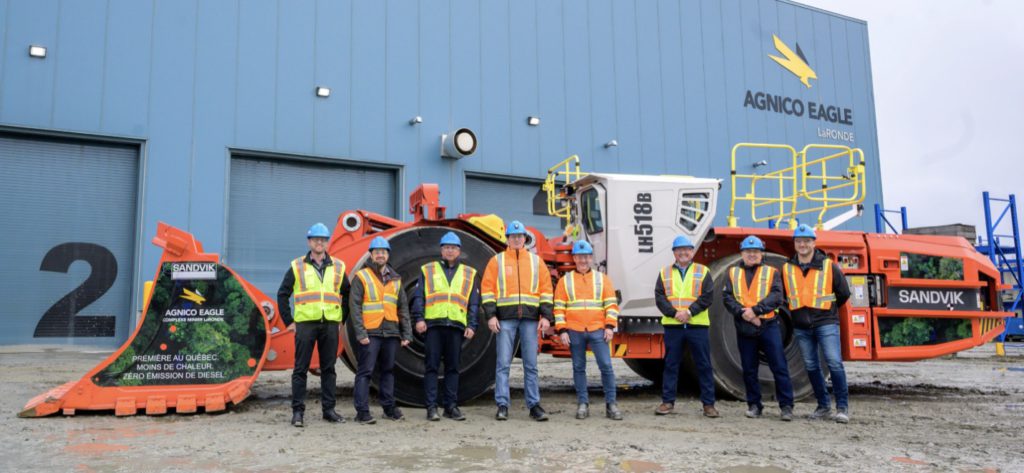
Team standing at LaRonde Zone 5. (Image courtesy of Agnico Eagle.)

Meanwhile, Agnico invested heavily in cooling systems to manage extreme underground temperatures sometimes exceeding 30°C at depth and automation technology to improve safety and productivity.

The transformation was complete: LaRonde had evolved from a challenging underground project into one of the most sophisticated underground mining complexes in the Western Hemisphere.

Impact beyond Quebec

The financial impact of LaRonde cannot be overstated. For decades, it generated the cash flow that fuelled Agnico’s expansion, including mines in Nunavut, Finland and Mexico. It also paved the way for the company’s merger with Kirkland Lake Gold.

Every new project had LaRonde’s fingerprints on it funded, in part, by the steady stream of gold and by-products pulled from its deep veins.
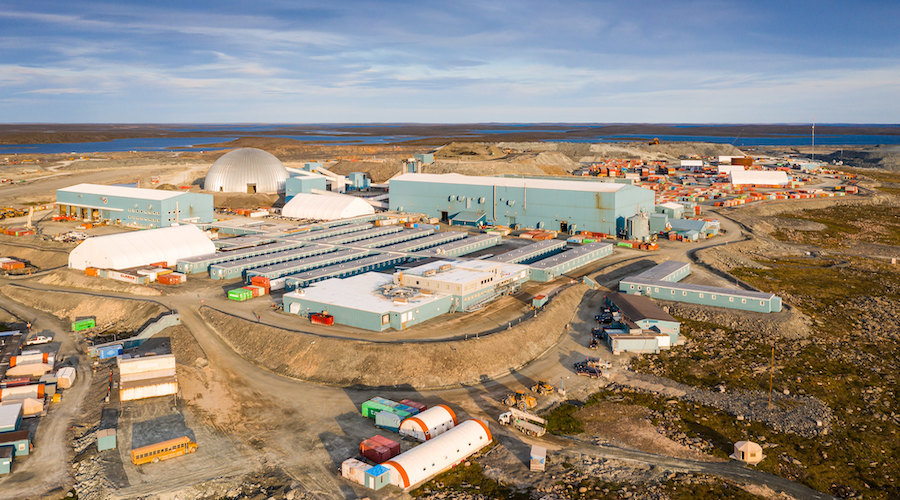
Meadowbank gold mine. (Image courtesy of Agnico Eagle | Flickr.)

To date, the LaRonde complex had produced more than 8 million ounces of gold and remains a cornerstone of Agnico’s production profile, its workforce and identity.

The technical edge

Part of LaRonde’s legacy lies in its technical accomplishments. Few mines operate at such depth with the level of efficiency Agnico has achieved.

The Penna Shaft’s design allows for rapid hoisting of ore, waste, and personnel from extreme depths. A network of underground conveyors, crushers, and ventilation systems keeps the operation moving.

Its success also proved that deep mining in the Abitibi could be economically viable, reshaping exploration strategies for the entire belt.

Gold, grit, and the making of a giant

To most, LaRonde is just another dot on the mining map. To Sean Boyd, it’s something more as he recently told me:

“Although challenging it really is an incredible deposit and world class mine. But what makes LaRonde truly special is the quality and resiliency of the workforce and the fact that it has developed so many exceptional leaders for Agnico Eagle.”

That ethos, the willingness to tackle hard projects, trust the team, and stay the course, did more than build one of the deepest gold mines on Earth.

It built a company.

It built Agnico Eagle.


Alex Deluce is the founder of Gold Telegraph, an online news site covering gold, mining, and global economic trends. He has spent over a decade analyzing precious metals and interviewing key figures in finance and mining.

 

Adani’s new copper smelter in India applies to become LME-listed brand

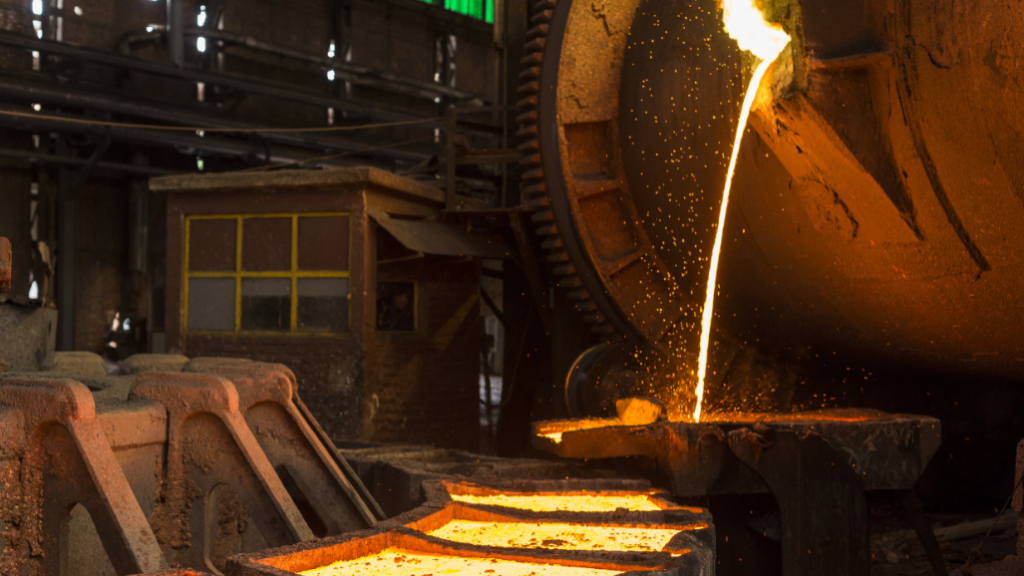
Copper smelter. Stock image.

A major new copper smelter in India owned by Adani Enterprises Ltd has applied to become a listed copper-producing brand with the London Metal Exchange, the LME said in a notice on Wednesday.

The copper smelter, which has an annual production capacity of 500,000 metric tons, is coming online at a time of shrinking smelting margins due to new smelter capacity in China and slower-than-expected growth of copper concentrate supply.

According to Adani, the $1.2 billion Kutch Copper facility in the western state of Gujarat is the world’s biggest single-location plant of its type.

It is expected to begin smelting in May, Adani’s head of metals, Felipe Williams, said in April. Chilean copper mining giant Codelco also said in April it would begin supplying copper concentrates to the smelter for refining this year.

For India, the smelter is expected to reduce the country’s reliance on imported copper. According to the Trade Data Monitor, India imported refined copper worth $2.8 billion last year, mainly from Japan, Tanzania and Mozambique.

Copper listed for storage in LME-registered warehouses can be delivered against copper futures traded on the exchange when their contracts expire. For market players, LME-listed copper is easier to finance than non-registered brands.

(By Polina Devitt; Editing by Paul Simao)

Hudbay snags $600M investment for Arizona copper project

Inspecting the grounds at Copper World. (Image courtesy of Copper World Arizona.)

Canada’s Hudbay Minerals (TSX, NYSE: HBM) has struck a $600-million deal with Mitsubishi that hands the Japanese conglomerate a 30% stake in its fully permitted Copper World project in Arizona.

The agreement, announced on Wednesday, secures a long-term partner for Hudbay and sharply reduces its upfront funding needs. Mitsubishi will pay $420 million at closing and an additional $180 million within 18 months.

The company will also fund its pro-rata share of future capital costs, deferring Hudbay’s first capital contribution until at least 2028 and trimming its expected outlay to about $200 million based on prefeasibility study (PFS) estimates.

“Securing Mitsubishi as a 30% partner in Copper World is an important milestone for Hudbay as we establish a long-term strategic partnership to advance this high-quality copper project towards sanctioning and to unlock significant value in our copper growth portfolio,” chief executive officer Peter Kukielski said in a statement.

Shares in Hudbay Minerals hit their highest level in more than a decade on the news to trade at C$16.49 in early morning in Toronto. The stock last touched such a high level in 2011 and it was trading at C$15.36 late afternoon, leaving the miner with a market capitalization of C$6.06 billion ($4.4B).

Hudbay began seeking a minority partner for Copper World earlier this year, attracting interest from investors in Saudi Arabia, the United Arab Emirates and Japan.

HudBay discovered Copper World in 2021. The project, located about 50 km southeast of Tucson, is expected to yield 85,000 tonnes of copper per year over a 20 year mine life.

$1.5B investment

Hudbay estimates the development will represent a $1.5 billion direct investment in the US critical minerals supply chain, which has been a policy priority for Washington as it seeks to reduce reliance on foreign sources of key raw materials.

Once in production, Copper World would boost Hudbay’s consolidated copper output by more than 50%. Arizona remains a strategic focus for major copper producers, including Rio Tinto (ASX, LON: RIO), aiming to meet growing US demand.

The transaction is expected to close in late 2025 or early 2026, pending regulatory approvals. Hudbay aims to complete a definitive feasibility study by mid-2026, with a final decision on the proposed mine targeted for later that year.


El Teniente mine lost 20,000-30,000t of copper due to accident, Codelco says

Rajo Sur, the only open-pit section at El Teniente. Image from Codelco.

A multi-day shutdown at Codelco’s El Teniente mine due to an accident in late July led to a loss of 20,000 to 30,000 metric tons of copper, equivalent to approximately $300 million, Codelco chairman Maximo Pacheco said in a statement on Wednesday.

A collapse at El Teniente on July 31 caused the deaths of six workers and is still being investigated.

(By Daina Beth Solomon; Editing by Alexander Villegas)


MMG warns Peru election poses risk to Las Bambas copper mine


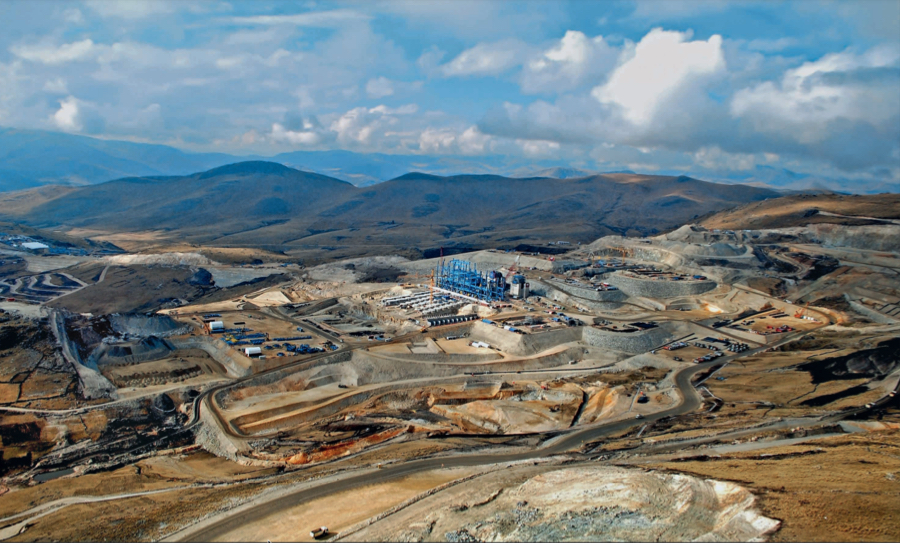
Las Bambas is considered the world’s ninth-largest copper mine with an output of about 400,000 tonnes of the industrial metal per year.(Image courtesy of Minera Las Bambas.)

Peru’s presidential election next April could raise the risk of more protests affecting MMG Ltd.’s flagship Las Bambas copper mine, chief executive officer Zhao Jing Ivo said during an earnings call on Wednesday.

Las Bambas is Peru’s largest copper mine and the Chinese company’s cornerstone asset, but its operations have been dogged by years of sporadic social unrest — sometimes tied to political tensions in the Andean nation.

“In the run-up to the presidential election in April next year, the risk of protest actions could increase,” Zhao said on an earnings call on Wednesday.

The most serious disruption at Las Bambas was in 2022 — a year of political turmoil in Peru — when the mine halted output for more than 50 days after protesters occupied the site. Current President Dina Boluarte is due to hand over power after the vote next year.

MMG’s shares pared gains Thursday after rallying more than 10% on Wednesday on a jump in first-half net income to $340 million, from $21.1 million a year earlier.

The company is still clearing out inventories after road blockades by informal miners last month interrupted some shipments of semi-processed copper from the mine. There has been no formal agreement between those protestors and the government, so there is still a risk of further disruptions in the second half of the year, Zhao said.

Still, Las Bambas operated at full capacity throughout the recent disruption, Zhao said, and output guidance for this year was unchanged at between 360,000 tons and 400,000 tons. The upper end of the range assumes “stable operating conditions and limited external disruptions,” MMG said in a statement.

Since the major outage in 2022, MMG has worked to build a relationship with the local communities, including artisanal miners, and this has prevented similar events, Zhao said.

(By Paul-Alain Hunt)


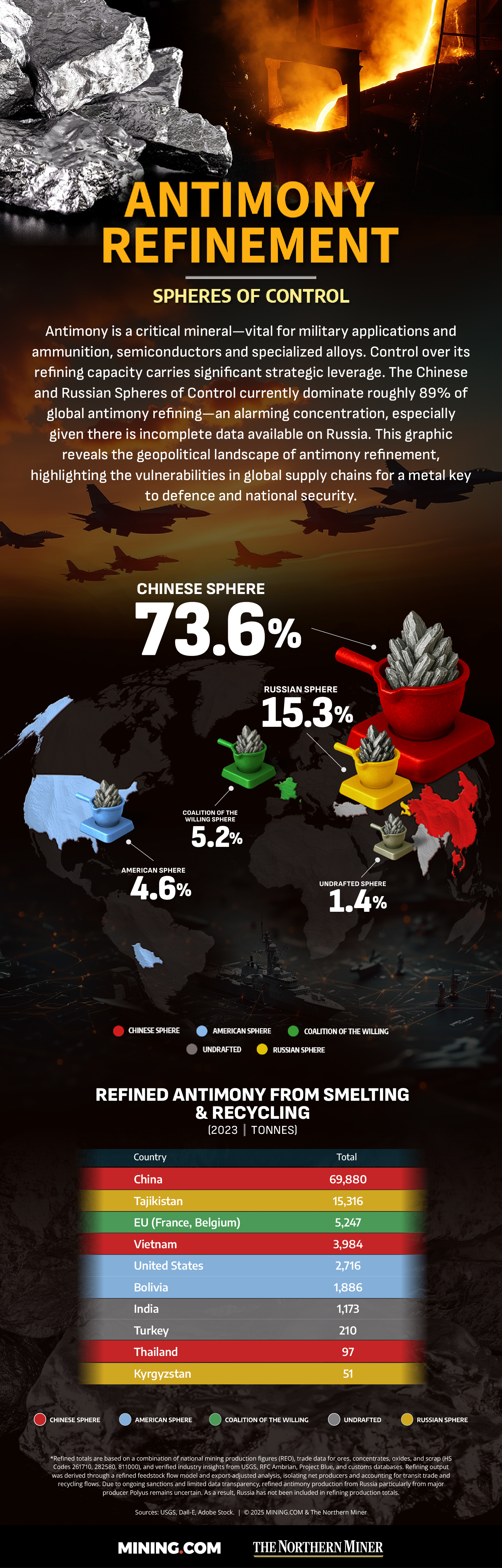
Infographic: China’s grip on global antimony refining


Antimony is a critical mineral—vital for military applications and ammunition, semiconductors and specialized alloys.

Control over its refining capacity carries significant strategic leverage.

The Chinese and Russian Spheres of Control currently dominate roughly 89% of global antimony refining—an alarming concentration, especially given there is incomplete data available on Russia. 

This graphic reveals the geopolitical landscape of antimony refinement, highlighting the vulnerabilities in global supply chains for a metal key to defence and national security. 

(By Anthony Vaccaro; Files from: Ali Ravaghi; Creative: James Alafriz)


HD Hyundai Set to Start Shipbuilding in 2026 in the Philippines

Subic shipyard Philippines
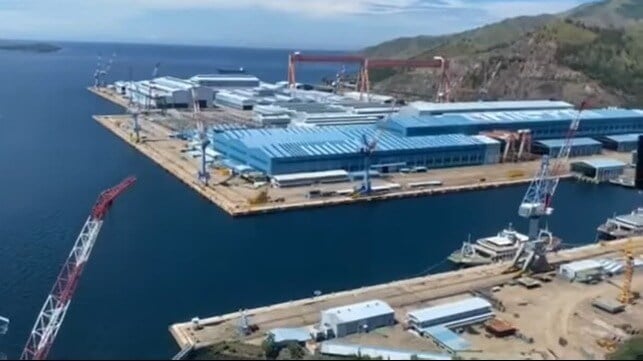
Subic north went to the Navy while HD Hyundai is set to restart shipbuilding on the south portion of the former Hanjin yard (Philippines Department of National Defense)

Published Aug 12, 2025 6:49 PM by The Maritime Executive


After years of planning and preparation, efforts are now underway to resume shipbuilding at the former Hanjin shipyard in the Philippines, operated by HD Hyundai. The move comes as South Korea’s largest shipbuilder looks to expand its lower-cost operations and increase capacity to realize opportunities it sees in the market.

The Manila Times reports that it toured the site in Subic Bay and was briefed on the efforts to restart the shipbuilding operations. During the site visit, reporters were told the goal is to build up to 10 ships a year within the next three to five years. The initial plan is to use the yard to build product carriers measuring 656 to 820 feet (200 to 250 meters) in length. The ships will be built in 16 to 18 months, and they also anticipate using the yard for offshore structures to support the wind energy sector.

Training for welders has already commenced, and preparations are underway at the former shipyard site. The Manila Times reports that 3,500 workers have been hired, with Hyundai targeting approximately 7,000 workers when the yard is fully operational.

Hanjin had been operating the facility since 2006, and at its peak, employed approximately 13,000 workers. However, with the downturn in shipbuilding, the yard encountered financial troubles and began layoffs, having reduced its employees by 7,000 before filing for bankruptcy at the beginning of 2019. 

In March 2022, the Philippines reported that it had selected U.S.-based equity investment firm Cerberus Management Capital with Agila Naval to operate the southern portion of the site as a commercial shipyard. Cerberus was to settle Hanjin’s outstanding debts and assume the South Korean’s 50-year lease on the yard. The northern portion of the facility was converted into Naval Operating Base (NOB) Subic by the Department of National Defense and is used as a base for the Philippine Navy.

HD Hyundai was reported to be interested in the site in part because of its relationship with the Philippine Navy. In 2024, Philippine President Ferdinand Marcos Jr. announced a deal with Agila and Hyundai, calling it a landmark moment that would provide a “fresh start” and a “strong foundation” for shipbuilding in the Philippines.

The South Korean company is reported to have a 10-year lease for approximately 200 hectares and will be able to use some of the equipment, including cranes, from the former shipyard. Reports indicate that it has also committed to investing approximately $550 million over the next 10 years.

HD Hyundai is said to be seeking other international opportunities for its shipbuilding operations. It was recently reported that Hyundai was entering the bidding for a planned new shipyard to be developed in Morocco. It would provide the company with its first location close to the European market. The company has also signed a partnership agreement in the United States and is working on developing opportunities for shipbuilding in India.


Fincantieri Puts New Princess Cruise Ship Through Its Paces During Trials

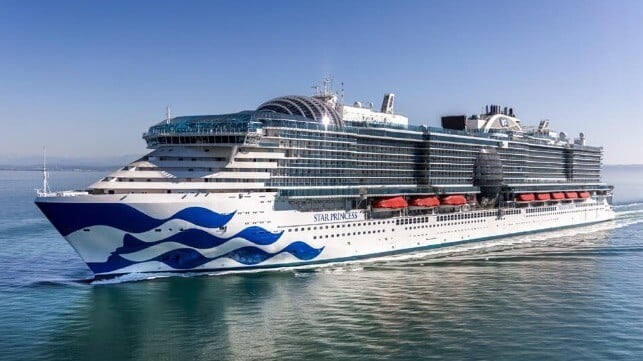
Star Princess cruise ship
Star Princess completed sea trials and is on track to be the fifth cruise delivered by Fincantieri this year (Princess Cruises)

Published Aug 13, 2025 5:23 PM by The Maritime Executive


Italian shipbuilding Fincantieri completed sea trials for Princess Cruises' second Sphere-Class ship, the Star Princess. The cruise ship, which is one of the largest ever built in Italy, is also the last of the pre-pandemic orders by Carnival Corporation, while continuing a strong year for Fincantieri.

During the final sea trials from August 9 to 12, Star Princess departed the Fincantieri shipyard in Monfalcone, Italy, for the Adriatic Sea. The vessel completed a comprehensive series of tests, including steering, navigation systems, and propulsion. They report the ship is on track for delivery and its first cruise on October 4, sailing from Barcelona.

"We confidently led Star Princess through sea trials," said Captain Gennaro Arma, leader of the Sphere-Class newbuild site team, who oversaw the sea trials for Princess. "As the proud leader of our newest vessel, I'm extremely impressed with the ship's navigation capabilities and maneuverability.”

Currently under final construction at Fincantieri, the 177,800-gross ton Star Princess is a sister to the Sun Princess, which, after several construction delays, finally entered service at the end of February 2024 while final work was still being completed on the ship. Each ship accommodates 4,300 passengers and 1,600 crew, featuring 30 dining and bar venues, and entertainment, as well as over 1,500 balcony staterooms.

They will remain the largest cruise ships built in Italy until Carnival Cruise Line and Norwegian Cruise Line begin delivery from Fincantieri of their over 200,000 gross ton ships late in the decade. The Princess sister ships are also the first LNG dual-fuel ships for the line and the largest cruise ships operated by Princess Cruises. With the delivery of Star Princess scheduled for this fall, Carnival Corporation will begin a nearly two-year pause on new ship deliveries before Meyer Werft delivers Carnival Festivale to Carnival Cruise Line in 2027. 

Fincantieri has already delivered four cruise ships in 2025: Mein Schiff Relax (160,000 GT) in February; Norwegian Aqua (156,300 GT) in March; Viking Vesta (54,300 GT) in June; and Oceania Allura (68,000 GT) in July. The shipbuilder has work underway on additional cruise ships for Norwegian Cruise Line, Oceania Cruises, Regent Seven Seas, Viking, TUI Cruises Mein Schiff, and Four Seasons Yachts. Its orderbook as of mid-2025 stands at a total of 36 cruise ships, including the seven ships each over 200,000 gross tons. Cruise continues to be the largest segment of the business, representing over 40 percent of the group’s total revenues in the first half of 2025.


Norway Inaugurates Johan Castberg Field in Barents Sea

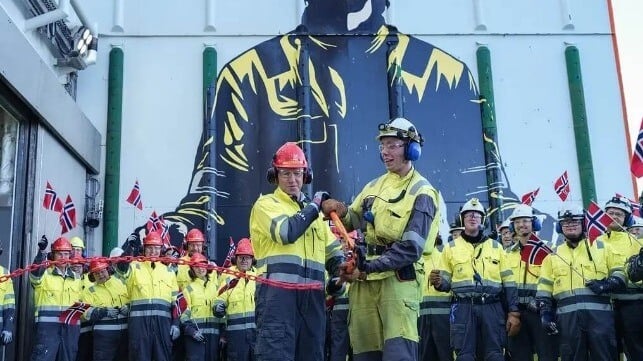
Energy minister Terje Aasland cuts a chain to inaugurate Johan Castberg (Ole Jørgen Bratland / Equinor)

Published Aug 12, 2025 9:14 PM by The Maritime Executive


Equinor and its government partners have officially inaugurated the Johan Castberg FPSO, the northernmost oil field in Norway. The pioneering Barents Sea project came on stream in March, and should continue to produce energy for the next 30 years, according to Equinor. 

Johan Castberg is already producing at its maximum rated capacity of 220,000 barrels per day, drawing on the Drivis, Hvis and Skrugard formations. On startup, its production alone more than doubled oil output from the Barents Sea. 

The FPSO loads about two tankers per week, generating mlllions of dollars in revenue for owners Equinor, Var Energi and Petoro AS (and the Norwegian state, Equinor's majority  shareholder). Recoverable oil volume is estimated at about 450-650 million barrels, with potential for expansion with other nearby discoveries. 

"We've identified options to add 250 MM to 550 MM new recoverable barrels that can be developed and produced over Johan Castberg," said Equinor EVP Kjetil Hove earlier this year. 

The subsea development infrastructure for the FPSO is extensive, incorporating 30 wells and two satellite platforms. Development took 14 years from first discovery to first production, and cost about $8 billion. At current oil prices, Equinor expects that it will pay for itself within two years. 

Norwegian energy minister Terje Aasland headlined an official opening ceremony for Johan Castberg on August 8, accompanied by executives from Aker, Equinor, Var Energy, local mayors, and government ministry leaders. 

"With Castberg on stream, the Barents Sea now has both our second largest producing oil field, our second largest gas field and the largest discovery being considered for development," Aasland said. "This provides secure jobs in the local business community and a basis for new assignments over a long period of time."


Australian Officers Catch and Dispose of Two Indonesian Fishing Boats

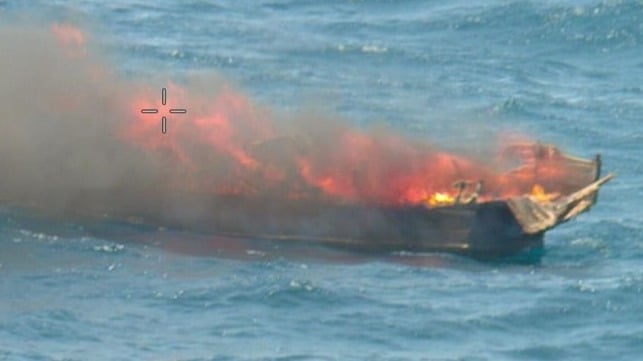
Illegal fishing vessel destroyed at sea by ABF officers, December 2024 (ABF file image)

Published Aug 13, 2025 11:37 PM by The Maritime Executive


The Australian Border Force has been searching for illegal Indonesian fishing operators for months, and continues to net new catches. Last weekend, ABF officers intercepted two boats off the Northern Territory, destroyed the craft and arrested eight fishermen, adding to a growing tally.

On Friday, ABF officers caught a vessel fishing illegally near the Cobourg Peninsula, a remote and wild stretch of coastline in the sparsely-inhabited Northern Territory. On boarding, the officers found three shark fins and 500 kilos of sea cucumber, along with fishing equipment. The catch and the suspects were seized, and the boat was "disposed of at sea."

On Saturday, another patrol found an Indonesian boat fishing illegally in the same region. Five crewmembers were aboard, along with equipment and 1600 kilos of sea cucumber, a valuable delicacy in East Asia. The vessel was disposed of and the crewmembers were arrested. All were delivered to Darwin to face charges. 

All told, the 2.1 tonne haul of sea cucumber would have brought these fishermen an estimated US$140,000, illustrating the motive for foreign operators to take risks in Australian waters, according to ABF. 

Fishing offenses result in criminal charges in Australia, and often end in guilty pleas. On August 5, 11 more Indonesian nationals pleaded guilty to charges of illegal fishing at Darwin Local Court. The charges stemmed from two separate vessel arrests. In the first, the crew had no fish aboard, but were in possession of salt (for preservation) and a 300-meter longline. The master was fined AUD$6,000, and the rest received smaller penalties. In the second, the crew was caught with 66 shark fins, and one crewmember turned out to have an outstanding warrant - resulting in steep fines. Nonpayment often results in imprisonment, followed by deportation. 


 Two Norwegians Get Jail Time for Trying to Retrieve Cocaine From Bulker

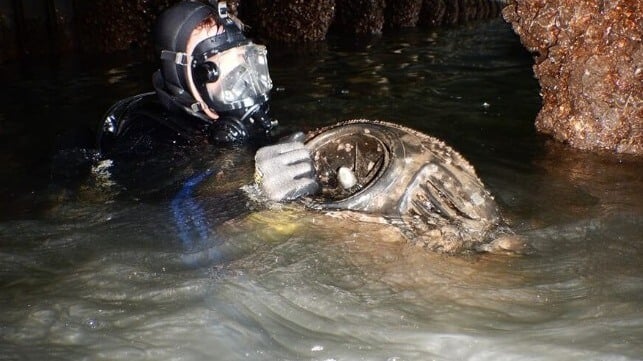
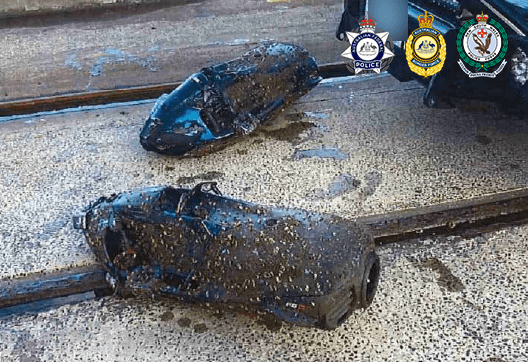
A police diver retrieves one of the two seabob mini-jetskis that the two men intended to use in their plot (AFP)

Published Aug 13, 2025 11:31 PM by The Maritime Executive


An Australian court has sentenced two Norwegian men to long jail terms for attempting to retrieve 80 kilos of cocaine from a bulker at Newcastle. According to prosecutors, the two men flew to Australia, drove to Newcastle and used diving gear to try to get the drugs out of the bulker's sea chest. 

On January 23, 2023, someone tipped off the New South Wales Police Force that a bulker was arriving at Newcastle on a voyage from Brazil, and was carrying a hidden load of cocaine. On the same day, a passerby noticed strange activity along the waterfront at Swansea, a seaside town about 15 miles south of Newcastle. The passerby contacted a police tip line and reported that two men were operating an unusual equipment configuration: diving gear, seabobs (high-cost miniature jetskis), and a tow harness fitted with shackles and weights. 

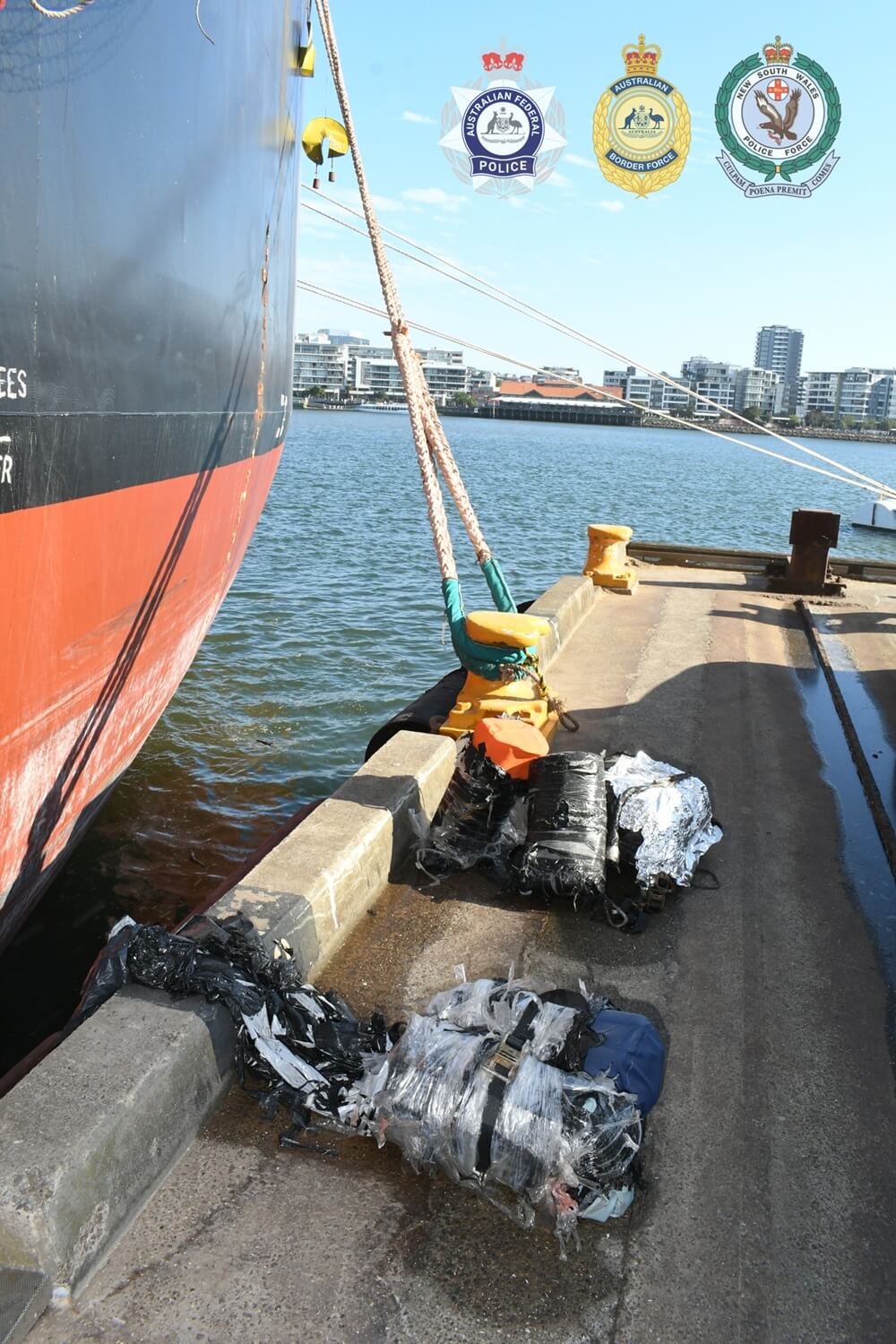
When the bulker arrived at Newcastle the next morning, NSW Police Force divers were on hand to search the vessel's hull. They found six duffle bags containing a combined 80 kilos of cocaine tucked in the sea chest, a favorite hiding place for international smugglers. 

Duffle bags of cocaine found in the bulker's sea chest (AFP)

On the 25th, the two men were once again spotted by the public and reported to the authorities, this time in Newcastle's harbor. Later that day, when the suspects returned to shore, police arrested them and recovered their equipment: a black climbing belt, diving goggles, a diving bag, bolt cutters, diving gloves, pliers and a pocket knife. In their vehicle, the police found more gear, along with electronic devices and receipts. 

On examining the two men's phones, NSF police found text conversations in an encrypted chat app that detailed the plans for retrieving cocaine from the bulker. The men had flown into Brisbane from Indonesia, separately, then joined up and headed south by car. On the way to Newcastle, they bought dive gear, tools, and the two seabobs, among other things. (The two seabobs were later recovered from underneath a pier on the Hunter River, near Newcastle, aged and covered in sea growth.) 

The two seabobs after recovery (Courtesy AFP)

If their diving operation had been successful, the two Norwegian men would have delivered about USD$20 million worth of cocaine for Australia's booming drug market, enough for 400,000 street deals. Both of the men were charged with attempting to possess a border controlled drug, and both opted to plead guilty. Both have now been sentenced to a prison term of 10 years. 

“Criminals view Australia as a lucrative market to sell illicit drugs, and will go to great lengths, even risking their own safety, to make a quick buck,” Australian Federal Police Detective Superintendent Peter Fogarty said in a statement. "Divers hired by criminal syndicates are a cog in the wheel of organized crime, and they will be pursued and apprehended, no matter where they sit in a syndicate’s hierarchy."