Thursday, August 14, 2025

Ukraine PM orders sweeping audit of mining licences
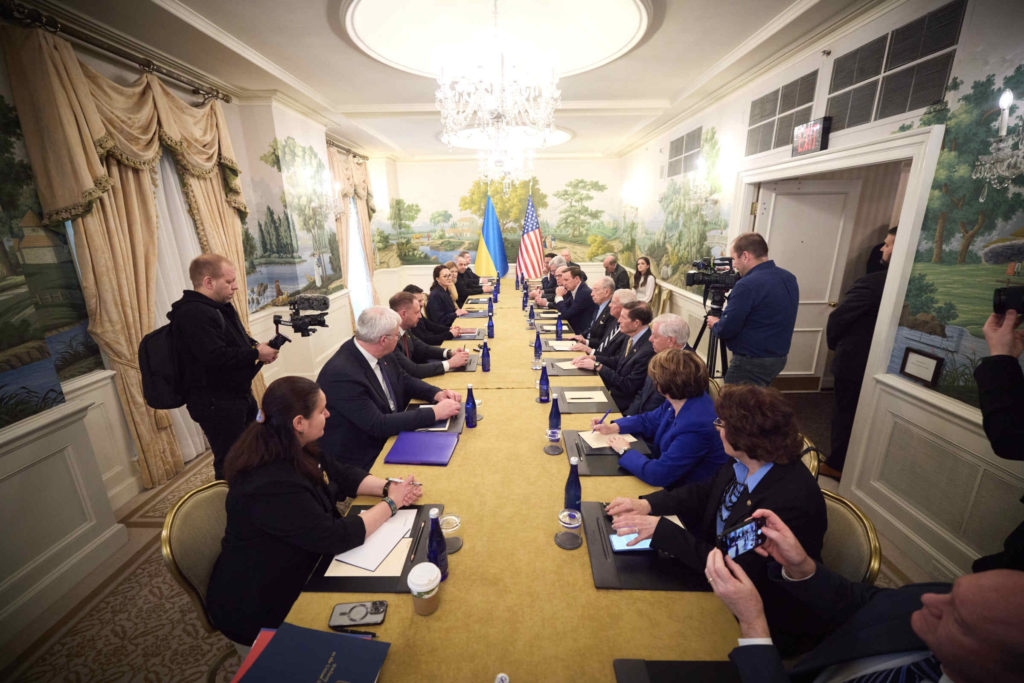

Credit: Volodymyr Zelenskiy’s official X account

Ukraine’s Ministry of Economy and the State Service of Geology and Subsoil will conduct an audit of all subsoil users who hold permits for strategically important deposits, following an order from Prime Minister Yulia Svyrydenko.

“We plan to check who is actually working and who is simply holding licenses without extraction. Such sites must either produce results or go back to auction for honest investors,” she wrote on Telegram on Thursday.

As reported, in mid-July this year, the Cabinet of Ministers, by Resolution No. 845, approved the lists of minerals and components of strategic and critical importance, as well as lists of subsoil plots (mineral deposits) of strategic and/or critical importance that will be offered for use through auctions or production-sharing agreements (PSAs).

The first list of strategically important minerals and components includes 11: aluminum, beryllium, copper, nickel, niobium, strontium, tantalum, titanium, uranium, and zirconium ores, as well as fluorite. Together with critically important minerals, the total list contains 28 items.

As for deposits, the list of those to be auctioned includes 60 sites, while 26 will be offered under PSAs. Of these, there is one vanadium ore deposit, one lithium ore deposit, two potassium salt deposits, five titanium ore deposits, and 17 uranium ore deposits.

President Volodymyr Zelenskyy announced back in February this year that Ukraine had begun an audit of its subsoil resources as part of preparations for a memorandum with the United States, and that the government intended to protect businesses that are legally developing them.

“There are quite a few license holders in Ukraine. This entire process (signing a memorandum on mineral development with the United States) will help us in any case. First, all of our agencies, which have never engaged in such serious legal work before, will finally conduct a real audit of existing licenses. And this is already happening,” the President said.

According to him, the last major mineral development projects in Ukraine took place 50–60 years ago.

“This allows us to bring order: to know what we have, how much it’s worth, and who owns it. There will be decisions accordingly: what’s legally owned, what’s not, which licenses are active, and which are dormant. Where ownership is fair and business is engaged, we will defend them. We need that. Where licenses are dormant and someone has plundered resources, we will reclaim them. This is important for us,” Zelenskyy added.

Svyrydenko recently said that the practical work of the Ukraine-U.S. Reconstruction Investment Fund, created in the spring–summer of this year to focus on critical minerals, will begin in September.

IN THE MIDST OF WAR

Kyivstar to become first Ukrainian company listed on US stock exchange

Kyivstar to become first Ukrainian company listed on US stock exchange
Ukraine's leading mobile phone company Kyivstar could become the first Ukrainian company to list on NASDAQ this year. / bne IntelliNews
By bne IntelliNews August 13, 2025

Ukraine’s largest mobile operator, Kyivstar, is set to become the first Ukrainian company to list on a US stock exchange, with plans to debut on the Nasdaq later this year. The company could raise between $50mn and $200mn through the listing.

“The first Ukrainian company on the US stock exchange could immediately raise up to $200M,” the company said, noting that the Nasdaq debut would mark a milestone for the country’s corporate sector. Kyivstar is valued at $2.21bn.

The company’s parent, Dubai-based VEON, will retain at least 80% of the shares after the offering. “Kyivstar” will be the first Ukrainian company listed on a US stock exchange, according to the company.

Founded in 1994, Kyivstar has grown to become Ukraine’s dominant mobile operator, serving millions of subscribers nationwide. The company has continued to invest in network expansion and digital services despite the impact of the war, with mobile connectivity viewed as critical infrastructure during the conflict.

The offering is expected to attract interest from international investors seeking exposure to Ukraine’s telecommunications sector and to test market appetite for listings from companies operating in high-risk environments.
US ends Ukraine war funding, says vice president JD Vance

US ends Ukraine war funding, says vice president JD Vance
Since Trump took over in January, US funding for the Ukraine war has fallen off to next to nothing. / bne IntelliNews
By bne IntelliNews August 11, 2025

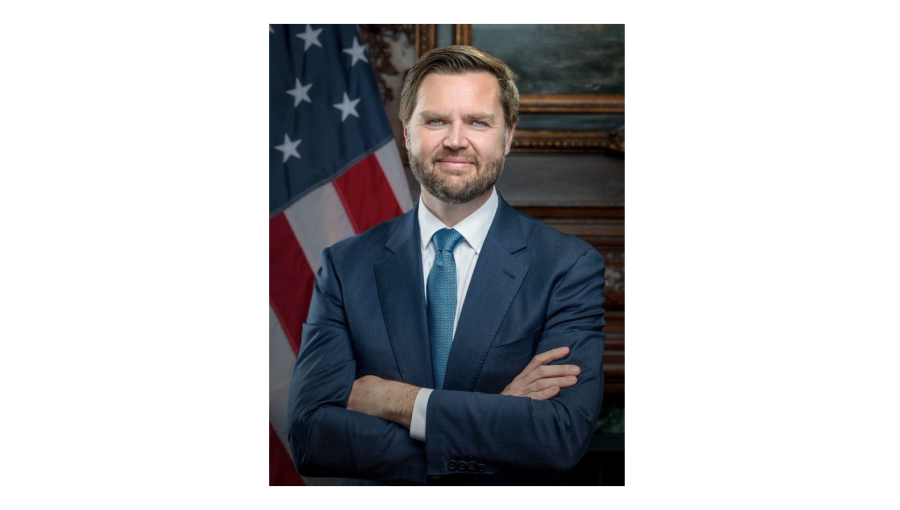
US Vice President JD Vance has said that Washington has stopped financing Ukraine’s war effort, signalling a shift in policy under President Donald Trump towards pushing European allies to take greater responsibility in supporting Kyiv.

“I think Trump believes that the US has had enough of funding the war in Ukraine. We want to achieve a peaceful resolution. But if Europe wants to buy weapons from us, that's fine with us,” Vance told Fox News.

He said the administration had told European partners that the war was taking place “on your doorstep, right under your noses,” and that they should take a bigger role in addressing Russia’s invasion.

“I think the president and I certainly believe that America is done with funding the military business in Ukraine,” Vance said, while stressing that the White House remained committed to ending the conflict. “We want to stop the killing. But Americans, I think, are tired of sending their money, their tax dollars, to this conflict.”

The US already stopped funding Ukraine last year when it ran out of money for Ukraine at the start of that year. Funding was eventually resumed with a $61bn aid package that was approved on April 20 when it looked like Ukraine might be defeated by Russia. Like now, Ukraine ran out of air defence missiles last spring and following a massive barrage in March, Russia went on to destroy most of Ukraine’s non-nuclear power infrastructure.

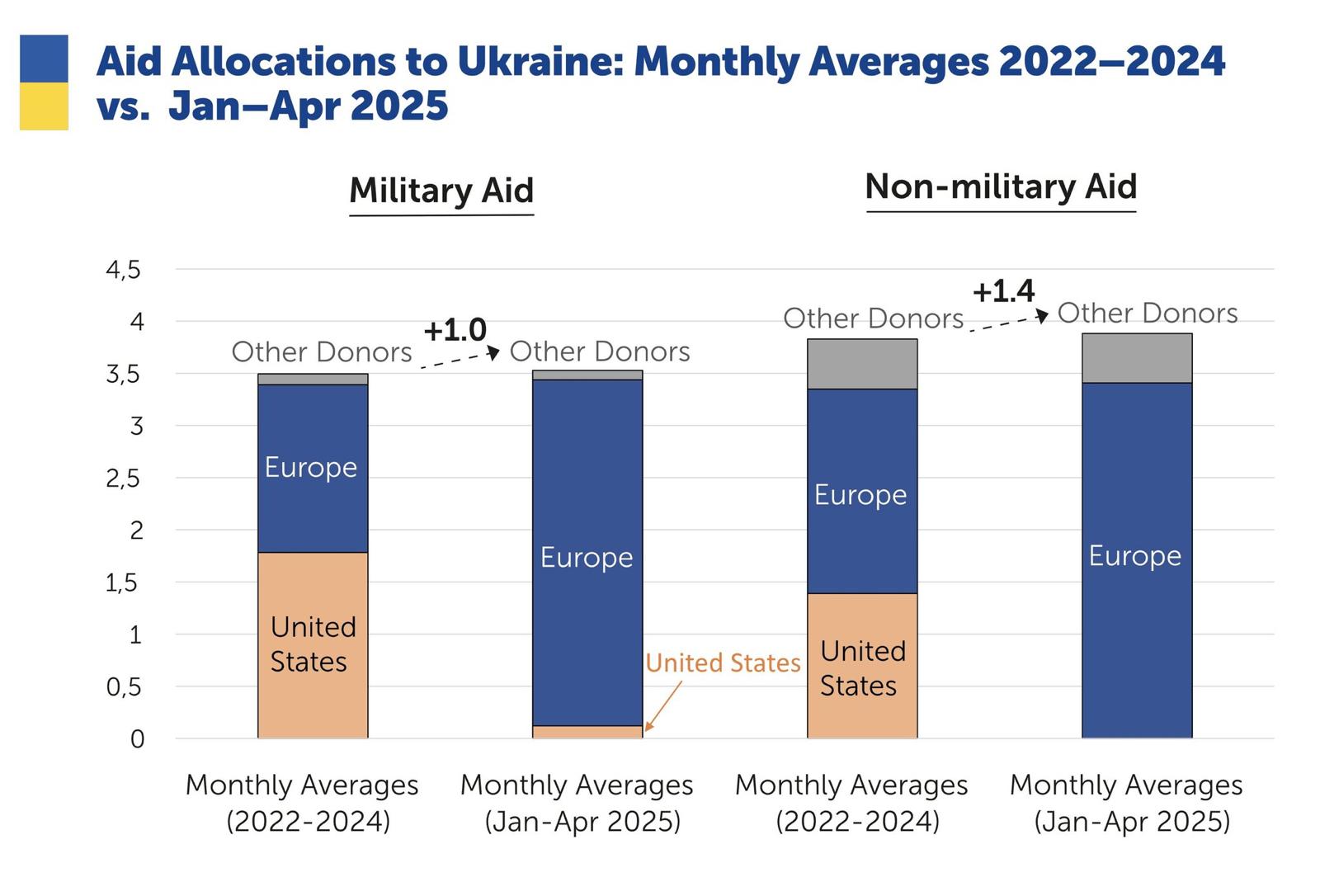
This year has played out in a similar fashion. Since US President Donald Trump took over in January, US funding has fallen off to next to nothing and the EU has taken up the bulk of the financial burden. This year Russia has again launched a devastating missile barrage in May and is now firing about four times more drones and missiles at Ukraine than at the start of this year.

Brussels said on August 10 it will provide Kyiv with over €3.2bn through the Ukraine Facility. The EU Council has approved the fourth tranche for Ukraine in 2025 under this facility, which will see Kyiv receiving more than €3.2bn in funding. The funds will be allocated to strengthen macroeconomic stability and support the operation of the public administration system.
The vice president added that Washington would work to secure a negotiated settlement between Moscow and Kyiv. “We will try to find some kind of agreed-upon solution that both Ukrainians and Russians can live with, even though neither side will be satisfied with the outcome of the negotiations,” he said.

The comments come as European leaders debate how to respond to a reduction in US military assistance, which has been a central pillar of Ukraine’s defence since Russia launched its full-scale invasion in February 2022. According to Nato figures, the US provided more than $70bn in military and financial aid to Ukraine during President Joe Biden’s term.

While the Trump administration has said it will continue to sell arms to European allies, the end of direct US funding is expected to put greater pressure on Nato members to boost their defence budgets and accelerate deliveries of equipment to Ukraine.

Ukraine needs $6bn for arms next year

Ukraine requires $6bn in funding this year to guarantee domestic weapons production in 2025, Deputy Minister of Defence Serhiy Boev said following talks with senior European Union officials in Kyiv on August 10.

Boev met Deputy Head of the EU Delegation to Ukraine Gediminas Navitskas to discuss financing for the defence-industrial complex in 2025 and 2026. He said that in order to meet planned weapons output by early 2026, funding commitments must be made in 2024.

The discussions focused on production of FPV drones, long-range strike systems and interceptor drones, as well as broader security assistance needs for 2026. Boev warned that, despite diplomatic efforts to end the conflict and international pressure on Moscow, “the aggressor continues to terrorise Ukraine and increase weapons manufacturing.” He added: “Ukraine must boost its readiness and strengthen partnerships with its allies.”

The meeting also reviewed next steps under the SAFE initiative, which is designed to integrate Ukraine into the European defence-industrial complex.

President Volodymyr Zelenskyy has previously said that Ukraine’s weapons manufacturing potential has exceeded $35bn, encompassing 1,000 types of products including artillery systems, armoured vehicles, advanced drones and missiles.

Boev emphasised that timely funding was essential to sustaining production levels and enabling Ukraine to counter Russia’s continued military build-up.

 

The unintended consequence of Trump's tariffs is pushing BRICS together

The unintended consequence of Trump's tariffs is pushing BRICS together
Trumps aggressive tariff policy is in danger of backfiring by driving the members of the BRICS bloc closer together. / bne IntelliNews
By Ben Aris in Berlin August 13, 2025

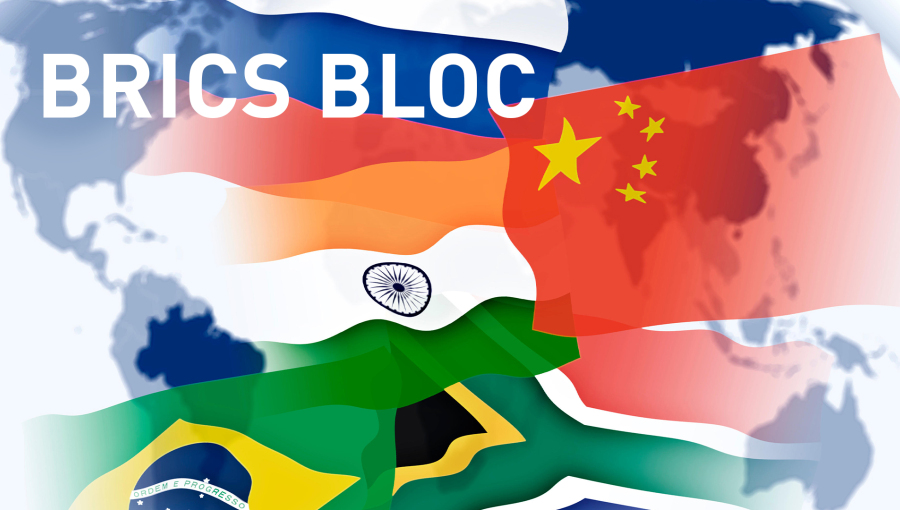
President Donald Trump’s tariff salvo aimed at some of the BRICS economies is in danger badly of backfiring on US interests by driving the more moderate members of the world’s leading emerging economies into the anti-Western Sino-Russian alliance.

The US president’s Liberation Day assault on all of America’s main trading partners has prompted the BRICS to circle their wagons and present a united front in the face of US protectionism, when previously there was little true unity amongst them.

“But divisions between the members will ultimately limit how far political and economic ties are able to develop,” said Shilan Shah, Deputy Chief Emerging Markets Economist at Capital Economics.

“If permanent, the Trump Administration’s levy of an additional 25% tariff on Indian goods for its purchases of Russian oil would take its effective tariff rate to 36%, one of the steepest among major economies,” he noted.

Brazil also faces a punitive 50% tariff that is clearly politically motivated as last year the US actually ran a small trade surplus with Brazil. Trump’s decision was made, “not for economic reasons but political ones – namely disputes over the trial of former president Jair Bolsonaro and ‘attacks’ on US tech companies.”

South Africa faces a high tariff too, which, while “not as explicitly political, may partly reflect tensions with the US over land reform,” says Shah.

“Trump’s aggravation of these three BRICS economies that, historically, have had more cordial relations with the US has fuelled talk that BRICS members should focus on strengthening ties with each other,” Shah said.

Brazil’s President Luiz Inácio Lula da Silva has been among the most vocal proponents, last week floating the idea of a joint BRICS response to tariff threats. Lula and Chinese President Xi Jinping reportedly held a one-hour phone call on Tuesday, agreeing on “upholding multilateralism.” India’s Prime Minister Narendra Modi is expected to visit China for the first time in seven years later this month.

Likewise, Modi called Russian President Vladimir Putin after Trump released his new tariffs, nominally to “punish” India for continuing Russian oil imports. The two leaders are now planning to meet later this year to discuss deepening trade and security ties.

“But while US tariffs may give an extra impetus to dialogue between the BRICS, they are so far only paying lip service to the idea of deeper cooperation, says Shah. At the moment, the priority for most is to limit the damage in their respective relationships with the US,” he said.

“Politically, one of the biggest constraints to closer integration is that China and India continue to view each other as strategic rivals,” Shah said, citing tensions over the disputed Himalayan border and a new flashpoint: the construction of what will be the world’s largest hydropower dam in the Tibetan plateau.

Economic ties also remain imbalanced. “While trade between the bloc is growing, this is mostly dominated by bilateral ties with China. And some of that is a potential cause of friction. China has exported vast amounts of manufactured goods to South Africa, Brazil and India in recent years, to the detriment of these countries’ domestic manufacturing ambitions.” India, he added, has enacted “far more anti-dumping measures against China than any other country since 2020.”

“Apart perhaps from India’s purchases of Russian oil, the other BRICS members aren’t of great importance to each other, which limits the benefits from closer integration,” he said. “Excluding China, only around 2-5% of goods exports from India, Brazil and South Africa go to the other BRICS, compared to 8-18% to the US. The idea of a BRICS currency is another Trump bugbear but, in reality, it remains a non-starter.”

“In short, for as long as high tariffs remain in place, the diplomatic noise around the BRICS will be one of more cohesion. But we doubt this will preclude a tangible impact such as deeper trade ties, or a marked shift away from the dollar,” says Shah.


COMMENT: What is Rosneft’s flagship Vostok Oil Project seeking to achieve?

COMMENT: What is Rosneft’s flagship Vostok Oil Project seeking to achieve?
Russia state owned Rosneft is developing the giant Arctic oil project Vostok Oil, but no oil is expected to be produced any time soon. / bne IntelliNews
By bne IntelliNews August 13, 2025

Russia’s oil industry enjoyed a renaissance between 2008 and 2018 when about 30 new oil fields came online, significantly boosting production. “Almost all the fields were discovered in the Soviet period, but they could not be profitably developed because drilling technology was not sufficiently advanced, and it was too complicated to ship the oil out of such isolated areas,” said Sergey Vakulenko in a note for the Carnegie Endowment for International Peace.

Now, “there is only one project left in Russia that could theoretically offer a significant increase in production: state-owned Rosneft’s Vostok Oil.” Between 2019 and 2021, the company promoted the project heavily, claiming reserves of 6mn tonnes (45bn barrels) and targeting annual production of 115mn tonnes by 2033, with 30mn tonnes expected as early as 2024.

Vostok Oil combines the Vankor oil field cluster, a 770km pipeline to the Kara Sea, several Taymyr Peninsula fields including Payakha, Baikalovskoye and Irkinskoye, an oil terminal at Bukhta Sever, and exploration areas near Khatanga. The Vankor cluster—launched in 2009 and expanded with Suzun, Tagul and Lodochnoye—peaked at 22mn tonnes a year in 2016 but fell to 14.8mn tonnes in 2023.

Satellite imagery shows advanced construction at Bukhta Sever, with 16 tanks capable of storing 30,000 cubic metres each, suggesting a potential annual loading capacity of 25mn tonnes. “Company statements, and the pace of construction, suggest oil shipments could start in the summer of 2026,” Vakulenko said. But year-round operation would require 15 Arc7 ice-class tankers, “and Russia does not have that sort of fleet.”

Even at full capacity, “the Vankor cluster can only provide about half of the port’s 25mn tonne annual capacity,” he noted. The remainder depends on undeveloped fields at Payakha, Baikalovskoye and Irkinskoye, where satellite images show minimal activity. “It is unlikely that any meaningful production could start at the Payakha earlier than 2028.”

“At the present, Vostok Oil has effectively been reduced to the construction of a transport system to ship oil from the Vankor cluster via a port on the Kara Sea,” Vakulenko concluded. “But there’s actually no need for such a transport network: existing pipelines already allow for oil to be moved out of the Vankor cluster.”

“Either way, we can confidently state that Vostok Oil will not be producing any significant new quantities of oil over the next five years. Judging from the pace of construction, and the scale of the work at Bukhta Sever, even at its peak, production from the Payakha cluster will likely be less than 15 million tonnes a year (300,000 barrels a day). And such a production level could only be reached between five and seven years after full-scale development got underway. It’s clear that the initial plans for Vostok Oil were vastly over-ambitious,” says Vakulenko.


Saudi competition authority warns of artificial intelligence impact on pricing and fair competition

Saudi competition authority warns of artificial intelligence impact on pricing and fair competition
Saudi competition authority warns AI could facilitate anti-competitive practices including collusion and personalised pricing, working with SDAIA to embed fair competition principles in AI legislation. / bne IntelliNews
By bnm Gulf bureau August 11, 2025

The General Authority for Competition has warned of the impact of artificial intelligence, algorithms and data on pricing and fair competition in the Saudi market, confirming to local Arabic language newspaper Al-Eqtisadiyah its efforts in cooperation with the Saudi Data and Artificial Intelligence Authority (SDAIA) to include fair competition principles in all AI legislation in Saudi Arabia.

The authority said that the current regulations issued by SDAIA are advanced and cover most concerns related to negative impacts.

The Competition Authority explained that AI's negative impact on fair competition includes facilitating anti-competitive practices, most notably collusion, data control, bundling and tying practices, network effects and restricting choices, the paper reported on August 11.

AI benefits include reduced transaction costs, easier consumer access, increased market transparency, and innovation, according to the authority and have been heavily invested in by the Kingdom while also hosting several US and Asian AI companies on local server farms in Dammam and elsewhere. 

Collusion is defined as a coordinated agreement between competing companies aimed at increasing prices, including explicit collusion based on direct communication between competitors and implicit collusion based on mutual recognition of interdependence and knowledge of market pricing strategies.

The authority's confirmations come after publication of its 2024 annual report, which included a study addressing potential risks from negative use of AI and algorithms on competition, including using consumer personal data and violating privacy rights to achieve company-specific goals.

Study results showed AI can help develop complex collusive pricing strategies and facilitate collusion between establishments through abundant big data in the current era through advanced systems or platforms that rely entirely on algorithms to analyse big data on consumer behaviour.

The study revealed the possibility of practising personalised pricing, which involves using information observed, volunteered, inferred or collected about consumer behaviour or characteristics to set different prices based on what consumers are willing to pay.

This may contribute to reduced price transparency in the market and unfair pricing, according to the study.

Regarding regulatory gaps that hinder data exploitation in fair competition, the authority said gaps include major global companies' potential for broad data control and centre on other companies' ability to access this data in related markets.


Vietnam’s Ho Chi Minh City sees sharp rebound in foreign investment

Vietnam’s Ho Chi Minh sees sharp rebound in foreign investment
/ Unsplash - Tron Le
By bno - Ho Chi Minh Office August 14, 2025

Ho Chi Minh City has recorded a striking recovery in foreign direct investment (FDI) during the first seven months of 2025, securing $6.2bn - a 45% rise compared with the same period last year, when inflows had fallen sharply, Viet Nam News reports. The upswing reflects renewed confidence among overseas investors and points to stronger growth prospects for the city.

Figures from the municipal Department of Finance show that 1,073 new projects have been granted licences, together worth $1.3bn. A further 296 existing ventures increased their capital by $2.37bn, while 1,323 cases of share acquisitions by foreign partners totalled some $2.52bn.

Export processing zones and industrial parks continue to draw steady investment, with high-technology schemes enjoying particularly robust expansion. Among the notable commitments are a $42mn microchip plant by BE Semiconductor Industries NV and an additional $48mn for Amazon Data Services Việt Nam.

At a recent review of socio-economic performance, People’s Committee chairman Nguyễn Văn Được hailed the FDI surge as proof of the city’s competitiveness and vitality. He noted that this year has seen a stream of delegations from major global firms – including Intel (United States), AEON (Japan), GS Engineering and Construction (South Korea), the Astana International Financial Centre (Kazakhstan), and Argentina’s Ministry of Economy – exploring opportunities in the city.

Municipal leaders have also travelled to Singapore and Malaysia to promote investment and attend international trade fairs, seeking to position the city as a magnet for capital across diverse industries.

The contrast with 2024 is marked: last year’s $2.2bn represented a fall of nearly 40% from 2023, a decline largely blamed on shortages of industrial land. That constraint has eased dramatically since Ho Chi Minh City merged with Bình Dương and Bà Rịa-Vũng Tàu provinces.

The newly enlarged metropolis now combines three complementary strengths: the financial and service expertise, advanced technology, and world-class education and healthcare of the former HCM City; Bình Dương’s modern manufacturing base and transparent business climate; and Bà Rịa-Vũng Tàu’s advantages in energy production, port infrastructure, and tourism. Together, they form an integrated economic zone capable of supporting complete value chains in production, logistics, consumption, and premium services.

City authorities have set an ambitious target of attracting $10.44bn in FDI this year. The Department of Finance says that legal procedures for priority projects are being accelerated to lay the groundwork for sustainable development and enhanced urban competitiveness.

The Caucasus and Central Asia are well wired – survey

The Caucasus and Central Asia are well wired – survey
Kazakhstan is the most digitally advanced country in Central Asia, and the nation’s overall ICT development index score exceeds those of many EU member states, according to the ITU’s latest report. / gov.kz
By Eurasianet August 14, 2025

Countries in the Caucasus and Central Asia are among the most digitally connected in the world, according to a recent survey by the International Telecommunications Union.

The organisation’s 2025 Information and Communication Technologies Development Index shows that the Commonwealth of Independent States (CIS) as a region lags only slightly behind Europe in terms of “universal and meaningful connectivity.” Broadly speaking, the report shows a steady advance in digital connectivity around the world.

“The 2025 results show continued global advances in connectivity, with nearly all economies improving their performance,” the report states. “It is encouraging that low-income countries tend to be progressing the fastest, although from a low base. Gaps with higher-income countries remain wide.”

The survey shows that Kazakhstan is the most digitally advanced country in Central Asia, while Georgia leads in the Caucasus. But other regional states, including Armenia, Azerbaijan, Kyrgyzstan and Uzbekistan, were all not far behind. Azerbaijan registered the most improvement in the 2025 survey compared to the results in the 2024 survey. The ITU noted that it could not obtain sufficient data to include Tajikistan and Turkmenistan in the survey.

Kazakhstan’s overall index score exceeded those of several European Union member states, including Belgium, the Czech Republic and Hungary. 

In many respects there was little separating all of the countries measured in the Caucasus and Central Asia. In the Caucasus for example, Georgia recorded the highest percentage of individuals owning a cellular phone at 93%, followed by Azerbaijan at 84% and Armenia at 77%. But Armenia had the highest percentage of “households with Internet access at home” at 91.7%, surpassing Azerbaijan (88.6%) and Georgia (89%).

Kazakhstan led all the countries in the region in terms of the percentage of “households with Internet access at home” at almost 97%, yet the country scored the lowest of the regional states surveyed in terms of the “percentage of the population covered by at least a 4G/LTE mobile network” at 89%.

The survey sought to distinguish what it describes as “universal connectivity,” basically general access to the Internet, from “meaningful connectivity,” which the ITU defines as being “based on the premise that realizing the full potential of connectivity requires more than access – it also means addressing barriers such as affordability, digital skills, and connection quality.”

Uzbekistan was the only state among the regional countries measured that had a lower score for “meaningful connectivity” than for “universal connectivity,” suggesting that that the country has a “digital awareness” gap that hinders citizens from taking full advantage of available resources.

Conversely, Kyrgyzstan is the country taking the greatest advantage of its digital infrastructure, based on its meaningful connectivity score relative to its universal connectivity ranking. Even so, Kyrgyzstan was the only regional state to see its overall index score decline in 2025, compared with its previous year’s results.

Russia had the highest “meaningful connectivity” ranking among all CIS states.

“While the overall results are encouraging, the [index] remains a partial snapshot of digital connectivity,” the survey concludes. “Several critical dimensions are not yet captured, due to data gaps.”

This article first appeared on Eurasianet here.