Thursday, August 14, 2025

SPACE/COSMOS

Trump eases commercial rocket launch regulations in win for Musk's SpaceX


SpaceX has been repeatedly criticised over the environmental impact at the sites where Starship, the largest and most powerful rocket in history, blasts off.
THEN EXPLODED!


US President Donald Trump on Wednesday signed an executive order easing regulations for the country's private space industry, including stripping away some environmental restrictions around rocket launches. The move, which was slammed by one environmental group as "reckless", will likely be a boon for Trump's former advisor Elon Musk, whose SpaceX company dominates the US space industry.


Issued on: 14/08/2025 - 
By: FRANCE 24

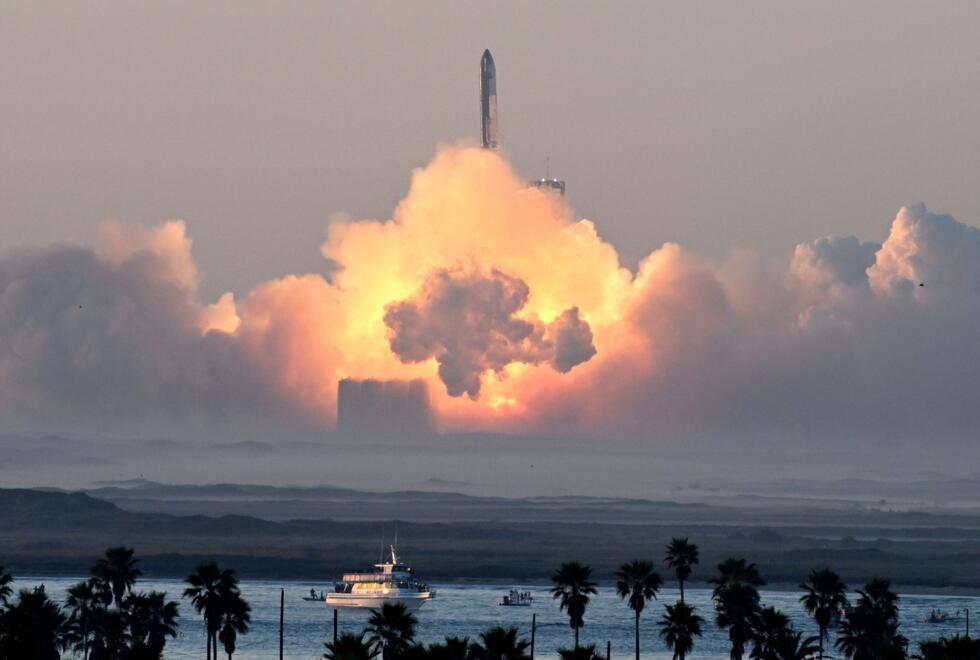
SpaceX's immense Starship rocket has repeatedly exploded during test flights
 © TIMOTHY A. CLARY / AFP/File


US President Donald Trump signed an executive order on Wednesday to streamline federal regulation governing commercial rocket launches, a move that could benefit billionaire Elon Musk's SpaceX and other private space ventures.

Trump's order, among other things, directs the US transportation secretary to eliminate or expedite environmental reviews for launch licenses administered by the Federal Aviation Administration (FAA), the White House said in a statement.

The declaration also calls on the secretary to do away with "outdated, redundant or overly restrictive rules for launch and reentry vehicles".

"Inefficient permitting processes discourage investment and innovation, limiting the ability of US companies to lead in global space markets," the executive order states.

The executive order, which said it aimed to "substantially" increase the number of space launches in the United States, was described by an environmental group as "reckless".

Since returning to the White House in January, Trump has talked up several space missions including sending humans to the Moon and Mars.

The Moon and Mars missions are planned to get a ride on the massive Starship rocket of Musk's private firm SpaceX.

SpaceX, though not mentioned by name in Trump's order, easily leads all US space industry entities, including NASA, in the sheer number of launches it routinely conducts for its own satellite network, the US space agency, the Pentagon, and other enterprises.

Its various-sized rockets blasted off more than 130 times last year – a number that will likely rise following Trump's executive order.


But Starship has had a series of setbacks, with its latest routine test ending in a fiery explosion in June.

"It is the policy of the United States to enhance American greatness in space by enabling a competitive launch marketplace and substantially increasing commercial space launch cadence" by 2030, the order read.

The change could well benefit Musk, who has long advocated for deregulation of the space industry. The world's richest man was previously a close advisor to Trump before the pair had a dramatic, public falling out in July.


Musk has viewed FAA oversight as a hindrance to his company's engineering culture, considered more risk-tolerant than many of the aerospace industry's more established players.

SpaceX's flight-test strategy is known for pushing spacecraft prototypes to the point of failure, then fine-tuning improvements through frequent repetition.

This has appeared to run afoul at times with the FAA's mission of safeguarding the public and the environment as it exercises its regulatory jurisdiction over commercial spaceflight.


SpaceX has been repeatedly criticised over the environmental impact at the sites where Starship, the largest and most powerful rocket in history, blasts off.

Earlier this year, the FAA grounded Starship test flights for nearly two months after back-to-back post-launch explosions rained debris over Caribbean islands and forced dozens of airliners to change course. The FAA ended up expanding the aircraft hazard zone along Starship's launch trajectories before licensing future flights.

The US-based nonprofit Center for Biological Diversity said Trump's new executive order "paves the way for the massive destruction of protected plants and animals".

"This reckless order puts people and wildlife at risk from private companies launching giant rockets that often explode and wreak devastation on surrounding areas," the center's Jared Margolis said in a statement.


Musk's dreams of colonising Mars rely on the success of Starship, and SpaceX has been betting that its "fail fast, learn fast" ethos will eventually pay off.

The FAA approved an increase in annual Starship rocket launches from five to 25 in early May, stating that the increased frequency would not adversely affect the environment.

(FRANCE 24 with AFP and Reuters)


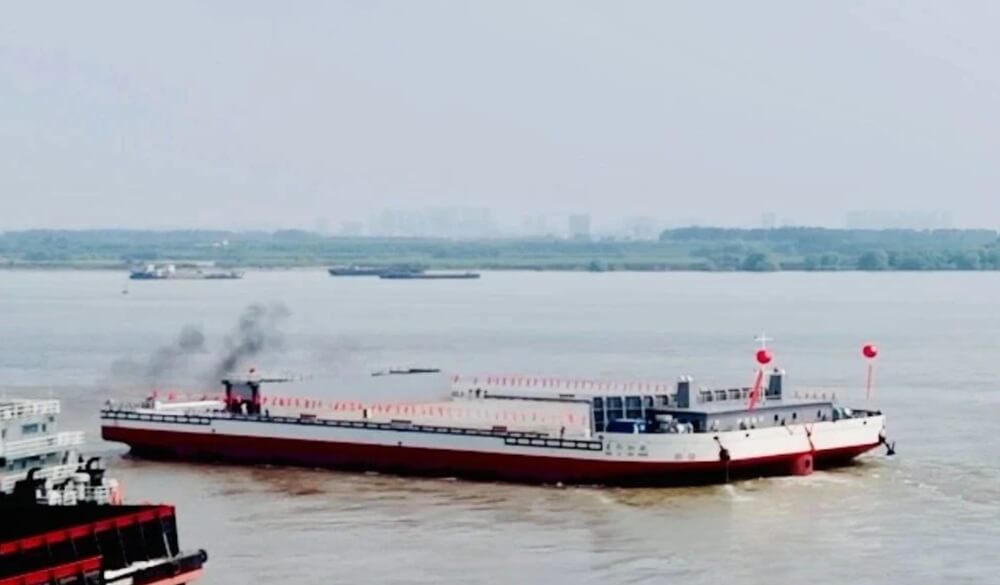
iSpace Launches China's First Rocket Landing Barge, Copying SpaceX
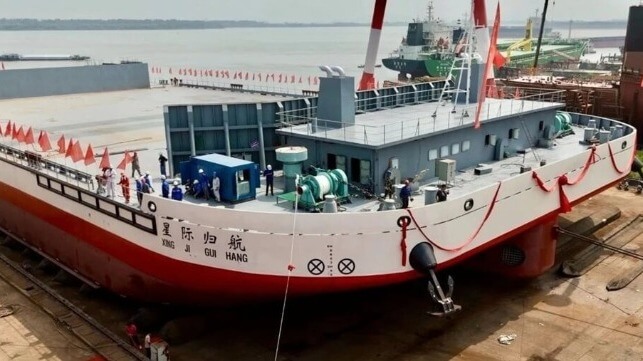
Rocket landing barge Xingji Guihang (iSpace)

Published Aug 12, 2025 10:53 PM by The Maritime Executive


Chinese rocket company iSpace has ambitions to run a high-volume commercial launch service, and to get there, it is taking a page from Elon Musk-owned SpaceX: an autonomous landing barge. 

Interstellar Glory Aerospace Technology Group (iSpace, not to be confused with Japanese firm iSpace Inc.) has developed a reusable, natural gas-fueled booster rocket in order to keep down launch costs. This parallels SpaceX's successful technology, which has come to dominate the commercial launch industry in the U.S. market. But to reuse the booster, iSpace needs a place to land it. Enter the Xingji Guihang ("Interstellar Return"), a large landing vessel designed to accommodate the iSpace SQX-3 rocket on its return to Earth. The vessel bears resemblance to a deck barge adaptation that SpaceX developed for the same purpose. 
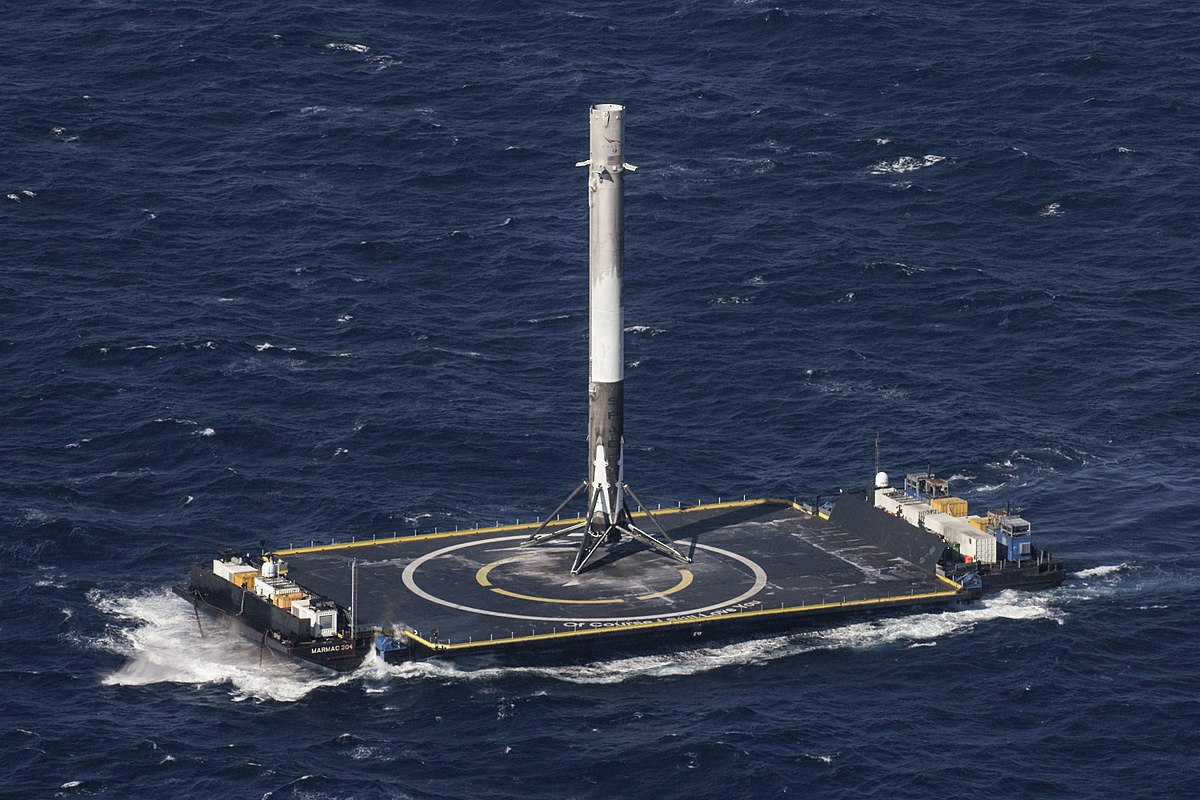
Courtesy SpaceX

Courtesy iSpace

Jiangsu Runyang Shipbuilding constructed the DP-capable, unmanned-ready barge for iSpace. With a deck measuring about 130 feet by 200 feet and a displacement of 17,000 tonnes, it is large enough to catch a returning booster. It is the fifth vessel of its kind in the world, after SpaceX's deck barges, and it is the first in China. Peng Xiaobo, Chairman of Interstellar Glory, said at the launch ceremony that it would not be the last. 

"The 'Interstellar Return' has explored and established a new standard for the integration of my country's aerospace and shipbuilding industries, and has played a . . . leading role in the construction of subsequent carrier rocket recovery ships," he said. "Starting today, my country's offshore engineering ships have added the carrier rocket recovery ship type; the 'Interstellar Return' is the concrete embodiment of our pursuit of dreams of the stars and the sea, which gives us confidence and strength."

After sea trials, the Xingji Guihang will transit to Hainan for comprehensive exercises, followed by entry into commercial service. 


Gaia’s variable stars: a new map of the stellar life cycle


Ecole Polytechnique Fédérale de Lausanne


One of the best places to study stars is inside “open clusters”, which are groups of stars that formed together from the same material and are bound together through gravity.

Open clusters act as laboratories, showing how stars of different masses and ages behave. At the same time, some stars known as “variable stars”, regularly change in brightness, and  their flickers and pulses help scientists learn about the physics inside stars and about the wider galaxy.

Until now, astronomers studied clusters and variable stars separately, and usually one cluster at a time. But that approach missed the bigger picture, leaving gaps in our understanding of how the lives of stars unfold across the galaxy.

Now, Richard I. Anderson, head of the Standard Candles and Distances Laboratory at EPFL and Emily Hunt at the Max Planck Institute for Astronomy, have combined these two approaches for the first time. Using data from the European Space Agency’s Gaia mission, they mapped nearly 35,000 variable stars inside 1,200 open clusters across the Milky Way. This “bird’s eye view” gives researchers an unprecedented map of how stars live, age, and die as part of their communities.

The findings are published as a Letter to the Editor in the journal Astronomy & Astrophysics.

New patterns in the stellar life cycle

“It is a scientific first in the way that large samples of star clusters and variable stars are analyzed together,” says Anderson. “This creates synergies because the two approaches provide complementary insights.”

The team built their map using the third data release from Gaia, a satellite that precisely measures the positions, brightness, and colors of more than a billion stars. They focused on clusters within 6,500 light-years away to make sure their results were reliable.

The researchers matched Gaia’s catalog of variable stars to the stars in these clusters and checked the ages, distances, and brightness of each one. By tracking where each type of variable star appears in a cluster and how their numbers change with cluster age, the team pieced together new patterns in the stellar life cycle.

The results show that at least one in five stars in these clusters changes brightness over time. Young clusters host the greatest variety of variable stars, while older clusters show more stars with slow, Sun-like cycles. The study also shows that certain types of variable stars serve as markers for a cluster’s age, providing a new tool for measuring how old a group of stars is without having to build complicated models.

“We are made of stardust”

The team made their catalog public, sharing the positions, types, and properties of all 35,000 variable stars in these clusters. The study also offers the cleanest diagram yet showing how different types of variable stars are distributed across the key map astronomers use to track stellar evolution (the Hertzsprung Russell Diagram).

The Gaia mission is now entering its most exciting scientific phase even though the satellite was recently turned off. Over the coming years, Gaia’s vast archive of observations, which cover nearly 2 billion stars, will be processed and analyzed by scientists across Europe.

“Our work is a teaser for what is to come with Gaia [data releases 4 and 5], which will revolutionize the study of stellar populations by their light variations,” says Anderson.

By showing how variable stars can be used as “clocks” and “markers” in stellar evolution, the team has opened up new ways to explore the story of the universe. “We are made of stardust,” says Anderson. “Understanding the lives of stars and the physics that govern stars is crucial to understanding our origins and place in the cosmos.”


Other contributors

Heidelberg University

Reference

Richard I. Anderson, Emily L. Hunt. A birds-eye view of stellar evolution through populations of variable stars in Galactic open clusters. Astronomy & Astrophysics 13 August 2025. DOI: 10.1051/0004-6361/20255511110.1051/0004-6361/202555111

A new window into Earth’s upper atmosphere


Small devices can loft into mesosphere for climate sensing


Harvard John A. Paulson School of Engineering and Applied Sciences

photophoresis_use_cases 

image: 

An illustration of the devices' use cases. 

view more 

Credit: Ben Schafer and Jong-Hyoung Kim


Key takeaways


  • Harvard SEAS researchers have tested and validated lightweight nanofabricated structures that can passively float in the mesophere, which is about 45 miles above Earth’s surface.

  • The devices levitate via photophoresis, or sunlight-driven propulsion, which occurs in the low-pressure conditions of the upper atmosphere.

  • Such structures could be used for sensing and communication in an area of the atmosphere that’s been difficult to monitor with existing technology.


Between 50 and 100 kilometers (30-60 miles) above Earth’s surface lies a largely unstudied stretch of the atmosphere, called the mesosphere. It’s too high for airplanes and weather balloons, too low for satellites, and nearly impossible to monitor with existing technology. But understanding this layer of the atmosphere could improve the accuracy of weather forecasts and climate models.

A new study published in Nature by researchers at the Harvard John A. Paulson School of Engineering and Applied Sciences (SEAS), University of Chicago, and others introduces a novel way to reach this unexplored near-space zone: lightweight flying structures that can float using nothing but sunlight.

“We are studying this strange physics mechanism called photophoresis and its ability to levitate very lightweight objects when you shine light on them,” said Ben Schafer, lead author of the paper and a former Harvard graduate student in the research groups of Joost Vlassak, the Abbott and James Lawrence Professor of Materials Engineering at SEAS, and David Keith, now a professor at the University of Chicago. 

How photophoresis works

Photophoresis occurs when gas molecules bounce more forcefully off the warm side of an object than the cool side, creating continuous momentum and lift. This effect only happens in extreme low-pressure environments, which are exactly the conditions found in the mesosphere.

The researchers built thin, centimeter-scale membranes from ceramic alumina, with a layer of chromium on the bottom to absorb sunlight. When light hits this structure, the heat difference between the top and bottom surfaces initiates a photophoretic lifting force, which exceeds the structure’s weight.

“This phenomenon is usually so weak relative to the size and weight of the object it’s acting on that we usually don’t notice it,” Schafer said. “However, we are able to make our structures so lightweight that the photophoretic force is bigger than their weight, so they fly.

The concept originated more than a decade ago when Keith hypothesized different uses of photophoretic particles, including their potential to reduce climate warming. A collaboration began with then-graduate student Schafer, and Vlassak, an expert in nanofabrication and experimental mechanics, in order to help move the concepts from theory to reality.

The collaboration became feasible through recent advances in nanofabrication technology, which allow researchers to build low-mass, nanoscale devices with greater precision.

“We developed a nanofabrication process that can be scaled to tens of centimeters,” Vlassak said. “These devices are quite resilient and have unusual mechanical behavior for sandwich structures. We are currently working on methods to incorporate functional payloads into the devices.”

Testing devices in the lab

Using these fabrication methods, the research team created centimeter-scale structures and directly measured the photophoretic forces acting on them inside a low-pressure chamber Schafer and former Harvard postdoctoral fellow Jong-hyoung Kim built in Vlassak’s lab. They compared those results to predictions of how such structures would behave in the upper atmosphere. Device design and fabrication were led by Kim, who is now a professor at Pukyong National University in South Korea. 

“This paper is both theoretical and experimental in the sense that we reimagined how this force is calculated on real devices and then validated those forces by applying measurements to real-world conditions,” Schafer said. 

A key experiment detailed in the paper shows a 1-centimeter-wide structure levitating at an air pressure of 26.7 Pascals when exposed to light at just 55% the intensity of sunlight. This pressure condition models what’s found 60 kilometers above the Earth’s surface.

“This is the first time anyone has shown that you can build larger photophoretic structures and actually make them fly in the atmosphere,” said Keith. “It opens up an entirely new class of device: one that’s passive, sunlight-powered, and uniquely suited to explore our upper atmosphere. Later they might fly on Mars or other planets.”

Possible applications: Sensing, communication, Martian exploration

The team envisions a range of possible applications for their new device, especially in climate science. If equipped with lightweight sensors, this device could collect key data like wind speed, pressure, and temperature from a region of the atmosphere that has long remained a blind spot. This data is critical for calibrating the climate models that build the foundation of weather forecasting and climate change projections.

Other potential applications include telecommunications for defense and emergency response scenarios. Using a fleet of these devices could enable a floating array of antennas with data transmission capabilities comparable to low orbit satellites like Starlink, but with lower latency due to their closer proximity to the ground.

Since Earth’s upper atmosphere shares key characteristics with the thin atmosphere of Mars, the device could facilitate new modes of planetary exploration and communication in that environment as well.

The team’s next step is to integrate onboard communications payloads that would allow the device to transmit real-time data during flight. 

“I think what makes this research fun is that the technology could be used to explore an entirely unexplored region of the atmosphere. Previously, nothing could sustainably fly up there,” Schafer said. “It’s a bit like the Wild West in terms of applied physics."

Research described in the paper formed the building blocks of a Harvard spinoff company, Rarefied Technologies, that Schafer and co-founder Angela Feldhaus launched in 2024. Harvard Office of Technology Development provided business development support to the research team and licensed the innovations to Rarefied Technologies for further development.

The research was supported by the Star-Friedman Challenge for Promising Scientific Research at Harvard. It had federal support from the Harvard University Materials Research Science and Engineering Centers (DMR-2011754), funded by the National Science Foundation. The devices were fabricated at the Harvard Center for Nanoscale Systems, also supported by NSF (ECCS Grant No. 1541959).

photophoresis_airflow 

An illustration of air flow around a flying device. 

Credit

Ben Schafer and Jong-hyoung Kim

CTHULHU'S CHILDREN
Spain’s octopus industry faces collapse amid overfishing, climate shifts and global demand

Animal groups, scientists and fishermen are clashing over the ethics and future of this historic industry.


Copyright AP Photo/Annika Hammerschlag

By ANNIKA HAMMERSCHLAG with AP
Published on 13/08/2025 - 


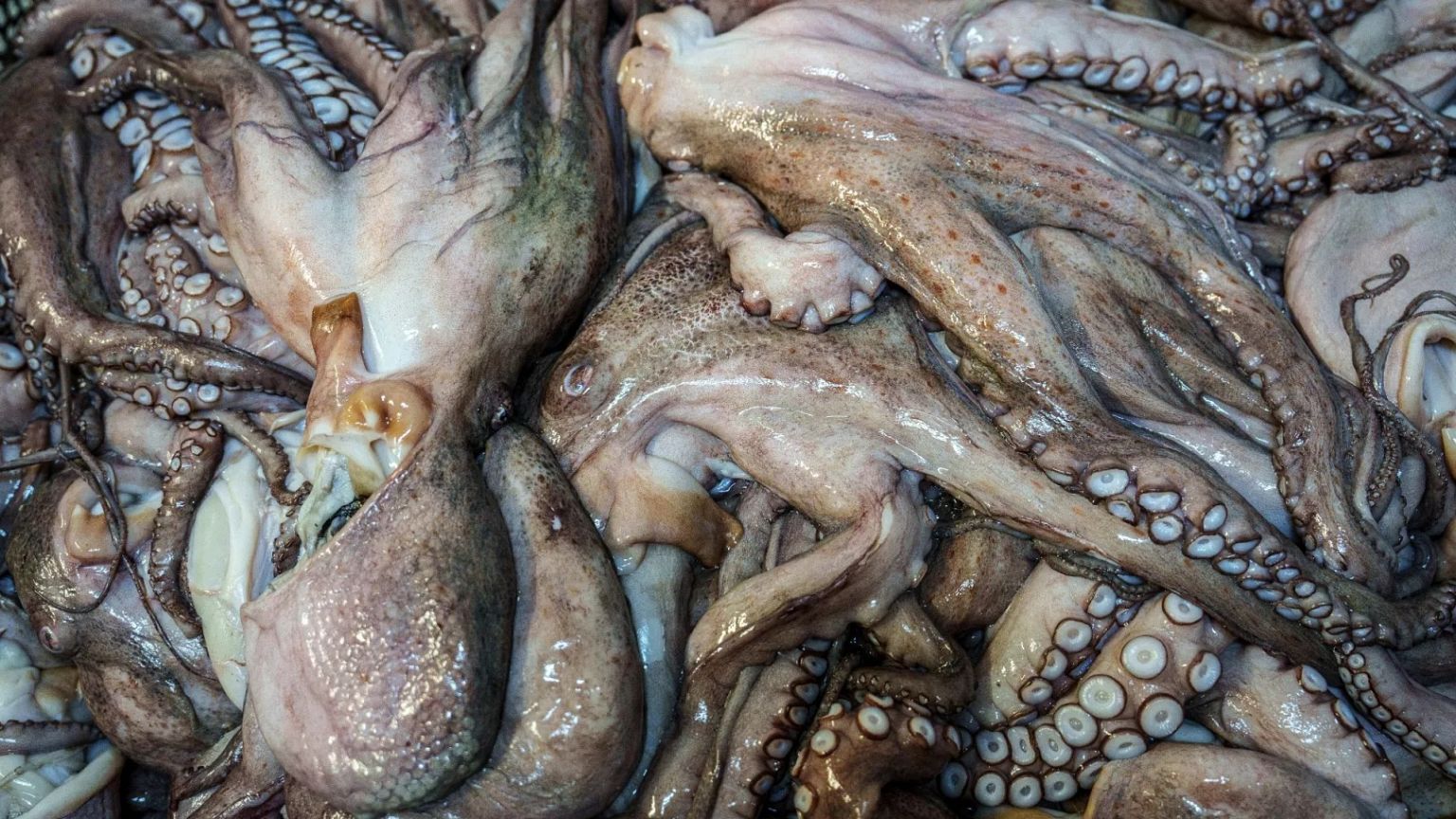
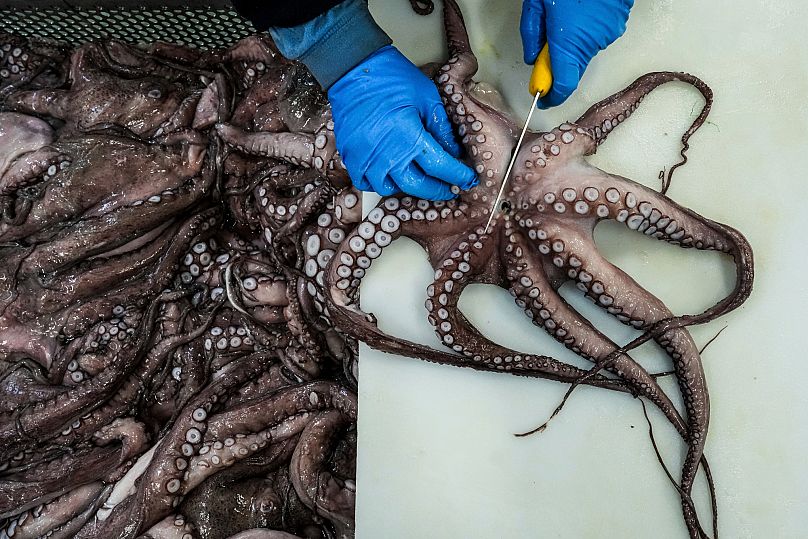
At a humming factory in the Spanish town of O Carballino, workers sling dozens of limp octopuses into a metal cauldron, wincing as strings of slime splatter their aprons. Nearby, others slice tentacles and pack them into vacuum-sealed bags destined for restaurants and retailers across Europe, Asia and the United States.

It is part of a growing global appetite for an animal that’s become increasingly scarce in its native waters.

Though O Carballino proudly calls itself Spain’s octopus capital, complete with a towering bronze octopus statue, streets lined with the pulperias that offer them up to diners and an annual octopus festival that draws tens of thousands, the century-old factory hasn't sourced a single animal from local waters in 10 years.

“Here in Galicia, octopus has become really, really variable and scarce,” said Carlos Arcos, export manager of Frigorificos Arcos SL. “If you’re industrialising a process like we do, you need to guarantee your customers regularity of supply.”


A statue of an octopus is displayed in O Carballino, Spain. 
AP Photo/Annika Hammerschlag

Today, 100 per cent of the company’s octopus comes from Mauritania and Morocco.

While octopus numbers fluctuate naturally from year to year, scientists and fishers say Spain’s long-term trend is downward, and surging international demand is only tightening the squeeze.

That’s prompted some companies to explore farming the animals in tanks to ensure a long-term supply - a prospect that’s drawn pushback from animal welfare groups.
Pressure forces closure of Spain's octopus fishery

This summer, that pressure reached a breaking point. Spain’s octopus fishery closed for three months, an unusually long pause meant to give it time to recover.

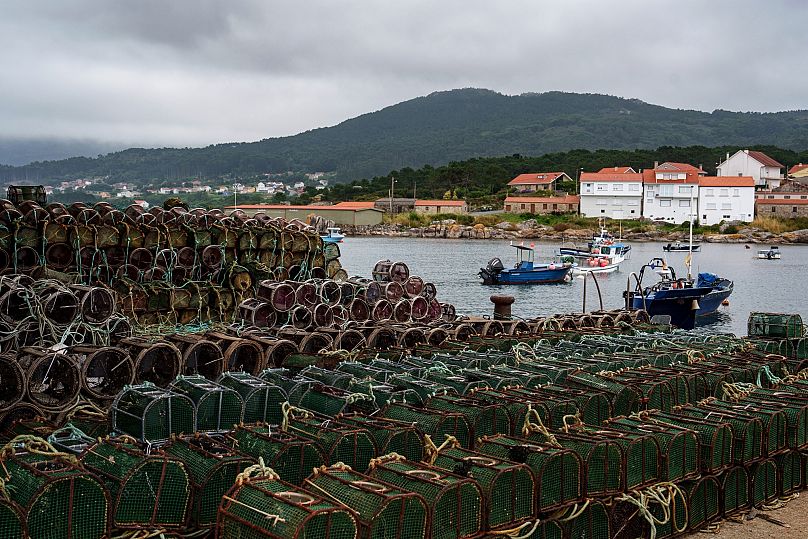
“The population has only just come back, but once the season opens, we’ll destroy it all in two weeks,” said Juan Martínez, a fisherman of more than four decades. Beside him, hundreds of octopus traps sat idle, stacked along the dock in his home port of Cangas.


“This used to be a sustainable industry, but now we’ve broken an entire ecosystem.”

Octopus traps sit on the Port of Lira during an unusually long octopus fishing pause period. AP Photo/Annika Hammerschlag

Octopus populations in Galicia also depend heavily on nutrient-rich upwelling — deep ocean water rising to the surface and bringing food for octopuses, said Ángel González, a research professor at the Spanish National Research Council.

While upwelling naturally fluctuates, climate change is altering wind patterns, ocean stratification and nutrient delivery, making those cycles less predictable and, in some years, less productive.

“When that weakens due to changing oceanographic and atmospheric conditions, numbers drop regardless of fishing.”
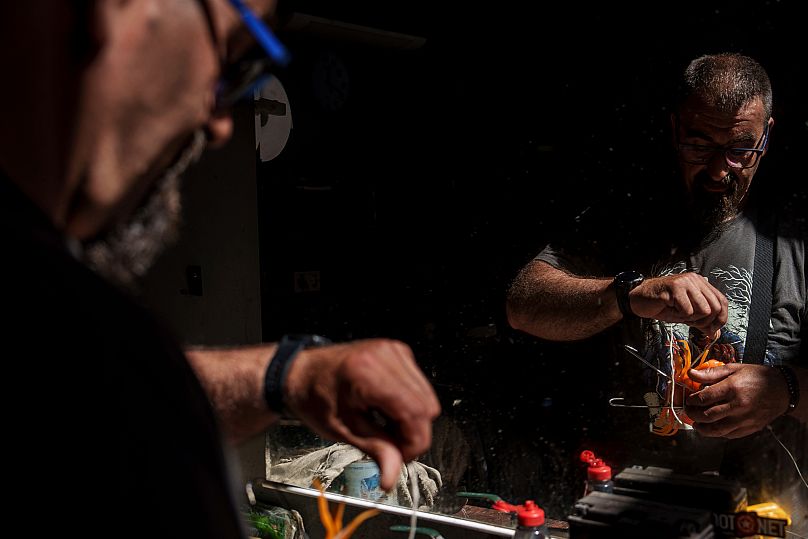
Octopus fisherman Juan Martinez demonstrates how to use the traditional octopus capture device his family has used for generations. AP Photo/Annika Hammerschlag

In response to growing demand and shrinking wild stocks, some companies in Spain are attempting to farm octopus in captivity. It is a move they say could ease pressure on the oceans.

Grupo Profand is developing a research hatchery in Galicia focused on overcoming the biological challenges of breeding octopus. Meanwhile, seafood giant Nueva Pescanova is pursuing a full-scale industrial farm that would raise up to a million octopuses a year for slaughter.

Grupo Profand did not respond to an interview request. A spokesperson for Nueva Pescanova declined to comment.

Animal welfare groups say octopus farming is 'torture'


Animal welfare groups have condemned the proposed project as inhumane, citing plans to kill octopuses by submerging them in ice slurry and to confine the often-cannibalistic animals at high densities.

They also warn it would pollute nearby waters with discharged waste, worsen overfishing of the wild fish used for feed and inflict suffering on one of the ocean’s most complex creatures.

“Farming wild animals is cruel, but especially with octopuses, given their solitary nature and extremely high intelligence,” said Helena Constela, head of communications at Seaspiracy, a group that advocates against industrial fishing.

Keeping them confined together in tanks, she said, is “basically torture in slow motion.”

Michael Sealey, senior policy advisor at Oceana Europe, said aquaculture should focus on species with lower environmental costs, such as oysters and mussels, which require no fish feed.

Diners snack on octopus at Casa Gazpara in O Carballino, Spain. AP Photo/Annika Hammerschlag

“We recognise that aquaculture has a role to play in feeding the world,” said Michael Sealey, senior policy advisor at Oceana Europe. “But we need to prioritise low-impact farming, not systems that rely on feeding wild fish to carnivorous species.”

Widespread concerns have already prompted action in the United States. Washington became the first state to ban octopus farming in 2024, followed by California, which also outlawed the sale of farmed octopus. Lawmakers in more than half a dozen other states have proposed similar bans, and a bipartisan federal bill to prohibit both farming and imports of farmed octopus is under consideration in Congress.

Though no commercial farms currently operate in the US but these preemptive measures reflect mounting unease over projects moving ahead in Europe, Asia and parts of Central and South America. The unease is fuelled in part by the 2020 Oscar-winning documentary “My Octopus Teacher,” which showcased the animals' intelligence and emotional complexity to millions on Netflix.
What are the arguments in favour of farming?

“They have a real brain. They’re able to do things other animals cannot,” said González of the Spanish National Research Council. “But please, don’t cross the line. It’s an animal, it’s an invertebrate. We can’t extrapolate these kinds of things. Personality is linked to persons.”

González, who is working with Grupo Profand on their research hatchery, believes farming could help restore wild stocks by raising juvenile octopuses in captivity for release back into the sea. It is an approach animal welfare groups argue could pave the way for industrial-scale farming.

A worker removes an octopus' beak at Frigorificos Arcos SL in O Carballino, Spain. AP Photo/Annika Hammerschlag

Javier Ojeda, national aquaculture representative at APROMAR, Spain’s aquaculture business association, said aquatic animals can play a key role in food security and may be more efficient to raise than livestock.

“Octopuses grow extremely fast and efficiently. They’re not fighting gravity and they don’t spend energy heating their bodies," he said. He acknowledged welfare concerns but argued they should not block scientific progress.

“Farming octopus is something that cannot be stopped,” said Ojeda. “We’ve been eating them for a long time. Now we need to try to find best practices.”
UN plastic pollution talks near collapse after draft text backlash

Geneva (AFP) – Negotiators working on a global deal to curb plastic pollution had only hours left on Thursday to rescue the process after talks collapsed into disarray.


Issued on: 14/08/2025 - RFI

Countries wanting bold action to turn the tide on plastic garbage are so far apart from a group of oil-producing nations that the prospects of finding meaningful common ground seem low. © Olivier MORIN / AFP

Countries wanting bold action to turn the tide on plastic garbage are so far apart from a group of oil-producing nations that the prospects of finding meaningful common ground before Friday -- after three years of talks – seem low.

With just over a day to go, talks chair Luis Vayas Valdivieso produced a draft text on Wednesday based on the few areas of convergence, in an attempt to find common ground.

But the draft succeeded only in infuriating virtually all corners, and the text was immediately shredded as one country after another ripped it to bits.


Talks on a global treaty to combat plastic pollution are coming to the crunch © Noel CELIS / AFP


For the self-styled "ambition coalition" countries, it was an empty document shorn of bold action like curbing production and phasing out toxic ingredients and reduced down to a waste management accord.

And for the so-called Like-Minded Group, with Gulf states leading the charge, it crossed too many of their red lines and did not do enough to narrow down the scope of what they might be signing up for.

Plastic-eating mealworms found in Kenya offer hope for waste crisis


The bad, the very bad, the ugly

Vayas held talks with regional delegations late Wednesday that ran past midnight.

Raking over the fall-out, European Union member states held a coordination meeting early Thursday, as did a group of small island developing states struggling to cope with ocean plastic they did little to produce and have scant capacity to deal with.


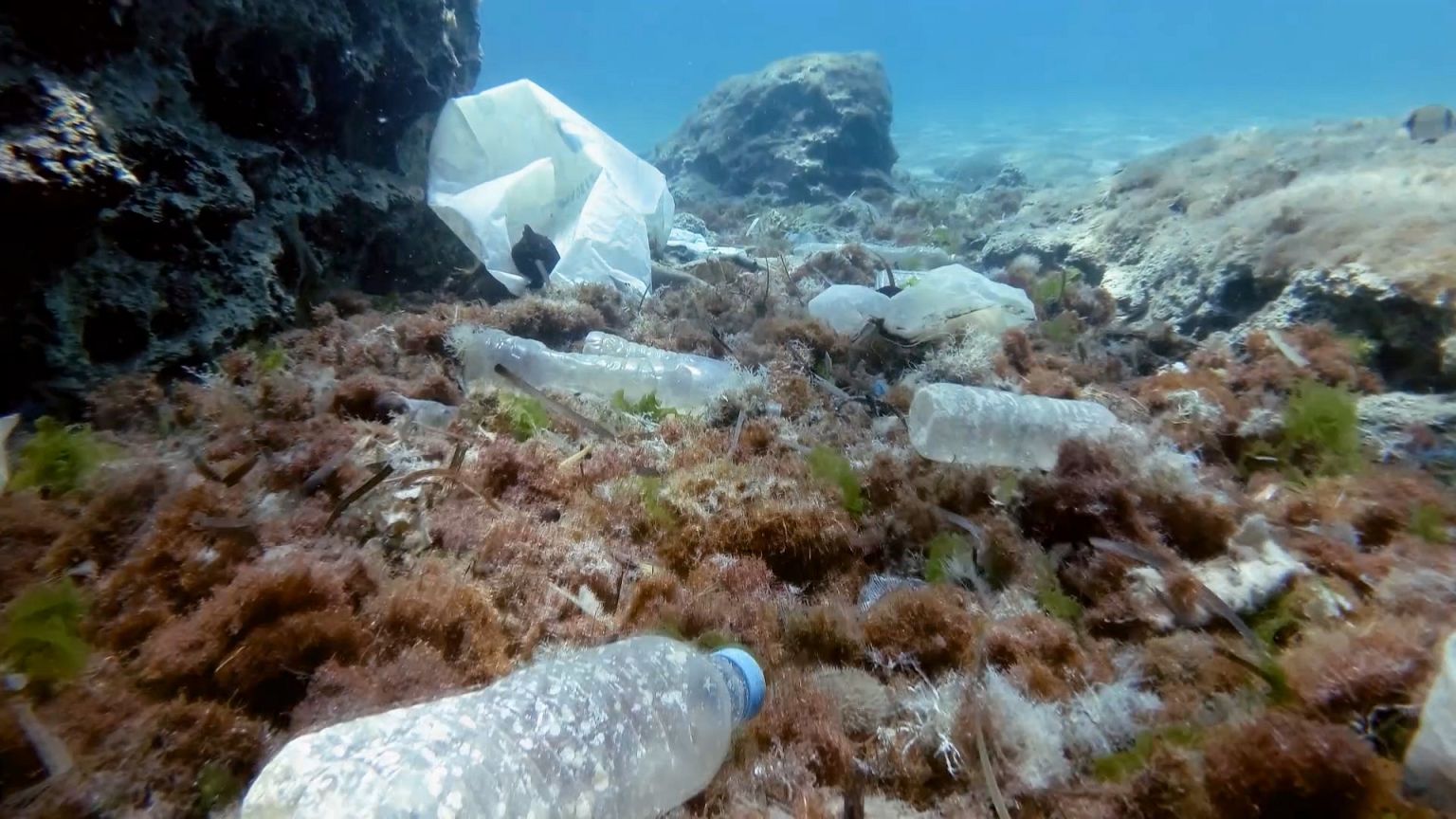
Microplastic is ubiquitous, found on the highest mountain peaks and in the deepest ocean trenches © Olivier MORIN / AFP


Latin American and Caribbean nations and the African group of countries were also due to have their own meetings behind closed doors.

After that, the two key cross-regional blocs – the High Ambition Coalition and the Like-Minded Group -- were to have their own meetings before marching back into the plenary session, which brings all the negotiating countries together in the UN Palais des Nations' main assembly hall.

Aleksandar Rankovic from The Common Initiative think-tank, said Vayas had effectively removed all the ambitious countries' bargaining chips, meaning they are unlikely to get anything better than what is on the table.

Global plastics production could almost triple between 2019 and 2060 © Sylvie HUSSON, Christophe THALABOT / AFP


"It's very simple: there are only two scenarios: there's bad and very bad – and a lot of ugliness in between," he told AFP.

"The bad scenario is that countries adopt a very bad treaty: something that looks like the text from Wednesday, but potentially worse.

"The very bad is that they don't agree on anything, and they either try to reconvene," or the treaty is "kept in limbo for a long time – so practically abandoned".

Plastic Odyssey and Unesco sign deal to restore marine World Heritage sites

'Repulsive surrender'

After three years and five previous rounds of talks, negotiators from 180-odd countries have been working at the United Nations in Geneva since August 5 to try to conclude a first international accord on dealing with plastic pollution.

Five previous rounds over the past two and a half years failed to seal an agreement on dealing with plastic pollution © JOHAN ORDONEZ / AFP


The problem is so ubiquitous that microplastics have been found on the highest mountain peaks, in the deepest ocean trench and scattered throughout almost every part of the human body.

In Wednesday's bombshell plenary, Panama said the draft text was "simply repulsive. It is not ambition: it is surrender", while Kenya said it had been "significantly diluted and lost its very objective".

The World Wide Fund for Nature said ambitious countries "must have by now recognised that there is no possible text that will be acceptable to all UN member states".

"They must then be prepared to vote their text through. There is no other way a meaningful treaty can be agreed," she said.


Mermaid’s tears: How tiny plastic pellets are flooding the environment


Lentil-sized and toxic, industrial plastic pellets known as "nurdles" – or "mermaid's tears" – are the second-largest source of microplastic pollution worldwide, with hundreds of thousands of tonnes leaked into the environment each year. As UN negotiations on curbing plastic pollution in Geneva enter their final hours, experts warn that efforts to halt their spread may fall short.


Issued on: 13/08/2025 - 
FRANCE24
By: Lara BULLENS

Tiny plastic pellets, also called "mermaid's tears", are shown washed ashore on the beaches of Brittany, France in January 2023. © Fred Tanneau, AFP


Although it took place more than two years ago, an environmental disaster that hit the Atlantic coast in northwestern France is still having ripple effects today.

Waves of tiny lentil-sized plastic grains began washing up on the shores of Brittany and the Loire region in January 2023, numbering in the hundreds of thousands. Dubbed a “nightmare” by Christophe Béchu, then French minister for ecological transition, it was suspected that the tiny pellets spilled from a shipping container lost in the Atlantic Ocean. A lawsuit was filed but the case was soon closed, since no ship reported an incident in the area.

Despite tireless efforts by volunteers to clean up the plastic pellets littered across the shoreline at the time, more were found during the winter storms that battered the region earlier this year, according to French coastal protection union Vigipol.

A volunteer collects plastic pellets on a beach in Brittany after they washed ashore in January 2023. © Loic Venance, AFP


Known as mermaid’s tears or nurdles, these industrial plastic pellets are the raw material used to make a variety of plastic products like bottles, pens or even car bumpers. They are made from crude oil derivatives like naphtha, measure about two to five millimetres in size and, if leaked into the environment, can cause irreversible damage to wildlife and ecosystems.

Which is likely what earned them mention in this week’s negotiations to finalise a global treaty against plastic pollution. Delegates from 184 countries have been trying to hammer out an agreement at the UN in Geneva, Switzerland, since August 5. But with less than 36 hours left and widely diverging positions slowing the talks, curbing plastic pellet pollution on a global scale seems unlikely for now.
‘A chemical cocktail’

Plastic pellets are the third-largest source of microplastic pollution in the EU, according to the European Commission, and the second-largest source of microplastic pollution worldwide. They mostly build up in marine environments but can end up on land as well, where they harm local ecosystems.

It is estimated that 445,970 tonnes of plastic pellets end up in the environment worldwide each year.

Spilled pellets are also a cause of microplastic contamination, which poses serious threats to human health. Pellets don’t biodegrade and are often ingested by animals like shellfish and fish, which humans go on to consume. Research has shown that once inside our bodies, microplastics are potential risk factors for cardiovascular disease, which can lead to strokes or heart attacks. They are so pervasive that they have even been found in breast milk, semenbrains and bone marrow.

Nurdles, like most plastics, also act as sponges for toxic products and bacteria found in their surroundings. They can attract so-called forever chemicals like PCBs and PFAs, but can also carry harmful bacteria like E.coli.

“Chemical pollution tends to stick to the surface of the pellets. So not only do they contain polluting elements within them, they also contain other environmental contaminants, [which] surround them,” says Frédérique Mongodin, marine litter policy officer at Seas At Risk, a European environmental coalition.

“They turn into a sort of chemical cocktail.”

Once released into the environment, the nurdles are difficult to clean up. There is no technique to carry out a sweeping, large-scale removal of pellets from shorelines or beaches. Most operations require the manual use of handheld tools like shovels, vacuums or screens to separate the tiny granules from their environment.

“It’s also important to note that most clean-ups are not done soon enough,” says Mongodin. “Pellets released into nature can spread within minutes,” she says, especially if they are spilled into marine environments. Given their tendency to float, pellets can travel far across oceans and seas.
Production sites cause most spills

The most catastrophic leak of plastic pellets took place in 2021, when a cargo ship carrying towers of containers filled with toxic chemicals and billions of plastic nurdles caught fire off the coast of Sri Lanka.

“It was just like out of a war movie,” environmentalist Muditha Katuwawala, who helped with the clean-up operation, told the BBC. A thick layer of nurdles strewn across the coastline looked “like snow”, he said. Dead fish and turtles washed up in swells, pellets stuck in their gills.

A man fishes on a polluted beach littered with plastic pellets washed ashore from the fire-damaged container ship X-Press Pearl in Kapungoda, Sri Lanka, on June 4, 2021. © Eranga Jayawardena, AP


The X-Press Pearl cargo disaster became the largest plastic spill ever recorded. Four years on, volunteers on the island’s beaches are still sifting through the sand and finding countless nurdles.

Although colossal spills like this get the most media traction, France's Cedre research institute found that the risk of a pellet leak was highest along industrial sites and in loading, packaging or storage areas where nurdles are often stuffed in 25kg bags that hold one million pellets each.

“While incidents happen during transportation, it’s not the most important cause of pellet pollution,” says Mongodin. “At production sites, pellets are stored openly. There is nothing to prevent the pellets from flying away if a bag gets torn. And since the bags they are held in are quite thin and tear easily, this happens quite often. The bags are moved around using forklifts, for example, which can accidentally pierce them.”

The loss of plastic pellets happens at every single stage of the value chain, from producers to storage to transportation, converters and even recyclers. Petrochemical companies like Dow, ExxonMobil, TotalEnergies or Shell manufacture them before they are shipped internationally, most often by cargo ship or train.

In total, between 300 and 400 million tonnes are produced globally each year, according to Cedre.

‘Not enough’

France seems to be somewhat of a pioneer in the prevention of plastic pellet spills. An anti-waste law passed in 2022 stipulates that pellet producers must adopt certain regulations to prevent any runoff, like putting filters in drains, making sure pellets are removed from car parks, installing tarps around industrial sites and sealing transportation lorries, for example.

The EU took inspiration from the initiative and is in the process of finalising its own set of regulations, which will be implemented within the next two years.

“Now that the EU regulation has passed, hopefully we will see some change, but it takes time,” says Mongodin. “And unfortunately, some simple solutions like making packaging more rigid were not adopted in the EU law.”

On a global scale, last year the International Maritime Organization (IMO) published guidelines on how to transport pellets safely by sea as well as recommendations for clean-up in case of a spill. And as of 2026, the IMO will oblige captains to report container incidents to the nearest coastal state and the country that registered their vessel.

But for now, there are no international regulations that specifically address plastic pollution from pellets. This is why the stakes are so high at the UN talks this week.

Read more Deadlocked plastics treaty talks 'at cliff's edge'

Lisa Pastor, advocacy officer at ocean preservation group Surfrider Foundation Europe, has been anxiously attending the talks in Geneva since they began more than a week ago.

“The best approach to tackle plastic pellets would be to take preventative measures, which also means training personnel who handle them on best practices and teach them how to report any incidents so that they can be followed up quickly, minimising pollution once the damage is done,” Pastor says.

“And that’s crucial on an international level because pollution knows no borders. If there is a spill in one country, it will have consequences in another.” 

But the talks are being stalled by deep divisions over whether plastic production should be included in the final treaty at all.

While the EU seems determined to rein in production, a cluster of mostly oil-producing states like Saudi ArabiaKuwaitRussia and Iran – dubbed the "Like-Minded Group" – want the treaty to focus primarily on waste management.

“There are many lobbyists from the petrochemical industry here in Geneva. Some even belong to national delegations,” says Pastor.

“If the treaty doesn’t address production, in all honesty, it’s not up to the task. We can’t focus solely on how to report spills, managing existing pollution or clean-up operations. It’s not enough.”

After doubling between 2000 and 2019, plastic production is expected to keep rising. The OECD estimates that global production will increase by 70 percent of 2020 levels by 2040.

And with plastic waste poised to triple globally by 2060, time is running out.


Hunting microplastics: French scientists sound the alarm on plastic pollution
 Euronews
By   Monica Pinna
Published on 13/08/2025 -

We eat, breathe and drink them, but there is still much we don’t know. We’re talking about microplastics. They’re dangerous for the environment and for our health. They can absorb toxic substances and easily make their way into the food chain. What is the European Union doing about it?

The Mediterranean is the sixth largest accumulation zone for marine litter. It holds only 1% of the world’s waters but concentrates 7% of all global microplastics. This is why French scientists from the Exploration Bleue project have come off the coast of Toulon to study the impact of microplastic pollution in the Mediterranean Sea. 

Their expeditions are led by the NGO Expédition 7ᵉ Continent’s 27-metre sailing vessel. 

“The Mediterranean is an enclosed sea with a dense population. All human activity ends up in the sea. We study the chemical pollutants carried by plastics. What we already know is that all of them contain chemical pollution,” explains Alexandra Ter-Halle, Director of Research at the French National Centre for Scientific Research (CNRS) and scientific coordinator of the expedition. 

The research involves towing two trawls for one hour to collect microplastic samples. These will then be sorted in the laboratories participating in the project. Alexandra has been studying the chemical nature of pollutants associated with plastics for years at the University of Toulouse. 

“We measure and weigh microplastics; we analyse their composition. We know that over 16,000 chemical substances are used to make plastics — 4,000 of them are already classified as hazardous.” 

When marine animals are exposed to microplastics, chemical substances can transfer into their bodies. Since many of these are endocrine disruptors, they impact the animals’ health. The effects on humans are not yet fully understood, as Alexandra explains: 

“We know that endocrine disruptors affect the entire hormonal system in our bodies. They impact fertility and the development of cancer, but we still have many questions about this plastic pollution.” 

Science is only just beginning to understand how dangerous microplastics can be for ecosystems and human health. We eat, breathe and drink them — but there’s still much we don’t know. For micro- and nanoplastics, which are often smaller than a thousandth of a millimetre, we lack precise tools to measure them or fully grasp their effects, scientists say. 

The European Commission’s Zero Pollution Action Plan aims to cut microplastics by 30% by 2030. Jean-François Ghiglione, a marine microbiologist and research director at CNRS, led an unprecedented sampling campaign across nine major European rivers in 2019. He found microplastics everywhere in ‘alarming’ concentrations. 

“Europe is quite advanced in this area,” explains Ghiglione. “We used to have massive plastic pollution, mainly from packaging and single-use plastics. That was the European Union’s initial target. Now, we’re hoping to see a shift in how plastic is perceived.” 

So far, plastic has been viewed as waste, and efforts have focused on waste management. Ghiglione hopes the EU will drive a push for a drastic reduction in plastic production, and also come out with a list of chemical substances to be banned from use in plastics. 

Europe has made progress in limiting microplastics, but Ghiglione and the scientific community are calling for more. With negotiations for a global treaty still underway, Europe and the international community face a choice: continue managing pollution, or tackle the problem at its root.