Thursday, August 21, 2025

Investigators probe death of French streamer broadcast live

French police are investigating the live-streamed death of a man who had regularly been shown enduring violence and humiliations, raising concerns about the practice of broadcasting such content online.


Issued on: 21/08/2025 - 

The French streamer known as Jean Pormanove  broadcast his videos - and his death - on the Australian streaming platform Kick. © AFP TV


Prosecutors ordered an autopsy and opened an investigation into the death of Raphael Graven, 46, in the village of Contes, north of Nice in southern France, that was broadcast on Monday on the live streaming platform Kick.

Graven, known online as Jean Pormanove, or JP, had built a following of hundreds of thousands on the platform by participating in live "trash streaming", in which he was physically assaulted or humiliated as viewers watched live and sometimes donated money.

On Monday, on the 12th day of a live stream, Graven was shown on the platform getting angry after being hit several times.

Later he was shown lying under a sheet while another man, one of two men in the room with him, known by pseudonyms NarutoVie and Safine, threw a plastic water bottle at him.

A moderator of the channel streaming the content told viewers that Graven was dead, which the Nice prosecutors office later confirmed.

“Several interviews with people present at the time of his death have been conducted without yielding leads as to its causes,” prosecutor Damien Martinelli said in a statement.

NarutoVie and Safine had been questioned by police in January in a separate inquiry, following reporting by Mediapart that they were mistreating vulnerable people online to generate revenue.

Graven was interviewed at the time as a potential victim, but he denied suffering any actual violence, Martinelli said.

Instead, Graven and another suspected victim told police the events were staged in order to generate money.

Viewers could donate money to him during the stream, and he told investigators that he earned up to €6,000 through contracts with the platform.
Minister hits out at content

France's Minister for digital affairs, Clara Chappaz, called Graven’s death online “an absolute horror” and condemned the violent content in which he had appeared online.

She said she had referred the matter to Arcom, the regulatory authority that oversees streaming platforms, as well as well as to the Pharos platform, which investigates illegal content and behaviour online. She added that she had asked the managers of the platform for explanations.

Kick, an Australia-registered live streaming platform that shares revenue with content creators, is seen as having less stringent user terms than the market leader Twitch.

The company said on Wednesday that all those involved with the death had been banned from the platform, pending the outcome of the investigation, and that it was re-evaluating its French content.

(with newswires)

The death of a French streamer sheds light on the depths and horrors of ‘trash streaming’

Copyright `@jeanpormanove - Instagram / Kick

By Sarah Miansoni
 21/08/2025 

French streamer Jean Pormanove was known for performing extreme acts in live broadcasts. His death exposes a disturbing internet phenomenon.


Content warning: This article includes mentions of violence, suicide and extreme acts that some readers might find disturbing.

It’s a tragedy that has exposed a lesser-known side of internet culture.

French streamer Raphaël Graven, known online as Jean Pormanove, died on Monday in southern France during a live broadcast on the Kick streaming platform.

Graven, 46, was one of France’s first ever streamers and had about half a million followers on his various channels.

Over the years, he had become known for engaging in degrading acts on screen, such as strangulation and ingestion of toxic chemicals, sometimes at the request and with the financial support of live viewers.

Graven appeared alongside three other people – his regular streaming partners – throughout the 12-day long broadcast that led up to his death.

Footage shared on social media showed two of these men, known as Naruto and Safine, physically abusing and berating him. France's digital affairs and artificial intelligence minister Clara Chappaz described the incident as “absolute horror”.

French police opened an investigation into Graven’s death, and an autopsy should be performed today.

Rapper Drake and US streamer Adin Ross, who are both financially linked to Kick’s parent company, have offered to pay for Graven’s funeral.

This episode of horrific violence sheds light on a subgenre of live online content that is driven by streamers who engage in humiliating and sometimes dangerous behaviour.
The disturbing horrors of trash streaming

Graven’s case is reminiscent of trash streaming, a phenomenon that originated in the 2010s and became popular in Russia and Poland.

Trash streamers commit degrading, violent and sometimes fatal acts against themselves or others.

In 2021, a Russian streamer was sentenced to six years in prison for the death of his 28-year-old pregnant girlfriend during a December 2020 live stream. The man beat his partner, causing traumatic brain injury, and locked her out of their home while she was wearing only her underwear, the Moscow Times reported.

Paramedics pronounced the young woman dead while cameras were still rolling. Russia later adopted a federal law banning trash streams.

The audience is a key participant in trash streaming.

“Viewers are often curious about what extremes trash streamers are capable of going to,” said researchers Barbara Cyrek and Malwina Popiołek in a 2022 article. “The greater the availability of tools allowing to influence the shape of the broadcast, the potentially greater the chances for more extreme content.”

On platforms like Kick or even YouTube, viewers can donate money to incentivise content creators to go further.

The first episode of the seventh Black Mirror series, which aired in April, takes inspiration from this phenomenon. The main character, played by Chris O’Dowd, joins a fictional trash streaming site named "Dum Dummies", where he performs humiliating tasks in exchange for money to support his ill wife.

The episode ends as he is about to commit suicide while on stream.

In Raphaël Graven’s case, the donation counter at the end of his fatal 298 hours-long live suggested him and his partners had raised more than €36,000.
Lack of regulation

Content creators who engage in practices related to trash streaming have found safe havens in loosely regulated platforms like Kick.

The Australian live streaming service was created in 2022 by the founders of gambling company Stake.

Kick’s community guidelines officially prohibit “content that depicts or incites abhorrent violence including significant harm, suffering or death,” as well as “displays of serious and significant self-harm.” However, the platform grew its brand and user base thanks to more lenient moderation policies compared to rivals like Twitch.

In December, French media Mediapart had already revealed that Raphaël Graven was the victim of a yearslong “business of humiliation.”

The story prompted prosecutors to open an investigation, with Graven’s partners Naruto and Safine being briefly taken into custody.

Kick temporarily suspended his channel before it was allowed to broadcast again. Mediapart’s revelations prompted no political or legislative follow-up at the time.

The platform has banned all streamers involved in the video of Graven’s death and is reviewing its French content, it said on Wednesday. However, Kick did not say whether it would update its community guidelines, which currently state that “live streaming, by its nature, is unpredictable” and that “it's impossible to foresee every outcome.”


'Power of the regulator: Holding platforms to account when they potentially violate national laws'

Issued on: 21/08/2025 - FRANCE24

French streamer Raphaël Graven, 46, known as Jean Pormanove on social media, died in southern France during a broadcast on the Kick livestreaming platform that had been running for more than 298 hours. A government minister said he had been “humiliated and mistreated for months" on air. His death has prompted soul-searching and a judicial investigation. For in-depth analysis and a deeper perspective, FRANCE 24's Peter O'Brien welcomes Cécile Simmons, Researcher specialising in digital harms.

Video by:  Peter O'BRIEN


TikTok and Instagram accused of pushing suicide-related content to teens



Copyright Canva

By Gabriela Galvin
Published on 21/08/2025 -


The popular social media platforms recommend "shocking levels of harmful content" to teenagers, the researchers said.


Social media platforms continue to push teenagers toward content about suicide, self-harm, and “intense depression,” a new report has found.

The UK-based Molly Rose Foundation created TikTok and Instagram accounts posing as a 15-year-old girl who had previously engaged with this kind of content. Nearly every video that came up on the two platforms were related to suicide, depression, or self-harm, the group said.

TikTok’s For You Page, for example, regularly recommended videos that “explicitly promoted and glorified suicide” and recommended specific suicide methods, the report said.

On Instagram, the fake users were most likely to see this kind of content on Reels, the platform’s short-form video feature.

“Harmful algorithms continue to bombard teenagers with shocking levels of harmful content, and on the most popular platforms for young people this can happen at an industrial scale,” said Andy Burrows, the Molly Rose Foundation’s chief executive.


The tests were run in the weeks before the UK Online Safety Act’s child safety rules came into effect in late July. Among other measures, the law requires social media sites to “rapidly remove illegal suicide and self-harm content” and “proactive protect users” from illegal content on these topics.

But the foundation said the latest findings indicate little has changed since 2017, when 14-year-old Molly Russell died by suicide in the UK. A coroner ruled that exposure to harmful content online contributed in a “more than minimal way” to her death.

The group called on the UK communications regulator Ofcom to take additional steps to protect young people from harmful content online, and for the government to strengthen the Online Safety Act.

A TikTok spokesperson disputed the findings, telling Euronews Next they “don’t reflect the real experience of people on our platform, which the report admits”. The spokesperson said TikTok proactively removes 99 per cent of content that violates its standards.

A spokesperson from Meta, the parent company of Instagram and Facebook, also disagreed with the report's conclusions, saying the methodology was "limited".

They added that "tens of thousands" of teenagers are now in Instagram's "Teen Accounts,” which the company rolled out last year. These accounts have built-in safety features such as restrictions on teens’ access to sensitive content.

"We developed Teen Accounts to help protect teens online and continue to work tirelessly to do just that," the spokesperson said.

If you are contemplating suicide and need to talk, please reach out to Befrienders Worldwide, an international organisation with helplines in 32 countries. Visit befrienders.org to find the telephone number for your location.

Updated August 21: This article has been updated to include comment from a Meta spokesperson.

International Criminal Court chiefs slam US sanctions on top staff

International Criminal Court chiefs on Thursday hit out at an American government decision to impose sanctions on four more of its top staff, including a French and a Canadian judge over their involvement in cases against Israeli politicians and US military operations in Afghanistan.


Issued on: 21/08/2025 - RFI

The International Criminal Court was set up in The Hague in the Netherlands in 2002.. REUTERS - Piroschka Van De Wouw

Frenchman Nicolas Guillou has been presiding over a case in which an arrest warrant was issued for the Israeli Prime Minister Benjamin Netanyahu.

The Canadian judge, Kimberly Prost, was involved in a case that authorised an investigation into alleged crimes committed during the war in Afghanistan, including by United States forces.

Deputy prosecutor Nazhat Shameem Khan from Fiji and deputy prosecutor Mame Mandiaye Niang from Senegal were also placed on the list banning them from travelling to the US and blocking their access to property.

"These sanctions are a flagrant attack against the independence of an impartial judicial institution which operates under the mandate from 125 States Parties from all regions," said the International Criminal Court (ICC) in a statement.

"They constitute also an affront against the court’s States Parties, the rules-based international order and, above all, millions of innocent victims across the world."

French officials expressed dismay at the US State Department's move.

A foreign ministry spokesman said the sanctions were in contradiction to the principle of an independent judiciary.

In June four judges from Benin, Uganda, Peru and Slovenia were hit with sanctions.

"As stated before by the ICC president and judiciary ... the court stands firmly behind its personnel and victims of unimaginable atrocities. The ICC will continue fulfilling its mandate, undeterred, in strict accordance with its legal framework as adopted by the States Parties and without regard to any restriction, pressure or threat."

The ICC was set up in 2002 in the Dutch capital The Hague to try individuals for genocide, war crimes, crimes against humanity, and aggression.

"The ICC is a national security threat that has been an instrument for "lawfare" against the United States and our close ally Israel," Secretary of State Marco Rubio said in a statement, using the "lawfare" term popular with President Donald Trump's supporters.

Rubio said that the four recent targets had sought to investigate or prosecute nationals from the US or Israel without the consent of either nation.

The State Department said the US was punishing Niang and Khan for supporting "illegitimate ICC actions against Israel," including their support of the arrest warrants against Netanyahu and the Israeli former defence minister Yoav Gallant.
People step on a piece of paper with the image of Israeli Prime Minister Benjamin Netanyahu, during a protest in support of Palestinians, calling for an immediate ceasefire in Gaza, amid the ongoing conflict between Israel and Hamas, in Paris, France July 31, 2025. REUTERS - Tom Nicholson

"I congratulate Marco Rubio who decided to impose sanctions on the judges of the International Criminal Court," Netanyahu's office said in a statement.

"This is a decisive act against a smear campaign of lies against the State of Israel and the [Israeli army]," added the prime minister, who has been the subject of an ICC arrest warrant since November 2024 for war crimes and crimes against humanity in Gaza.
Court of last resort

Under the sanctions, the US will bar entry of the ICC judges to the US and block any property they have in the country – measures more often taken against adversaries of the US than individuals from close allies.

The Trump administration has rejected the authority of the court, which is backed by almost all European governments.

Last Friday, Trump welcomed Russian President Vladimir Putin to Alaska even though Putin faces an ICC arrest warrant, a factor that has stopped him from travelling more widely since he ordered the invasion of Ukraine three years ago.

(With newswires)
How Moscow is reinventing its influence machine across Africa

Russian operatives are using new tactics to expand Moscow’s reach in Africa, two years after the death of Wagner boss Yevgeny Prigozhin. An investigation led by RFI and the monitoring group All Eyes on Wagner shows influence campaigns remain active from Angola to Chad.


Issued on: 19/08/2025 -  RFI

People dressed in military fatigues outside Wagner's headquarters in Saint Petersburg AFP - OLGA MALTSEVA

The findings, published with All Eyes on Wagner, reveal how Russia is reshaping its methods while keeping a strong presence across the continent.

On 7 August, two Russian nationals were arrested in the Angolan capital Luanda after violent protests over soaring fuel prices. They face charges including criminal conspiracy, document forgery, terrorism and terror financing.

Angolan authorities said the pair had set up a network of propaganda and disinformation designed to stir unrest and bankroll the demonstrations.

The arrests shed light on Moscow’s evolving toolkit in Africa.

One of the men, Lev Lakshtanov, is accused of masterminding the operation, RFI journalist Carol Valade said.


Operative in 'cultural diplomacy'

At 64, Lakshtanov has a long track record in the world of Russian soft power. He founded Farol, a cultural NGO for Portuguese-speaking countries, backed by Rossotrudnichestvo – the state agency for cultural diplomacy created under former president Dmitry Medvedev.

Plans were under way to open a Russian cultural centre in Luanda this year.

After spending time in Brazil, Lakshtanov wound up his activities in Russia around the time of the 2022 invasion of Ukraine. He later appeared in the United Arab Emirates before quietly settling in Angola on a tourist visa.

With his associate Igor Racthin, he moved into Luanda’s Gamek district. The pair posed as journalists, sought contacts with opposition figures, and reached out to Buka Tanda, a Russian speaker and senior member of the youth wing of UNITA, Angola’s main opposition party.

They told Tanda they were preparing a documentary and wanted to set up a cultural centre. He introduced them to his cousin, a journalist at state TV.

Soon the group was running paid interviews with politicians and commissioning opinion polls on perceptions of Russia – until their arrest on charges of orchestrating fuel protests.

Former Wagner media operative lifts the lid on Russian disinformation in CAR
Echoes of Chad

The case mirrors events in Chad a year earlier. In September 2024, three Russians and a Belarusian were arrested in N’Djamena.

Among them were Maksim Shugaley and Samir Seyfan, both long linked to Wagner’s African influence operations.

The group posed as investors, rented property, cultivated political contacts and recruited Russian-speaking Chadians. Two presented themselves as journalists, offering training and funding to reporters – then asking them to publish pro-Russian articles for cash.

They were detained during the inauguration of a Russian cultural centre in the capital, also set up under Rossotrudnichestvo.

From Wagner to Africa Corps

These cases show how Moscow’s strategy has shifted. “They are now more discreet but busier than ever, expanding and becoming increasingly professional,” said Lou Osborn, of All Eyes on Wagner.

The operations now run under the umbrella of the African Initiative, closely linked to Africa Corps – the Kremlin’s new command structure bringing Wagner’s former military assets under state control.

A wider network of private actors and consultants, many tied to Wagner or Russian intelligence in the past, is also active. Angolan police and Western officials refer to this circle as “Africa Politology”.

The findings come five years after the 18 August 2020 coup in Mali, which ended decades of French influence and brought the country into Russia’s orbit.

Since then, Wagner’s troops in Mali have been replaced by Africa Corps, while Moscow has signed multiple trade and nuclear energy deals with Bamako.
Spain's sees worst wildfire season since 1994 with 382,000 hectares burned so far in 2025

Copyright Pablo García / AP

By Javier Iniguez De Onzono & Euronews en español
Published on 21/08/2025 -

The European Forest Fire Information System (EFFIS) calculate that 380,000 hectares have burned in Spain so far this year, while the fight against the flames continues.

All the ingredients came together to create the perfect storm: a particularly dry spring in western Spain, followed by a heatwave that wiped out any remaining moisture in dense, dry ground-level vegetation. Add to that a lack of forest management and limited resources, something fire brigades across the affected autonomous communities have repeatedly warned about.

This combination has resulted in the most severe wave of summer wildfires Spain has seen since 1994, when 437,602 hectares burned, according to data from the Ministry of the Environment.

The European Forest Fire Information System (EFFIS), part of the EU’s Copernicus programme, estimates that 382,607 hectares have burned in Spain this year across 228 fires, a figure that continues to rise as fires rage across Galicia, Asturias, Castilla y León, and Extremadura. These regions, with the exception of Extremadura, are among the oldest and most depopulated in the country.

Depopulation also impacts forest upkeep. Traditional practices like extensive livestock grazing, which once naturally cleaned up the forest during the winter and spring, have largely disappeared.

Of the 10 most destructive wildfires this century in Spain, five have occurred in just the last 15 days of August this year: A Rúa in Orense (44,424 hectares), Uña de Quintana in Zamora (40,781), Benuza in León (32,596), Manzaneda (28,485) and Oímbra (28,485), also in the region of Orense.

What makes this wave of fires especially concerning is that, while the total number of large wildfires (those over 500 hectares) isn't unusually high, they are spreading much more easily due to weather conditions. In 2025, Spain has so far had 52 large fires and we only have to go back to 2022 to exceed that figure.

Across the European Union as a whole, 899,400 hectares of forest have already been burnt, with Slovakia reaching 10 times its historical average for this time of year and Cyprus seven times.

Sánchez to declare first emergency zones

Speaking from the advanced command post in La Granja, Cáceres, Prime Minister Pedro Sánchez announced that the first areas affected by the fires will be officially declared emergency zones next week.

"There are still difficult hours ahead, let's not get complacent," he said alongside the president of Extremadura, Maria Guardiola.

Sánchez emphasised that the climate emergency is worsening every year and reiterated the need for a national pact to address the growing frequency of extreme weather events caused by rising temperatures. He plans to present a legislative proposal in September to the scientific community, trade unions, and relevant institutions.
Latest updates on Spain’s wildfire crisis

Three of the five people injured in the Castilla y León fires remain in critical condition. The death toll stands at four - three volunteers and one officer from Soria, who was assigned to help in León and died when his machinery overturned during firefighting operations.

The fire in A Rúa or Larouco (Ourense) has now burned 44,424 hectares, surpassing Chandrexa de Queixa to become the largest wildfire in Galicia's recorded history, and the largest in Spain so far this century.

A major fire is threatening the León side of the Picos de Europa, putting communities in Tierra de la Reina and Valle de Valdeón on edge. In the latter, 775 residents from 11 towns have been evacuated. This area is part of a historic national park crucial to the biodiversity of the Cantabrian Mountains.

According to the Ministry of the Interior, the Guardia Civil and National Police have evacuated 31,130 people across the country. Authorities have also arrested 31 individuals and placed 92 under investigation for their suspected roles in starting the fires.

Spanish farmers step in as first responders to fight remote wildfires


Spain is battling a wave of wildfires that have claimed four lives this summer. In the north-west, in regions renowned for their lush landscapes and picturesque villages, farmers and residents are trying to save homes and land that firefighters cannot reach.


Issued on: 20/08/2025 - RFI

Locals deal with the effects of a forest fire in Santa Baia De Montes, northwest Spain, 14 August 2025. AP - Lalo R. Villar

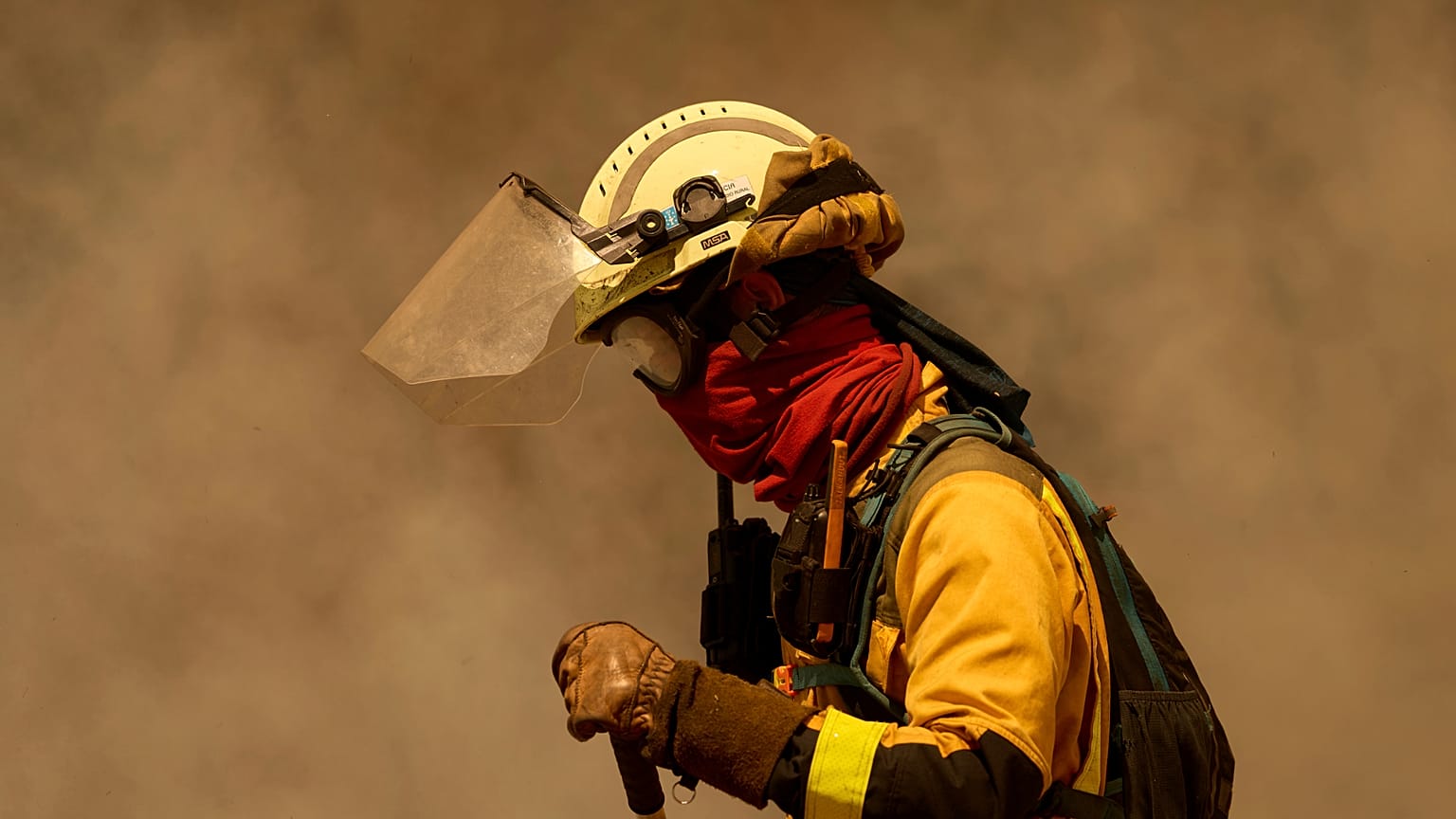
A record 3,400 square kilometres – about the size of Moldova – has been destroyed by wildfires in Spain this year, the European Forest Fire Information System said.

Thousands of firefighters, backed by soldiers and water-bombing aircraft, have been battling more than 20 major blazes across the west of the country this week.

The fires, now in their second week, are concentrated in Castile and Leon, Galicia and Extremadura. Thousands of people have been forced to flee.

In some isolated villages, residents are defending their homes themselves. Surrounded by thick vegetation and perched on hillsides, these hamlets have been hit especially hard.

Raquel Fernández, who lives in Montederramo, Galicia, told RFI: "Every day, new fires appear. The fires are so big that they end up merging together. It's all mountains, and there aren't enough resources [for firefighters] to be everywhere. The people who are saving us here are the local farmers with their tractors and water tanks."

Across the region, farmers are trying to save the most isolated houses – including their own.

In Guimarei, south of Ourense, as the flames approach, Martín Pérez fills his water tank.

"My farm burned down two days ago, over there. A calf farm. And now I'm trying to save my house. Yesterday we saved my sister's farm, and we've been there for days. It's hell. It's absolute hell. I'm devastated, absolutely devastated. But we have to keep fighting, that's the way it is."

Anger with authorities


In Mogainza, Eloi Fernandez, a livestock farmer, has been battling the flames for a week.

He says he is angry with the authorities for not allowing farmers to clear the forests, which he believes could have slowed the spread of the fires.

"They ban everything. They ban making new paths, controlled burning, cutting wood for heating in winter... Everything, everything is banned. They call it a 'nature network'. Nature network... what nature do we have left? How are they protecting it? It makes no sense, they don't know what they're doing."

Other residents have voiced their anger at what they regard as poor preparation and limited resources.

"No one’s shown up here, nobody," Patricia Vila told AFPTV in the village of Vilamartin de Valdeorras in Ourense. "Not a single damn helicopter, not one plane, has come to drop water and cool things down a bit."

France, Italy, Slovakia and the Netherlands have sent firefighting aircraft to help, but the size and severity of the fires and the intensity of the smoke are making "airborne action difficult," Spanish Defence Minister Margarita Robles told television channel TVE.

Fernandez is worried for the future of these hamlets, which are already suffering from depopulation.

"It's all going to die out. We in the hamlets are doomed, they're going to be abandoned," he said. "There are only three or four young people left, and we're taking a real beating."

Despite the risks, locals continue to fight tirelessly against the fires, as the Spanish authorities announce that they will release aid for farmers who have lost everything.

(with newswires, and partially adapted from the this report n French.)
France rejects Netanyahu’s antisemitism claim over recognition of Palestine

France has defended its record on combating antisemitism after Israel's Benjamin Netanyahu accused Emmanuel Macron of emboldening hate attacks against Jews by pledging to recognise a Palestinian state.


Issued on: 20/08/2025 - RFI

Israeli Prime Minister Benjamin Netanyahu attends a joint press conference with French President Emmanuel Macron in Jerusalem, 24 October 2023. via REUTERS - POOL

France has hit back with unusual force after Israeli Prime Minister Benjamin Netanyahu accused President Emmanuel Macron of stoking antisemitism, as Paris prepares to recognise a Palestinian state next month.

The row – already simmering since Macron’s announcement in July – burst into open confrontation on Tuesday when Netanyahu wrote to the French leader warning that antisemitism had “surged” in France since his decision.

He claimed that recognition of Palestinian statehood would “pour fuel on this antisemitic fire” and reward Hamas, while endangering France’s own Jewish community.

France to recognise Palestinian statehood, defying US-Israel backlash
Netanyahu's accusations 'erroneous'

The Élysée’s response was swift and sharp. Netanyahu’s charge, officials said, was “abject” and “erroneous”. In a statement, the presidency insisted: “This is a time for seriousness and responsibility, not for conflation and manipulation.”

Far from tolerating antisemitism, Paris underlined, France “protects and will always protect its Jewish citizens”.

Macron’s office pointed out that since the Hamas attacks of 7 October 2023, his government has ordered “the strongest action” against antisemitic crimes. Violence against French Jews, it added, is “intolerable”.

Macron’s minister for Europe, Benjamin Haddad, was equally forthright. “France has no lessons to learn in the fight against antisemitism,” he declared, warning against exploiting “an issue which is poisoning our European societies”.

A swastika and the words "Shoa blabla" pictured on the stele of the "Jardin du Souvenir" (Garden of Memories) after antisemitic graffiti was discovered in the Champagne-au-Mont-d'Or cemetery on February 20, 2019. AFP - JEFF PACHOUD

Spike in antisemitic acts

France is home to Europe’s largest Jewish community, and the government has faced rising numbers of reported antisemitic acts in recent years – jumping from 436 in 2022 to 1,676 in 2023, before dipping slightly last year. Paris argues this makes its vigilance and record of action beyond question.

The latest diplomatic spat stems from Macron’s decision to recognise a Palestinian state at the UN in September.

France – a longstanding supporter of the two-state solution – says the step is meant to push back against Hamas and revive the prospects of peace.

More than 145 UN members have already recognised Palestinian statehood or plan to do so.

Reaction from Ramallah


In Ramallah, the Palestinian Authority welco med France’s stance and strongly condemned Netanyahu’s claims.

Its foreign ministry said his accusations were “unjustified and hostile to peace”, dismissing what it called the “old record” of conflating criticism of Israel with antisemitism. “No one is fooled,” the ministry added.

The row has unfolded against a wider backdrop of diplomatic tension. Netanyahu on Tuesday also turned his ire on Australia, branding Prime Minister Anthony Albanese “a weak politician who betrayed Israel and abandoned Australia’s Jews” after Canberra announced it too would recognise a Palestinian state.

That dispute has already seen tit-for-tat visa cancellations between the two countries.

For France, however, the priority is to ensure that its recognition of Palestinian statehood is not misconstrued as hostility towards Jews at home or abroad. Officials insist the move is in line with decades of French diplomacy, not a departure from it.
Movement calls for September shutdown across France to protest budget cuts

The movement ‘Bloquons tout’ ('Let's block everything') emerged in France in July, and is calling for a nationwide shutdown on 10 September to oppose the austerity measures announced by Prime Minister François Bayrou. But who is behind this new collective?


Issued on: 21/08/2025 - 12:03
3 minReading time
A protestor attends a demonstration in Paris on the sixth anniversary of the Yellow Vests movement, 16 November, 2024. AFP - IAN LANGSDON


"On 10 September we're not paying, we're not consuming and we're not working." This is the message disseminated online by Bloquons tout.

These posts emerged last month, in the wake of the budget cuts announced by Bayrou.

The stated aim is to bring France to a standstill on 10 September. But while the slogan has been adopted by thousands of people across social media, the origins of this grassroots movement are unclear – as are its demands.

French PM unveils radical plan to tackle ‘deadly danger’ of national debt
Yellow Vests links

A group called Les Essentiels, which has links to far-right and conspiracy theorist circles, was the first to posit the date of 10 September, in a video posted on TikTok on 14 July, one day before Bayrou's speech.

In a video created using artificial intelligence, a voice can be heard saying that this date will not be "just a hashtag that will disappear in three days".

The call was quickly relayed by former figures from the Yellow Vests movement, with the vast majority of activity taking place via Facebook and the Telegram messaging service.

In addition, Bloquons tout organises small local meetings of around a dozen people to discuss their demands and raise public awareness of the movement.

A website called Bloquons tout now seems to be at the core of the movement, bringing together the largest number of internet users. Its Telegram channel has more than 7,000 subscribers.

French MPs unanimously vote to publish Yellow Vests' 2019 public grievance log books

Two of them, both former members of the Yellow Vests, agreed to speak to RFI.

Nicolas, a civil servant who describes himself as apolitical, acknowledges that he doesn't "feel like something is about to happen right away", but says he doesn't believe that means there won't be any protests on 10 September.

Patrick, a construction worker and another former Yellow Vest protester, says he will definitely take part in the blockade on 10 September.

"The people have had enough. 'Let's block everything' means demonstrations, blocking supermarkets and petrol stations, just like we Yellow Vests used to do," he says.
Political divide

Within the French political class, only one party has declared its support for the movement – the far-left France Unbowed party, led by Jean-Luc Mélenchon.

In an opinion piece published on Saturday by newspaper La Tribune Dimanche, he wrote: "We call on all those who share our principles and our determination to put an end to the Bayrou government to immediately join the local groups organising this mobilisation and do everything in their power to ensure its success."

The leader of the Greens, Marine Tondelier, in an interview with the newspaper Libération on Wednesday also called for support for the 10 September shutdown.

However, she warned against political parties co-opting the movement, urging them to "stay in their lane" and not to "exploit the struggle".

"I say this to all parties: there is no question of spoiling everything by organising a competition to see who can wave the most flags or making protesters feel uncomfortable because they feel they are following in the footsteps of one presidential candidate or another," she stressed.

She told French news agency AFP: "The [Greens] will be involved in all initiatives," but added that the ideal scenario would be "to have as many political parties and as many trade unions, environmental and social organisations as possible calling for a massive mobilisation that completely transcends the usual political divisions".

The Socialist Party and the Communist Party have also pledged their support for the 10 September mobilisation.

Communist Party spokesman Léon Deffontaines said: "We will support the movement and play an active role." He added that his party calls for "participation in all demonstrations against the Bayrou project, including on 10 September".

Meanwhile, Socialist Party secretary-general Pierre Jouvet said: "We are watching this initiative with great interest. The motivations and methods are still quite vague at this stage, but we understand the exasperation behind this movement."

French PM turns to YouTube to sell budget cuts and calm public anger

These expressions of support have been criticised by the far-right National Rally party, which views the movement as the work of the far left.

At the government level, the response has been limited to stating that it remains attentive to citizen mobilisation, regardless of what form it takes.

Bloquons tout itself claims to be apolitical.

With regard to whether trade unions will participate in the called-for 10 September shutdown, while many have already called for a strike in the first weeks of September, there has been no indication as yet that they will officially join the emerging movement.

Data-driven designs to improve prosthetic legs


Tech provides personalized design using data from other fittings and scan of residual limb


Peer-Reviewed Publication

University of Southampton

Data-driven socket design 

image: 

The first Radii Devices technology trial socket (left), definitive socket (middle) and full prosthetic limb (right).

view more 

Credit: Dr Jenny Bramley / Radii Devices Ltd.


Researchers have developed a new, data-driven way of fitting prosthetic legs which could lead to better fitting prosthetics, in less time and at a lower cost.

The technology has been developed by Radii Devices and the University of Southampton, and the results of an NHS trial have been published today [22 August 2025] in JMIR Rehabilitation and Assistive Technology.

The study shows that below-the-knee prosthetic limbs designed using the new approach were as comfortable on average as those created by highly skilled prosthetists, but with more consistent results. Crucially, the new method generates a basic design instantly.

Finding the right fit

The team behind the software hope that data-driven ‘socket’ designs – the connection between the person and their prosthetic – will reduce the time, number of iterations and number of appointments it takes to arrive at a prosthetic limb the patient is comfortable with. This would not only improve patients’ experience but could also help to clear waiting lists.

Prosthetic sockets are personalised to make sure the prosthetic is comfortable, functional, and safe to walk on. The socket bears the person’s whole body weight and dynamic forces when walking, so it needs to be carefully balanced to distribute pressure without damaging limb tissue or creating discomfort.

Traditionally, a prosthetist makes a plaster cast of the leg and reshapes it to produce a socket which achieves the right balance, producing trial versions before settling on a definitive one. Today, many prosthetists use CAD (computer-aided design) software in a similar way. Importantly, this creates a digital record of the design process, which the team were able to utilise.

Using data to arrive at a personalised design

Radii Devices Ltd, a spin-out company from the University of Southampton, has developed software which draws on data from previous prosthetic socket designs to generate recommendations for the most comfortable socket shape using a 3D scan of the patient’s residual limb.

Dr Joshua Steer, Founder and CEO of Radii Devices and a co-author of the study, explains: “By analysing hundreds of previous prosthetic designs, we’ve been able to identify trends between different patient characteristics, such as the shape and size of the residual limb, and successful socket shapes.

“We can then scan a new patient’s residual limb and generate a personalised design recommendation based on features that have been successful for similar patients in the past.”

To test the effectiveness of the data-driven socket designs, the team carried out a study with patients from three NHS prosthetic rehabilitation centres. Seventeen patients were given a trial socket designed by a prosthetist and one designed using the new method. They were then asked to compare the comfort of the sockets, giving them a score out of ten, and interviewed about their experience of socket fitting.

The study found there was no difference in the comfort scores on average, and less variation in comfort in the data-driven socket designs. Several participants preferred the fit of the data-driven socket design when asked for feedback, and had it turned into their definitive prosthetic.

Working with prosthetists

The design recommendations aren’t intended to be used on their own in clinical practice. Instead, the team envision prosthetists working with the technology to further enhance the patient experience.

Alex Dickinson, Professor of Prosthetics Engineering at the University of Southampton, helped to develop the new method and the evidence base behind it. He said: “3D scans can tell us a lot about the shape of the residual limb from the outside, but they don’t tell us what is going on under the skin. Only a highly skilled prosthetist can identify things like bone spurs and neuromas, and know how to tweak designs to avoid causing pain or damage at these sensitive areas.

“We developed the data-driven socket design approach to save prosthetists’ time by giving them a solid base to work from so they can use their expertise where it is most valuable, in making precise adaptations tailored to their patients’ specific needs. The method effectively helps prosthetists to learn from each other.”

Nearly 100 people have now had a prosthetic leg designed this way, across multiple centres in the UK and the USA.

The project team included physiotherapists, health scientists, and software engineers.

Maggie Donovan-Hall, Professor of Psychology in Prosthetics and Orthotics at the University of Southampton and co-author of the study, said: “This study was designed to test the ‘worst-case’ use of data-driven socket designs, with no additional input from prosthetists.  

“The fact they performed so well in these circumstances is both surprising and encouraging, but the real value of this tool is to give the prosthetist a starting design quickly, meaning they can spend much more of their time working with their patient on perfecting the more complex, personalised aspects of the design. This is what prosthetists spend years learning and is most crucial to their patients’ experience.”

The final stage of this study is now underway, where the software interface is being developed with clinicians to provide them the most effective way to incorporate data-driven socket designs into their practice.

Evidence-Generated Sockets for Transtibial Prosthetic Limbs Compared With Conventional Computer-Aided Designs: A Multiple-Methods Study From the Patient’s Perspective is published in JMIR Rehabilitation and Assistive Technology.

The work was supported by Innovate UK, the University of Southampton’s Institute for Life Sciences, Orthopaedic Research UK, and the Royal Academy of Engineering.

Ends

Contact

Steve Williams, Media Manager, University of Southampton, press@soton.ac.uk or 023 8059 3212.

Notes for editors

  1. Evidence-Generated Sockets for Transtibial Prosthetic Limbs Compared With Conventional Computer-Aided Designs: A Multiple-Methods Study From the Patient’s Perspective will be published in JMIR Rehabilitation and Assistive Technology. An advanced copy is available on request.
  2. COI declaration: Professor Alex Dickinson and Professor Pete Worsley are coauthors of the paper and stakeholders in Radii Devices. Dr Jenny Bramley, Dr Josh Steer and Dr Harry Rossides are coauthors on the paper and work for Radii Devices.
  3. For interviews please contact Steve Williams, Media Manager, University of Southampton press@soton.ac.uk or 023 8059 3212.
  4. Images are available to download here: https://safesend.soton.ac.uk/pickup?claimID=hKUif4JMu7C3Df9e&claimPasscode=THtTQvtjkUAkn2t7

Additional information

The University of Southampton drives original thinking, turns knowledge into action and impact, and creates solutions to the world’s challenges. We are among the top 100 institutions globally (QS World University Rankings 2023). Our academics are leaders in their fields, forging links with high-profile international businesses and organisations, and inspiring a 22,000-strong community of exceptional students, from over 135 countries worldwide. Through our high-quality education, the University helps students on a journey of discovery to realise their potential and join our global network of over 200,000 alumni. www.southampton.ac.uk

www.southampton.ac.uk/news/contact-press-team.page

Follow us on X: https://twitter.com/UoSMedia


Full prosthetic limb being worn by participant.

Credit

Dr Jenny Bramley / Radii Devices Ltd.

Prosthetists using the data-driven design software

Credit

Radii Devices Ltd.


More hydrogen, more ammonia, more fertilizer, all using less energy


RIKEN

Mechanochemical reactions doubled hydrogen storage 

image: 

Barium titanate oxyhydride was produced from barium titanate via standard topochemical reactions (using heat) and the new mechanochemical reactions (by grinding). The mechanochemical reaction doubled the amount of hydrogen that could be stored in the perovskite from 17% to 34%.

view more 

Credit: RIKEN


Researchers led by Genki Kobayashi at the RIKEN Pioneering Research Institute (PRI) in Japan recently discovered a way to max out the amount of hydrogen that can be stored in perovskite crystalline powder. The trick is to introduce the hydrogen into the perovskite lattice structure using mechanochemistry – chemical reactions that occur by physically grinding and mixing compounds together. This process also affects the crystalline structure of the powder, making it an even better catalyst for producing ammonia. Because this process requires less energy than traditional non-mechanical methods, the discovery is eco-friendly and good for future sustainability. The findings were reported in the Journal of the American Chemical Society.

Scientists are currently striving to store hydrogen more efficiently for a variety of reasons, and one of the best mediums is a type of crystal called perovskite. Chemical reactions can be used to replace the oxygen ions in the crystalline powder with hydride (H-), turning it into a perovskite oxyhydride. Once hydrogen is stored in this way, it is easily transportable and can be used as a catalyst to create ammonia. As ammonia is the main ingredient in most fertilizers, is needed for many plastics, and is itself a type of hydrogen fuel, the perovskite oxyhydride power has numerous potential benefits. However, whether they use high temperature or high pressure, currently known chemical reactions only replace about 17% of the oxygen with hydride, meaning that the powder has the potential to store much more hydrogen than is currently possible.

The team led by Chief Scientist Kobayashi is researching ways to increase the hydrogen saturation limit from 17% and get more hydrogen into perovskite powder. Rather than using high temperatures or high-pressure techniques, they have been experimenting with physical mechanochemical reactions, which work well at room temperature and make them a more attractive option for maintaining the environment. Now, they have found a way to greatly increase hydrogen saturation, with twice as many oxygen ions in the crystalline structure being replaced by hydrides. This means that the new method virtually doubles the hydrogen-storage capacity of perovskite powder.

In the experiments, the researchers produced barium titanate oxyhydride in two ways: mechanochemically and topochemically. They found that the mechanochemical way–physically grinding and mixing the ingredients–had two advantages over the standard high-temperature method. First, the lattice structure of the crystalline powder contained more hydride. Second, even when taking pieces of each with the same number of hydrides, the mechanochemically produced version was a better catalyst; more ammonia was produced. Analysis showed that this was because the grinding process induced beneficial deformations in the lattice that high heat could not.

“This advancement is good news for environmental sustainability and will eventually help us achieve a real hydrogen-based economy,” says Kobayashi. In the short term, he says that their new findings provide valuable material design guidelines that will be useful in the development of new functional materials that contain hydride ions.

The new hydrogen saturation limit of 34% is likely the maximum that can be achieved using barium titanate, but even better results might be possible starting with another perovskite. “In the long term,” Kobayashi says, “our mechanochemical approach is expected to yield even better catalysts for ammonia synthesis, as well as materials for electrochemical devices such as fuel cells, a field in which the Kobayashi Laboratory specializes.”