Thursday, September 11, 2025

Sharan Kaur: Poilievre pushing a toxic narrative on Canada’s foreign worker policy

By Sharan Kaur
 September 10, 2025 

Conservative Leader Pierre Poilievre says the program should be abolished, citing unemployment concerns for Canadians. Rachel Aiello reports.

Sharan Kaur served as the deputy chief of staff for former Liberal finance minister Bill Morneau and is currently a principal at Navigator.

Pierre Poilievre recently proposed cancelling Canada’s Temporary Foreign Worker (TFW) program. Why? His rationale: Young Canadians are struggling to find stable employment, and their chances are being further compromised by the ongoing influx of foreign workers.

It’s a clear-cut attempt to swing more youthful voters to the Conservative Party, pick up secondary support from the friends and family members of young Canadians who are out of work, and align Poilievre’s party with a nativist trend we can see in many countries.

Whether or not this approach is effective politics remains to be seen. In the U.K., for example, Nigel Farage’s new Reform Party is polling well on a one-issue anti-immigrant platform. However, with the next election still some time away, public opinion could shift dramatically—especially if voters are reminded of the economic turmoil caused by Brexit, Farage’s previous campaign.

What is particularly concerning is that Poilievre’s latest dog-whistle, much like Brexit, has been deployed with little consideration for its economic consequences, especially at a time when the nation is particularly vulnerable.


Here’s the problem. The TFW program focuses on sectors facing new or longstanding labour shortages. Currently there are approximately 191,000 work permit holders constituting less than one per cent of Canada’s total workforce.

When Poilievre frames the TFW program as a direct threat to youth employment, he ignores the fact that many Canadian businesses have pressed for growth in TFW intake, given their challenges in filling positions with Canadian citizens. If those businesses struggle, there will be even fewer opportunities for Canadian youth.More opinion and expert analysis

Reforming the TFW program to prevent employer misuse is a legitimate concern; however, an absolutist approach tends to prioritize political agendas over genuinely supporting Canadian youth.

Poilievre also creates a bogus causal connection. The tragedy of high youth unemployment rates reflects factors such as labour market changes in a post-pandemic era, the growing impact of AI, a job market increasingly favouring experience over entry-level positions, and, of course, employer uncertainty and retrenchment created by ongoing conflicts over tariffs and trade.

There is little justification for dismantling an entire system that supports crucial sectors of the economy grappling with labour shortages. A more sensible approach for the Opposition would be to advocate for a thorough review of the TFW program, coupled with initiatives that incentivize employers to hire young Canadians and decrease reliance on TFWs.

Tapping into a toxic narrative

Given its harmful economic impacts, Poilievre’s call, as noted above, reads as a clear attempt to tap into broader political currents. There’s no question that criticism of mass immigration has gained credibility at a time when housing and healthcare resources are stretched thin. In that context, it’s all too easy – but seriously off-base – to scapegoat TFWs as also posing a domestic threat.

Such “us vs. them” framing plays into a toxic narrative that more generally casts immigrants as outsiders taking advantage of hard-working Canadians, further feeding a toxic trend of racism that we so frequently see on social media platforms.CTV’s Power Play: Front Bench analysis of Poilievre’s TFW comments

This latest position is hard to square with the fact that, in the Harper government, Poilievre oversaw the TFW program. We heard nothing about cancellation then. In fact, in 2015, as then minister of employment and social development, he was quoted stating:


“Every time we can help a newcomer to Canada plug their skills and experience into the Canadian workforce, everyone wins. It’s a source of pride and provision to the individual and their family, which in turn benefits local communities and strengthens our national economy. All levels of government need to adopt more common-sense approaches that help newcomers take on meaningful work more quickly.”

Today, if Poilievre is serious about helping Canadian youth, he should focus on crafting a strategy that empowers them, rather than demonizing and barring temporary foreign workers who come here to fill essential roles in our economy.


Contributor

Novo Nordisk tells staff to return to office full-time amid CEO’s revival effort

Novo said it would cut 9,000 jobs after sales growth had stalled 

By Reuters
September 11, 2025 

This photo shows Novo Nordisk headquarters in Bagsvaerd, Denmark, on Feb. 5, 2025. 
(Mads Claus Rasmussen/Ritzau Scanpix via AP, File)

Wegovy-maker Novo Nordisk said on Thursday it had told all its staff to return to the office as the drugmaker’s new CEO tries to accelerate decision-making and improve its commercial execution amid intense competition in the obesity drug market.

Novo on Wednesday said it would cut 9,000 jobs after sales growth had stalled and shares had slumped, knocking US$450 billion off the company’s market cap since the middle of last year, as it faces competition from U.S. rival Eli Lilly and a wave of compounded copycat drugs.

“This is designed to foster a stronger sense of belonging, strengthen relationships, enhance collaboration and accelerate decision-making processes,” the company said in a statement.

The company declined to comment on what its previous work-from-home policy was. According to Danish news agency Ritzau, there were no general guidelines on working from home prior to Thursday, and rules varied from one country and department to another.


The chair of Danish trade union HK Privat, which organizes administrative staff and laboratory technicians at Novo Nordisk, said he was surprised that Novo had discontinued its work-from-home policy.

“Working from home and a vibrant office culture are not necessarily mutually exclusive,” Kim Jung Olsen said in a statement.


“It is unfortunate for the many employees who have enjoyed being able to work from home from time to time that management has not managed to make this work at Novo Nordisk.”

Novo’s request comes after other companies have abandoned work-from-home policies.

In January, JPMorgan Chase asked employees to return to the office five days a week starting in March, while U.S. President Donald Trump has ordered federal workers back to the office. Amazon and others already asked staff to return to the office late last year.

Novo said it would still be possible for employees to make individual agreements with their managers, leaving some room for flexibility to ensure that both personal and business needs were met.

(Reporting by Jacob Gronholt-Pedersen, writing by Louise Rasmussen, editing by Louise Heavens)
Ottawa considering scrapping tariffs on Chinese electric vehicles

By Genevieve Beauchemin
September 10, 2025 

Prime Minister Mark Carney delivers remarks at the Royal Canadian Geographical Society in Ottawa, on Thursday, Aug. 7, 2025. THE CANADIAN PRESS/Spencer Colby (Spencer Colby/The Canadian Press)

If Canadians were in the driver’s seat, tariffs imposed by Ottawa on Chinese electric vehicles (EV) would have an easier road to the Canadian market.

At least that’s according to a Nanos Research survey with CTV News, which found 62 per cent of respondents either support or somewhat support removing a 100 per cent tax on all Chinese-made EVs, in the hopes that China may remove tariffs against Canadian crops like Canola.

Agriculture Minister Heath MacDonald said Tuesday a decision to scrap or ease these tariffs is under review, but would include consideration of the impacts on other sectors, and that China had not yet communicated what exactly it wants.

“The prime minister did say there is an EV review. We will see where that leads … the discussions are ongoing,” said Macdonald. “We are in a fragile position, but we are here to support the farmer first and foremost, and if that decision has to be made, then that decision has to be made.”

Canada imposed the tariffs in October 2024, with the government saying at the time it was protecting local manufacturers from China’s unfair trade practices. But since then, the EV market has hit a series of bumps in the road.

Statistics Canada released new numbers Monday that show sales of fully electric vehicles dropped 39.2 per cent, while sales of plug-in hybrids have gone down 2.2 per cent. New registrations for hybrid electric vehicles, however, increased 60.7 per cent.

Statistics Canada pointed to new zero-emission vehicle registrations having continued a downward trend, as incentive programs in several parts of the country had dried up.

Last week, Prime Minister Mark Carney announced a pause in the federal government’s EV target of 20 per cent of light-duty vehicles sales to be zero-emission by 2026.

Simon Fraser University professor Jonn Axsen says in the long term, Canada is heading towards electric mobility and that dips in the market reflect normal variations in a transition. He also says a strategy to boost sales is likely to include incentives, mandates and a more open market.

‘More choice for buyers’

“It is going to be a more efficient transition if we open up the market to anyone who can provide quality EVs that customers choose to buy,” he said. “If anyone can enter the market, then there is only more choice for buyers.”

Axsen says there are measures that can be put in place to ensure competition is fair, but that competition could give an extra push for Canadian manufacturers to invest in innovation, which could lead to them becoming “leaders globally, so that we are part of this future rather than being dragged behind it.”

The future, he adds, includes having more affordable EVs on offer.

The price tag for a Chinese-made BYD Seagull, which has now surpassed Tesla as the world’s largest EV manufacturer, is around $13,800 — without the 100 per cent tariffs, or added costs like safety certification and shipping.

At the moment, few EV models in Canada are available for less than $45,000.

Still, many in Canada’s automotive field say the industry could pay a high price for the low cost of allowing Chinese-made EV’s to be sold in this country.

“As much as we don’t like the way the Chinese have build the industry, we know it is the future, so we can’t be running around with a blindspot,” said Flavio Volpe, president of the Automotive Parts Manufacturers’ Association on Friday. “But also, giving away part of the market because enthusiasts want Chinese vehicles, well, we should also remember that these enthusiasts don’t employ anyone.”

Methodology: The Nanos research was a hybrid telephone and online random survey of 1,028 Canadians, 18 years of age and older, commissioned by CTV News. It was conducted through both landlines and cell-lines across Canada between Aug. 30 and Sept. 3, 2025. The margin of error is ±3.1 percentage points, 19 times out of 20.

Genevieve Beauchemin

CTV National News Quebec Bureau Chief
Carney’s first five major projects include LNG, span across the country


By Vassy Kapelos and Stephanie Ha
September 11, 2025 
 CTV News,

Prime Minister Mark Carney delivers opening remarks at the Liberal caucus in Edmonton on Wednesday, Sept. 10, 2025. THE CANADIAN PRESS/Amber Bracken

Prime Minister Mark Carney’s long-anticipated first phase of nation-building projects includes a liquefied natural gas (LNG) expansion project and spans from coast to coast to coast, CTV News has confirmed.

Carney is set to announce the first five projects being recommended for approval in Edmonton, Alta., on Thursday.

According to a document obtained by CTV News, LNG Canada Phase 2, based in Kitimat, B.C., is on the list. The expansion would double Canada’s production of liquefied natural gas.

For years, former prime minister Justin Trudeau insisted there was no “business case” to export Canadian LNG to Europe. But in recent months, Carney and his government have been promoting Canadian LNG to new markets like Germany.

Energy and Natural Resources Minister Tim Hodgson said in an interview with “The Vassy Kapelos Show” last month that “there are buyers” for Canadian LNG.

The other four projects on the list include:

The Darlington New Nuclear Project in Clarington, Ont., that would make Canada the first G7 country to have an operational small modular reactor (SMR)

The Contrecœur Terminal Container Project in Contrecœur, Qué., that would expand the Port of Montréal’s capacity by approximately 60 per cent

The McIlvenna Bay Foran Copper Mine Project in east-central Saskatchewan
and, the Red Chris Mine expansion in northwest British Columbia

CTV News has also learned Carney is set to identify other projects that are in the early stages of development, but the federal government wants to see further development before committing to building them:A Wind West Atlantic Energy project that would leverage more than 50 GWs of wind power potential in Nova Scotia

Pathways Plus, an Alberta-based carbon capture, utilization and storage project
An Arctic Economic Security Corridor that will support northern critical mineral projects and support defence and security in the North

Port of Churchill Plus, which will upgrade the Port of Churchill in Manitoba
and, the Alto High-Speed Rail, Canada’s first high-speed railway, spanning approximately 1,000 km from Toronto to Québec City

CBC News was first to report on the list.

There is no pipeline as part of the first phase as no private company has come forward so far to develop one.

Speaking to reporters in Calgary on Wednesday, Alberta Premier Danielle Smith said she was not concerned if a pipeline did not make the initial list.

“The list is going to be an evergreening list,” Smith said, adding “it’s not, ‘oh my gosh, this is it, nothing else can be added.’”

The Major Projects Office (MPO), which is being led by former CEO and chair of the board of directors of the Trans Mountain Corporation Dawn Farrell, will now move ahead to streamline and fast-track regulatory approval for the projects.

The MPO was established under Bill C-5 — dubbed the Building Canada Act by the Liberals — aimed at giving government sweeping new powers to approve major projects of national interest. Bill C-5 passed Parliament in June.

The prime minister has touted the list of projects as a cornerstone piece of the federal government’s plan to bolster and insulate Canada’s economy amid an ongoing trade war with the United States.

In a speech to the Liberal caucus in Edmonton on Wednesday, Carney said change is necessary to tackle the current crisis facing Canada.

“Change of this magnitude is never easy. It will take time and determination,” Carney said.

“It will demand a united response not seen in this country since the end of the Second World War.”

Prior to Thursday’s announcement, Carney already signalled a second round of projects would be unveiled by the Grey Cup in November.

With files from CTV News’ Spencer Van Dyk

Vassy Kapelos

CTV News Chief Political Correspondent


Stephanie Ha

Supervising Producer, Ottawa News Bureau, CTV News

TRUMP BULLYING 

EU Reluctant to Impose Oil-Related Tariffs on China and India

The European Union is not ready to slap tariffs on India and China for their continued buying of Russian oil, Reuters has reported, citing unnamed officials from Brussels.

The reluctance comes from the EU’s attitude to tariffs, which is one of caution, with tariffs only implemented after “lengthy investigations designed to provide a solid legal basis,” per the report.

“So far, there has been no discussion of tariffs, either on India or on China,” one of the unnamed sources told Reuters, adding that Brussels was just wrapping up a trade deal with India and did not want to jeopardize that.

Instead, the EU will continue with sanctions, targeting specific entities and individuals. Compared with tariffs, sanctions were the better bet, according to the bloc, because they were perceived as less risky for the EU. An earlier report this week from the Financial Times said European officials were discussing possible sanctions against China for buying Russian crude.

The report comes after earlier media coverage of President Trump urging the European Union to impose 100% tariffs on China and India if it wanted the United States to step up its own sanction pressure on Russia, as Brussels discusses its 19th package of sanctions.

“We’re ready to go, ready to go right now, but we’re only going to do this if our European partners step up with us,” one Washington official told the Financial Times.

“The president came on this morning, and his view is that the obvious approach here is, let’s all put on dramatic tariffs and keep the tariffs on until the Chinese agree to stop buying the oil. There really aren’t many other places that oil can go,” the official also said.

Stranding Russian oil with tariffs or sanctions is a risky move that would inevitably push international oil prices higher, which may be one reason why the EU is so reluctant to resort to tariffs.

By Irina Slav for Oilprice.com

TRUMP'S GRIFT

Japan’s JERA Eyes 20-Year LNG Deal With Alaska LNG

JERA is considering joining companies making commitments for purchases of liquefied natural gas from the Alaska LNG project, Reuters has reported, with a preliminary letter of intent mentioning 1 million tons annually over a 20-year period.

The developer of the Alaska LNG project, Glenfarne, has been busy in the past months finding companies willing to make offtake commitments for the $44-billion project that is being actively promoted by the Trump administration. The company is yet to make a final investment decision on Alaska LNG but plans to make one for the facility’s pipeline by the end of the year, and another for its export terminal in 2026.

Japanese companies have been particularly interested in the Alaska LNG project, for geographical reasons and because the government in Tokyo committed to buying $7 billion in U.S. energy per year as part of the trade deal with Trump to avoid tariffs.

Energy companies are ready to commit to buying $115 billion worth of LNG from Alaska once President Trump’s pet energy project gets done, Glenfarne said in June, noting that as many as 50 companies have expressed formal interest. However, there have been reports about Japanese companies expressing worry about the price tag of the project, which may end up being too high.

Earlier this month, Reuters reported that Japan had hired Wood Mackenzie to study the long-term viability of Alaska LNG with a view to reassuring Japanese investors that their investment would be safe.

The Alaska LNG project involves an 800-mile gas pipeline running from Alaska’s North Slope to a liquefaction plant on the southern coast, enabling stranded reserves to reach global markets. Despite decades of planning, the sheer cost and remoteness have left the project on ice for quite a while. Now, President Trump is championing the project and 9its commercial viability appears to have improved.

By Irina Slav for Oilprice.com


IEA Prepares to Walk Back Predictions of Peak Oil and Gas Demand

The International Energy Agency, which has repeatedly predicted that global oil demand growth will peak before 2030, has drafted a report admitting that both oil and gas demand are set to continue growing for decades.

Bloomberg’s Javier Blas reported the news in a column this week, citing a draft of the IEA report, World Energy Outlook. The agency uses a set of scenarios for the future, including some major assumptions, such as that all currently discussed climate-related policies would come into effect in full. Until 2020, the IEA included a Current Policy Scenario, which, as the name suggests, reflected actual policies being implemented.

Blas says that this scenario “Historically undercounted solar and wind power.” Under pressure from European governments and climate activists, the IEA discontinued the Current Policy Scenario and replaced it with a Stated Policies Scenario, commonly referred to as STEPS and regularly reported as the default scenario of the IEA’s forecasts, even though it includes policies and measures that have yet to be implemented and may never be implemented.

Not only that, but Blas noted that the IEA then introduced another scenario that was favorable to transition technology but distant from factual reality. The Announced Pledges Scenario “assumed that all the energy and climate policies, plus political aspirations, were met in full and on time.”

This may go a rather long way towards explaining why the International Energy Agency has had to revise its oil demand projections time and again, and why it suffered an embarrassing U-turn in 2021 when it released its Road Map to Net Zero. In it, the IEA assumed no new oil and gas exploration would be necessary beyond that year - only to call for more exploration several months later as oil supply tightened and prices rose.

The implications of the scenario revelation are significant. It was under the IEA’s assumption-heavy scenarios that other forecasters took up the narrative that billions and even trillions worth of oil and gas reserves could end up stranded because of weakening demand. Now, this narrative may have to change.

By Irina Slav for Oilprice.com


Job Cuts Rock Global Oil and Gas Sector

  • The global oil and gas industry is facing a severe downturn with widespread job losses and investment cuts.

  • Falling crude prices, exacerbated by OPEC+ output increases, are making it difficult for western majors to fund projects and shareholder payouts.

  • The downturn is significantly impacting the US shale industry and raising concerns about the future of domestic oil production.

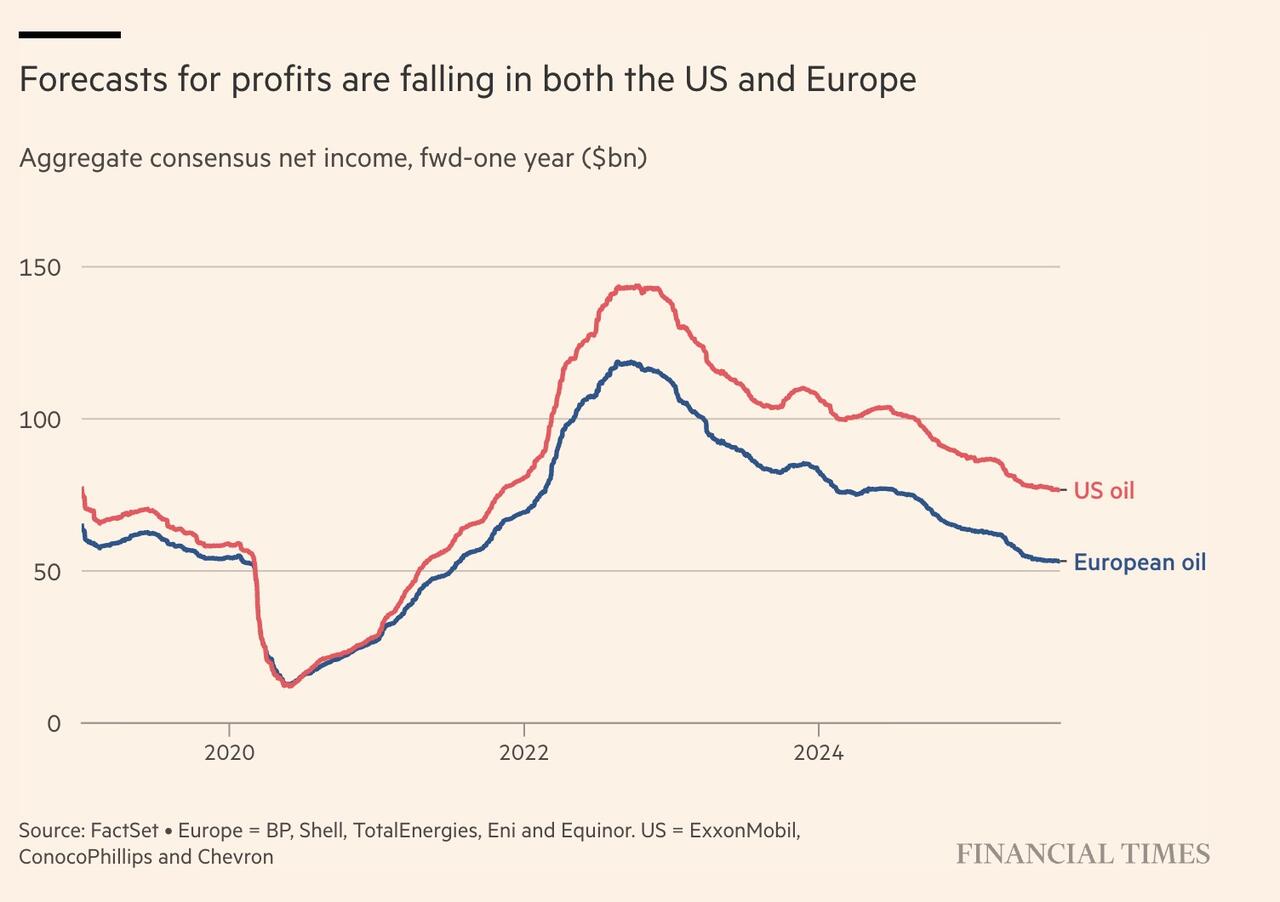
Oil and gas producers worldwide are bracing for a prolonged downturn, with job losses and investment cuts spreading through the industry, according to a new report from Financial Times. ConocoPhillips, Chevron, and BP have all announced large-scale layoffs, while others are shelving or selling projects to conserve cash. “This isn’t just a Conoco problem,” said Kirk Edwards of Latigo Petroleum. “It’s a flashing red warning light for the entire US oil and gas industry.”

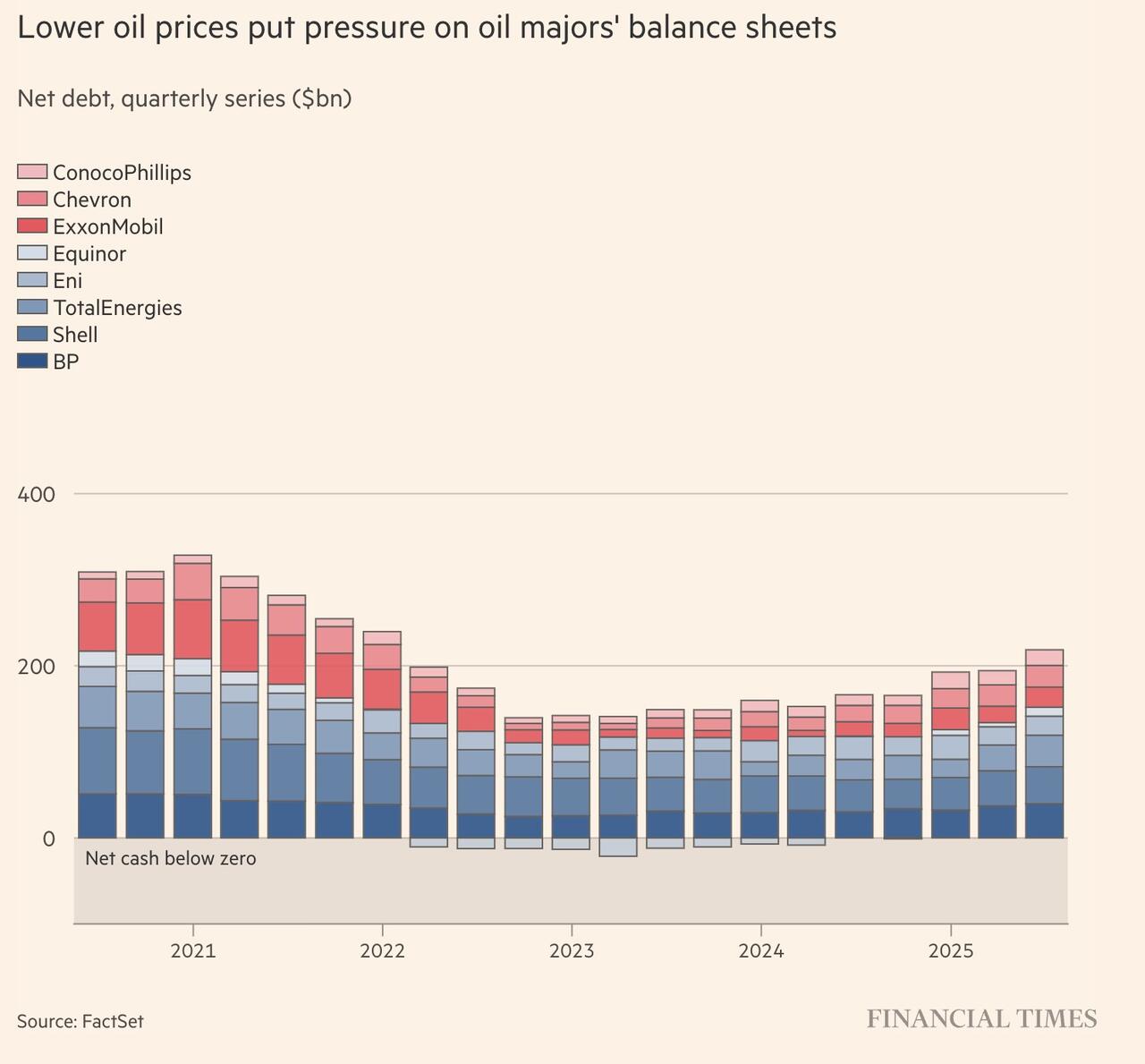
FT writes that the sector is under pressure as crude prices, which spiked after Russia’s invasion of Ukraine, have since dropped by half. Opec+ has shifted strategy, increasing output to regain market share, a move that adds further price strain. Analysts at Wood Mackenzie predict Brent could slide under $60 a barrel by early 2026 and stay there “up to a few years.” Below that level, western majors struggle to fund both shareholder payouts and new projects.

The cuts are hitting hardest in the US, where shale drilling requires around $65 a barrel to stay profitable, according to the Dallas Federal Reserve. ConocoPhillips has warned that as many as 3,250 staff may lose their jobs by Christmas, while Chevron has been working through 8,000 cuts since February. BP has already trimmed 4,700 positions. “The way we protect the most jobs for the most people is by remaining competitive,” said Chevron’s Mike Wirth.

State-owned producers are also retrenching: Saudi Aramco raised $10bn by selling part of its pipeline network, and Malaysia’s Petronas shed 5,000 jobs. Capital spending worldwide is forecast to fall 4.3% this year to $341.9bn — the first decline since 2020 — and US output is expected to contract for the first time since 2021.

Some companies are leaning on outsourcing and digital tools to offset the downturn. “AI is giving operators new ways to optimise in a challenging market,” said Andrew Gillick of Enverus. But industry veterans warn that shrinking investment may have long-term consequences. “Domestic oil producers are finding it hard… which is costing jobs,” said Roe Patterson of Marauder Capital. “The problem is that our domestic oil production may not be there when the country needs it in the future.”

By Zerohedge.com 

New Standards Shape Global Carbon Trading

  • Carbon markets are increasingly vital for companies and countries to reduce emissions and mobilize private capital, especially in developing nations, as public funding is insufficient to meet climate commitments.

  • The carbon market is progressing towards global standardization and higher integrity through initiatives like the ICVCM's Core Carbon Principles, despite ongoing fragmentation and slow implementation of regulatory reforms.

  • Demand for carbon credits remains resilient, with growing interest in tech-based removals, and the market's success hinges on reforms delivering transparency and durability to achieve climate targets.

Carbon markets have become increasingly important as a cost-effective pathway for companies and countries to reduce emissions in a world struggling to meet its climate goals. They can mobilize private capital, particularly in developing countries where clean technology financing remains scarce, and provide hard-to-abate sectors with access to solutions that would otherwise be out of reach. Climate finance pledges are materializing – the $100 billion goal was finally met and the Loss and Damage Fund launched, both in 2022 – but public funding alone remains too limited and slow. Moreover, around 1,400 of the world’s largest companies have set climate commitments with both interim and long-term targets. Near-term milestones are approaching, and direct cuts can be insufficient or costly, so more organizations are turning to carbon credits to help meet goals and stay on track towards net zero.

Today, most trading occurs across fragmented initiatives: some under regional, national or sectoral compliance schemes or globally through voluntary action – most of which operate with diverging standards and eligibilities. Progress at last year’s COP29 conference on operationalizing Article 6 of the Paris Agreement on climate change marked a step towards a global, standardized market. However, implementation will be slow: methodologies must be developed, infrastructure built, and political compromises resolved. In the meantime, integrity risks persist, and the market’s credibility depends on non-governmental initiatives that are setting tougher standards. The Integrity Council for the Voluntary Carbon Market’s (ICVCM) Core Carbon Principles – already referenced by several jurisdictions – signal this shift. Developers are issuing credits under these new rules, though buyers remain slower to adapt, with most retirements still tied to older, weaker methodologies.

Meanwhile, demand remains resilient. Retirements have already reached 110 million credits so far this year, outpacing last year’s levels at the same point in time by 5%, spanning sectors from energy and utilities to aviation and logistics. Tech-based removals are expanding rapidly – about 24 million credits sold so far this year, up 166% on 2024 – though supply is constrained by high costs, limited project pipelines and long delivery timelines. Nature-based removals and high-quality reductions, therefore, will remain essential, even if not all credits can achieve perfect one-to-one equivalence with emissions. The critical question is whether the whole system delivers durable climate value, not whether each credit is flawless.

The trajectory is clear: carbon markets are moving from a credibility crisis towards higher integrity, though progress remains uneven. Success will depend on whether reforms – both regulatory and voluntary – can deliver the transparency and durability needed to satisfy climate goals and compliance demand. In a decarbonization landscape where many other pathways are stalling, carbon trading remains a vital – if imperfect – lever for mobilizing finance and accelerating climate action.

By Petter Atrchi Aspestrand, Product Manager of Carbon Markets Research at Rystad Energy

U$ WAR ON THE ENVIRONMENT

U.S. Energy Chief Calls Net Zero a “Colossal Train Wreck”

U.S. Energy Secretary Chris Wright blasted net-zero targets as a “colossal train wreck” ahead of his trip to Europe for a gas summit and meetings with EU officials, warning the push for climate policies could weaken energy security and derail a U.S.–EU trade deal.

“Net zero 2050 is just a colossal train wreck,” Wright told the Financial Times in an interview.

“It’s just a monstrous human impoverishment program, and of course, there is no way it is going to happen,” said the Energy Secretary, whose remarks were also shared on X by the official account of the U.S. Department of Energy.

Secretary Wright, a former oil and gas executive, made his position on net zero known shortly after he was picked to lead the energy department earlier this year. Weeks earlier, the Trump Administration had given a loud and clear message on what it thinks of net zero on Day One—the day that President Donald Trump withdrew the United States from the Paris Agreement, again.

After years of aligning with Europe on the net-zero agenda under President Biden, the United States is now on a collision course with the EU and its climate regulations.

The EU’s Corporate Sustainability Due Diligence Directive and the Carbon Border Adjustment Mechanism (CBAM), commonly known as the “carbon border tax”, ultimately aim to impose levies on higher-emission products imported into the EU.

Many companies outside the EU, including those in the U.S., have signaled they would rather not sell in Europe than pay significant “border taxes”, levies, penalties, or whatever the language will be later this decade, when the mechanism will come into effect.

These rules and the EU’s “crusade” toward net zero are a threat to the U.S.-EU trade deal, Secretary Wright told FT.

“I think those regulations significantly threaten the ability to implement the trade deal that was agreed to,” he added.

The U.S.-EU trade deal for European energy purchases of American products already looks unrealistic, analysts say, even without accounting for all EU climate-related levies. 

U.S. giant ExxonMobil hopes the ongoing U.S.-EU dialogue on trade would address the “bone-crushing penalties” in the EU’s climate regulations, the supermajor’s CEO Darren Woods told analysts on the Q2 earnings call last month.

Wright’s remarks from this week aren’t the first time the U.S. Energy Secretary has slammed the net zero agenda.

Europe’s goal to pursue a net-zero agenda is depriving citizens of reliable and affordable energy in a choice made by politicians, Wright said at a forum in Poland in April.

“This top-down imposition of enforced “climate policies” is justified as necessary to save the world from climate change,” Wright said.

“But I can say that climate alarmism has clearly reduced energy freedom, and, hence, prosperity and national security across Western Europe.”

Wright noted that affordability is more important than sustainability.

“Today, folks struggling to pay their bills while aspiring to live highly energized lifestyles like you and I is a far bigger global challenge than climate change. Energy access is far too important to get wrong,” Wright said.

The U.S. pushback against net zero has led to Secretary Wright saying that the United States could abandon the IEA if the organization, created in the aftermath of the 1970s Arab oil embargo, doesn’t return to forecasting energy demand without strongly promoting green energy. 

“We will do one of two things: we will reform the way the IEA operates or we will withdraw,” Wright told Bloomberg in an interview in the middle of July.

“My strong preference is to reform it,” Secretary Wright added.

The official echoed voices in the U.S. Republican party that the agency has become an advocate of the energy transition and is not objective in forecasting energy demand trends.

From ensuring security of supply after the 1970s embargo, the agency has shifted from this purpose in recent years to endorsing the net-zero by 2050 goal and is advocating for a major change in the global energy system to include more electric vehicles (EVs), renewable power supply, hydrogen, and all other low-carbon energy sources.

The IEA’s forecast that oil demand will peak this decade is “just total nonsense,” Secretary Wright said.

By Tsvetana Paraskova for Oilprice.com