It’s possible that I shall make an ass of myself. But in that case one can always get out of it with a little dialectic. I have, of course, so worded my proposition as to be right either way (K.Marx, Letter to F.Engels on the Indian Mutiny)
Saturday, September 20, 2025
PALEONTOLOGY
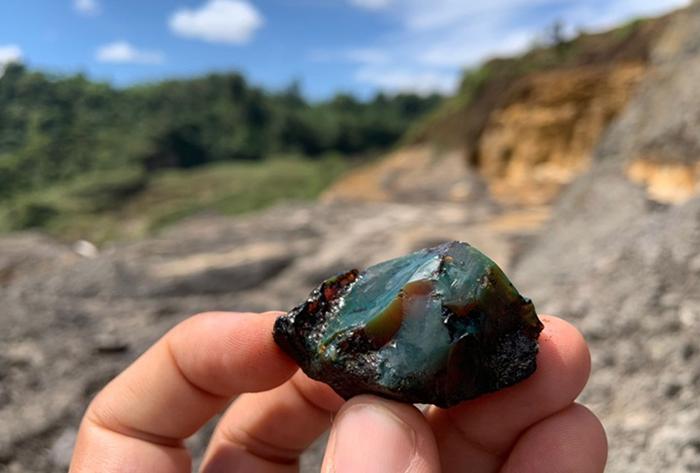
First Mesozoic amber deposit with preserved insects discovered in South America
The discovery, which took place in the province of Napo (Ecuador), opens a unique window into the past: it provides insight into the rich biodiversity of a dense, humid tropical forest in the southern hemisphere some 112 million years ago, when the modern continents broke away from the supercontinent Gondwana and large reptiles dominated the terrestrial ecosystems.
A scientific team has discovered the first Mesozoic amber deposit with preserved insects in South America in the province of Napo (Ecuador). The discovery, published in the journal Communications Earth & Environment, reveals that 112 million years ago there was a tropical rainforest with ferns, cycads and angiosperm plants, and describes a unique scenario for understanding the rich biodiversity and Cretaceous ecosystems in the southern hemisphere, little studied so far in the fossil amber record.
“This is the largest Mesozoic amber deposit in South America and one of the richest in Gondwana with bioinclusions. It is part of a recently discovered deposit in the Hollín Formation — detrital sedimentary rock levels of the Oriente Basin in Ecuador — and is dated to the Albian stage of the Lower Cretaceous, with well-preserved terrestrial arthropod remains (insects and spider web remains)”, says Professor Xavier Delclòs, from the Faculty of Earth Sciences and the Biodiversity Research Institute of the University of Barcelona (IRBio) and first author of the article.
The amber comes from a fluvial-lacustrine environment at the Genoveva quarry site (in the Tena region of the Amazon region). The resin-producing trees were probably araucariaceous conifers, according to geochemical and palynological analyses. “Everything indicates that the ancient ecosystem was wooded, humid and diverse, and has the oldest known association of angiosperm leaves in north-western South America,” says Delclòs, a member of the UB’s Department of Earth and Ocean Dynamics.
This study outlines a new framework for understanding equatorial ecosystems during the Cretaceous and the biogeographical relationships of their components when the modern continents broke away from the supercontinent Gondwana.
Teams from the Spanish Geological and Miner Institute National Center (IGME-CSIC), the Smithsonian Tropical Research Institute (Panama), the University of Rosario (Colombia), the Escuela Politécnica Nacional (Ecuador) and the Senckenberg Natural History Museum Frankfurt (Germany), among other institutions, have also participated in the study. Dense, damp forest with resin-producing trees
The study analysed 60 amber samples and identified 21 bioinclusions, with representatives of five insect orders, including Diptera (flies), Coleoptera (beetles) and Hymenoptera (ants and wasps), together with one spider web fragment. No plant remains were found within the amber, but a wide variety of plant fossils were identified in the rock samples, including spores, pollen and leaves.
The team has analysed samples of amber and surrounding rock from the Genoveva mine in Ecuador and identified two different types of amber: one formed underground around the roots of resin-producing plants (without inclusions) and another that formed when the resin was exposed in the air (with inclusions).
“This amber is chemically mature and altered by exposure to oil, as the Hollín Formation is an oil source rock, and is currently commercially exploited”, notes César Menor Salván, professor at the University of Alcalá.
The characteristics of the bioinclusions and surrounding fossils suggest that the amber formed in a dense, humid forest environment dominated by resin-producing trees.
“Mostly chironomid and ceratopogonid dipterans were found, as well as springtails, coleoptera, hymenoptera, trichoptera, hemiptera and a fragment of a spider web. The insects point to the presence of freshwater bodies and a tropical rainforest in which the presence of rare families stands out, such as the wasps †Stigmaphronidae”, says Enrique Peñalver, researcher at the IGME in Valencia.
Carlos Jaramillo, from the Smithsonian Tropical Research Institute, says that “the pollen and macrofossils identified in the rocks that contained the amber reveal a forest with pteridophytes (ferns and related species), Araucariaceae and Cheirolepidaceae conifers, cycads and early angiosperms”, and adds that “epiphytic fungi have also been detected on the fossil leaves and resinicolous fungi”.
These characteristics contrast with the arid conditions observed in other South American deposits of the same age, such as the Crato Formation on the eastern margin of South America. In this case, no evidence of fire has been found, unlike many contemporary amber deposits in the northern hemisphere, probably due to the high humidity.
Experts stress that the discovery of this amber deposit is of great scientific relevance for future studies of this period. “Future excavations could help connect South American biodiversity with other regions of Gondwana, such as Antarctica, Australia and South Africa, where Cretaceous amber has also been found,” concludes Monica Solórzano Kraemer, from the Senckenberg Natural History Museum.
From left to right, Mónica Morayma Solórzano-Kraemer (Senckenberg Natural History Museum Frankfurt, Germany), Edwin Cadena (University of Rosario, Colombia), Xavier Delclòs (University of Barcelona) and Enrique Peñalver (Spanish Geological and Miner Institute National Center, IGME-CSIC).
Expert Xavier Delclòs (UB) at level G1 of the Genoveva mine.
From left to right, experts Enrique Peñalver (IGME-CSIC) and Xavier Delclòs (UB) at level G3 of the Genoveva mine.
The team has analysed samples of amber and surrounding rock from the Genoveva mine in Ecuador
The first amber deposits in South America containing preserved insects have been discovered in a quarry in Ecuador, reports a paper in Communications Earth & Environment. The finding provides a snapshot of a 112-million-year-old forest on the supercontinent Gondwana, and presents new possibilities for studying a currently little-known ancient ecosystem.
Amber (fossilised tree resin) samples have a wide date range, with the earliest dated to 320 million years ago, but there is a notable increase in the number of samples in the fossil record between 120 million and 70 million years ago, during the Cretaceous era (143.1 million to 66 million years ago). Amber can contain bio-inclusions — ancient plant or animal matter preserved inside the resin — which give researchers an opportunity to study organisms, such as insects and flowers, that are otherwise rarely preserved. However, until recently, almost all major identified amber deposits have been located in the Northern Hemisphere. As such, we have a limited understanding of the biodiversity and ecosystem of the Southern Hemisphere during the Cretaceous era, when the modern continents were breaking away from the supercontinent Gondwana.
Xavier Delclòs and colleagues analysed samples of amber and the surrounding rock from the Genoveva quarry in Ecuador. The amber, dated to approximately 112 million years ago, is part of a recently discovered deposit in the Hollín Formation, a sedimentary rock layer lying across the Oriente Basin in Ecuador. The authors identified two different types of amber: one that formed underground around the roots of resin-producing plants, and another that formed when resin was exposed to air. In the 60 analysed samples of aerial amber, the authors identified 21 bio-inclusions, consisting of members of five insect orders — including Diptera (flies), Coleoptera (beetles), and Hymenoptera (which includes ants and wasps) — along with a fragment of spider web. They also identified a wide variety of plant fossils in the rock samples, including spores, pollen, and other remains.
The authors conclude that the characteristics of the bio-inclusions and surrounding fossils suggest that the amber formed in a humid and densely vegetated forest environment, dominated by resin-producing trees, and located in the southern part of Gondwana. They argue that the discovery of the amber deposit is of critical importance for future studies of this period.
ANN ARBOR—A University of Michigan researcher helped identify the earliest known example of a toothy, tongue-like apparatus for biting in an ancient fish, marking the moment 310 million years ago that fish first took advantage of their gill bones to innovate the way they feed.
The fish, called Platysomus, lived at the beginning of the Pennsylvanian period, at a time when a group of fish called ray-finned fish were exploring new ways to make a living—including how they ate. Like most fish alive today, such as goldfish, salmon, cod and tuna, Platysomus was a ray-finned fish.
U-M paleontologist Matt Friedman was part of a team that discovered that the Platysomus had a plate of teeth suspended by a cradle of jointed bones that also supported the gills it used to breathe. The plate of teeth, situated on the floor of the mouth like a tongue, was in direct opposition to a plate of teeth above it, and the fish used the plates to crush and grind food. As it turns out, Platysomus was the first to evolve this feeding structure called a tongue bite.
"One of the most powerful things we have for understanding evolution is adaptation. We can see that different kinds of creatures can adjust to similar kinds of demands in different ways," said Friedman, director and curator of the U-M Museum of Paleontology.
"But in this case, this is cool because it's showing us a convergent adaptation. This extinct group of fishes discovered this trick, and actually, it turns out that many different groups of fishes figured out this trick at later times. After multiple times, that tells us a little bit about what the constraints on evolutionary change might be, or if there are pathways that are easier to evolve along than others."
A general question in evolutionary biology is how evolutionary outcomes occur in different groups of animals, Friedman says. Tracking how different groups of fish evolved a similar tool (tooth plates) to tackle similar problems (eating hard stuff) can help researchers understand if these groups travel similar evolutionary pathways.
That, in turn, allows biologists to find common patterns in the origins of these structures. The research, published in the journal Biology Letters, was supported by the U.S. National Science Foundation.
The name "platysomus" means flat-bodied, and as well as being flat, the fish had a deep body. Their shape presents challenges for finding fossils that allow researchers to look at internal structures: When fish die and become entombed in mud, they tend to lie on their sides, providing a clear side view of the fish, its body shape and some of its external structures, but compression during fossilization obscures structures inside the fish.
"They're deep-bodied animals. They look a little like an angel fish," Friedman said. "But not only were they flat in life, they're typically squished even more flat as fossils. So although whole fossil fish skeletons are common, it's often hard to extract details of the internal skeleton. Fossils probably preserve those parts, but they're deadly flat."
As a consequence, Friedman has spent a large part of his career scouring museum collections for uncrushed, three-dimensionally preserved fish heads that contain just this kind of internal information.
"Fish heads are a good target because they're really complicated. They have a lot of parts, and where you have a lot of parts, you have a lot of different connections," Friedman said. "Those connections can take different forms, and that's the basis of the variation that we might use to try and reconstruct evolutionary history."
Friedman and colleagues were CT scanning three-dimensional fish fossils in a UK museum when they spotted the peculiar internal gill skeletons in a uniquely uncrushed Platysomus head. They were surprised to see a series of well-developed tooth plates inside the mouth of the animal. This led them to scrutinize flattened Platysomus fossils, where painstaking digital dissections also revealed the trademark features of a tongue bite.
The fish living today that have biting plates most similar to Platysomus are bonefish, a game fish living in warm tropical and subtropical waters that mostly eat hard-shelled prey like crabs.
Friedman says the finding also points to the importance of museum collections. The key fossil that formed the basis of his study was likely collected more than 120 years ago, and had probably received little attention since then.
"There's a popular perception that as a paleontologist, to do anything new or find anything exciting, you need to go to the field and dig up a fossil," Friedman said. "That’s important, of course. But people have already collected a lot of fossils, and as we develop new techniques, we find ways to coax new bits of data out of materials that are already in museums."
Friedman's co-authors include Sam Giles of the University of Birmingham and Matthew Kolmann of the University of Louisville.
Scientists at the University of Liverpool, working with international collaborators, have discovered Novltex, a groundbreaking new class of antibiotics with potent activity against some of the world’s most dangerous multidrug-resistant (MDR) bacteria.
The discovery, led by Dr Ishwar Singh, Reader in Antimicrobial Drug Discovery at the University of Liverpool, marks a major step forward in the global fight against antimicrobial resistance (AMR) — a health crisis recognised by the World Health Organization (WHO) as one of the top 10 threats to humanity, responsible for nearly 5 million deaths every year.
A new weapon against superbugs
WHO has identified a list of “priority pathogens” urgently requiring new antibiotics, including methicillin-resistant Staphylococcus aureus (MRSA) and Enterococcus faecium. Novltex has shown potent, fast-acting activity against both.
Unlike traditional antibiotics, Novltex targets lipid II — an essential building block of bacterial cell walls that does not mutate. This means Novltex offers durable protection against resistance, addressing one of the biggest challenges in modern medicine.
Advances in antibiotic design
This breakthrough builds on pioneering research by Dr Singh and his team, who previously developed simplified synthetic versions of teixobactin — a natural molecule used by soil bacteria to kill competing microbes. The Liverpool team created and tested a unique library of synthetic teixobactins, optimising key features to enhance efficacy and safety while making them practical and inexpensive to produce at scale.
Drawing on this foundation, the researchers have now created Novltex — a modular synthetic antibiotic platform inspired by teixobactin and clovibactin. Novltex avoids costly building blocks, can be adapted to generate a whole library of molecules for optimisation, and crucially, targets lipid II — a bacterial Achilles’ heel that does not mutate. This combination of potency, durability, and manufacturability makes Novltex one of the most promising antibiotic candidates in decades.
Key findings
Published today (17 September 2025) in the Journal of Medicinal Chemistry from the American Chemical Society, the researchers report the following key findings relating to Novltex:
Kills high-priority superbugs – effective against MRSA and E. faecium.
Durable against resistance – targets an immutable bacterial Achilles’ heel.
Modular platform – enables the creation of a library of molecules for safety and optimisation.
Potent and fast-acting – works at very low doses and outperforms several licensed antibiotics such as vancomycin, daptomycin, linezolid, levofloxacin, cefotaxime.
Safe and scalable – no toxicity in human cell models, with synthesis up to 30 times more efficient than natural products.
“Novltex is a breakthrough in our fight against antimicrobial resistance,” said Dr Ishwar Singh. “By creating a modular, scalable platform that targets an immutable bacterial structure, we have taken an important step towards antibiotics that remain effective against superbugs like MRSA. This work was only possible through international collaboration, because antimicrobial resistance is a truly global problem. While much more testing is required before Novltex reaches patients, our results show that durable and practical solutions to AMR are within reach.”
Next steps
The research team will:
Test Novltex compounds in animal models of infection to confirm safety and efficacy.
Study pharmacokinetics in living systems.
Work with industrial and global partners to prepare for clinical trials.
This work is supported by Innovate UK, the Department of Health and Social Care (DHSC), and Rosetrees Trust.
The full paper Novltex: A New Class of Antibiotics with Potent Activity against Multidrug-Resistant Bacterial PathogensDesign, Synthesis, and Biological Evaluation is available in the Journal of Medicinal Chemistry here: https://pubs.acs.org/doi/10.1021/acs.jmedchem.5c01193
Therapeutics Innovation The Therapeutics Innovation research frontier was established to position the University of Liverpool at the forefront of efforts to revolutionise the drug discovery and medicine development pathway. Our distinctive capabilities bridge the gap between industry, global charities, and academia, enabling us to work collaboratively to tackle major health challenges.
Journal
Journal of Medicinal Chemistry
Researchers utilize apple waste for fiber-packed meatballs
ITHACA, N.Y. – Every year, more than four million tons of apple byproducts are hauled off as animal feed, compost or landfill waste. But a new Cornell University study offers apple skins, seeds, cores and pulp a different ending.
Freeze-dried and milled into a fine powder, the byproduct, known as pomace, can be blended into commercial beef meatballs at levels up to 20% without turning off consumers, according to a new study published in the Journal of Food Science and Nutrition. In sensory panels of more than 100 untrained tasters, the meatballs with apple pomace were indistinguishable in aroma, taste, texture and overall preference from all meat formulations.
“It’s a great source of fiber and bioactives,” said corresponding author Elad Tako, associate professor of food science. “But as an ingredient, it also has an antioxidant effect and contributes to a longer shelf life for food products.”
The finding points toward a potential new revenue stream for apple and cider producers and a practical way to close a circular loop in food manufacturing. Rather than paying to dispose of pomace, processors could freeze-dry and sell it as a value-added ingredient to meat packers, food manufacturers and specialty producers.
That shift could trim disposal costs, reduce methane emissions from landfills and capture additional dollars from a resource now treated as waste. At the same time, it could increase dietary fiber content in popular processed foods and modestly reduce the share of animal protein without changing the eating experience.
Researchers tested a realistic commercial scenario. They bought Cortland, Empire and Red Delicious apples at wholesale, pressed them at a commercial juice press, then freeze-dried the leftover pomace for 48 hours. After milling the dried material to a consistent particle size, they rehydrated it and blended it into 80% lean ground beef at 10% and 20% inclusion rates.
Beyond the tasting panels, they measured texture, color, composition and cooking yields. The 20% formulations did show a drop in cooking yield and a shift in internal color that might matter to manufacturers who need to meet specification standards. But the sensory panel did not penalize the higher inclusion levels, suggesting consumers may accept small changes if the product is otherwise familiar.
For cider makers and juice processors, pomace accounts for an estimated 25-30% of the total fruit mass. Handling that volume is expensive. Transportation and disposal costs can eat into already tight margins, especially for small and mid-sized processors. Turning pomace into a dry, shelf-stable ingredient means less waste-hauling and a marketable product that could be packaged, sold and distributed. For regional processors seeking new revenue streams, the approach could be appealing.
If adopted, Tako said, “it’s a win-win-win. It could mean more natural, better-for-you products for meat companies and the people who care about getting enough protein and other nutrients but also provide a new income stream for apple and cider producers.”
Results from a ground-breaking new trial published in The Lancet Global Health show that a mobile application, Med Safety, improved the reporting of suspected adverse drug reactions (ADRs) by healthcare workers in Uganda.
The findings mark a breakthrough for digital pharmacovigilance in low- and middle-income countries (LMICs) where the under-reporting of medicine-related harmful effects has long posed challenges to patient safety.
In the largest trial of its kind, researchers from Makerere University, the University of Liverpool, Uganda’s National Drug Authority, the UK Medicines and Healthcare products Regulatory Agency, Uganda’s AIDS Control Programme, and the African Union Development Agency conducted a cluster-randomised controlled trial involving 367 health facilities and more than 2,400 healthcare workers. The trial compared traditional (existing) reporting methods alone with the use of Med Safety, a smartphone app, integrated (as an adjunct to existing reporting methods) into Uganda’s national pharmacovigilance system.
Healthcare workers using Med Safety reported 73% more suspected ADRs overall and nearly double the number of suspected adverse drug reactions linked to dolutegravir (92%), a widely used HIV treatment, compared with those using only traditional pharmacovigilance methods. Reports were received of both serious and non-serious ADRs – vital for building a fuller picture of medicine safety.
Dr Ronald Kiguba, an MRC-funded African Research Leader and Chief Investigator for the trial said: “The trial’s findings demonstrate that digital tools like Med Safety can transform drug safety monitoring in real-world clinical settings in LMICs. Scaling up Med Safety and similar tools could help other low and middle income countries make data-driven regulatory decisions and better protect patients.”
Professor Sir Munir Pirmohamed, David Weatherall Chair of Medicine at the University of Liverpool said: “Under-reporting of ADRs is a major issue with all spontaneous reporting systems. The trial provides robust evidence that the mobile app achieved a 73% higher ADR reporting rate overall when compared to existing reporting methods. This highlights the value of novel tools to enhance reporting of suspected ADRs.”
Originally developed under the European Innovative Medicines Initiative-funded project, WEB-RADR, and adopted in several countries, Med Safety was launched in Uganda in 2020. This trial provides the first robust, large-scale evidence from an LMIC that a mobile app can substantially strengthen pharmacovigilance systems. By making it easier for frontline health workers to report suspected adverse drug reactions, stronger data are generated to guide regulatory decisions and ultimately improve patient care.
The study was funded by the UK Medical Research Council, Makerere University Research & Innovations Fund, and Uganda’s National Drug Authority.
Publication details: The paper, “Adverse Drug Reaction Reporting with the Med Safety App in Uganda: A Cluster-Randomised Controlled Trial”, was published in The Lancet Global Health journal on 17 September 2025 (https://www.sciencedirect.com/science/article/pii/S2214109X25002992).
Journal
The Lancet Global Health
One in three young adults skip the dentist, and that’s a problem
A new study reveals how barriers to oral health differ across generations, putting young adults at greater risk for future health problems
Regular dental checkups are vital for overall health. Yet dental care in the United States is still excluded from medical health insurance coverage and usually not integrated with public health initiatives that promote preventative care. A new study from a researcher at Tufts University School of Dental Medicine found that nearly one in three young adults skipped visits to the dentist in the past year—and pointed to wider health and access problems that could affect the nation’s future workforce and health systems.
Published recently in Frontiers in Oral Health, the study is the first to compare people’s social and economic circumstances, access to dental care, and self-reported health challenges across different ages. The study builds on past research about cost and access barriers to dental care, but it provides new insights by showing that young adults are especially likely to miss out on care—and that factors like mental health and housing problems also play a role.
“Young adults, aged 18 to 35 years old, were the most likely to report not having visited a dentist within the past 12 months,” says Yau-Hua Yu, the study’s author and an associate professor of periodontology at the School of Dental Medicine. “This is very troubling."
Her earlier research suggested that poor oral health is linked to shortened life expectancy and other negative health outcomes.
For this study, Yu analyzed health, demographic, and dental-care data from nearly 128,000 adults in the National Institutes of Health’s All of Us program, one of the world’s largest biomedical databases. Yu used the data to examine how physical challenges and mental health issues reported by individuals from different socioeconomic backgrounds varied depending on three factors: whether they had visited a dentist in the past year, their income level, and their age.
“Across all ages, people generally managed to see a doctor,” says Yu. “But those who skipped dental care most often pointed to cost and lack of insurance coverage.” She says this finding reinforces the need to address the persistent policy gap in dental coverage, especially for those not covered by employer-based insurance or public programs.
Young adults who missed dental visits were also more likely to skip medical care, struggle with copays, rely on emergency care, and report poor mental health or memory problems. Yu found that this group of study participants were more likely to be renters, uninsured, and racially diverse—and that unstable housing added financial and emotional strain.
The study’s age-based analysis revealed other important generational contrasts. While adults aged 66 years or older were more likely to have insurance and own a home, they also reported more disabilities. Individuals who reported difficulty walking, bathing, running errands, or concentrating were more likely to skip dental care, particularly among these older adults.
“Our findings show the urgent need to integrate dental care into overall health care,” Yu says. “They also suggest that interventions must be tailored not only to income, but to life stage and cumulative disadvantage. The desperate need to bring routine preventative dental care to younger adults—who will be our prime source for societal productivity—should not be ignored.”
This may include expanding public dental insurance and integrating oral health equity goals into public health surveillance and primary care frameworks, Yu says.
For older adults, barriers like transportation and mobility point to the need for home-based or mobile dental programs.
For young adults, Yu adds that community organizations and faith-based health systems could be key partners in expanding access, as they already offer models of integrated affordable dental care.
“When dental care is rooted in trusted community spaces, it feels more familiar and supportive,” she says. “That lowers the barriers of fear, inconvenience, and cost uncertainty that may keep some young adults away—and it helps them shift from waiting until there’s an emergency to hopefully seeking regular, preventive care.”