Saturday, September 20, 2025

Bella Ciao: Protest song in focus after Charlie Kirk killing

DW
September 18, 2025

A look at the evolution of the Italian protest 
ANTI-FASCIST anthem, from its opaque origins
to TikTok remixes and feminist marches.


A participant of Italy's 80th anniversary of Liberation Day on April 25, 2025, paid tribute to the son
g
Image: Alessandro Bremec/NurPhoto/picture alliance

It wasn't penned as a romantic farewell, but "Bella Ciao" — meaning "goodbye beautiful" in Italian — is a song that has come to symbolize a parting with oppression.

When the phrase was discovered etched on an unspent bullet casing linked to the man accused of killing conservative US activist Charlie Kirk, it wasn't just some cryptic clue.

It was a refrain bearing history, drawn from a century-old Italian protest song, which has long been a global tune of resistance.

While its connection to Kirk's death remains moot, this find has cast fresh light on a melody that has evolved from partisan movements to pop culture playlists.


The song 'Bella Ciao' has been used as an anthem by groups of all stripes
Image: Brancolini/Fotogramma/ROPI/picture alliance

Divergent origin stories

Widely labelled an anti-fascist anthem, "Bella Ciao" is sung annually on April 25 during Italy's Liberation Day to mark the end of Benito Mussolini's fascist dictatorship and the Nazi occupation in Italy. Its most widespread version tells the story of a partisan with unspecified political leanings, who dies for freedom, asking to be buried "under the shade of a beautiful flower."

But the song's origins are anything but clear. Some historians have traced its melody (without lyrics) to a 1919 recording by Odesa-born klezmer accordionist, Mishka Ziganoff.


Others point to a separate folk song sung by "mondine" — female rice paddy weeders in Northern Italy — protesting against harsh labor conditions. That version, also titled "Bella Ciao," shares little with the partisan anthem beyond its title.

The partisan version known today was solidified in the early 1960s, notably through a rendition by Italian-born French actor Yves Montand. As Utrecht University researchers Daniele Salerno and Marit van de Warenburg noted in their 2023 study of the song, its power lies not in its fixed origin but in its adaptability.

They described "Bella Ciao" as a "portable monument" — a cultural artifact that carries memory across time and space.

"Bella Ciao is continuously rewritten, reused, and relocated in different and new contexts and media, and for a range of causes," they wrote.
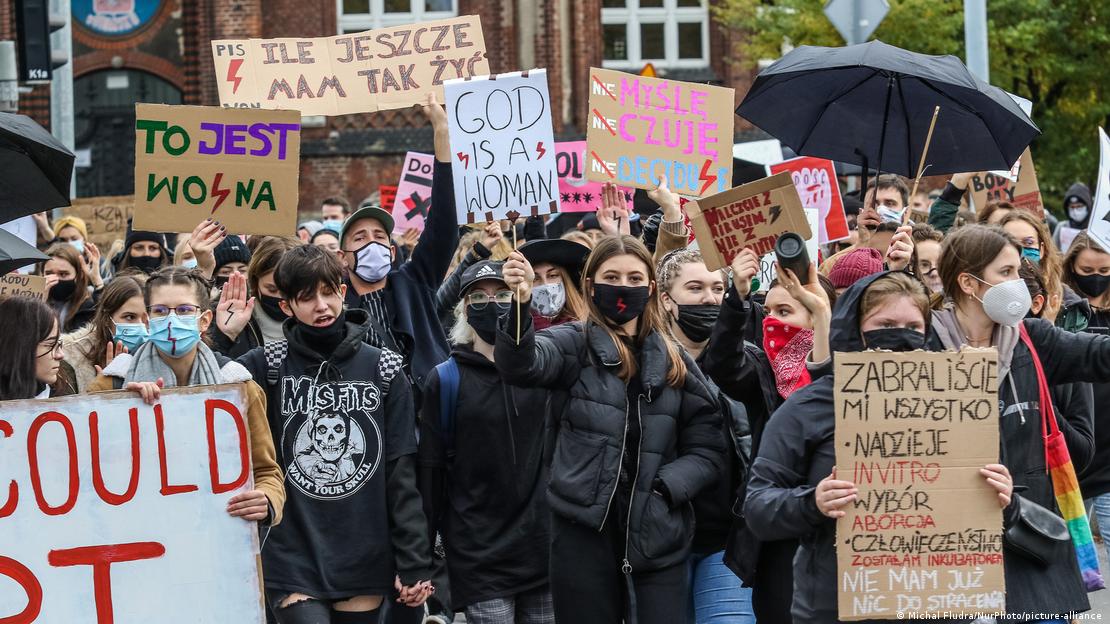
Pro-choice protesters in Poland repurposed 'Bella Ciao' in 2020Image: Michal Fludra/NurPhoto/picture-alliance


From resistance to remixes

Though not widely sung during World War II itself, "Bella Ciao" defined how Italians stood up to fascism after the war. Over the decades, it has been adopted by leftist movements across Europe and beyond.

In January this year, left-wing activists in Germany sang the song at a protest against the far-right party AfD.

In 2024, left-leaning members of the European Parliament sang it to protest Hungarian Prime Minister Viktor Orban's policies — prompting Parliament President Roberta Metsola to then quip, "This is not Eurovision."

In 2021, demonstrators in Jerusalem, opposed to Prime Minister Benjamin Netanyahu's hold on power despite an indictment and corruption allegations, sang "Bibi Ciao" at the prospect of his departure back then — "Bibi" being Netanyahu's nickname.

Carlo Pestelli, who authored the book "Bella Ciao: The Song of Freedom," told AFP in 2022 that the song's appeal lies in its adaptability and melodic simplicity.

"It wasn't a communist song but a manifesto for freedom… it represents apolitical values that everyone can understand and share," Pestelli said. "It is also an easy song to sing, with a catchy chorus that even non-Italian speakers can pick up."

Feminist protests and balcony choruses


Feminist activists have also repurposed the catchy ditty to fight their causes. Pro-choice activists in both Argentina and Poland repurposed the song in 2018 and 2020 respectively, calling out their governments for legislating unfavorably against women's reproductive rights.

On September 16, 2022 — the day 22-year-old Jina Mahsa Amini died following her arrest by Iran's morality police for wearing an improper hijab — sisters Samin and Behin Bolouri sang a Persian version of "Bella Ciao" in a social media post that went viral.


These localized adaptations reflect what Salerno and van de Warenburg call "transnational activism," where the song — also used by both the Occupy Wall Street and Fridays for Future movements — becomes a vessel for new struggles without losing its historical weight.

Its reach however, has extended far beyond politics. It was belted from balconies in Italy during COVID-19 lockdowns and has even been reworked by soccer fans in support of their clubs.


Digital reworking

"Bella Ciao" owes much of its recent popularity to Netflix's Spanish crime drama "La Casa de Papel" (or "Money Heist" in English), which introduced the song to a global audience.

The series' version, remixed by electronic dance music producers El Profesor and Hugel, has to date garnered more than 200 million views on YouTube. Dozens of versions, including indie interpretations, can also be heard on Spotify.

It has also surfaced in gaming culture, featured in "Far Cry 6" and used on TikTok to score highlights from "Call of Duty: Warzone."

A legacy transcending ideologies

"Bella Ciao" has been used by movements across continents and ideologies — from anti-fascist and feminist activists to climate protesters and pop culture creators.

Its adaptability has made it a fixture in moments of dissent, solidarity and remembrance.

Whether sung in protest, remixed online or referenced cryptically on a bullet casing, "Bella Ciao" continues to serve as a signal — not of any particular ideology, but perhaps of resistance itself.

Edited by: Elizabeth Grenier


India sees drop in CO2 emissions as renewables accelerate

India sees drop in CO2 emissions as renewables accelerate
/ Valeriy Kryukov- Unsplash
By bno - Taipei Office September 19, 2025

India’s power sector has recorded an unusual dip in carbon dioxide output, with emissions falling by 1% in the first half of 2025 compared with a year earlier. It is only the second time in nearly fifty years that such a decline has been observed Carbon Brief reported on September 18. Over the past twelve months, emissions were down by 0.2%, according to the analysis Carbon Brief published.

This shift has taken place against the backdrop of record growth in renewable energy across India as the nation pushed ahead on installing renewables at a pace seen in few other places around the world. In the first six months of the year the report says, India added 25.1 GW of clean-energy capacity — a 69% rise on the same period in 2024.

That expansion, the report says, is expected to produce roughly 50 terawatt hours of electricity annually, enough to match the average increase in nationwide demand. It is an expansion being helped in part by India putting in place its own solar production infrastructure to help avoid importing hardware from China and elsewhere.

Research by the Centre for Research on Energy and Clean Air (CREA) cited, also highlights several factors behind the drop Carbon Brief says. Oil use has flattened after years of steady growth, while gas consumption has fallen by 7%.

Cooler weather in some parts of India as well as heavier rainfall during the monsoon has also reduced electricity demand. In contrast, oil-product demand showed no growth at all it was stated - a stark departure from the 6% and 4% annual increases registered over the last two years.

The picture, however, is mixed Carbon Brief claims. Heavy industry in India continues to drive emissions upwards. Steel production rose by 7% to support this, as did cement output by 10% in the first half of the year, fuelled in large part by government infrastructure spending.

Indeed, as Carbon Brief indicates but as is already widely known, coal still dominates India’s energy mix and will do for some time to come. At present coal accounts for more than half of the sector’s emissions. Yet the new figures suggest the country could reach a peak in power-sector emissions before 2030, provided the expansion of renewables stays on track. India has set a widely-publicised target of 500 GW of non-fossil capacity by that date, with 243GW already installed by mid-2025.

On the global stage, India remains a decisive force. Since 2019 it has been responsible for nearly 40% of the increase in energy-sector emissions, reflecting the pace of its industrialisation and rising energy needs as millions move into the middle classes. For now though, although emissions per person remain well below the world average, India still accounts for 8% of global energy-sector CO2 in 2024, and that number is likely to rise as tastes change and India becomes more developed.

In sync, whether the present slowdown signals what Carbon Brief suggests as being a lasting shift or a temporary pause, will depend entirely on how quickly renewables continue to expand VS how fast industrial demand evolves, and whether oil consumption remains subdued.

Vegetarianism in India: Personal choice or caste politics?

Likewise, many Dalits and tribespeople consume meat regularly, while vegetarianism remains dominant among many upper-caste Hindu


Hridi Kundu
DW
September 18, 2025

Food choices in India are more than personal — they are a mirror to deep social divides shaping the world's most populous nation.


A 2021 report indicated that 80% of Indians aged 15-49 consumed some form of meat
Image: Javed Akhtar/DW


India has witnessed a growing debate over what people eat over the past decade.

Since Narendra Modi became prime minister in 2014, measures targeting meat consumption have increased in parts of the country, especially in northern India's Hindi-speaking states.

Authorities in some places have occasionally issued rules discouraging or banning meat-based foods from schools, near places of worship and during religious festivals, among others.

In India-administered Kashmir's Doda district, officials recently banned meat, seafood and eggs in all educational institutions, saying that it's needed to uphold "secular principles," maintain "social harmony" and avoid "discomfort" over dietary differences.

The order drew criticism and raised concerns about individual freedom, inclusivity and religious sensitivities.

In cities across India, similar food restrictions affect people's daily lives.

Many face challenges finding housing due to their dietary preferences, said Abheepsita Purkayastha, a corporate lawyer based in Mumbai.

"Moving to Mumbai, hunting for a house came with one strict rule — be vegetarian! Landlords rejected us once they learnt we ate meat," she told DW. "We finally settled on a high-rise where neighbors demanded we swear off chicken. For two years, we have hidden our chicken meals like a secret, constantly wary of prying eyes."


Erasing the food, erasing the identity?


Nabanipa Bhattacharjee, a university professor based in New Delhi, recalled how a neighbor once asked her to close her windows complaining about the aroma of her food.

"She never named the food, calling it 'nameless.' Vegetarians never close their windows; their food is the unquestioned norm. But mine? I was the deviant expected to change."

Her account raises the question of why meat-based diet is often frowned upon by some sections of Indian society, making those who consume it feel excluded.

Bhattacharjee said vegetarianism's connection with Hindu cultural identity and national pride shapes social norms around food in the world's most populous nation.
80% of Indians eat meat

Hindu nationalist groups actively promote vegetarianism as a marker of "traditional" Hindu values, often ignoring the diverse food practices across India, even within Hindu communities.

They often associate meat-eating with religious minorities and marginalized groups — Muslims, Christians, Adivasis (Indigenous tribal communities), and Dalits, a historically marginalized group from the lowest level of India's centuries-old discriminatory caste hierarchy.

The targeting of meat consumption leads to stigmatization and segregation based on religious and caste lines, reinforcing social boundaries.

"Meat-eating, especially beef, is stigmatized in India and linked to Dalits and Adivasis, who rely on it for affordable nutrition, reinforcing caste hierarchies and social exclusion," Kiranmayi Bhushi, author of "The Culture and Politics of Food in Contemporary India," told DW.

But many Hindus — the majority religious community which accounts for around 80% of India's population — also eat meat, although dietary habits vary by region and caste.

While northern Hindi-speaking states lean heavily vegetarian, people in southern and northeastern states are predominantly meat-eaters.


Likewise, many Dalits and tribespeople consume meat regularly, while vegetarianism remains dominant among many upper-caste Hindus.

But even among the upper castes, only a minority are vegetarian, with many of them eating some form of meat.

Overall, about 40% of Indian adults identify as vegetarian, according to a 2021 survey by the Pew Research Center.

But a report by the National Family Health Survey (NFHS) from the same year indicated that 80% of Indians aged 15-49 consumed some form of meat, contrary to the widespread perception of India as a predominantly vegetarian country.

Food, purity and social hierarchy in India

Scholars have long explored the link between India's caste system and dietary practices rooted in the notion of "purity" and "pollution," revealing how dietary habits were foundational to the caste system's origins and shaped social hierarchy.

Bhushi said that the image of India as a vegetarian country is largely shaped by the dietary norms of upper-caste Hindus — particularly Brahmins and Baniyas, who historically adopted vegetarian diets as markers of ritual purity and social status.

But the reality is different, she stressed.

There are also differences among Brahmins. Many Brahmins in the eastern state of West Bengal eat fish, for instance.

Sanskrit scholar Punita Sharma, however, believes that dietary choices are largely shaped by climate and geography, which determine the availability of food resources.

"In India, traditional diets evolved based on natural resources and seasonal availability, reflecting a close connection between environment and food habits," she asserted.

People follow dietary regulations to honor their own traditions and culture, Sharma said, adding that "vegetarian diets are healthier and lead to fewer illnesses than meat-based ones."

Cage-free: India's movement for eco-friendly egg farming  05:38

Urbanization drives dietary changes

Food habits in India have been changing in recent years as more and more young people migrate to big cities in search of a better life.

They are increasingly consuming a wide variety of foods, including meat.

"This shift is fueled by urbanization and rising incomes, which are driving dietary diversification beyond traditionally dominant vegetarian norms," Bhushi underlined.

A new trend is also taking shape among the urban youth, who are increasingly embracing veganism.

For many, like the 24-year-old Ujjal Chakraborty, this is more than just a lifestyle choice — a statement against the caste underpinnings of traditional vegetarianism.

"Veganism in India is still new and often confused with caste-rooted vegetarianism. Unlike vegetarianism, it is about environmental responsibility, not caste identity," he said.

Chakraborty credits social media influencers and activists for making veganism a visible, ethical choice that challenges caste-based vegetarian norms.

Edited by: Srinivas Mazumdaru

France Throws Lifeline To India’s Fighter Jet Dreams As America Keeps Delhi Waiting – Analysis


A HAL Tejas Mark 2 (Mk2). Photo Credit: Government of India, Wikipedia Commons

September 21, 2025 
EURASIA REVIEW
By Girish Linganna

Safran’s surprise engine offer for Tejas Mk-2 could break India’s dependence on unreliable US supplies, but comes with serious design challenges

India’s ambitious fighter jet program stands at a crossroads. While American promises of engine technology transfer remain stuck in bureaucratic delays, French aerospace giant Safran has stepped forward with a game-changing proposal that could reshape India’s military aviation future.

The timing couldn’t be more telling. As nearly a dozen Tejas Mk-1A jets sit grounded at Hindustan Aeronautics Limited (HAL) facilities—ready for delivery but waiting for American F-404 engines that simply aren’t arriving—Safran has offered to establish a complete engine manufacturing ecosystem in India.


HAL’s Growing Frustration with American Delays

For HAL, India’s premier aerospace manufacturer, the current situation represents both a crisis and an opportunity. The company has demonstrated remarkable progress in aircraft production, with Tejas Mk-1A jets rolling off assembly lines faster than ever before. Yet these technological marvels remain earthbound, victims of America’s sluggish supply chain and complex export approval processes.

“We have the capability, we have the infrastructure, but we’re being held hostage by foreign suppliers who don’t share our urgency,” says a senior HAL official, speaking on condition of anonymity. The company has delivered only three F-404 engines against much larger requirements, creating a bottleneck that threatens India’s defense preparedness.

This supply crisis isn’t just about numbers—it’s about national pride and strategic autonomy. HAL has invested decades in building indigenous aerospace capabilities, only to find itself dependent on suppliers who treat India’s defense needs as secondary priorities.


The French Alternative: More Than Just Engines

Safran’s proposal goes far beyond a simple engine supply deal. The French company is offering to establish manufacturing facilities in India for two distinct engines—one optimized for the Tejas Mk-2 and another for India’s future Advanced Medium Combat Aircraft (AMCA). This represents a quantum leap from the limited technology transfer arrangements typically offered by Western suppliers.

Unlike American companies that often come with strings attached and government oversight, Safran brings a track record of genuine partnership. The company already operates successful joint ventures with HAL, manufacturing helicopter engines that power over 400 Advanced Light Helicopters. This existing relationship provides a foundation of trust and technical understanding that would be invaluable for a fighter jet engine program.

France’s approach to defense cooperation has consistently been more pragmatic and less encumbered by geopolitical considerations. While American defense deals often become hostage to broader diplomatic relationships, French partnerships tend to focus on technical merit and mutual benefit.

The Design Challenge: Engineering Complexity

However, switching from General Electric’s F-414 to a Safran engine would present significant technical challenges. The Tejas Mk-2 was specifically designed around the F-414’s specifications, with every component from air intake systems to exhaust configurations optimized for this particular powerplant.

Changing engines would require extensive redesign of the aircraft’s internal architecture. Different engines have varying thrust characteristics, fuel consumption patterns, and cooling requirements. The aircraft’s center of gravity would shift, potentially affecting flight characteristics and requiring modifications to control systems and software.

The air intake design, carefully crafted to feed the F-414’s appetite for air, might need complete restructuring. Engine mounts, fuel lines, and electrical systems would all require reconfiguration. Even the aircraft’s external dimensions might need adjustment to accommodate different engine dimensions and maintenance requirements.

Yet these challenges aren’t insurmountable for an organization of HAL’s caliber. The company has repeatedly demonstrated its ability to adapt and innovate, from the original Tejas development to ongoing upgrade programs. More importantly, the design modifications could result in a superior aircraft optimized for Indian operational requirements rather than constrained by foreign design philosophies.

India-US Relations: Strain Beneath the Surface

The broader context of India-US defense relations adds another layer of complexity to this situation. Despite public declarations of strategic partnership, ground-level cooperation has been marked by delays, restrictions, and bureaucratic hurdles that suggest fundamental differences in approach.

The July 2023 agreement for F-414 engine manufacturing in India was hailed as a breakthrough, but eighteen months later, the deal remains trapped in approval processes. American defense companies operate under a web of export controls and government oversight that often prioritizes US strategic interests over partner nation requirements.

Recent statements by US Ambassador-designate Sergio Gor about expanding military trade ties ring hollow when set against the reality of empty assembly lines and delayed deliveries. India’s defense planners are increasingly questioning whether American promises of technology transfer and co-production will ever translate into tangible capabilities.

This skepticism extends beyond engines to broader questions about reliability and strategic autonomy. Can India build its defense future on partnerships that are subject to political winds in Washington? The current engine crisis provides a stark answer.

The Strategic Imperative

India’s defense establishment faces a critical shortage of fighter aircraft. With the MiG-21 fleet completely retiring by September 2025 and Jaguar aircraft beginning their phased retirement from 2030 (with complete phase-out by 2035), and geopolitical tensions rising in multiple theaters, every delayed fighter jet delivery represents a gap in national security coverage.

The Indian Air Force requires immediate expansion of its fighter fleet, not prolonged negotiations over technology transfer terms. HAL has proven its manufacturing capabilities; what it needs is reliable partners who can deliver on their commitments.

Safran’s offer provides exactly this reliability. The company’s proposal for complete manufacturing infrastructure would create genuine strategic autonomy, reducing dependence on foreign suppliers who may prioritize their own national interests over India’s security needs.

A Window of Opportunity


For HAL and India’s broader aerospace sector, the current situation represents a pivotal moment. Accepting Safran’s proposal would require significant short-term investments in redesign and retooling, but would deliver long-term strategic independence that no American partnership can match.

The success of existing HAL-Safran collaborations in helicopter engines provides a template for expanded cooperation. Both organizations understand each other’s capabilities and working methods, reducing the risks typically associated with new partnerships.

More importantly, choosing Safran would send a clear message about India’s commitment to diversifying its defense partnerships and reducing over-dependence on any single supplier. This strategic diversification has become essential as global supply chains prove increasingly unreliable.

The Path Forward

As DRDO continues evaluating Safran’s proposal, the decision will ultimately rest on more than technical specifications. It will reflect India’s vision of its place in the global defense ecosystem—as a junior partner dependent on foreign goodwill, or as a confident nation capable of making hard choices in pursuit of strategic autonomy.

The French offer arrives at a moment when American reliability is being questioned across multiple defense programs. For HAL, which has invested decades in building indigenous capabilities, Safran represents not just an alternative supplier but a pathway to genuine technological partnership.

The clock is ticking, with Tejas Mk-2’s first flight scheduled for early 2026. Whatever decision emerges from current deliberations will shape India’s fighter aircraft capabilities for decades to come. In this context, Safran’s offer deserves serious consideration as more than just a backup plan—it could be India’s route to true aerospace independence.


Girish Linganna is a Defence, Aerospace & Political Analyst based in Bengaluru. He is also Director of ADD Engineering Components, India, Pvt. Ltd, a subsidiary of ADD Engineering GmbH, Germany. You can reach him at: girishlinganna@gmail.com


India: What's behind PM Modi's 'demographic mission?'


Murali Krishnan in New Delhi
DW
September 19, 2025


Critics are warning that India's demographic mission to curb "infiltration" from neighboring Bangladesh targets minorities.


Indian Prime Minister Narendra Modi has claimed India's demography is being changed as part of a 'conspiracy'
Image: Raj K Raj/Hindustan Times/Sipa USA/picture alliance

On India's Independence Day, Prime Minister Narendra Modi announced a "high-powered demography mission" would deal with the "conspiracy" of irregular migration.

Modi's ruling Hindu nationalist Bharatiya Janata Party (BJP) has repeatedly described immigrants from neighboring Muslim-majority Bangladesh as a "national security crisis," claiming that the Muslim "infiltration" is leading to a demographic shift in India.

"Infiltrators are snatching away the livelihood of our youth, targeting the sisters and daughters of our country, misleading innocent tribals, and capturing their land," Modi said in his August 15 speech at the iconic Red Fort in New Delhi. "This will not be tolerated."

Since then, Modi has doubled down on his declaration, although detailed operational plans have not been made public.

Many critics have pointed out that linking irregular migration to threats against jobs and tribal land rights was nothing but a ruse to justify targeting populations perceived as outsiders — especially in the Indian states that share borders with Bangladesh.

Infiltrations an issue, says government


India's Home Ministry said that irregulr migration from Bangladesh remained a top security concern, with most apprehensions recorded along the West Bengal, Tripura, Assam, and Meghalaya borders.

This concern has led to periodic pushes for identification and deportation of migrants lacking legal status. Many people — most of them reportedly Muslim — have been detained or expelled to neighboring Bangladesh.

Writer and journalist Nilanjan Mukhopadhyay, who has chronicled the issue closely, said the demography mission announcement follows closely on the heels of the Election Commission's revisions of electoral rolls in Bihar — one of India's largest states by population, making it a key election battleground.

"The core rationale behind both efforts chillingly converges to undermine the legitimacy of a substantial segment of Indian citizens by branding them as foreigners," Mukhopadhyay told DW.

"What was once sharply opposed as communal politics is now repositioned as a form of nationalistic policy deemed politically acceptable."
Security imperative — or is it about votes?

Tom Vadakkan, a BJP national spokesperson, stated that opposition parties are riled by the demography mission because they treat outsiders as part of their vote bank.


"As long as bonafide citizens of this country vote, there is no problem at all. There is a process by which people can apply for citizenship in India and not through fraudulent means. This is what we want to check and put a halt to," Vadakkan told DW.

He was referring to the Citizenship Amendment Act that fast-tracks Indian citizen applications from Hindu, Sikh, Buddhist, Jain, Parsi and Christian immigrants who escaped to India from religious persecution in Muslim-majority Pakistan, Bangladesh and Afghanistan. It excludes Muslims from this fast-track process, making it controversial for allegedly discriminating on the basis of religion.

The cut-off date was extended by 10 years earlier this month, making many more people eligible.

"Opposition parties benefit politically by including outsiders or illegal immigrants in their support base, which leads them to oppose governmental measures aimed at curbing illegal immigration and protecting citizenship rights," Vadakkan added.

'Climate of bigotry and demographic scaremongering'


In 2019, an effort by the state of Assam to tackle irregular migration excluded 1.9 million people from the final citizenship list — effectively rendering their political and legal status as Indian citizens unclear. Critics said the list discriminated against Muslims and Bengali-speaking Hindus.

Kavita Krishnan, a women's rights activist, said that the exercise served "an ideological purpose by creating a climate of fear among Muslims, Bengali speakers, Kuki-Zo people from the northeast and Rohingya refugees."

"Then, the ruling BJP will consolidate the majority population around a climate of bigotry and demographic scaremongering that is essential oxygen for the party," she told DW.

"The other purpose is quite practical, demographic engineering of the electorate, by suspending the nationality status and voting rights of entire communities that are not likely to vote BJP," said Krishnan.

Ranjit Sur, general secretary of the Association for Protection of Democratic Rights (APDR), told DW that there are no "illegal migrants," as claimed by the BJP, terming the notion of "illegal immigration" a bogeyman created by the ruling party to stoke fear and justify its demography mission.

"The BJP and its ideological mentor, the RSS [Rashtriya Swayamsevak Sangh] are colluding to artificially change the demography of border states, especially West Bengal," said Sur.

"My team conducted field visits to border districts like Malda, Murshidabad, Cooch Behar and South 24 Parganas and found no evidence of an influx of people from Bangladesh," he added.

"Ironically, Indians cross over to Bangladesh to work in the garment industry periodically, reversing the narrative of large-scale infiltration," Sur concluded.


Edited by: Keith Walker
INDIAN JOB SEEKERS

Trump raises fee for skilled worker visas by $100,000 despite tech sector warnings


US President Donald Trump on Friday ordered the fee for H-1B visas for skilled workers to rise by $100,000 annually despite opposition from the US tech sector, which says it needs skilled foreign workers to fill job vacancies. The US approved about 400,000 H-1B visas in 2024, two-thirds of which were renewals.

20/09/2025 - 
By: FRANCE 24


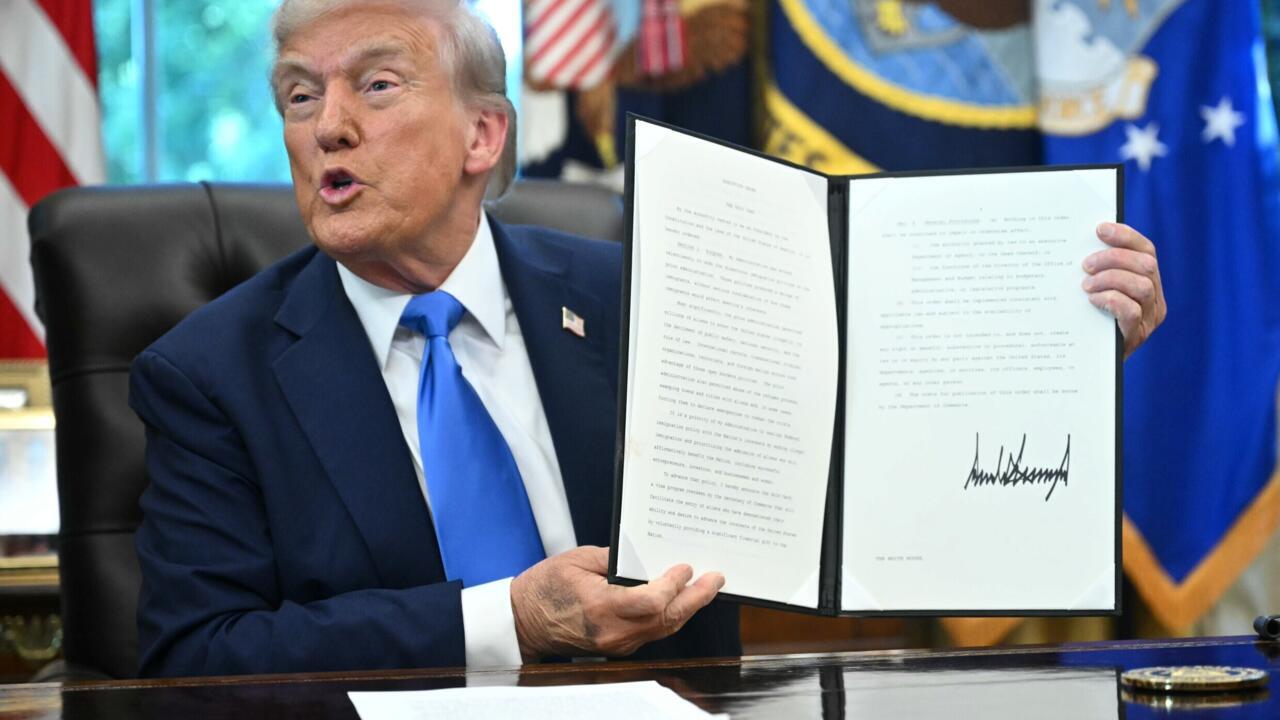
Trump signed orders increasing fees on H-1B visas and creating a new $1 million expedited "gold" residency card. © Mandel Ngan, AFP

US President Donald Trump on Friday ordered an annual $100,000 fee be added to H-1B skilled worker visas, creating potentially major repercussions for the tech industry where such permits are prolific.

The new measure, which could likely face legal challenges, was announced alongside the introduction of a $1 million "gold card" residency program that Trump had previewed months earlier.

"The main thing is, we're going to have great people coming in, and they're going to be paying," Trump told reporters as he signed the orders in the Oval Office.

India's leading trade body Nasscom on Saturday said the timeline for implementing the new fee was a "concern".

"A one-day deadline creates considerable uncertainty for businesses, professionals, and students across the world," it said in a statement after President Donald Trump announced the fee which comes into force from Sunday.

It added that policy changes of this scale were best "introduced with adequate transition periods, allowing organizations and individuals to plan effectively and minimize disruption."

H-1B visas allow companies to sponsor foreign workers with specialized skills – such as scientists, engineers, and computer programmers – to work in the United States, initially for three years, but extendable to six years.

The United States awards 85,000 H-1B visas per year on a lottery system, with India accounting for around three-quarters of the recipients.

Large technology firms rely on Indian workers who either relocate to the United States or come and go between the two countries.

Tech entrepreneurs – including Trump's former ally Elon Musk – have warned against targeting H-1B visas, saying that the United States does not have enough homegrown talent to fill important tech sector job vacancies.

Read moreHow visas for skilled foreign workers are splitting MAGA in two

"All the big companies are on board," said Commerce Secretary Howard Lutnick, who joined Trump in the Oval Office.

Trump has had the H-1B program in his sights since his first term in office, but faced court challenges to his earlier approach, which targeted the types of jobs that qualify. The current iteration has become the latest move in the major immigration crackdown of his second term.

According to Trump's order, the fee will be required for those seeking to enter the country beginning Sunday, with the Homeland Security secretary able to exempt individuals, entire companies or entire industries.

The order expires in a year, though Trump can extend it.

The number of H-1B visa applications has risen sharply in recent years, with a peak in approvals in 2022 under Democratic president Joe Biden.

In contrast, the peak in rejections was recorded in 2018, during Trump's first term in the White House.

The United States approved approximately 400,000 H-1B visas in 2024, two-thirds of which were renewals.

Trump also signed an order creating a new expedited pathway to US residency for people who pay $1 million, or for corporate sponsors to pay $2 million.

"I think it's going to be tremendously successful," Trump added.

(FRANCE 24 with AFP)

India warns new US fee for H-1B visa will have 'humanitarian consequences'


Ben Hatton -
Sun, September 21, 2025 


India's Minister of External Affairs Subrahmanyam Jaishankar, whose office warned the change would disrupt families [EPA]


The Indian government has said a new $100,000 (£74,000) fee for applicants seeking US skilled worker visas will have "humanitarian consequences".

President Donald Trump on Friday ordered the new fee for H-1B visa applications, which is more than 60 times the amount currently charged, to go into effect on 21 September.

Workers from India receive by far the most skilled visas in the programme, at just more than 70% of those issued.

Some US tech companies reportedly advised employees with H-1B visas to stay in the US or, if they were out of the country, to try to return immediately. The White House then on Saturday clarified the fee will not apply to current visas or renewal applications.

A statement from the Indian Ministry of External Affairs on Saturday said the fee would have humanitarian consequences "by way of the disruption caused for families".

The Indian government "hopes that these disruptions can be addressed suitably by the US authorities", it also said.

The exchange of skilled workers has "contributed enormously" to both nations, the statement said, adding: "Policy makers will therefore assess recent steps taking into account mutual benefits, which include strong people-to-people ties between the two countries."


The statement did not provide specifics on any potential response from India's government.

Since Trump imposed punishing tariffs on India last month for purchasing Russian oil, the two countries have been locked in tense trade negotiations. The US exported $41.5bn worth of goods to India in 2024, and imported more than double that, $87.3 bn, according to the US Trade Representative's office.

On Saturday, the Indian government said its commerce minister Piyush Goyal would visit the US on Monday for trade talks, according to Reuters.

Making such a major change to the H-1B programme in such a narrow window of created "considerable uncertainty for businesses, professionals, and students across the world", India's leading trade body Nasscom said.

In announcing the planned change, the White House said the visas were not being used as intended, citing data it said suggests some visas are being "abused" to undercut American wages and outsource IT jobs.

But the order allows for "case-by-case exemptions if in the national interest", the White House said.

The skilled visa route is intended to allow companies in the US to temporarily employ foreign workers with "highly specialised knowledge".

Just under 400,000 H-1B visas were approved in 2024, of which around 260,000 were renewals, according to US-based Pew Research Center.

Data from US Citizenship and Immigration Services (USCIS) shows that in the first half of 2025 Amazon received the most H-1B visa approvals, with 10,044.

In second was Indian technology company Tata Consultancy Services (TCS), with 5,505.

Trump's proclamation applies to applications submitted for workers currently outside the US, which must be "accompanied or supplemented by a payment of $100,000" (about 8.8mn Indian Rupees). Currently, the administrative fees for an application total $1,500.

Amazon, Microsoft and JP Morgan were among the companies to advise employees with H-1B visas to remain in the US, and for those outside of the US to try and return before the deadline, according to Reuters.

The advisories appeared to be precautionary, given the order did not say H-1B visa holders would be barred from re-entering the country or charged the new fee if they were temporarily out of the country, after Sunday.

According to an internal advisory, seen by Business Insider, Amazon said employees unable to return to the US before the order takes effect should avoid attempting US re-entry "until further guidance is provided".
Modi's firm approach to punitive US tariffs could turn the tables on Trump

New negotiations are set to begin this week between Washington and New Delhi on the Trump administration’s steep tariffs on imports from India. So far, India’s Prime Minister Narendra Modi has refused to bow to US economic pressure, counting on his country’s international clout rather than flattery of the US president to get Washington to compromise.


Issued on: 19/09/2025 - 
FRANCE24
Analysis
By: Mehdi BOUZOUINA

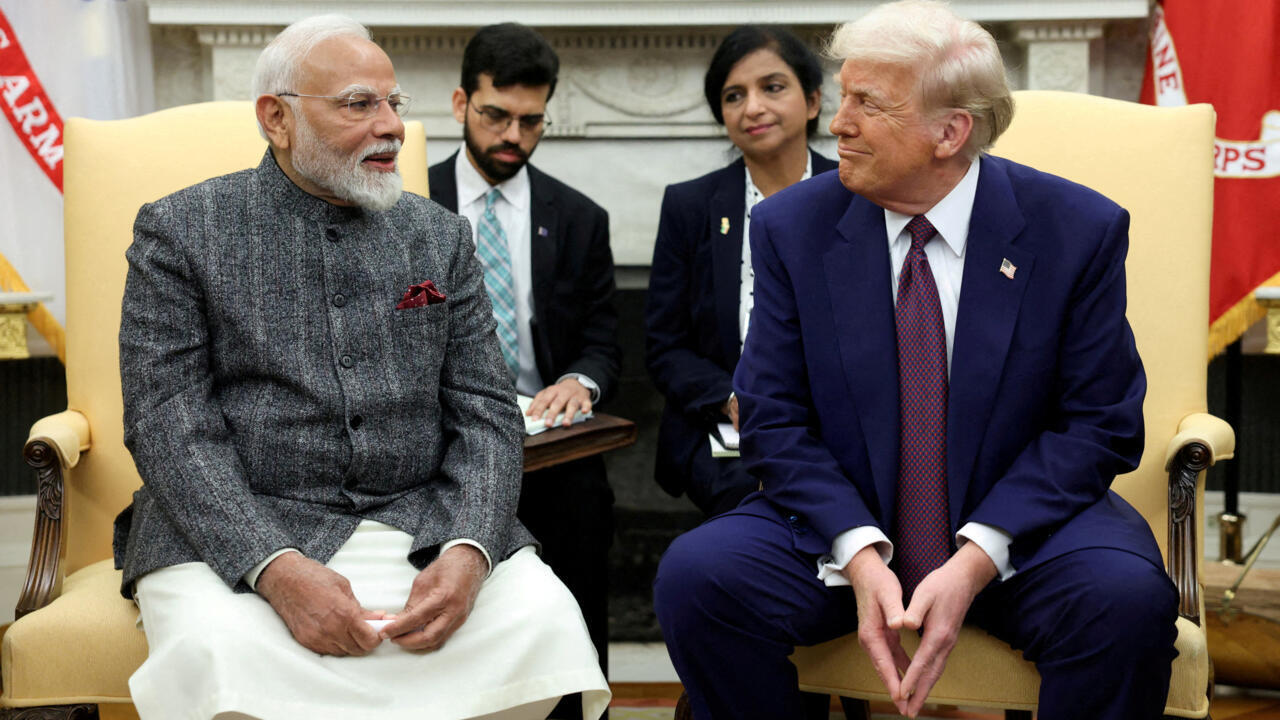
US President Donald Trump meets with Indian Prime Minister Narendra Modi at the White House on February 13, 2025. © Kevin Lamarque, Reuters

Among the many world leaders who called India’s veteran Prime Minister Narendra Modi to wish him a happy birthday on September 17 was one unexpected well-wisher: US President Donald Trump. Modi was celebrating his 75th birthday, the last 11 of which he has spent as the leader of the world's largest democracy.

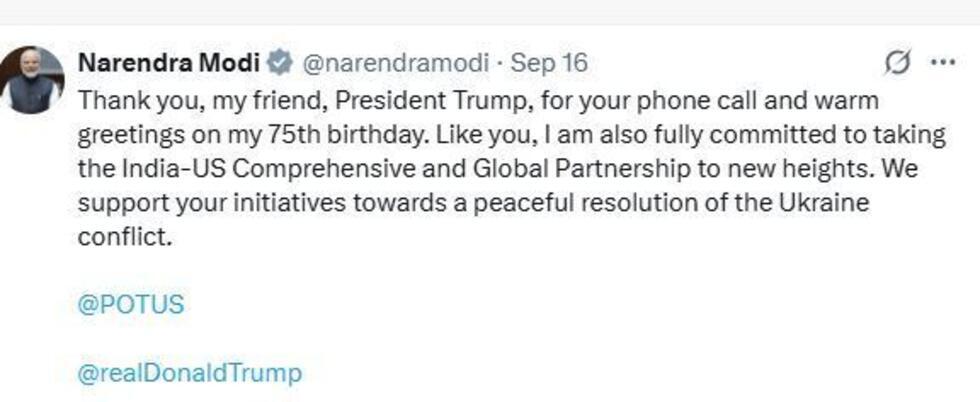
A few hours later, Modi posted on X to thank Trump, his “friend”, saying he was “fully committed” to the India-US partnership and pledging his support for the US president's “initiatives towards a peaceful resolution of the Ukraine conflict”.


Modi X © X


This phone call was noteworthy, coming the day after the resumption of trade negotiations between India and the US following weeks of frosty relations. Although Trump and Modi have long seemed to get along famously when they meet in person, what Trump once called the “special relationship” between the two countries is going through a rough patch.

Modi took exception to the punitive 25 percent tariffs imposed by Trump on goods from India in July, intended to rebalance a trade deficit with India estimated at over $45 billion. It must be said that between Trump’s first election to the White House in 2016 and his return to the Oval Office in 2025, India saw its exports to the United States almost double from $46 billion to $87 billion.


Tensions flared after weeks of fruitless bilateral trade discussions, during which the two leaders traded barbs via social media posts. After Trump sarcastically called India a “dead economy”, Modi declined to respond to four phone calls from the US president.

The spat descended into in a full-blown trade war. Among the areas of disagreement were Washington's rapprochement with Islamabad, which New Delhi considered provocative, and Trump's desire to isolate Russian President Vladimir Putin, with India refusing to stop importing Russian oil and weapons.

Read moreTrump hikes India’s tariffs by 25% for buying Russian oil, bringing total to 50%

Trump escalated the trade war in early August, announcing additional tariffs of 25 percent on Indian goods, bringing the total tax to 50 percent on certain products such as jewelry, shrimp, and clothing.

Trump and his advisors don't understand India

Despite the risk of losing hundreds of thousands of jobs in sectors that are strategic for the Indian economy, Modi has refused to back down.

A bit provocatively, Modi showed that he has cards to play on the international stage, appearing to be all smiles alongside Putin and Chinese President Xi Jinping at a summit of the Shanghai Cooperation Organization in Tianjin, China, on September 1.

This was a blow to US diplomacy, which had been banking on economic and geopolitical cooperation with India as a way to counter China, which India has distrusted for millennia.

Trump and his advisors are showing that they “haven’t quite understood India”, said economist Santosh Mehrotra, visiting professor at the University of Bath’s Centre for Development in the UK.

They have misjudged Modi, “a man of great ego” – as big an ego as Trump’s, Mehrotra said.

It will be difficult to repair the damage from the trade standoff, Mehrotra said, with both the US and India negatively impacted.

"The relationship is hardly likely to go back to where it was during Trump's first term," he added.


Is Modi snubbing Trump amid tariff spat?


ACCESS ASIA © FRANCE 24
12:46


India meanwhile is looking to increase trade ties with the European Union.

"We want to make a deal with India this year," European Commission President Ursula von der Leyen said on Thursday at a conference with German business leaders, adding that Modi had assured her of his commitment to this goal in a phone call on Wednesday.

Mehrotra notes that India is neither a member of NATO nor protected by the US nuclear umbrella, so less susceptible to geopolitical bullying.

Since gaining independence in 1947, India has cultivated its status as a non-aligned power, sometimes at the cost of isolating itself on the international stage.

However, Mehrotra believes that Modi will be willing to negotiate with Trump as long as the US respects the three red lines clearly defined by New Delhi: That India’s purchases of oil are not restricted by US sanctions; that New Delhi maintains its “multipolar” world outlook resistant to “a hegemonic USA”, and, that the country would continue to protect its agricultural sector.

Indian agriculture, a sticking point in negotiations


This third issue is especially contentious. Trump has made the reduction of US tariffs conditional on the opening of the Indian market to US agricultural products – but New Delhi has long used protectionist means to shield its vital farming sector, which employs 40 percent of the country’s workforce.

“If Narendra Modi touches farmers, he is guaranteed a popular uprising,” Mehrotra said.

Time is running out. The 50 percent tariffs, which came into effect on August 27, penalise both India and the US, notably raising prices for US consumers of Indian goods.

New Delhi is prepared to lower tariffs on less sensitive sectors, but there will be no deal unless Washington gives some ground, argued Ajay Srivastava, former trade negotiator for India at the WTO.

"Without dropping those tariffs, negotiations are meaningless” says Srivastava.

Srivastava also said that India’s apparent rapprochement with Beijing must be put into perspective.

“We also have to think about the post-Trump era: China remains a purely transactional partner, there is no emotional bond,” – unlike with the West, he said.

India, the world’s most populous country, does not want be “too close to either Trump or Xi Jinping", Srivastava said.

By refusing to give in to punitive tariffs and US demands, Modi has perhaps managed to turn the tables on Trump. Now it is Washington's negotiators who have flown to New Delhi, proof that India's firm stance can carry as much weight as the flattery lavished upon Trump by other governments.

This article has been adapted from the original in French.
Turkey opposition faces wave of arrests and court fight over leadership


Issued on: 20/09/2025 - RFI


The legal noose is tightening around Turkey’s main opposition party, with waves of arrests targeting mayors and local officials. But the troubles of the Republican People’s Party (CHP) could deepen further, as a court case threatens the removal of its leadership.

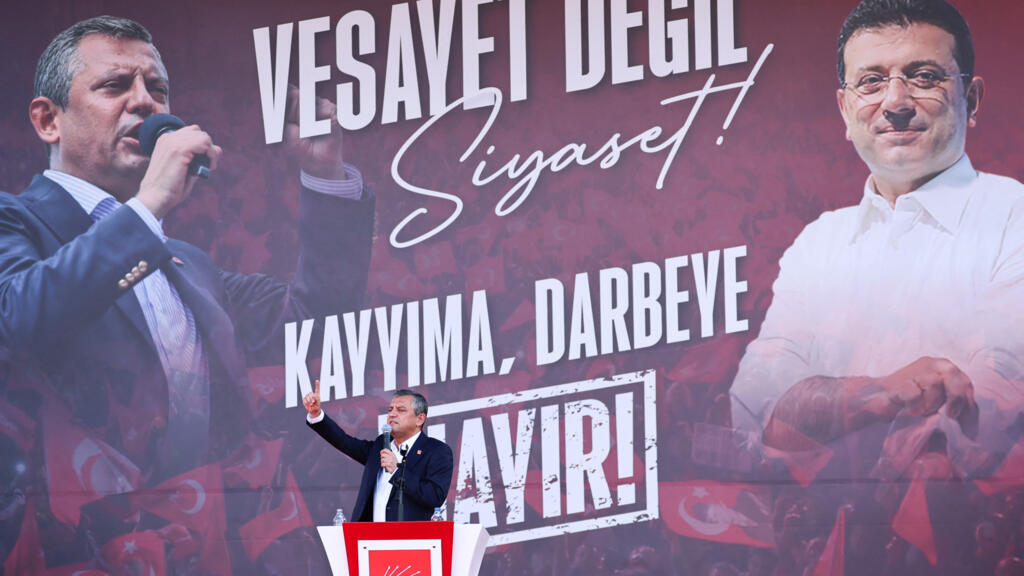
Leader of Turkey's main opposition Republican People's Party (CHP), Ozgur Ozel, speaks on stage during a rally in Ankara on 14 September 2025. AFP - ADEM ALTAN


"We are fighting for the future of Turkey's democracy," said party leader Ozgur Ozel to tens of thousands of supporters at a rally in Ankara on Saturday.

Ozel has been travelling the country since March, when Istanbul mayor Ekrem Imamoglu was arrested on graft charges. The case marked the start of a legal assault on the CHP. Ozel now speaks at rallies twice a week, despite his often hoarse voice.

The party is also defending itself in court over alleged voting irregularities at a congress two years ago that elected Ozel as leader. If the court rules against them, Ozel and the rest of the party leadership could be removed and replaced by state-appointed trustees.

"It's unprecedented," said political analyst Sezin Oney of the Politics news portal. "There has not been such a purge, such a massive crackdown on the opposition, and there is no end in sight, that's the issue."

Arrests and polls

On Wednesday, another CHP mayor in Istanbul was jailed, bringing the total to 16 detained mayors and more than 300 other officials. Most face corruption charges.

The arrests come as the CHP’s new leadership is stepping up its challenge to President Recep Tayyip Erdogan. Recent opinion polls give Imamoglu and other CHP figures double-digit leads over the president.

Oney said the prosecutions are part of Erdogan’s wider strategy.

"He's trying to complete the transformation, the metamorphosis as I call it, of Turkey to become a full authoritarian country," she said.

"There is an opposition but the opposition is a grotesque opposition, that can never have the power actually to be in government. But they give the perception as if the country is democratic because there are elections."

Armenia and Azerbaijan peace deal raises hopes of Turkish border reopening
‘Multi-front attack’

Ilhan Uzgel, the CHP’s foreign affairs coordinator, said the party is under siege.

"We are under a multi-front attack from all directions at almost every level, running from one court case to another," he said.

He argued that Erdogan’s ruling Justice and Development Party (AKP) is using fear to force defections. "Sixteen of our mayors are in jail right now, and they threaten our mayors. You either join our party or you face a jail term," Uzgel said.

Erdogan rejects any suggestion of coercion and insists the judiciary is independent. Since he came to power more than 20 years ago, however, not a single AKP mayor has been convicted on graft charges – though on Friday at least two local mayors from the ruling party were detained as part of a corruption investigation.

Turkey warns Kurdish-led fighters in Syria to join new regime or face attack
Political risks

Despite appearing dominant, Erdogan may face a backlash. Atilla Yesilada, a political analyst with Global Source Partners, said the crackdown is fuelling public anger.

"You look at recent polls, the first complaint remains economic conditions, but justice rose to number two. These things don't escape people's notice; that's what I mean when I say Erdogan took a huge political risk with his career," he said.

Erdogan currently trails behind several potential challengers, but elections are still more than two years away.

Yesilada said much depends on the stance of Erdogan’s ally Devlet Bahceli, leader of the Nationalist Movement Party.

"It's quite possible at some point, Bahceli will say enough is enough, you are destroying the country, and may also end the coalition," he said.

Bahceli formed an informal alliance with Erdogan in 2018, when Turkey switched to a presidential system. Erdogan relies on Bahceli’s parliamentary deputies to pass constitutional reforms needed to secure another term.

Bahceli has voiced concern about the pressure on the CHP, which has been trying to win his support. But with the court expected to rule next month on the party’s leadership, the CHP says it will keep fighting.

"The only thing that we can do is rely on our people, our electorate, and the democratic forces in the country. We are not going to give up," said Uzgel.

By: Dorian Jones
Turkey's government is clamping down on female artists
DW
18/09/2025

Confident Turkish women are facing increasing restrictions. Female artists who do not conform to the government's image of women are being targeted by the justice system. Now the girl band Manifest has been hit.


Manifest was targeted for "immorality"; their tour was canceled to curb dissent, analysts say
Image: ANKA


The atmosphere was exuberant on September 6, when six young women in tight outfits took to the stage in Istanbul's sold-out open-air venue Kucukciftlik Park: A cheer went up from the crowd of 12,000 people who had joined in the dancing to the beat in the late summer heat.

The musicians — Mina, Esin, Zeynep Sude, Emine Hilal, Lidya und Sueda — are the members of Turkish girl band Manifest, which was formed in February following a talent show.

With their simple youthful lyrics and K-pop-inspired dance routines, Manifest quickly captured the hearts of teenagers. The band's debut album, released in July, led to a successful tour.

After the concert in Istanbul, however, the band's promising future seems to now be a part of the past. The public prosecutor's office is investigating them for "indecent and immoral acts" and "exhibitionism." Their stage show is said to have "violated and offended the feelings of shame, morality, and the moral values of society." In addition, it is claimed that they have a bad influence on children and young people.


Targeting female artists

Oktay Saral, chief adviser to Turkish President Recep Tayyip Erdogan, called the band members "immoral, shameless, demonic creatures" in a Turkish post on X and demanded legal action to prevent them from "further alleged exhibitionist acts." He posted a photo of the group with their bodies blurred out.

After the interrogation, the band issued a statement emphasizing that they took responsibility for their show, but that it had never been their intention to hurt anyone. For the time being, they had to give up their dream of representing Turkey on the world stage. On X, they wrote that their Turkey tour, for which tickets sold out weeks ago, has been canceled. "We thank our audience for their interest and love"


The case of Manifest is not an isolated incident. Female artists have increasingly been targeted by the justice system in recent years.

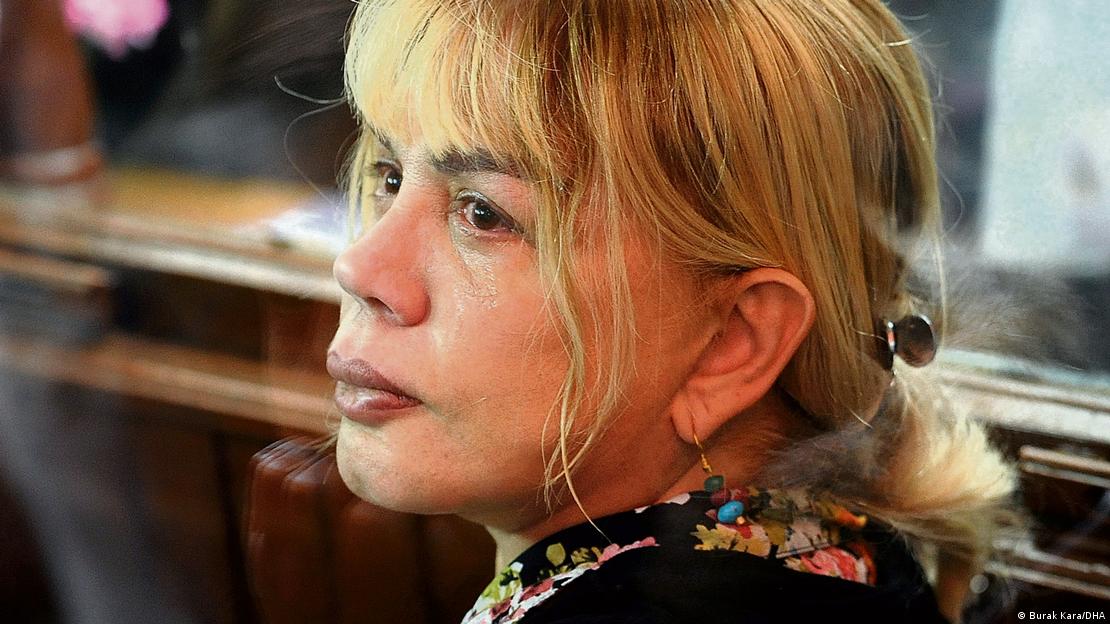
Pop diva Sezen Aksu became the target of smear campaigns over an old song with lyrics that apparently offended religious sensibilities.

Popular musician Gulsen was arrested for a joke she made on stage about religious schools.

In January, Ayse Barim, the manager of an artist agency, was first imprisoned for attempted monopolization and extortion, and later accused of trying to help overthrow the government during the 2013 Gezi Park protests.

Screenwriter Merve Goktem was arrested after an excerpt from a 4-year-old interview about her series "Naked" went viral on social media. She is accused of "supporting prostitution and inciting crime."

Turkish pop diva Sezen Asku became the target of smear campaigns over an old song
Image: Burak Kara/DHA


Diyanet's 'decisive role'

Since Turkey's withdrawal from the Istanbul Convention in 2021, pressure on women has mounted significantly. Initially, female politicians, academics, and activists were targeted, followed by journalists and lawyers. In recent years, female artists have increasingly been affected.

The approach is often the same. First, pro-government columnists write critical articles; then, old interviews or excerpts from works are taken out of context and disseminated on social media. Finally, pro-government groups and Islamist brotherhoods mobilize and call on the authorities to take action until the police arrest the targeted person.

Historian and feminist Berrin Sonmez called this a political strategy. In her opinion, the governing Justice and Development Party, or AKP, has turned religion into the basis of its government policy over the past 10 years in order to secure its own power. She believes the country is now in a phase where religion is not the basis of politics, but is constantly being exploited for political purposes.

"The religious authority Diyanet has a decisive role to play in this," Sonmez said. Through its Friday sermons, Diyanet, which is also called the Presidency of Religious Affairs, publishes weekly fatwas, which are nonbinding but still formal opinions, intended to shape the society according to its will. Sonmez analyzed last year's sermons: 30% of the texts dealt with women, family, and children, while another 30% dealt with sexual orientation, which was portrayed as a "deviation from human nature” and the "result of global propaganda”.

Activist Berrin Sonmez took off her headscarf in protest of the clampdown on women
Image: Berrin Sönmez/dpa/picture alliance


Government silencing dissent

Sonmez, a devout Muslim, took off her headscarf to protest a Diyanet sermon in August on the veiling of women. She considers this development very dangerous, as Diyanet addresses millions of men every Friday in its more than 90,000 mosques nationwide. In such fatwas, the government is essentially calling on men to oppress women and strengthen male dominance.

The effects are noticeable, observers say. Shortly after the sermon in question made headlines, including one in which a doctor refused to treat a young female patient because she appeared at the hospital wearing a crop top.


Sonmez said the increasing oppression of women was part of a comprehensive government plan to silence dissent. The dwindling AKP base is being stabilized through increased religious pressure and legal harassment of dissenters, she said.

She said the attack on the Manifest group was a further message to women who refuse to comply. Even though the artists' revealing clothing and dance performances are in the foreground, Sonmez believes it is crucial that these young musicians chanted opposition slogans such as "law, justice, and equality” in their songs.

Yet the public prosecutor's office deliberately limited the charges to obscenity, immorality and exhibitionism in order not only to intimidate the women but also to defame them. Their political stance was ignored, and the debate was reduced to their bodies, shame, and morality.

AKP has claimed for years that it has liberated women, especially conservative and religious ones, and opened doors wide for them in education, politics and beyond. Sonmez disagreesand argues that even though the proportion of women in many areas has increased, this is only an illusion.

Essentially, even in the AKP era, women are still relegated to the background and have little influence on policymaking, she said. Women, she said, can only exist as unwavering supporters of government policy.


This article was originally published in German.