Monday, September 22, 2025

UK updates official maps to show 'Palestine' following recognition
UK updates official maps to show 'Palestine' following recognition
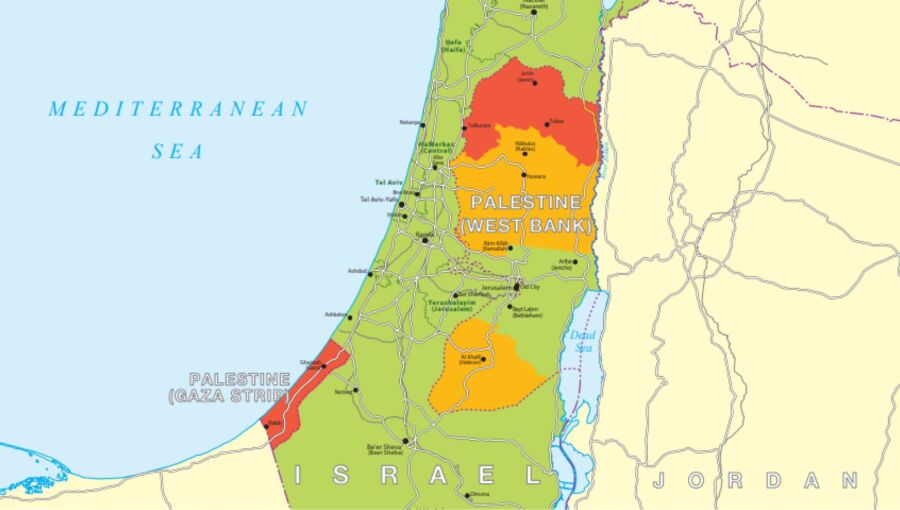
New map of Israel and Palestine on UK governmnent website. / CC: FCDO
By bnm Gulf bureau September 22, 2025

Britain has redrawn its maps of the Middle East to label the "State of Palestine" for the first time after Prime Minister Keir Starmer announced London's formal recognition of Palestinian statehood on September 21. 

The updated map and recognition come amid ongoing conflict in Gaza and increasing international pressure on Israel over its military operations and settlement expansion in the West Bank, which have been heavily criticised by the Starmer administration.

The update appeared across the Foreign Office's website, including travel advisories, embassy listings and regional maps. "In the face of growing horrors in the Middle East, we are acting to preserve the chance of peace and a two-state solution," Starmer said.

The UK joined Canada and Australia in recognising Palestine, whilst Spain, Ireland and Norway had already done so earlier in 2025. Diplomats expect more EU members to follow, though Washington remains opposed, insisting statehood must come through direct talks with Israel.
The move comes ahead of a Saudi-French-led conference at the UN General Assembly, where France and other countries are expected to announce similar recognition. Belgium is also preparing to follow suit, with Foreign Minister Maxime Prévot warning of possible sanctions against Israel.

The map changes represent a tangible manifestation of Britain's policy shift, moving beyond diplomatic statements to practical implementation across government platforms.

According to the latest version of the website, the Israeli page has also had its map changed to reflect the UK government's recognition of the State of Palestine. 

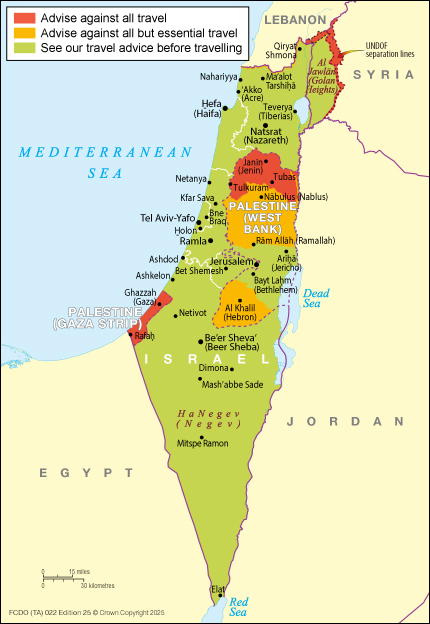
For Gaza, the FCDO advises against all travel to the territory and within 500 metres of the Gaza border. The advisory reflects ongoing security concerns and active conflict in the region.

On the West Bank, the FCDO advises against all travel to Tulkarm Governorate, Jenin Governorate, and Tubas Governorate except Route 90.

For the remainder of the West Bank, the advisory recommends against all but essential travel, with specific exceptions for East Jerusalem, Bethlehem Governorate, Ramallah Municipality, Jericho municipality and areas south of it including the Allenby crossing.

The advisory also exempts Highway 1 linking Jerusalem and Tel Aviv and areas south and west of the highway including Highway 3, plus Route 443 and Highway 45 which connect Jerusalem and Tel Aviv.

For Northern Israel and the Occupied Golan Heights, the FCDO advises against all travel within 500 metres of the Area of Separation in the occupied Golan Heights known as the 'Alpha line'. Travellers are warned not to attempt entering the occupied Golan Heights through Syria.

The advisory specifically warns against all travel to the Sheba'a Farms and Ghajja areas, and against all but essential travel within 500 metres of the Lebanese border.

The timing coincides with the UN General Assembly meetings in New York, where Palestinian statehood recognition has become a key diplomatic issue. The coordinated approach by multiple Western nations suggests a broader shift in international sentiment regarding the Israeli-Palestinian conflict.


What exactly is the state of Palestine?


Issued on: 22/09/2025 -

 The state of #Palestine was declared on November 15, 1988, by Yasser Arafat, then leader of the Palestine Liberation Organisation. 🌍 Today it is recognised by more than 140 of the 193 🇺🇳 UN member states, with 🇫🇷 France, 🇧🇪 Belgium, 🇨🇦 Canada and 🇦🇺 Australia to recognise it at the @UN General Assembly in September. But what, exactly, is the state of Palestine?


Replay: France's Macron officially recognises state of Palestine at UN summit

Issued on: 22/09/2025 - 

French President Emmanuel Macron on Monday recognised a Palestinian state at a UN summit aimed at galvanising support for a two-state solution to the Mideast conflict a day ahead of the 2025 UN General Assembly in New York.


Video by: FRANCE 24


France joins UK, Portugal and Canada in recognising Palestinian state
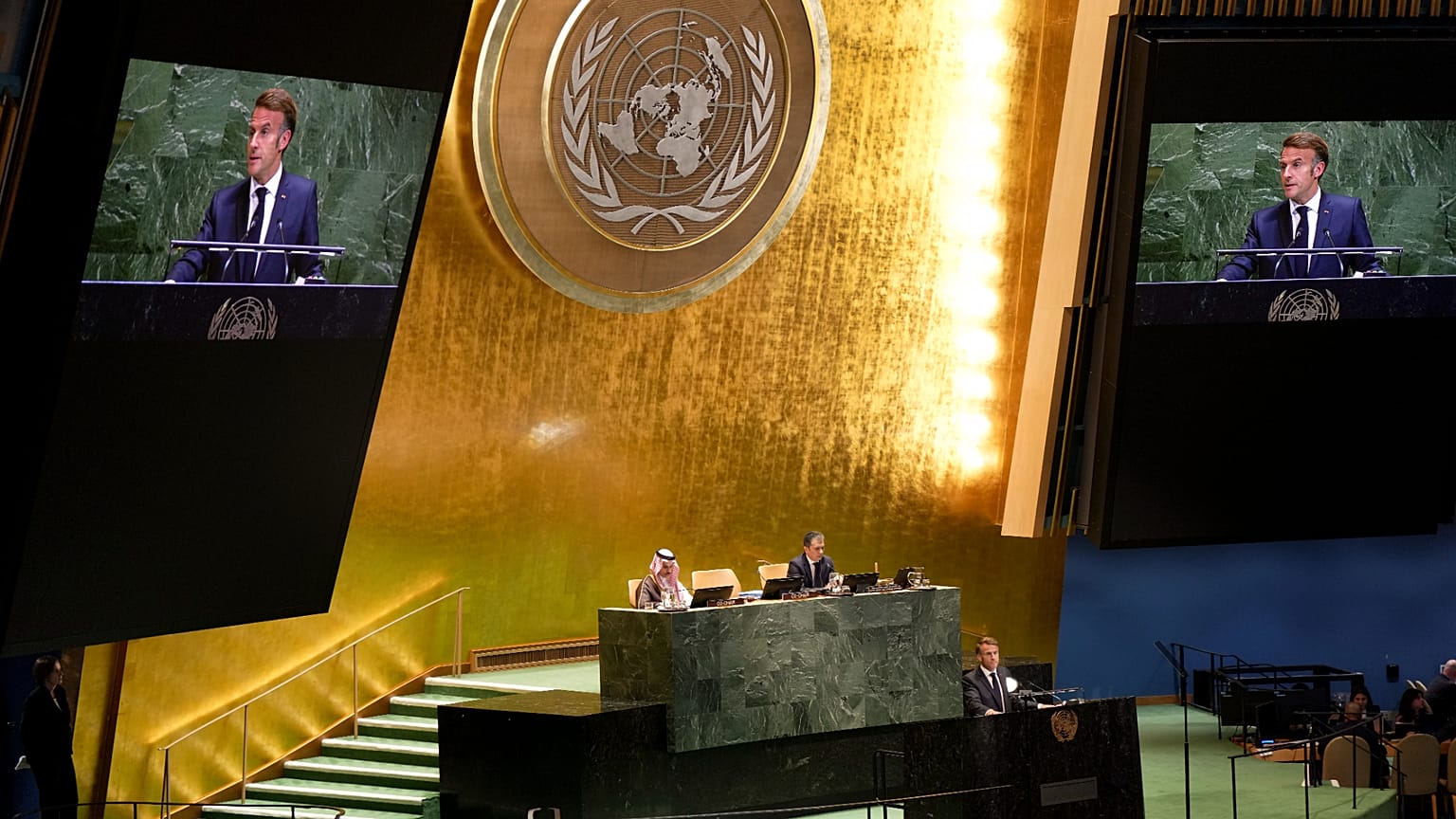
French President Emmanuel Macron speaks during a high-profile meeting at the United Nations.
Copyright AP Photo

By Tamsin Paternoster
Published on 

French President Emmanuel Macron said the world can "no longer wait" to put an end to the war in the Gaza Strip and releasing the remaining 48 hostages held by Hamas.

France on Monday joined the UK, Portugal, Canada and Australia in formally recognising a Palestinian state, French President Emmanuel Macron announced whilst addressing the United Nations in New York.

“True to the historic commitment of my country to the Middle East, to peace between the Israelis and the Palestinians, this is why I declare that today, France recognises the state of Palestine,” Macron said to loud applause from leaders in attendance.

Before making the announcement, Macron told the UN the world was a few moments away from no longer being able to seize peace.

"We can no longer wait," the French leader said, as he condemned the 7 October attacks and called for a two-state solution.

"Nothing justifies the ongoing war", he said, adding that "everything compels us" to bring it to a definitive end.
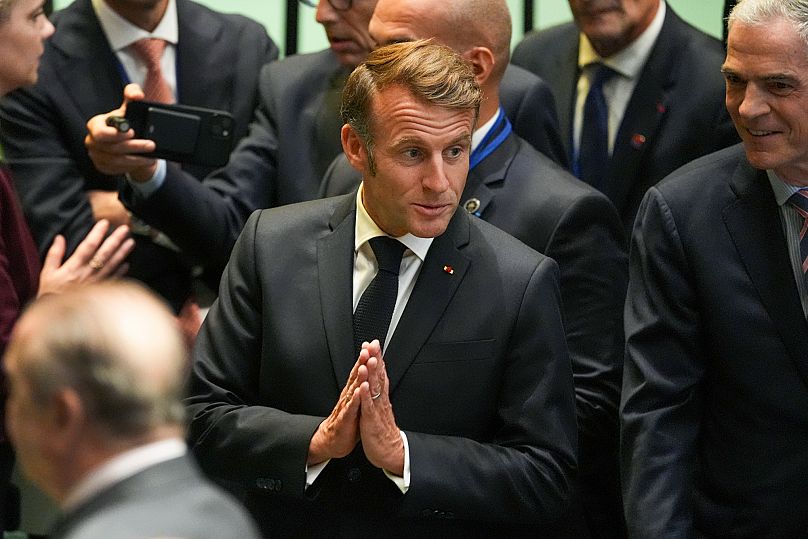
French President Emmanuel Macron, arrives inside the United Nations General Assembly Hall, Monday, Sept. 22, 2025, at UN headquarters. AP Photo


France recognized the Palestinian state after the UK, Portugal, Canada and Australia did so on Sunday.

Around three-fourths of the 193-member United Nations recognise Palestine, but the majority of major Western nations had until recently declined to do so.

The creation of a Palestinian state alongside Israel in the West Bank, Gaza and east Jerusalem — territories seized by Israel in the 1967 Mideast war — is widely seen internationally as the only way to resolve the conflict, which began more than a century before Hamas' 7 October attack ignited the war in Gaza nearly two years ago.

Palestinians have welcomed the moves toward recognition, hoping they might someday lead to independence.

'Will not happen'

Israeli Prime Minister Benjamin Netanyahu has yet to comment on Macron's declaration but said in a video posted before Portugal made the move that a Palestinian state "will not happen.

"A Palestinian state will not be established west of the Jordan River," he said adding that Israel has doubled Jewish settlements in the West Bank and "will continue on this path."

Netanyahu said he would respond to the "latest attempt to impose a terrorist state" on Israel following the conclusion of Monday's UN General Assembly meeting.

Israel has opposed Palestinian statehood before the war, and now argued that recognising Palestine would reward Hamas.

The Israeli leader is under pressure from parts of his coalition government to move ahead with annexing parts of the West Bank, which would complicate Palestinian efforts.

Israel says that the internationally recognised Palestinian Authority, led by rivals of Hamas, is not fully committed to peace. It has accused it of incitement to militancy. Many Palestinians view its leadership as increasingly autocratic.

Hamas, which won the last Palestinian national elections in 2006, has at times hinted it might accept a state on the 1967 lines but remains formally committed to a Palestinian state in all of the territory between the Mediterranean Sea and the Jordan River, including Israel.

Netanyahu said he would decide on Israel's response to the Palestinian statehood push after meeting with President Donald Trump at the White House next week, their fourth meeting since Trump returned to office.

The Trump administration is also opposed to growing recognition of a Palestinian state and blames it for the derailment of ceasefire talks with Hamas.


Palestinian and Israeli flags projected onto the Eiffel Tower
Issued on: 22/09/2025 
The unannounced projection of the Palestinian and Israeli flags and a dove symbolising peace onto the Eiffel Tower in Paris began at 9pm and ran until 11:45pm local time.
Video by: Stella ELGERSMA


French town halls raise the Palestinian flag


in defiance of interior ministry order

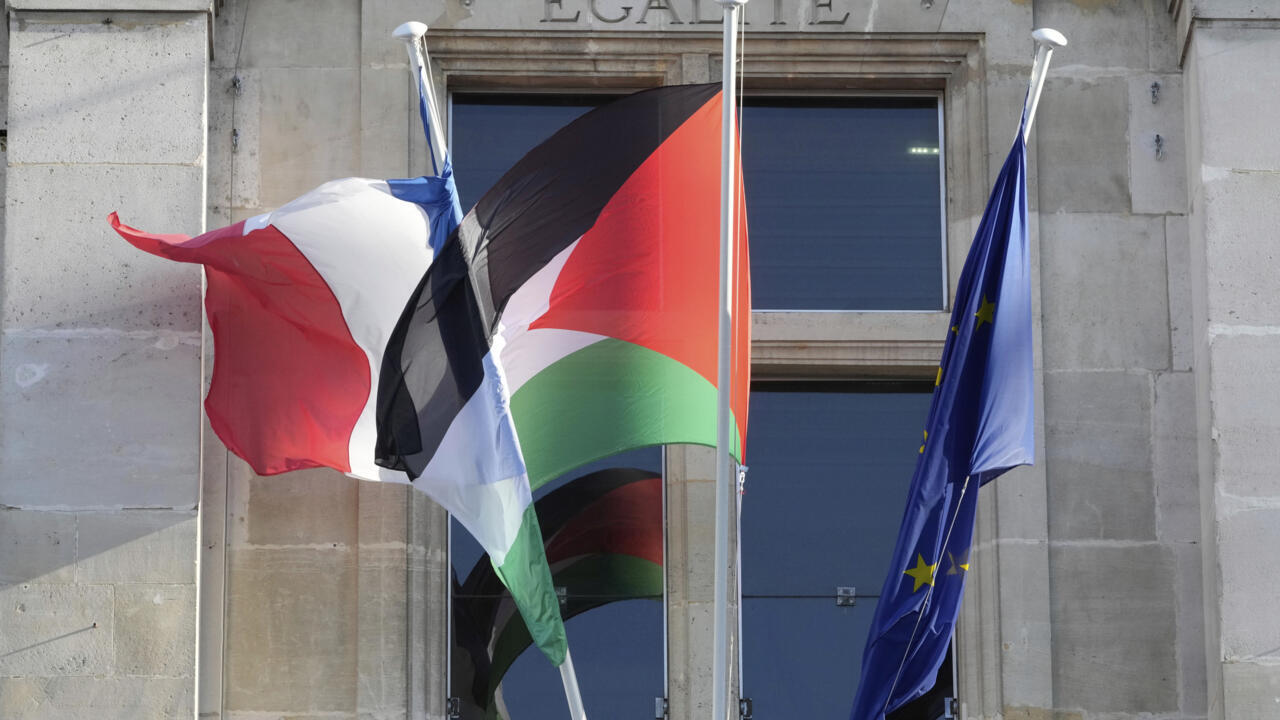
Left-wing politicians unfurled a Palestinian flag on the Paris City Hall facade for around 30 minutes on Monday, defying Paris Mayor Anne Hidalgo and a French interior ministry advisory against such displays. More than 86 French towns and cities raised Palestinian flags ahead of President Emmanuel Macron’s expected recognition of the state of Palestine at the UN.

Issued on: 22/09/2025 
By: FRANCE 24
Video by: Antonia KERRIGAN

The Palestinian flag, centre, flies on the facade of the Saint-Denis city hall on Monday, September 22, 2025, in Saint-Denis, outside Paris. © Michel Euler, AP
02:54


Just hours before President Emmanuel Macron was set to announce France’s recognition of a Palestinian state at the UN, pro-Palestinian activists and left-wing politicians on Monday unfurled a large Palestinian flag from a Paris City Hall window.

The move was not endorsed by Paris Mayor Anne Hidalgo and the flag was taken down after about 30 minutes.

While Macron has spearheaded a recent move, among many Western countries – including the UK, Australia and Canada – to recognise a Palestinian state, France's hardline Interior Minister Bruno Retailleau issued a circular last week ordering prefects – the top local state-appointed officials – to oppose the flying of the flags.

Watch more
Macron set to recognise Palestinian state: Why is France forbidding mayors from flying the flag?


"The principle of neutrality in public service prohibits such displays," the interior ministry said, adding that any decisions by mayors to fly the Palestinian flag should be referred to courts.

At least 86 town and city halls run by leftist parties, including Lyon, Nantes, Rennes and Saint-Denis, flew Palestinian flags on their facades, according to the interior ministry.
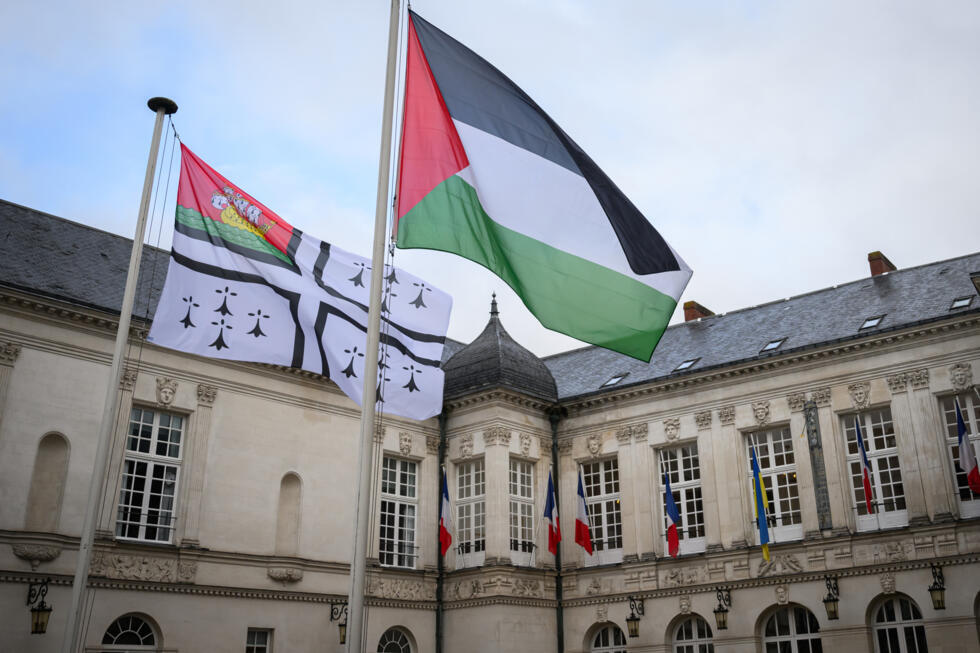
'Nantes supports this historic decision by raising the Palestinian flag,' the mayor says. © Loic Venance, AFP


The standoff has underlined the social and political tension in France in the wake of the October 7, 2023 attack on Israel by Palestinian militant group Hamas and the relentless bombardment and aid blockades by Israel on the Hamas-ruled Gaza Strip that followed.

Read moreMideast conflict: 'Dialogue of the deaf' doomed two-state solution, but are history's lessons heard?

France is home to western Europe's largest Jewish population, at around half a million people, as well as a significant Muslim community sensitive to the plight of the Palestinian people in Gaza.

The Socialist Party (PS) mayors of Nantes and Rennes, big cities in western and northwestern France, were among the first to fly Palestinian flags outside their city halls to mark the occasion.

"Our responsibility is to reject silence and to do everything in our power, here and now, to put an end to the horror," Rennes Mayor Nathalie Appéré said in a statement.
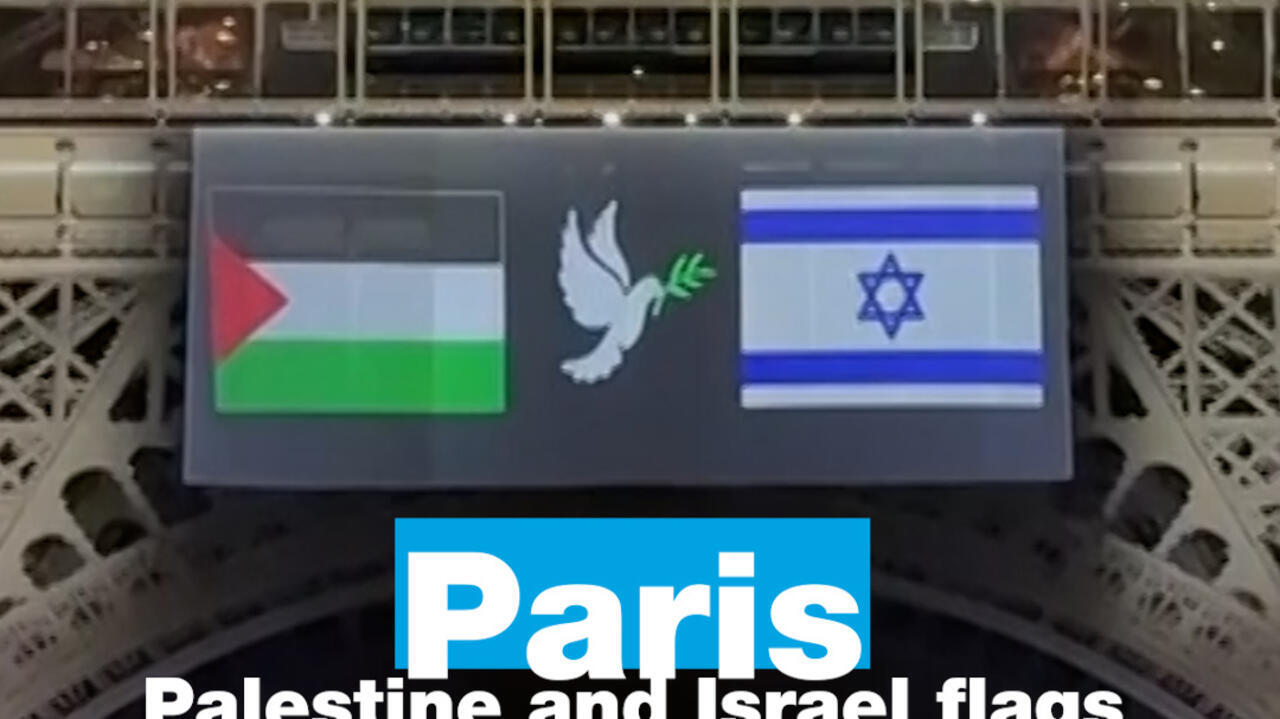
EN Paris flags © France24
00:24

'Historic day for peace'

The northern Paris suburb of Saint-Denis also raised the Palestinian flag at a ceremony attended by Socialist Party leader Faure, who opposed Retailleau's order and said he had written to Macron asking the president to rescind it.

"This flag is not the flag of Hamas, it is the flag of women and men who also have the right to freedom and self-determination," he said.

Foreign Minster Jean-Noël Barrot appeared wary of being drawn into the debate on what he described a "historic day for peace".

"I do not want ... it to be used for political polemics, to divide us at a time when, more than ever, we need to be united to be strong," he told TF1 television.

The flags of both Israel and Palestine, as well as peace images of a dove and olive branch, were displayed late Sunday at the Eiffel Tower, which was illuminated in celebration of the recognition of the Palestinian state.
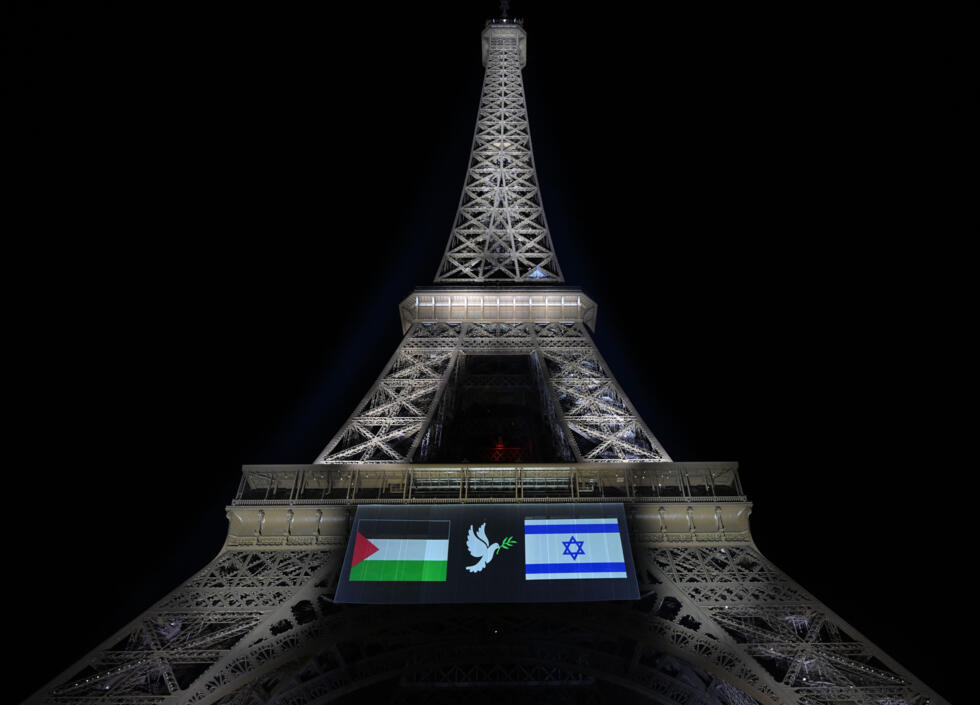
The Eiffel Tower displayed Palestinian and Israeli flags and Paris city hall backed a two-state solution. © Bertrand Guay, AFP


"Paris reaffirms its commitment to peace, which more than ever requires a two-state solution," Socialist Mayor Anne Hidalgo wrote on Bluesky.

But hard-left France Unbowed (LFI) figurehead Jean-Luc Mélenchon fulminated over the projection of the Israeli flag on the emblematic Paris landmark, saying that the "PS is betraying everyone at once".

Acknowledging the impassioned responses caused by his decision, which have included anger from within France's Jewish community, Macron posted a video on X on Sunday saying France wanted "peace, an immediate ceasefire and the release, without delay" of the Israeli hostages held by Hamas.

Of the 251 people seized by Palestinian militants during their attack on Israel in October 2023, 47 remain in Gaza, including 25 the Israeli military says are dead.

(FRANCE 24 with AFP)


Settler attacks escalate in West Bank village despite recognition of Palestine


Issued on: 22/09/2025 - 


In the occupied West Bank village of Al-Mughayyir, Palestinians face daily attacks from Israeli settlers and raids by the army. Residents report destroyed olive groves, stolen livestock, and restricted access to roads. Despite international recognition of Palestine by countries like France and the UK, villagers continue to live under threat, resisting displacement and hoping for concrete change rather than symbolic gestures. Here's an exclusive report from our journalists in the region.
FRANCE24


West Bank settlers defy Palestinian statehood hopes on the ground


From our special correspondent in Jerusalem – The Israeli government has in recent weeks announced the extension of settlements or the legalisation of Israeli outposts in the West Bank. Israel’s territorial expansion comes as France and other Western countries are set to recognise a Palestinian state.


Issued on: 22/09/2025 
FRANCE24
By: David GORMEZANO

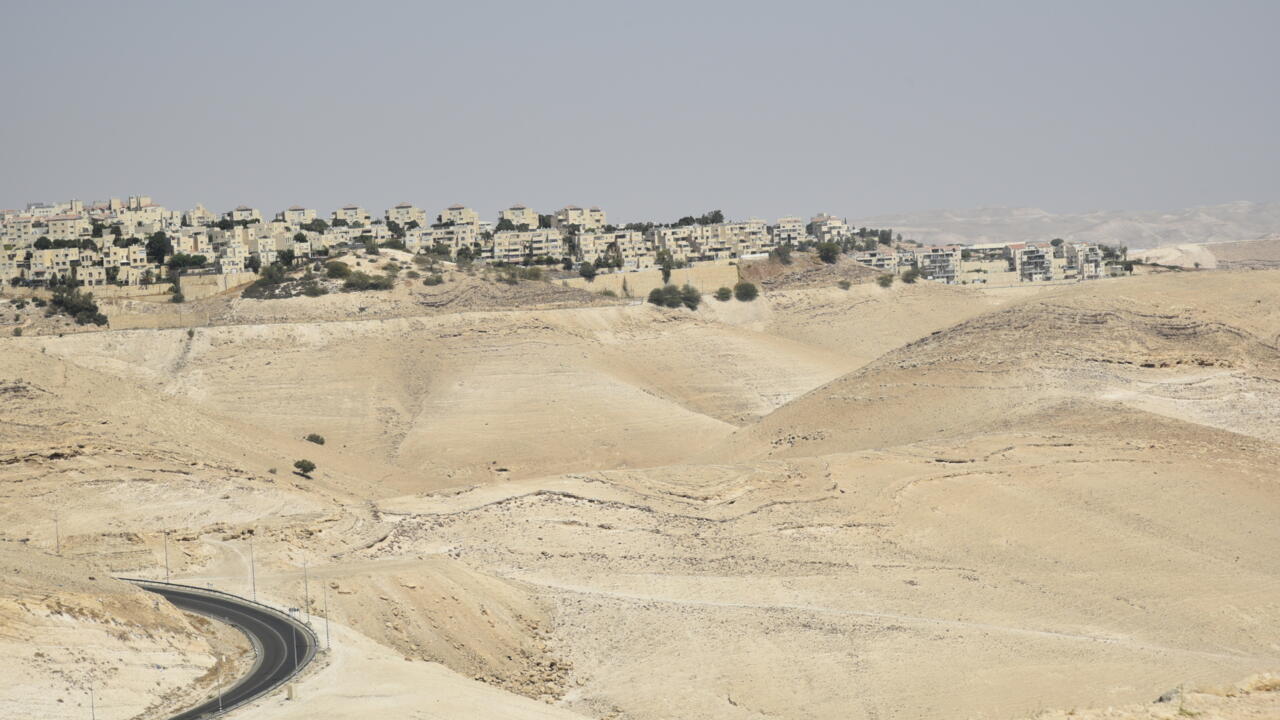
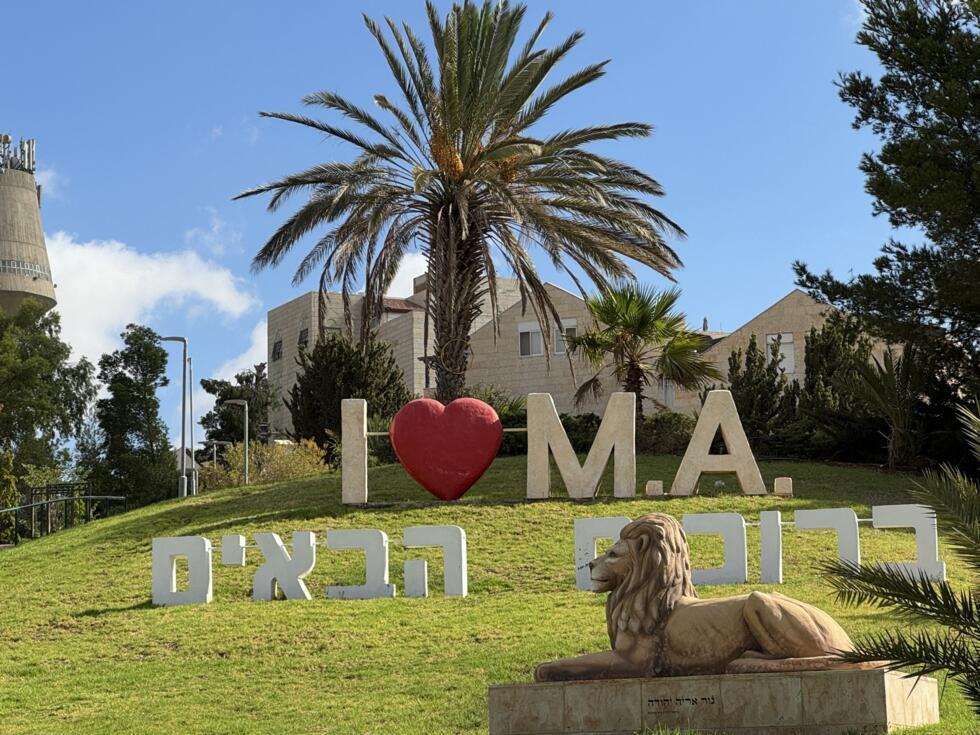
The Israeli settlement of Ma'ale Adumim, located between Jerusalem and the Jordan Valley. © David Gormezano, FRANCE 24
On September 3, Israel's far-right finance minister Bezalel Smotrich outlined his proposal to annex 82 percent of the occupied West Bank. During a press conference in Jerusalem, he presented a map that delineated the new borders of the state of Israel, leaving the Palestinian Authority with the management of just six large cities in the occupied West Bank.

Smoltrich’s project is part of the Israeli government’s effort to extend its sovereignty over the occupied West Bank and comes after several Western countries, including France, decided to recognise a Palestinian state.

Israeli Prime Minister Benjamin Netanyahu on September 11 visited Ma’ale Adumim, one of the largest settlements in the occupied West Bank to announce to the settlement’s 40,000 inhabitants that his government approved its expansion. “There will be no Palestinian state. This place belongs to us,” Netanyahu added.

Eight days later, the day before Sabbath and the Jewish new year, the residents of the settlement – which has grown into the size of a small city – flocked to the supermarket to prepare for family celebrations.

‘Everything must be done to prevent the creation of a Palestinian state’

Dany Hadar, carrying a shopping bag and wearing a kippah, approved of Netanyahu's decision. Hadar, now retired, has lived in Ma’ale Adumim for 40 years and said the expansion “should have been carried out at least ten years ago”.

Dany Hadar standing in front of a shopping centre in the Israeli settlement of Ma’ale Adumim. © David Gormezano, FRANCE 24

Eda, a resident encountered near the small shopping centre, said the government’s decision was much anticipated by the residents, because “since October 7, 2023, we need to reinforce our security and connect to Jerusalem”.

Eda was fully aware that the project to expand her city, the third largest settlement in the West Bank, has been strongly criticised by the international community. Yet she insisted that “we must do everything we can to prevent the creation of a Palestinian state, because they don’t want us, wherever we are. We know they don’t want peace. We already tried. Now we have to build and get on with our lives."

Hadar agreed, adding that there was no point in “looking back, no matter what other countries say about us”.

At the entrance to the Israeli settlement of Ma’ale Adumim, located in the West Bank. © David Gormezano, FRANCE 24


The Israeli government's green light to expand Ma’ale Adumim was a clear response to France and other Western countries' decision to formally recognise a Palestinian state.

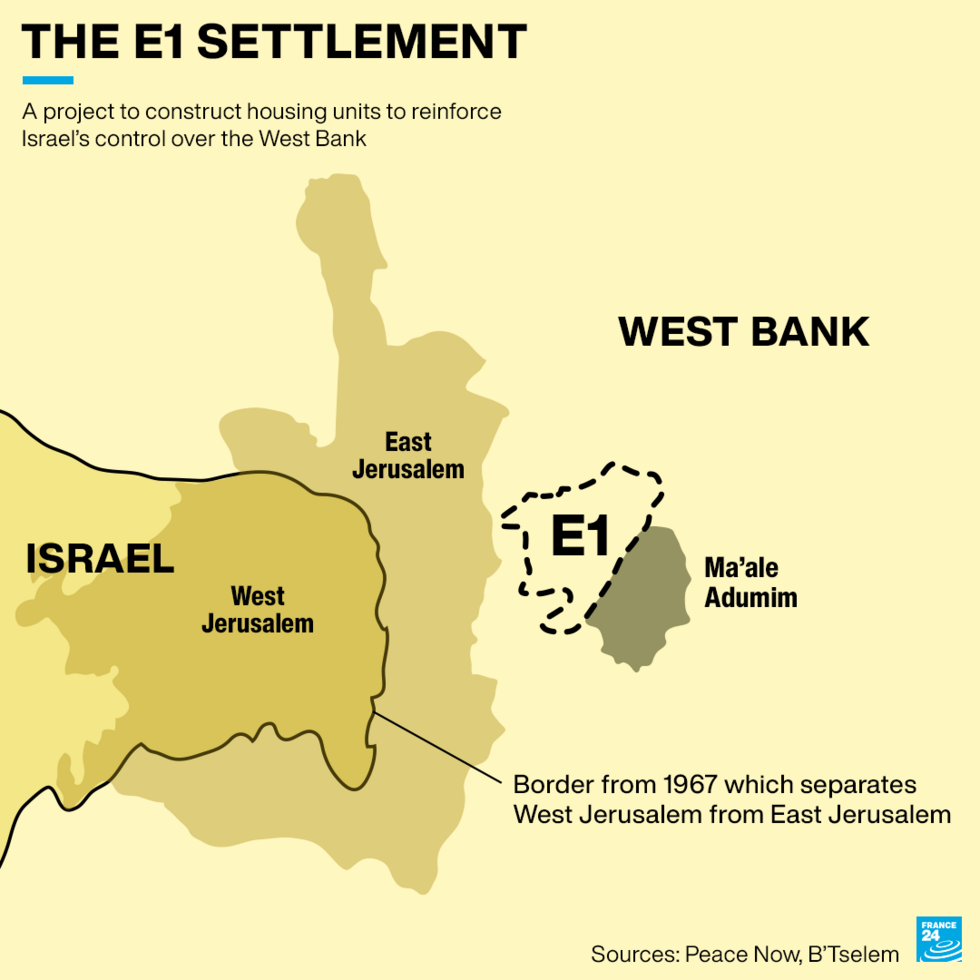
In a show of their rejection of this announcement, Netanyahu and Smotrich – who is also in charge of civilian affairs in the occupied West Bank – chose to endorse an old project to expand Jewish settlements in the occupied West Bank known as E1. The acronym refers to the 12 square kilometres of land located between Ma’ale Adumim and Jerusalem, “the first parcel of land east of Jerusalem” (East 1).

Blocked since the mid-2000s because of opposition from the US, the project aims to build 3,400 housing units and create a block of settlements that would extend towards the Jordan Valley. For the United Nations (UN), the E1 project “would divide the north and south of the occupied West Bank and have serious consequences for the territorial contiguity of the occupied Palestinian territory".

E1, the project to build more than 3,000 housing units to connect Ma'ale Adumim to Jerusalem. © Graphic studio, France Médias Monde


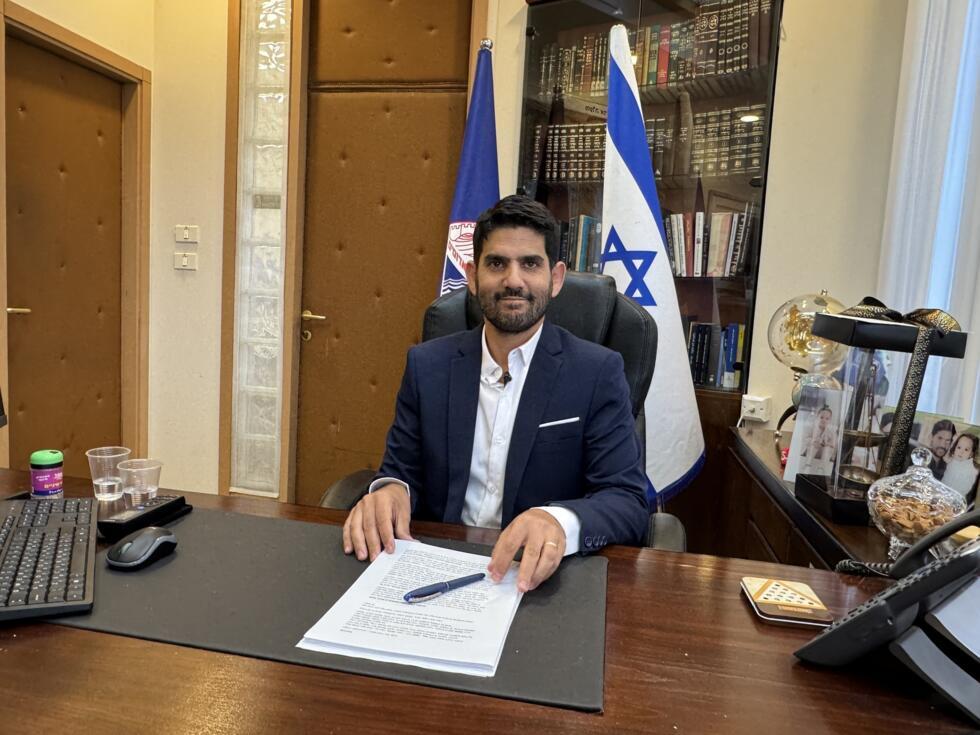
Guy Ifrah, Ma’ale Adumim's young mayor, hailed his government’s decision to move forward with the E1 project. “E1 is located within municipal boundaries. We aren’t taking land from anyone. It’s false to say the construction of E1 will break the territorial continuity between Palestinian cities. I don’t deny the fact that there is a Palestinian population that lives in Judea and Samaria [the biblical name often used in Israel to refer to the West Bank, editor’s note]. But there are two roads being constructed east of Ma’ale Adumim which will allow Palestinians to move around without checkpoints.” These roads will still force Palestinian neighbours to make a 15-kilometre detour to reach Jerusalem.

Guy Ifrah, mayor and native of Ma'ale Adumim. © David Gormezano, FRANCE 24


Born in Ma'ale Adumim 43 years ago, Ifrah does not wear a kippah and described himself as "a believer, but not religious". A member of the Likud party, the mayor said his priority was to “enable future generations to live in Ma'ale Adumim. The E1 project will allow 15,000 more people to join us. There will be subsidies for residents, as well as for reservists who sacrificed two years of their lives with the war in Gaza."
Deny the illegal nature of settlements

For Israeli lobbyists who aim to increase the presence of Jewish settlements in the West Bank, the approval of the E1 project is a major political victory.

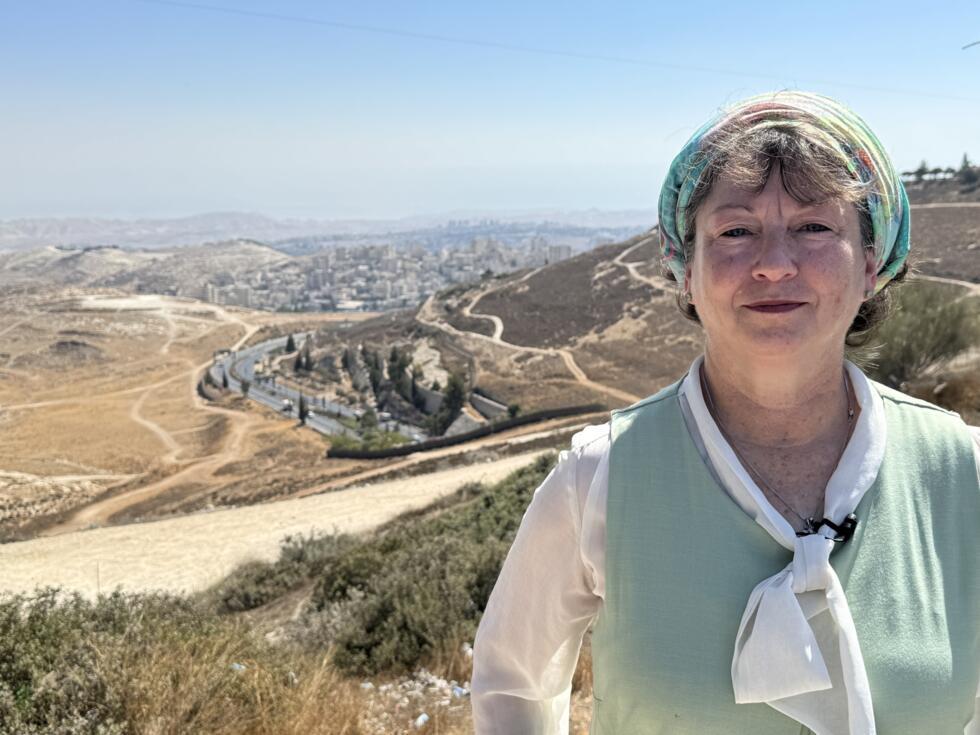
Naomi Kahn, spokesperson for the pro-settlement movement Regavim, believes that "the E1 project was delayed for too long. There are no Arabs living on this land.’ This claim is disputed by the UN, which states that "the area in question is currently inhabited by approximately 5,000 Palestinians".

Kahn also argued that the “State of Israel should not be required to ask for permission from anyone to exploit the land resources at its disposal in Area C [of the West Bank]”. The area makes up around 60 percent of the occupied West Bank placed under Israeli transitional control under the Oslo Accords.

Naomi Kahn, director of the International Division of the pro-settlement movement Regavim. © David Gormezano, FRANCE 24


A proponent of a "Greater Israel" which extends "from the river to the sea", Kahn refuted accusations of colonisation, and presented her own particular interpretation of international law. "It is absurd to say that Israel has been illegally occupying the West Bank since 1967," she said. The West Bank has been a "disputed territory" since the fall of the Ottoman Empire in 1922, she added.

"Since 1922 the eastern border of Israel has been the Jordan River," the activist claimed. In 1948, Jordan invaded the occupied West Bank, an act that was condemned by all nations [except two], because Israeli sovereignty was recognised by everyone."

Read moreTimeline: The state of Palestine’s long road to recognition

Based on this interpretation of history, Kahn’s pro-settler movement denies any Palestinian claim to sovereignty in the West Bank. The movement has even created a map of "illegal Palestinian settlements in the West Bank", arguing that the E1 project aims to allow Israelis to move freely in the occupied territories.
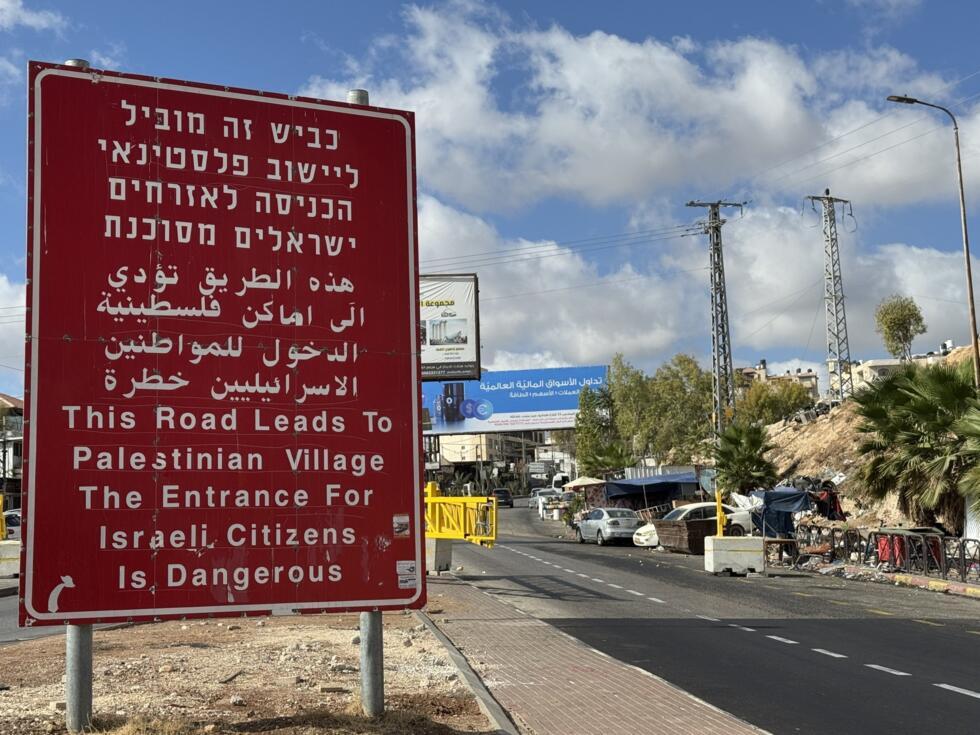
“This road leads to Palestinian village. The entrance for Israeli citizens is dangerous,” reads a sign at the exit of Ma'ale Adumim. © David Gormezano, FRANCE 24

‘Recognising a Palestinian state is a moral and political error’

When asked about France's recognition of Palestine, Kahn said that "recognising a Palestinian state is a moral and political mistake. It means supporting a terrorist entity that has vowed to destroy the Jewish people. It is shameful that Western democracies support the creation of a racist, misogynist, Islamist state that has no chance of success."

A few kilometres away, a small group of settlers that seized a hill in the West Bank between Bethlehem and Jerusalem six years ago, shared the spokeswoman’s convictions.

Lior Tal, the head of a settlement of 19 families, slammed France’s diplomatic gesture in much harsher terms. “If the Western countries want to recognise a Palestinian state, fine. But let them do it at home, in Europe,” he said. Israeli sovereignty is not up for debate, he added, and Palestinians should go and live, “in an Arab country; there are plenty of them”.

Tal has been known for his violent words and actions for many years. Yet the Israeli government on May 29 legalised 22 illegal settlements (often called “outposts”) including the one where he lived.

Tal now hopes the government's decision means that houses, roads, and other infrastructure will be built in the coming years. "I’m hoping 600 families will settle here," he said.
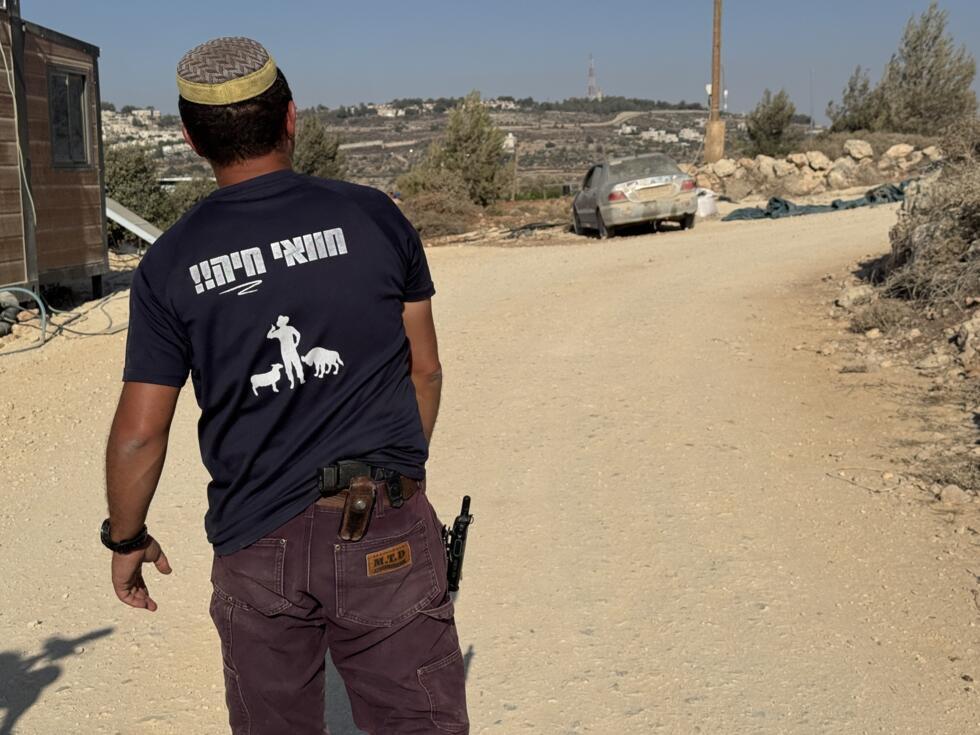
Lior Tal, the armed leader of an illegal settlement located between Bethlehem and Jerusalem © David Gormezano, FRANCE 24


Focused on tending to his sheep and studying the Torah, Tal has a radical and mystical view of Israeli settlement in the occupied West Bank. He is not afraid of clashes with his Palestinian neighbours, asserting that “the land of Israel is the land of Jews. It’s our land. We were here during the time of the Second Temple [between 516 BC and 70 AD]. There is archaeological evidence to prove it. We also know that there were vineyards here at that time. Islam destroyed them and replaced them with olive trees. We replanted vineyards to mark our rebirth. I am here to cultivate the land of Israel and preserve it."

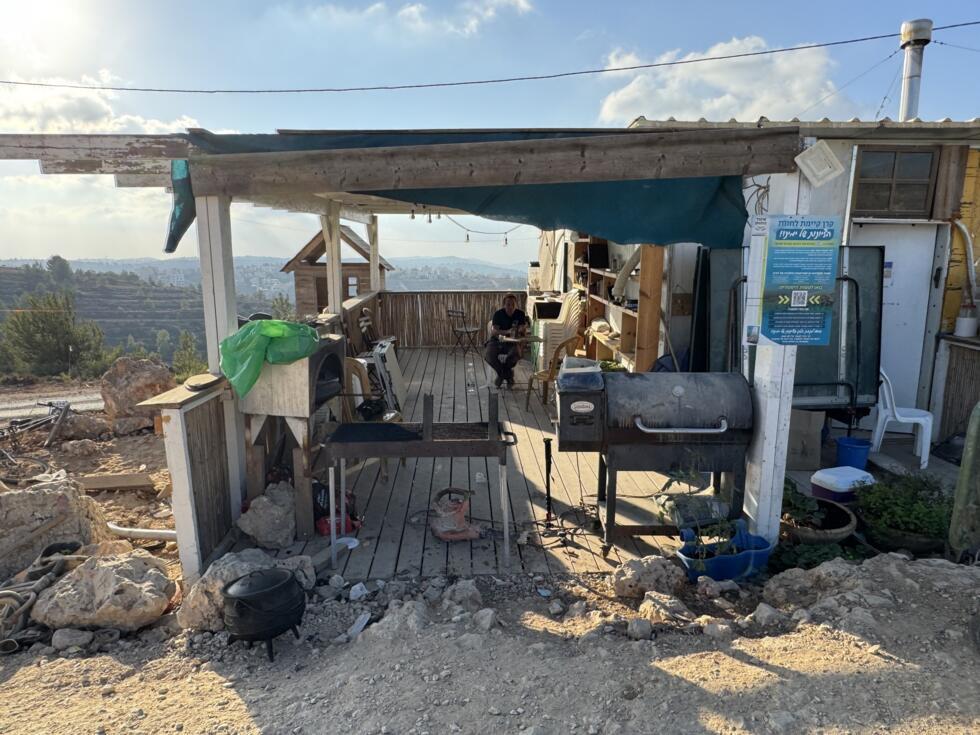
Lior Tal in front of his house which overlooks Palestinian villages in the West Bank. © David Gormezano, FRANCE 24


Since the October 7, 2023 attacks and the massacre committed by Hamas on Israeli territory, Netanyahu and Smotrich have been in a race against time to increase the number of Jewish settlements in the occupied West Bank. The number of illegal settlements is also skyrocketing: 32 were established in 2023, 61 in 2024, and 58 were built during the first six months of 2025 alone.

Expressing deep concern, the Israeli peace organisation Peace Now stated in a press release that, “by relentlessly pursuing this project, the Israeli government is undermining any possibility of a political solution and dragging Israelis and Palestinians into a cycle of endless conflict".

In favour of a two-state solution, the organisation estimates that 141 Israeli settlements were officially recognised by the government in the occupied West Bank at the end of 2024, and the approval of the E1 plan has buried "the hope of a peaceful future for both nations".

After nearly two years of war on multiple fronts in the Middle East, Netanyahu and the settler movement are reaffirming their refusal to recognise a Palestinian state, week after week and without any ambiguity. The government is simultaneously accelerating its colonisation of the occupied West Bank, leaving just a few scraps of territory for a moribund Palestinian Authority.

This article has been translated from the original in French.
Thousands strike across Italy in solidarity with Palestinians in Gaza, causing widespread disruption
Copyright AP PhotoGavin BlackburnPublished on 22/09/2025 - EURONEWS

Monday marks the second day of strike action after a similar walk-off was called on Sunday by the southern European country's largest trade union, the Italian Confederation of Labour (CGIL).

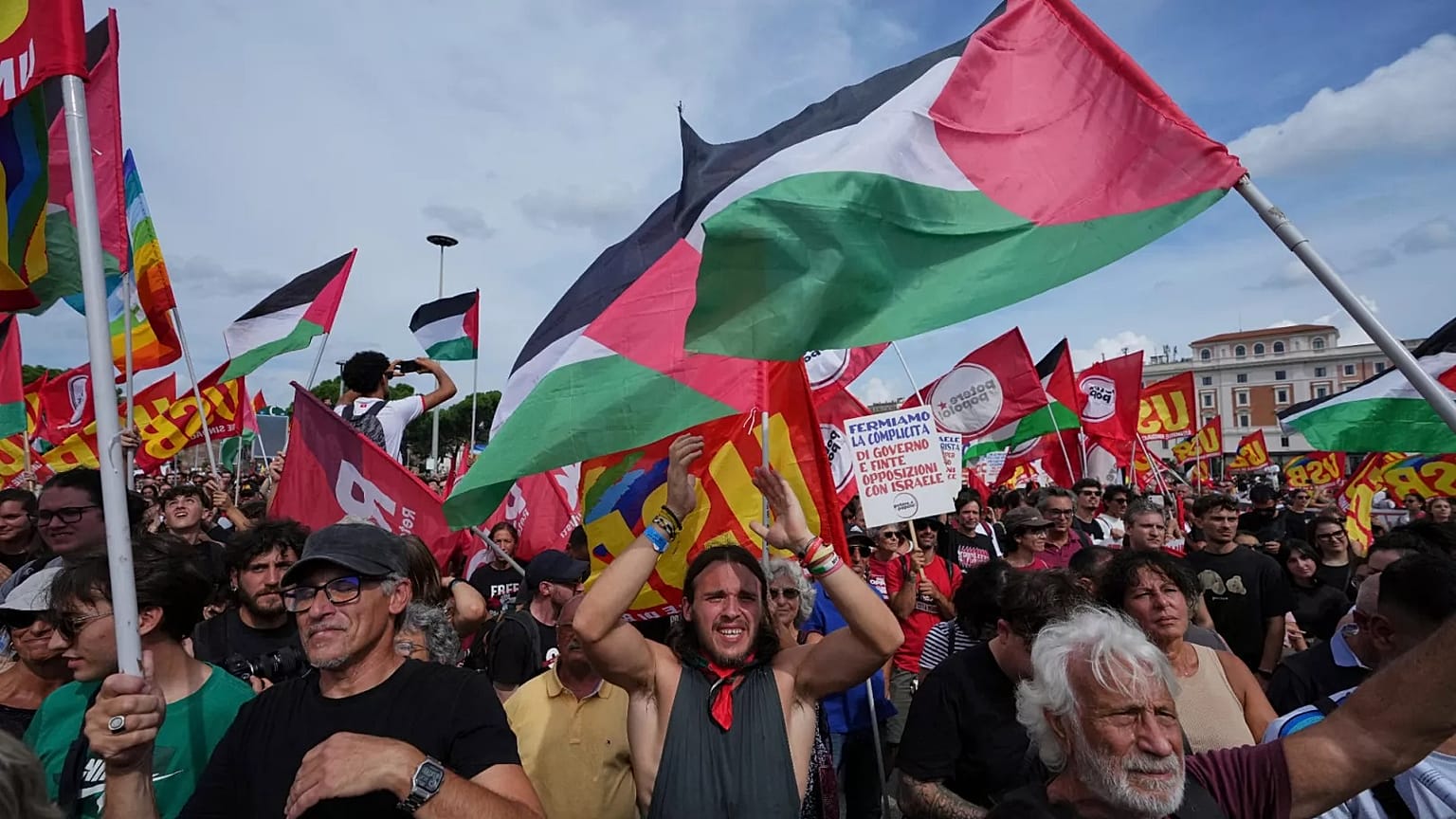
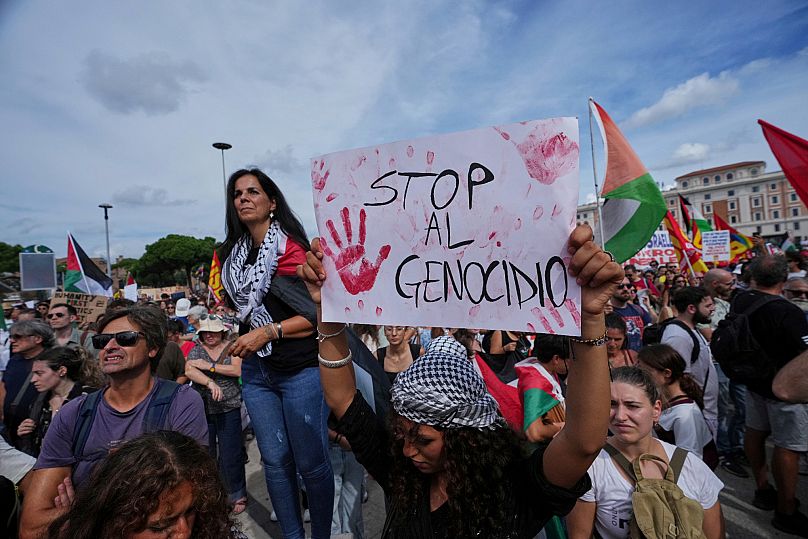
Thousands of workers and students across Italy joined a general strike and widespread demonstrations on Monday in solidarity with the Palestinians living in Gaza.

Italy’s grassroots unions called for a 24-hour general strike in both public and private sectors, predominantly affecting public transport, trains, schools and ports.

The strike caused disruptions across the country, with long delays for trains and limited public transport in major cities, including Rome and Milan.

The transit of goods was slowed or partially blocked by workers' sit-ins and rallies in Italy’s main ports of Genoa and Livorno.

It's the second day of strike action after a similar walk-off was called on Sunday by Italy's largest trade union, the Italian Confederation of Labour (CGI

"The strike is taking place in response to the ongoing genocide in the Gaza Strip, the blockade of humanitarian aid by the Israeli army and the threats against the international Global Sumud Flotilla mission," a statement from the USB trade union federation said.

People take part in a demonstration in Rome part of a nationwide protest and general strike against the war in Gaza, 22 September, 2025 AP Photo

"USB also denounces the inertia of the Italian government and the European Union, which refuse to impose sanctions on the State of Israel and continue to maintain economic and institutional relations despite the gravity of the situation."

Organisers of the rally in Rome say they expect around 100,000 people to attend.

However, city authorities put the number at 20,000 gathered in front of the Termini central train station around midday Monday, adding that the number was not final and that it was rising.

The Italian government headed by Premier Giorgia Meloni has more recently adopted a harsher tone on its policies as domestic pressure has mounted over the ongoing Israel-Hamas war.

Italy has not joined the European countries including France and the UK that will formally recognise a Palestinian state at this week’s UN General Assembly in New York.

Additional sources 

 israel flag file

Mangos, Sanctions And Mounting Pressure: Israel Faces A Gathering Western Storm – Analysis

By 

Israelis are enjoying their mangos this summer at sharply reduced prices at the expense of food-deprived Gazan Palestinians. The sharp drop in mango prices is as much a result of Israel’s throttling of the flow of food into Gaza and its economic blockade of the Strip as it is a byproduct of increasing consumer boycotts of Israeli products and US President Donald Trump’s tariffs on Brazilian and Mexican imports of the fruit.


As a result, Israel is witnessing a mango glut, with the Gaza market shut down because of the almost two-year-long war, and Latin American producers are grabbing European market share from Israel with pricing that undercuts Israeli produce.

Mangos are the exception to the rule

Most private sector and primarily limited government sanctions and boycotts of Israel are causing Israelis discomfort, but not yet the kind of pain that could persuade Israeli Prime Minister Binyamin Netanyahu to rethink his warmongering and morally, legally and politically questionable policies.

However, the pain is likely to increase, all the more so as Israel and the Trump administration proceed with plans to make Gaza even more uninhabitable than it already is, so that Palestinians decide they have no option but to emigrate.

Already, Western nations are stepping up pressure on Israel, even if only conditionally and in ways that, with few exceptions, don’t increase immediate pain but over time could complicate Israeli trade and other relationships.

Belgium joined France, Britain, Canada and Australia in declaring that it would conditionally recognize Palestine as a state at this month’s United Nations General Assembly. Belgian Foreign Minister Maxime Prévot said the recognition would take effect once Hamas releases the last of its remaining 48 hostages abducted during the group’s October 7, 2023, attack on Israel, and no longer plays a role in the administration of Gaza.


Following in the footsteps of Australia, Canada, New Zealand, Norway and the United Kingdom, Belgium has declared Israeli National Security Minister Itamar Ben-Gvir and Finance Minister Bezalel Smotrich, two of the most militant ultranationalists in Mr. Netanyahu’s cabinet, persona non grata.

It was unclear whether Belgium would reverse its decision not to arrest Mr. Netanyahu were he to visit Belgium despite its obligation to enforce an International Criminal Court arrest warrant.

Belgium’s decision to ban the import of products from West Bank settlements, restrict procurement from Israeli companies and consular assistance to Belgians living in settlements, sanction settlers involved in attacks on Palestinians and impose “flight and transit bans” on Israeli government aircraft go substantially further than other Western states on the verge of recognizing Palestine. Ireland may be the exception, with parliament debating a bill that would criminalize trade with West Bank settlements that are illegal under international law.

The Belgian measures are only second to NATO member Turkey’s severance of trade and economic relations with Israel, and the banning of Israeli vessels from Turkish ports and official military aircraft from the country’s airspace.

Various Western nations have suspended, at least, some military sales to Israel, including Britain, France, Italy, Spain, Slovenia, Canada and the 12-member Hague Group, as well as Belgium’s Wallonia region and Japan’s Itochu Corporation.

Although opposed to a suspension of the European Union’s association and trade agreements with Israel, Germany, the Jewish state’s most important arms supplier after the United States, last month suspended new sales of weapons that the Israeli military would deploy in Gaza.

“Germany’s arms embargo could affect the replacement of Merkava tank engines. This means some tanks are out of commission, and the military’s ability to operate in Gaza could take a hit,” said military affairs journalist Amos Harel. In addition, the UK, France, the Netherlands and Belgium have banned Israeli companies, government officials and equipment from defense expositions.

Israel ignores the gathering European and Western storm at its peril

Europe, rather than the United States, is Israel’s largest trading partner, as well as the foremost destination for Israeli investments, according to the Amsterdam-based Centre for Research on Multinational Corporations (SOMO).

The Centre reported that the EU in 2023 held €72.1 billion (~$18.6 billion) in investments in Israel, compared to the United States’ €39.2 billion (~$42.4 billion). Similarly, Israel invested €65.9 billion (~$71.3 billion) in the EU, seven times more than the €8.8 billion (~$9.5 billion) invested in the United States. In 2024, European trade with Israel totaled €42.6 billion (~$46.1 billion), significantly more than the €31.6 billion (~$34.2 billion) with the United States in the same year.

Ronit Harpaz, the founder of a European Union-funded medical device startup, warned that European sanctions would be the death knell for Israel’s high-tech industry and military-industrial complex. “The termination of Israel’s participation in the (European Union’s) Horizon (research) program will be a strategic death sentence, not only for the high-tech industry, but also for the defense establishment,” Ms. Harpaz said.

With crackdowns on academic and nonacademic expressions of support for the Palestinians in the United States and various European countries, Utrecht University became the first Western academic institution to boycott Israel.

In a reflection of mounting public anger in the Arab world at perceived government impotence, refusal to break off relations — diplomatic or informal — with Israel and acquiescence with some, not all, of Israel’s war goals, activists from Qatar, Bahrain, Kuwait and Oman joined the Global Sumud or Steadfastness Flotilla with their own vessel.

Made up of some 50 ships carrying medical supplies, food aid and crews from more than 44 countries, the flotilla constitutes the third attempt this year by activists and civil society organizations to break Israel’s siege of Gaza.

The participation of Gulf activists is remarkable given that the autocratic Gulf states and other Arab countries have banned public pro-Palestinian manifestations and restricted freedom of expression.

As the flotilla set sail for Gaza, the United Arab Emirates (UAE), whose activists likely did not want to risk angering the government by joining the maritime caravan, dispatched its third ship, the SS Sheikh Hamdan, laden with 7,000 tons of relief, food and medical supplies to the Egyptian port of El Arish near the Gaza Strip in coordination with Egypt and Israel. The aid is designed to project the UAE as a contributor to alleviating the humanitarian crisis in Gaza, pacify public opinion and position the Gulf state as a key player in post-war Gaza.

Israel facilitates the Emirati endeavor by allowing the Gulf state’s aid to enter the Strip on trucks under Israeli supervision, while preventing civil society initiatives from entering Gaza’s territorial waters and docking in its port.

The Israeli navy, as with earlier civil society attempts, is likely to force the flotilla to dock at an Israeli port, detain those aboard the vessels and ultimately deport them. Even so, the Emirati effort, like similar initiatives by other Arab states, is unlikely to soothe public anger or change popular perceptions of Arab state impotence as well as of Israel.

Israel appeared to acknowledge this by reiterating in late July its advice to Israeli nationals and Jews to avoid nonessential travel to the UAE and warning that Hamas, Hezbollah and “Global Jihad” militants, as well as Iran may “try to carry out attacks against Israeli and Jewish targets in the UAE, especially on (the upcoming) Jewish holidays and Shabbat,” the Sabbath.

UAE Assistant Foreign Minister for Political Affairs Lana Nusseibeh warned this week that Israeli threats of annexing large chunks of the West Bank if Western states move ahead with recognition of Palestine would be a “red line.”

Going over Mr. Netanyahu’s head, Ms. Nusseibeh told an Israeli news outlet that it would “mean(s) there can be no lasting peace. It would foreclose the idea of regional integration and be the death knell of the two-state solution.” Ms. Nusseibeh’s warning also constituted a response to Israel’s new post-October 7, annexationist defense doctrine that seeks to emasculate its neighbors militarily rather than rely on deterrence.

Spelling out the doctrine, former deputy prime minister and Israeli ambassador to the United States, Michael Oren, asserted, “Never will we forfeit the need for deep buffer zones along all our frontiers. Never again will the IDF (Israel Defense Forces) favor a defensive over an offensive strategy — (the anti-missile defense system) Iron Dome over tanks and armored personnel carriers.”

The UAE is not the only country where Israelis potentially encounter hostility because of their country’s conduct of the war and public indifference, if not support, for Israeli devastation of Gaza and indiscriminate killing.

Travel for Israelis has become increasingly uncomfortable

Israelis have been harassed on European streets, kicked out of restaurants for speaking Hebrew, barred from attending cultural events, prevented from disembarking from cruise ships and questioned by authorities on suspicion of having committed war crimes in Gaza. Israeli offices abroad have been vandalized.

“While the government of … Netanyahu has stood defiant and unmoved by the hardening stance against it; the blowback against its citizens is certainly being felt,” said US-based Israeli historian Asher Kaufman.

To be sure, many Israelis want to see an end to the war, not because of the pain and suffering it inflicts on innocent Palestinians, but because they see it as the only way of returning the Hamas-held hostages.

Stepping up Western pressure on Israel in ways that increasingly will hit home is a question of when, even if far too late, rather than if as long as Mr. Netanyahu, backed by the Trump administration, proceeds with his phased occupation of the Gaza Strip and the imposition of ever more hardship on Gazans to give them no choice but to emigrate or be driven out of the Strip.

Mr. Trump is already encountering pushback from segments of his Make America Great Again and evangelical support base. “Israel is a protectorate and protectorates … do not call the shots. We call the shots; the American people call the shots. We’re going to do what is in the best interest of the United States of America and the Judeo-Christian West. Part of that is not this expansionist program, and particularly when you have the situation in Gaza …  America First means no more lies about Iran and no more dragging us into Gaza,” said podcaster, activist and Mr. Trump’s former strategist, Steve Bannon.

Israeli chief of staff Major General Eyal Zamir identified a potential breaking point that, together with Ms. Nusseibeh’s warning, could prompt Europe to sanction Israel in ways that would hit the Jewish state where it hurts when he warned that conquering Gaza City would lead to Israeli occupation of Gaza.

“Your decision to conquer Gaza City … will lead to the conquest of the refugee camps in central Gaza, and then it will be a military government, because there will be no other body that could take responsibility for the population,” Mr. Zamir said. If Mr. Zamir is correct, the occupation of Gaza could be the straw that breaks the back of many in the international community.


James M. Dorsey

Dr, James M. Dorsey is an award-winning journalist and commentator on foreign affairs who has covered ethnic and religious conflict and terrorism across the globe for more than three decades. Over his career, Dorsey served as a foreign correspondent for, among others, The Wall Street Journal, The New York Times, The Christian Science Monitor and UPI in the Middle East, Europe, Africa, Central America and the US. He is currently a senior fellow at the S. Rajaratnam School of International Studies at Nanyang Technological University in Singapore and the author of the Substack, "The Turbulent World."