Monday, September 22, 2025

By 

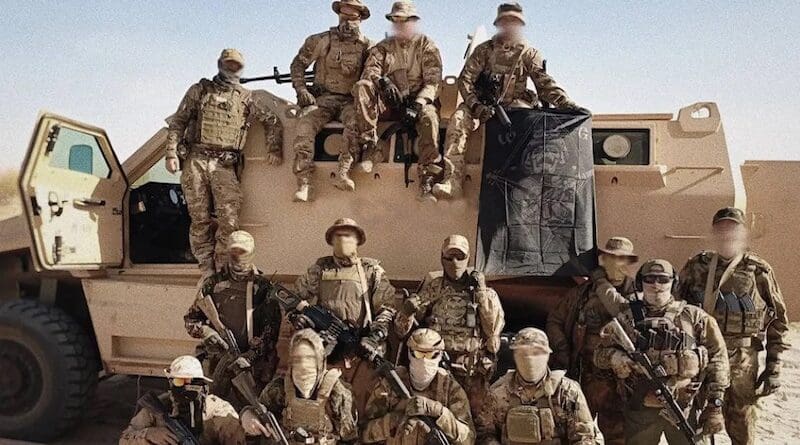
When the infamous Russian mercenary Wagner Group announced its departure from Mali earlier this year, it claimed on social media that its “mission was accomplished.”


The reality is that in the 3 1/2 years of the counterterrorism and counterinsurgency operations it carried out, the group has had a disastrous impact on the Sahel country that continues to be regarded as the worldwide epicenter of terrorism.

“Despite the Wagner Group possessing a reputation for being battle-ready and claiming occasional public triumphs in Mali, its strategy has been plagued by a series of failures,” investigative organization The Sentry wrote in an August 27report.

The Kremlin replaced Wagner with its own paramilitary force called the Africa Corps, which is controlled by the Ministry of Defense. As much as 80% of the Africa Corps is made up of former Wagner mercenaries, according to a July 29 Timbuktu Institute report.

“Africa Corps inherits Wagner’s legacy of human rights violations, including extrajudicial killings and acts of torture,” the report said. “These abuses, often committed with impunity, fuel discontent among certain communities and jihadist recruitment that exploits various grievances.”

Through interviews with Malian military personnel, intelligence agents, and ministries of finance and mines officials, The Sentry reported that Malian Army personnel deeply resent the Russians. They claimed that Wagner fighters disrespected their command and control, and Malians blamed the Russians for security lapses and operational mistakes that resulted in personnel and equipment losses.


The mercenaries’ brutal tactics and haphazard approach to counterterrorism also made it impossible to earn the trust of the Malian people.

“Since Wagner’s arrival in Mali, there has been a significant increase in attacks against civilians and in civilian casualties linked to Malian security forces and allied militias,” the report stated. “In fact, the Wagner Group has been employing tactics that indiscriminately target civilians.”

Wagner fighters also reportedly engaged in sexual violence and mass executions, as evidenced by the 2022 Moura massacre, where more than 500 civilians were killed, including at least 300 men who were executed.

United Nations experts in early 2023 called for an independent investigation into flagrant human rights violations and “possible war crimes and crimes against humanity committed in Mali by government forces and the private military contractor known as the Wagner Group.”

The experts said that since 2021 they received “persistent and alarming accounts of horrific executions, mass graves, acts of torture, rape and sexual violence.” Repeated calls for an investigation in Mali have produced no results.

Some FAMa soldiers blamed the Moura massacre on the influence that Russian mercenaries had on their superiors.

“Without Wagner, there would have been no Moura,” one told The Sentry. “Not this scale, not this duration, not all the dead.”

Malians blame the Russians’ heavy-handed tactics for giving a recruiting boost to Tuareg separatist fighters and terrorists linked to al-Qaida and the Islamic State group.

Amadou Koufa, leader of al-Qaida’s Katiba Macina, a militant Islamist group, said in a 2024 interview with France24 that Russian brutality was the impetus for locals to join the fight to “defend their religion, their land and their goods.”

The Russians conducted drone strikes on weddings and funerals, while videos of Wagner fighters abusing Tuareg civilians circulated online, driving further discontent and fueling recruitment propaganda.

“Local community leaders in central Mali often complain that Wagner has failed to permanently improve the situation in their areas,” Royal United Services Institute researchers wrote in a January 2025 report.

Wagner suffered a crushing defeat in July 2024 when multiple terrorist groups attacked a large convoy of vehicles near the northeastern Malian village of Tinzaouatène. The militants claimed to have killed 84 Russian mercenaries and 47 FAMa soldiers.

Wagner’s relationship with FAMa deteriorated into mutual suspicion, according to The Sentry. Russian survivors accused Malian intelligence of underestimating rebel numbers and abandoning them mid-battle. In response, Malian officers accused Russians of ignoring chains of command, commandeering their vehicles and treating them with open racism.

“We have gone from the frying pan to the fire,” one senior officer told The Sentry.

Anger grew when militants attacked Bamako’s airport in September 2024, killing more than 100 people. Wagner units were stationed nearby but reportedly waited five hours to intervene.

“If you don’t pay them, they don’t move,” an airport guard told The Sentry.

Charles Cater, The Sentry’s director of investigations, said the Wagner Group’s intervention in Mali has been a failure.

“Heavy-handed and poorly informed counterterrorism operations have strengthened alliances among armed groups challenging the state, caused substantial battlefield losses for Wagner, and resulted in higher civilian casualties,” he said. “Ultimately, Wagner’s deployment has not served the interests of the people of Mali, the military government, or even the mercenary group itself.”

Justyna Gudzowska, The Sentry’s executive director, said that Mali’s experience should serve as a cautionary tale.

“As Moscow spreads its tentacles across the Sahel and rebrands under Africa Corps, it is critical to understand that Wagner was not the infallible fighting force and successful economic actor it pretended to be,” she said.

“If anything, the Malian example illustrates that the group failed on both fronts, and this should be a warning to other African clients who are considering bringing in the Ministry of Defense-backed Africa Corps.”


Africa Defense Forum

The Africa Defense Forum (ADF) magazine is a security affairs journal that focuses on all issues affecting peace, stability, and good governance in Africa. ADF is published by the U.S. Africa Command.

Russia And The Collective West: The Global Politics Of The Cold War 1.0/2.0 – Analysis


Russia Flag


By 

Russia as the phoenix in global politics

After the end of the Soviet Union in 1991, Russia became a less popular area of study and dealing with in comparison to before the end of the Cold War (1949‒1991). In the West, it was believed that after 1991, Russia was simply “finished” as Moscow was no longer the capital of a great power state (of the USSR) which had an important influence in global politics and international relations after WWII.


In other words, the Western policymakers thought that after 1991, Russia would remain irrelevant as both economic and political power in global politics, and, therefore, for instance, many universities’ studies programs on Russia in the USA and Western Europe were either canceled or downsized under the explanation that studying Russia was no longer important for international relations (IR) and global security.   

However, all of those who shared an opinion that Russia was “irrelevant” in global politics and international relations since the end of the Cold War realized at least from the 2008 Russo-Georgian War (1) onward their fatal mistake of judgment. Russia is “back,” and subsequently, Washington and Brussels declared a new Cold War (2.0) on Russia in 2008 (2) as they clearly understood that Russia is back as a military, economic, and political great power. In other words, the Collective West, especially (and led by) the USA, made a critical experiment of provoking Russia on the international stage, and they received a very clear answer. The second fatal experiment of challenging Russia was on the soil of the (Soviet) Ukraine from 2014 to 2022, when reborn post-Cold War 1.0 Russia accepted the thrown “white glove” in February 2022 by launching a Special Military Operation (SMO) against the Russofrenic neo-Nazi political regime in Kiev, directly politically, logistically, financially, and militarily supported by the Collective West since the 2014 EuroMaidan’s cup.   

Russia, as a country with tremendous energy resources, nuclear power, educated and talented people, simply cannot be ignored in global politics by the Collective West, as was the practice in the years from 1991 to 2008. It became true especially from the very point of fact that Russia has been actively since 2008 pursuing its own national interests and security policy near its borders (within the space of the ex-USSR). Nevertheless, it became totally wrong to believe that the post-Cold War Russia was going to be an adversary to the American “New World Order”, as reborn Russia after 2000 clearly shows to be a respectful Eurasian global power with national interests and aspirations of her own to be both acknowledged and respected. It was finally proven by the start of the Russian Special Military Operation on the territory of Eastern (Soviet) Ukraine populated by the Russian speakers in February 2022. This operation, at the same time, clearly showed the Global West that Russia once again (after the dissolution of the Soviet Union) became a member of the top global powers in global politics and, therefore, its influence in IR cannot be ignored anymore.      

Transformation of post-Soviet Russia into a Great Power

It is a historical law that each state changes with time. However, only a few states experience such dramatic change during the short period of time as Russia has over the last 30+ years. In other words, Russia has changed as a state, nation, and military power, followed by its fluctuating position in global politics and international relations. From 1991 to today, Russia has transformed peacefully and rapidly its entire political and economic system, which is a relatively rare example in history. When the USSR dissolved in 1991, Russia was left to be one of its 15 constituent republics, which proclaimed independence forced to substantially redefine its role in global politics. The 1990s were very painful for Russia’s position in international relations as the country’s foreign policy was, in fact, supervised and directed by Washington and Brussels as the case of NATO aggression on Serbia and Montenegro in 1999, for instance, clearly showed but since 2008 Russia’s foreign policy once again became an independent and gradually returning the country to the club of the Great Powers.  

The importance of Russia´s influence in the world in the arena of global politics is based on the fundamental fact that Russia is one of the strongest international actors that is determining the global political agenda. It means that Russia is once again a member of the Great Power club as „a great power state is a state deemed to rank amongst the most powerful in a hierarchical state-system“. (3) Russia, in this respect, surely fits the conventionally accepted academic criteria that define a Great Power:


  1. A Great Power state is in the first rank of military capacity.
  2. A Great Power state has the capacity to maintain its own security and to influence other states on how to behave.
  3. A Great Power state is economically powerful, although this is a necessary but not a sufficient condition for membership in the Great Power club (the cases of Japan or Germany are the best illustrations of this claim).
  4. A Great Power state has global but not only regional spheres of national interest and action.
  5. A Great Power state is running a “forward“ foreign policy and, therefore, it has a real but not only potential influence on international relations and global (world) politics. (4)
  6. A Great Power is a state (at least according to the 18th-century concept) that could not be conquered even by the combined might of other Great Powers. (5)

Russia surely belongs today to the club of key global powers having powerful nuclear weapons, a growing economy, and prospective economic capacities, being one of the leading BRICS members. However, what is most important and different to others, Russia possesses almost endless natural resources (many of them are probably still even not discovered). For instance, in September 2025, the Russian President Vladimir Putin stated that Russia has reserves of coal for the next one thousand years. From a geopolitical viewpoint, Russia is occupying the crucial segment of the Heartland – the focal geopolitical part of the world. (6) Russia, with its rich history and national traditions, is today in the process of defining its new political role in the current century. Behind Russia’s policies, there is a comprehensible strategy based on a firm vision of the contemporary world and the protection of the Russian national interests.   

The six factors of Russian power in IR

A contemporary history of Russia starts after the dissolution of the USSR by Mikhail Gorbachev (according to the agreement with Ronald Reagan in Reykjavík in October 1986), (7) which marked at the same time the beginning of the political and economic turmoil in the 1990s, when Russia under Boris Yeltsin and his pro-Western liberals was a puppet state of the Collective West. However, the country gradually emerged from the period of instability since 2000 mainly due to the well-combined six factors, which a new administration of President Vladimir Putin skilfully exploited to the full extent: 

  1. Substantial mineral resources, particularly of oil, gas, and coal.
  2. Significant military power, based on the second greatest nuclear potential in the world. 
  3. Relatively well-educated, productive segment of the population.
  4. A high-quality scientific and technological base that survived in several industries.
  5. Permanent membership in the UNSC, the G8, and the G20.

It is predicted that Russia will remain in the future as one of the focal and strongest international actors on the same or above level of influence, together with the US, EU, China, and rising Islamic cultures, especially Iran and Turkey. Russia’s natural resources and capabilities may allow it to follow an independent line in foreign policy and security national interests, both in the post-Soviet regions and in some key areas of the world: Eastern Europe, Central Asia, and the Middle East. Predictably, however, Moscow’s interests will inevitably clash with those of other major actors – especially the US and its European clients. That is for sure that world order in international relations is going to continue to function according to World Systems Theory: a variant of structuralism that conceptualizes world order as being structured into 1) A rich and developed core, 2) Poor and underdeveloped periphery, and 3) A number of intermediary or semi-peripheral states. Russia is going to improve its own position within the first (leading) group, which includes all Great Powers who are hopefully (after the 2025 meeting of the Shangai Cooperation Organization-SCO) going to govern international relations and global politics according to the principle of Balance of Power which refers to a mechanism whereby Great Power’s states collaborate with each other in order to maintain their interests against threats from those who would seek systemic dominance. 

Why study and respect Russia?

There are at least four focal and most important reasons for both studying and respecting Russia’s importance in global politics and international relations today:

  1. Geopolitical position and the size of the country: Russia is the largest country in the world, stretching over 17 million sq. km and covering 11 time zones. Russia borders the Baltic Sea in the west, the Black Sea and Caspian Sea (in fact, the lake) in the south, the Arctic Ocean in the north, and the Pacific Ocean in the east. Russia is both a European and Asian country, which, in fact, occupies the crucial geopolitical position in the world – the core of the Heartland. Russia shares borders with six NATO member states (Poland, Norway, Lithuania, Estonia, Finland, and Latvia), faces a seventh one across the Black Sea (Turkey), and is geographically separated by only 85,30 km wide Bering Strait from the USA (also a member of NATO). Russia borders 16 internationally recognized states, which is the largest number of neighbors that one country has in the world. A geopolitical factor of Russia can be shortly understood if we know that anything that is happening on the territory of Eurasia from Central Europe to Japan is affecting to a certain extent Russia and, therefore, Moscow has to react by some means to that. (8)
  2. Regional power: Russia is surely a regional power within the perimeter of Heartland, which is striving to realize its own political, economic, national, and security interests. Russia, after 2000, succeeded in developing its own independent policies toward other states, including NATO and the EU’s members. The “problems” with Russia in global politics and international relations started when, since 2008, Russia’s foreign policy did not in many segments correspond with the strategic interests of the USA and its European and other clients of NATO and the EU. To the full level of dissatisfaction by Washington and Brussels, Russia maintains friendly relations with the three main American enemies and competitors – North Korea, China, and Iran. The most “problematic” issue of Russian foreign policy in the region for Washington is the fact that Moscow is continuing its efforts to build multi-state economic and political coalitions with neighboring countries, including super-powerful China, followed by rising powers of Iran and India. Russia, China, and India are already members of the international bloc, the BRICS, together with Brazil and South Africa as founders, followed by newly accepted member states. (9) The Collective West finally 2008 recognized Russia’s claim to have “privileged interests” within the post-Soviet territories, except in those countries that joined the EU and NATO before (the Baltic States).  (10)
  3. Military power: With the total dissatisfaction by the Pentagon and Brussels, Russia still even during overwhelming economic, financial, and other sanctions by the Collective West introduced since 2022, remains a very strong military state with stable economic growth, respectful military and nuclear capacity, and developing potentials which are keeping it as one of the Great Powers (even a Super Power) in global politics. It is quite understandable that even after Cold War 1.0, when bare American imperialism received its full expression at least till 2008, Moscow continues with its security policy based on the priority of having strong military capacities. Historically, for the Russian authorities is quite clear that after NATO’s establishment in 1949, Russia’s survival, independence, and sovereignty depended only on its military power, especially the nuclear one. (11) Russia (at that time the USSR) started to produce nuclear weapons in 1949 when the US created its imperialistic military bloc of Western puppet states and reached nuclear parity with the US at the beginning of the 1970s. Russia is today maintaining a nuclear arsenal and delivery systems that are comparable to the arsenal of the US. (12) Unfortunately, due to the US’ policy of open gangsterism in international relations after the end of the Cold War 1.0, the so-called Western liberal democracies (the EU and NATO) are still an enemy to both Russia’s and global security and, therefore, one of the most important tasks for the near future in global politics has to be the creation of new reliable policies of common security based on justice, democracy, and friendship – a kind of multilateral global politics or at least the international relations founded on the form of the balancing power among the Great Powers.  
  4. Economic power: Russia remains a global economic power with a growing economy index higher than many Western countries, having a population of some 142 million, which makes it one of the ten most populous states in the world. Her GDP per annum is selecting Russia among the world’s top 10 economies. In 2007, the private sector, with 5 million private enterprises, contributed 65% of Russia’s GDP. Although an economic slowdown is possible, Russia is most likely to continue with its economic growth in the near future, regardless of the harsh economic and other sanctions imposed by the Collective West since 2022 onward. The main source of revenue (80%) is the exploitation of natural resources (and selling them to the world market), followed by a wide range of different industries. The most important Russian export of natural resources is oil, gas, coal, timber, and metals. We have to keep in mind that, for instance, Russia has 23% of the total world’s forested land (13) and is in the 8th place in the world according to the oil reserves (the first is Venezuela). After 2000, Russia became as well as one of the biggest world’s energy suppliers and the exporter of weapons (among the top 3). The potential economic power of Russia comes from the fact that this country possesses vast reserves of natural resources on its territory, for example, 30% of global gas reserves. The country is quite near to the Arctic’s gas and oil reserves, a large but still unexplored source of energy, which is probably going to be mainly under Russian exploitation in the future. It is not so difficult to claim that energy resources are going to be the focal reason for the conflicts in international relations.        

Current reality of Russo-Western relations in IR

Questions about the nature of Russia’s political and economic systems and Russia’s policy after 2000 are of crucial importance in understanding its place in both Eurasia and the world (BRICS+), and assessing the prospects for dealing with some of the focal challenges to regional and global security. The policymakers of the Collective West understood this truth only after Russia’s military intervention in the Caucasus in August 2008, which was intended to clearly demonstrate that further incorporation of areas of special interest to Moscow into the Western client zone was totally unacceptable. What the same Western policymakers also understood was that this intervention was a clear counterpunch to Western-sponsored Kosovo’s proclamation of “independence” in February of the same year.  

Russia is a leading political subject, a strong economic and military power, a rich energy producer and supplier, an extremely important player in global politics, which is still building its position in the post-Cold War 1.0 era (that, in fact, is already the era of the Cold War 2.0). Russia is and is going to be for a long period of time in the future both one of the crucial players in international relations and one of the most important decision-makers in global politics. However, up to 2022, Russia’s post-Cold War 1.0 geopolitics was forced to be accommodated to the behavior of NATO. (14) Nevertheless, since February 2022, when the SMO of Russia started, in fact, against the Collective Western Russofrenic imperialism, on the territory of the Soviet (Greater) Ukraine, NATO and the rest of the Collective West are forced to accommodate their politics on the global arena to the Russian behaviour. 

  • Personal disclaimer: The author writes for this publication in a private capacity, which is unrepresentative of anyone or any organization except for his own personal views. Nothing written by the author should ever be conflated with the editorial views or official positions of any other media outlet or institution. 

Endnotes:

  1.  On this war, at least from the Western perspective, see in [Roger E. Kanet (ed.), Russian Foreign Policy in the 21st Century, New York: Palgrave Macmillan, 2011, 101−178].
  2.  Edward Lucas, The New Cold War: Putin’s Russia and the Threat to the West, London‒New York: Palgrave Macmillan, 2008.
  3.  Andrew Heywood, Global Politics, New York: Palgrave Macmillan, 2011, 7.
  4.  About world politics, see in [Jeffrey Haynes et al, World Politics, New York: Routledge, 2013].
  5.  Richard W. Mansbach, Karsten L. Taylor, Introduction to Global Politics, Second Edition, London−New York: Routledge, 2012, 578.
  6.  About geography and history, see in [Halford John Mackinder, “The Geographical Pivot of History”, The Geographical Journal, 23, 1904, 421−437; Pascal Venier, „The Geographical Pivot of History and Early 20th Century Geopolitical Culture“, Geographical Journal, 170 (4), 2004, 330−336].
  7.  About R. Reagan and M. Gorbachev’s relations, see in [Jack F. Matlock Jr., Reagan and Gorbachev: How the Cold War Ended, New York, Random House, 2005]. 
  8.  On Eurasia and Great Powers, see in [Roger E. Kanet, Maria Raquel Freire (eds.), Key Players and Regional Dynamics in Eurasia: The Return of the Great Game, Basingstoke, UK: Palgrave Macmillan, 2010].
  9.  The BRICS is an acronym first used by the investment firm Goldman Sachs in 2003 (as the BRIC). Taking their rapid economic development, Goldman Sachs predicted that these economies are going to be wealthier by 2050 than the world’s current economic powers. 
  10.  About the foreign policy of Russia in the 21st century from the Western perspective, see in [Robert Legvold (ed.), Russian Foreign Policy in the 21st Century and the Shadow of the Past, New York: Columbia University Press, 2007; Roger E. Kanet (ed.), Russian Foreign Policy in the 21st Century, New York: Palgrave Macmillan, 2011]. 
  11.  About this issue, see in [Richard Pipes, Survival is not Enough: Soviet Realities and America’s Future, New York: Simon & Schuster, 1984].
  12.  Robert Legvold, “The Russian File: How to Move Toward a Strategic Partnership”, Foreign Affairs, July/August 2009, 78−93.
  13.  World Resource Institute: www.globalforestwatch.org/english/russia (2009).
  14.  About the post-Cold War 1.0 geopolitics of Russia, see in [Срђан Перишић, Нова геополитика Русије, Београд: Медија центар „Одбрана“, 2015]. About the new Cold War 2.0, see in [Robert Legvold, Return to Cold War, Cambridge, UK−Malden, MA: Polity Press, 2016].

Dr. Vladislav B. Sotirovic

Dr. Vladislav B. Sotirovic is an ex-university professor and a Research Fellow at the Center for Geostrategic Studies in Belgrade, Serbia.

Russia to respect nuclear arms limits with US for one more year, Putin says

Copyright AP Photo

By Gavin Blackburn
Published on 22/09/2025 - 15:18 GMT+2 •Updated 15:38


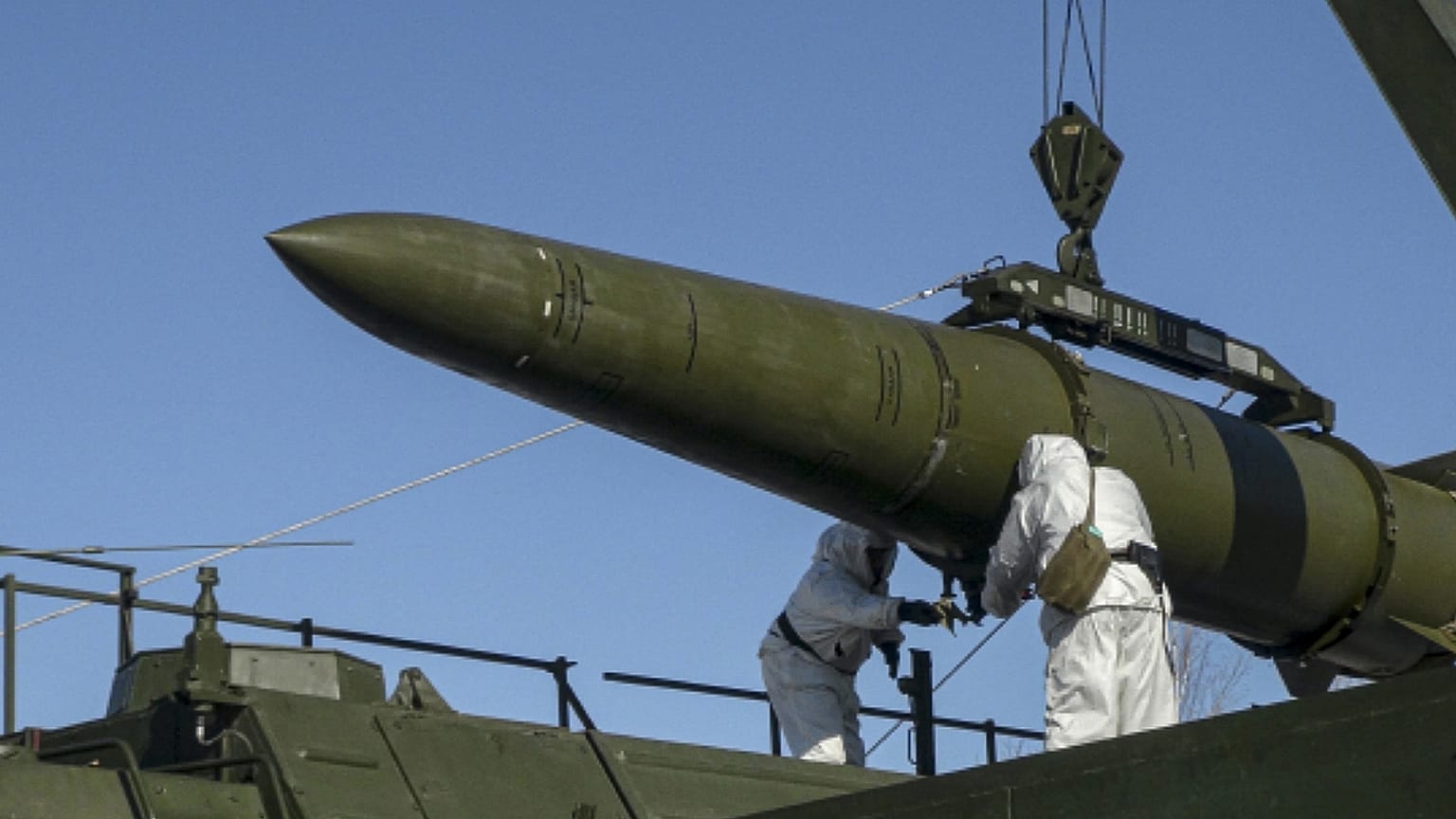
The New START deal, signed by then-US and Russian presidents Barack Obama and Dmitry Medvedev, limits each country to no more than 1,550 deployed nuclear warheads and 700 deployed missiles and bombers.

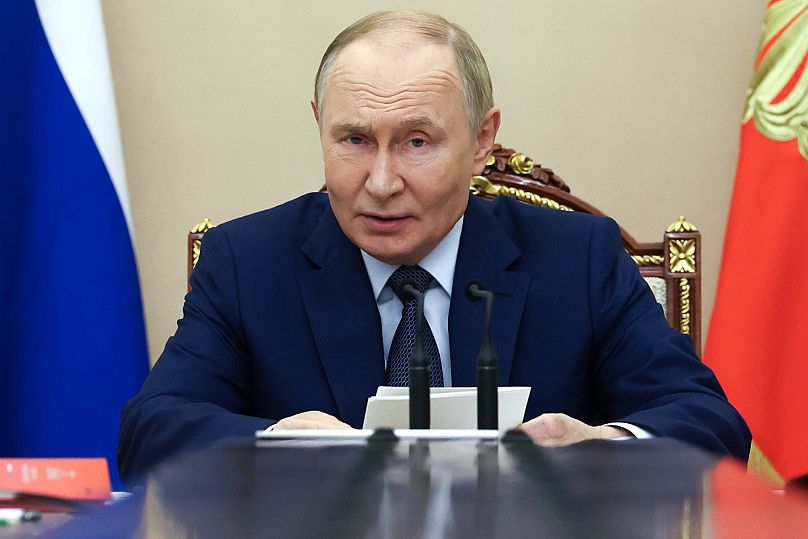
Russia's President Vladimir Putin said on Monday that Moscow will adhere to nuclear arms limits for one more year after the last remaining nuclear pact with the United States expires in February.

Putin said that the termination of the New START agreement would have negative consequences for global stability.

Speaking at a meeting with members of Russia's Security Council, he said that Russia would expect the US to follow Moscow's example and also stick to the treaty's limits.

The New START, signed by then-US and Russian presidents, Barack Obama and Dmitry Medvedev, limits each country to no more than 1,550 deployed nuclear warheads and 700 deployed missiles and bombers.

Its looming expiration and the lack of dialogue on anchoring a successor deal have worried arms control advocates.

Russian President Vladimir Putin chairs a Security Council meeting at the Kremlin in Moscow, 22 September, 2025 AP Photo
The agreement envisages sweeping on-site inspections to verify compliance, but they have been dormant since 2020.

In February 2023, Putin suspended Moscow’s participation in the treaty, saying Russia could not allow US inspections of its nuclear sites at a time when Washington and its NATO allies openly declared Moscow's defeat in Ukraine as their goal.

Moscow has emphasised, however, that it was not withdrawing from the pact altogether and would continue to respect the caps on nuclear weapons the treaty has set.

Prior to the suspension, Moscow claimed it wanted to maintain the treaty, despite what it called a "destructive" US approach to arms control.

Kremlin spokesperson Dmitry Peskov told reporters it was necessary to preserve at least some "hints" of continued dialogue with Washington, "no matter how sad the situation is at the present time."

"We consider the continuation of this treaty very important," he said, describing it as the only one that remained "at least hypothetically viable".

"Otherwise, we see that the United States has actually destroyed the legal framework" for arms control, he said.

Together, Russia and the United States account for about 90% of the world's nuclear warheads.

The future of New START has taken on added importance at a time when Russia's full-scale invasion of Ukraine has pushed the two countries closer to direct confrontation than at any time in the past 60 years.

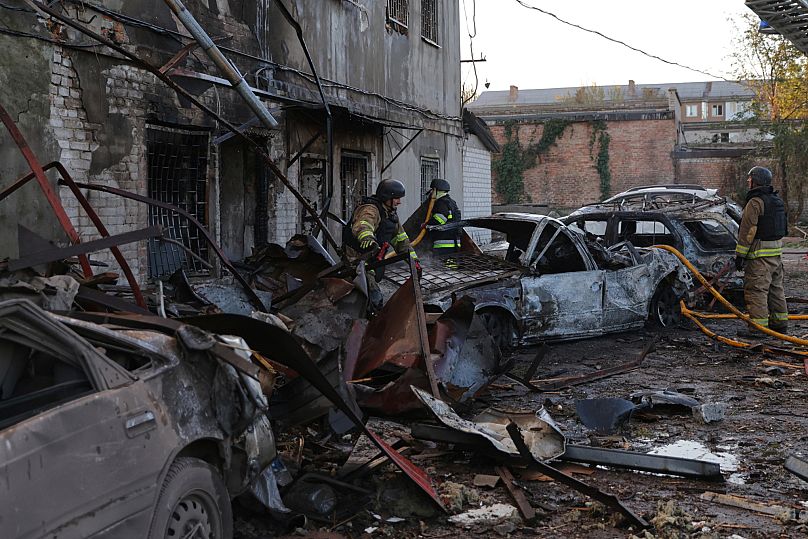
Rescuers work at a building destroyed during a Russian strike in Zaporizhzhia, 22 September, 2025 AP Photo

In September last year, Putin announced a revision to Moscow's nuclear doctrine, declaring that a conventional attack by any non-nuclear nation with the support of a nuclear power would be seen as a joint attack on his country.

The threat, discussed at a meeting of Russia’s Security Council, was clearly aimed at discouraging the West from allowing Ukraine to strike Russia with longer-range weapons and seems to significantly reduce the threshold for potential use of Russia’s nuclear arsenal.

Putin did not specify whether the modified document envisages a nuclear response to such an attack.

However, he emphasised that Russia could use nuclear weapons in response to a conventional attack posing a "critical threat to our sovereignty," a vague formulation that leaves broad room for interpretation.

Additional sources

 SECURITY STATE

Albania shifts to high-tech policing with expanded use of security cameras and surveillance drones

Albania shifts to high-tech policing with expanded use of security cameras and surveillance drones
By bne IntelliNews September 21, 2025

Albanian Prime Minister Edi Rama has unveiled a vision for the country’s internal security, with a major expansion of surveillance technology, including intelligent cameras, drones, and satellite monitoring, alongside the appointment of Albana Koçiu as the country’s first female minister of internal affairs.

The announcement signals a significant increase in the use of technology for public security in Albania, reflecting a broader trend in the Western Balkans of leveraging cameras, drones, and AI to enhance law enforcement and administrative oversight. However, such moves in both Albania and Serbia have raised concerns about privacy and how the data gathered may be used by the authorities. 

Speaking at the presidential palace following the swearing-in of the new cabinet on September 18, Rama said the ministry would move beyond its traditional police-centric role to address a broader range of public safety and administrative challenges, from road safety and school security to fire prevention and territorial monitoring.

“Higher road safety will begin with the deployment of intelligent cameras along major national routes and in urban areas,” Rama said. “School security will be enhanced with video recording systems accessible to both authorities and parents, preventing minor disputes from escalating into violence.”

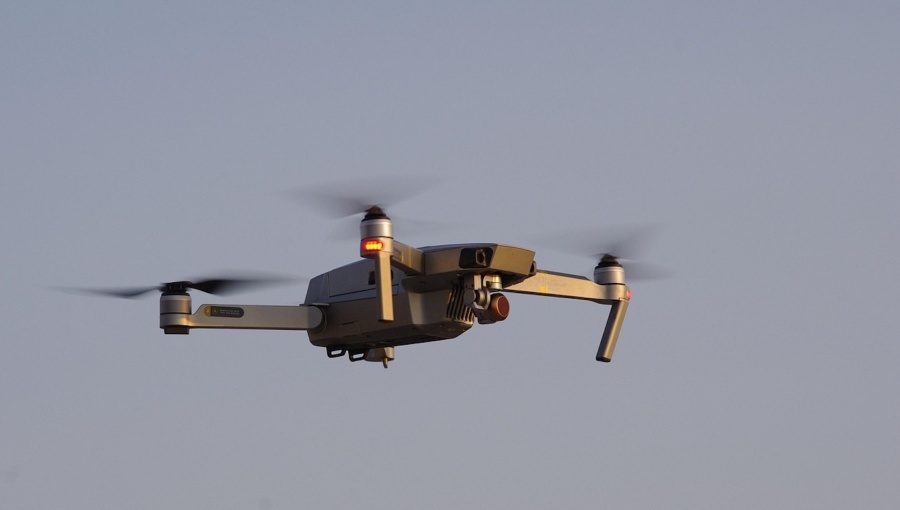
Rama emphasised the use of aerial surveillance, saying that intelligent drones and satellite systems would be used to monitor Albania’s beaches, rivers, and other public territories in real time. 

“We already have these systems at an advanced stage,” he said, according to a government statement, “but one last component is needed to make any violation recognisable immediately, not periodically.”

The prime minister also outlined plans for the tracking of goods and cybersecurity measures. A new state-owned company, AlbTrace, created through a partnership with a leading United Arab Emirates (UAE) firm, will provide real-time monitoring of imported goods, medical supplies, and fuel, according to Rama.

While promoting technology, Rama stressed it would not replace human responsibility. “Digital tools and artificial intelligence can help, but they cannot replace civic responsibility, education, or the work of teachers and parents,” he said, noting the importance of respect for traffic rules, property, and environmental stewardship.

Koçiu, who takes over as interior minister, will lead the ministry’s transformation to align with European standards. Rama described her appointment as the “logical starting point” for a qualitative shift in internal affairs, saying that the ministry must adopt a 360-degree perspective on public security and administration.

Rama also highlighted longstanding gaps in Albania’s internal affairs infrastructure, including outdated address systems and under-resourced firefighting services, which he said would be modernised alongside the expansion of surveillance capabilities.

The prime minister framed these reforms as part of Albania’s EU accession ambitions, saying that a modernised and technologically advanced internal affairs apparatus was critical to achieving membership by 2030.

However, plans for increase use of security cameras and other forms of surveillance have raised concerns in Albania and other Western Balkan countries. 

Human rights activists objected after the Albanian government signed a memorandum of understanding with a the UAE’s Presight AI on a ‘smart city’ project that would have involved setting up security cameras and other equipments in the country’s major cities.

Serbia was also revealed earlier this year to be expanding a controversial Chinese-made surveillance system, according to documents leaked to RFE/RL. Security cameras have already been installed in Belgrade, where rights activists warn they can be used to identify protesters using biometric facial recognition.