Monday, September 22, 2025


Our actions are dictated by “autopilot”, not choice, finds new study


University of Surrey


Habit, not conscious choice, drives most of our actions, according to new research from the University of Surrey, University of South Carolina and Central Queensland University. 

The research, published in Psychology & Health, found that two-thirds of our daily behaviours are initiated “on autopilot”, out of habit.  

Habits are actions that we are automatically prompted to do when we encounter everyday settings, due to associations that we have learned between those settings and our usual responses to them. 

The research also found that 46% of behaviours were both triggered by habit and aligned with conscious intentions, suggesting that people form habits that support their personal goals, and often disrupt habits that conflict with them. 

While there have been previous attempts to estimate the prevalence of habits in our day-to-day lives, this study used a new method to capture habits in action. The international research team surveyed 105 participants from the UK and Australia, sending six random prompts to their phones each day for a week, asking them to describe what they were currently doing, and whether it was triggered out of habit or done intentionally. 

The study found that 65% of daily behaviours were habitually initiated, meaning people were prompted to do them out of routine rather than making a conscious decision.  

Professor Benjamin Gardner, Professor in Psychology at the University of Surrey and co-author of the study, said: 

“Our research shows that while people may consciously want to do something, the actual initiation and performance of that behaviour is often done without thinking, driven by non-conscious habits. This suggests that “good” habits may be a powerful way to make our goals a reality. 

"For people who want to break their bad habits, simply telling them to “try harder” isn't enough. To create lasting change, we must incorporate strategies to help people recognise and disrupt their unwanted habits, and ideally form positive new ones in their place."   


The findings may have broader implications for public health and wellness interventions. The researchers recommend that initiatives designed to help people adopt new behaviours, like exercising or eating healthier, should focus on building new, positive habits.  

For example, for someone trying to take up exercise, inconsistent exercising may not be enough. The most effective strategy would involve identifying an everyday situation in which exercise can realistically be done – for example, at a certain time of day, or following a regular event, like leaving work – and consistently doing some exercise in that situation.  

Likewise, to break a bad habit like smoking, simply wanting to quit may not cut it. The most effective strategies would involve disrupting triggers (e.g. avoiding places where they used to smoke) and creating new routines (e.g. chewing gum after a meal instead of having a cigarette). 

Dr Amanda Rebar, Associate Professor at the University of South Carolina and lead author of the study said: 

“People like to think of themselves as rational decision makers, who think carefully about what to do before they do it.  

“However, much of our repetitive behavior is undertaken with minimal forethought and is instead generated automatically, by habit.” 

Dr Grace Vincent, Sleep Scientist and Associate Professor at Central Queensland University and co-author of the study, said the findings offer hope to people trying to develop healthier lifestyles: 

“Our study shows that two-thirds of what people do each day is sparked by habit, and most of the time those habits are also aligned with our intentions. 

“This means that if we set out to create a positive habit, whether that’s around better sleep hygiene, or nutrition, or general wellbeing improvements, we can rely on an internal “autopilot” to take over and help us maintain those habits.  

“Unfortunately, not all habits are created equal. Exercise was the exception in our findings, as it was often triggered by habit, but less likely to be achieved purely “on autopilot”, compared to other behaviours.” 

[ENDS] 

Notes to editors 

  • The manuscript of the paper is available upon request. 


Koala stress linked to disease threat


University of Queensland

Koala release after chlamydia treatment 

image: 

Many koalas in the University of Queensland study were successfully treated for Chlamydia before being released back into the wild. 

view more 

Credit: Currumbin Wildlife Hospital


Australian researchers have revealed a clear relationship between stress and increased disease risk in koalas in South East Queensland and on the New South Wales North Coast.

A study led by Dr Michaela Blyton at The University of Queensland measured and tracked the level of koala retrovirus (KoRV) in groups of captive and wild koalas.

“We wanted to see what happened to their KoRV loads over time and how it related to chlamydial infection and levels of the stress hormones cortisol and corticosterone in their faeces,” Dr Blyton said.

“Virus load likely weakens the immune system, so those with a higher KoRV load are more at risk of diseases such as Chlamydia which can cause blindness, infertility and death.

“Poor quality or disappearing habitat may increase stress and the koalas with higher average cortisol levels had higher average KoRV loads.

“We have confirmed the biggest threats faced by koalas of habitat loss and disease are connected – this is very important to know to improve support for remaining koala populations.” 

The 67 koalas in the study included wild koalas being treated for Chlamydia before being released, others in a Chlamydia vaccine trial and a small number of animals kept in captivity because of injury or ill health.

“Our study showed KoRV loads within individual animals were very stable over time,” Dr Blyton said.

“Even when a koala with Chlamydia was successfully treated for that infection, their KoRV load did not decrease.

“That tells us the direction of causation is high KoRV load leading to an increased susceptibility to chlamydial infection and not the other way around.

“KoRV load could be underpinning the Chlamydia epidemic among koalas in northern New South Wales and South East Queensland.”

The study at UQ’s School of Chemistry and Molecular Biosciences was supported by the Port Macquarie Koala Hospital, Currumbin Wildlife Hospital and funded by the NSW Government under the NSW Koala Strategy.

“When we’re looking at koala conservation strategies, we need to be taking a holistic approach because disease and environmental factors are linked,” Dr Blyton said.

“The best thing is to preserve good quality habitat and the populations of koalas it supports.

“We are involved in Koala Conservation Australia’s breed to release program, where we are now screening and preferencing animals with low KoRV loads to hopefully give their offspring greater protection against Chlamydia and other infectious diseases.

“We are also aiming to investigate antiretrovirals to reduce KoRV loads in individuals to give them a better chance of fighting off Chlamydia and reducing transmission to the next generation.”

The research paper is in the Journal of General Virology, published by the Microbiology Society which is a membership charity for scientists interested in microbes, their effects and practical uses.


Scientists call for urgent action to reduce children’s plastic exposure


NYU Langone Health / NYU Grossman School of Medicine


Childhood exposure to chemicals used to make plastic household items presents growing health risks that can extend long into adulthood, experts from NYU Langone Health report.  

This is the main conclusion after a review of hundreds of the latest studies on the topic, publishing online Sept. 21 in the journal The Lancet Child & Adolescent Health.

The article is being released to coincide with a gathering of experts the same week in New York City to discuss the global impact of plastics on human health.

In their report, the authors outline decades of evidence that substances often added to industrial and household goods may contribute to disease and disability, particularly when they are encountered early in life. The review focuses on three classes of chemical — phthalates used to make plastic flexible, bisphenols, which provide rigidity, and perfluoroalkyl substances (PFAS), which help materials resist heat and repel water.

The results of the studies, which together assessed thousands of pregnant mothers, fetuses, and children, tied these toxins to a wide range of long-term health concerns, including heart disease, obesity, infertility, and asthma.

“Our findings point to plastic’s role in the early origins of many chronic diseases that reverberate into adolescence and adulthood,” said study lead author and pediatrician Leonardo Trasande, MD, MPP. “If we want kids to stay healthy and live longer, then we need to get serious about limiting the use of these materials,” added Trasande, the Jim G. Hendrick, MD, Professor of Pediatrics at NYU Grossman School of Medicine.
 
The chemicals are found in a range of items, such as food packaging, cosmetics, and paper receipts, notes Trasande, who is also a professor in the Department of Population Health. Experts have found that as plastics are used, heated, or chemically treated, microplastic and nanoparticles are released and become ingested.

Chemicals used in plastic materials have been shown to prompt an overactive immune response (inflammation) throughout the body’s tissues as well as disrupt the function of hormones that influence many bodily processes. The substances are also believed to affect brain development, with numerous studies linking early-life exposure to IQ loss and neurodevelopmental issues such as autism and attention deficit hyperactivity disorder.

The Lancet review also explored strategies to reduce the use of plastic and to help safeguard human health.  

“There are safe, simple steps that parents can take to limit their children’s plastic exposure without breaking the bank,” said Trasande, who serves as director of NYU Grossman School of Medicine’s Division of Environmental Pediatrics and NYU Langone Health’s Center for the Investigation of Environmental Hazards.

Replacing plastic containers with glass or stainless steel, and avoiding microwaving and dishwashing plastic, have proved helpful, he says.

Trasande adds that by offering clear guidance, health care providers can empower parents to make informed decisions about the products they use and steer them toward safer options. He also suggests that clinicians partner with schools and community organizations to engage younger generations about the health risks of plastic exposure.  

At the policy level, the researchers call for stricter regulatory measures to reduce the use of nonessential plastic items, particularly in low-income communities with profound heath disparities.

Their review comes on the heels of the most recent round of negations for the United Nations’ Global Plastics Treaty, which took place in Geneva last month. The developing treaty represents an international effort to tackle plastic pollution, with more than 100 countries calling for legally binding caps on production.

According to Trasande, the findings in the article support the urgent need for a strong agreement to help protect not only the environment but human health as well.

He notes that while the economic value of the plastics industry is commonly raised as a barrier to enacting regulations, the resulting health care costs from exposure are enormous, with his research estimates reaching roughly $250 billion per year in the United States alone.

The Global Plastics Treaty will be part of the discussion during NYU Langone Health’s 2025 Plastics, Human Health, and Solutions Symposium. At the event, experts will discuss the latest research on the health impact of microplastics, recent policy developments, and the critical role of regulations in addressing this public health crisis.

Despite its health risks, plastic can play an essential role in pediatric medicine, such as its use in ventilators and feeding tubes for premature infants, nebulizers for children with asthma, and masks that help prevent the spread of infection. The findings, the researchers say, do not challenge the need for the material in health care but instead highlight the dangers of its unnecessary use elsewhere.

The symposium will be held at NYU Langone Health on Sept. 22. The event will also be live streamed on YouTube for registered attendees.

Funding for the study was provided by National Institutes of Health grants R01ES022972, R01ES029779, R01ES032214, R01ES034793, and P2CES033423. Further funding was provided by several Argentinian foundations as well as the Science Fund of the Republic of Serbia.

Along with Trasande, Marina Olga Fernandez, PhD, at the National Council for Scientific and Technical Research in Buenos Aires, Argentina, serves as study senior author.

Another study co-investigator is Aleksandra Buha Đorđević, PhD, at the University of Belgrade in Serbia.

###

About NYU Langone Health
NYU Langone Health is a fully integrated health system that consistently achieves the best patient outcomes through a rigorous focus on quality that has resulted in some of the lowest mortality rates in the nation. Vizient, Inc., has ranked NYU Langone No. 1 out of 118 comprehensive academic medical centers across the nation for four years in a row, and U.S. News & World Report recently ranked four of its clinical specialties number one in the nation. NYU Langone offers a comprehensive range of medical services with one high standard of care across seven inpatient locations, its Perlmutter Cancer Center, and more than 320 outpatient locations in the New York area and Florida. With $14.2 billion in revenue this year, the system also includes two tuition-free medical schools, in Manhattan and on Long Island, and a vast research enterprise.

Media Inquiries
Shira Polan
Phone: 212-404-4279
Shira.Polan@NYULangone.org


What Nepal's Gen Z revolt means for India, China and US

Lekhanath Pandey in Kathmandu
DW
22/09/2025

A youth uprising in Nepal toppled the ruling coalition like a house of cards, leaving many observers baffled. As the new era starts, major powers such as India, China, and the US will all try to shape Nepal's future.


The government was ousted after unrest fueled by the Nepal's younger generation
Image: Niranjan Shrestha/AP Photo/picture alliance

In Nepal, millions of people are still reeling from an anti-corruption rebellion led by the country's urban youth, which ousted the government led by K P Sharma Oli earlier this month.

Oli's power collapsed within mere days — so quickly, in fact, that some Nepalese now speculate that protesters must have had help from abroad. A rare congratulatory message from religious leader Dalai Lama further fueled the debate on social media.

Others affirm that the revolution was conducted by the Nepalese themselves.

"The Gen Z campaign is often compared to movements in Bangladesh, Sri Lanka or Syria," Kathmandu-based journalist Devendra Bhattarai wrote in a recent column.

"But it must not be forgotten that this is less the result of outside influence," he wrote, "and more a revolution born and nurtured by Nepali leaders here."


Political scientist Sucheta Pyakurel told DW that the government's ouster was a "revolution of mass frustration" generated by lack of opportunities and cronyism.

At the same time, she also pointed to a "correlation between sovereignty and external influence."

"As we lose our grip on both the state institutions and the market — with so many youths leaving for jobs abroad — external influence naturally grows," she said.
Nepal's international balancing act

Nepal, a Himalayan nation of nearly 30 million people wedged between India and China, has struggled with instability for many years.

Between the adoption of a new constitution in 2015 and the latest deadly unrest, the country has seen eight governments centered around the same three leaders: Oli, of CPN-UML; Sher Bahadur Deuba, of Nepali Congress; and Pushpa Kamal Dahal, of CPN (Maoist-Center).

Parts of Nepal's political scene, especially left-leaning and pro-monarchy forces, have repeatedly claimed that foreign powers such as India, the United States and the European Union are behind Nepal's frequent political shifts. China has only recently joined this line-up, as its traditional image of "quiet diplomacy" has waned.

Officially, Kathmandu pursues a "nonaligned foreign policy" — a principle established by King Prithvi, who united modern Nepal in 1768. A key element of this policy could be summed up as "friendship with all and enmity with none" to ensure diplomatic and developmental support from all sides, especially India and China.

Nepal also views the United States as its "third neighbor" because of t'h US's global dominance. In turn, India, China and the United States all have genuine stakes in Nepal and concerns regarding sudden shifts in the nation's politics.
Stuck between India and China

Nepal and India enjoy deep cultural, economic and security ties. India also shares a 1,751-kilometer (1,066-mile) open border with the smaller country.


Because of its geographic and cultural proximity, India experiences the immediate impact of instability in Nepal. Security is a prime concern, but India also seeks a reliable partner in Kathmandu to continue pursuing smooth relations.

Nepal shares northern border with China's Tibet Autonomous Region, and Beijing views instability in Nepal as a potential threat to Tibet's security.


China insists that Nepal uphold the "One China Policy" and prevent anti-China activities on its soil. Nepal repeatedly reaffirmed this principle, recognizing Tibet, Hong Kong, Macao and Taiwan as integral parts of China.

Western stake in Nepal

In 2017, Nepal joined China's Belt and Road Initiative (BRI), with the vision of multidimensional trans-Himalayan networks connecting two countries, including railways, roads, and digital and energy links.

"Nepal's foreign policy is all about its efforts to maintain a delicate balance with all three regional and global powers," Chandra Dev Bhatta, a geopolitical analyst, told DW.

"For Beijing, a stable and peaceful Nepal serves two purposes: safeguarding Tibet's security and rallying smaller states behind China's global policies," Bhatta said.

At the same time, Kathmandu also seeks to maintain ties with the US and its allies, including the EU, Japan, South Korea and Australia. These nations support Nepal's policy frameworks through government-to-government programs and civil society funding.

Recently, the United States provided a $530 million (€450 million) Millennium Challenge Corporation (MCC) grant to scale up Nepal's energy grids and road infrastructure. The MCC is seen as the Western countermeasure to China's Belt and Road Initiative.

How close was Oli to Beijing?

In recent years, Nepal has moved close to China diplomatically and economically.

Analysts point to China's apparent preference for Nepal's left-leaning parties — especially the Maoists and CPN-UML.

Since Chinese President Xi Jinping's state visit to Kathmandu in October 2019, left-leaning prime ministers and presidents have repeatedly visited China. Just days before the outbreak of deadly protests in Nepal, then-Prime Minister Khadga Prasad Sharma Oli attended a military parade in Beijing marking the 80th anniversary of China's victory over Imperial Japan.

During this visit, Oli raised Nepal's concerns about the agreement between India and China to open up economic and pilgrimage routes through Lipulekh Pass, a territory Nepal has claimed historically. On the sidelines, he also met Russian President Vladimir Putin, and Indian Prime Minister Narendra Modi.

Also, the Chinese side claims that Nepal expressed support for the Global Security Initiative (GSI) — still a loosely defined idea to form a security bloc spearheaded by China, in what would be a breach of Nepal's neutrality policy. However, the Nepali side has denied Oli endorsed the GSI.

Bhatta said Oli's strategy of leaning on China was "uncommon."

"Since our engagement is greater with India and the West, our strategic tilt toward China could be viewed unfavorably," he said.

Japan was the first nation to congratulate the regime change in Nepal, hinting at Tokyo's displeasure with Oli's diplomatic course.
Karki's government still an unknown

The interim government, led by former Supreme Court Justice Sushila Karki, was also warmly welcomed by the international community, including India, China, the US, the EU and the UN.

During a phone call with Karki last week, Prime Minister Narendra Modi reaffirmed India's "steadfast support for her efforts to restore peace and stability." In turn, the Chinese Foreign Ministry said Beijing "respects the development path chosen independently by the people of Nepal."

The interim government is currently focused on organizing elections that would see it hand power to an elected Cabinet. It is therefore too early to predict how the interim leaders would shape ties with global and regional powers.

Indra Adhikari, a board member of Nepal's Policy Research Institute, said there were voices claiming credit for Nepal's political shift in various power corridors.

She wcautioned that "Nepal should refrain from deviating from its foreign policy mantra of nonalignment and falling into a geopolitical trap."

Edited by: Darko Janjevic

Lekhanath Pandey Reporter based in Kathmandu

Pakistan: 3 transgender women shot dead in Karachi
DW with AP, AFP
22/09/2025

The bodies of three transgender women were found on a roadside, having seemingly been shot at close range. It was the second attack in a week on transgender people in Pakistan's largest city.


Activists say the trans community in Pakistan is 'being systematically targeted'
Image: Rizwan Tabassum/AFP/Getty Images

Three transgender women were shot and killed on the outskirts of Pakistan's largest city, Karachi, this weekend, local police confirmed on Monday.

The victims, whose bodies were found on a roadside on Sunday, appeared to have been shot at close range, and were later buried in a local graveyard.

Ordering a probe into the shooting, Murad Ali Shah, chief minister of Pakistan's southeastern Sindh province, said "transgender [people] are an oppressed section of society," adding: "We must all give them dignity and respect."

Pakistan: Second attack on transgender people in one week

Police said the precise motive behind the murders was unclear, but the incident comes just days after another transgender woman was seriously injured in a knife attack at Karachi's popular Sea View Beach.

"These back-to-back tragedies show that the community is being systematically targeted," said Pakistan's Gender Interactive Alliance in a statement, demanding immediate arrests, a dedicated police protection unit for transgender people and greater solidarity from the general public.

"This is not just about individual killings; it is an attempt to terrorize and silence an entire community."

"When hate speech and campaigns are carried out so openly, outcomes like this are inevitable," Shahzadi Rai, a trans activist and government-appointed local councilor in Karachi, told the French AFP news agency.

"Even though the state and police are on our side, killings are still occurring, which indicates that deep-rooted hatred against transgender people persists in our society."

Pakistan's transgender community lives in fear  02:45

Karachi: Transgender community protests

On Sunday, members of Pakistan's transgender community staged a protest outside Karachi's state-run Jinnah Hospital, where the bodies underwent autopsies. The protesters warned of nationwide demonstrations if the killers were not brought to justice.

"If the police fail to identify the killers, we will announce a countrywide protest," transgender rights activist Bindiya Rana told the Associated Press, lamenting that such targeted violence "is not new; it is deeply embedded in our society."

Pakistan's landmark passing of a Transgender Rights Act in 2018 was regarded as a progressive move, lauded around the world for the protections it granted the community.

But religious groups in the country said it was against Islamic law, calling it "a conspiracy to destroy our family system." Key provisions of the act were later revoked by a sharia court.

Edited by: Karl Sexton

Matt Ford Reporter for DW News and Fact Check


WAIT, WHAT?!

14 killed as rival Ecuadoran inmates fight with guns, explosives

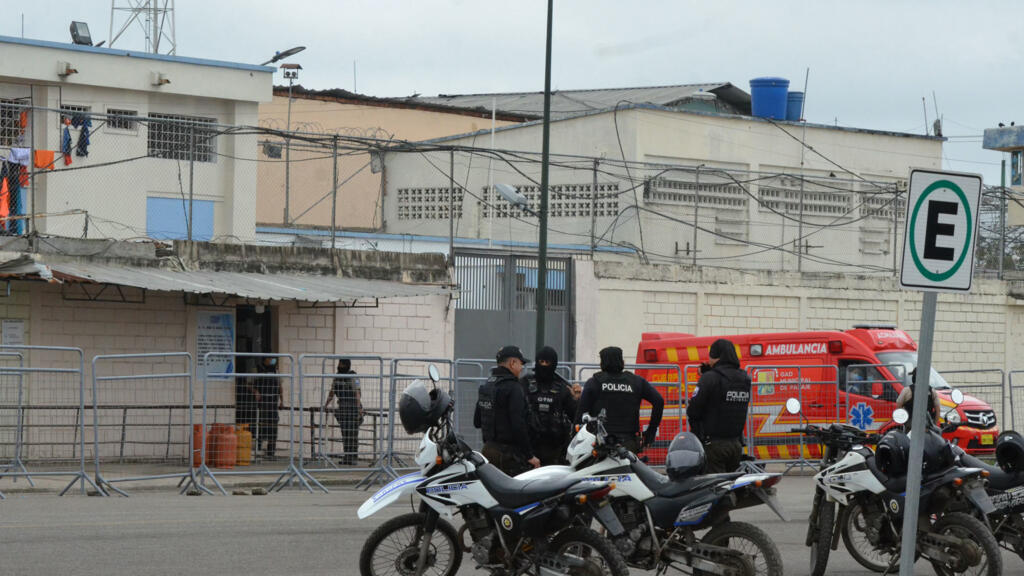
Machala (Ecuador) (AFP) – Inmates in Ecuador fought each other with guns and explosives in a riot that left 13 prisoners and a guard dead, police said Monday.


Issued on: 22/09/2025 - RFI

Police officers stand guard outside Machala prison in Ecuador, where 13 inmates and a prison guard were killed in a riot © Ariel Suárez / AFP

The mayhem was the latest in a series of bloodbaths to engulf gang-ridden, overcrowded prisons in a once-peaceful country now at ground zero of the violent Latin American drug trade.

An unknown number of inmates escaped in the clash between rival gangs, during which another 14 people were injured, a masked police officer identified as commander Colonel William Calle told the Ecuavisa channel.

Thirteen inmates have been recaptured.

Calle said gunfire broke out in the early morning hours, alerting prison guards and police who rushed to that part of the prison in the city of Machala, in southwest Ecuador near the Peruvian border.

One guard was killed as he entered, and others were taken hostage, said the officer.

Calle said the confrontation lasted about 40 minutes, during which inmates "fired guns, threw bombs, grenades."

Videos released by the police show heavily armed officers entering the prison to the sound of explosions.

"I'm a police officer," a man can be heard shouting from inside a cell. Another voice can be heard pleading: "Please don't shoot."

The dead inmates belonged to the rival Los Choneros and Los Lobos gangs, two of the biggest drug trafficking groups in Ecuador, which were been designated foreign terrorist organizations by the United States earlier this month.

Police said the violence was the result of "fighting between gangs" in a facility housing double the number of inmates it was designed for.

Organized crime has transformed Ecuador, a country of about 17 million, into one of the most violent nations in the world.

Calle said "control has already been regained" over the prison.

He did not specify the fate of the hostages or how many inmates were on the run.
'Internal armed conflict'

Nestled between the globe's top two cocaine exporters -- Colombia and Peru -- Ecuador has seen violence spiral in recent years as rival gangs with ties to Mexican and Colombian cartels vie for control.

More than 70 percent of all cocaine produced in the world now passes through Ecuador's ports, according to government data.

Gang wars have largely played out inside the country's prisons, where some 500 inmates have been killed since February 2021, often in gruesome fashion -- their bodies dismembered and burnt.
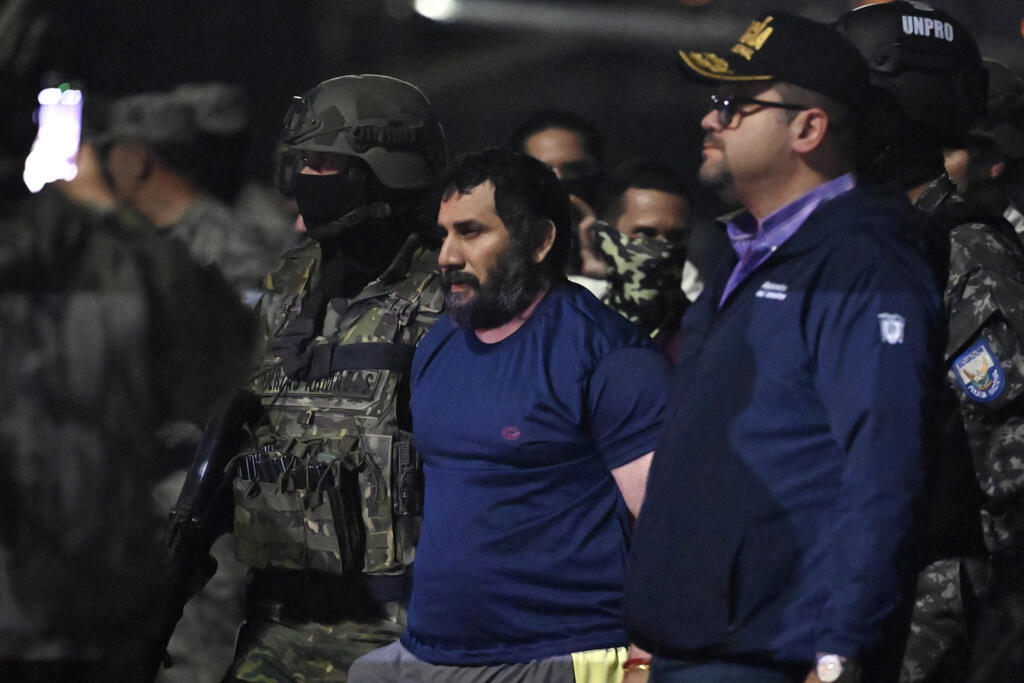
Top Ecuadoran drug trafficker, Adolfo Macias, alias Fito, was recaptured in June 2025, more than a year after his jailbreak triggered deadly violence in Guayaquil © Marcos PIN / AFP

Ecuador's biggest prison massacre happened in 2021, when over 100 inmates died in clashes in the port of Guayaquil in the southwest.

Prisoners went live on social media to broadcast the violence, showing decapitated and charred bodies.

Last year, gang members took scores of prison guards hostage after the jailbreak of narco boss, Jose Adolfo Macias, aka "Fito," while allies on the outside detonated bombs and held a television presenter at gunpoint live on air.

President Daniel Noboa declared a "state of internal armed conflict" and ordered that the military take control of the prisons. Last month, however, eight penitentiaries, including Machala, were returned to police control.

Fito -- the boss of Los Choneros -- was recaptured in June this year, more than a year after his escape.

He had been serving a 34-year sentence since 2011 for involvement in organized crime, drug trafficking and murder, but continued pulling the strings of the criminal underworld from behind bars.

Videos emerged of Fito holding wild parties, some with fireworks, illustrating the lawlessness of Ecuador's prisons.

Los Choneros has ties to Mexico's Sinaloa cartel, Colombia's Gulf Clan -- the world's largest cocaine exporter -- and Balkan mafias, according to the Ecuadorian Organized Crime Observatory.

© 2025 AFP
FERGET IT

US pleads for new beefed-up multi-national force in Haiti

United Nations (United States) (AFP) – The United States and Haiti called Monday for transforming the multi-national security mission deployed in the troubled Caribbean country into a more robust force to target powerful gangs.


Issued on: 22/09/2025 - RFI

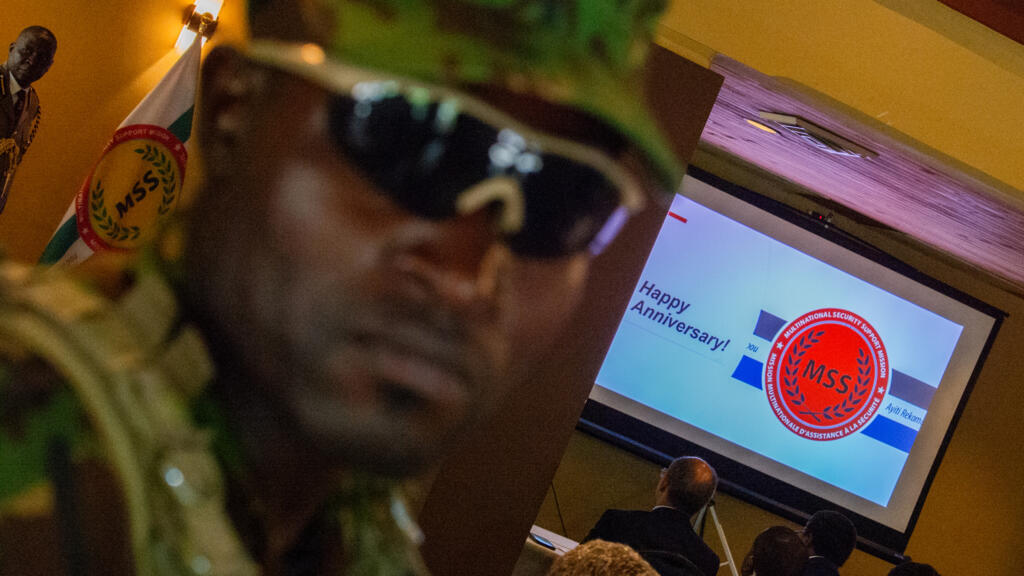
A Kenyan police officer looks on during an event marking the one year anniversary of the arrival of an international security force in Haiti June 26, 2025 © Clarens SIFFROY / AFP/File

The UN Security Council is expected to vote soon on strengthening the security force.

The United Nations Security Council approved the creation of the Multinational Security Mission (MSS), led by Kenya, to support the overwhelmed Haitian police in 2023 in their fight against rampant gang violence.

But the force, under-equipped and under-funded, has deployed only a thousand officers of the 2,500 that had been expected.

The mission "remains limited in its ability to act," Haitian transitional presidential council president Laurent Saint-Cyr said Monday.

"(It) has not yet been able to sustainably secure territory, and the gangs have exploited these shortcomings to reorganize and extend their influence," said Saint-Cyr Monday during a meeting at the UN.

He threw his support behind the initiative proposed by the United States and Panama to expand the current deployment.

"This mandate would empower the force to proactively target gangs and restore security to Haiti while ensuring it has the appropriate tools to succeed the mission's anticipated objectives," Christopher Landau, United States Deputy Secretary of State, said.

Those objectives "include reducing territorial control by gangs, securing critical infrastructure and conducting anti-gang operations," he added

The new force could include up to 5,550 uniformed personnel, both police and soldiers, and no longer just police, according to the latest draft resolution seen by AFP.

It would be accompanied by the creation of a UN support office suggested several months ago by Secretary-General Antonio Guterres to provide the necessary logistical and financial support.

"Unfortunately, adopting this resolution is not a given. Despite the majority support of the Security Council, some might try to prevent its adoption or slow down our response to Haiti," Landau said.

Russia and China, which have veto power, have so far not fully participated in negotiations, a diplomatic source said.

China has already expressed skepticism about the feasibility of the force without a political transition in Haiti.

© 2025 AFP
UK charities axe Prince Andrew's ex-wife over Epstein email

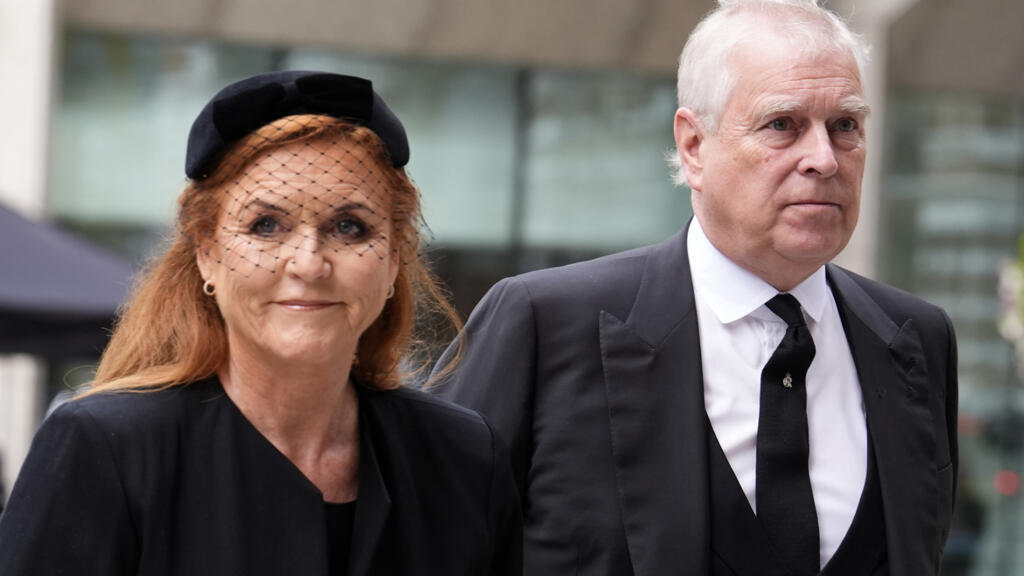
London (AFP) – Numerous UK charities Monday severed ties with Sarah Ferguson, the ex-wife of disgraced Prince Andrew, after a new email emerged in which she called convicted US sex offender Jeffrey Epstein a "supreme friend" and sought forgiveness for "letting him down".


Issued on: 22/09/2025 - 

Sarah Ferguson and Prince Andrew at the London funeral of the Duchess of Kent last week © / POOL/AFP

In the 2011 message obtained by The Mail on Sunday, Ferguson -- widely known by her nickname Fergie -- called him a "steadfast, generous and supreme friend" and apologised for disowning him.

The Duchess of York told Epstein she had been instructed to give a critical interview about him weeks earlier to protect "my career as a children's book author and children's philanthropist".

In that interview, Ferguson vowed to "never have anything to do with" Epstein again and called a £15,000 ($20,000) loan the billionaire had made to her "a gigantic error of judgement".

But she said in her later email: "I know you feel hellaciously let down by me. And I must humbly apologise to you and your heart for that."

Ferguson, 65, has previously said Epstein gave her the loan to help her pay off debts.


On Monday, at least six charities that she was a patron of confirmed they had terminated her involvement following the email release, each thanking her for past work and support.

They included the British Heart Foundation, the children's hospice Julia's House, the Children's Literacy Charity, a leading food allergy foundation, the Prevent Breast Cancer group as well as the Teenage Cancer Trust organisation.

"Julia's House has taken the decision that it would be inappropriate for her to continue as a patron," it said in a statement.

Nadim and Tanya Ednan-Laperouse, founders of The Natasha Allergy Research Foundation, said they were "disturbed" by the correspondence with Epstein.

"Sarah Ferguson has not been actively involved with the charity for some years," they noted in a statement.

"She was a patron but, in the light of the recent revelations, we have taken the decision that it would be inappropriate for her to continue to be associated with the charity."

'Epstein threats'

The duchess had only become a patron of Prevent Breast Cancer last year following her own experience with the disease in 2023.

Ferguson, who married Prince Andrew in 1986 before the couple divorced a decade later, has since reinvented herself as an author, media personality and charity patron.

She has remained close to Andrew -- whose elder brother is King Charles III -- and stayed loyal to him after his public downfall over his own Epstein links.

The pair, who still live together at Royal Lodge in Windsor Great Park, west of London, had been making a tentative return to the public spotlight, both appearing at the Duchess of Kent's funeral last week.

Following the reports about her 2011 email, a spokesman for Ferguson said it was sent "in the context of advice the duchess was given to try to assuage Epstein and his threats".

Reports have said he had been considering a defamation lawsuit against her over the interview.

© 2025 AFP


Cameroon: Amnesty calls for release of 36 activists, five years after crackdown

Cameroon on Monday is marking ​​five years since protests organised by the Cameroon Renaissance Movement (MRC) were violently repressed by the authorities. More than 500 people were arbitrarily arrested, 36 of whom remain in jail. As the country gears up for presidential elections, human rights group Amnesty International is calling for their release.


Issued on: 22/09/2025 - RFI

Hundreds of supporters waiting to greet Cameroonian opposition leader Maurice Kamto in Yaounde on 5 october, 2019, the day of his release from prison. AFP - STRINGER


On 22 September 2020, the opposition party had called for peaceful demonstrations to promote national dialogue, reform of the electoral system, and an end to the conflict in the English-speaking regions.

However, 36 opposition supporters remain in detention in Kondengui prison in Yaoundé, after being sentenced by a military court to between five and seven years' imprisonment.

They were found guilty of "rebellion" or "attempted insurrection" against the state.

Some of those arrested are now nearing the end of their sentences, while others will have to wait several more years, such as Alain Fogué, treasurer of the MRC, or Olivier Bibou Nissack, spokesperson for the opposition leader Maurice Kamto.

Amnesty International has condemned these arbitrary detentions. Fabien Offner, researcher at Amnesty International's regional office for West and Central Africa, calls for their release.

"Unfortunately, there has been no change in recent years with regard to respect for fundamental rights," Offner told RFI.

"This is despite calls from the United Nations High Commissioner for Human Rights and an alarming report from the Committee Against Torture on what is happening in prisons, police stations and gendarmeries in Cameroon."
Arbitrary arrests

"The Cameroonian authorities must immediately release 36 opposition supporters arbitrarily detained for five years for exercising their right to peaceful assembly and put an end to arbitrary detention in the country," Amnesty said on the fifth anniversary of their arrest.

They "have committed no crime other than to express their opinion," Marceau Sivieude, Amnesty International's Regional Director for West and Central Africa said.

The NGO also pointed about that trying civilians in military courts is "incompatible with the right to a fair trial and therefore in violation of the International Covenant on Civil and Political Rights and the African Charter on Human and Peoples' Rights."

Fears over divided opposition and instability, as Cameroon heads to the polls

Among the 36, one has suffered three strokes but has not been released on medical grounds despite requests, according to the lawyer Hippolyte Meli Tiakouang, coordinator of a collective defending detained opposition supporters.

Thirty-six appeals have been lodged since 2022 with the Supreme Court of Cameroon, which has not yet ruled on any of them.

"The delays are unreasonable," said lawyer Tiakouang. "One might think that the judiciary drags things out so that the sentences handed down will be carried out."

On 4 November 2022, the UN Working Group on Arbitrary Detention published a report which found that the detention of 15 of the MRC leaders and activists was arbitrary.

"We are deeply disappointed that the authorities have failed to recognise the arbitrary nature of the ongoing detention of these protesters," Sivieude said.
Rising fears ahead of election

The presidential election will take place in Cameroon on 12 October, with President Paul Biya running for an eighth term.

Biya, 92, has been in power in Cameroon for nearly 43 years, will face 11 other candidates, as the opposition didn't manage to present a united front.

In July, Cameroon's electoral commission barred Kamto because he was running under the banner of the MANIDEM party, which also supported a second candidate.

At the start of this month, the Office of the UN High Commissioner for Human Rights (OHCHR) voiced concern at restrictions on Cameroon's "civic space" as the election nears and also expressed fears about the voters' ability to freely express their choice.

Cameroon's forgotten crisis displaces nearly a million people

On 4 August, at least 54 MRC supporters were arrested next to the Constitutional Council in Yaoundé during pre-election dispute hearings, according to Tiakouang. All of them are now on bail.

Twenty-three are facing prosecution for allegedly inciting revolt and disturbing public order, and if convicted face several years in prison.

Amnesty's Marceau Sivieude says the arrests point to "an alarming crackdown on freedom of expression and peaceful assembly in Cameroon" and that the charges should be dropped.

He says the alarming trend is only likely to intensify as the elections get closer.

"In recent years, anyone who dares criticise the authorities, whether a human rights defender, a journalist, a political activist or a protester, runs the risk of being arbitrarily arrested and detained, tortured or otherwise ill-treated, and tried by military courts. Unfortunately, this trend increases as the presidential election approaches. This travesty of justice must end," he says.


GOOD NEWS

Egypt’s Sisi pardons jailed Egyptian-British activist Alaa Abdel Fattah

Prominent Egyptian-British activist Alaa Abdel Fattah, who spent much of the past decade in jail, became a symbol of the struggle for human rights in Egypt. His pardon Monday by Egyptian President Abdel Fattah al-Sisi followed a long campaign for his release, including a 10-month hunger strike by his activist and academic mother.


Issued on: 22/09/2025 - 
By: FRANCE 24

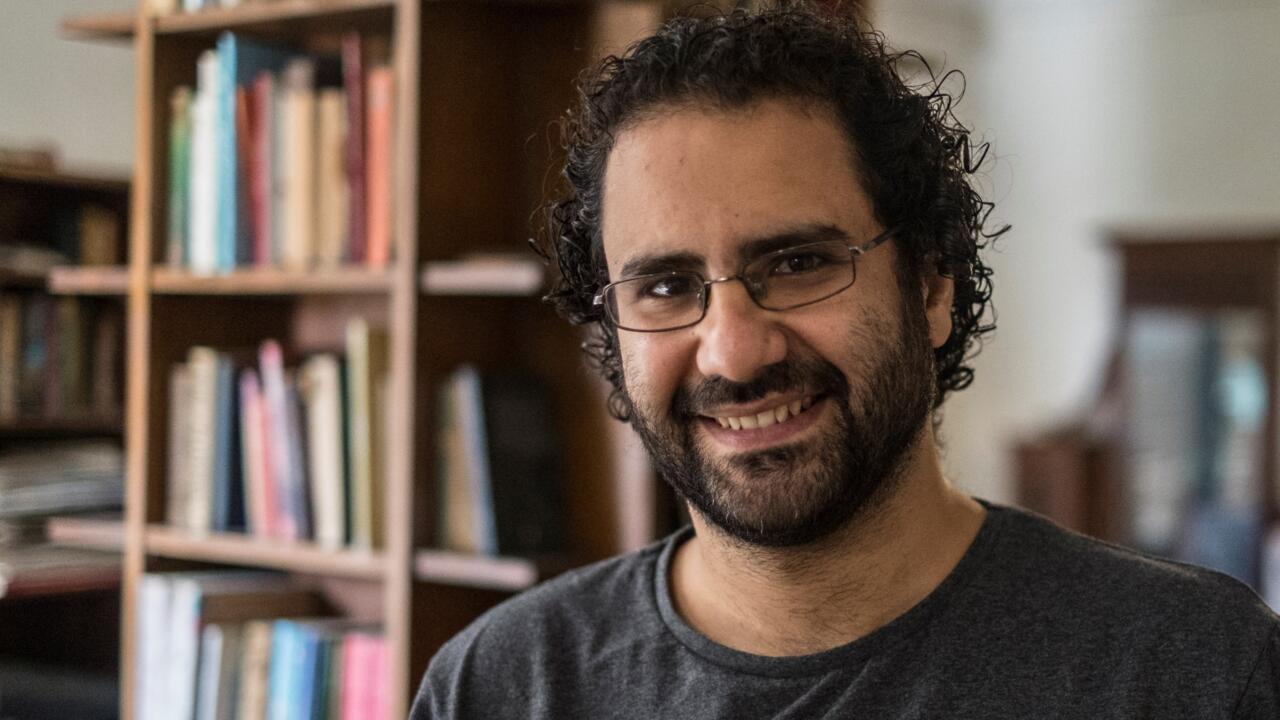
File photo of Egyptian activist taken at his Cairo home on May 17, 2019 before his arrest. © Khaled Desouki, AFP

Egyptian President Abdel Fattah al-Sisi issued a pardon on Monday for prominent activist Alaa Abdel Fattah, who has been jailed for the better part of the past decade, state-linked media reported.

The 43-year-old British-Egyptian national, who was pardoned alongside five others, was a leading figure in Egypt's 2011 uprising and was jailed under each administration since.

"The Egyptian president issues a pardon for the remainder of the prison sentence for a number of convicted persons, after taking the constitutional and legal procedures in this regard," said Al-Qahera News, which is linked to Egypt's state intelligence services.

"The pardon includes ... Alaa Ahmed Seif El-Islam Abdel Fattah," it added.


Following his latest arrest in 2019, Abdel Fattah was sentenced in December 2021 to five years in prison for "spreading false news" after sharing a Facebook post about alleged torture in Egyptian jails.

Read more

Monday's pardon comes just days after Sisi ordered relevant authorities to study a petition submitted by the state-affiliated National Council for Human Rights to pardon a number of individuals, including Abdel Fattah.

It also followed a decision by a Cairo criminal court to remove Abdel Fattah from the country's terrorism list, ruling that recent investigations showed no evidence linking him to the outlawed Muslim Brotherhood group.

The British government has consistently raised Abdel Fattah's case with Egyptian authorities, including during talks between Prime Minister Keir Starmer and Sisi.

The United Nations has also called his detention arbitrary and urged his immediate release.

Alaa's mother, activist and academic Laila Soueif, recently ended a 10-month hunger strike demanding his release.

Abdel Fattah himself has been on hunger strike since the start of September, following a partial strike that began in March in solidarity with his mother.

(FRANCE 24 with AFP)