Friday, October 03, 2025


US offers to buy stakes in Australian critical minerals companies

TRUMP'S MERCANTILIST STATE CAPITALI$M


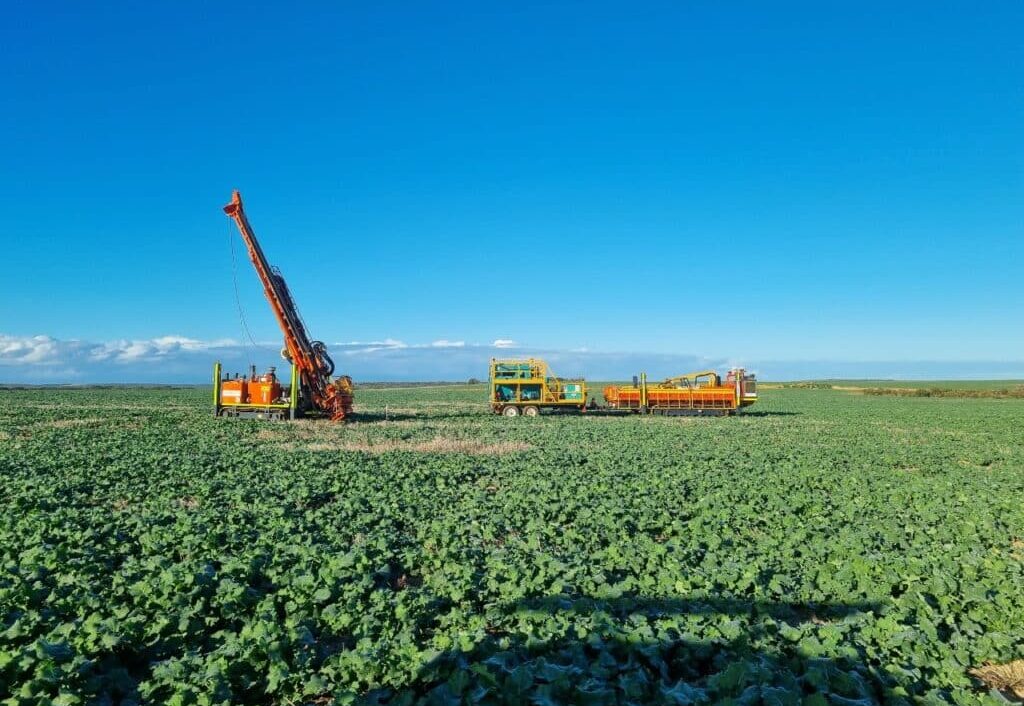
The Springdale project in Western Australia. Image: International Graphite

The US government has offered to buy equity in Australian critical minerals companies as part of a funding package to expand its supply and cut its reliance on China, executives recently returned from Washington said.

The push is part of a plan to establish alternative mineral supply chains after China, the dominant producer of most critical minerals, responded to US tariffs by restricting exports of rare earths and related permanent magnets, which impacted US and European carmakers.

Critical minerals include lithium, cobalt and rare earths, which are essential to technologies used in a variety of sectors, including clean energy, semiconductors and weapons.

US government officials were “saying to companies, you come to us with a proposal and we’ll assess it and try and make it work through those various funding channels and programs that we have available to us,” Andrew Worland, CEO of International Graphite, which is building a mine and processing plant in Western Australia, told Reuters.

Worland was part of an Australian delegation of 15 critical minerals companies that visited Washington and New York last month to meet senior administration officials.

The officials they met included former mining executive David Copley, who heads an office at the US National Security Council focused on strengthening supply chains, and Joshua Kroon, a deputy assistant secretary for critical minerals and metals at the International Trade Administration, Worland said.

Funding pathways could include traditional debt, debt and equity models, which would be debt financing with an “equity kicker,” and also offtakes, where the US could potentially prepay for supply to add to a defence stockpile, Worland said, adding the focus was on getting projects ready for 2027.

The White House did not immediately respond to a request for comment on the discussions with the Australian companies.

The US government has already taken equity holdings in US-listed critical minerals companies. On Tuesday, Reuters reported the US Department of Energy will take a 5% stake in Lithium Americas and a separate 5% stake in the company’s Thacker Pass lithium mine joint venture with General Motors.

The US government will acquire the stakes in Lithium Americas via no-cost warrants, the latest private sector investment by the Trump administration after recent purchases of parts of Intel and MP Materials to boost industries seen as vital to US national security.

Reuters also reported on Tuesday Australia is willing to sell shares in its new strategic reserve of critical minerals to allies including Britain to reduce their dependence on China.

The reserve is expected to be a bargaining chip for Prime Minister Anthony Albanese when he meets President Trump in Washington on October 20. The Trump administration is reviewing the Australia, UK, US (AUKUS) defence pact, which includes a multi-billion-dollar plan to provide Australia with nuclear-powered attack submarines to counter China in the Indo-Pacific.

“The big takeaway message is the US government is open for business and they will use whatever financial instruments are appropriate or suitable on a case-by-case basis,” said CEO Andrew Tong of Cobalt Blue, who was also part of the delegation.

Cobalt Blue is seeking funding for its Australian cobalt mine and a cobalt refinery in Western Australia, which it is looking to integrate into the US supply chain, he said.

Financing has been difficult for critical minerals projects because their product markets are small and prices can be volatile, making valuations difficult and investments risky. But government backing, including the potential US role, has derisked projects and ignited investor interest.

(By Melanie Burton and Jarrett Renshaw; Editing by Christian Schmollinger)


Copper price highest in over a year on Grasberg disruption, Fed outlook

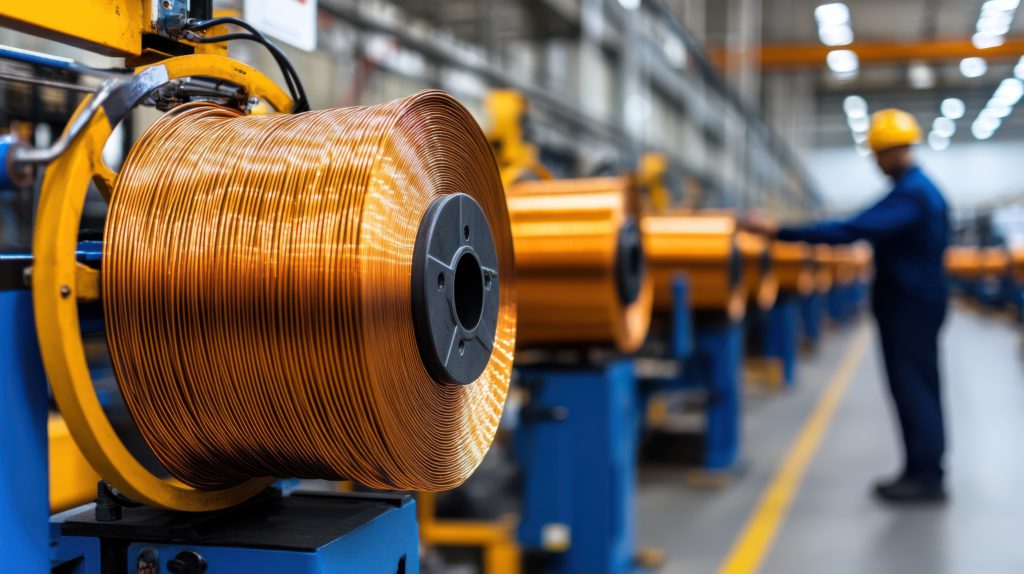
Stock image.

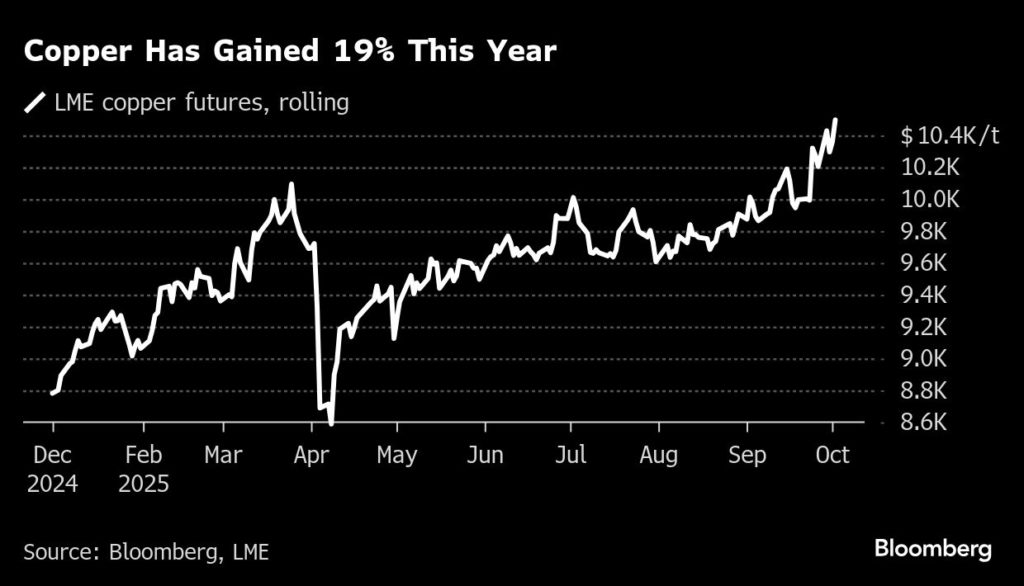
Copper prices climbed to their highest level in more than a year on Thursday, fueled by mounting global supply disruptions and growing expectations that US interest rate cuts will support demand for the industrial metal.

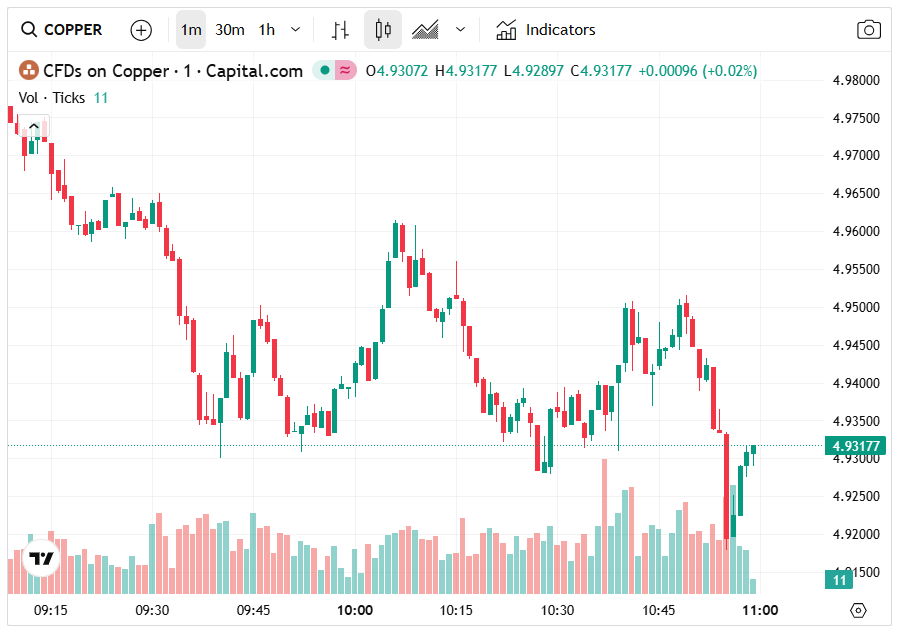
Benchmark futures on the London Metal Exchange (LME) briefly rose above $10,500 a tonne for the first time since May 2024, before trading at $10,497.50, up 1.1% as of 11:50 a.m. in London. Three-month futures traded above $10,976 per ton ($4.989 per lb.) on the CME, up 2.2% for the day. 

Click on chart for live prices.

The rally has been bolstered by news that Freeport-McMoRan (NYSE: FCX) declared force majeure at its giant Grasberg mine in Indonesia. The setback adds to a series of supply challenges across South America and Africa, tightening global availability.

“The scale of this disruption is very big,” said Albert Mackenzie, copper analyst at Benchmark Mineral Intelligence.

Benchmark estimates that supply losses will reach 591,000 tonnes between September 2025 and the end of 2026, equivalent to about 2.6% of 2024’s global mine production, which analysts put at roughly 23 million tonnes.

The disruptions mean the copper market will swing into a deficit of around 400,000 tonnes in 2025, Benchmark said.

The impact has also led Goldman Sachs to revise its market balance forecast. The bank now projects a 55,500-tonne deficit for 2025, compared with its earlier expectation of a 105,000-tonne surplus. A small surplus is still expected in 2026.

Adding momentum to copper’s rally, US economic data reinforced expectations of interest rate cuts. An ADP private payrolls report showed an unexpected decline in September jobs, at a time when official data releases may be delayed by the ongoing US government shutdown.

Lower interest rates typically support commodities by boosting consumption and weakening the US dollar, which in turn makes dollar-priced metals cheaper for buyers using other currencies. A Bloomberg dollar index slipped for a fifth consecutive day on Thursday.

(With files from Reuters and Bloomberg)


Sanctioned Russian copper firm in talks to acquire state-seized gold miner

UMMC head office. Credit: Wikimedia Commons, under licence CC BY-SA 4.0.

Russian copper producer UMMC is in talks with the government to acquire a majority stake in the gold mining company UGC which was seized by the state in July, two industry sources told Reuters on Wednesday.

The sources confirmed an earlier report by the Izvestia newspaper, which said that a firm called Atlas Mining that holds some UMMC assets, is negotiating with the Finance Ministry regarding the acquisition.

Neither UMMC nor the Finance Ministry responded to requests for comment from Reuters.

In July, Russia’s general prosecutor’s office won a lawsuit to transfer ownership of the majority stake in UGC, Russia’s fourth-largest gold producer, to the state, alleging it was obtained “through corruption.”

The stake now held by the Finance Ministry was previously owned by Russian billionaire Konstantin Strukov, who acquired gold-producing assets at a bargain price in 1997 from a bankrupt Soviet-era enterprise.

Since the start of the military action in Ukraine, the state has seized over $50 billion worth of assets from Western firms and Russian owners, marking the largest redistribution of property in Russia since privatization in the 1990s.

The government and courts have cited reasons for these seizures ranging from national security to illegal acquisitions. The government has promised to sell some of the assets.

One source noted that there had been other bidders for UGC assets, but they were no longer interested. The source added that there will be a formal bidding process, but its outcome is “predetermined.”

Both UGC and UMMC are under Western sanctions.

Shares in UGC, which in 2023 had one of the largest public offerings since the start of the conflict in Ukraine, fell by about 8% on Wednesday due to what a third source described as fears of a possible delisting of its shares.

According to Izvestia, which cited unnamed sources, the government is seeking 100 billion roubles ($1.23 billion) for the stake in UGC, while UMMC is offering half that amount.

UMMC said in 2022 that its previous owners, billionaires Iskander Makhmudov and Alexei Bokarev, no longer held shares in the company. The company hasn’t disclosed its current ownership.

The Finance Ministry said in September that it plans to sell its 67% stake in UGC before the end of October, following a valuation.

Lender Gazprombank, previously considered a potential buyer of UGC, holds 22%, and minority shareholders own the remaining 11%, according to UMMC’s website.

(By Anastasia Lyrchikova, Darya Korsunskaya, Elena Fabrichnaya and Gleb Bryanski; Editing by Elaine Hardcastle)

Freeport Indonesia says search for five trapped Grasberg workers still ongoing

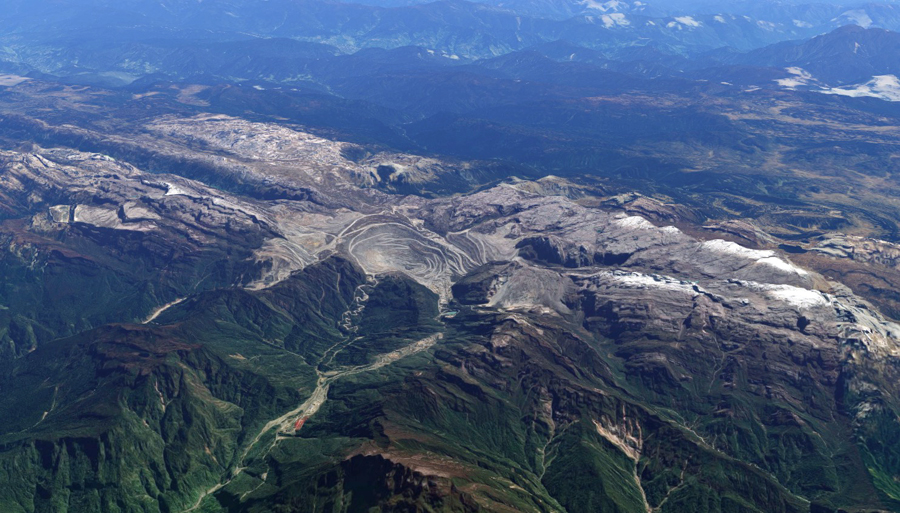
Grasberg mine on the island of New Guinea, one of the world’s biggest sources of copper and gold. (Image: Google Earth.)

Freeport Indonesia said on Thursday that the search for five missing workers at the Grasberg copper and gold mine was still ongoing, more than three weeks after a deadly mud flow disaster at the site.

Around 800,000 metric tons of wet material flooded the mine on September 8, trapping seven workers. Two bodies have since been recovered.

Operator Freeport-McMoRan has already declared force majeure at the mine and lowered its sales estimates.

“The search for our five colleagues who are still missing continues relentlessly,” Katri Krisnati, a Freeport Indonesia spokesperson said in a statement.

“This high-risk rescue process also faces significant challenges due to the movement of wet material,” the statement added.

Rescuers excavated two access routes and are deploying heavy equipment with remote control systems, as the search area deepens and air circulation becomes more limited, Freeport said.

The company did not immediately respond to a question about the condition of the trapped workers.

The incident, as well as the suspension of all mining activities at Grasberg, has caused a jump in global copper prices.

(By Fransiska Nangoy; Editing by David Stanway)


Indonesia expects deal soon with Freeport-McMoRan on divestment plan

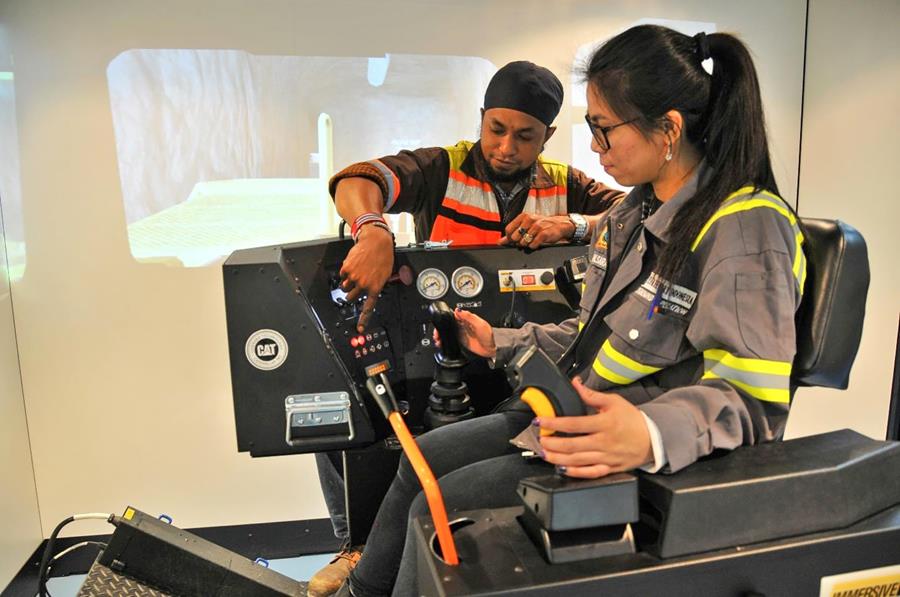
Trainee at PT Freeport Indonesia on an Immersive Technologies IM360 simulator with LHD R1600G Conversion Kit® (Image: Freeport Indonesia)

Indonesia expects to soon sign a deal with Freeport-McMoRan to give a local partner a 12% stake in its Indonesian unit PT Freeport Indonesia, the investment minister said on Wednesday, without giving a precise date.

The state mining holding company MIND ID so far owns 51% of PT Freeport Indonesia, which runs operations at Grasberg, the world’s largest gold mine and second-largest copper mine.

“This is just an administrative process but we have already agreed on all of points (of discussions)… Once it is done, we can proceed with the signing,” Minister Rosan Roeslani told reporters.

He added that the 12% will be “free of charge”.

On Tuesday, Phoenix-based Freeport said it was still in discussion with the Indonesian government regarding the rights to operate the Grasberg copper and gold mine beyond 2041 when an existing deal expires.

Freeport Indonesia had no immediate comment when asked about the Indonesian investment minister’s comments on Wednesday.

Indonesia mining minister Bahlil Lahadalia last week said it was important to reach a deal to extend the Freeport mining permit to ensure the company could start investing in exploration for future resources to be extracted from Grasberg.

Also last week, Freeport declared force majeure at Grasberg after torrential mudslides that killed two workers.

Grasberg may not return to pre-accident operating rates until at least 2027, Freeport said.

Concerns about the impact on supply have driven up global prices of copper.

(By Fransiska Nangoy and Ananda Teresia; Editing by John Mair and Barbara Lewis)


Fatal accident forces Winning to halt iron ore mine at Simandou

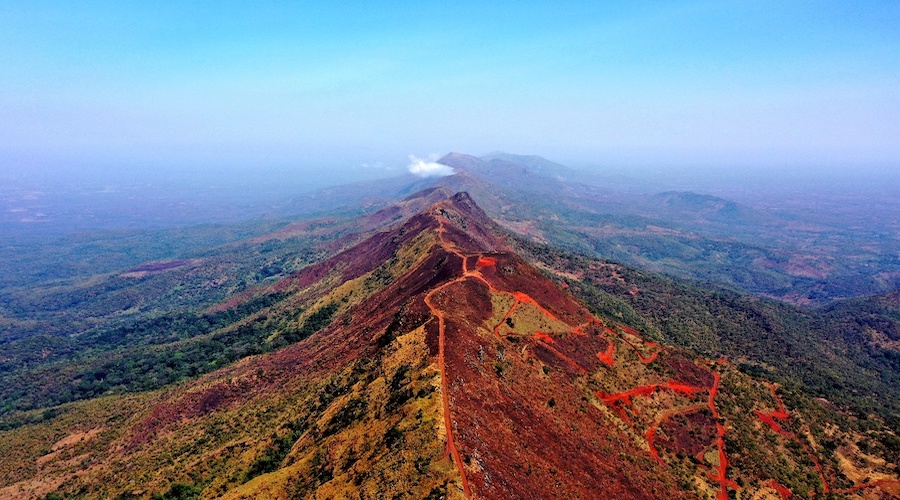
The Simandou mountains are home to the world’s largest known untapped deposit of high-grade iron ore. (Image courtesy of Winning Consortium Simandou.)

Winning Consortium Simandou (WCS), the mining company that is developing Blocks 1 and 2 of the massive Simandou iron ore project in Guinea, has halted operations after a fatal accident killed three foreign workers.

WCS confirmed the incident and said it is reviewing safety protocols. “Emergency procedures were immediately activated, and medical teams at the local hospital made every effort,” the company said in a statement, without providing details about the cause of the accident.

An investigation is underway, and operations will resume only when safety conditions are fully assured, Bloomberg News reported.

This is the second fatality-linked shutdown at Simandou in less than two months. In late August, Rio Tinto (ASX: RIO) and its partner Chinalco suspended activity at their Simfer site in the southern section of the range after a contract worker died.

The incident at WCS work site brings the total number of fatalities at Simandou to 14 since November 2023.

World’s highest grade iron ore

Simandou is home to the world’s largest known untapped deposit of high-grade iron ore, estimated at 2.4 billion tonnes. The site is divided into four blocks. While WCS oversees the northern half, Rio Tinto and Chinese state-owned Chinalco, in partnership with the Government of Guinea, are developing Blocks 3 and 4.

Once operational, Simandou is expected to become the world’s largest and highest-grade new iron ore mine, producing 120 million tonnes of premium ore annually, with first ore in the Rio Tinto-controlled area targeted for November. The deposit contains ore with an iron content of around 65%, prized for its efficiency in steelmaking and lower environmental impact.

Rio Tinto first secured exploration rights to Simandou in 1997. Since then, progress has been repeatedly delayed by political instability, including two coups, four heads of state, and three presidential elections.

The broader project includes a 600-kilometre railway and a new deep-water port on Guinea’s Atlantic coast. Rio Tinto will operate one of the two mines supplying the infrastructure.

Simandou remains a flagship project for Guinea, holding major economic promise through job creation, infrastructure development, and increased export revenue.


Major Australian coal-fired station Gladstone set to close six years early

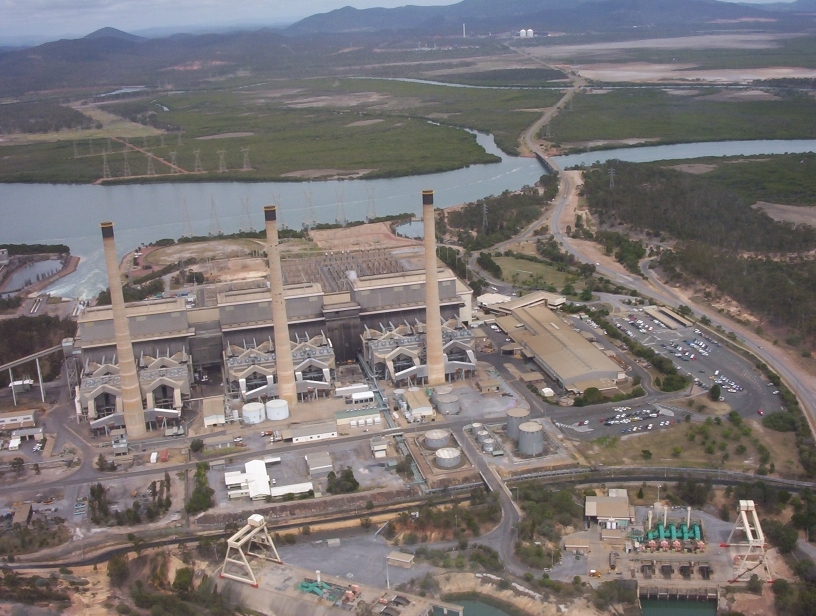
Gladstone Power Station. Credit: Wikipedia, under Creative Commons licence CC BY-SA 3.0.

One of Australia’s biggest coal-fired power plants plans to close six years earlier than previously announced.

The Gladstone Power Station will potentially retire when existing supplies and operational arrangements expire in March 2029, “although no final decision has been made,” majority shareholder Rio Tinto Plc said in a statement on Wednesday. The facility, operated by Houston-based NRG Energy Inc., had been slated to close in 2035.

Gladstone started operating in 1976 and is the largest power plant in Queensland state, representing more than 7% of Australia’s coal-generation capacity at 1,680 megawatts. Each year, approximately 4 million metric tons of coal are railed to the site from coalfields in the state.

The announcement comes weeks after Australia pledged to cut greenhouse gas emissions within a range of 62% to 70% by 2035, from 2005 levels. That fell short of BloombergNEF’s assessment that the country must slash emissions by 71% in the next decade to be aligned with a credible pathway to net zero by mid-century.

Gladstone’s owners will engage with the energy market and on options for the future use of the site, which will inform the timeline and strategy for retirement of the facility, according to the statement. Existing power supply contracts, including to Boyne Smelters Ltd, will remain in place until its closure, it said.

“Private investors are getting out of coal, because it’s clear that renewable power backed by batteries makes economic sense,” said Ben McLeod, economist and senior adviser to the Climate Council, an advocacy group.

Australia’s aging coal fleet still forms the backbone of power generation but is mostly expected to close over the next 10 years. It has been hit by increasingly frequent outages, adding to market volatility. Coal was more expensive to run in Australia than solar, wind and combined-cycle gas turbines in the second half of 2024, BloombergNEF data show.

Rio Tinto owns a 42.125% stake in Gladstone, while an NRG unit owns 37.5%. The other shareholders are Southern Cross GPS Pty, Ryowa II GPS Pty and YKK GPS Pty.

(By Keira Wright)


Massive Houthi Drone Seizure Reported in Aden by Yemeni Opposition Faction

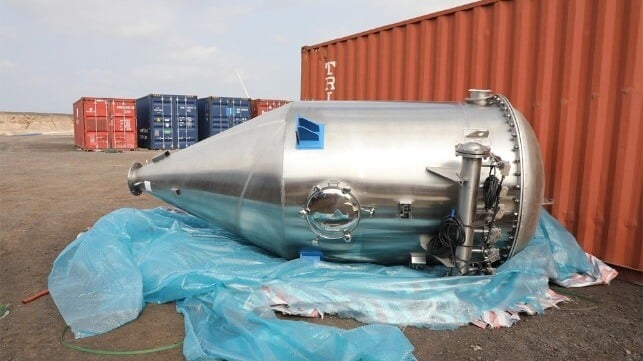
Seized Houthi equipment
Some of the material seized from the containers (Southern Transitional Council)

Published Oct 2, 2025 5:22 PM by The Maritime Executive


A massive seizure of drones and other military equipment apparently bound for the Houthis has been reported by an opposition faction known as the Southern Transitional Council. The faction, which is backed by the United Arab Emirates and is active in southern Yemen, reports it discovered 58 containers in the port of Aden carrying drones and components and weighing a total of 2,500 tons.

In a statement issued on October 2 in Aden by the spokesman, Lieutenant Colonel Mohammed Al Naqib, they report the equipment was being unloaded from a commercial vessel arriving from Djibouti, which had been diverted to Aden because of damage to port facilities in Hodeidah. Details of when the seizure occurred, and from what ship or ships, are unclear, but the goods seized, from the limited imagery published, are of Chinese origin, disguised as ordinary cargo.  

The consignment is listed to have included “drones and their launch platforms, drone production machine tools and lathes, spare parts for various light and medium weapons, wireless communication devices, jet engines, surveillance, espionage, and jamming devices and electronic chipboards used in drone control systems.”

Also seized were large quantities of materials used for the manufacture of drones, including carbon fiber, insulation materials, sheet metals, and raw plastics, as well as components needed for the manufacture of target acquisition sensors, communications devices, and anti-jamming equipment.


The whole consignment comprises all the parts, materials, and machine tools necessary to establish a production line both for drones and for their command and control systems.  It is likely that the consignment was ordered and dispatched to replace or augment production facilities which have been destroyed in previous Israeli and American air raids, for example, in the successive U.S. and British air raids on the Hubayshi drone factory south of Sanaa in March and April.


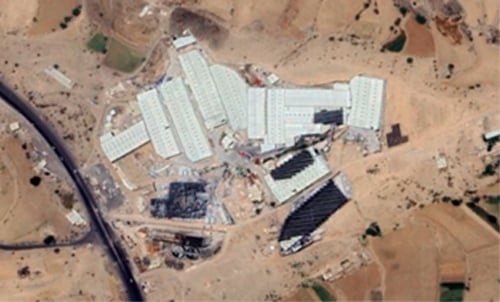
The Hubayshi drone factory at 15.155087N 44.257652E was damaged in an RAF attack on April 29 (Google Earth/CJRC)


The group reported the discoveries were made during routine customs inspection of cargo in the Aden Port Free Zone, and apparently were not based on detailed intelligence. The seizures do, however, appear to be additional to those made by the Counter-Terrorism Service in Aden on August 2. On this earlier occasion, drone equipment had been packed into five containers declared to be holding car parts, which had been unloaded from a ship arriving directly from China.

U.S. Central Command also reported in July that the Yemeni forces in opposition to the Houthis made their largest ever seizure of Iranian weapons bound for the Houthis. In total, the U.S. said that over 750 tons of munitions and hardware were intercepted inbound aboard a dhow.