It’s possible that I shall make an ass of myself. But in that case one can always get out of it with a little dialectic. I have, of course, so worded my proposition as to be right either way (K.Marx, Letter to F.Engels on the Indian Mutiny)
Sunday, October 12, 2025
German exports to US slump to 4-year low as Trump tariffs bite
German exports to the US fell to a 4-year low in August, hit by Trump tariffs. Shipments to the country dropped 20% from a year earlier, marking the fifth straight month of decline.
German exports to the United States have fallen for the fifth consecutive month, reaching their lowest level in nearly four years, as the impact of tariffs imposed by US President Donald Trump continues to reverberate across transatlantic trade.
Despite remaining Germany’s top export destination, shipments to the US declined by 2.5% month-on-month in August to €10.9 billion, according to provisional data released on Thursday by the Federal Statistical Office (Destatis).
On a year-on-year basis, exports to the US plunged by 20%, underscoring the long-term strain imposed by tariff policies.
Conversely, Germany imported more goods from the United States in August, with inbound shipments rising 3.4% month-on-month to €8.0bn. Compared with August 2024, imports from the US were up nearly 8%.
The European Union reached a deal with the Trump administration in August, agreeing on a unified 15% tariff on most EU exports to the US
The agreement covers key sectors including automotive, pharmaceuticals, semiconductors, and timber. Some categories of European goods have been granted preferential treatment under the deal, including critical natural resources such as cork, all aircraft and aircraft components, as well as generic pharmaceuticals and chemical precursors.
According to the European Commission, goods and services worth over €4.2bn cross the Atlantic each day, amounting to an annual trade value of €1.6 trillion.
German trade surplus rebounds, but remains well below 2024 levels
Beyond the transatlantic relationship, Germany’s overall trade balance improved in August despite subdued export activity.
Total exports amounted to €129.7bn, down 0.5% from July and 0.7% lower than in August 2024.
Imports stood at €112.5bn, marking a 1.3% monthly decline but a 3.5% rise year-on-year.
As a result, the trade surplus increased to €17.17bn in August 2025 — its second consecutive monthly gain.
However, compared to the €21.9bn surplus recorded a year earlier, this represents a 21.6% annual contraction.
The entire surplus stemmed from trade within the European Union.
Germany exported €72.5bn worth of goods to fellow EU members while importing €58.8bn, resulting in a significant intra-bloc surplus.
Month-on-month, EU-bound exports declined by 2.5%, while imports from the bloc dropped by 1.9%.
In contrast, Germany registered a trade deficit with non-EU countries. Exports to non-EU partners amounted to €57.1bn in August, while imports reached €53.7bn.
Among non-EU markets, the United Kingdom saw a notable decline in German imports, with exports falling 6.5% month-on-month to €6.5bn.
On the upside, Germany increased its exports to China, which rose by 5.4% from July to €6.8bn. China also retained its role as Germany’s leading supplier, although imports from the country dropped 4.5% on the month to €13.5bn.
Markets brush off trade weakness as equities hit records
European markets appear largely indifferent to the worsening of Germany’s trade position with the US and the broader decline in exports.
The DAX index climbed to fresh record highs during morning trading on Thursday, breaking above 24,700 points. Shares of Bayer and HeidelbergCement led the gains on the index, rising by 1.8% and 1.4%, respectively
Elsewhere, the EURO STOXX 50 index also reached historic levels, trading near 5,655 points and posting a gain of more than 5% over the past month.
The broader STOXX 600 index similarly remains near all-time highs although it slipped around 0.3% by late morning.
Geopolitical developments added to market sentiment, as US President Donald Trump confirmed a Gaza peace deal, including the release of hostages.
In France, President Emmanuel Macron is expected to name a new prime minister by Friday as coalition negotiations continue.
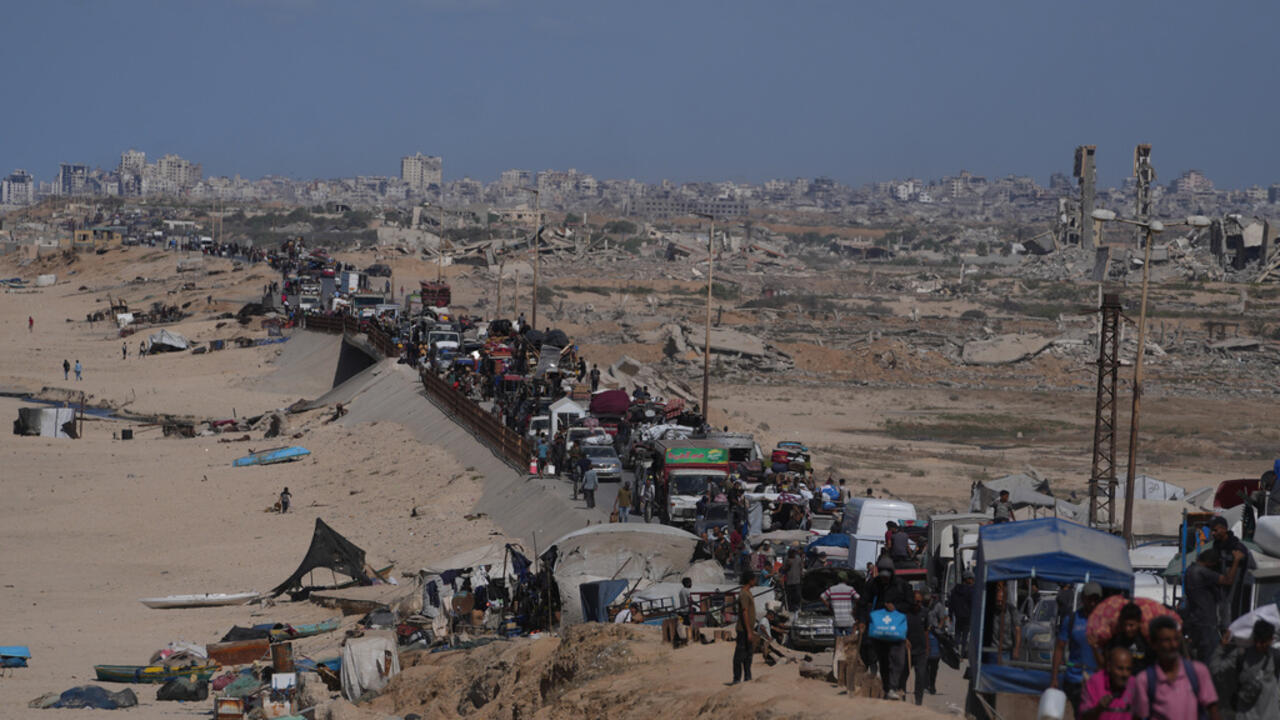
More than 500,000 Palestinians return to ruined Gaza City as truce holds More than half a million displaced Palestinians have returned to Gaza City since a ceasefire came into effect Friday, Gaza's civil defence agency said on Saturday. Many displaced Palestinians returning home were left stunned by the destruction while others were amazed to find their homes still standing.
Gaza's civil defence agency on Saturday said more than 500,000 people have returned to Gaza City since a ceasefire took effect the previous day.
"More than half a million people have returned to Gaza (City) since yesterday," said Mahmud Bassal, a spokesman for the civil defence, a rescue service operating under Hamas authority.
Many displaced Palestinians were left stunned by the destruction even as others were relieved to find their homes still standing.
Israel agreed to the truce on Friday and pulled back troops from several areas of the territory, prompting long columns of exhausted residents to set off for the north along a coastal road.
Taking advantage of the ceasefire, Raja Salmi walked back to her home in Gaza City, where weeks of Israeli bombardment and ground operations had targeted areas said to harbour thousands of Hamas fighters.
"We walked for hours, and every step was filled with fear and anxiety for my home," Salmi told AFP.
When she reached the Al-Rimal neighbourhood, she found her house destroyed.
"It no longer exists. It's just a pile of rubble," she said. "I stood before it and cried. All those memories are now just dust."
Under a ceasefire deal proposed by US President Donald Trump, Hamas will hand over 47 remaining hostages – living and dead – from the 251 abducted during its October 7 attack on Israel two years ago. The remains of one more hostage, held in Gaza since 2014, are also expected to be returned.
In exchange, Israel will release 250 prisoners serving life sentences and 1,700 Gazans detained since the war broke out.
It has released the list of prisoners, which does not include any of the top militant leaders Hamas is seeking to have freed. 'Destruction, destruction'
The withdrawal of Israeli forces from some areas, announced at 0900 GMT on Friday, set the clock running on a 72-hour deadline for Hamas to release the hostages, ending on Monday morning.
Hamas and its allies Islamic Jihad and the Popular Front for the Liberation of Palestine (PFLP), hailed the ceasefire as "a setback" for Israel's alleged goal of bringing about the "displacement and uprooting" of Gaza's Palestinians.
"We will continue to work responsibly with the mediators to ensure that the occupation is bound to protect the rights of our people and end their suffering," they said in a joint statement.
Trump told reporters on Friday he believed the ceasefire would hold, arguing that both sides were "tired of the fighting", and confirming his plans to travel to Israel and mediator Egypt this weekend.
However, many parts of the Trump proposal still have not been agreed, including its plans for post-war governance, and its insistence that Hamas disarm – both of which Hamas has signalled resistance to.
At Al-Rantisi hospital, a facility for children and cancer patients, AFP footage showed wards reduced to heaps of overturned metal beds, gaping ceilings and scattered medical equipment.
"I don't know what to say. The images speak louder than any words: destruction, destruction, and more destruction," said Saher Abu Al-Atta, a resident who had returned to the city.
With the United Nations having declared famine in Gaza City just before the outset of the latest Israeli offensive, aid agencies are hoping the ceasefire will give them the opportunity to surge in aid.
The UN's Office For Humanitarian Affairs (OCHA) says it has been given the green light by Israel to deliver 170,000 tonnes of aid under a response plan for the first 60 days of truce.
"The most basic necessities are still urgently needed in Gaza: medical equipment, medicines, food, water, fuel, and adequate shelter for two million people who will face the approaching winter without a roof over their heads," said Jacob Granger, Gaza coordinator for Doctors Without Borders (MSF). 'Ghost town'
Men, women and children navigated streets filled with rubble, searching for homes amid collapsed concrete slabs, destroyed vehicles and debris.
While some returned in vehicles, most walked carrying belongings in bags strapped to their shoulders.
Sami Musa, 28, returned alone to check on his family's house.
"Thank God... I found that our home is still standing, though it has suffered some damage that we can repair," Musa told AFP.
Nonetheless, the destruction in Gaza City left him shocked.
"It felt like a ghost town, not Gaza," Musa said.
"The smell of death still lingers in the air," he added, vowing to rebuild.
Israel's campaign in Gaza has killed at least 67,682 people, according to the health ministry in the Hamas-run territory, figures the United Nations considers credible.
The data does not distinguish between civilians and combatants but indicates that more than half of the dead are women and children.
The war was sparked by Hamas's October 7, 2023 attack on Israel, which resulted in the deaths of 1,219 people, mostly civilians, according to an AFP tally based on official Israeli figures.
(FRANCE 24 with AFP )
‘No guarantees’ that Israel will uphold Gaza ceasefire, specialist warns
Issued on: 12/10/2025 -
There are “no guarantees” that Israel will uphold the current ceasefire in Gaza, which was brokered with help from the United States and other mediators, said Anne Irfan, a lecturer in interdisciplinary race, gender, and postcolonial studies at UCL. “As for whether the Trump plan can — and will – hold, that’s obviously the million-dollar question,” she added.
Reports coming in from Afghanistan claim an aerial attack last night on a few places in Kabul and some other parts of Eastern Afghanistan along the border with Pakistan. It remains unclear whether the attacks were conducted by fighter aircraft or drones.
Apparently, at least one vehicle was targeted, making it more likely that drones were used. However, Pakistani social media handles are claiming that fighter aircraft were pressed into action. There has been no official confirmation from Pakistan so far that it carried out attacks in Kabul targeting Tehrik-e-Taliban Pakistan (TTP) leaders.
There is speculation about possible United States (US) involvement in the attacks. If indeed the Americans were involved, was it at the technical level, or was it to the extent of intelligence sharing, or did it involve kinetic action remains in the realm of speculation. The target of the attacks is believed to be the TTP emir, Noor Wali Mehsud; however, an audio clip purportedly of Mehsud surfaced soon after the attack claims that he is in the tribal districts of Pakistan, not Afghanistan.
This is not the first time that Pakistanis have used air power against alleged terrorist targets in Afghanistan; however, past attacks were generally limited to border areas, which were remote and inaccessible. This is the first time that Pakistan has decided to strike at the heart of Afghanistan. The repercussions of such an audacious attack will be far-reaching.
Earlier attacks were downplayed by the Taliban and not made much of an issue, at least not to a point where it would have led to a major break with Pakistan. A strike on Kabul will, however, be difficult, if not impossible, to brush under the carpet. Although the initial reaction from the official spokesman of the Taliban, Zabiullah Mujahid, and the Kabul police chief has been measured, the Taliban will have to take a strong stand on the Pakistani attack on the capital city. To not do so will seriously dent the legitimacy of the Taliban regime and raise questions or even challenge the authority of the ‘Emir ul Momineen’.
While the Taliban are not in a position to respond to Pakistan in kind as they lack an air force and an effective air defence system, they do have other ways to hit back. Broadly, there are four options available to the Taliban. The first is to do nothing. Make a bit of noise and then move on. But such restraint will raise serious questions about their legitimacy as the Taliban would appear fearful of Pakistan or being compromised by their long association with Pakistan. Even if the senior leadership prefer not to escalate, the foot soldiers will want to take revenge.
The second option is to speak softly but ramp up the attacks. This will mean lifting the restraints imposed on Taliban cadres to not joining the ranks of TTP and desisting from participating in attacks inside Pakistan. The third option is to declare war on Pakistan and unleash guerrilla forces to exact retribution. Finally, there is a remote possibility that the Pakistani attacks will have a salutary impact on the Taliban and force them to either expel or curb the activities of TTP inside Afghanistan.
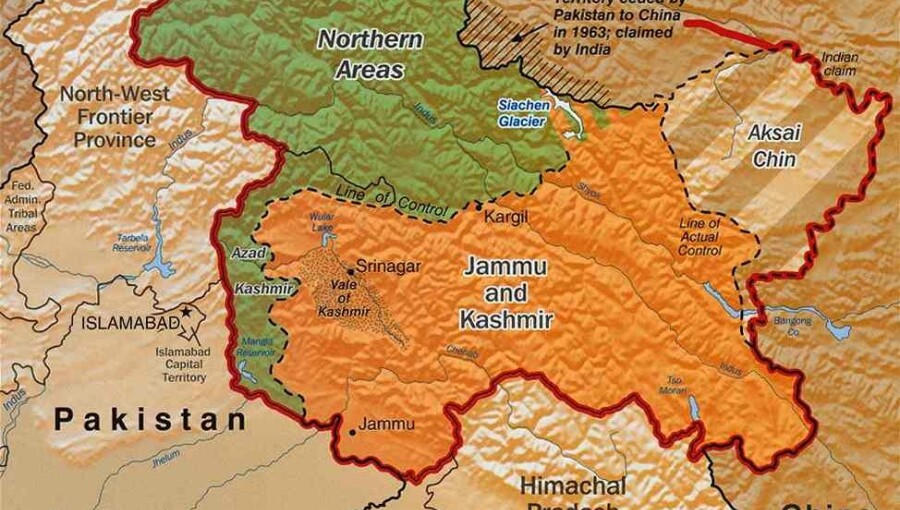
Regardless of the option that is picked, as long as the TTP continues to bleed Pakistan, there is no solution to the problem. The fact that the TTP attacks have increased in intensity, ferocity, and even geography—with recent claims by the anti-Pakistan jihadist alliance Ittehadul Mujahideen Pakistan of carrying out attacks even in Pakistan-occupied Jammu and Kashmir—means that it will not be easy to eliminate them.
The TTP and other groups claim that they are now operating from inside Pakistan. The Taliban authorities in Afghanistan also insist that this is Pakistan’s problem and that Afghanistan is being made a scapegoat. But Pakistan insists that not just the Islamist jihadists but also Baloch freedom fighters are operating from bases inside Afghanistan.
The issue for Pakistan is that bombing targets in Afghanistan won’t solve the problem. All it will do is satisfy public opinion, especially in Punjab, where there is an anti-Pashtun sentiment is simmering. But kinetic military action has its limitations. All Pakistan needs to do is ask the Americans and, before them, the Soviets. If anything, attacks on Afghanistan will only lead to Afghans, even those who are against the Taliban, closing ranks against Pakistan. Recent reports suggest that the interior minister, Sirajuddin Haqqani, was being sidelined by the Kandahar clique that calls the shots. But the Haqqanis won’t be caught dead siding with Pakistan against the Taliban Emir. Interestingly, the Pakistani attacks have been criticised by some senior military officials of the erstwhile Islamic Republic of Afghanistan.
The other option for Pakistan is to unleash another round of destabilisation in Afghanistan. The instruments for this will be sections of the erstwhile republic who are carrying out a low-level insurgency against the Taliban, and using the Islamic State Khorasan (ISK) as a proxy to wage a dirty war in Afghanistan as a tit-for-tat. The Taliban have already accused Pakistan of giving bases to ISK in Balochistan, and there are some reports that some terrorist proxies of the Pakistan Army, like the Lashkar-e-Taiba (LeT), could also be deployed against the Taliban and TTP. The LeT had been used earlier against the TTP in the late 2000s but had been wiped out in the Tribal Districts. Perhaps a second try will be made using these mostly Punjabi jihadists against the predominantly Pashtun Islamist Jihadists of TTP.
The timing of the bombing runs on Kabul and other parts of Afghanistan is also interesting, as it coincided with the Taliban Foreign Minister Amir Khan Mutaqqi’s visit to India. Although the immediate provocation is the ambush in Orakzai in which around 17 Pakistan army soldiers were killed, the visit of Mutaqqi to India has been something of a red rag for the Pakistani military establishment, which has been accusing India of backing and funding not just the Baloch freedom struggle (the Pakistanis have started calling it Fitna al Hindustan) but also the TTP insurgency.
But the attack will only drive the Taliban closer to India, which is seen as a counter to Pakistani bullying and overbearing attitude in the region. “The enemy’s enemy is a friend” logic could once again come into play—a dynamic that has historically defined Afghanistan’s regional alignments.
About the author: Sushant Sareen is a Senior Fellow at Observer Research Foundation.
ORF was established on 5 September 1990 as a private, not for profit, ’think tank’ to influence public policy formulation. The Foundation brought together, for the first time, leading Indian economists and policymakers to present An Agenda for Economic Reforms in India. The idea was to help develop a consensus in favour of economic reforms.
‘Pawns in Putin’s war game’: African women lured into drone factories
Analysis
Russia has been accused of making false promises to recruit young women from across Africa to work in drone-assembling factories. The women were coerced into assembling Shahed-136 kamikaze drones in a dangerous area that has been repeatedly bombed by Ukraine.
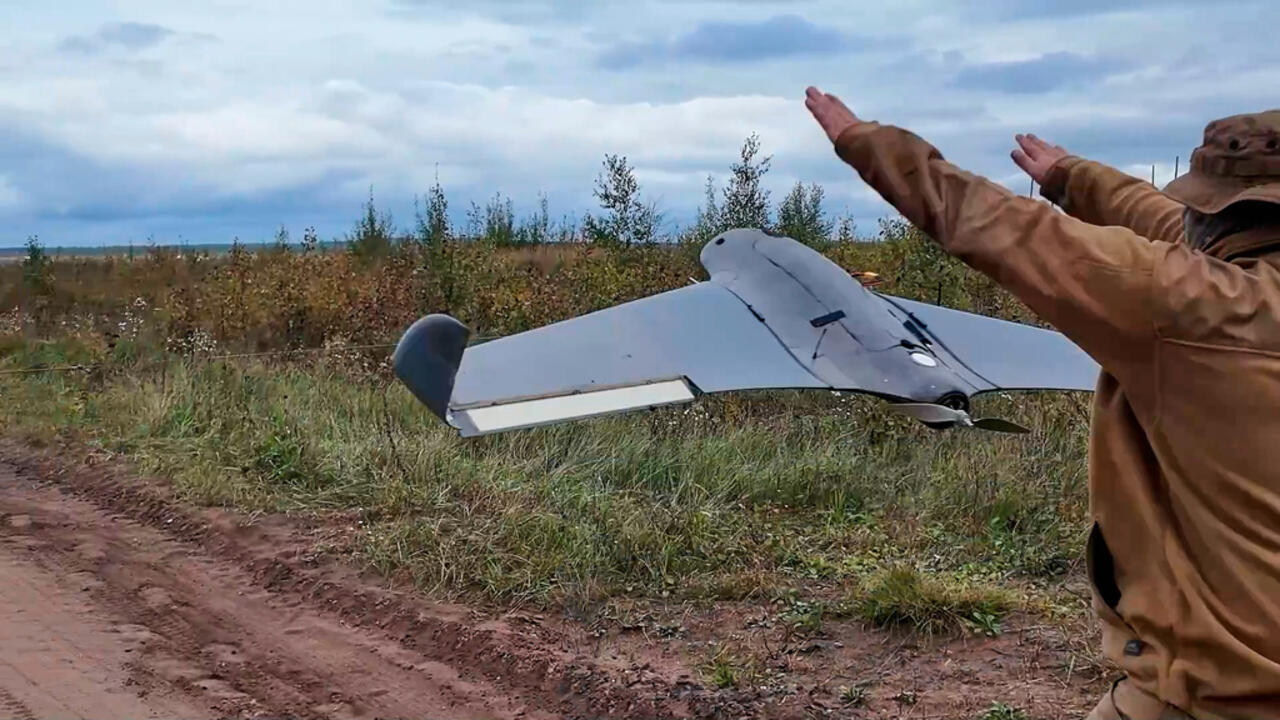
A Russian soldier launches a drone in an undisclosed location in Ukraine in this photo taken from video distributed by Russian Defense Ministry Press Service on Tuesday, September 30, 2025. AP
The South African government has opened an investigation and issued a warning to its citizens after Russia was accused of making false promises to recruit young women from across Africa to work in drone-assembling factories. A number of South African influencers who were employed by Russia's Alabuga Start Programme issued an apology after they traveled to the region and made promotional videos.
The women were coerced into assembling Shahed-136 kamikaze drones in a dangerous area that has been repeatedly bombed by Ukraine with the false promise of hospitality work, open source investigations have found. Women aged between 18 and 22 years old were duped into traveling to the Alabuga Special Economic Zone in the Russian republic of Tatarstan, where they are used to assemble Iranian-designed Shahed-136 drones in an area that is targeted by Ukraine with air strikes.
They are being sold the false dream of travel and legitimate work.
“These women are being used as pawns in Putin's war game,” Spencer Faragasso, senior research fellow at the Institute for Science and International Security (ISIS), told FRANCE 24.
“They are facing risks to their lives because at the end of the day, this is a legitimate military target, and they're getting involved in an active war.”
ISIS, a non-governmental institution that monitors Iran’s nuclear programme, took interest in Alabuga when an Iranian delegation travelled there in January 2023.
Alabuga is a large industrial site with a history of industrial manufacturing but without drone assembling experience. When Russian drone manufacturer Albatross LLC also traveled to the site at the same time as the Iranian delegation, Fargasso said “the coincidence was too much”.
ISIS used open-source investigative methods including scanning social media posts and reviewing satellite imagery to uncover the construction of drone factories and dormitories at Alabuga.
Russia has suffered a shortage of unskilled labourers due to its war in Ukraine. So to find new, cheaper recruits, it set up the Alabuga Start Programme, which targets 18- to 22-year-old women mainly from Africa but also from South America and South Asia. It targets countries where unemployment is high – like in South Africa, where it is at 57 percent among young women.
Representatives of the programme visited Beyers Naude Secondary School in Soweto, Johannesburg, in April, offering students free flights to Russia, Alabuga T-shirts and the promise of future job opportunities if they were to join. Alabuga’s website says recruits are trained and then work in hospitality or construction, with no mention of arms manufacturing.
“When they get to Alabuga, it's a rude awakening for the majority of them. And we've estimated that at least 90 percent of these women are assigned to work in the Shahed-136 drone factory,” Fargasso said. “They're being lied to and they're being duped into something that doesn't actually match up with reality.”
ISIS has tracked at least three attacks on the Special Economic Zone since April 2024, including an air strike of a dormitory housing women recruited from the Alabuga Start Programme.
“We wouldn't be surprised to see more attacks occur at Alabuga, considering the importance of the site,” Fargasso said.
Fargasso called on countries to take action to prevent their citizens from travelling to Alabuga to avoid opening themselves up to “secondary sanctions from the US or the EU and its allies”.
“At the end of the day, this is a war production facility, and it's a sanctioned entity,” Fargasso said. Influencers apologise
The Alabagu Start Programme employed South African influencers as part of their marketing campaign to recruit young people from their country. Several influencers, some with millions of followers, were flown to Alabuga and made promotional videos interviewing workers and posted them on their social media accounts for money.
One such influencer was Cyan Boujee, who posted a video to her 1.7 million TikTok followers encouraging people to join Alabuga.
After allegations of human trafficking, false employment promises and modern slavery piled on from outlets including the Associated Press and Bloomberg, the South African Department of International Relations and Cooperation (DIRCO) issued a warning to young women when applying for jobs online.
DIRCO Deputy Director-General Clayson Monyela confirmed to FRANCE 24 that the Alabuga Start Programme’s presence in South Africa is under investigation.
After mounting backlash, the influencers who promoted the programme removed their posts and issued public apologies.
“I’ve been quiet because I’ve been waiting for the programme to release a statement on my behalf,” Cyan Boujee said in a video. “Human trafficking is a very, very serious matter. And I don’t stand for that. I believe this is a huge learning curve for me and all the other influencers.”
“I had four more videos to post on my TikTok and Instagram and I was only going to get paid after posting,” she added.
The influencer, whose real name is Honour Zuma, said that the Alabuga representatives had shown her videos of other internet personalities promoting the programme, which convinced her to work with them. She claims to have been unaware of the conditions allegedly faced by workers at Alabuga when she traveled there. 'Too good to be true'
The rise of social media and influencer reach has fueled the spread of unverified information online, creating a petri dish where scams can thrive. And job offers are no exception.
A South African recruitment expert told FRANCE 24 that there are several red flags to look out for. “Be cautious of any job offer that seems too good to be true,” said Trinisha Screeramalu, executive recruiter at Empire Recruitment. “Major red flags include no verifiable company presence, vague or lack of contracts, upfront payments and pressure to act urgently. Legitimate employers never rush candidates.”
Screeramalu warned that malicious employers are on the rise in Africa.
“We are seeing an increase in recruitment scams – largely driven by high youth unemployment and limited awareness of proper recruitment procedures,” she said.
The Alabuga Start Programme did not respond to a request for comment from FRANCE 24.
The Russian embassy in Pretoria also did not respond to FRANCE 24's questions. It did, however, release a statement in August regarding allegations against the programme.
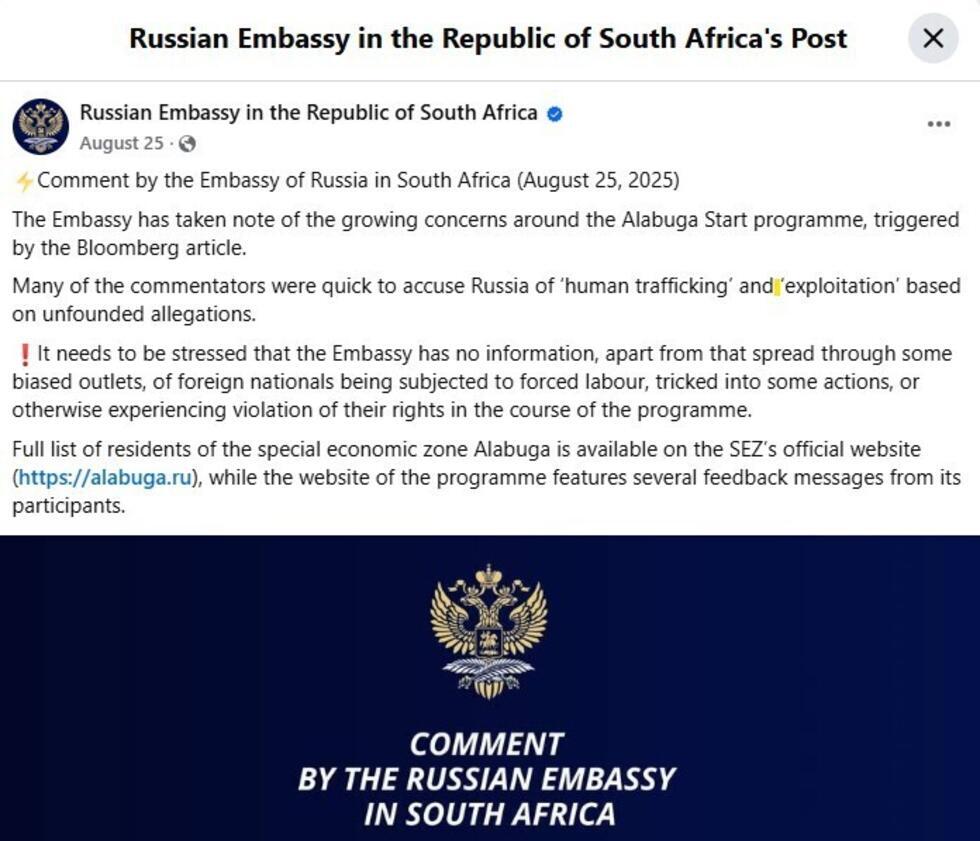
“The Embassy has taken note of the growing concerns around the Alabuga Start programme, triggered by the Bloomberg article,” the statement read.
“Many of the commentators were quick to accuse Russia of ‘human trafficking’ and ‘exploitation’ based on unfounded allegations. It needs to be stressed that the Embassy has no information, apart from that spread through some biased outlets, of foreign nationals being subjected to forced labour, tricked into some actions, or otherwise experiencing violation of their rights in the course of the programme.”
Meanwhile, Alabuga's directors are no longer hiding their operations and are pressing on with an expansion. Timur Shagivaleev, Alabuga's director general, appeared on Russian TV in July to take an interviewer on a tour of a drone factory.
Thousands of Shahed-136 drones are shown in the video, and Shagivaleev appears to boast about its production capacity.
Russia launched more than 180 Shahed-type drones per day in September, according to ISIS, driving the need to increase production.
Using satellite imagery, the institute found the construction of 200 new apartment buildings in 2025 that can house more than 41,000 people, almost doubling the population of the zone.
And ISIS believes Alabuga may be aiming to boost drone production beyond its Ukraine war effort.
"In the longer term, Alabuga may be looking to export drones, seeking customers in North Korea, Iran, or other countries indifferent to sanctions on Russia," ISIS stated in a recent report.
Pakistan’s India-shaped chip on the shoulder, and why a peaceful coexistence is as elusive as ever
For Islamabad, India is more than a regional rival across the border. It is the defining political, military and psychological axis around which much of Pakistan’s identity, policy and most importantly, day-to-day insecurity revolves.
The “India-shaped chip” on its shoulder is not a relic of history; it is an active force, perpetuated by repeated crises, as well as mutual misgivings and shifting regional dynamics. As tensions rise and fall over Kashmir, water supplies, and more often than not Pakistan initiated nuclear posturing and cross-border violence, the prospect of durable peace in the coming years, even decades, appears increasingly remote.
Since Partition in 1947, Pakistan’s security raison d'être has been almost entirely India-centric. Little if any real attention is paid to their eastern border with Iran or their 2,600km border with Afghanistan to the north and northwest. All eyes are on India.
The wars of 1947, 1965 and 1971 in addition to the Kargil conflict of 1999, entrenched the notion that India must be kept in check. Over time, this has become a permanent fixture of the country’s institutions and political culture. As a result, the Pakistani military, more than any other organ of the state, has little incentive to downplay the Indian threat. The narrative of an ever-looming adversary to the East justifies vast defence spending, extensive surveillance and an outsized role in domestic governance under the pretext of protecting the nation.
Political leaders, whether in uniform or in suits, long ago learnt that any demonstration of softening toward New Delhi is a fast route to accusations of betrayal, possible prison sentences, and being ousted.
And the weight of that chip on the shoulder has been more evident in recent years.
Islamabad has repeatedly warned of “full-spectrum retaliation,” including nuclear strikes, should India attack. The suspension of the Indus Waters Treaty by New Delhi in April 2025, justified on national security grounds following a terror incident from within Pakistan provoked alarm in Islamabad with the control of river flows viewed as a question of survival.
A few weeks later the 2025 India–Pakistan conflict saw a brief four day cross-border exchange of missiles, shelling and drone attacks by both sides. Air strikes by India followed until a ceasefire was agreed on May 10 and still holds. But each episode – large and small - reinforces the conviction in both capitals that the other cannot be trusted, and that hostility towards the neighbour is the natural order of things.
Diplomatic mistrust between the two is now institutionalised and each gesture is met with suspicion.
India doubts Pakistan’s willingness or ability to reign in non-state militants operating inside or near its borders. Pakistan meanwhile fears India will use counterterrorism or water security as cover for aggression.
Even ceasefires in Kashmir are interpreted not as signs of progress but as tactical pauses before the next escalation. What might once have been pathways to negotiation are now regarded as traps.
The nuclear factor
The nuclear dimension only deepens the instability. Pakistan continues to modernise its arsenal, guided by the view that India poses an existential threat. Its leaders speak openly of using “the full spectrum of power” if provoked and have never ruled out a first strike.
Every military manoeuvre, and every political speech made in both Islamabad and New Delhi is filtered through layers of fear and worst-case assumptions by the other side. Small misjudgments could easily ignite a larger conflagration. To date, fortunately, this has not happened.
Compounding all this is the collapse of meaningful diplomacy.
Since 2016, high-level dialogue has withered. In both countries, nationalism rewards confrontation. Indian politicians win votes by promising to stand firm against terrorism and Pakistani provocations while Pakistani leaders survive by vowing to resist Indian “aggression” and defend Kashmir.
Any civilian government in Islamabad that dares to pursue rapprochement risks being undermined by the military and often public opinion – stoked by a largely anti-India media.
China
Regional alignments harden this impasse. Pakistan’s increased reliance on China to the northeast, through the China-Pakistan Economic Corridor as well as defence partnerships emboldens its stance against India. But with India-China relations thawing over territorial claims in the Himalayas, just how China plays New Delhi and Islamabad off against each other is a question many are already asking.
Ties to Pakistan mean little to Beijing in the larger scheme of things and Islamabad pretending they do would be naive.
Conversely, India’s strengthening ties with the United States, Japan and Australia under the Quad framework reinforce its sense of strategic superiority and its suspicion that Pakistan remains a regional proxy for Beijing.
Yet while both sides may yet stumble into a period of temporary calm, and ceasefires, crisis hotlines, and perhaps even a revival of “track-two” diplomacy championed by civil society or business groups may make headlines for brief periods, suspicion will remain.
Even as external powers in Europe and the US, fearful of nuclear escalation or regional instability push for restraint, such periods of quiet are likely to be very brittle. As such ,without fundamental shifts in doctrine, perception of the other side, and politics, India and Pakistan are destined to collapse back into confrontation sooner or later.
For peace to become more than a fleeting truce between New Delhi and Islamabad, both nations would have to undertake transformations that seem almost impossible today.
They would need formal risk-reduction measures and transparent communication about nuclear postures. But who will propose such?
Both India and Pakistan would have to separate domestic politics from regional diplomacy and confront hard questions about Kashmir’s future that neither is ready to answer as of Autumn 2025.
Pakistan would need to dismantle or permanently neutralise militant networks that operate across borders – a move that would almost certainly cost the careers and possibly lives of political leaders in the years ahead, while India would have to temper its rising nationalism and ease restrictions in disputed territories.
Both would need to revisit crucial water-sharing frameworks and invest jointly in climate adaptation. None of these steps are likely any time soon given current political realities.
The Pakistan chip
Because of this, the “chip” on Pakistan’s shoulder is not just an emotional burden or a product of historical grievance. It is the architecture of its state and the foundation of its national narrative. It is a persistent belief – as wrong as that may be - that survival depends on opposition to India.
Even a recent international cricket match – won by India – saw behaviour that would not be tolerated in other sports around the world. The Indian team refused to take the trophy from Pakistani national and Asian Cricket Council president Mohsin Naqvi; also Pakistan’s Interior Minister and Pakistani cricket chairman. At the same ceremony, Pakistan captain Salman Ali Agha threw the runners-up cheque to the ground.
To this end, unless a major external shock forces both countries to rethink their assumptions - an economic crisis, a climate disaster or a transformative third-party initiative by US President Donald Trump or similar perhaps - the next decade will look very much like the last: uneasy ceasefires punctuated by confrontation, then rhetorical wars followed by real conflicts.
For Pakistan, however, the deeper challenge is existential. To make peace, it must first redefine how it sees India - not solely as a threat to be contained but as a neighbour with whom coexistence is unavoidable. That psychological leap has eluded generations of Pakistani leaders, constrained by ideology, the military’s dominance over politics, and the weight of national myth.
Until it happens, the India-shaped chip will remain firmly lodged on Pakistan’s shoulder, and South Asia’s uneasy peace will stay as fragile as ever.
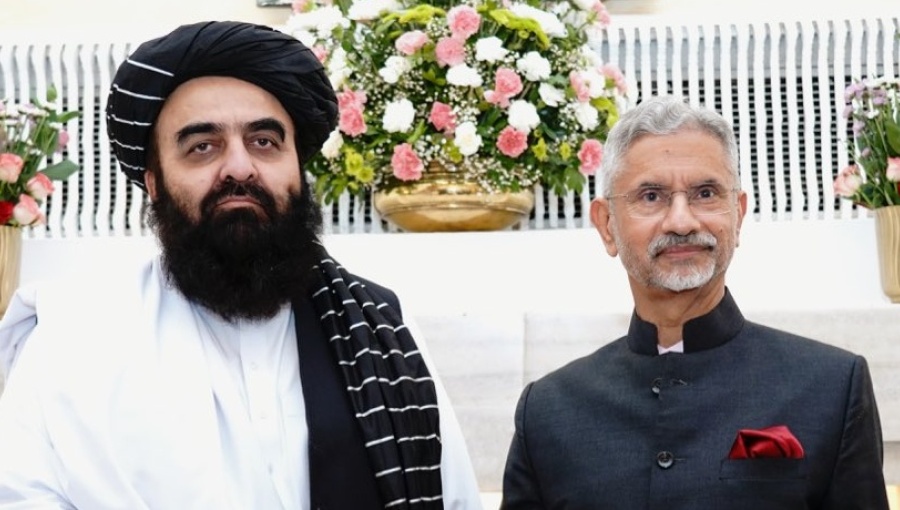
FM Mawlawi Amir Khan Muttaqi of Afghanistan with India's External Affairs Minister Dr. S. Jaishankar / Dr. S. Jaishankar - External Affairs Minister - X
Pakistan has formally lodged a diplomatic protest with Afghanistan over the recent India-Afghanistan joint statement, expressing strong objections to references concerning Jammu and Kashmir and remarks about terrorism, The Times of India reports.
The Pakistani Ministry of Foreign Affairs summoned Afghanistan’s Ambassador in Islamabad to convey its concerns. A statement issued by the ministry highlighted two primary issues according to the report: the characterisation of Jammu and Kashmir as an integral part of India, and Afghan Foreign Minister Muttaqi’s comment on terrorism being “an internal problem of Pakistan.”
Pakistan contends that the joint statement's reference to Jammu and Kashmir contradicts United Nations Security Council resolutions and undermines the region's disputed status. The foreign office emphasised that such language is deeply insensitive to locals in the region deemed illegally occupied by India in Islamabad.
On the terrorism issue, Islamabad rejected Minister Muttaqi’s comments, asserting that Pakistan has consistently shared information about terrorist elements operating from Afghan soil against Pakistan, allegedly with support from elements within Afghanistan. The statement further noted that dismissing terrorism as an "internal matter" does not absolve Afghanistan of its responsibility to ensure regional peace and secu
Dozens killed in Pakistan-Afghanistan border clashes
Issued on: 12/10/2025 - FRANCE24
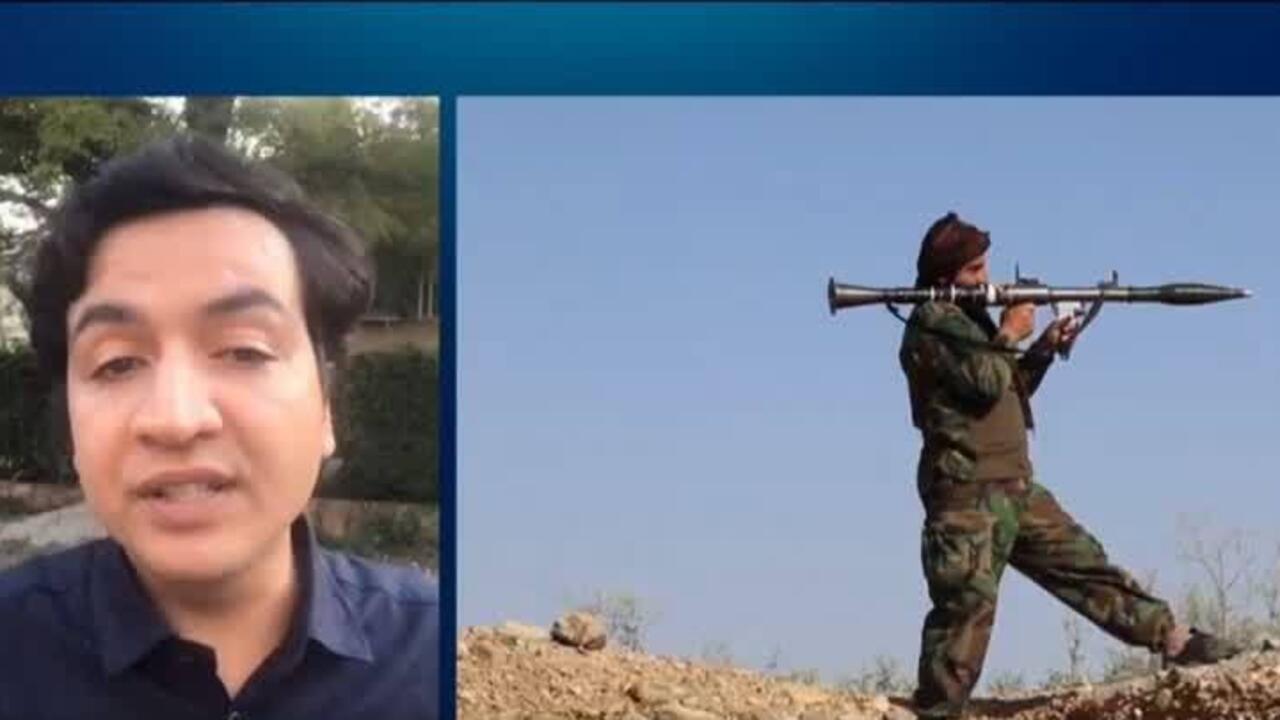
Dozens of fighters were killed in overnight border clashes between Pakistan and Afghanistan, both sides said on Sunday, in the most serious fighting between the neighbours since the Taliban came to power in Kabul. FRANCE 24's Shahzaib Wahlah reports from Islamabad.
Pakistan closes border with Afghanistan after dozens killed in overnight clashes
Pakistan closed all border crossings with Afghanistan on Sunday after deadly overnight clashes in which both sides claimed to have killed dozens of troops. Islamabad regularly accuses the Taliban administration in Kabul of harbouring militants who attack Pakistan, a charge Afghan officials deny.
Afghanistan and Pakistan said on Sunday they killed dozens of each other's troops during a night of heavy border clashes between the two countries.
Afghanistan's Taliban forces launched attacks on Pakistani troops along their shared border late on Saturday, in what it called "retaliation for air strikes carried out by the Pakistani army on Kabul" on Thursday.
Islamabad has not directly claimed responsibility for the strikes, but has repeatedly stated the right to defend itself against surging militancy that it says is planned from Afghan soil.
The two sides have repeatedly clashed in border regions since the Taliban seized control of Afghanistan in 2021, but airspace violations deep into Afghan territory would mark a significant escalation. ‘Pakistan has been accusing Kabul of harbouring Pakistani Taliban’
Zabihullah Mujahid, the Taliban government spokesman, said on Sunday that 58 Pakistani soldiers were killed and around 30 wounded in the clashes, while nine Taliban forces were killed.
The Pakistani military, meanwhile, said 23 of its soldiers and more than 200 Taliban and affiliated troops were killed.
The casualty figures could not be independently verified.
Afghan Foreign Minister Amir Khan Muttaqi said on Sunday the "situation is under control".
"Our operation last night achieved its objectives. And then our friends like Qatar and Saudi Arabia appealed that war must stop now, and the war is ceased right now," he said during a visit to India.
An Afghan military unit described Thursday's blasts in the capital as "air strikes", but Mujahid instead said the incident was an "airspace violation", adding that no damage had been found.
'Strong' response
Pakistan Prime Minister Shehbaz Sharif said on Sunday he "strongly condemns provocations" by Afghanistan.
"There will be no compromise on Pakistan's defence, and every provocation will be met with a strong and effective response," Sharif said in a statement, accusing Taliban authorities in Afghanistan of allowing their land to be used by "terrorist elements".
The Afghan military said on Saturday night that Taliban forces were engaged "in heavy clashes against Pakistani security forces in various areas".
Several border security officials told AFP that no further clashes had been reported at major crossings on Sunday morning.
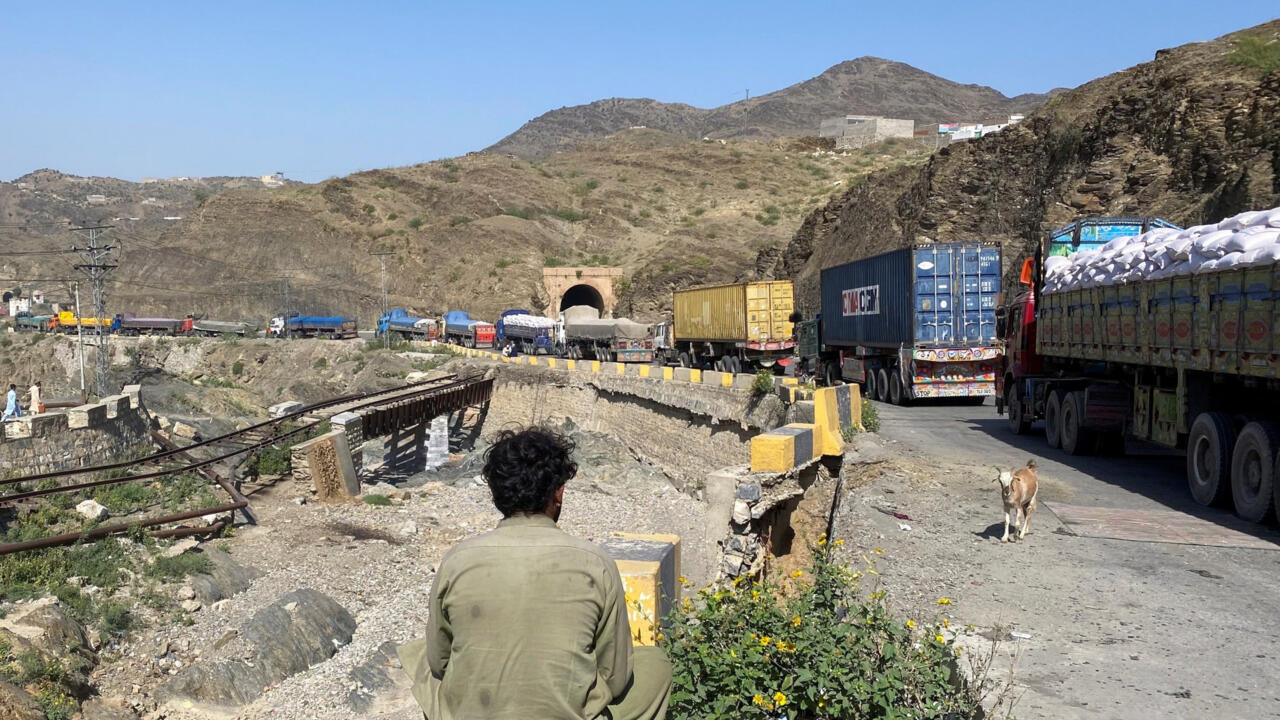
Key border crossings between the countries were closed on Sunday, officials said.
Extra troops have been sent to the major border crossing at Torkham, which sits on the frontier between Kabul and Islamabad.
Pakistani officials at Torkham, who requested anonymity, told AFP there had been no casualties on their side of the border crossing and that no further clashes had been reported in the area on Sunday morning.
The violence came while India hosted Afghanistan's foreign minister for the first time since the Taliban returned to power.
Wahid Faqiri, an Afghan international relations expert, said those warming relations have "angered Pakistan and pushed Islamabad towards aggression".
Resurgent violence
Militancy increased in northwestern Khyber Pakhtunkhwa since the withdrawal of US-led troops from neighbouring Afghanistan in 2021 and the return of the Taliban government.
The vast majority of attacks are claimed by the Pakistani Taliban (TTP), whose campaign against Pakistan security forces has intensified this year – set to be the deadliest in more than a decade.
Violence in the border region has "plunged relations between the neighbours to an all-time low", said Maleeha Lodhi, a former senior Pakistani diplomat.
"But there will have to be a return to diplomacy to find a resolution to the confrontation," she told AFP.
The TTP is a separate but closely linked group to the Afghan Taliban, which Islamabad says operates from Afghan soil with impunity.
A UN report this year said the TTP "receive substantial logistical and operational support from the de facto authorities", referring to the Taliban government in Kabul.
More than 500 people, including 311 troops and 73 policemen, have been killed in attacks between January and September 15, a Pakistan military spokesman said on Friday.
Pakistani Defence Minister Khawaja Muhammad Asif told parliament on Thursday that several efforts to convince the Afghan Taliban to stop backing the TTP had failed.
"Enough is enough," he said. "The Pakistani government and army's patience has run out."
(FRANCE 24 with AFP)
Pakistan And Kazakhstan Look To Hit $1 Billion In Trade And Build Stronger Ties – OpEd
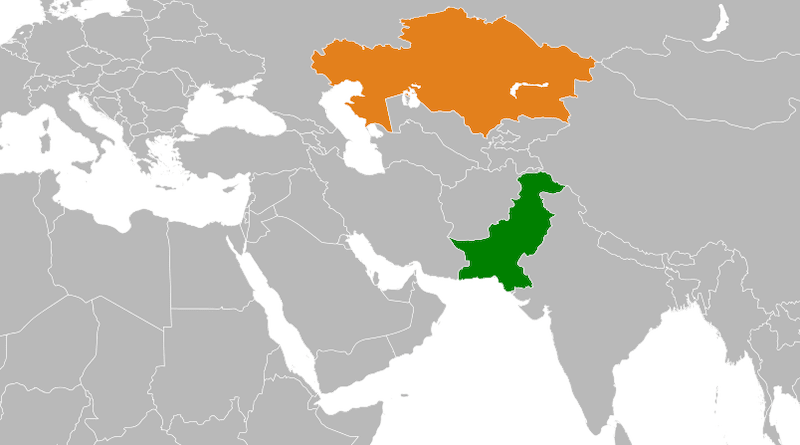
Locations of Pakistan (green) and Kazakhstan. Credit: Wikipedia Commons
Pakistan and Kazakhstan are trying to turn a long, friendly relationship into something more tangible: real business. Both countries want to take their connection beyond talk of brotherhood and history, toward a partnership that delivers jobs, exports, and investment.
The goal they’ve set is ambitious but clear $1 billion in annual trade and the plan is to get there by linking Central Asia to South Asia through Pakistan’s ports and roads. From history to opportunity
Pakistan and Kazakhstan have always had cordial ties, going back to the early years after the Soviet breakup. But despite that goodwill, trade between them has barely scratched the surface. Most of their potential has been stuck behind geography, poor logistics, and limited awareness of what each side needs.
That’s why the new Transit Trade Agreement matters. It would give Kazakhstan and other Central Asian countries a direct route to the Arabian Sea through Karachi and Gwadar. For Kazakhstan, a landlocked country, this could be a game changer and cheaper transport, faster access to markets, and less dependence on northern routes through Russia.
For Pakistan, it’s a chance to become the main gateway between Central Asia, the Middle East, and South Asia. It fits neatly with Islamabad’s larger strategy of turning the China-Pakistan Economic Corridor (CPEC) into a broader regional trade network.
The business side of things
The two governments are making a big push for their private sectors to get involved. Instead of relying on state-to-state deals alone, they’re encouraging business forums, exhibitions, and direct networking between entrepreneurs.
Kazakh delegations are expected to visit cities like Karachi and Faisalabad to check out Pakistan’s textile and leather industries. Meanwhile, Pakistani exporters are eyeing Almaty and Astana to explore partnerships in agriculture, logistics, and IT.
There’s also talk of setting up a Pakistan–Kazakhstan Business Council to help companies cut through red tape, sort out customs issues, and figure out payments and the usual headaches that come with cross-border trade.
Where they see potential
A few areas stand out:Agriculture: Kazakhstan is rich in grain and livestock, while Pakistan has experience in food processing and irrigation. There’s a lot they can learn from each other. Energy: Kazakhstan has oil, gas, and minerals; Pakistan needs all three. Joint projects in exploration or refining could make sense. Technology: Pakistan’s IT industry is growing fast, and Kazakhstan has been investing in digital governance and cybersecurity. The two could easily find overlaps. Leather and manufacturing: Pakistan’s leather sector could use Kazakhstan’s raw materials and investment to modernize and expand exports.
None of this will happen overnight, but the mix of skills and resources is promising.
The logistics backbone
Trade doesn’t work without roads and ports, and both sides seem to understand that. The new transit system would plug Kazakhstan into Pakistan’s motorway and railway networks, letting goods flow down to Karachi and Gwadar.
Once it’s fully functional, the route could cut the distance between Almaty and Karachi to around 3,000 kilometers, which is roughly half of what current trade routes require. There are even talks about direct flights between Islamabad and Almaty to make business and tourism easier.
Visa facilitation is also on the table, something that can make or break these kinds of efforts. Business travel needs to be simple if the two sides want to build trust.
Chasing the $1 billion goal
Right now, Pakistan–Kazakhstan trade is small less than $100 million a year by most estimates. But both sides think that once the transit system is up and running, hitting $1 billion isn’t out of reach.
To make sure the plan doesn’t lose steam, they’re setting up a Joint Intergovernmental Commission to monitor progress and push new initiatives. Regular meetings will help keep the focus on results instead of letting the momentum fade.
If things go well, Kazakhstan could also serve as a doorway for Pakistan into the broader Central Asian market like Uzbekistan, Kyrgyzstan, and Tajikistan included and a region that’s hungry for goods. Pakistan already produces, like textiles, pharmaceuticals, and consumer goods.
A bigger regional picture
This growing partnership isn’t just about trade. It fits into a larger shift happening across Eurasia. Central Asian countries are looking for more southern access, while Pakistan wants to expand its economic footprint beyond South Asia. Both are trying to balance their foreign policies by working with multiple partners like China, Russia, Turkey, and now each other.
In a way, it’s a modern take on the old Silk Road idea and not just trading goods but creating connections. For Pakistan, it’s a chance to prove that geography can be an asset, not a limitation. For Kazakhstan, it’s a way to diversify routes and strengthen its independence in global trade.
Looking ahead
There’s still a lot of work to be done infrastructure, banking channels, visa policies, and plain old trust between businesses. But if both sides stay serious about implementation, this could become one of the more meaningful partnerships in the region.
It’s easy to make declarations at summits; the hard part is turning them into trade deals, investment flows, and jobs on the ground. Pakistan and Kazakhstan seem to know that which is why they’re focusing more on business-to-business engagement instead of just political speeches.
If the $1 billion goal is reached, it won’t just be a number on paper. It’ll mark the start of a more connected Central and South Asia where countries trade because it makes sense, not just because they’ve always said they’re friends.
Professor Naila
Professor Naila, PhD in Defense and Strategic Studies (Turkey), specializes in security policy, strategic affairs, and defense analysis, contributing expertise in regional stability, national security, and global strategic discourse.
Pakistan’s AI Ambition: A Digital Leap Toward Economic Transformation – OpEd
When Prime Minister Shehbaz Sharif announced the formation of a high-level Artificial Intelligence Steering Committee this weekend, it marked more than a bureaucratic reshuffling—it signaled Pakistan’s intent to finally join the global race toward an AI-driven economy. For a country long constrained by slow bureaucracy, corruption, and outdated infrastructure, this pivot toward digital governance could be transformative.
Pakistan’s first major foray into state-backed AI—an AI-based Customs Clearance and Risk Management System (RMS)—is already showing the potential of technology to cut inefficiency and improve transparency. By automating tax assessments, reducing human discretion, and identifying risk patterns in trade documentation, the RMS directly tackles two of Pakistan’s chronic economic ailments: corruption and leakage. It is a small but significant example of how digital intelligence can bring discipline to systems long captured by inefficiency and patronage.
But Prime Minister Sharif’s announcement goes beyond one application. His vision—backed by the creation of an AI Steering Committee and a panel of experts—suggests a strategic attempt to embed AI into the heart of Pakistan’s economic modernization. The move to integrate AI at southern ports, for instance, where congestion and delays often stifle exports, shows a recognition that technology is no longer a luxury but an imperative. Digital upgrades that automate cargo handling and predict shipping bottlenecks could help Pakistan’s ports move from being choke points to competitive hubs in global trade routes.
The implications for economic digitization are profound. Pakistan’s economy remains overwhelmingly informal—an estimated 60 percent of transactions occur outside the documented sector. AI, combined with data integration, offers a tool to formalize this vast shadow economy. Predictive analytics can help detect tax evasion, track trade anomalies, and better plan infrastructure spending. In effect, AI could become the backbone of a smarter state—one that relies on data, not discretion.
Yet, the success of this ambition will depend on more than just announcements. Pakistan’s digital ecosystem faces structural weaknesses: patchy internet access, low data literacy, inadequate privacy safeguards, and a persistent brain drain of tech talent. If the government is serious about using AI to drive growth, it must address these gaps head-on. Investing in local AI research centers, incentivizing startups, and building partnerships with universities will be essential to avoid dependence on imported technologies and foreign consultants.
Moreover, the question of regulation cannot be ignored. The government’s commitment to “responsible use and data protection” is welcome, but it must be backed by robust legislation that safeguards citizens’ privacy, prevents algorithmic bias, and ensures transparency in state-led AI deployments. Without such protections, the same tools that promise efficiency could easily enable surveillance and discrimination.
What makes this moment particularly critical is that Pakistan is arriving late—but not too late—to the digital revolution. Countries across Asia, from Singapore to the UAE, are already embedding AI into their governance and economic planning. Closer to home, India has made strides in using AI for agricultural monitoring, digital health, and fintech expansion. Pakistan’s advantage lies in learning from these models and avoiding their pitfalls.
The stakes are high. AI adoption is not just about modernizing customs operations or speeding up ports; it is about transforming the logic of governance itself. A government guided by real-time data can allocate resources more efficiently, combat corruption more effectively, and anticipate crises before they escalate. For a developing economy struggling with fiscal deficits and low productivity, that kind of foresight could be revolutionary.
Prime Minister Sharif’s emphasis on AI as a driver of economic growth reflects a broader realization: that Pakistan’s future competitiveness will depend on its ability to harness technology intelligently, not just rhetorically. The Steering Committee, if it works with genuine autonomy and expertise, could lay the foundation for a national AI strategy that aligns innovation with inclusion—one that creates jobs rather than displacing them, and builds trust rather than eroding it.
For too long, Pakistan’s development model has been reactive—responding to crises rather than anticipating them. Artificial intelligence offers a chance to change that paradigm, to move from a state of managing decline to one of designing progress. But for that to happen, the government must ensure that its newfound enthusiasm for AI translates into sustained investment, institutional reform, and above all, accountability.
If done right, Pakistan’s embrace of artificial intelligence could mark the beginning of a new chapter: a shift from analog politics to digital governance, from manual inefficiency to algorithmic precision, and from economic uncertainty to data-driven growth. The future, as Sharif’s initiative suggests, may finally be intelligent.
Rashid Siddiqui
Rashid Siddiqui is a student of MPhil at University of the Punjab.
Jailed founder of Tren de Aragua gang calls for peace talks with Colombian government
Larry Alvarez, a jailed founder of the notorious Tren de Aragua gang known by his alias "Larry Changa", has published a letter asking Colombian President Gustavo Petro to open peace talks leading to the transnational group's "demobilisation".
A founder of Tren de Aragua, a transnational gang founded in Venezuela, has asked Colombia's government for peace talks leading to the group's disbandment, according to a letter published Saturday.
In the letter to the peace commissioner of Colombia – where he is in prison – Larry Alvarez, alias "Larry Changa," asks to help "facilitate rapprochement and build a viable demobilisation route."
The letter, also addressed to President Gustavo Petro and the ministry of justice, was signed by Alvarez's lawyers and published in local media and online.
The Colombian peace commissioner's office confirmed the authenticity of the letter to AFP.
Founded in a Venezuelan prison, Tren de Aragua is now present in eight countries and was designated a "significant transnational criminal organization" by the United States last year.
Colombia's leftist President Gustavo Petro entered office in 2022 pledging to end armed conflict that has dragged on in Colombia despite a landmark peace deal with the Revolutionary Armed Forces of Colombia (FARC) in 2016.
But proposed peace talks with National Liberation Army (ELN), the Gulf Clan cartel and FARC splinter groups have gone nowhere, and analysts say the groups, funded by drug trafficking, have grown stronger.