LONG READ
October 11, 2025
By Dr. Vanessa Chang
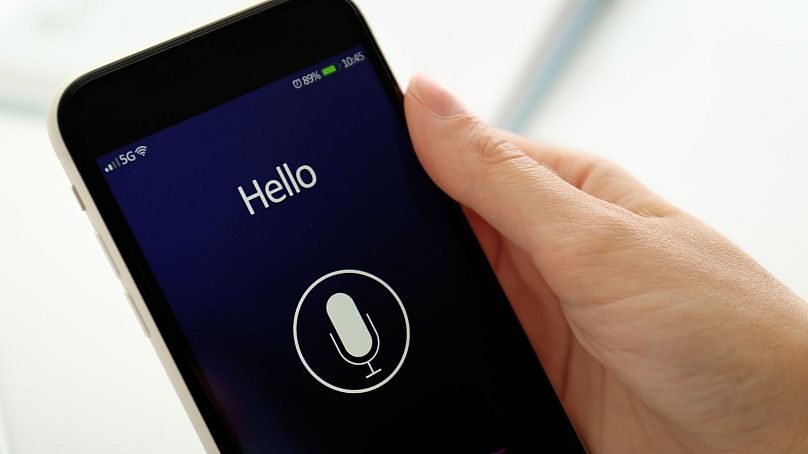
The influential computer scientist Mark Weiser once wrote that “a good tool is an invisible tool. By invisible, I mean that the tool does not intrude on your consciousness; you focus on the task, not the tool.” By this definition, many of our digital tools seem to have succeeded completely; they liberate our bodies by becoming invisible to users. By closing the gap between our bodies and our virtual selves, touchless technologies such as gesture control, voice recognition, and eye tracking aspire to channel our pure, natural expressions.
Such an interface has long been the holy grail for designers. From the Wii motion console to Leap Motion to the gadgets we all now carry in our pockets, these devices aim to erase the boundary between our bodies and our information. These devices promise a future in which our tools are so intuitive, they vanish. Now, it seems that future has arrived.
Though invisible to our conscious minds, our tools indelibly shape us. Technologies are not simply objects but architectures that organize our bodies in space and time, and give form to what I call the digital body: how we feel, move, and become through and alongside digital technologies. And the digital body is not an abstraction—it is us, becoming, again and again, in the technologies we build and the worlds we inhabit.
Living in the era of smartphones and AI, it’s easy to think that we’re in uncharted waters without a map. Our tools have become so frictionless, so invisible, that we forget their historical origins. Long before algorithms and touchscreens, technologies like writing, musical instruments, and even roads reshaped human life. These transformative tools and systems heralded profound changes in how we interact with one another, how we engage with the world around us, and ultimately, how we live.
As increasingly personalized technologies permeate our lives, such urgent questions arise as: How did we get here? What kinds of bodies do our technologies assume, require, or erase? What’s at stake when flesh becomes interface? And how might we redesign our path?
Our interactions with technology are dramas of skin, bone, information, rhythm, and power. Technologies refine, track, translate, and choreograph our behaviors; in doing so, they introduce new ways and languages of being, feeling, moving, and knowing.
Hands
As organs that extend consciousness into our surroundings, hands might be understood as the original interface—or as cartoonist Lynda Barry calls them, “the original digital device”—between human and world.
Paleoanthropologists, neuroscientists, and philosophers have stressed the evolutionary symbiosis of hand and mind. The hand mediates the most complex interactions of the human brain and the realm of technology. At the same time, our gestures have been shaped by an ongoing dialogue with our tools and our environments. As our earliest principal technology for information storage and retrieval, writing embodies this interplay. Hands are smart. Hands are curious. Hands learn. Hands know things.
Despite the crucial role hands have played in the development of new technologies—and our bodies with them—there have been numerous attempts to automate the human hand out of the equation.
Automata, proto-robots built to act as if working under their own power but actually following a predetermined sequence of operations, have existed for over a millennium. Many of them are dedicated to mimicking the unique human performances of the hand, although they haven’t reproduced its intelligence.
How do bodies become information? In 1804, a French weaver patented a different kind of automaton that mimics and would eventually replace the intelligent hand. Named for its inventor, Joseph-Marie Jacquard, the Jacquard machine is an oft-cited ancestor in the history of modern computing. Fitted to a handloom, it is a mechanical surrogate for the weaver’s hand, a physical addendum to the weaving apparatus that automates the production of elaborately patterned fabric. By transforming the competence and creativity of the weaver’s hand into programmable code—ultimately supplanting that human expertise—the Jacquard loom became the first numerical control machine.
A 1951 advertisement for IBM’s Type 604 Electronic Calculating Punch featured a glowing human hand overlaid with its mechanical surrogate: vacuum tube modules arranged like fingers. The tagline reads, “Fingers You Can Count On.” More than just a sales pitch, the image dramatized a broader shift: the intelligent hand, once a symbol of craftsmanship, reimagined as a modular, electronic appendage—human labor abstracted into interchangeable, replaceable parts.
History, however, reminds us of the hand’s abiding creativity. By designing interfaces that serve human needs, rather than corporate metrics, we can reclaim the hand’s role as a living bridge between mind, body, and world.
Voice
Until the dawn of sound recording, the human voice was tethered to the human body. Speech and song were ephemeral, dissipating in almost the same instant that they sprang into being. At the end of the 19th century, sound recording severed the voice from the body and gave it a new and separate existence, extending what the technology of writing had long begun to do. Human voices could now endure beyond death, transcending the limits of the human body.
Like the hand, the voice is a threshold between body and world. Once only borne aloft in the air, its vibrations now travel wires, waves, and code. If writing extended the hand’s reach, sound recording gave the voice a second existence. Translated by machines, abstracted into data, and refigured into new forms, the voice has lived a thousand new lives—pressed into vinyl, remixed by DJs, morphed by Auto-Tune, parsed by speech recognition, and now reanimated by AI-generated vocal clones. These technologies have not only transformed how the human voice sounds, but how it is made, perceived, and preserved.
Ear
If the voice is how we reach outward, the ear is how we are reached. Our ears, once tuned by acoustic communities, are now calibrated by machines. From choirs to cochlear implants, music boxes to algorithmic playlists, listening has become a mediated act— private, curated, and data-driven.
The music box marked a turning point in the modern objectification of sound. Music boxes began to divorce ears from other speaking and singing bodies, restructuring listening from a communal act into an insular exchange between individual and machine. In so doing, music boxes began to create the channels for a new kind of hearing that would lead to our digital ears.
Since then, numerous mass-produced sound technologies have nourished and evolved the intimacy between ears and listening machines. Phonographs, gramophones, transistor radios, and later, magnetic tape, made it possible for people to listen to music in the absence of a performer. Several sound recording and storage technologies emerged in the wake of the phonograph’s invention. Whereas the music box, as an automated instrument, generated sound on its own, later technologies recorded and reproduced human performances. Each has spawned new auditory cultures, and with them, consonant reimaginations of the ear. As they transformed the voice from its pure alignment with the human soul to a more machinic object, they transformed listening cultures—and the ear itself.
Eye
Contemporary cameras, as we know them, unfix the eye from the body. Though now ubiquitous—embedded in nearly every phone and capable of high-resolution, high-focus capture— this was not always the case. Photography’s chief ancestor, the camera obscura, relies on the proximity of eye and image. Essentially a pinhole device, the camera obscura projects light through a small aperture into a darkened room or box, casting a live, inverted replica of the world outside—a shadow play of reality.
By the 16th century, the camera obscura had become a metaphor for human vision. This analogy defines the relationship between the eye and the seen world by immediacy: just as the outside world is projected onto a darkened room, so too is reality believed to be projected onto the eye through rays of light—an image cast upon the body. Photography descends from the camera obscura, turning projection into permanence. Whereas the camera obscura was ephemeral, the photograph imprints projected reality onto a surface, making it durable, portable, and endlessly reproducible. In so doing, it initiated the detachment of seeing from the physical act of looking. Vision, once anchored in the immediacy of the body, became something that could be captured, stored, and transmitted.
Yet, even as both vision and photography evolved into increasingly complex systems, no longer limited to the eye or lens, the metaphor of the camera as the eye endures. The persistence of this metaphor illustrates a deeper paradox at the heart of digital embodiment: we trust what we see, even though we are aware that sight can be deceiving. When machines inherit the work of the senses, we transfer that trust to them—forgetting, once again, that the eye has always been fallible. And as developments in imaging technologies have evolved, so too has the digital eye. Today’s digital eyes—those of smartphone cameras, Photoshop algorithms, and computer vision systems—do not see as the eye sees, nor do they operate by the same principles of immediacy that the camera obscura once did. They reconstruct, enhance, filter, and infer. As we increasingly outsource seeing to machines, the very nature of sight itself is transformed. Yet, cameras and the images they produce remain important referents for our reality, even as that reality becomes ever more fluid, manipulated, and abstracted. The digital gaze does not simply record the world; it remakes the very relationship between our bodies and the realities they claim to represent, between what is seen and what is believed.
Foot
The human foot is a marvel of evolutionary engineering, distinguishing us from other animals. The first hominins, the earliest members of our lineage, didn’t have large brains like modern humans, didn’t use sophisticated technology, and didn’t talk. They did, however, walk on two legs. Our feet are the very foundation of modern humanity as we know it. Bipedalism is the most ancient human adaptation, setting the stage for many characteristics that distinguish us as humans, including our reliance on tools and technology, language, and dietary flexibility. It freed human hands for tools and communication, and breath for speech. Walking—upright, that is—is as central to our humanity as writing and singing to one another. Our feet embody this extraordinary legacy and history. As Leonardo da Vinci is said to have remarked, “The human foot is a masterpiece of engineering and a work of art.”
As vehicles for our bodies, our feet serve as a primary interface between ourselves and the world. With the advent of self-tracking technologies that turn our footsteps into information, they, too, have become fodder for systems that flatten the nuance of lived experience. The notion that one must walk ten thousand steps daily for health has become almost as much of a maxim as that ancient adage, “A journey of a thousand miles begins with a single step.” It might be truer to say instead that a journey of ten thousand steps begins with a single pedometer.
While walking may be the most natural thing in the world (for those who are ambulatory), it is increasingly being integrated into technological systems. Impregnated with information-gathering sensors, smart cities are the inexorable conclusion of this logic. Cities are becoming algorithmic labs for human movement.
Body
Technology desires disappearance. When a tool is working as intended, you don’t think about it—until it breaks. This kind of disappearance doesn’t just require a good tool; it demands skill and practice of the human using it. Like a surgeon with a scalpel or a carpenter with a chisel using their intelligent hands, disappearance is a collaboration between well-made tools and disciplined bodies. Digital technologies push this further still: the ideal tool is one that will completely dissolve, making the human body itself the interface.
We’re already living in mixed reality. Our bodies are entangled in a dance with data: computers track our keystrokes, footsteps, and heartbeats; they reproduce and organize our movements; intelligent systems choreograph our journeys, large and small; we socialize through electronic sound and through avatars in virtual spaces. Extended reality technologies don’t simply show us other worlds; they clarify the one we’re already in and reveal how deeply our lives are intertwined with computation.
We burnish our digital images (I’ll admit that mine is lightly airbrushed by the Touch Up My Appearance option in my Zoom preferences). We feed ourselves to the technologies we use, seeking to transcend the limits of our bodies and minds. We are spit out as ghosts of the platforms that puppet us. The term “ghost in the machine” has been used as a crude and derogatory jab at Descartes’s mind-body dualism—the idea that our minds animate our bodies like spirits inhabiting a shell. One version of the body digital inverts this: the mind floats free, divorced from our bodies and assimilated by platforms. But we are not disembodied minds. We are deeply rooted in flesh, blood, and bone. Any future worth building must remember that.
Mind
In their landmark 1998 paper “The Extended Mind,” philosophers of mind Andy Clark and David Chalmers asked, “Where does the mind stop and the rest of the world begin?” Their answer has become one of the most influential articulations of the extended mind thesis, which rejects the conventional view that the mind resides solely within the brain, stopping at the skull and skin. Rather, they proposed that cognition arises from the dynamic interplay of brain, body, and tool. A pencil, a notebook, or a computer screen can become so integrated into our mental processes that they functionally bring about our cognitive abilities as much as our brains. The mind, in this view, is porous: it reaches into the world, and the world reaches back. Cognition, then, is not contained but distributed—emerging from an ecology of brain, body, and environment.
From grocery lists to encyclopedias, writing extends the human mind by offloading the burdens of memory, storing and retrieving information outside the body. Writing is a technology that allows us to outsource individual and collective memory. By sustaining the creation of informational archives that can be referenced, literacy made possible new forms of interaction with language. New techniques of information storage afforded the structured accumulation of knowledge. Once formulated, information can be reformulated with increasing precision. In this way, literacy laid the groundwork for the disciplines of logic, philosophy, and science in general—the knowledge infrastructures that would, centuries later, give rise to AI.
Writing has never been a solo act. Facilitated by AI, our writing should connect us with our past as much as with our future, with one another as much as ourselves. The best human writing challenges us to open our minds, not close them. We owe it to ourselves to tell stories with this new technology that does the same. If we must write with machines, let it not be to replicate, but to reimagine ourselves.
Rather than reflexively embracing or rejecting new technologies, we must ask: Do they expand or contract our horizons? Do they sustain care, curiosity, and complexity—or reduce us to what can be measured and predicted? How do they shape how we see, move, feel, speak, and connect? The history of our digital bodies shows that the ecologies we create are never neutral. They reflect how we choose to know one another, and how we allow ourselves to be known.
By Dr. Vanessa Chang
The influential computer scientist Mark Weiser once wrote that “a good tool is an invisible tool. By invisible, I mean that the tool does not intrude on your consciousness; you focus on the task, not the tool.” By this definition, many of our digital tools seem to have succeeded completely; they liberate our bodies by becoming invisible to users. By closing the gap between our bodies and our virtual selves, touchless technologies such as gesture control, voice recognition, and eye tracking aspire to channel our pure, natural expressions.
Such an interface has long been the holy grail for designers. From the Wii motion console to Leap Motion to the gadgets we all now carry in our pockets, these devices aim to erase the boundary between our bodies and our information. These devices promise a future in which our tools are so intuitive, they vanish. Now, it seems that future has arrived.
Though invisible to our conscious minds, our tools indelibly shape us. Technologies are not simply objects but architectures that organize our bodies in space and time, and give form to what I call the digital body: how we feel, move, and become through and alongside digital technologies. And the digital body is not an abstraction—it is us, becoming, again and again, in the technologies we build and the worlds we inhabit.
Living in the era of smartphones and AI, it’s easy to think that we’re in uncharted waters without a map. Our tools have become so frictionless, so invisible, that we forget their historical origins. Long before algorithms and touchscreens, technologies like writing, musical instruments, and even roads reshaped human life. These transformative tools and systems heralded profound changes in how we interact with one another, how we engage with the world around us, and ultimately, how we live.
As increasingly personalized technologies permeate our lives, such urgent questions arise as: How did we get here? What kinds of bodies do our technologies assume, require, or erase? What’s at stake when flesh becomes interface? And how might we redesign our path?
Our interactions with technology are dramas of skin, bone, information, rhythm, and power. Technologies refine, track, translate, and choreograph our behaviors; in doing so, they introduce new ways and languages of being, feeling, moving, and knowing.
Hands
As organs that extend consciousness into our surroundings, hands might be understood as the original interface—or as cartoonist Lynda Barry calls them, “the original digital device”—between human and world.
Paleoanthropologists, neuroscientists, and philosophers have stressed the evolutionary symbiosis of hand and mind. The hand mediates the most complex interactions of the human brain and the realm of technology. At the same time, our gestures have been shaped by an ongoing dialogue with our tools and our environments. As our earliest principal technology for information storage and retrieval, writing embodies this interplay. Hands are smart. Hands are curious. Hands learn. Hands know things.
Despite the crucial role hands have played in the development of new technologies—and our bodies with them—there have been numerous attempts to automate the human hand out of the equation.
Automata, proto-robots built to act as if working under their own power but actually following a predetermined sequence of operations, have existed for over a millennium. Many of them are dedicated to mimicking the unique human performances of the hand, although they haven’t reproduced its intelligence.
How do bodies become information? In 1804, a French weaver patented a different kind of automaton that mimics and would eventually replace the intelligent hand. Named for its inventor, Joseph-Marie Jacquard, the Jacquard machine is an oft-cited ancestor in the history of modern computing. Fitted to a handloom, it is a mechanical surrogate for the weaver’s hand, a physical addendum to the weaving apparatus that automates the production of elaborately patterned fabric. By transforming the competence and creativity of the weaver’s hand into programmable code—ultimately supplanting that human expertise—the Jacquard loom became the first numerical control machine.
A 1951 advertisement for IBM’s Type 604 Electronic Calculating Punch featured a glowing human hand overlaid with its mechanical surrogate: vacuum tube modules arranged like fingers. The tagline reads, “Fingers You Can Count On.” More than just a sales pitch, the image dramatized a broader shift: the intelligent hand, once a symbol of craftsmanship, reimagined as a modular, electronic appendage—human labor abstracted into interchangeable, replaceable parts.
History, however, reminds us of the hand’s abiding creativity. By designing interfaces that serve human needs, rather than corporate metrics, we can reclaim the hand’s role as a living bridge between mind, body, and world.
Voice
Until the dawn of sound recording, the human voice was tethered to the human body. Speech and song were ephemeral, dissipating in almost the same instant that they sprang into being. At the end of the 19th century, sound recording severed the voice from the body and gave it a new and separate existence, extending what the technology of writing had long begun to do. Human voices could now endure beyond death, transcending the limits of the human body.
Like the hand, the voice is a threshold between body and world. Once only borne aloft in the air, its vibrations now travel wires, waves, and code. If writing extended the hand’s reach, sound recording gave the voice a second existence. Translated by machines, abstracted into data, and refigured into new forms, the voice has lived a thousand new lives—pressed into vinyl, remixed by DJs, morphed by Auto-Tune, parsed by speech recognition, and now reanimated by AI-generated vocal clones. These technologies have not only transformed how the human voice sounds, but how it is made, perceived, and preserved.
Ear
If the voice is how we reach outward, the ear is how we are reached. Our ears, once tuned by acoustic communities, are now calibrated by machines. From choirs to cochlear implants, music boxes to algorithmic playlists, listening has become a mediated act— private, curated, and data-driven.
The music box marked a turning point in the modern objectification of sound. Music boxes began to divorce ears from other speaking and singing bodies, restructuring listening from a communal act into an insular exchange between individual and machine. In so doing, music boxes began to create the channels for a new kind of hearing that would lead to our digital ears.
Since then, numerous mass-produced sound technologies have nourished and evolved the intimacy between ears and listening machines. Phonographs, gramophones, transistor radios, and later, magnetic tape, made it possible for people to listen to music in the absence of a performer. Several sound recording and storage technologies emerged in the wake of the phonograph’s invention. Whereas the music box, as an automated instrument, generated sound on its own, later technologies recorded and reproduced human performances. Each has spawned new auditory cultures, and with them, consonant reimaginations of the ear. As they transformed the voice from its pure alignment with the human soul to a more machinic object, they transformed listening cultures—and the ear itself.
Eye
Contemporary cameras, as we know them, unfix the eye from the body. Though now ubiquitous—embedded in nearly every phone and capable of high-resolution, high-focus capture— this was not always the case. Photography’s chief ancestor, the camera obscura, relies on the proximity of eye and image. Essentially a pinhole device, the camera obscura projects light through a small aperture into a darkened room or box, casting a live, inverted replica of the world outside—a shadow play of reality.
By the 16th century, the camera obscura had become a metaphor for human vision. This analogy defines the relationship between the eye and the seen world by immediacy: just as the outside world is projected onto a darkened room, so too is reality believed to be projected onto the eye through rays of light—an image cast upon the body. Photography descends from the camera obscura, turning projection into permanence. Whereas the camera obscura was ephemeral, the photograph imprints projected reality onto a surface, making it durable, portable, and endlessly reproducible. In so doing, it initiated the detachment of seeing from the physical act of looking. Vision, once anchored in the immediacy of the body, became something that could be captured, stored, and transmitted.
Yet, even as both vision and photography evolved into increasingly complex systems, no longer limited to the eye or lens, the metaphor of the camera as the eye endures. The persistence of this metaphor illustrates a deeper paradox at the heart of digital embodiment: we trust what we see, even though we are aware that sight can be deceiving. When machines inherit the work of the senses, we transfer that trust to them—forgetting, once again, that the eye has always been fallible. And as developments in imaging technologies have evolved, so too has the digital eye. Today’s digital eyes—those of smartphone cameras, Photoshop algorithms, and computer vision systems—do not see as the eye sees, nor do they operate by the same principles of immediacy that the camera obscura once did. They reconstruct, enhance, filter, and infer. As we increasingly outsource seeing to machines, the very nature of sight itself is transformed. Yet, cameras and the images they produce remain important referents for our reality, even as that reality becomes ever more fluid, manipulated, and abstracted. The digital gaze does not simply record the world; it remakes the very relationship between our bodies and the realities they claim to represent, between what is seen and what is believed.
Foot
The human foot is a marvel of evolutionary engineering, distinguishing us from other animals. The first hominins, the earliest members of our lineage, didn’t have large brains like modern humans, didn’t use sophisticated technology, and didn’t talk. They did, however, walk on two legs. Our feet are the very foundation of modern humanity as we know it. Bipedalism is the most ancient human adaptation, setting the stage for many characteristics that distinguish us as humans, including our reliance on tools and technology, language, and dietary flexibility. It freed human hands for tools and communication, and breath for speech. Walking—upright, that is—is as central to our humanity as writing and singing to one another. Our feet embody this extraordinary legacy and history. As Leonardo da Vinci is said to have remarked, “The human foot is a masterpiece of engineering and a work of art.”
As vehicles for our bodies, our feet serve as a primary interface between ourselves and the world. With the advent of self-tracking technologies that turn our footsteps into information, they, too, have become fodder for systems that flatten the nuance of lived experience. The notion that one must walk ten thousand steps daily for health has become almost as much of a maxim as that ancient adage, “A journey of a thousand miles begins with a single step.” It might be truer to say instead that a journey of ten thousand steps begins with a single pedometer.
While walking may be the most natural thing in the world (for those who are ambulatory), it is increasingly being integrated into technological systems. Impregnated with information-gathering sensors, smart cities are the inexorable conclusion of this logic. Cities are becoming algorithmic labs for human movement.
Body
Technology desires disappearance. When a tool is working as intended, you don’t think about it—until it breaks. This kind of disappearance doesn’t just require a good tool; it demands skill and practice of the human using it. Like a surgeon with a scalpel or a carpenter with a chisel using their intelligent hands, disappearance is a collaboration between well-made tools and disciplined bodies. Digital technologies push this further still: the ideal tool is one that will completely dissolve, making the human body itself the interface.
We’re already living in mixed reality. Our bodies are entangled in a dance with data: computers track our keystrokes, footsteps, and heartbeats; they reproduce and organize our movements; intelligent systems choreograph our journeys, large and small; we socialize through electronic sound and through avatars in virtual spaces. Extended reality technologies don’t simply show us other worlds; they clarify the one we’re already in and reveal how deeply our lives are intertwined with computation.
We burnish our digital images (I’ll admit that mine is lightly airbrushed by the Touch Up My Appearance option in my Zoom preferences). We feed ourselves to the technologies we use, seeking to transcend the limits of our bodies and minds. We are spit out as ghosts of the platforms that puppet us. The term “ghost in the machine” has been used as a crude and derogatory jab at Descartes’s mind-body dualism—the idea that our minds animate our bodies like spirits inhabiting a shell. One version of the body digital inverts this: the mind floats free, divorced from our bodies and assimilated by platforms. But we are not disembodied minds. We are deeply rooted in flesh, blood, and bone. Any future worth building must remember that.
Mind
In their landmark 1998 paper “The Extended Mind,” philosophers of mind Andy Clark and David Chalmers asked, “Where does the mind stop and the rest of the world begin?” Their answer has become one of the most influential articulations of the extended mind thesis, which rejects the conventional view that the mind resides solely within the brain, stopping at the skull and skin. Rather, they proposed that cognition arises from the dynamic interplay of brain, body, and tool. A pencil, a notebook, or a computer screen can become so integrated into our mental processes that they functionally bring about our cognitive abilities as much as our brains. The mind, in this view, is porous: it reaches into the world, and the world reaches back. Cognition, then, is not contained but distributed—emerging from an ecology of brain, body, and environment.
From grocery lists to encyclopedias, writing extends the human mind by offloading the burdens of memory, storing and retrieving information outside the body. Writing is a technology that allows us to outsource individual and collective memory. By sustaining the creation of informational archives that can be referenced, literacy made possible new forms of interaction with language. New techniques of information storage afforded the structured accumulation of knowledge. Once formulated, information can be reformulated with increasing precision. In this way, literacy laid the groundwork for the disciplines of logic, philosophy, and science in general—the knowledge infrastructures that would, centuries later, give rise to AI.
Writing has never been a solo act. Facilitated by AI, our writing should connect us with our past as much as with our future, with one another as much as ourselves. The best human writing challenges us to open our minds, not close them. We owe it to ourselves to tell stories with this new technology that does the same. If we must write with machines, let it not be to replicate, but to reimagine ourselves.
Rather than reflexively embracing or rejecting new technologies, we must ask: Do they expand or contract our horizons? Do they sustain care, curiosity, and complexity—or reduce us to what can be measured and predicted? How do they shape how we see, move, feel, speak, and connect? The history of our digital bodies shows that the ecologies we create are never neutral. They reflect how we choose to know one another, and how we allow ourselves to be known.
Author Bio: Dr. Vanessa Chang is the director of programs at Leonardo, the International Society for the Arts, Sciences, and Technology. She has been a lecturer in Visual & Critical Studies at the California College of the Arts, lead curator with CODAME Art & Tech, and a SOMArts curatorial resident from 2019 to 2020. Her essays and reviews have been published in Slate, Noema, the Los Angeles Review of Books, and Wired.
Credit Line: This adapted excerpt is from Vanessa Chang’s The Body Digital: A History of Humans and Machines from Cuckoo Clocks to ChatGPT (2025, Melville House). It is licensed under the Creative Commons Attribution-NonCommercial-ShareAlike 4.0 International License (CC BY-NC-SA 4.0) with permission from Melville House. It was adapted and produced for the Observatory by the Independent Media Institute.