Sunday, October 26, 2025

 The Race to Recycle Renewable Energy

  • Massive waste from old wind turbines, solar panels, and EV batteries threatens the green transition’s sustainability goals.

  • Companies are developing innovative recycling solutions, from reusing turbine blades to recovering metals from old solar panels and batteries.

  • Expanding recycling capacity and enforcing stronger waste regulations are vital to creating a circular, low-carbon energy economy.

With the renewable energy sector growing rapidly on a global scale, as many governments pursue a green transition, the need to recycle more components has become evident. Finding innovative ways to recycle renewable energy equipment could help significantly cut costs and reduce waste, further supporting the sector’s green ambitions. There is great potential for a range of components to be reused and recycled, from solar panels to wind turbines and electric vehicle (EV) batteries. However, greater research and investment must be contributed to the sector to improve practices and make recycling options more accessible.  As interest and investment in renewable energy increase, we are seeing more technological advancements across the sector. Wind turbines have become bigger and more powerful, while solar panels have been getting cheaper and more efficient. This means that old technologies are becoming outdated more quickly, leading to their replacement. Once a renewable energy component reaches the end of its lifecycle, it is normally removed and replaced by something bigger, stronger, and better. What is done with these old components varies massively from country to country. 

Often, old turbine blades or photovoltaic (PV) panels are stockpiled for long periods of time as companies decide what to do with them. Waste from the renewable energy sector is significant, with Europe expected to dismantle around 14,000 wind turbines by the end of the decade. This would result in between 40,000 and 60,000 tonnes of blade waste, according to WindEurope. Meanwhile, in the United States, wind turbine blade waste could reach anywhere between 200,000 to 370,000 tonnes a year by 2050. 

Greater innovation in recycling could help reduce waste and cut costs by putting old components to good use. However, recycling old renewable energy parts is not always so simple. Steel and other materials that can be easily recycled account for around 85 to 90 percent of the makeup of a wind turbine, but the glass fibre or carbon fibre blades are much more complicated to recycle. The difficulties in recycling have not put operators off, with more innovative solutions being seen year on year. In a bid to become more sustainable, after years of discarding old blades and other components, several wind firms have pledged to invest in recycling operations to prevent old components from going to landfill. 

In Scotland, old blades from the Hagshaw Hill windfarm are being recycled to provide a hybrid polymer to be used to produce precast concrete alternatives or replace virgin plastics. Meanwhile, Spanish energy firm Iberdrola aims to transform 10,000 tonnes of blade waste annually at its blade recycling facility on the Iberian Peninsula. It will use glass fibres and resins from the turbines to produce new blades to be used across a range of sectors, from aerospace to construction. 

Related: Spain’s Clean Energy Dilemma

In the solar energy sector, various innovations are being seen. For example, in Brisbane, Australia, solar panels are being transformed into silver and copper. Operators are removing aluminium and wires from PVs that can no longer produce energy to grind them up into plastic, glass, silicon, silver, and copper. Pan Pacific Recycling is now processing around 30,000 panels a year and hopes to eventually increase its annual capacity to 240,000 panels

Global solar panel waste is currently far higher than the recycling capacity for this waste, meaning that greater investment is needed in the sector to expand capacity and improve sustainability by preventing old solar panels from going to landfill. In addition, experts suggest that many of the solar panels being replaced with more efficient models are still capable of producing energy and could be reused in a different context rather than discarded. Several startups, such as Australian Second Life Solar, are working to encourage the reuse of old solar panels in alternative settings to provide clean energy and prevent unnecessary waste. 

Some of the greatest advancements have been seen in EV battery recycling, as companies worldwide strive to improve their critical mineral supply chains. The lithium supply used for EV battery production is finite, meaning that once supplies are depleted, we will no longer be able to produce this type of battery. However, extracting the lithium from old EV batteries could allow EV makers to reuse the critical mineral, rather than relying wholly on mining projects for their lithium supply. Other minerals that can be extracted from these batteries include nickel, cobalt, and graphite. 

Various companies from different regions of the world are now investing in expanding and improving recycling practices, although the industry’s recycling capacity still falls far behind the production of new wind turbine blades and solar panels, suggesting that greater funding is needed to accelerate the global component recycling capacity. In addition, governments could encourage companies to invest in recycling activities by introducing stricter rules and regulations on renewable energy waste, thereby helping the industry to become more sustainable. 

By Felicity Bradstock for Oilprice.com


Can U.S. Hydropower Compete in a New Energy Era?

  • Over 450 U.S. hydro plants need relicensing within a decade, demanding billions in upgrades to meet environmental and safety standards.

  • Falling costs of gas, wind, and solar power are undercutting hydropower’s competitiveness despite its reliability.

  • New federal incentives and major private deals, such as Google’s $3 billion partnership with Brookfield, could help rejuvenate the aging sector.

The United States has long used hydropower, which is now the country’s largest source of renewable energy, for electricity production. Hydropower contributed 27 percent of total U.S. utility-scale renewable electricity generation and 5.86 percent of total utility-scale electricity production in 2024. The U.S. first started developing its hydropower fleet in the late 1800s, long before other renewable energy sources, such as wind and solar power. 

Hydropower plants produce electricity using the elevation difference created by a dam or diversion structure. Water flows in one side and exits at a lower point, spinning a turbine, which runs a generator to produce electricity. However, of the more than 90,000 dams in the United States, fewer than 3 percent produce power, with the others being used for recreation, farm ponds, flood control, water supply, and irrigation.

While there is huge potential for hydropower in the United States, many of the existing facilities are getting older and more expensive to maintain. The Bipartisan Infrastructure Law that was launched under the Biden administration provides $753.6 million to the U.S. Department of Energy (DoE) for hydropower, but significantly more funding would be required to expand rather than solely maintain the country’s hydropower capacity.

The U.S. Energy Information Administration (EIA) expects hydropower generation to rise by 7.5 percent in 2025, after falling by 241 billion kilowatt-hours (BkWh) in 2024, to its lowest generation since 2010. Generation is expected to reach 259.1 BkWh this year, to contribute around 6 percent of U.S. electricity production. Approximately half of the hydropower generating capacity in the U.S. is in the western states of Washington, Oregon, and California.

Energy experts suggest that now may be a make-or-break moment for hydropower, as several existing facilities require high quantities of funding to extend their lifespans. Almost 450 hydroelectric plants, which contribute over 16 GW of electricity in total, are due to be relicensed across the U.S. over the next 10 years. This accounts for around 40 percent of non-federal hydropower.

However, the introduction of stricter requirements will require millions of dollars to be spent on upgrades to qualify for a new operating permit for existing facilities, which is forcing many companies to close operations. Many of these plants have been providing vast quantities of stable, clean electricity for decades. However, the falling costs associated with natural gas, wind, and solar power have made it increasingly difficult for hydropower to compete.

Most dams in the U.S. have an average age of 65 years, meaning they were built without the same consideration for the environment that is now expected for hydropower development. Upgrading old facilities to enable the unobstructed passage for fish and other wildlife, as well as meeting other environmental standards, would be extremely expensive for operators. In addition, many of these facilities require significant investment to fix or replace turbines and other hardware that have atrophied over time.

Another barrier to relicensing is the lack of clear oversight for the sector. No single agency has full authority over hydropower. This can make the bureaucratic process for a new license extremely complex, as various agencies may have different standards and expectations for operators. At present, it takes an average of eight years to relicense an existing hydropower facility, which is far longer than for other energy sources.

In January, the Biden administration’s Treasury Department expanded a renewable energy rule to include hydropower, which treats facilities as new if operators reinvest a minimum of 80 percent of the facility’s market value into infrastructure upgrades, making them eligible for larger federal write-offs. Only one hydropower facility has used the federal investment tax credit to date, as, until recently, there was a lack of clear guidance on how to apply the tax credit.

While President Trump has been highly critical of many renewable energy sources, hydropower is one of the few clean energies that Trump appears to support. Trump’s One Big Beautiful Bill Act preserves the sector’s access to key federal tax credits for the next eight years, which could help reassure investors.

There have been some positive signs for the hydropower sector in recent months, with the signing of a $3 billion hydropower deal between Google and Brookfield Asset Management in July. Google hopes the project will provide up to 3 GW of hydropower for its data centres. The move includes 20-year power purchase agreements for two hydropower facilities in Pennsylvania. The two sites are expected to be upgraded and relicensed as part of the arrangement, and Google aims to eventually expand the deal beyond the two initial sites to other parts of the Mid-Atlantic and Midwest, the company said.

“This collaboration with Brookfield is a significant step forward, ensuring clean energy supply in the PJM region where we operate,” Google’s head of data centre energy, Amanda Peterson Corio, said in a statement.

To enable hydropower plants to continue providing a significant proportion of the United States’ clean electricity, significant funding must be contributed to the sector to make facilities eligible for relicensing. Many plants require millions of dollars in upgrades, which most operators simply cannot afford. Meanwhile, the falling cost of gas, solar, and wind power has made hydropower less competitive in recent years, despite its long history in the U.S. and significant contribution to the country’s clean energy mix. 

By Felicity Bradstock for Oilprice.com


Column: Critical minerals, decarbonization and government de-risking dominate mining wish list


Stock image.

Critical minerals, and especially rare earths, as well as the ongoing need to decarbonize and a bigger role for governments are the three top areas of concern for the global mining industry.

Those are the key takeaways from this week’s IMARC event in Sydney, which brings together more than 10,000 industry participants in what is one of the world’s biggest mining conferences.

Events such as IMARC are useful for companies to network and generate business deals, but they also provide platforms for participants, ranging from miners to buyers to governments and suppliers, to express their concerns and where they see the industry heading.

Three broad themes emerged from this year’s event.

1. Critical minerals and rare earths are the main buzz

Part of IMARC’s huge convention floor is given over to what resembles a farmer’s market, but instead of selling organic vegetables and artisan cheese, the stalls are touting mining projects.

The companies represented at the booths tend to be junior explorers seeking to raise capital from investors in order to advance their projects.

This year’s event was dominated by companies developing critical mineral mines, with several rare earths projects, as well as some speciality minerals and more conventional energy transition metals such as lithium.

The investor marketplace is a good indicator of where the hot money is going chasing the next big thing in mining.

Some five years ago, gold was the flavour of IMARC, while about 10 years ago it was battery metals such as cobalt, nickel and lithium.

While not all of the projects on display will progress to actual mines, some will and this means that supply outside of China of these critical minerals is likely to increase in coming years.

2. Decarbonization still matters, but must make economic sense.

A major theme of the extensive agenda of presentations and panels at IMARC was the imperative to decarbonize mining operations.

In some ways this may be seen as a bit of a surprise given the return to power of climate change denier Donald Trump in the United States, and the rising influence of far-right parties in some European countries.

Indeed, one panelist who is a director of a junior mining company said many companies that he was aware of had scaled back their decarbonization efforts to just the bare minimum required by law.

But that wasn’t the common position, with most mining companies keen to promote green credentials and what they are doing to transition operations to net-zero carbon emissions.

However, there was also a shift in emphasis, with mining service companies working in the decarbonization space emphasizing the main benefit of switching is lower operational costs, with the reduction in emissions a welcome side benefit.

This focus on cost-savings may actually work in favour of accelerating decarbonization, as there isn’t a miner out there that doesn’t want to save money.

3. Governments have a major role to play in mining

IMARC started this week just hours after Trump and Australian Prime Minister Anthony Albanese signed an agreement to provide investment in critical mineral mining and processing.

The deal will see up to $8.5 billion invested in a variety of projects to boost the supply of critical minerals, with a common theme of reducing reliance on China’s dominance of the sector.

In effect, what the two governments are doing is de-risking investment in the mining supply chain, and while the agreement was widely welcomed at IMARC, the view was very much that this is a first step and much more needs to be done.

Building a supply chain outside China will be expensive and the refined metals produced are likely to be more costly than what can be sourced from China.

The basic question that Western governments and companies that use these metals have to answer is how much are they prepared to pay for a supply chain outside of Beijing’s influence?

How that question is answered is likely to shape the future of investment in mining and processing in coming years.

A final thought from IMARC is sometimes what is not in evidence is as important as what is visible.

Notable for their absence this year were anti-mining environmental protests. In past years IMARC has attracted noisy but peaceful demonstrations by activists opposed to the industry.

Their absence this year is being taken as a sign that environmentalists have recognized that the energy transition depends on mining, and that bogeyman status has now been transferred to the oil and gas industry.

(The views expressed here are those of the author, Clyde Russell, a columnist for Reuters.)

(Editing by Lincoln Feast)

Global race for rare earths comes to Kenya’s Mrima Hill


By AFP
October 25, 2025


Locals are divided on how to benefit from interest in Mrima Hill's minerals
 - Copyright AFP Jim WATSON


Mary KULUNDU

Division and suspicion have gripped five villages near Kenya’s coast as global powers from the United States to China eye a forest that is rich in rare earths — minerals vital to high-tech and low-carbon industries.

The US government under President Donald Trump has made securing critical minerals central to its diplomacy in Africa, including through a peace deal in the resource-rich Democratic Republic of Congo this year.

Mrima Hill — a forest of around 390 acres near Kenya’s Indian Ocean coastline — could be another target.

It sits quietly on huge rare-earth deposits that Cortec Mining Kenya, a subsidiary of UK and Canada-based Pacific Wildcat Resources, estimated in 2013 were worth $62.4 billion, including large stores of niobium, used to strengthen steel.

US official Marc Dillard visited the hill in June when he was serving as the interim ambassador to Kenya.

Other foreigners also attempted to visit in recent months, including Chinese nationals who were turned away, according to Juma Koja, a guard for the Mrima Hill community.

An Australian consortium of mining firms RareX and Iluka Resources announced a bid this year to mine rare earths on the site, and locals say land speculators are flocking to the area.

– Buried riches –

The interest is worrying the community, mostly of the Digo ethnic group, who fear they will be evicted or denied a share in future mining windfalls.

The lush forest is home to their sacred shrines and has long supported farming and livelihoods, though today more than half the population lives in extreme poverty, according to government data.

AFP was initially barred access to the forest.

“People come here with big cars… but we turn them away,” said Koja.

His stance stems from past encounters with prospective investors — a process he says was not transparent.

“I do not want my people to be exploited,” he said.

Kenya revoked a mining licence in 2013 that had been granted to Cortec Mining Kenya, citing environmental and licensing irregularities.

Cortec claimed in court that the licence was revoked after it refused to pay a bribe to then–mining minister Najib Balala, an allegation he denied. The company lost multiple legal efforts over the revocation.

In 2019, Kenya imposed a temporary ban on new mining licences over concerns about corruption and environmental degradation.

But it now sees a major opportunity, particularly as China — the biggest source of rare earths — increasingly limits its exports.

Kenya’s mining ministry announced “bold reforms” this year, including tax breaks and improved licensing transparency, aimed at attracting investors and boosting the sector from 0.8 percent of GDP to 10 percent by 2030.

Daniel Weru Ichang’i, a retired economic geology professor at the University of Nairobi, said Kenya had a long way to go, especially in gathering reliable data on its resources.

“There’s a romantic view that mining is an easy area, and one can get rich quickly… We need to sober up,” he told AFP.

“Corruption makes this area, which is very high-risk, less attractive to invest in.”

Competition between the West and China is driving up prices, but if the country wants to profit, it “must stick to the law, and individual interests must be subjugated to that of the nation,” he said.

– ‘Mrima is our life’ –

On Mrima Hill, locals worry for their livelihoods, sacred shrines, medicinal plants, and the forest they have known all their lives.

“This Mrima is our life… Where will we be taken?” said Mohammed Riko, 64, vice chairman of the Mrima Hill Community Forest Association.

Koja is concerned about the loss of unique indigenous trees like the giant orchid, already a problem before mining has even started.

“In my heart I am crying. This Mrima has endangered species that we are losing,” he said.

But others, like Domitilla Mueni, treasurer of the Mrima Hill association, see an opportunity.

She has been developing her land — planting trees, farming — in order to push up the value when mining companies come to buy.

“Why should we die poor while we have minerals?” she said.
PRISON NATION U$A

Former Prisoner’s New Book Offers Rare Look Into Nation’s Most Secretive Prison


Having survived the most restrictive supermax prison in the country on a trumped-up charge, Anarchist political prisoner Eric King tells what he saw.
October 18, 2025

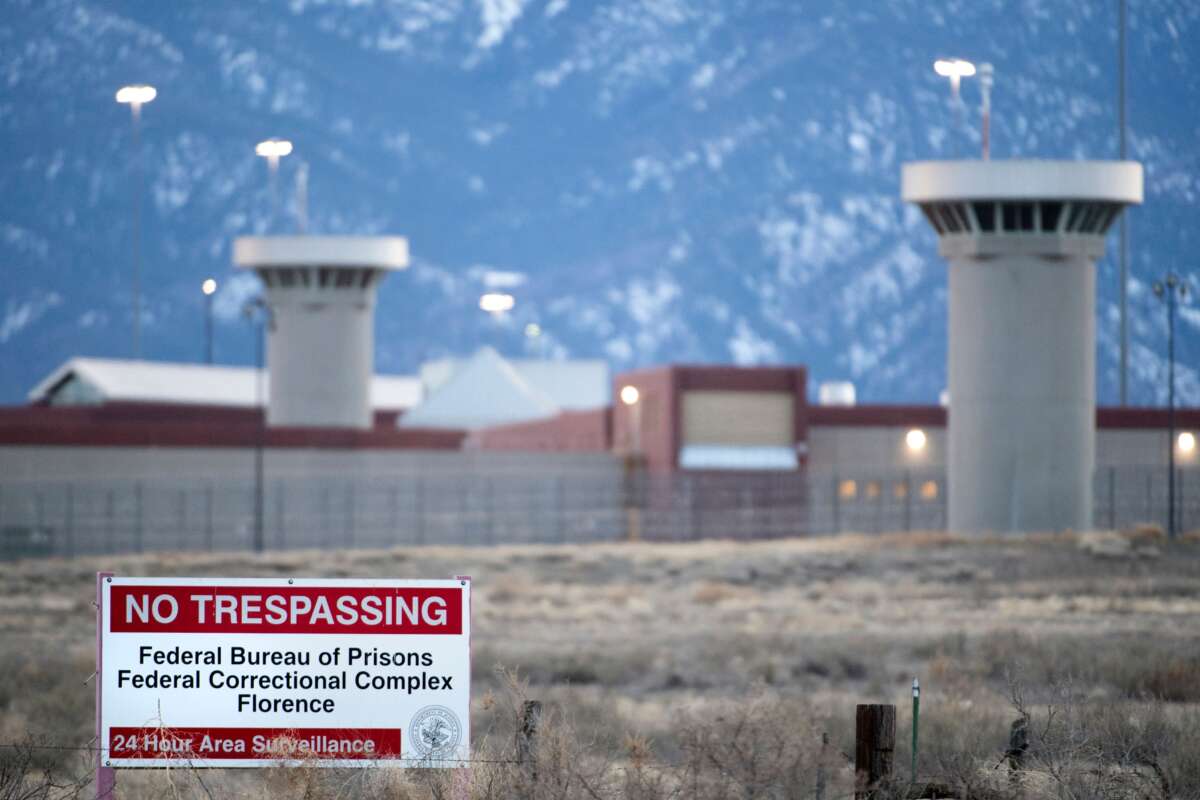
The prison known as ADX (administrative maximum) in Florence, Colorado, on February 13, 2019. It has been dubbed the "Alcatraz of the Rockies" because of its remote location and harsh security measures.
JASON CONNOLLY / AFP via Getty Images

Eric King has seen what hell looks like during his time in federal custody. While incarcerated, he was increasingly targeted for his anarchist political beliefs, often denied family visits, and restricted from receiving mail. In 2018, at FCI Florence, a lieutenant took him to a mop closet, where he was pushed and punched. King defended himself, after which he was slammed to the floor, stomped, handcuffed to a bed post, suffocated, and tortured. Unfairly charged with assaulting a government officer, he fought the case in court and won a “not guilty” verdict. According to the Pew Research Center, 90 percent of federal trials end in plea deals, 8 percent get tossed, 2 percent go to trial, and King’s case was one of 0.4 percent of cases that win. However, the government retaliated, and he was transferred to ADX Florence — the most restrictive supermax prison in the country.

When talking to King about ADX, or the Administrative Maximum Facility, he describes his experience as being entombed or buried. “These cells had held Tom Manning and Ray Luc. They held Mutulu Shakur and Oscar López Rivera. Now I joined my elders in maintaining my resistance while buried in the Rockies,” he writes in his newest book, A Clean Hell: Anarchy and Abolition in America’s Most Notorious Dungeon. “All the bucking, protesting, resisting, fighting, starving, struggling, had all led to this. When they can’t handle your presence, they bury it.”

In this exclusive interview with Truthout, King discusses his new book, anarchism, mutual aid, supporting political prisoners, prison abolition, and more. The interview that follows has been lightly edited for clarity and length.

Zane McNeill: Can you start by introducing yourself and explaining why you wrote this book — who the audience is, what you hoped to accomplish, and maybe say a bit about your last book?

Eric King: My name is Eric King, an ex–political prisoner. I wrote this book because I saw a major gap in the abolitionist movement’s narrative. There are books from the 1970s, ’80s, and ’90s, but nothing from my generation that I could relate to — especially about federal prison. Almost no one writes about it.

“I think people should care that there are human beings who have lived alone in a cell for over two decades — people we’ve never heard of and who will never be released.”

The two experiences I had are things very few people go through. First, ADX. Almost no one knows much about it. Inside, I’d get letters asking me to check out someone’s website or if they could send me clothes, which showed me people don’t understand — this prison is kept a secret, and it works. The second is trial. Many people — folks from Palestine, Cop City, people facing state repression, maybe soon just for being queer — are going to trial. There’s a romanticized idea of what trial is, but the reality is soul-sucking and brutal. That’s why so many take plea deals. I felt both of these narratives were missing.

Also, I think people should care that there are human beings who have lived alone in a cell for over two decades — people we’ve never heard of and who will never be released. One reason I wrote this book is to honor them.

Related Story

Incarcerated Anti-Fascists Report Targeted Beatings by Guards
Avowed anti-fascist Eric King has been severely beaten, locked up in solitary and denied legal access.  By Ella Fassler , Truthout  March 27, 2020

Why do you think it’s important for people to understand what ADX is like and how it affects those inside?

ADX matters to me because the government has built a narrative around it, and the public has accepted it without question. We’ve seen this before — other supermax prisons became almost mythical, like Alcatraz. People turn them into fiction and forget that real people suffered there, that there was real resistance, like the Battle of Alcatraz when prisoners fought the Marines.

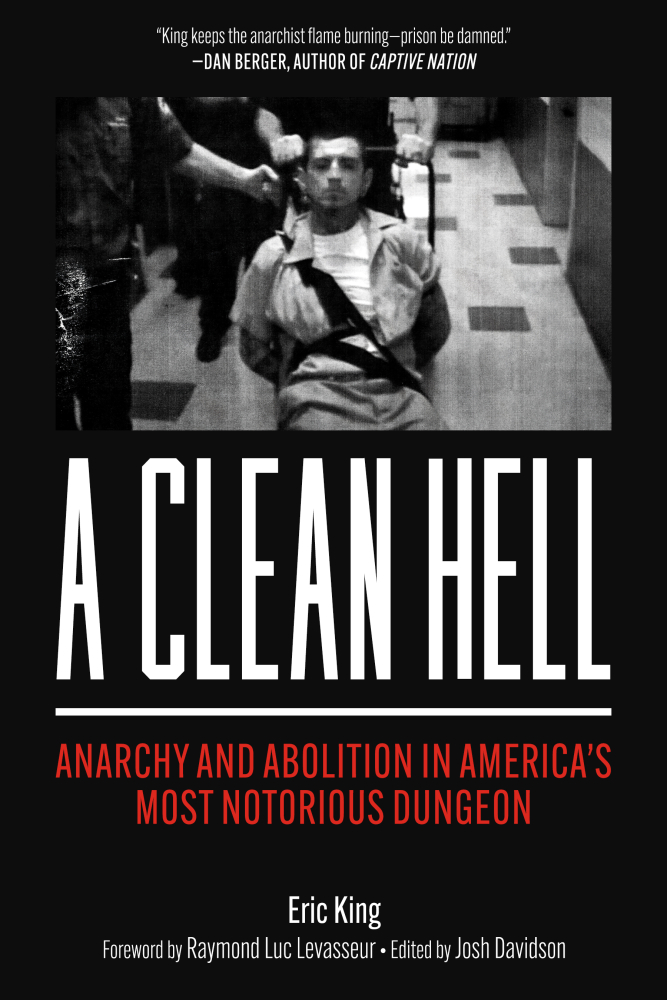
Book cover for A Clean Hell: Anarchy and Abolition in America’s Most Notorious Dungeon.Courtesy: PM Press

When I was in lower custody levels, you’d hear all kinds of wild stories about ADX — nonsense about it spinning underground — but you also knew it held the most infamous prisoners in the world, aside from state serial killers. Then I’d talk to friends outside, and they didn’t know anything about it. If people in the abolitionist movement don’t know, what chance does the general public have? Things won’t change if no one’s talking about it.

The government says it imprisons the “the worst of the worst,” and people agree without knowing what it’s really like — not hearing another human voice for a month, or having a guard refuse to sell you stamps so you can write your family, your only line of communication, and there’s nothing you can do because you’re behind two doors. They want you to hurt yourself, to fall apart, because that makes you easier to control.

You’ve spent a lot of time learning from past movements — studying FBI targeting of anarchists, Black Panthers, and understanding the history of political prisoners. In the book, you also discuss prison uprisings and how prisons evolved to prevent them and isolate people. Can you talk about that?

When we study the Black Panthers in the 1960s, ’70s, and ’80s, what they went through isn’t exactly what I went through, but I can learn from how they maintained themselves, how they survived, how they fought back. The ways we resist can’t always be the same either. There was a time when the BOP [Federal Bureau of Prisons] had [dozens of] political prisoners spread among [a handful] of prisons, and they made a difference. We don’t have that now. We’re more isolated, with less solidarity inside, less communication with the outside, and more monitoring. So, we have to take their lessons and adapt them to our current reality.

I’ve drawn strength from people like Kuwasi Balagoon, Bill Dunn, and David Gilbert — people who maintained their ethics inside — but also from my own trial and error. It’s hard. I’ve learned what works and what doesn’t. Telling a guard that you know their address will get you messed up. Throwing something in a guard’s face will get you messed up. Laughing at a lieutenant when he’s trying to fight you will get you messed up. You have to find ways to feel powerful and resist without putting yourself in unnecessary danger.

We don’t “win” by getting hurt — there are no political prisoner points for suffering more. We win when we make it out alive with our ethics and personalities intact. In my mind, all our revolts and rebellions should aim for that: undermine the prison, but strengthen yourself. Give yourself the chance to survive and make it out.

You were an anarchist before prison and already had a political education. Once inside, did you continue that?

That’s another misconception people have about prison, based on older revolutionaries. Back then, it was easier in some ways because there was so much social consciousness — movements like Black liberation were huge, and they empowered people inside in ways we can’t fully understand today.

The racial dynamics were also different. Ed Mead of the George Jackson Brigade could sit and eat with Native Americans [in prison]. If you tried that today, you’d be killed — you wouldn’t make it off the yard, maybe not even out of the chow hall. You can’t do the same things now. So, when people talk about “revolutionizing” others in prison today, that’s just not real — the administration will pull you off the yard.


“One of the reasons I was sent to ADX was for ‘recruiting antifa,’ which in reality meant giving anti-fascist and anti-racist books to people.”

One of the reasons I was sent to ADX was for “recruiting antifa,” which in reality meant giving anti-fascist and anti-racist books to people. I encouraged folks to read — not just to have an opinion, but an informed one. I’d reach people through solidarity. If someone didn’t have money on their books, I’d point out that the white supremacists weren’t sending them canteen money — meanwhile, my friends did, and I’d happily buy them a bad coffee. That opens the door to talking about mutual aid, which leads to talking about anti-racism, because we have to be there for everybody.

What should young political activists understand about the risks, vulnerabilities, and lack of guaranteed movement support if they are imprisoned?

The movement doesn’t always show up for you — a lot of people get forgotten. If it hadn’t been for Denver Anarchist Black Cross, no one would’ve ever heard my name. It took that one group to really fight for me.

And here’s the ugly truth: They almost have to vouch for you, make you “worthy” to others. They have to make you relevant so people want to write to you. It’s not enough that you’re a human being suffering — people want to know your niche.
Eric King squats in the ADX Florence K-B Unit rec yard while incarcerated at the supermax prison in 2022.Courtesy of Eric King

Sure, there are pockets — Inland Empire, Reno, Los Angeles ABCF [chapter of the Anarchist Black Cross Federation], Salt Lake City, Portland, Blue Ridge, Bloomington, Chicago, and, of course, Eugene, where Josh Davidson, a supporter who became a dear friend of mine, lives — but if you don’t have people having your back, you’re alone. The Angola 3 didn’t have support for the first 20 years of their time in solitary. We look at them as heroes now, but at the time, no one cared. You talk to people like Kojo Bomani Sababu and the older Black Panthers [and] it’s the same story.

We need to do better. Maybe it’s because we’re swamped: We have access to every struggle, so we spread ourselves too thin and forget those left behind.

You’ve faced people who wanted to kill you, yet your anarchism still centers mutual aid, resistance, and collective care. How do you hold onto that?

It’s a delicate balance, because I needed people. Even though I was abused by parts of the movement and saw how brutal people can be — guards, prisoners, even supporters — I also saw the beauty. Writing a letter is a purposeful act; someone has to choose to do it. I had people who chose to write to me for nine years, who made sure every month I had coffee, books, or magazines. They refused to let me be buried.

From my perspective, getting out of prison and having opportunities but not using them to help others would feel like abuse. Sure, you can get out and just focus on yourself — you’ve been through enough — but for me, every person is someone I could connect with or encourage to help others.

Anarchism is putting your love forward, keeping your arms open. If I don’t do that, I turn grim. For me, a love of life is a love of people and of doing good. You should want to help people. If you don’t, and you’re an able-bodied, mentally capable person, you need to check yourself — because if you can help and you won’t, you’re probably a piece of shit.

Disclosure: McNeill assisted with King’s civil rights complaint during his incarceration at ADX.


Honest, paywall-free news is rare. Please support our boldly independent journalism with a donation of any size.

ALASKA IS A COUNTRY

Typhoon-devastated Alaska facing hardships more severe than most Americans will ever comprehend


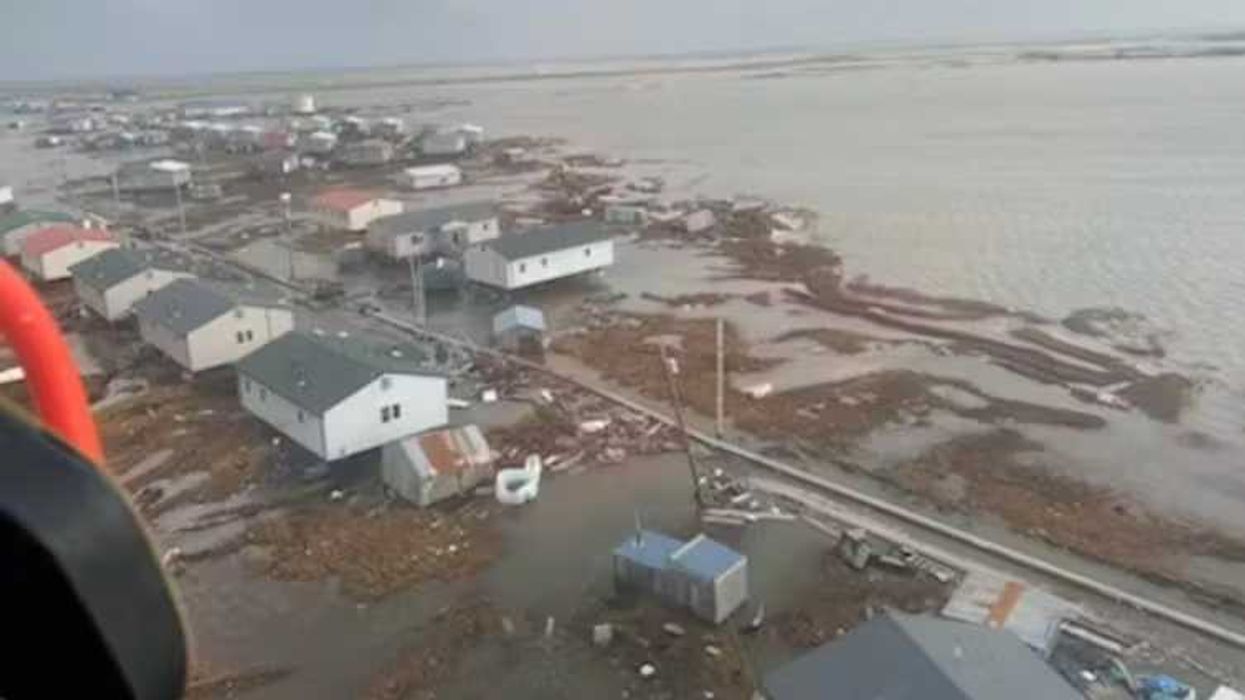
A Coast Guard helicopter flies over flooded homes in Kipnuk, Alaska, on Oct. 12, 2025. U.S. Coast Guard Rick Thoman, University of Alaska Fairbanks


October 15, 2025 | 

Remnants of a powerful typhoon swept into Western Alaska’s Yukon-Kuskokwim Delta on Oct. 12, 2025, producing a storm surge that flooded villages as far as 60 miles up the river. The water pushed homes off their foundations and set some afloat with people inside, officials said. More than 50 people had to be rescued in Kipnuk and Kwigillingok, hundreds were displaced in the region, and at least one person died.

Typhoon Halong was an unusual storm, likely fueled by the Pacific’s near-record warm surface temperatures this fall. Its timing means recovery will be even more difficult than usual for these hard-hit communities, as Alaska meteorologist Rick Thoman of the University Alaska Fairbanks explains.

Disasters in remote Alaska are not like disasters anywhere in the lower 48 states, he explains. While East Coast homeowners recovering from a nor’easter that flooded parts of New Jersey and other states the same weekend can run to Home Depot for supplies or drive to a hotel if their home floods, none of that exists in remote Native villages.

What made this storm unusual?

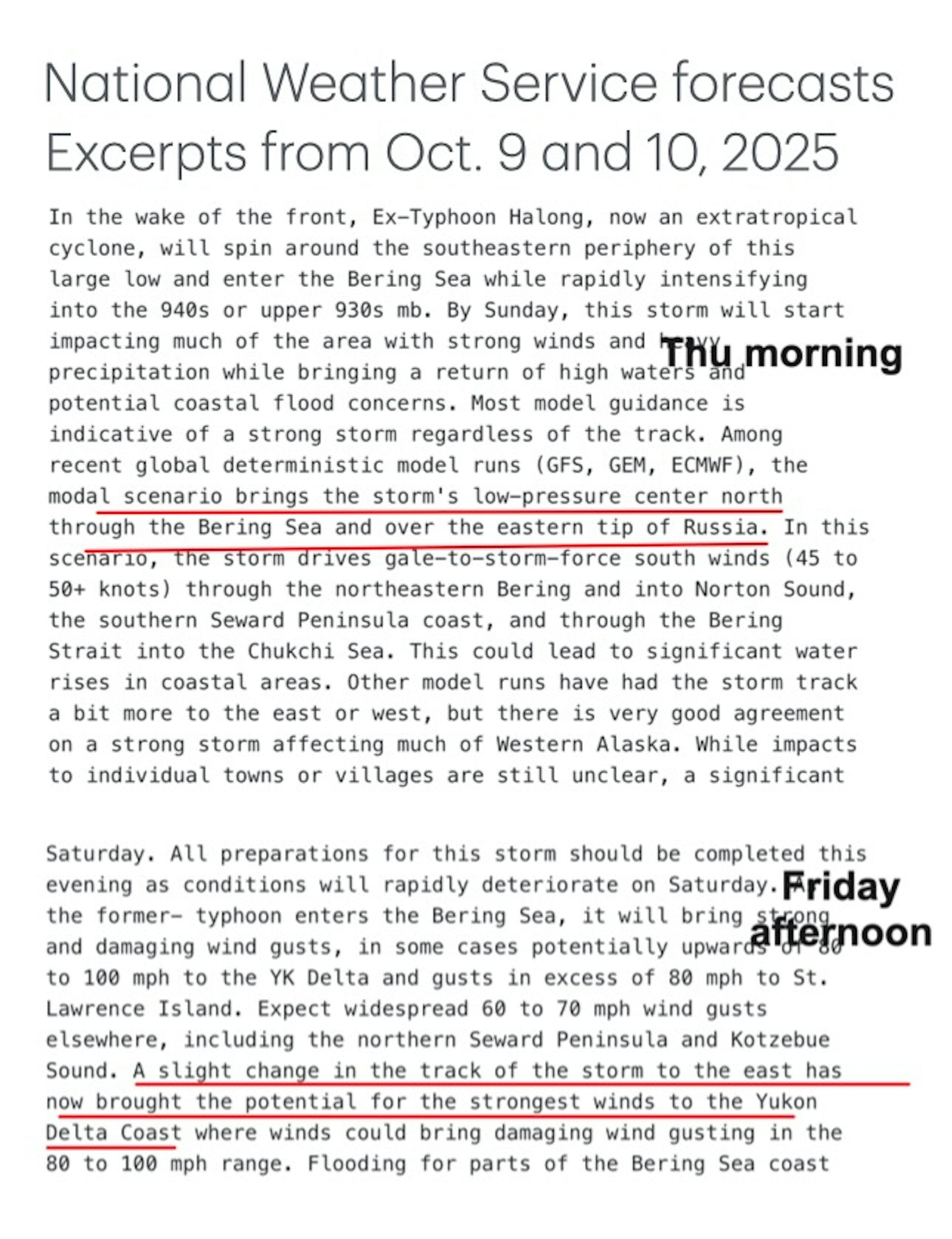
Halong was an ex-typhoon, similar to Merbok in 2022, by the time it reached the delta. A week earlier, it had been a powerful typhoon east of Japan. The jet stream picked it up and carried it to the northeast, which is pretty common, and weather models did a pretty good job in forecasting its track into the Bering Sea.

But as the storm approached Alaska, everything went sideways.

The weather model forecasts changed, reflecting a faster-moving storm, and Halong shifted to a very unusual track, moving between Saint Lawrence Island and the Yukon-Kuskokwim Delta coast.

Unlike Merbok, which was very well forecast by the global models, this one’s final track and intensity weren’t clear until the storm was within 36 hours of crossing into Alaska waters. That’s too late for evacuations in many places.

Did the loss of weather balloon data canceled in 2025 affect the forecast?


That’s a question for future research, but here’s what we know for sure: There have not been any upper-air weather balloon observations at Saint Paul Island in the Bering Sea since late August or at Kotzebue since February. Bethel and Cold Bay are limited to one per day instead of two. At Nome, there were no weather balloons for two full days as the storm was moving toward the Bering Sea.

Did any of this cause the forecast to be off? We don’t know because we don’t have the data, but it seems likely that that had some effect on the model performance.

Why is the delta region so vulnerable in a storm like Halong?


The land in this part of western Alaska is very flat, so major storms can drive the ocean into the delta, and the water spreads out.

Most of the land there is very close to sea level, in some places less than 10 feet above the high tide line. Permafrost is also thawing, land is subsiding, and sea-level rise is adding to the risk. For many people, there is literally nowhere to go. Even Bethel, the region’s largest town, about 60 miles up the Kuskokwim River, saw flooding from Halong.

These are very remote communities with no roads to cities. The only way to access them is by boat or plane. Right now, they have a lot of people with nowhere to live, and winter is closing in. Native residents of Kipnuk discuss the challenges of permafrost loss and climate change in their village. Alaska Institute for Justice.


These villages are also small. They don’t have extra housing or the resources to rapidly recover. The region was already recovering from major flooding in summer 2024. Kipnuk’s tribe was able to get federal disaster aid, but that aid was approved only in early January 2025.

What are these communities facing in terms of recovery?

People are going to have really difficult decisions to make. Do they leave the community for the winter and hope to rebuild next summer?

There likely isn’t much available housing in the region, with the flooding so widespread on top of a housing shortage. Do displaced people go to Anchorage? Cities are expensive.

There is no easy answer.

It’s logistically complicated to rebuild in places like Kipnuk. You can’t just get on the phone and call up your local building contractor.

Almost all of the supplies have to come in by barge – plywood to nails to windows – and that isn’t going to happen in winter. You can’t truck it in – there are no roads. Planes can only fly in small amounts – the runways are short and not built for cargo planes.

The National Guard might be able to help fly in supplies. But then you still need to have people who can do the construction and other repair work.

Everything is 100 times more complicated when it comes to building in remote communities. Even if national or state help is approved, it would be next summer before most homes could be rebuilt.

Is climate change playing a role in storms like these?

That will be another question for future research, but sea-surface temperature in most of the North Pacific that Typhoon Halong passed over before reaching the Aleutian Islands has been much warmer than normal. Warm water fuels storms.

Halong also brought lots of very warm air northward with it. East of the track on Oct. 11, Unalaska reached 68 degrees Fahrenheit (20 degrees Celsius), an all-time high there for October.

Rick Thoman, Alaska Climate Specialist, University of Alaska Fairbanks

This article is republished from The Conversation under a Creative Commons license. Read the original article.

Saturday, October 25, 2025


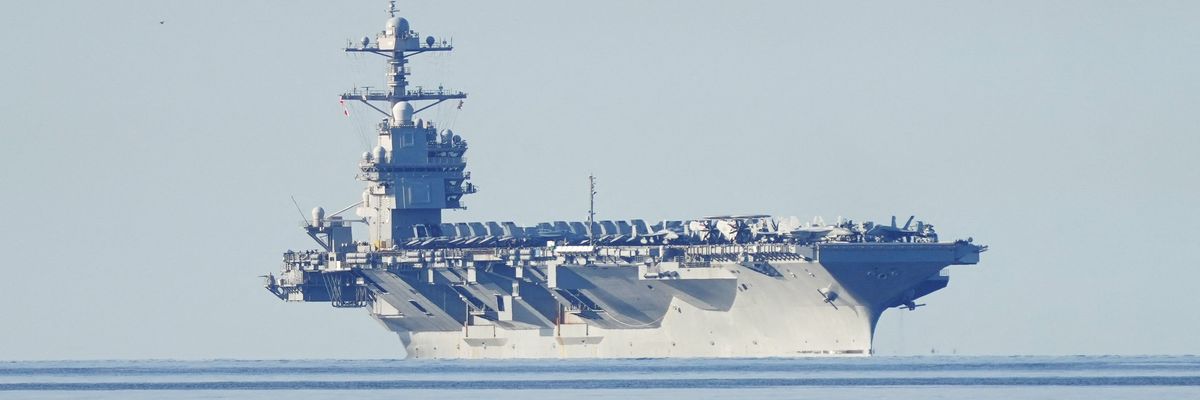
USS Gerald R. Ford is Sent to Caribbean as Drug Smuggling War Intensifies

FALSE FLAG FOR PLANNED INVASION OF VENEZUELA

Gerald R. Ford carrier
Gerald R. Ford transiting the Strait of Gibraltar at the beginning of October (US Navy)

Published Oct 24, 2025 4:05 PM by The Maritime Executive


The United States confirmed that it is taking a series of additional steps to combat drug smuggling, including redirecting the world’s largest aircraft carrier, USS Gerald R. Ford, into the U.S. Southern Command. The announcement of the deployment came just hours after the Pentagon confirmed another attack on a boat in the Caribbean.

The Ford and its carrier strike group have been deployed since June, making various stops in Europe. Reports place the carrier in the Eastern Mediterranean, having made a stop in Croatia. At the beginning of October, the Navy released pictures of the strike group transiting the Strait of Gibraltar. USNI News speculates it will require at least one week to reposition the carrier into the Caribbean, and it reports that it is unclear which vessels will be accompanying the carrier.

A Pentagon spokesperson said in the prepared statement that the presence of Gerald R. Ford in the region would “bolster U.S. capacity to detect, monitor, and disrupt illicit actors and activities…” 

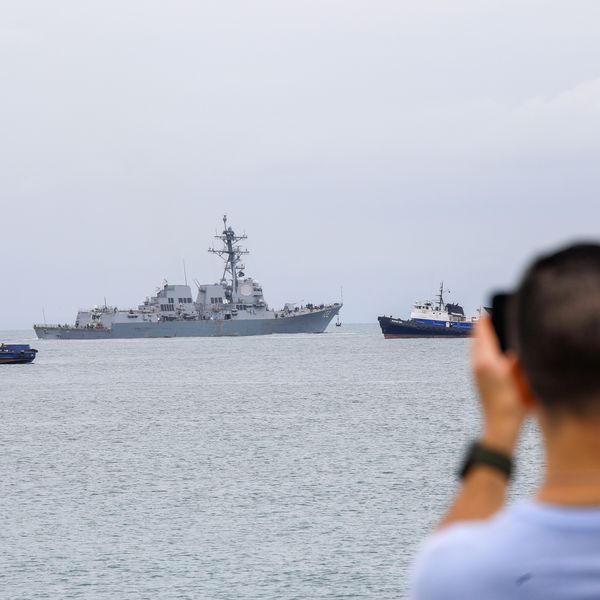
The U.S. is believed to have directed as many as eight warships, including at least one nuclear submarine, into Southern Command’s area of responsibility. Reports say there are as many as 10,000 troops that have been positioned in the region. The Air Force is also believed to have repositioned assets to the Caribbean.

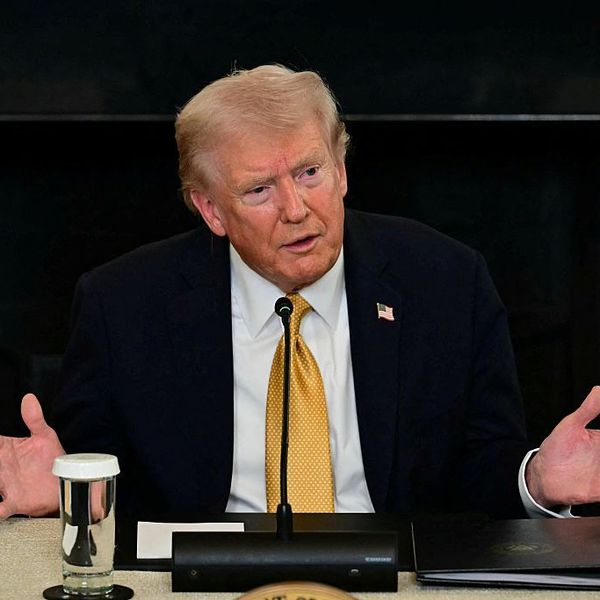
Speaking to reporters yesterday, October 23, Donald Trump said the U.S. continues to have concerns with Venezuela and called President Nicolás Maduro an “illegitimate leader.” Trump, however, denied the reports circulating online based on flight tracking data that the U.S. had sent B-1 bombers toward Venezuela. He called the reports false while online speculation was that the U.S. was scoping out the country’s air defense systems. Trump said the U.S. would continue to kill drug smugglers and said the “land is next,” but insisted he did not require a declaration of war from Congress.


Pete Hegseth, this morning, October 24, announced that overnight the U.S. struck another boat in the Caribbean, which he associated with one of the drug cartels, Tren de Aragua. Like the previous strikes, he wrote that intelligence identified the boat on a known drug smuggling route and that it was carrying narcotics. 

The strike came after two earlier this week in the Eastern Pacific. It is the ninth announced by Hegseth and the first strike conducted at night. The death toll is up to at least 43 people based on the statements, with only two survivors. Hegseth said “six terrorists were killed” during the overnight strike, which was conducted in international waters.

Hegseth said, “Day or NIGHT, we will map your networks, track your people, hunt you down, and kill you.”

Maduro has called the U.S. actions a “crazy war” and says the U.S. has long tried to destabilize his government. It is widely believed that the administration is seeking to force regime change in Venezuela through its current actions.


Trump’s Escalation Against Venezuela Continues as Hegseth Deploys Aircraft Carrier Strike Group to Latin American Waters

An aide to Brazil’s president warned that a US regime change operation in Venezuela “could inflame South America and lead to radicalization of politics on the whole continent.”


This photograph, taken on May 24, 2023, shows the US aircraft carrier USS Gerald R. Ford cruising near Jeloya Island, in Moss, south of Oslo.
(Photo by Terje Pedersen/NTB/AFP)


Stephen Prager
Oct 24, 2025
COMMON DREAMS


The Trump administration said Friday that it has ordered the Gerald R. Ford Carrier Strike Group, which contains the largest warship in the world, to waters off the coast of Venezuela, marking another major military escalation after a new surge of extrajudicial boat bombings in the region this week.

“In support of the president’s directive to dismantle transnational criminal organizations (TCOs) and counter narco-terrorism in defense of the homeland, [Defense Secretary Pete Hegseth] has directed the Gerald R. Ford Carrier Strike Group and embarked carrier air wing to the US Southern Command.”
RECOMMENDED...


UN Experts Decry Trump Warmongering Against Venezuela as ‘Extremely Dangerous Escalation’


‘They’re Going to Be, Like, Dead’: Trump Says Land Strikes on Venezuela Are Next

The announcement came shortly after the administration announced its 10th strike on what Hegseth claimed to be a drug-running boat, killing six people and bringing the death toll from the operations up to 43. As usual, the claim came with scant evidence.

The narrative that these boats have been transporting drugs to the US has been critically undermined in recent days after two of the alleged “narco-traffickers” who survived one of the Trump administration’s strikes were released back to their home countries: One of the survivors, an Ecuadoran man, was set free shortly after returning to his country as officials stated there was no evidence to charge him.

In several other cases, the relatives or home governments of those killed in these bombings have contested that they were not drug smugglers but fishermen.

The strikes have been met with increasing criticism in recent days, not just from Democrats, but from Republican lawmakers—including Sens. Rand Paul (Ky.) and Lisa Murkowski (Alaska)—who co-introduced a war powers resolution last week to require congressional input before carrying out acts of war against Venezuela.

A group of former national security officials—including Rear Adm. Bill Baumgartner of the Coast Guard and Retired Navy Rear Adm. Michael Smith—meanwhile issued a statement on Thursday condemning the strikes as “illegal” and “ineffective.”

The International Crisis Group, a nongovernmental organization dedicated to preventing armed conflict, warned Thursday that “what began purportedly as a campaign to stop illicit drugs from getting to US shores looks increasingly like an attempt to force Venezuelan President Nicolás Maduro and his allies from power.”

According to several reports, Caracas has allegedly floated proposals that would allow the US to take a dominant stake in Venezuela’s oil and mineral wealth.

President Donald Trump’s deployment of the Ford strike group, which is currently en route from the Mediterranean Sea, notably comes shortly after the president threatened to begin carrying out strikes on the Venezuelan mainland without seeking authorization from Congress, which led dozens of elected officials throughout Latin America to issue a letter denouncing military aggression in the region.

“The Trump administration is planning to lead a new ‘War on Drugs,’” the leaders warned. “That war may start with regime change in Venezuela, but we know that it will not end there. Already, the US is threatening illegal drone strikes on Mexican soil in the name of its ‘national security.’ If we do not stand for peace now, we risk a new wave of armed interventions across the region, unleashing a humanitarian crisis of unimaginable scale in all of our home countries.”

Celso Amorim, an aide to Brazilian President Luiz Inacio Lula da Silvasaid on Friday, following the announcement of the ship’s deployment, that “we cannot accept an outside intervention because it will trigger immense resentment,” adding that it “could inflame South America and lead to radicalization of politics on the whole continent.”

Trump Is Gunning for War in Venezuela, Raising Fears of US-Backed Regime Change

Venezuelans fear US strikes on boats in the Caribbean could be a leadup to US backing for a Pinochet-style dictatorship.

October 21, 2025

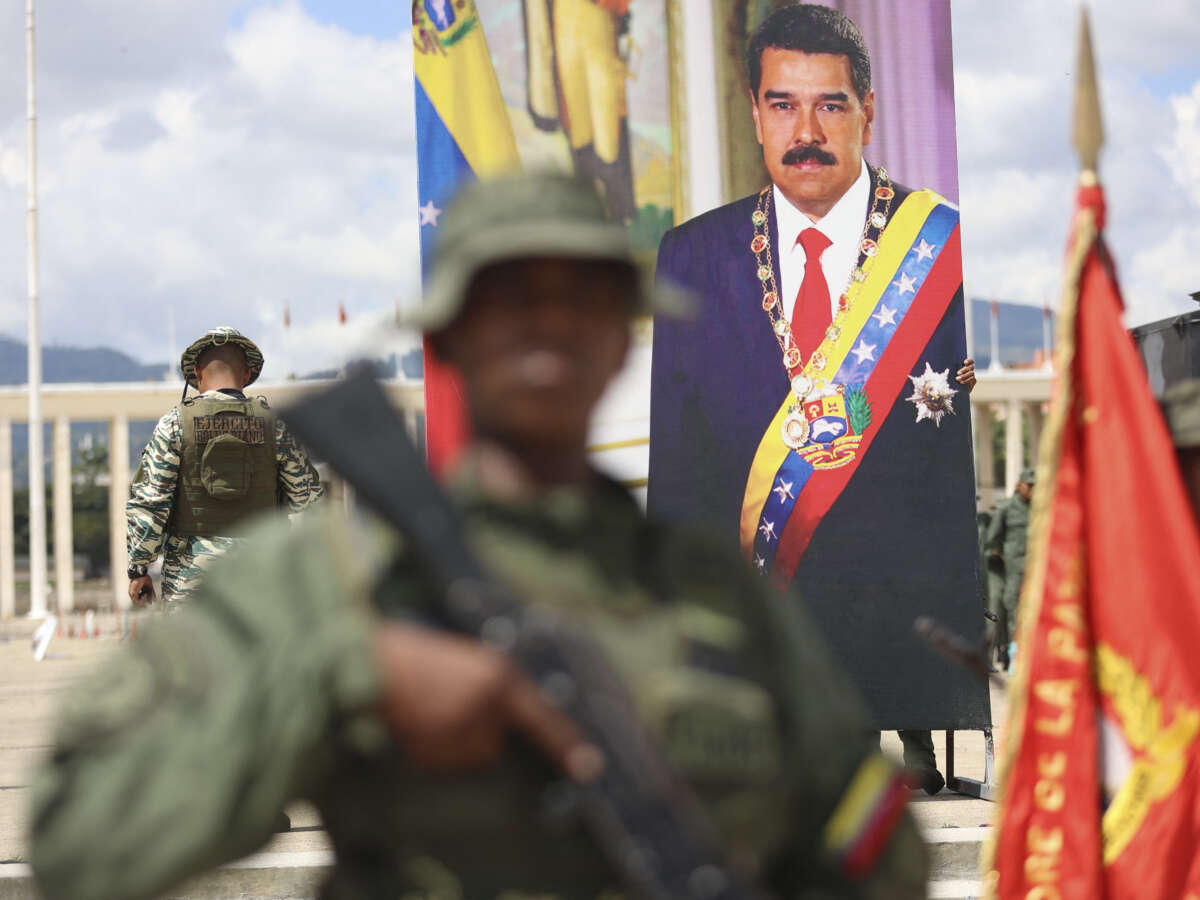
Members of the Bolivarian Armed Forces take part in a military exercise at Fort Tiuna in Caracas, Venezuela, on September 20, 2025.PEDRO MATTEY / AFP via Getty Images

The Trump administration is attacking boats in the Caribbean Sea with such frequency that it may blow up another between the publication of this article and your reading of it. The administration has so far failed to produce any hard evidence behind its allegations that the seven speedboats destroyed by U.S. airstrikes were carrying narcotics. As of October 21, reports indicate that 32 people have been killed in these attacks. On October 3, a speedboat reportedly carrying Colombian citizens was destroyed in one such missile strike, prompting Colombian President Gustavo Petro to post on X that a “war scenario” has emerged in the Caribbean.

This week, Colombia recalled its ambassador to the United States while accusing the Trump administration of “murdering” the fisherman while labelling another strike that took place in mid-September as a “direct threat to national security.” Donald Trump for his part has called Petro an “illegal drug dealer” while saying that the President of Venezuela Nicolás Maduro “doesn’t want to fuck around” with the U.S. — a reference to a report in The New York Times that alleged Maduro has tried to cut a resource deal with Washington in order to avoid a military conflict.

The legality of these strikes has been questioned by several experts. Dan Herman, senior director at the Washington-based think tank Center for American Progress, said Trump has “no legal authority to conduct these strikes” and noted that the U.S. government has “presented no evidence for its claims.” Herman believes these attacks are unlikely to have any meaningful impact on the influx of drugs into the United States.

Former army captain and army lawyer Margaret Donovan concurred in a recent MSNBC interview, stating that Trump has “no domestic or international legal authority to conduct these strikes.” Donovan, a visiting lecturer at Yale Law School, added: “When you don’t have domestic or international legal authority to conduct these types of strikes, what you are doing is murdering people.”

As of October 21, reports indicate that 32 people have been killed in these attacks.

Similarly, James Story, who served as U.S. ambassador to Venezuela from 2018 to 2023, said Trump’s strikes place the United States in “contravention with international law and it undermines our ability to work in the hemisphere.”

The current U.S. military buildup in the Caribbean Sea commenced on August 14, with the Trump administration alleging it was due to threats from Latin American drug traffickers. Based on available media reports, there are approximately 10 U.S. Navy ships in the Caribbean Sea, with three directly off the coast of Venezuela. According to Military.com, there are also currently “10,000 U.S. troops now operating in the Caribbean [who] were sent to interdict drug boats.”

U.S. foreign policy toward Venezuela, under both Democratic and Republican administrations, has long aimed at regime change. In April 2002, the administration of President George W. Bush quickly endorsed the leadership of Pedro Carmona, head of the national business federation Fedecámaras, after a faction of the military kidnapped President Hugo Chávez for 47 hours, until he was rescued by loyalist armed forces.

There are approximately 10 U.S. Navy ships in the Caribbean Sea, with three directly off the coast of Venezuela.

Since then, the United States has implemented increasingly harsh economic sanctions against Venezuela. In 2015, then-President Barack Obama declared Venezuela a threat to U.S. national security, a move that prompted foreign ministers from a coalition of 12 South American nations to call on Washington to revoke the decree. By 2017, U.S. sanctions had tangible effects: a low-income Venezuelan family of five could expect to consume only 6,132 calories per day — 1,226 per person if divided equally. Earlier this year, The Lancet reported that U.S.-led sanctions contribute to an estimated 564,000 deaths across the world each year, with a significant proportion occurring in Venezuela.

After Hugo Chávez’s death from cancer in 2013, President Nicolás Maduro initially struggled to fill the political vacuum. Between 2013 and 2019, Venezuela saw an 80 percent drop in imports, devastating its import-dependent economy. In 2019, the Trump administration continued the U.S. trend of throwing its weight behind opposition leaders, this time backing Juan Guaidó, who challenged Maduro’s 2018 reelection. Trump’s choice to formally recognize Guaidó as interim president signaled a renewed push by the U.S. to overturn the Bolivarian government.
y

Democrat Says Trump Admin Still Lacks “Any Evidence” to Back Caribbean Strikes
The administration is now openly targeting Colombia while refusing to provide evidence to back their determinations. By Sharon Zhang , Truthout October 20, 2025


Former Secretary of Defense Mark T. Esper, in his autobiography A Sacred Oath: Memoirs of a Secretary of Defense During Extraordinary Times, revealed that for Trump, regime change in Venezuela “seemed to be a bucket list item” and that the U.S. should “get the oil.” In addition to holding the largest proven oil reserves in the world — approximately 303 billion barrels, or roughly 17 percent of global reserves — Venezuela also holds significant gold, iron ore, bauxite, coltan, and diamond deposits.

In a 2022 interview with “60 Minutes,” Esper recounted how during his first term Trump repeatedly asked the Department of Defense about taking more aggressive measures to remove Maduro, including direct military action.

Eventually, Trump settled on deploying a U.S. naval fleet to the Caribbean under the supposed auspices of fighting drug trafficking. In March 2020, the Southern District of New York charged Maduro with narco-terrorism and offered a bounty of up to $15 million for information leading to his arrest or conviction. In July this year, the U.S. Department of Treasury’s Office  of  Foreign  Assets  Control (OFAC) designated the Cartel de los Soles (Cartel of the Suns) as a terrorist organisation. As of August 7, 2025, the bounty on Maduro stands at $50 million, despite the fact that most international experts — including the authoritative 2025 United Nations World Drug Report — consider Venezuela a minor player in the narcotics trade.

With the Trump administration back in power, the U.S. president appears determined to remove the Venezuelan head of state.

With the Trump administration back in power, the U.S. president appears determined to remove the Venezuelan head of state, potentially through direct military action. María Corina Machado, a right-wing opposition leader who was recently awarded the Nobel Peace Prize, could be seen as a figure acceptable to Washington in a transitional government. Having been an avid supporter of the 2002 coup against Chávez, Corina Machado is a strong supporter of the privatization of Venezuela’s state oil company Petróleos de Venezuela, S.A. (PDVSA). In 2018, Machado wrote a letter to the ex-president of Argentina Mauricio Macri and Israeli Prime Minister Benjamin Netanyahu insisting they use their “strength and influence to advance the dismantling of the criminal Venezuelan regime,” which, in her view, were connected to “drug trafficking and terrorism.”

In Caracas, Ricardo Vaz, writer and editor at Venezuelanalysis.com, says life continues as normal, though “there is tension and concern with this U.S. military buildup on Venezuela’s doorstep.” He notes that while there is awareness of U.S. military might, “there is also defiance,” particularly among the government’s core supporters. Vaz warns that while the current U.S. presence in the Caribbean is insufficient for a full-scale regime change, it has “a lot of potential for destruction, be that from cruise missiles or aircraft, aimed at triggering some internal collapse.”

Adding to these tensions, the Trump administration has granted the CIA authorization to conduct covert operations in Venezuela, according to The New York Times.

In September, ministers from the Community of Latin American and Caribbean States (CELAC) held a virtual meeting, denouncing the deployment of U.S. military vessels near Venezuela. CELAC, unlike the U.S.-dominated Organization of American States (OAS), provides a forum for regional countries to discuss issues without Washington’s presence, with Venezuela, Brazil, and Mexico playing leading roles.

Should the United States carry out direct attacks on Venezuelan territory, Caracas could expect strong diplomatic support from the region despite no longer enjoying the political influence it held under Chávez.

Venezuela’s economy has grown for 17 consecutive quarters since 2021, aided by liberalization measures that have not always been popular with the government’s base. In early September, China Concord Resources Corp installed a self-elevating offshore platform in Lake Maracaibo, marking the first significant infrastructure investment in the area in many years. The Alala jackup rig is expected to increase production from 12,000 barrels per day (bpd) to 60,000 bpd by 2026 in the Lago Cinco and Lagunillas Lago oilfields in the state of Zulia, in western Venezuela. A major U.S. military strike could damage the economy, but China’s significant investments might complicate any potential targeting of infrastructure.

Joel Linares Moreno, a Caracas-based fixer for international media outlets, notes that if the Trump administration deployed full military force, organized resistance might only last a few days given the huge imbalance of power between the United States military and Venezuela’s army, air force, and navy. However, Linares Moreno adds that removing government supporters — known as Chavistas — would likely require a force willing to carry out serious human rights abuses. “They know what awaits them is a Pinochet-style dictatorship, and that’s precisely why they would fight hard, even after the Venezuelan military is neutralized,” he said. He warns that the U.S. could “overplay its hand.”

The coming weeks and months will reveal the Trump administration’s plans for Venezuela and whether Maduro and the Chavistas can remain in power. It will also highlight whether the governments of Venezuela, Colombia, Brazil, and Mexico can gather enough international diplomatic support to halt a U.S.-led war in Latin America, which has not been seen since the U.S. invasion of Panama in late 1989. That military operation, like the current one in the Caribbean Sea, was based on a string of falsehoods.

A correction was made to clarify that the platform in Lake Maracaibo was not the first of its kind but rather the first significant infrastructure investment in the area in many years.


Support justice-driven, accurate and transparent news — make a quick donation to Truthout today!

This article is licensed under Creative Commons (CC BY-NC-ND 4.0), and you are free to share and republish under the terms of the license.

Rodrigo Acuña holds a PhD on Venezuelan foreign policy from Macquarie University. Together with journalist Nicolas Ford, last year he released his first documentary Venezuela: The Cost of Challenging an Empire. Rodrigo has been writing on Latin American politics for close to 20 years and works for the NSW Department of Education. He can be followed on X (Twitter) @rodrigoac7.


I met Chávez and Maduro. I know drugs are not the reason Trump wants war with Venezuela

Oil and diamonds. How much blood are they worth?

Greg Palast
October 25, 2025 
RAW STORY


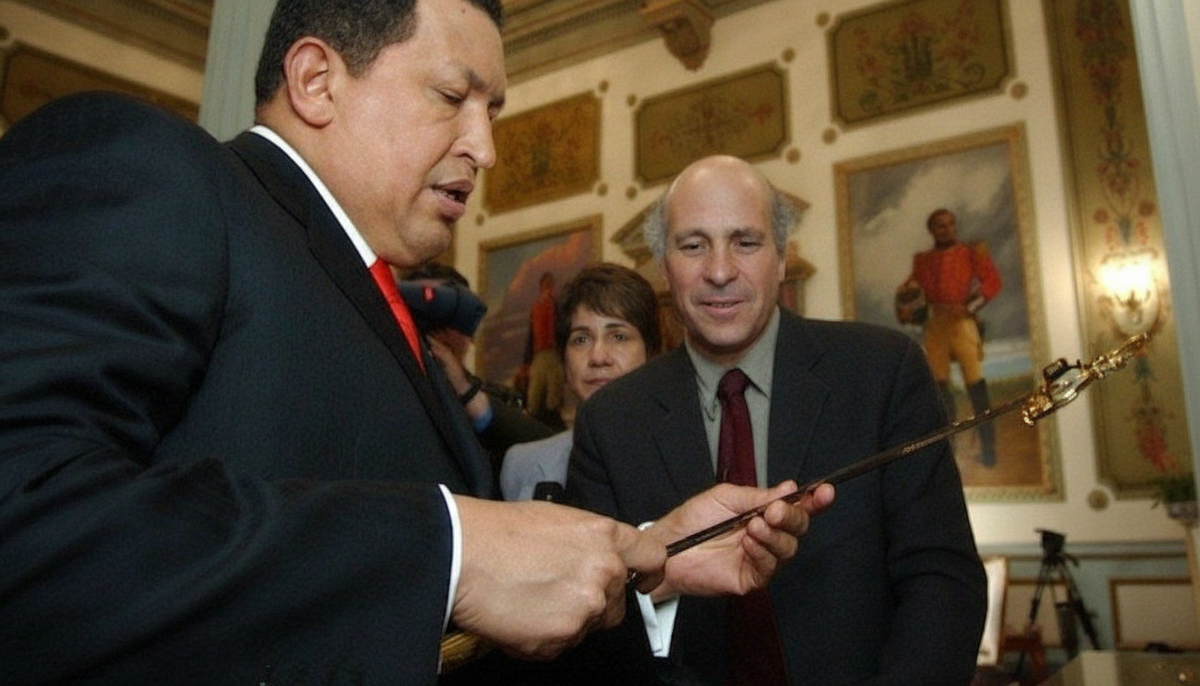
Venezuelan President Hugo Chávez shows Greg Palast Simon Bolivar’s sword. Picture: Palast Investigative Fund 2002.


I met with Venezuela’s President Hugo Chávez just days after he was kidnapped. I’ll tell you about that, and the current President Nicolás Maduro’s visit to my New York office. But first you must know three things about Venezuela, to understand why Donald Trump has ordered a covert operation to overthrow their government.

1.Venezuela has the largest reserves of oil on the planet.
2.Venezuela has the largest reserves of oil on the planet.
3.Venezuela has the largest reserves of oil on the planet.

Look it up: According to OPEC’s own site, Venezuela’s 303 billion barrels in proven reserves are four times the reserves of Saudi Arabia.


(By the way, Donald, when you announce a “covert” operation, it’s no longer covert. But never mind.)


For years, I was BBC Television’s correspondent covering Venezuela and US attempts to overthrow their elected government. Trump invented nothing. This is at least the fourth US-backed attempt at overthrow and assassination of a Venezuelan president.

The first attempt was in March 2002 when I was tipped off that Chávez would be overthrown in a military coup. Indeed, in April of that year, he was kidnapped by renegade officers who had the fantasy, shared by the US State Department, that the public hated Chavez and would celebrate his overthrow.

But it turned into another Bay of Pigs after tens of thousands of angry Venezuelans surrounded Miraflores Palace while the coup leaders “inaugurated” Exxon Oil’s lawyer as “president.” George W. Bush’s Ambassador to Venezuela attended this wacky inauguration of the faux president.

But then the plotters, with Exxon’s man and the US ambassador, fled the Presidential Palace after the coup leaders, fearing for their lives, returned Chávez, by helicopter, safely to his Oval Office.

(Download the film of my BBC reports, The Assassination of Hugo Chávez, produced with Oscar-nominated cinematographer Richard Rowley. If you’d like to make a tax-deductible donation, we would truly appreciate it.)

I met days later with Chávez, who told my BBC audience that while he was in the helicopter, he clutched his rosary because he expected to be pushed out into the sea.

Instead, he was returned safely by the frightened coup leaders back to his office. Chávez then chose to let his kidnappers escape without punishment.

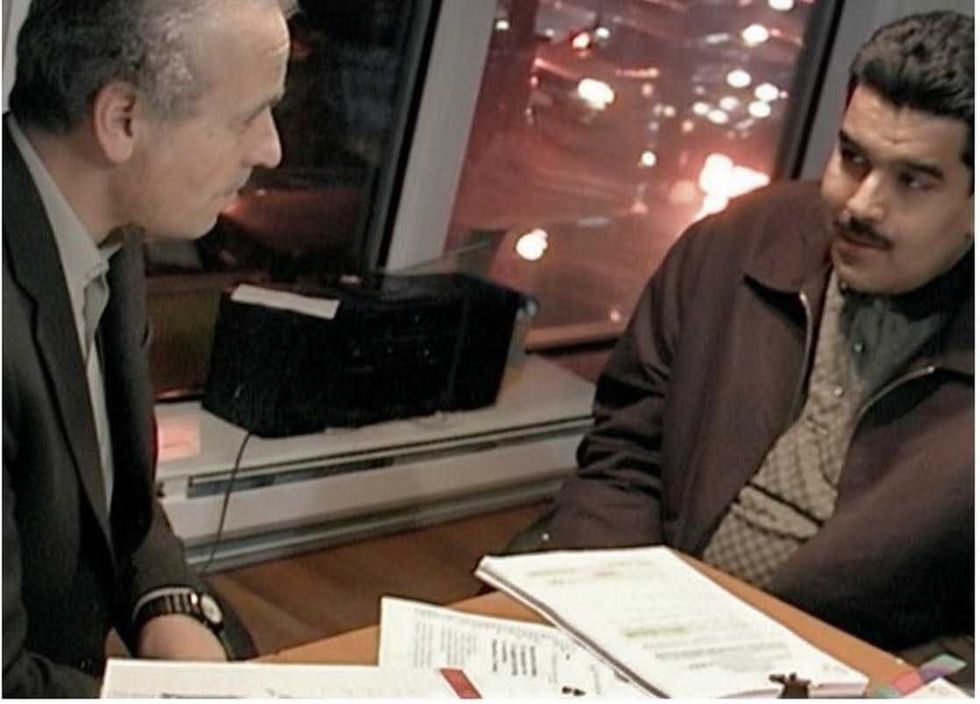
In 2004, Maduro, the future president, was sent by Chávez to meet with me at my office in New York to review the evidence that Wackenhut Corporation (now called GEO, a major operator of ICE detention centers) had planned to assassinate Chávez.

Venezuelan intelligence had secretly taped US Embassy contractors in Caracas talking in spook-speak: “That which took shape here is a disguised kind of intelligence… which is annexed to the third security ring, which is the invisible ring.” (“Invisible Ring”? Someone at the State Department has read too many John le Carré novels.)

The State Department under George W. Bush also tried to purge voters from Venezuela’s election files (and those in Argentina and Mexico) using the very same company, Choicepoint, that purged voter files in Florida in 2000 to hand Bush his baloney election “victory.”

Third try: During Trump I, the US attempted to bully Venezuelans into electing a white guy named Juan Guaidó (who lived in the US) whom Trump hoped would defeat Maduro in an election. But the Black and Indian population of Venezuela, after they finally elected one of their own, Chávez, were not going back to white minority rule which had crushed them for 400 years. Guaidó never even ran for president, but the US government nevertheless declared him the true president and gave this grifter all the US assets of CITGO, the Venezuelan oil company

Today, we are at the fourth attempt to overthrow Venezuela’s government by kidnap (again?!) or assassination.

This time is different, because President Maduro really did lose his third re-election bid for the presidency but has simply refused to leave office. (Hey, you’d think Trump would admire that.)

No question, Maduro has become a dictator. But if the US thinks it can invade Venezuela, or appoint Maduro’s replacement, you don’t know Venezuelans. They are patriots and they are all armed. How many Americans will Trump send to their deaths to get his hands on Venezuelan crude?

Democracy

The saddest thing is that Maduro has corrupted and destroyed the robust democracy that Chávez brought to Venezuela. In 2006, I joined Chávez’s opponent Julio Borges, a decent guy, on the campaign trail. Borges would get just two or three supporters in a town. Then I joined Chávez who, in the same town, would appear and draw thousands.

Chávez was wildly popular because, as an opposition journalist told me, derisively, “Chavez gives them bread and bricks!” — that is, he gave the public food, housing and medical care by using the nation’s massive oil proceeds for public services. Under the old regime, the oil wealth was siphoned into the pockets of wealthy Venezuelans in Miami.


I have little sympathy for Maduro, who like Trump has taken office through vote manipulation. But the invasion or assassination of either head of state should scare and horrify us all.

Why not Saudi Arabia?

Trump and our National Security Advisor, Marco Rubio, have said that Maduro must go because he has threatened democracy in Venezuela and is trafficking fentanyl into the US.

Think about it. If Trump wants to save democracy, why attack Venezuela, not the dictatorships of Saudi Arabia or Abu Dhabi or the Emirates? Let’s not forget that Arabian Peninsula “royals” are merely dictators in bathrobes.


Why Venezuela and not the Arabian Peninsula potentates?

Let me count the ways: Qatar has bought $2 billion of Trump crypto coins that will go into Trump family pockets. And there’s that little gift from Qatar of a 747 jet for The Donald, not the US government. And there’s the $2 billion in easy squeezy from the Saudis for Jared Kushner.

A 'narco terrorist'?


Trump has accused Maduro of running a cartel dumping fentanyl into the US, an accusation as credible as Trump’s claim against that other alleged narco-terrorist nation, Canada.

I am no fan of my once-friend Maduro, now a brutal authoritarian and vote thief, a Venezuelan Putin. But drug lord? No sane drug dealer would run drugs from Caracas to Miami. In fact, according to the latest UN World Drug Report, Venezuela is neither a major drug producer nor a key trafficking corridor to the US.

Trump’s troops have slaughtered more than two dozen people who were supposedly running drugs from Caracas to Miami. While Trinidad’s president is a Trump ally, that government stated that the two dead who could be identified, Chad Joseph and Rishi Samaroo, were simply commuting from work, like many workers, across the seven-mile strait between the countries. Even our Secretary of State, “Little Marco,” said the boat was merely heading to Trinidad then changed his statement to “Miami” after Trump announced their supposed destination.

And did you notice? Every time a US prosecutor interdicts a drug shipment, they proudly display the drugs and cash and the names of the dealers obtained in the haul. Yet after these little commuter boats were attacked, not sunk, we were never shown the drugs, the evidence.

There was indeed a drug boat, a submersible, attacked by the US. But American media generally failed to mention that, unlike the fishermen and commuters killed coming from Venezuela, the one real drug haul came from Colombia and was captured in the Pacific Ocean, not the Caribbean.

So where are the drugs coming from, if not Venezuela or Canada? According to a New Yorker investigation, one of the world’s largest and most violent cocaine cartels, the Kinahan Organized Crime Group, is run out of — you guessed it — Abu Dhabi.


Act of war

There’s no doubt why most Venezuelans want to see Maduro go. The economy is on its deathbed. Why? Because a US blockade, basically a siege of Venezuela, has caused the near total collapse of Venezuela’s source of wealth, its oil industry. By blocking oil equipment from going in, and an embargo of oil going out, the nation is being strangled. An embargo is a globally recognized act of war which Americans (let alone Venezuelans) never authorized.


Greg Palast meets Nicolás Maduro. Picture: Palast Investigative Fund 2004.


The idea that Maduro wrecked the economy is b------t through and through. Imagine if America laid siege to Texas, allowing no goods in, blocking oil from going out.

Nevertheless, the public, hoping the embargo would lift, voted out Maduro. He must go. But by Venezuelan ballots, not American bullets.

And let me tell you as an energy economist that the embargo of Venezuelan oil, cutting the nation’s exports 74 percent from 2.4 million barrels a day to 735,000, has easily added nearly a dollar to the price paid by Americans at the gas pump.

Chávez told me that he knew the limit of how far he could push the US and its oil companies. “I’m a good chess player,” he told me. Not Maduro. For example, Maduro turned down British Petroleum’s request to take over the oil fields once operated by the French national oil company. Britain later seized $10 billion in Venezuela’s gold reserves held in the British Exchequer.

As you’ll see at the opening of my film The Assassination of Hugo Chávez, the whacko idea of murdering Venezuela’s president was first floated on television by none other than televangelist Pat Robertson, whom inside sources told me was furious that he was turned down in his request to the Chávez government for a diamond mining concession.

To his TV audience, Robertson said, “You know, I don't know about this doctrine of assassination, but if [Chávez] thinks we're trying to assassinate him, I think that we really ought to go ahead and do it. It's a whole lot cheaper than starting a war.”

That’s true, I suppose. But why start a war at all?

Oil and diamonds. How much blood are they worth?

May I suggest that we return democracy to Venezuela with ballots, not bullets.Greg Palast is an investigative journalist and filmmaker, author of New York Times bestsellers including The Best Democracy Money Can Buy. Sign up for his reports at https://gregpalast.substack.com/