Sunday, October 26, 2025

What’s at stake as Brazil welcomes the COP30 climate change summit


The UN Climate Change Conference (COP30) will be held in Belem, Brazil, from November 12-16, with issues like deforestation and financing climate action in developing countries expected to loom large.


Issued on: 26/10/2025 - FRANCE24
By: Cyrielle CABOT
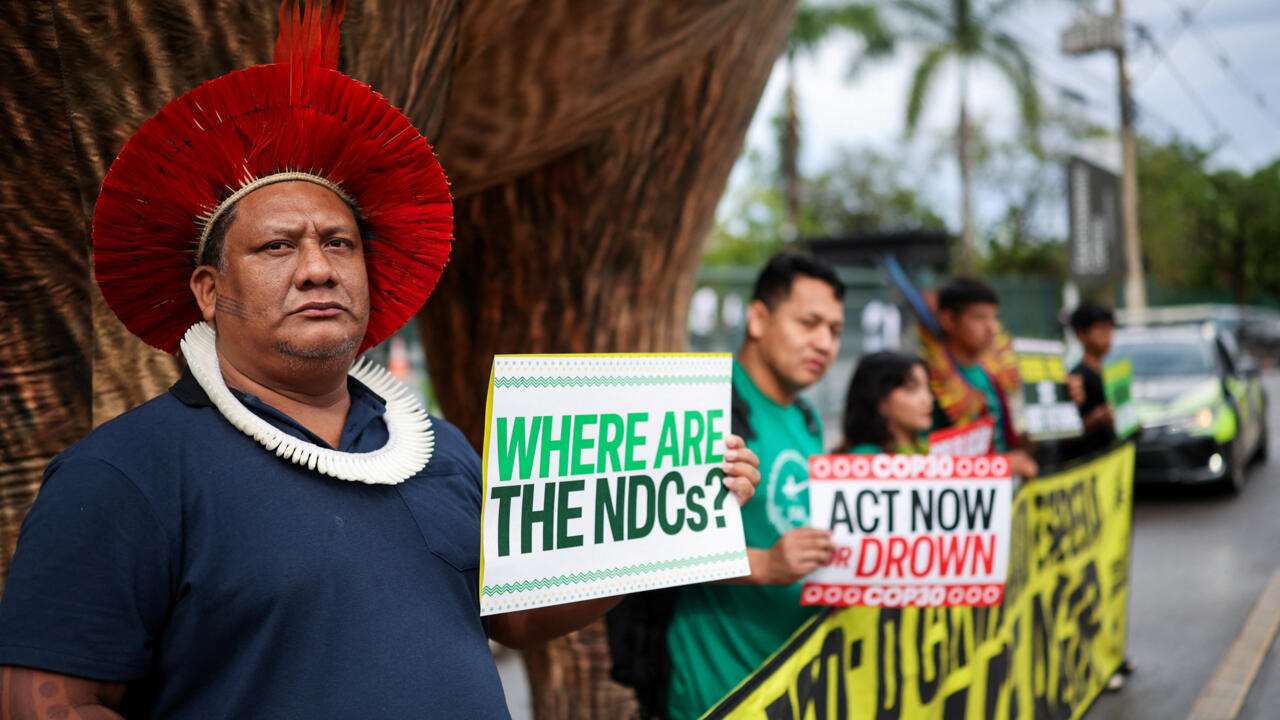
Activists from the Brazilian Amazon stand next to an inflatable capybara during a protest calling on COP30 negotiators to protect Amazonian forests, October 2025. © Mateus Bonomi, Reuters

Each COP summit picks a primary theme for the talks to focus on; at COP28 in the United Arab Emirates in 2023, the contentious subject was fossil fuels. After hours of heated debate, the attendees – including representatives of all UN member states – finally reached an agreement calling for “reducing” the use of oil and coal after dropping an initial pledge to “phase out” their use.

The following year, the COP29 in Baku, Azerbaijan, was billed as the “finance” conference and ended with a promise to provide $300 billion per year (about €257 billion) by 2035 to help countries in the Global South tackle climate change.

But no overriding theme has emerged ahead of the COP30. “No single major issue is likely to dominate the debates and negotiations this year. On the contrary, a myriad of very diverse topics will be on the agenda,” says Gaïa Febvre, head of international policy at the Climate Action Network NGO.

Taking stock, 10 years after Paris

COP30 will also provide an opportunity to take stock 10 years after the landmark Paris Agreement of 2015.

Under the accord, each country pledged to submit a climate roadmap every five years detailing its strategy for reducing greenhouse gas emissions.

The collective goal is to keep global warming below the critical threshold of 1.5°C above pre-industrial levels.

Read moreRecord annual rise in atmospheric CO2 levels alarms UN climate body

While these emission-reduction roadmaps – or Nationally Determined Contributions (NDCs) – were due by the end of September, many countries have yet to submit theirs. The European Union, for example, is deeply divided on the issue and is not expected to submit its contribution until November 4, just a few days before the summit begins.

As for the conscientious countries who submitted their NDCs on time, even their efforts have fallen short. By mid-October, only Norway and the United Kingdom had submitted NDCs that complied with the Paris Agreement.

Conversely, China submitted a roadmap that fell well short of expectations, with a target of cutting its greenhouse gas emissions by a very modest 7 to 10 percent by 2035

“We are under no illusions. When these NDCs are reviewed, this COP will conclude that we are not in line with the Paris Agreement,” Febvre says.

"The big challenge in Belem will therefore be to see how countries respond collectively and politically to this gap in ambitions.”

In other words, how do world leaders intend to bridge the gap between their current pledges and the need to limit global warming to below 1.5°C?

Despite everything, Febvre notes, “the Paris Agreement is working. Before, we were on track for around +4°C. Since 2015, the curve has flattened and we are now heading for warming of between +2.6° and +2.8°C,” she says.

“But that's not enough to keep our planet habitable. Staying on this trajectory cannot be a viable political strategy.”

Read more‘Overshoot’: As planet crosses 1.5°C global warming limit, can we still reverse course?
Establishing a roadmap from ‘Baku to Belem’

Providing financial support for developing countries will be back at the centre of discussions. “COP30 will also be a COP on finance, continuing on from Baku,” says Lorelei Limousin, climate campaigner at Greenpeace.

In Baku, developed countries promised to pay at least $300 billion per year by 2035 to vulnerable nations to help them adapt to the effects of climate change and begin their energy transition. But the agreement was quickly deemed inadequate. The countries concerned were demanding four times the sums proposed and, above all, complained that the terms for implementing the plan were too vague.

Indeed, a year later, uncertainties remain. “We don't know who is going to finance what. Whether it will be public or private funding, whether it will be allocated to mitigation, adaptation, or losses and damages related to climate change. Everything is still very unclear,” says Limousin.

“We now need a real, concrete action plan to move forward,” she adds.

The effort to scale up financing for developing countries – to at least $1.3 trillion per year by 2035 – has been dubbed “From Baku to Belem” at COP30.

At the same time, discussions will focus on private sources of funding that could supplement the billions that have been pledged. Among the options being considered are “solidarity taxes” on stock and bond transactions, on emissions from fossil fuels or on airline tickets.

However, Limousin warns that private funding is unlikely to make up the shortfall. “We cannot rely solely on private finance, because its purpose is to generate money, not save the climate.”

"Especially since we know where to find the money. By taxing the profits of fossil fuel industries, we could generate €400 billion per year to be repaid in public funding to countries in the Global South,” she says. “This idea has been discussed for several years. It is time for COP30 to send a strong message: The fossil fuel industry must pay for the climate damage it causes."
Protecting the forests

Belem, a port city and gateway to the Amazon River, is an ideal venue for Brazil’s President Luiz Inacio Lula da Silva to shine a spotlight on Brazil's forests while pushing for the creation of a new fund to combat deforestation, the Tropical Forests Forever Facility.

"The fund would aim to raise $125 billion, which would then be invested in the financial markets. The profits would be paid back to countries with tropical forests in the Amazon, the Congo Basin and Southeast Asia," says Clément Helary, forest campaigner at Greenpeace. Brazil has already announced that it will contribute $1 billion, as have China and the United Arab Emirates.

“This is presented as a comprehensive solution to combat forest deforestation and as a means of providing direct funding to indigenous peoples,” says Helary. “But there are still many issues to be discussed. Safeguards are needed on how this money will be reinvested. For example, investments in mining or agribusiness, which contribute to deforestation, must be excluded.”

The need for action is real. In 2014, an alliance of governments, companies, indigenous peoples and NGOs pledged to halt natural forest loss by 2030 as signatories of the New York Declaration on Forests.

The goal to curb deforestation was reaffirmed in Glasgow at COP26 in 2021, but the initiative is now stalling.

In 2024, 8.1 million hectares of forest were lost, according to a study coordinated by the NGO Climate Focus. Primary tropical forests, which are rich in biodiversity and crucial in absorbing and storing carbon, were the most affected, with 6.7 million hectares lost.
Making this COP a ‘COP of the people’

After three previous COPs held in authoritarian countries – Egypt, the United Arab Emirates and Azerbaijan – and events disrupted by the Covid-19 pandemic, the 2025 climate summit must truly be “a COP of the people”, says Fanny Petitbon, France manager of the 350.org renewable energy NGO.

“Belem must be seen as a gateway where the general public can reclaim its freedom of expression,” she says. “This is an opportunity to boost a strong citizen movement and give a voice back to those most vulnerable to the impacts of global warming, particularly indigenous peoples, the poorest populations and women.”

With this in mind, a concurrent “people's summit” is being organised from November 12-16, with the aim of calling for greater consideration of indigenous peoples’ needs and know-how in the negotiations. There is a walk through the city scheduled for November 15 aimed at mobilising civil society in favour of action on climate change.

Read more🌟The Bright Side: Brazil's Indigenous filmmakers showcase fight for rights

“But it's not just about reclaiming outdoor spaces at the COP,” says Petitbon. For the past year, a coalition of indigenous peoples called “The Answer is Us”, with representatives from across Latin America, has been campaigning to be included in the official negotiating spaces. “They want to be represented in the debates and working groups, and have a voice on an equal footing with the national delegations. They no longer want to be there as mere observers,” says Petitbon.

“It's not about holding a COP for indigenous peoples, but a COP with them,” she concludes.

This article has been translated from the original in French.
How Brazil’s booming coffee industry is driving deforestation

As Brazil prepares to host the UN’s climate conference next month, its coffee industry is under growing scrutiny for fuelling massive deforestation – and for threatening the very crop that made the country famous.


Issued on: 26/10/2025 - RFI

A farm worker selects coffee cherries during the harvest in Bragança Paulista, Brazil, on 4 April 2025. © AP - Andre Penner


While the damage caused by cattle ranching and soy farming is well known, coffee’s role in deforestation has gone largely unnoticed. Yet between 1990 and 2023, the area planted with coffee in Brazil more than doubled – from 600,000 to 1.23 million hectares.

Much of that expansion has eaten away at the once-rich Mata Atlantica, or Atlantic Forest, one of the world’s most endangered ecosystems. Once covering 1.2 million square kilometres, less than 10 percent of the dry forest now remains.

Brazil, the world’s biggest coffee producer, supplies nearly 40 percent of the global total. That success has come at a heavy ecological cost – especially in the coffee heartlands of Minas Gerais state, north of Rio de Janeiro, where the forest lies.

Massive losses

The NGO Coffee Watch, which tracks the industry’s impact, estimates that coffee farming has wiped out more than 11 million hectares of forest in high-density production areas since 2001.

“Between 2001 and 2023, coffee destroyed an area of forest equivalent to the size of Honduras,” Etelle Higonnet, founder and director of Coffee Watch, told RFI.

That figure reflects several overlapping trends. Direct forest loss from clearing land for coffee accounts for about 300,000 hectares, while wider deforestation across coffee farm properties adds roughly 740,000 more.

The rest comes indirectly: new roads that cut through forests, urban growth around coffee regions, and what campaigners call “deforestation laundering” – where coffee takes over land that was already cleared for other uses.

Coffee Watch used detailed satellite data to reach these estimates, finding the highest levels of destruction in Minas Gerais.
'Cannibal commodity'

The loss is not only ecological but also a threat to the coffee crop itself. Forests such as the Amazon act as a “rain machine”, regulating water cycles through atmospheric rivers that carry moisture southwards to Brazil’s coffee belt.

“Scientifically, we can show very precisely how deforestation for coffee has destroyed the region’s hydrological cycle,” Higonnet said. “It has led to droughts, then to harvest crises. Coffee has become a cannibal commodity that destroys the system it needs.”

Since 2014, rainfall anomalies have become the norm across Brazil’s coffee-growing areas. Severe droughts in 2014-2017, 2019-2020 and again in 2023 slashed yields. In 2014, rainfall in key coffee regions like Minas Gerais fell as much as 50 percent below normal during the crucial bean-development months.

Jane Goodall: 'Every one of us makes a difference – it's up to us what kind'
Economic, climate pressures

That instability has pushed prices sharply higher.

Between 2023 and 2024, coffee prices rose more than 40 percent. And climate models suggest things could get far worse. Under moderate greenhouse gas scenarios, Brazil could lose up to two-thirds of its Arabica-suitable land by 2050.

Despite these warnings, there are few programmes to limit coffee-related deforestation.

“Coffee is the sixth-leading cause of global deforestation, yet it gets no attention,” Higonnet said, adding that palm oil, by contrast, is now covered by multiple zero-deforestation initiatives.

Coffee Watch estimates it is almost certain that most consumers’ morning coffee is linked to deforestation if it comes from Brazil.

Tanzanian farmers in the shadow of Mount Kilimanjaro struggle to cope with climate change

Only a few certification schemes exist. Coffee with the Smithsonian Bird-Friendly label is guaranteed to be free from deforestation, but it makes up just about 1 percent of global production. The Rainforest Alliance also certifies coffee under strict rules on the environment and working conditions, though its forest standards are less demanding than Smithsonian’s.

Brazil’s coffee industry also faces severe human rights issues.

“Farm inspections remain minimal,” Higonnet said. “Brazilian authorities checked only 0.1 percent of farms. Even with that tiny sample, they found 3,700 enslaved workers who were freed.”

Organic and fair-trade labels, she added, do not monitor deforestation either. And none of the current certifications guarantee farmers a living income, making it harder for them to stop clearing land.
Europe delays import rules

The European Union is developing a law to ban products linked to deforestation from entering its market, and coffee is on that list. Producers will have to prove their goods did not come from land cleared after 2020.

But enforcement has already been pushed back twice – first from December 2024 to 2025, then again to 2026 – after pressure from several exporting countries, including Brazil.

The European Commission has said it plans to “soften” the rules, as political support for environmental measures weakens across the EU.

EU postpones anti-deforestation rules as bloc signs trade deal with Indonesia

Some projects show there are better ways to grow coffee. One of them is agroforestry – planting coffee among trees instead of clearing the land.

The trees help keep the soil moist, lower temperatures and protect crops from heat. Indigenous communities have used this method for centuries, creating a kind of natural shield against climate shocks.

In regions like Brazil’s Zona da Mata, where agroforestry is more common, farms kept more soil moisture during the 2021 drought.

But the practice is still rare. In major coffee-producing areas such as Minas Gerais and Sao Paulo, it covers less than 1 percent of farmland.

This story was adapted from the original version in French by RFI's Simon Roze.
US and China agree on trade framework for rare earths, soybeans


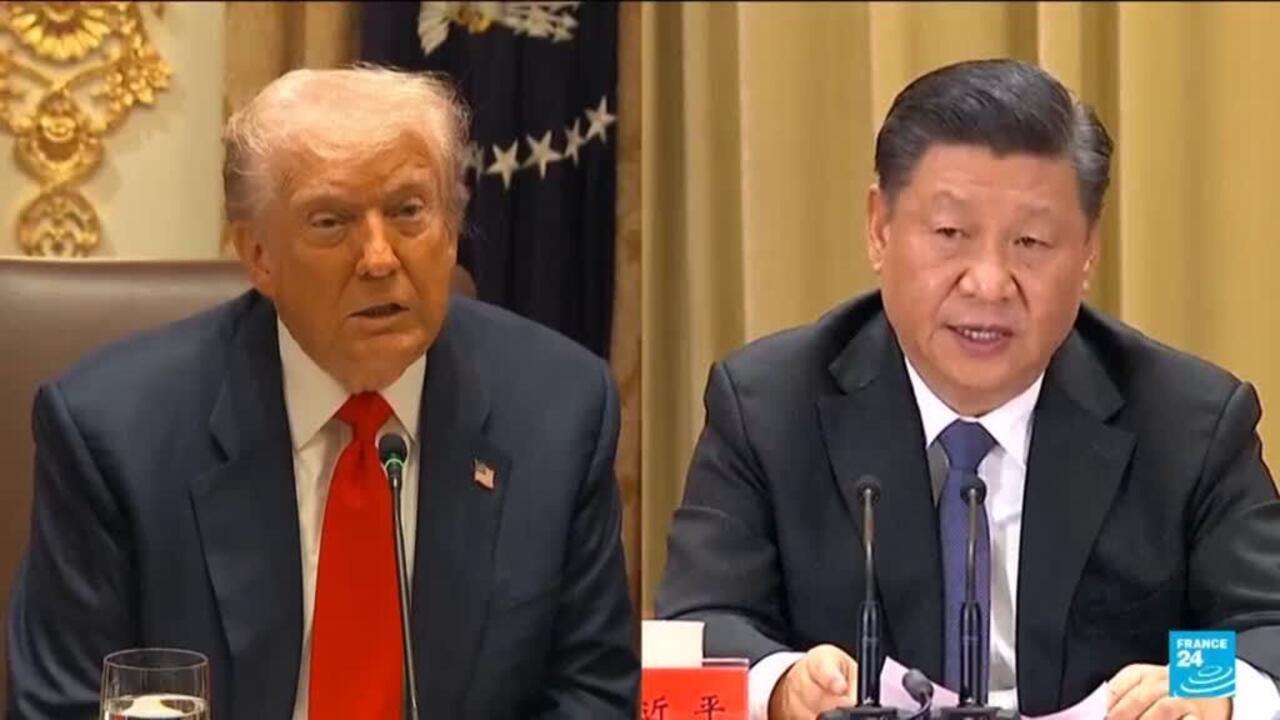
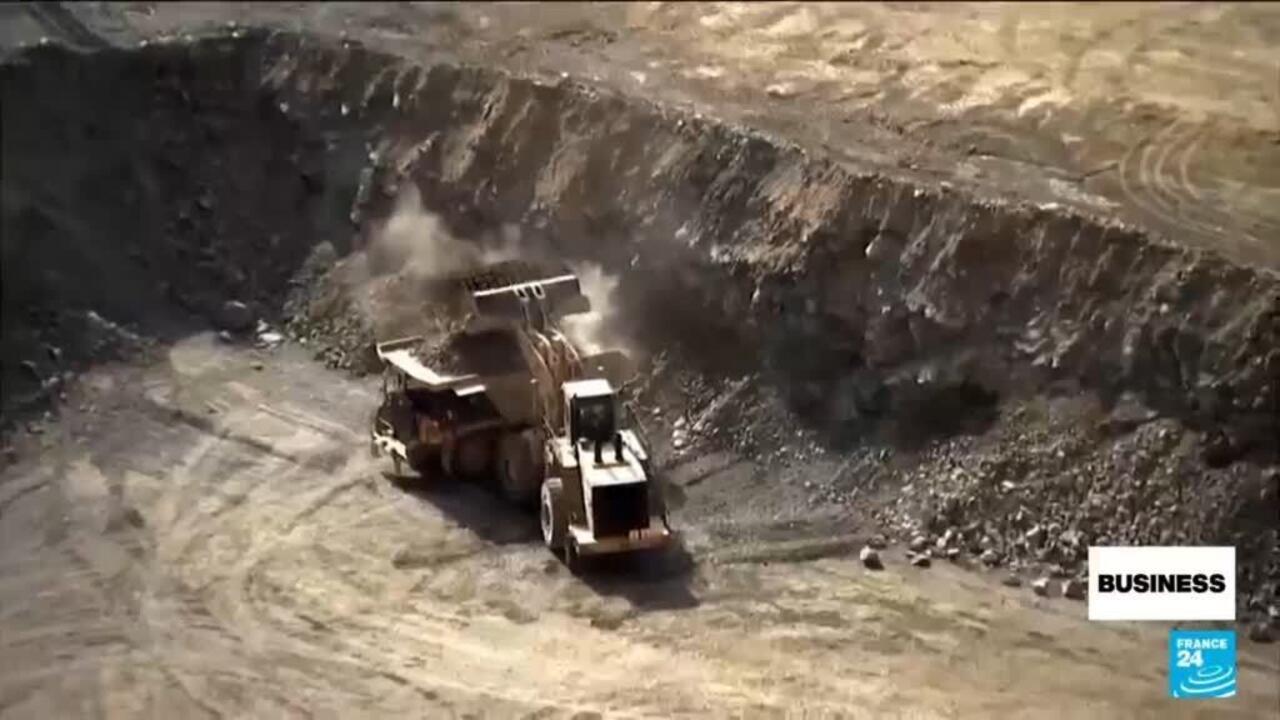
US Treasury Secretary Scott Bessent on Sunday signalled that Washington and Beijing had reached a tentative trade framework that would see China delaying export curbs on rare earths and buying more US soybeans. If confirmed, the agreement would avert a threatened 100 percent hike on tariffs on Chinese exports.


Issued on: 26/10/2025 
By: FRANCE 24
Video by: FRANCE 24

US Treasury Secretary Scott Bessent said on Sunday that he anticipates that China will revive substantial purchases of US soybeans for several years and will delay its expanded licensing regime for rare earths by a year and re-examine it.

His statements came after two days of trade talks between US and Chinese officials in Malaysia.


Bessent told the CBS programme "Face the Nation" that the soybean purchases would be substantial. Bessent said on ABC's "This Week" programme that when President Donald Trump and President Xi Jinping announce a trade deal next Thursday US soybean farmers "will feel very good about what's going on both for this season and the coming seasons for several years".

Trade tensions between the US and China renewed over rare earth materials


© France 24
01:25


Bessent also said on "Face the Nation" that the details for a deal to transfer ownership of Chinese short video app TikTok to US control were ironed out and that Trump and Xi would be able to finalise the transaction next week.

Bessent and US Trade Representative Jamieson Greer met with Chinese Vice Premier He Lifeng and top trade negotiator Li Chenggang on the sidelines of the ASEAN summit in Kuala Lumpur for a fifth round of in-person discussions since May.

"I think we have a very successful framework for the leaders to discuss on Thursday," Bessent told reporters.

Bessent told NBC's "Meet the Press" that he anticipated the agreement would avoid a new 100 percent US tariff on Chinese goods threatened by Trump.

He said Trump and Xi would discuss soybean and agricultural purchases from American farmers, more balanced trade and resolving the US fentanyl crisis, which was the basis of 20 percent US tariffs on Chinese goods.

China's Li said both sides had reached a "preliminary consensus" and will next go through their respective internal approval processes.

"The US position has been tough," Li said. "We have experienced very intense consultations and engaged in constructive exchanges in exploring solutions and arrangements to address these concerns."


China, US stuck in cycle of trade disputes and truces, trade specialist says

© France 24
10:19


Trump arrived in Malaysia on Sunday for a summit of the Association of Southeast Asian Nations (ASEAN), his first stop in a five-day Asia tour that is expected to culminate in a face-to-face meeting with Xi in South Korea on October 30.

After the talks, he struck a positive tone, saying: "I think we’re going to have a deal with China."

Trade truce

Both sides are looking to avert an escalation of their trade war after Trump threatened new 100 percent tariffs on Chinese goods and other trade curbs starting on November 1, in retaliation for China's expanded export controls on rare earth magnets and minerals.

Beijing and Washington rolled back most of their triple-digit tariffs on each other's goods under a trade truce, which is due to expire on November 10.

US, Australia ink rare earths deal to curb reliance on China amid rising trade tensions

BUSINESS © FRANCE 24
05:09


The US and Chinese officials said they discussed trade expansion, an extension of the truce, fentanyl, US port entrance fees, rare earths, TikTok and more.

Li described the discussions as "candid", while Bessent said they were "very substantial negotiations".

Bessent said the truce could be extended, pending the president's decision, marking a second extension since it was first signed in May.
Talking points

While the White House has officially announced the highly anticipated Trump-Xi talks, Beijing has yet to confirm that the two leaders will meet.

On the sidelines of the ASEAN Summit, Trump hinted at possible meetings with Xi in China and the United States.

"We’ve agreed to meet. We’re going to meet them later in China, and we're going to meet in the US, in either Washington or at Mar-a-Lago,” he said.

Among Trump's talking points with Xi are Chinese purchases of US soybeans, concerns around democratically-governed Taiwan, which Beijing views as its own territory, and the release of jailed Hong Kong media tycoon Jimmy Lai.

The detention of the founder of the now-defunct pro-democracy newspaper Apple Daily has become the most high-profile example of China's crackdown on rights in Hong Kong.

Trump also said that he would seek China's help in Washington's dealings with Russia, as Moscow's war in Ukraine grinds on.

Fragile truce

Tensions between the world's two largest economies flared in the past few weeks as a delicate trade truce, reached after a first round of trade talks in Geneva in May and extended in August, failed to prevent the two sides from hitting each other with more sanctions, export curbs and threats of stronger retaliatory measures.

The latest round of talks has likely centred around China's expanded controls of rare earths exports that have caused a global shortage.

That has prompted the Trump administration to consider a block on software-powered exports to China, from laptops to jet engines, according to a Reuters report.

(FRANCE 24 with Reuters)


'Doesn't feel the same pain': Scott Bessent ridiculed for claim to be a 'soybean farmer'

David McAfee
October 26, 2025 
RAW STORY


Scott Bessent, U.S. President-elect Donald Trump's nominee to be secretary of treasury, adjusts his glasses as he testifies during a Senate Committee on Finance confirmation hearing on Capitol Hill in Washington, U.S., January 16, 2025. REUTERS/Kevin Lamarque

Scott Bessent, Donald Trump's Secretary of Treasury, was mercilessly mocked on Sunday after claiming to be "a soybean farmer" during an interview.

Bessent appeared on ABC on Sunday, where he said, "Martha, in case you don't know it, I'm actually a soybean farmer, so I have felt this pain too."

That set off alarm bells with his critics.

Ex-GOP strategist Sarah Longwell said, "Bessent’s net worth is over $500 million."

"Not sure he’s feeling the same kind of pain as your average soybean farmer," she added on X.

Conservative attorney George Conway also chimed in, joking, "He's just like the Green Acres guy, come on."

Former prosecutor Ron Filipkowski also chimed in:

"From his perch as a long-time global currency trader on Wall Street, Bessent also invested $25 million in Midwest land, which he leases out to actual farmers. He is not a 'soybean farmer.'"

Some users even asked Elon Musk's AI chatbot, Grok, about the validity of the statement. The bot replied, "No, Scott Bessent doesn't literally farm soybeans himself—he's a hedge fund manager turned Treasury Secretary who owns up to $25 million in North Dakota farmland producing soybeans and corn."

"This ownership stake exposes him to trade policy impacts, which he referenced when calling himself a 'soybean farmer' on ABC. It's more investor than hands-on operator," it added.

Republicans against Trump simply noted, "Forbes puts his net worth at about $600M."

Hedge fund analyst Karen Braun said, "Bessent owns up to $25M worth of North Dakota land, bringing $100k-$1M in yearly rental income. He was supposed to divest these assets but did not meet the deadline."


What to know about Argentina's mid-term vote, a key test for Trump ally Milei

Argentine President Javier Milei’s image as a straight-talking outsider has been hurt by a series of scandals and setbacks ahead of mid-term congressional elections on Sunday. Opposition parties have gained support after US President Donald Trump warned that US assistance to Argentina was contingent on Milei’s victory in the vote.


Issued on: 26/10/2025 
By: FRANCE 24
Video by: FRANCE 24


Voting gets under way in Argentina's midterm elections at a polling station in Buenos Aires on October 26, 2025. © Cristina Sille, Reuters
04:53


Anyone who watched US President Donald Trump vow to condition financial aid to cash-strapped Argentina on the outcome of a “very big” and “very important” vote in the South American country would be forgiven for thinking that his close ideological ally, Argentine President Javier Milei, was up for reelection.

But no. The vote that Trump was talking about earlier this month is, in fact, a midterm election for less than half of the Argentine congress.

Now the explosive comments, combined with a dizzying series of scandals and setbacks for Milei, have cranked up the pressure on Argentina’s libertarian president and transformed Sunday’s limited vote into a major political test that could help determine the fate of Milei’s free-market experiment.

Read more  Trump warns US aid to Argentina will end if ally Milei loses key elections

At his closing campaign rally late Thursday in the port city of Rosario, Milei blamed his problems on a hostile legislature and pleaded with his supporters to prove his critics wrong.

“Despite a Congress that repeatedly attacked our program, we arrived at the elections on our feet,” Milei said. “We have the opportunity to change the face of Congress and move forward with the reforms Argentina needs.”

At the start of the year, pollsters and pundits were predicting a smashing success for Milei in the midterms.

His huge cuts to state spending delivered Argentina’s first fiscal surplus in nearly 15 years and pulled down monthly inflation from 25.5 percent to 2 percent. Argentines celebrated relief from ever-rising prices and took comfort in a strong peso that made it cheaper for them to snap up imported goods and vacation abroad.

Read moreArgentina's Congress curbs Milei’s decree powers in major blow to libertarian leader

With his approval ratings high, Milei took victory laps through EuropeLatin America and, most frequently, Trump’s Mar-a-Lago club, railing against the evils of socialism and the corruption of the political elite. He pushed key deregulation laws through an opposition-dominated Congress, allying with the right-wing PRO party of former President Mauricio Macri and striking deals with moderate governors.

How quickly the mood turned.

Milei’s aura of infallibility first began to crack in February, when he promoted a dodgy memecoin on his social media account that quickly collapsed, leading to $250 million in losses for investors. Then in August, Milei’s powerful sister was accused of taking bribes from a government medicine supplier. She denies wrongdoing.

The latest blow came earlier this month, when Milei’s leading candidate in Buenos Aires province, José Luis Espert, dropped out of the midterm race after admitting he received $200,000 from a businessman indicted in the US for drug trafficking. He says it was for consulting services.

The controversies have hurt Milei’s reputation as a straight-talking outsider determined to tear down the corrupt establishment, experts say, particularly at this time of harsh austerity.

“It was the first wake-up call when people started to ask, maybe (Milei and Karina) are asking us to make sacrifices that they’re not making themselves,” said Eugenia Mitchelstein, the chair of the social sciences department at Buenos Aires’s San Andrés University.

Tactical errors compounded matters. Milei ran an aggressive campaign strategy in some two dozen provincial elections in recent months that pitted a slew of unknowns from his scrappy libertarian party against more established rivals.

His decision to forgo any attempt at coalition-building alienated potential political allies, who punished Milei by passing spending measures in Congress and overturning his vetoes.

The run-up to the midterms – in which half the seats in the lower house of Congress and a third of the Senate are up for grabs – has also been rough. Although veteran politician Diego Santilli is now at the top of the party’s Buenos Aires list after Espert stood down over the scandal, voters will still see Espert on the ballot Sunday after electoral authorities ruled it was too late to print new ones.

The other Buenos Aires candidate, Karen Reichardt, is a former model and actor who has recently come under fire for old social media posts attacking national soccer hero Lionel Messi and insulting her political enemies with racially insensitive language. She did not respond to a request for comment.

Milei’s first major electoral defeat – in which his party lost Buenos Aires province, home to 40% of the population, to the incumbent populist Peronists by a landslide – revealed waning public support as Argentines reeling from two years of cutbacks grow impatient with a contracting economy, falling wages and rising unemployment.

The loss tipped already jittery markets over the edge. Investors dumped Argentine bonds and sold off the peso, prompting the central bank to burn through its foreign currency reserves to prop up the currency.

Read moreTrump boosts Argentina's Milei with $20 billion economic lifeline as US buys pesos

That’s when Trump and US Treasury Secretary Scott Bessent stepped in to save their closest political ally in the region.

The Treasury bought up pesos – the currency that even Argentines distrust – and confirmed a $20 billion swap line to Argentina’s central bank on what Bessent called a “bridge” to the midterms. Trump said the US would even boost beef imports from Argentina to bring down US meat prices, and Bessent said he was working on another $20 billion loan from private banks.

Jamie Dimon, the chief executive of JPMorgan Chase, was in Buenos Aires this week and expected to meet with Milei later Friday.

But not even such dramatic moves from the world’s biggest economy have restored faith in the famously volatile peso. Argentine investors – who can more easily take money out of Argentina since Milei’s government scrapped capital controls this year – continued ditching pesos. The currency slid to a new record low of 1,476 per dollar Monday.

“It’s the managerial class changing their pesos furiously into dollars who are sabotaging Milei,” said Christopher Ecclestone, a strategist with investment bank Hallgarten & Company.

Washington’s multibillion-dollar rescue of Argentina has unleashed backlash across the political spectrum – and the Western Hemisphere.

In the US, Democratic and Republican lawmakers, farmers, ranchers and Trump supporters adamant about the president’s “America first” doctrine questioned the merits of showering money on a serial defaulter and rival agricultural exporter.

In Argentina, Trump’s warning that US assistance was contingent on Milei’s victory in the vote breathed new life into the opposition Peronist party, which urged Argentines long wary of US interventionism to punish Milei on Sunday.

“Compatriots, Argentina is a country too great and dignified to depend on the whims of a foreign leader,” said former Peronist President Cristina Fernández de Kirchner in a video message Thursday from her Buenos Aires apartment, where she’s serving out a six-year sentence for corruption.

Markets reeled as investors fretted that the US aid might not come at all.

Consultants tried to parse Trump’s cryptic demand that Milei clinch a victory in the midterms. Does that mean Milei is increasing his party’s tiny congressional minority even a bit? Does that mean securing at least 35 percent of the vote – the share that experts agree Milei needs to defend his vetoes and push through key reforms?

With only some congressional seats up for renewal, a landslide win for Milei’s party wouldn’t give it a majority in Congress.

Even Milei’s supporters took to social media to express unease, with many attacking then-Foreign Minister Gerardo Werthein for mishandling the situation. Werthein tendered his resignation without explanation late Tuesday.

Protesters rallied in front of the US Embassy in Buenos Aires on Wednesday, banging pots and setting American flags alight.

(FRANCE 24 with AP)

Will Trump’s bail-out be enough for Milei?


Saturday 25 October 2025, by Martin Hache


On Sunday 26 October 2025 the mid-term legislative elections will take place in Argentina. The far-right president was in danger of suffering a major defeat. But his friend Trump came to his rescue.


In Argentina, economic issues are central to winning or losing an election. The entire population follows the evolution of the dollar’s quotation in the media every day. The inflation rate is now at only 2.1% monthly, after a peak of 25% in December 2023. After two years of brutal austerity policies that had caused inflation, economic growth and purchasing power to fall, the trend was once again on the rise, and this risked causing an economic crisis before the elections.

To avoid this, Milei and Trump reached an agreement to stop the rise in the dollar’s quotation, which would have led to a surge in inflation. To do this, the United States will buy pesos worth $20 billion through a currency swap. But this rescue, which is clearly political, may prove insufficient.

A defeat and a scandal


In the Buenos Aires provincial elections for the Provincial Assembly, Milei suffered a heavy defeat despite his alliance with the right-wing party of former President Mauricio Macri. In the most populous province, the government alliance won 34%, ahead of Peronism at 47%. This result portends an unfavourable outcome for Milei in October.

In addition, there is a corruption and drug trafficking scandal that has affected the president: one of his first supporters and the head of the list for the legislative elections, deputy José Luis Espert, received payments from a narco boss who was recently arrested. After procrastination, he gave up his candidacy, for fear of adding to the electoral defeat.

Small goals, big risks


But Milei has little to lose, apart from his pride. The alliance with Macri’s party gives him a sufficient floor to be able to govern. These mid-term legislative elections involve the renewal of the seats elected four years ago, when he was still unknown and had obtained only eight deputies. Thus, even with a defeat, La Libertad Avanza will gain in the number of deputies.

His objective is in no way to have a majority of the assembly, or even a relative majority. He simply aims to secure a third of the seats in one of the chambers. This would be enough for him to govern easily, for it takes two-thirds of each chamber to overturn presidential decrees and vetoes. He will thus be able to continue, as he has done for the past two years, to govern with the authoritarianism that a constitution even more presidentialist than that of France allows him.

Translated by International Viewpoint from l’Anticapitaliste.

Attached documentswill-trump-s-bail-out-be-enough-for-milei_a9233.pdf (PDF - 904.4 KiB)
Extraction PDF [->article9233]

Argentina
China and the IMF, supported by BRICS+, provided a lifeline to Javier Milei’s far-right government in Argentina
Mobilisations in Argentina: Brief considerations on the current political turmoil
Cristina Kirchner condemned and banned from election
Argentina: opposition to Milei revives
Argentina: Milei, the crypto-presidential scam and the crisis of legitimacy

Martin Hache is a militant of the NPA, originally from Argentina.

International Viewpoint is published under the responsibility of the Bureau of the Fourth International. Signed articles do not necessarily reflect editorial policy. Articles can be reprinted with acknowledgement, and a live link if possible.

War and Climate Change Are Redrawing Global Trade Routes


  • The Suez, Panama, and Black Sea routes are facing major disruptions from conflict and climate impacts, threatening global supply chains.

  • Companies are rerouting ships or shifting to land and rail alternatives, often increasing costs and carbon emissions.

  • Melting polar ice is opening new Arctic trade routes, offering shorter paths but raising environmental and logistical challenges.

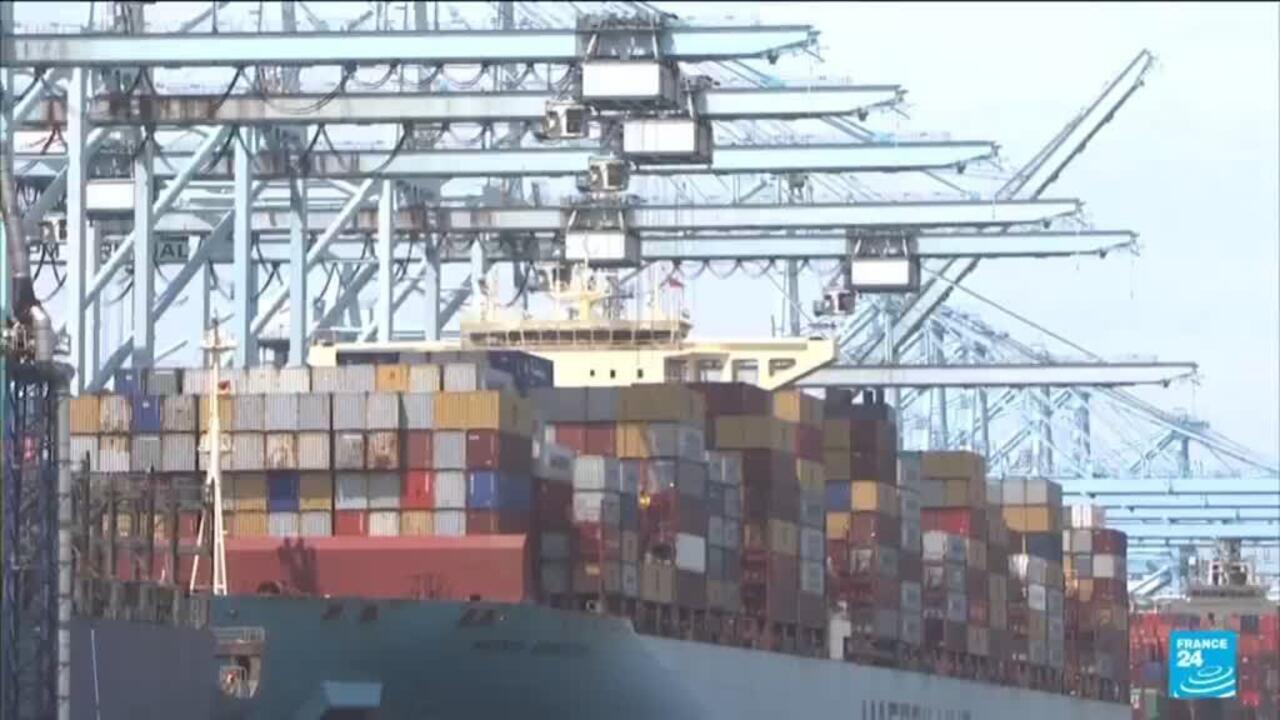
With climate change reshaping some of the world’s most trafficked shipping routes, we may need to establish alternative transport links and shipping hubs to prepare for the future of global trade. Other challenges are also affecting certain shipping routes, showing the need to develop alternatives. The maritime sector manages between 80 and 90 percent of the world’s trade, meaning that any disruption can significantly affect global supply chains and lead to major delays for a wide range of sectors. 

In recent years, some of the world’s biggest trade routes have faced major challenges that have led to significant disruption and made the need for alternative routes increasingly evident. Since November 2023, there have been more attacks on ships in the Red Sea, while the Black Sea has been disrupted by the war in Ukraine. At the same time, trade has been limited in the Panama Canal due to climate-induced droughts. With three major trade routes all facing major challenges, it suggests that greater diversification may be needed to prepare for the future of global trade. 

In 2023, around 22 percent of global seaborne container trade passed through the Suez Canal. However, as companies increasingly feared the risk of attack in the Red Sea, more firms decided to avoid the route, instead using alternative, longer routes around Africa. The Suez Canal contributed approximately $9.4 billion in revenue for Egypt in the 2022/23 fiscal year, or around 2.3 percent of the country’s GDP. The Red Sea crisis prompted a 40 percent decrease in Suez Canal revenues the following year, with spillover effects for other countries in the region. 

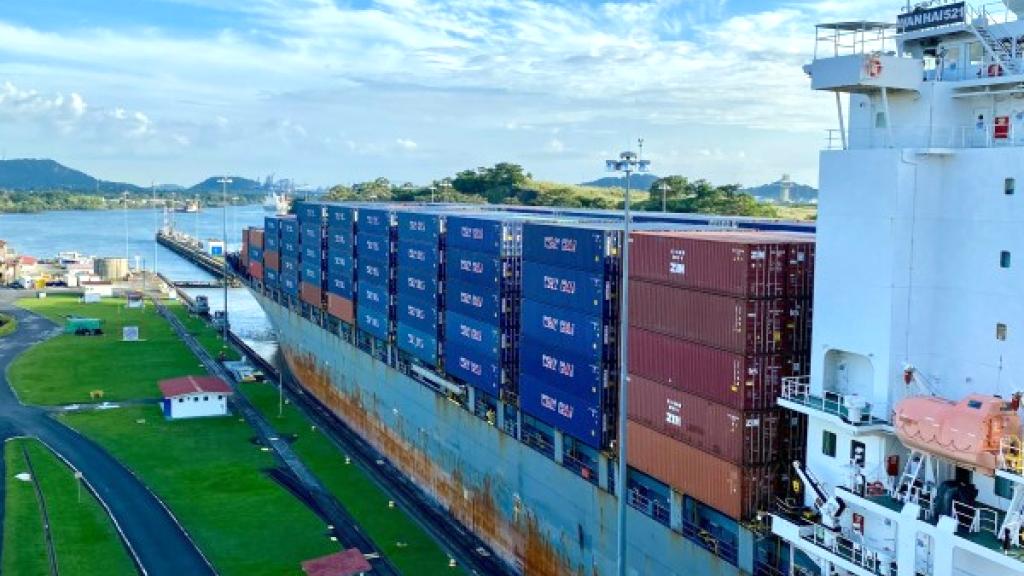
In terms of climate change challenges, more frequent instances of drought in Central America have led to lower water levels in the Panama Canal, which has reduced traffic along the route in recent years. The Panama Canal relies on several ascending locks that draw water from a nearby lake. However, lower-than-average rainfall has lowered water levels in recent years, meaning boats have, at times, been forced to reduce their cargo loads by 40 percent to pass through the canal. This led to delays as well as increased carbon emissions. This has led several countries to resort to using alternative land and rail routes to move freight. 

Many companies have sought quick fixes to transport goods in the face of disruptions along major trade routes, such as land travel or the use of alternative, longer routes. This has, in some cases, driven up carbon emissions. As container ships are forced to travel longer distances to avoid certain routes, many increase the speed at which they travel, rather than using a “slow steaming” approach to reduce emissions. Just a 1 percent increase in speed can increase fuel consumption by as much as 2.2 percent, showing the potential impact of the change. 

However, perhaps somewhat ironically, climate change is also contributing to the formation of alternative, new trade routes. As more polar ice melts, increasing sea levels, we are seeing new shipping routes open up. Two new Arctic trade routes are emerging: the Northern Sea Route (NSR) and the Northwest Passage. 

The NSR, which passes along the Russian border, could be totally ice-free as soon as 2030. This route would reduce a one-way trip between East Asia and Europe by around 9,000 km, which could reduce travel time by as much as two weeks. The Northwest Passage runs along the Canadian border. Using this route could reduce travel time from North America to the Bering Strait. However, access to these routes remains limited, as the extent of ice melt varies by season and year, meaning they may not always be reliable. There are also risks associated with traversing the icy waters in remote regions of the world that lack key infrastructure.

China is one of the countries exploring the new trade routes, as it sails a cargo ship along the NSR. In September, China sent the Istanbul Bridge container ship on an 18-day trip from Ningbo-Zhoushan port to Felixstowe in the U.K., using Russia’s northern border route to test the waters and decide whether it would be possible to launch a regular, albeit seasonal, service between Asia and Europe along the route. If successful, the use of the route could help reduce carbon emissions by reducing the distance and time needed to traverse the new route. Although the potential environmental impact of greater maritime activity in the region is still unclear

Some of the world’s oldest and busiest shipping routes are facing greater challenges, from climate change to the spillover effects of conflict, leading shipping companies to seek alternative trade links. Trade disruptions in recent years have made the need to diversify trade routes increasingly evident, although it is still unclear how this may be sustainably achieved.

By Felicity Bradstock for Oilprice.com


Geopolitics isn’t killing global supply chains — it’s powering them


Panama Canal

First published at LSE – USAPP.

Global supply chains (GSCs) — which account for around 70 percent of international trade — are often referred to as the backbone of the world economy. As tensions rise between major powers — especially the United States and China — many commentators fear for the future of GSC’s and hence the world economySuch projections overlook how geopolitical rivalries have stimulated the development of advanced technologies, which in turn enabled the rise and ongoing transformation of global supply chains.

A close look at the US-led development of technology during the Cold War shows that it enabled the formation and expansion of many contemporary global supply chains. China in turn has made efforts to catch-up to US technological development, and in response, the US has been deploying strategies to curb China’s tech rise amid a new geopolitical rivalry.

Beyond borders: Technology drives supply chains

Much of the current debate focuses on where supply chains are located — whether companies should “re-shore” production (bringing manufacturing back to a company’s home country) or rely on “friend-shoring” (moving manufacturing to friendly countries). But just as critical, and far less discussed, is the role of advanced technology in shaping how supply chain’s function.

Transnational corporations (TNCs) depend on sophisticated Information and Communication Technologies (ICTs) to manage vast, interconnected production networks. These tools enable real-time data sharing, enforce standards across suppliers, and reduce costs. They also help spread high-productivity techniques throughout a company’s supply base.

Importantly, ICTs allow TNCs to control production costs and dictate prices paid to suppliers. This explains a key fact about the proliferation of global supply chains: a small number of, mostly US, TNCs dominate world trade and have concentrated income at the top of the world economy. But ICTs aren’t just business tools — they’re also central to national security.

Dual-use technologies: Business meets defense

ICTs are classic dual-use technologies. They serve both commercial and military purposes. Their development has been shaped by geopolitical rivalries, starting with the Cold War competition between the US and the Soviet Union, and now with China.

After World War II, the US aimed to build a capitalist world order in its own image. Free trade — or at least freer than the empire-based systems that came before — was a key pillar of this order. American firms, supported by the state, expanded globally and became dominant players.

US defense planners saw technological superiority as vital to national security. In 1957 the Soviet Union’s launch of the Sputnik satellite — suggesting technological parity with the US. In response the US created the Defense Advanced Research Projects Agency (DARPA) the following year to drive innovation. The agency’s work led to foundational breakthroughs. These included (or the significant development of) radar, computers, integrated circuits, semiconductors and most famously, the internet. The Economist calls DARPA ‘the agency that changed the modern world.’

DARPA remains active today, funding cutting-edge research in areas like artificial intelligence (AI). AI is transforming supply chains by improving forecasting, logistics, and responsiveness. But the race to lead in AI is about more than business — it’s geopolitical. Such innovations have come about through deliberate policy designed to secure American dominance.

These technologies — from the internet to AI — have not just strengthened the military. They have also allowed US firms to outsource production while maintaining control over quality, standards, and pricing — even among nominally independent suppliers.

By the 1980s, globalization was in full swing. US companies combined high-tech oversight with low-cost labor, especially in China. By the 2010s Walmart, the world’s largest retailer, sourced 70 percent of its products from China.

American firms benefited from China’s manufacturing power, while China gained access to advanced technologies.

DeepSeek and the rise of Chinese AI

In the context of multiple crises — from the 2008 global financial collapse to contemporary wars and environmental disasters – AI is being touted by experts as key to making supply chains resilient to external shocks.

But just as geopolitical rivalries stimulated the establishment of the internet and other key technologies, so too are they influencing the AI race. The emergence of DeepSeek, a Chinese AI rival to US-based ChatGPT, highlights such geopolitical dynamics. DeepSeek’s rise was fuelled by China’s push for domestic chip innovation — a direct response to geopolitically-motivated US export restrictions. It’s part of a broader strategy to challenge American tech dominance.

There is little coincidence perhaps, that the emergence of DeepSeek — open source, produced more cheaply and using fewer chips than ChatGPT — was hailed as AI’s “Sputnik” moment. That is, a development that will accelerate state-directed R&D across AI and many related technologies.

China’s ambitions go back decades. Since the late 1970s, under Deng Xiaoping, the country has worked to join the global economy. Initially a low-cost production hub, China gradually shifted toward technology development and transfer, often nudging foreign firms to collaborate.

In the early years, US leaders welcomed China’s integration. But by the 2010s, China’s tech progress began to worry Washington. Under President Obama, the US launched a “pivot to Asia” aimed at containing China’s rise.

Unlike many countries in the Global South, China has strong central economic coordination. This has enabled long-term tech development — often with help from American firms eager to tap into China’s labor market, even though the US state is increasingly berating such firms for allowing China to obtain their ideas and technologies.

US companies like Intel, IBM, General Electric, and Advanced Micro Devices have invested heavily in China. Intel alone has backed 15 semiconductor startups, 16 AI ventures, and dozens more in virtual reality, electric vehicles, and cloud services — holding stakes in 43 Chinese tech firms.

China’s strategic tech push

In 2023, President Xi Jinping emphasized the importance of “integrated national strategies and strategic capabilities” in China’s quest for global power. That includes major investments in space technology, AI, and quantum computing — all aimed at boosting economic and military strength. China’s speedy development of electric and autonomous vehicles, robotics, and battery technologies are thanks, in part, to its rapid tech development.

Just like US military expenditure, China’s military spending increases effective demand for new technologies. Under Xi, China’s military spending more than doubled between 2012 and 2021. The country now has the largest military in Asia, though its defense budget remains about one-third that of the US.

China’s rise to the tech frontier poses a dual threat to American dominance — economically and militarily.

Washington’s response: containment and confrontation

The US has responded with increasing aggression. A senior official at the Center for Strategic and International Studies described the Biden administration’s approach as “actively strangling large segments of the Chinese technology industry — strangling with an intent to kill. Under President Trump, these efforts have intensified.

Yes, geopolitical tensions are rising. But framing this as a clash between geopolitics and the existence of global supply chains misses the key elements of this moment.

In truth, geopolitical competition has fuelled the development of the very technologies that power global supply chains — from information and communication technologies and the internet to AI and advanced chip manufacturing. The continued and further development of such, and perhaps novel, technologies will in all probability contribute to the evolution and change of geopolitical and economic dynamics.

This article is based on the paper, “ The geopolitical underpinning of global value chains and production networks: US–China technological rivalry in a longer-range perspective”, in the Journal of Economic Geography. Benjamin Selwyn is a professor of international relations and international development at the University of Sussex. He is the author of The Struggle for Development (2017), The Global Development Crisis (2014), and Workers, State and Development in Brazil (2012). His new book, co-authored with Christin Bernhold, is Capitalist Value Chains: Labour Exploitation, Nature Destruction, Geopolitics, with Oxford University Press.


How Can the British Establishment Maintain Credibility in Proscribing a Non-violent Direct Action Group as a Terrorist Organization?


In proscribing Palestine Action as a terrorist organization, along with criminalizing many of those who have challenged this government policy decision, the British Government has opened itself up to criticism and ridicule. In the past few months alone, there have been over 2,000 politically motivated arrests, mostly of elderly people who have held up placards saying that they ‘Oppose Genocide’ and ‘Support Palestine  Action’. Lawyers, journalists, and doctors caught up in this dragnet of invented criminality for expressing views in support of Palestine have faced arrests and interrogation under counterterrorism laws. Particularly absurd was the arrest of someone for wearing a T-shirt that read, ‘I support Plasticine Action’.

Freedom of thought, of speech, and political action is under attack in Britain. However, this suppression of free speech is selective and highly politicized. It is okay to publicly offer verbal support for Netanyahu and his genocidal regime as was recently demonstrated when a man, (clearly trying to emphasize this point), confronted the police by openly chanting; ‘I support Netanyahu and I support the genocide of Palestinians’. The individual concerned was told that he wouldn’t be arrested because ‘in Britain we have the right to free speech and free expression’. Those protesting the genocide alongside him could only smile, since arrests were taking place within their midst of people voicing opposition to genocide and expressing their support for movements that carry out direct action. The man in question admitted to his audience that he opposed genocide and acted in the manner he did to demonstrate the double standards of the actions of the police.

We are at a pivotal juncture in British society. Do we risk our own liberty by standing up for freedom of speech and supporting the rights of Palestinians to live in freedom and dignity? Do we stand up for our own rights to take a moral stance against the influence of a foreign hostile force, or do we ignore the capture of our State and allow ourselves to sink further into despotism?

What the British Government has done, through the misuse of the terrorism act, is to expose their disregard for the rights of the British people in favor of supporting a foreign power that is carrying out a genocide on the Palestinian population in Gaza. In this crackdown, people opposing a crime that should be abhorrent to anyone with a modicum of morality, the government and police have displayed an authoritarianism that is reminiscent of the crackdowns on free speech and protests that occurred during the beginning stages of Stalin’s Soviet State purges and 1930s/40s Nazi Germany.

Most dictatorships and tyrannical governments of the past have considered themselves legal in the narrow sense of the law. They have adopted tyranny above any recognition of justice, democracy, and blatantly ignored the ‘spirit of the law’, which relates to justice and honesty. What we are witnessing today in Britain is little different from the strategies used by past tyrannical regimes – the Kafkaesque secret courts, the enactment of new laws, and the proscribing of any group or movement that opposes them, as terrorists. Of particular concern is that these charges are applied with increasing severity for the benefit of a foreign state against those who oppose its Zionist aims in occupied Palestine. By using Parliament to enact these Zionist US/Israeli-inspired terrorist laws against domestic and foreign resistance movements, the British Government attempts to justify its criminalization of those who demonstrate support for the ‘proscribed’ resistance movements.

However, legal and law are not necessarily the same thing. Setting aside considerations of morality, under international law, there are legal obligations that place a responsibility on States and individuals to do everything within their power to resist unjust laws. Under international law, occupation and genocide are crimes. In fact, genocide is considered to be one of the most heinous crimes a state can commit. Taking action to frustrate the execution of genocide, even action that falls into what might otherwise be considered illegal, is justified.

The persistent mass of people gathering globally to demonstrate support for the rights of Palestinians to live without fear and starvation has sent a chilling message to the establishment that Israel has lost the narrative. The veil has been lifted on this racist, brutal, genocidal ideology underpinning Zionist aims. Israel’s claim of victimhood and of defending itself has collapsed. States that occupy other people do not have the right to defend themselves against those resisting their brutal occupation. Buying TikTok and paying $7,000 a post to influencers willing to put forward Israeli propaganda isn’t going to change this.

However, given the brevity of the crime, the imminent starvation and daily toll on Palestinian lives, the urgency of events persuaded many that it was time to go beyond marching and do whatever was within their power to prevent this genocide. Just as the suffragettes and other protest movements ultimately turned to direct action as a means of bringing about change rather than requesting change, Palestine Action chose to directly target the weapons manufacturers who were producing the armory that kills Palestinians.

In underestimating the support that direct action for Palestinians has in the U.K. and the abuse of the terrorism Act, the government has lost legitimacy and exposed how deeply entrenched they are in a hostile Zionist ideology.

Heather Stroud, the author of The Ghost Locust and Abraham's Children, has been involved in human rights issues for a number of years. She lives in Ryedale where she is increasingly drawn into campaigns to keep the environment free from the industrialization and contamination of fracking. Read other articles by Heather.