Friday, January 23, 2026

Is Climate Change an Externality?
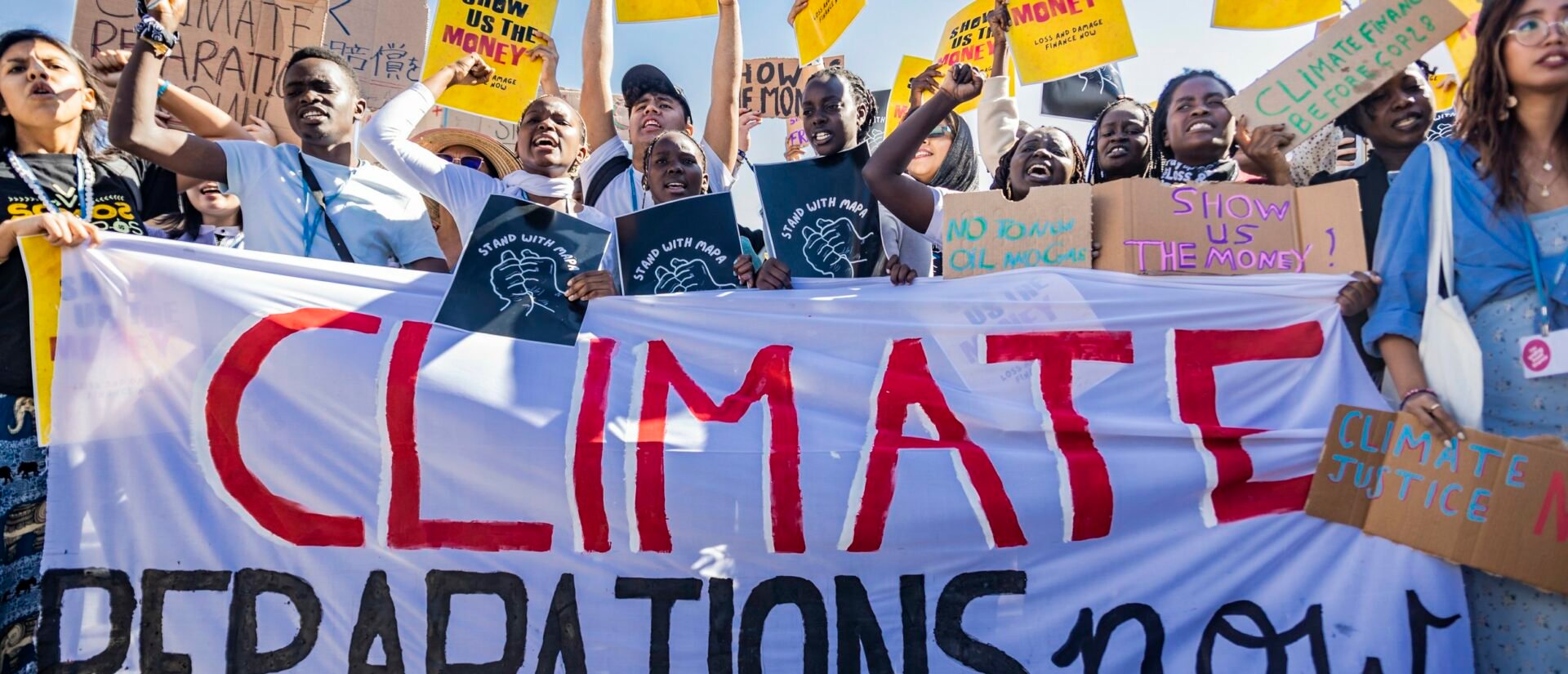
Source: The Law and Political Economy (LPE) Project

This post is part of a symposium on Alyssa Battistoni’s Free Gifts: Capitalism and the Politics of Nature. Read the rest of the posts here.

** ** **

In Free Gifts, Alyssa Battistoni traces the concept of the “externality” across the past century. This history begins in 1920, when the economist Alfred Pigou observed how private market transactions could impose uncompensated harms on third parties, such that the prices of goods failed to reflect their true (social) cost. Fortunately, he argued, these external costs could be rectified by government intervention: adding a tax equal to the social cost, which would cause market trading to “internalize” the harm and produce the optimum amount of the activity in question. Free-market advocates viewed such externalities as a rare exception to the general rule of the wisdom of the market.

As Battistoni describes, however, this would change in the coming decades. As the U.S. postwar economy boomed, so did its pollution, and Pigou’s rare “market failures” began to seem ubiquitous rather than exceptional. In 1960, Ronald Coase challenged Pigou’s invitation for widespread government regulation in a landmark article, The Problem of Social Cost. Coase struck at the heart of welfare economics: how was Pigou, or the government, to determine the “optimal” level of pollution? How could they know how much people value the cost of pollution, or their own health? Battistoni dwells on Coase’s understanding of externalities as mutual costs. For Coase, the smokestack can only cause harm to health if people choose to live near it: “both parties cause the damage.”

Rather than dismiss Coase, Battistoni argues that Coase lands legitimate critiques on Pigou’s framework: Pigou makes a moral judgment (the assumption that pollution is bad) in pollution-generating markets, while declining to apply normative standards to any other types of markets or economic goods. But, in Battistoni’s words, “the distinction between pollution and other kinds of goods just doesn’t hold.”

Once Coase’s disciples recognized that pollution was just another kind of market, they launched an attack typical to that of the Chicago School, accusing regulators of paternalism. They argued that the government shouldn’t impose normative judgments on resource allocation; instead, it should set the conditions for people to negotiate the most efficient outcome amongst themselves. Markets all the way down. But Battistoni takes this observation in a different direction: “the burden of social costs is better characterized in terms of struggle between classes with disparate power than as a market exchange between equal individuals.” For Battistoni, “externalities” are the exception that explodes the rule: market allocations can never be assumed to achieve the “optimal” outcome, as they are always the product of unequal power relations.

Considering the host of this symposium, I cannot help but point out the similarities between Battistoni’s observations and some of the core principles of the LPE intellectual movement. Core to LPE is the revival of legal realist thought, and core to that thought are the anti-laissez faire writings of those like Robert Hale. Hale, writing around the same time as Pigou, and anticipating Coase, also recognized the reciprocity of social costs. Hale argued that the market itself was a system of “mutual coercion:” there was no such thing as the “free” market when it relied on an underlying state police power to enforce property rights. While Hale is not well known today, LPE scholars and their fellow travelers have resurrected his lessons for combatting the legacy of the Chicago School.

Hale and his compatriots were writing at a time of Lochnerism, when the conservative Supreme Court held an expansive view of due process protection of private property rights. While most economists and legal thinkers agreed that governmental price regulation was required in certain industries, such as state-granted monopolies, Hale believed that that utility-regulation, similar to Battistoni’s thoughts on externalities, was the exception that exploded the rule. Once you conceded that railroads, gas utilities, and hotels were “affected with the public interest” such that government regulation was justified, it was hard to identify any market that was not inextricably bound up with the “public interest.”

Another famous (proto) legal realist, Justice Oliver Wendell Holmes, in writing to justify governmental price regulation, once likened the harms of monopoly price power to that of pollution:

A hundred years ago, one could hardly use his land so as to injure another except by creating a nuisance. But things have grown more complex. The relations between property owners are not only those of mere contiguity: they are organic… If the railroads and elevators have a constitutional right to charge what they please, it is just as truly a right to destroy the property of others as a right to make noxious vapors would be.

This argument stands as a fascinating mirror of what Coase would do 80 years later. In order to get his audience comfortable with regulating price-related harms, Holmes likened them to smokestacks. To Holmes, the law of nuisance was a place where government intervention was clearly accepted, and pollution an obvious harm. Coase would argue from the other direction, saying that noxious vapors were a market like any other, where government intervention would lead to inefficiencies. Holmes, writing back in 1878, would likely have agreed with Battistoni’s argument that “The neoclassical assumption that a transaction can be contained to the parties to a contract appears delusional in a world where everything affects everything else.”

Yet Holmes discussion, appearing decades before Pigou formalized the concept of the externality, also makes clear that Pigou was far from the first person to recognize that pollution could harm third parties. The common law of tort had long recognized harms created by pollution, and Coase’s target in The Problem of Social Cost was just as much the common law approach as Pigou’s theory. And it wasn’t Pigou who assigned moral judgment to the harms of pollution, the very claims themselves were called “nuisance.” The common law’s recognition of pollution as a harm was bound up with moral judgments and social norms about who owed what to whom. It had nothing to do with efficiency and externalities, concepts whose later imposition on the law did more to distort than to clarify the underlying principles.

One of the lessons I have taken from teaching environmental law is that the LPE movement is in part about learning how to stop thinking like an economist at all. By the time the major modern environmental statutes were passed, the Supreme Court had long conceded the broad government right to regulate industries of all kinds. The Clean Air Act and Clean Water Act of 1970 and 1972 were passed before this country’s neoliberal turn toward Coasean thinking. The statutes do not talk of achieving the “optimal” levels of pollution, but rather “eliminating” pollution. The EPA is directed to limit pollution to the amount “requisite to protect the public health,” not to their most efficient levels. Today, however, environmental harms of all kinds are frequently cast as externalities, even by those seeking to emphasize the urgency of these harms. Indeed, as Battistoni observes, Nicholas Stern—who advocated for much more aggressive climate change action than many of his fellow economists—famously claimed that greenhouse gas emissions, as externalities, represented “the biggest market failure the world has seen.”

If we rejected the idea that climate change is best thought of as an externality, how would it change our thinking? One obvious alternative is to think of climate change is that of a moral harm. Battistoni, given her broadly Marxist approach, lays the blame for climate change on the capitalist system rather than individual bad actors. Yet for those who see climate change as a moral harm, one possibility could be to use the tools of criminal law, including charging fossil fuel companies with homicide, to work toward climate justice. Similarly, we might follow the lead of parties around the world pursuing nuisance claims against fossil fuel and other high-emitting corporations. To be clear, I do not think that conceiving of climate change as a moral harm requires resigning ourselves, as Jed Purdy’s post seems to suggest, to our inevitable demise at the hands of our own fundamental “human nature.”

Even when it comes to market governance, there is no need to conceptualize climate change as an externality, whose harm to be internalized, rather than eliminated entirely. Indeed, the Inflation Reduction Act of 2022 is arguably the result of successful campaigns to dethrone the externality-tackling carbon tax as the ideal climate policy. Worldwide, a new green industrial policy focuses on capital turnover and the replacement of fossil infrastructure with renewables. This Bidenomics approach, to draw from Ilmi Granoff, considers climate change to be “a substitution problem, not an externalities problem.” Even mainstream economists now write that climate change harms should be thought of as both externalities and “innovation failures.”

In many ways, unlearning externalities-thinking is just rediscovering what we knew in 1970. The Congress that passed the Clean Air Act expressly rejected the use of economic analysis in designing air pollution regulation. The Act’s Senate Report explained that “the health of people is more important than the question of whether [the achievement of air standards] is technically feasible… therefore… existing sources of pollutants either should meet the standard of law or be closed down.” The Supreme Court concluded that the Clean Air Act was a “drastic remedy,” “expressly designed to force regulated sources to develop pollution control devices that might at the time appear to be economically or technologically infeasible.” What this statutory design recognizes is that corporations don’t just act in markets, they control them. They can bring entire technologies, entire new compounds, into being. Asking a regulator or judge to assess the costs and benefits of limiting pollution—or expecting an affected individual to bargain in this situation—makes no sense. Before the automobile industry invented the catalytic converter, the costs of reducing air pollution seemed astronomical, enough to bankrupt the entire industry. After they invented the catalytical converter, the costs were manageable. And they only invented it because they were faced with the threat of being shut down.

Which brings me back to Robert Hale. While we no longer need Hale to argue on behalf of regulation in general, his insights have lessons for the fights of today, in which we are dominated by the decisions of the fossil and tech oligarchies. Hale’s insight into the coercive nature of markets led him to see that there was nothing free about the free market, and that corporations coerce and dominate us in much the same way a top-down government regulator might, but without any democratic accountability. He’s been dubbed “an originator of the concept of ‘private government.’” This insight leads me to conclude that it’s again time for a “drastic remedy” that reasserts the power of the people over the corporation in determining what our economy looks like.

So while Battistoni and I may disagree, in some abstract, academic way, that climate change should be called an externality, I think we ultimately agree on the remedy: Asserting democratic control over corporate investment decisions is key to an anti-capitalist climate agenda. Reporting has revealed that corporate AI-related capital expenditures were in the hundreds of billions of dollars in 2025 alone. We appear to be in the midst of yet another society-wrecking “innovation failure.” Imagine if we had collectively decided to build wind turbines and flood gates instead of data centers. Imagine that we could.Email

Madison Condon (@madisoncondon) is an Associate Professor at Boston University School of Law.

The Sun Sets on the Syrian Kurdish Rebellion

Source: Originally published by Z. Feel free to share widely.

The agreement that terminated the Syrian Kurdish enclave was presented by its signatories as a pragmatic settlement. But, in fact, the deal is a major political defeat for the Syrian Kurdish political formations. Certainly, the rapid advance of the Syrian armed groups loyal to President Ahmad al-Sharaa broke the resistance of the Syrian Democratic Forces (SDF), the largely Kurdish group, but this advance can only be understood by the total backing given by the United States to the Syrian government against the SDF. The SDF was outgunned and had no air support, which is what they had benefitted from in their war against the Islamic State. The SDF’s Mazlum Abdi signed the effective surrender on behalf of his party and their army. US Ambassador Tom Barrack’s tweet—despite its hyperbole —suggested the end of the Syrian Kurdish experiment called Rojava (the Kurdish word for where the sun sets, or the western part of the Kurdish lands).

The deal formalised what months of military pressure had already made clear. Syrian state institutions returned to the northeast not as partners but as authorities keen on a strong central state loyal to al-Sharaa. Over the course of the past year, border crossings that had been in the hands of various groups returned to central government control and oil revenues began to be collected for Damascus. The Syrian Democratic Forces, one of the last remaining independent military challenges to al-Sharaa after the rout of the Syrian Arab Army, agreed to be subordinated to the military’s central command but did not want its units dismantled; in other words, the SDF wanted to retain its own structures within the Syrian armed forces. This was the agreement that Abdi and others in the Kurdish leadership, such as Ilham Ahmed (former co-chair of the SDF), favoured, but they were outflanked by sections of the Syrian Kurdish leadership that did not want to lose the autonomy of the Kurdish enclave. But now Kurdish political offices have begun to close, flags are being removed, and the language of autonomy has been erased from official documents.

Al-Sharaa came to the presidency of Syria through his politicisation in al-Qaeda’s Syrian fronts. While he has left behind his turban for a suit, there are indications that his own followers are comfortable with the ideology of and links with al-Qaeda and the Islamic State and that they welcome an alliance with both the United States and Israel. In the days leading up to this ceasefire and deal, SDF officials reported that the Syrian armed forces focused their attention on the prisons that held Islamic State fighters who had been captured by the SDF; heavy fighting had indeed been reported near Shaddadi prison (Hasaka) and al-Aqtan prison (Raqqa). These attacks, the SDF said, were a ‘highly dangerous development’ since they suggested that the government forces wanted to free the Islamic State fighters from the prisons and put them back on the battlefield against groups such as the SDF. Now the state has control over these prisons and could do what it wants with these prisoners.

The Dawn of Rojava

In 2012, the government of Bashar al-Assad withdrew its military from the northeast so that it could defend the southwest from a cycle of rebellions. This withdrawal provided an opportunity for the Syrian Kurds, who had been fighting for either an independent Kurdistan or autonomy within Syria for decades. The leader of the Democratic Union Party (PYD) Salih Muslim told me in 2013 that the Kurdish political and military forces filled a vacuum. “We organised our society so that chaos would not prevail.” The PYD’s Muslim made three points: Syria must remain united, Syria must belong to all those who live in it, and Syria must be decentralised. The government in Damascus accepted these three points and a tacit understanding was reached between the Syrian Kurdish political forces, other minorities in Syria, and al-Assad’s government. This was the opportunity that allowed for the birth of Rojava.

Over the decade since 2012, the Rojava enclave came under serious attack by the Islamic State (in 2014-15) and the Turkish armed forces (2018) as well as sustained attacks by various smaller groups. In this decade, the army of the SDF, the People’s Defence Units (YPG), the Kurdish Peshmerga (from Iraq), and the armed forces of the Kurdish Workers’ Party (PKK from Turkey) defended this enclave, most dramatically from the advance of the Islamic State. When the Islamic State took Sinjar and began to ethnically cleanse the area of Yazidis in August 2014, it was the YPG and its allies that began a long siege of the area that was only won by them in November 2015 at a great cost. US air support began to assist the YPG and the SDF in their quest to defeat the Islamic State and to exist as an independent enclave from Damascus. Neither Salih Muslim nor other leaders of the Syrian Kurdish groups pinned their faith wholeheartedly on the United States, although the balance of forces set in motion an alliance that was always going to lead to betrayal.

Statements from Salih Muslim and Mazlum Abdi that silence about the Turkish invasion of Afrin in 2018 would “cost Syria its unity” or that the YPG was the only “barrier against Turkish occupation” did not count for much. Assad was not going to enrage the Turkish government at this time (in fact, it was in this period that Russia’s President Vladimir Putin and Turkey’s President Recep Tayyip Erdoğan signed a deal to demilitarise Idlib and allow the al-Qaeda inheritors, including al-Sharaa’s Hay’at Tahrir al’Sham or HTS to build their strength in peace and wait a turn of fortunes). Perhaps if Assad were a better chess player, he would have provoked Turkey by defending the Syrian Kurds, thereby preventing a deal and forcing his Russian allies to provide air support while the Syrian Arab Army entered Idlib to fight the remainder of the HTS and its allies. But Assad began to allow the Russians to do his strategic thinking and therefore conceded a point of strength in the hope that the Turkish government would cease its attempt to overthrow his government.

Turkey’s Erdoğan refused to see the Syrian Kurdish rebellion as anything other than an extension of the fight of the Turkish PKK. In 2020, he told his party cadre at a meeting, “Turkey will never allow the establishment of a terror state right beside its borders. We will do whatever is necessary and drain this swamp of terrorism”. This should have been clear to both Assad and the Syrian Kurds that there was going to be no support from Turkey and no end to the attempt at destabilisation by Turkey’s NATO partner, the United States. Over the past five years, Erdoğan leaned on the political leadership of the PKK to withdraw its rebellion and to effectively capitulate. In 2025, from his Turkish cell, PKK leader Abdullah Öcalan announced “the end of the method of armed struggle”. The Syrian Kurdish project, linked with the PKK, lost its broader strategic depth. Pressure mounted from the Turkish side for the Syrian Kurds to end their project of “armed autonomy”, as Turkish officials said. Turkish military pressure continued with reduced international condemnation or even consideration and diminished Kurdish legitimacy.

The mysterious role of Israel in this entire fiasco has yet to be properly written.

The Fall of Assad

With the full weight of Israeli and US air strikes, the forces of Hay’at Tahrir al’Sham led by Ahmad al-Sharaa dashed into Damascus. This victory marked a decisive rupture for the Syrian Kurds. Al-Sharaa, the new president, said that his government would reclaim the northern lands (but he said nothing about Israel’s occupation of the Golan Heights and nothing about the hundreds of square kilometres of the UN buffer zone seized by Israel after al-Sharaa took Damascus). Statements coming from Damascus sent a warning to the Kurds, although the Kurdish leadership hoped against any logic that the United States would protect them (in December 2024, Abdi said that the Syrian Kurds were in ‘continuous communication with our American friends, who support our efforts to stop the escalation and guarantee the rights of all Syrian components, including the rights of the Kurds within the framework of a unified state’). The United States began a withdrawal, and the Syrian Kurds began to voice their hopelessness. One SDF official told me that their forces had fought ISIS and had taken huge casualties but now were —in her words—”nothing at all”. Syrian forces flooded the north. “Syria does not need experiments imposed by force”, said al-Sharaa. Rojava was in his crosshairs. It did not take long to finish the job. “We are determined to protect the achievements of the revolution”, said Abdi, but this seems more like wishful thinking.

The example of Syria has sent a cold breeze across the border to the Kurdish autonomous region in northern Iraq. Iraqi leader Muqtada al-Sadr posted a message on X with a warning that what happened in Syria “should not be taken naïvely”. “The danger is imminent”, he wrote, “and terrorism is supported by global arrogance”. With the change of strategy of the Turkish PKK and the defeat of the Syrian Kurds, any faith in Irbil (Iraq) that the Kurdish autonomous region is eternal will now fade. Al-Sadr suggested unity in the face of external aggression. It is a suggestion that would be hard to reject in these times.

The collapse of Rojava was not merely the failure of a local revolt to be sustained. It was the defeat of a political wager: that decentralisation and armed self-defence could rely upon the support of the United States. The language of democracy and dignity might have appealed to an occasional US diplomat, but it meant nothing in Washington. “We built Rojava on a swamp”, said a Syrian Kurdish official to me a few hours after the deal.

This article was produced by GlobetrotterEmail

avatar

Vijay Prashad is an Indian historian, editor, and journalist. He is a writing fellow and chief correspondent at Globetrotter. He is an editor of LeftWord Books and the director of Tricontinental: Institute for Social Research. He is a senior non-resident fellow at Chongyang Institute for Financial Studies, Renmin University of China. He has written more than 20 books, including The Darker Nations and The Poorer Nations. His latest books are Struggle Makes Us Human: Learning from Movements for Socialism and (with Noam Chomsky) The Withdrawal: Iraq, Libya, Afghanistan, and the Fragility of U.S. Power. Tings Chak is the art director and a researcher at Tricontinental: Institute for Social Research and lead author of the study “Serve the People: The Eradication of Extreme Poverty in China.” She is also a member of Dongsheng, an international collective of researchers interested in Chinese politics and society.

Thursday, January 22, 2026

Source: Declassified UK

Forty years ago, US warplanes bombed Libya, attempting to assassinate its leader Muammar Gaddafi. Failing in that task, they managed to kill dozens of civilians in Tripoli, Libya’s capital.

The attacks, which were in response to the bombing of a Berlin nightclub blamed on Gaddafi, were strongly supported by Margaret Thatcher’s government. Indeed, she allowed some of the US jets to take off from bases in Britain.  

In the face of widespread public opposition to the US raid, a defiant Thatcher told parliament it was “a necessary and proportionate response to a clear pattern of Libyan terrorism” and to “uphold international law”.

However, the UN General Assembly, and most world opinion, condemned the attack as a violation of international law. 

But for the British prime minister: “The United States has stood by us in times of need, as we have stood by her. To refuse their request for the use of bases here would have been to abandon our responsibilities as an ally and to weaken the fight against terrorism.”

Fast forward two decades, and we find ourselves in a not dissimilar situation over US attacks on Venezuela. 

UK ministers give their backing to the kidnapping of a foreign head of state amidst a military intervention, condemned in the wider world but supported in Whitehall because of the so-called “special relationship”.

‘Our full support’

It was always thus. Three years after the attack on Libya, the US invaded Panama in December 1989. US aggression killed up to 3,000 people in this instance, and overthrew President Manuel Noriega, who had been on the CIA’s payroll for decades.

The invasion was widely considered to be illegal and in violation of the charters of both the UN and the Organization of American States.

A Foreign Office legal adviser wrote on the day of the invasion that “it is not possible to conclude that the American action was justified in international law”.

This didn’t matter in the British corridors of power. In a private phone call, Thatcher assured US president George W Bush that the intervention “was a very courageous decision which would have our full support”.

In the days that followed, Britain even vetoed a UN Security Council resolution which “strongly deplores” the invasion.

Clinton/Blair double act

A change in leadership in London and Washington made little difference to this pattern in the 1990s when the double act became Bill Clinton and Tony Blair.

In August 1998, Clinton launched a wave of cruise missile attacks on targets in Afghanistan and Sudan in retaliation for Al Qaeda’s bombing of US embassies in Kenya and Tanzania earlier that month.

Al Qaeda’s bombings were horrific, killing over 300 people. But while the US retaliation struck terrorist training camps in Afghanistan, its target in Sudan was a pharmaceuticals factory that produced medicines for the country’s population. 

The US claimed the plant was manufacturing chemical weapons but no strong evidence ever emerged for this. 

Amid the controversy, Bill Clinton blocked proposals for a UN investigation into the matter while Tony Blair strongly backed his ally’s attacks — against the advice of some British diplomats reportedly being appalled at them.

It was only a few months later, in December 1998, that Bill and Tony worked even more closely together in a new bombing campaign. 

They authorised four days of air strikes on Iraq, ostensibly to degrade dictator Saddam Hussein’s ability to store and produce weapons of mass destruction (which, of course, never materialised).

The declassified files show that Blair and his closest advisers were consistently informed by UK legal advisers that attacking Iraq would not be lawful. 

The only exception would be if a new UN Security Council resolution were to be passed saying Saddam was in “material breach” of Iraq’s previous commitments – which London and Washington never secured.

In a sign of Blair’s attitude towards legal requirements, he privately wrote at the time that he found his law officers’ legal advice “unconvincing”.

When he announced military action to parliament in November 1998, Blair misled the house by saying: “I have no doubt that we have the proper legal authority, as it is contained in successive Security Council resolution documents”.

‘Act of war’

Over 20 years later, it was the turn of Boris Johnson to acquiesce to Donald Trump in an overtly illegal US act of aggression.

In January 2020, Trump ordered a drone strike that killed Iranian General Qasem Soleimani, the commander of the Quds force, a branch of Iran’s Islamic Revolutionary Guard Corps which the US had designated a terrorist organisation.

Washington tried to justify the killing by claiming it had intelligence that Soleimani was plotting imminent attacks on US interests across the Middle East. 

But a UN report found that the assassination was illegal. Indeed, the then UN special rapporteur on extrajudicial executions, Agnes Callamard, said it marked a watershed in international law. 

“It is hard to imagine that a similar strike against a Western military leader would not be considered as an act of war, potentially leading to intense action, political, military and otherwise, against the State launching the strike”, she wrote.

By contrast, Johnson defended the US action and said that “we will not lament” Soleimani’s death. He added that “the strict issue of legality is not for the UK to determine since it was not our operation” — precisely what Keir Starmer has just said about Venezuela. 

London’s support for Washington also came in the form of Johnson’s equally belligerent foreign secretary, Dominic Raab, who added that the US “had a right to exercise self-defence”.

Bombing Iran

Trump attacked Iran again after Keir Starmer had been in office for nearly a year. In June last year, the US launched air strikes on nuclear-related sites in the country, ostensibly to prevent Tehran developing a nuclear arms programme.

A group of UN experts condemned the intervention, stating: “These attacks violate the most fundamental rules of world order since 1945 – the prohibition on the aggressive use of military force and the duties to respect sovereignty and not to coercively intervene in another country.” 

Yet Starmer’s response was a rehearsal of his reaction to Trump’s recent kidnapping of Nicolas Maduro in Venezuela. The British prime minister failed to condemn the US intervention, instead going along with it by saying it was “clear Iran cannot have a nuclear weapon”.

Similarly, foreign secretary David Lammy was repeatedly asked whether the US attacks were illegal, and refused to say. 

Backing the law by violating it

By the time the US under Trump overthrew the Venezuelan government earlier this month, the UK response was utterly predictable. 

Starmer and other ministers welcomed Maduro’s overthrow, failed to identify it as an obvious violation of international law and even had the audacity to claim they remained strong supporters of that law.  

Foreign secretary Yvette Cooper said in a parliamentary debate on Venezuela that “we will always argue for the upholding of international law”, precisely at a time she was supporting an obvious violation of it.

It was the same with her deputy. A day after telling parliament she welcomed the illegal US removal of Maduro, foreign minister Jenny Chapman told parliament the UK’s “support for international law… is unwavering”. 

Maduro’s kidnapping was strongly condemned by UN experts while its human rights chief, Volker Turk, said it “violates the country’s sovereignty and the UN charter”.

This failed to deter the UK immediately proceeding with military collaboration with Trump’s rogue state. Four days after the kidnapping, the UK provided military support to Washington to help it seize a Russian-flagged oil tanker near the northwest waters of the UK. 

Declassified asked legal experts to comment on Trump’s latest military intervention and many are concluding it is yet another violation. 

The decades-long cycle goes on. The US and UK have long been repeatedly undermining what exists of a rules-based international order – while claiming to uphold it. 

Who knows where it will lead us in terms of future wars and what price will be paid by ordinary people for the world’s leading states creating a global law of the jungle.Email

Mark Curtis is the director of Declassified UK, and the author of five books and many articles on UK foreign policy.